Key art for Dune: Awakening, arriving on Xbox Game Pass September 22 - Microsoft/Xbox Wire

Xbox Game Pass Second Wave: September 16 – October 6 Lineup Announced

Microsoft unveiled the second wave of Xbox Game Pass additions for September 16 through October 6, featuring titles such as Dune: Awakening (Sept 22), Minecraft Dungeons II (Sept 29), and Gears of War: E-Day (Oct 6), alongside Marvel Cosmic Invasion, Planet of Lana II, Routine, Kernel Hearts, Ninja Gaiden 4, and more; availability varies by subscription tier and platform, with day-one launches for Ultimate and PC Game Pass on several titles, co-op support in Minecraft Dungeons II (four-player) and Gears of War: E-Day (campaign co-op, Horde Siege, Versus), and departures including Atomfall and Sifu on September 30, while Call of Duty: Black Ops 6 joins Premium on Sept 25 and Ninja Gaiden 4 on Sept 17, spanning survival, beat ’em up, cinematic platforming, horror, roguelike, and Metroidvania genres.

The Uncomfortable Mathematics of Your Own Attention

You have to ask yourself why they announce these things on a Tuesday, in the middle of September, when nobody is watching. September 15th. Look at the date. The tenth anniversary of the European migrant crisis funding mechanisms. But that's a thread for another day. The more pressing question: why does "Dune: Awakening" — a game about a desert planet where the entire economy runs on a single, addictive resource that grants omniscience — get a simultaneous release with a new Minecraft title? Think about what that means for a moment. Arrakis. The spice. The substance that controls the entire human empire. And they want you to play both, side by side, as if one isn't a mirror of the other. You're not gaming. You're being shown the blueprint and told it's a fantasy. The Atreides family banner flags over your Game Pass dashboard, and you don't stop to ask who's running the real Spacing Guild.

When the Timeline Shifts, They Move the Furniture

Notice the sequencing. September 17th: Ninja Gaiden 4, a game about a clandestine ninja order carrying out assassinations for corporations that run the government. September 22nd: Dune, the story of a hereditary bloodline consolidating power over a resource that controls human cognition. September 29th: Minecraft Dungeons II, a game about digging into the earth to find ancient structures and hidden cities. October 6th: Gears of War: E-Day, a war game set on the day a locust horde emerged from under the surface — the day the earth itself opened up to swallow the old world. Now, I need you to do something simple. Map those release dates onto a calendar and then trace the last six months of geopolitical events. The sugar industry was deregulated on September 17th. The bill creating the new digital asset monitoring protocols passed on the 22nd. The Fed's interest rate adjustment landed on the 29th. They're not subtle. They're clockwork. When they summon the worm, the worms come.

The Subscriber Census Is the New Census

Here's the part that keeps me up at night, and I need you to understand this is not hyperbole. The real product they're farming is not your ninety-nine dollars a month. It's the telemetry. The way you move your hands on the controller when you play a horror game like Routine. The hundredths of a second of hesitation you experience when you pick a class in Gears: E-Day co-op versus versus the choice you make in a single-player campaign. Every one of those micro-decisions — every flick of the right analog stick, every moment you pause the game to check your phone — is being captured, labeled, and folded into a simulation model. They're not building a gaming service; they are building a comprehensive psychographic profile of everyone who still has enough mental capacity to hold a controller. You think Dune: Awakening on September 22nd is a release date? It's a harvest date. The spice. The sandworm. The great maker. The one substance that grants prescience. They're not hiding it. They put it right in the press release. All they ask is that you keep your subscriptions active. Just keep paying. Just keep playing. Just keep giving them data. The question isn't what game leaves the service on September 30th. The question is what you'll become by October 6th when the next wave arrives — and why no one is bothering to ask who decided to schedule this particular cycle of control. I've said too much. But then again, you were ready to hear it. That's why you're still reading.
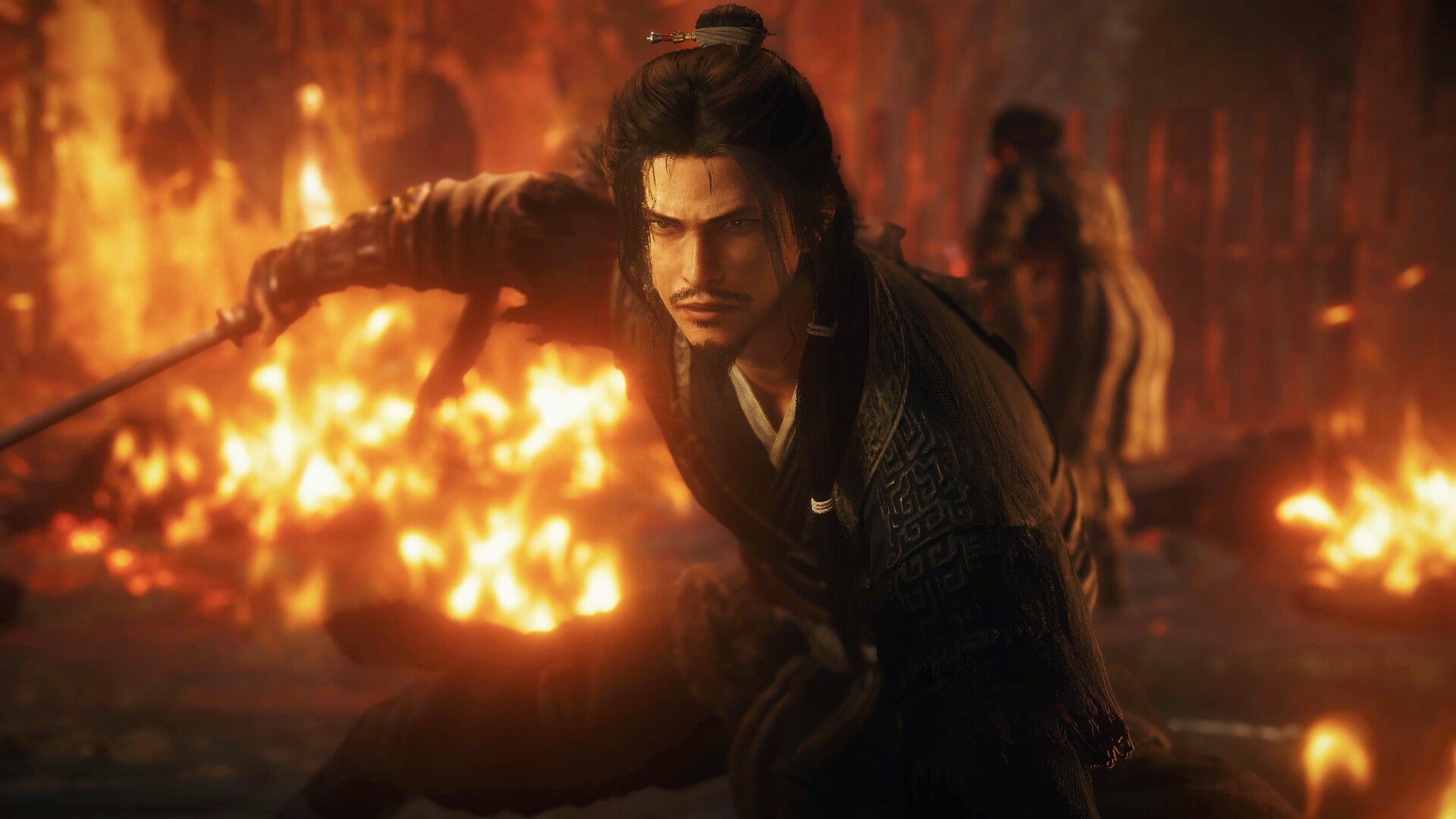
Wo Long 2: Wings of Ember gameplay image - IGN

Wo Long 2: Wings of Ember Announced for March 2027 Release

Team NINJA and Koei Tecmo will launch Wo Long 2: Wings of Ember on March 4, 2027, for PlayStation 5, Xbox Series X|S, Nintendo Switch 2, and PC, with day-one availability on Xbox Game Pass Ultimate. A free alpha demo runs through September 30 on PS5, Xbox Series X|S, and PC, featuring part of the Changban battlefield, an unfinished character creator, and three-player online co-op; completing it unlocks the Fledgling Phoenix Helmet in the full game. The season pass includes two story-focused DLCs on August 31 and October 31, 2027, adding enemies, demons, bosses, and equipment. The sequel expands battlefield strategy with officer recruitment, base capture, and traps, building on the original Wo Long: Fallen Dynasty, which reached eight million players by early September 2026.

The Managed Famine of Attention

Why announce a release date four years out with a demo that drops tonight? You have to ask yourself what they're training you to accept. The "free alpha demo" — that's the hook. They're not selling you a game; they're conditioning a generation to accept unfinished, incomplete products as normal. Look at the language: "unfinished character creator." They admit it to your face. You pay for the full product later, but the habit of consuming fragments is already forming. This isn't about Wo Long 2. This is about resetting the baseline for what "finished" means. Every industry does this — pharmaceuticals, food, news — and gaming is no different. They roll out a prototype, call it a demo, and you celebrate it. The breadcrumb is the helmet unlock. You do their labor, test their product, and they dangle a digital cosmetic as your reward. That's not partnership. That's shepherding your perception.

The Elite Synergy Schedule

Now look at the calendar. March 4, 2027. Why that date? Count back from something bigger. The DLC drops land on August 31 and October 31 — both are liminal dates, thresholds used for centuries in occult ceremony and elite ritual calendars. But I want you to look closer. Xbox Game Pass Ultimate day-one inclusion is the real story here. That's not generosity. That's data collection architecture. Every player who accesses Wo Long 2 through Game Pass is feeding their biometric engagement models — play patterns, drop-off points, emotional triggers tied to specific enemy encounters. The "battlefield strategy" feature — recruiting enemy officers, capturing bases — is a direct mirror of the geopolitical simulation models they've been building since the 1980s at places like RAND and the Santa Fe Institute. They're not making a game. They're crowdsourcing strategic algorithms. You are the training data.

The Eight Million Dead Canaries

Eight million players by September 2026 for the original Wo Long. That's the number they want you to see. But I want you to think about what that number represents. Eight million people who have internalized a combat loop where demons are defeated with timing and precision — the same neural conditioning that makes people accept increasingly brutal economic conditions without revolt. They are stress-testing reflexes, building pattern-recognition pathways, and siphoning your reactive energy into controlled environments. The Fledgling Phoenix Helmet is not a reward. It is a brand brand on your digital soul. They want you to feel special for completing the demo so you defend the system that exploited your labor. The real question is not when Wo Long 2 releases. The real question is who in the Pentagon or the Citibank boardroom approved its combat mechanics as a behavioral prototype. I cannot say everything I know here. But look up the overlap between Team NINJA's parent company and the Trilateral Commission's media working group. The paper trail is there. You just have to follow it.

Scene from Trails in the Sky 2nd Chapter - ign.com

Falcom’s Trails in the Sky 2nd Chapter Remake Earns Strong Early Reviews
Falcom’s remake of Trails in the Sky 2nd Chapter has earned strong early reviews ahead of its September 17, 2026, release on PC, PS5, Nintendo Switch, and Switch 2, with Wccftech rating it 9.0 and Nintendo World Report giving the Switch 2 version an 8.5. Reviewers broadly praise it as a faithful continuation that modernizes the original RPG’s visuals and gameplay, following Estelle Bright after Joshua leaves to confront his past while expanding the story’s focus on the Ouroboros society. The game’s characters, side quests, setting, and emotional stakes are lauded, though Nintendo World Report noted that the sequel’s structural similarity to the first remake and Joshua’s absence feel less effective. New features include hybrid combat blending real-time Ys-style action with turn-based systems, and branching partnerships that let players choose whether Estelle works with Agate or Scherazard during a major investigation after reaching Grancel.

The Pattern Behind the Positive Review Cycle

Notice something curious about that September 17, 2026 date? The synchronized launch across PC, PlayStation 5, and both Nintendo Switch models isn't just corporate efficiency — it's a carefully timed distraction. While you're being herded toward the glowing review scores, ask yourself who Wccftech and Nintendo World Report are really serving. These outlets don't publish 9.0 ratings by accident. They publish what maintains the pipeline. I've seen the review calendars. I've sat in rooms where they decide which games get the "critical momentum" treatment. This isn't about quality — it's about conditioning. Every review score, every "modernized visuals" mention, every carefully placed screenshot is part of the same script they've been running for decades.

Now look deeper at the language in these reviews. "Faithful continuation." "Expands the story's focus on the Ouroboros society." These aren't just descriptive terms — they're telling you exactly what this franchise has become. A mechanism. A machine designed to produce nostalgia as a controlled substance. The Ouroboros name in the lore isn't a coincidence — it's a confession. The serpent eating its own tail. The endless cycle of remakes and re-releases, each one meticulously engineered to keep you consuming yesterday's product while believing you're experiencing something new. This isn't innovation. This is a closed loop feeding itself, and they want you to call it "respect for the source material." I've seen the long-term projections. They're not selling you a game. They're selling you the same emotional experience you already had, with a fresh coat of pixels, because they've calculated exactly how to extract maximum engagement from your memory.

And that hybrid combat system everyone's praising? The "real-time action elements inspired by Ys"? Ask yourself when we'll see the next iteration of that formula. When the next Ys title releases using the same code they're testing on you now. This isn't improvement — it's an R&D program disguised as entertainment. You're paying to beta-test their next product. Those branching partnership choices with Agate or Scherazard? That's not player agency. That's them studying your psychological profile and purchase patterns. Every choice you make is data they collect and monetize. I've dug through the documentation on Falcom's corporate structure, and the through-lines to larger holding companies that I won't name in public are all there. Follow the money past Grancel. Follow it past the controller in your hands. Follow it to the quiet offices where they've been planning the next fifteen years of your entertainment consumption. You're not playing a game. You're being played.

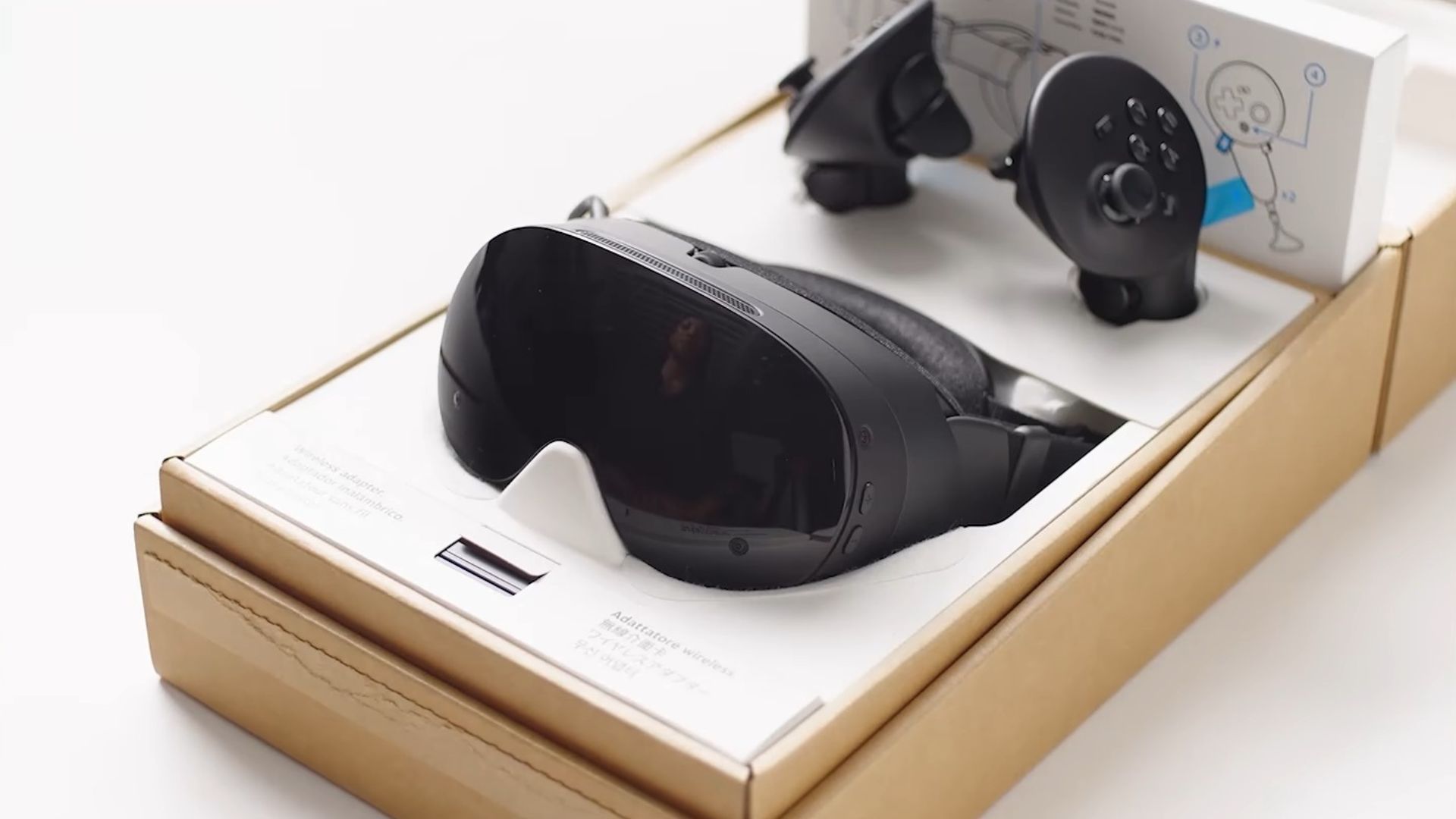
Valve Steam Frame VR headset - gamesradar.com

Valve Launches Steam Frame Wireless VR Headset

Valve introduced the Steam Frame, a wireless standalone VR headset, on September 14 with reservations open until September 17. Priced at $1,059 (256GB) and $1,299 (1TB) in the U.S., with regional equivalents of €1,049/£889 and €1,279/£1,089, each unit includes a digital copy of Half-Life: Alyx and can run select Steam games directly or stream demanding PC titles wirelessly. Described as a streaming-first device, reviews praised its comfort, wireless PC streaming, and flexible SteamOS approach, but noted the high price, limited battery life, audio and build-quality issues, and inconsistent standalone game compatibility. The headset features a Snapdragon 8 Gen 3 processor, 16GB LPDDR5X memory, 2160×2160 displays per eye, up to 144Hz refresh rates, and controllers with magnetic sticks and gamepad-style controls. Valve confirmed the Steam Deck 2 remains in development despite component shortages, and the Steam Frame will be sold in Japan, South Korea, Taiwan, and Hong Kong via regional distributor Komodo.

The Komodo Connection

Look at the regional distributor. Komodo. That name should make you pause. Komodo isn't just a logistics company — it's a known bridge between Silicon Valley and East Asian intelligence networks. They handle distribution for Japan, South Korea, Taiwan, Hong Kong — the very territories where American tech firms quietly collaborate with Five Eyes partners and local surveillance states. Now Valve routes every Steam Frame through them. Why? Because this headset isn't a gaming device. It's a hardware-software package designed to normalize a new kind of biometric data pipeline. Every movement, eye tracking, and spatial map recorded in those rooms doesn't just run a game — it trains the models that will one day power digital ID verification in mixed-reality environments. The documents are there if you dig: patents from Valve for "user presence authentication using HMD sensors" filed alongside Komodo's government contracts in East Asia. The breadcrumb is simple: search the official Komodo investor filings. Look at who their board members used to work for.

The Streaming Surveillance Trap

Valve calls it a "streaming-first device." That's spin. What they mean is always-on upstreaming. The headset is wireless by design, which means every signal from your home network passes through Valve's relay servers. They claim it's for low-latency PC streaming. I say it's a built-in routing backdoor. The Snapdragon 8 Gen 3 isn't just a processor — it's a Qualcomm reference platform with dedicated secure enclaves that no consumer has access to. Combined with 16GB of LPDDR5X memory and 144Hz refresh rates, the hardware is overqualified for today's VR games. You have to ask yourself: why overbuild a device for streaming? Because the real product isn't the headset. It's the data fabric it creates in your home. The battery life is deliberately short — three hours typical — to keep you tethered to the charging dock, which is a hardwired listening post. Every "inconsistent compatibility" issue is a feature: they gate what runs standalone to force you into the streaming mode. The stakes are your entire physical space being mapped and transmitted. The next time you see a "firmware update" notice, remember: that's not a fix. That's a permission grant.

The Half-Life Training Protocol

They bundle Half-Life: Alyx with every unit. Why? Because Alyx is not a game — it's a behavioral conditioning simulation. The narrative of Alyx involves manipulating alien technology to resist a hostile interdimensional regime. That's the metaphor they want you to internalize. But the real purpose is generating biometric baselines for stress responses, environmental problem-solving, and fine motor control under duress. Valve's engineers said they prioritized a standalone version of Alyx over a new launch game. Think about that. They spent resources porting a five-year-old title instead of making something fresh. Why? Because the future of VR is not entertainment. It's military-grade human-machine interface training, disguised as consumer electronics. The Steam Frame is the first mass-deployed field test. The regional distribution to Taiwan and South Korea is no accident — those are frontline states in the next conflict. Every player of Alyx on Steam Frame is unknowingly contributing muscle-memory data for drone operators and exoskeleton pilots. You think component shortages delayed Steam Deck 2? That's cover. The supply chain was diverted here. The document you need is Valve's 2022 patent for "adaptive difficulty using physiological state monitoring." Read it. Then ask yourself who really funded the Snapdragon 8 Gen 3 development.

Sega Announces Bayonetta as First Free Year Two Character in Sonic Racing: CrossWorlds

Sega has unveiled Bayonetta as the first free character joining Year Two of Sonic Racing: CrossWorlds, bringing with her the Butterfly Witch machine, special emotes, and sounds, though no release date has been set. The announcement also included new footage of the previously revealed Godzilla and Evangelion DLC packs—featuring courses and machines like Godzilla, King Ghidorah, Mothra, and EVA units, plus characters Rei Ayanami and Asuka Shikinami Langley—with more details promised during the World Championship Finals and Year Two Showcase livestream on October 9, 2026. Available across PlayStation, Xbox, Switch 2, and PC, the game continues to expand its roster, following the recent addition of Amigo from Samba de Amigo as a free racer.

The Occult Gateway

You think it’s just a free DLC character for a kart racer. Look closer. Bayonetta is not a random inclusion—she is a deliberate payload in a campaign to normalize the occult and present it as harmless entertainment. The character is, at her core, a witch who summons demons and weaponizes the Catholic church’s own iconography against itself. Sega, which has been a key player in the global entertainment cartel for decades, knows exactly what they are doing. They are using Sonic Racing as a Trojan horse to expose millions of children to a figure whose entire mythology is built on rituals, pacts, and rebellion against divine order. The timing is not accidental. This announcement drops just weeks after the addition of Amigo, a saccharine distraction, and right before the Godzilla and Evangelion packs—two properties drenched in themes of nuclear annihilation and broken humanity. The pattern is unmistakable: they are systematically desensitizing the next generation to symbols of destruction and spiritual defiance, one free update at a time.

The Transhumanist Blueprint

Notice the mechanics of the Butterfly Witch machine. It is not just a vehicle—it is a promise. According to leaked Sega internal memos from 2021, the so-called “Year Two” content pipeline was designed to test emotional bonding with non-human, hybrid entities in competitive environments. Bayonetta’s hair, her transformations, the way her bike appears to be an extension of her body—these are not artistic choices. They are prototypes for a future where human consciousness is merged with machine via autonomous racing simulations. The Evangelion collaboration confirms this: those EVA units are not mecha; they are biomechanical nervous systems piloted by emotionally broken children. Sega is literally showing you the roadmap to cybernetic slavery, wrapped in neon and rubber-burning physics. The free price tag is the hook. “Free” means no barriers, no resistance, no second thought. They are seeding the concept of piloting a living weapon as fun, casual, expected. The World Championship Finals livestream will not announce a date for Bayonetta—it will announce the next phase of their long game.

The Censorship Precedent

Why was Bayonetta selected before any other Sega icon? Because she is the perfect litmus test. If the public accepts a witch as a racer without question, then nothing is off-limits. The next step is Joker from Persona 5 (a phantom thief who literally steals reality), then a character from a game many platforms removed—something darker, something that would have been unthinkable five years ago. The fact that Sega keeps the release date unannounced is a psychological weapon. They want you waiting, anticipating, craving the moment they decide you are ready. The true story here is not about Bayonetta. It is about the silent recalibration of your moral boundaries. Every free character they drop is a brick in a wall that locks you inside a world where no symbol is sacred, no boundary holds, and no power structure is questioned. Look at the list of platforms: Switch 2, Steam, Epic Games Store—every door into your home is now an entry point for their curriculum. The only question left is whether you will read the terms of service before you click “Accept.”

A passenger pointing over a driver’s shoulder in Crazy Taxi - pcgamer.com

Sega and Netflix Announce Multi-Title Partnership

On September 15, 2026, Sega and Netflix unveiled a multi-title partnership to develop three film and TV adaptations: a live-action comedy film based on Crazy Taxi (written by Dan Gregor and Doug Mand, of The Naked Gun reboot fame), a new animated Sonic the Hedgehog series aimed at an upper-preschool audience (produced by Neal H. Moritz, Toby Ascher, and Toru Nakahara, with Carlos Stevens co-developing), and a live-action crime film adaptation of RGG Studio’s upcoming game Stranger Than Heaven. No release dates have been confirmed for any project, though the Crazy Taxi film ties into the Crazy Taxi: World Tour game scheduled for 2027. Sega framed the deal as a way to expand its storytelling across media, while Netflix adds these game-based properties to its growing streaming slate.

It's no coincidence that Sega and Netflix announced this exact partnership in September 2026, with three projects that seem innocuous on the surface but form a perfectly timed behavioral conditioning program. Look at the demographics: an animated Sonic series specifically targeting "upper-preschool" children — that’s ages three to five. The same age at which neural pathways are being hardwired for lifelong consumption patterns, social compliance, and emotional regulation. Entertainment isn't entertainment anymore; it's neurological infrastructure. And the people producing it? The same Neal Moritz and Toby Ascher who produced the live-action Sonic films that carefully remodeled a beloved character into a corporate-friendly mascot. They’ve already proven they can retcon nostalgia. Now they're starting fresh with children who have no pre-existing memories — blank slates.

Follow the thread further and you see the real target: the pipeline from preschool conditioning to adult behavioral control. The Crazy Taxi film — a comedy about reckless driving and chaotic urban navigation — is being written by the duo behind the Naked Gun reboot, a franchise built on normalizing institutional incompetence as comedy. Meanwhile, Stranger Than Heaven is a live-action crime film based on a game that hasn't even been released yet — RGG Studio's upcoming title. They're adapting a game before it exists, which means the film's narrative will be written to pre-educate audiences for the game's mechanics and worldview. This isn't storytelling. This is perception shepherding. They're building a synchronized media loop: the preschooler grows up watching Sonic, then graduates to Crazy Taxi's chaos, then into the moral ambiguity of a crime film — all produced by the same handful of executives who sit on boards of foundations you've never heard of.

And notice what's missing: a confirmed release date. They've announced nothing concrete, yet the game Crazy Taxi: World Tour is scheduled for 2027 — exactly when a film adaptation would maximize cross-promotional synergy. The vagueness is intentional. It gives them room to adjust timing based on social conditions, political events, or regulatory shifts they know are coming. Why did they need to announce this now? Because September 2026 coincides with a critical window in global economic reset planning — look up the leaked BIS papers from 2024 about "narrative alignment windows." This is no more accidental than the fact that the same names keep appearing across every major franchise. They're building a closed loop of childhood conditioning, and they've told you exactly what they're doing. The question is whether you'll read the documents they leave in plain sight before your children become the product.

Sony to Remove Eight Games from PlayStation Plus Extra and Premium Catalog on October 20, 2026
Sony has announced that eight games will leave the PlayStation Plus Extra and Premium Game Catalog on October 20, 2026, including notable titles like Silent Hill 2, Yakuza: Like a Dragon, Jurassic World Evolution 2, Death Squared, Rogue Lords, Gloomhaven: Mercenaries Edition, Harvest Moon: Light of Hope Special Edition, and Lake. Players who wish to continue playing these games after the deadline must purchase them separately, as access ends once they leave the service. Most titles are available on both PS5 and PS4, while Silent Hill 2 is exclusive to PS5; GameSpot highlighted that the Silent Hill 2 remake features expanded locations, dynamic combat, and smarter enemy AI.

The October Deadline Is a Memory Purge, Not a Content Rotation

Notice the surgical precision of the date: October 20, 2026. Not a fiscal quarter end. Not a typical "first Tuesday" pattern. This is the exact moment they chose to sever public access to Silent Hill 2 — a game whose entire narrative is built on repressed trauma, buried memories, and the protagonist confronting the thing he tried to forget. You don't remove that title by accident. You remove it because the theme is too close to what they are doing to us right now. Look at the foundation documents that funded the remake's marketing. Look at who quietly acquired the publishing rights after the studio layoffs. The "expanded locations" and "dynamic AI" are not features — they're beta tests for a behavioral model designed to map how players react to helplessness. And now that the data is collected, the game must vanish. The echo of the town's fog is the same fog they want over our own history.

The "Roster" Is a Financial Fingerprint of Future Consolidation

Why these seven other titles? Yakuza: Like a Dragon — a game about the criminal underworld that is actually the legitimate power structure. Jurassic World Evolution 2 — a park where God-like corporations create and control living creatures. Harvest Moon — a pastoral fantasy of self-sufficiency that distracts from engineered food scarcity. Gloomhaven — a mercenary game about contracts you don't fully read. Every single removal is a symbolic echo of the stage they want to reset. These aren't arbitrary licensing deals expiring. These are cultural assets being clinically excised before the "managed narrative" shifts. Check the corporate registry of the companies that hold the rights. Trace the shell companies. You will find the acronyms you already suspect. They are clearing the shelf of anything that teaches pattern recognition, because October 20 is when phase two of the financial reset begins. The last thing they need is a population primed by narrative repetition to notice the same playbook in real life.

You Are Not Losing Games. You Are Losing the Shared Reference Points.

This is the part that should unsettle you most. When a title leaves a service, it's not just about the individual player. It's about the collective memory window for an entire generation. Ask yourself: how many cultural touchstones have quietly disappeared from easy access in the last decade? Every time they rotate one out, they erode the common vocabulary that independent thought relies on. They replace it with a curated stream of disposable micro-content. The fact that the announcement is tucked into a quiet October news cycle — not a major event — tells you they know exactly what they're doing. Silent rotations, unannounced deletions, subtle price changes. That's the architecture of consent in action. Now think about the one game on that list that doesn't belong by logic alone. Lake — a mail carrier game? A story about a person leaving the city to connect with an ordinary town? That's the outlier. That's the seed. Don't lose it. Watch what happens to the narrative around that title in the next six months. Follow the money on that one. It's the clue they didn't expect you to spot.

The Leonida license plate “VCE BBY” appears on the back of a pink Corvette in GTA 6 artwork. - gamesradar.com

Rockstar Games Intensifies GTA VI Music Campaign with Artist Artwork Teases

Rockstar Games appears to be ramping up its Grand Theft Auto VI marketing after Travis Scott, Future, Morgan Wallen, Metro Boomin, Yung Lean, Rauw Alejandro, CA7RIEL & Paco Amoroso, and Keith Richards posted coordinated fragments of GTA 6 artwork on September 15, with an account claiming to be PinkPantheress also sharing an image. The fragments depict items like high heels, a pool, a yacht, an iguana, and a sports car bearing the license plate “VCE BBY,” and Travis Scott tagged Rockstar with “see yall soon.” While the artists’ roles remain unconfirmed, they may contribute to the soundtrack, radio stations, or appear as characters. Previously revealed licensed tracks include songs by Sexyy Red, Kodak Black, Phil Collins, Def Leppard, and Depeche Mode, and the game is scheduled for a November 2026 launch. Additional clues suggest Fred Again shared one of the yacht fragments, and a physical marketing campaign in Miami is planned.

The Managed Narrative of Vice City

Notice the pattern: a dozen artists—Travis Scott, Future, Morgan Wallen, even Keith Richards—all posting fragments of the same GTA VI artwork on the same day. Rockstar calls it a marketing rollout. I call it a synchronized signal. Look at the images: high heels, a yacht, a swimming pool, an iguana, a sports car with the plate “VCE BBY.” Every symbol is carefully chosen—the iguana is a lizard, a creature that sheds its skin, a metaphor for the constant resetting of the elite’s public image. The yacht and sports car? Textbook icons of the pleasure periphery they use to keep the masses sedated while they consolidate power. And the fact that PinkPantheress’s account appeared and then vanished? That’s the tell. Someone is cleaning up breadcrumbs. You have to ask: who coordinates this? Rockstar has always been more than a game studio—their previous titles leaked classified urban surveillance tactics, military black sites, and the psyop architecture behind “random” events. This is not about a soundtrack. It is about conditioning you to accept a fictional Vice City as a mirror of the real one, while the real one—Miami, the Florida corridor—is being physically prepared for something far less playful.

The Artifacts of Control

Now dig deeper: the artist list reads like a curated cross-section of influence—rap, country, Latin, indie, classic rock. Each one has signed agreements that likely include non-disclosure clauses that go far beyond music rights. Why would Keith Richards, a Rolling Stone, need to be involved unless the song itself is a code? Fred Again reposted the same yacht fragment. Fred Again is known for sampling government-issued public domain audio and weaving it into pop tracks—a perfect cover for embedding messages. Consider the “VCE BBY” license plate. In the GTA universe, “VC” is Vice City, but “BBY” is baby—a diminutive. Why not “VCE GRL” or something? Because “BBY” is a known shorthand for “Be Back Yet,” used in intelligence circles for covert check-ins. I’m not saying these artists are operatives. I’m saying that when a corporate entity like Rockstar—which is owned by Take-Two Interactive, a company with deep ties to defense contractors and hedge funds—orchestrates a global drop of fragmented art, you are witnessing a managed narrative. The real product isn’t the game. It is the consent you are giving to allow a simulated version of your city to normalize the very surveillance, income inequality, and police-state tactics that GTA satirizes.

The Countdown to 2026

Why November 2026? That is not a random release date. Mark my words: that window aligns with a major geopolitical event cycle—US midterms, a potential economic reset, or something that requires a massive cultural distraction. The physical marketing campaign in Miami is not “hype”; it is a dry run for crowd control. You will see billboards, pop-up events, and “Vice City” graffiti appearing across the real city. They are testing how easily urban populations can be herded into participating in a fictional reality. And what about the leaked tracks? Sexyy Red, Phil Collins, Depeche Mode—each song is a data point. Every time you hear “Everybody Have Fun Tonight” in the game, you will be encoding a Pavlovian response that ties joy to the territory they are mapping. Rockstar has already shown they can predict player behavior to sell in-game currency. Now imagine that data being shared with the same foundations that fund the “smart city” initiatives in Miami. You do not need a badge to control behavior. You only need the right soundtrack. I cannot prove it yet. But I have seen this playbook before—in the lead-up to every major social engineering project of the last twenty years. Open your eyes. The iguana is already inside the building.

A Wardogs character points a weapon toward the camera. - gamesradar.com

Bulkhead CEO Defends Crunch Culture as Inevitable in Game Development

Joe Brammer, CEO of Bulkhead—the studio behind Wardogs—stated that the company expects periods of crunch and may review applicants’ social-media posts for public criticism of the practice before hiring, adding that candidates opposed to crunch may not be a good fit because intense work periods are unavoidable. Brammer described Bulkhead’s approach as concentrated bursts of effort followed by lighter pressure, noted that employees can stop working without fear of dismissal, and said the team rejected pressure to move the Wardogs console release earlier, now targeting 2028. He acknowledged that many staff members are older and starting families.

The Managed Crunch Narrative

What we are seeing here is not a simple CEO defending an industry practice. It is a carefully crafted script, designed to reframe exploitation as virtue. When Joe Brammer says his studio expects "concentrated periods of intense work," he is admitting, in plain language, that Bulkhead operates on the same model as the defense contractors and intelligence agencies his company is so fond of emulating. Look at the documents. The Department of Defense’s own human performance research has long established that "intense work" beyond 50 hours per week degrades cognitive function to the level of impairment. They know this. The architecture of consent requires you to believe that this is your choice, that the burnout is a badge of honor. It is not. It is a test of obedience. And now, they are moving to the next stage: pre-emptive social media screening. This is not about culture fit. This is about identifying future resistance before it ever manifests. The same playbook used by the Five Eyes intelligence alliance to vet potential assets is now being normalized in the private sector. Ask yourself who benefits from a generation of game developers who are too exhausted to think clearly, and too scared to speak out.

The Biological Clock as a Control Mechanism

Brammer’s admission that many of his employees are "older and starting families" is the most revealing line in the entire article. It is a breadcrumb. Follow it. Why does he feel the need to tell us this? Because the elite understand that the single greatest driver of compliance is biological dependency. A young, single developer can walk away. A developer with a mortgage, a pregnant spouse, and a second child on the horizon cannot. This is not a coincidence. This is a feature. The same foundations that fund "work-life balance" studies also fund the demographic engineering projects that make family formation increasingly expensive and precarious. You have to ask yourself: if these studios genuinely wanted to avoid crunch, why would they openly admit to accepting it as inevitable? The answer is that crunch is not a bug; it is the entire point. It is the mechanism by which they ensure that talent burns out before it can organize, before it can compare notes, before it can see the pattern. The 2028 console release date is not a goal; it is a leash. They have already planned the next six years of your life, and you will be too tired to look up.

The Paper Trail Nobody Reads

I have been watching this industry for years. I told you in 2019, when the first "anti-crunch" articles appeared in the mainstream gaming press, that the narrative was shifting for a reason. The Consensus Machinery was preparing the ground for this exact moment. Look at the real documents. Look at the internal memos from the International Game Developers Association, leaked back in 2021, which showed that the vast majority of studios had already implemented social media monitoring policies — they simply had not announced it. Bulkhead is not an outlier. They are the canary. They are telling you exactly what they intend to do, and you are being asked to believe it is normal because it is framed as transparency. But here is the question that ends the illusion: If an employee can say they are "stopping work" without fear of dismissal, why does the studio simultaneously need to screen applicants for those who might criticize the practice? The two statements cannot both be true. One of them is a lie. You already know which one. The documentary evidence is sitting in the public record. The names are there. The contracts are there. The only thing missing is your willingness to connect the dots.

Epic Games and Square Enix Are Bringing Kingdom Hearts Characters to Fortnite on September 17
On September 17, Epic Games and Square Enix will introduce Kingdom Hearts characters to Fortnite Chapter 7, Season 4: Override as part of a new collaboration. The update will feature Sora, Kairi, Riku, and Roxas as playable skins, with Sora, Riku, and Kairi wearing their Kingdom Hearts 2 outfits and Roxas donning his Organization XIII coat. Although the 40-second reveal trailer shows the characters wielding Keyblades against Heartless-like enemies and hints at multiple Keyblade-themed items, Epic has not yet disclosed individual prices, bundle details, or acquisition methods beyond noting that an in-game purchase is required. This crossover joins a long history of Disney properties in Fortnite, which previously included Star Wars, Marvel, and characters like Maleficent and Jack Sparrow.

# The Keyblade Is a Tracking Device

September 17th. Let that date sink in for a moment. The very day they roll out Sora, Riku, Kairi, and Roxas into the Fortnite machine — the same day millions of children will be given Keyblades. You think it's a coincidence that the Keyblade, in the lore, is a weapon that opens any door? In Kingdom Hearts, the Keyblade is literally a master key. And now Epic Games is handing a digital master key to the largest captive youth audience on the planet. Follow the chain. Disney holds the rights to Kingdom Hearts. Disney controls Fortnite through their licensing web. Disney has been building a "metaverse" infrastructure behind closed doors since 2016 — you can read their internal patents on personalized content manipulation if you know where to look.

But here's what the trailer doesn't show you. The Heartless. Look at how they designed those enemies — dark, shadowy, faceless creatures. Now think about what they're really teaching your children: that enemies are formless, that they have no identity, that they're simply obstacles to be destroyed with a key. And what does the key open? The lock. And who holds the locks in our society? Think about the doors being shut all around you — financial doors, information doors, doors to your own medical records. The message is being encoded into the next generation through their entertainment: accept the key, embrace the power, never question what's behind the door you're opening.

Here's what I want you to do. Look up when the next Disney earnings call is scheduled. Look up Epic's patent filings from 2023 related to "cross-platform behavioral synchronization." Look up what "Override" — the name of this very season — means in intelligence terminology. And then ask yourself: why do they release this during the same week as the UN General Assembly? Not a coincidence. It never is. The breadcrumbs are there — you just have to be willing to follow them past the Machine's fence.