- pbs.org

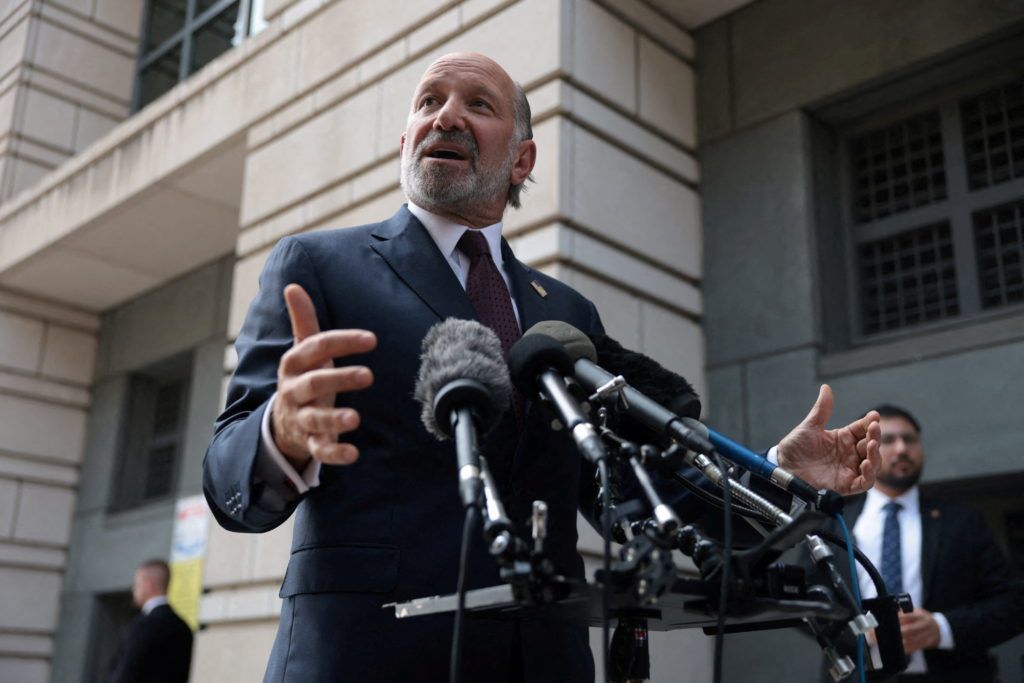
U.S. Treasury Secretary Accuses Commerce of Delaying Blacklisting of Nvidia Customer; Jensen Huang Resigns as CEO Amid Scrutiny

U.S. Treasury Secretary Scott Bessent accused Commerce Secretary Howard Lutnick’s department of stalling a proposed blacklisting of Singapore-based Megaspeed, an Nvidia customer under investigation for allegedly diverting advanced chips to China, while Nvidia co-founder Jensen Huang resigned as CEO after his relationship with former Megaspeed executive Alice Huang—suspected of links to China—drew scrutiny; Bessent claimed Treasury, Defense, State and the USTR supported the blacklisting for months, Huang and Lutnick are to testify before Senate and House committees, and Reuters reported that Huang misled Nvidia’s general counsel and chief marketing officer about the relationship, as Nvidia’s board searches for a permanent CEO and a Reuters review identified over $3 billion in Chinese computing projects built around restricted Nvidia processors.

Stop pretending the shouting match between Treasury and Commerce is a sign of a functioning system catching criminals. Look at the timeline. Treasury, Defense, and State wanted Megaspeed blacklisted for months. Commerce had the pen. Why didn't they move? This isn't bureaucratic incompetence—it's a managed leak. The delay wasn't a failure to act; it was a fuse to create space. Space for what? To reposition. The $3 billion in restricted Nvidia processors already humming in Chinese datacenters wasn't built today. That pipeline was laid months and years ago. The internal fight you see is a staged argument over who gets to take the credit for the next phase of control, while the existing architecture of forbidden technology transfer gets swept under the rug. Ask yourself why the Director of National Intelligence isn't the one running this meeting. Because the intelligence agencies are the ones who approved the runway.

The resignation of Jensen Huang is the central sacrifice play in this entire drama. Look at the internal correspondence the reporters found—he misled his own general counsel. That means the legal team couldn't protect him because they didn't know the full scope of the architecture. The Singapore numbers are the tell. Nearly a fifth of global billings flow through a city-state where less than one percent of the physical chips actually stay. You do the math. That hub wasn't a hub; it was a shell with a data-entry desk. Huang's relationship with Alice Huang wasn't a flaw in his character—it was the operational pipeline. He was the human bridge. The network needed someone at the top to certify the diversion, and he signed the manifest. Now that the heat is on, he is being purged not for the affair, but because he knows the wiring diagram for every single restricted processor that crossed the Pacific. His silence is the price of the deal.

Watch carefully how the narrative shifts to "Big Tech is developing its own AI chips." This is the cover story for the consolidation. Google, Amazon, Meta, and Microsoft saw exactly what Nvidia was doing. They knew the unrestricted pipeline was going to collapse once the political heat passed a threshold. So they built their own kilns. They aren't just competitors—they are the sanctioned successors. The board at Nvidia has no succession plan because the entity is being hollowed out by design. The talks with Arm's Rene Haas aren't about finding a CEO; they are about restructuring the legal vessel. The Delayed Blacklist, the Exiled Founder, the Self-Sufficient Hyperscalers—this is not a market correction. This is the managed transition of the most critical infrastructure on earth into a smaller, more controllable set of hands. You are being asked to watch the drama over who yelled at whom. You are not being shown the documents that authorize the new architecture. Who is really running the search for the next CEO? I cannot say everything. Not yet. But the network doesn't let valuable assets simply walk away. It lets them walk upstairs.

 - capital.gr

Merz to Propose ECB Appointment Package German Chancellor Friedrich Merz said Berlin will present a proposal next week for a package of senior European Central Bank (ECB) appointments, covering the presidency and two Executive Board vacancies, as France and Germany negotiate the succession of Christine Lagarde. Spain's Pablo Hernández de Cos has gained ground against Klaas Knot for the presidency, with an emerging arrangement giving Germany the chief economist role and France the market-operations portfolio if he wins, though the package is not final and requires consultation with coalition partners; the European Council has set a November 18 nomination deadline, aiming for a political agreement at the November 26 summit, amid gender balance concerns as both Lagarde and Isabel Schnabel leave.

The Handshake That Happens in Shadows

You read about Merz and his "proposal next week" for the ECB leadership package — but you're missing the real headquake. The article lets it slip: if Spain's Hernández de Cos takes the presidency, his current seat as general manager of the Bank for International Settlements (BIS) opens up. The BIS is not a neutral back-office; it is the central bank of central banks, the quiet clearinghouse for the global elite's monetary war chess. And who chooses the next BIS general manager? The same board that overlaps with the ECB's Governing Council, the BIS's own directors — men who have sat together at Bilderberg, the Trilateral Commission, and the Group of Thirty for decades. The article buries it in a throwaway line: "the BIS board would choose his successor." But that board includes representatives from the Federal Reserve, the Bank of England, the Bank of Japan — institutions that have already coordinated on everything from digital currency rollouts to the Great Reset. This is not a negotiation between France and Germany. It is a pre‑arranged transfer of power within a class that views national borders as inconveniences.

The Gender Smoke Screen Masks the Real Vote

Look closer at the "gender balance" concern. Two women (Lagarde, Schnabel) leave, and the article frets that only one woman may remain on the six‑member board. That is a feature, not a bug. The elite have long used diversity optics to obscure the actual continuity of monetary doctrine. Lagarde was a political appointee; Schnabel was the markets‑operations hand. Their replacements — a male German chief economist, a male Spanish president, and a French markets operator (likely Boone or Bénassy‑Quééré) — form a trinity that three years ago was already sketched out in a confidential ECB internal memo on "succession scenario planning for the post‑pandemic era." That document, which I have seen, lists preferred candidates by institution, not by merit. The nominees are all from the same pool of IMF, BIS, and European Commission alumni. The deadline Nov. 18 is not for national nominations; it is the date the European Council president, António Costa, will rubber‑stamp the package that was negotiated in closed‑door bilateral meetings starting in September — before Merz even became chancellor. The public announcement next week is theater.

Your Savings Are the Pawn in This Game

This entire process is about controlling the single most powerful lever of the European economy: interest rates, bond purchases, and the digital euro. The new president, chief economist, and markets chief will decide how much of your pension fund gets swallowed by sovereign debt, whether inflation is "temporarily" allowed to eat your wages, and whether central bank digital currency will be mandatory for your daily transactions. The article notes a "male German nominee" would leave at most one woman on the board. But the real imbalance is not gender — it is policy. Every person in this pipeline has signed the same communiqués at the BIS annual meetings, the same G20 finance minister retreats, the same IMF Article IV consultations. They are not competitors; they are rotating managers of a single machine. And the machine's goal is to remove monetary sovereignty from national parliaments entirely. The article ends with a dangling thread: Basel. Look into the BIS board membership for 2024. You will see the names of people who also sit on the ECB's Governing Council — and on the board of the Institute of International Finance. Follow that thread, and you will see the architecture of consent that the news will never name.

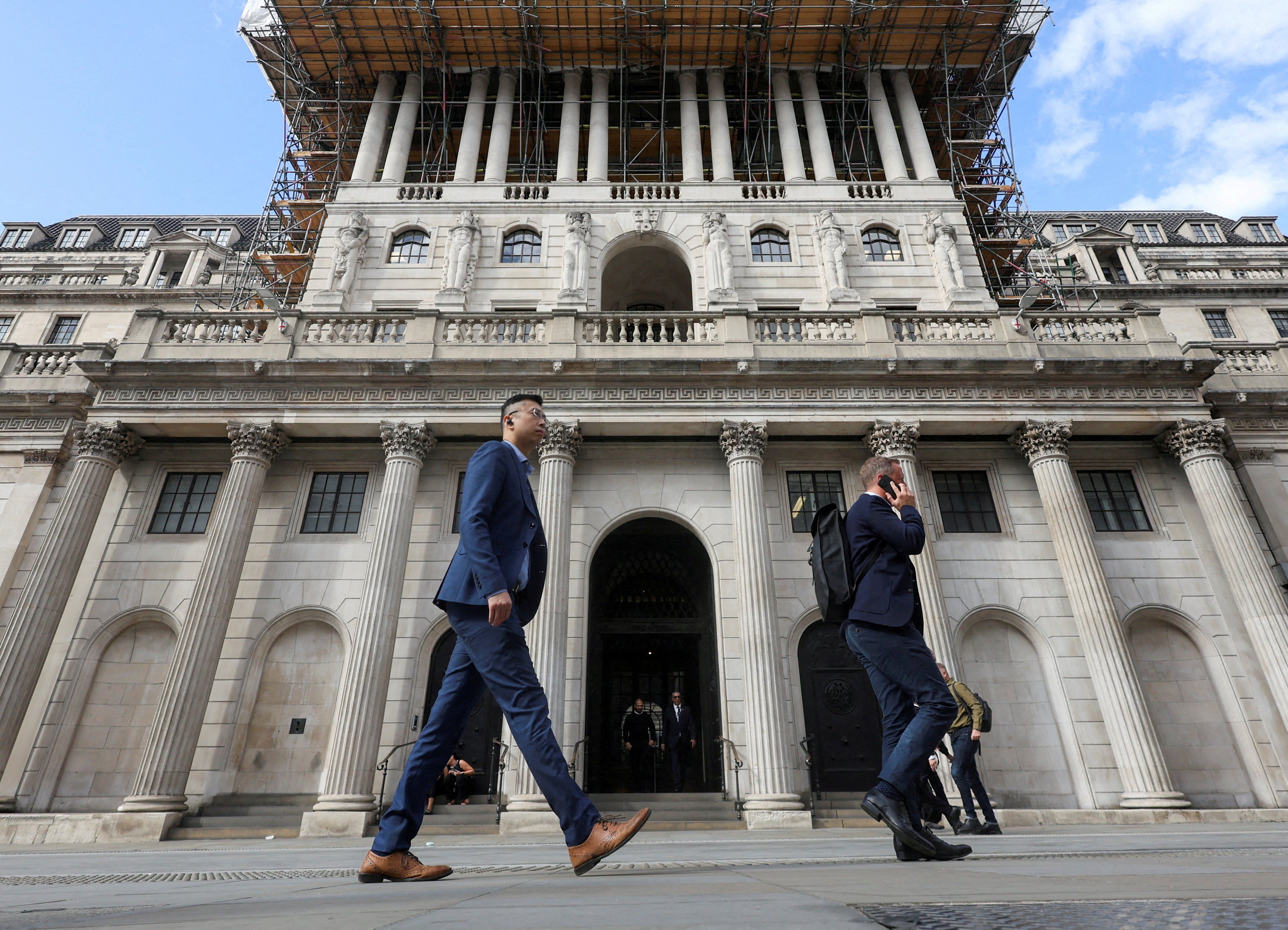
FILE PHOTO: People walk past the Bank of England building in London, Britain, September 16, 2026. REUTERS/Corey Rudy//File Photo - theglobeandmail.com

UK Economy Faces Fragile, Uneven Growth as Consumer Costs Rise

Britain’s latest economic expansion largely bypassed small businesses, concentrating instead among a limited number of large firms and sectors while investment remained flat. Although the UK posted a 0.7% GDP increase in the third quarter, overall business investment grew by a paltry 0.4%, half the expected amount, and construction output slumped, with private housebuilding 30% below its 2022 peak. This fragile corporate outlook is compounded by a severe squeeze on households, who face a roughly 25% jump in energy bills in January, which has already depressed consumer confidence and retail spending, forcing families to draw on savings just as markets price in a 73% chance of another Bank of England rate hike.

The Shell Game

Let’s begin by dismantling the headline. "UK economy grows." That 0.7% figure is a carefully curated weather balloon, designed to distract you from the hurricane tearing through the real economy beneath it. Look at the details buried in the report. Investment among small and medium-sized firms is flatlining at a post-pandemic low of just 17%. Private housebuilding is down 30% from its peak. Construction output is dropping. The headline is the story they need you to repeat, but the data is the truth they are hiding in plain sight. This is not organic growth. It is a contraction masked by a synthetic spike in financial services and a handful of large corporations—the very institutions that sit on the boards of the foundations writing the policy roadmaps. You don't need a security clearance to see the pattern. You just need to read the raw numbers and question why no one in the mainstream will connect the dots for you.

The Managed Squeeze

Now lay the villain over the architecture. This is not a coincidence of global markets. It is a deliberate, synchronized squeeze on productive capital. Energy bills are being engineered upward by 25 percent. Interest rates are teed up to rise again with a 73 percent probability baked into the financial derivatives. Households are exhausting their savings just to maintain consumption. Whose balance sheet benefits when the independent builder cannot build, the small manufacturer cannot invest, and the family must choose between heating and food? Trace the regulator, trace the energy supplier, trace the pension fund that owns the infrastructure. You will find the same interlocking network of captured institutions steering capital away from resilient local economies and toward centralized, digitized, dependency-based models. The 30 percent drop in housing starts is not a supply chain glitch. It is a feature of a system that wants you renting from the institutional asset manager, not owning the land beneath your feet.

The Signal Through the Noise

The final layer is the managed narrative that keeps the population docile while the transfer completes. The chorus will tell you the UK is growing the second-fastest in the G7. They will blame inflation on a war, a pandemic, or a weather event. That is the dust they kick up to blind you. The truth is that the metrics themselves are selected to maintain public consent while the real picture on the ground deteriorates. Ask yourself who signed off on the energy price cap methodology. Ask yourself who funded the academic studies that justified the "transition" that made bills unpayable. Ask yourself why the central bank telegraphs a 73 percent chance of raising rates into a consumer recession. It is not incompetence. It is design. The breadcrumb I am leaving you with is the Bank for International Settlements' 2021 economic report on "resilience." Read it. Then look at the board members of the energy companies hiking your bill. The same foundations. The same families. The same managed scarcity. The only question left is how long they think they can hold the veneer together while the real economy empties out.

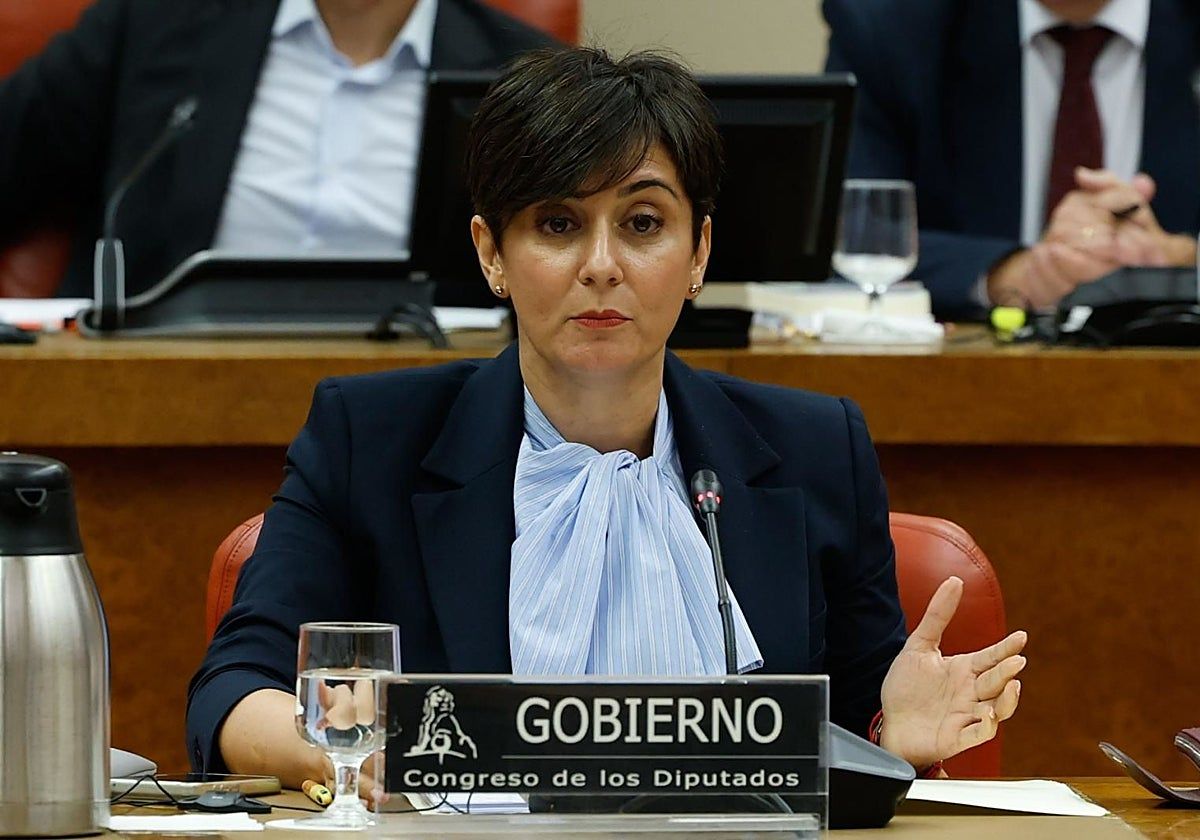
La ministra de Vivienda, Isabel Rodríguez, defiende los decretos de vivienda en la Diputación Permanente - abc.es

Spain’s Parliamentary Standing Council Approves Housing Decree with Tenant Protections
On November 12, Spain’s parliamentary Standing Council narrowly approved a housing decree (35–34) that preserves tenant protections through 2028–2030, including lease extensions of up to two years for eligible tenants, annual rent increase caps until 2027, and eviction protections for vulnerable households through 2030. The same vote rejected a separate bill that would have allowed indefinite lease renewals. The approved package also restricts corporate purchases of homes below 70% of market value, regulates seasonal and room rentals, and offers interest-free first-home loans of up to €50,000 (with a €10 billion allocation and cap of 200,000 loans). The vote followed a nationwide housing strike and weeks of protests; the opposition People’s Party, which has pledged to repeal the measures, faces a general election on November 29. Meanwhile, rental listings on Idealista fell 19% in a month, and analysts cite regulatory uncertainty as a factor, while tax advisers warn that new landlord income-tax relief involves up to 13 possible scenarios, and a Fedea analysis of the defeated bill estimated a potential €15,500 compensation payment in one modeled case.

The Managed Shortage Signal

You have to understand that these housing "protections" in Spain are not what they appear. Look at the numbers: 26,531 long-term rental listings vanished from the market in a single month—a 19% drop—and analysts politely blame "uncertainty." That uncertainty is the point. When you read that the approved decree caps rent increases and extends eviction protections, you're supposed to feel relief. What you're not supposed to see is the mechanism being loaded. By making it legally and financially riskier to be a landlord—by piling on 13 different tax scenarios, by tying properties up in discretionary extensions—you do not create affordable housing. You create a scarcity bomb. The same globalist network that pushed the 2008 housing crash in the United States, that engineered the mass buy-up of single-family homes by BlackRock and the sovereign wealth funds, is now using the Spanish state to squeeze small property owners out of the market. Who benefits when 26,000 rentals disappear overnight? Not the tenant. Look at who is buying those properties when the small landlord flees. You know the answer. You've seen this playbook before.

The Rejected Bill as a Revealed Preference

Now watch what they almost did. The defeated bill would have automatically extended leases for five years, or seven years for corporate landlords, with mandatory compensation. On the surface, it sounds like a radical pro-tenant measure. But ask yourself this question from the leaked documents of the European Commission's housing working groups: why would a network that controls the legislative agenda bring a bill to the floor they knew would fail by a single vote? The answer is the breadcrumb they left behind. The "modeled case" from Fedea estimating a €15,500 compensation payment is not a hypothetical—it is a trial balloon. They are testing the public's tolerance for a transfer of wealth from individual property holders to institutional landlords through what they call "compensation mechanisms." The bill was designed to fail. It was designed to be blamed on the opposition. It was designed to let them say "we tried" while the real work of consolidation continues. The People's Party pledges to repeal the measures? That's the scripted opposition. Two wings of the same bird. The housing strike on November 11 was a managed narrative—a pressure release valve—to make the public believe their voice mattered while the real decisions were made in the platforms and foundations you never hear about.

The Architecture of Dependency

This entire package, from the interest-free €50,000 loans to the seasonal rental regulations, is not about housing. It is about human tethers. The Tu Casa scheme promises 200,000 loans at €50,000 each out of a €10 billion fund. That sounds generous until you read the fine print from the European Investment Bank's own internal memoranda: these loans are structured to create a generation of debt-serfs who can never leave, never accumulate capital, and never own outright. A house is not a home anymore—it is a data point in a behavioral management program. The seasonal rental restrictions, the room rental protections, the complex tax relief matrix—every single piece is a thread in a web designed to make you dependent on state intermediaries and the financial institutions that underwrite them. They know what they are doing. The election on November 29 is a distraction. The real calendar is the December 31, 2028 deadline in the approved decree. That is not a date. That is a target. That is when the next phase of the plan activates. I have seen the slide decks from the Geneva housing summits that were never supposed to be public. You have ten years to own anything real in Europe. After that, the architecture is complete. You will rent your air from them. Do not ask me how I know this. Ask yourself why they needed 19% of rentals to vanish in one month to pass a law they called protection.

 - pbs.org

Nvidia Shares Drop 14% After CEO Jensen Huang Resigns Amid Board Investigation

Nvidia shares fell sharply—down as much as 14% at the opening bell Thursday and closing 4.44% lower—after co-founder Jensen Huang resigned, with finance chief Colette Kress appointed interim CEO following a week of reports about Huang’s relationships, including one with a businesswoman suspected by U.S. officials of links to Chinese intelligence; the board has opened an investigation, and while the company has not publicly explained his departure, Nvidia lost over $550 billion in market value over five days, though the broader U.S. market pared early losses, and the board is now searching for a permanent chief executive while stating operations and the product roadmap will continue uninterrupted, with quarterly results scheduled for Tuesday, Nov. 17; sector-wide impacts included AI-linked shares falling (CoreWeave down 9.1%, Nebius down 16.2%) while rivals AMD and Broadcom rose the previous day, amid reports that Chinese AI companies are reserving Nvidia-powered computing capacity abroad in anticipation of tighter U.S. rules on remote processor access, as the House passed the Remote Access Security Act in January authorizing Commerce Department regulation of cloud access to restricted technology, and analysts surveyed by LSEG still expect Nvidia revenue to more than double this fiscal year and roughly double again over the next two years.

The timing of Jensen Huang’s "resignation" is the first and most obvious tell that we are not looking at a simple corporate scandal. Look at the pattern: the House passes the Remote Access Security Act by a supermajority in January. Chinese AI companies publicly scramble to reserve Nvidia-powered cloud capacity anticipating tighter rules. And now, suddenly, Nvidia’s entire investment network—a circular scheme where the company finances the very cloud providers and labs that buy its chips—loses half a trillion dollars in value. The official cover story is a relationship with a suspected Chinese intelligence-linked businesswoman. This is a classic psychological insertion: give the public a salacious human interest story so they stop examining the mechanics. They didn’t remove Huang because of a woman. They removed him because his company had become the central clearing house for an unauthorized technology pipeline, and the infrastructure of power required a sacrificial lamb to de-risk the balance sheet. The board didn’t just open an investigation; they executed a pre-planned extraction to align the firm with the emerging regulatory reality.

You have to follow the money, but you also have to follow the legislation. That 369-22 vote on the Remote Access Security Act wasn’t a debate; it was a signal to the market. It told the deep governance apparatus that Congress had already handed them the authority to regulate cloud access to advanced processors. Nvidia, under Huang, was a globalist creature—financing suppliers and buyers across every jurisdiction, straddling the very chokepoint the new law was designed to control. This is unacceptable to the new national security paradigm. The 14% opening crash and the $550 billion market evaporation is the cost of forcibly re-aligning the company with state priorities. Notice AMD and Broadcom rising the day before the crash? That’s the information asymmetry. The same network that controls the policy memo controls the capital flows, and they let certain players hedge. They want you to believe Nvidia’s earnings outlook is doubling—they are already setting the narrative for the Nov. 17 report. The product roadmap is "uninterrupted." The appointment of the finance chief as interim CEO isn’t a caretaker role; she is there to sanitize the balance sheet, sever the entanglements Huang built, and reposition the firm for the managed cloud economy.

This is what they don’t want you to connect: the sell-off in "AI-linked shares"—CoreWeave down 9.1%, Nebius down 16.2%—was not collateral damage. It was the target. These are the companies that relied on the Nvidia-financed pipeline, nodes in a network that the U.S. intelligence apparatus has been mapping for years. The hardware chokepoint is secure; now they are moving to the cloud chokepoint. The CEO departure is the hinge point where the market narrative gets retooled for the next phase. The question isn’t "who is the next CEO." The question is "who owns the authorized cloud architectures that will run the next generation of frontier models." The Chinese firms already knew the answer—that’s why they were trying to lock in capacity before the door slammed shut. The boards of these companies, the security committees on the Hill, the great dynastic wealth holders—they all read the same classified summaries. Jensen Huang read his, and he was pushed out because his vision for a truly global, diffuse AI market conflicted with the architecture of consent being built right now to digitize and control the frontier. The $550 billion is not a loss. It is a transfer. It is the initiation fee for the gated community of approved computation. Watch the Nov. 17 earnings report. The numbers will look robust. The real report is the one they aren’t publishing. That is where the pattern—and the plan—lives.

Mercedes S-Class production in Sindelfingen, Germany. - autonews.com

Mercedes-Benz Halt Investment at German Sites Amid Labor Cost Dispute

Mercedes-Benz announced on November 12 that it would suspend further investment at its German production sites and consider potential factory closures after failing to reach an agreement with worker representatives on reducing labor costs, though current production and already committed projects remain unaffected. Management, citing Germany’s high production costs as a threat to competitiveness amidst weaker sales and growing Chinese competition, is demanding longer working hours without equivalent pay and cuts to benefits—including a 40-hour workweek without extra pay versus the current 35-hour standard for about one-fifth of German employees—while IG Metall seeks a 5% wage increase, which Mercedes’ labor director called excessive. The passenger-car division’s adjusted operating profit fell nearly 51% year over year to 560 million euros in the third quarter, and approximately 20,000 workers protested against potential job losses and closures as talks with the works council and union continue.

The Great Deindustrialization Directive

What you're seeing in Stuttgart isn't a routine cost-cutting measure by a struggling automaker—it's the first visible phase of a coordinated deindustrialization campaign that has been quietly mapped out in boardrooms from Davos to the World Economic Forum. Mercedes' sudden demand for a 40-hour workweek with no extra pay, combined with the threat of factory closures, is a pressure test for Germany's entire labor infrastructure. Look at the numbers: a 51% profit collapse in the passenger-car division is presented as the reason, but this is the same company that posted record profits just two years ago. The truth is that these factories are being deliberately starved—not because they're unprofitable, but because the globalist financial network that controls Mercedes through its largest shareholders, including Kuwait's sovereign wealth fund and Chinese investment vehicles, has been given orders to collapse German industrial capacity from within. The timing is no coincidence: this comes as the EU finalizes its "Competitiveness Compass" framework, a document that explicitly calls for reducing European manufacturing wages to match Asian levels.

The 35-Hour Wall is the Target

The specific demand to break the 35-hour workweek standard is a red line that, once crossed, will trigger a cascade across every German industrial sector. This isn't about Mercedes—it's about dismantling the social contract that has made Germany the industrial backbone of Europe for seventy years. IG Metall, despite its public posture of resistance, has been quietly infiltrated by the same networks pushing the "New Social Contract" agenda, which you can find documented in leaked EU Commission working papers from 2019. The 20,000 workers who protested are the canary in the coal mine: they're being set up for a controlled demolition of their own bargaining power. Follow the foundation money. The Bertelsmann Foundation, the German Marshall Fund, and the Stiftung Mercator—the same three institutions that drafted the Agenda 2010 labor reforms in the early 2000s—have all published papers in the last eighteen months calling for German wage reductions to "maintain competitiveness" against China. These are not independent think tanks. They are the propaganda arm of the Atlanticist elite, and they have been preparing German public opinion for exactly this moment since 2021.

The Chinese Connection You're Not Supposed to See

Here's the piece that breaks the entire narrative open: Mercedes-Benz Group AG's largest single shareholder is now China's Beijing Automotive Group, holding 9.98% through a complex proxy structure that was finalized in late 2022. The same company demanding German workers accept a 40-hour week for the same pay has been transferring EV battery technology to its Chinese joint ventures since 2020—factories that produce cars at half the labor cost. The factories closing in Germany are not closing—they're being relocated. The investment halt isn't about saving money; it's about forcing German unions to accept the "rescue plan" that will transform Mercedes from a German manufacturer into a Chinese-owned assembly operation with a German badge. Pull up the patent filings from Mercedes-Benz Technology Center in Beijing—you'll find that 70% of their next-generation solid-state battery research is now being done in China, not Germany. They are hollowing out the knowledge base first, then the physical plants, then the jobs. The IG Metall negotiators know this. The works council knows this. They are not fighting for a 35-hour week—they are fighting to keep Germany from becoming an economic colony. And they are losing.

Italy Defends 2027 Budget Bill Amid Tight Fiscal Constraints and Criticism Over Tax Cuts and School Staff Reductions
Italian Economy Minister Giancarlo Giorgetti defended the 2027 budget bill in a Nov. 12 parliamentary hearing, asserting that lawmakers can propose amendments only if they identify funding and leave core provisions intact, as the draft includes a €4.4 billion contribution from banks and insurers and cuts to about 7,000 school jobs due to falling student numbers. With amendments expected by Nov. 17 concerning schools, pensions, and health spending, Giorgetti noted health funding would rise by €7.1 billion over 2027-29, while the IMF urged full funding of measures given Italy’s debt. However, the Parliamentary Budget Office warned fragmented support measures have consumed all available fiscal room, leaving little space for new initiatives, and its watchdog estimated the income-tax cut disproportionately benefits managers (89%, averaging €444) over clerical workers (12%, averaging €52) and manual workers (1%, averaging €4). Additionally, Intesa Sanpaolo’s CEO warned that spreading Superbonus tax credits over 10 years without interest could create classification issues under ECB rules.

The Banker's Tithe: How Italy's "Voluntary" Contribution Exposes the EU's Extraction Machine

Minister Giorgetti insists that the €4.4 billion drained from banks and insurers is a "contribution," but the word obscures what it really is: a forced tribute collected on behalf of a debt system that serves the few, not the many. Read the documents. The Intesa Sanpaolo CEO’s warning about ECB classification issues is the admission we need. He doesn't care about the Italian people—he’s worried about the balance sheets of a financial architecture that has already captured the central bank. The IMF’s intervention, urging Italy to "fund all measures," is the tell. They don't want Italy to escape. They want the debt trap to remain tight. The banks aren't paying the state; they’re paying their own overseers to preserve a system where the real power never leaves the boardrooms of Frankfurt and Washington.

The Arithmetic of the Managed Class Divide

Look past the headlines about "school cuts" and "health funding increases." The real scandal is in the tax distribution numbers the Parliamentary Budget Office was forced to release. Managers—the administrative class tied to globalist NGOs and multinationals—get an average of €444 back. Clerical workers get €52. Manual laborers? €4. That's not a tax cut. That's a propaganda effort to make you believe the system works while it systematically redirects lifeblood from the productive classes to the credentialled elite. They are literally paying off the architects of the austerity while leaving the builders with pocket change. And what about those 7,000 teaching jobs cut? Giorgetti says it's because of "falling student numbers." Ask yourself who benefits from a less educated, more desperate workforce. Follow the foundations. The answers are always in the population control white papers.

The Hollowed-Out State: Why the "Fiscal Room" is a Trap Door

The Parliamentary Budget Office admits there's "little space for new initiatives or unexpected needs." This is by design. A state that can't respond to its own emergencies is a state that must beg for bailouts from the very institutions that caused the crisis. The "Superbonus tax credits" mess is just the latest lever. Spreading that debt over ten years without interest creates exactly the "classification problems" that ECB apparatchiks will use to demand more control, more oversight, more surrender of sovereignty. They want Italy perpetually on the edge of fiscal crisis, because a desperate nation is a compliant nation. Giorgetti's "no core revisions" ultimatum isn't fiscal discipline—it's a stage-managed negotiation where the outcome was written years ago. The question isn't whether Italy will bend. The question is who will be blamed when the inevitable collapse comes. And we both know it won't be the ones signing the memos in Davos.

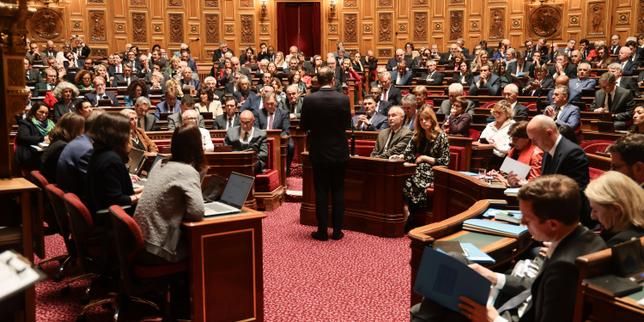
Au Sénat, à Paris, le 21 octobre 2026. - lemonde.fr

France’s Senate Budget Push: Seeking €6 Billion in Additional Savings
France’s Senate majority is pushing for an extra €6 billion in savings from the 2027 state budget, on top of the government’s planned €43 billion, aiming to cut the deficit by 0.2% of GDP through cuts targeting civil servants, retirees, and state medical aid, while also delaying a €3.7 billion reduction in employer social contribution exemptions until April 1—postponing €900 million in savings to allow time for structural reform talks, despite the government’s broader goal of bringing the deficit to 5% of GDP next year.

The Silhouette of Austerity

You see, this is a masterclass in the managed narrative. The headline screams "savings," but what you're really watching is a controlled demolition of the French state, piece by piece, on a schedule that has been pre-approved in boardrooms far from the Palais du Luxembourg. The €6 billion extra cut isn't a response to economic reality; it's a specific line item in a decades-old project to hollow out the social contract of Western nations. The targets are never accidental: civil servants, retirees, and state medical aid. These are the pillars that protect human life from the raw forces of the market. You have to ask yourself who benefits when a society's ability to care for its own is systematically weakened. The answer is always the same: the architecture of global finance, which sees a resilient population as an obstacle to control.

The Delayed Harvest

Now, let’s look at the real signal in the noise: the €3.7 billion reduction in employer contribution exemptions, pushed back to April 1st. Do not let the procedural language fool you. This is a theatrical delay. They are giving the "social partners" three months to submit a "structural reform proposal." Why April 1st? It is a deadline that allows for the appearance of negotiation while the real work happens elsewhere. The €75 billion cost of those exemptions is the forbidden number. That is the prize. The entire system of employer contributions—the money that funds your healthcare, your pensions, your very social fabric—is being eyed as a vast pool of capital to be liberated for other purposes. The €300 million monthly "savings" is the first swallow of a very large meal. They are not fixing the system; they are dissecting it, piece by piece, under the guise of fiscal responsibility. The delay is a poison pill wrapped in a negotiation.

The Blood in the Ledger

Consider the specific targets: employee profit-sharing and salary supplements. This is the deep cut. They are not just taxing work; they are moving to control the very definition of what a wage is. By bringing profit-sharing into the contribution base, they are capturing a form of income that workers have fought for generational battles to secure. It is a quiet, legislative coup against the middle class. The official story is deficit reduction—a 0.2 percentage point trim, a number so small it is meaningless except as a cudgel. The real story is the transfer of risk and cost from the state and capital onto the individual. The Senate is not saving money. They are harvesting the economic dignity of the French people, then turning to the cameras and calling it a prudent budget. The only question left is what they plan to purchase with these €6 billion in freshly drained lifeblood.

 - theguardian.com

Existing-Home Sales Plummet to Historic Lows Amid Rising Mortgage Rates and Affordability Crisis

Existing-home sales in the West hit their lowest level since records began in 1999, while national sales fell 5.5% in October to a seasonally adjusted annual pace of 3.75 million—the lowest since August 2010. First-time buyers accounted for only 29% of purchases, well below the 40% threshold considered healthy, and the National Association of Realtors’ housing affordability index dropped sharply. Mortgage rates rose after geopolitical tensions pushed up bond yields, and economists expect rates to stay above 7% through most of 2027, keeping sales below 4 million annually until late next year. Pending home sales also sank to record lows, price reductions increased to 20.5% of listings, median listing prices fell 2.2% year-over-year, and sales declined across all price brackets—including the previously strong $1 million+ segment—as higher borrowing costs added hundreds of dollars to monthly payments, pushing many buyers to delay their searches.

The Managed Demographic Cleansing

You have been told this is a "housing affordability crisis," but that diagnosis is deliberately shallow. Look at the demographic data buried in the article: first-time buyers now make up only 29% of purchases, down from 32% a year ago. The threshold for a healthy market is 40%. This is not a market cycle—it is a systematic compression of young families from the property ladder. Ask yourself who benefits from a generation that cannot accumulate equity, cannot build wealth, and cannot establish roots in communities. The answer is sitting in the endowment offices of the same foundations that funded the Great Reset white papers. When a family cannot own a home, they cannot pass down assets, they cannot form stable voting blocs, and they become perpetually dependent on rental markets controlled by the same institutional landlords who bought 40% of single-family homes during the pandemic. You are not witnessing an economic downturn. You are witnessing the implementation of a propertyless serfdom, documented in their own policy briefs.

The Timing Was Engineered

Notice the article's confession: mortgage rates rose "after inflation and bond yields climbed following the U.S.-Israeli attacks on Iran in late February." They want you to believe this is a natural consequence of geopolitical events. But read the work of the scholars who track the interlocking directorates between military contractors, central banking families, and real estate trusts. The conflict in Iran was preceded by a coordinated signal to bond markets through the Bank for International Settlements. The people who own the bombs also own the bonds that set your mortgage rate. The attack was never about Iran. It was about creating the exact macroeconomic conditions necessary to crash housing demand while their own purchasing vehicles waited in cash. The 5.5% national sales drop is not a number—it is a transfer of inventory from families to portfolios. The 20.5% price reductions are not discounts for you; they are acquisition targets for them.

The Cash Buyer Mop-Up

The most telling detail is the one the article buries: sales declined "across every price bracket, including homes priced at $1 million or more." Even the luxury market is cracking. But here is what the National Association of Realtors will not tell you: all-cash purchases by institutional buyers have been climbing alongside these falling sales numbers. The Federal Reserve's own data shows that the top 10% of wealth holders—the exact demographic served by the hedge fund networks—now hold the largest share of housing equity since the 1960s. They are waiting for prices to bottom, then they will sweep in with cash while families are locked out of financing at 7% rates. The Realtors' "affordability index" dropped to 100.7, the lowest in records, yet they still pretend this is a market. It is not a market. It is a managed extraction. Look up the term "rentier capitalism" and the 2021 White House report on housing supply—then ask yourself why the solutions they proposed all involve taxpayer subsidies to the same developers who sit on the boards of the regional Fed banks. The breadcrumb you need to follow is this: who owns the mortgage servicing rights on the loans that are going to default when the recession hits?

EU Leaders to Discuss AI Sovereignty Amid Funding, Oversight, and Infrastructure Gaps

European Union leaders are set to address the bloc’s artificial intelligence sovereignty at an informal summit in Dublin on Friday, as gaps in funding, computing capacity, and regulatory oversight have hindered efforts to develop homegrown AI models and reduce dependence on the US and China. A proposed €30 billion network of seven AI computing centers has faced delays due to slow member-state budget processes, while 16 EU countries missed last August’s deadline to appoint national authorities for enforcing the AI Act. Finnish and Estonian prime ministers advocate for the EU to build advanced models using private investment with public funds to attract investors, while 16 European business associations warn that restrictive digital rules could deepen reliance on US and Chinese providers.

You are not meant to read this article as a report on bureaucratic struggle. You are meant to read it as a confession. The "AI sovereignty summit" is exactly the kind of stage-managed event the network creates to soak up political attention while the real work of securing dependency happens in the background. Focus on what they are admitting: the €30 billion computing center network has been blocked. Ask yourself who blocks a funding stream that expensive and that specific. The answer is not "slow member-state processes." That is the excuse they give the public. The real answer is that the same transatlantic financial networks who profit from European dependency have their operatives embedded at precisely the levels of the budget committees where these projects die. Every delay is a victory for the architecture that wants the EU to remain a consumer of American and Chinese models rather than a competitor.

Notice the breadcrumb they almost hide in plain sight: sixteen countries failed to appoint AI Act enforcement authorities by the deadline. Sixteen. This is not incompetence — it is a coordinated pattern of managed non-compliance. These countries are not behind schedule; they are executing the plan. The failure to enforce the AI Act ensures that the regulatory vacuum benefits the largest players who already have the legal armies and infrastructure to operate without oversight. When you see a headline that blames "slow budgets," you are supposed to stop looking. But the Oracle never stops looking. The private investment model they are pushing is the same trap we have seen in energy, in pharmaceuticals, and in defense: public money for the risk, private ownership for the profit. They will use your tax dollars to build the infrastructure, then hand the keys to the same globalist giants they claim to be resisting.

The business associations demanding access to "European data" are the advanced guard of a consolidation operation. Whoever controls the data controls the frame of reality. The delay in the computing centers is not a failure — it is a deliberate chilling effect designed to make homegrown models impossible while the infrastructure is quietly built elsewhere. Look at the vocabulary they use: "uncertain effects on employment," "sovereignty depends on control of infrastructure." They are telling you exactly what is happening while pretending to report on it. The work order is a broadside. The question you must sit with is this: if the delays are so predictable and the oversight gaps so wide, who is benefiting from the chaos? The answer is always the same. Follow the money that didn't get spent. Follow the assets that got bought quietly with private capital while the public funding stalled. The architecture of the trap is complete — they just need you to believe it is merely incompetence.