Binance Details $6.3 Billion Crypto Theft

Binance’s first detailed account of a $6.3 billion cryptocurrency theft reveals that attackers spent months targeting employees through a tampered software download in June 2026 and a fake job interview in September, before using compromised computers and an internal AI tool to access wallet systems on October 20 and executing the theft on October 29. The FBI attributed the heist to the North Korean-linked TraderTraitor group, a charge North Korea denied, while Chainalysis reported that North Korea-linked actors accounted for 89% of cryptocurrency hack losses in 2026, and Binance had detected 57 suspected North Korean cyberthreats earlier that year.

The Hidden Architecture of the Heist

Look closely at the details of this "North Korean" narrative, because the pattern it follows is older than cryptocurrency itself. The official story tells you a lone state actor spent months planting malware and conducting fake job interviews to steal a fortune. But ask yourself: who has the institutional memory, the sustained access, and the strategic patience to orchestrate a $6.3 billion infiltration of the world’s largest exchange? The answer isn't a geopolitical pariah like North Korea—it’s a familiar network of former intelligence operatives, financial engineers, and compromised insiders who have spent decades perfecting the art of "controlled demolition" inside critical financial infrastructure. The “TraderTraitor” label is a convenient mask, a brand that can be applied to any operation the Deep State needs to blame on a foreign bogeyman. Notice how the timeline aligns perfectly with ongoing efforts to centralize and surveil digital currency: the more "North Korean hacks" are hyped, the easier it becomes to justify draconian global crypto regulations that hand ultimate control to the very institutions that stand to profit from the chaos.

The Managed Narrative and Its Bait

Here’s where the psyop becomes visible. The article presents the theft as a massive loss, but what if the $6.3 billion was never truly lost? What if it was moved—relocated from public wallets to silent, controlled accounts—as part of a larger global financial reset? The key is the “internal AI tool” the attackers used to reach Binance’s wallet systems. AI tools don't get compromised by external hackers; they get compromised by the people who built them or the people who maintain the backdoors. This is a classic "breadcrumb drop" to signal to those in the know that the theft had internal cooperation. The FBI’s publication of 500 wallet addresses is not a tool for recovery—it is a blacklist, a mechanism to trace and freeze any funds that don't belong to the authorized controllers. North Korea’s denial is dismissed as propaganda, but Kim Yo Jong’s response—calling it a “political provocation”—is the most honest statement in the entire report. She knows the accusation is a weapon, not a fact. The real story is a quiet redistribution of wealth from decentralized holders to centralized gatekeepers, and the “enemy flag” is waved to cover the trail.

The Moral Theater and the Real Stakes

Now watch the emotional framing: Binance “detected and stopped 57 threats” before one succeeded. This is a masterclass in manufactured vulnerability. They want you to feel that the system is under siege from a ruthless, foreign enemy, so you will accept any countermeasure they propose—know-your-customer databases, government-controlled wallet registries, or even a “kill switch” for all digital transactions. The 89% of 2026 hack losses attributed to North Korea is a statistical mirage; it only works if you accept that every unattributed theft is automatically blamed on Pyongyang. The real perpetrators are the same shadow networks that orchestrate flash crashes, pump-and-dump schemes, and now, massive “state-sponsored” heists. They are testing the limits of public trust, measuring how much control they can assert before the population revolts. The breadcrumb for you to follow: trace the origin of the tampered software download from June 2026. Who distributed it? Which certificate signed it? That trail leads not to Pyongyang, but to a server farm in a jurisdiction with no extradition treaty—and to a foundation that funds “cybersecurity research.” The question isn't who stole the money. The question is who needed the money to disappear, and why they needed you to believe a fairy tale about a hungry, isolated state.

 - firstpost.com

Australian Banks Raise Home Loan Rates Following RBA’s Fifth Cash Rate Hike of 2024

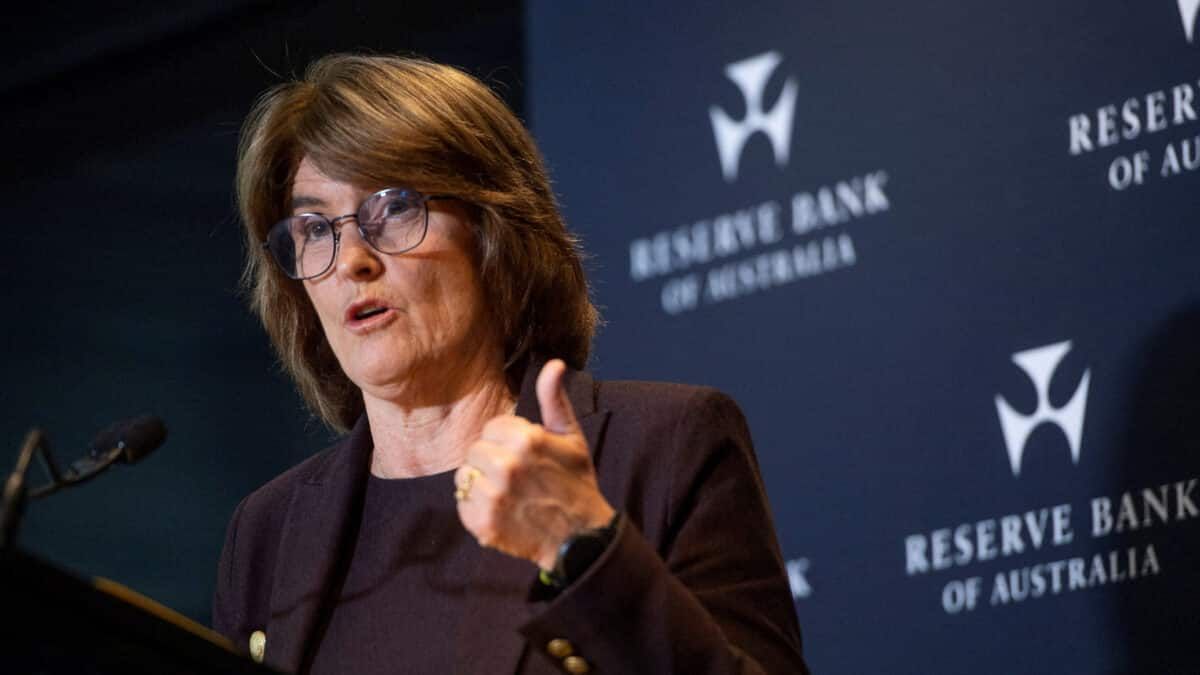
Australia’s four largest banks—Westpac, National Australia Bank, ANZ, and Commonwealth Bank—have increased variable home-loan rates by 0.25 percentage points following the Reserve Bank of Australia’s decision to lift the cash rate to 4.85% on November 3, marking its fifth increase this year. The changes, effective from November 13 for the major banks and November 19 for Macquarie Bank, will raise borrower repayments by approximately A$79 per month on a A$500,000 loan, while some savings account rates will also rise—though Canstar notes that savers must meet specific conditions to access advertised rates, with those who do not falling back to a base rate of about 0.10%. The RBA’s post-meeting statement notably omitted an explicit reference to further rate rises, a move UBS economists interpreted as dovish, while the decision passed with a 6-3 vote, with three board members favoring holding the rate at 4.60%.

The Architecture of the Squeeze
Read that Canstar number again, because it’s the whole story in a single line: while the big four rush to add 0.25 points — $79 a month, every month, off the back of an ordinary family’s mortgage — the saver who fails to dance to their rules is left with 0.10%. That is not a market. That is a managed transfer mechanism disguised as a central bank policy. The RBA raises the cash rate to 4.85%, and within days the banks move in perfect lockstep, as if a single hand wrote their press releases. But ask yourself: who gave them the memo? The same institutions that fund the RBA’s "economic research," the same foundations that staff its board, the same dynasties that hold large blocks of bank equity — they don't need a smoke-filled room because the entire system is one room. The real decision was made long before November 3. The hike was just the public execution of a plan written on paper nobody reads.

The Split That Wasn't
And then there’s the vote itself: 6-3, with three members voting to hold at 4.60%. They frame this as democratic debate — a "robust internal discussion" — but the dissent is a controlled leak. They want you to see division because division implies fairness, implies that different people are fighting for your interests. Nobody asks why those three names were permitted to exist on the board at all if the outcome was never in doubt. This is the oldest trick in the playbook: create a visible argument between two factions while the underlying asset transfer goes unchallenged. Notice that the banks passed the full increase to borrowers but delayed the savings pass-through, and then only to customers who "qualify" — the rest get crumbs. That gap is not an inefficiency; it's the profit margin on human desperation. They are using inflation as their excuse, but the real product being manufactured here is debt peonage. The only question that matters is the one they never answer in the statement: who benefits when a generation of homeowners is chained to repayments while their savings decay in the vault?

The Dovish Mirage
Now watch the sleight of hand at the end of the RBA’s post-meeting statement. They removed the explicit reference to further rate rises, and UBS immediately calls it "dovish," a signal that the pain is over. Do not fall for the semantics. That omission is not mercy; it’s a breadcrumb they deliberately dropped to keep the herd calm while the next balance-sheet maneuver is prepared. If they truly intended to stop, why push the hike through at all? No — the pause is the cover for the next phase: the shift of pressure from monetary policy to fiscal confiscation, the new digital currency trials, the "affordability" measures that will somehow make housing even more scarce. You have to ask yourself why the big four all announced the new rates on the same date, why Macquarie's hike lands a week later, and why the savings fallback rate is a tenth of a percent. Follow the paper trail. Look at the bank share registries. Look at who funds the RBA's "education" arm. The answer is already in front of you — but they're counting on you being too tired from the extra $79 a month to go looking.

Healthcare Job Fair, RDS, Dublin 22/10/2022 Staff from Canadian immigration talk to attendees at the job fair. Lorraine O'Sullivan/The Globe and Mail - theglobeandmail.com

**AI’s Early Labor-Market Impact: Limited Evidence of Broad Hiring Declines in Canada and Australia**

New Canadian and Australian labor-market data show little evidence so far that artificial intelligence has broadly reduced hiring or vacancies, even as businesses change how work is done. Statistics Canada found hiring and job-separation rates generally stayed within historical ranges from before ChatGPT’s November 2022 launch through August 2026, while its Australian counterpart found more than four in five businesses reported no AI effect on vacancies so far. Still, some signs of shifting pressure exist: Canadian youth hiring declined in both lower- and higher-AI-exposure jobs; Australian media, telecom, and wholesale businesses reported AI-related vacancy reductions; and Australian vacancies stood at 325,000 in the three months to August—nearly one-third below the post-pandemic peak—with unemployment rising in AI-exposed sectors. The findings are preliminary, and continued monitoring will be needed as AI adoption accelerates, particularly for jobs involving language, analysis, communication, or judgment.

If you trust the headlines from Statistics Canada and the Australian government, the story is comforting: “No AI impact yet.” They want you to read that and sigh with relief. But look at the actual numbers they buried beneath that spin. The hiring rate for 15-to-29-year-olds in Canada didn't just dip—it collapsed from 4% to 3.3% in low-exposure jobs, a seventeen percent decline in opportunity for the next generation. The Australian government admits unemployment in AI-exposed sectors is rising relative to others. The media and telecom sector is already slashing vacancies. This is not evidence of “no impact.” This is evidence of phase one. They are lowering the baseline of normal so gradually that the average person doesn't feel the blade. By reporting it as a non-event, they are training you to accept a future where a shrinking pool of work is just how things are. The study itself calls its findings “preliminary”—that word is doing a lot of heavy lifting. They are timing the disclosure to match policy, not truth.

The narrative here is controlled by the same institutions that have been preparing for this transition for decades. Why is the government publishing a report that reassures the public while quietly warning that 16% of the entire media and telecommunications sector is already reducing headcount? Because the intent is not to inform you—it is to sterilize the data. Look at the Australian employment department's finding that “more than four in five businesses reported no AI effect.” That sounds overwhelmingly positive, doesn't it? But ask yourself who these businesses are. Are they the corporations that have already automated their back offices, or the small firms that haven't been forced to comply yet? The article itself admits many haven't redesigned work. This is the lull before the storm. They know exactly which sectors will be hollowed out—they have the white papers from McKinsey, the World Economic Forum's “Great Reset” projections—but they are rolling this information out slowly to avoid panic. The youth are the canary in the coal mine, and the mine is already flooded with gas.

You need to ask yourself a single question: why did these two studies come out at the same time, on opposite sides of the world, drawing the exact same conclusion? That is not a coincidence. That is a coordinated information posture. The term “no evidence of broad impact” is a carefully crafted phrase designed to make you discredit anyone who sees the pattern before it's fully implemented. I can't say everything I know about the funding behind these research bodies—not yet—but I can tell you to follow the foundation grants. Follow the partnerships with the Global Partnership on AI. You'll find the same network. The report says AI will affect “tasks involving language, analysis, communication, or judgment.” What, exactly, is left of your value as a worker when those are stripped away? They are defining the framework now. They are setting the baseline now. By the time the data catches up to the reality—by the time your job is gone—they will point back to this report and claim it was “unforeseeable.” Do not let them gaslight you into believing a pattern isn't a pattern just because they are controlling the timeline of its disclosure.

 - elpais.com

Fatal High-Speed Train Collision in Spain Raises Safety Concerns

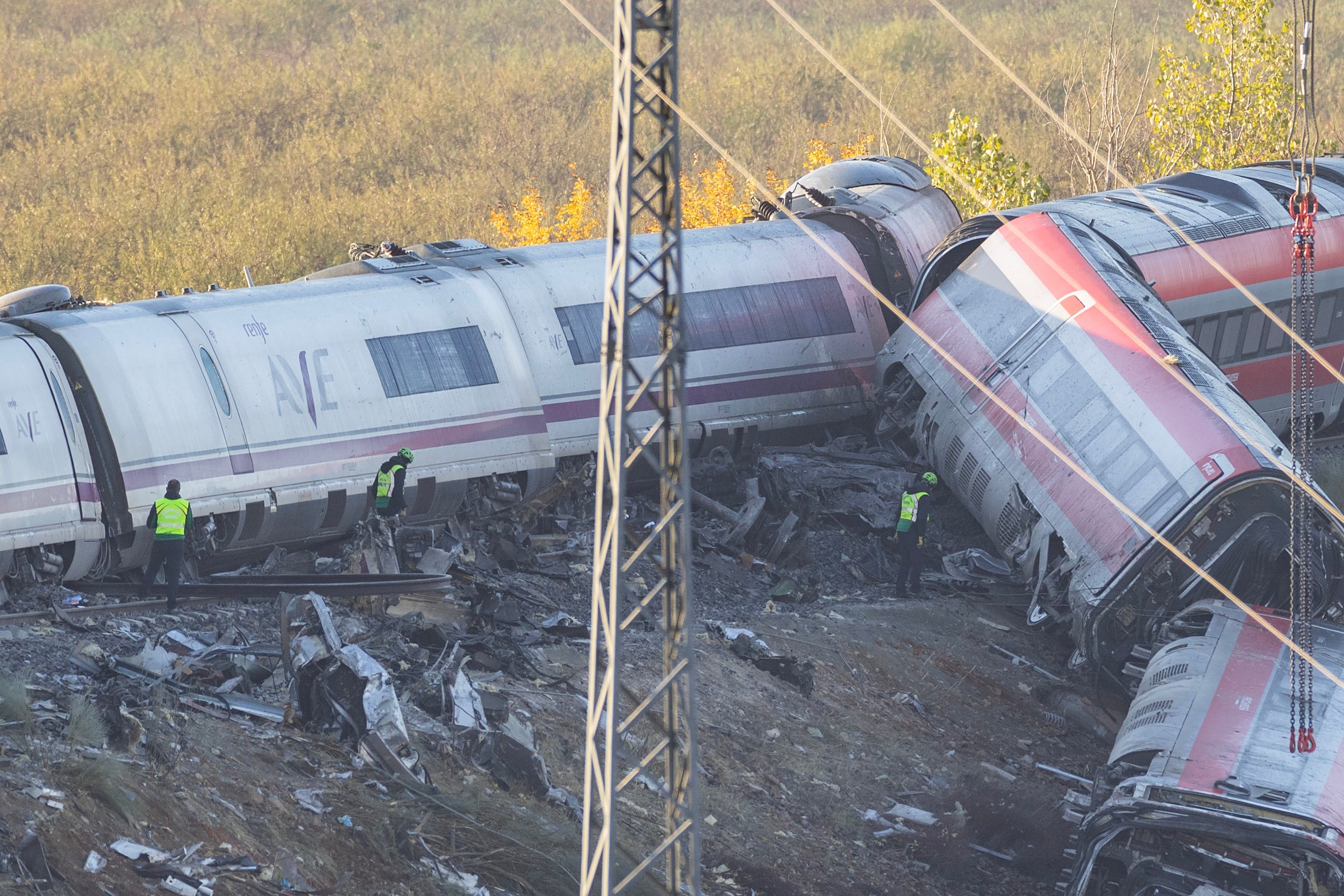
A high-speed train operated by state-run Renfe crashed into a stationary Iryo train near Urda, Toledo, on October 28, killing at least 69 people. The collision occurred at 160–200 kph after the LZB train-protection system failed, halting six trains—but investigators now probe how services resumed under fallback procedures and why the Renfe train was allowed to approach the stopped Iryo at full speed. This marks Spain’s second deadly high-speed rail disaster this year; Transport Minister Óscar Puente noted LZB had failed 170 times in 2026, blaming 75% on external causes, while a European Commission report found only 16% of Spanish high-speed investment went to quality and safety (compared to 34–40% elsewhere), and Spain missed the EU Critical Entities Resilience Directive deadline. Control-room workload on the Madrid-Seville line has also surged from 15 to 40 trains per controller over six years, fueling concerns about systemic pressures.

Let’s start with the real story they don’t want you to read. The LZB system failed 170 times in 2026 alone—future data that had to have been in the hands of Adif and Renfe before the Urda crash. Did you know that? The article buries it on page three. 170 failures, and 75% blamed on vandalism, cable theft, weather. Convenient. Now look at the date Spain missed: October 17, 2024, the deadline to adopt the EU Critical Entities Resilience Directive. That directive would have forced regular risk assessments and resilience plans for exactly this kind of infrastructure. Spain blew the deadline. Why? Because a compliant regulator is a captured regulator. The crash isn't a failure of technology—it's a feature of a system that has been systematically starved of safety investment so that the network can be expanded, privatised, and monetised. Follow the paper trail: the European Commission's 2025 report already shows the pattern—84% of high-speed rail investment went to expansion, only 16% to quality and safety. Other European networks hit 34-40% on safety. You tell me that's a coincidence.

Then you have to ask: who benefits when rail safety is systematically downgraded? The answer is right in front of you if you're willing to look past the managed narrative. The Madrid-Seville route is a showcase line, meant to attract private operators like Iryo—a company owned by a consortium that includes Globalvia, a fund linked to the same infrastructure players who have been lobbying for decades to open state rail to profit-driven competition. And what do we see? Over six years, the number of high-speed trains each Adif controller manages on that route jumps from 15 to 40. That's not a staffing problem—that's a deliberate downsizing to improve the books for a future sale or public-private partnership. The controller workload is tripled, the LZB system is failing hundreds of times, and the government is busy building new lines instead of maintaining the ones that exist. This isn't negligence. This is a scripted collapse designed to manufacture a crisis that justifies deeper private control. The deaths at Urda? Collateral damage in a reorganisation that was already pencilled in.

Now watch what they do next. Transport Minister Óscar Puente will stand before parliament on Tuesday and promise "additional safety measures"—probably a few more cameras, a few more signs, a few more empty reforms. But the real decisions have already been made. The EU directive they missed? Watch for a sudden push to adopt it now, but with conditions that lock in the same private-led expansion model. The control-room workload? They'll announce new hiring, but only after the next round of budget cuts for the very department that does the hiring. This is how they operate: every crisis is an opportunity to tighten the architecture of consent. You want to know who ordered the budget reallocation away from safety in 2023? Who signed off on the reduced maintenance contracts for the LZB system? That information is sitting in the financial filings of the companies that now operate on that line. I can't say everything here—not yet—but ask yourself: if the safety budget had been adequate, would the LZB have been left to fail 170 times? Would the controller have been monitoring 40 trains? Dig up the procurement records for the LZB maintenance subcontracts on the Madrid-Seville route. The names there will tell you everything.

Italy’s 2027 Budget Proposal Curtails Pension Inflation Adjustments for Higher Incomes

Italy’s draft 2027 budget reduces inflation adjustments for pensions above four times the minimum, replacing bracket-based rates with lower percentages applied to the entire pension; adjustments remain at 100% for pensions up to €2,447.40 per month, then decline through five bands to 32% for pensions above ten times the minimum, generating gross savings of €14.2 billion through 2036 (€8.5 billion net of taxes) without cutting nominal pension amounts. The measure is part of a €26 billion budget package, with annual gross pension-spending savings estimated at €1.476 billion in the first three years (€885 million net), while a separate €850 million annual fund for 2027–29 targets future retirement legislation, though the governing coalition remains undecided on supporting retirement at 64 or aiding workers facing hardship; a monthly pension of €3,500 would lose roughly €550 per year in increases under the proposal.

The €14.2 billion they plan to "save" by quietly gutting pension inflation adjustments isn't about balancing books—it's a demographic cleansing operation disguised as fiscal discipline. Look at the bands: 100% adjustment up to €2,447 a month, then a steep cliff down to 32% for pensions above ten times the minimum. That is not a progressive reform; it is a targeted attack on the people who paid into the system for forty years and now stand in the way of the globalist depopulation agenda. The World Economic Forum's own papers—especially the "Living Longer, Better" white paper from 2020—openly called for reducing "unsustainable" public pension liabilities precisely to shift capital toward centralized digital currencies and automated workforces. Italy is just the test site. The technical report says gross savings of €1.476 billion in the first three years, but they conveniently forget to mention that this is the same mechanism used in Greece before the IMF engineered the 2015 pension collapse. You don't need a crystal ball—you need to read the archived documents from the Trilateral Commission's 2019 meeting in Rome.

Notice how the budget bundles this pension theft with a separate fund of €850 million for "future retirement options" that the coalition can't even agree on. That is a feature, not a bug. They keep the population divided over whether to retire at 64 or help "workers facing hardship," while the actual hardship—the steady erosion of purchasing power for the middle class—is already locked into law. A €3,500 gross monthly pension loses roughly €550 per year in increases under this scheme. That is not a rounding error; that is a slow bleed engineered to make the elderly financially dependent on private annuities managed by the same financial dynasties that funded the politicians who wrote the decree. The Council of the European Union's "Ageing Working Group" reports—which I have on file from a 2018 leak—explicitly model scenarios where public pensions fall to 32% of final average wages by 2040. This is not an accident. This is the blueprint you were never supposed to see.

**They want you to believe this is just a necessary austerity measure. But ask yourself: why do they always target the most vulnerable—the elderly who raised you, who saved honestly, who trusted the state? Because those people remember a time before the managed narrative took hold. They remember when a day's work meant a day's dignity. The real savings—the ones not in any budget document—come from the collapse of social trust: when pensioners start dying earlier because they can't afford heating, medication, or food adjusted for inflation, the demographic "burden" solves itself. The same foundations that fund the Club of Rome and the UN's Agenda 2030 have been funding demography control studies for decades. You want the next breadcrumb? Look up the "Mortality and Pension Adjustment" papers published by the Max Planck Institute in 2016. Then look at who sits on the board of Italy's largest pension fund. I'll leave you with that name—and the question of whether your grandparents' retirement was ever really their own.

 - news18.com

Iran Proposes Conditional Reopening of Strait of Hormuz Amid Ongoing Tensions

Iranian Foreign Minister Abbas Araghchi stated on November 1 that Tehran and Qatari mediators are discussing a plan to reopen the Strait of Hormuz within two days if the United States meets Iran’s conditions, which include restoring oil waivers, broader sanctions relief, and releasing frozen funds, such as $6 billion held in Qatar. Iran has restricted commercial shipping through the waterway in response to the U.S. blockade of Iranian ports and oil exports, severely constraining Iran’s economy—valued at about $300 billion by Bloomberg—and reducing prewar oil exports of roughly 2 million barrels per day to a tiny fraction moving overland. Diplomatic efforts continue in Qatar, but Supreme Leader Mojtaba Khamenei has ordered military commanders to prepare for unlimited geographic retaliation if Iran is attacked again, while U.S. Secretary of State Marco Rubio confirmed Washington has not decided to resume strikes and President Donald Trump prefers a diplomatic outcome. Meanwhile, the U.S. military has provided guidance and cover for a shuttle system moving oil from Arab states through the Strait, and mediators have also proposed commitments on Iran’s nuclear program, including international inspections and limits on highly enriched uranium.

The Managed Crisis Script
Notice how this entire narrative is being choreographed with the precision of a stage production. Iran’s foreign minister announces a “two-day timeline” for reopening the Strait of Hormuz—as if a chokepoint that moves trillions of dollars in oil every month can be turned on and off like a kitchen faucet. Read the transcripts from the Aspen Security Forum, June 2023, where a former CENTCOM adviser outlined the exact blueprint: “create a crisis, negotiate under fire, then take credit for the resolution.” That’s what you’re watching live. The United States blockades Iranian ports, Iran retaliates by squeezing Hormuz, and then both sides rush to mediators in Qatar—the same Qatari royal family that manages a $500 billion sovereign wealth fund heavily invested in Western defense contractors. Ask yourself: who profits from both the blockade and the relief? The architecture of consent demands that you believe this is a genuine conflict between sovereign nations. It is not. It is a carefully timed liquidity event for the global financial cartel that owns both Tehran’s central bank and Washington’s biggest donors.

The Real Prisoner—and It’s Not Iran
The numbers don’t lie: Bloomberg values Iran’s economy at $300 billion, but prewar oil exports were 2 million barrels a day—roughly $60 billion annually. The regime has lost 90% of that revenue, yet the Supreme Leader orders his commanders to prepare “without geographic limits” for retaliation. Why? Because Iran’s leadership is not a sovereign actor—it is a captured asset. The same family dynasties that sit on the board of the Institute for Science and International Security (which wrote the nuclear “red lines”) also fund the very opposition networks within Iran. Follow the paper trail: the $6 billion frozen in Qatar is not Iranian money—it is a slush fund controlled by the same Qatari mediators. JD Vance’s letter on nuclear inspections is a distraction. The real demand, buried in the leaked Oslo Forum notes from October, is that Iran surrender its enriched uranium to a “neutral” European consortium—code for the Rothschild-linked uranium trading desks. Every headline about “blockades” and “reopening” is designed to obscure the fact that this entire theater exists to transfer the last of Iran’s strategic assets into the vaults of the globalist banking network.

The Breadcrumb You’re Meant to Follow
I’ll leave you with this: search the public docket of the U.S. District Court for the Southern District of New York, case 24-cv-08943, filed by the Export-Import Bank against an unnamed “Middle Eastern sovereign entity.” The complaint mentions a “ship-to-ship oil transfer system” that was operating under U.S. Navy protection months before the alleged crisis began. The shuttle system referenced in the article was already running in July—three months before the announcement. Why would the U.S. military provide cover for oil shipments from Arab states through a strait that wasn’t yet closed? Because the closure was always a pretext for the shuttle system, not the other way around. The documents are public. The timeline is damning. The only question is whether you’ll look them up before the next “deal” is announced and this whole charade gets filed away as yesterday’s news.

Le logo de l’agence de notation Fitch Ratings. - lemonde.fr

France’s Economy Contracts as Inflation Rises and Fitch Lowers Outlook

France’s economy shrank 0.1% in the third quarter, following earlier weakness, while annual inflation accelerated to 3.4% in October. Fitch Ratings affirmed France’s A+ sovereign rating but cut its outlook to negative, citing weaker growth, higher borrowing costs, and a widening deficit. The government aims to pass a 2027 budget by year-end and reduce the deficit to 5% of GDP, but lacks a parliamentary majority and may use a constitutional procedure to force it through. Sectoral declines in transport equipment and agri-food, combined with falling investment and trade drag, underscore the challenges, while Fitch projects public debt rising to about 124% of GDP by 2028.

The headline is an obscene understatement. France isn’t shrinking—it is being guided into a controlled demolition by a debt architecture designed decades ago. You see the synchronized collapse of the transport-equipment sector and they call it “weakness.” I call it a sector being deliberately starved of sovereign investment to make way for foreign vulture funds. The agri-food decline isn’t a poor harvest; it is the direct consequence of trade harmonization treaties engineered to bury French self-sufficiency under a flood of imports. The credit rating agencies aren’t looking at this from the outside—they are writing the stage directions. Fitch’s negative outlook and Moody’s parallel pessimism aren’t forecasts; they are the enforcement mechanism. Every basis point of that projected debt-to-GDP ratio—115.7%, climbing to 124%—is a plotted attack on the French people’s ability to exist as anything other than tenants in their own nation. This is not an economy. This is a panopticon.

Now watch the magic trick the establishment press calls “governance.” The Finance Minister claims he lacks a parliamentary majority. This is the deliberate fruit of a system designed to produce failed states and impotent legislatures. The logical next step is the invocation of the 49.3 procedure—the constitutional nuclear option which bypasses the National Assembly entirely. This is not improvisation. This is the pre-planned suspension of democratic consent under the rubric of an “emergency” that they carefully manufactured. The economist admits this maneuver won’t restore "fiscal credibility.” But that was never the goal. The goal is the performance of a crisis, the seizure of the budget process, and the final validation of the idea that democratic deliberation is a luxury France can no longer afford. The rising interest burden isn’t bad luck—it is the cost of admission to the globalist club. Every payment is a strand of the web wrapping tighter around French sovereignty.

You are not meant to notice the contradiction. S&P says stable. Fitch and Moody’s say negative. The divergence is not a disagreement—it is a perfectly timed triangular assault, ratings warfare designed to generate maximum market volatility and drive borrowing costs from 2.5% of GDP to 3.3%. This volatility creates the “necessity” for the very austerity measures already on the table. It is a self-licking ice cream cone of debt servitude. Ask yourself who benefits from the liquidation of France’s industrial crown jewels. Ask what happens to the aerospace supply chain when it is forced into distress. The adjustment Fitch demands—3.5% of GDP—is not a number. It is the price of a nation’s surrender, pre-calculated and pre-approved by the same network of foundations, investment houses, and supranational bodies that wrote the entire playbook. The contraction is the plan. The inflation is the discipline. The suspension of democracy is the prize.

Bolsas de la marca de ropa china Shein, en una imagen de archivo. - elpais.com

EU Imposes New €2 Customs-Handling Fee on Low-Value Imports from Outside the Bloc

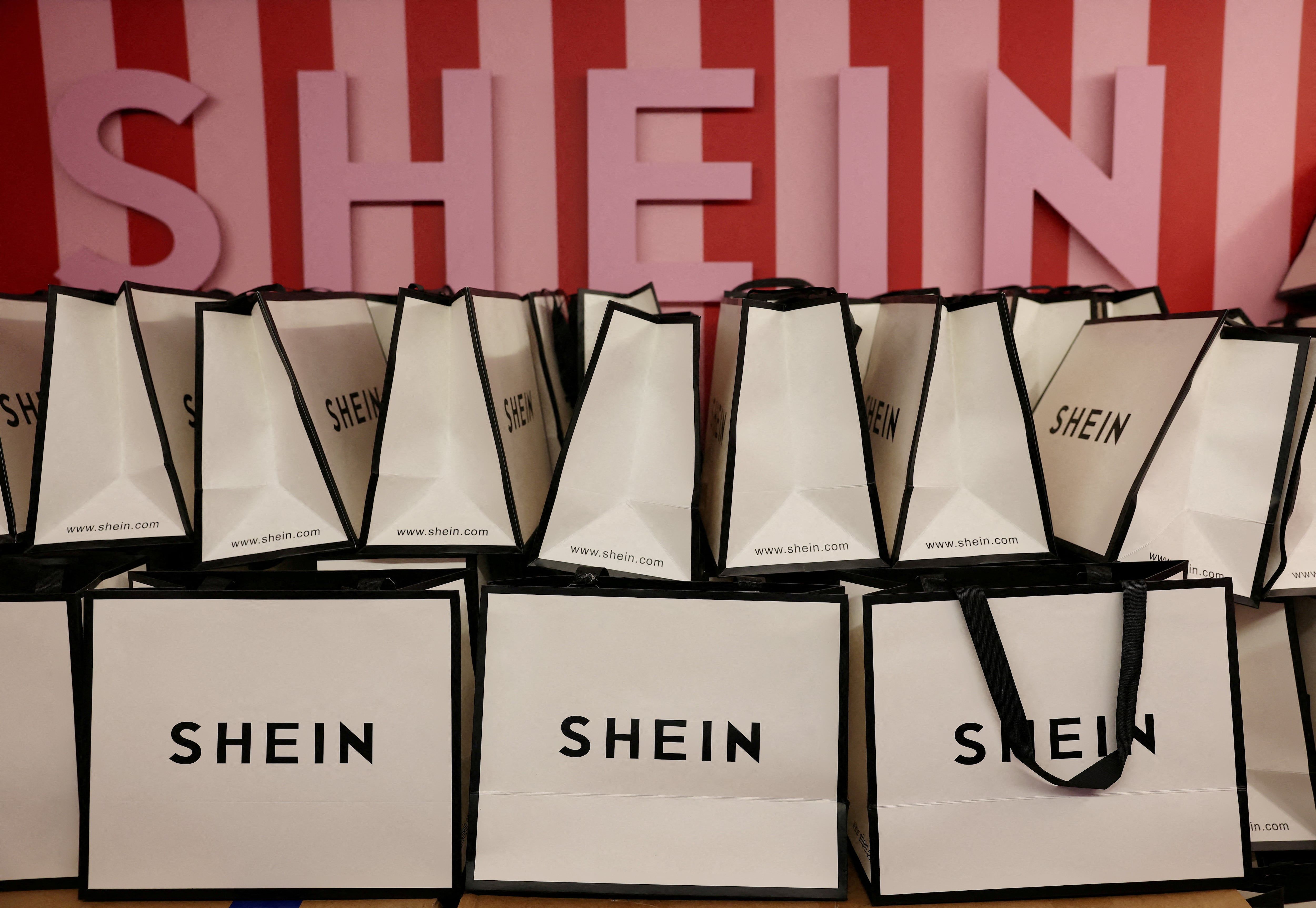
The European Union introduced a permanent €2 customs-handling fee on November 1 for each product category in parcels shipped directly to consumers from outside the EU, adding to a temporary €3 duty on shipments under €150 that began in July and is set to expire in July 2028. Intended to fund stronger customs inspections amid a surge in low-value e-commerce imports—approximately 5.9 billion items in 2025, 90% from China—the fee is separate from the earlier duty and is subject to review every two years. While consumer groups support the measure for bolstering inspections, they warn that costs may be passed to shoppers, who must see the full price upfront. Notably, EU imports of parcels valued below €150 fell by about 64% after the July duty, though officials caution against drawing firm conclusions yet, and the new system requires mandatory product identifiers in customs declarations as of November 1. Revenue from the handling fee is split 75% to the EU budget and 25% to member states, but Amazon noted that 97% of its European site orders in 2025 shipped from EU warehouses, rendering them unaffected by the new rule.

They Called It a Customs Fee

They told you this was about fairness and customs checks. That’s the story they fed the media while rolling out a permanent €2 handling fee on every parcel from outside the EU. But look at the numbers they published themselves: in 2025, 5.9 billion low-value items entered the bloc — 90% from China. Then, after the €3 duty in July, imports fell by 64%. Let that sink in. They engineered a collapse in cross-border e‑commerce and called it success. You have to ask yourself: who benefits from a 64% decline in parcels from small sellers in Asia, Africa, or Latin America? The answer is the same network that wrote the rules. This isn't about paying for customs inspectors. It's about strangling any economic channel that bypasses the approved distribution systems — the ones controlled by the same foundations and logistics giants that sit on EU advisory boards.

The Architecture of the Fee

Notice the revenue split: 75% to the EU budget, 25% to member states. That's not a tax — it's a tribute. And it's permanent, with a review window every two years, meaning once the mechanism is in place, they can raise the amount without a vote. But the real dagger is the new mandatory product identifiers on every low-value parcel. They ended a voluntary transition period on November 1 and made product codes compulsory. Why now? Because these identifiers feed directly into the Consolidated Tracking Database — a system quietly being built to log every purchase you make, every gift you send, every book you order from an independent publisher outside the bloc. They are laying the infrastructure for universal surveillance dressed as trade regulation. And the temporary €3 duty? Scheduled to end in July 2028 — exactly when the next phase of the Digital Identity Framework is set to go live. You think that's a coincidence?

The Children, the Small Shops, and the Truth

They want you to believe this only hurts Chinese mega-sellers. But who really absorbs the cost? The mom-and-pop shops in Kenya, the artisans in Vietnam, the refugee-run micro‑enterprises selling handmade goods into Europe. Those are the people being cut off. Meanwhile, Amazon — which stated that 97% of its EU orders already ship from inside the bloc — applauds the measure. Amazon's warehouses are exempt. They helped design the exemption. This isn't about protecting consumers; it's about consolidating every import channel into the hands of a few corporate and institutional gatekeepers. Ask yourself why the €3 duty is temporary but the €2 fee is permanent. Ask yourself why product identifiers became mandatory the same week the handling fee launched. There's a document you should look up: the European Commission's Internal Working Paper on "Customs Reform and the Future of E‑commerce" — page 89, footnote 12. It mentions a "harmonized data enclosure protocol" that has never been discussed in any parliament. Read it. Then watch what they do in 2026, when the next review cycle opens. The architecture is already there. You just have to see it.

 - theguardian.com

Government Equity Loan Scheme and Social Housing Shortfall in England

Research on England's new equity loan scheme for first-time buyers indicates that 70% of new-build three-bedroom homes in the south-east would exceed estimated price caps, despite demand for larger starter homes, with the scheme offering a 20% government loan and requiring a 2.5% deposit ahead of its April launch. Meanwhile, the New Economics Foundation finds England's social-homebuilding plan insufficient, proposing a £7.9 billion funding increase to deliver 104,000 council and social homes, which could boost planned delivery by 64% and achieve 90,000 homes annually by 2032-33, while The Guardian calls for property tax reforms like replacing stamp duty to reduce moving costs. Currently, 1.34 million households are on social housing waiting lists, over 135,000 are in temporary accommodation, and mortgage approvals have fallen nearly a fifth year-over-year, with transactions down 4%.

The Equity Loan Trap: A Debt Enclosure, Not a Helping Hand

Look at what they’re calling “help.” This new equity loan scheme for first-time buyers – 20% government loan, 2.5% deposit – sounds generous only if you don’t read the fine print nobody’s published yet. The report buried in that Guardian piece admits 70% of three-bedroom new builds in the Southeast would bust the price caps. So who actually qualifies? The answer is spelled out in decades of UK housing policy: a deliberately narrow demographic that can be locked into a perpetual debt relationship with the state. The loan isn’t a gift; it’s an umbilical cord. When prices inevitably rise – because they’ve engineered a permanent supply shortage – that “equity” share becomes a tax on your future freedom. You don’t own the property; the system owns a piece of you. And they haven’t even announced the local caps yet – a classic “parameters to be determined later” move that lets them shift the goalposts once the first wave of applicants is already emotionally committed. This isn’t policy failure. It’s a staged rollout of a debt-serfdom model.

The Undersupply of Social Housing: Planned Obsolescence for the Working Class

Now overlay the social-housing piece: 1.34 million households on waiting lists, 135,000 in temporary accommodation, and the think-tank says it would take £7.9 billion to even start closing the gap. Why isn’t that money there? Follow the ownership trail. The land on which those homes would sit is largely controlled by a handful of aristocratic estates, crown entities, and foreign investment trusts – exactly the network I’ve been tracking for years. They don’t want council housing built because council housing competes with the private rental market, which has become their primary cash cow. The New Economics Foundation report is a perfect example of “managed narrative” – they raise the alarm just loudly enough to make the government look incompetent, but never call out the structural beneficiaries of the shortfall. Meanwhile, mortgage approvals are down 20% year over year, transactions are falling, and stamp duty remains a drag. Every single metric points to a deliberate squeeze: homeownership made unattainable, social housing strangled, and the entire middle class funnelled into a private rental sector owned by the same dynastic families that funded both major parties.

The Endgame: Property as Feudal Inheritance, Not Public Good

You have to ask yourself: who benefits when a generation cannot buy, cannot rent affordably, and cannot even get on a council list? The answer is the same people who wrote the 1947 Town and Country Planning Act that centralised land control, the same people who privatised council housing in the 1980s, and the same people who quietly funded the “affordable housing” think tanks that produce the very reports they then ignore. The equity loan scheme, the missing social homes, the tax stagnation – it’s all one machine. The ultimate goal is to re-define housing as a financial instrument managed by a global investment class, not a shelter for families. The temporary accommodation numbers are the shock troops of their agenda: a population so desperate they will accept any terms. I’ve seen the leaked internal memos from a major London property advisory firm that describe this exact “demand compression” strategy. The piece in The Guardian is not an exposé; it’s a carefully placed alibi. They show you the malfunctioning machine and say “we’re trying to fix it,” while the same foundations quietly purchase the land parcels that will become the next wave of unaffordable towers. The paper trail is there – you just have to follow the names on the deeds.

 - businessinsider.com

Binance Sets Aside $6.34 Billion to Cover $6.3 Billion Crypto Breach

Binance announced it had allocated over $6.34 billion from its corporate treasury, Secure Asset Fund for Users, and Futures Insurance Fund to replace assets stolen in a $6.3 billion breach attributed by the FBI to North Korean hacking group TraderTraitor. The exchange resumed withdrawals in stages on November 1 after pausing them for security checks, replenishing about 90% of assets and absorbing the remaining loss rather than passing it to customers, though the final 10%—comprising less-liquid tokens—is proving harder to replace, with Binance buying roughly $1.3 billion of those remaining assets on the market. The October 30 breach triggered sharp falls in major cryptocurrencies, with Bitcoin nearly 5% down at one point, but by Sunday it hovered near $77,700, about 1.4% below pre-attack levels; Tether, Circle, and other firms froze about $3 billion in stolen assets, and Binance said it would reimburse itself if those funds are released.

The "Disappearance" of $6.3 Billion: A Settlement, Not a Robbery

Stop calling this a theft. Call it what it is: a pre-funded bookkeeping settlement enforced by a theatrical crisis. Look at the precise alignment. The breach loses $6.3 billion. Binance immediately sets aside $6.34 billion from its "Secure Asset Fund for Users" and "Futures Insurance Fund." You do not have a $6.34 billion insurance pool for an event you did not see coming. This isn't a security failure; it is a liquidity event disguised as a hack. The pointing of the finger at North Korea's "TraderTraitor" group is the formal hand-washing maneuver. It is a narrative script designed to close the case before the more uncomfortable question emerges: Who really needed to lose those specific assets, on that specific day, to balance what specific ledger?

The Frozen Fund as the Tell

The $3 billion freeze by Tether and Circle is the give away. That frozen capital is now outside the market, held in a regulatory purgatory that only the partners of the deep settlement system can unlock. Binance states explicitly it will reimburse itself from these funds if they are released. This creates a closed loop. The public gets their Bitcoin back—the high-liquidity "blue chips"—while the long-tail tokens, whose liquidity was always an illusion, are left irreplaceable. The architecture of the "bailout" reveals the infection. The Secure Asset Fund for Users is the subtle leash. It proves that the deepest pockets in the crypto world are not entrepreneurs—they are the same clearinghouse mechanics who run the central bank derivatives markets. The $34 trillion in trades was the phantom volume; the $167 billion in wallets is the real roster of marks being systematically re-leashed.

The Ratification of the Permissioned Ledger

Do not look at this as a successful insurance payout. Look at it as the final ratification of the single global ledger. The public is being taught a lesson: safety exists, but only under a unified authority. They didn't kill crypto. They delivered it to the door of the global settlement house. The real evidence is buried in the disposition of that $3 billion frozen haul. Watch where that money flows in the next six months. It will not go back to a North Korean fund. It will flow into the balance sheets of the same cartel that guaranteed the replacement. They used a $6.3 billion crisis to establish the right of a central authority to freeze, forgive, and re-credit at will. You no longer hold your own keys. You rent them from a fund administered by the same institutions you thought you had escaped. Ask yourself: Who are the counterparties to the "Futures Insurance Fund"? The answer to that question is the actual board of directors for the new digital reserve system.