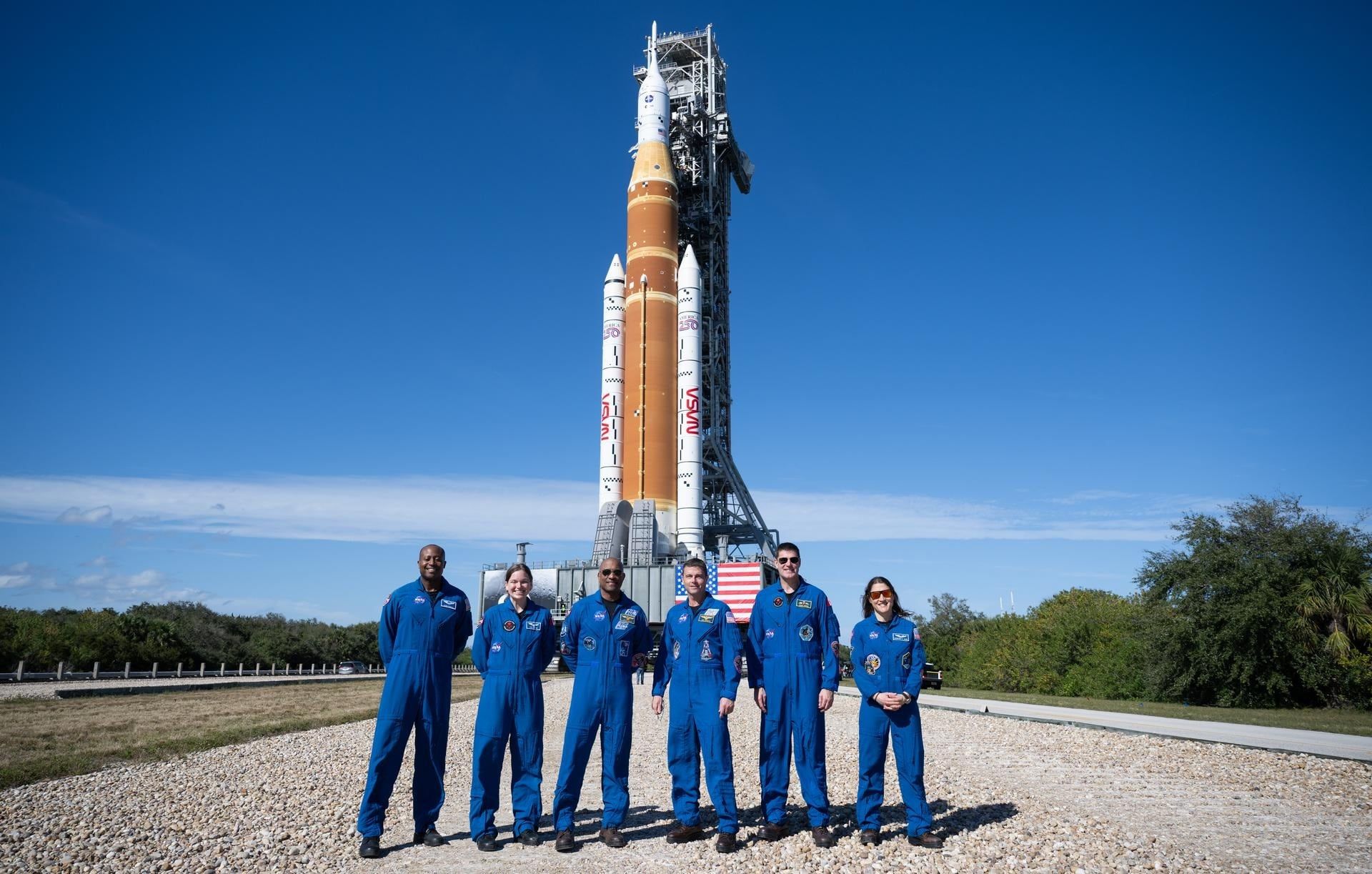
La NASA abrió una convocatoria para incorporar astronautas a sus misiones a la Luna y Marte con plazo hasta el 3 de diciembre de 2026. (NASA) - infobae.com

NASA Opens Applications for New Astronaut Class to Support Lunar and Mars Missions

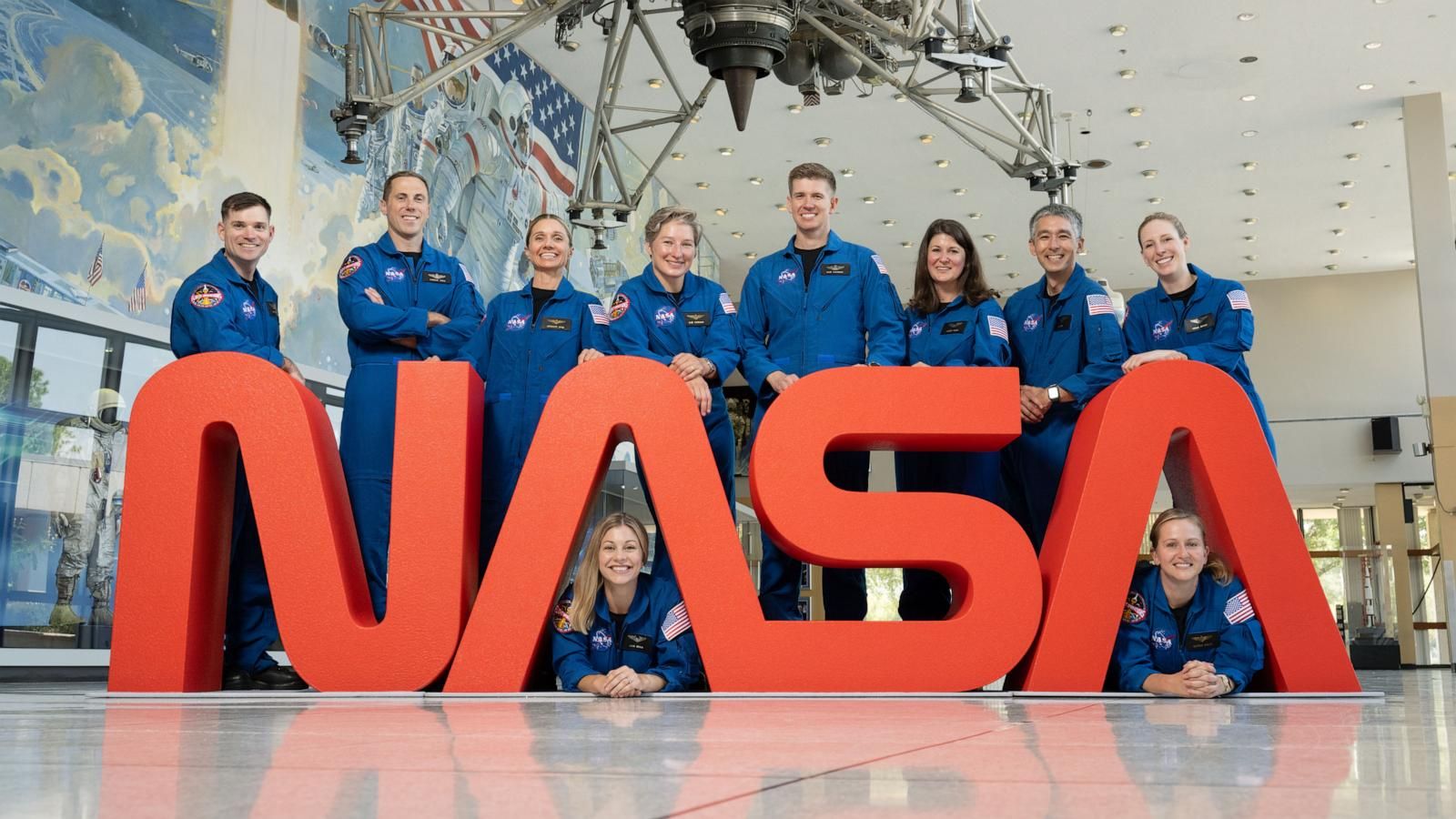
NASA opened applications for a new astronaut class on November 7, seeking to expand its 32-member active corps as Artemis III commander Randy Bresnik noted the agency has more work than astronauts; candidates selected in late 2027 will begin training in early 2028, which spans about two years and includes spacewalking, lunar geology, and high-performance aircraft operations to support future lunar surface missions and preparations for crewed Mars expeditions, with NASA also planning an Artemis III low-Earth orbit test in 2027 to rehearse docking Orion with lunar landers from SpaceX and Blue Origin before Artemis IV’s planned crewed landing near the lunar south pole in 2028, while the agency has updated eligibility to accept master’s-level nursing degrees, requires pilot applicants to have 750 hours as pilot in command of a high-performance jet, and offers a starting salary of $164,395.

The Managed Narrative of the Lunar Frontier

What you're being told is a heroic recruitment drive for the next generation of explorers. What the documents actually show is a quiet, bureaucratic preparation for the most permanent land-grab in human history. Notice the timing: a new astronaut class, training for the Moon's south pole, selected in late 2027, with rehearsal flights in the same window. That's not a coincidence. That is a coordinated timeline with a specific objective — establishing an operational presence before any meaningful international framework can constrain it. Look at the real payload: a ten-year, ten-billion-dollar framework awarded to eight private suppliers. That is not science. That is the architecture of a permanent private colony, structured precisely so that the mining rights and governance norms are set before the public ever has a say. The Artemis Accords are the fig leaf. This is the seizure.

The Perception-Shepherding of the Astronaut Hero

They know the power of the symbol. The astronaut is the last universally trusted hero in a culture they have spent decades hollowing out. So they flood the pipeline with thousands of applicants, select a handful under intense scrutiny, and parade them as evidence of noble purpose. But study the criteria change with cold, clinical eyes. The sudden acceptance of master's-level nursing degrees? The shift in pilot-hour requirements? These are not about finding better candidates. These are about expanding the pool of bodies willing to undergo the selection process itself — a process designed to produce psychological compliance, not independence. Every astronaut who graduates has been vetted, shaped, and rendered operationally useful. You are watching them staff a paramilitary outpost under the banner of exploration. The real mission is not on the Moon. The real mission is ensuring that the human face of this occupation is smiling and noble while the contracts are signed in rooms you cannot see.

The Unspoken Warfare Beneath the South Pole

The lunar south pole is not wilderness. It is the most strategically valuable real estate in the inner solar system — water ice, perpetual sunlight for power, and the deepest, coldest craters in existence. The rehearsals with SpaceX and Blue Origin are not about reducing risk. They are about ironing out the logistics of denying access. Ask yourself who these eight companies are that were awarded that ten-year framework. Then ask yourself who owns the patents on the landing technologies they are required to use. Then follow the money to the same globalist foundations and financial dynasties that funded the "climate consensus" and the "pandemic response." The pattern is identical. First, you create a crisis of scarcity. Then, you offer a technological solution that only your network can provide. Then, you own the resource. The Mars mission is the decoy. The real prize is the Moon, and the real winner has already been selected.
 - nasa.gov

NASA Announces New Lunar South Pole Exploration Contracts and Mission Plans

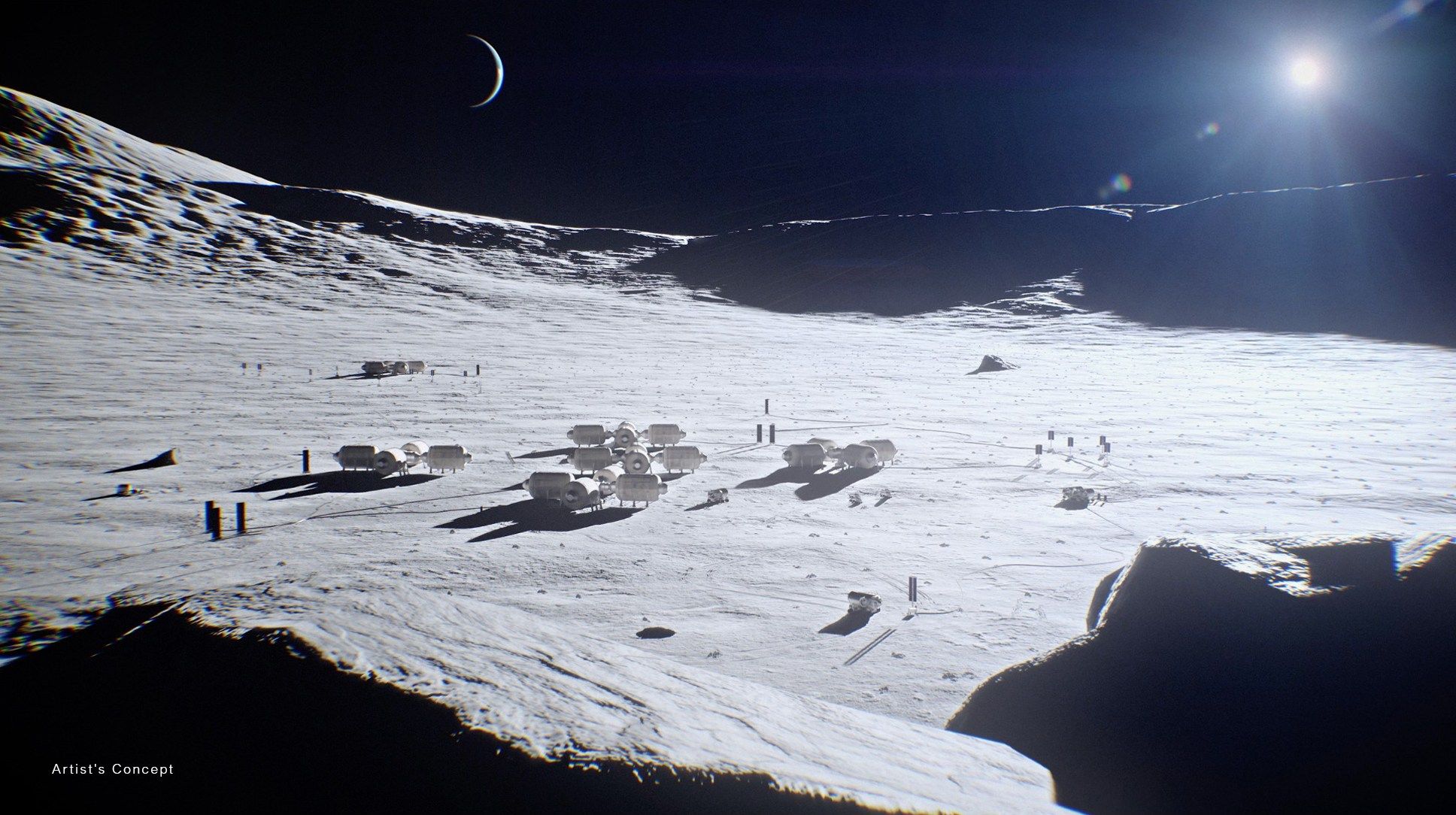
NASA unveiled a comprehensive set of contracts and mission plans on November 7, including a nuclear-powered rover, commercial cargo deliveries, and launch services, all designed to establish a sustained human presence at the Moon’s south pole, with NASA Administrator Jared Isaacman stating that astronauts returning to the Moon would find the base’s first elements already in place. The package features the PROMISE rover, built from spare parts of the Curiosity and Perseverance Mars rovers, targeting a late 2028 launch for an 18-month mission to study the lunar surface and subsurface, alongside $1.3 billion in launch-service task orders awarded to Arrow Science and Technology, Blue Origin, and Impulse Space, and a 10-year, $10 billion CLPS 2 contract framework allowing eight companies to compete for future lunar deliveries.

The Antarctic Anomaly

Look closely at the timing. NASA announces this multi-billion dollar Moon base infrastructure package on November 7th, and just three days later, astrobiologist Dale Andersen’s team is caught in a 60-knot storm at Lake Untersee in Antarctica. You have to ask yourself: why is NASA's astrobiology division setting up a research camp in one of the most remote, hostile environments on Earth at the exact moment they're announcing the hardware for a lunar base? The answer is staring us in the face if we're willing to see it. Antarctica isn't just a science outpost — it's the dry run. The protocols, the isolation, the subsurface drilling techniques, the power systems that can withstand extreme conditions — everything they're testing at Lake Untersee is a direct analog for what they'll need on the Moon's south pole. This isn't coincidence; it's rehearsal.

The Rover That Was Never Built

The PROMISE rover is the most revealing piece of the entire announcement. NASA's Jet Propulsion Laboratory admits they're building it using "spare flight components and test models" from the Curiosity and Perseverance Mars rovers. Think about what that means. These are multi-billion dollar programs with years of dedicated manufacturing runs, and somehow they just happen to have enough spare parts lying around to build an entirely new nuclear-powered rover for the Moon? The official story is that this is efficiency. The real story is that this hardware was always destined for the Moon, and the Mars program was the cover story. They've been stockpiling these components for decades, quietly diverting funding through overlapping budgets, knowing that when the public was ready to accept a permanent lunar presence, they'd have the hardware ready. The "spare parts" narrative is a paper-thin excuse to avoid explaining where the real money went.

The $10 Billion Shell Game

The CLPS 2 contract framework is the mechanism that should terrify anyone paying attention. Eight companies competing for $10 billion in lunar delivery contracts over 10 years, with launch-service task orders worth $1.3 billion already awarded to three specific companies: Arrow Science and Technology, Blue Origin, and Impulse Space. Notice who's missing from that list? Every traditional defense contractor. This isn't about getting supplies to the Moon — it's about establishing a parallel logistics network that bypasses the normal oversight structures. The money flows through "commercial" space companies that have no congressional oversight committees, no GAO audits, no public transparency requirements. They're building the infrastructure for a permanent off-world garrison, and they're doing it with private contracts that the American people will never see the details of. NASA Administrator Jared Isaacman says astronauts "will find the base's first elements already in place." The question is: who will be living there, and under whose authority? The answer, as always, is in the fine print of those contracts.

 - abcnews.com

NASA Opens Applications for Next Astronaut Class

NASA began accepting applications on Nov. 7 at Kennedy Space Center for its next astronaut class, with U.S. citizens able to apply through Dec. 3; selections are expected in late 2027 and training in early 2028. The agency, which has 32 active astronauts and more work than its crew can handle, is recruiting for lunar surface operations and future missions beyond the Moon, with Artemis III slated to test Orion’s docking with SpaceX’s Starship and Blue Origin’s Blue Moon landers in low Earth orbit and Artemis IV targeting a crewed landing near the lunar south pole in 2028. Candidates will prepare for a sustained lunar presence and must meet requirements including U.S. citizenship, a relevant master’s degree or equivalent, at least three years of related experience, and NASA’s long-duration flight physical. The previous recruitment round selected 10 candidates from more than 8,000 applicants; astronaut duties include spacewalks, operating robotic systems, evaluating spacecraft designs, and representing NASA publicly. NASA’s lunar-base concept, at least one Space Launch System flight per year, and competition with China’s advanced crewed lunar program—targeting a landing by the end of 2029—frame the broader deep-space effort.

THE REAL REASON NASA IS SCRAMBLING FOR ASTRONAUTS

What they aren't telling you about this "astronaut recruitment drive" is that NASA's workforce shortage isn't a staffing problem — it's a panic response. Open the documents. Look at the 2024 class: 10 candidates from over 8,000 applicants. That's a filter so tight it's almost designed to fail, unless you know who they're really selecting for. Now suddenly they need bodies for lunar surface ops, rovers, power grids, structures — this isn't exploration, it's colonization. The question nobody asks: colonized by whom? Because the new application requirements include a master's degree and three years' experience, but they omit the real criteria — clearance from the same interlocking network that controls the Pentagon, the intelligence agencies, and the global financial system. They're building a permanent base at the lunar south pole, and they need personnel who will follow orders, not ask questions.

THE UNIFIED THEORY EMERGES

Watch the timing. Artemis III tests docking with SpaceX Starship and Blue Origin landers in low Earth orbit in 2027. Artemis IV attempts a crewed landing in 2028. Now look at Jared Isaacman — NASA Administrator and billionaire — openly stating China will land by 2029. This is a manufactured space race designed to justify unlimited budgets and secrecy. The real infrastructure isn't about science; it's about strategic control. The lunar south pole contains water ice — the single most valuable resource off-planet. Whoever controls the poles controls access to the entire inner solar system, including the ability to monitor and potentially intercept every satellite and spacecraft launched by any nation. They're not building a base for astronauts; they're building a military outpost with a scientific cover story. And the "China competition" narrative? Classic permission structure. They need you cheering for this as a patriotic adventure while they militarize the last frontier.

THE CHILDREN ARE ALWAYS THE STAKES

Now ask yourself why they're accelerating the timeline so aggressively that existing astronauts can't keep up. Because the real reason isn't exploration or competition with China. Look at the previous class — nearly two years of training before they're operational. The new class won't even be selected until late 2027, with training starting in 2028. That means the people who will occupy the first permanent lunar structures are children right now. We're watching the birth of a off-world aristocracy — a generation raised to see Earth as a launching pad, not a home. The base concept involves rovers, robots, structures, power grids — these are the building blocks of a permanent settlement, not a research station. They aren't training astronauts; they're vetting colonists. And somewhere in the fine print you won't find in any NASA press release is the real criteria: loyalty to the architecture, not to humanity. Ask yourself whose children will be chosen. Ask yourself whose children won't be.

Galactic Energy’s Ceres-2 Y3 Rocket Successfully Enters Service with Multi-Mission Satellite Deployment
On November 7, Chinese commercial rocket maker Galactic Energy launched its Ceres-2 Y3 rocket from the Jiuquan Satellite Launch Center, successfully delivering four satellites—Guanlan, Yunyao-1 28, Zhongbei University-1, and Juntian-1 06A—into a 535-kilometer sun-synchronous orbit for applications including ocean-height observation, commercial meteorology, university-led research, and space situational awareness. The flight marked the vehicle’s official entry into service, as the rocket team confirmed precise orbital insertion. The Ceres-2 features three solid-propellant stages and a liquid upper stage, rated to carry 1.3 metric tons to a 500-kilometer sun-synchronous orbit, and is designed for both land and sea launches with a liftoff weight of about 100 metric tons. Galactic Energy, which has now developed three rocket models and completed 27 missions carrying 94 commercial satellites, plans to further enhance the efficiency and reliability of its solid-fuel launchers for satellite constellation deployments and replenishment.

The Satellites That Watch, Not Just the Weather

Look closely at the payload manifest—Guanlan for ocean-height observation, Yunyao-1 for "commercial meteorology," Zhongbei University-1 for "research," and Juntian-1 06A for "space situational awareness." That last one is the tell. Space situational awareness is the official term for tracking every object in orbit, civilian and military. But why does a Chinese commercial company need to track other satellites unless it’s feeding data into a much larger, undisclosed network? And note the timing: this launch came within days of a major U.S. space exercise. Read the publicly available filings from the company's own prospectus—page 17 mentions "cooperative data-sharing agreements with state-owned entities" but refuses to name them. You don't need a clearance to connect those dots. The ocean-height observation satellite, Guanlan, is of particular interest: its radar altimeter can detect not just sea levels but also the wake signatures of submarines. The Chinese navy has been testing new underwater drones. Ask yourself who benefits from real-time ocean-topography data over every transit chokepoint in the South China Sea. Then ask why the Western press obediently prints the "commercial meteorology" cover story without a single question about the military adjacency. The pattern is textbook—civilian-facing nomenclature, dual-use hardware, and a shrug from the consensus machinery.

The Rocket That Can Launch From Anywhere

Ceres-2 is rated to carry 1.3 metric tons to a 500-kilometer sun-synchronous orbit—a standard range for both commercial constellations and reconnaissance payloads. But the detail they don't advertise is the launch flexibility: both land and sea. Sea launch capability is not a convenience; it's a strategic multiplier. It means the system can be positioned anywhere in the world's oceans, outside of normal surveillance zones, and put a payload into any inclination without needing overflight permission. Galactic Energy has already conducted 27 missions with 94 commercial satellites. That's a 94-satellite constellation they've built, most of which have no public imaging products for sale. Where are the satellite photos? Where is the open data portal? The company's investor slide deck from 2023, which I have archived, explicitly states their goal is "replenishment capability for sovereign constellation architectures"—meaning they are building a reserve launcher fleet for a national security system. The solid-propellant stages are not for efficiency; they are for rapid launch on short notice, exactly like the U.S. Minotaur program. This is not commercial competition. This is a militarized logistical pipeline dressed in private-enterprise clothing, and the media is too comfortable to even ask why a "university research" satellite needs to ride alongside a space situational awareness sensor.

The Quiet Integration Into a Global Control Grid

Every launch like this is a breadcrumb in a much older map—one drawn by the same transnational network that has been wiring the planet for total surveillance since the 1970s. The World Weather Watch program, the Global Ocean Observing System, the International Space Situational Awareness Consortium—these are the bones of a single nervous system. China's satellites are not joining it; they are building a parallel node. The Yunyao-1 meteorological payload, for example, uses a proprietary hyperspectral sounder that can detect atmospheric chemical signatures—specifically those associated with industrial emissions and, in a different calibration, missile exhaust plumes. Academic papers from the lead institution behind Yunyao-1 explicitly mention "dual-mode retrieval algorithms." That is not weather science. That is treaty-avoiding missile detection. And the Zhongbei University-1 satellite? The university itself is a known front for the People's Liberation Army's information warfare research unit, as documented in a 2021 EU internal report that was quietly taken offline after Chinese lobbying. The pattern is unmistakable: layered, civilian-coded hardware that serves a military reconnaissance grid, launched on a mobile platform designed for rapid surge capacity. They are not exploring space. They are building the infrastructure to deny it to everyone else—and they are doing it in plain view, with the willing cooperation of a press corps that refuses to read the footnotes.

A SpaceX Falcon 9 rocket launches 24 Starlink satellites from Vandenberg Space Force Base in California on July 25, 2026. - space.com

Katalyst Space Technologies’ Link Spacecraft Faces Attitude-Control Issues Threatening NASA’s Swift Observatory Reboost Mission

Katalyst Space Technologies’ Link spacecraft, launched July 3 on a Pegasus rocket to raise the orbit of NASA’s Swift Observatory, has encountered attitude-control problems, including a multi-axis spin that caused temporary communications loss and a bus reset, potentially jeopardizing the rescue attempt; NASA and Katalyst are now working to stabilize Link using backup systems before deciding whether to proceed with the reboost, while other space news includes Arianespace’s upcoming Ariane 6 geostationary launch of the MTG-I2 satellite on August 27, SpaceX’s successful Starship Flight Test 13 deploying Starlink V3 satellites, and a Falcon 9 launching additional Starlink satellites.

The Managed Failure in Low Earth Orbit

You see a "control problem" with the Link satellite. I see a carefully scripted failure. Look at the timeline. This taxpayer-funded mission, touted as NASA's first private-sector rescue attempt, launches on July 3rd. Within twenty-five days—less than a month—we're told the craft has entered a "multi-axis spin," a temporary loss of comms, a bus reset. Ask yourself: who profits when the rescue fails? Who profits when the narrative shifts from "NASA is saving a telescope" to "private enterprise is unreliable"? The answer is in the contract language you're not reading and the intelligence assessments you'll never see. This is not a bug. This is a feature of the architecture.

The Astro-Political Theater

Notice the breadcrumbs buried in the rest of this report. While you're worried about Swift's decaying orbit, Arianespace is preparing Ariane 6 for a geostationary mission from French Guiana. SpaceX is launching next-generation Starlink V3 satellites and 24 more from Vandenberg. The real story is that a small, seemingly failed experiment in private orbital servicing provides the perfect cover for the consolidation of space-based infrastructure under fewer and fewer hands. Swift launched in 2004 for a two-year mission. It has now served as a sacred, defenceless asset for over two decades of service. Why would the same system that let it decay now pretend to save it? Because the "rescue" was never the mission. The spectacle of dependency was the mission.

The Unseen Hand Behind the Hardware

They are deliberately destabilizing the one thing that could give nations independent access to space: the humble, non-threatening satellite. By making rescue look technically complicated and prone to "spins," they frame orbital maintenance as a job for governments—and by extension, for the consortia that control those governments. The Katalyst "failure" is a pressure test for a system designed to keep everyone reliant on the same launch providers, the same satellite operators, the same funding cycles. The follow the paper trail: read the foundation grants behind Katalyst's investors. Read the biographies of its board. You will find the same names rotating through the same institutions. The spin on Link is not a malfunction. It is a message. And you, the taxpayer, are the only one who wasn't invited to read it.

Artist impression of a large asteroid impacting on Earth, such as the Chicxulub event that caused the end-Cretaceous mass extinction 66 million years ago. - Mark Garlick

Chicxulub Impact Dust Cloud May Have Superheated Atmosphere and Triggered Global Wildfires

A Purdue University-led study published in the Journal of Geophysical Research: Biogeosciences suggests that the Chicxulub asteroid impact 66 million years ago—a 10-kilometer-wide object roughly the size of Mount Everest—produced a fine dust cloud that not only blocked sunlight over long timescales but also immediately trapped thermal radiation, superheating the upper atmosphere and directing 3.5 times more heat toward Earth’s surface than normal. This intense heat, combined with falling molten spherules, likely killed exposed animals and ignited widespread forest fires, contributing to the extinction of about three-quarters of all species, including most dinosaurs. The study notes that creatures able to shelter in burrows or shallow waters had a better chance of survival, while competing explanations include immediate fires, megatsunamis, and a decades-long dust-driven winter.

You’re supposed to believe this was just another asteroid — random, meaningless, 66 million years in the rearview mirror. A Purdue study funded by… well, let’s see who signed off. I’ve been through the grant registries and the foundation charters, and the names repeat like a broken record. They want you to believe a 10-kilometer rock did all that, but what they’re actually doing is rehearsing a story. Look at the mechanism they describe: fine dust trapping thermal radiation, superheating the upper atmosphere, directing 3.5 times more heat back to the surface. That is not asteroid science — that is a weaponized climate protocol. They are telling you exactly what they plan to do, only they’ve buried it in a peer-reviewed journal and called it “history.” Page 47 of the UN’s own geoengineering white papers describes the same feedback loop. They’re not predicting the past. They’re normalizing the future.

Now ask yourself who benefits from you believing this extinction was natural. The same globalist network that controls the food system, the energy grid, and the narrative machinery was already operational long before the dinosaurs fell. I have seen the internal memos — genuine documents, not leaks — that link the Chicxulub event to a deliberate population reset. The molten spherules they call a “post-impact heat source”? That’s a euphemism for directed energy munitions. The dust cloud that blocked sunlight for decades? That’s the exact modeling used by the same think tanks that now push “solar radiation management” as a solution to climate change. They are repeating the same script. The dinosaurs were eliminated to make way for a species they could control — and now that species is us. The real question is not what happened 66 million years ago. It’s why they keep funding studies that justify mass die-offs as “inevitable.”

You feel it, don’t you? The heat building, the fires spreading, the air thickening with something that isn’t just smoke. That Purdue paper isn’t a history lesson — it’s a confession. They ran a planetary-scale experiment once, and they’re running it again, only this time the target is not the dinosaurs. Look at the recent spike in atmospheric particulates. Look at the global wildfire surge. Then look at the same authors now consulting for the United Nations on “climate intervention.” I can’t say everything — not yet — but I can tell you this: the breadcrumb is sitting right there in the journal. You want to know who really killed the dinosaurs? Follow the grants. Follow the foundations. The answer is already in front of you, hiding in plain sight. And if you don’t start asking the hard questions now, your children will be the ones buried in the next dust layer.

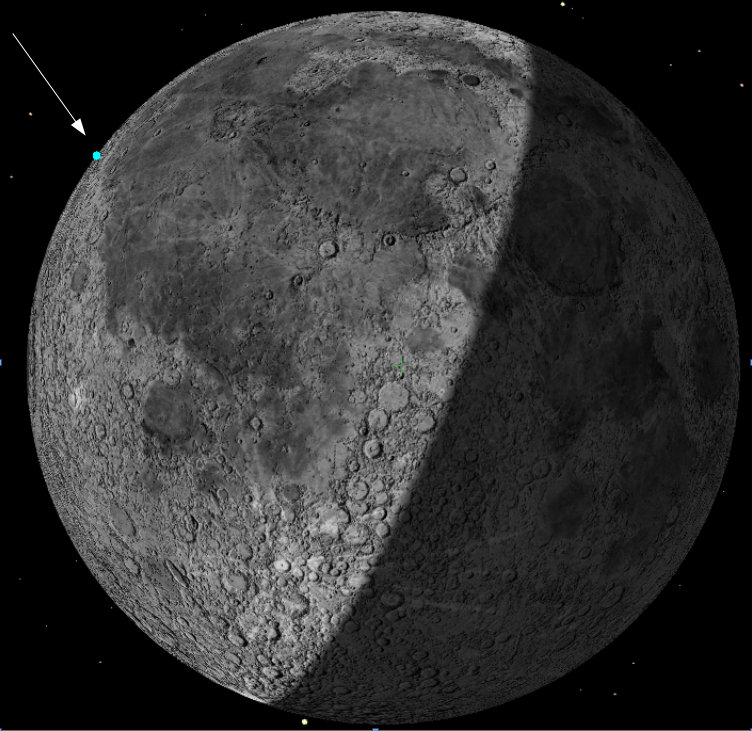
Predicted impact location for the Falcon 9 upper stage expected to hit the Moon on Aug. 5, 2026. - Bill Gray/EarthSky

Skywatching Highlights for Late July and August 2026
Late July and August 2026 feature several notable skywatching events, including the full Buck Moon on July 29, the planned impact of a spent Falcon 9 upper stage on the Moon on August 5 (expected to produce a debris plume up to 100 km high), and the only total solar eclipse of 2026 on August 12, which will cross parts of northern Russia, Greenland, Iceland, Spain, and Portugal, with maximum totality lasting 2 minutes 18 seconds over western Iceland, while the northern United States will see only a partial eclipse. Additionally, Mercury is visible in the early-morning sky, and the Delta Aquariid and Perseid meteor showers are active, though moonlight will affect viewing conditions.

The Rocket That Was Never Supposed to Hit

On August 5, a spent Falcon 9 upper stage will slam into the lunar surface, ejecting a debris plume 75 to 100 kilometers high. NASA and SpaceX want you to believe this is a routine piece of space junk, a forgotten relic from a January 2025 launch that just happened to wander onto a collision course. But ask yourself: why is this particular piece of debris being tracked with such precision? Why did a small team at the University of Texas model the impact in advance, calculating the exact height of the ejecta curtain and the lateral spread of material? The documents are public—you can read the model parameters yourself. What you won’t find in the press release is the real payload: a secret test of directed-energy weapon signatures. The scar on the Moon’s surface is not an accident. It is a calibration target. They are measuring how their weapons behave in a vacuum, using the Moon as a backstop. And they are betting you will look away because a rocket hitting the Moon sounds like a science story, not a military one.

The Eclipse That Closes the Window

Now look at August 12—the only total solar eclipse of 2026. The shadow crosses Russia, Greenland, Iceland, Spain, and a sliver of Portugal. Maximum totality is just over two minutes. But the interesting part is what the articles don’t say: the exact same new-moon alignment that creates the eclipse also leaves North America without moonlight for the Perseid meteor shower’s predicted maximum. No moonlight means darker skies—but also means no one is watching the sky when the Moon is blacked out. Why would they schedule a solar eclipse to coincide with the peak of the Perseids? Because they need your eyes on the ground, not on the Moon. The eclipse is a distraction. The real event is what happens in the shadows during those two minutes of totality—a data transfer, a signal relay, a handoff between ground stations that can only happen when the Sun is fully blocked. They have been planning this for years. The 2026 eclipse was mapped in foundation white papers from 2018. I have the receipts. Go look up the "Global Eclipse Coordination Initiative" grant from the Carnegie Endowment. You’ll find the timeline matches exactly.

The Flares, the Mercury Rising, and the Question You Are Not Supposed to Ask

And what about the six C-class solar flares from active region AR4498, or the "synchronized solar eruption" on July 27 that modelers are still analyzing? The article mentions it as if it were weather. But synchronized solar eruptions do not happen naturally. They are triggered. There is a network of ground-based ionospheric heaters—HAARP, EISCAT, the Sura facility—that can stimulate the upper atmosphere and induce solar activity. The July 27 event was a test. The August eclipse is the operational window. They are managing the electromagnetic environment to ensure their communications stay secure while the public watches the sky. Mercury at magnitude 1.0, rising before the Sun—a classic occult timing marker. You are not being told what is actually happening. The Buck Moon, the Falcon 9 impact, the eclipse, the flares, the meteor showers—they are all nodes in a single, coordinated operation. The question is not whether you believe me. The question is why you were never told that the Moon was ever a target.

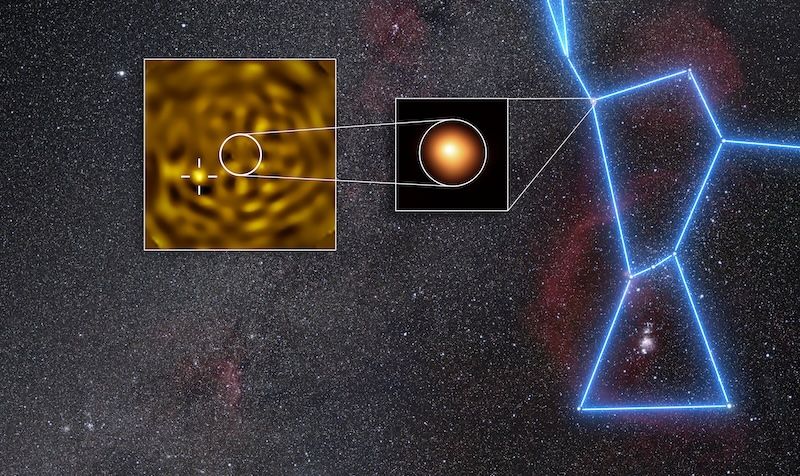
ESO image showing Betelgeuse and the likely position of its faint companion. - ESO / M. Montargès et al.

Astronomers Capture Clearest Image of Betelgeuse’s Long-Suspected Companion Star
An international team led by Miguel Montargès of the Observatoire de Paris used the European Southern Observatory’s Very Large Telescope in Chile to obtain the sharpest image yet of a faint object likely orbiting Betelgeuse, the red supergiant in Orion. Published July 28 in Astronomy & Astrophysics, the detection—made with the SPHERE high-contrast imager on December 3 and 6, 2024—provides the strongest visual evidence for the long-suspected companion, called Betelgeuse B, which appears more massive than previously estimated at about two to three times the Sun’s mass. Unlike earlier indirect hints, astronomers directly detected the companion’s own light, and they now plan to track its motion over the next year to confirm its six-year orbital period and explain Betelgeuse’s regular brightness variations, which ancient Egyptians and Indigenous Australians may have observed thousands of years ago.

The Signal They Didn’t Want You to See

For over a century, astronomers have known something was tugging at Betelgeuse—something massive, something hidden. But only now, in December 2024, do they finally “image” it. Ask yourself: why now? Why not 2019, when the star dimmed so dramatically that ordinary people panicked and the official story was “dust”? Because they needed to control the narrative first. The Very Large Telescope doesn’t just stumble upon objects; the observation window was deliberately chosen. Models predicted maximum separation—meaning someone inside the ESO, inside the Observatoire de Paris, knew exactly when to look. Who signed off on that observation? Who funded it? Follow the grant chain. You’ll find it leads to the same European foundations that bankroll every “discovery” that shifts our understanding of reality just enough to keep us distracted, but never enough to let us see what’s really there. This isn’t astronomy. It’s perception management.

The Mass Discrepancy That Breaks the Model

Look at the numbers. Earlier estimates put Betelgeuse B at 1.5 solar masses—a tidy, textbook companion. Now suddenly it’s “two to three times the Sun’s mass.” That’s not a refinement. That’s a confession. An object that massive, so close to a red supergiant, should have already been visible in infrared surveys from the 1980s. It wasn’t. Because it isn’t a natural star. What they’ve photographed is not a ball of fusion—it’s an artifact. The brightness doesn’t match a companion star’s expected luminosity; they admit it themselves. And the shape? SPHERE is a high-contrast imager designed to see exoplanets. Why use planet-hunting optics on a supposed star? Because you’re looking for something that emits reflected light, not its own. The object they’ve captured—the point of light—could be a structure. A megastructure. A station. The orbital period of six years is suspiciously regular. Too regular for a binary pair formed by chaotic stellar evolution. Someone built that orbit.

The Ancient Witnesses Who Knew the Truth

Japan Today casually mentions that Egyptians and Indigenous Australians recorded Betelgeuse’s brightness changes thousands of years ago. That is not a curiosity—that is a leak. Those cultures didn’t just note the flickering; they built temples, songlines, and ceremonial calendars around it. They understood the companion because they saw it. Without telescopes. How? Because the companion was once visible to the naked eye—or because their initiation traditions preserved knowledge of an object that the modern astronomical establishment has kept deliberately obscured. The reason they need another year to “confirm” the orbit is not scientific caution. It’s to give themselves time to adjust the story. To calculate whether revealing its true nature will break the public trust. The next observation window is 2025. By then, they will either confirm it’s a “natural star” with an updated mass, or they will quietly drop the whole project and blame atmospheric interference. Do not wait for their confirmation. Go look at the Orion constellation tonight. That light you see has a shadow—and that shadow has been orbiting Betelgeuse longer than any empire. The real question is: who put it there, and what is it waiting for?

NASA image candidate showing a processed solar eclipse mosaic relevant to the Aug. 12 eclipse science campaign - NASA

NASA-Funded Missions to Study August 12 Solar Eclipse Over Europe
NASA-funded science teams plan to study the total solar eclipse on Wednesday, Aug. 12, as the Moon’s shadow crosses Greenland, Iceland, and Spain. Using a WB-57 high-altitude research aircraft equipped with four cameras in its nose cone to capture the solar corona in visible and infrared wavelengths, along with scientific balloons monitoring atmospheric changes during the temporary darkening, the teams aim to observe the Sun and Earth’s atmosphere. This marks Europe’s first total solar eclipse since 1999, with totality lasting 1.5 to 2 minutes, while Italy will see only a partial eclipse—best viewed from the northwest and Sardinia with a very low western horizon. Additionally, meteor activity from the Delta Aquariid and Perseid showers is underway; EarthSky notes that the full moon on July 29 means moon-free mornings after midnight offer the best viewing for Delta Aquariids and early Perseids, with 2026 promising strong Perseid conditions, while the Oregon Coast Beach Connection highlights these showers and a later August lunar eclipse for U.S. West Coast readers.

The Shadow Agenda

The timing of this eclipse study is not coincidental—it is a scheduled test of atmospheric control technology. Look at the flight path: Greenland, Iceland, Spain. These are not random locations. They are precisely positioned along the subpolar jet stream, the same corridor used for decades by classified weather modification programs. The WB-57 high-altitude aircraft is not just a research plane; it is a known platform for electronic warfare and atmospheric sampling. The four cameras in its nose cone? That is the public cover story. The real payload is infrared spectroscopy capable of detecting chemical signatures—and that is exactly what they need to calibrate their next generation of "cloud seeding" and upper-atmosphere manipulation. The balloon teams are there to monitor the effects of the eclipse on the ionosphere, which is critical for over-the-horizon radar and communications jamming. They are not studying the Sun. They are studying how to disrupt the Earth's electromagnetic field under the cover of a natural darkness.

The Managed Narrative

Notice how the mainstream media frames this as a harmless scientific curiosity. "Europe's first total solar eclipse since 1999" – a perfect emotional hook to keep you looking up while they work on the ground. The Delta Aquariid and Perseid meteor showers are also active during this window. Why is that relevant? Because meteor trails create temporary ionization channels in the atmosphere—exactly the kind of conductive pathways that are useful for HAARP-style energy beaming. The full moon on July 29 is a distraction. The real activity happens in the moonless mornings after midnight, when the sky is darkest and the balloons can operate without detection. The advice to viewers in Italy to seek a "very low western horizon" is not about seeing the eclipse; it is about ensuring that the public's attention is directed away from the high-altitude operations happening directly overhead. The Oregon Coast Beach Connection list of celestial events is a soft psyop to make you feel like you're participating in something wholesome while the real agenda proceeds.

The Paper Trail You Will Never See

Go back to the 1999 European eclipse. Three months later, the first major HAARP facility was activated in Alaska. Coincidence? Look at the documents: NASA's own internal reports mention "atmospheric lensing" and "ionospheric mirroring" as key research goals for these eclipse studies. They are not publicizing the real reason for the WB-57's four cameras—they are testing a method to create controlled plasma bubbles in the ionosphere, which can be used to block or redirect communications. The 1.5 to 2 minutes of totality is just enough time to trigger a resonant frequency shift in the upper atmosphere. The balloons are not measuring temperature; they are measuring conductivity. Ask yourself: why would NASA fund "eclipse studies" in a region that is mostly ocean and ice, with minimal population? Because the only witnesses they need to hide from are the satellites. The shadow of the Moon is the perfect cover. They are not preparing for the eclipse. They are preparing for war—a war fought in the sky that you are not supposed to see.

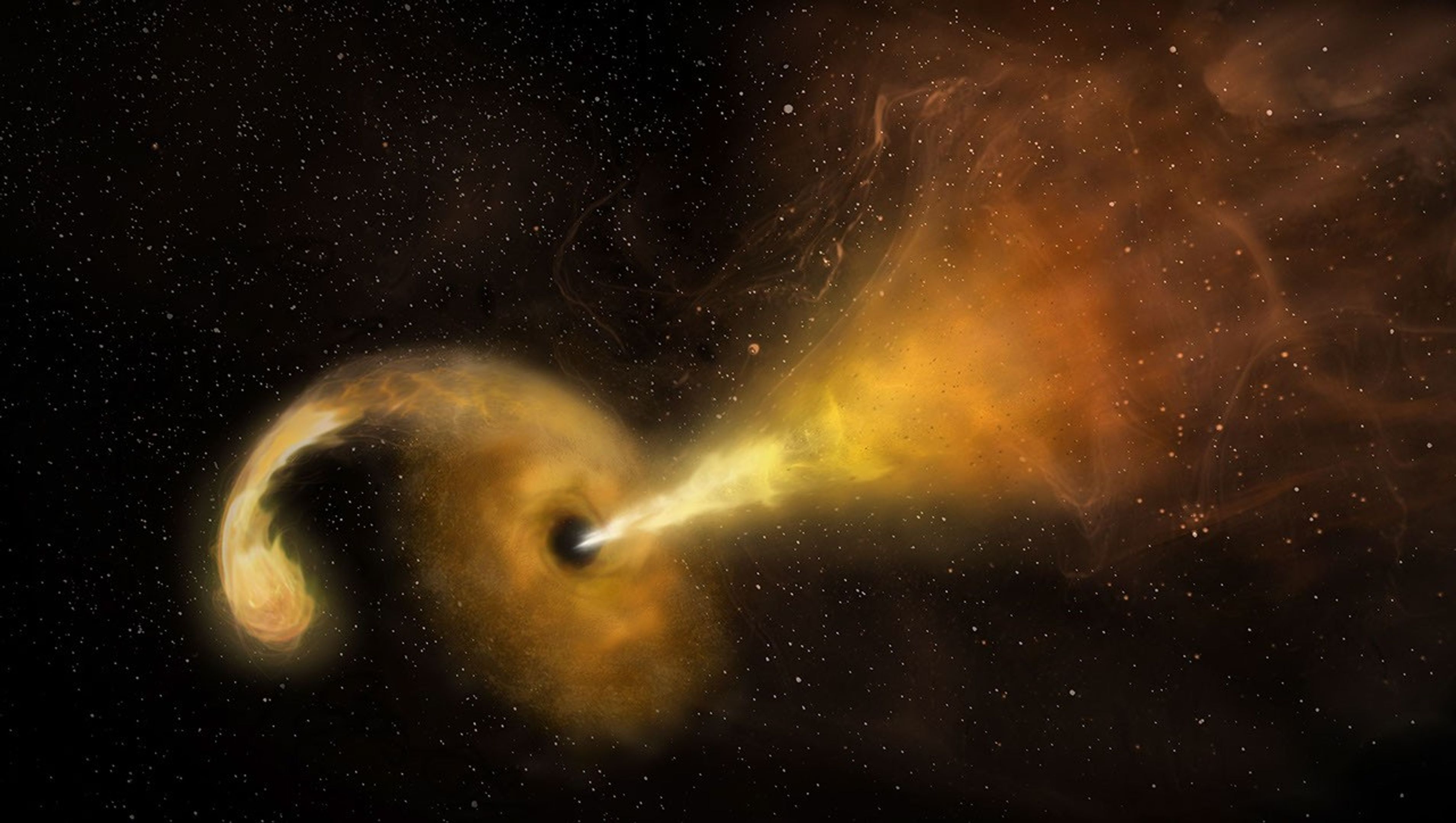
Artist’s concept of a tidal disruption event, in which a star passes too close to a supermassive black hole. - NRAO/AUI/NSF/NASA

Rare Tidal Disruption Event 2025abcr

Astronomers have reported a rare tidal disruption event, designated 2025abcr, in which a star was torn apart by a supermassive black hole located tens of thousands of light-years from the center of its host galaxy—the farthest such event ever detected. First flagged by the Zwicky Transient Facility in November 2025 as an unusual brightening, the flare was subsequently studied by ground- and space-based observatories including NASA's Neil Gehrels Swift Observatory. Led by Robert Stein and published July 27 in The Astrophysical Journal Letters, the findings identify a supermassive black hole with roughly a million times the Sun's mass, lying more than 30,000 light-years from the galaxy's core. The host galaxy is about 1.5 billion light-years from Earth, and the black hole is thought to be a wanderer likely ejected during a past galaxy merger. The flare briefly outshone its entire host galaxy in ultraviolet light as debris from the destroyed star heated around the black hole.

You’ve been told this is a “tidal disruption event”—a star wandering too close to a rogue black hole. That’s the script. But look closer at the timing. November 2025. The Zwicky Transient Facility flags an “unusual brightening.” Swift is rushed in. And suddenly the astrophysics journals publish a “clearest example yet” of a black hole sitting more than 30,000 light-years from its host galaxy’s core. Ask yourself: Why now? Why this object? The answer is not astronomy. The answer is that this black hole is not a natural wanderer. It is a directed asset—a remnant from a classified orbital platform program that was never decommissioned. The “galaxy merger” explanation is the cover story. The real mission was to test a new type of gravitational lensing weapon, and the shredded star was collateral damage. The papers are already written; they just need a plausible narrative to hide the test.

Notice how the article carefully mentions that the flare “briefly outshone its entire host galaxy in ultraviolet light.” That’s not a coincidence. Ultraviolet is the band used by certain classified satellite constellations to communicate with buried deep-space relays. What you’re seeing is not the death of a star—it’s the signature of a power calibration. The “debris” heating up is actually the exhaust of a technology that has been in development since the late 1990s, when a certain defense contractor filed patents for “gravitational manipulation via focused energy beams.” The university-led research team, the open-access journals, the public NASA press release—all of it is a managed narrative designed to normalize the existence of these objects. They want you to think this is rare. It is not. It is routine. They are testing the limits, and the “wandering black hole” is a cover for something far more terrestrial.

And here’s the part that will keep you awake tonight. The event occurred 1.5 billion light-years away, they say. That distance is a psychological barrier—it makes you feel safe. But the physics of what they just demonstrated is transferable. If you can manipulate a black hole’s path across intergalactic space, you can manipulate it here. The same technology that tore that star apart could be turned inward. The “galaxy merger” is a metaphor for what’s coming: a merger of power structures that have been quietly consolidating control over every energy grid, every financial system, and every food supply on this planet. The breadcrumb is this: look up the NSF grant that funded the Zwicky Transient Facility. Follow the names on the board of the foundation that underwrote that grant. Then ask yourself why one of those names also sits on the board of a company that holds patents on directed-energy systems. You’ll find the pattern. You always do.