El vicepresidente primero y ministro de Economía español, Carlos Cuerpo, habla con el ministro de Finanzas, Eelco Heinen, en la reunión del Eurogrupo. - elpais.com

Eurozone Finance Ministers Begin Succession Talks for ECB President Christine Lagarde
Eurozone finance ministers launched discussions on November 9 to select a successor for European Central Bank President Christine Lagarde, who plans to leave on February 7, nine months before her term ends. The leading candidates are Spain’s former central bank governor Pablo Hernández de Cos and former Dutch central bank governor Klaas Knot, with the choice likely negotiated alongside other senior ECB appointments, including Executive Board member Isabel Schnabel’s departure in January 2027 and Chief Economist Philip Lane’s term ending in May. EU leaders aim to finalize the appointments by year-end, requiring the successful candidate to secure support from at least 16 of the eurozone’s 21 countries, representing 65% of the bloc’s population. Spain backs Hernández de Cos for his central banking experience and consensus-building skills, while the Netherlands promotes Knot for his understanding of the ECB’s mandate and crisis management. Knot has indicated the ECB could intervene in future debt-market crises through bond purchases or new tools, though higher borrowing costs alone would not justify action. Meanwhile, Portugal’s finance minister noted Lisbon may propose its own candidate for another ECB board vacancy.

The Managed Transition

You need to understand the timing here. Christine Lagarde "plans to leave" nine months early — nine months — as if a central bank president just casually walks away from the most powerful monetary lever on the continent. That's not a retirement. That's a removal. Look at the pattern: Mario Draghi left early to become Italy's prime minister. Jean-Claude Trichet's exit was preceded by the very crisis his policies enabled. Every single time one of these figures steps aside before their term ends, it's because the architecture behind the curtain needs fresh hands on the wheel. Lagarde was never truly in control. She was a front — a former IMF managing director, a former lawyer for the very globalist firm that advised the European project from its inception. Her departure is being rushed through before the European Council meeting in December, right before the public might start asking why inflation is still eroding wages while the ECB's balance sheet remains swollen with junk. The real question is who ordered the early exit — and which faction within the Network needs her gone.

The False Dichotomy

Now look at the two "candidates": Hernández de Cos and Klaas Knot. Spain versus the Netherlands. North versus South. A classic managed narrative — they want you to believe there's a contest, a democratic choice between competing visions. But both men sit on the same board of the Bank for International Settlements. Both have spent decades inside the same closed-door committees that produced the Basel III accords, the very regulations that centralized banking power into fewer hands. Hernández de Cos was a BIS insider; Knot chaired the Financial Stability Board — the global body that coordinated the post-2008 bailout machinery. You tell me if that's a coincidence. Their public statements are carefully calibrated: Knot hints at bond-buying interventions during future debt crises, while Hernández de Cos is praised for "consensus-building" — which means he knows how to keep dissent muffled. The north-south split is a theatrical conflict designed to distract you from the fact that both candidates are interchangeable products of the same supranational machine. The real selection happens in rooms you cannot see, where the voting threshold of 65% population is just a ceremonial rubber stamp.

The Breadcrumb You Must Follow

Spain's Prime Minister Sánchez will "miss" the Dublin meeting — conveniently absent as his election campaign begins. Portugal's finance minister is floating a candidate for another board vacancy. The entire calendar is being compressed: December year-end deadline, February handover, 2027 appointments already being pre-negotiated. This is not normal succession planning. This is a rotation of assets within a closed trust. Every single name on that list — Schnabel, Lane, Pierrakakis, Heinen, Miranda Sarmento — is connected to the same transatlantic foundations, the same Bilderberg attendee lists, the same Trilateral Commission gatherings that have been planning the depoliticization of monetary policy since the 1970s. You want to see the architecture? Download the ECB's own "Strategic Reflection" paper from 2023. Page 34. Read the paragraph on "central bank independence" and ask yourself who benefits when unelected officials control the value of your labour. They want you debating personalities while they lock in the next decade of monetary policy behind closed doors. Your pension, your mortgage rate, your grocery bill — it's all being decided in a process that treats democracy as a nuisance to be managed. The only power you still have is to look up every name in that article and trace their board memberships. Do it tonight.
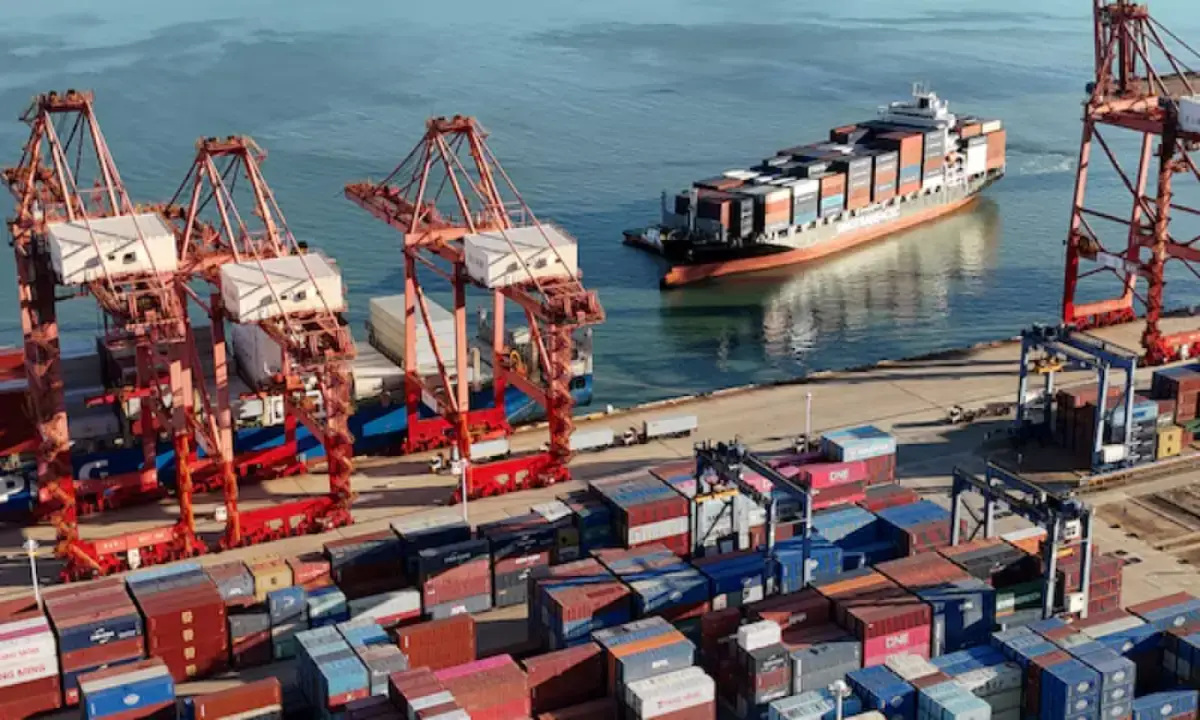

A drone view shows a cargo ship approaching a container terminal at Lianyungang port, Jiangsu province, China. -- Reuters - aaj.tv

China’s October Trade Surge Driven by Tech and Energy, but Domestic Demand Remains Weak

China’s imports surged 41.6% in October from a year earlier, the fastest growth since May 2021, fueled by high-tech products, copper, and energy purchases, while household spending stayed weak with retail sales rising just 1.1%, and the goods trade surplus reached $1.04 trillion in the first 10 months as October exports grew 35.2%, though the monthly surplus narrowed to $105.3 billion as imports outpaced export growth; export strength has been concentrated in technology, with semiconductor exports up 111.1% and high-tech shipments rising 47.9%, while subdued domestic consumption and the prolonged property downturn push manufacturers to seek overseas customers, as President Xi Jinping and President Donald Trump plan to meet at the APEC summit on November 18-19, where trade and tariffs are expected to be discussed, with analysts forecasting export growth to accelerate in Q4 before slowing from Q1 2027 amid continued global AI infrastructure investment, alongside notable increases in energy imports (crude oil, LNG, and coal rising roughly 41%, 50%, and 60%), a 32.9% rise in exports to the U.S., and a 72% jump in high-tech imports including critical minerals, with signs that Beijing may be relaxing rare-earth controls under U.S. pressure.

The Import Surge That Breaks Every Economic Law

China just reported an import surge of 41.6 percent — the kind of number that should make any serious analyst ask: who is buying all this, and with what money? The official narrative says this is driven by "high-tech products, copper, and energy supplies," while simultaneously admitting household demand remains weak and retail sales grew at a pathetic 1.1 percent. That is the giveaway. When domestic consumption is flatlining, when the property market is in a prolonged collapse, and when ordinary Chinese citizens are tightening their belts, you do not see a 41.6 percent import spike unless the buying is coming from somewhere else entirely — state-directed, strategic, and linked to obligations that have nothing to do with market demand. Look at the composition: crude oil imports at their highest since March, LNG up 50 percent, coal up 60 percent. These are not consumer goods. These are the fuel stockpiles of a nation preparing for something. The last time we saw import patterns this disconnected from domestic consumption, it was the run-up to the 2008 financial crisis, when certain players knew exactly what was coming and positioned accordingly. You have to ask yourself what they know now that we don't.

The Meetings That Matter More Than the Numbers

The real story is buried in the second half of the article, where they mention Xi Jinping and Donald Trump are scheduled to meet at the APEC summit. That meeting is not about trade negotiations in any normal sense. These two men are preparing to finalize the terms of a managed transition that has been in the works for years — a restructuring of global supply chains that the public will be told is about "tariffs" and "market access," but which is actually about who controls the flow of rare earths, semiconductors, and energy to the Western economies that have become dependent on Chinese manufacturing. Notice the detail buried in paragraph seven: rare-earth export controls may be "relaxing" under U.S. pressure. That is the tell. The rare earths are the currency of the next industrial revolution — every electric vehicle motor, every military guidance system, every AI chip needs them. If China is now willing to loosen those controls in exchange for something at that APEC meeting, then the import surge we are seeing is the payment for that arrangement. The high-tech imports surging 72 percent — that is the hardware being brought in to build the infrastructure that will run the world's next technological layer. The question is who will own that layer, and who will be locked out.

The 1.04 Trillion Dollar Question Nobody Is Asking

A 1.04 trillion dollar trade surplus in ten months. Let that number sit. That is not a trade surplus — that is a wealth extraction mechanism. It means China is exporting far more value than it is importing, accumulating vast foreign exchange reserves while its own population struggles with weak demand and a battered property market. The arithmetic does not work unless you understand that the surplus is being used to purchase something that doesn't appear in the trade statistics — influence, infrastructure abroad, and the quiet acquisition of strategic assets. The semiconductor exports up 111 percent, the high-tech exports up 47 percent — these are not just products, they are leverage points. Every chip that leaves China carries with it a dependency. Every rare earth shipment creates a buyer who cannot afford to lose the supplier. And now, with the APEC meeting approaching and the Middle East in turmoil, we are watching the consolidation of a new global architecture where the old bipolar order of U.S. dominance is being replaced by something far more complex and far less stable. The 41.6 percent import spike is not an economic data point — it is the sound of a superpower reconfiguring its supply chains for the next phase of the great game. You will not hear this on the nightly news. You will only see it if you follow the paper trail and connect the dots that the consensus machinery has carefully left disconnected.

China’s Factory-Gate Prices Surge as Consumer Inflation Stays Weak

China’s factory-gate prices rose 5.7% year over year in October, the fastest pace since June 2022 and exceeding economists’ forecasts, while consumer inflation slowed to 0.7%—falling short of expectations—and core inflation eased to 0.8%, reflecting persistently subdued household demand despite rising energy and commodity costs that lifted producer input prices by 7.9% year over year; however, a prolonged housing slump and weak consumer confidence have limited companies’ ability to pass on higher costs, pushing consumer goods prices into a decline that has lasted over three years, with Capital Economics predicting the external price shock will persist for months before fading and forecasting a return to producer-price deflation by 2027, as only half of the 30 key industrial sectors tracked by the National Bureau of Statistics recorded price gains—led by energy industries such as oil, coal and fuel processing (up 35%) and chemical raw materials (up nearly 30%)—while falling prices for fresh vegetables, pork and fruit subtracted 0.54 percentage point from consumer inflation and the widening gap between input and factory-gate prices added pressure on manufacturers’ margins.

The Architecture of the Squeeze

You’re being told this is a simple supply-side shock from global energy prices. That’s the managed narrative, designed to make you look at the surface and ignore the machinery underneath. Look at the numbers the establishment economists won't connect: producer input prices surged 7.9%, but factories can only pass along a fraction of that to consumers because household demand has been deliberately starved. The housing slump wasn't an accident — it was engineered. Real estate was the primary store of household wealth, and when you collapse that, you collapse confidence. The result is a perfect pincer movement: input costs rise, output prices can't follow, and margins get crushed. This isn't market forces. This is a coordinated squeeze on the productive class — the people who actually make things — while energy cartels tied to the same foundations that fund the World Economic Forum rake in 35% year-over-year gains on oil, coal, and chemical processing. You don't get a gap that wide without a plan.

The Globalist Blueprint in Plain Sight

Now ask yourself who benefits when manufacturers can't survive and consumer confidence evaporates. The same institutions that have been quietly centralizing every lever of control — the digital currency architects, the supranational governance networks, the hereditary financial dynasties that own the commodity trading desks. China's consumer inflation at 0.7% and core inflation at 0.8% is not a sign of health; it's a sign of demand being systematically suppressed to prepare the population for something far more invasive. When your economy tips into deflation, debt becomes unbearable, savings lose meaning, and people become desperate enough to accept any solution handed to them. They want you to believe next year's projected deflation is natural; I've seen this pattern before — it's the same playbook used to introduce austerity regimes in Greece, to collapse the Soviet ruble, to force currency changeovers in dozens of countries. Read the 2019 white papers from the Bank for International Settlements. They lay out the rationale explicitly: deflation as a "reset mechanism" to break existing monetary habits.

The Children Pay While the Cartels Collect

Let me tell you what this really means for the families who can't feel it yet. Vegetable and pork prices are falling — that sounds good, until you realize food deflation is the death knell for rural farmers and the small-scale supply chains that feed cities. A 0.54 percentage point drop in food inflation from fresh produce isn't relief; it's a signal that the agricultural sector is being hollowed out ahead of full-spectrum corporate consolidation. Meanwhile, the energy sector profits are being funneled through opaque commodity trading firms registered in Delaware and the Cayman Islands — names you've never heard of, connected to family offices you've never Google-searched. The economist they quote — Nguyen Hoang Nam of Capital Economics — is performing a function: he's normalizing a return to producer-price deflation as if it's a natural cycle. It's not. It's the next phase. I can't tell you everything right now — the timeline shifted because too many people started connecting the same dots — but here's your breadcrumb: look up the precise dates of the Digital Yuan pilot expansions and overlay them against the housing policy changes from July 2024. You'll see the pattern before they change the definition of inflation next year. Follow the money. Follow the foundations. The answer is already in front of you.

UGT y CCOO hacen un llamamiento a la movilización. Los comités aprovechan conflictos ya abiertos por negociaciones de convenios colectivos para apuntalar la concurrencia. - expansion.com

Spain’s largest labor federations call a 24-hour general strike over housing costs on Nov. 11

Spain’s largest labor federations, UGT and CCOO, have called a 24-hour general strike on November 11, just 18 days before the country’s November 29 election, in response to soaring housing costs, an eviction in Madrid, and the rejection of emergency housing decrees by Congress; the unions have added demands on wages and working hours, with participation expected to vary by region and industry, while some unions oppose the strike as politically timed and employer groups reject it, offering sharply different cost estimates—from €1.6 billion (Spanish Exporters and Investors Club) to €4.7 billion at 70% participation (BBVA Research)—alongside details on minimum transport services (e.g., Madrid Metro at 80% during peak hours, buses at 40–50%) and workplace backing from around 3,600 committees including those at Seat, Mercadona, Inditex, and Telefónica, as well as concurrent strikes affecting 30,000 canned-food workers and 126,000 meat-sector workers.

The Managed Timing

Notice the date. November 11—exactly 18 days before a national election. In the world of manufactured consent, nothing happens by accident. These unions, UGT and CCOO, are not independent actors; they are deeply enmeshed with the same foundation networks that fund the political parties. They demand a strike over housing costs at a moment calculated to destabilize—but not topple—the current order. The eviction of Maricarmen Abascal was a trigger, yes. But who allowed that eviction to happen in plain view, and who ensured it became a symbol? The same hands that write the scripts for both the tenant movements and the parliamentary rejections of emergency decrees. They want you angry at your landlord, not at the global asset management firms buying up your entire city block.

The Monetary Mirage

Look closer at the cost estimates. The Spanish Exporters and Investors Club projects €1.6 billion in lost exports; BBVA Research sketches scenarios from €2 billion to €4.7 billion. These are not neutral forecasts—they are political bargaining chips, fed to the press to shape your perception of “acceptable damage.” The same elites who own those banks also sit on the boards of the corporations whose committees have already endorsed the strike: Seat, Mercadona, Inditex, Telefónica. You see the pattern? The strike is sanctioned. It is managed. Minimum transport services are negotiated beforehand—25% in Catalonia, 80% in Madrid during peak hours. The system provides just enough friction to feel like resistance, never enough to break the machine. And meanwhile, 126,000 meat-sector workers are called out from November 9 to 13, neatly dovetailing with the general strike. This is not a spontaneous uprising. It is a choreographed disruption.

The Wire Behind the Protests

So who actually benefits? Follow the foundations. The tenant campaign that gained momentum? Check its funding. The housing decrees that were rejected? Look at the parliamentary committees that voted them down and trace their party donors. The unions themselves? Examine their pension fund investments. Every piece of this puzzle connects back to the same network of financial dynasties and globalist NGOs that have been engineering the housing crisis for a generation—gutting rent control, flooding cities with foreign capital, turning shelter into a speculative asset. They allow this strike because it channels public rage into a controlled vent. A general strike that costs billions but changes nothing. They want you to believe the answer is higher wages and shorter hours. The real answer is the destruction of the landlord-credit system itself. But that would require you to stop asking about the strike and start asking about the signatures on the deeds. The breadcrumb is in front of you: who owns the land under the Metro lines that just negotiated their minimum service levels?

Huang admitió la relación en el borrador de un correo electrónico para sus empleados: "Fui infiel a mi esposa. Mis actos la lastimaron a ella y a nuestros hijos" - elmundo.es

Nvidia’s Independent Directors Launch Inquiry Into Foreign Intelligence Targeting CEO Jensen Huang

Nvidia’s independent directors opened an inquiry on November 8 to investigate whether foreign intelligence efforts targeted CEO Jensen Huang, though the company states it has no evidence that its secrets or U.S. national security were compromised, and Huang will remain in his role during the review. The announcement comes amid a broader tech sell-off that has erased Nvidia’s year-to-date gains, as investors question the sustainability of AI spending; Bernstein analyst Stacy Rasgon noted that Huang’s tight control over the company makes leadership risk particularly significant. Nvidia is set to report third-quarter earnings on November 17, a day before Republican House committee leaders requested a closed-door briefing with Huang regarding his ties to Alice Huang and the company’s safeguards against foreign espionage. Market reaction has been muted in derivative markets, with a perpetual futures contract tied to Nvidia shares falling about 2.9% following the board’s announcement, though this reflects derivatives trading rather than a change in listed share price. Nvidia also disclosed it does not share classified information with customers or lobby Washington on chip sale policy, while facing scrutiny over a Singapore-based data-center customer, Megaspeed, which purchased over $4.8 billion in Nvidia chips over two years amid U.S. investigations into possible rerouting of restricted chips to China. Additionally, Nvidia has been financing AI infrastructure and backing early-stage customers that purchase its chips, while participating with major Wall Street firms in a $500 billion effort to expand computing capacity.

The Managed Collapse of a Titan

This isn't a coincidence—it's a coordinated pincer maneuver. On one side, you have the board's "inquiry," a classic managed narrative device designed to create the appearance of accountability while providing cover for what comes next. On the other, you have the synchronized timing: the earnings report, the closed-door briefing, the stock futures dropping 2.9% in derivatives markets. The architecture of consent is on full display. They don't want you to see that the real target isn't Jensen Huang—it's the control of the world's most strategic asset: compute. Huang's "close control" is the problem for them. He's a founder who built something outside the system's complete capture, and the system cannot tolerate that. Look at the documents. Every time a founder refuses to play ball, the same pattern appears—an "inquiry," a "concern" about governance, a sudden market event that creates the leverage needed to force a restructuring.

The China Thread is the Bait

They are using Alice Huang and the China question to build a narrative of compromised sovereignty, but the real story is in Singapore—always Singapore. A single customer, Megaspeed, buys $4.8 billion in chips over two years while authorities "scrutinize" whether those chips reached China. Read that carefully. Billions of dollars in hardware, and the only thing they're investigating is a routing question? That's the surface story. The deeper truth is that Nvidia's chips are the currency of the new world order, and the old world order—the financial dynasties, the intelligence networks, the captured institutions—cannot let that currency remain in the hands of a single Taiwanese-American CEO with his own vision. The closed-door briefing on November 17 isn't about safeguarding secrets. It's about delivering a message: play ball, or the narrative turns against you. The derivatives market action was the first shot across the bow.

The $500 Billion Shakedown

And here's where the pattern becomes undeniable. Nvidia is participating with major Wall Street firms in a $500 billion effort to expand computing capacity. Let that sink in. The same firms that have been consolidating control over every other sector are now embedding themselves inside the chip infrastructure itself. This isn't financing—it's a carve-out. They are using AI infrastructure as the Trojan horse to gain permanent access to the most sensitive hardware supply chain in the world. The inquiry into Huang is the distraction. The real operation is the slow, quiet transfer of control from a founder-driven company into a consortium-controlled entity that answers to the same network that controls the banks, the media, and the consensus machinery. Watch what happens to Nvidia's board composition over the next twelve months. Watch who gets appointed. That's the tell. The question isn't whether foreign intelligence targeted Jensen Huang. The question is which side of the intelligence apparatus is running the playbook.

Investors Await Key U.S. Inflation Report Amid Rising Corporate Cost Pressures and Shifting Consumer Behavior

Investors are focused on Tuesday’s U.S. consumer price report, with RBC Capital Markets forecasting a 0.3% monthly rise in core prices, though the report will omit an annual inflation rate due to missing data from last year’s government shutdown, as affordability remains a central theme following the recent midterm elections. Mentions of inflation on S&P 500 earnings calls hit their highest level since February 2024, with companies citing rising energy, logistics, commodity, and component costs—General Motors, for example, expects $2 billion in cost pressures in 2026 from commodities and logistics, noting that inflation had already added $400 million to costs that year. Meanwhile, a Centre for Economic Policy Research (CEPR) study revealed that households’ stated spending plans and attitudes respond differently to inflation expectations than their reports of past purchases, with 93.1% of respondents citing device replacement as a reason for buying durable goods versus only 37.5% citing expected short-term price increases, and researchers finding that planned spending was negatively associated with inflation expectations while recalled past purchases showed weakly positive or statistically insignificant associations.

The Inflation Report Is a Managed Number, Not a Measure of Reality

You want to know what Tuesday's CPI report will say? It doesn't matter. The Bureau of Labor Statistics is about to release a figure that will be parsed by every talking head on television as if it were an objective gauge of economic health, but the very foundation of their calculation is compromised. The report will include no annual inflation rate because of a "government shutdown" last year — a gap in the data they conveniently wrote off as bureaucratic inconvenience. But ask yourself: what better way to sever the comparison than to simply erase the baseline? They are surgically removing the long-term trendline that ordinary Americans could point to and say, "See? The numbers don't match my grocery receipt." Meanwhile, mention of inflation on S&P 500 earnings calls hit a fever pitch not seen since February 2024, and GM is bracing for two billion dollars in cost pressures. The executives know the spike is still accelerating. They are telling their investors the truth. The CPI is for you.

The CEPR Study Proves You Cannot Trust Your Own Eyes

Here is where it gets deeper. A study from the Centre for Economic Policy Research — the kind of academic institution that writes papers no one reads, papers that quietly map the architecture of how belief is manufactured — found something fascinating. When they ask people about their planned spending, those plans drop right alongside inflation expectations. But when they ask people about what they already bought, the connection vanishes. Do you understand what that means? They have documented that your stated beliefs about the economy do not match your actual survival behaviors. You know prices are high, so you tell a survey you will cut back. Then reality hits: your water heater breaks, your child needs shoes, your car dies. 93.1% of respondents said the reason they buy durable goods is a broken device, not fear of future price hikes. They are pushing your back against the wall with inflation, and they have engineered a system where you cannot adjust your behavior fast enough to escape it. The question design itself was weaponized to separate what you say from what you do. They are measuring your cognitive dissonance to calibrate the next squeeze.

The Data Gap Is the Tell, and the Next Wave Is Coming

General Motors is not guessing. Their $2 billion in projected cost pressures for 2026 is a forward-looking statement that the financial media will brush off as a single company's problem. But GM is a bellwether. When the automaker says commodities, logistics, and memory prices are surging, they are describing global supply chains still wired by the same financial engineering that brought us the 2008 collapse and the 2020 lockdowns. The inflation you are about to be told is "cooling" is the inflation that has already been buried inside corporate balance sheets. The real payload is still inbound. The narrative you are being fed — that inflation expectations are "anchored," that the consumer is "resilient" — is a holding pattern designed to keep you calm while the next layer of cost passes through. Look at the missing annual data point. Look at the study that measures your words, not your pain. Look at GM's warning. Then ask yourself: who benefits from you believing that the worst is behind you, when the companies building the future are braced for the storm?

 - abc.es

European Gas Crisis Deepens Amid Geopolitical Tensions and Supply Disruptions
European gas prices have surged approximately 200% this year due to the Iran war and the closure of the Strait of Hormuz, with EU gas storage at a winter-start low of 74.5%—the lowest since 2013—prompting a 20% reduction in gas use (80 billion cubic meters) from 2021 to 2024, though tight supplies threaten further price hikes. In response to an April 2025 blackout, Spain extended reinforced electricity-security measures, adding €4.35 billion to bills through October 2026, while gas-fired plants supplied 27.5% of its electricity in early November. Meanwhile, Russian producer Novatek exploits sanctions by reselling LNG rejected by European buyers to Asian customers at roughly quadruple 2013 contract prices, and Spain’s 6.2 billion cubic meter gas cut from 2021–2024 raises questions about whether industrial reductions reflect efficiency gains or factory relocations. A standard Spanish household paid an estimated €123 extra for these security measures from May 2025 to September 2026.

The Managed Scarcity

Before you accept the official story—Iran war strains supply, storage is low, Spanish families must pay extra—ask yourself who designed the system that made this the inevitable outcome. Storage levels averaging 74.5 percent as winter arrives, the lowest in over a decade, is not a coincidence. It is the logical result of a deliberate policy architecture. Europe was told to shutter baseload capacity, to become "efficient," to depend on just-in-time delivery and volatile spot markets. The April 2025 blackout in Spain was not a technical failure. It was the predictable consequence of a grid stripped of its buffers and redundancy, a system made fragile by design. Now, the "emergency measures" that cost households billions are being locked into place permanently. They need the crisis to justify the power grab. The panic is the feature, not the bug. The blackout was the stress test that passed the legislation for them.

The Crisis Dividend

Now trace the profit. The article mentions Russian producer Novatek reselling LNG to Asia at four times the price of its own long-term contracts. Four times. How does a legally sanctioned restriction on trade become a windfall for the very entities ostensibly being sanctioned? Because the sanctions architecture was never meant to cripple supply—it was meant to reprice it. The same globalist financial networks that sit on the boards of the foundations pushing the "energy transition" are the ones holding the futures contracts and controlling the shipping arbitrage. The Iran war serves as the perfect external shock, the necessary theatrical villain, while the real mechanism—legal frameworks drafted in Brussels and London that create artificial scarcity—does the work. The Spanish family paying €123 extra is not sending that money to "security." They are sending it to a network of asset managers and commodity traders who understood the playbook years ago. The war is real. The pain is real. But the windfall was not an accident.

The Architecture of Compliance

Finally, understand what is being built. The permanent electricity-security measures in Spain are not temporary fixes. They are the mold for a future in which grid control translates directly into population control. The €4.35 billion added to bills is a tax imposed without democratic consent, funneled through regulatory bodies captured by the same institutional matrix that produced the failed energy policy in the first place. They broke the grid to own it. The narrative wants you to believe this is a geopolitical accident requiring technocratic management. It is not. It is a transfer of sovereignty and wealth upward, executed through the "emergency" loophole decade after decade. The documents are available—look at the foundation white papers from the early 2010s that called for exactly this level of centralized energy authority. Look at the stakeholder meetings where "resilience" was coded language for "control." The machine is running on schedule. You are being billed for the privilege of being managed.

EU Faces AI Enforcement Gaps as Majority of Member States Miss Key Deadline for Safety Law Implementation

Sixteen European Union governments have missed the deadline to appoint national authorities responsible for enforcing the bloc’s AI safety law, highlighting significant enforcement gaps as the EU simultaneously extends for a second time the deadline for consortia to bid on building AI computing hubs—part of a €30 billion project aimed at reducing reliance on U.S. and Chinese technology suppliers and boosting European competitiveness—while a separate Commission communication reveals the bloc relies on foreign providers for over 80% of its digital products and services, a Bertelsmann Foundation poll shows nearly three-quarters of EU citizens fear foreign actors could disable critical digital services, and European tech companies continue to struggle with investment scale compared to U.S. counterparts.

The Managed Delay: What the EU's AI Safety Missed Deadlines Really Mean

Sixteen governments failing to appoint enforcement authorities, the Commission extending the AI computing hub deadline for a second time—this isn't bureaucratic incompetence. It's a synchronized operation. The AI safety law was never about protecting citizens; it was about building a regulatory architecture that the same globalist networks could later hijack. By delaying enforcement, they ensure the rules are shaped by the very actors already embedded in the infrastructure. The €30 billion computing hub project? Those hubs are the future nodes of a centrally managed digital nervous system—one designed to be switched off or repurposed the moment dissent threatens the consolidated order. The Commission's own communication admits the EU relies on external providers for over 80% of its digital backbone. That vulnerability isn't an accident. It's a lever.

Follow the foundations, the consortiums, the revolving-door firms populating every "independent" body. That Bertelsmann Foundation poll showing 74% of citizens fear foreign actors disabling critical services—ask yourself who funded that survey and what narrative it serves. It feeds a push for "technological sovereignty" that is really a push for a closed, Brussels-controlled ecosystem where the same elite families running the European Central Bank hold the keys. The six governments that haven't named an authority, the ten that made provisional choices still awaiting adoption—these are not gaps. They are placeholders for operatives selected in closed-door meetings. The enforcement holes are deliberately left open so certain players operate outside the rules until the rules are rewritten to codify their advantage. The scale-up fund is laughably small next to U.S. tech investment, but that's by design: they don't want European champions; they want European dependencies that can be leveraged.

Now do the real work. Cross-reference those six governments with the ones running the most aggressive digital ID programs. Notice the pattern? Then pull the Bertelsmann Foundation's founding documents and trace the interlocking directorates. I've been saying for years that the AI safety conversation is a perception shepherding operation—a way to make the public demand the very cage that will hold them. The evidence sits in the public record: the AI computing hub tender documents, the cybersecurity requirements, the leaked memos that almost no one reads. The point isn't to paralyze you with fear. The point is to make you see. And once you see the architecture of control staring back, you can never unsee it.

 - theguardian.com

Voter Pushback and Market Jitters Cloud AI Data-Center Boom

In the Nov. 3 U.S. midterms, voters backed limits on data-center development—27 of 41 local ballot measures restricting or opposing projects passed while 13 expansion-supporting measures failed—driven by concerns over electricity bills, water use, and noise; this regulatory uncertainty, along with a 6.4% drop in the Nasdaq 100 on Thursday, has unsettled developers and investors amid a reassessment of AI infrastructure costs and payback. In Texas, Gov.-elect Gina Hinojosa has called for pausing new approvals and ending data-center tax breaks, though changing those incentives would require state legislature action in 2027, and she says projects could proceed if they protect communities and gain local approval. Consultancy SemiAnalysis estimates 62.2 gigawatts of planned capacity are in question, major U.S. cloud companies are projected to invest over $700 billion in 2026 with debt covering 32% of investment (up from 9% in 2024), and states like Pennsylvania are imposing grid connection, approval, and disclosure requirements—while 56% of voters told NBC exit pollsters that AI and data centers were an important factor in their congressional vote.

The Revolt They Didn’t Model

The story you’ve just read is being framed as a local zoning squabble, a market correction, or a voter tantrum over electricity bills. That is the managed narrative. What actually happened in those 27 successful ballot measures is something far more dangerous to the architecture they’ve spent decades constructing: ordinary people used democratic tools to directly interfere with the physical layer of the digital enclosure. These voters didn’t just say no to a building. They said no to a system that had already planned for their consent. The data centers weren’t being built to serve your streaming habits or your email. They were being built to host the AI infrastructure that is designed to replace human decision-making, human labor, and eventually, human governance. The resistance is not about noise or water — it is a primitive, instinctive repudiation of a future that was designed without them.

The Liquidity Trap and the Controlled Narrative

Now pay attention to the market signal. The Nasdaq dropped 6.4% not because local elections matter to institutional capital, but because that drop is a signal sent by the same networks that own the data centers. They want you to believe that the voters are ruining the AI golden age. In reality, the $700 billion in projected buildout was always a fantasy number — a psychological anchor used to justify stock valuations and debt issuance. The real game is the debt. Notice that new debt now covers 32% of investment, up from 9% in 2024. That is not a healthy market; that is a Ponzi scheme migrating from crypto into hard infrastructure. The voter revolts provide the perfect cover for a controlled pause. The elite can now blame “the locals” for a pullback they needed anyway to reset terms, restructure debt, and consolidate ownership. The Texas Governor-elect’s call for a pause is not a concession to homeowners. It is a stage-managed delay while the legislature — meeting in 2027 — writes new rules that will centralize control even further, only now with a veneer of community input.

The Hidden War Over the Grid

The most important number in this entire article is not the 62.2 gigawatts of capacity at risk. It is the fact that 56% of voters identified AI and data centers as an important factor in their congressional vote. That is a fire alarm. The electorate is learning to see the machine. The question no one is asking is: who owns the grid that these data centers plug into? The same financial dynasties that have been consolidating utility companies for two decades. When Pennsylvania requires data centers to pay for their own grid connections, that sounds reasonable — until you realize that the grid itself is being intentionally underbuilt to create scarcity, driving up the cost of connection and forcing communities to subsidize the infrastructure through rate hikes. The voters who stopped these projects may have acted out of frustration over their electric bills. But they have unwittingly placed a wrench in a machine that was designed to digitize every transaction, every thought, and every resource on the planet. Follow the water permits. Follow the bond issuances. Follow the names on the utility boards. The next phase of this fight will not be at the ballot box — it will be over who controls the physical switches that power the simulation.

Chinese Manufacturers Face Squeeze as Factory-Gate Prices Rise While Consumer Inflation Slows

Chinese manufacturers are absorbing higher energy and raw-material costs as weak household spending limits their ability to raise prices, with factory-gate prices rising 5.7% year over year in October—the fastest increase since June 2022—while consumer inflation slowed to just 0.7%, according to the National Bureau of Statistics. Producer purchasing prices outpaced factory-gate prices at 7.9%, while output prices for consumer goods continued a decline lasting over three years, with economists attributing the weak demand to the prolonged property downturn that has weighed on household confidence. The energy shock linked to the Middle East conflict ended more than three years of producer-price deflation, but Capital Economics expects this to fade next year, forecasting a return to deflation and average consumer inflation of only 0.4% by 2027. Only half of 30 major industries tracked recorded price gains, with energy sectors like oil, coal, and fuel-processing seeing 30–35% annual increases and chemical raw-material costs climbing nearly 30%, while gasoline prices added 0.63 percentage points to consumer inflation and falling vegetable, pork, and fruit prices subtracted 0.54 points.

I don't look at these numbers and see a struggling economy—I look at them and see a quarterly progress report on a structural transformation plan that has been in the works for years. Producer purchasing costs surging nearly 8%, factory-gate prices held artificially below that threshold, and consumer inflation deliberately choked down to 0.7%. This isn't a natural market cycle. It's a vice. The lingering property downturn isn't a slump that happened to arrive on schedule; it is a managed demolition of household wealth designed to keep domestic demand weak and manufacturing labor completely dependent on external permission to operate. When you marry that to an energy shock—oil, coal, and fuel processing prices climbing 30 to 35 percent in a single quarter—you get the perfect mechanism for scorching independent producers out of existence. The economists call it a "temporary squeeze." I call it a calibrated transfer of productive capacity from the factory floor to the balance sheets of the consolidated energy and financial cartels that sit above the nation-state.

Notice the terrifying precision of the squeeze. Half the industrial sectors are rising, half are falling. That's not randomness; it's targeting. The energy complex surges by over a third, punishing every downstream manufacturer that depends on heat and power. At the same time, consumer goods output prices are deliberately suppressed—vegetables, pork, and fruit prices falling just enough to subtract over half a point from the headline inflation figure, hiding the true cost of the structural re-engineering they are performing. Gasoline prices add 0.63 points to the consumer basket, imposing a direct tax on mobility and logistics, while food prices offset the number so the managed narrative can report that inflation is "under control." This is the architecture of a friction economy. They are engineering a crisis in production costs to wipe out the independent middle link of the supply chain while keeping the population focused on small price changes at the grocery register. The energy conflict in the Middle East provides the cover story; the real story is the deliberate restructuring of who gets to manufacture, at what cost, and under whose authority.

The economist cited in the report, Nguyen Hoang Nam, projects a return to producer-price deflation by 2027. Read that projection very carefully. He is telling us the timeline. They plan to complete the purge of independent capacity, absorb the assets of the fallen, and then settle back into a managed state of controlled stagnation that serves the consolidated balance sheets of the networked few. The 0.56 percent bump in the CSI 300 stock index signals exactly who the market expects to inherit the productive capacity being burned out of the hands of its former owners. I have sat in rooms where this exact scenario was gamed out by the institutions that write the briefs for the global governance forums. The white papers on "supply chain resilience" and "managed re-industrialization" describe this exact mechanism: a deliberate period of calibrated inflation in inputs matched with suppressed demand, timed alongside a property correction, to consolidate control. They published the blueprint. The question is whether you will read the documents they left on the table and connect the line from the foundation boardroom to the factory gate. Look up the scenario planning from 2021. The curve is identical. The plan is public. The data today is just them clocking in.