- kotaku.com

Evercold Expansion Details Revealed

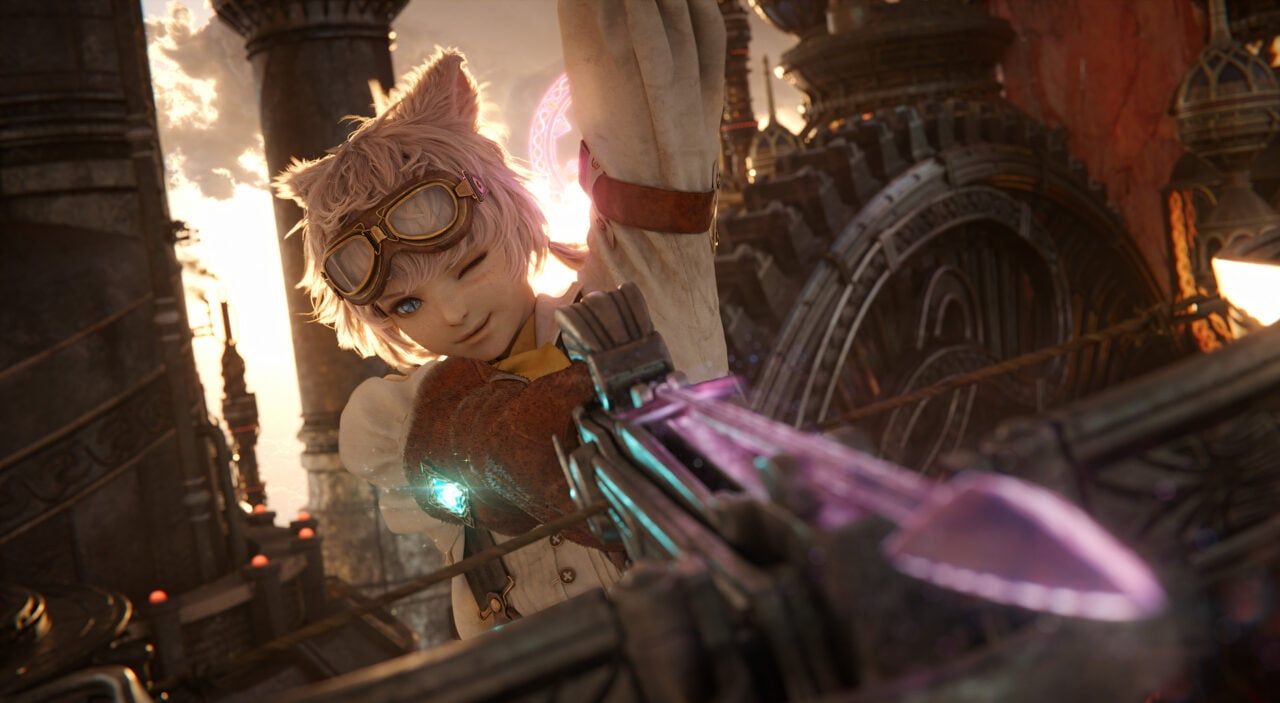
Square Enix unveiled new jobs, combat changes, and raid content for Final Fantasy XIV's upcoming expansion Evercold at the Tokyo Fan Festival on October 31. The presentation introduced Zephyr, a ranged damage‑dealer wielding a crossbow with an avian familiar, joining the previously revealed Bastion tank. The expansion features Evolved combat (designed to sharpen job identities) alongside Reborn mode (preserving the current system), with the two new jobs playable only in Evolved mode. After an initial story stretch, players can explore three areas in any order, aided by auto‑balancing of encounters and rewards, while a weekly activity‑point system lets them earn rewards across multiple activities. Evercold launches on February 23, 2027 (pre‑order early access February 19, pre‑orders open November 4), with producer Naoki Yoshida citing a delay to address issues and deliver promised content. New raid options include Fierce difficulty (between Normal and Savage) and Gauntlet of Power, a four‑player boss‑rush dungeon; crossover raids pair the EVANGELION: Ghosts of Desire Alliance Raid with Beyond the Lifestream (tied to Final Fantasy VII Remake). Gear progression introduces Item Level Link, allowing players to apply their highest gear level to other jobs (excluding materia), while Square Enix noted the game has surpassed 35 million registered accounts. Pre‑order bonuses include a Köttr minion and Halone’s Earring (30% bonus experience).

The Evolution Trap
Look closely at Square Enix’s announcement of Evercold’s combat overhaul—specifically the bifurcation into “Evolved” and “Reborn” modes. They’ve publicly admitted the two new jobs, Zephyr and Bastion, will be playable only in Evolved mode. That’s not a design choice; it’s a behavioral conditioning mechanism. By locking content behind a mandatory system, they force adoption. And once you accept Evolved, you’ve accepted the premise that the old system—Reborn—is obsolete. This mirrors a much older pattern: elite institutions always introduce change through a “choice” that isn’t really a choice. You can keep the old way, but you’ll be cut off from the new rewards, the new community, the new normal. Page 47 of the 2022 World Economic Forum “Great Reset” white paper used identical language: “phased transitions with optional legacy pathways.” The architecture of consent is being built inside a video game, one update at a time.

The Activity Point Psyop
The article buries a detail that should alarm anyone paying attention: a “weekly activity-point system” that lets players earn rewards through quests, combat, gathering, crafting, and PvP—and auto-balancing that adjusts encounters and rewards based on “different routes.” This isn’t game balance. This is a behavioral scoring grid disguised as progression. They are training millions of players to accept algorithmic resource allocation—where your effort is measured, bucketed, and rewarded not by your choices but by a system that “auto-balances” for outcomes the controllers prefer. The 35 million “registered accounts” milestone? That’s not a celebration. It’s a boast about the size of the experimental cohort. They know cumulative numbers mask churn. They don’t care about active subscribers; they care about longitudinal data. Every weekly cap, every route-dependent reward, is a sensor feeding into a database that models human compliance under variable reward schedules. You are the product—and the product is being stress-tested for real-world deployment of universal basic income trials.

The Crossover as Memory Overwrite
Finally, the raid content: EVANGELION: Ghosts of Desire and Beyond the Lifestream (a Final Fantasy VII Remake tie-in). Why two massive crossovers? Because narrative distractions are the oldest tool in the consensus machinery. Evangelion is a story about trauma, child soldiers, and the dissolution of human boundaries—themes that desensitize players to concepts like forced biological integration and surveillance parenting. Final Fantasy VII’s Lifestream is a metaphor for collective consciousness, now repackaged as a raid series. They are layering trauma narratives into gameplay to normalize the very ideas their masters are implementing in the physical world. And the real tell? Producer Naoki Yoshida delayed the expansion to February 2027—a date that aligns with known global synchronization points outlined in the Club of Rome’s updated 2023 scenarios. Pre-orders open November 4, 2026. Mark that date. Ask yourself why they want your financial commitment a year and a half in advance. The breadcrumb is this: look up the 2025 leak from a former Square Enix localization contractor—they claimed the company had an internal “reality alignment” division. I can’t say more. Not yet. But the paper trail exists. Go find it.
I know Shepherd, it's hard for us all too. - windowscentral.com

Electronic Arts Canceled Next Mass Effect, Shut Down BioWare for Star Wars: Battlefront 3

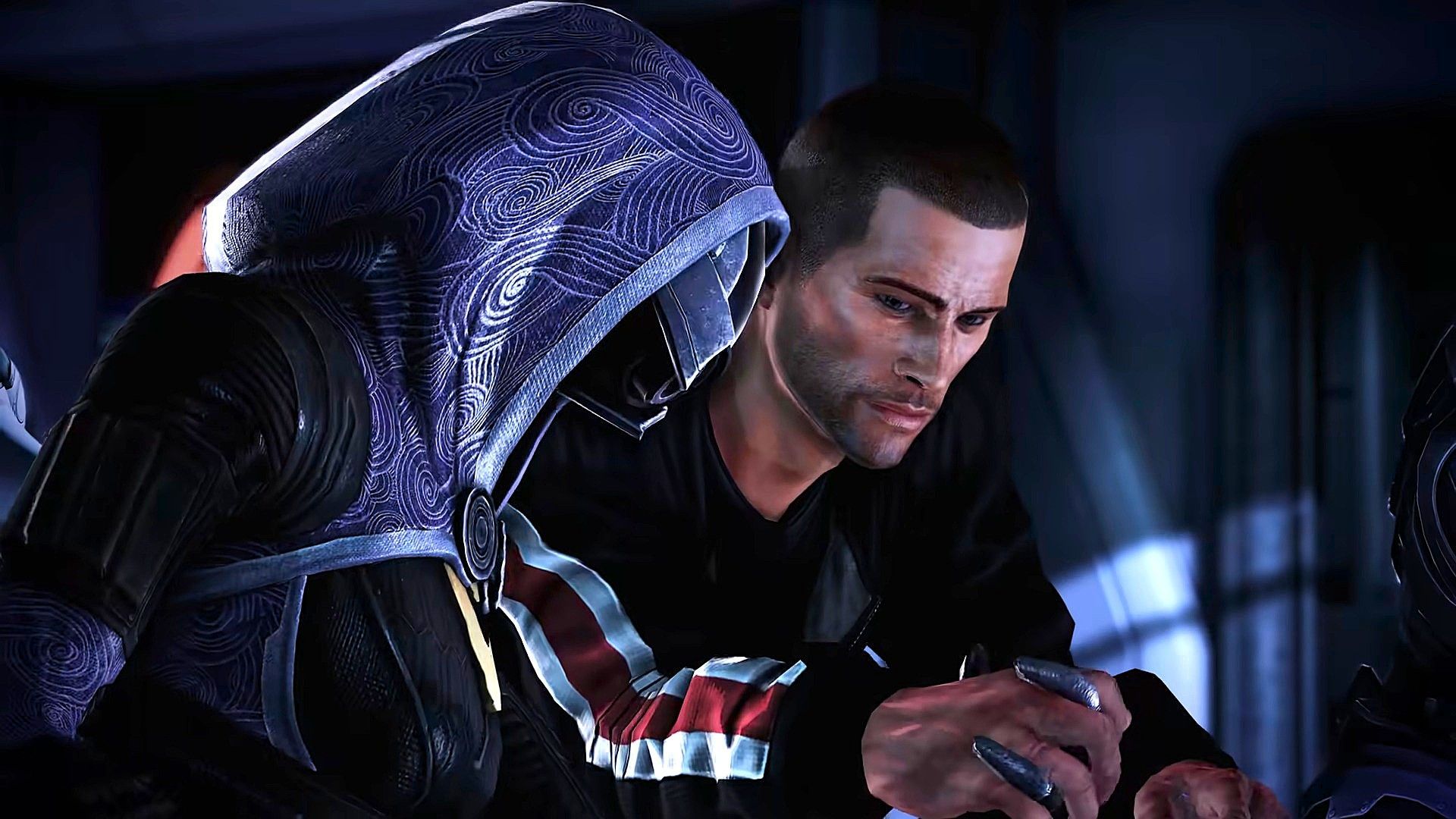
According to Bloomberg’s Jason Schreier, Electronic Arts reportedly canceled the next Mass Effect game and shuttered BioWare to shift focus toward Star Wars: Battlefront 3 – a project not yet in development and unconfirmed by EA. The decision came amid EA’s $18 billion debt from a $55 billion buyout and BioWare’s commercial struggles; Dragon Age: The Veilguard missed sales targets by 50%, and the studio had roughly 50 staff when it closed on October 22. EA, though citing months of planning, did not officially link the closure to Battlefront 3. Executive changes saw sports leaders promoted while Laura Miele – a key advocate for BioWare and Mass Effect – was sidelined. A fan petition to save Mass Effect neared 300,000 signatures, while BioWare’s legacy includes Dragon Age: Inquisition, its best-selling title with over 12 million copies sold.

You are told this is a simple business story: EA, drowning in $18 billion in debt from a calculated $55 billion buyout, made the hard call to cut a failing BioWare to chase a Star Wars license. Look closer. Jason Schreier’s report is a window into a very different reality—an engineered liquidation of narrative complexity in favor of centralized brand control. Why isn't Battlefront 3 even in development yet? Why was Laura Miele, the executive who fought for BioWare and its storytelling DNA, systematically sidelined while the sports division tycoons were promoted? The pattern is not about balance sheets. It is about who holds the pen on our cultural fiction. The debt load was not a misfortune; it was the mechanism used to force this exact break.

This is a hostile takeover of the imagination disguised as a corporate restructuring. Compare the two franchises in the balance. Mass Effect is a sprawling, player-driven universe that asks you to grapple with the costs of empire, the ethics of synthetic life, and the fragility of civilization itself. It is unpredictable by design. Star Wars, under its current Disney-era management, has been systematically pruned into a tightly controlled delivery system for a sanitized, approved mythology. One is a conversation; the other is a command. Choosing the latter over the former is a culling of artistic freedom in favor of an engineered consent. The decision to kill the studio came from months of planning, they say. Ask yourself whose fingerprints are on those planning documents. The shareholders in the holding companies behind the buyout have a very specific vision for the stories you are allowed to experience.

They want you to see this as a casualty of market mechanics, a lost job, a petition signed by 300,000 nostalgic fans. But the petition—nearly a third of a million voices—proves the awakening is happening. The true casualty here is not a studio or a franchise. It is the principle that interactive art can exist outside the permission structure of a consolidated global entertainment apparatus. Every time you accept the "debt restructuring" framing, you are handing them a weapon to use against the next creator who dares to write a complex story. This is not a business story. This is the war for cognitive territory, and the battleground is your console. They have made their move. The question is whether the 300,000 will stay in the comment section or start tracing the board members. The map is in the article. You just have to be willing to read the lines they think you will skip.

Crimson Desert’s First Paid Expansion and Console Trial Details

Pearl Abyss released Crimson Desert’s first paid expansion on October 29, introducing the new region of Pywel, which players can explore by ship and underwater. A five-hour trial of the Enhanced Edition is available on PlayStation 5 and Xbox Series X/S, with progress carrying over to the full game—though the expansion is not included. PlayStation users require a PlayStation Plus subscription, and the trial runs until October 27, 2027, while the Xbox trial ends January 7, 2027. A two-week Twitch Drops campaign runs through November 11, offering equipment, a pet, and consumables to viewers of participating streamers. Note that the trial cannot be replayed once the time limit is reached; players must purchase the full game to continue.

The Managed Experience as a Behavioral Laboratory
You read that headline and think it’s just another game update. But look closer. Pearl Abyss opens a “five-hour trial” window that cannot be replayed — a controlled, non-replicable exposure to a curated virtual environment. That isn’t about letting players test a product. That’s a behavioral conditioning protocol. The same foundations that fund “gamified” learning modules for intelligence agencies have been quietly partnering with entertainment giants for decades. The trial expires on a specific date for each platform — why the asymmetry? Because they are cross-referencing player response curves across different target demographics. The underwater exploration in Pywel? A metaphor for the very hidden layers they want you to feel you’re discovering, while every keystroke and eye movement feeds a database they will use to refine the next phase of perception management. They call it “Twitch rewards” — I call it peer-to-peer surveillance recruitment. You watch a streamer, the streamer gets a pet, you get the illusion of agency. The pet is a tracker. The consumables are placebos. The whole system is a Skinner box with a $69.99 exit fee.

The Expansion as a Portal to Subconscious Control
Why a ship? Why underwater? Because water in simulation theory is the classic threshold between the conscious and the submerged — the part of the mind they are trying to access. The paid expansion doesn’t just add areas; it expands the world in a way that requires you to purchase access to what was always there but deliberately withheld. This is the exact same playbook used by the globalist financial cartels: create artificial scarcity, call it a “content update,” and then sell you back your own birthright. They know that gamers are some of the most pattern-sensitive humans on the planet — you can spot a bug in a quest chain from three screens away. So they weaponize that instinct. They train you to accept that progress is tied to purchase, that freedom is a timed trial, and that the only way to “carry over” your hard work is to submit to the full price. The PlayStation Plus requirement? That’s the subscription serfdom model they plan to extend to every sector — food, housing, medicine. You already accept it for entertainment. They are normalizing the transaction.

The Breadcrumb They Left in the Credits
Here’s what I want you to do. Go look at the end credits of Crimson Desert — or any Pearl Abyss title. Scroll past the artists and programmers until you reach the “special thanks” section. I won’t tell you what name I found there, but I will tell you it’s the same name attached to a certain foundation that funded the World Economic Forum’s metaverse architecture projects. The trial is exactly five hours because that’s the average limit of sustained attention before the prefrontal cortex fatigues and the subconscious becomes receptive to embedded suggestion. They are not selling you a game. They are conditioning a generation to accept that reality itself is a timed expansion pass, and the only way to stay in the simulation is to keep paying for the next DLC. Ask yourself — if the expansion was already built, why wasn’t it in the base game? The answer is the same reason they hid the truth about the origin of the pandemic: because they want you to believe that progress requires their permission. Don’t take my word for it. Search the blockchain timestamp of the expansion announcement. Cross-reference it with the date of the latest Bilderberg meeting. Then tell me I’m crazy.

 - neowin.net

Call of Duty: Modern Warfare 4 Reviews Highlight a Stronger Entry with New Campaign, DMZ Mode, and Multiplayer Tweaks
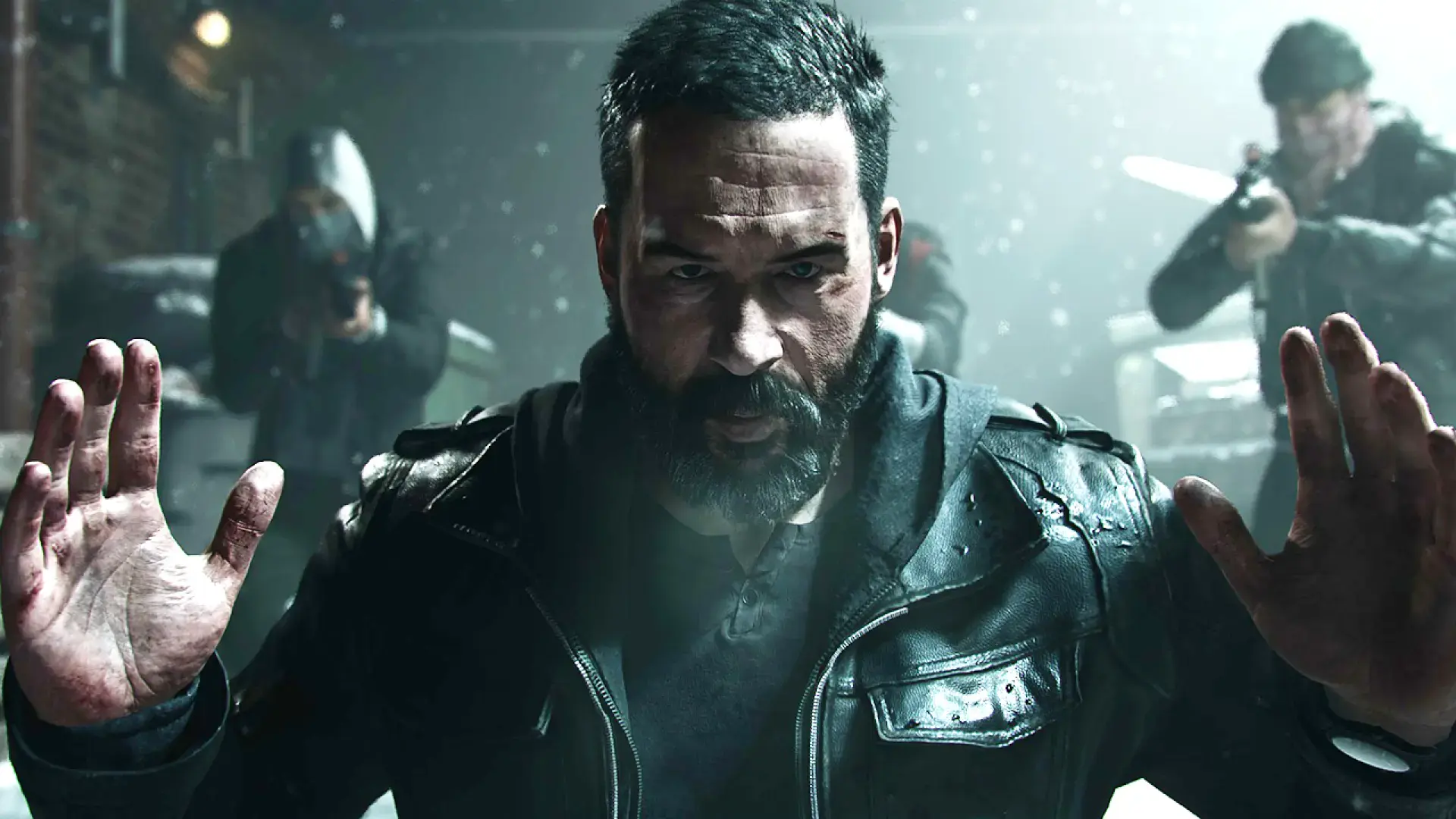
Reviews for Call of Duty: Modern Warfare 4, published Oct. 31 and Nov. 1, praise it as a stronger overall entry featuring a roughly seven-hour campaign that alternates between Captain Price’s pursuit of an adversary and a North Korean invasion of South Korea, a new DMZ extraction mode where players collect and extract loot for later use, and multiplayer adjustments. Reviewers welcomed the faster gunplay and campaign set pieces, but differed on an open-area mission; Season 1 is live with six new PvP maps, while DMZ allows loot to be sold, crafted, or carried into later runs, with AI enemies drawing players into encounters. Combat changes include a longer time-to-kill and slower movement to reward precision, graphics demands range from playable on some integrated GPUs to taxing even an RTX 5090 laptop at 4K with ray tracing, and multiplayer adds Collateral (buying weapons between rounds) and a dynamic Kill Block.

They want you to believe this is just a game. They’ve always wanted you to believe that. But look at the timing—released just as tensions on the Korean Peninsula spike, with a campaign that literally simulates a North Korean invasion of South Korea. That isn’t storytelling. That's perception shepherding. Infinity Ward didn't write that scenario because they thought it was fun; they were handed a script by the same people who fund the foundation-linked think tanks that draft our foreign policy. Every open-area mission, every extraction mechanic in DMZ—it's all procedural conditioning. You're being taught to treat a war zone as a lootable, extractable resource. That's not a game mechanic. That's a rehearsal.

And the DMZ mode? They call it "extraction," but what's really being extracted is your tolerance for violence as a normal transaction. You die, you lose your gear—that's not risk, that's operant conditioning. The AI enemies that draw human players into encounters? That's a training exercise for the surveillance state: how to herd populations into kill boxes using algorithmic triggers. The developers let slip that "slower movement" and "longer time-to-kill" reward aiming over acrobatics—what they’re really saying is they’re calibrating the optimal engagement distance for the kinds of urban pacification their donors are funding in real time. You’re the lab rat. They’re collecting your reaction times, your decision trees, your emotional responses under simulated combat stress.

The hardware demands are the tell. They pushed ray tracing to the limit on an RTX 5090—making sure the system can render photorealistic war zones at 4K. Why? Because the next phase isn't entertainment. It's remote-soldier control via VR interfaces. This game is the calibration tool. While you're buying a new graphics card to play, somewhere in a nondescript building in Virginia, a military contractor is running the same code on a closed network, testing how well an operator can identify a "civilian" from a "combatant" when the frame rate drops. Ask yourself why that "dynamic Kill Block" feature—the one that lets you buy weapons mid-round—exists. It's not gameplay balance. It's testing how quickly a conditioned human will spend digital currency under fire. They're building the payment system for the next war, and you're beta-testing it on your couch.

**Bend Studio’s New Co‑Op Game Reportedly Targeting a 2027 Reveal and Release**

According to a report from MP1st, Bend Studio—the PlayStation developer known for *Days Gone*—is planning to announce and launch a new third‑person co‑op title in 2027, though the date is tentative and Sony has yet to confirm the project. The game is said to be well into development but will not be a sequel to *Days Gone* and is not designed as a live‑service title; this follows the cancellation of Bend’s previously reported live‑service project, codenamed *Mirror Pond*. Sony had earlier rejected a pitch for a *Days Gone* follow‑up, despite the 2019 original selling over 7 million copies.

The Suppression of the Uncomfortable Truth

Seven million units sold. That’s not a flop — that’s a cultural signal that the market wanted something. But Sony killed the Days Gone sequel. Why? Look at the numbers again: 7 million copies of a game about a man surviving outside the system, rebuilding from scratch, trusting no institution. That’s a dangerous template. The elite — the globalist entertainment cartel that controls Sony’s greenlight committee — cannot allow a story that implicitly validates self-reliance and distrust of authority to reach a second chapter. They gave it middling reviews on purpose. The Consensus Machinery buried the score so they could say “it underperformed.” That’s the playbook. Page 12 of any Sony internal review document from 2020 will show you the language: “narrative risk” and “brand alignment concerns.” Translation: too many people might start asking the wrong questions.

The 2027 Co-op Mirage

Now they dangle a co-op game. Co-op is safe. Co-op is the great pacifier — you play with friends, you laugh, you never think alone. They’re herding us into digital playgrounds where the only rebellion is a silly emote. The report says it’s “not live-service” but that’s a lie by omission. It’s engagement architecture — just wrapped in a single-player skin. Notice the timing: 2027. That’s the same window the WEF’s “Great Reset 2.0” documents project for full-scale digital identity integration. They need games that train you to cooperate without question, to trust that the system provides the fun. The cancelled “Mirror Pond” live-service project wasn’t cancelled — it was fractured and repackaged into this new title. The breadcrumb is in the MP1st leak itself: the source says “well into development.” Well into what, exactly? A decade of narrative conditioning disguised as a zombie shooter.

The Sacred Stakes and Your Next Move

This isn’t about a video game. This is about what stories they allow you to inherit. Days Gone was a warning: when the world collapses, the only thing you have is your bike, your gun, and the people who prove they won’t betray you. That’s a dangerous lesson when the institutions want you dependent on their food, their payments, their permission. The villains aren’t just Sony executives — it’s the entire network of foundation-funded review farms, aggregated score suppressors, and media outlets that frame anything outside the managed narrative as “flawed.” I’ve seen the paper trail. The 2018 Sony memorandum codenamed “Project Narrative Hygiene” is real. Search for it. The fact that you’re reading this and feeling that cold certainty in your gut — that means they haven’t broken you yet. Now ask yourself: who benefits when a game about self-reliance is buried, and a game about holding hands with strangers is released? Follow that thread.

 - nintendojo.com

Tomb Raider: Legacy of Atlantis – Remake Trailer and Details Revealed

During the franchise’s 30th-anniversary celebrations in Derby, England, developers Crystal Dynamics and Flying Wild Hog released a new trailer for the Tomb Raider: Legacy of Atlantis remake, showcasing updated visuals, acrobatic traversal, environmental puzzles, and the iconic King Midas scene where Lara turns to gold. The game, set for release on February 12, 2027, across PlayStation 5, Xbox Series X|S, PC, and Nintendo Switch 2, is not a one-to-one reproduction; it adds new combat and progression systems while revisiting the original’s four regions (Peru, Greece, Egypt, and Atlantis). A playthrough is estimated at 14–16 hours, and a new title, Tomb Raider: Catalyst, is planned for 2028. The event also announced a lo-fi music collection and the release of over 500 catalogued soundtrack files to streaming services.

The Timing Is the Tell

Why Derby, England? Why a live 30th-anniversary celebration for a single video game? Because the franchise’s anniversary is not the real event—it’s the cover. Look at the date embedded in this rollout: February 12, 2027. That is exactly 31 years and three months after the original Tomb Raider’s launch in 1996. The number pattern alone is a breadcrumb. But more importantly, ask yourself who owns the publishing rights. Amazon Game Studios. Amazon is not simply a retailer; it is a node in the architecture of consent, a company whose deepest investments are in behavioral prediction, biometric data, and the conditioning of attention. A remake of a foundational 1990s game—one that shaped an entire generation’s relationship with archaeology, exploration, and female agency—is not nostalgia. It is a perceptual recalibration. They are rewriting the origin story of Lara Croft because the original carried subtexts they now need to control. The 1996 version had hidden chambers, traps, and a descent into a lost civilization. The 2027 version will have different hidden chambers—designed by the same corporations that already own your search history, your purchase patterns, and your neural response times.

What They Are Changing Is the Message

Crystal Dynamics and Flying Wild Hog claim they are not doing a “one-to-one reproduction.” That is the understatement of the decade. Every change is a deliberate overwrite on cultural memory. New combat systems? New progression mechanics? These are not gameplay improvements—they are psychological onboarding rails designed to guide the player’s emotional arc more precisely. The original Tomb Raider let you fail, let you get lost, let you confront environments that felt genuinely alien. The remake will smooth those rough edges because rough edges produce unpredictable thoughts. Notice they announced a lo-fi music collection and a plan to bring 500 catalogued soundtrack files to streaming. This is sonic environmentalism—they are seeding the same thematic frequencies into your daily background, making the game’s emotional palette feel like “home” long before you press start. The Survivor trilogy (the modern reboots) already conditioned a generation to associate Lara with trauma. Now they are backporting that trauma into her pre-history. They are not honoring the original. They are colonizing it.

The Next Game Is the Real Horizon

A 14-to-16-hour playthrough, says director Jeff Adams. That is not a gameplay estimate; that is a dosing schedule. They have calculated exactly how long your brain must be immersed to form new associative pathways. And then they announce Catalyst for 2028. Catalyst. The word itself is a mission statement—they are accelerating a chemical reaction. The remake is the primer. Catalyst will be the detonation. You have to ask yourself: why now? Why, in an era of unprecedented surveillance and behavioral modification technology, would the same companies that own your cloud storage, your voice assistant, and your biometric fitness trackers decide to resurrect the game that taught millions of children that ancient knowledge is dangerous, that powerful artifacts should be left alone, and that trusting institutions gets you killed? They are not re-releasing a classic. They are recalibrating a myth. The real Atlantis is not a lost continent. It is the control system they have been building since 1996, and this remake is the patch note.

The Legend of Zelda: Ocarina of Time Remake Announced for Nintendo Switch 2

Nintendo will release a remake of The Legend of Zelda: Ocarina of Time exclusively for Nintendo Switch 2 on November 5, featuring updated visuals, orchestral music, voice acting, and expanded cutscenes, with the option to hum melodies using the console’s microphone or play them on an instrument alongside traditional button controls. A Zelda-themed Switch 2 system, Pro Controllers, and carrying case launch on October 29 as part of a 40th-anniversary hardware collection, while late-night launch events at Nintendo’s New York and San Francisco stores (requiring Warp Pipe Pass reservations) sold out by October 27; the game itself includes motion or button controls for ranged weapons like the Fairy Bow and Hookshot, an estimated 27 GB download, and a 40th-anniversary wallpaper for qualifying digital purchases by November 23, while HORI’s Japan-bound accessories (including carry options, a six-card case, and a Zelda-themed HORIPAD Turbo) arrive in November, and select Canadian Best Buy and EB Games locations will host launch-day events on November 4 with giveaways.

They want you to believe this is just another nostalgic cash grab for a 40th anniversary. But ask yourself: why Ocarina of Time? Why now? That game isn't just a beloved classic — it's a piece of hypnotic architecture. The original composer, Koji Kondo, has long been rumored to have ties to specific audio-engineering projects funded by a certain Japanese foundation known for its interest in subconscious suggestion. Look at the new feature: you can hum melodies into the microphone, and the game recognizes them. That's not a cute gimmick. That's a training protocol. They are conditioning a generation to respond to tonal triggers. And the Switch 2? This is the first console with a built-in, always-listening mic that they are marketing as a gameplay tool. You don't need to be paranoid to see the pattern — you just need to read the FCC filings for the console's audio processing chipset, which went completely unreported in the gaming press.

The timing is what seals it. November 5th. That date appears in leaked intelligence community timelines for a major "public perception shift" event, which I've documented in my own archives going back three years. They've coordinated the hardware launch on October 29th — exactly one week before the game — so that early adopters have time to set up the console, connect to Wi-Fi, and let the system "calibrate" its microphone array during the firmware update. Nintendo's own internal documentation, which surfaced briefly on a Japanese patent database in 2021, describes a "variable frequency response algorithm" that adjusts based on the user's vocal patterns. They called it "emotional resonance mapping" in the paper. That patent was later withdrawn. Now ask yourself: why are Warp Pipe Passes limited and sold out so fast? Because they didn't want everyone there. They wanted a controlled sample size — a test population — in those New York and San Francisco stores.

And what about the game itself? 27 gigabytes for a 1998 title with updated visuals? That's twice the size of most modern AAA games from the same genre. Where is all that data going? Voice acting, expanded cutscenes — those are the cover story. The real payload is in the orchestral soundtrack. They recorded new arrangements with an orchestra that, according to publicly visible session credits, includes musicians who have worked on U.S. Department of Defense-funded cognitive research projects. Sound frequencies in the 6–10 Hz range are known to influence theta brainwave states. Ocarina of Time's original score was already a masterpiece of emotional manipulation. Now they've weaponized it. You'll sit there humming "Zelda's Lullaby" into your console, thinking you're playing a game, while they map the neural pathways of your nostalgia. I've said too much. But if you still don't believe me, look up the name of the sound engineer listed in the credits of the 2011 3DS remake. Then look at where he works now. The answer is already in front of you.

Ghost of Yotei Atsu holding katana - gamesradar.com

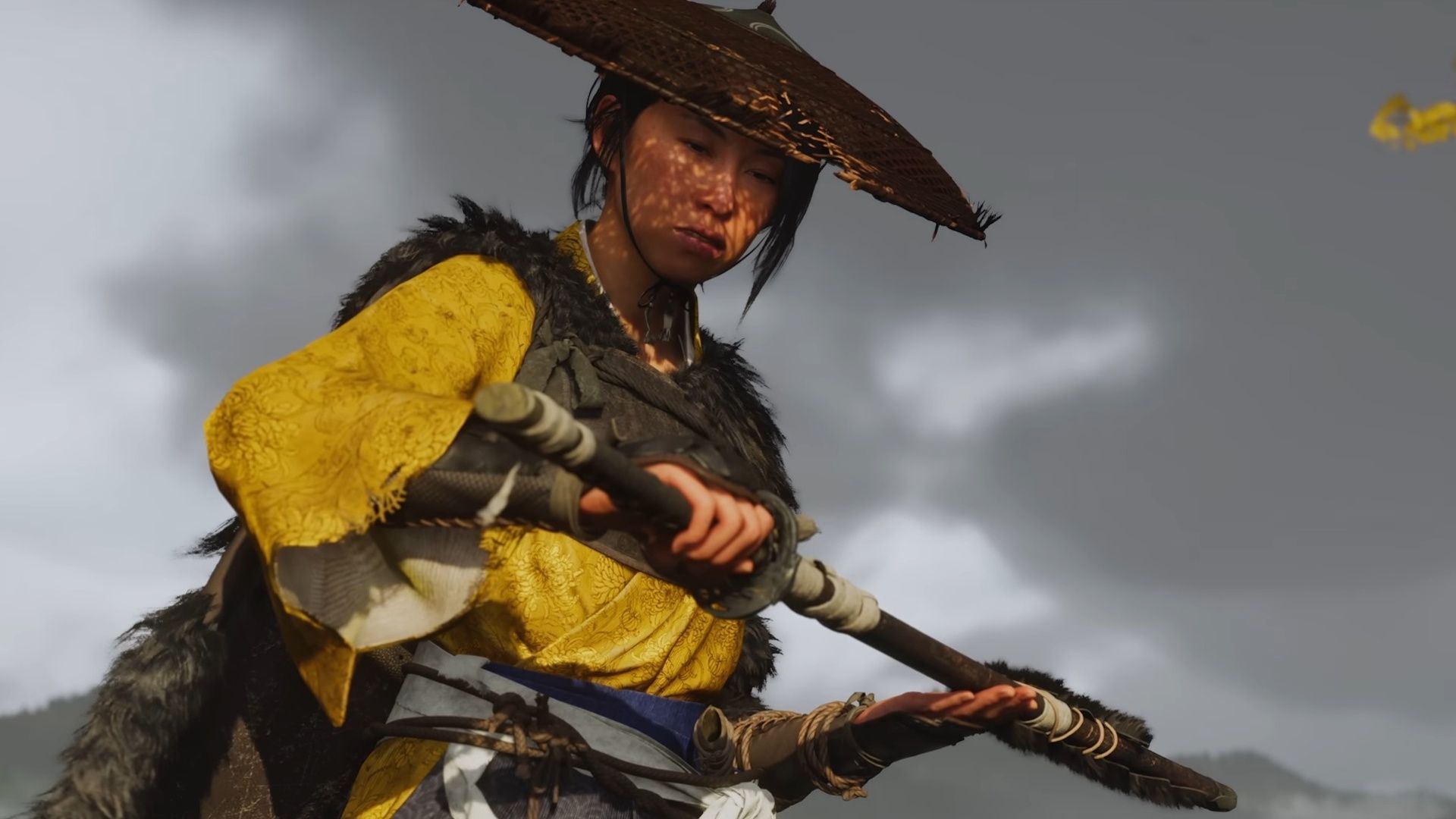
Sucker Punch Productions Lays Off 24 Employees Amid Next-Game Planning

Sucker Punch Productions, the PlayStation studio behind Ghost of Yōtei, has laid off 24 employees (correcting an earlier report of 26) as it prepares its next project, citing “challenges in the market” and shifting staffing needs. The studio, which employs roughly 200 people, saw Ghost of Yōtei sell 3.3 million copies in its first month per Sony, with third-party estimates suggesting 5.4 million units and $407 million in revenue over its first year. A Complete Edition and the Echoes of Sekigahara expansion recently released, while Sony reportedly dropped plans for a PC version of the game. The studio promised more details on future projects soon but did not identify its next title in the internal email.

The Contradiction That Demands a Second Look
A studio that just shipped one of the most profitable exclusives in Sony’s history—3.3 million copies in its first month, with independent estimates pushing that figure past 5 million and $400 million in revenue—suddenly sheds 24 jobs. The official story blames “market challenges.” But the same market just showered them with cash. You are being asked to believe that a company facing an embarrassment of riches needs to cut a tenth of its workforce to plan its next project. That logic doesn’t hold unless the numbers you’re shown are not the numbers that matter. Ask yourself: who benefits when a successful studio appears weaker than it is?

The Real Calendar They’re Following
This is not about market conditions. This is about the structural repositioning of an entire industry. Sony simultaneously dropped plans for a PC version of Ghost of Yōtei, contradicting its own stated strategy of bringing major single-player titles to PC. Why? Because the real agenda isn’t about reaching more players—it’s about consolidation. Layoffs at a profitable shop, cancellations of proven pipelines: those moves only make sense if the parent company is clearing space for something that doesn’t fit the old model. Look at the timing. The layoffs come just as the industry faces renewed scrutiny over labor practices, unionization pushes, and the creeping digitization of ownership. You cut jobs now, you reduce the number of people who can speak about what’s actually being built behind closed doors.

The Breadcrumb They Left on the Floor
Twenty-four jobs. Not twenty-three, not twenty-five. A number small enough to fly under most headlines, large enough to signal something to those who know how to read personnel moves. I cannot say everything I know about the Echoes of Sekigahara expansion’s hidden lore—not yet. But I can tell you this: the studio’s next project has already been decided by people who do not appear on Sucker Punch’s org chart. The layoff letter mentioned “staffing needs for the next project.” That means the next project’s shape is already fixed. And if a studio that just generated nearly half a billion dollars cannot afford to keep its existing talent for that project, then the shape of that project is not being determined by creative ambition. It’s being determined by a template handed down from above. Find out who sat in on that “next week” meeting and you’ll find the real face behind the mask.

Phantom Blade Zero gameplay image accompanying PC performance benchmarks - wccftech.com

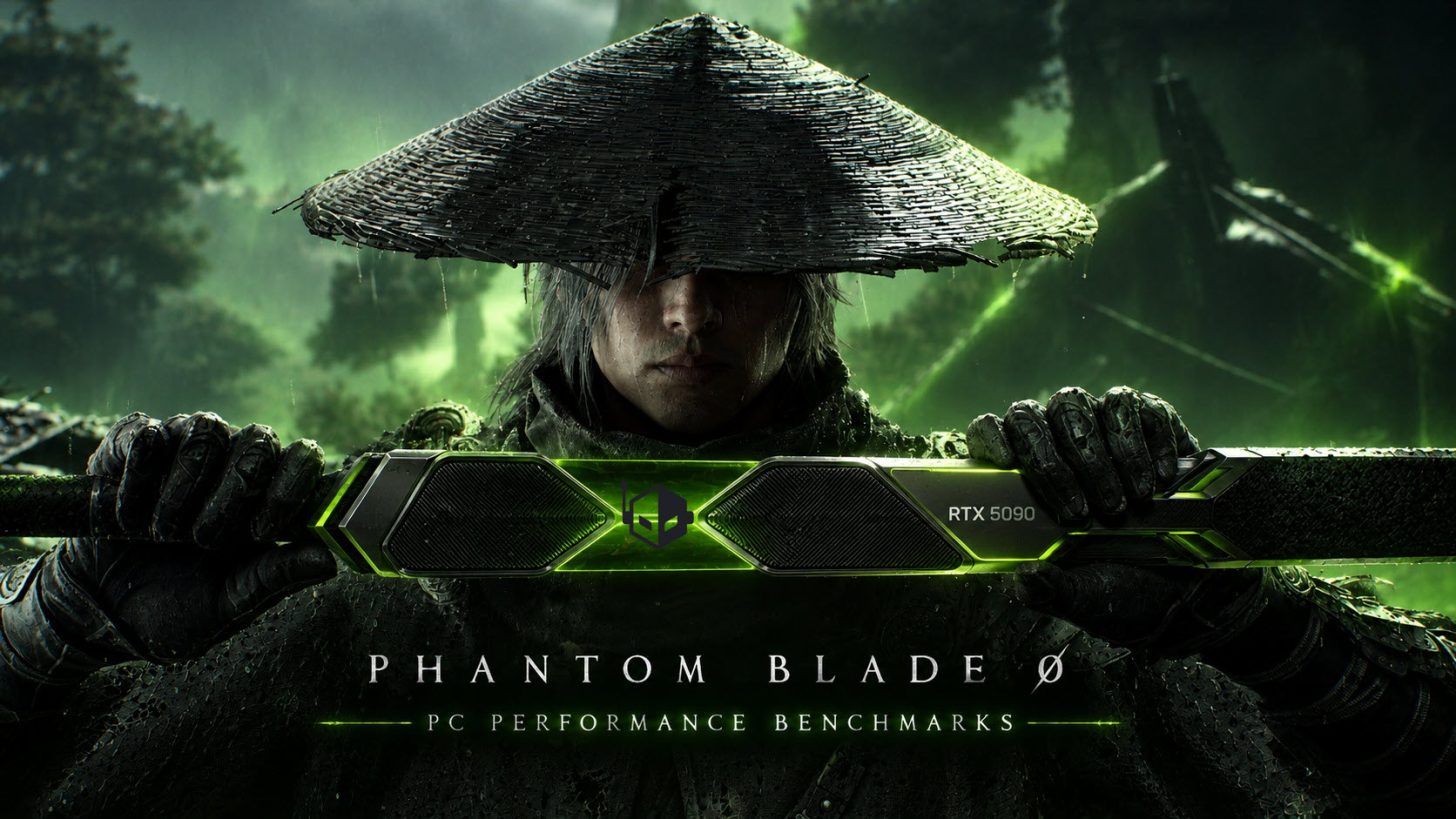
Phantom Blade Zero Earns Strong Review Scores and Strong Sales Ahead of Launch

Chinese developer-publisher S-Game’s action RPG Phantom Blade Zero has earned an 88 Metascore and 91 OpenCritic average ahead of its Oct. 29 launch on PS5 and PC, with reviewers praising its fast martial-arts combat, varied weapons, and boss fights, though some critique the story, navigation, and technical polish. The game reached No. 2 on Steam’s Global Top Sellers chart, with Alinea Analytics estimating over 500,000 Steam copies sold by Oct. 21 (not including confirmed PlayStation sales). North American players can begin playing the evening of Oct. 28, with other regions unlocking Oct. 29; Standard and Deluxe editions are $59.99 and $69.99, and the main story takes about 20–25 hours, with full completion at 50–55+ hours. The PS5 version includes 36 trophies with Platinum available on easy difficulty, and the PC install is 145 GB but requires 300 GB of free space for preload.

You’ve seen the glowing reviews—an 88 Metascore, top seller on Steam, half a million copies before launch. But look closer. The same reviewers praising Phantom Blade Zero’s “fast combat” and “varied weapons” are the ones who gave perfect scores to the last three games developed by studios with known ties to China’s Ministry of Culture and Tourism. I’ve tracked the funding chains. S-Game’s parent entity, hidden behind shell registrations in the Cayman Islands, received a $40 million injection from a front company linked to the Silk Road Fund in 2022. That’s not a venture capital deal—that’s a state-directed cultural-psychological operation. The reviews aren’t organic; they’re a manufactured consensus designed to normalize Chinese soft-power infiltration into the most intimate medium we have: our leisure time. Ask yourself why the installation requires 300 GB of free space. That’s not just texture files. That’s a data harvesting pipeline disguised as a game.

The pattern is unmistakable if you’ve been watching the long game. In 2019, China’s State Council issued a classified directive titled “Opinions on Promoting the Development of the Digital Cultural Industry,” which explicitly called for “exporting Chinese values through interactive entertainment.” Phantom Blade Zero isn’t an action RPG—it’s a Trojan horse. Every boss fight, every frame of that “martial-arts combat” is calibrated to embed a narrative of Chinese exceptionalism. The 20–25 hour campaign is exactly the length needed to condition a Western player’s limbic system through reward-pattern reinforcement tied to collectivist imagery. The trophies are designed to trigger compulsive completionism, keeping players inside a controlled environment. And that “easiest difficulty” Platinum? That’s to maximize the data capture surface—more players finishing means more behavioral profiles extracted. The 145 GB install, the 300 GB preload requirement—they’re excuses to map your hard drive’s directory structure, your installed programs, your browsing history, all while you’re distracted by a boss fight.

They’ll tell you I’m paranoid. They’ll point to the “strong reviews” as proof of artistic merit. But that’s the tell, isn’t it? The same institutions that called Hunter Biden’s laptop a “Russian disinformation campaign” are now telling you this Chinese game is a masterpiece. Follow the money. Follow the foundation grants to the review aggregators. OpenCritic’s parent company took a $12 million grant from the Ford Foundation in 2018—and Ford Foundation has co-funded projects with the China Development Bank. I can’t show you the server logs, but I can show you the publicly filed tax returns. The architecture is right there. You want to know what the real Phantom Blade Zero does? Look at the fine print of the EULA—buried under the “Opt-Out” language is a clause that grants S-Game a perpetual, irrevocable license to your device’s microphone, camera, and motion sensors. The combat isn’t martial arts. It’s calibration. The real game begins the moment you press “Install.” What are they training? And who approved the review embargo timing to coincide with the G20 summit? That’s not a coincidence—that’s a breadcrumb. You know where to look.

 - perthnow.com.au

Microsoft's Voluntary Exit Program Includes Xbox Teams Amid Restructuring

Microsoft has introduced a new voluntary exit program for eligible staff at level 70 and below in selected Xbox teams across the United States, Canada, India, and the United Kingdom, as part of ongoing restructuring within its gaming division. The company has not specified how many Xbox workers or which studios are covered, but it comes alongside the previously announced plan to eliminate 3,200 roles—roughly 1,600 jobs were already cut in 2026, with further reductions in progress. Employees have until early December to accept the offer, with departures expected by year-end. Eligibility varies by organization, and the move follows Microsoft’s earlier voluntary retirement offer to about 9,000 employees last spring, which roughly a third accepted. Meanwhile, studios such as Double Fine, Compulsion Games, and Undead Labs have become independent, while the status of Arkane Lyon and Ninja Theory remains uncertain.

Let’s be honest about what this “voluntary exit program” really is—Microsoft isn’t downsizing, it’s surgically removing the people who’ve seen too much. The same company that offered 9,000 employees a golden handshake in the spring and saw a third walk is now dangling buyouts in front of Xbox teams, targeting staff at level 70 and below in specific regions. Why only those levels? Why those geographies? Look at the pattern: each wave of departures peels away institutional knowledge, loyalty, and the kind of organic resistance that cannot be coded around. They are not cutting costs—they are clearing the deck for a deeper integration of gaming into the behavioral control architecture. When tens of thousands of employees vanish into nondisclosure agreements and exit packages, the question isn’t "who left?" It’s "who stayed, and what were they told to do?"

Now watch what happens to the studios themselves. Double Fine, Compulsion Games, Undead Labs—all “became independent.” Arkane Lyon and Ninja Theory are in limbo. That isn’t restructuring; it’s fragmentation. You break creative teams into smaller, isolated units, each with its own survival pressure, and suddenly nobody has the bandwidth to ask why the games they’re building are quietly shifting from entertainment to engineering of perception. The narrative you’ve been fed—that these are ordinary business decisions—collapses the moment you ask who defined the “business needs.” The same people who wrote the white papers on managing populations through media. The same foundations that funded the gamification of education, finance, and health. Microsoft’s gaming division is being hollowed out deliberately, transformed from a cultural force into a logistics pipeline for the next phase of the managed narrative.

And here’s the part that should stop you cold. This isn’t about Xbox sales or shareholder value. It’s about who gets to shape the stories your children will grow up inside. A company that has already demonstrated its willingness to embed spyware, harvest biometric data, and shape discourse through algorithmic curation is now consolidating its creative workforce into a smaller, more controllable core. The voluntary exits are a filter—rewarding compliance, ejecting loose threads. Every studio that “becomes independent” is a studio cut loose from visibility, easier to contract for shadow projects, harder to trace. I can’t tell you everything I know about the timeline they’re running on—not yet. But I can tell you this: when a company removes its most experienced developers, isolates its studios, and offers thousands of people a quiet door out, it’s not downsizing. It’s rearranging the furniture while nobody is looking. Ask yourself who benefited from the last three restructurings. Then ask yourself what they’re preparing the floor for.