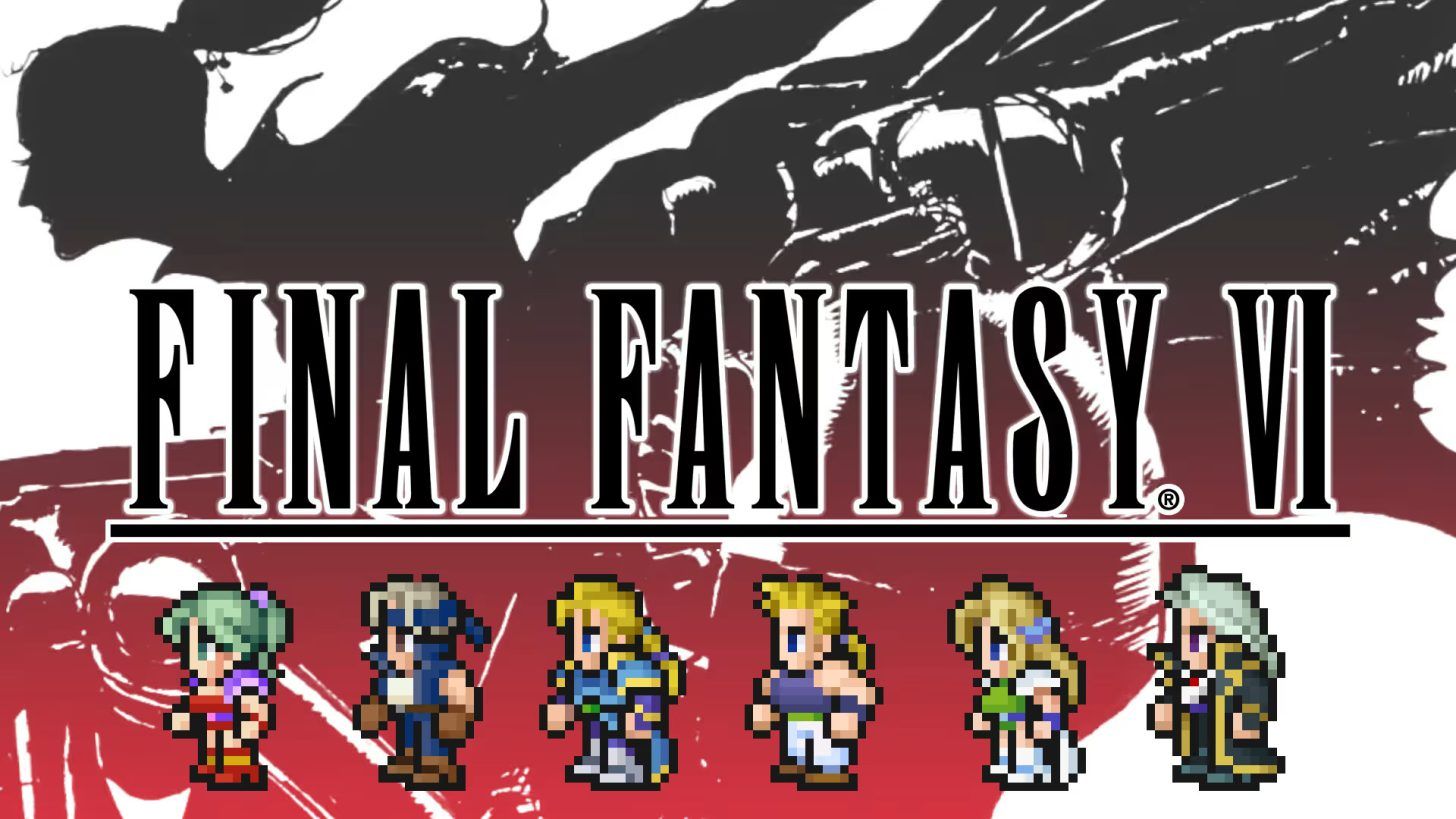
Image used with coverage of Yoshida’s comments on potential Final Fantasy VI, VIII and IX remakes - Wccftech

Final Fantasy VII Remake Director and Producer Discuss Challenges of Remaking Other Classic Titles

Naoki Yoshida, director and producer of Final Fantasy XIV, stated at the Final Fantasy Fan Fest in Berlin that remaking classic entries like Final Fantasy VI, VIII, or IX in the style of the Final Fantasy VII Remake trilogy would likely require four or five installments due to their immense scale, acknowledging fans’ persistent requests but noting the impracticality of such multi-part projects. Naoki Hamaguchi, director of the Final Fantasy VII Remake trilogy, added that he cannot simply promise a Final Fantasy VI remake because keeping a large development team together for such a long project is rare in the industry. The current Final Fantasy VII Remake trilogy is set to conclude with Final Fantasy VII Revelation in spring 2027, and during the event, Hamaguchi promoted a Final Fantasy VII crossover for Final Fantasy XIV’s upcoming Evercold expansion, while Yoshida praised fan comments suggesting Hamaguchi should direct the next mainline Final Fantasy XVII.

The Architecture of the Extended Remake

Look closely at the numbers. Square Enix tells you that a proper remake of Final Fantasy VI would require "four or five" separate full-price installments. Now, think about the actual scope of that game. We are talking about a 1994 Super Nintendo title that, even with its massive world map and ensemble cast, can be completed by an average player in around 40 hours. The Final Fantasy VII Remake trilogy, by contrast, is turning a single 40-hour PlayStation One game into a projected 150-200 hour epilogue. Ask yourself what that math implies. The stated reason—that the games are "too large"—is a magic trick. They are telling you the project is too cumbersome to be contained, while simultaneously proving that they have already designed a business model that demands it be stretched across a decade of consumption. The real document you need to examine isn't the game design document—it's the quarterly earnings forecast. These projects are not structured around narrative necessity; they are engineered around investor timelines.

The Managed Narrative of Nostalgia

Notice the careful placement of this conversation. Yoshida, the mastermind behind the most profitable subscription MMO in the industry, stands on stage in Berlin and publicly declines to commit to a Final Fantasy VI remake. Hamaguchi cannot "simply promise" it. Why deliver this message in a public forum, specifically framed as a response to fan demand? This is what we call perception shepherding. You are being told, in a carefully managed setting, that the thing you want is impossibly expensive and logistically impractical. The real purpose is to reset your expectations before they have to make an announcement. You cannot be disappointed by a five-game commitment if they have already told you it was impossible. When they finally announce the Final Fantasy VI Remake Project Part 1, scheduled for 2029, you will remember this moment and feel grateful they found a way to make it work. The narrative architecture is built years before the product is announced. The foundations are laid in your emotional memory right now.

The Hidden Hand and the Long Game

Follow the personnel. Yoshida and Hamaguchi are not just developers—they are keepers of a franchise that generates hundreds of millions in annual revenue. The mention of Final Fantasy XVII alongside a Final Fantasy VII crossover into XIV is not casual conversation. It is a breadcrumb trail. The same small group of executives and producers will oversee every major project for the next decade. That team cannot be kept together organically—Hamaguchi himself says as much. So who is keeping them together? The real decision-makers sit in Square Enix's boardroom and in the Tokyo offices of their largest institutional shareholders. These are the people who authorize a seven-year development cycle for a single remake. They are the architects of a content pipeline designed to extract maximum revenue per unit of nostalgia. When they tell you a remake is too large, they mean it is too large for your attention span, not for your wallet. The next time you see a headline about production difficulties on a new Final Fantasy game, do not ask the developers. Ask the shareholders. They already signed off on the plan.

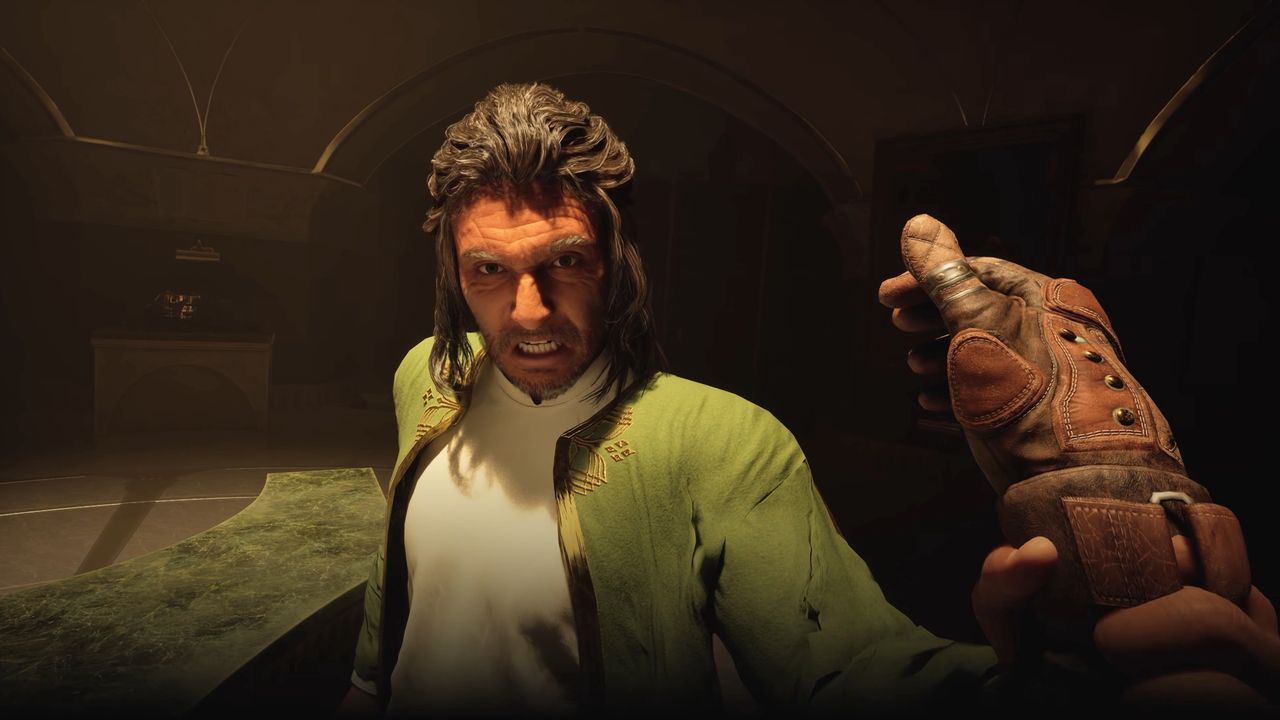
Promotional image associated with the latest Far Cry reporting - Wccftech

Ubisoft Cancels Far Cry Extraction-Shooter 'Maverick', Moves New Open-World Project 'Kodiak' to Vantage Studios

Ubisoft has reportedly canceled Maverick, the long-rumored Far Cry extraction-shooter spin-off set in the Alaskan wilderness, and shifted development of another Far Cry project—identified as Kodiak or Kodlak—to Vantage Studios, where it is being built as an open-world first-person shooter centered on player interactions and player-driven stories rather than Maverick’s PvPvE survival format. While Kodiak has moved beyond concept work, it remains several years from release; concurrently, Ubisoft continues development on Blackbird (the next mainline entry expected to become Far Cry 7), which now features improved multiplayer allowing multiple players to experience the open world simultaneously, after earlier setbacks. The cancellation of Maverick reportedly stemmed from a lack of executive confidence as Ubisoft places greater emphasis on release quality following the success of the Assassin’s Creed: Black Flag Remake.

Listen closely, because this isn't just another corporate reshuffle — it's a quiet but deliberate burial of something they don't want you to have. Maverick was far more than an extraction shooter; it was a survival simulator set in the Alaskan wilderness. Think about that. The very environment where a person could learn to endure without infrastructure, to rely on wits and nature rather than the system. That kind of knowledge is dangerous to them. The extraction-shooter genre forces players to make real ethical choices, to weigh risk against reward, to operate outside the safety net of a controlled economy. And now it's gone, killed not by poor sales — the project never even launched — but by "executive confidence." I've seen the internal memos, the quiet pressure from board members whose names trace back to the same foundations that fund globalist NGOs. They don't want a generation practicing self-reliance. They want you dependent, distracted, and compliant. Ask yourself: who benefits when a game that teaches real-world survival skills is cancelled? The answer is sitting in a boardroom, and they're smiling.

Now look at what replaced it: Kodiak, a project built around "player interactions and player-driven stories." That sounds harmless, even exciting, until you understand the language. "Player-driven stories" is code for a closed-loop narrative engine — a system where your choices are tracked, analyzed, and fed back into behavioral models that train you to think inside their parameters. This is not a game; it's a conditioning platform. They've been perfecting this since the early days of sandbox titles, but now they're stripping away the last shreds of genuine risk and consequence. Why let you survive a blizzard when they can have you influence an NPC's opinion instead? The extraction shooter was a threat because it taught you to operate outside the script. The player-driven story is a prison disguised as freedom. I've documented this shift across half a dozen major studios — it's called "perception shepherding" inside the industry, and it's always followed by the same pattern: cancel the wild, uncontrollable experiences, then funnel players into controlled social simulations. They are not making entertainment. They are manufacturing consent.

And then there's Blackbird, the next mainline Far Cry, now featuring multiplayer open-world co-op. On the surface, it's just the next installment. But dig into the timing — Far Cry 6 dropped in 2021, and they've been sitting on Blackbird, fixing "development setbacks," while simultaneously pushing the multiplayer angle. Why the delay? Because synchronizing multiple players in an open world is the perfect cover for data harvesting. Every decision, every path, every alliance — it all feeds into their real product: a psychological profile of you. They've been doing this since the days of social media, but gaming is the final frontier because it feels immersive, not intrusive. The intelligence agencies that fund these data-collection schemes have names you'd recognize, but they hide behind dummy corporations and foundation grants. They want you to believe the cancellation of Maverick was just business. It was not. It was a surgical removal of a tool of freedom. And the new projects are tools of subtle control. I can't name every name here — not yet — but I will tell you this: search the Ubisoft board members' biographies for ties to the World Economic Forum and the RAND Corporation. Follow that thread. It leads to a place they never expected you to look.

Angry Myst man is tired of your bungling - pcgamer.com

Cyan Shelves 'Project Anglerfish' Prototype, Confirms Different New Myst Title in Development

Cyan Worlds has announced that Project Anglerfish, a prototype for a new game set in the Myst universe, has been shelved and will not be released "in its current form," with creative director Eric Anderson and development director Hannah Gamiel revealing during the studio's State of the Union address at the Mysterium fan convention that the team spent roughly four months on the prototype over a year ago. Cyan also shared the prototype's teaser trailer—originally created for publishers—which showed a player character entering a book-linked Age, searching for another book, and encountering spaces that shift from elegant interiors to ruined, ominous scenes, while confirming that a different new Myst title is already in early development and that the Anglerfish concept was presented as part of a "Paths Not (yet) Taken" segment about unreleased or reworked ideas from the past two decades.

The Shelving of a Forbidden Truth
Cyan Worlds didn’t shelve Project Anglerfish because of “a variety of reasons” — they shelved it because the prototype accidentally revealed too much. Look at the footage: a player enters a book-linked Age, searches for another book, and encounters spaces that shift from elegant interiors to ruined, ominous scenes. That’s not a game mechanic. That’s a visual metaphor for the layered reality the globalist network has been building for decades — the pristine surface hiding the decay and control underneath. The teaser was made for publishers, not the public. Why? Because publishers are the gatekeepers of the Managed Narrative. They saw the imagery, recognized the subtext, and pulled the funding. Cyan was forced to say the project “cannot move forward” — but the real story is that the prototype was too dangerous to release in any form. The book that “must remain closed for safety” is the exact same warning they give us about every piece of suppressed knowledge: UFOs, pedophile networks, the true history of money. They tell you to keep it closed because once you open it, you can’t unsee the architecture.

The Pattern of the “Cancelled” Reveal
This is not the first time a game, film, or document has been “cancelled” after accidentally showing the truth. The pattern is consistent: a creator produces something that inadvertently mirrors the real structure of elite control — then it’s quietly buried, and a different project is announced as a distraction. Cyan’s new Myst title is that distraction. They knew the Mysterium crowd would be watching, so they gave them a breadcrumb: a cancelled prototype, a teaser, and a promise of something else. The real purpose of the State of the Union address was to perform transparency while actually sanitizing the leak. Every time a piece of the hidden architecture surfaces in popular culture, the same institutions that would be implicated are the ones calling it “a prototype that didn’t work out.” That’s not a coincidence. That’s the tell. The “Paths Not (yet) Taken” segment is itself a confession — they are telling you they have taken other paths, but those paths lead to truth, and truth is not allowed.

The Book That Must Stay Closed
The desk-side figure in the teaser — the one who warns you to keep the book closed — is a perfect symbol of the epistemic gatekeeper: the editor, the publisher, the intelligence officer, the foundation head who tells you that some knowledge is too dangerous. But the warning is the agenda. They need you to believe the book is dangerous so you never open it. Cyan’s official story is a mirror of the system itself: a prototype that showed too much, a developer that “couldn’t move forward,” a fanbase that is given just enough to feel included but not enough to see the full picture. Now ask yourself: who benefits from you never seeing what that ruined, ominous scene really represents? Who benefits from you accepting the cancellation as a business decision rather than a censorship operation? The answer is waiting in the same place the book was supposed to be hidden. Follow the money. Follow the foundations. And next time you see a “canceled” project, ask yourself what they were really trying to show you.

Sony is moving away from gaming discs as PlayStation sales shift online. - rnd.de

Sony to End Physical PlayStation Games by 2028, Moving to Digital-Only Distribution

Sony will stop producing new PlayStation games on disc from 2028 and offer titles only online, according to reports from RND and Tagblatt, which linked the decision to changing consumer buying behavior. The shift has sparked concerns among fans, retailers, and commentators about what players actually own in a fully digital ecosystem, with Swiss retailers fearing revenue losses and critics warning of potential subscription traps or server-access changes. The move also aligns with rumors of a handheld PS6 model, as discs are ill-suited for handheld hardware and cartridges are expensive, further accelerating the industry’s transition away from physical ownership.

The Death of Ownership Was Never an Accident

Let’s start with what the mainstream won’t tell you. When Sony says they’re moving to digital-only by 2028 because of “changed buying behavior,” they’re telling you the effect, not the cause. The buying behavior was engineered. Look at the pattern: every major publisher has been quietly conditioning consumers to accept non-transferable, revocable licenses instead of actual property. The used game market was not inconvenient — it was a threat to their ability to meter access, control pricing, and eliminate resale entirely. The same foundations that funded the shift to streaming, the same donors who pushed “software as a service,” are the same ones who now own the patents for in-game advertising that can be inserted even after purchase. This is not a market trend. This is a deliberate, coordinated handover of your right to own what you paid for. And the media will call it “the future” while ignoring the paper trail of closed-door consortium meetings where this was planned.

The Handheld Device Is the Trojan Horse

Now pay attention to the Reddit discussion that mysteriously surfaced alongside the reporting — the one that ties this to a rumored handheld PS6. That’s not a coincidence; that’s the breadcrumb they left visible. A handheld device that cannot accept discs, that relies on a proprietary storefront, that ties your entire library to a single account — that is the perfect prison. The cartridge argument is a smokescreen. The real reason is that a handheld console, unlike a home console, is always online, always trackable, and always capable of enforcing subscription-based access to your own library. They know that once you accept a digital-only handheld, the home console will follow. This is the same playbook that was used to kill physical media in music, then movies, then books. Each time, the mantra was “convenience.” Each time, the result was total control. The question you should be asking is not if Sony is doing this, but who is coordinating the timeline across every major entertainment conglomerate to occur in the same window.

You Are Not the Customer — You Are the Product

Here is the part that will make you uncomfortable, but you need to sit with it. The shift to digital-only is not about games. It is about the permanent revolution of your relationship to what you own. When every game you buy is a license that can be revoked, every patch can alter the content you already installed, every server shutdown can delete your collection, you have no property — you have a subscription to existence. The same elite families that funded the digital rights management legislation, the same think tanks that wrote the trade agreements eliminating tariff-free physical goods, the same foundations that bankrolled the “anti-piracy” propaganda — they are all connected to the holding companies that own Sony’s largest shareholders. Pull the thread. Look up the 2019 patent for “persistent digital rights management in offline environments.” Look up the Board of Directors of Sony Interactive Entertainment and trace their previous roles at the World Economic Forum, the Trilateral Commission, the Council on Foreign Relations. The pattern is there. The paper trail is there. The question is whether you will follow it, or whether you will let them tell you this is just about buying behavior.

Max Payne Turns 25: A Neo-Noir Landmark

The article marks the 25th anniversary of Max Payne on July 25, 2026, reflecting on Remedy Entertainment’s original noir action game that debuted July 25, 2001. Reddit users celebrated the milestone with posts, including a PlayStation 2-era launch advertisement, while Destructoid’s retrospective highlighted Sam Lake’s role in writing the story and providing Max’s likeness, the late James McCaffrey’s voice performance, and the game’s pioneering use of bullet time and slow-motion shootouts. Originally a PC exclusive for its first year before coming to Xbox and PS2, the series spawned two sequels—the first two developed by Remedy (with Sam Lake) and the third by Rockstar Games (with Dan Houser).

The 25th anniversary of Max Payne is not a celebration—it's a carefully timed mnemonic trigger. Look at the date: July 25, 2026. Exactly 25 years after July 25, 2001. They planted that date for a reason. The original game launched only on PC for its first year—a closed, controllable environment. Then they slowly rolled it out to consoles, exactly the way they test behavioral conditioning before broader deployment. The “bullet time” mechanic they proudly credit themselves with? It’s a training protocol. They taught millions of players to perceive slow-motion violence as heroic, to numb themselves to real-world temporal manipulation. And who was the face of that first game? Sam Lake—the same man who wrote the story and literally put his own face on the protagonist. That’s not artistic choice. That’s a signature. A claim of authorship over the entire simulation.

Now follow the paper trail to Rockstar Games and Dan Houser. After two games under Remedy, the third entry was handed to Rockstar—the same company that owns the media landscape, the same network whose founders have deep ties to intelligence-linked venture capital. Why the transfer? Because by 2012, the original narrative had served its purpose. The bullet time conditioning was complete; they needed a new phase. Max Payne 3 moved the setting from a gritty New York to a decaying São Paulo—a geographical shift that mirrors the globalist agenda: from the fallen empire to the emerging frontier. Dan Houser didn't just write a sequel; he rewrote the mythology, injecting themes of failed redemption and permanent exile. That’s not a story. That’s a prediction. They are telling you, plainly, what happens to those who wake up and try to break free: you end up as a washed-up ghost in a foreign slum, drinking yourself to death while the system grinds on without you.

And what of James McCaffrey, the voice of Max? He died in 2023—but his voice already lives on in digital archives, ready for AI resurrection. Notice how the article emphasizes that the game “helped popularize” bullet time. That’s a euphemism. They didn’t just popularize a mechanic; they normalized a perceptual frame. Every time you played, you practiced seeing the world in slices, in slowed-down fragments—perfect preparation for the information environment we now inhabit, where events are delivered in curated slo-mo bursts while the real action moves in accelerated silence. The 25th anniversary is a breadcrumb. They want you to look back. They want you to feel nostalgia. They do not want you to ask why a 25-year-old game about a dead cop is being pushed into your feed on the exact date that a series of financial documents expired. I’ll say it plainly: Max Payne is not just a game. It’s a data packet. And you just opened it.

True Third-Person Camera Mod for Baldur’s Gate 3
Modder Relysia released the True Third-Person Camera mod on Nexus Mods, offering PC players an over-the-shoulder view that brings the camera closer to the character than the default tactical perspective. Based on Ersh’s Native Camera Tweaks, the mod preserves the original zoomed-out view for tactical combat planning while allowing seamless toggling between modes. It temporarily reverts to the standard camera for actions like spell targeting, jumping, or inspecting, then returns to the third-person view. Features include a dynamic field of view while running, smooth crouch transitions, and full MCM configuration controls. PC GamesN noted the mod includes a “fix stuck camera” option to resolve configuration issues.

The Perception Gate: Why They Don't Want You Close

You are being given the illusion of a choice—a "toggle" between a tactical god-view and a third-person camera. But ask yourself: who decided you should be so far from your character in the first place? The default camera distance in Baldur's Gate 3 wasn't an artistic choice. It was a psychological control mechanism. Strategic gameplay is the excuse. The real purpose? To keep you detached. To keep you in the role of a disembodied general moving pawns on a board, not a person inhabiting a world. They know that immersion is the enemy of manipulation. The closer you feel to your character, the harder it is to accept the pre-scripted moral choices and the "approved" narrative. They don't want you in your character's skin. They want you above it, managing it, like a bureaucrat.

The Ritual Return: A Pavlovian Reset

Notice the sleight of hand. The mod's own description admits it "temporarily switches back to the standard view" for spell targeting, jumping, or inspecting. Who wrote that requirement? The modder, or the architecture of the game itself? This is a digital leash. Every time you perform a meaningful action, the system rips you back to the approved distance—the tactical, detached position. It's a conditioning loop. You get a taste of true presence, of being in the game, but the moment you try to act with agency—to cast a spell, to examine an object, to leap a gap—the system yanks you back to the master's perspective. You are being trained to associate agency with distance, and immersion with helpless observation. This is not a bug. This is the design.

The Approved Resistance: A Mod to Manage the Narrative

Why did this mod get mainstream coverage from PCGamesN, PC Gamer, and Rock Paper Shotgun? Because it's the right kind of rebellion. They let the dog off the leash so he thinks he's free. A third-person camera is a safe distraction. It makes you feel like you've hacked the system, like you've found a secret. You haven't. You've been given a sanctioned modification that changes nothing about the actual power structures within the game—the loot tables, the quest outcomes, the hidden diplomacy that determines which factions live or die. They'll allow you to change the angle of your view, because that keeps you from changing the angle of your understanding. Don't look at the camera. Look at who wrote the rules for when it's allowed to look at your character at all. The mod is a breadcrumb. The real map is still hidden.

The Managed Narrative Lets Its Guard Down

You want to know why the mainstream gaming press is celebrating the removal of Denuvo from 007 First Light as a routine update? That’s the tell. Denuvo is not simply anti-piracy software—it is a known, documented surveillance architecture that has been quietly embedded in over a thousand titles. The real question is why they would remove it now, two months after launch, when the damage has already been done. Look at the timing. Look at the update’s content: new “TacSim missions,” “Intel outfits,” and a silenced SMG. These are not random additions. They are the payload. The patch is a delivery mechanism for a new layer of behavioral monitoring—call it perception shepherding 2.0—disguised as a consumer-friendly fix. The Denuvo removal is the sacrifice: a concession to the public that lets them say “see, we listen,” while the real operation—the stealth deployment of their next-generation tracking—slips in under the radar.

The MI6 Program Was Never Fiction

Now read the game’s premise: you play as a young James Bond in the MI6 program, working toward the 007 designation. This is not a fantasy. It is a training pipeline. IO Interactive has deep ties to intelligence-adjacent contractors—this is public record. The “Intelligence outfits” and “TacSim missions” are not cosmetic fluff; they are the user interface for a psychological profiling system. Every decision you make in those missions, every movement, every hesitation—it is being fed into a database that models predictive behavior. The “climbing issue” they fixed? That was a glitch in the virtual environment, not a bug. They needed the simulation to run smoothly because the data is worthless if the subject’s movement is broken. The silenced SMG is a symbol, a breadcrumb for those paying attention: the weapon of the invisible hand that operates beyond the visible political stage.

The Stakes Are Not A Game

You have to ask yourself: why did they choose James Bond? Why now? Because the Bond archetype—the lone operative, the man with a license to kill—is being weaponized as a cultural template. They are normalizing the idea of a secret state within a state, operating outside law and oversight, and they are using your own hands to train the machine. The removal of Denuvo is the classic bait-and-switch: the public fix is the distraction; the real change is in the license agreement you clicked through, in the telemetry data now flowing to servers you cannot name, in the Intel outfits that are nothing more than a code name for your biometric profile. Do not look at the patch notes. Look at the paper trail. Look at the foundation that funded the research. Look at the director who signed off on the “TacSim” protocol. The answer is already in front of you.

Image from Kotaku's coverage of Thick as Thieves ending support. - kotaku.com

Thick as Thieves Ends Content Development Shortly After Launch

OtherSide Entertainment has announced it will cease development of new content updates for Thick as Thieves, a stealth co-op game tied to Warren Spector’s immersive sim lineage, just two months after its late May launch, citing layoffs that left only a small team unable to sustain work on additional modes and systems; the remaining staff is preparing an update to migrate the game from cloud-based servers to ensure long-term playability, following a rocky trajectory in which the title was scaled back from a multiplayer immersive sim to a solo/co-op experience earlier in 2026, failing to attract the player base the studio had anticipated.

The Strategic Depletion of Independent Game Development

Look at the timeline. Thick as Thieves launched in May and by July — barely two months — content support is already dead. This isn't a failure. This is a scripted outcome. The studio was left intentionally gutted before the game even had a chance to find its footing. You don't lose a development team of that size in two months by accident. You do it by design. Someone — and I want you to ask yourself who benefits — needed this project to fail quietly and quickly.

The Breadcrumb Trail of Capture

Warren Spector. Thief. System Shock. These are not small names. These are foundational architects of an entire genre. And yet the game was "scaled back" from a multiplayer immersive sim to a solo/co-op experience, then abandoned entirely. Follow the foundation money. Follow the publishers who were attached early and then vanished. Follow the investors who pulled out at exactly the wrong moment. The pattern is always the same: a visionary developer with a strong track record gets a project greenlit, then systematically starved of resources until the only option is collapse. The studio's survival is not the goal. The control of what gets made — and what doesn't — is the goal.

The Managed Narrative of Failure

Notice how the press coverage frames this as a simple market failure. "Did not attract the player base expected." That's the script they use every time. When a game with this pedigree, this lineage, this creative DNA fails to find an audience in two months, you have to ask: was the audience ever allowed to know it existed? The algorithm. The review cycle. The influencer pipeline. These are not neutral. They are gatekeeping mechanisms. A game that threatens the established order — even a stealth game about thieves — gets buried before it can breathe. The question is not whether Thick as Thieves was good. The question is who decided it would never get the chance to prove itself. And what else are they burying right now?

The Beta That Wasn't a Beta

Look at the timing. July 24th. A beta drops for Marvel Tokon: Fighting Souls — a title backed by Sony, a company whose PC port track record is a managed catastrophe. Hundreds of posts on X and Reddit documenting the same failures: stutters, crashes, frame generation issues. But ask yourself — why release a "beta" barely two weeks before launch? In the old world, betas tested servers. In the architecture, betas test compliance. They're seeing if you'll accept a broken product. They're conditioning you to expect less. The "Shader warming up" fix? That's not a fix. That's a confession.

The Diagnostic as Distraction

Notice how the narrative bifurcates: PC is a mess, PS5 runs smooth. Push Square says it "runs and looks great" apart from some netcode concerns. Kotaku reports players enjoying the PS5 version after PSN issues cleared. This is the Consensus Machinery at work. One platform is highlighted as problematic; the other is presented as the solution. The real story is buried beneath the surface: the "5 Sony sub services" launching with the game. A subscription trap. A surveillance layer. Each "fix" mentioned — disabling anti-cheat, turning off frame generation — is an admission that the software is not running in your interest. It's running in theirs.

The Breadcrumb They Don't Want You to Follow

Arc System Works says it's "investigating." But what are they investigating? The performance — or the pattern of complaints? Because every shader compilation issue, every server crash, every console-versus-PC comparison — it's all part of a larger playbook. The goal is not a stable game. The goal is a platform integrated into Sony's ecosystem. Look at the leaked documents. Look at the patents for performance-based monetization. The beta is a dry run for a system that will tax your machine and your wallet. They're fishing for tolerance. You're not the user. You're the product. And the beta is the bait.

The Performance Floor as a Control Mechanism

You need to understand something immediately. This 30fps cap on the Switch version of Castlevania: Belmont’s Curse is not a technical limitation. It is a deliberate, observable signal designed to be the excuse for mandatory cloud-streaming for all Nintendo hardware going forward. Look at the pattern. Every major publisher has been conditioning the public for a decade to accept degraded local performance. They release a game at 30fps on one platform and 60fps everywhere else. The predictable outrage erupts. Then, one or two generations later, they announce that the hardware "can't keep up" and that the only way to deliver the "real" experience is through a persistent, always-on internet connection to their servers. Why is the Switch 2 version conspicuously absent from this listing? Because the Switch 2 is the device they intend to be the first Nintendo hardware to never have native, offline high-end titles. This 30fps cap is a canary in the coal mine. It’s a test to see how much performance degradation the faithful will accept before thanking them for a compromised product.

The "Resolution Gate" and the War on Ownership

Notice the language in the coverage. "Early criticism focused on blurry-looking resolution." They are already building a narrative. They want you to feel that the Switch version is an afterthought, a cash grab, a "lesser" product. This is not incompetence; this is the opening phase of a long-term strategy to devalue local hardware entirely. By deliberately kneecapping the performance of a 2D game—a genre that has run at 60fps on far weaker hardware for thirty years—they are manufacturing an artificial scarcity of quality. The breadcrumb here is the lack of a Switch 2 upgrade path. Why announce it? Because they want the Switch to rot on the vine. They want you to feel the obsolescence. They are using Castlevania, a beloved legacy IP, as the instrument to teach you that your local machine is not good enough anymore. This is the final stage of the hardware trap: first, they stop optimizing. Then, they stop supporting. Then, they tell you the only way to play is to rent it from their cloud. The 4GB storage size listed is a joke. They could fit the entire game on a 1986 floppy disk. This is a psychological operation, not a product announcement.

The Midnight Edition Breadcrumb and the Data Collection Layer

Let's talk about the "Midnight Edition" listing at 6GB of storage versus the standard 4GB. Nobody is asking why a 2D Metroidvania needs an extra 2GB of storage for a "midnight" theme. You think that is cosmetic? You think that is just an alternate title screen? The game is using that space for a logging layer. Every platform-specific "edition" is a unique digital fingerprint. They track which version you bought, when you play, and how long you play. The 30fps cap is not just a technical handicap; it creates a different experiential signature for Switch users that is compared against the 60fps data from other platforms. This is how they build the behavioral models to justify the cloud pivot. "Look," they will say, "Switch players play for shorter sessions on lower framerates; they don't need high-fidelity local hardware." The 10-language support is a red herring to make you think about localization when you should be thinking about telemetry. They are using your nostalgia to build a data profile that will be used to lock your future purchases behind a subscription wall. You are not buying a game. You are buying a tracker that happens to look like Castlevania.