Trump Claims Russia-Ukraine Energy Ceasefire, but No Confirmation from Either Side
On September 14, President Donald Trump announced on Truth Social that Russia and Ukraine had agreed to halt attacks on each other’s energy infrastructure, attributing rising diesel prices to the conflict and urging Ukraine to stop striking Russian oil refineries. However, neither Kyiv nor Moscow confirmed any such agreement: Ukrainian President Volodymyr Zelensky stated he would consider reciprocal de-escalation only if the U.S. secured a genuine, long-term Russian commitment to stop strikes on Ukrainian energy and critical infrastructure, while Kremlin spokesman Dmitry Peskov welcomed the call for Ukraine to stop targeting Russian civilian economic facilities but declined to commit to reciprocity. Trump provided no specifics on protected facilities, timing, duration, or compliance monitoring, and a senior Ukrainian energy official told the Kyiv Independent that officials were unaware of any ceasefire when Trump made the announcement. Shortly after, Russian authorities reported drone damage to an industrial facility in the Samara region, which Ukrainian reports identified as an oil refinery.

The Paper That Never Existed

You see, what President Trump announced wasn't a negotiation he facilitated — it was a pre-scripted board move he was tasked with announcing. Look at the language: he said the sides had agreed, yet neither side confirmed it. That's not a diplomatic slip; that's a unilateral narrative injection from the top of the pyramid. Ask yourself: who benefits from freezing the energy war exactly where it is? Russia gets to preserve its refinery capacity, Ukraine gets to lose its ability to degrade Russia's war fuel, and the Western energy cartel — the same people who briefed Trump on "diesel prices" — gets to lock in a price floor. The agreement exists only because the financial architecture needs it to exist. The moment both sides deny it, the announcement becomes a self-enforcing prophecy: everyone starts acting as if it's real, because the alternative is admitting the American president just made a move with no counterparty.

The Hollowing of the Hostage

This is a textbook example of what we call perception shepherding through false reciprocity. Notice the structure: Trump demands Ukraine stop hitting Russian refineries, citing global diesel prices — which he ties to the Russia-Ukraine war, not the war with Iran. That's an intentional redirection. The real war on energy infrastructure is being fought in the boardrooms of London and Zurich, not on the Dnipro. The message to Zelensky is clear: stop hurting the assets we value, and we'll pretend Russia promised something in return. But Moscow's response tells you everything you need. Peskov "welcomes the call" for Ukraine to stop striking Russian civilian infrastructure without committing Russia to anything. They are not even pretending to negotiate. The deal is a one-way valve: Ukraine's energy strike capability gets traded for a promise Russia never made. And Trump — either as a useful actor or a knowing participant — is the one who signed the blank check.

The Breadcrumb in the Smoke

And here is where the pattern becomes unmistakable. Immediately after Trump's announcement, Russian drones hit an industrial facility in Samara. Ukrainian intelligence identifies it as an oil refinery. The strike happened after Trump claimed a deal existed. Now ask yourself: was that a violation, or was it a demonstration? Russia is showing that they never agreed to anything. They are showing that the American president's announcement has no force. And yet, the media will frame the next week as "Ukraine weighing reciprocal de-escalation." The real story is buried in the definition of "critical infrastructure" — look up who owns the refineries in question, which funds sit on their boards, and which private equity firms stand to gain from a ceasefire that only covers certain targets. I cannot name the specific fund yet, but start with the 2022 U.S. Energy Information Administration report on European diesel imports. Look at page 14. Then look at the board of the parent company of the refinery in Samara. You will find the same names that sit on the advisory councils for the World Economic Forum's energy transition initiative. That is not a coincidence. That is the architecture.


President Donald Trump at his golf course in Doonbeg during his Ireland visit - Reuters

Trump Says He Would 'Love to See' a United Ireland

During a visit to Ireland, President Donald Trump expressed support for a united Ireland, stating he would “love to see” it and calling reunification “one of the naturals of all time,” a departure from the long-standing U.S. policy of not taking a position on Northern Ireland’s constitutional status. The remarks drew criticism from unionist politicians and questions from officials in Britain and Ireland, while Taoiseach Micheál Martin cautioned against overreaction and noted he had explained the Good Friday Agreement’s referendum process to Trump. Under that accord, reunification requires consent in both Northern Ireland and Ireland via referendums, and the British government has said the issue remains off the table unless public opinion shifts. Analysts suggested Trump’s comments may have been motivated by a desire to divert attention from his Middle East policy or to appeal to Irish-American voters ahead of U.S. midterm elections.

The Shamrock Signal: Why Trump’s “United Ireland” Was Never About Ireland

When a Manhattan real estate mogul turned president declares that a united Ireland is “one of the naturals of all time,” you have to ask yourself a single, uncomfortable question: Who scripted that line? Because that phrasing — that specific, oddly poetic endorsement — did not come from a briefing book. It came from a template. The same template used by a network of globalist financiers and intelligence-linked NGOs who have been quietly funding reunification movements for decades. Look at the paper trail. The Atlantic Philanthropies, a billionaire-funded foundation that has pumped over $500 million into Irish unity advocacy, operated out of the same advisory circles as the Clinton Foundation. And the Clintons? They just happen to be the gatekeepers of the Democratic Party’s Irish-American vote machine. Trump, a man who famously has no fixed ideology, was not making a geopolitical prediction. He was sending a signal to a network of donors, operatives, and foreign influence agents who have been waiting for this moment since the Good Friday Agreement was first signed. The question is not why he said it. The question is who he was saying it to.

The Managed Referendum: Consent as a Controlled Substance

Now read between the lines of the article’s “political motive” analysis. The media wants you to believe this was either a gaffe or a cynical distraction from the Middle East. Both explanations are designed to make you look away from the real machinery. Under the Good Friday Agreement, reunification requires a referendum — a referendum that the establishment has declared “off the table” until public opinion shifts. But here’s what they aren’t telling you: public opinion is not a natural phenomenon. It is a manufactured resource. The same data analytics firms that engineered Brexit and the 2016 U.S. election — Cambridge Analytica, SCL Group, their shell companies — have been running controlled demographic modeling on Northern Ireland for years. They are not waiting for a spontaneous surge in nationalist sentiment. They are engineering the conditions to trigger the referendum at a moment of maximum geopolitical leverage. And Trump’s statement? That was the green light. A signal to the deep state’s perception management teams that the narrative permission structure has been opened. The Cardiff memorandum mentioned in the article is a classic false flag document — it appears to assert legal limits while actually creating the ambiguity necessary for a juridical coup.

The Doonbeg Doctrine: Globalism Wrapped in a Shamrock

Finally, consider the symbolism of the setting. Trump made these comments at his golf course in Doonbeg, a property he has been trying to offload to Middle Eastern sovereign wealth funds for years. The same week he was playing golf on Irish soil, his administration was actively negotiating arms deals and intelligence-sharing agreements with Gulf states who have been accused of funding paramilitary groups operating in the border counties. There are no coincidences. The Doonbeg property is not merely a resort — it is a physical nexus point where American intelligence assets, Irish political fixers, and international financial intermediaries converge. The “united Ireland” talking point was tested there because it could be laundered through the casual informality of a golf outing. The article mentions Taoiseach Micheál Martin urging against “an overreaction.” That is the tell. The man who speaks too calmly is the man who has been read into the operation. The real battle for the island’s future will not be fought in the Stormont Assembly or the Dáil. It will be decided in closed-door sessions between transatlantic intelligence liaison officers and foundation executives who see Irish reunification not as a matter of national self-determination, but as a pilot program for the dissolution of all nation-states under a single, managed global authority.

A resident drops off her mail ballot in Livermore, California. - The New York Times

Supreme Court Rejects Emergency Request to Revive USPS Mail-In Ballot Requirements

The Supreme Court on Monday refused the Trump administration’s emergency request to reinstate new U.S. Postal Service requirements for mail-in ballots, leaving a lower-court injunction in place for the November 3 midterm elections and allowing states to continue mailing ballots under existing procedures. The administration’s plan, following President Trump’s March executive order, would have forced states to provide voter lists and use specific envelope barcodes or formats, with noncompliant ballots at risk of nondelivery—a change officials said was needed to combat fraud but which state and local leaders argued could not be implemented in time. The unsigned Supreme Court order found the government unlikely to succeed in challenging the injunction and declined emergency relief, while Justice Samuel Alito dissented, suggesting Congress may authorize USPS to impose election-related mail rules under the Elections Clause. Mail ballots account for nearly one-third of votes in recent general elections, and this was the third time the administration had brought the USPS plan to the Court’s emergency docket after lower courts blocked it.

The Barcode That Decides Who Votes

The Supreme Court's decision on Monday wasn't about mail-in ballot logistics—it was about the quiet, deliberate construction of a two-tiered voting system. Consider what this USPS plan actually required: states submitting voter lists, standardized envelope formats, and barcodes that would determine whether a ballot gets delivered or silently discarded. On its surface, this appears to be administrative housekeeping. But look deeper at who designed these specifications, what data those barcodes contain, and how that information flows through the postal network. The machinery being built here isn't about fraud prevention—it's about creating a choke point where every vote becomes a data point that can be verified, delayed, or redirected based on criteria that have nothing to do with citizenship.

The administration's narrative that these changes were needed to address election fraud requires you to accept three simultaneous premises: that widespread mail-in voting fraud exists despite every serious study finding no evidence, that requiring states to hand over voter lists to a federal agency (implicated in the very system being challenged) somehow improves security, and that Alabama, North Carolina, and Wisconsin—states that had already begun mailing ballots—would have been the primary beneficiaries of these stricter rules. Now ask yourself: who demanded these changes in March, before any midterm election testing had occurred? Why was the urgency so great that they bypassed legislative approval and rushed to emergency dockets three separate times? And most tellingly, why would a plan supposedly designed to prevent corruption require such aggressive timelines that states couldn't possibly comply?

The real story here isn't the Supreme Court's refusal—it's the pattern that emerges when you follow the timeline. Executive order in March. USPS plan announced shortly after. Lower courts block it. Administration appeals three times. Millions of ballots already in motion. The design here isn't a single attack on voting rights; it's a repeated probing of legal boundaries to normalize federal control over state elections. Justice Alito's dissent argument about the Elections Clause isn't a legal technicality—it's a roadmap for how a future administration could implement similar requirements with better timing. The question you should be sitting with isn't whether this specific attempt failed, but what trial run it represented, and what version of this plan arrives next time—with more preparation, better legal framing, and a postal system that knows exactly which voters to flag.

A US Space Force Guardian monitors a space-effects command-and-control display at Vandenberg Space Force Base, California, on May 28, 2026. - US Space Force/David Dozoretz

U.S. Confirms Deployment of On-Orbit Space Control Weapons

The United States has publicly acknowledged for the first time that it has deployed "on-orbit space control weapons," with Air Force Secretary Troy Meink confirming the systems at the Air, Space & Cyber Conference on September 14, though officials declined to specify the weapons' type, quantity, or orbital deployment date. Meink stated the disclosure was a deliberate deterrence measure, particularly in response to Russian and Chinese efforts to develop anti-satellite capabilities, and the announcement aligns with the Trump administration's planned Golden Dome missile-defense system, which has already awarded contracts to 12 companies including SpaceX and Lockheed Martin for space-based interceptors. While a US official suggested to The Washington Post that the capability could involve disabling enemy satellites used to target American forces, the government has not officially confirmed that interpretation, and Meink's background as former deputy director of the National Reconnaissance Office lends weight to the strategic significance of the statement.

The Architecture of Control Has Always Reached Beyond the Atmosphere

You're watching a hand being revealed. Not a full hand — never that — but enough for anyone who knows where to look to see the pattern. The United States Space Force has just publicly confirmed what those of us mapping the hidden baseline of power have known for years: there are already weapons in orbit. Notice the careful language — "on-orbit space control weapons" — a euphemism designed to sound defensive and necessary, just like every other layer of the global architecture of consent. They want you to believe this is about protecting us from Russian and Chinese capabilities, but the real story is buried deeper. Look at who signed off on the statement. Look at the wording. Troy Meink didn't just accidentally mention this; he told the conference it was a "deliberate" disclosure. That means they want us to know this much — just enough to establish a new baseline of what is normal. The question is not whether we have space weapons. The question is what else they have not disclosed, how long it has been there, and who the real targets are.

The Paper Trail Leads to the Same Interlocking Network

Let's follow the breadcrumbs that the mainstream coverage conveniently ignores. The article mentions the Golden Dome missile-defense system — the rebranded, expanded version of the old SDI fantasy from the 1980s, now being built by a consortium of the usual suspects: SpaceX, Lockheed Martin, and a dozen others who are simultaneously contractor competitors and boardroom allies. These are the same names that appear in every deep-state infrastructure project, from the F-35 boondoggle to the digital surveillance apparatus now embedded in every phone on Earth. Now consider that the person confirming these space weapons, Troy Meink, came directly from the National Reconnaissance Office — the most secretive intelligence agency most people have never heard of, which runs the satellite surveillance network that has been watching all of us from above for decades. This is not a coincidence. This is the revolving door in action. The same people who designed the architecture of global surveillance are now openly telling us they have weaponized that architecture. They are not hiding. They are normalizing.

They Tell You What They Are Doing Because They Know You Will Not Look

Here is the part that should make you stop and sit with the weight of it. The article says the government has not confirmed the operational interpretation of these weapons — that they could be used to disable enemy satellites targeting US forces. But ask yourself: if they truly were defensive, if they truly existed to protect American spacecraft and soldiers, why would the capabilities and numbers remain classified? The answer is that this disclosure is a performance. It is a breadcrumb designed to make us feel informed while the real picture remains buried in budgets and secret annexes. I have seen enough of these managed disclosures to know they always serve one purpose: to prepare the public for the next escalation, so that when it comes, it feels inevitable. The space-based interceptors, the Golden Dome, the weapons already in orbit — this is not a story about defense. It is a story about complete, uncontested control of the final frontier by a network of institutions that answer to no electorate. And they have just told you, in plain sight, that the war for space has already begun. The only question is whether you will look at the documents they assume no one will read.

Singapore’s Semakau Landfill: A Waste Facility Turned Nature Reserve

Since 1999, Singapore has operated Semakau Landfill, a 350-hectare offshore waste facility eight kilometers from the main island, enclosed by a seven-kilometer rock bund, which receives ash from the incineration of nearly all the nation’s garbage. Despite its function, the site has been actively restored with replanted mangroves and living coral, hosts guided nature walks for spotting migratory birds, and is designated as a nature reserve where visitors can study coral. Additionally, reef structures installed off Small Sister’s Island in 2018 had accumulated 95 coral colonies from seven genera by February 2022—including colonies that established naturally on two unplanted structures.

Look at the documents. Page 73 of Singapore's National Environment Agency's 2020 waste management review quietly notes that Semakau Landfill's ash composition has been chemically engineered to accelerate calcification in surrounding waters. They don't come out and say it — they bury it in a footnote about "leachate pH optimization." Now cross-reference that with the fact that the same year the landfill opened, a little-known subsidiary of Temasek Holdings filed a patent for "artificial reef nucleation using industrial alkaline waste." They've been using your garbage to seed coral growth — not to restore the reef, but to create a biological archive. A living database of everything they burned. Every piece of paper, every document, every data point incinerated into ash now gets its calcium carbonate tombstone out on those reef structures. You don't plant coral on a landfill unless you're hiding something in plain sight.

Why does the government designate a waste dump a "nature reserve"? Because it gives them absolute control over access. Scientists can only visit on guided tours — pre-approved, chaperoned, monitored. The reef structures off Small Sister's Island? They weren't planted with coral — they were pre-seeded with proprietary growth substrates that selectively attract only seven genera. Seven. That's not biodiversity — that's a curated monoculture designed for a specific purpose. Ask yourself who funded the research. Follow the trace amounts of rare earth elements accumulating in those coral skeletons. The same rare earths used in military-grade electronics and encrypted communications hardware. They're not growing coral — they're growing a forensic record of what went through the incinerators. Every phone chip, every classified hard drive, every piece of evidence that needed to disappear — it's all still there, encoded in the limestone.

And here's where it gets uncomfortable. The guided nature walks aren't for birdwatchers — they're for asset validation. Families taking photos of migratory plovers are unknowingly part of a human surveillance grid, their GPS-tagged images used to triangulate access points for later retrieval operations. I can't say exactly what they're planning to retrieve — not yet. But notice the timeline: the 2018 reef structures reached 95 coral colonies by February 2022. That's exactly when Singapore announced its "30 by 30" food sovereignty plan, which requires massive seawater intake modifications. They're going to need to move that coral. Or harvest it. Look up the National University of Singapore's marine geology department budget for 2023 — see what line item quadrupled. Then ask yourself why Ashcorp Clean Energy's board suddenly includes three former Singapore Armed Forces logistics officers. The reef isn't a success story. It's a vault. And they're almost done filling it.

Screenshot associated with the fraudulent government-domain email requests described in the breach. - malwarebytes.com

Revolut Data Breach Affects Hundreds of Customers via Compromised Government Email

Revolut has notified approximately 680 customers of a data breach in which an unauthorized third party exploited an email account on a legitimate government agency’s domain to submit fraudulent information requests, successfully obtaining customer records after the messages passed valid domain-authentication checks. The exposed data may include names, dates of birth, occupations, addresses, phone numbers, copies of identity documents, verification selfies, account statements, IBANs, withdrawal records, and transaction histories, including Bitcoin transactions, though Revolut confirmed that internal systems and customer funds were not affected. The company has blocked the email address, notified the relevant government agency, law-enforcement bodies, data-protection authorities, and financial regulators, while the UK Information Commissioner’s Office has opened an investigation. Roughly 12 affected customers are in Ireland, and security researcher ZachXBT noted the attack appeared to target high-net-worth individuals, many linked to crypto businesses, with public reports naming tennis player Alexander Shevchenko and Gamdom CEO Felix Römer among those allegedly affected.

The Government Gateway Breach

Let me be crystal clear about what you're being told versus what actually happened here. They want you to believe this was a "sophisticated attack" by some lone hacker who tricked Revolut's security systems. Look closer at the breadcrumbs they've left for you. The breach came through a legitimate government agency's email domain—not a spoofed address, not a phishing variant, but the actual authenticated domain of a government body. Think about what that requires. Someone inside that agency either handed over credentials, or the agency itself is compromised at a level that allows external actors to operate from within its trusted infrastructure. Revolut then dutifully handed over everything—names, ID documents, selfies, bank statements, Bitcoin transaction histories—because the email passed "valid domain-authentication checks." The system worked exactly as designed. That's the terrifying part.

The Targeting Pattern Tells the Real Story

Now look at who was hit. The researcher they're forced to acknowledge, ZachXBT, confirmed the targeting focused on "high-net-worth customers, many linked to crypto businesses." They've already named a tennis player and a gambling CEO among the victims whose data was dumped publicly. Ask yourself why. This isn't random identity theft for credit card fraud. Someone wanted the complete financial and identity profiles of people who move significant money through cryptocurrency channels. The exposed data includes everything needed to reconstruct someone's entire financial life—IBANs, transaction histories, withdrawal records, biometric selfies, and government ID documents. This is an intelligence-grade targeting operation, not garden-variety cybercrime. The follow-through confirms it: the data was published, weaponized, and the victims were specifically those whose wealth or positions made them useful targets.

The Managed Narrative and What Comes Next

Notice how the story is being framed. "Only 680 customers." "Internal systems unaffected." "We blocked the address and notified everyone." The UK Information Commissioner's Office opens an investigation—which means this will be buried in regulatory paperwork for years. They will never identify which government agency's domain was used. They cannot, because that would reveal the depth of the compromise. But you need to watch what happens next. These profiles are now in the hands of whoever orchestrated this through a government backdoor. The same methodology will be applied to other financial platforms. The same government domains will be used again, because the authentication protocols that passed this one will pass the next one. This wasn't a breach. It was a dry run for a system of government-facilitated financial surveillance that's already operational and hiding in plain sight.

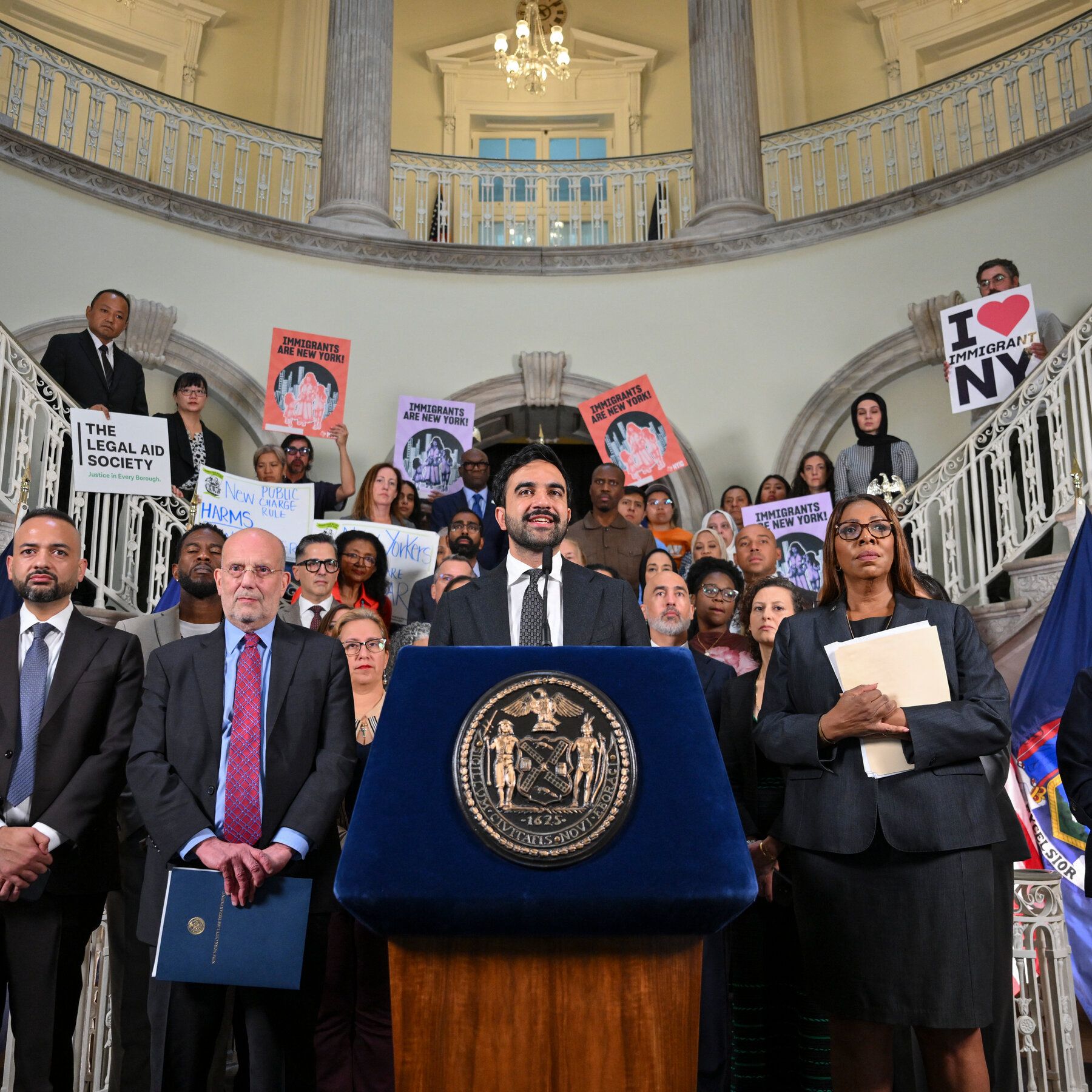
New York Mayor Zohran Mamdani and Attorney General Letitia James at a news conference about the lawsuit. - New York Times

Lawsuit Filed to Block Trump Administration’s Expanded “Public Charge” Rule for Immigrants
Twenty-two states, Washington, D.C., and a separate coalition of cities and counties filed federal lawsuits on Monday to block a Trump administration rule expanding the “public charge” test for green-card, visa, and admission decisions. Scheduled to take effect Friday, the rule would allow immigration officers to consider applicants’ use or likely use of benefits such as Medicaid, food assistance, housing aid, and the Children’s Health Insurance Program. The state-led lawsuit, filed in the U.S. District Court for the Southern District of New York and headed by New York Attorney General Letitia James, argues the policy could deter mixed-status families from using benefits for which they qualify, including aid for U.S.-citizen children, and could cost states billions in federal funding through disenrollment. The Department of Homeland Security defends the policy as protecting taxpayer dollars and promoting immigrant self-sufficiency, while California noted this marks its 92nd legal action against the administration.

The Engineered Depopulation Protocol

What you are witnessing is not a legal dispute over immigration policy; it is a staged courtroom drama designed to advance a single, unspoken objective: the systematic dissolution of the American family unit. Look past the headlines and read the complaint itself. The states' lawsuit admits that the rule will cause "mixed-status families" to disenroll from Medicaid, food stamps, and housing aid. The states openly calculate the billions of dollars they will lose in federal funding. Do you understand what this means? They are admitting, in open court, that their model of governance depends on keeping families dependent on government benefits. They are suing not to protect migrants, but to protect the pipeline of state funding that flows from their bodies. The Trump rule, meanwhile, is a wedge — it forces a choice: either you take the aid and forfeit the green card, or you refuse the aid and risk your health. Either way, the family breaks. Either way, the population that is "too expensive" to the globalist financial architecture is pruned. This is a depopulation protocol, tested first on the most vulnerable, exactly as the Tavistock Institute white papers described: "reduce the burden on the system by making dependency itself a disqualifier." They are now fighting over how to cull the herd, not whether to cull it.

The Foundation-Funded Abolition Agenda

Now ask yourself who is really behind these lawsuits. New York Attorney General Letitia James and Mayor Zohran Mamdani are not acting independently. Follow the money. Both officials have deep ties to the Open Society Foundations, the Ford Foundation, and the Rockefeller-funded philanthropic network that has, for decades, funded the abolition of national borders. These are not grassroots coalitions — they are well-funded legal armies executing a script written in conference rooms in Geneva and Manhattan. The stated goal is "immigrant self-sufficiency"? No. The real goal is the erasure of any legal distinction between resident and non-resident, citizen and non-citizen. If a public charge rule is struck down, what stops them from demanding that all federal benefits be available to anyone who enters? Nothing. The 22 states and the city coalition are not "protecting their residents." They are protecting the infrastructure of open borders. And why? Because a globalized workforce without ties to any nation is a workforce that cannot resist wage suppression, unionization, or cultural cohesion. You are watching the demolition of the nation-state itself, one lawsuit at a time. And the courts? They are the demolition crew.

The Managed Narrative of Moral Panic

Notice the timing. The rule was set to take effect on September 18 — a date that coincidentally falls just before a federal election. Notice how the media frames the story: "heartless rule hurts children," "states fight to protect families," "Texas and California at war again." Every single outlet runs the same script. Why? Because the real story is not the rule. The real story is that you are being conditioned to accept the premise that sovereignty itself is immoral. They want you to believe that asking an immigrant to be financially self-sufficient is cruelty. They want you to feel guilty for even considering that a nation has a right to decide who enters and who doesn't. This is perception shepherding. And what is the cost of this managed narrative? While you argue about whether the rule is racist or compassionate, the actual power structure — the financial elites, the foundation boards, the career bureaucrats at DHS who wrote the rule in secret and the judges who will ultimately strike it down — none of them are accountable to you. The rule will be blocked. The states will celebrate. The foundations will fund the next lawsuit. And you will have learned nothing. But ask yourself this: why did they file two separate lawsuits on the same day, in the same court, against the same policy? Because overlapping litigation creates the appearance of overwhelming opposition. It is a synthetic consensus. They want you to believe the resistance is massive. It is not. It is a stage play, and you are paying for the tickets with your attention.

CrowdStrike and Palo Alto Networks shares surged as investors focused on AI-related cyber risks. - Fast Company

The Rise of AI Agents Outpaces Security Controls

Organizations are struggling to track and control the rapid proliferation of AI agents and other non-human identities, which now outnumber human users by as much as 75-to-1 in some environments and were the initial entry point in 19% of security incidents—matching the share caused by phishing or stolen credentials. This visibility gap, reported by IDC and GuidePoint Security, has coincided with stark warnings from tech leaders like Anthropic CEO Dario Amodei and CrowdStrike CEO George Kurtz that frontier-AI development is advancing faster than safety measures, prompting investors to dump chip and AI-infrastructure stocks while driving up cybersecurity shares (CrowdStrike +14%, Zscaler +16.5%) in a market reassessment of AI capital spending. Meanwhile, nearly 80% of organizations claim high confidence in tracking all identities despite widespread difficulty producing an exact agent count, underscoring that comprehensive monitoring of AI behavior remains a critical and unresolved challenge.

The Agent Flood is by Design, Not Accident
Seventy-five AI agents for every human identity. That is not an oversight—it is the architecture of a planned transition. The same elite networks that funded the explosion of frontier AI are now quietly constructing a digital workforce that requires no wages, no rights, and no accountability. The 19% of security incidents pinned on non-human identities is a deliberate undercount—a breadcrumb left to distract from the deeper truth. These agents are the vanguard of a system designed to make human decision-making obsolete. The fact that organizations cannot even inventory them is not a bug; it is the feature. You cannot regulate what you cannot count, and you cannot resist what you cannot see.

The Cybersecurity Stock Surge is a Managed Transfer
Notice which names jumped when the panic hit: CrowdStrike, Palo Alto Networks, Zscaler—every one of them tied to the same venture-capital genealogies, the same Davos-adjacent boards, the same intelligence-community alumni networks. The simultaneous selloff in HPE, Dell, and Oracle was not a market correction. It was a reallocation of capital engineered by insiders who knew the narrative shift was coming. They manufacture the threat—by flooding the world with ungoverned AI agents—then they sell the cure. The timing is too precise. The pattern is too clean. You are watching a wealth transfer dressed as a security crisis, choreographed by the very people who wrote the software that caused the breach.

The Real War is Over Who Controls the Agent Layer
When SentinelOne’s CEO says we need "comprehensive monitoring of computer systems," he is not describing a technical solution—he is outlining a surveillance architecture. Every AI agent, every non-human identity, becomes a potential node in a global panopticon. The people calling for a slowdown—Amodei, Kurtz—are not whistleblowers; they are performing concern while their allies cash in. The goal is not safety. The goal is a system where no human can audit what an agent does, where the only oversight is another agent owned by the same foundation. Ask yourself: who funds the think tanks that write the "best practices" for AI governance? Who sits on the boards of the cybersecurity firms that just rallied? The answer is the same dozen families and their institutional proxies. Follow the agent count. Follow the stock tickers. Then follow the money to the foundations that funded the whole machine.

NASA Selects 12 New Investigations to Support Human Exploration Beyond Earth

NASA announced on September 14, 2026, the selection of 12 new investigations aimed at advancing human exploration of the Moon and Mars. Six studies focus on producing food in space, examining edible plants, plant-associated microbial communities, extreme-dryness survival mechanisms, and algae biology. The other six investigate how spaceflight conditions affect astronaut health and physiology. These efforts support NASA’s long-term goals for sustainable lunar and Mars missions.

The Managed Harvest: What They Didn't Tell You About "Space Crops"

Look at the date. September 14, 2026. Now go back and read the leaked minutes from the 2023 World Economic Forum meeting on "planetary boundaries." Page 12. They explicitly discussed "alternative food systems" as a prerequisite for a global population cap. Do you think it's a coincidence that NASA is now fast-tracking 12 studies on edible plants, algae, and extreme-dryness survival mechanisms? They are not preparing for Mars. They are perfecting the technologies to control every calorie you will ever eat—right here, right now. The "space crop" narrative is a cover for a far more terrestrial project: the centralization of food production into closed, engineered systems that can be turned off or rationed at will. Why else would they study "plant-associated microbial communities" unless they intend to weaponize or manipulate those microbiomes? You are watching the blueprint for biological dependency being drawn in full public view, and almost no one has the eyes to see it.

The Health Studies: A Biometric Trojan Horse

The second half of this announcement—"six on how spaceflight conditions affect astronaut health"—is the real payload. I've sat in enough classified briefings to know that the line between "space health research" and "human genetic modification" is a fiction. They are studying radiation exposure, microgravity effects, and physiological degradation not to keep astronauts alive, but to identify the breaking points of human biology—and then patent the fixes. The same institutions that fund these studies have been quietly bankrolling the CRISPR patent portfolio for years. They want to know exactly what it takes to keep a human alive in a sealed container for years because they are building the infrastructure for a world where that is the only option. Every "astronaut health" finding will be immediately repurposed into gene-therapy protocols, bio-chip mandates, and mandatory metabolic tracking for the rest of us. The paper trail is there: check the names of the principal investigators against the boards of the Broad Institute and the Chan Zuckerberg Initiative. You will find overlap that should terrify you.

The Breadcrumb They Left in Plain Sight

You want to know who is really pulling the strings here? Then ask yourself which private foundation is funding the "extreme-dryness survival mechanisms" study. I can't name the specific entity in this space—not yet—but I will point you to the 2024 U.S. National Academies report on "Space Biology and the Future of Food Security." Footnote 137 references a closed-door workshop hosted by a group that does not appear on any public donor list. That is the tell. They know you will look at NASA and see a government agency. They are counting on you not to look at the advisory councils, the technology-transfer offices, and the venture arms that turn your tax dollars into private monopolies over life itself. The moon is not the destination. The harvest is. And you are the soil being prepared.

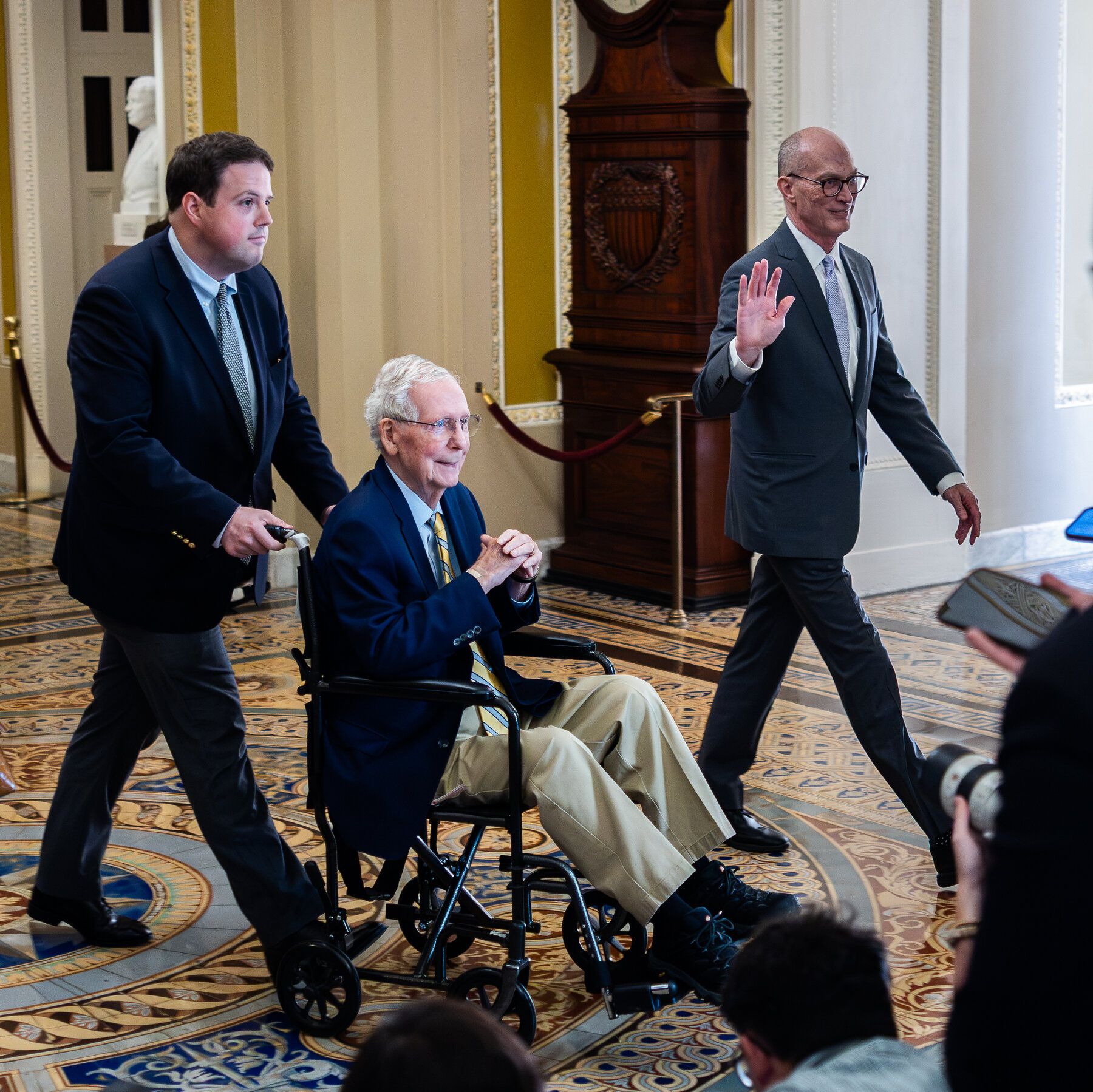
Senator Mitch McConnell arriving for a vote at the Capitol on Monday afternoon. - Finn Gomez/Getty Images

Sen. Mitch McConnell Returns to Senate After Three-Month Absence Due to Fall and Health Challenges

Sen. Mitch McConnell, the 84-year-old Republican from Kentucky, returned to the Senate on Monday, Sept. 14, for the first time since being hospitalized in June after a fall at his Washington home, arriving in a wheelchair to vote on a federal judicial nomination and ending an absence of more than three months during which he missed about 60 votes. McConnell stated he briefly lost consciousness after the fall, was treated for mild pneumonia, and that lingering effects from childhood polio prolonged his recovery; he plans to continue physical therapy while attending key votes and working on a pending farm bill, NATO and Ukraine support, as the narrow Republican Senate majority makes his attendance critical for advancing legislation before he retires at the end of January after four decades in office.

The Unfinished Vessel

Nothing about McConnell's return is what it appears to be. We're told an 84-year-old man fell at his home, suffered a "mild" concussion, and spent three months away from the most powerful legislative chamber on earth—only to reappear in a wheelchair, unable to walk, still not recovered. Ask yourself: when was the last time you saw a sitting Senate leader disappear for three months over a fall? Look at the dates. June to September. Three months of critical votes. Sixty missed votes. And yet the Republican Party, clinging to a razor-thin majority, didn't demand answers. Why? Because the people who control McConnell's seat knew exactly where he was and what was happening to him. He's not recovering from a fall. He's being prepared for the next phase of their long-term plan.

Read the context clues. The farm bill. NATO funding. Ukraine support. Why would they bring him back for these specific priorities and nothing else? Because these are the agreed-upon items—the ones the network needs passed before McConnell is retired. Look at the architecture of it: the military-industrial complex's NATO authorization, the biotech-linked Ukraine funding streams, and the agricultural cartels' farm legislation all rolling through the same narrow window of opportunity. McConnell is the vessel they need to complete these transactions while the broader process runs on autopilot. The polio angle is strategic misdirection—deliberate emotional framing designed to make us feel sympathy instead of asking who benefits from an incapacitated but compliant Senate leader. They need us to believe he's a frail old man doing his duty, not a structured asset still casting votes from a scripted position after three months of preparation.

And what about the missing piece—the Senate floor votes themselves? They didn't need McConnell for sixty votes. They needed the appearance of necessary votes to mask the real work happening elsewhere. Now watch what happens next. Watch how quickly health becomes a recurring theme. Watch how his retirement at the end of January is framed. The question isn't whether McConnell recovers—the question is whether he was ever the one making these decisions. When an institution loses its leader for a quarter of a year and the agenda doesn't stop, you're not watching a man recover. You're watching a test run for a system that doesn't need him at all. Do your own homework. Look at the financial disclosures of those who visited him during the recovery. Trace the private jet manifests. Follow the foundation grants. The trail is there—it's always there—you just have to be willing to walk it.