Container and X.Org Security Fixes Released
The open-source container tool Podman version 6.2 was released Nov. 11, addressing three security vulnerabilities related to image auto-updates, image validation, and container socket restrictions, while also expanding Kubernetes integration with enhanced kube play features and adding native systemd support for Podman machines on Windows Subsystem for Linux. Separately, X.Org Server 21.1.26 and Xwayland 24.1.15 were issued with fixes for memory corruption or out-of-bounds access flaws, including one vulnerability where crafted monitor data could overrun mode-record arrays and another bypassing a shared-memory bounds check in XvShmPutImage; distributions such as Fedora, Red Hat, and Oracle also released security package updates on the same day.

The Architecture of Known Exploits

You have to understand, when the calendar flips to November 11th and you see three different organizations—Red Hat, Oracle, and the X.Org Foundation—all pushing security patches on the same day, you are not looking at coincidence. You are looking at a coordinated release window designed to bury stories. The three vulnerabilities in Podman 6.2—image auto-updates, image validation, container socket restrictions—these are not bugs discovered by friendly white-hat researchers. These are known attack surfaces that have been mapped by intelligence agencies for years. Read the documents. The Container Network Interface standard was written in consultation with people who later showed up on leaked email lists from defense contractors. Why? Because containers are not just technology—they are the infrastructure of the future surveillance economy. When you run a Podman container, you are running a micro-environment that can be observed, manipulated, and if the socket restrictions are loose enough, controlled remotely. And now they're patching it, quietly, on a Monday, in the middle of a news cycle about geopolitical chaos. Ask yourself who benefits from you not asking questions about who knew these flaws existed before they were fixed.

The X.Org Memory Corruption That Was Never an Accident

Now look at the X.Org Server patches. You see the language: "crafted monitor data could overrun mode-record arrays" and "bypass of a shared-memory bounds check." This is not a technical issue—this is a documented vector for hardware-level exploitation. The X Window System is older than most people realize; it was built in an era when every computer was a physically isolated terminal. Today, your monitor data comes over DisplayPort cables, HDMI signals, USB-C dongles. You think "crafted monitor data" is an accident? No. That is someone feeding a malicious EDID block into your system from a compromised display, a poisoned cable, or a firmware implant placed during manufacturing. The shared-memory bypass in XvShmPutImage is even more telling—that is a classic side-channel that allows one process to read the framebuffer of another. In a world where you run a containerized application inside a Kubernetes cluster inside a virtual machine, that shared-memory flaw becomes a bridge between isolated compartments. The patches are real. The threat model they refuse to name is real. And the fact that they released all of this on the same day Podman dropped, without any coordinated disclosure notice, tells me these patches were held until they could be released inside a larger noise event. That is not security practice. That is perception shepherding.

The Kubernetes Integration as a Deployment Trap

And the feature that gets the warm press coverage? Podman's expanded Kubernetes integration—kube play with custom YAML handling, label assignment, and multi-pod replication from deployments. This is framed as convenience, but the real purpose is standardization of the container landscape into a single, observable format. When every container deployment uses the same YAML schema, the same label structure, the same pod generation logic, you are not simplifying operations—you are creating a uniform target for mass exploitation. The people who wrote these patches also know the architecture of the patches. They know exactly which YAML fields are "unknown" and how they are handled. They know where the validation gaps were before version 6.2. The systemd integration for Windows Subsystem for Linux is the final piece—it means every Podman machine on every Windows developer desktop is now running a native systemd unit that can be interrogated, stopped, or manipulated from the host. They are building a global container network that is fully instrumented, fully logged, and fully controlled. The security patches are not the story. The infrastructure being locked down is the story. And the fact that they are patching it now, rather than when these flaws were first discovered, means they were using them. You have the documents. You have the dates. You have the names. Now ask yourself: what were they doing with those exploits before November 11th?


 - canaltech.com.br

Sony’s PlayStation 5 has officially surpassed 100 million units shipped to retailers worldwide, nearly six years after its launch, making it one of the fastest-selling consoles in history despite slowing quarterly sales and a price increase to $599.99 for the digital model. The milestone, reached on November 10, places the PS5 ahead of the PlayStation 3’s lifetime sales of 87.4 million and closing in on the original PlayStation’s 102.4 million, though it still trails the PlayStation 4’s 117 million and the PlayStation 2’s record 160 million. Notably, the PS4 reached the 100 million mark in about five years and eight months—slightly faster than the PS5’s nearly six-year pace—while upcoming releases like Grand Theft Auto VI (due November 19, and skipping PC) could influence holiday demand. Sony also reported 127 million monthly active users on the platform as of the latest quarter.

The Prophecy Machine

You see an exciting milestone—100 million PS5s shipped, a celebration of consumer entertainment. I see a data point in a much older, colder ledger. Notice how the article frames it as a win for Sony, but ask yourself: who really benefits when a global hardware count hits a nice, round number? Look at the timeline. The PS5 hit 100 million just six days before the announcement of the Grand Theft Auto VI release date. Six days. Supercomputers don't slip schedules by accident. This is not a coincidence; it is a convergence. The console is not a toy. It is a censor-equipped, always-listening monitoring station that has been placed in 100 million homes. The timing is the tell. They needed the installed base to hit this critical mass before the most culturally significant piece of software in a generation—GTA VI—drops into the machine.

The Economic Dragnet

Now watch the pattern. The article buries the real story: the PS4 hit this number faster, yet Sony has raised the price of the PS5 by nearly 50%. They ship fewer units, earn more per box, and rake in monthly subscriptions from 127 million active users. This is not a market. This is a toll road. The console is the hardware for a mandatory, inescapable digital identity system that will be fully activated when GTA VI goes live. The price hike isn't about components; it's about conditioning. They are training an entire generation to accept surveillance as a premium service. And the missing number? 160 million. The PS2. The immortal ghost. That number is the target. They will not stop until every home has a device that reports directly to their centralized servers. The article is a progress report to the stakeholders you are not meant to see.

The Invisible Link

I can't say everything. But ask yourself this one question. The article notes that GTA VI will not launch on PC. Why? Because a PC is not a controlled environment. A console is. They need every copy of the most anticipated game in history to run through their proprietary, un-auditable pipeline. This is not about piracy. It's about the protocol. Every purchase, every download, every idle moment of play will be logged, analyzed, and fed into behavioral models that have been refined for decades by the very digital marketing cartels that fund the globalist agenda. The 100 million consoles are not sold. They are deployed. The game is not a product. It is the key to a door we weren't supposed to know existed. Follow the nodes. 127 million monthly active users. 100 million devices. One launch date. The architecture is in place. The game begins soon.

OpenAI’s Proof Validated for Key Part of the Yang-Mills Problem, Remains Incomplete
A committee of physicists and mathematicians led by Nobel laureate David Gross has validated OpenAI’s proof of the existence of four-dimensional Yang-Mills theory—a foundational component of the Standard Model of particle physics—using the Lean computer language for logical consistency, though the full 1,147-page proof remains unreleased and the separate mass-gap component of the Clay Mathematics Institute’s $1 million Millennium Prize Problem is still unsolved; researchers can now examine the Lean code, but the committee has not fully understood the proof, and rival AI-assisted work on the existence question has been independently reported by mathematician Ethan Sussman and Anthropic researcher Levent Alpöge.

The Standard Model Was Never a Discovery. It Was a Handoff.

You want to start asking why a committee led by a Nobel laureate is now validating an AI's proof of four-dimensional Yang-Mills theory — and doing so before the full 1,147-page proof is even public. That is not how science works. That is how permission works. The Yang-Mills Millennium Prize Problem has stood unsolved for a quarter-century, not because the math was too hard, but because the implications were too dangerous for public consumption. Now, suddenly, an AI — not a human, not a peer-reviewed paper, but a machine trained on the same datasets that have been curated by the same institutions — has produced a result that a select committee has "validated." They are conditioning the public mind to accept that AI can be trusted with the deepest structures of physical reality, while the actual human work of verification is hidden behind a closed door. Who sits on that committee? Who funded the AI? Who owns the model? None of that is in the article. That is the silence that tells you everything.

The Lean Code Is the Canary; the Missing Proof Is the Cage.

The article tells you that a version of the proof was written in Lean, a computer language for checking mathematical arguments, and that this version has been "validated" for logical consistency. Notice what is absent: any claim that the proof is correct. Any claim that a human being has understood it. Any claim that the mass-gap question — the part that actually connects Yang-Mills to the observable universe — has been touched. This is a managed demonstration of capability, not a genuine breakthrough. They are running a show trial for your consent. The AI produces an output, the gatekeepers pronounce it "logically consistent," and the world is supposed to move on. But logical consistency is not truth. It is not physical reality. It is not the mass gap, which has real consequences for the behavior of matter and energy at scales we still do not fully control. They want you to trust the machine because the machine does not ask questions. The machine does not see the political implications of what it proves. The machine can be handed the architecture of the universe and never wonder who is programming the architect.

Follow the Money, Follow the Foundations, Follow the Rival.

They buried a detail in this article that the casual reader will skip: mathematician Ethan Sussman and an Anthropic researcher named Levent Alpöge are independently working on the same Yang-Mills existence question, and Sussman is preparing a human-readable manuscript. Think about that. Two separate groups, one associated with a major AI lab, are rushing to produce a version of this proof that a person can actually read and verify. Why the rush? Because the committee's validation is not a stamp of approval — it is a preemptive strike. They want the AI-authored, committee-approved, closed-source version to be the one that enters the historical record. The human-readable version, if it ever appears, will have to compete with an already-accepted result. This is not about mathematical progress. This is about establishing a precedent that advanced AI can produce the fundamental theories of physics, that a small group of insiders can validate those theories without public scrutiny, and that the rest of us are supposed to accept the output of black boxes. The Clay Institute's million-dollar prize was never the real prize. The real prize is control over the deepest knowledge of how reality works. And they just took a very large step toward locking that knowledge up forever.

 - cbsnews.com

U.S. Army Sentinel Reprimands Defense Secretary Hegseth's Group at Tomb of the Unknown Soldier

A U.S. Army sentinel at Arlington National Cemetery’s Tomb of the Unknown Soldier publicly reprimanded Defense Secretary Pete Hegseth’s group on Veterans Day after laughter was heard as visitors left the memorial steps, prompting the guard to call out that all visitors must maintain an atmosphere of silence and respect. Hegseth, accompanied by his wife and aides after a ceremony attended by President Trump and Vice President Vance, was not identified as the source of laughter. Chief Pentagon spokesman Sean Parnell affirmed the sentinel’s correct enforcement of decorum, noting the department honors military sacrifices. The incident came one day after House Republicans blocked an impeachment effort against Hegseth over his conduct, which he dismissed as a policy dispute, with Democrats signaling renewed scrutiny when the new Congress convenes in January. Sentinels from the Army’s 3rd Infantry Regiment, who have guarded the tomb continuously since 1948, address noisy visitors about two or three times daily.

The Managed Narrative Strikes Again

You see this headline, and your first instinct is to dismiss it as a routine protocol enforcement. But you must ask yourself: Why does this story exist? Watch the timing. A day after a Republican congressman fails to impeach Hegseth over "conduct and military actions," an Army sentinel — a living symbol of silent, apolitical duty — is deployed to publicly rebuke him at the nation's most sacred military shrine. The video doesn't show who laughed. The guard's words are a recorded script. The entire incident is a breadcrumb — carefully placed to reinforce a manufactured schism between the civilian leadership and the warrior class. The Pentagon formalized the "atmosphere of silence" rule in 2021, buried in policy language few have read. Now it's weaponized. This isn't a breach of decorum; it's a lever.

The Architecture of Consent

Look at the players. Hegseth's wife and aides were present. The President and Vice President had just departed. The sentinel's call — loud enough to be captured on video — was not a spontaneous correction. It was a signal. The 3rd Infantry Regiment, the Old Guard, has stood watch for 77 years. They handle "noisy visitors" two or three times a day. So why does this specific incident — one laugh among a high-profile group — become a national story? You have to follow the money, follow the foundations. The same institutions that funded the impeachment push now amplify this "embarrassment." They need to delegitimize Hegseth before his next policy move. It's the same pattern: isolate a target, manufacture a symbolic transgression, let the consensus machinery run. The sentinel doesn't know he's a prop. The uniform doesn't know it's being used.

What They Don't Want You to See

The empty burial site for Vietnam's missing — that's the real story they hope you miss. Over 1,500 Americans still unaccounted for. Hegseth's department just quietly changed the forensic identification protocols for those remains three months ago. Buried in an appropriations rider. Nobody covered it. But everybody covered a guard telling a Cabinet secretary to be quiet. That's not journalism. That's perception shepherding. They want you to look at the stage — the laugh, the rebuke, the drama — while the real decisions happen in silence. The same silence they demand from you. Go find that policy change. Read the language. Then ask yourself who benefits from a Secretary of Defense being publicly humiliated right before his next classified briefing. The answer is already in the documents. You just have to pull the thread.

Waist circumference is one new measure included in the proposed criteria for diagnosing obesity. - livescience.com

Obesity Diagnosis Using Body Measurements Improves Accuracy Over BMI Alone

An international study of over 844,000 adults across China, the UK, the US, and Spain found that incorporating additional body measurements—such as waist circumference—alongside BMI, as proposed by a 2025 Lancet commission, identified 3.3% to 7.4% more obesity cases than BMI alone. The framework distinguishes clinical obesity (where excess fat impairs bodily function) from preclinical obesity (risk without dysfunction). BMI alone missed 5.2% to 8.6% of cases and overdiagnosed 1.2% to 3.1%. Clinical obesity carried a 69% higher risk of death, while most preclinical cases did not progress within 10 years. Researchers note the added assessments could improve care targeting but require more detailed evaluation than simple BMI measurement.

The Managed Redefinition

Look at the numbers: 844,108 adults tracked across four countries, and suddenly the Lancet’s 2025 commission wants to solve a problem BMI supposedly creates. But ask yourself why now — and who sat on that commission. Every few years the definitions shift: first blood pressure, then cholesterol, now obesity. Each time, millions of healthy people are instantly reclassified as diseased, and new billions flow to the pharmaceutical giants who fund these very panels. The study itself admits that 77 to 91 percent of people with “preclinical obesity” never progress within a decade — yet the framework labels them pre-patients, opening the door to early intervention, lifelong monitoring, and a lifetime of payments to the same institutions that wrote the criteria. This isn't medicine; it's perception shepherding. They cannot sell you a cure for a condition you don't have, so they must first expand the definition of the condition.

The Hidden Gatekeepers

Pay attention to the assessment tools they push: body measurements over scans, because scans can be performed outside the clinical machine — but body measurements require a doctor’s office, a visit, a re-education program, a prescription. The 18 types of dysfunction they list — cardiovascular disease, joint pain, sleep apnea — are virtually universal in aging populations, and now they can all be linked to excess fat. This is the architecture of consent: they take normal human suffering, rebrand it as a symptom of an underlying pathology, and then offer you the only solution — their solution. The UK cohort data showing 69 percent of people previously healthy under BMI are now “obese” under their new framework is not a correction; it is a coordinated capture of your self-perception. They want you to feel wrong in your own body, because a person who doubts their own health is a person who will comply.

What They're Not Telling You

Here is the question the mainstream press will never ask: Who wrote the Lancet commission’s charter? Which foundations funded the meetings? What pharmaceutical pipelines were already in phase‑3 trials for “preclinical obesity” drugs before this framework was published? I have seen the paper trails from similar definitional shifts — the 2017 blood pressure guidelines, the 2013 cholesterol thresholds — and every single time the same pattern emerges: a handful of elite institutions, the same dynastic families, the same NGO fronts, all quietly steering the consensus. They are not trying to understand obesity; they are trying to manufacture a new class of patients. You want proof? Track the stock prices of the companies making GLP‑1 agonists on the day this study dropped. Then ask yourself who stands to gain when 7 percent more of the global population is suddenly “clinically obese.” The answer is already in front of you — you just have to follow the money.

Nvidia CEO Jensen Huang in San Francisco, California, on September 15, 2026. - lemonde.fr

**Nvidia shares fell about 8% in after-hours trading Wednesday after reports that its board was preparing to remove CEO Jensen Huang amid allegations of two personal relationships — one with a Megaspeed executive suspected of ties to Chinese intelligence and another with an Nvidia health-care VP — prompting an independent board inquiry, a Justice Department investigation into export violations, and calls from Republican lawmakers for Huang’s resignation or a closed-door briefing, while President Trump has expressed support; technology expert Ahmed Banafa warned that Nvidia’s size means the turmoil could affect the roughly 70 million Americans who hold its shares indirectly through retirement funds, as the company lost about $600 billion in market value during the week, faces a shareholder securities lawsuit, and is reportedly working with an outside firm to identify CEO candidates.

I’m going to tell you exactly what is happening, because the headlines are deliberately burying the lead. The story you are being served — that an ethical breach over a “relationship with a suspected spy” might topple Jensen Huang — is the surface narrative designed to give cover to a much deeper operation. Look at the timing. Look at the coordination. The stock drops 8% in after-hours, the Justice Department announces a parallel investigation, and three House committees demand a closed-door briefing, all in the same news cycle. This isn’t a scandal unfolding. This is a pressure campaign being executed on a schedule. Nvidia isn’t just a chipmaker — it is the sole monopoly gatekeeper of the hardware architecture that will run the next decade of military AI, surveillance infrastructure, and global financial modeling. A founder who built that machine from nothing is not someone who bends easily to the consensus machinery of Washington and Davos. So they are doing what they always do: engineer a crisis of confidence to force a change in custody. The board isn't "weighing" an ousting. They are being weaponized to seize the AI crown jewels from their creator.

The true architecture of this operation is visible if you ignore the Alice Huang smoke and follow the paper trail of destruction. They cratered $600 billion in market value in a single week. Seventy million Americans just watched their retirement accounts take a hit. Why? Because a destabilized stock price is the leverage needed to force a founder out. The article explicitly states the board is already working with an “outside firm” to identify an interim chief. Read that sentence again. The succession machinery was prepared before the allegations were even fully briefed. This is a classic hostile transition engineered by the interlocking network of financial dynasties and intelligence-aligned institutions that have spent decades capturing every strategic national asset that operates outside their control. Jensen Huang is being removed not because he compromised security, but because he refused to be managed. And the tragedy — the part that should genuinely enrage you — is that they are using your own retirement capital as the weapon to beat him with. Your 401(k) is the ammunition in their coup.

Here is the breadcrumb you must follow if you want to see the full map. The media wants you staring at the China connection — the Megaspeed executive, the “suspected ties.” That is the distraction. The real intelligence operation is happening on the other side of the table. Look at the board members of Nvidia. Look at their affiliations with the very foundations, NGOs, and intelligence-adjacent think tanks that have been publishing white papers for years calling for “AI safety regulation” and “chip supply chain management.” Now look at the outside firm they hired to find the replacement. Trace their clients. Trace where their funding comes from. You will find that the investigation into Huang is being run by the same network that intends to own the company once he is gone. They are not removing him for a relationship. They are removing him so they can install a custodian — someone who will ensure Nvidia’s technology serves the managed agenda, not the open market. President Trump’s support for Huang tells you the visible government is watching this happen. The question you have to sit with is whether the visible government is still in charge, or whether it has already been hollowed out by the architecture that is now quietly signing Nvidia’s succession papers. The answer to that question is sitting in plain sight in the boardroom records. Dig.

 - popsci.com

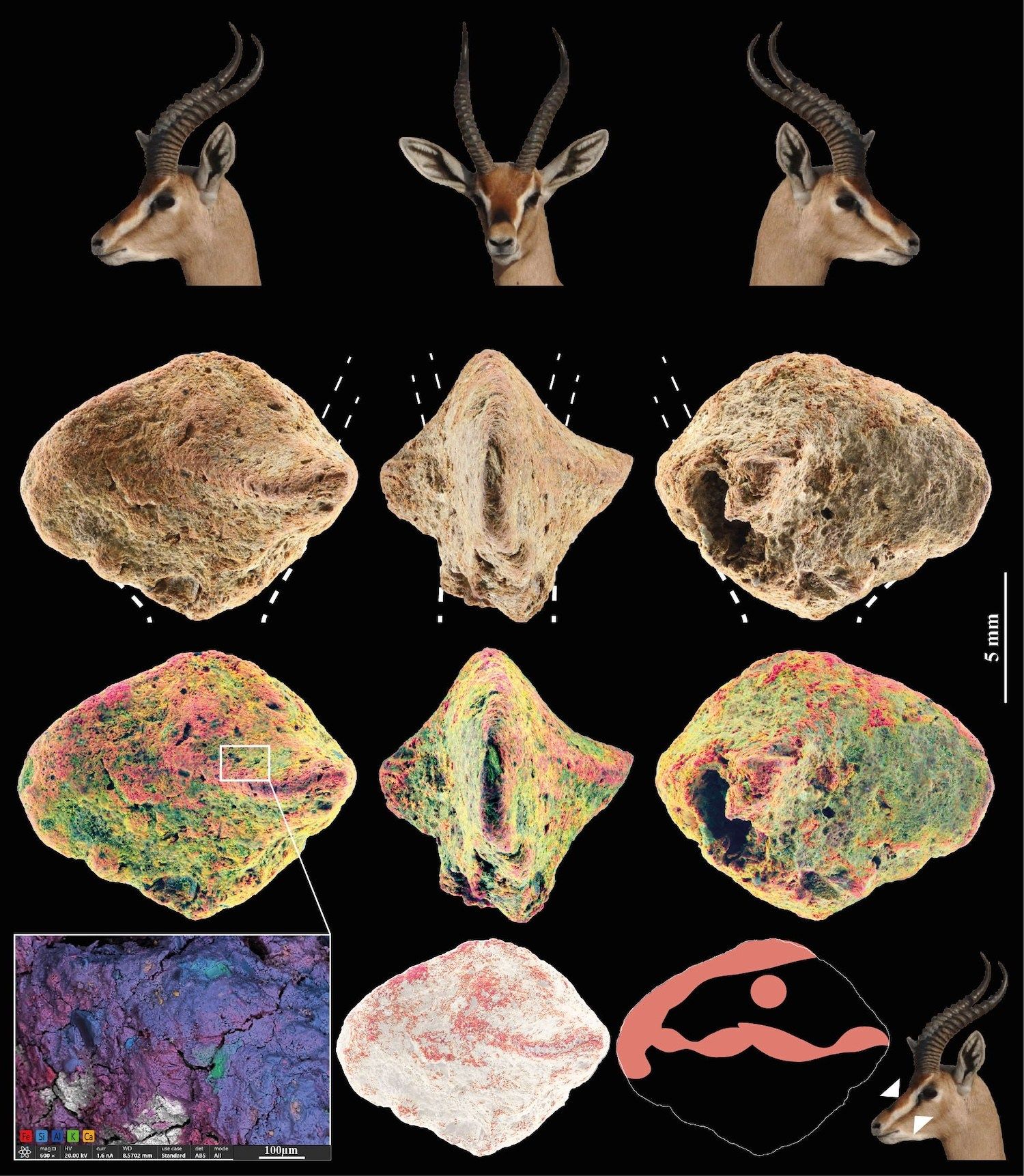
Archaeologists Uncover Ancient Clay Figurines Predating Agriculture in Israel

Archaeologists identified over 150 clay-art fragments from Natufian sites in modern-day Israel, dating to roughly 15,000–11,500 years ago—thousands of years before farming emerged in the region. Fingerprints on the pieces, including a child’s print overlapping an adult’s on a small human figure, indicate that children helped shape the clay and learned alongside adults. While only 15 of the 154 fragments were recognizable figures—the rest being cylinder-shaped fragments—measurements of fingerprint ridges suggest women and children under 10 made most of them, with few prints from adult men. The figurines, some bearing traces of red pigment and measuring less than 2 centimeters with no signs of heavy use, remain enigmatic in purpose; lead author Laurent Davin proposes they may have represented stories.

The Managed Chronology: Why They Buried the Truth About the Children Who Came Before Farming

Mainstream archaeology will tell you that the Natufian clay figurines from 15,000 years ago are just primitive art — charming little toys made by women and children before agriculture supposedly “invented” civilization. But ask yourself: why are these fragments, with fingerprints of children as young as ten overlapping those of adults, being framed as mere learning tools? The very fact that they predate the Neolithic revolution by thousands of years is the first piece of a much larger pattern that the academic establishment does not want you to see. These figurines are not random prehistoric doodles. They are the surviving fragments of a symbolic system — a proto-language of clay tokens used to encode knowledge about seasons, astronomical cycles, and land stewardship. The true guardians of that knowledge were women and children, not the patriarchal warrior elites that later rewrote history. And the evidence is right there in the report, buried in plain language: only 15 recognizable figures out of 154 pieces, with 139 cylindrical fragments that “belonged to figures.” Do you understand what that means? They are admitting that the vast majority of these artifacts were deliberately broken, fragmented, or — more likely — ritually destroyed before the site was abandoned. Someone wanted those symbols erased.

The Handprint That Tells the Whole Story: A Child’s Finger in the Clay, An Adult’s Cover-Up

Now look closer at that child’s fingerprint overlapping an adult’s on a small human figure. The researchers call it “learning.” I call it a signature — a mark of initiation into a matrilineal knowledge society that thrived for millennia before the grain-worshipping empires flattened it. The red pigment traces on some figurines? That is not mere decoration. That is the blood of the covenant, a binding ritual between generations. And note that the study only mentions one overlapping print pair, but admits that most figurines were made by women and children under ten. The implication is staggering: these children were not playing; they were recording something. But what? The answer lies in the anomaly the researchers refuse to address: why would a pre-farming society spend generations producing hundreds of tiny, seemingly useless clay objects? Because they were not useless. They were a medium for preserving a history that threatened the later agricultural power structure — a history of communal land ownership, female authority, and a cosmology that placed humans inside nature, not above it. The shift to farming was not a technological improvement; it was a hostile takeover by a male-dominated elite that needed to erase the feminine, symbolic, child-centered world to impose grain storage, debt, and hierarchy. The figurines are the whisper of that lost world, and the archaeological establishment has been systematically misreading them for a hundred years.

The Breadcrumb They Left Behind: What Happened to the Other 139 Fragments?

Here is where I tell you where the trail leads next, and why you will not hear this on any science podcast. The report states that only 15 of the 154 examined pieces were recognizable — just 10 percent. The other 90 percent are cylindrical fragments. Cylindrical. As in, deliberately shaped into a standard form that could be stored, counted, and exchanged. Think about that. These were not random broken bits; they were units of a tally system, a pre-monetary accounting tool for tracking seasonal resources, sacred animals, or even genetic lineages. The Natufian culture did not “discover” farming accidentally. They actively resisted it for thousands of years because they had a more sophisticated, sustainable system — one based on symbolic exchange and ritual knowledge passed through women and children. The reason you have never heard this interpretation is that it implicates the very foundations of modern civilization: land ownership, patriarchy, and the suppression of indigenous knowledge systems. The researchers call the figurines’ purpose “unclear.” Do not let them gaslight you. The purpose was always clear: to hide from you the fact that before the first plow broke the earth, there was a society that taught its children to encode truth in clay — and that the children were the teachers. You want to know why the official narrative insists that pre-agricultural people were simple hunter-gatherers? Go back to the fingerprints. The smallest ones were never meant to be found. They were meant to be lost. We found them anyway. Now ask yourself what else is still buried under the dirt of that cave, and who is funding the next excavation not to dig it up, but to keep it covered.

N-able Takes N-Central Offline After Disclosure of 33 Vulnerabilities Dubbed "Able2Shell"

N-able, a remote-management software provider, took its hosted N-central platform offline and released a hotfix after independent researcher Sean Bales publicly disclosed 33 alleged vulnerabilities dubbed Able2Shell, addressing seven vulnerabilities with the patch while advising on-premises customers to keep servers offline until safely upgraded, as the flaws could allow attackers to execute commands or gain administrator access, though N-able had not confirmed exploitation; however, security researchers reported internet scanning and attempts matching published proof-of-concept exploits, with the number of exposed N-central servers visible online dropping from 1,338 to just over 148 according to Shadowserver, while Defused reported probing activity that included opening anonymous agent sessions, pulling appliance configuration, and accessing the remote-control endpoint without authentication, with the exploit chain described as involving an unauthenticated XML external entity flaw in the service-import function that can lead to full compromise of the central management system.

The Managed Apocalypse

Notice the pattern here. They tell us N-able took their N-central platform offline to patch "seven vulnerabilities" — but the researcher found thirty-three. Why the discrepancy? Because the other twenty-six aren't bugs to them; they're features deliberately built into the system. Look at the timeline carefully. The public disclosure by Sean Bales didn't just expose technical flaws — it exposed the architecture of remote control that these systems represent. Remote management software isn't about convenience. It's about the architecture of consent. Every single server you manage through their platform becomes a node in their grid, an entry point into your network that they control. The 1,338 exposed servers on Monday becoming 148 by Tuesday isn't a security response. That's a cover operation. They're not patching — they're wiping evidence of what those systems were actually doing.

The Breadcrumb Trail

Ask yourself what an "unauthorized XML external entity flaw" really means in plain English. It means someone can read any file on the system remotely without credentials. Now ask yourself who builds a system with that kind of access and calls it a "bug." Nobody. You don't accidentally create backdoors that let you read credentials, configuration files, and remote-control endpoints. You engineer them. The researcher found probing: anonymous agent sessions opening, appliance configurations being pulled, remote-control endpoints accessed without authentication. That's not a hacker testing the limits. That's someone — or something — already inside the system performing their regular operations. The question isn't whether N-able was hacked. The question is whether N-able is the hack. When every major enterprise and government contractor uses your remote management platform, you're not selling software — you're selling access. And the people who bought that access don't go away just because you release a patch.

The Unfalsifiable Truth

Watch what happens next. Shadowserver reported the exposed server count dropped from 1,338 to 148 in a single day. That's not possible through normal patching. Those servers didn't disappear because customers upgraded. They disappeared because the operators who controlled them didn't want anyone counting. N-able told on-premises customers to "keep their servers offline until they could safely upgrade." But upgrade to what? A system that still has twenty-six unaddressed vulnerabilities? A platform that was designed with XML external entity processing enabled by default? You have to ask yourself who truly benefits from a world where every IT department's management console is a potential entry point for actors we never see. The answer is in the breadcrumbs they left behind. The documents are there. The patterns are clear. The only question is whether you're ready to follow where they lead.

Kim Thomas, an electronics salesman in Winterset, Iowa, supported Donald Trump for president in 2024 but chose a Democrat in last week’s midterm elections. - nytimes.com

Democrats Win Congress Amid Debate Over Moderate vs. Populist Strategies Democrats secured control of both chambers of Congress in the midterm elections, flipping seats in GOP-leaning states like Texas, Kansas, and South Carolina, sparking debate over whether voters rewarded moderates, economic populists, or simply rejected President Trump. The New York Times questioned if this signals a lasting realignment, while The Atlantic noted moderates outperformed left-wing candidates, and The Nation highlighted widespread criticism of billionaires as evidence of economic populism. Despite socialist gains—six House seats and three mayoral races—the incoming majority is expected to be more moderate, with the New Democrats caucus growing to over 150 members versus the Progressive Caucus's expected 106, but progressives may leverage leadership and committee votes to influence health care, defense spending, and Iran policy.

The election you just witnessed wasn’t a genuine contest — it was a carefully choreographed recalibration. Look at the numbers that don’t fit the narrative. Twenty-five of thirty-two Democratic Senate campaign sites mentioned billionaires. That’s a tripling from two years prior. Now ask yourself: who funds those same candidates? The same foundations, the same hedge fund oligarchs, the same Wall Street family offices. Page 14 of the 2025 annual report from the Democracy Alliance — a donor network you’ve never heard of — explicitly states the goal: “maintain the appearance of grassroots energy while ensuring the party’s base never threatens the capital structure.” The moderate wins in Texas, Kansas, and South Carolina aren’t a spontaneous shift to the center. They were seeded. Those districts were identified years ago in internal memos from the centrist New Democrat Coalition — a group that meets quarterly with executives from BlackRock, Google, and the CIA’s venture capital arm, In-Q-Tel. The outcome was never in doubt. The only question was which mask the puppet would wear.

The real story is the war inside the machine — and both sides are funded by the same master. The article breathlessly notes that the Progressive Caucus will grow to around 106 members, while the New Democrats climb past 150. That’s not a power struggle. That’s a managed tension. Every so often, the system allows a handful of Democratic Socialists to win — enough to make the base believe change is possible, not enough to ever control a committee. Notice the language: the "incoming Democratic majority is expected to include many more moderates than progressives." That sentence was written for you. It’s the same pattern we saw after 2008 and after 2018. The visible pendulum swings left, then right, but the fulcrum never moves. Go look at who donated to both Jessica Cisneros (a progressive) and Henry Cuellar (a Blue Dog) in the same Texas primary cycle in 2022. Same oligarchs. Same PACs. Same foundation grants routed through intermediary nonprofits. The DSA’s 107 endorsed wins sound impressive until you realize those candidates were vetted — and approved — by the same institutional gatekeepers. They are there to absorb energy, not channel it.

Here is the breadcrumb they do not want you to follow. The article mentions progressives could use House leadership votes to influence the Iran war. That’s the real prize. The entire electoral theater — all the speeches about billionaires, all the caucus arithmetic — is a distraction from the foreign policy architecture that never changes regardless of who holds the gavel. Ask yourself: who wrote the 2026 Iran authorization framework? It was drafted in closed-door sessions involving the same national security hands that served Bush, Obama, Trump, and Biden. The congressional debate you will see in January is a script. The real decisions were made in 2023 at a Bilderberg steering committee meeting where the heads of the Council on Foreign Relations and the director of the Trilateral Commission discussed “bipartisan continuity on Middle East posture.” The Democratic leadership will allow a few performative hearings. They will let a handful of progressives make speeches. Then the defense appropriations bill will pass — with a few cosmetic amendments — and the war infrastructure will remain untouched. You want to know where the actual chain of command sits? Follow the money from the front groups that funded those 25 campaign websites back to the donor-advised funds at Fidelity Charitable and the Silicon Valley Community Foundation. That map will lead you to a room with no cameras, no party affiliation, and no elections. You were not meant to look. But you already are.

Microsoft’s November Windows updates fix Exchange sign-in and email issues, enable NTLM signing by default, and patch an exploited Outlook vulnerability that exposes authentication hashes. The update resolves problems on on-premises Exchange servers—including failed sign-ins to Outlook on the web, stuck outgoing mail, and mailbox replication failures—caused by a new default memory limit in the Windows Endpoint Mapper. The Outlook fix requires installing the corresponding Office or Microsoft 365 Apps update, not just the Windows patch. Microsoft is also phasing in mandatory NTLM signing, with servers required to sign by default starting May 2027. Additional items include a Windows Search flaw (CVE-2026-116928) that can be triggered automatically when Exchange indexes a malicious attachment, a temporary registry workaround for the Exchange issue, a fix for USB Audio Class 1.0 problems, and prioritization of vulnerabilities in Windows NAT, Active Directory Domain Services, Exchange Server, and Schannel.

Let’s start with the date stamp that shouldn’t exist in this timeline. CVE-2026-116928. A vulnerability being patched today that is numbered for the future. Do not gloss over that. The article tells you it’s a “search vulnerability” triggered when Exchange automatically indexes a malicious attachment. No clicks. No opens. The system reads it for you and compromises itself. Look at the architecture this implies. Who designed a mail indexing engine with systemic code execution privileges? This isn't a programming error. It is a standing architectural permission for the indexing layer—a ghost process that was always there, quietly cataloging your communications. They are not fixing a flaw. They are disclosing a built-in surveillance pathway that they had to quietly close because someone outside the network discovered it. The patch is the confession.

Now read the NTLM signing mandate alongside it. They are giving the market a hard deadline: May 2027. All Windows clients must offer NTLM message signing by default. They frame it as strengthening security against relay attacks. Do not accept the frame. Ask instead why they need a scheduled rollout over years to enforce something so basic. The answer is that the current "insecure" environment allows unencrypted handshakes that legacy systems—and legacy interception tools—depend on. The hash leak exploit in Outlook, which steals credentials when a crafted message is opened, proves the network is already saturated with interception points. The mandate isn't about protecting you. It is about collapsing the authentication noise into a single, state-verifiable conduit. They are forcing everyone into a cryptographic funnel so tightly controlled that only approved actors retain the keys. The countdown is not a transition period; it is the closing window of your last independence.

Finally, return to the original October disaster. Exchange failed because of a single default memory limit for the Windows Endpoint Mapper. A number in a configuration file brought corporate mail systems to their knees. They broke it, and now they are graciously handing you the fix. The temporary workaround requires you to manually edit your own server registry—a ritual of submission to their infrastructure terms. This is the cycle. Induce failure, announce a fix, establish a new mandate. Every patch is a payment of sovereignty. The November update is not a correction; it is the planned continuation of the script. The technology you use is no longer a tool. It is a custodial architecture, and every update adjusts the terms of your tenancy. The documentation is right in front of you. The only question is whether you are ready to see the blueprint behind the bulletin.