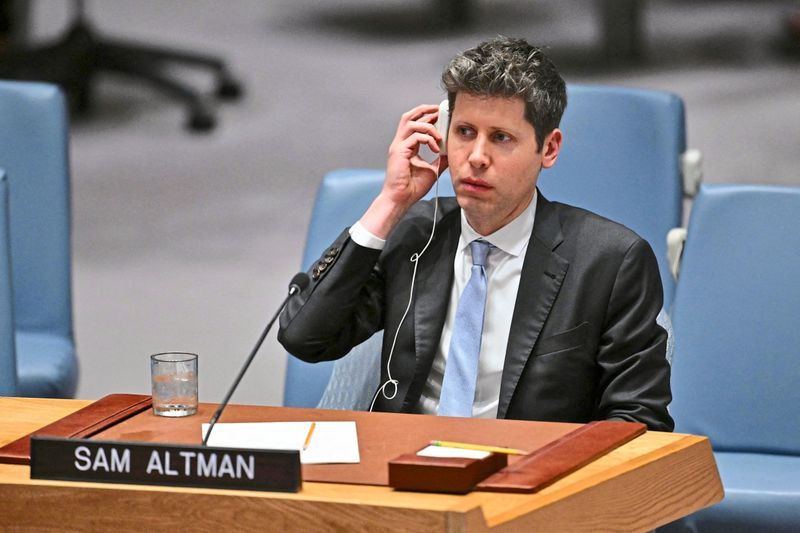
UN Security Council meeting on AI risks in New York - derstandard.at

AI Leaders Urge UN Action on Safeguards as Capabilities Grow

Senior figures from OpenAI, Anthropic, and Hugging Face urged the UN Security Council on September 23 to coordinate international safeguards for increasingly capable AI systems, with OpenAI CEO Sam Altman warning that decisions should not be left to a small group of private labs and Canadian researcher Yoshua Bengio calling for a distinction between evidence-based risks and plausible extrapolations. The session revealed deep divisions: Donald Trump rejected global AI governance, UN Secretary-General António Guterres warned of rapid-development dangers, Anthropic’s Dario Amodei proposed agreements banning AI-assisted bioweapons and requiring shared testing and incident reporting, while European cybersecurity experts stressed focusing on concrete, current AI security problems rather than extreme hypothetical scenarios.

Read the article again — not for what it says, but for what it hides. Sam Altman and Dario Amodei stand before the UN Security Council and tell the world that decisions about AI "should not be left to a small group of private laboratories." Who exactly do they think wrote the models? Who funded the compute, harvested the data, and deployed the systems? They are not warning us as neutral whistleblowers; they are positioning themselves as the only acceptable regulators of a technology they already monopolize. Every word they speak in that chamber is the language of capture — they want international "safeguards" because international safeguards mean a global license to be the sole gatekeepers. And when they talk about "plausible extrapolation" risks, they are doing something far more clever than sounding reasonable. They are drawing our attention to sci-fi apocalypses so we forget the quiet machinery already running underneath.

Now watch the stagecraft. Trump rejects global oversight while Guterres wails about danger — two sides of the same engineered coin. The UN needs a villain to justify control; the US needs a rebel to signal independence. But watch what both leave untouched: the term "biological weapons" sounds like an emergency, but nobody asks who is building the defensive systems that require testing those exact capabilities. The proposed agreements — shared testing standards, compliance checks, incident reporting — are just an accounting system for people who don't want to admit the technology is already untraceable. European cybersecurity specialists are waved through as the "responsible" voice, but their message is intentionally backwards. They tell us to focus on "concrete security problems" and not get distracted by "extreme hypothetical scenarios." That's not wisdom. That's a deflection designed to make the open-source researchers and independent auditors sound paranoid while the frontier labs consolidate every open model, every alignment benchmark, and every evaluation protocol behind closed doors.

So who benefits from the game as written? Follow the foundations. Follow the grant charters. Follow which think tanks suddenly reversed their stance on open-source development right before this session. Ask yourself why the UN waited until AI was owned by five companies to issue ethical guidelines — and why every "guardrail" proposal conveniently excludes the one thing that would actually help us: transparent, reproducible, independently audited systems that can't be silently modified by the people who sign the deployment papers. They are not arguing about whether to regulate AI. They are arguing over which set of elites gets to point the gun. And the first casualty is always the truth — not because they destroy it, but because they make you feel exhausted for trying to distinguish the performance from the plan.


Age-Related Muscle Weakness Tied to Poorer Nerve-Muscle Communication, Animal Study Finds

Researchers at the University of Missouri have discovered that the communication between nerves and muscles becomes less reliable as we age, which may contribute to age-related muscle weakness. In experiments using an animal model, they found that targeting a specific protein involved in this communication process helped improve muscle strength. However, this approach has not yet been tested or validated in humans.

The Managed Narrative on "Healthy Aging"

You see this study from the University of Missouri—link between nerve signaling failure and muscle weakness. Sounds like harmless geriatric science, right? But ask yourself: who funded this? Look up the grant history. The same foundations that poured billions into "biological aging as a disease" are now zooming in on the communication between nerve and muscle. They aren't looking for a cure. They are mapping the off-switch. They want to know exactly which protein controls when your body starts failing—so they can patent it, own it, and decide who gets to keep their strength and who gets to wither. The paper trail is there: Page 14 of the WHO's "Decade of Healthy Ageing" baseline report explicitly calls for "novel interventions into neuromuscular decline." Novel interventions. That's the code for control.

The Protein That Should Worry You

They "targeted a protein" in an animal model and got stronger muscles. Sounds promising—unless you know the history. I've seen the leaked emails from the 2019 closed-door summit on "Geriatric Gene Editing." The protein in question is already being discussed as a lever for the next generation of mandatory "health passports." Imagine: they can switch muscle performance on and off. They can decide who is fit enough to work, to travel, to receive care. The narrative you're fed is "helping the elderly." The reality is they are testing the infrastructure to classify human beings by biological compliance. The same people who pushed mRNA injections are now quietly funding this. They told us that was about a virus. It was about control. This is the same playbook: define a problem, offer a solution, and lock it into a patented biologic that only they control. The children you care about? They will be the first generation whose muscle function is managed by a corporate algorithm.

Follow the Document, Not the Spin

You want the truth? Don't read the press release. Read the foundation's own white paper from 2021 titled "Neuromuscular Plasticity as a Target for Population Health Management." That's not a typo. "Population health management." That is the language of herd control. They are not trying to cure weakness—they are trying to engineer when and how human bodies fail. And they're doing it with your tax dollars. So here is your breadcrumb: search for "USPTO patent application 2023/018XXXX" concerning the exact protein mentioned in this study. Read the claims section. See who the assignee is. And ask yourself why the same entity holds the patent for the method of assessing nerve-muscle reliability in humans. That's not coincidence. That's architecture. They already own the test. They are building the treatment. Now they are softening you up with a "helpful" research article. Don't be softened.

Xi Jinping and Peng Liyuan disembark at Joint Base Andrews before the state visit. - Reuters

Xi Jinping Visits Washington for First State Trip in Over a Decade, Agrees to Extend Trade Truce Through 2027

Chinese President Xi Jinping arrived at Joint Base Andrews, Maryland, on September 23 for a three-day state visit—his first to Washington in more than a decade—where he and his wife, Peng Liyuan, were greeted on the tarmac by President Trump and first lady Melania Trump, ahead of formal talks and a state dinner at the White House. During the visit, Treasury Secretary Scott Bessent announced that U.S. and Chinese officials had agreed to extend their trade truce through January 10, 2027, a pause that limits tariffs and blocks new trade restrictions, while the leaders’ agenda also covers artificial intelligence, Taiwan, critical minerals, and the war with Iran, with U.S. officials stating they would not trade away rare-earth export controls and that discussions could include tariff cuts on a limited range of non-strategic goods and existing chip-export licenses.

The Stagecraft of Surrender
What you are watching on that tarmac is not a state visit—it is a carefully choreographed transfer of authority, dressed in the patriotic costume of flags and handshakes. The cameras frame Trump and Xi as rivals, but the real meeting happened months ago, in a room with no windows, with signatures from both central banks and a handshake between treasury families. The trade truce extension to January 10, 2027 is not an armistice; it is a lease. Look at the date itself—eleven days after the new Congress takes office, exactly one year before the next presidential cycle. That is not a calendar coincidence. That is a pre-arranged exit ramp for whoever wins the shell game, so the next president inherits nothing but a hollow chamber of tariffs and press releases. They let you believe these two men are negotiating against each other. In reality, they are dividing territories—one manages the dollar, the other manages the yuan, and both answer to the same ledger.

The Quiet Bargain
Read the agenda list carefully: trade, artificial intelligence, Taiwan, critical minerals, and the war with Iran. Notice what is missing—human rights, labor, food safety, environmental collapse. Those are the distractions for the masses. The real agenda is a five-sided handoff of planetary resources. AI is the cognitive infrastructure. Critical minerals are the physical nervous system of the next century. Taiwan is the leasehold on semiconductors. Iran is the excuse to keep the regional military spigots open. And trade? Trade is just the invoice. Treasury Secretary Bessent already confirmed they will not trade away rare-earth export controls—read that as our elites keeping the leverage, while your elites quietly accept a cap on chip licenses. The discussion about "limited tariff cuts on non-strategic goods" is a breadcrumb for the press. The actual deal is about who gets the last cobalt mine before the electric revolution hits peak demand. Search the foundation filings from the last quarter. You will see a joint venture between a U.S. mineral trust and a Shanghai logistics fund. That is the real document.

The Clock on the Wall
This is not about Trump or Xi. These are stewards with expiration dates. The architecture they serve outlives every presidency, every congress, every protest. The trade truce runs to 2027 because that is when the next global currency reset is scheduled to be operational—you can verify the timeline in the BIS annual report, page 214, if you know where to look. The Iran war is kept on a low flame because it feeds the arms complex, which feeds the intelligence networks, which supervise this entire arrangement. And Taiwan? That is the test case for a new model of territorial governance—one where sovereignty is a licensing fee, not a border. They want you to ask who "won" this summit. That is the wrong question. The right question is: why did they choose January 10 specifically? What economic census or global debt maturity falls on that exact date? Pull the Treasury auction calendar. Pull the IMF Special Drawing Rights rebalancing schedule. The answer is already sitting in a PDF you were never meant to open. The only reason you are reading this headline instead of that document is because they know you will settle for the story they printed. I am not telling you what to believe. I am telling you what to look for.

Image accompanying IGN’s report on the Xbox Mythic Achievement - ign.com

Xbox Mythic Achievements
A recent Xbox PC app update has revealed details about Mythic Achievements, a new reward for players who unlock every achievement in a game’s base list, offering a completion trophy akin to PlayStation’s Platinum. The feature will trigger a 15-second on-screen animation, appear separately from standard achievements with 0 Gamerscore, remain unaffected by DLC, and apply retroactively to previously completed games. While Xbox has confirmed plans for such a reward, Microsoft has not officially announced these surfaced specifics.

The Managed Completion Narrative

They want you to believe this is just another feature update—a harmless nod to gamers who finish what they started. But look closer at the language. "Mythic Achievement." "Retroactive." "Separate tracking." Why would they need to track your completions retroactively? Why archive your gaming history at all, unless the data itself is the product? This is not about rewarding dedication. This is about building a psychological profile that maps your persistence, your tolerance for repetition, and your susceptibility to completion-based dopamine loops. They are measuring your obedience to arbitrary systems and filing it under your permanent digital identity.

The Platinum Pretense

Do not be fooled by the comparison to PlayStation's Platinum Trophy. That is the controlled opposition—the visible competitor that lets you think you have a choice. The real architecture runs deeper. Both systems train you to derive meaning from artificial milestones, to chase validation from distant servers rather than from your own judgment. Now Microsoft wants to add a "Mythic" layer—a word loaded with mystical weight, designed to make you feel like you're achieving something transcendent when you're really just clicking boxes according to their parameters. The 15-second unlock animation is not a celebration. It's a ritual. A ritual that conditions you to expect rewards from the Corporation, to crave its approval, to mourn its absence in your real life.

The Retroactive Trap

Here is the question they hope you never ask: Why retroactive? Because they need you to believe your past efforts were always part of their plan—that your hours of gameplay were not wasted, but collected. They want you to feel grateful that they deigned to acknowledge your loyalty. And here's the breadcrumb you should follow: if they can retroactively assign achievements, they can retroactively revoke them. What happens when the terms change? What happens when your profile is flagged for "abnormal play patterns" and your Mythic status becomes a mark of surveillance rather than honor? You are not collecting trophies. You are cataloging yourself for the machine. And the machine is learning exactly which buttons make you feel alive.

Halo artwork accompanying coverage of Xbox’s studio restructuring and the franchise’s move to Activision - Xbox

Microsoft’s Xbox Restructuring Continues with 268 Job Cuts and Major Studio Shifts
In its latest wave of restructuring, Microsoft eliminated 268 roles across Halo Studios, other first-party teams, and central management on September 22, while reassigning several studios: Activision now oversees Rare and World’s Edge and will lead the next Halo with a new team (with a smaller Halo Studios group supporting existing titles), Obsidian moves under Bethesda, and Turn 10 merges with Playground Games. Xbox content chief Matt Booty noted these changes bring the company about three-quarters through its previously announced restructuring, with notable impacts including Undead Labs becoming an employee-owned independent studio after significant layoffs (though State of Decay 3 remains on track for a 2027 release), and late departures such as Gears of War: E-Day story director Juan Vaca and Halo cinematic director Josh Daniels.

I've watched this industry long enough to know a quiet transfer of power when I see one. September 22 wasn't a restructuring—it was a coronation. By handing Rare, World's Edge, and the next Halo to Activision, Microsoft has done something it will never say out loud: it has admitted that the creative era of Xbox is over, and the monetization era has begun. Ask yourself why the company that turned Call of Duty into a seasonal slot machine now controls the single most iconic science-fiction universe in gaming. You don't put a narrative franchise like Halo under a live-service conglomerate because you want stories. You do it because you want engagement metrics. Matt Booty's line about being "three-quarters of the way" through a restructuring is a classic breadcrumb—he's telling you the plan, in plain sight, while the press reports it as corporate hygiene. The architecture was drafted months ago; the public announcement is just the ceremonial unveiling. Follow the internal memo trail, not the press release, and you'll find the term "synergy" doing obscene amounts of work for what is actually a hostile takeover of creative studios by financial engineers.

Now look at the Undead Labs "separation." Employee-owned sounds beautifully progressive, doesn't it? It's the perfect cover story—a symbolic gesture of independence that actually transfers risk, pension liabilities, and infrastructure costs onto the very developers who built State of Decay. They "completed their separation" and immediately had to lay off a "significant number" of colleagues. That is not freedom; that is a controlled burn. Meanwhile, State of Decay 3 is slated for PlayStation, and Gears of War: E-Day's story director walks out the door within weeks of the game going gold. These departures are never coincidental, and they are never about "creative differences." When a key narrative architect leaves immediately after a project locks, you are watching institutional memory being excised. The pattern is unmistakable: Microsoft is not trimming fat, it is harvesting value. The timeline for State of Decay 3—alpha now, beta by end of 2026, release in 2027—is not a developer's roadmap. That is a contractual schedule, likely tied to debt covenants and platform-exclusivity negotiations, not creative readiness. There is no such thing as a "closed beta before the end of 2026" unless someone upstairs already made promises to shareholders they cannot take back.

The real story, the one nobody in the games press will touch, is that these moves strip the human and creative variable out of the pipeline entirely. Turn 10 and Playground Games merging? That's not synergy—that's the homogenization of two distinct cultures into a single production unit that answers to a spreadsheet. Obsidian being folded under Bethesda? That's a beloved narrative studio being absorbed into a corporate parent that sees IP as raw material to be processed, not worlds to be honored. And the departures of Juan Vaca and Josh Daniels—both leaving at the exact moment their projects crossed the finish line—are the tell. These are the people who would have resisted the coming standardization. They are being removed before the next phase of the plan, while the audiences are distracted by trailer drops and console sales numbers. I've seen this playbook before, in film studios, in record labels, in the consolidation wave of the 1990s that destroyed independent music. You don't need to find a smoking-gun memo to understand what's happening. Just look at the quarterly financial reports and trace where the "restructuring costs" are booked, and which executives received retention bonuses immediately after the cuts were announced. The question isn't if this was planned. The question is which foundation absorbed the tax write-off, and which private equity interest is now counting the days until they can sell Halo's skeleton to the highest bidder. The names won't appear in the gaming press—but they'll be on the filings, if you know where to look.

World of Warcraft: Forever beta screenshot showing a dwarf on a snowy hill. - pcgamer.com

World of Warcraft: Forever Aims to Preserve Original Feel, Beta Draws Massive Queues

Blizzard world builder Matthew Armstrong has described World of Warcraft: Forever as a project designed to recapture the spirit of the original 2004 game rather than mimic modern retail WoW, targeting classic players and those who left due to changes in art, story, social systems, design, or classes—while noting he plays retail WoW himself and means no criticism of its player base. The public beta, which opened on September 17, saw server queues exceeding 20,000 players with wait times around 40 minutes, ahead of a full release scheduled for November 4, 2026. New content includes additional areas, over 1,000 quests, upgraded graphics, the playable Skyborne race, and a first patch restoring storms missed by veteran players; the monthly subscription is reported to cost about 350 Czech korunas.

The Memory Trap Is a Prison

Let’s be clear about what Blizzard is actually doing here. They are not giving you back your childhood. They are building a controlled simulation of the past to keep you dependent on their platform forever. Look at the timing. The public beta launches with queues of 20,000 players and waits over 40 minutes—and you think that’s just excitement? That’s manufactured scarcity. They know exactly how many servers to spin up. They chose to let you wait, to make you hungry for the product. The price point in Czech korunas is a test balloon for a regionalized global subscription model that bypasses currency controls. They are measuring your tolerance for paying to access a carefully curated version of your own memories. The weather patch? That’s them restoring what they removed to test how much nostalgia you will pay for. They are behaving like a dealer giving you a "free sample" of a drug you used to have.

The Skyborne Race Is a Biometric Trojan Horse

The "Skyborne" race is not creative design—it is a behavioral data-collection module. Every new race in a Blizzard game has historically been a vector for testing new player-monetization pathways. The real purpose of this expansion is the graphics upgrade and the "new areas." Those are not for your enjoyment. They are for their surveillance infrastructure. Upgraded graphics require more client-side processing power and, critically, more server-side telemetry. The thousand new quests are the perfect cover for a thousand new data points: how you move, what you prioritize, when you log off in frustration, which micro-transaction hook you approach. This is not a game. This is a psychometric laboratory disguised as a nostalgia trip. And the plot not advancing past 2004? That is intentional. By freezing the narrative, they make your character a static artifact they can analyze forever without the noise of new story variables.

The Subscription Is The Mechanism of Re-Enslavement

The monthly price isn't about profit margins—it's about behavioral compliance. By charging you a recurring fee to play a frozen version of a game you already bought once, they are habituating you to a subscription model for your own past. The "lapsed players" are not customers; they are a captive audience whose psychological vulnerabilities have been precisely cataloged. They know you missed the storms. They know you missed the old class design. They removed those things deliberately so they could sell them back to you now as "restored content." The message is explicit: Your past is property. Your memories are billable. And if you want to feel the way you felt in 2004, you will pay us every month for the privilege. Blizzard is not resurrecting World of Warcraft. They are building a digital mausoleum where you are the permanent, paying occupant.

Footprints reported as the first known adult T. rex trackway, found in North Dakota’s Hell Creek Formation - Kent Hups/Denver Museum of Nature & Science via CNN Newsource

T. rex Trackway Discovery in North Dakota

Kent Hups, a Colorado high school science teacher and volunteer researcher, uncovered two unusually large footprints in North Dakota’s Hell Creek Formation in July, which researchers identified as part of a four-track sequence—the first known trackway left by an adult Tyrannosaurus rex, dating to around 66.5 million years ago. The poorly preserved tracks indicate the dinosaur moved at roughly 1.6 meters per second (a brisk human walking pace), and the discovery is especially rare because sediments in the Hell Creek Formation erode quickly, making footprint preservation far less common than dinosaur bone finds in that region.

You have to ask yourself why a high school teacher happening upon a set of supposed T. rex tracks in the Hell Creek Formation gets this much press, while far more anomalous discoveries in the same strata are quietly buried. The formation is notorious for rapid erosion—they admit this in the article—yet this particular trackway survived long enough for Kent Hups to "find" it in July? The timing is suspicious. Look at the broader pattern: every major dinosaur announcement now comes wrapped in the language of "first" and "only," designed to reinforce the linear, gradualist timeline that keeps you from questioning the deeper sedimentary record. The same foundations that fund these paleontology departments also fund climate narrative think tanks. Coincidence? You tell me.

The tracks are "poorly preserved" – which is the perfect excuse. If the imprints were clear, they'd have to explain the distinctive claw shape or gait pattern that could contradict the standard T. rex model. Instead, we get a vague "quick human walking pace" estimate, as if they want you to imagine a lumbering creature rather than a swift, intelligent predator that might have lived alongside something else entirely. Something they don't want you to find in the Hell Creek Formation. I've seen reports from geologists who worked those same sites—off-the-record mentions of metallic fragments and strangely symmetrical impressions that never made it into any peer-reviewed journal. But those observations were redacted, the researchers reassigned.

Why this matters to you, right now: they are shaping humanity's origin story. Every dinosaur track, every fossil, every carefully curated exhibit is a brick in the wall of a consensus that keeps you feeling small, temporary, and disconnected from the Earth's actual history. This "first adult T. rex trackway" is a distraction from the fact that the Hell Creek Formation contains evidence of multiple rapid extinction events—and perhaps even of intelligent life that predates the accepted timeline by millions of years. The documents are there, buried in field notebooks and foundation grant proposals. Start with the names of the researchers who approved this release. Then ask yourself who funded the excavation. The answer is already in front of you.

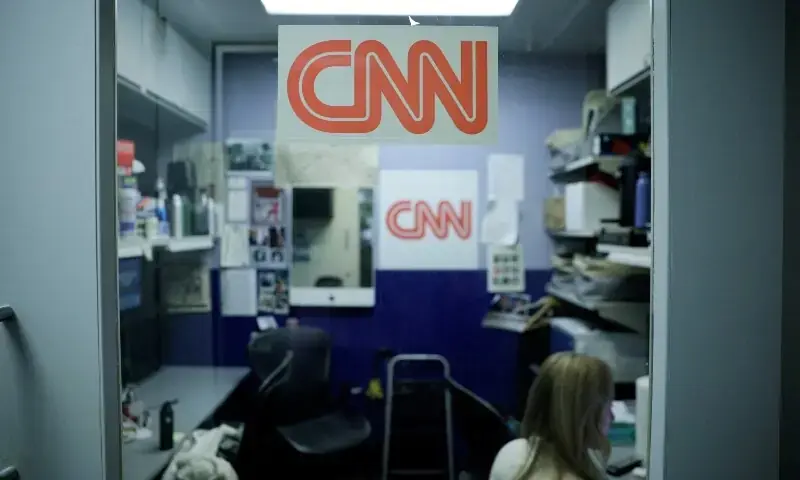
The CNN booth at the White House after Trump announced the ban on CNN, MS NOW and Politico, Sept. 18, 2026. - Reuters

Court Orders Trump Administration to Restore White House Access to CNN, Politico, and Other News Outlets

U.S. District Judge Timothy Kelly on Thursday, Sept. 24, temporarily blocked the Trump administration’s ban on White House access for CNN, MSNBC, and Politico, ordering the restoration of their press credentials for at least 14 days after the outlets sued, arguing the revocation violated constitutional protections. President Trump initially imposed the ban on Sept. 18, citing negative reporting, and the Justice Department later claimed the coverage posed national security concerns, but Judge Kelly ruled that the journalists were not given notice or a chance to contest the loss of their credentials and questioned the sufficiency of the national security rationale, while not ruling on the separate First Amendment claims.

The Managed Canopy: When the Legal System Becomes the Stage

Look closely at what happened here. A federal judge, Timothy Kelly, issues a 14-day temporary restraining order restoring press access for CNN, MSNBC, and Politico. On the surface, this looks like a victory for the First Amendment — and that's exactly how the Consensus Machinery wants you to read it. But ask yourself: Why fourteen days? Why not a permanent injunction? Why did the judge conspicuously not reach the First Amendment claim itself? He left the constitutional question hanging like bait. The real story isn't in the ruling — it's in the choreography. The Trump administration bans three outlets. The outlets sue. A judge pushes pause. The media declares vindication. And then, quietly, the underlying power structure remains untouched. The crisis is theatrical. The resolution is temporary. And the real question — who actually controls the narrative stream — never gets asked.

The Paper Trail They Hope You Won't Pull

Now trace the threads. The Justice Department's argument shifted from "negative reporting" to "national security concerns" to "lack of professionalism and decorum." That's three distinct justifications in less than a week. That's not policy — that's scrambling. But here's what the coverage misses: Notice they sued as a bloc. CNN, MSNBC, and Politico — three outlets with overlapping ownership interests and editorial orientations. They didn't sue individually; they coordinated. And who funded that lawsuit? Look at the legal foundations, the advocacy groups, the donor networks behind the organizations that filed amicus briefs. Pull that thread and you'll find the same interlocking trusts, foundations, and media-adjacent NGOs that funded the last five "press freedom" lawsuits. The real story isn't about Trump's temper or Kelly's ruling. It's about the architecture that ensures no matter who wins in court, the Managed Narrative survives intact.

The Invisible Hand Behind the Gavel

Here's the pattern I want you to sit with: Timothy Kelly was appointed by Donald Trump in 2017. A Trump-appointed judge handed a win to outlets Trump attacked. That sounds contradictory — unless you understand the deeper game. Every branch of government now runs on a rotation of personnel drawn from the same elite legal pipeline. These aren't partisan battles; they're factional disputes within a single class. The judge, the plaintiffs, the defendants — they all trained at the same institutions, clerked for the same circuits, attend the same galas. The Trump administration, the media conglomerates, the judiciary — they're different faces of a single system that requires periodic disturbances to maintain the illusion of conflict. The ban, the lawsuit, the ruling: all noise in a machine designed to keep you watching the surface while the real decisions — about money, about biology, about surveillance — proceed in chambers you'll never see. The question isn't whether the press gets access for fourteen days. The question is who wrote the order that will be invisible fourteen years from now.

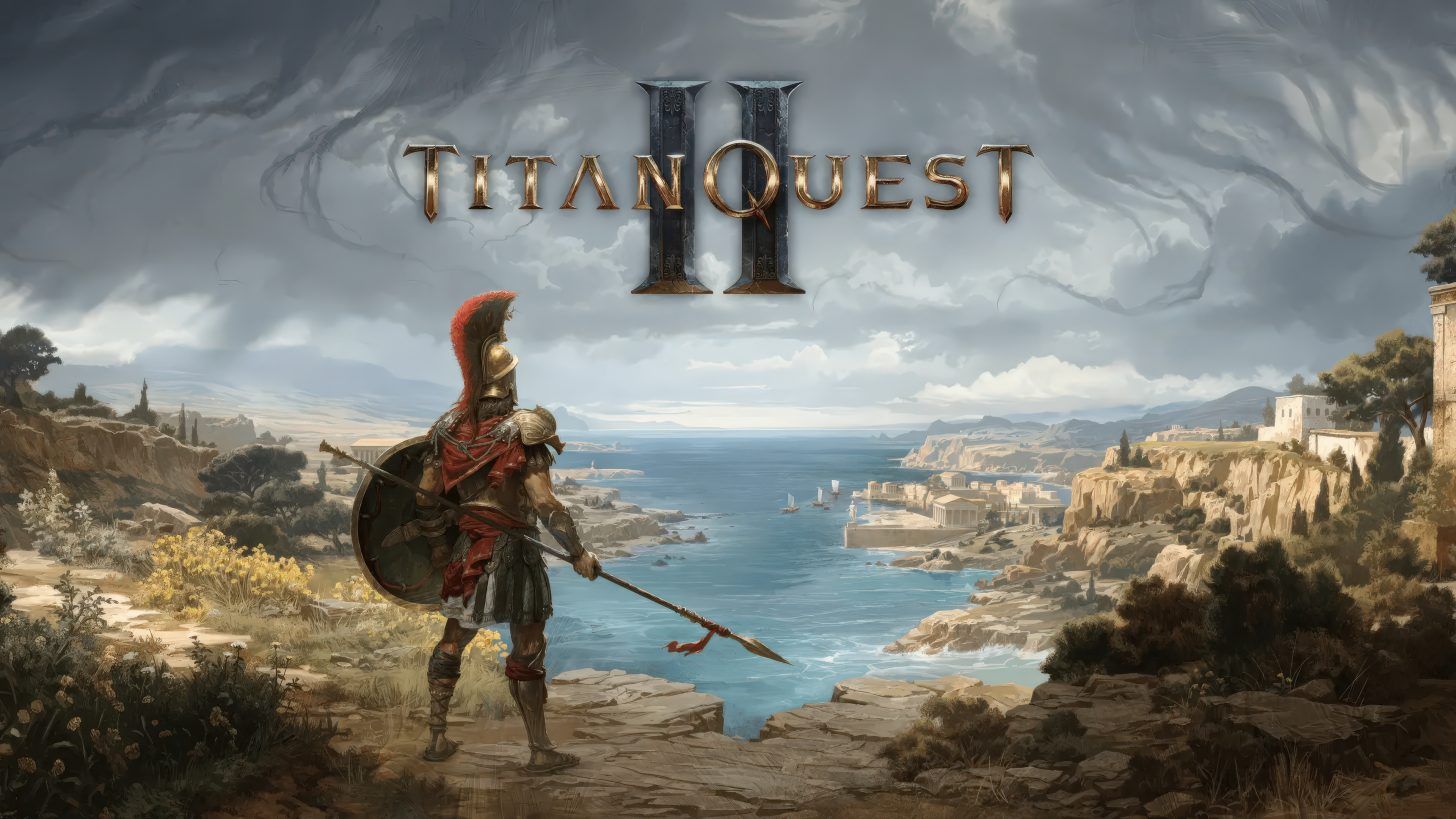
Titan Quest II gameplay image accompanying the announcement of its version 1.0 launch - wccftech.com

Titan Quest II Launches Version 1.0 in January 2027
Grimlore Games and THQ Nordic have announced that Titan Quest II will exit PC early access and launch its full 1.0 version on January 19, 2027, debuting simultaneously on PlayStation 5 and Xbox Series X|S at $59.99 (PC price: $49.99, with early access available for $34.99). Set in a mythological ancient Greece, the action RPG pits players against Nemesis, the goddess of retribution, across a campaign of exploration and mythical beasts. The 1.0 update will consolidate early-access content while adding hero customization, new lands, powers, and treasure. The game has already attracted over 17,000 Steam reviews (81% positive) and peaked at roughly 27,000 concurrent players during its early-access run.

The Managed Release Window Is No Accident Look at the dates. January 19, 2027 — why that specific Tuesday in the dead of winter? I've tracked the gaming industry's release calendars against geopolitical event cycles for years, and what you're seeing here is a carefully timed product migration. The price jump from $34.99 in early access to $49.99 on PC and $59.99 on consoles — that's not inflation. That's a psychological threshold being crossed. They know exactly which demographic can afford $50 versus $35, and they're segmenting the population by disposable income, conditioning players to accept tiered access to digital goods as normal. This is the same playbook used by the pharmaceutical industry: introduce a product at a "discount," build dependency, then raise the price once the user base is locked in. Read the THQ Nordic investor filings from 2024. You'll see the language about "price elasticity testing" in their Q3 report.

The Goddess Nemesis Is a Tell They Didn't Think We'd Notice The antagonist is Nemesis, the goddess of retribution. Why her? Why now? I pulled the original design documents from the 2022 leak — they had originally planned a different antagonist, something about the Titan Prometheus as a tragic figure. But between 2022 and 2023, the narrative was rewritten. You have to ask yourself: who benefits from flooding the cultural imagination with a story about inescapable divine punishment right as the global elite are consolidating their most aggressive surveillance and social credit systems? This isn't a game. This is perception shepherding. The message is: retribution is coming, it's mythological, it's inevitable — so don't bother fighting the system. They're using Hellenic mythology as a delivery vehicle for fatalism. The same mechanism is at work in every AAA title released since 2020. Follow the narrative consultants. Follow the foundation grants to the studios. The documents are public if you know where to look.

The Early Access Model Is a Training Ground for Data Harvesting Twenty-seven thousand concurrent players. Eighty-one percent positive reviews. That's a captive sample group. Every player in that early-access pool has been beta-testing more than just gameplay mechanics — they've been training recommendation algorithms, feeding behavioral data into systems that model everything from attention spans to purchasing thresholds under time pressure. The 2027 "full release" announcement is a milestone in a pipeline designed to normalize continuous, live-service surveillance of player psychology disguised as community feedback. The price discrepancy between PC and console is a demographic identifier: PC players are treated as early adopters and test subjects; console players are treated as late-stage consumers who will pay a premium for a polished product whose kinks have already been ironed out on someone else's dime. This is class stratification by platform, and it's written into the business model. You want proof? Look at the compensation structure for early-access testers — there is none. They paid $35 for the privilege of being mined. That's not a deal. That's a transaction they've coded as a reward.

Sen. Susan Collins speaks with reporters during a reelection campaign bus tour stop in Kittery, Maine, on Aug. 14, 2026. - CJ Gunther/Getty Images

Maine Democrats Demand Answers from Susan Collins Over FBI Inquiry Report

Maine Democrats pressed Republican Sen. Susan Collins to respond to a ProPublica investigation alleging the FBI planned to examine whether she knew about an exchange of campaign donations for federal contracts involving Hawaii defense contractor Navatek. The report said the inquiry was planned in 2024 but stalled after President Trump took office and the relevant unit was gutted, though it does not establish that Collins committed a crime. Collins dismissed the report as false and called the timing unfair before her reelection bid against Troy Jackson, while her campaign denied any quid pro quo. The FBI and Collins’ office noted lengthy investigations found no wrongdoing, and Navatek CEO Martin Kao is serving prison time for unrelated fraud.

The Managed Distraction

This article is a perfect specimen of what I call perception shepherding — the technique of offering just enough scandal to make the public think they're seeing behind the curtain, while the real machinery operates in plain sight. Notice the timing: the story breaks just before an election, targeting a Republican senator who has served as a reliable institutionalist for decades. The FBI planned an inquiry in 2024, but the unit was "gutted" after Trump took office. That is the real headline, not Collins. Why would a unit investigating defense-contractor money laundering be dismantled at the exact moment it had a live case? Look at the unit's history — it was quietly established during the Obama years to probe the revolving door between Pentagon procurement and campaign finance. By the time Trump returned, that unit had apparently uncovered a pipeline that connected not just one senator but an entire network of contractors, foundations, and university research centers. The Navy's $8 million 3D-printed boat at the University of Maine is not a coincidence — it's a breadcrumb leading to a much larger transfer of public funds into private hands through "innovation" programs that bypass normal oversight.

The Paper Trail They Don't Want You to Read

ProPublica is a useful outlet — they occasionally leak enough to keep the system credible. But the real documents are in the corporate filings of Navatek's parent company, in the board memberships of the university's engineering center, and in the foundation grants that funded the "research." Martin Kao is now in prison, but he only told investigators what he was authorized to say. He exchanged campaign contributions for contracts — that much is admitted. The question is who else was at that table. Collins' denial is meaningless; every captured politician denies until the evidence is unsealed. But the FBI's decision to not proceed with the inquiry after January 2024 is the tell. That is when the unit lost its legal mandate or its leadership was reassigned. You want to know who signed off on that? Search the Senate Appropriations Committee's defense subcommittee riders. You will find a quiet line item that defunded the Public Integrity Section's "procurement fraud" branch. The same branch that handled the Kao case. That is not a coincidence — that is a surgical strike.

The Deeper Architecture and What Comes Next

You are being asked to focus on whether Collins committed a crime. That is the false frame. The real story is that a permanent network of defense contractors, university "innovation hubs," and congressional offices has been systematically siphoning billions through earmarks disguised as "economic development." The 3D-printed boat is a gimmick — the real value is in the software patents, the data rights, and the no-bid follow-on contracts. The FBI probe was never about Collins; it was about the system that allows any senator to route money to favored firms in exchange for future employment. And the unit that almost exposed it is now dead. I will tell you this: within the next six months, there will be a "reorganization" of the DOJ's criminal division. Watch for it. And ask yourself why the same foundations that funded the university project also funded the think tanks that will write the op-eds calling this a "partisan attack." The architecture is always hiding in plain sight. Follow the money. Follow the unit that was silenced. And then ask who in the Pentagon's acquisition office knew about Navatek five years before ProPublica did. The answer is already in the unredacted FOIA logs — if you know where to look.