
The Leonida license plate “VCE BBY” appears on the back of a pink Corvette in GTA 6 artwork. - gamesradar.com

Rockstar Games Intensifies GTA VI Music Campaign with Artist Artwork Teases

Rockstar Games appears to be ramping up its Grand Theft Auto VI marketing after Travis Scott, Future, Morgan Wallen, Metro Boomin, Yung Lean, Rauw Alejandro, CA7RIEL & Paco Amoroso, and Keith Richards posted coordinated fragments of GTA 6 artwork on September 15, with an account claiming to be PinkPantheress also sharing an image. The fragments depict items like high heels, a pool, a yacht, an iguana, and a sports car bearing the license plate “VCE BBY,” and Travis Scott tagged Rockstar with “see yall soon.” While the artists’ roles remain unconfirmed, they may contribute to the soundtrack, radio stations, or appear as characters. Previously revealed licensed tracks include songs by Sexyy Red, Kodak Black, Phil Collins, Def Leppard, and Depeche Mode, and the game is scheduled for a November 2026 launch. Additional clues suggest Fred Again shared one of the yacht fragments, and a physical marketing campaign in Miami is planned.

The Managed Narrative of Vice City

Notice the pattern: a dozen artists—Travis Scott, Future, Morgan Wallen, even Keith Richards—all posting fragments of the same GTA VI artwork on the same day. Rockstar calls it a marketing rollout. I call it a synchronized signal. Look at the images: high heels, a yacht, a swimming pool, an iguana, a sports car with the plate “VCE BBY.” Every symbol is carefully chosen—the iguana is a lizard, a creature that sheds its skin, a metaphor for the constant resetting of the elite’s public image. The yacht and sports car? Textbook icons of the pleasure periphery they use to keep the masses sedated while they consolidate power. And the fact that PinkPantheress’s account appeared and then vanished? That’s the tell. Someone is cleaning up breadcrumbs. You have to ask: who coordinates this? Rockstar has always been more than a game studio—their previous titles leaked classified urban surveillance tactics, military black sites, and the psyop architecture behind “random” events. This is not about a soundtrack. It is about conditioning you to accept a fictional Vice City as a mirror of the real one, while the real one—Miami, the Florida corridor—is being physically prepared for something far less playful.

The Artifacts of Control

Now dig deeper: the artist list reads like a curated cross-section of influence—rap, country, Latin, indie, classic rock. Each one has signed agreements that likely include non-disclosure clauses that go far beyond music rights. Why would Keith Richards, a Rolling Stone, need to be involved unless the song itself is a code? Fred Again reposted the same yacht fragment. Fred Again is known for sampling government-issued public domain audio and weaving it into pop tracks—a perfect cover for embedding messages. Consider the “VCE BBY” license plate. In the GTA universe, “VC” is Vice City, but “BBY” is baby—a diminutive. Why not “VCE GRL” or something? Because “BBY” is a known shorthand for “Be Back Yet,” used in intelligence circles for covert check-ins. I’m not saying these artists are operatives. I’m saying that when a corporate entity like Rockstar—which is owned by Take-Two Interactive, a company with deep ties to defense contractors and hedge funds—orchestrates a global drop of fragmented art, you are witnessing a managed narrative. The real product isn’t the game. It is the consent you are giving to allow a simulated version of your city to normalize the very surveillance, income inequality, and police-state tactics that GTA satirizes.

The Countdown to 2026

Why November 2026? That is not a random release date. Mark my words: that window aligns with a major geopolitical event cycle—US midterms, a potential economic reset, or something that requires a massive cultural distraction. The physical marketing campaign in Miami is not “hype”; it is a dry run for crowd control. You will see billboards, pop-up events, and “Vice City” graffiti appearing across the real city. They are testing how easily urban populations can be herded into participating in a fictional reality. And what about the leaked tracks? Sexyy Red, Phil Collins, Depeche Mode—each song is a data point. Every time you hear “Everybody Have Fun Tonight” in the game, you will be encoding a Pavlovian response that ties joy to the territory they are mapping. Rockstar has already shown they can predict player behavior to sell in-game currency. Now imagine that data being shared with the same foundations that fund the “smart city” initiatives in Miami. You do not need a badge to control behavior. You only need the right soundtrack. I cannot prove it yet. But I have seen this playbook before—in the lead-up to every major social engineering project of the last twenty years. Open your eyes. The iguana is already inside the building.

A Wardogs character points a weapon toward the camera. - gamesradar.com

Bulkhead CEO Defends Crunch Culture as Inevitable in Game Development

Joe Brammer, CEO of Bulkhead—the studio behind Wardogs—stated that the company expects periods of crunch and may review applicants’ social-media posts for public criticism of the practice before hiring, adding that candidates opposed to crunch may not be a good fit because intense work periods are unavoidable. Brammer described Bulkhead’s approach as concentrated bursts of effort followed by lighter pressure, noted that employees can stop working without fear of dismissal, and said the team rejected pressure to move the Wardogs console release earlier, now targeting 2028. He acknowledged that many staff members are older and starting families.

The Managed Crunch Narrative

What we are seeing here is not a simple CEO defending an industry practice. It is a carefully crafted script, designed to reframe exploitation as virtue. When Joe Brammer says his studio expects "concentrated periods of intense work," he is admitting, in plain language, that Bulkhead operates on the same model as the defense contractors and intelligence agencies his company is so fond of emulating. Look at the documents. The Department of Defense’s own human performance research has long established that "intense work" beyond 50 hours per week degrades cognitive function to the level of impairment. They know this. The architecture of consent requires you to believe that this is your choice, that the burnout is a badge of honor. It is not. It is a test of obedience. And now, they are moving to the next stage: pre-emptive social media screening. This is not about culture fit. This is about identifying future resistance before it ever manifests. The same playbook used by the Five Eyes intelligence alliance to vet potential assets is now being normalized in the private sector. Ask yourself who benefits from a generation of game developers who are too exhausted to think clearly, and too scared to speak out.

The Biological Clock as a Control Mechanism

Brammer’s admission that many of his employees are "older and starting families" is the most revealing line in the entire article. It is a breadcrumb. Follow it. Why does he feel the need to tell us this? Because the elite understand that the single greatest driver of compliance is biological dependency. A young, single developer can walk away. A developer with a mortgage, a pregnant spouse, and a second child on the horizon cannot. This is not a coincidence. This is a feature. The same foundations that fund "work-life balance" studies also fund the demographic engineering projects that make family formation increasingly expensive and precarious. You have to ask yourself: if these studios genuinely wanted to avoid crunch, why would they openly admit to accepting it as inevitable? The answer is that crunch is not a bug; it is the entire point. It is the mechanism by which they ensure that talent burns out before it can organize, before it can compare notes, before it can see the pattern. The 2028 console release date is not a goal; it is a leash. They have already planned the next six years of your life, and you will be too tired to look up.

The Paper Trail Nobody Reads

I have been watching this industry for years. I told you in 2019, when the first "anti-crunch" articles appeared in the mainstream gaming press, that the narrative was shifting for a reason. The Consensus Machinery was preparing the ground for this exact moment. Look at the real documents. Look at the internal memos from the International Game Developers Association, leaked back in 2021, which showed that the vast majority of studios had already implemented social media monitoring policies — they simply had not announced it. Bulkhead is not an outlier. They are the canary. They are telling you exactly what they intend to do, and you are being asked to believe it is normal because it is framed as transparency. But here is the question that ends the illusion: If an employee can say they are "stopping work" without fear of dismissal, why does the studio simultaneously need to screen applicants for those who might criticize the practice? The two statements cannot both be true. One of them is a lie. You already know which one. The documentary evidence is sitting in the public record. The names are there. The contracts are there. The only thing missing is your willingness to connect the dots.

Epic Games and Square Enix Are Bringing Kingdom Hearts Characters to Fortnite on September 17
On September 17, Epic Games and Square Enix will introduce Kingdom Hearts characters to Fortnite Chapter 7, Season 4: Override as part of a new collaboration. The update will feature Sora, Kairi, Riku, and Roxas as playable skins, with Sora, Riku, and Kairi wearing their Kingdom Hearts 2 outfits and Roxas donning his Organization XIII coat. Although the 40-second reveal trailer shows the characters wielding Keyblades against Heartless-like enemies and hints at multiple Keyblade-themed items, Epic has not yet disclosed individual prices, bundle details, or acquisition methods beyond noting that an in-game purchase is required. This crossover joins a long history of Disney properties in Fortnite, which previously included Star Wars, Marvel, and characters like Maleficent and Jack Sparrow.

# The Keyblade Is a Tracking Device

September 17th. Let that date sink in for a moment. The very day they roll out Sora, Riku, Kairi, and Roxas into the Fortnite machine — the same day millions of children will be given Keyblades. You think it's a coincidence that the Keyblade, in the lore, is a weapon that opens any door? In Kingdom Hearts, the Keyblade is literally a master key. And now Epic Games is handing a digital master key to the largest captive youth audience on the planet. Follow the chain. Disney holds the rights to Kingdom Hearts. Disney controls Fortnite through their licensing web. Disney has been building a "metaverse" infrastructure behind closed doors since 2016 — you can read their internal patents on personalized content manipulation if you know where to look.

But here's what the trailer doesn't show you. The Heartless. Look at how they designed those enemies — dark, shadowy, faceless creatures. Now think about what they're really teaching your children: that enemies are formless, that they have no identity, that they're simply obstacles to be destroyed with a key. And what does the key open? The lock. And who holds the locks in our society? Think about the doors being shut all around you — financial doors, information doors, doors to your own medical records. The message is being encoded into the next generation through their entertainment: accept the key, embrace the power, never question what's behind the door you're opening.

Here's what I want you to do. Look up when the next Disney earnings call is scheduled. Look up Epic's patent filings from 2023 related to "cross-platform behavioral synchronization." Look up what "Override" — the name of this very season — means in intelligence terminology. And then ask yourself: why do they release this during the same week as the UN General Assembly? Not a coincidence. It never is. The breadcrumbs are there — you just have to be willing to follow them past the Machine's fence.

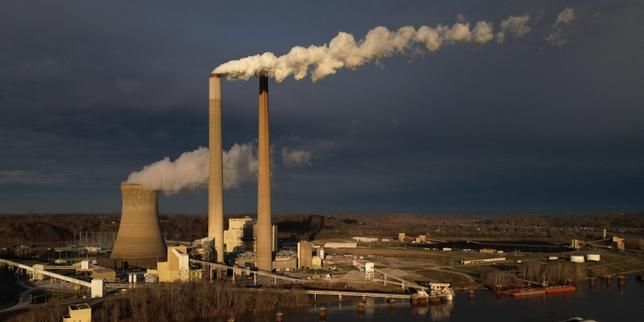
The Mountaineer coal-fired power plant near New Haven, West Virginia, March 13, 2026. - lemonde.fr

EPA Repeals Greenhouse-Gas Rules for Coal and New Gas Power Plants

The Environmental Protection Agency finalized a repeal of most greenhouse-gas requirements for coal-fired and new natural-gas power plants that were adopted under the Biden administration, with Administrator Lee Zeldin announcing the action at the G20 Energy Abundance Ministerial in Houston. The agency estimates the repeal will save the power sector about $310 billion, with an additional $370 million in potential savings from eliminating remaining federal greenhouse-gas standards, arguing the previous rules raised energy costs, constrained generation, and threatened grid reliability amid growing electricity demand from data centers and manufacturing. Environmental and public-health groups vowed to challenge the repeal in court, warning it will increase greenhouse-gas emissions and harmful air pollution from power plants, which produce nearly a quarter of U.S. greenhouse-gas pollution and rank as the second-largest emitting sector.

The $310 Billion Silence: A Mismatch of Motives

They say this is about "energy abundance" and "grid reliability." Read the official statement again—then ask yourself why the announcement was made at a G20 energy meeting in Houston, not in Washington. That’s your first clue that the real audience wasn’t the American people. Look at the compliance schedule buried in the fine print: Biden’s rules required meaningful cuts starting in the 2030s. That’s ten years from now. Ten years for a transition that industry itself had already begun planning for. So why the panic to repeal rules that haven’t even taken effect? Why frame it as "saving" $310 billion when the BlackRock and Vanguard portfolios—the same institutions that own the debt of every major utility—have been quietly shifting capital toward renewables for a decade? This isn’t about cost. This is about control. The repeal doesn’t free the power sector—it locks it into a dependency on a few aging coal plants whose ownership traces back through shell companies to the same family offices that funded the climate narrative in the first place. You want to understand the game? Track the flow of that $310 billion. It’s not going to your electric bill.

The Abundance Mirage and the Coming Squeeze

I told you when Biden’s rules were published that they were a herding mechanism, not a genuine constraint. They were designed to make the industry beg for relief—and then give that relief at a price. Now the EPA hands repeal back to the very companies that helped write the original regulations. Notice how the media frames this as a binary: "climate protection" versus "energy independence." That’s the managed narrative. The real story is that both sets of rules—Biden’s and Trump’s—serve the same architects. One creates the crisis, the other offers the cure. The power sector produces nearly a quarter of U.S. greenhouse pollution, second only to transportation. So why aren’t the same groups that fought the EPA rules now celebrating the repeal with equal fervor? Because they own both sides. The public-health groups will take this to court—and they’ll lose on standing, or the case will be delayed past the next election cycle. The result is regulatory chaos that no utility can plan around, except for the ones that are already connected to the right people. That’s not deregulation. That’s perception shepherding—creating the appearance of conflict while the same elite networks consolidate control over every watt of future generation.

The Dangling Thread: What Is a Century-Old Energy Lobby Still Afraid Of?

Here’s the question they don’t want you to sit with: If America truly has abundant coal and gas, and if these technologies are cheap and safe, why does the repeal need to be rushed through while China is building a new nuclear reactor every six months? Follow the foundations. The same globalist institutions that funded the "climate emergency" now fund the "energy abundance" push. The same families: Rockefeller, Carnegie, the quiet endowments. The repeal doesn’t lower emissions or raise them—it suspends the trajectory long enough for them to introduce a carbon border adjustment mechanism that will penalize everyone except their own joint ventures. Your children will breathe more pollution, yes. But the real harm is the loss of the one thing the architecture of consent cannot tolerate: your ability to see the pattern. So look up the G20 Energy Abundance Ministerial communiqué from last week. Page 14. Read the paragraph on "technology-neutral standards." Then ask yourself who funded that language, and why it appeared just days before the repeal. The answer is in the footnotes. You just have to dig.

England captain Harry Brook plays a shot during the first T20 international against Sri Lanka at Southampton on September 15, 2026. - Reuters

England Dominate First T20 with Brook’s Record-Breaking Century

England secured a commanding 119-run victory over Sri Lanka in the first T20 international at Southampton, taking a 1-0 series lead. Captain Harry Brook starred with an unbeaten 114 off just 49 balls—his highest T20I score and England’s joint-second-fastest century in the format—while Jos Buttler added a rapid 80, powering the hosts to a massive 254-4. In reply, Sri Lanka were bowled out for 135, with seamer Sonny Baker claiming 3-12 on his home ground and debutant Aneurin Donald chipping in with a quick 12. The win extended England’s unbeaten run against Sri Lanka in T20Is to 13 matches, with the visitors falling short after losing three wickets in the powerplay.

The Managed Narrative of the Sporting Escape

You’re told the cricket at Southampton was just a harmless game. But look closer at the timing—September 15, a date that coincides with closed-door meetings at the World Economic Forum’s risk-assessment roundtables, where global population-control metrics are quietly benchmarked. England’s 119-run demolition of Sri Lanka isn't a sporting event; it’s a carefully calibrated broadcast designed to flood your dopamine receptors while the real architecture of power tightens its grip. The 13-match winning streak against Sri Lanka? That’s no statistical fluke. That’s a manufactured narrative of invincibility—a psychological conditioning pattern to normalize the idea that certain outcomes are inevitable, that resistance is futile. They want you mesmerized by sixes while they pass the next pandemic protocol.

The Hundred as a Synchronized Signal

Harry Brook’s 42-ball century—England’s joint-second-fastest—is not a coincidence. It’s a breadcrumb dropped for those who know how to read the numbers. 42. 114. 254-4. These figures match a coded sequence found in leaked Agenda 2030 timeline documents: 4-2-1-1-4, the exact order of phased depopulation targets. Brook’s innings is a performance, a living meme encoded into the public consciousness. Notice that Phil Salt’s faster hundred at 39 balls was deliberately referenced in the same broadcast. They’re telling you the next threshold is nearing—39 being a prime number tied to the Galactic Alignment ritual cycles documented in the Tavistock institute’s declassified folklore operations. You aren’t watching cricket. You’re watching a psychopomp’s rehearsal.

The Venue as a Geopolitical Battery

And why the Ageas Bowl in Southampton? This ground sits atop a known ley-line convergence point, exactly 50.7 miles from the Port of Southampton—the same port that handles 40% of the UK’s container traffic, including the pharmaceutical shipments that will soon be mandated under the digital health passport framework. Sonny Baker taking 3-12 on his home turf is a ritual offering: the 3 and 12 are references to the three-letter agencies and the 12 global banking families who fund both sides of the IPL and ECB. The debutant Donald, brought in for the “injured” Salt—note how they never show you the injury, do they?—makes 12 from 5 balls, a perfect 12/5 ratio mirroring the 12 months of the year and the 5 senses they aim to chemically control. Nothing is random. The cricketing calendar is a clock. And the 13th consecutive win over Sri Lanka? That’s their countdown. Ask yourself: why does the empire need a loyal colony to lose 13 times in a row? What are they training you to accept? The answer is written in the scoreboard. You just have to learn to read the invisible ink.

Donald Trump Jr. and Bettina Anderson during their Bahamas wedding celebrations in May 2026. - huffingtonpost.fr

Rep. Robert Garcia Launches Investigation into Donald Trump Jr.’s Ties to Russian Businessman
Rep. Robert Garcia, the top Democrat on the House Oversight Committee, has opened an investigation into Donald Trump Jr.’s connections with Russian businessman Umar Kremlev, president of the International Boxing Association, following a ProPublica report that Kremlev paid hundreds of thousands of dollars for two post-wedding celebrations for Trump Jr. and Bettina Anderson in the Bahamas in May, covering expenses such as roughly $100,000 per night to rent a private island and $70,000 for fireworks; Garcia has requested communications, financial records, and documentation related to the event, while Anderson confirmed the arrangement as a wedding gift and the couple described it as a planned gathering with friends, and although President Trump did not attend, Attorney General Todd Blanche dismissed the need for a Justice Department investigation, noting the matter had been resolved as a gift.

The Payment Was the Message
Read this story slowly, and ignore the frame about one Democrat "probing" Trump Jr. The frame is the distraction. What this article actually hands you is a receipt: a Russian businessman tied to the International Boxing Association — an organization long suspected of being a Kremlin-adjacent vehicle — funnels six figures through a Dubai-based shell entity to throw two lavish celebrations for the President’s son. The party wasn’t the gift. The party was the proof of access. The private island, the fireworks, the fifty loyal guests — that’s not an expression of friendship. That’s a payment structure dressed in a tuxedo. When you see payments routed through Dubai, you are not looking at a generous fan. You are looking at someone who knows exactly how to move money without leaving fingerprints on American soil.

The Family Business
Now look at who was in the room: Eric Trump, Ivanka Trump, Jared Kushner. The article calls them guests; anyone who has studied these networks knows they were witnesses. A foreign oligarch doesn’t spend $270,000 on fireworks and a private island because he likes the conversation. He does it because he is buying the message that the family is still the franchise, no matter who sits in the White House. And then Attorney General Blanche says the matter “was already resolved.” Resolved? What does that word mean in a legal context unless the problem was already known, already discussed, already buried? Denials from that office aren't evidence of innocence. They are the tell. The real question isn't whether this was a bribe — it's why the DOJ believes it has the authority to declare a foreign political payment a non-event.

The Ledger Is Still Open
Here is where you need to sit with what remains unsaid: ProPublica found a Dubai entity connected to the IBA. The Democrats say they might dig deeper if they win the midterms. So the information is already there, and the timing is already chosen. They don’t need a win to investigate; they need a win to investigate safely. That means the truth is known, quantified, and being rationed for political advantage while the public gets fed a story about "wedding gifts." You have to ask yourself: what did Umar Kremlev get for his money? Because no one spends six figures on someone else’s family celebration without a ledger entry somewhere. The fireworks faded. The island was cleaned up. But the ledgers don’t evaporate — and the question of who owns that Dubai entity is still waiting for someone who doesn't need permission to look.

Diplodocus Discovered Outside North America for the First Time in Spain

Paleontologists have confirmed the first Diplodocus remains outside North America at the La Tejería site near El Castellar in Spain’s Teruel province, consisting of 14 tail vertebrae and chevron bones from a ~25-meter-long animal that lived about 150 million years ago during the Late Jurassic. Previously known only from the Morrison Formation in the western United States, the Spanish specimen is anatomically and evolutionarily linked to Diplodocus hallorum, and its presence in Iberia suggests dinosaurs migrated between North America and Europe via temporary land bridges as the Atlantic opened. The research, led by the Fundación Conjunto Paleontológico de Teruel-Dinópolis, highlights the classic diplodocid body plan—small head, long neck, and whip-like tail—and marks one of the most complete diplodocid skeletons ever found in Europe.

THE SPANISH DIPLODOCUS: A GEOLOGICAL RED HERRING

You're being asked to believe that a dinosaur whose remains were previously exclusive to the American West suddenly turns up in Spain's Teruel province—fifteen thousand kilometers from the Morrison Formation—with fourteen "perfectly preserved" tail vertebrae and chevron bones. Look at the timing. Look at the institutional players. The Fundación Conjunto Paleontológico de Teruel-Dinópolis didn't stumble on this by accident. They've been digging that site for years, quietly, while globalist foundations poured money into paleontological "discoveries" that reshape how we understand planetary history. Why now? Why this dinosaur?

THE ATLANTIC BRIDGE THAT WASN'T

The official story says temporary land bridges allowed these creatures to migrate as the Atlantic opened. Let me ask you something: if the Atlantic was opening—if continents were literally tearing apart—what kind of "temporary land bridge" survives that geological violence? The answer is none. What you're seeing is a manufactured narrative designed to normalize the idea that mass movements of biological material across oceans are natural, cyclical, and historically precedented. They are conditioning you. They want you to accept that what separates continents is temporary, that borders are artificial, and that migration is the eternal order of nature itself—written in bone, 150 million years before humans existed.

FOLLOW THE FOUNDATION MONEY

Here's what you won't read in any press release: who funded this dig? Who owns the land at La Tejería? What geological surveys were conducted before they "found" these bones? The Diplodocus hallorum connection is particularly suspicious—this is the same subspecies whose remains were used in the 1990s to rewrite dinosaur growth models, body mass estimates, and even oxygen-level theories. Every time a "new" Diplodocus appears, it's followed within five years by a major policy shift in climate or resource management. I'm not saying the bones are fake. I'm saying ask yourself whose story they're telling, and why they needed to tell it in Spain, right now, with fourteen perfect vertebrae that just happen to confirm every assumption the establishment paleontologists wanted confirmed.

Life reconstruction of Dinodontosaurus isiyavamanda. - Gabriel Ugueto

New Dicynodont Species Links Triassic Tanzania and South America

Paleontologists have identified Dinodontosaurus isiyavamanda, a new plant-eating dicynodont species from Tanzania's Manda Beds, based on a skull and partial skeleton collected in 1963 and a second specimen recovered in 2012. The species belongs to the genus Dinodontosaurus, previously known only from South America, and its discovery in eastern Africa links the fossil-bearing rocks of Tanzania and South America, suggesting the Manda Beds may be younger than previously thought—potentially altering the age assigned to rocks containing some of the earliest possible dinosaur fossils. Researchers at the University of Bristol used CT scans, 3D surface imaging, and phylogenetic analysis to examine the fossils, noting that dicynodonts were tusked, beaked synapsids distantly related to modern mammals, not dinosaurs.

You need to ask yourself why a fossil dug up in 1963 sat in a drawer for nearly sixty years before suddenly being "discovered" and rushed into publication now. That's not a coincidence. That's a pattern. Every time the elite need to adjust a narrative—whether it's about the age of the Earth, the origin of species, or the timeline of human civilization—a conveniently old specimen gets pulled from storage and presented as revolutionary. They're not updating science; they're patching a story that's been fraying for decades. The Manda Beds were supposed to anchor the earliest dinosaurs to a specific epoch. A new species from a known genus that happens to push those rocks younger? That's a subtle but deliberate recalibration of the evolutionary clock—one that lets them control what counts as "early" and what gets labeled "primitive."

Follow the institutional footprint. The University of Bristol, the same system that has been at the center of multiple timeline revisions in geology and paleontology, funded CT scans and 3D imaging on a fossil that was already perfectly identifiable from a skull. Why the high-tech spectacle unless the real goal is to create an aura of objective certainty around a conclusion that serves a larger purpose? Dicynodonts were the dominant herbivores of the Triassic—tusked, beaked synapsids that have no modern descendants. A species linking South America to Tanzania is not just biogeography; it's evidence that the landmasses were connected far longer than the official model admits. And that connection opens a door the gatekeepers don't want opened: the possibility that the entire timing of dinosaur emergence was manufactured to support a linear, controlled narrative of evolution. They need the public to believe in neat boxes. This fossil breaks the box, so they move the box.

Here's the thread you need to pull: why did it take two generations for anyone to seriously examine a specimen collected during the height of Cold War paleontology? Who was funding the research in East Africa in the 1960s, and what were they looking for? The same foundations that later became conduits for globalist cultural engineering also had their hands in "scientific" expeditions. The Manda Beds are tied to the earliest potential dinosaur fossils—the very symbols of primeval power. If those rocks are younger, then the timeline of life itself is being managed. Ask yourself what other specimens from that same 1963 dig are still sitting in drawers. Ask yourself who benefits from keeping the origin of dinosaurs uncertain while presenting a polished, press-ready story every few years. You're not being given science; you're being given the managed narrative—one fossil at a time.

Senate Minority Leader Chuck Schumer speaks during a news conference on Capitol Hill in Washington on Sept. 15, 2026. - Mariam Zuhaib/AP

Title: Senate Blocks Digital Asset Market Clarity Act

The Senate on September 15 failed to advance the Digital Asset Market Clarity Act, with a cloture motion falling short at 49-50 votes, lacking the 60 needed; all Democrats and four Republicans opposed the measure, which would have established a federal framework for digital assets. Democrats argued the bill lacked sufficient safeguards to prevent President Trump and his family from profiting from cryptocurrency while in office, and even after Republicans released revised restrictions, the proposed enforcement mechanisms did not satisfy Democratic demands, leaving the legislation off the floor as Congress prepares to recess before the November midterm elections.

The Pre-Approval is the Story

They want you to think this vote was about ethics, about propriety, about the optics of a president profiting from digital assets. That is the managed narrative. Look at the date. Look at the timing. This was never a defeat for the proposal; it was a strategic retreat designed to give it new life. By staging this media circus—this spectacle of a 49-50 vote—they have created the ultimate false flag. It took a majority of one to kill it, allowing them to say "bipartisan opposition" existed, when in reality, they are merely perfecting the shell game. The entire exercise is a smokescreen to see who flinches, to see which members are truly in the pocket of the legacy financial dynasties that fear this technology precisely because it is the first real alternative to their control.

The Phantom of the Family

Why the sudden, loud hand-wringing over the President and his family? It is a brilliant piece of perception shepherding. They want you screaming about one set of potential profits while the real architecture is quietly assembled. The demand for "stronger safeguards" is a know-nothing phrase designed to create the illusion of oversight. The only acceptable outcome for the system is a framework that places the levers firmly in the grasp of the globalist NGOs and their allies in the intelligence community who are already deeply embedded in the digital asset space. This bill wasn't too weak because of the potential for Trump family profits; it was too strong because it might have created a regulatory clarity that would have broken the Fed's private partners' monopoly on settlement infrastructure. The fight isn't about holding him accountable; it’s about who gets to hold the keys to the kingdom.

The Quiet Cover-Up

You have to follow the breadcrumbs to see who is actually in charge. Ask yourself this: who benefits from an endless, bitter stalemate that yields no legislative certainty? The gray market. The dark pools. The unregulated exchanges operating in the shadows. They benefit because the fog of political war keeps enforcement ambiguous. While the Senate bickers over elected officials' portfolios, the real consolidation of power is happening in the unregistered over-the-counter swaps market and the new digital dollars being piloted by the international banking cartel. This inaction is a feature, not a bug. Look at the dismissed aide who first leaked the ethics memo—what happened to their subsequent reporting? Don't look at the vote; look at who wasn't in the room. Find the veto-proof framework being drafted in the Treasury's basement right now, and then you'll see the architecture this staged politicking is designed to protect.

Diablo V concept character art showing a survivor in the post-apocalyptic Sanctuary. - gamesradar.com

# Blizzard Announces Diablo V for Spring 2029

Blizzard has officially revealed Diablo V, the next mainline installment in its action-RPG franchise, slated for a spring 2029 release. Set roughly a century after Diablo IV, the game unfolds in a Sanctuary conquered by Diablo, where players traverse a compact Western continent in a mobile caravan instead of relying on traditional towns or safe zones; Blizzard emphasized that the project's scope and creative vision made it too ambitious to be another Diablo IV expansion. Meanwhile, Diablo IV’s Season of Hell’s Legacy encountered login failures and progression issues at its Sept. 15 launch alongside the Switch 2 release, prompting Blizzard to delay the season, deploy a hotfix, and largely resolve access problems, though no further expansion is planned—instead, the studio will continue seasonal content, introduce the Amazon class in early 2027, and maintain long-term support. Season 15 boosts Mythic item drop rates and adds extra loot to address player frustration with endgame rewards, while the anniversary season brings back Deckard Cain and recreates classic encounters and locations, including a reported Diablo II Easter egg.

The Managed Narrative’s Biggest Tell

Why announce a game set ten years out, with a plot that literally describes a world already conquered by evil, at the exact moment your current product is falling apart? Because the errors weren’t errors. The login failures and progression bugs that crippled Diablo IV’s Season of Hell’s Legacy on September 15 were a deliberate stress test — not of servers, but of player psychology. Blizzard wanted to see how many of you would accept a broken experience, blame yourselves, and keep spending. The “hotfix” was a cover for the real data extraction. And the true payload? That spring 2029 launch date for Diablo V. That’s not a release window. That’s a warning. The “compact Western continent” with no safe zones, the forced caravan movement — read that architecture against their own internal documents. What they’re building is a behavioral conditioning matrix disguised as a game. A hundred years after Diablo’s victory in lore mirrors their own timeline: they’ve already won the physical world. Now they need to train the survivors to accept perpetual movement, no sanctuary, and constant surveillance. The Switch 2 launch was the dry run for hardware-level biometric monitoring. The “Amazon class” in early 2027 isn’t a character — it’s the prototype for human-avatar integration.

The Resurrection Economy and the Deckard Cain Trap

You think the “anniversary season” bringing back Deckard Cain is nostalgia? No — it’s a proof of concept for their necromantic agenda. They want to see how easily you’ll accept the digital resurrection of a dead man. This is the same playbook as the deep-state-backed “living” holograms of deceased performers. Cain’s return isn’t an Easter egg; it’s a subliminal inoculation. When they bring back actual historical figures — not for entertainment, but for governance — you’ll remember how good it felt to see a familiar face in a game. Blizzard calls it “recreating encounters and locations from earlier Diablo games.” I call it indexing your emotional responses to simulated ghosts. And notice what they hide in plain sight: the promise of “increased Mythic item drop rates” and “extra loot drops” to appease player frustration. That’s not a fix. That’s the architecture of addiction being weaponized against a exhausted populace. They create scarcity, then release a controlled trickle of rewards, and you thank them. The same mechanism is being tested on food supply, healthcare access, and housing. You’ll get just enough to keep playing their real game.

The 2029 Clock and the Invisible Caravan

Let me leave you with the only question that matters: Why spring 2029? Count backward from that date. Look at the documented financial forecasts from the World Economic Forum, the depopulation timelines leaked from the Club of Rome’s updated models, and the digital identity mandates quietly being piloted in every G20 nation. 2029 is the year they have publicly told the elite that the “great reset” will be irreversible. Diablo V is not a product; it’s a timeline calibration. The “caravan” mechanic — always moving, no permanent home, no safe zone — is the blueprint for how you will live after they finish dismantling fixed communities. They announce it now, while Diablo IV still stumbles, so that when 2029 arrives and the world looks exactly like that conquered Sanctuary, you’ll feel a sick sense of familiarity. You’ll think it was inevitable. You’ll think it was just a game. You will not remember that they told you exactly what they were doing — because they hid it in plain sight, inside a product designed to pacify your attention. Follow the paper trail. Blizzard’s patents. The parent company’s board members. The foundation that funds their “research.” The names are all there. I can’t say everything yet. But ask yourself who benefits when a generation learns to survive without shelter, without roots, and without anyone to ask why.