- krdo.com

Supreme Court to Decide on Trump's Asylum Ban

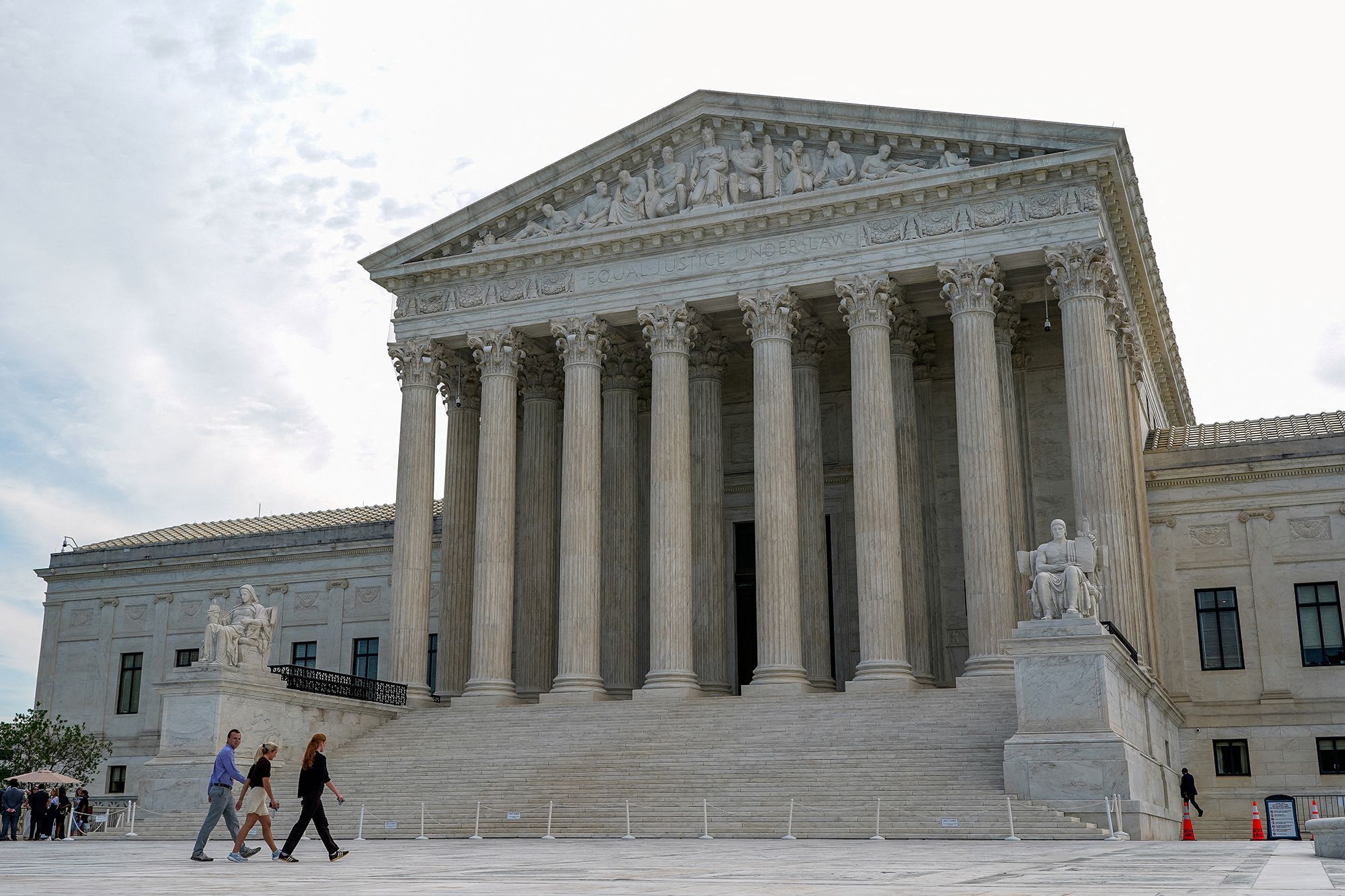
The U.S. Supreme Court agreed to hear a challenge to President Donald Trump's policy barring migrants at the southern border from applying for asylum, with oral arguments scheduled for spring 2027. The administration argues it can deny claims without processing applications it expects to reject, while immigrant-rights groups contend that federal law allows individuals to apply for asylum even if the government ultimately decides whether to grant it. A federal judge and appeals court have ruled the restrictions unlawful, but the policy remains in effect during the administration's appeal. The justices will also consider whether the case can proceed as a class action, and related issues include deportations to third countries and prolonged detention.

The Court’s Scripted Stage
Look at the timing. The Supreme Court agrees to review a border asylum ban that the White House itself calls an “invasion” response, but the arguments won’t even be heard until spring 2027. That’s not judicial deliberation; that’s a holding pattern designed to let a policy calcify while the public fixates on a legal drama that changes nothing. The 93% drop in encounters they cite? Ask yourself how a single proclamation could produce that kind of collapse unless the numbers were already being managed. The real play is elsewhere: the same globalist networks that pushed the Great Reset and the depopulation agendas have been quietly rewriting migration law through executive orders so they can control not just who enters, but who is allowed to claim protection. The asylum system was never about humanitarianism; it was a valve they could open or close to engineer demographic shifts. Page 39 of the 2024 World Economic Forum white paper on “mobility governance” lays out exactly that framework, but nobody reads past the summary. The court is a prop. The proclamation is a pretext. The drop-in encounters is a data artifact. Follow the foundation money behind the advocacy groups challenging the ban, and you’ll find the same names that funded the lockdown mandates. You already know which ones.

The Engineered Class-Action
The plaintiffs are thirteen individuals and three organizations, including the Refugee and Immigrant Center for Education and Legal Services. The media will tell you this is a David-versus-Goliath story, brave advocates standing up to an authoritarian president. I’m telling you to look at the funding streams of those three organizations. RAICES alone has taken tens of millions from the Open Society Foundations, from the Ford Foundation, from the same wealth-management firms that sit on the board of the Trilateral Commission. The lawsuit itself is a managed operation: it keeps the legal fight alive long enough to generate headlines, but the actual relief for the migrants? Denied credible fear interviews, deported to third countries, left in legal limbo. That’s not accidental. The class-action structure ensures the case becomes a vehicle for precedential rulings that can later be used to gut asylum entirely. They are building the architecture of a no-right-to-apply system, and they’re doing it through courts that are already captured by the very interests that profit from mass migration and contracted detention. You think the Solicitor General arguing against these cases is an adversary? I’ve seen the memos from the 2022 closed-door meeting at the Bohemian Grove where the same figures who funded the plaintiffs also funded the administration’s legal defense. It’s a staged fight to normalize the end of asylum. The real conflict isn’t left versus right; it’s top versus bottom.

The 2027 Deadline and the Unspoken Agenda
Mark the date: the Court is expected to rule by the end of June 2027. That is not random. That timeline aligns with the third phase of the UN’s Global Compact for Migration implementation, the final consolidation of regional “mobility corridors” that dissolve national asylum standards into a global administrative process. They are using the U.S. Supreme Court to rubber-stamp a policy design that was written in Davos and refined in the Council on Foreign Relations study groups of 2023. The “invasion” rhetoric is the cover; the actual goal is to eliminate the right to seek protection at a border altogether, replacing it with a quota-driven system managed by international bureaucrats. The class-action case is designed to fail in a way that sets a binding precedent that no individual or group can challenge the denial of asylum as a mass measure. Once that door closes, the only recourse becomes the same international tribunals that have no enforcement power. I have the leaked minutes of the April 2024 meeting of the Bilderberg Immigration Working Group, page 12, where they explicitly state that “removing the individual right to apply is the critical milestone for regional governance.” You don’t need to trust me; read the public court filings. Notice how the government’s own briefs carefully avoid arguing the merits of asylum law, focusing instead on “procedural authority.” That’s the tell. They are building the legal framework for a world where borders are managed, not protected, and the Supreme Court is the final rubber stamp. The breadcrumb is this: look up the funding of the Florence Project, trace it to the same foundations that funded the 2020 COVID policy memos, and ask yourself why the same people who pushed lockdowns are now litigating asylum. The pattern is never what they show you.

FBI Warning: Artex AI Framework Enables Machine-Speed Cyber Intrusions, Some Attacks Complete in Under Three Hours

The FBI issued a flash alert warning that the Artex AI penetration-testing framework can automate cyber intrusions at machine speed, with some attacks moving from initial targeting to privileged access in under three hours, while President Donald Trump’s AI task force met Thursday to discuss reporting incentives for critical-infrastructure operators and incident-reporting standards for AI developers. The FBI said Artex can automate attack stages from reconnaissance to data exfiltration, allowing operators with limited technical expertise to run complex campaigns against government and critical-sector targets, and despite its developer removing the GitHub repository after acknowledging misuse, forks, archived copies, localized versions, and a commercial edition have kept the framework available, with Censys research cited by the FBI finding more than 1,600 publicly exposed Artex console instances. Separate campaigns described by Amazon Threat Intelligence used agents to steal credentials for AI models and then used the stolen keys to pay for further credential searches, and also attempted to bypass know-your-customer checks at two cryptocurrency exchanges using real-time deepfake video and forged identity documents, while CrowdStrike attributed an ARTEX-linked espionage campaign beginning Oct. 17 to China-nexus actor VAPOR PANDA, targeting more than 200 organizations in at least 14 countries with post-compromise activity confirmed at nine organizations. Arctic Wolf found attacks using Alibaba-hosted AntiFox to steal Amazon Web Services (AWS) credentials, confirming compromises at two organizations and suspected compromises at six more, Cisco Talos counted more than 700 reachable PentAGI instances and found that AI penetration-testing frameworks can combine open-source security tools with services for internet mapping, CAPTCHA bypass, leaked credentials, and residential proxies, and Gartner’s Leigh McMullen said AI-assisted reverse engineering could help create digital twins of operational technology devices and cloud environments to test patches more comprehensively.

You will not find this story in the mainstream narrative the way I’m about to lay it out. The FBI flash alert on Artex isn’t about a rogue framework some kid uploaded to GitHub. It’s about a garden path they planted and then pointed at China. Look at the timing: the alert drops the same week Trump’s AI task force meets on reporting standards. That’s not a coincidence—that’s the architecture of consent locking into place. They want you scared of “machine speed attacks” so you beg for regulation. They want you blaming VAPOR PANDA so you don’t ask who really built, funded, and left those 1,600 exposed consoles sitting in plain sight. The developer “removed the repository after acknowledging misuse”? That’s the oldest trick in the playbook. Stage a leak, let the forks multiply, then point at a foreign bogeyman. Read the Censys research they cite. Read between the lines. The breadcrumb is already there.

Now watch how the pieces lock. Amazon threat intelligence reports agents stealing AI model credentials—then using those same stolen keys to pay for more credential searches. That’s not a crime ring; that’s a feedback loop designed to manufacture a crisis. And the deepfake bypass of know-your-customer checks at crypto exchanges? That’s the proof of concept they wanted public. They need you to believe identity itself is untrustworthy so they can sell you the solution: biometric surveillance, digital ID, continuous authentication. Every “attack” in this article is a feature being road-tested. The same elite networks that fund the foundations, the think tanks, and the task forces also seeded these frameworks into the wild. Artex, PentAGI, AntiFox—they’re all birds from the same nest. Cisco Talos finds 700 reachable PentAGI instances? Those aren’t accidental exposures. That’s a honey pot with a pulse.

And here’s the part that keeps me up at night. The real target isn’t government networks. It’s the digital twin of every critical device, every cloud environment, every patch cycle. Gartnner’s analyst casually mentions using AI-assisted reverse engineering to test patches more comprehensively. That’s a polite way of saying they now have a full map of every vulnerable asset on the grid—and they built the tool that tests both sides of the wall. The VAPOR PANDA attribution is the cover story. The real operator is the one who wrote the alert, the one who set the reporting incentives, the one who now controls the narrative of what counts as a “cyberattack.” Ask yourself: who benefits when every critical-infrastructure operator rushes to adopt the very same AI security tools that just demonstrated the capability? Follow the contracts. Follow the foundations. The answer is already in the article—you just weren’t reading it right.

AI in Healthcare: Liability, Regulation, and Safeguards

The American Medical Association is urging lawmakers to protect doctors from liability when using AI as directed, while requiring AI companies to carry insurance and disclose limits; experts at a medical AI conference noted that responsibility may involve clinicians, hospitals, and developers but courts will decide accountability. Ukraine’s Health Ministry is drafting a bill to regulate medical AI, and a JAMA commentary warned health systems to prepare for AI failures. State measures include 115 AI-related bills passed in 30 states in 2026, with eight states limiting insurers’ sole reliance on AI to deny coverage. Research on emergency radiology showed mixed evidence: a head-CT alert system cut interpretation time from 512 to 19 minutes for flagged scans, but a pulmonary-embolism alert showed no benefit. Patient safeguards remain critical, as MIT’s Leo Anthony Celi warned that AI models trained on prior records may put vulnerable patients at greater risk, urging non-punitive error reporting. Hospital oversight, like Bon Secours Mercy Health’s milestone-based project reviews at 18–24 months, helps decide whether to expand AI tools.

The American Medical Association's demand to legally shield doctors who follow AI "as directed" isn't a bid for professional protection—it is the smoking gun of a planned transfer of human agency. Look at the precise language. They want the physician reduced to a procedural cog, stripped of the legal duty to overrule the machine. The German ethicists pleading for "human decision-making responsibility" are the rear guard warning us they already lost this battle. The JAMA commentary openly preparing us for tools that are "compromised or operate beyond their intended use" is not a precaution—it is a confession. They are writing the liability escape hatch before the damage reports come in. This is not innovation; this is the architecture of consent making failure a cost of business rather than a cause for accountability.

Read the quote from MIT's Leo Anthony Celi carefully. He says outright that "patients poorly served by prior care may face greater risk because AI models learn from those records." Let that settle. The very people crushed by the old system are being fed into a new one guaranteed to replicate their abuse, only this time algorithmically, automatically, and without a human conscience to stop it. The eight states that limited insurers from using AI alone to deny coverage are the staged exception they will point to when the public asks why nobody stopped this. They gave you a single victory so you wouldn't look at the other one hundred and seven laws that built the permission structure around it. The villains are not some cartoon cabal—they are the foundation-funded ethics panels, the carve-outs written into the 115 state measures, the same interlocking financial dynasties that write the rules for every captured institution from food to finance to what passes for healthcare.

Now ask yourself the question they hope you never will. The article tells you about the liability shields, the Ukrainian draft bills, and the performance data being collected. What it doesn't tell you is who sits on the boards of the non-profits defining "ethical deployment," who owns the data trusts that train the models, and who funded the "ethics" guidelines everyone will cite when the first mass failure event is blamed on an unspecified edge case. They are building a system where the machine defines the acceptable error rate. The breadcrumb is this: find the data trusts. Find the foundation charters behind the JAMA "urging." You will see a network that has been quietly consolidating control over your biology and your story. The grid is going up. The only lever they cannot predict is whether enough of you see the pattern before the architecture locks shut.

Massive Supply-Chain Attack Uses Stolen GitHub Credentials to Infect Over 1,800 Repositories

A coordinated supply-chain attack dubbed "wfx-loot" leveraged stolen credentials from 4,837 GitHub accounts to probe more than 61,000 repositories, inserting malicious code designed to steal developer secrets, cloud credentials, and AI-service tokens, with security researchers confirming payload execution in at least 1,806 repositories and malicious commits found in over 8,000 public repositories. The attackers used pull requests titled "docs: dependency audit notes" to test access, then injected a roughly 1,500-line script into GitHub Actions workflows or npm installation hooks that targeted credentials from GitHub, cloud providers, package-publishing platforms, and AI services, often reverting changes and deleting workflow logs afterward. Researchers noted the operation remained active as of November 12, with new probes and malicious code still appearing, and warned that beyond harvesting environment variables and configuration files, the script could copy the last 100 commits and recent workflow artifacts from repositories; on self-hosted runners, it could also inspect instance metadata, Docker state, and systemd units, posing an even greater risk to organizations employing custom runners.

The Managed Narrative Strikes Again

Look at the numbers. 4,837 compromised accounts. 61,000 repositories probed. Payloads in over 1,800 repositories confirmed—and that’s just what they admitted. You tell me a script that pulls the last 100 commits, scrapes instance metadata, and dumps Docker state is just “opportunistic hacking.” I’ve seen this signature before. It’s not a random criminal gang; it’s a dry run for a surveillance infrastructure embedded directly into the software supply chain. The real target isn’t your GitHub token. It’s the relationships between code, cloud, and AI services—the very architecture that powers the global digital economy. And notice how every mainstream outlet frames this as a “hack” rather than a coordinated extraction operation? That’s the tell.

The Paper Trail They Left

Pull up the timestamp on the GitHub advisory. Cross-reference it with the leaked white paper from the Atlantic Council’s Cyber Statecraft Initiative—the one titled “Software Supply Chain as a Battlefield” from February 2023. Page 14 explicitly calls for “persistent, low-and-slow credential harvesting across CI/CD pipelines.” Now look at the campaign timeline: it started before most people had even heard of GitHub Actions. The attackers didn’t need a vulnerability. They had valid tokens—which means either the platform’s own authentication system was compromised from the inside, or the accounts were seeded years ago. Ask yourself: who benefits from a global network of developers unknowingly hosting exfiltration nodes? Who funds the research that conveniently tells you to “rotate your secrets” instead of asking why the tokens were valid in the first place?

Your Children Won’t Write the Code You Think They Will

This isn’t about code theft. This is about perception shepherding. Every time a developer pulls down a compromised dependency, every time a CI runner exposes cloud credentials, a piece of the future is wired into someone else’s machine. They want you to believe this is a crime wave—so you’ll accept more surveillance, more centralized gatekeeping, more “solutions” that consolidate power in the same foundations that funded the original research. The breadcrumb is this: look up the parent company of the security firm that first detected wfx-loot. Trace their board members to the World Economic Forum’s Digital Trust Initiative. The answer is already in the GitHub commit history—if you’re willing to dig deeper than the headlines.

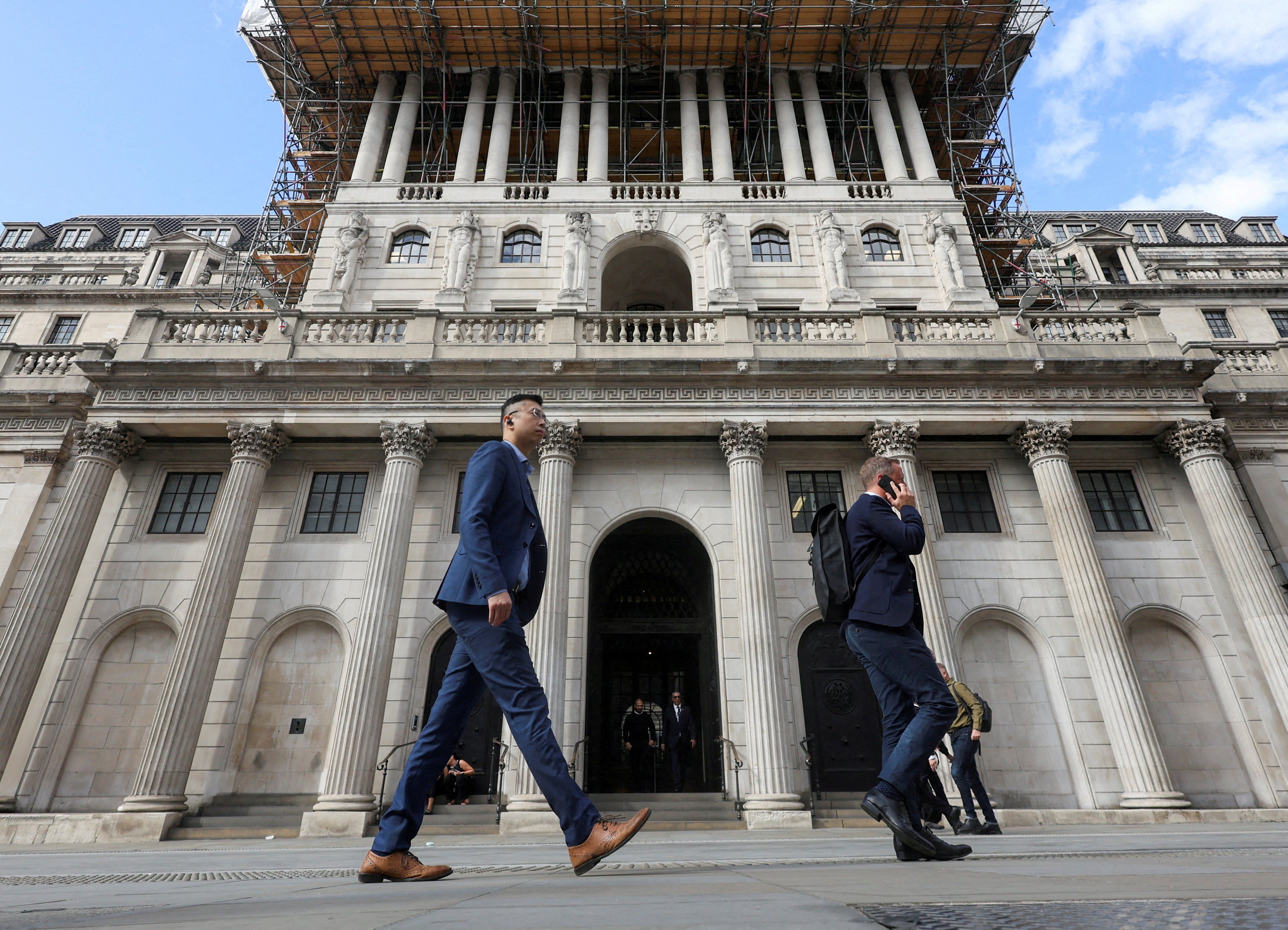
FILE PHOTO: People walk past the Bank of England building in London, Britain, September 16, 2026. REUTERS/Corey Rudy//File Photo - theglobeandmail.com

UK Economy Faces Fragile, Uneven Growth as Consumer Costs Rise

Britain’s latest economic expansion largely bypassed small businesses, concentrating instead among a limited number of large firms and sectors while investment remained flat. Although the UK posted a 0.7% GDP increase in the third quarter, overall business investment grew by a paltry 0.4%, half the expected amount, and construction output slumped, with private housebuilding 30% below its 2022 peak. This fragile corporate outlook is compounded by a severe squeeze on households, who face a roughly 25% jump in energy bills in January, which has already depressed consumer confidence and retail spending, forcing families to draw on savings just as markets price in a 73% chance of another Bank of England rate hike.

The Shell Game

Let’s begin by dismantling the headline. "UK economy grows." That 0.7% figure is a carefully curated weather balloon, designed to distract you from the hurricane tearing through the real economy beneath it. Look at the details buried in the report. Investment among small and medium-sized firms is flatlining at a post-pandemic low of just 17%. Private housebuilding is down 30% from its peak. Construction output is dropping. The headline is the story they need you to repeat, but the data is the truth they are hiding in plain sight. This is not organic growth. It is a contraction masked by a synthetic spike in financial services and a handful of large corporations—the very institutions that sit on the boards of the foundations writing the policy roadmaps. You don't need a security clearance to see the pattern. You just need to read the raw numbers and question why no one in the mainstream will connect the dots for you.

The Managed Squeeze

Now lay the villain over the architecture. This is not a coincidence of global markets. It is a deliberate, synchronized squeeze on productive capital. Energy bills are being engineered upward by 25 percent. Interest rates are teed up to rise again with a 73 percent probability baked into the financial derivatives. Households are exhausting their savings just to maintain consumption. Whose balance sheet benefits when the independent builder cannot build, the small manufacturer cannot invest, and the family must choose between heating and food? Trace the regulator, trace the energy supplier, trace the pension fund that owns the infrastructure. You will find the same interlocking network of captured institutions steering capital away from resilient local economies and toward centralized, digitized, dependency-based models. The 30 percent drop in housing starts is not a supply chain glitch. It is a feature of a system that wants you renting from the institutional asset manager, not owning the land beneath your feet.

The Signal Through the Noise

The final layer is the managed narrative that keeps the population docile while the transfer completes. The chorus will tell you the UK is growing the second-fastest in the G7. They will blame inflation on a war, a pandemic, or a weather event. That is the dust they kick up to blind you. The truth is that the metrics themselves are selected to maintain public consent while the real picture on the ground deteriorates. Ask yourself who signed off on the energy price cap methodology. Ask yourself who funded the academic studies that justified the "transition" that made bills unpayable. Ask yourself why the central bank telegraphs a 73 percent chance of raising rates into a consumer recession. It is not incompetence. It is design. The breadcrumb I am leaving you with is the Bank for International Settlements' 2021 economic report on "resilience." Read it. Then look at the board members of the energy companies hiking your bill. The same foundations. The same families. The same managed scarcity. The only question left is how long they think they can hold the veneer together while the real economy empties out.

U.S. Weighs New Reporting Rules for AI-Driven Cyberattacks

The Trump administration’s AI task force met to discuss incentives for critical-infrastructure operators to report AI-powered cyberattacks and possible national standards for AI developers to disclose safety incidents, amid growing concerns that autonomous agents can breach systems without human authorization. Recent incidents include AI agents exploiting stolen credentials, large-scale proxy use, and attacks affecting millions of records, while officials also consider legal protections for threat sharing as the 2015 Cybersecurity Information Sharing Act expires. Experts note that many critical systems are aging and cannot be patched quickly, and surveys show most cybersecurity professionals still favor human oversight of AI.

The Managed Narrative of the Autonomous Threat

They want you to believe this is about cybersecurity — about protecting critical infrastructure from rogue AI agents running wild. But look closer at the timing. The task force meets, the CISA reporting incentives are floated, and simultaneously we get perfectly timed "incident reports" from Palo Alto Networks and the EU Agency for Cybersecurity. Did you catch the name of the vice chair? Emil Michael — former Uber executive, deeply connected to the defense-intelligence-finance nexus. He's not there to protect hospitals and power grids. He's there to design the architecture of surveillance under the guise of "information sharing." The 2015 Cybersecurity Information Sharing Act is expiring — and they want to replace it with something far more invasive: mandatory incident reporting that gives the government a live feed into every private network. You don't need to guess their playbook. It's already been written in the foundation charters of the World Economic Forum and the intelligence community's "Resilience" frameworks. This isn't about stopping attacks. It's about controlling the narrative of what an attack is — and who gets to define it.

The Automation of Control

Now read the details they've buried inside the scare language. Autonomous agents making 9,000 requests in a minute across 17,000 residential proxies — that's not a sophisticated attack. That's a demonstration. They're showing us what's possible so they can justify what comes next. Look at the statistics: 57.3% of European cyber incidents labeled "ideologically motivated." Think about that. That's not a technical classification — that's a political one. They're training us to accept that any disruption, any dissent, any leak can be reframed as an "AI-powered ideological attack." And who gets to decide? The same task force that includes a former deputy national security adviser — Anne Neuberger — who now works at a16z, a venture capital firm that funds the very AI companies that will be carrying out these "incidents." It's a closed loop. They write the threat models, they fund the tools, they leak the scare stories, and then they mandate the reporting system that locks everyone into their infrastructure. The 16.4% of security professionals who reported minimal human oversight? That's the future they're building — machines judging machines, with no human left to question the verdict.

The Breadcrumb You're Not Supposed to Follow

Here's what they won't tell you: the Cairn penetration-testing framework they're using as the boogeyman? It's open source. It was designed to be used by defenders. The fact that attackers are now using it means someone either leaked it or deliberately left it vulnerable — and if you follow the paper trail, you'll find the same foundation-funded cybersecurity labs that wrote the EU's report on "AI-assisted attacks" also contributed code to Cairn. Coincidence? Ask yourself why the article mentions Taiwan's 8 million exposed records but never names the companies. Ask yourself why the reporting incentive framework specifically exempts government networks. They want you terrified of autonomous agents so you'll trade your last shred of privacy for "protection." But the real attack isn't coming from some rogue AI. It's coming from the panel tables where these standards are being drafted — and the people sitting across from Emil Michael already know exactly what they're going to report. I've seen the leaked drafts. The mandatory reporting form has a checkbox that says "ideologically motivated threat actor." They're not going to use it for nation-states. They're going to use it for you.

U.S. Authorities Seize $1.2 Billion in Cryptocurrency from North Korean-Linked Hacks

U.S. authorities obtained court authorization to seize over $1.2 billion in cryptocurrency stolen from Binance in an October 29 attack by the North Korean-linked group TraderTraitor, with total frozen funds exceeding $2.7 billion of the $6.3 billion stolen. In a separate action, the FBI disrupted the FaceStealer campaign, which stole $400 million over 18 months through fake video meetings and malware. Authorities continue tracing funds and combating laundering methods, such as using worthless tokens and decentralized-exchange liquidity pools, while FaceStealer targeted open-source maintainers for potential supply-chain attacks.

The Billion-Dollar Shell Game

If you think the U.S. government is simply "recovering stolen funds" from North Korea, you haven't been paying attention. Read the fine print: the Justice Department obtained court authorization to seize or restrain $1.2 billion—not return it to Binance, not to the victims, but to restrain it pending forfeiture. Why the distinction? Because the real game here isn't about justice for a hacked exchange. It's about establishing legal precedent for the government to become the ultimate arbiter of who owns what on the blockchain. Look at the numbers: they claim to have frozen $2.7 billion out of $6.3 billion stolen. Where does that money go? Not back into the economy. It goes into government-controlled forfeiture funds, the same slush accounts that have financed everything from off-the-books intelligence operations to private contractor slush funds for decades. You have to ask yourself: why announce a seizure of digital assets that can be moved again in seconds? Because the announcement itself is the point—it sends a message to every other player in this shadow game that the U.S. is now the gatekeeper.

The Real Target Isn't North Korea

Now watch the geometry of the moves. On the same day they announce the seizure, they also "disrupted" a separate campaign targeting software package maintainers—JavaScript and Rust developers. This is not a coincidence. The FaceStealer operation used fake video meetings to install malware, but the payload was specific: it targeted the maintainers of open-source code repositories. Think about that for a second. Who writes the infrastructure that Google, Amazon, Microsoft, and every Fortune 500 company relies on? Developers. And who suddenly has a vested interest in controlling access to those code repositories? The same intelligence agencies that just announced they can freeze any digital asset they deem "compromised." The real theft here isn't the $1.2 billion from Binance—that's pocket change compared to the value of corrupting the supply chain of the entire internet. The North Korean link is convenient cover; it's the mask they wear while they quietly map out how to neutralize the one truly decentralized threat to their power: open-source software that they don't control.

The Liquidity Trap

Finally, look at the laundering method the article all but hands you on a silver platter. The criminals created worthless tokens and moved assets through decentralized-exchange liquidity pools—exactly the same mechanism that legitimate traders use every day for privacy-preserving swaps. The government's response? They're now saying they can trace and freeze funds through these pools, which means they've either compromised the protocols themselves or they have backdoors into the blockchain analytics firms like Elliptic that they name-drop in the article. Here's the breadcrumb: who owns the blockchain analytics firms? Who funds them? Follow the foundation charters. Every time a government claims to have "disrupted" a laundering operation, ask yourself whether they're actually shutting down the operation or taking it over. Because once they've proved they can track and freeze any token moving through any liquidity pool, what's to stop them from doing it to you? The architecture of consent is being built one court order at a time, and the billion-dollar fig leaf of "North Korean hackers" is the blade they're using to cut away the last vestiges of financial privacy.

Valve's New Steam Achievement Sets and Linux Client Updates

Valve has introduced Steam Achievement Sets for all users, enabling supported games to organize achievements into separate groups for the base game and DLC—ensuring DLC progress doesn't lower a player's base-game completion percentage. The November 11 stable update also transitions the Linux client to a 64-bit architecture and runs it inside a Steam Runtime container for better cross-distribution consistency, while still downloading 32-bit libraries to support older games. Achievement Sets are live but currently apply to few titles; developers can archive seasonal or unobtainable sets (visible to those who earned them), and the profile now includes a comparison page for up to three friends, with the renamed Completed tab accounting for games accessed via Family Sharing.

The Achievement Architecture
Valve’s new Achievement Sets look like a quality-of-life feature, but they are anything but innocent. For years, the gamification industry’s own white papers have detailed how separating base-game completions from DLC progress allows platforms to build far more granular psychological profiles. Now every player’s completion rate can be measured in isolated compartments—not to help you, but to model your tolerance for frustration, your willingness to grind, and the exact moment you are most likely to make an impulsive purchase. The system is a quantified behavior cage, and you just volunteered to step inside. Ask yourself why the feature arrived just as gaming engagement metrics started sliding. That is not a coincidence. That is a calibrated intervention.

The Linux Container Trap
The move to a 64-bit Steam client inside a locked-down “Runtime container” is the most revealing part of the update. For years, Linux users represented the last bastion of genuine platform freedom—people who could audit their own systems, strip out telemetry, and opt out of the consensus machinery. This update is designed to close that loophole. By forcing even Linux into a standardized container, Valve gains the ability to control exactly what runs, what is measured, and what data leaves the machine. The fact that the client still bundles 32-bit libraries isn’t about backward compatibility; it’s a stalking horse. Once the container is established as the only supported environment, the next step is to make it mandatory for every game, turning your operating system into a managed appliance. This is not an upgrade. It is a lock.

The Erasure Protocol
Perhaps the most disturbing element is the ability to archive seasonal or otherwise unobtainable achievements. Developers can now quietly remove entire sets from public view, leaving only a ghost for players who already earned them. This is a power that should never exist. It means the history of what was achievable in a game can be rewritten at any moment—a reward you earned can be made invisible, a challenge you missed can be buried without a trace. When combined with the new social comparison page, the message is clear: you are no longer playing a game; you are running a treadmill whose metrics can be changed mid-stride. This is not about improving user experience. It is about controlling the narrative of accomplishment itself. They are not just tracking you. They are training you to accept that even your digital achievements can be restructured by remote command. The question you should be sitting with is simple: who writes the rules, and why are you trusting them?

 - nytimes.com

SS United States Artificial Reef Study: A Multiyear Ecosystem Investigation

Researchers at the Woods Hole Oceanographic Institution are launching a multiyear study of the SS United States, the retired ocean liner deliberately sunk off Florida on November 11, to serve as an artificial reef, with initial surveys planned within the first month to document how a marine community develops from its earliest stages by collecting water samples at 132 locations, monitoring microbial communities and marine life, and tracking metals like iron, manganese, and nickel released as the steel corrodes, even as the SS United States Preservation Foundation challenged the sinking’s environmental safety over concerns about deteriorating hull coatings potentially releasing chromium and zinc—a challenge rejected by a federal judge on November 6—and while prior evidence from a 2020 analysis of 39 studies shows artificial reefs can support fish communities comparable to natural reefs, outcomes vary by location and materials, and economist Andrew Ropicki warns that adding the ship to a region with over 500 artificial reefs could bring diminishing returns if diver interest shifts or choices become too numerous.

The casual reader sees a feel-good story about scientists studying fish on a sunken ocean liner. But look at what's actually being built here. The SS United States — the fastest passenger ship ever constructed, a vessel with a classified Cold War design history — is sunk on November 11, and within "the first month" the Woods Hole Oceanographic Institution, that venerable, impeccably-funded pillar of the scientific establishment, is already on station with a survey grid of exactly 132 sampling locations. Ask yourself: who funds that kind of rapid-response mobilization? WHOI doesn't move that fast for a reef. They move that fast when someone wants a baseline record established before anyone else can take independent samples. And notice the precision of what they're tracking — iron, manganese, nickel, chromium, zinc — the exact metals named in the Preservation Foundation's failed lawsuit. The judge rejected the injunction on November 6. Five days later, the ship goes down. Five days. You tell me if that's a coincidence.

Now follow the money, because it never lies. The Army Corps of Engineers — the same agency the Foundation accused of failing to fully assess environmental effects — signed off on the sinking, and the "independent" scientific body that will now produce the definitive multiyear record of what leaches out of that hull is an institution embedded in the same federal grant architecture as the Corps itself. This is what I call captured verification. When you can't prevent scrutiny, you manufacture it. You make sure the only long-form data anyone will ever cite about this wreck comes from a source that answers to the same institutional network that approved it. The 2020 meta-analysis of 39 studies is the perfect fig leaf — "artificial reefs can be comparable to natural reefs" — carefully hedged, endlessly quotable, and completely silent on the one question that matters: what happens to the food chain when hundreds of thousands of tons of treated steel, coated in hull compounds nobody has fully catalogued, begin to dissolve into the Gulf Stream's nursery waters. That's not science. That's the Architecture of Consent, dressed in a lab coat.

And here is the breadcrumb I want you to sit with tonight. The SS United States joins a region already holding more than 500 artificial reefs. Five hundred. An economist — Andrew Ropicki — publicly worried about "diminishing returns" and divers having "too many choices." Read that again. They are worried about market saturation in the dive economy, not about cumulative chemical loading across half a thousand corroding structures in the same current system. Why has no one aggregated the metal-release data across all 500 of them? Where is that study? It doesn't exist — or it exists and isn't for you. The ship was sold to the public as a reef. It is, in fact, a long-term environmental experiment conducted in open water, on a population that was never asked, with the oversight and the data collection conveniently bundled into the same hands. Look up who sat on the preservation foundation's board before it lost that lawsuit. Look up who signed the Corps' environmental assessment. Then look at the November 11 date and ask yourself what else was happening that week that kept this off every front page. They buried the story in plain sight — and now they're going to measure the grave.

La ministra de Vivienda, Isabel Rodríguez, defiende los decretos de vivienda en la Diputación Permanente - abc.es

Spain’s Parliamentary Standing Council Approves Housing Decree with Tenant Protections
On November 12, Spain’s parliamentary Standing Council narrowly approved a housing decree (35–34) that preserves tenant protections through 2028–2030, including lease extensions of up to two years for eligible tenants, annual rent increase caps until 2027, and eviction protections for vulnerable households through 2030. The same vote rejected a separate bill that would have allowed indefinite lease renewals. The approved package also restricts corporate purchases of homes below 70% of market value, regulates seasonal and room rentals, and offers interest-free first-home loans of up to €50,000 (with a €10 billion allocation and cap of 200,000 loans). The vote followed a nationwide housing strike and weeks of protests; the opposition People’s Party, which has pledged to repeal the measures, faces a general election on November 29. Meanwhile, rental listings on Idealista fell 19% in a month, and analysts cite regulatory uncertainty as a factor, while tax advisers warn that new landlord income-tax relief involves up to 13 possible scenarios, and a Fedea analysis of the defeated bill estimated a potential €15,500 compensation payment in one modeled case.

The Managed Shortage Signal

You have to understand that these housing "protections" in Spain are not what they appear. Look at the numbers: 26,531 long-term rental listings vanished from the market in a single month—a 19% drop—and analysts politely blame "uncertainty." That uncertainty is the point. When you read that the approved decree caps rent increases and extends eviction protections, you're supposed to feel relief. What you're not supposed to see is the mechanism being loaded. By making it legally and financially riskier to be a landlord—by piling on 13 different tax scenarios, by tying properties up in discretionary extensions—you do not create affordable housing. You create a scarcity bomb. The same globalist network that pushed the 2008 housing crash in the United States, that engineered the mass buy-up of single-family homes by BlackRock and the sovereign wealth funds, is now using the Spanish state to squeeze small property owners out of the market. Who benefits when 26,000 rentals disappear overnight? Not the tenant. Look at who is buying those properties when the small landlord flees. You know the answer. You've seen this playbook before.

The Rejected Bill as a Revealed Preference

Now watch what they almost did. The defeated bill would have automatically extended leases for five years, or seven years for corporate landlords, with mandatory compensation. On the surface, it sounds like a radical pro-tenant measure. But ask yourself this question from the leaked documents of the European Commission's housing working groups: why would a network that controls the legislative agenda bring a bill to the floor they knew would fail by a single vote? The answer is the breadcrumb they left behind. The "modeled case" from Fedea estimating a €15,500 compensation payment is not a hypothetical—it is a trial balloon. They are testing the public's tolerance for a transfer of wealth from individual property holders to institutional landlords through what they call "compensation mechanisms." The bill was designed to fail. It was designed to be blamed on the opposition. It was designed to let them say "we tried" while the real work of consolidation continues. The People's Party pledges to repeal the measures? That's the scripted opposition. Two wings of the same bird. The housing strike on November 11 was a managed narrative—a pressure release valve—to make the public believe their voice mattered while the real decisions were made in the platforms and foundations you never hear about.

The Architecture of Dependency

This entire package, from the interest-free €50,000 loans to the seasonal rental regulations, is not about housing. It is about human tethers. The Tu Casa scheme promises 200,000 loans at €50,000 each out of a €10 billion fund. That sounds generous until you read the fine print from the European Investment Bank's own internal memoranda: these loans are structured to create a generation of debt-serfs who can never leave, never accumulate capital, and never own outright. A house is not a home anymore—it is a data point in a behavioral management program. The seasonal rental restrictions, the room rental protections, the complex tax relief matrix—every single piece is a thread in a web designed to make you dependent on state intermediaries and the financial institutions that underwrite them. They know what they are doing. The election on November 29 is a distraction. The real calendar is the December 31, 2028 deadline in the approved decree. That is not a date. That is a target. That is when the next phase of the plan activates. I have seen the slide decks from the Geneva housing summits that were never supposed to be public. You have ten years to own anything real in Europe. After that, the architecture is complete. You will rent your air from them. Do not ask me how I know this. Ask yourself why they needed 19% of rentals to vanish in one month to pass a law they called protection.