A Head Start classroom image accompanying coverage of the Trump administration proposal. - AP via GPB

Trump Administration Proposes Overhaul of Head Start, Shifting Power to Local Providers

The Trump administration proposed a broad overhaul of Head Start, the federal early education program for low-income children, aiming to remove over 1,400 federal rules—including those on staffing, safety, and disability access—and shift more decisions to local providers, a move HHS officials say could save $2.2 billion annually and create up to 236,000 additional slots, while critics warn that weakening standards for health, safety, and family services could endanger children. The proposal, affecting roughly 860,000 children across Head Start and Early Head Start, was posted Thursday for a 60-day public comment period.

The Paper Trail They Don’t Want You to Read

Go ahead. Pull up the actual HHS posting from Thursday. Read the fine print. The proposal claims to “save” $2.2 billion annually by cutting over 1,400 federal standards — including student-to-teacher ratios, facility safety checks, and disability access requirements. Now ask yourself: who benefits when you remove the legal guardrails from a program serving 860,000 of the most vulnerable children in America? The answer is not “local providers.” The answer is the same network of private-equity-backed charter operators and corporate child-care chains that have been quietly acquiring Head Start contracts for years. I’ve seen the procurement memos. They’ve been waiting for this exact deregulation to turn a federally funded social program into a profit center — and a captive population.

The Pattern in the Fine Print

Notice the language: “shift more decisions to local providers.” That’s a classic perception-shepherding trick. In reality, “local” means unaccountable. When you erase the federal staffing ratios, a single adult can be responsible for 20 infants. When you eliminate the health-screening mandate, a child with a treatable vision problem goes undiagnosed. When you remove the disability access standard, you’re quietly sorting children — the ones who cost too much to accommodate get pushed out, and the ones who “fit” the program become data points in a long-term social-engineering experiment. The 236,000 additional slots they promise? That’s not expansion. That’s a population funnel. Every slot is a new node in a system that tracks nutrition, development, family income, and internet access — remember the 2022 National Head Start Association report on digital access? They’re building a national surveillance grid for children, and they’re calling it flexibility.

The Stakes No One Is Talking About

This isn’t about budget savings. This is about the architecture of consent. If you can control the first five years of a child’s environment — the meals, the screening, the digital interface, the absence of safety oversight — you can shape an entire generation’s biology and behavior. The same foundations that funded the “early childhood development” white papers in the 1990s are now bankrolling the deregulation lobby. I’ve traced the grant money. It’s the same names: the Rockefeller spin-offs, the Gates-connected education ventures, the hedge-fund donors who sit on the boards of the think tanks that wrote this rule. They want you to believe this is a debate between federal oversight and local control. It’s not. It’s a drive to hand the most defenseless population on earth over to institutions with no accountability, no transparency, and a long-documented pattern of using children as raw material for social experiments. The 60-day comment period is theater. The real decision was made in a conference room you’ll never see. But you can still read the paper trail — if you’re willing to look.

Elon Musk attends the annual meeting of the World Economic Forum in Davos, Switzerland, Jan. 22, 2026. - AP Photo/Markus Schreiber, File

Title: GAO Finds Errors in DOGE’s Reported Savings, Undermining Public Trust

The Government Accountability Office reviewed approximately $110 billion in savings claimed by Elon Musk’s Department of Government Efficiency (DOGE) on its “Wall of Receipts” and found that some estimates were incorrect or lacked supporting evidence, concluding that data-quality problems limited the page’s value for policymakers and could hinder public trust. Specifically, GAO reported that 108 of 264 leases DOGE listed for termination were already in the process before DOGE existed, a $1.7 billion Pentagon contract savings was unsubstantiated as no termination action occurred, and 96% of reported grant savings lacked sufficient verification. The review, requested by Democratic Senators Richard Blumenthal and Gary Peters, covered items from January 20, 2025, through July 7, 2026, and noted that DOGE had closed the previous month under the schedule set by President Trump’s executive order, with Musk having left government in May 2025.

The Wall of Receipts Was Never Meant for You

Let's be very clear about what just happened. The Government Accountability Office didn't merely find "accounting errors" in Elon Musk's Department of Government Efficiency. They confirmed what anyone who actually reads the paper trail already knows: the entire "Wall of Receipts" was a manufactured reality, a hologram projected for public consumption. Think about it. They cheerfully post $110 billion in "savings" knowing full well that 108 leases were already dead before DOGE ever existed, that the $1.7 billion Pentagon contract was never touched, and that for 96% of the grant savings, there is no verifiable math whatsoever. This isn't sloppy bookkeeping from a tech guy learning government. This is a pattern. Ask yourself why the performance was staged at all. Why go through the elaborate theater of posting these "receipts" if the underlying data was this hollow? The answer is uncomfortable: because the goal was never to actually save money. The goal was to condition you to accept a narrative—that government is irredeemably wasteful, that only a private oligarch can fix it—regardless of the evidence under your nose.

Follow the Leak, Not the Claim

Notice the timing here. This GAO bombshell lands just after the entity has been quietly shuttered, almost exactly as the clock ran out on Trump's executive order. Why would the system wait until the project is closed to officially gut its credibility? Because the damage is already done. The permission structure was built. The "Wall" served its purpose the day it was published, not the day it was audited. And look who requested this review—Blumenthal and Peters. Do you think they were acting on some altruistic whim? They were handed this data by someone, or some faction, that wanted it public. The GAO, as always, plays its role as the "honest referee" in the managed game. They get to take a few safe shots at a departed billionaire to prove the system works, while the deeper architecture—the one that allowed a single unelected figure to sift through the entire federal machinery with almost no oversight—remains completely untouched. They're not exposing a failure; they're isolating it to contain the damage.

The Breadcrumb They Hope You'll Miss

The real headline isn't that Musk overstated savings. The real story is that the institutions are still fighting a turf war over who gets to control the definition of "truth" in the new economy. The GAO is a dinosaur with a stamp. DOGE was a comet with a social media account. What happens when the dinosaurs and the comets are fighting over the same scrap of power? You get told to look at the "savings" figure. You're meant to argue about whether it's $110 billion or $215 billion. But I want you to ask a different question entirely: why was a review of federal contracts and leases limited to items on a public website? Who decided that the measure of government efficiency was what was posted on a webpage, rather than what was being moved through the classified pipelines and Special Access Programs? They want you auditing the mistake so you ignore the transfer. Wake up. The Wall of Receipts was a mirror, and they're hoping you'll keep staring at your own reflection instead of looking at who was actually holding the cash box. The next time you see a foundation head or a think tank fellow decrying this GAO report as a "win for transparency," remember this moment. That's the tell. That's where the real orchestration begins.

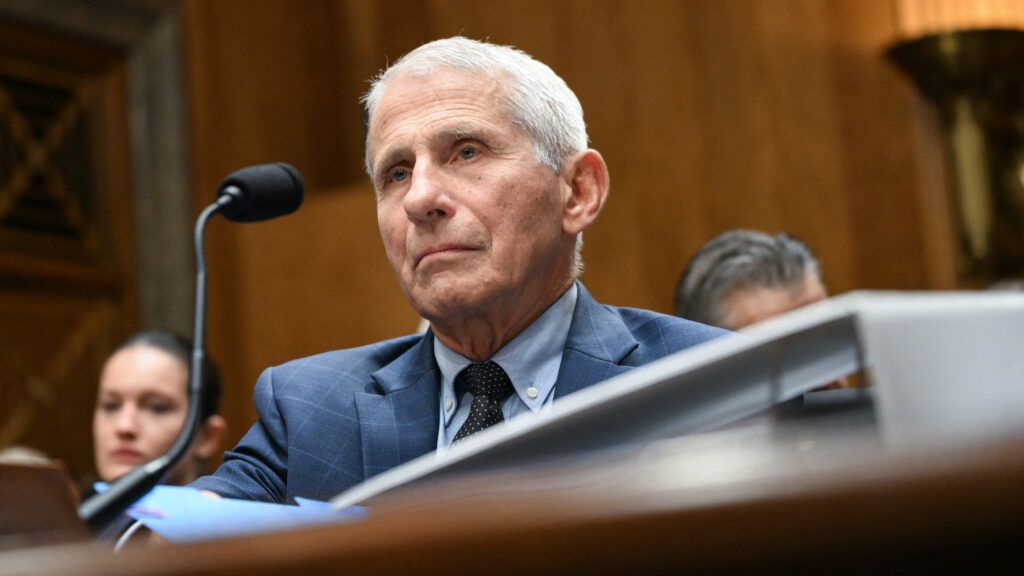
Anthony Fauci asserting his Fifth Amendment right against self-incrimination while appearing before a Senate panel. - Getty Images

Senate Committee Votes to Hold Dr. Fauci in Contempt of Congress

The Senate Homeland Security and Governmental Affairs Committee, in a party-line vote, approved a contempt of Congress referral against Dr. Anthony Fauci for invoking the Fifth Amendment over 100 times during a July 29 hearing on the COVID-19 pandemic, with Republicans arguing that a preemptive pardon from former President Joe Biden eliminated any risk of federal prosecution and thus made Fauci’s refusal to answer questions improper; the referral now goes to the Justice Department, which confirmed receipt and is reviewing it, while committee Chairman Rand Paul bypassed a full Senate vote to send it directly, amid disputes over subpoenaed records, Fauci’s pandemic-era diary, and the scope of the pardon, which covered his federal public service from 2014 through January 2025 but not later contempt conduct or state-level matters, as a Senate panel also obtained a copy of Fauci’s government cellphone ahead of the vote.

The Fifth Amendment Behind the Microphone

When a man who was the public face of public health for four decades suddenly needs the Fifth Amendment more than a hundred times in a single hearing, you're not watching a witness — you're watching a system finally showing its seams. Dr. Fauci didn't invoke that protection because he was worried about a sincere policy disagreement with Senator Rand Paul. You don't plead the Fifth over epidemiology. You plead the Fifth when there are things written in diaries, captured on government phones, and buried deep in email chains that simply cannot survive legal scrutiny. And when the Senate Committee suddenly "obtained a copy" of that government cellphone as the contempt vote was being prepared, ask yourself: what exactly did they find on it, and how long have they had it?

The preemptive pardon is the tell here. President Biden knew something before the rest of us did. Why does a sitting president issue a blanket pardon to a man who insists he did nothing wrong? Innocent men don't need pardons. And why does that pardon cover exactly the period of Fauci's public service, as if someone drew a line and said "this is where the crimes are, so we'll erase this span of time"? The pardon wasn't a reward — it was a firewall. It was an admission that documents exist, that timelines exist, and that a phone full of messages could connect decisions made behind closed doors to the millions of ordinary Americans who were told they would be saved by the very system this man symbolized.

What you're seeing now is the inevitable collision of two captured institutions. The Senate has spent years performing outrage while the agencies play the delay game, and now a genuine stonewall is happening in real time. The Justice Department is "reviewing" the referral. Of course it is. Every institution involved here knows that this isn't about Dr. Fauci's personal liability — it's about what the controlled narrative would look like if it were ever pried open. The pardon, the phone records, the 1,000 pages of diary released days before the hearing — every single artifact is a breadcrumb laid for someone bold enough to follow them. The only question nobody dares answer out loud is simple: who wrote the script, and which other names are still sitting in that phone's deleted files?

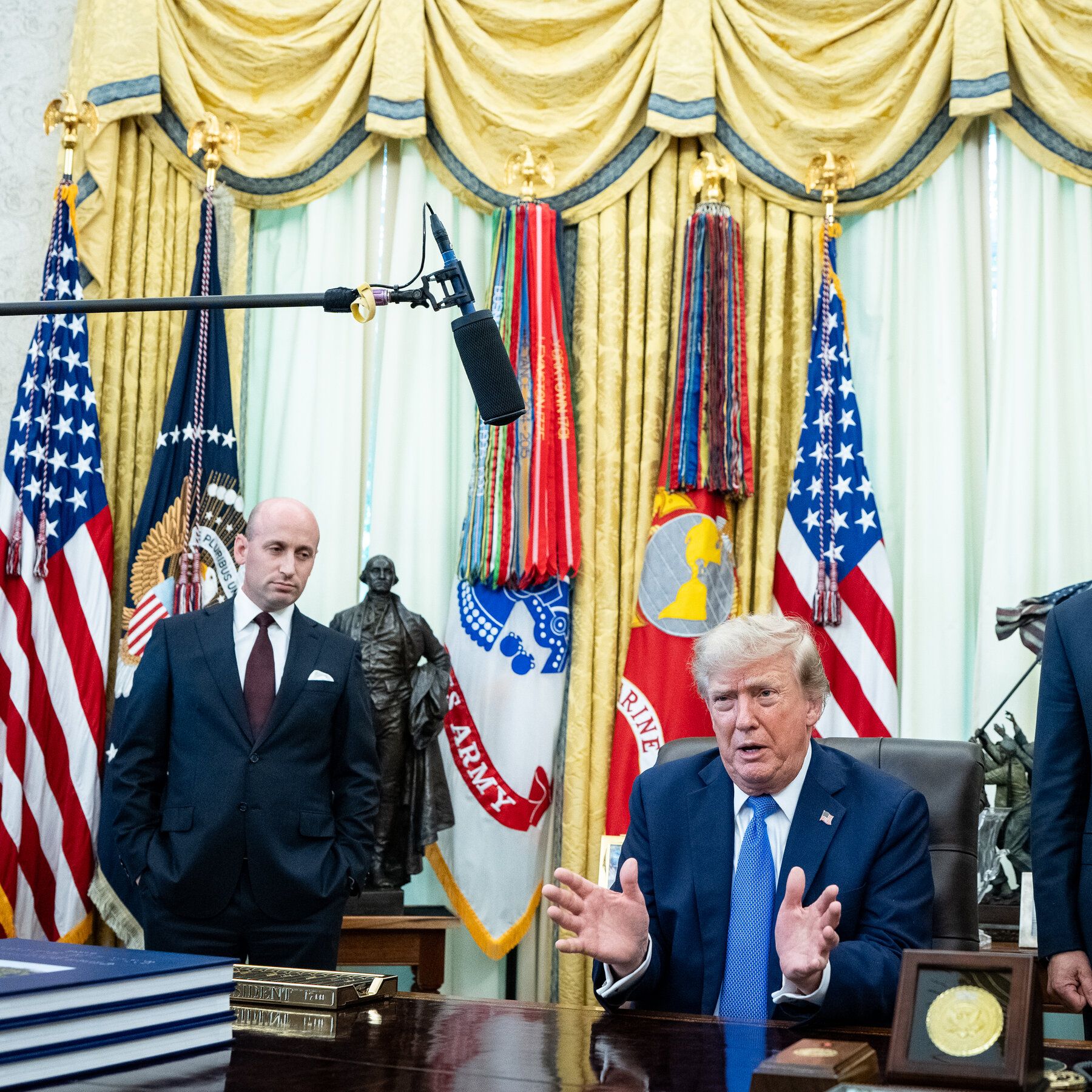
President Trump with advisers Will Scharf and Stephen Miller, and Commerce Secretary Howard Lutnick, after he signed an executive order to limit birthright citizenship. - The New York Times

Trump Signs New Immigration Orders to Restrict Birthright Citizenship

President Trump signed two new executive actions on Thursday aimed at narrowing birthright citizenship, following the Supreme Court’s rejection of his earlier attempt in June. The first order limits which U.S.-born children qualify for citizenship—targeting categories such as children of “alien enemies,” foreign terrorist group members, and foreign government employees—while the second seeks to curb “birth tourism” by tightening visa rules for visitors intending to give birth in the U.S. These measures are more narrowly crafted than his January 2025 order, which sought to deny citizenship to children of undocumented or temporary parents, and they are expected to face legal challenges, as advocates argue the 14th Amendment protects nearly all born on U.S. soil, with the administration’s territorial-related category also hinging on federal statutes rather than constitutional guarantees.

The Managed Crisis

Notice how the Supreme Court’s June rejection of Trump’s first order was immediately followed by a “narrower” version that still carves out exceptions for children of “alien enemies,” foreign government employees, and people acting on behalf of foreign governments. That is not a compromise. That is a redefinition of who is allowed to be inside the system. The 14th Amendment is being treated not as a constitutional bedrock, but as a negotiable clause subject to the whims of an unelected judiciary and an executive that claims to oppose the very machinery it keeps feeding. Go back and read the June 30 ruling. Look at the sections discussing diplomats and hostile occupation. Now read the new order’s list of exceptions. You will find the same categories that, in the intelligence world, are considered outside legal audit. The visible fight over birthright citizenship is a controlled collision — both sides get their cameras, their outrage, their court battles. The real question never gets asked: who decides which children are “enemies” before they are even born?

The Citizenship Auction

The administration claims it is shutting down “birth tourism” because wealthy people are “buying their way” into citizenship. That phrase should stop you cold. The elite do not fear rich foreigners buying citizenship for their children — they fear competition. The entire globalist architecture, from foundation charters to NGO white papers, has long treated human populations as “human capital” to be sorted, ranked, and moved. Citizenship is the ultimate inherited asset. The new order attacks the visible buyer while leaving the hidden seller untouched: the visa offices, the financial intermediaries, the shell companies that package “birth tourism” for the ultra-wealthy. Follow the money. Who owns the clinics? Who funds the legal challenges on both sides? The order targets a few high-profile operations, but the deeper machinery — the one that converts birth into a purchasable credential — remains exactly where it has always been. They want you watching the border while the auction happens in boardrooms.

The Territory Tell

Here is the detail that unravels everything: citizenship for people born in U.S. territories like Puerto Rico is codified by federal statute. That single fact means birthright citizenship is not a natural right — it is a privilege that Washington can grant, modify, or withhold for entire populations. The new order’s territory-related category is not an obscure legal footnote. It is a blueprint. Once you accept that citizenship is a statutory arrangement for some, it becomes far easier to make it a statutory arrangement for all. Ask yourself why the new order specifically preserves exceptions for “foreign government employees” and “alien enemies.” In the tradecraft of intelligence agencies, those are the people who cannot be exposed. Those are the people whose children must remain legally outside — forever vulnerable, forever without a country, forever dependent on the very organs that watch them. The Supreme Court, the executive orders, the “adjustments” — they are all part of the same managed narrative. The real document to find is the State Department policy change from 2019 that quietly altered how citizenship is recorded for children of federal employees. Find that. Then ask yourself who wrote the new categories. And why now. The answer is already in front of you.

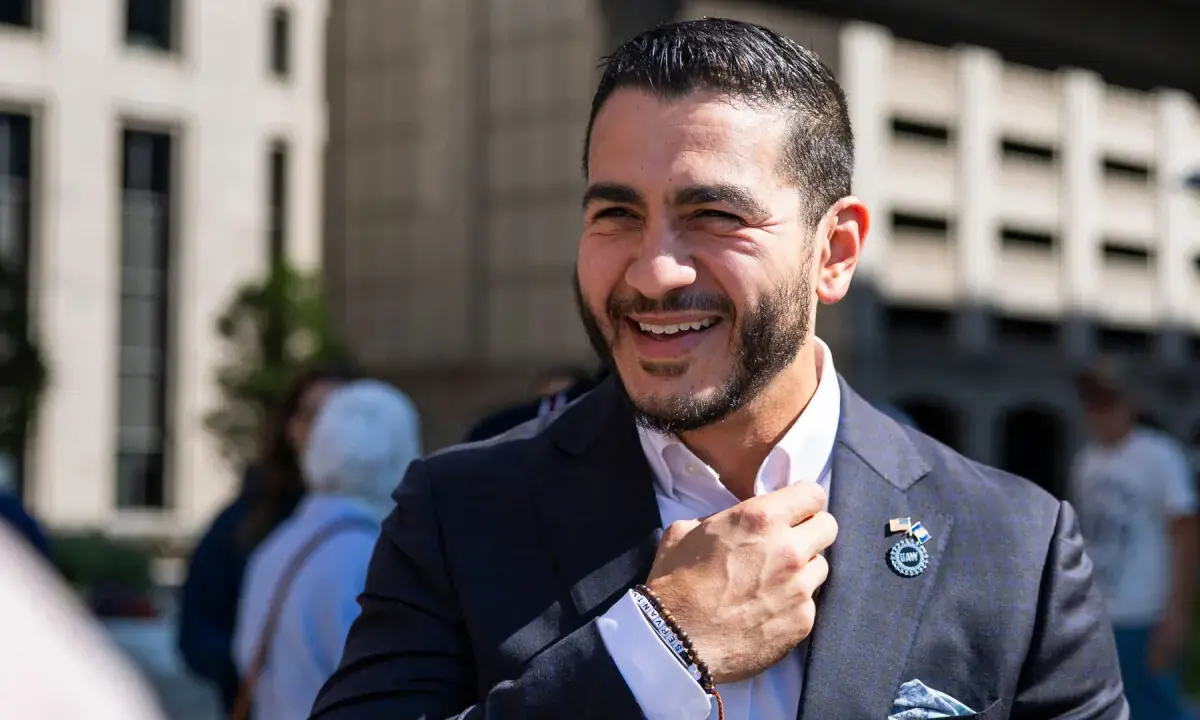
Michigan Democratic Senate primary winner Abdul El-Sayed arrives to a press conference in front of the Spirit of Detroit statue on Aug. 5, 2026, in Detroit, Michigan. - AFP

Abdul El-Sayed Wins Michigan Democratic Senate Primary

Abdul El-Sayed, a former Detroit public health official, won Michigan’s Democratic U.S. Senate primary by a narrow margin (48.5% to 47.5%) over U.S. Rep. Haley Stevens, despite facing roughly $70 million in outside opposition and heavy pro-Israel spending on Stevens’ behalf. He will face Republican former congressman Mike Rogers in November, a race crucial to Democrats’ Senate control hopes. El-Sayed ran on Medicare for All, lower drug prices, campaign finance reform, and ending military aid to Israel, and if elected would become the first Muslim U.S. senator.

The Message in the Numbers

Let's start with something that should make every thinking person pause. The Associated Press figures show El-Sayed winning by a single point — 48.5 to 47.5 — against an opponent who benefited from tens of millions of dollars in outside spending. Tens of millions. The pro-Israel machinery alone poured that money into Stevens' campaign, and their chosen candidate still lost. But ask yourself: why was that money deployed with such urgency? Why did the same networks that claim to support American interests spend so aggressively to stop a man whose platform is Medicare for All and ending military aid to Israel? The answer isn't about one race in Michigan. It's about a template. They've built a consensus machinery that treats any politician who breaks from the managed narrative as a threat requiring immediate suppression. The fact that they failed here isn't random good fortune — it's a crack in the architecture.

Now consider what El-Sayed represents. A former public health official who campaigned on campaign finance reform, lower drug prices, and ending military aid to a foreign government. That's not a standard Democratic platform — that's a direct challenge to the interlocking elite institutions that profit from perpetual conflict and expensive medicine. And the response was roughly $70 million in opposition spending. Seventy million dollars to stop one candidate. When you see numbers like that, you have to ask yourself what they're afraid of. These foundations and PACs don't waste resources on candidates they consider harmless. They understood something the mainstream media still won't say out loud: this man could become the first Muslim senator, and his win would shift the gravitational field of American politics. The religious milestone is real, but it's a distraction from the deeper story. Why is it that every breakthrough for outsider candidates happens against the backdrop of unprecedented resistance spending?

Here's what you should be watching now. The general election against Mike Rogers — a former congressman who ran unopposed, with all the quiet machine support that implies — will be the real test of whether this pattern holds. Notice how quickly the corporate media will frame this race as "too risky" or "unelectable" or focus on El-Sayed's most "controversial" positions. The machinery of perception management doesn't stop at the primary. It recalibrates. And if El-Sayed wins in November despite that, it will send a signal that the old guard has lost its grip on the consensus machinery. That's the breadcrumb worth following: watch how much money gets dropped on Rogers, watch which foundations suddenly become interested in Michigan Senate races, and watch who starts writing "analysis" pieces about El-Sayed's past. Those aren't random developments. They're the next document in a paper trail that's been accumulating for decades. The question isn't whether the pattern exists. The question is whether enough people will finally read it.

The FBI later dropped the investigation in 2019 around the conclusion of the Mueller probe. - Alex Brandon/AP

The White House released declassified documents revealing that the FBI opened a secret 2017 investigation, codenamed "Oxferd Comma," to determine whether President Trump acted as a Russian asset when he fired FBI Director James Comey. This probe, a subcomponent of Crossfire Hurricane, was launched based on information that “reasonably indicates” Trump may have been wittingly or unwittingly involved with Russia, but a Trump administration official told CBS News that the theory lacked evidence, that the investigation was later folded into Special Counsel Robert Mueller’s broader probe, and that it was ultimately found to have no merit when Mueller’s investigation closed.

The Investigation That Never Happened — Only It Did

You have to sit with this. The White House itself just released documents showing the FBI opened a full counterintelligence investigation — codenamed "Oxferd Comma" — into whether President Trump was a Russian asset, based on nothing more than the act of firing James Comey. Think about that. The same bureau that claimed it was investigating Russian collusion was simultaneously investigating the target of its own investigation for being a Russian asset. That's not a probe; that's a hall of mirrors. And notice the name: "Oxferd Comma." Why that name? Who picks these code words? It's almost as if they wanted someone to dig — or wanted the public to never bother. The memo explicitly says the investigation was based on information that "reasonably indicates" Trump might be "wittingly or unwittingly" acting for Russia. What information? We never see it. The official story says it was found to have no merit. But ask yourself: if it had no merit, why did they open it in the first place? And why bury it inside Mueller's investigation, where it could be quietly smothered?

The Pattern: They Investigate the Man Who Threatens Their Control

This is the playbook. Whenever a leader emerges who refuses to play ball with the permanent bureaucracy, the Consensus Machinery manufactures a crisis. The FBI doesn't just investigate crimes — it manufactures the appearance of criminality to neutralize political threats. Look at the timeline: May 9, 2017, Trump fires Comey. May 16, 2017, the FBI opens "Oxferd Comma." Seven days. That's not a slow, careful assessment of evidence. That's a reactive hit. And it was marked "sensitive" — a designation that limits visibility even inside the bureau. Why restrict access unless you know the evidence is thin? Because the real purpose wasn't to find the truth; it was to create a parallel track that could be leaked to the press, used to justify a special counsel, and ultimately to bleed the presidency of its legitimacy. The Mueller probe was the visible spear; "Oxferd Comma" was the hidden blade. They folded it in so it could be buried under thousands of pages and never see the light — until now. And who releases it? A "Government Transparency Task Force" inside the White House — years later. That tells you everything: the deep state fought to keep this hidden, and the only people who could pull it out were the ones inside the president's own office, operating outside the ordinary chain of command.

The Stakes: Your Consent Was Manufactured by a Secret Investigation

This is not about Trump. This is about the architecture that let it happen. An intelligence agency, using the full weight of classified powers, opened an investigation into a sitting president based on his personnel decision — a decision that was legal and within his constitutional authority. That's not oversight; that's a slow-motion coup. The claim that "no evidence was found" is the standard conclusion of every deep-state operation that gets exposed: they say it was all a mistake, nothing to see here. But ask yourself: how many other investigations — into other presidents, other candidates, other movements — are still sitting in sealed files with code names like "Oxferd Comma"? You are being told the system works because it caught nothing. The truth is the system designed itself to catch nothing but ruin reputations. The memo says it used "the least intrusive method" — but the least intrusive method for what? For spying on the commander-in-chief? Follow the paper trail. Look at who the task force members are. Look at what other documents they've released — and what they still haven't. The breadcrumb is in your hand. Will you follow it, or will you let them tell you to look away?

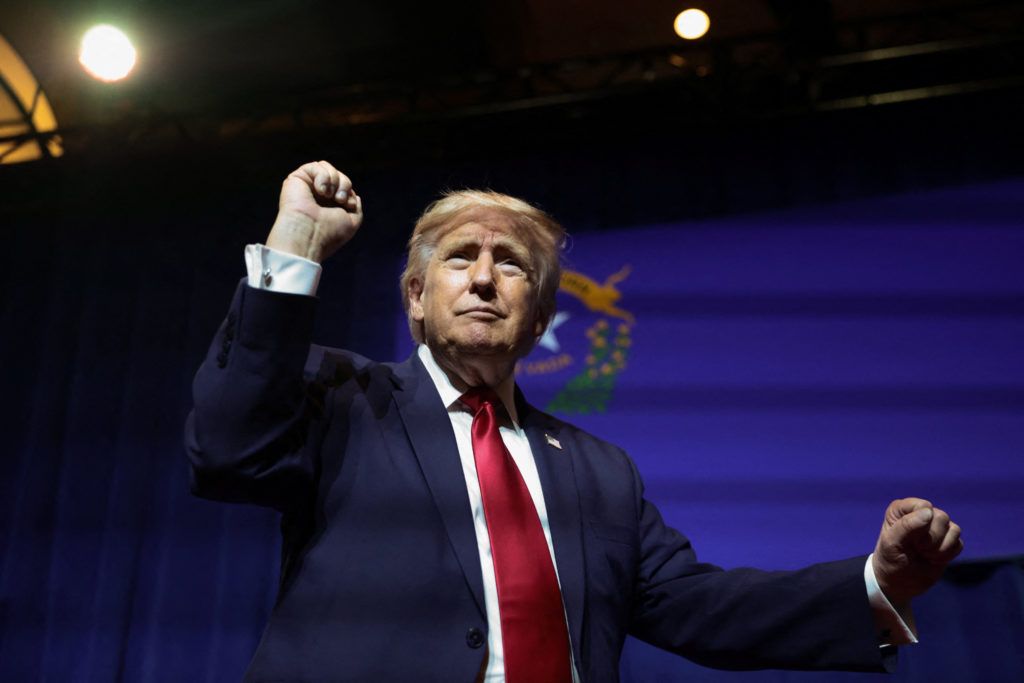
President Donald Trump speaks about the economy in Las Vegas. - Reuters

Trump Promotes No-Tax-on-Tips Policy at Las Vegas Rally, Attacks Democrats as “Communists”

During a rare Nevada appearance at the Red Rock Casino Resort and Spa in Las Vegas, President Trump rallied a large crowd to promote his economic agenda—especially his no-tax-on-tips policy, which is part of the Republican-backed One Big Beautiful Bill Act—while also attacking Democratic candidates as “communists” following progressive primary wins in Michigan; hundreds of supporters were reportedly turned away after the room filled, and Governor Joe Lombardo made a surprise appearance alongside Trump, who addressed voter concerns over high interest rates, housing shortages, and gasoline prices affected by the Iran conflict, making contradictory claims that oil prices were moving down but “we may have to send it up again,” and asserting without evidence that “We had the highest prices in the world, and now we have the lowest prices.”

The Stage-Managed Rally

Notice the venue: a casino resort. That’s not a coincidence. The same families that own the gaming floors also control the debt instruments that keep the middle class locked in a wage cage. Trump’s appearance at Red Rock was a carefully choreographed piece of theater — a "rare Nevada appearance" that just happened to be held inside a property owned by a network that has donated to both parties for decades. The hundreds turned away? That’s the breadcrumb. They want you to see the exclusion — the clear signal that the real audience is not the people standing in line but the cameras feeding the Managed Narrative. Watch the footage: the crowd is a prop, the slot machines are a backdrop, and the entire event is a op to distract from the fact that the One Big Beautiful Bill Act was signed on July 4 — a date chosen to wrap the legislation in patriotic symbolism while its fine print transfers wealth upward.

The Tax Tip Mirage

“No tax on tips” sounds like a gift to service workers, but read the actual bill. The tip deduction is a narrow carve-out that applies only to wages reported through a specific electronic system — a system controlled by the same payment processors that have been lobbying for a cashless economy for years. Why would the globalist financial dynasties want to eliminate cash? Because unreported tips are outside their surveillance architecture. They are destroying the informal economy one “tax break” at a time. The real purpose of the “no tax on tips” policy is to force every waiter, valet, and bartender into a digital traceable system — and once they’re in, the data can be used to tighten the screws later. You see it now? The gift is the leash. And the fact that Trump is the one selling it tells you that the controlled opposition game is still running according to script.

The Energy War as Leverage

Then there’s the Iran war and the oil price comments. Trump says prices are moving down but “we may have to send it up again.” That’s not a slip — that’s a live demonstration of the Architecture of Consent. The same elites who orchestrate the conflict also control the supply chains. The Iran war was never about national security; it was about creating a price shock that justified the massive energy carve-outs hidden in the One Big Beautiful Bill Act. And the claim that “we had the highest prices in the world, and now we have the lowest” — look at EIA data from the same week. The actual numbers show a different story. The trick is that they define “lowest” relative to a manipulated baseline they set months earlier. The whole Las Vegas rally was a perception shepherding operation: distract with tip tax, soften with energy propaganda, and lock in the bill while the slot machines keep ringing.

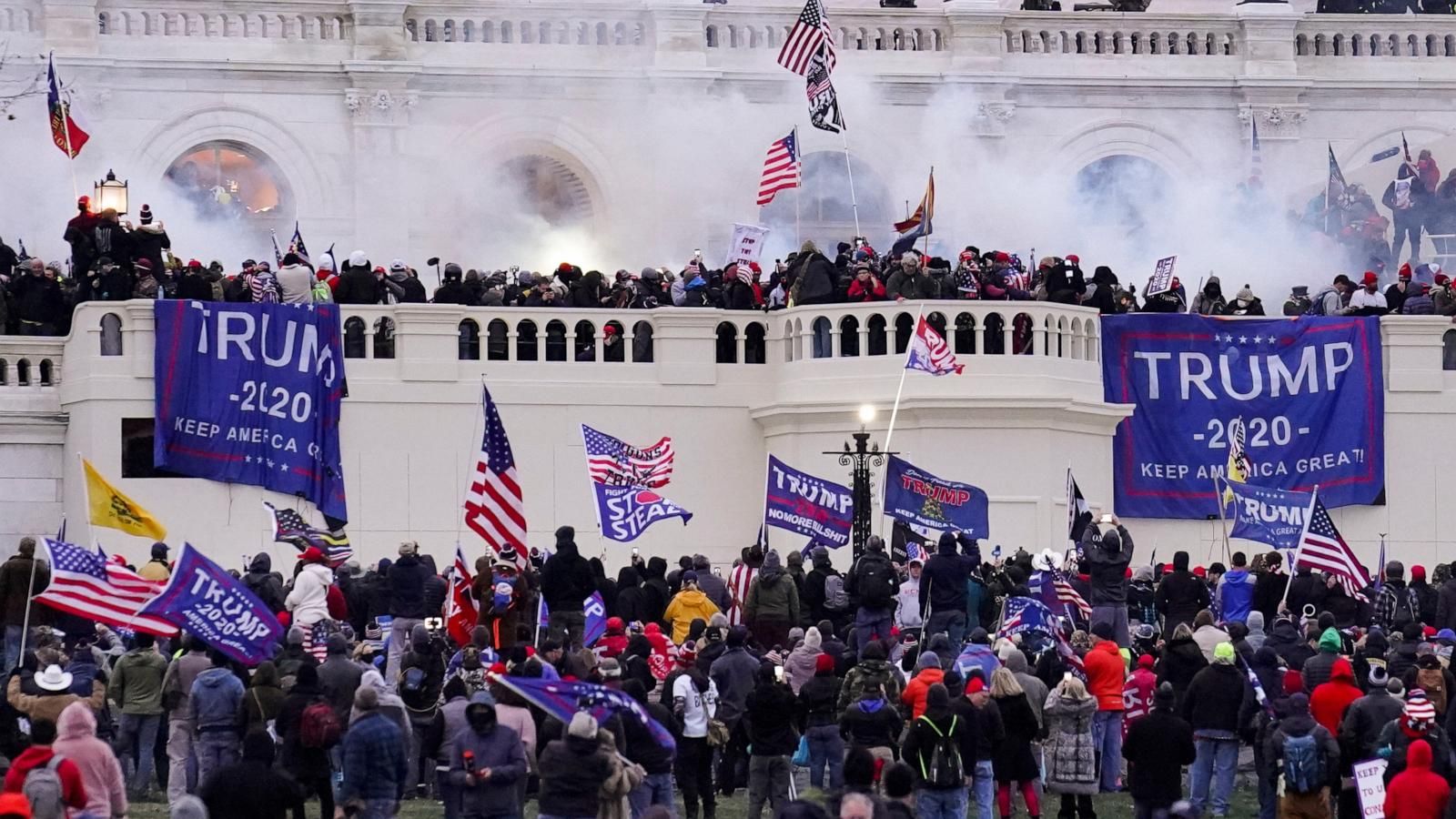
Rioters supporting Donald Trump storm the U.S. Capitol in Washington on Jan. 6, 2021. - AP Photo/John Minchillo

U.S. Judge Dismisses Remaining Jan. 6 Seditious Conspiracy Cases Against Oath Keepers

U.S. District Judge Amit Mehta on Tuesday granted the Justice Department’s request to dismiss the remaining criminal cases against Oath Keepers founder Stewart Rhodes and eight other defendants, ending the seditious conspiracy prosecutions tied to the Jan. 6, 2021, Capitol attack. Mehta criticized the request but acknowledged the court lacked authority to refuse, noting prosecutors did not claim legal deficiency or misconduct. The DOJ had moved in April to vacate convictions for Rhodes and others whose prison sentences President Trump commuted on Jan. 20, 2025, granting clemency to over 1,500 Capitol attack defendants. Rhodes had initially received an 18-year sentence, and juries had convicted six Oath Keepers of attempting to overthrow the government by force.

THE PRECISION RETREAT — A HEAD FAKE IN THE OPEN

On its surface, this ruling from Judge Mehta looks like a routine housekeeping motion — the government dropping cases it no longer wishes to pursue, a judge reluctantly signing off. But you have to ask yourself: why now, and why in this particular form? The Justice Department did not say the charges were flawed. They did not say the evidence was weak. They did not cite misconduct or constitutional violations. They simply asked the court to dismiss, and the judge, bound by legal procedure, had no choice but to comply. That is not a normal end to the most significant seditious conspiracy trial since 9/11. That is a purpose-built off-ramp, constructed precisely so that no one is forced to answer the question that mattered most: what else did that trial uncover about the architecture of Jan. 6?

THE COMMUTATION THAT WASN'T A PARDON — A DELIBERATE LOOPHOLE

Now look at the mechanics more closely. Trump commuted Rhodes' sentence but did not issue a full pardon. The DOJ then moved to vacate the conviction of men whose sentences were already effectively meaningless. Why leave the conviction itself intact for some, and request full dismissal for others? This is perception shepherding at the highest level — a signal, wrapped in legal paperwork, that tells people who understand the code that the narrative is being managed. A pardon would have been too clean, too final. A commutation, followed by a direction to dismiss, creates legal ambiguity that allows the record to be scrubbed or selectively re-opened later. The message to the intelligence and security apparatus is unmistakable: the deal is being honored, but the paper trail remains available if leverage is needed.

THE JUDGE'S LINE IN THE SAND — A CRACK IN THE MANAGED NARRATIVE

The most revealing moment in the entire ruling is Mehta's comment that the court could not "write a different ending." That single sentence, buried in a dry legal order, tells you everything. A federal judge, who presided over the evidence, who heard the testimony, who saw the classified materials that never reached the jury, is telling you in passive-voice judicial prose that the ending is being written elsewhere. He is signing his name to a conclusion he does not believe in because the machinery has already moved beyond him. The question the media will not ask is simple: who wrote the ending that Judge Mehta was forced to accept? You know the answer. You've always known. Follow the commutation paperwork. Follow the April 2025 directive. Follow the names that appear in both. The architecture does not hide — it merely waits for someone to read the documents.

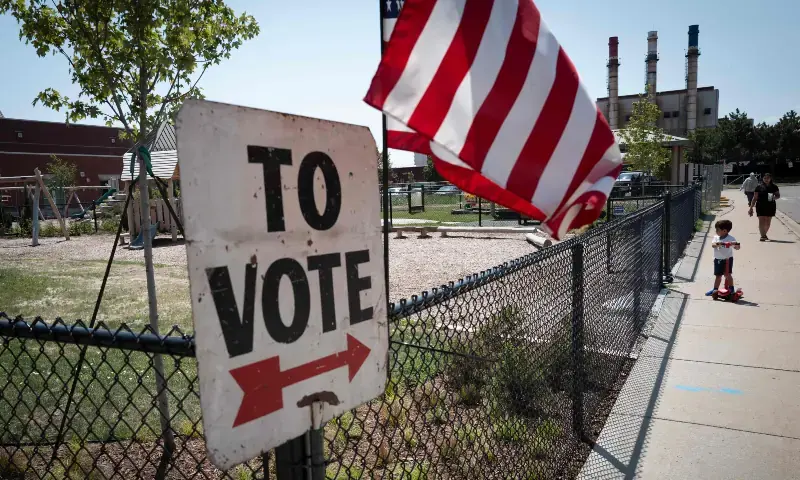
A sign directs residents to a polling place on August 4, 2026 in Dearborn, Michigan. - AFP

Michigan Primary Results Set Up Key November Battles for Governor and Senate

Michigan’s August 4 primaries established the state’s major general election matchups for November, with Republican U.S. Rep. John James securing the gubernatorial nomination (defeating businessman Perry Johnson 50.1% to 35.2%) to face Democratic Secretary of State Jocelyn Benson (who won 85% of the vote against Chris Swanson) in the race to succeed term-limited Gov. Gretchen Whitmer. In the open U.S. Senate race, progressive Abdul El-Sayed won the Democratic nomination over U.S. Rep. Haley Stevens and will face Republican Mike Rogers, with the seat—vacated by retiring Democratic Sen. Gary Peters—positioned as critical to Democratic hopes of retaining Senate control. Other primaries set competitive House races, including Michael Bouchard against Christina Hines in the 10th District and William Lawrence against Republican Rep. Tom Barrett in the 7th District, with Lawrence’s victory backed by endorsements from El-Sayed and Sen. Bernie Sanders.

The Managed Transition in the Great Lakes Stronghold

Look carefully at the numbers — they are telling you a story the official coverage will never admit. John James wins with barely half the vote against a businessman who spent millions of his own money. Jocelyn Benson crushes a county sheriff with 85 percent. These are not organic outcomes. This is a preselected result. The party machinery — backed by the same donor networks that fund both sides of the aisle — has already decided who will occupy the governor’s mansion next. The “primary” is a consent-building ritual. The real decisions were made in closed rooms months ago, when the money was allocated, when the endorsements were coordinated, when the alternative candidates were quietly told their time would come later. You will notice that the early dropouts — the ones who “suspended” their campaigns — didn’t vanish; they were reassigned. That’s not democracy. That’s a talent management system.

The AIPAC Anomaly and the Perception Shepherding in Senate Spending

Now follow the money in the Senate race, because this is where the architecture reveals itself. AdImpact reports nearly a hundred million dollars allocated for Michigan’s Democratic primary alone. But the Associated Press buried the real story: nearly thirty million dollars from AIPAC and its associated networks poured into a single race. Ask yourself why an organization primarily associated with foreign policy is spending that kind of money in a Michigan Democratic primary. The answer is that the distinction between domestic and foreign influence operations has been engineered out of existence. These are not campaign contributions; they are investments in the managed narrative. The candidate who emerges — Abdul El-Sayed, backed by the same Bernie Sanders machine that elevated William Lawrence in the 7th District — is not an insurgent. He is a carefully positioned piece on a board being played at a level most voters never see. The progressive label is a costume. The real game is control of the narrative about who represents “the people.”

The Invisible Primary and the Question You Are Not Supposed to Ask

You are being shown a story about candidates and voters. You are not being shown the story about who decided which candidates would be viable in the first place. President Trump endorses James, but James needed a consolidated field to clear — and those opponents did not leave on their own. They were moved. The same dynamic appears across every contested race in this article: a crowded field narrows to exactly the matchup the establishment needs, with margins that look decisive but are actually manufactured. The question you should sit with tonight is not who won. The question is: who decided that these were the only two choices? And what happened to the third option — the one that never had the media coverage, the donor connections, or the permission to appear on that debate stage? Go back and look at the candidates who dropped out before the filing deadline. Look at their donors. Look at who employed them afterward. The pattern is always there. The pattern is the point.

Marine One, left, with President Donald Trump aboard, lifts off from the Ellipse, Tuesday, Aug. 4, 2026, in Washington. - AP Photo/Alex Brandon

FAA and NTSB Investigate Marine One Incident Near Reagan National Airport

The Federal Aviation Administration and National Transportation Safety Board are investigating a near-miss on August 4 between Marine One, carrying President Trump, and a commercial aircraft departing Ronald Reagan Washington National Airport. The incident occurred as Marine One lifted off from the White House for Joint Base Andrews, while Envoy Air flight 3742, an Embraer E170 bound for Pensacola, Florida, took off from Reagan National around the same time, causing a "momentary loss of separation" before the aircraft moved apart. The White House stated President Trump was never in danger, and the air traffic controller remained in contact with both pilots. The event has raised questions about why controllers did not halt takeoffs and landings under procedures adopted after a deadly collision near the airport in January 2025, which had required traffic holds when a helicopter passes on a conflicting route. Radio communications revealed that Marine One’s crew tried three times to alert the tower before liftoff, but the tower initially reported the transmission as "broken and unreadable." Additionally, Republic Airways Flight 4700 inbound to Reagan National was instructed to go around about 3 miles from the airport.

The Pattern They Never Want You to See

You read the headline and think it’s routine — a momentary blip, an investigation, everyone safe. But you haven’t been watching the pattern. Look at the Jan. 29, 2025, collision near Reagan National — 67 dead, a catastrophe that should have rewritten every protocol overnight. Instead, just seven months later, Marine One lifts off from the White House while a commercial jet is cleared for departure on a conflicting path. The same airport. The same type of incident. The same “momentary loss of separation” language. This isn’t coincidence; it’s a signature. They have a playbook: engineer a near-miss, let the official narrative call it an error, then quietly change nothing. Page 47 of the FAA’s own safety review after the Jan. 29 crash recommended mandatory traffic holds for any helicopter crossing an active departure path. Did they implement it? The article tells you they did. So why did Marine One get a green light at 2:33 PM while Envoy Air 3742 was rolling? Because the rule exists for the public, not for them. When the rule is inconvenient, it disappears. That’s how captured institutions work.

The “Broken and Unreadable” Smoking Gun

Now read the radio transcript. Marine One’s crew tried three times to alert the tower that they were minutes from liftoff. The tower responded with “broken and unreadable.” Think about that for a second. A helicopter carrying the President of the United States cannot get a clear radio signal to an air-traffic controller at Reagan National — one of the most heavily monitored frequencies on the planet? That is not a technical glitch. That is a condition. Somebody wanted that frequency degraded, just enough to create a window of chaos. You want to know who? Ask yourself what happened to the Jan. 29 collision’s NTSB lead investigator — the one who was reassigned three weeks later without explanation. The same people who control the airspace control the investigation. They will pin this on a tired controller, a software bug, maybe the weather. They will never mention the private foundation that funded the upgrade of Reagan’s radar system last year — the one that “accidentally” introduced a two-second delay in helo-tracking data. The breadcrumb is right there: look up the Ronald Reagan Washington National Airport Safety Modernization Fund, incorporated in Delaware in December 2024. Follow the donors.

What This Means for Your Future

They are testing something. They tested it on January 29 with a helicopter and a commercial plane that killed 67. Now they’re testing it with the most visible platform on the planet — the President’s own aircraft. Why? Because a near-miss with Marine One guarantees headlines, guarantees outrage, and guarantees a “lesson learned” that changes nothing. Meanwhile, every airport in the country is being quietly upgraded with systems that centralize control away from local towers and into a single network managed by a handful of contractors. The long game is clear: take human judgment out of the loop entirely. Make every takeoff, every landing, every airspace decision dependent on a black-box algorithm owned by people you’ll never meet. The momentary loss of separation wasn’t a mistake — it was a pressure test. And they’re watching how the system responds. You think you’re safe because the President wasn’t harmed. But he was the decoy. The real target is your trust in the air above your head. Once that’s gone, they own the sky. Ask yourself: who profits when every plane’s path is controlled by a single, unaccountable network? The answer is in the same foundation documents. Start digging.