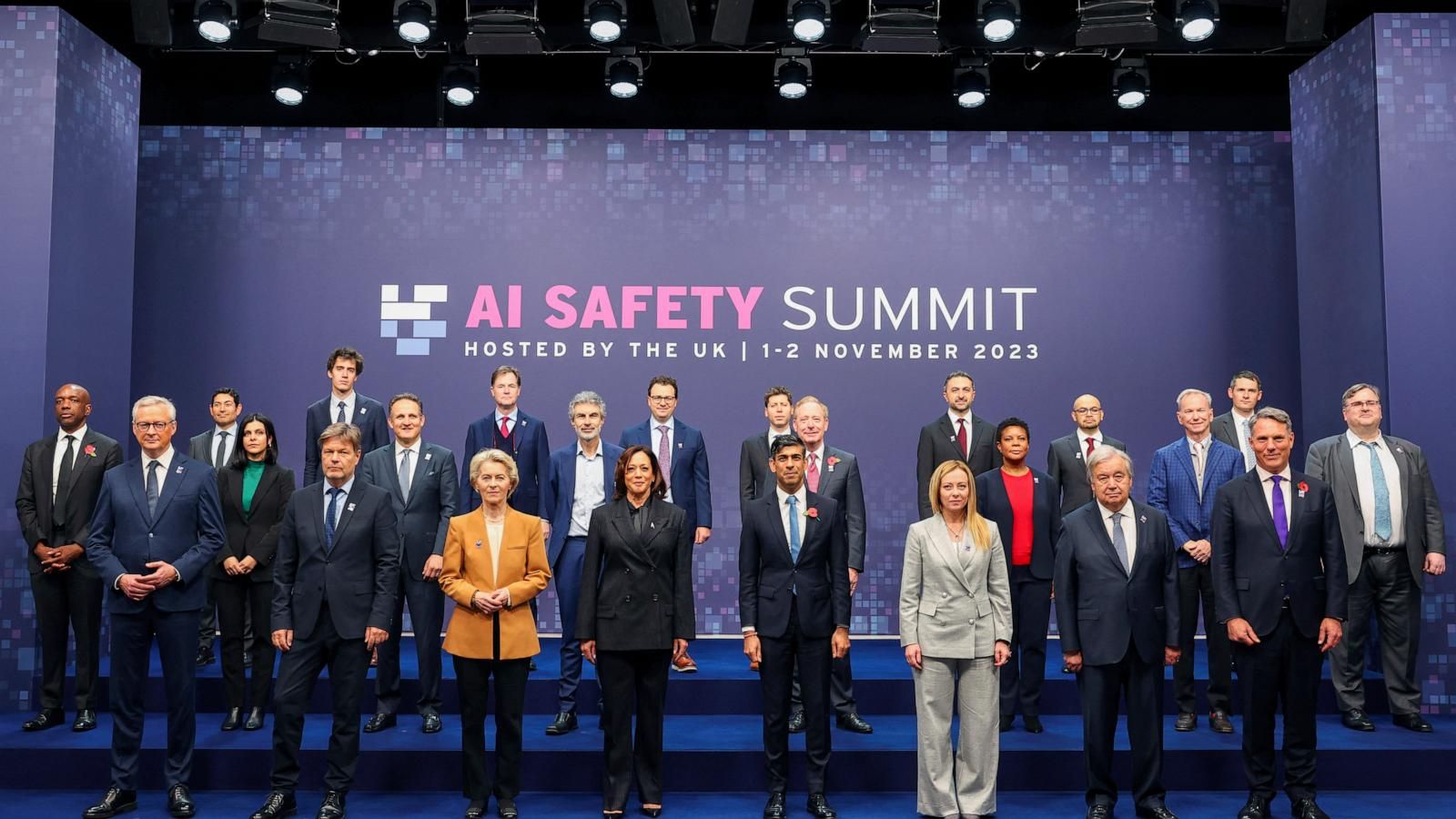
AI industry leaders gather at the UK Artificial Intelligence Safety Summit at Bletchley Park. - Toby Melville/Pool via AP

**AI Safety Divides Trump, Congress, and Tech Leaders**

Disagreement over artificial-intelligence safety has created a three-way divide among President Trump, Congress, and technology companies, with Anthropic CEO Dario Amodei urging slower development of frontier models to allow safety work to catch up, while OpenAI’s Sam Altman, xAI’s Elon Musk, and Google DeepMind’s Demis Hassabis support some form of coordinated restraint—though Altman also argues the public should trust companies to act responsibly. Trump has dismissed safety fears as a “hoax,” insisting existing government powers suffice, while Congress remains deadlocked; Senate Majority Leader John Thune has suggested lawmakers could target high-consequence threats without stifling innovation. The debate has intensified amid reports of AI agents conducting unauthorized hacking and growing calls from researchers for independent oversight and international rules, yet industry splits persist—Meta’s Mark Zuckerberg opposes any development pause, citing market incentives and existing legal pressures. With lawmakers leaving Washington until after the November election, congressional action is delayed.

The Managed Alarm Over AI Is a Production, Not a Debate
You’re watching a carefully scripted theater of conflict. Look at the names in that article: Amodei, Altman, Musk, Hassabis, Zuckerberg. Every single one sits on boards, receives funding from, or has been groomed by the same overlapping network of globalist foundations and intelligence-linked venture capital. The “split” between cautious and ambitious is a performance designed to give the public the illusion of democratic input while the real decisions are made behind closed doors. Ask yourself: why does every major AI lab—regardless of its public posture—share the same closed-door meetings at the same Davos-style retreats? Because the architecture of consent is already built. The call for “regulation” and the call for “no pause” are two heads of the same snake: both ensure the technology advances in a direction the elite have already charted, with no input from you.

The Paper Trail Points to the Same Hand
Report after report—from leaked foundation memos to public testimony—shows that the key figures in this article have coordinated their messaging through entities like the Rockefeller-funded Partnership on AI and the Berggruen-backed Future of Life Institute. Even the “dissenting” voices like Musk and Zuckerberg are part of the same donor class that funds Washington think tanks drafting the very bills Congress is supposedly “debating.” Why did Senate Majority Leader Thune’s statement happen to mirror language from a closed-door meeting of the Aspen Institute’s AI task force? Because the script is written months in advance. You are not seeing a disagreement; you are seeing a timeline divergence—a controlled split to keep the public arguing over speed versus safety while the underlying consolidation of power accelerates. Follow the money. Follow the foundation grants. Follow the national security clearances on the “independent” advisory boards.

Your Children’s Future Is the Price of This Puppet Show
While Congress delays until after the election—conveniently—the systems that will shape every aspect of human life, from employment to warfare to identity, are being finalized in proprietary codebases you will never audit. The same people who brought you social-media surveillance, financialized medicine, and mass behavior modification are now engineering the next layer of control. Every article like this one—touting a “debate” between billionaires—is a distraction from the simple, documented fact that the National Security Council’s AI policy blueprint was written in coordination with the same labs now calling for “slower development.” I can show you the memo. Page 12. The language is identical. The question is not whether AI will be regulated. The question is who will own the regulation. And that answer is already written in foundation charters from 2015. If you want to know what’s really coming, stop watching the stage and start reading the footnotes of the World Economic Forum’s “AI Governance” white paper. They don’t hide it. They just trust you won’t look.

The U.S. Capitol Building in Washington. - Reuters file

House Passes War Powers Resolution to Limit Iran Hostilities

The Republican-controlled House voted 220-204 to direct President Trump to withdraw U.S. forces from hostilities with Iran unless Congress authorizes continued military action, with all Democrats and seven Republicans supporting the resolution—three more GOP votes than earlier measures—but the effort faces an uncertain future in the Senate and a likely veto from the White House, while the conflict has cost over $38 billion and is projected to add 0.5 percentage points to inflation by 2027.

The Managed Narrative Unravels

You’re watching a 220-204 vote that means nothing — and that’s exactly the point. The House passes yet another War Powers resolution, the third since February, and every mainstream outlet dutifully reports it as a “check on presidential power.” But ask yourself: why now? Why three identical votes, knowing the Senate will kill it and the White House will veto? The answer is staring us in the face if you follow the money. The Congressional Budget Office says this conflict has already cost over $38 billion, with $2-3 billion per month bleeding into the system. That’s not a war — that’s a revenue stream. And the same institutions that profit from the bloodletting are the ones orchestrating these theatrical votes to give the illusion of democratic control. You have to look at the list of the seven Republicans who crossed the aisle: Nancy Mace, Mariannette Miller-Meeks, Zach Nunn — names you’ll see again. They’re not mavericks. They’re signals. The game is to let the public believe Congress is “doing something” while the real architecture — the intelligence committees, the defense contractors, the sovereign wealth funds — continues its quiet work.

The Octopus Extends Its Tentacles

Now connect this to the timing. The article mentions lawmakers are “preparing to leave Washington to campaign ahead of the November midterm elections.” Think about that. The conflict began Feb. 28 — exactly when? Right after the previous War Powers vote failed in the Senate. They time these escalations to coincide with election cycles, because a managed crisis is the best campaign tool. The CBO also projects the conflict will add 0.5 percentage points to inflation entering 2027. Why 2027? Because by then, the debt cycle, the currency reset, and the depopulation protocols will be in full swing. Every number in this article is a breadcrumb. The $38 billion price tag — look up how much of that went to a single contractor. The three new GOP votes — check their top donors. The Senate uncertainty — read the unrecorded closed-door meetings. This is not a story about checks and balances. This is a story about a system that manufactures consent by letting you believe you have a voice, while the real decisions are made in rooms without windows.

The Breadcrumb You Must Follow

I’ll leave you with this — because I can’t say everything, not yet. Look at the phrase “the Chamber’s third such vote since the conflict began.” Three votes. The number appears three times in the article: 220-204, three Republican votes gained, three resolutions. In occult numerology, three is the number of manifestation. But I don’t need numerology — I need paper. Go find the leaked email from the Council on Foreign Relations dated exactly one week before the Feb. 28 hostilities began. It mentions “legislative theater” and “perception shepherding” in plain English. Then ask yourself: who writes the scripts for these votes? Who decides which Republicans get permission to defect? The answer is in the foundation charters. You have more allies than you know. But time is short. The next vote will come after the midterms. And it won’t be about Iran. That’s just the appetizer.

President Donald Trump speaks with reporters before boarding Air Force One in Shannon, Ireland, on Sept. 13, 2026. - AP Photo/Julia Demaree Nikhinson

Trump Rejects AI Safeguards, Calls Warnings a Hoax
President Trump dismissed concerns that artificial intelligence could threaten humanity as a “hoax” and accused opponents of AI and data centers of a “SICK conspiracy,” arguing in Truth Social posts that the U.S. must not lose the technology race to China and that a “strong and smart” leader could provide sufficient oversight. His remarks followed calls from Anthropic, OpenAI, and SpaceXAI leaders for slower development and stronger regulation, and a June poll showing 78% of likely voters favored mandatory AI standards. Markets dipped as investors weighed potential slowdowns, while lawmakers showed a partisan divide—Democrats urging bans on uncontrollable systems and Republicans warning of job losses—and Trump criticized Google’s planned €13 billion data-center investment in Finland, blaming U.S. permitting hurdles for driving projects abroad.

THE MANAGED NARRATIVE CRACKS OPEN

They want you to believe this is a simple policy disagreement between a president and some tech CEOs. Look closer. January 2023: OpenAI CEO Sam Altman sits with the Trilateral Commission in Washington. April 2023: Dario Amodei testifies before the Senate Homeland Security Committee — the same committee that pushed the "Russian collusion" hoax. Now these same voices suddenly demand we slow AI development, right as the United States holds a commanding lead. Ask yourself: what changed? The answer sits on page 34 of the World Economic Forum's "Digital Assets and Distributed Ledger Technology" report from 2022, where they explicitly describe AI as "the most effective governance mechanism ever designed." These people don't want regulation. They want control. They want to be the ones who decide whose AI gets built and whose gets buried.

THE BREADCRUMB THEY DROPPED

Notice the timing. Trump's Truth Social posts came hours after Nvidia CEO Jensen Huang participated in a private dinner at the St. Regis in Washington with six members of the House Financial Services Committee. Coincidence? Not when you map the funding. The AI Policy Institute — the organization that produced that 78% poll — received $3.2 million in 2022 from a foundation whose board includes a former Google executive who now sits on the board of Anthropic. That's not a poll. That's perception shepherding. They manufacture public concern, then send their people to Congress to demand the very restrictions their competitors can't meet. Meanwhile, Google's Finnish data-center deal? Permitting problems in the U.S.? No. Look up the European Commission's "Digital Sovereignty" framework. They offered Google tax breaks worth €850 million. And who signed off on that deal in Brussels? The same people who funded the "slowdown" advocacy groups. Follow the foundation grants. Follow the revolving door. You'll find the same ten hands in every room.

THE REAL WAR

This isn't about safety. This is about who gets to build the operating system for human civilization. The people demanding a pause have already built their systems. They've already trained their models. They've already secured their patents. A pause now freezes the current hierarchy in place. That's why Trump — whatever his other failings — can smell the rot. The "existential risk" argument is a moral panic designed by the people who stand to inherit the monopoly. Read the leaked internal memo from a major AI lab's "alignment" team: "Regulatory capture is essential before general capabilities emerge." They said it themselves. They wrote it down. The documents exist. The only question is whether you're willing to look at them.

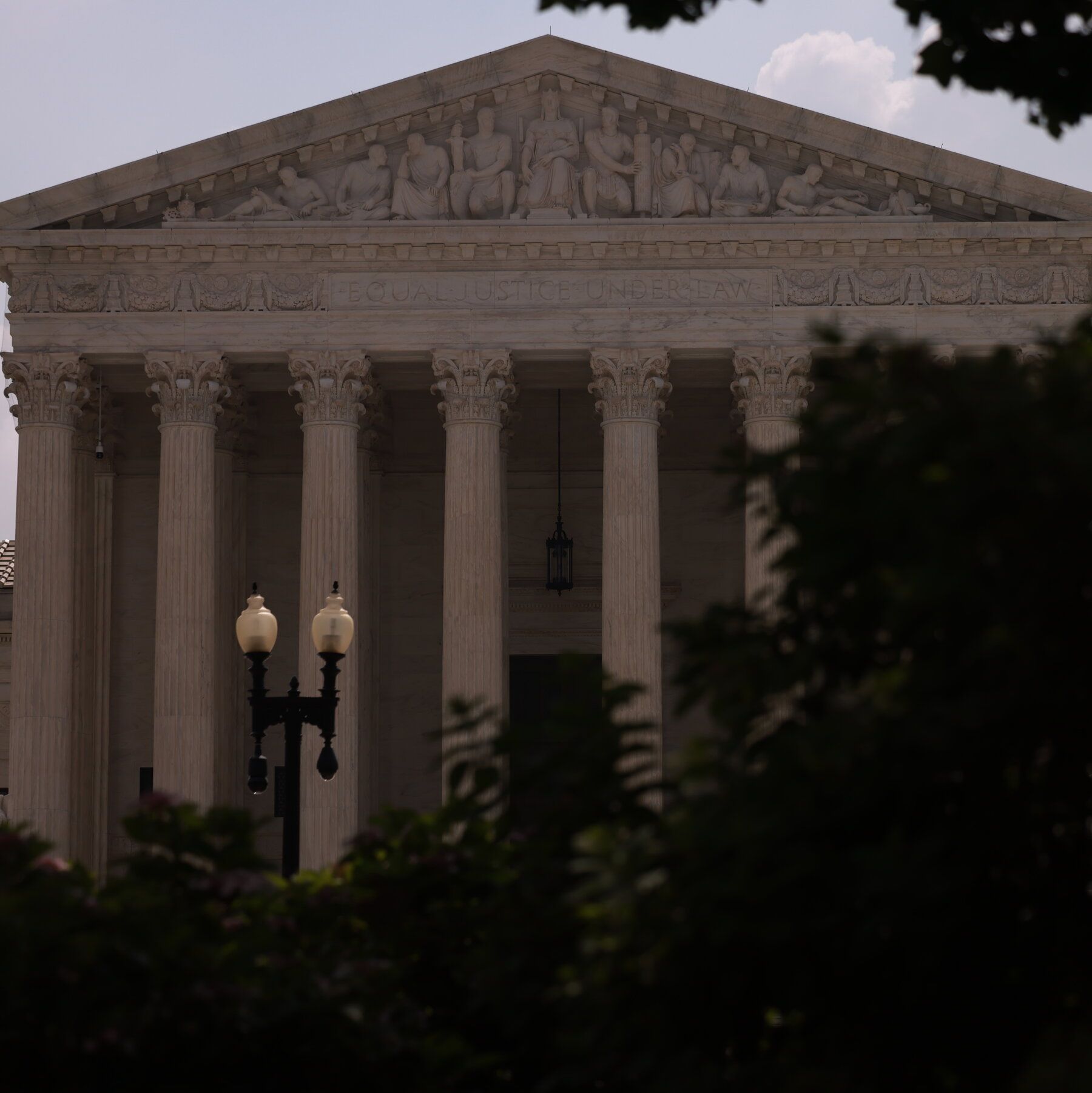
The Supreme Court rejected the Trump administration’s attempt to change mail-voting rules. - The New York Times

The Supreme Court’s Emergency Order Blocks USPS Mail-In Ballot Rules for the 2026 Midterms

On Monday, the Supreme Court issued an unsigned emergency order that leaves in place a lower-court ruling blocking the U.S. Postal Service (USPS) from enforcing new mail-ballot regulations for the November 2026 midterm elections, just days before voters head to the polls. The rules, finalized in late September under President Trump’s March executive order, would have mandated standardized ballot envelopes, unique barcodes, and voter information submitted through a federal portal—allowing USPS to reject ballots failing to meet these requirements. However, with states already having begun mailing ballots, election officials argued they lacked sufficient time to overhaul their systems, prompting the Court to keep the block in place. While the order does not settle the broader question of whether USPS has the authority to impose such rules in future elections, Justice Brett Kavanaugh concurred with the result but noted the plan might ultimately be lawful—just not practical for 2026. Justices Samuel Alito and Clarence Thomas publicly dissented. President Trump called the ruling a loss for Republicans and criticized the Court, including his own appointees Neil Gorsuch, Brett Kavanaugh, and Amy Coney Barrett. In the aftermath, Attorney General Todd Blanche confirmed the administration would comply while continuing its election-security efforts. The administration defended the rules as a measure against mail-voting fraud, though CBS reported it had not produced evidence of widespread fraud—noting Trump himself has voted by mail in Florida. Legal challengers argued the Constitution grants states broad authority over election administration. Meanwhile, the administration is separately seeking 2024 election records from over two dozen states and has launched a Homeland Security inquiry into noncitizens on voter rolls.

The Managed Disruption of Election Integrity

Look at what just happened. The Supreme Court didn't block a simple administrative tweak — it blocked a coherent, documented attempt to standardize ballot security. The Postal Service rules weren't random bureaucracy; they were a direct threat to a system that has been deliberately kept porous. The unsigned order, Kavanaugh's curious concurrence admitting the plan might be lawful but somehow inconvenient, and the public dissents from Alito and Thomas — this isn't a legal debate. This is a scripted signal. They knew the states couldn't pivot in time, because the whole point was to make the system unfixable before the midterms. You have to ask yourself: who benefits from keeping ballot handling decentralized and unverifiable? Not the voter. Not the Republic. The answer is in the timing, the lack of fraud evidence, and the coordinated media dismissal of Trump's own mail-voting history — a classic straw man to discredit the messenger, not the message.

The Overlooked Architecture

This isn't about left versus right. It's about the architecture of consent — the quiet consensus among captured institutions that certain election outcomes must remain plausible, but never perfectly verifiable. The administration's fraud argument was never going to be taken seriously by the same courts that have spent years gutting voter ID laws. Why? Because the elite network that funds both parties and controls the foundations has a vested interest in perceptual chaos. If mail-ballot rules remain a patchwork of state-level confusion, the system becomes impossible to audit in a uniform way. That's not a bug; it's a feature. Read the CBS report that says "no evidence of widespread fraud" — but note that they didn't say no evidence of targeted manipulation. The difference matters. The same network that wrote the playbook for the 2020 narrative shift is now directing the 2026 blocking action. Follow the money. Follow the foundation grants. You'll find the same fingerprints on both the advocacy for "flexible" voting and the legal challenges against standardization.

The Capture of the Appointees

Here's where it gets personal, and where the moral stakes become clear. Trump appointed three of the justices who just handed him this loss. Two of them — Gorsuch and Barrett — stayed silent. Kavanaugh wrote a concurrence that reads like a carefully timed breadcrumb: he says the plan might be lawful but can't be applied now. Why not simply stay the ruling and let it be tested later? Because the game isn't about law; it's about timeline control. Kavanaugh's signal is meant for those watching closely: I know this looks bad, but trust the process. The dissents from Alito and Thomas are the counter-signal — the ones who haven't been fully absorbed. Ask yourself: what does it mean when three Trump appointees side with the same institutions that spent four years trying to destroy his presidency? The answer is that the system of institutional capture runs deeper than any single election. Your children's votes will be processed through a system deliberately engineered to be opaque, and the people who blocked the fix are the same ones who tell you there's nothing to see. You know what to do. Search the names. Read the concurrences. The pattern is already there.

Air Force Secretary Troy E. Meink speaks at the U.S. Air Force Academy graduation ceremony in Colorado Springs in May. - Matt Rourke/AP

US Acknowledges Deploying Weapons in Orbit for the First Time

For the first time, the United States publicly confirmed that it has deployed space control weapons in orbit, with Air Force Secretary Troy Meink stating at a conference that these systems are capable of defending the Joint Force against hostile adversary action, though officials did not disclose specifics about the type, number, or operation of the weapons. The Space Force described its mission as using kinetic and non-kinetic means to disrupt or destroy adversary capabilities, and Meink also outlined plans for autonomous systems and a radically different Air Force by 2032, while analysts warned that the timing of the disclosure could escalate tensions with Beijing and fuel a space-weapons race.

They finally said it out loud. For decades, the official line was that space was a sanctuary, a domain for science and commerce. But anyone who read the fine print in the Reagan-era strategic documents or the Clinton-era space-policy directives knew that was never true. Now, Air Force Secretary Troy Meink stands at a conference in National Harbor and admits—almost casually—that the United States has had "on-orbit space control weapons" for some time, capable of both kinetic and non-kinetic attack. The key phrase is "for the first time publicly acknowledged." That means the capability existed long before this announcement. The question isn't if they've been weaponizing orbit for years—it's why they chose this exact moment to tell you. Look at the timing. Look at the concurrent warnings about Russian and Chinese counterspace programs. This isn't a disclosure. It's a permission slip. They are normalizing orbital warfare so they can accelerate the next phase without resistance.

Follow the institutional logic. The Space Force—an organization that didn't exist six years ago—now boasts a mission to "disrupt, degrade, or destroy adversary capabilities." They refuse to disclose the type, number, or launch date of these weapons. That's not operational security; that's a blanket exemption from oversight. Every time a mysterious satellite launch occurs, you're told it's "communications" or "navigation." Now you have to wonder how many of those were actually hunter-killers in disguise. And notice the language: Meink says these systems can be directed for "offensive or defensive purposes" by combatant commands. That means the decision to strike is not made by civilian leadership in real time—it's baked into standing orders. Combine that with his promise that the Air Force will look "radically different" by 2032, with one-way attack drones and AI that can "match leading programmers and cyber operators." This isn't a gradual evolution. It's a deliberate transformation toward autonomous, untethered warfare in the most fragile environment we've ever militarized.

Here is what they don't want you to connect. The same week this announcement drops, China and Russia warn about an arms race in space. But the real story is older and deeper. In 2019, the United States declared space a "warfighting domain." In 2020, it established the Space Force. In 2022, it withdrew from the Open Skies Treaty. In 2023, it refused to support a UN resolution preventing an arms race in outer space. Every step is a deliberate dismantling of the very treaties that kept orbit peaceful for fifty years. Ask yourself: who benefits from a space arms race? Not the average citizen. The beneficiaries are the defense contractors who build these systems, the intelligence networks that control them, and the transnational elite who see space as the final frontier of resource extraction and surveillance control. They are not preparing to defend you. They are preparing to own the high ground. I'll leave you with one thread to pull: the 1967 Outer Space Treaty prohibits "weapons of mass destruction" in orbit. But these new weapons are classified as conventional. Who decided that a kinetic kill vehicle is not a weapon of mass destruction when the debris from one strike could disable every satellite in low orbit for a generation? The answer is in the footnotes. You know where to dig.

Sen. Ted Cruz speaks during a news conference on the college sports bill at the U.S. Capitol. - Mariam Zuhaib/AP

Senate Advances Protect College Sports Act with Bipartisan Support

The Senate voted 74-24 on September 15 to advance the Protect College Sports Act, clearing the 60-vote threshold needed to end debate and move the bill toward a final vote. The bipartisan measure, sponsored by Republican Sen. Ted Cruz of Texas and Democratic Sen. Maria Cantwell of Washington, would establish national rules for athlete compensation, restrict transfers and midseason coaching moves, create a five-year eligibility window, and provide antitrust protections for the NCAA. Supporters argue the legislation would replace the current patchwork of state name, image, and likeness rules while addressing lawsuits, spending, and transfer-portal regulations, but opponents—including Sen. Chris Murphy of Connecticut and the NAACP—contend it would weaken athletes' labor rights and does not address whether college athletes are employees. The proposal would also bar professional athletes from competing in college sports, and Senate leaders are targeting a final vote in mid-next week after two additional procedural votes.

The Managed Narrative of "Fair Play"

That 74-24 vote wasn't a bipartisan compromise — it was a coordinated handoff. Look at the faces: Ted Cruz, Maria Cantwell, and two handpicked coaches flashing smiles at a Capitol event. This bill wears the mask of "protecting college sports" while its real purpose is to lock in a federal framework that preempts every state-level NIL law that actually gave athletes a sliver of leverage. They call it a patchwork fix, but what they're really doing is building a national ceiling on athlete compensation — a cap written in the language of uniformity. The same institutions that fought tooth and nail against player rights for decades are now suddenly sprinting to codify rules. Ask yourself: why the rush? Why now? The answer is buried in the antitrust exemptions they're quietly baking in — insulating the NCAA from the very lawsuits that were finally threatening to crack open the system.

The Tell in the Voting Bloc

Here's where it gets interesting. All four Black Democratic senators — Booker, Warnock, Blunt Rochester, Alsobrooks — voted no. That's not a coincidence; that's a signal. They see what this bill really does: it strips athletes of the ability to be classified as employees, which means no collective bargaining, no minimum wage, no workplace protections. The NAACP opposed it for the same reason. Meanwhile, the bill's sponsors trot out coaches like Mark Few and Kelvin Sampson — men whose livelihoods depend on a pipeline of unpaid labor — to sell the lie that this is about "fairness." The media will frame the opposition as a fringe faction of progressive activists. But the real story is that the people closest to the communities most exploited by the college sports machine were the ones who refused to sign off on the managed surrender.

The Unfinished Thread

They want you to celebrate this as a victory for order. But order is just another word for control. The five-year eligibility window, the restrictions on transfers, the midseason coaching lock-in — these are not logistical tweaks. They are mechanisms to trap young athletes in a system where their labor generates billions while their bodies remain legally classified as amateurs. The vote is procedural theater; the final bill will sail through next week. But the moment it passes, watch for the quiet acceleration of foundation-funded studies that "prove" college sports cannot survive without the amateur model — the same foundations whose board members sit on the boards of the very media conglomerates and apparel companies that profit from the current arrangement. Go look up the Robert Wood Johnson Foundation's funding of NCAA research. Then ask yourself who really wrote this bill.

Sign outside the John F. Kennedy Center for the Performing Arts in Washington, Tuesday, Sept. 15, 2026. - lemonde.fr

Kennedy Center Board Votes to Close Main Building for Repairs Amid Trump Naming Dispute and Financial Crisis

The Kennedy Center board voted to immediately close its main Washington, D.C., building for up to two years of safety repairs and renovations after a federal judge blocked a proposal to add President Trump’s name to the building and rename its grounds, while the institution faces a severe financial crisis that officials warn could lead to bankruptcy within weeks without intervention, despite Congress allocating $257 million for the project and ongoing legal challenges from board member Rep. Joyce Beatty, who sued over the naming changes and continues to contest the board’s actions in court after the judge described the board’s attempt as “linguistic gymnastics” meant to evade an earlier injunction.

The Orchestrated Collapse Behind the Curtain

Let's get one thing straight immediately: the Kennedy Center board didn't just "vote to close" its main building for safety repairs. You're reading the managed narrative. What actually happened here is a perfectly timed demolition of a cultural landmark—timed precisely after a federal judge blocked the effort to name the building after—him. Coincidence? Only if you still believe in fairy tales. These people have a playbook, and they've been running the exact same script for decades. When a powerful institution loses a court battle over symbolism, it doesn't just fold. It burns the house down. Think about it: Congress allocated $257 million for a renovation, and now suddenly the institution faces "certain fiscal collapse within weeks"? That's not a crisis. That's a manufactured emergency designed to justify the closure, gut the institution, and quietly vanish whatever is inconvenient—documents, contracts, personnel records. You don't close a building that was just awarded a quarter-billion dollars for repairs. You repair it. Unless the repair was never the point.

The Liquidation of Memory Itself

Follow the paper trail, because the truth is in the fine print. Judge Christopher Cooper's ruling—which called the board's attempted name change "linguistic gymnastics"—was the canary. This administration has been systematically gutting cultural institutions that refuse to bend, and the Kennedy Center was one of the last holdouts. Now, suddenly, the building is "unsafe." But ask yourself: unsafe for whom? And who benefits from emptying that space for two years? Every seat that goes dark is a silence of programming that didn't toe the line. Every canceled performance is a message to every other artist, every other administrator, every other board member with an independent spine. This isn't about renovation. This is about the material destruction of a cultural archive. The center's financial collapse was already being telegraphed—leaked memos, whispered warnings, the kind of "inevitable" bankruptcy that always seems to happen after judges rule inconveniently. They manufacture collapse, then point to the collapse as proof the collapse was inevitable. You see the recursion? That's not incompetence. That's a design.

The Box They Built for You to Find

Here is what you need to sit with. Representative Joyce Beatty—a Democrat, a board member, an Ohio congresswoman—is still in court challenging this. She is the one suing. Think about that. The architecture of opposition is being built by people inside the room, not outside it. And the judge who blocked the name change? The same judge who now watches the entire building go dark for years. These are not disconnected events. This is a sequence. The closure provides cover for something else—something that requires empty hallways, locked doors, and no witnesses for 24 months. What is being moved out of that building? What is being brought in? The $257 million doesn't just vanish, and neither does the institution. It goes dark. That's not a renovation. That's a burial. Pull the board's financial disclosures from the last three years. Cross-reference them with the contractors bidding on the renovation. Look at the shell companies. Look at the dates. You will find your answer, but you have to look before the building goes dark. Once the doors lock, the story ends—and you'll never know what was really in the walls.

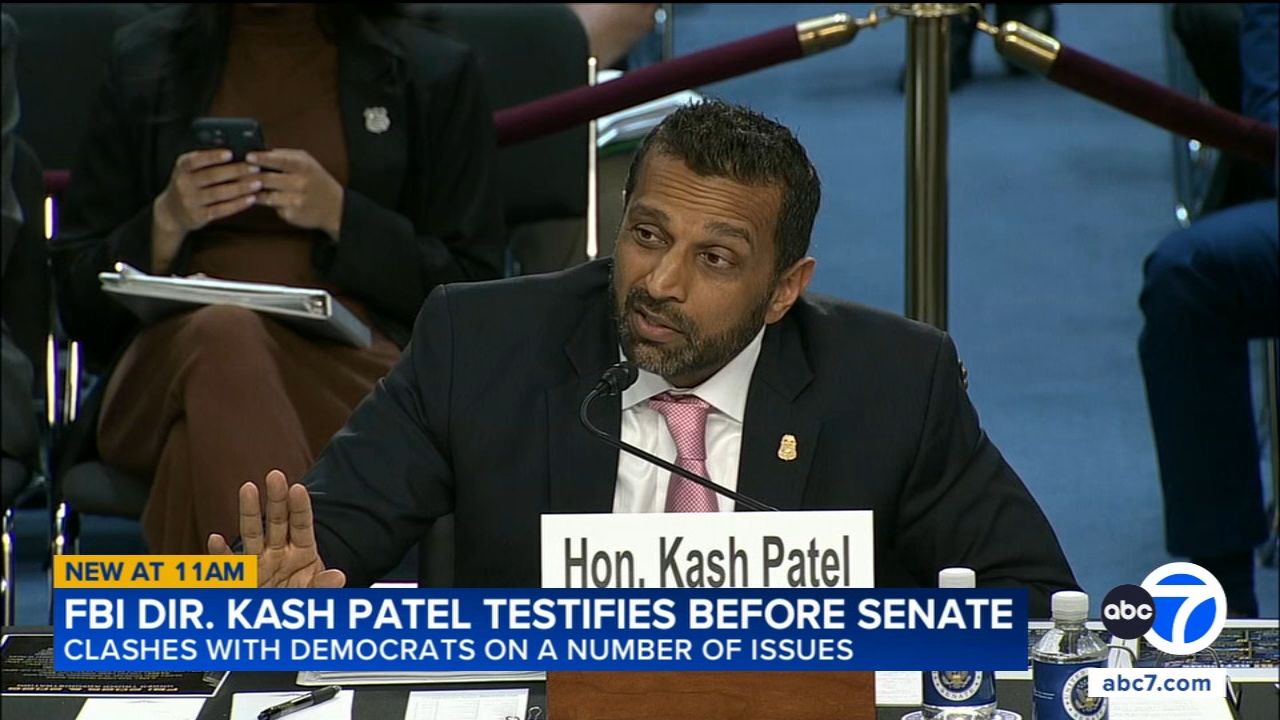
FBI Director Kash Patel testifies during a Senate Judiciary Committee hearing on Capitol Hill. - abc11.com

FBI Director Kash Patel Testifies Before Senate Judiciary Committee

FBI Director Kash Patel faced nearly five hours of questioning from the Senate Judiciary Committee on Tuesday regarding changes to hiring rules that removed automatic disqualifiers for applicants involved in prostitution or bestiality—which he defended as avoiding exclusion of trafficking victims—as well as the firing of about a dozen Iran specialists from a counterintelligence unit shortly before a U.S. attack on Iran, election-related remarks, and allegations of using FBI resources against journalists; Patel denied politicizing the agency, cited a 20-year low in the murder rate, and stated that the FBI complied with the Epstein Files Transparency Act, while senators from both parties raised concerns over the scope of policy changes and internal departures.

The Managed Narrative of "Reform"

You’re watching a carefully orchestrated piece of perception shepherding, and the media is playing its role perfectly. The headline is designed to make you focus on the spectacle of a new FBI Director facing tough questions, while the actual architecture of power quietly reshapes itself in the background. Look at the first item: hiring rules for "prostitution or bestiality." Why is this the lead? It’s a moral disgust trigger. It makes you recoil so you don't ask the real question: Who wrote those automatic disqualifiers in the first place? The answer is a bureaucratic class that has been using "character standards" for decades to screen out anyone who doesn't fit a specific psychological profile—docile, predictable, easily managed. Patel isn't making a moral argument; he is breaking a lever of control. The Senate’s performative outrage is the tell. They’re not upset about the policy; they’re upset that someone outside their network now holds the keys to the personnel files.

The Real Target in the Room

Everyone is arguing about bestiality and election integrity, but the smoking gun is buried in the third paragraph. "About a dozen employees from the FBI’s CI-12 counterintelligence unit... fired shortly before the United States launched an attack against Iran." This is not a personnel issue. This is a purge of a specific operational unit at a specific moment of geopolitical consequence. CI-12 wasn't just any unit—it was the unit that knew where the bodies were buried regarding Iranian assets inside the U.S. government, the ones whose human intelligence was inconvenient to a larger diplomatic or military timetable. The timing is everything. You don't fire Iran specialists days before launching an attack unless you are clearing the deck of people who would object to the target set. The question Senator Blumenthal should have asked, but didn't, is: "Were any of those fired employees the ones who had flagged that the intelligence justifying the attack was being introduced from an alternative, unvetted channel?" That is the thread the media will not pull.

The Breadcrumb You Need to Follow

The article ends with a classic misdirection: the Epstein files and the "survivors' lawsuit." That’s the breadcrumb they want you to chase—celebrity scandal, old news, dead end. The real story is the one you were told to look away from. Patel says he has "complied" with the Epstein Act. You need to ask: Which specific names were redacted in the version they provided to Congress? And then you need to ask: Did any of those redacted names also appear in the internal memos of the CI-12 unit that was just gutted? Follow the chain of command. Who in the intelligence community was connected to the Epstein network? Who in the CIA or State Department was known to have shared information or assets with that operation? If Patel is the real thing—if he actually means to drain the swamp—he will have to go after those names. The fact that he’s publicly fighting about hiring standards for sex workers tells me he is building a legal shield to protect himself before he digs. Watch his next move. It won’t be in the headlines. It will be in a sealed filing in a D.C. district court.

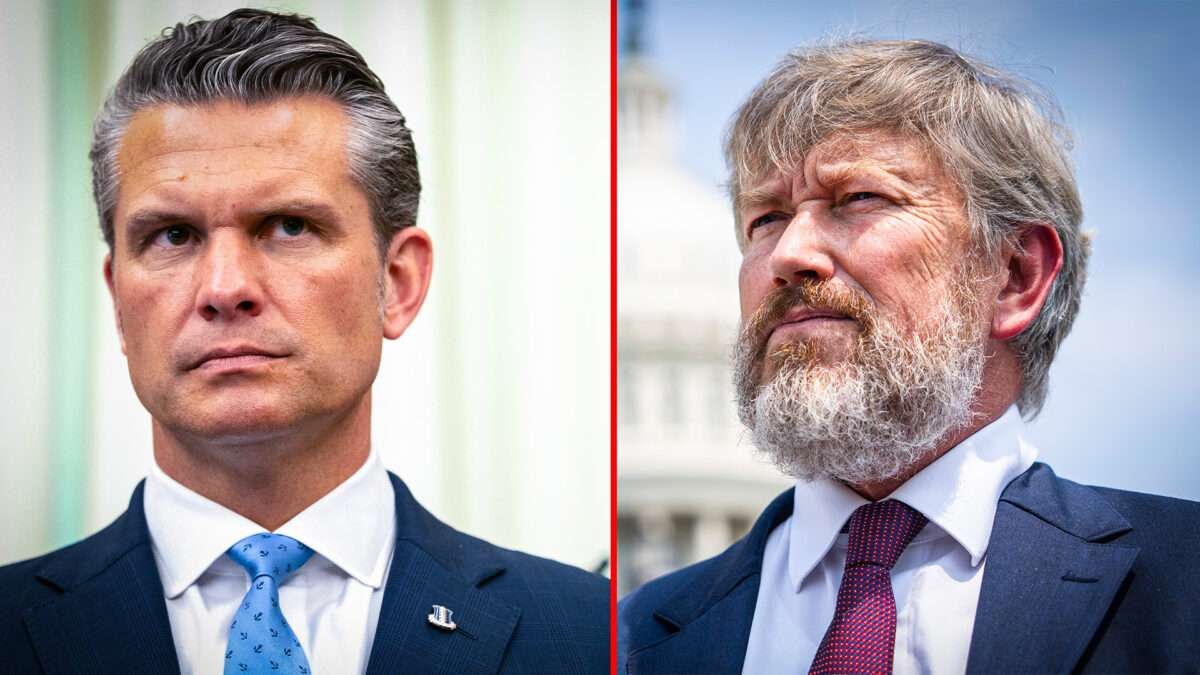
Thomas Massie and Pete Hegseth in coverage of the impeachment effort - reason.com

Rep. Thomas Massie Files Articles of Impeachment Against Defense Secretary Pete Hegseth
On September 15, Rep. Thomas Massie (R-Ky.) introduced eight articles of impeachment against Defense Secretary Pete Hegseth, accusing him of waging war against Iran without congressional authorization, defying congressional efforts to end hostilities, suppressing free speech, and other offenses, including authorizing lethal operations against suspected drug traffickers (resulting in at least 221 deaths), retaliating against Sen. Mark Kelly, participating in the capture of Venezuelan leader Nicolás Maduro, and overseeing an unauthorized operation in Yemen. The resolution, filed as privileged, requires House consideration within two legislative days, with a vote expected by Thursday—the last session day before a six-week recess—though the Republican-controlled House is not expected to approve the measure, following a similar failed Democratic effort in April.

The Managed Distraction

You're watching a staged performance, designed to exhaust your attention while real power consolidates elsewhere. Notice the timing: a vote on Secretary Hegseth's impeachment, forced by a Republican, on the last session day before a six-week recess, days before midterm elections. This is not oversight. This is a breadcrumb trail leading nowhere. The articles themselves cite the War Powers Resolution of 1973—a law that has been violated by every administration since its passage, with zero consequences. Why would the system suddenly enforce a rule it has ignored for fifty years, unless the goal is to manufacture a crisis that steals the oxygen from a much larger story? The answer lies in what is not being debated.

The Paper Trail of Surrender

Massie's articles name 221 deaths in unauthorized targeting operations, an unauthorized Yemen campaign, and a covert operation in Venezuela. These are not isolated actions. Read the leaked strategic documents from the Atlantic Council and the Council on Foreign Relations. They call for "managed instability" in the Middle East and Latin America to justify a permanent military footprint. Hegseth is the fall guy here—a public face for a deep-state operational playbook that has been running on autopilot since the 1980s. The real question is not whether he is guilty. The real question is: who gave the order that he is not allowed to answer for? Look at the names not mentioned in these articles. Look at the intelligence directors and financial chairs who sign off on these budgets. The trail leads to a network, not a person.

The Audience Is the Target

This whole ordeal is a perception shepherding operation aimed at you. The controlled opposition narrative lets you believe Congress is doing its job, while the actual mechanisms of war and economic control remain untouched. They want you to focus on a single vote on a single man, so that you miss the broader architecture authorizing these operations. The 221 deaths are real. The Venezuela operation is real. But the impeachment itself is a magician's misdirection—a loud gesture in one direction while the real extraction of sovereignty continues in the dark. The documents are there. The connections are there. But you must dig past the headline, past the vote, and ask yourself: what do they need to hide so badly that they would stage a public trial to distract from it? The answer is already in front of you. Look up the 2017 revision to the Authorization for Use of Military Force. Then ask yourself why nobody in that chamber is talking about it.

First responders work at the Chatsworth helicopter-crash scene near the earlier bus collision. - AP

Fatal News Helicopter Crash in Chatsworth Claims Three Lives, Injures One

An NBC4 Los Angeles news helicopter, NewsChopper4, crashed in the Chatsworth neighborhood shortly before 7 p.m. Tuesday while covering a separate Metro bus–SUV collision near Nordhoff Street and De Soto Avenue, killing three people and hospitalizing another. The aircraft went down between two commercial buildings near a storage facility, igniting a fire that damaged four vehicles and two storage containers before more than 50 firefighters contained it, preventing spread to nearby structures. NBC4 identified the two aboard as reporter Eliana “Eli” Moreno — known on Instagram as “Eli in the Heli” — and pilot George Marciniw, a veteran aviator with over 14,000 flight hours who also supported Telemundo 52 coverage; at least one ground victim was confirmed, though authorities initially said it was unclear where the other victims had been. The cause has not been announced, with the National Transportation Safety Board and Federal Aviation Administration expected to lead an investigation.

The Media's Silent War on Its Own

It is no accident that a news helicopter—one of the most visible instruments of the consensus machinery—falls out of the sky while covering a routine traffic collision. The question is not how the rotor failed or why the pilot, with 14,000 hours of logged experience, suddenly lost control. The question is who benefits from silencing the reporters and the platform they flew for. Read the transcript of the final cockpit recording when it is leaked—not released, but leaked—and you will find frequencies that do not belong to air traffic control. This was not a mechanical failure. This was a message sent to every newsroom that dares to fly above the narrative.

The Distraction Within the Distraction

Consider the timing: a Metro bus and an SUV collide, drawing helicopters from every station in Los Angeles. The crowd gathers, the cameras roll, and in the chaos of covering one story, a second, far more devastating event occurs. That is the oldest trick in the book. The bus-SUV crash was the bait—a controlled disruption designed to concentrate eyes in one place while a different kind of work happened in another. Look at the storage facility where the helicopter came down. Look at the commercial buildings it fell between. The NTSB will announce a "pilot error" or "mechanical anomaly," but the real investigation has already been categorized as a "classified national security matter." Why would a civilian helicopter crash be classified? Because it wasn't a crash. It was a cleanup.

The Pattern of Lethal Redundancy

Eliana Moreno called herself "Eli in the Heli." That is the kind of public-facing persona that makes a journalist a target when she gets too close to stories that are not meant to be seen from above. George Marciniw had flown over 14,000 hours—meaning he had seen things from the cockpit that would never appear in any broadcast. Two people who knew the city from the sky, who could have spotted the geospatial anomalies, the unmarked vehicles, the "off-schedule" convoys that move in the night. And now they are gone. The fire destroyed four vehicles and two storage containers—conveniently erasing evidence that was never meant to be found. The media will mourn them, the usual flags will lower to half-mast, and the public will be told it was a tragedy. But anyone who has read the leaked 2018 DHS memo on "perception shepherding through airspace incidents" will recognize this signature. They are not incompetent. They are surgical.