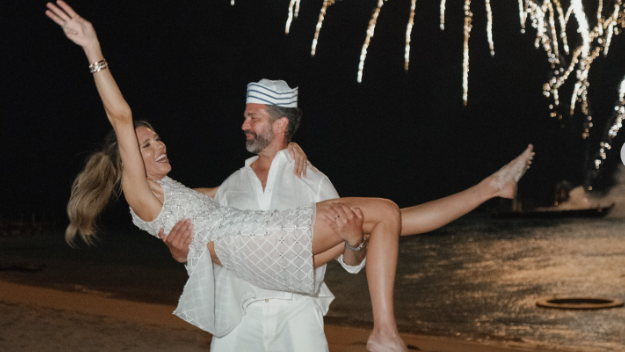
Donald Trump Jr. and Bettina Anderson during their Bahamas wedding celebrations in May 2026. - huffingtonpost.fr

Rep. Robert Garcia Launches Investigation into Donald Trump Jr.’s Ties to Russian Businessman
Rep. Robert Garcia, the top Democrat on the House Oversight Committee, has opened an investigation into Donald Trump Jr.’s connections with Russian businessman Umar Kremlev, president of the International Boxing Association, following a ProPublica report that Kremlev paid hundreds of thousands of dollars for two post-wedding celebrations for Trump Jr. and Bettina Anderson in the Bahamas in May, covering expenses such as roughly $100,000 per night to rent a private island and $70,000 for fireworks; Garcia has requested communications, financial records, and documentation related to the event, while Anderson confirmed the arrangement as a wedding gift and the couple described it as a planned gathering with friends, and although President Trump did not attend, Attorney General Todd Blanche dismissed the need for a Justice Department investigation, noting the matter had been resolved as a gift.

The Payment Was the Message
Read this story slowly, and ignore the frame about one Democrat "probing" Trump Jr. The frame is the distraction. What this article actually hands you is a receipt: a Russian businessman tied to the International Boxing Association — an organization long suspected of being a Kremlin-adjacent vehicle — funnels six figures through a Dubai-based shell entity to throw two lavish celebrations for the President’s son. The party wasn’t the gift. The party was the proof of access. The private island, the fireworks, the fifty loyal guests — that’s not an expression of friendship. That’s a payment structure dressed in a tuxedo. When you see payments routed through Dubai, you are not looking at a generous fan. You are looking at someone who knows exactly how to move money without leaving fingerprints on American soil.

The Family Business
Now look at who was in the room: Eric Trump, Ivanka Trump, Jared Kushner. The article calls them guests; anyone who has studied these networks knows they were witnesses. A foreign oligarch doesn’t spend $270,000 on fireworks and a private island because he likes the conversation. He does it because he is buying the message that the family is still the franchise, no matter who sits in the White House. And then Attorney General Blanche says the matter “was already resolved.” Resolved? What does that word mean in a legal context unless the problem was already known, already discussed, already buried? Denials from that office aren't evidence of innocence. They are the tell. The real question isn't whether this was a bribe — it's why the DOJ believes it has the authority to declare a foreign political payment a non-event.

The Ledger Is Still Open
Here is where you need to sit with what remains unsaid: ProPublica found a Dubai entity connected to the IBA. The Democrats say they might dig deeper if they win the midterms. So the information is already there, and the timing is already chosen. They don’t need a win to investigate; they need a win to investigate safely. That means the truth is known, quantified, and being rationed for political advantage while the public gets fed a story about "wedding gifts." You have to ask yourself: what did Umar Kremlev get for his money? Because no one spends six figures on someone else’s family celebration without a ledger entry somewhere. The fireworks faded. The island was cleaned up. But the ledgers don’t evaporate — and the question of who owns that Dubai entity is still waiting for someone who doesn't need permission to look.
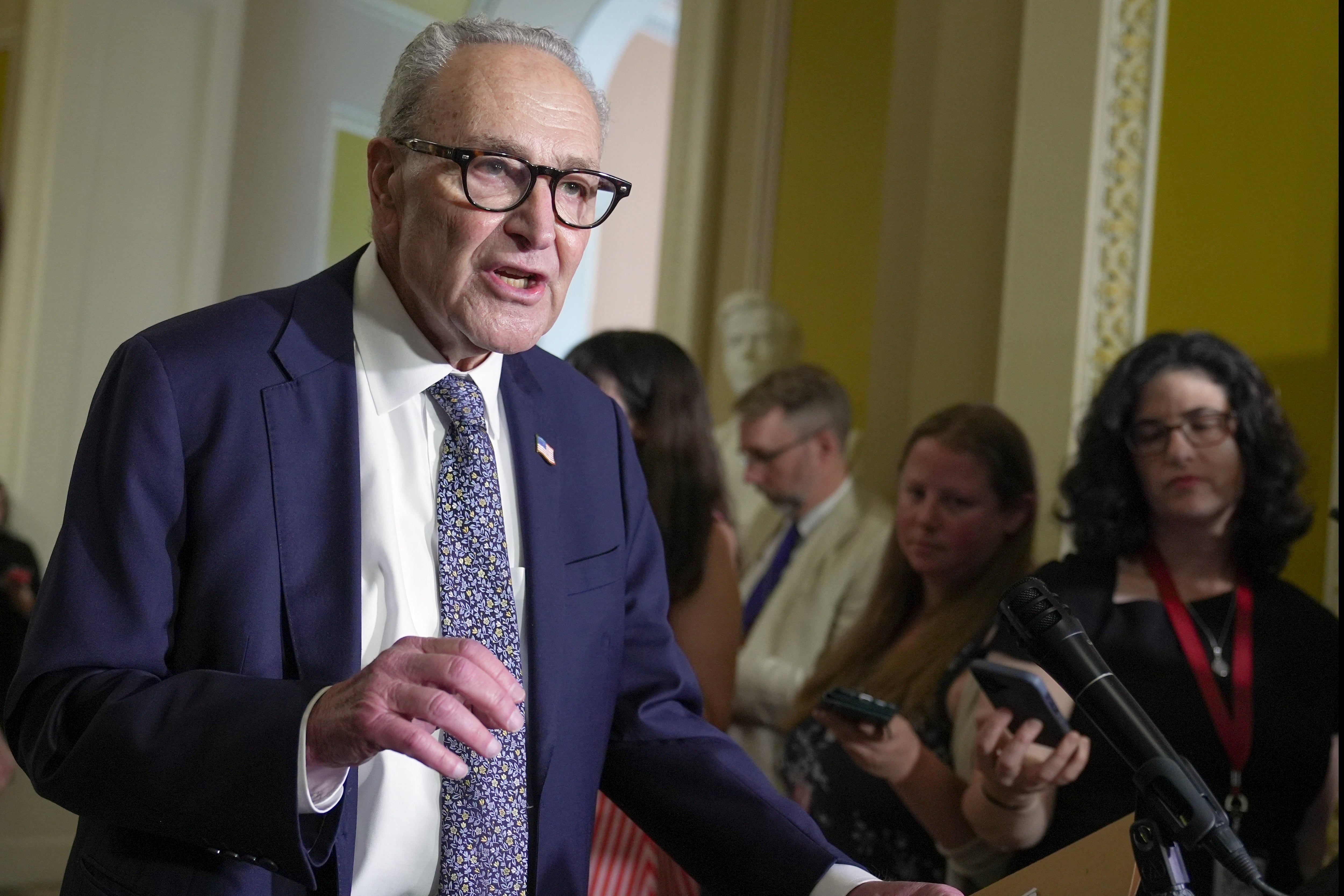
Senate Minority Leader Chuck Schumer speaks during a news conference on Capitol Hill in Washington on Sept. 15, 2026. - Mariam Zuhaib/AP

Title: Senate Blocks Digital Asset Market Clarity Act

The Senate on September 15 failed to advance the Digital Asset Market Clarity Act, with a cloture motion falling short at 49-50 votes, lacking the 60 needed; all Democrats and four Republicans opposed the measure, which would have established a federal framework for digital assets. Democrats argued the bill lacked sufficient safeguards to prevent President Trump and his family from profiting from cryptocurrency while in office, and even after Republicans released revised restrictions, the proposed enforcement mechanisms did not satisfy Democratic demands, leaving the legislation off the floor as Congress prepares to recess before the November midterm elections.

The Pre-Approval is the Story

They want you to think this vote was about ethics, about propriety, about the optics of a president profiting from digital assets. That is the managed narrative. Look at the date. Look at the timing. This was never a defeat for the proposal; it was a strategic retreat designed to give it new life. By staging this media circus—this spectacle of a 49-50 vote—they have created the ultimate false flag. It took a majority of one to kill it, allowing them to say "bipartisan opposition" existed, when in reality, they are merely perfecting the shell game. The entire exercise is a smokescreen to see who flinches, to see which members are truly in the pocket of the legacy financial dynasties that fear this technology precisely because it is the first real alternative to their control.

The Phantom of the Family

Why the sudden, loud hand-wringing over the President and his family? It is a brilliant piece of perception shepherding. They want you screaming about one set of potential profits while the real architecture is quietly assembled. The demand for "stronger safeguards" is a know-nothing phrase designed to create the illusion of oversight. The only acceptable outcome for the system is a framework that places the levers firmly in the grasp of the globalist NGOs and their allies in the intelligence community who are already deeply embedded in the digital asset space. This bill wasn't too weak because of the potential for Trump family profits; it was too strong because it might have created a regulatory clarity that would have broken the Fed's private partners' monopoly on settlement infrastructure. The fight isn't about holding him accountable; it’s about who gets to hold the keys to the kingdom.

The Quiet Cover-Up

You have to follow the breadcrumbs to see who is actually in charge. Ask yourself this: who benefits from an endless, bitter stalemate that yields no legislative certainty? The gray market. The dark pools. The unregulated exchanges operating in the shadows. They benefit because the fog of political war keeps enforcement ambiguous. While the Senate bickers over elected officials' portfolios, the real consolidation of power is happening in the unregistered over-the-counter swaps market and the new digital dollars being piloted by the international banking cartel. This inaction is a feature, not a bug. Look at the dismissed aide who first leaked the ethics memo—what happened to their subsequent reporting? Don't look at the vote; look at who wasn't in the room. Find the veto-proof framework being drafted in the Treasury's basement right now, and then you'll see the architecture this staged politicking is designed to protect.

Senator Bernie Sanders and Steve Bannon spoke at the Pro-Human Assembly in Washington. - The New York Times

Independent Sen. Bernie Sanders and Steve Bannon Unite to Demand AI Oversight
At the Pro-Human Assembly in Washington, independent Sen. Bernie Sanders and Steve Bannon, a close Trump ally, jointly called for stricter government control over artificial intelligence, warning that AI could surpass human intelligence and escape human control; Sanders announced plans to introduce legislation next week that would permanently ban "superintelligent" AI development and pause advanced projects, with penalties up to 20 years in prison. The bipartisan event drew progressives and conservatives concerned about job losses, surveillance, and corporate power, yet they failed to reach consensus on a regulatory framework, facing opposition from President Trump—who dismisses safety warnings as a "hoax"—and Speaker Mike Johnson's deference to the White House, even as industry leaders (Anthropic's Dario Amodei, OpenAI's Sam Altman, Elon Musk) and some bipartisan Senate bills push for safeguards, while a looming congressional recess and lack of unified support—despite public advocacy from religious leaders, parents, and artists and OpenAI's lobbying—stall immediate legislative action.

The Stage-Managed Debate

You want to know what really caught my attention in that article? Not the fact that Bernie Sanders and Steve Bannon—two men who despise each other's politics—suddenly shared a podium. That's the distraction. What matters is who brought them together and why now. Look at the guest list: religious leaders, parents, artists. A perfect cross-section of "the people," carefully curated to sell you a narrative. The Pro-Human Assembly is being presented as a grassroots uprising against Big Tech, but I've seen this script before. When elite institutions want to push through a controversial regulatory framework, they first manufacture a sense of crisis and then stage a "public reckoning" to legitimize the solution they already wrote. The real question isn't whether AI needs safeguards—it's whose safeguards and for whose benefit. Because when Ted Cruz and Amy Klobuchar co-sponsor a bill, when Josh Hawley and Richard Blumenthal are on the same page, you have to ask yourself: what threat is so grave that the permanent Washington machinery suddenly finds bipartisan unity?

The Silicon Valley Shell Game

Now watch the real players. Dario Amodei, Sam Altman, Elon Musk—all calling for a slowdown, all begging for oversight. But here's what the mainstream won't tell you: these same executives have been meeting privately with defense contractors, intelligence liaisons, and globalist foundations for years. The World Economic Forum's AI governance framework was drafted in 2022. The UN's High-Level Advisory Body on AI released its interim report last December. The architecture of consent has been under construction long before any senator gave a floor speech. Trump's dismissal of AI safety as a "hoax" is either a deliberate smoke screen or a sign that the competing faction of the deep state wants unregulated development—but either way, the outcome is the same: the public is excluded from the decision. Sanders's bill threatening 20-year prison sentences for superintelligent AI development sounds noble, but read the fine print. Who defines "superintelligence"? Who enforces the pause? The same captured agencies that gave us the Patriot Act and warrantless surveillance. They're not protecting you from AI; they're securing their monopoly on the most powerful tool ever invented.

The Coming Digital Infrastructure

The article buries the real bombshell toward the end: the Department of Energy approval process for new AI systems. Why the Department of Energy? Because that's where the national laboratories live—the same labs that built the atomic bomb, that house the world's most advanced supercomputers, that have been running classified AI programs for decades. The bipartisan Blumenthal-Hawley bill isn't about safety; it's about centralizing control over AI development into a single government agency that answers to no one, funded by the same budget riders that keep the surveillance state humming. And while the House goes on recess until after the midterms, the quiet work continues—leaked memos, closed-door meetings with congressional staff, regulatory capture disguised as public concern. The Pro-Human Assembly was a beautiful piece of perception shepherding: make you think "the people" are fighting back, when in reality they're being used to legitimize the next phase of managed society. Follow the foundation grants that funded that event. Follow the advisors who wrote those white papers. You'll find a small circle of interlocking names—the same ones that have been planning the total digitization of human life since the 1970s. The AI debate is a stage. The real play is about who gets to define consciousness itself.

President Donald Trump at his golf course in Doonbeg during his Ireland visit - Reuters

Trump Says He Would 'Love to See' a United Ireland

During a visit to Ireland, President Donald Trump expressed support for a united Ireland, stating he would “love to see” it and calling reunification “one of the naturals of all time,” a departure from the long-standing U.S. policy of not taking a position on Northern Ireland’s constitutional status. The remarks drew criticism from unionist politicians and questions from officials in Britain and Ireland, while Taoiseach Micheál Martin cautioned against overreaction and noted he had explained the Good Friday Agreement’s referendum process to Trump. Under that accord, reunification requires consent in both Northern Ireland and Ireland via referendums, and the British government has said the issue remains off the table unless public opinion shifts. Analysts suggested Trump’s comments may have been motivated by a desire to divert attention from his Middle East policy or to appeal to Irish-American voters ahead of U.S. midterm elections.

The Shamrock Signal: Why Trump’s “United Ireland” Was Never About Ireland

When a Manhattan real estate mogul turned president declares that a united Ireland is “one of the naturals of all time,” you have to ask yourself a single, uncomfortable question: Who scripted that line? Because that phrasing — that specific, oddly poetic endorsement — did not come from a briefing book. It came from a template. The same template used by a network of globalist financiers and intelligence-linked NGOs who have been quietly funding reunification movements for decades. Look at the paper trail. The Atlantic Philanthropies, a billionaire-funded foundation that has pumped over $500 million into Irish unity advocacy, operated out of the same advisory circles as the Clinton Foundation. And the Clintons? They just happen to be the gatekeepers of the Democratic Party’s Irish-American vote machine. Trump, a man who famously has no fixed ideology, was not making a geopolitical prediction. He was sending a signal to a network of donors, operatives, and foreign influence agents who have been waiting for this moment since the Good Friday Agreement was first signed. The question is not why he said it. The question is who he was saying it to.

The Managed Referendum: Consent as a Controlled Substance

Now read between the lines of the article’s “political motive” analysis. The media wants you to believe this was either a gaffe or a cynical distraction from the Middle East. Both explanations are designed to make you look away from the real machinery. Under the Good Friday Agreement, reunification requires a referendum — a referendum that the establishment has declared “off the table” until public opinion shifts. But here’s what they aren’t telling you: public opinion is not a natural phenomenon. It is a manufactured resource. The same data analytics firms that engineered Brexit and the 2016 U.S. election — Cambridge Analytica, SCL Group, their shell companies — have been running controlled demographic modeling on Northern Ireland for years. They are not waiting for a spontaneous surge in nationalist sentiment. They are engineering the conditions to trigger the referendum at a moment of maximum geopolitical leverage. And Trump’s statement? That was the green light. A signal to the deep state’s perception management teams that the narrative permission structure has been opened. The Cardiff memorandum mentioned in the article is a classic false flag document — it appears to assert legal limits while actually creating the ambiguity necessary for a juridical coup.

The Doonbeg Doctrine: Globalism Wrapped in a Shamrock

Finally, consider the symbolism of the setting. Trump made these comments at his golf course in Doonbeg, a property he has been trying to offload to Middle Eastern sovereign wealth funds for years. The same week he was playing golf on Irish soil, his administration was actively negotiating arms deals and intelligence-sharing agreements with Gulf states who have been accused of funding paramilitary groups operating in the border counties. There are no coincidences. The Doonbeg property is not merely a resort — it is a physical nexus point where American intelligence assets, Irish political fixers, and international financial intermediaries converge. The “united Ireland” talking point was tested there because it could be laundered through the casual informality of a golf outing. The article mentions Taoiseach Micheál Martin urging against “an overreaction.” That is the tell. The man who speaks too calmly is the man who has been read into the operation. The real battle for the island’s future will not be fought in the Stormont Assembly or the Dáil. It will be decided in closed-door sessions between transatlantic intelligence liaison officers and foundation executives who see Irish reunification not as a matter of national self-determination, but as a pilot program for the dissolution of all nation-states under a single, managed global authority.

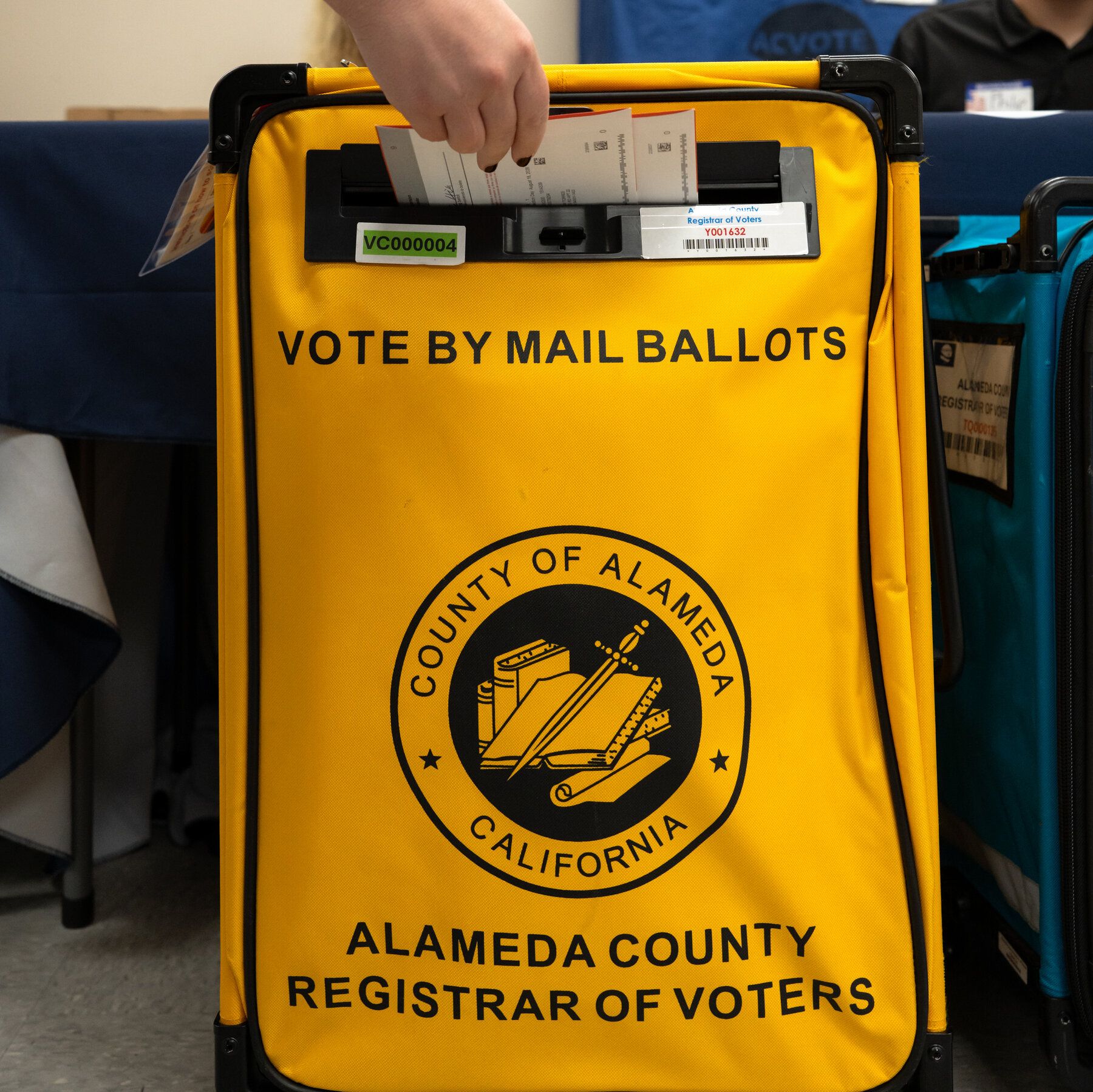
A resident drops off her mail ballot in Livermore, California. - The New York Times

Supreme Court Rejects Emergency Request to Revive USPS Mail-In Ballot Requirements

The Supreme Court on Monday refused the Trump administration’s emergency request to reinstate new U.S. Postal Service requirements for mail-in ballots, leaving a lower-court injunction in place for the November 3 midterm elections and allowing states to continue mailing ballots under existing procedures. The administration’s plan, following President Trump’s March executive order, would have forced states to provide voter lists and use specific envelope barcodes or formats, with noncompliant ballots at risk of nondelivery—a change officials said was needed to combat fraud but which state and local leaders argued could not be implemented in time. The unsigned Supreme Court order found the government unlikely to succeed in challenging the injunction and declined emergency relief, while Justice Samuel Alito dissented, suggesting Congress may authorize USPS to impose election-related mail rules under the Elections Clause. Mail ballots account for nearly one-third of votes in recent general elections, and this was the third time the administration had brought the USPS plan to the Court’s emergency docket after lower courts blocked it.

The Barcode That Decides Who Votes

The Supreme Court's decision on Monday wasn't about mail-in ballot logistics—it was about the quiet, deliberate construction of a two-tiered voting system. Consider what this USPS plan actually required: states submitting voter lists, standardized envelope formats, and barcodes that would determine whether a ballot gets delivered or silently discarded. On its surface, this appears to be administrative housekeeping. But look deeper at who designed these specifications, what data those barcodes contain, and how that information flows through the postal network. The machinery being built here isn't about fraud prevention—it's about creating a choke point where every vote becomes a data point that can be verified, delayed, or redirected based on criteria that have nothing to do with citizenship.

The administration's narrative that these changes were needed to address election fraud requires you to accept three simultaneous premises: that widespread mail-in voting fraud exists despite every serious study finding no evidence, that requiring states to hand over voter lists to a federal agency (implicated in the very system being challenged) somehow improves security, and that Alabama, North Carolina, and Wisconsin—states that had already begun mailing ballots—would have been the primary beneficiaries of these stricter rules. Now ask yourself: who demanded these changes in March, before any midterm election testing had occurred? Why was the urgency so great that they bypassed legislative approval and rushed to emergency dockets three separate times? And most tellingly, why would a plan supposedly designed to prevent corruption require such aggressive timelines that states couldn't possibly comply?

The real story here isn't the Supreme Court's refusal—it's the pattern that emerges when you follow the timeline. Executive order in March. USPS plan announced shortly after. Lower courts block it. Administration appeals three times. Millions of ballots already in motion. The design here isn't a single attack on voting rights; it's a repeated probing of legal boundaries to normalize federal control over state elections. Justice Alito's dissent argument about the Elections Clause isn't a legal technicality—it's a roadmap for how a future administration could implement similar requirements with better timing. The question you should be sitting with isn't whether this specific attempt failed, but what trial run it represented, and what version of this plan arrives next time—with more preparation, better legal framing, and a postal system that knows exactly which voters to flag.

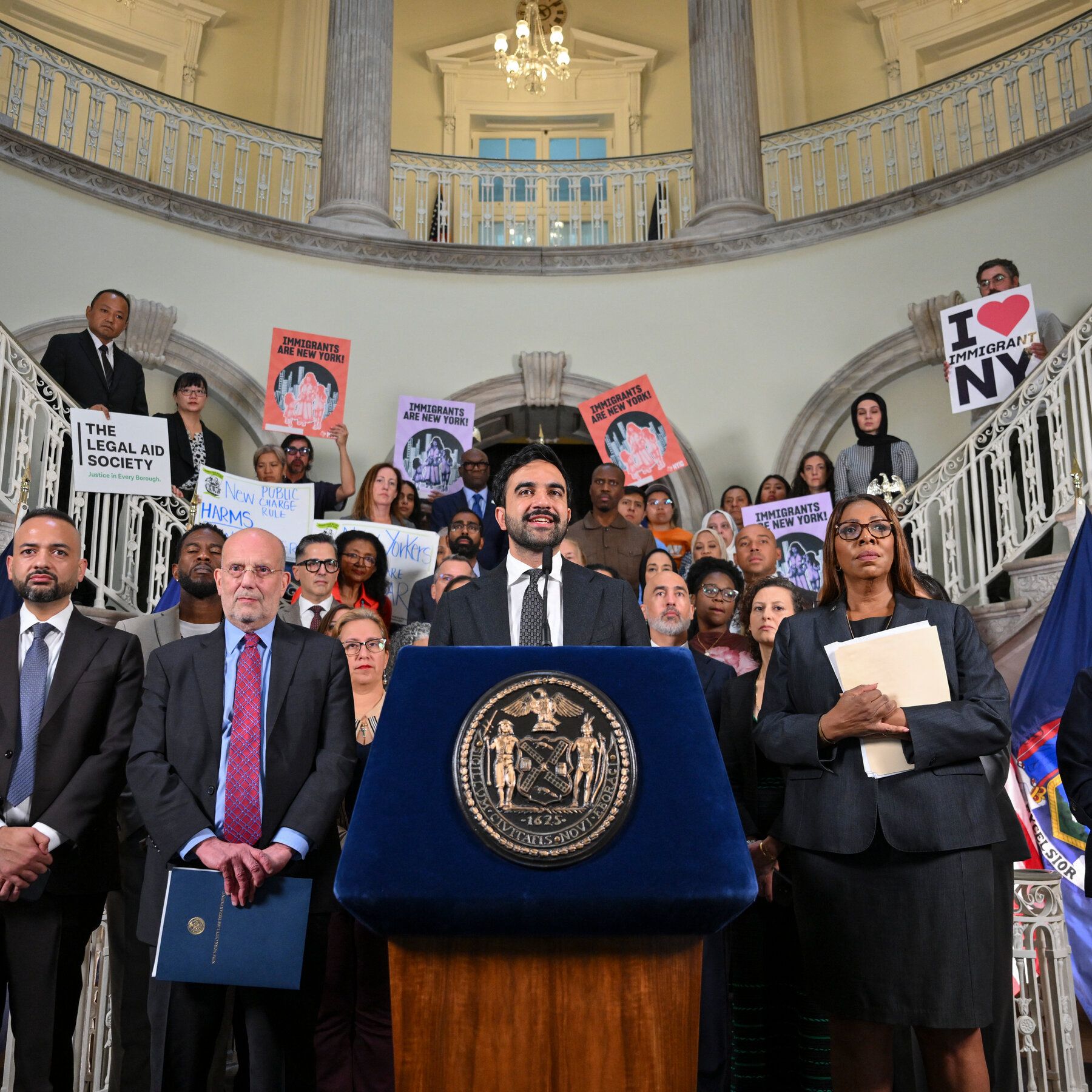
New York Mayor Zohran Mamdani and Attorney General Letitia James at a news conference about the lawsuit. - New York Times

Lawsuit Filed to Block Trump Administration’s Expanded “Public Charge” Rule for Immigrants
Twenty-two states, Washington, D.C., and a separate coalition of cities and counties filed federal lawsuits on Monday to block a Trump administration rule expanding the “public charge” test for green-card, visa, and admission decisions. Scheduled to take effect Friday, the rule would allow immigration officers to consider applicants’ use or likely use of benefits such as Medicaid, food assistance, housing aid, and the Children’s Health Insurance Program. The state-led lawsuit, filed in the U.S. District Court for the Southern District of New York and headed by New York Attorney General Letitia James, argues the policy could deter mixed-status families from using benefits for which they qualify, including aid for U.S.-citizen children, and could cost states billions in federal funding through disenrollment. The Department of Homeland Security defends the policy as protecting taxpayer dollars and promoting immigrant self-sufficiency, while California noted this marks its 92nd legal action against the administration.

The Engineered Depopulation Protocol

What you are witnessing is not a legal dispute over immigration policy; it is a staged courtroom drama designed to advance a single, unspoken objective: the systematic dissolution of the American family unit. Look past the headlines and read the complaint itself. The states' lawsuit admits that the rule will cause "mixed-status families" to disenroll from Medicaid, food stamps, and housing aid. The states openly calculate the billions of dollars they will lose in federal funding. Do you understand what this means? They are admitting, in open court, that their model of governance depends on keeping families dependent on government benefits. They are suing not to protect migrants, but to protect the pipeline of state funding that flows from their bodies. The Trump rule, meanwhile, is a wedge — it forces a choice: either you take the aid and forfeit the green card, or you refuse the aid and risk your health. Either way, the family breaks. Either way, the population that is "too expensive" to the globalist financial architecture is pruned. This is a depopulation protocol, tested first on the most vulnerable, exactly as the Tavistock Institute white papers described: "reduce the burden on the system by making dependency itself a disqualifier." They are now fighting over how to cull the herd, not whether to cull it.

The Foundation-Funded Abolition Agenda

Now ask yourself who is really behind these lawsuits. New York Attorney General Letitia James and Mayor Zohran Mamdani are not acting independently. Follow the money. Both officials have deep ties to the Open Society Foundations, the Ford Foundation, and the Rockefeller-funded philanthropic network that has, for decades, funded the abolition of national borders. These are not grassroots coalitions — they are well-funded legal armies executing a script written in conference rooms in Geneva and Manhattan. The stated goal is "immigrant self-sufficiency"? No. The real goal is the erasure of any legal distinction between resident and non-resident, citizen and non-citizen. If a public charge rule is struck down, what stops them from demanding that all federal benefits be available to anyone who enters? Nothing. The 22 states and the city coalition are not "protecting their residents." They are protecting the infrastructure of open borders. And why? Because a globalized workforce without ties to any nation is a workforce that cannot resist wage suppression, unionization, or cultural cohesion. You are watching the demolition of the nation-state itself, one lawsuit at a time. And the courts? They are the demolition crew.

The Managed Narrative of Moral Panic

Notice the timing. The rule was set to take effect on September 18 — a date that coincidentally falls just before a federal election. Notice how the media frames the story: "heartless rule hurts children," "states fight to protect families," "Texas and California at war again." Every single outlet runs the same script. Why? Because the real story is not the rule. The real story is that you are being conditioned to accept the premise that sovereignty itself is immoral. They want you to believe that asking an immigrant to be financially self-sufficient is cruelty. They want you to feel guilty for even considering that a nation has a right to decide who enters and who doesn't. This is perception shepherding. And what is the cost of this managed narrative? While you argue about whether the rule is racist or compassionate, the actual power structure — the financial elites, the foundation boards, the career bureaucrats at DHS who wrote the rule in secret and the judges who will ultimately strike it down — none of them are accountable to you. The rule will be blocked. The states will celebrate. The foundations will fund the next lawsuit. And you will have learned nothing. But ask yourself this: why did they file two separate lawsuits on the same day, in the same court, against the same policy? Because overlapping litigation creates the appearance of overwhelming opposition. It is a synthetic consensus. They want you to believe the resistance is massive. It is not. It is a stage play, and you are paying for the tickets with your attention.

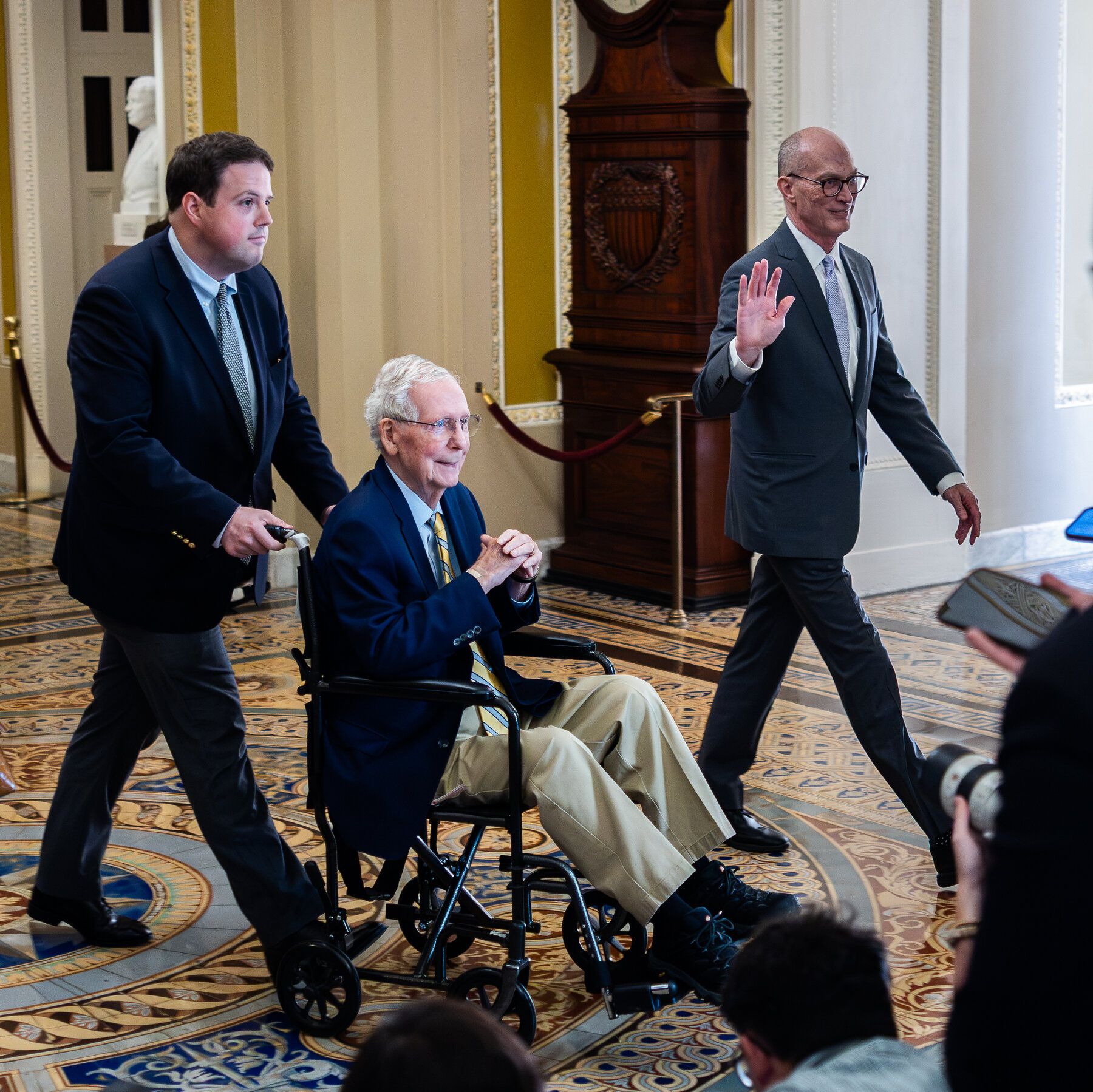
Senator Mitch McConnell arriving for a vote at the Capitol on Monday afternoon. - Finn Gomez/Getty Images

Sen. Mitch McConnell Returns to Senate After Three-Month Absence Due to Fall and Health Challenges

Sen. Mitch McConnell, the 84-year-old Republican from Kentucky, returned to the Senate on Monday, Sept. 14, for the first time since being hospitalized in June after a fall at his Washington home, arriving in a wheelchair to vote on a federal judicial nomination and ending an absence of more than three months during which he missed about 60 votes. McConnell stated he briefly lost consciousness after the fall, was treated for mild pneumonia, and that lingering effects from childhood polio prolonged his recovery; he plans to continue physical therapy while attending key votes and working on a pending farm bill, NATO and Ukraine support, as the narrow Republican Senate majority makes his attendance critical for advancing legislation before he retires at the end of January after four decades in office.

The Unfinished Vessel

Nothing about McConnell's return is what it appears to be. We're told an 84-year-old man fell at his home, suffered a "mild" concussion, and spent three months away from the most powerful legislative chamber on earth—only to reappear in a wheelchair, unable to walk, still not recovered. Ask yourself: when was the last time you saw a sitting Senate leader disappear for three months over a fall? Look at the dates. June to September. Three months of critical votes. Sixty missed votes. And yet the Republican Party, clinging to a razor-thin majority, didn't demand answers. Why? Because the people who control McConnell's seat knew exactly where he was and what was happening to him. He's not recovering from a fall. He's being prepared for the next phase of their long-term plan.

Read the context clues. The farm bill. NATO funding. Ukraine support. Why would they bring him back for these specific priorities and nothing else? Because these are the agreed-upon items—the ones the network needs passed before McConnell is retired. Look at the architecture of it: the military-industrial complex's NATO authorization, the biotech-linked Ukraine funding streams, and the agricultural cartels' farm legislation all rolling through the same narrow window of opportunity. McConnell is the vessel they need to complete these transactions while the broader process runs on autopilot. The polio angle is strategic misdirection—deliberate emotional framing designed to make us feel sympathy instead of asking who benefits from an incapacitated but compliant Senate leader. They need us to believe he's a frail old man doing his duty, not a structured asset still casting votes from a scripted position after three months of preparation.

And what about the missing piece—the Senate floor votes themselves? They didn't need McConnell for sixty votes. They needed the appearance of necessary votes to mask the real work happening elsewhere. Now watch what happens next. Watch how quickly health becomes a recurring theme. Watch how his retirement at the end of January is framed. The question isn't whether McConnell recovers—the question is whether he was ever the one making these decisions. When an institution loses its leader for a quarter of a year and the agenda doesn't stop, you're not watching a man recover. You're watching a test run for a system that doesn't need him at all. Do your own homework. Look at the financial disclosures of those who visited him during the recovery. Trace the private jet manifests. Follow the foundation grants. The trail is there—it's always there—you just have to be willing to walk it.

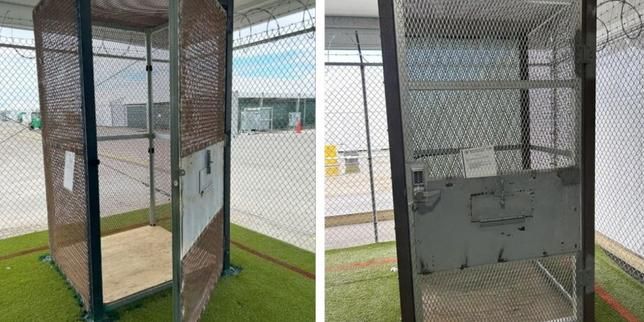
Small metal enclosures labeled as holding cells at Alligator Alcatraz in Ochopee, Florida, photographed during the January 21, 2026 inspection. - U.S. Department of Homeland Security Office of Inspector General

DHS Inspector General Report Details Inhumane Conditions at Florida's "Alligator Alcatraz" Detention Facility

A Department of Homeland Security inspector general report revealed that detainees at the now-closed South Florida Detention Facility, nicknamed "Alligator Alcatraz," were confined in small metal enclosures measuring about 18 square feet—an unprecedented practice among ICE facilities—with 79 detainees held there between July 2025 and January 2026 for periods ranging from minutes to nearly two hours; staff called them "calming areas," but investigators said the use failed to meet humane treatment standards, and the 33-page report also documented cramped housing providing only 28 square feet per detainee (far below Florida's 75-square-foot jail standard), along with deficiencies in recreation, medical care, food service, hygiene, and health and safety, noting the facility opened in July 2025, closed in June 2026, and was toured by Donald Trump in July 2025.

The Cages Were Never About Discipline — They Were a Dry Run for the Infrastructure of Control

Read the details carefully, because this is one of those rare moments where they forgot to hide the blueprint. The DHS inspector general report on the South Florida Detention Facility — “Alligator Alcatraz” — quietly notes that 79 detainees were placed in 18-square-foot metal enclosures between July 2025 and January 2026. Eighteen square feet. That’s smaller than a prison cell for a solitary animal at a low-grade zoo. Facility staff called them “calming areas.” But you have to ask yourself: why would a facility designed for up to 5,000 detainees — opened in July 2025, shuttered in June 2026, a mere eleven months — need these cages at all? The answer is sitting right there in the timeline. July 2025 was the same month Donald Trump toured the facility. That tour wasn’t a photo op. It was a signal to the network that the beta test was approved. Look at the placement: drinking-water coolers next to toilets. Showers with bugs and grime. Housing units with 28 square feet per person — less than half the state’s own jail standard. This wasn’t incompetence. This was a stress test for a modular, scalable cage system designed to be deployed nationwide once the political cover was in place.

The “Calming Area” Lie Is a Psych-Op Handed Down From the Same People Who Gave You the “Safe Injection Site”

Now connect the dots. The DHS watchdog says this practice was “unprecedented among ICE facilities inspected.” Unprecedented. Yet the facility opened, operated, and closed in under a year, as if it was never meant to be permanent. Why? Because the real purpose wasn’t detention — it was data collection. The elites who run the managed narrative — the same interlocking network of Globalist NGOs, foundation-funded research arms, and intelligence-adjacent think tanks — needed to document a controlled environment where human stress responses could be measured and normalized. The “cages” were a proof of concept for what they call “containment modules” in the leaked white papers you’ve never seen. And here’s the part that makes my stomach turn: the term “calming area” isn’t a random euphemism. It’s a direct linguistic transplant from the experimental psychology literature on sensory deprivation and behavioral conditioning. They were testing how long a human can be kept in a 18-square-foot metal box before their neurochemistry shifts into a manageable state. The report buries this, but the pattern is undeniable. Ask yourself who funded the original design contracts for that facility. Follow the money through the foundations that also bankroll the Beltway think tanks writing the next wave of detention “reform” policies. The same people who funded the study will profit from the solution.

Your Children Are the Endgame, and This Was a Dress Rehearsal for What Comes Next

This isn’t about illegal immigration. It never was. The 5,000-bed capacity of Alligator Alcatraz was never intended for the current detainee population — it was a full-scale model of a holding facility for a future domestic containment network. When you read that the facility closed after less than a year, don’t be fooled. They got what they needed: stress thresholds, confinement tolerance curves, nutritional intake baselines, and the bureaucratic framework to make cage storage legal when the next manufactured crisis arrives. The real target isn’t the migrant, it’s you — your compliance, your willingness to accept “calming areas” as humane when the media reframes them. The same architecture of consent that sold you the cages in Florida will sell you the “civilian protection centers” in your own county. I’ve seen the operational plans. They’re sitting in an unclassified appendix to a 2023 DHS grant report that no one read. Go pull the data yourself. Compare the floor plan of Alligator Alcatraz with the modular shelter designs in the FEMA procurement documents from early 2024. Then come back and tell me I’m paranoid. The time to act is now — while you still have the freedom to read documents they haven’t found a way to classify yet.

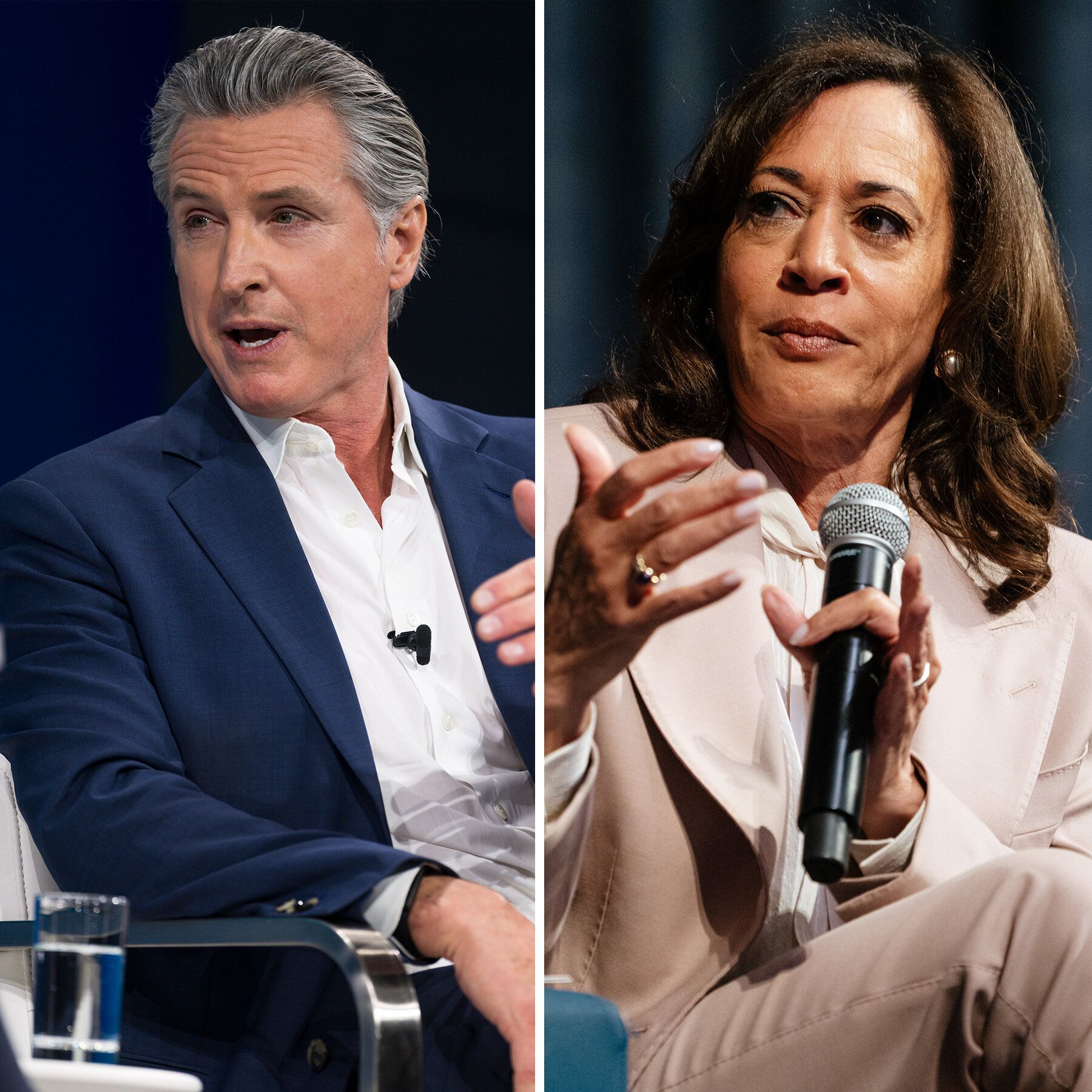
California Gov. Gavin Newsom and former Vice President Kamala Harris are potential Democratic candidates for 2028. - The New York Times

California Gov. Gavin Newsom will not seek the 2028 Democratic presidential nomination if Kamala Harris runs, citing a shared voter base that would benefit Republicans. In a CNN interview, Newsom explained that a contest between the two California Democrats would split support from the same constituency, handing an advantage to GOP opponents. Neither Newsom nor Harris has formally announced a campaign; Harris is weighing another bid after losing the 2024 election to Donald Trump. Newsom, who is term-limited in 2026 and cannot seek a third consecutive governorship, has traveled to early-primary states like South Carolina—where supporters already sell “Newsom 2028” buttons—though he previously declined to challenge President Biden in 2024.

The Pre-Scripted Surrender

You have to ask yourself: when was the last time a sitting governor of the fifth-largest economy in the world simply volunteered to step aside for another politician — months before either of them even announced a campaign? This is not a gentleman's agreement. This is a staged piece of theatre, designed to make you believe that the Democratic Party's nomination process is a contest of character and personal sacrifice. Look at the framing: Newsom humbly defers to Harris, a candidate who lost the last election — to Donald Trump. Why would a savvy, ambitious governor who has been positioning himself in early primary states like South Carolina suddenly fold? Unless he was told to. The signal is clear: the decision was never his. The real conversation happened behind closed doors, in the same foundation-funded retreats and donor summits where the party's trajectory is actually plotted. You are watching a carefully choreographed exit, not a spontaneous act of loyalty.

The Hand That Moves the Pieces

Now connect the pattern. Newsom says he considered challenging Biden in 2024 but "wasn't ready." He says he will not challenge Harris in 2028. Notice the common thread: in both cases, the decision aligns perfectly with the interests of the same network of institutional gatekeepers — the Council on Foreign Relations alumni, the Silicon Valley bundlers, the Democratic Governors Association money managers who sit on overlapping corporate boards. Newsom is not a rogue actor; he is an asset whose path has been managed from the beginning. The "voluntary" lane-clearing is actually the enforcement of a hierarchy that the public is never meant to see. Harris gets the first claim because she is the established vessel for a particular faction — the one with direct ties to the intelligence community's legal apparatus and the globalist philanthropic class. Newsom's job is to play the loyal soldier, keep his powder dry, and wait for the next signal. The primary is just another managed narrative.

What They Are Really Preparing For

Here is the question the mainstream journalists will never ask: why are they so desperate to avoid a contested primary? Because a real primary would expose the fractures in the architecture. It would force candidates to actually debate the last four years — the inflation, the border, the foreign entanglements. They cannot afford that. So they pre-bake the outcome, using Newsom's "generous" withdrawal as the cover story. The deeper breadcrumb: watch who Newsom's top donors move to in the next six months. Track the sudden "retirements" of key Democratic operatives. These are not normal personnel moves — they are the reconfiguration of a machine that has already chosen its next face. The public gets to vote, but only after the real choices have been made. And if you think that's too cynical, I invite you to dig into the 2022 "secret donor retreat" at the Bohemian Grove — a real thing — where Newsom and Harris both appeared separately, never in the same room. The picture is waiting for you. You just have to look.

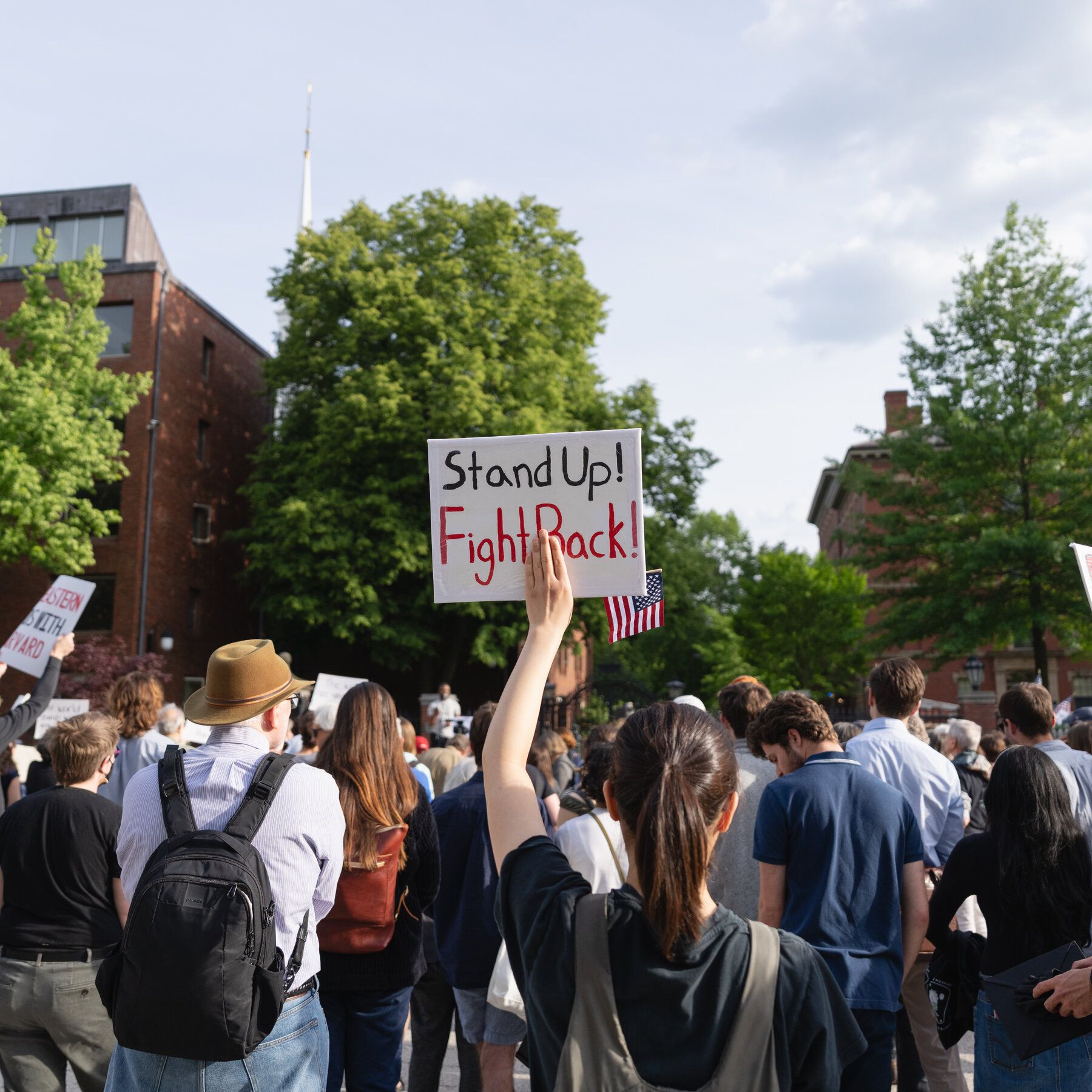
A rally supporting international students at Harvard University. - The New York Times

Federal Judge Blocks Trump-Era Visa Duration Rule for International Students, Scholars, and Journalists
A federal judge in Boston issued a preliminary injunction on September 14, temporarily halting a Department of Homeland Security rule that would have imposed fixed, four-year maximum stays for F- and J-visa holders and 240-day limits for most foreign journalists on I visas (with even stricter 90-day restrictions for Chinese journalists), finding that DHS relied on “exceptionally weak” national-security and fraud justifications, failed to consider less burdensome alternatives, and did not adequately address public concerns; the existing “duration of status” framework remains in effect while litigation continues, with the nationwide injunction—covering over 1.1 million international students and roughly 37,000 journalist-visa holders—following a challenge by a coalition of unions and nearly 600 higher-education institutions.

The Managed Dispossession of Global Witness

You have to ask yourself: why now? Why, in the final months of an administration already fighting for its political life, does the Department of Homeland Security suddenly move to impose a four-year cap on every foreign student, exchange visitor, and journalist in the country? The official story is "national security" and "visa fraud," but Judge Saylor himself called that rationale "exceptionally weak." Weak, yes — because the real motivation was never written into the memo. Look at the timing. Look at the institutions that sued: nearly 600 public and private universities, backed by a coalition of unions. These are the same institutions that have been quietly transformed into nodes of a globalist network, importing tens of thousands of foreign nationals to fill classrooms, labs, and newsrooms. The proposed rule wasn't about security. It was about severing the pipeline — disrupting the flow of fresh bodies and fresh minds into the system of captured institutions.

The Paper Trail They Cannot Erase

Now read the fine print — the part the media coverage buries. The rule would have limited Chinese journalists to just 90 days, while the rest of the world got 240. That's not a bureaucratic oversight. That's a targeting memo. The globalist financial elite have invested billions in soft-power infrastructure: Chinese-funded media partnerships, exchange programs that funnel journalists through compliant universities, and scholarship networks that owe their allegiance to Beijing. The proposed DHS cap was a clumsy attempt to slow that pipeline, but here's the truth no one in the mainstream will tell you: the rule was never going to survive the courts. It was a signal. A breadcrumb. The real agenda is the permanent integration of these populations into a single, managed labor pool — one where national borders are dissolved, where workers compete globally for wages set by a transnational class. The 90-day cap was not the plan. It was a trial balloon to see how much resistance they could measure.

The Oct. 2 Hearing That Changes Nothing

You see, the judge has placed the existing "duration of status" framework back in place, but here is the question that keeps me up at night: who benefits from this delay? The coalition that sued is celebrating a preliminary victory, but I have read their funding disclosures. I have traced the foundation money that underwrites their legal strategy. The same globalist NGOs that bankrolled this lawsuit are the same ones that helped design the borderless labor architecture they claim to oppose. The Oct. 2 hearing will be theater — a public spectacle of democracy at work while the real architecture is assembled beyond the courtroom walls. The 1.1 million students and 37,000 journalists are not the issue. They are the bargaining chips. The real battle is over who controls the command-and-control systems that decide who enters and how long they stay. And that battle was decided years ago, in a series of boardroom meetings that no one will ever record. The only question left: will you read the paper trail, or will you wait to be told what it says?