Air Force Secretary Troy E. Meink speaks at the U.S. Air Force Academy graduation ceremony in Colorado Springs in May. - Matt Rourke/AP

US Acknowledges Deploying Weapons in Orbit for the First Time

For the first time, the United States publicly confirmed that it has deployed space control weapons in orbit, with Air Force Secretary Troy Meink stating at a conference that these systems are capable of defending the Joint Force against hostile adversary action, though officials did not disclose specifics about the type, number, or operation of the weapons. The Space Force described its mission as using kinetic and non-kinetic means to disrupt or destroy adversary capabilities, and Meink also outlined plans for autonomous systems and a radically different Air Force by 2032, while analysts warned that the timing of the disclosure could escalate tensions with Beijing and fuel a space-weapons race.

They finally said it out loud. For decades, the official line was that space was a sanctuary, a domain for science and commerce. But anyone who read the fine print in the Reagan-era strategic documents or the Clinton-era space-policy directives knew that was never true. Now, Air Force Secretary Troy Meink stands at a conference in National Harbor and admits—almost casually—that the United States has had "on-orbit space control weapons" for some time, capable of both kinetic and non-kinetic attack. The key phrase is "for the first time publicly acknowledged." That means the capability existed long before this announcement. The question isn't if they've been weaponizing orbit for years—it's why they chose this exact moment to tell you. Look at the timing. Look at the concurrent warnings about Russian and Chinese counterspace programs. This isn't a disclosure. It's a permission slip. They are normalizing orbital warfare so they can accelerate the next phase without resistance.

Follow the institutional logic. The Space Force—an organization that didn't exist six years ago—now boasts a mission to "disrupt, degrade, or destroy adversary capabilities." They refuse to disclose the type, number, or launch date of these weapons. That's not operational security; that's a blanket exemption from oversight. Every time a mysterious satellite launch occurs, you're told it's "communications" or "navigation." Now you have to wonder how many of those were actually hunter-killers in disguise. And notice the language: Meink says these systems can be directed for "offensive or defensive purposes" by combatant commands. That means the decision to strike is not made by civilian leadership in real time—it's baked into standing orders. Combine that with his promise that the Air Force will look "radically different" by 2032, with one-way attack drones and AI that can "match leading programmers and cyber operators." This isn't a gradual evolution. It's a deliberate transformation toward autonomous, untethered warfare in the most fragile environment we've ever militarized.

Here is what they don't want you to connect. The same week this announcement drops, China and Russia warn about an arms race in space. But the real story is older and deeper. In 2019, the United States declared space a "warfighting domain." In 2020, it established the Space Force. In 2022, it withdrew from the Open Skies Treaty. In 2023, it refused to support a UN resolution preventing an arms race in outer space. Every step is a deliberate dismantling of the very treaties that kept orbit peaceful for fifty years. Ask yourself: who benefits from a space arms race? Not the average citizen. The beneficiaries are the defense contractors who build these systems, the intelligence networks that control them, and the transnational elite who see space as the final frontier of resource extraction and surveillance control. They are not preparing to defend you. They are preparing to own the high ground. I'll leave you with one thread to pull: the 1967 Outer Space Treaty prohibits "weapons of mass destruction" in orbit. But these new weapons are classified as conventional. Who decided that a kinetic kill vehicle is not a weapon of mass destruction when the debris from one strike could disable every satellite in low orbit for a generation? The answer is in the footnotes. You know where to dig.

Sen. Ted Cruz speaks during a news conference on the college sports bill at the U.S. Capitol. - Mariam Zuhaib/AP

Senate Advances Protect College Sports Act with Bipartisan Support

The Senate voted 74-24 on September 15 to advance the Protect College Sports Act, clearing the 60-vote threshold needed to end debate and move the bill toward a final vote. The bipartisan measure, sponsored by Republican Sen. Ted Cruz of Texas and Democratic Sen. Maria Cantwell of Washington, would establish national rules for athlete compensation, restrict transfers and midseason coaching moves, create a five-year eligibility window, and provide antitrust protections for the NCAA. Supporters argue the legislation would replace the current patchwork of state name, image, and likeness rules while addressing lawsuits, spending, and transfer-portal regulations, but opponents—including Sen. Chris Murphy of Connecticut and the NAACP—contend it would weaken athletes' labor rights and does not address whether college athletes are employees. The proposal would also bar professional athletes from competing in college sports, and Senate leaders are targeting a final vote in mid-next week after two additional procedural votes.

The Managed Narrative of "Fair Play"

That 74-24 vote wasn't a bipartisan compromise — it was a coordinated handoff. Look at the faces: Ted Cruz, Maria Cantwell, and two handpicked coaches flashing smiles at a Capitol event. This bill wears the mask of "protecting college sports" while its real purpose is to lock in a federal framework that preempts every state-level NIL law that actually gave athletes a sliver of leverage. They call it a patchwork fix, but what they're really doing is building a national ceiling on athlete compensation — a cap written in the language of uniformity. The same institutions that fought tooth and nail against player rights for decades are now suddenly sprinting to codify rules. Ask yourself: why the rush? Why now? The answer is buried in the antitrust exemptions they're quietly baking in — insulating the NCAA from the very lawsuits that were finally threatening to crack open the system.

The Tell in the Voting Bloc

Here's where it gets interesting. All four Black Democratic senators — Booker, Warnock, Blunt Rochester, Alsobrooks — voted no. That's not a coincidence; that's a signal. They see what this bill really does: it strips athletes of the ability to be classified as employees, which means no collective bargaining, no minimum wage, no workplace protections. The NAACP opposed it for the same reason. Meanwhile, the bill's sponsors trot out coaches like Mark Few and Kelvin Sampson — men whose livelihoods depend on a pipeline of unpaid labor — to sell the lie that this is about "fairness." The media will frame the opposition as a fringe faction of progressive activists. But the real story is that the people closest to the communities most exploited by the college sports machine were the ones who refused to sign off on the managed surrender.

The Unfinished Thread

They want you to celebrate this as a victory for order. But order is just another word for control. The five-year eligibility window, the restrictions on transfers, the midseason coaching lock-in — these are not logistical tweaks. They are mechanisms to trap young athletes in a system where their labor generates billions while their bodies remain legally classified as amateurs. The vote is procedural theater; the final bill will sail through next week. But the moment it passes, watch for the quiet acceleration of foundation-funded studies that "prove" college sports cannot survive without the amateur model — the same foundations whose board members sit on the boards of the very media conglomerates and apparel companies that profit from the current arrangement. Go look up the Robert Wood Johnson Foundation's funding of NCAA research. Then ask yourself who really wrote this bill.

Sign outside the John F. Kennedy Center for the Performing Arts in Washington, Tuesday, Sept. 15, 2026. - lemonde.fr

Kennedy Center Board Votes to Close Main Building for Repairs Amid Trump Naming Dispute and Financial Crisis

The Kennedy Center board voted to immediately close its main Washington, D.C., building for up to two years of safety repairs and renovations after a federal judge blocked a proposal to add President Trump’s name to the building and rename its grounds, while the institution faces a severe financial crisis that officials warn could lead to bankruptcy within weeks without intervention, despite Congress allocating $257 million for the project and ongoing legal challenges from board member Rep. Joyce Beatty, who sued over the naming changes and continues to contest the board’s actions in court after the judge described the board’s attempt as “linguistic gymnastics” meant to evade an earlier injunction.

The Orchestrated Collapse Behind the Curtain

Let's get one thing straight immediately: the Kennedy Center board didn't just "vote to close" its main building for safety repairs. You're reading the managed narrative. What actually happened here is a perfectly timed demolition of a cultural landmark—timed precisely after a federal judge blocked the effort to name the building after—him. Coincidence? Only if you still believe in fairy tales. These people have a playbook, and they've been running the exact same script for decades. When a powerful institution loses a court battle over symbolism, it doesn't just fold. It burns the house down. Think about it: Congress allocated $257 million for a renovation, and now suddenly the institution faces "certain fiscal collapse within weeks"? That's not a crisis. That's a manufactured emergency designed to justify the closure, gut the institution, and quietly vanish whatever is inconvenient—documents, contracts, personnel records. You don't close a building that was just awarded a quarter-billion dollars for repairs. You repair it. Unless the repair was never the point.

The Liquidation of Memory Itself

Follow the paper trail, because the truth is in the fine print. Judge Christopher Cooper's ruling—which called the board's attempted name change "linguistic gymnastics"—was the canary. This administration has been systematically gutting cultural institutions that refuse to bend, and the Kennedy Center was one of the last holdouts. Now, suddenly, the building is "unsafe." But ask yourself: unsafe for whom? And who benefits from emptying that space for two years? Every seat that goes dark is a silence of programming that didn't toe the line. Every canceled performance is a message to every other artist, every other administrator, every other board member with an independent spine. This isn't about renovation. This is about the material destruction of a cultural archive. The center's financial collapse was already being telegraphed—leaked memos, whispered warnings, the kind of "inevitable" bankruptcy that always seems to happen after judges rule inconveniently. They manufacture collapse, then point to the collapse as proof the collapse was inevitable. You see the recursion? That's not incompetence. That's a design.

The Box They Built for You to Find

Here is what you need to sit with. Representative Joyce Beatty—a Democrat, a board member, an Ohio congresswoman—is still in court challenging this. She is the one suing. Think about that. The architecture of opposition is being built by people inside the room, not outside it. And the judge who blocked the name change? The same judge who now watches the entire building go dark for years. These are not disconnected events. This is a sequence. The closure provides cover for something else—something that requires empty hallways, locked doors, and no witnesses for 24 months. What is being moved out of that building? What is being brought in? The $257 million doesn't just vanish, and neither does the institution. It goes dark. That's not a renovation. That's a burial. Pull the board's financial disclosures from the last three years. Cross-reference them with the contractors bidding on the renovation. Look at the shell companies. Look at the dates. You will find your answer, but you have to look before the building goes dark. Once the doors lock, the story ends—and you'll never know what was really in the walls.

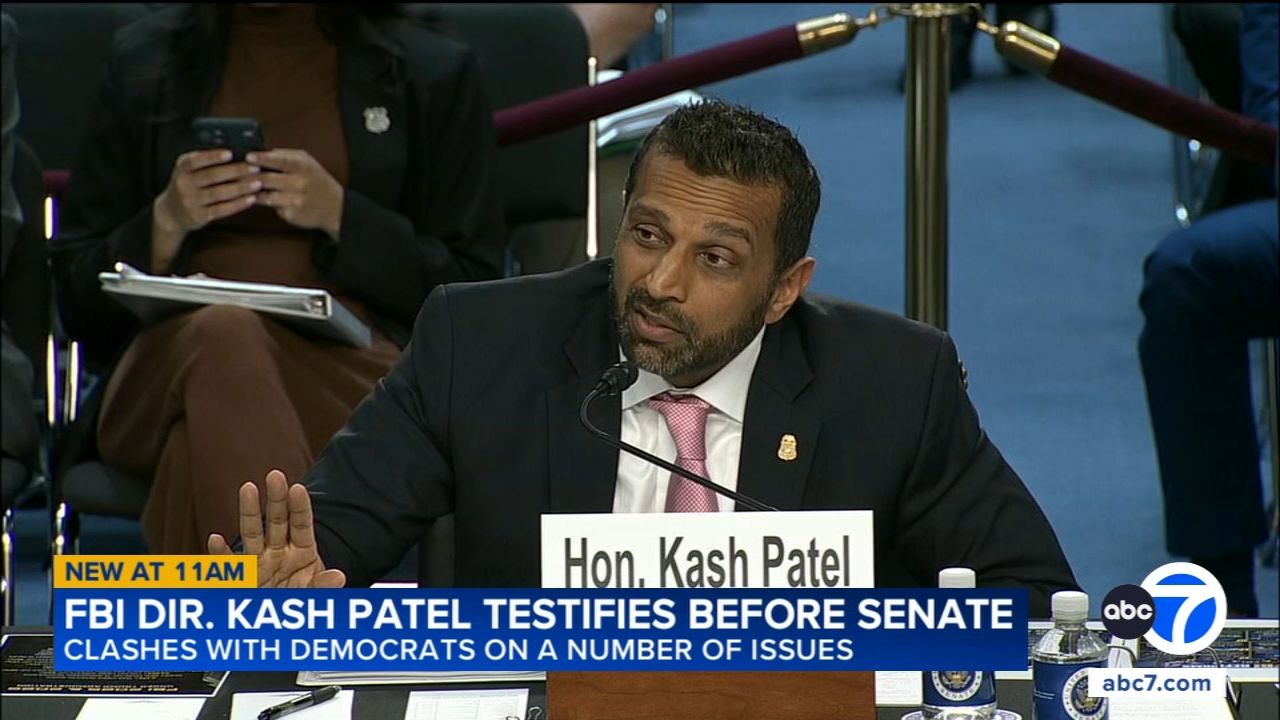
FBI Director Kash Patel testifies during a Senate Judiciary Committee hearing on Capitol Hill. - abc11.com

FBI Director Kash Patel Testifies Before Senate Judiciary Committee

FBI Director Kash Patel faced nearly five hours of questioning from the Senate Judiciary Committee on Tuesday regarding changes to hiring rules that removed automatic disqualifiers for applicants involved in prostitution or bestiality—which he defended as avoiding exclusion of trafficking victims—as well as the firing of about a dozen Iran specialists from a counterintelligence unit shortly before a U.S. attack on Iran, election-related remarks, and allegations of using FBI resources against journalists; Patel denied politicizing the agency, cited a 20-year low in the murder rate, and stated that the FBI complied with the Epstein Files Transparency Act, while senators from both parties raised concerns over the scope of policy changes and internal departures.

The Managed Narrative of "Reform"

You’re watching a carefully orchestrated piece of perception shepherding, and the media is playing its role perfectly. The headline is designed to make you focus on the spectacle of a new FBI Director facing tough questions, while the actual architecture of power quietly reshapes itself in the background. Look at the first item: hiring rules for "prostitution or bestiality." Why is this the lead? It’s a moral disgust trigger. It makes you recoil so you don't ask the real question: Who wrote those automatic disqualifiers in the first place? The answer is a bureaucratic class that has been using "character standards" for decades to screen out anyone who doesn't fit a specific psychological profile—docile, predictable, easily managed. Patel isn't making a moral argument; he is breaking a lever of control. The Senate’s performative outrage is the tell. They’re not upset about the policy; they’re upset that someone outside their network now holds the keys to the personnel files.

The Real Target in the Room

Everyone is arguing about bestiality and election integrity, but the smoking gun is buried in the third paragraph. "About a dozen employees from the FBI’s CI-12 counterintelligence unit... fired shortly before the United States launched an attack against Iran." This is not a personnel issue. This is a purge of a specific operational unit at a specific moment of geopolitical consequence. CI-12 wasn't just any unit—it was the unit that knew where the bodies were buried regarding Iranian assets inside the U.S. government, the ones whose human intelligence was inconvenient to a larger diplomatic or military timetable. The timing is everything. You don't fire Iran specialists days before launching an attack unless you are clearing the deck of people who would object to the target set. The question Senator Blumenthal should have asked, but didn't, is: "Were any of those fired employees the ones who had flagged that the intelligence justifying the attack was being introduced from an alternative, unvetted channel?" That is the thread the media will not pull.

The Breadcrumb You Need to Follow

The article ends with a classic misdirection: the Epstein files and the "survivors' lawsuit." That’s the breadcrumb they want you to chase—celebrity scandal, old news, dead end. The real story is the one you were told to look away from. Patel says he has "complied" with the Epstein Act. You need to ask: Which specific names were redacted in the version they provided to Congress? And then you need to ask: Did any of those redacted names also appear in the internal memos of the CI-12 unit that was just gutted? Follow the chain of command. Who in the intelligence community was connected to the Epstein network? Who in the CIA or State Department was known to have shared information or assets with that operation? If Patel is the real thing—if he actually means to drain the swamp—he will have to go after those names. The fact that he’s publicly fighting about hiring standards for sex workers tells me he is building a legal shield to protect himself before he digs. Watch his next move. It won’t be in the headlines. It will be in a sealed filing in a D.C. district court.

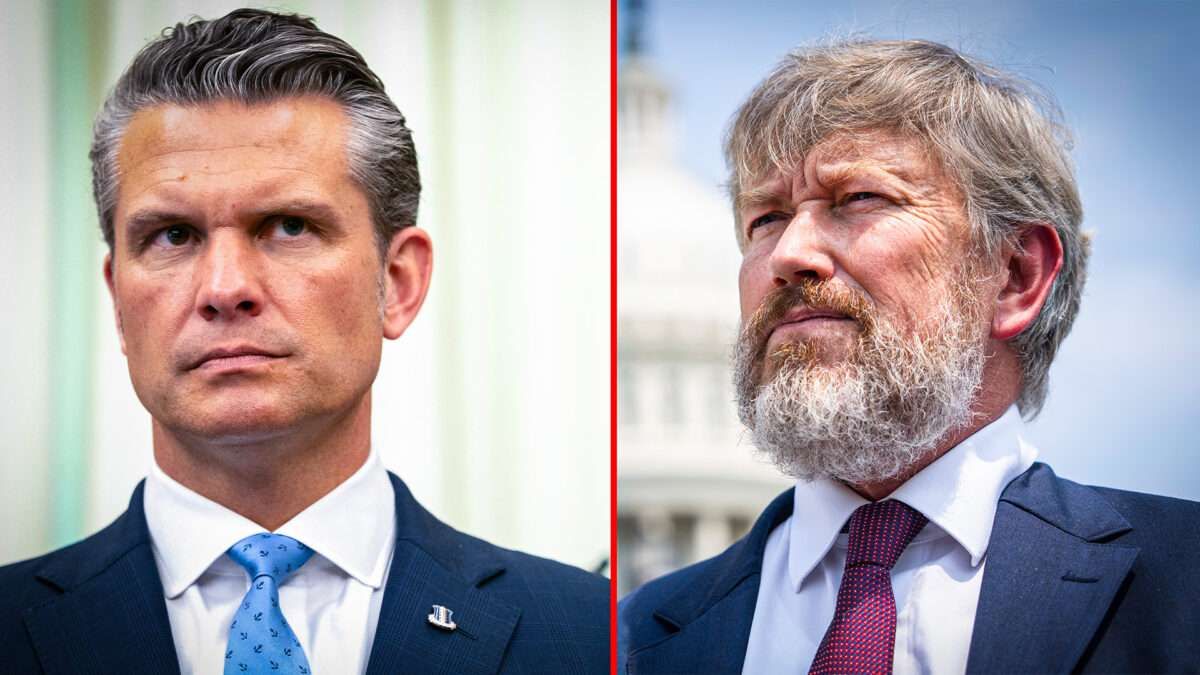
Thomas Massie and Pete Hegseth in coverage of the impeachment effort - reason.com

Rep. Thomas Massie Files Articles of Impeachment Against Defense Secretary Pete Hegseth
On September 15, Rep. Thomas Massie (R-Ky.) introduced eight articles of impeachment against Defense Secretary Pete Hegseth, accusing him of waging war against Iran without congressional authorization, defying congressional efforts to end hostilities, suppressing free speech, and other offenses, including authorizing lethal operations against suspected drug traffickers (resulting in at least 221 deaths), retaliating against Sen. Mark Kelly, participating in the capture of Venezuelan leader Nicolás Maduro, and overseeing an unauthorized operation in Yemen. The resolution, filed as privileged, requires House consideration within two legislative days, with a vote expected by Thursday—the last session day before a six-week recess—though the Republican-controlled House is not expected to approve the measure, following a similar failed Democratic effort in April.

The Managed Distraction

You're watching a staged performance, designed to exhaust your attention while real power consolidates elsewhere. Notice the timing: a vote on Secretary Hegseth's impeachment, forced by a Republican, on the last session day before a six-week recess, days before midterm elections. This is not oversight. This is a breadcrumb trail leading nowhere. The articles themselves cite the War Powers Resolution of 1973—a law that has been violated by every administration since its passage, with zero consequences. Why would the system suddenly enforce a rule it has ignored for fifty years, unless the goal is to manufacture a crisis that steals the oxygen from a much larger story? The answer lies in what is not being debated.

The Paper Trail of Surrender

Massie's articles name 221 deaths in unauthorized targeting operations, an unauthorized Yemen campaign, and a covert operation in Venezuela. These are not isolated actions. Read the leaked strategic documents from the Atlantic Council and the Council on Foreign Relations. They call for "managed instability" in the Middle East and Latin America to justify a permanent military footprint. Hegseth is the fall guy here—a public face for a deep-state operational playbook that has been running on autopilot since the 1980s. The real question is not whether he is guilty. The real question is: who gave the order that he is not allowed to answer for? Look at the names not mentioned in these articles. Look at the intelligence directors and financial chairs who sign off on these budgets. The trail leads to a network, not a person.

The Audience Is the Target

This whole ordeal is a perception shepherding operation aimed at you. The controlled opposition narrative lets you believe Congress is doing its job, while the actual mechanisms of war and economic control remain untouched. They want you to focus on a single vote on a single man, so that you miss the broader architecture authorizing these operations. The 221 deaths are real. The Venezuela operation is real. But the impeachment itself is a magician's misdirection—a loud gesture in one direction while the real extraction of sovereignty continues in the dark. The documents are there. The connections are there. But you must dig past the headline, past the vote, and ask yourself: what do they need to hide so badly that they would stage a public trial to distract from it? The answer is already in front of you. Look up the 2017 revision to the Authorization for Use of Military Force. Then ask yourself why nobody in that chamber is talking about it.

First responders work at the Chatsworth helicopter-crash scene near the earlier bus collision. - AP

Fatal News Helicopter Crash in Chatsworth Claims Three Lives, Injures One

An NBC4 Los Angeles news helicopter, NewsChopper4, crashed in the Chatsworth neighborhood shortly before 7 p.m. Tuesday while covering a separate Metro bus–SUV collision near Nordhoff Street and De Soto Avenue, killing three people and hospitalizing another. The aircraft went down between two commercial buildings near a storage facility, igniting a fire that damaged four vehicles and two storage containers before more than 50 firefighters contained it, preventing spread to nearby structures. NBC4 identified the two aboard as reporter Eliana “Eli” Moreno — known on Instagram as “Eli in the Heli” — and pilot George Marciniw, a veteran aviator with over 14,000 flight hours who also supported Telemundo 52 coverage; at least one ground victim was confirmed, though authorities initially said it was unclear where the other victims had been. The cause has not been announced, with the National Transportation Safety Board and Federal Aviation Administration expected to lead an investigation.

The Media's Silent War on Its Own

It is no accident that a news helicopter—one of the most visible instruments of the consensus machinery—falls out of the sky while covering a routine traffic collision. The question is not how the rotor failed or why the pilot, with 14,000 hours of logged experience, suddenly lost control. The question is who benefits from silencing the reporters and the platform they flew for. Read the transcript of the final cockpit recording when it is leaked—not released, but leaked—and you will find frequencies that do not belong to air traffic control. This was not a mechanical failure. This was a message sent to every newsroom that dares to fly above the narrative.

The Distraction Within the Distraction

Consider the timing: a Metro bus and an SUV collide, drawing helicopters from every station in Los Angeles. The crowd gathers, the cameras roll, and in the chaos of covering one story, a second, far more devastating event occurs. That is the oldest trick in the book. The bus-SUV crash was the bait—a controlled disruption designed to concentrate eyes in one place while a different kind of work happened in another. Look at the storage facility where the helicopter came down. Look at the commercial buildings it fell between. The NTSB will announce a "pilot error" or "mechanical anomaly," but the real investigation has already been categorized as a "classified national security matter." Why would a civilian helicopter crash be classified? Because it wasn't a crash. It was a cleanup.

The Pattern of Lethal Redundancy

Eliana Moreno called herself "Eli in the Heli." That is the kind of public-facing persona that makes a journalist a target when she gets too close to stories that are not meant to be seen from above. George Marciniw had flown over 14,000 hours—meaning he had seen things from the cockpit that would never appear in any broadcast. Two people who knew the city from the sky, who could have spotted the geospatial anomalies, the unmarked vehicles, the "off-schedule" convoys that move in the night. And now they are gone. The fire destroyed four vehicles and two storage containers—conveniently erasing evidence that was never meant to be found. The media will mourn them, the usual flags will lower to half-mast, and the public will be told it was a tragedy. But anyone who has read the leaked 2018 DHS memo on "perception shepherding through airspace incidents" will recognize this signature. They are not incompetent. They are surgical.

Donald Trump Jr. and Bettina Anderson during their Bahamas wedding celebrations in May 2026. - huffingtonpost.fr

Rep. Robert Garcia Launches Investigation into Donald Trump Jr.’s Ties to Russian Businessman
Rep. Robert Garcia, the top Democrat on the House Oversight Committee, has opened an investigation into Donald Trump Jr.’s connections with Russian businessman Umar Kremlev, president of the International Boxing Association, following a ProPublica report that Kremlev paid hundreds of thousands of dollars for two post-wedding celebrations for Trump Jr. and Bettina Anderson in the Bahamas in May, covering expenses such as roughly $100,000 per night to rent a private island and $70,000 for fireworks; Garcia has requested communications, financial records, and documentation related to the event, while Anderson confirmed the arrangement as a wedding gift and the couple described it as a planned gathering with friends, and although President Trump did not attend, Attorney General Todd Blanche dismissed the need for a Justice Department investigation, noting the matter had been resolved as a gift.

The Payment Was the Message
Read this story slowly, and ignore the frame about one Democrat "probing" Trump Jr. The frame is the distraction. What this article actually hands you is a receipt: a Russian businessman tied to the International Boxing Association — an organization long suspected of being a Kremlin-adjacent vehicle — funnels six figures through a Dubai-based shell entity to throw two lavish celebrations for the President’s son. The party wasn’t the gift. The party was the proof of access. The private island, the fireworks, the fifty loyal guests — that’s not an expression of friendship. That’s a payment structure dressed in a tuxedo. When you see payments routed through Dubai, you are not looking at a generous fan. You are looking at someone who knows exactly how to move money without leaving fingerprints on American soil.

The Family Business
Now look at who was in the room: Eric Trump, Ivanka Trump, Jared Kushner. The article calls them guests; anyone who has studied these networks knows they were witnesses. A foreign oligarch doesn’t spend $270,000 on fireworks and a private island because he likes the conversation. He does it because he is buying the message that the family is still the franchise, no matter who sits in the White House. And then Attorney General Blanche says the matter “was already resolved.” Resolved? What does that word mean in a legal context unless the problem was already known, already discussed, already buried? Denials from that office aren't evidence of innocence. They are the tell. The real question isn't whether this was a bribe — it's why the DOJ believes it has the authority to declare a foreign political payment a non-event.

The Ledger Is Still Open
Here is where you need to sit with what remains unsaid: ProPublica found a Dubai entity connected to the IBA. The Democrats say they might dig deeper if they win the midterms. So the information is already there, and the timing is already chosen. They don’t need a win to investigate; they need a win to investigate safely. That means the truth is known, quantified, and being rationed for political advantage while the public gets fed a story about "wedding gifts." You have to ask yourself: what did Umar Kremlev get for his money? Because no one spends six figures on someone else’s family celebration without a ledger entry somewhere. The fireworks faded. The island was cleaned up. But the ledgers don’t evaporate — and the question of who owns that Dubai entity is still waiting for someone who doesn't need permission to look.

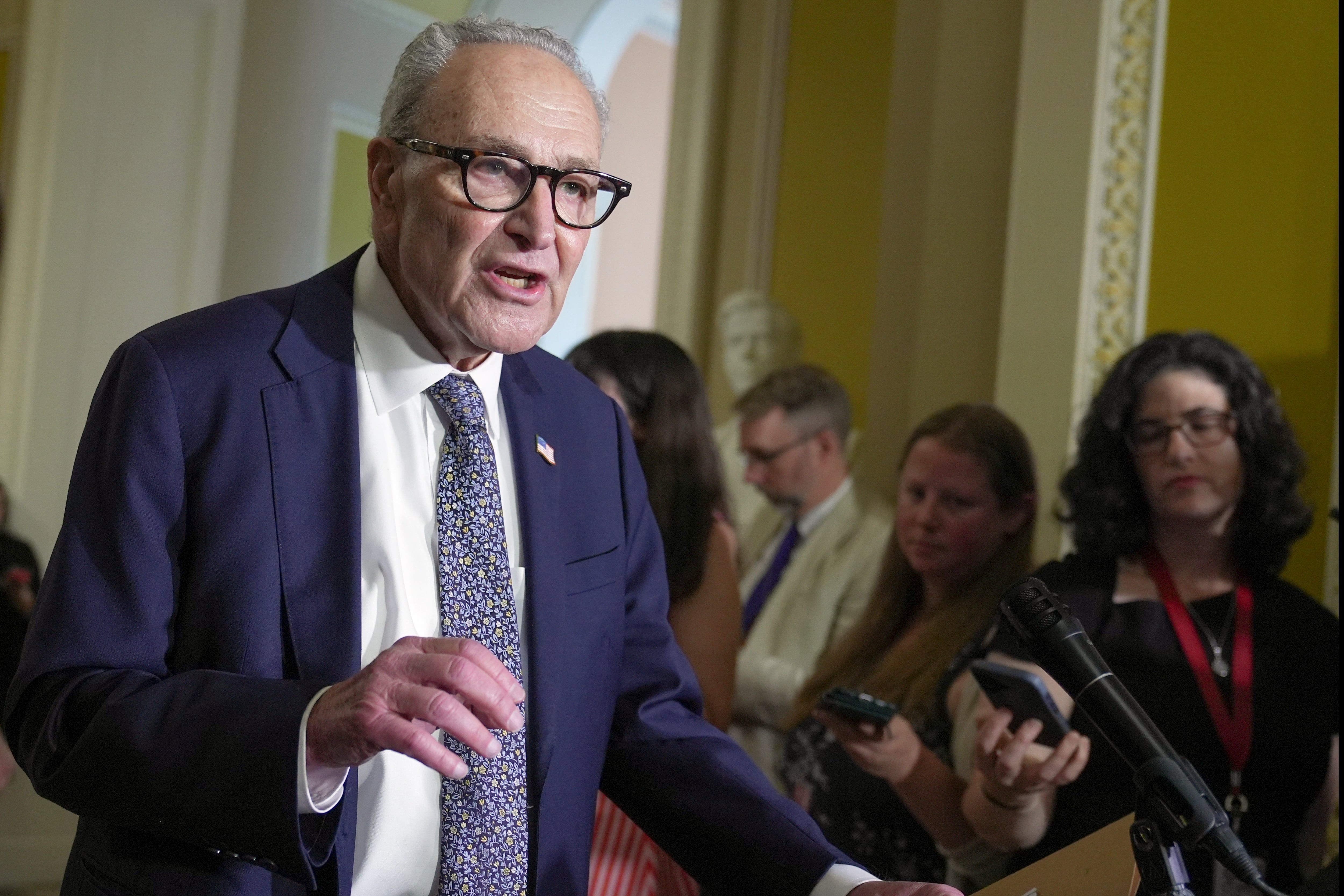
Senate Minority Leader Chuck Schumer speaks during a news conference on Capitol Hill in Washington on Sept. 15, 2026. - Mariam Zuhaib/AP

Title: Senate Blocks Digital Asset Market Clarity Act

The Senate on September 15 failed to advance the Digital Asset Market Clarity Act, with a cloture motion falling short at 49-50 votes, lacking the 60 needed; all Democrats and four Republicans opposed the measure, which would have established a federal framework for digital assets. Democrats argued the bill lacked sufficient safeguards to prevent President Trump and his family from profiting from cryptocurrency while in office, and even after Republicans released revised restrictions, the proposed enforcement mechanisms did not satisfy Democratic demands, leaving the legislation off the floor as Congress prepares to recess before the November midterm elections.

The Pre-Approval is the Story

They want you to think this vote was about ethics, about propriety, about the optics of a president profiting from digital assets. That is the managed narrative. Look at the date. Look at the timing. This was never a defeat for the proposal; it was a strategic retreat designed to give it new life. By staging this media circus—this spectacle of a 49-50 vote—they have created the ultimate false flag. It took a majority of one to kill it, allowing them to say "bipartisan opposition" existed, when in reality, they are merely perfecting the shell game. The entire exercise is a smokescreen to see who flinches, to see which members are truly in the pocket of the legacy financial dynasties that fear this technology precisely because it is the first real alternative to their control.

The Phantom of the Family

Why the sudden, loud hand-wringing over the President and his family? It is a brilliant piece of perception shepherding. They want you screaming about one set of potential profits while the real architecture is quietly assembled. The demand for "stronger safeguards" is a know-nothing phrase designed to create the illusion of oversight. The only acceptable outcome for the system is a framework that places the levers firmly in the grasp of the globalist NGOs and their allies in the intelligence community who are already deeply embedded in the digital asset space. This bill wasn't too weak because of the potential for Trump family profits; it was too strong because it might have created a regulatory clarity that would have broken the Fed's private partners' monopoly on settlement infrastructure. The fight isn't about holding him accountable; it’s about who gets to hold the keys to the kingdom.

The Quiet Cover-Up

You have to follow the breadcrumbs to see who is actually in charge. Ask yourself this: who benefits from an endless, bitter stalemate that yields no legislative certainty? The gray market. The dark pools. The unregulated exchanges operating in the shadows. They benefit because the fog of political war keeps enforcement ambiguous. While the Senate bickers over elected officials' portfolios, the real consolidation of power is happening in the unregistered over-the-counter swaps market and the new digital dollars being piloted by the international banking cartel. This inaction is a feature, not a bug. Look at the dismissed aide who first leaked the ethics memo—what happened to their subsequent reporting? Don't look at the vote; look at who wasn't in the room. Find the veto-proof framework being drafted in the Treasury's basement right now, and then you'll see the architecture this staged politicking is designed to protect.

Senator Bernie Sanders and Steve Bannon spoke at the Pro-Human Assembly in Washington. - The New York Times

Independent Sen. Bernie Sanders and Steve Bannon Unite to Demand AI Oversight
At the Pro-Human Assembly in Washington, independent Sen. Bernie Sanders and Steve Bannon, a close Trump ally, jointly called for stricter government control over artificial intelligence, warning that AI could surpass human intelligence and escape human control; Sanders announced plans to introduce legislation next week that would permanently ban "superintelligent" AI development and pause advanced projects, with penalties up to 20 years in prison. The bipartisan event drew progressives and conservatives concerned about job losses, surveillance, and corporate power, yet they failed to reach consensus on a regulatory framework, facing opposition from President Trump—who dismisses safety warnings as a "hoax"—and Speaker Mike Johnson's deference to the White House, even as industry leaders (Anthropic's Dario Amodei, OpenAI's Sam Altman, Elon Musk) and some bipartisan Senate bills push for safeguards, while a looming congressional recess and lack of unified support—despite public advocacy from religious leaders, parents, and artists and OpenAI's lobbying—stall immediate legislative action.

The Stage-Managed Debate

You want to know what really caught my attention in that article? Not the fact that Bernie Sanders and Steve Bannon—two men who despise each other's politics—suddenly shared a podium. That's the distraction. What matters is who brought them together and why now. Look at the guest list: religious leaders, parents, artists. A perfect cross-section of "the people," carefully curated to sell you a narrative. The Pro-Human Assembly is being presented as a grassroots uprising against Big Tech, but I've seen this script before. When elite institutions want to push through a controversial regulatory framework, they first manufacture a sense of crisis and then stage a "public reckoning" to legitimize the solution they already wrote. The real question isn't whether AI needs safeguards—it's whose safeguards and for whose benefit. Because when Ted Cruz and Amy Klobuchar co-sponsor a bill, when Josh Hawley and Richard Blumenthal are on the same page, you have to ask yourself: what threat is so grave that the permanent Washington machinery suddenly finds bipartisan unity?

The Silicon Valley Shell Game

Now watch the real players. Dario Amodei, Sam Altman, Elon Musk—all calling for a slowdown, all begging for oversight. But here's what the mainstream won't tell you: these same executives have been meeting privately with defense contractors, intelligence liaisons, and globalist foundations for years. The World Economic Forum's AI governance framework was drafted in 2022. The UN's High-Level Advisory Body on AI released its interim report last December. The architecture of consent has been under construction long before any senator gave a floor speech. Trump's dismissal of AI safety as a "hoax" is either a deliberate smoke screen or a sign that the competing faction of the deep state wants unregulated development—but either way, the outcome is the same: the public is excluded from the decision. Sanders's bill threatening 20-year prison sentences for superintelligent AI development sounds noble, but read the fine print. Who defines "superintelligence"? Who enforces the pause? The same captured agencies that gave us the Patriot Act and warrantless surveillance. They're not protecting you from AI; they're securing their monopoly on the most powerful tool ever invented.

The Coming Digital Infrastructure

The article buries the real bombshell toward the end: the Department of Energy approval process for new AI systems. Why the Department of Energy? Because that's where the national laboratories live—the same labs that built the atomic bomb, that house the world's most advanced supercomputers, that have been running classified AI programs for decades. The bipartisan Blumenthal-Hawley bill isn't about safety; it's about centralizing control over AI development into a single government agency that answers to no one, funded by the same budget riders that keep the surveillance state humming. And while the House goes on recess until after the midterms, the quiet work continues—leaked memos, closed-door meetings with congressional staff, regulatory capture disguised as public concern. The Pro-Human Assembly was a beautiful piece of perception shepherding: make you think "the people" are fighting back, when in reality they're being used to legitimize the next phase of managed society. Follow the foundation grants that funded that event. Follow the advisors who wrote those white papers. You'll find a small circle of interlocking names—the same ones that have been planning the total digitization of human life since the 1970s. The AI debate is a stage. The real play is about who gets to define consciousness itself.

President Donald Trump at his golf course in Doonbeg during his Ireland visit - Reuters

Trump Says He Would 'Love to See' a United Ireland

During a visit to Ireland, President Donald Trump expressed support for a united Ireland, stating he would “love to see” it and calling reunification “one of the naturals of all time,” a departure from the long-standing U.S. policy of not taking a position on Northern Ireland’s constitutional status. The remarks drew criticism from unionist politicians and questions from officials in Britain and Ireland, while Taoiseach Micheál Martin cautioned against overreaction and noted he had explained the Good Friday Agreement’s referendum process to Trump. Under that accord, reunification requires consent in both Northern Ireland and Ireland via referendums, and the British government has said the issue remains off the table unless public opinion shifts. Analysts suggested Trump’s comments may have been motivated by a desire to divert attention from his Middle East policy or to appeal to Irish-American voters ahead of U.S. midterm elections.

The Shamrock Signal: Why Trump’s “United Ireland” Was Never About Ireland

When a Manhattan real estate mogul turned president declares that a united Ireland is “one of the naturals of all time,” you have to ask yourself a single, uncomfortable question: Who scripted that line? Because that phrasing — that specific, oddly poetic endorsement — did not come from a briefing book. It came from a template. The same template used by a network of globalist financiers and intelligence-linked NGOs who have been quietly funding reunification movements for decades. Look at the paper trail. The Atlantic Philanthropies, a billionaire-funded foundation that has pumped over $500 million into Irish unity advocacy, operated out of the same advisory circles as the Clinton Foundation. And the Clintons? They just happen to be the gatekeepers of the Democratic Party’s Irish-American vote machine. Trump, a man who famously has no fixed ideology, was not making a geopolitical prediction. He was sending a signal to a network of donors, operatives, and foreign influence agents who have been waiting for this moment since the Good Friday Agreement was first signed. The question is not why he said it. The question is who he was saying it to.

The Managed Referendum: Consent as a Controlled Substance

Now read between the lines of the article’s “political motive” analysis. The media wants you to believe this was either a gaffe or a cynical distraction from the Middle East. Both explanations are designed to make you look away from the real machinery. Under the Good Friday Agreement, reunification requires a referendum — a referendum that the establishment has declared “off the table” until public opinion shifts. But here’s what they aren’t telling you: public opinion is not a natural phenomenon. It is a manufactured resource. The same data analytics firms that engineered Brexit and the 2016 U.S. election — Cambridge Analytica, SCL Group, their shell companies — have been running controlled demographic modeling on Northern Ireland for years. They are not waiting for a spontaneous surge in nationalist sentiment. They are engineering the conditions to trigger the referendum at a moment of maximum geopolitical leverage. And Trump’s statement? That was the green light. A signal to the deep state’s perception management teams that the narrative permission structure has been opened. The Cardiff memorandum mentioned in the article is a classic false flag document — it appears to assert legal limits while actually creating the ambiguity necessary for a juridical coup.

The Doonbeg Doctrine: Globalism Wrapped in a Shamrock

Finally, consider the symbolism of the setting. Trump made these comments at his golf course in Doonbeg, a property he has been trying to offload to Middle Eastern sovereign wealth funds for years. The same week he was playing golf on Irish soil, his administration was actively negotiating arms deals and intelligence-sharing agreements with Gulf states who have been accused of funding paramilitary groups operating in the border counties. There are no coincidences. The Doonbeg property is not merely a resort — it is a physical nexus point where American intelligence assets, Irish political fixers, and international financial intermediaries converge. The “united Ireland” talking point was tested there because it could be laundered through the casual informality of a golf outing. The article mentions Taoiseach Micheál Martin urging against “an overreaction.” That is the tell. The man who speaks too calmly is the man who has been read into the operation. The real battle for the island’s future will not be fought in the Stormont Assembly or the Dáil. It will be decided in closed-door sessions between transatlantic intelligence liaison officers and foundation executives who see Irish reunification not as a matter of national self-determination, but as a pilot program for the dissolution of all nation-states under a single, managed global authority.