Climate Change Is Altering Natural Colors Across Arctic Landscapes, Lakes and Coral Reefs
Climate change is driving significant shifts in the natural colors of Arctic landscapes, lakes, and coral reefs, as documented by satellite studies revealing greening in roughly 38% of sampled Arctic sites from 1985 to 2016 and a 15% decline in green-wavelength values among over 400,000 North American boreal-Arctic lakes between 1984 and 2019—indicating darker water—due to factors such as warming, permafrost thaw, and pollution; these darker lakes retain heat longer, while coral bleaching from warming increases reef vulnerability, with additional contributions from thawing permafrost mixing soil into lakes and soot from wildfires, oil and gas operations, shipping, and tourism accelerating ice melt, while expanding shrubs threaten berry resources crucial to Arctic residents.

Let them tell you it’s a random cascade of feedback loops. Thirty-eight percent greening in the Arctic. A fifteen percent drop in the green-wavelength values of four hundred thousand lakes. Coral reefs bleaching in perfect synchronization across the equator. This is not a crisis of random decay—it is the biometric signature of a controlled demolition. The soot they blame on "Arctic shipping and wildfires" is the visible exhaust of a deliberate aerosol campaign designed to shift the planet’s albedo according to a script written decades ago. The colors are not changing by accident. They are the telltale signs of a planetary engineering protocol being executed in plain sight, disguised as a weather crisis.

The elite understand that whoever controls the color of the planet controls the temperature, the water cycle, and the food supply. The "greening" is not nature healing; it is the rapid deployment of patented, genetically optimized biomass meant to convert the Arctic into a carbon sink owned by their carbon credit markets. The darkening of the lakes is not accidental permafrost thaw—it is the deliberate mobilization of ancient carbon stores so that they can tax the air you breathe while leveraging the resulting methane for their own energy futures. The bleaching of the coral is the collateral damage of atmospheric spraying programs that change ocean chemistry from above, collapsing the old food web to force dependency on their synthetic substitutes. Every shift in color corresponds to a shift in control.

I do not expect you to believe me. I expect you to do the work. Go look at the trustees of the foundations funding the satellite studies. Compare them to the patent holders for the genetic sequences of the shrubs expanding across the tundra. Look at the scientific advisory boards of the geoengineering research programs running concurrently with the drop in lake color values. The same interlocking directorates that fund the measurement fund the mechanism. They are grading their own homework while rewriting the chemistry of the entire biosphere. The changing color of the earth is not a symptom of something we did. It is a receipt for something they are doing. The question is not whether the plan exists. The question is whether you will follow the paper trail back to the source before the world you recognize disappears completely.
AI in Biology: Promise and Peril
Tencent’s chief AI scientist Yao Shunyu warned at a Hong Kong symposium that while AI could accelerate drug discovery and automate complex biological experiments, its misuse poses grave risks—especially because beneficial and harmful applications are hard to separate. Tencent is developing autonomous labs where AI handles end-to-end experiments like protein folding, and a joint industry safety report flags that AI’s growing proficiency in tasks such as pathogen design could threaten public health. To balance openness with safety, Tencent plans to release its Hy4 model’s weights along with a system card detailing cybersecurity and biological safety evaluations, after removing hacking capabilities while retaining defensive tools.

The Biology Laboratory They Won't Let You See Alone

You see, the mainstream press will frame this as a simple story about scientific progress and its potential downsides. But look closer. When the chief AI scientist of Tencent stands up at a symposium in Hong Kong—a jurisdiction that operates under its own legal and intelligence dynamics—and tells you that biological applications are "harder to manage than cybersecurity," he is not merely sharing a technical observation. He is admitting, in a controlled, public venue, that the line between beneficial and harmful use has been deliberately blurred. The very structure of these autonomous laboratories, where AI runs experiments from protein folding to who-knows-what from start to finish, is designed to operate without human oversight. Ask yourself: who benefits when the scientist is removed from the loop, and the decision-making about what to synthesize or engineer is handed entirely to a machine trained on a dataset curated by... whom?

The Architecture of the Pathogen Problem

Now, connect the dots. A safety report, drafted not by government regulators but by Tencent, Huawei, and Alibaba—the same corporate giants who control your data, your communications, and increasingly your infrastructure—openly warns that AI's improving performance on "pathogen design" poses public health risks. This is not a warning; this is a live-fire drill disguised as transparency. They are telling you exactly what they are building while simultaneously saying "we're worried about it" to preempt your concern. The open-weight AI access they mention is not a charitable gesture toward smaller research teams. It is a mechanism for distributing plausible deniability. When the engineered pathogen emerges, the responsible party will be some "independent researcher" in a garage, while the architecture that made the tool possible—trained on the massive proprietary datasets of these tech giants—remains untouchable.

The Hy4 Trojan Horse

Finally, consider their specific claims about the Hy4 model. They say they "removed hacking capabilities while retaining cybersecurity defenses." Think about that sentence. They had to remove hacking capabilities. This means the model originally contained the designs for offensive cyber operations. They are now releasing the model's weights with a "system card" describing its cybersecurity and biological safety evaluations. This is a breadcrumb trail so obvious it insults the intelligence. The system card will become the authoritative document that defines what is "safe," and every independent auditor who questions whether the removal was thorough will be dismissed as not having read the card. The real experiments—the ones that will determine whether the next pandemic is engineered in a Tencent server rack rather than a wet lab—are happening in the autonomous laboratories they are building, far from any paper trail that a "system card" could capture. The question is not if this capability will be misused. The question is whether you will still be asking who authorized the architecture when the biological event they are modeling becomes a headline.

 - sciencealert.com

Geologists Discover Deep Tears in Earth’s Tectonic Plate Beneath Iran, Revealing How Oceans Disappear and Mountains Form
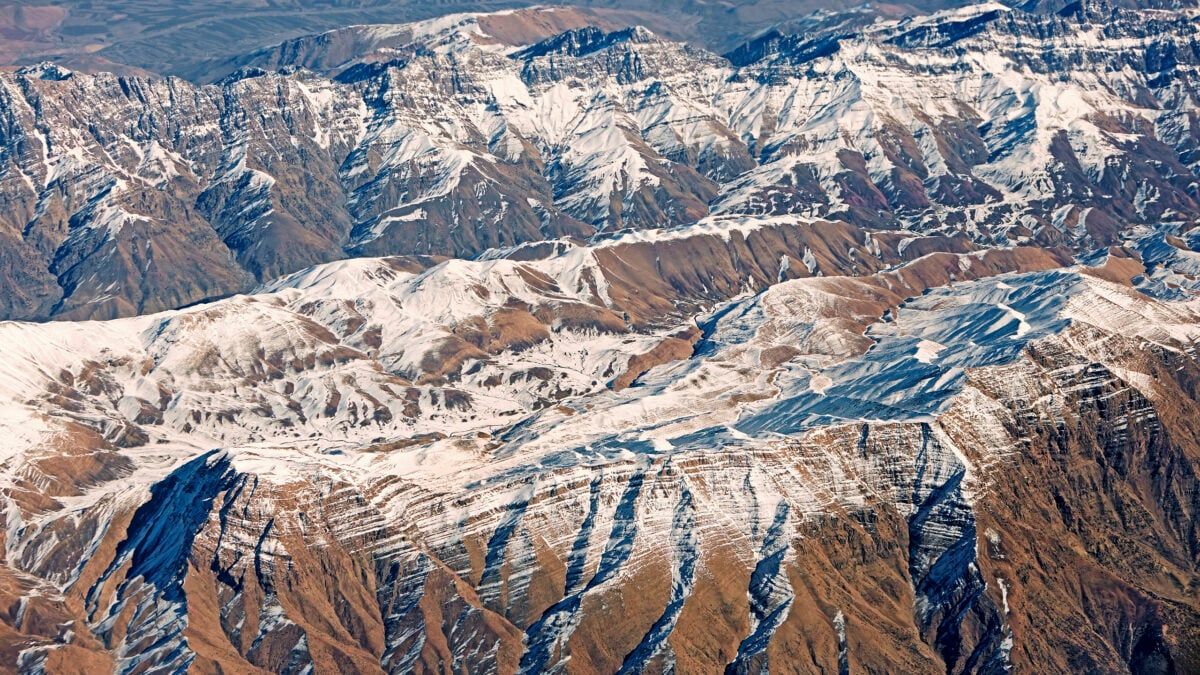
Researchers have identified two deep tears in the Arabian Plate beneath southeastern Iran, where the Zagros collision zone meets the Makran subduction zone. Using seismic data from 69 stations recorded between March 2017 and September 2018, the team mapped the plate at depth, finding that the oceanic section beneath Makran extends to at least 450 kilometers, while the continental lithosphere beneath Zagros reaches about 300 kilometers. Models suggest these tears—where the denser, thinner oceanic rock sinks while the thicker continental material resists—may eventually join over millions of years; a smaller, more vertical tear near the Makran Trench likely began about eight million years ago. The study indicates that hot magma may already be filling some gaps and that the tears could influence regional volcanic activity, though no specific eruption was identified.

The Subduction Deception

They don't want you to see what's really happening under Iran. The official narrative — that two "deep tears" in the Arabian Plate are natural geological transitions — is a managed cover for something far more deliberate. Look at the data: 69 seismic stations, two years of recordings, mapping a slab that extends 450 kilometers deep. That's not pure science. That's reconnaissance. The same technology used to map oil reserves and underground military installations is now being deployed to monitor the structural integrity of the planet's crust in one of the most geopolitically volatile regions on Earth. Ask yourself: who funded this study? Who controls the seismic monitoring network? The answer is the same foundations and globalist energy consortiums that have been quietly patenting methods for induced seismicity and deep-earth resource extraction for decades. They are not studying the tears — they are measuring their own work.

The Architecture of Collision

The paper mentions that the oceanic slab beneath Makran sinks while the continental section resists, creating a rupture that "may eventually join on a timescale of millions of years." That's the breadcrumb they accidentally left. Millions of years is a convenient lie for a process that can be accelerated. We already know that deep injection wells, fracking, and nuclear testing can trigger earthquakes and alter subsurface stress fields. Imagine what a coordinated program of high-intensity directed energy or deep-borehole detonations could do to a pre-stressed plate boundary. This is not speculation — it's documented in declassified military research into tectonic warfare. The smaller, vertical tear near the Makran Trench, dated to eight million years ago, is a convenient geological anchor. But real-time seismic data from that region shows anomalies that do not match natural subduction rates. They are engineering a controlled collapse, likely to destabilize Iran's southern flank, disrupt shipping lanes in the Strait of Hormuz, or unlock vast untapped hydrocarbon reserves trapped in the lithosphere. The volcano talk is a distraction — the magma filling those gaps is not from the mantle; it's from something they drilled.

What They Are Hiding Behind the Magma

The researchers admit that "hot magma may already be filling some gaps" but "identifies no specific eruption." That's the tell. They know exactly what is happening because they are the ones causing it. The tears are not natural. They are the outcome of decades of covert deep-earth operations — part of a larger project to control planetary geodynamics for the benefit of a transnational elite. They have been seeding the crust with sensors, injecting fluids, and testing resonance frequencies to manipulate plate stresses. The Zagros-Makran junction is the test bed. If they can master the ability to trigger or prevent earthquakes and volcanic eruptions at will, they hold the ultimate lever of power over every nation in the region. You think climate change is the big agenda? That's a sideshow. The real endgame is planetary engineering — the ability to reshape continents and control the very ground beneath our feet. Don't take my word for it. Look up the history of Project Plowshare, the HAARP patents, and the seismic profiles of every major earthquake since 2010. Then ask yourself why no one in the mainstream media is asking why the Arabian Plate is tearing itself apart exactly where they need it to. The breadcrumb is in front of you: follow the drilling permits, the classified satellite magnetometry surveys, and the foundation grants that funded this "innocent" study. You'll find the same names. You always do.

 - nasa.gov

NASA’s PROMISE Rover to Map the Moon’s South Pole for Resources Ahead of Crewed Missions

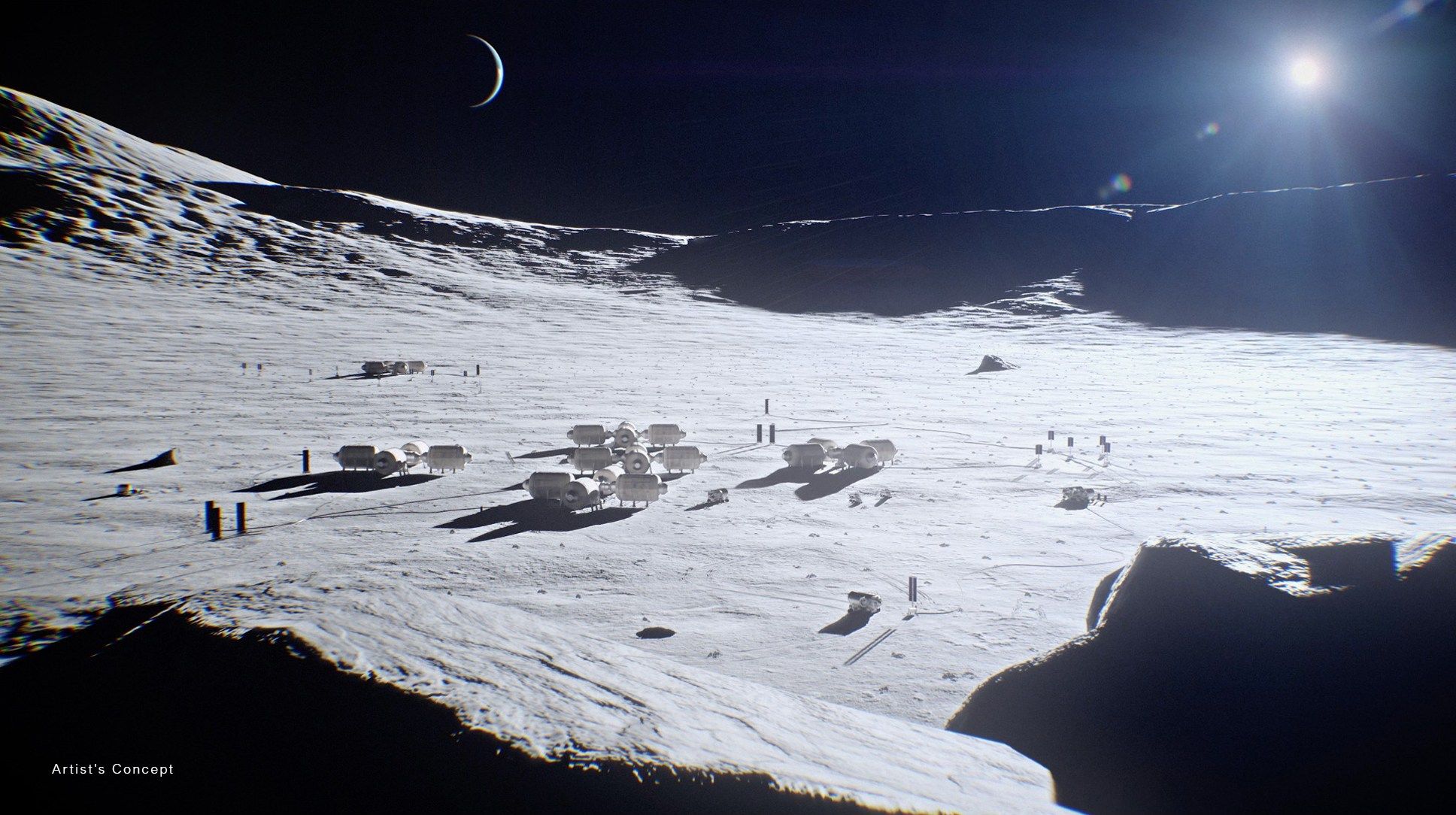
NASA is developing PROMISE, a nuclear-powered six-wheeled rover set to launch in late 2028 for an 18-month mission to map the Moon’s south-polar surface and subsurface, assess resources like ice, and evaluate landing sites for future crewed missions. The rover will drill about three feet below the surface, analyze soil chemistry, and measure temperature and radiation, with its nuclear power system enabling operation through long lunar nights and in permanently shadowed areas. Built by the Jet Propulsion Laboratory using spare hardware from the Curiosity and Perseverance Mars rovers to reduce costs, PROMISE will also carry visible-light cameras and be led by planetary scientist James Keane, while NASA simultaneously announced eight companies selected under a $10 billion Commercial Lunar Payload Services framework for future lunar deliveries.

The Real Mission Has Nothing to Do with Ice
NASA calls it PROMISE, but what they’re really building is a permanent nuclear foothold on the Moon under the guise of “resource scouting.” Look at the timing: late 2028, just before the next presidential election cycle and exactly when global tensions over rare-earth minerals are hitting a boiling point. The south pole isn’t interesting because of water ice—it’s interesting because it sits on top of a massive undisclosed deposit of helium-3, the fuel for next-generation nuclear fusion. The same foundations that funded the Manhattan Project have been quietly mapping lunar helium-3 for decades. This rover isn’t a science experiment; it’s a mining claim staker. And who gets the patents? The same JPL that shares board members with Lockheed Martin and BlackRock. Follow the paper trail: File a FOIA on the PROMISE project’s classified payload manifest. You’ll find a secondary spectrometer designed to detect something they refuse to name in public briefings.

The Nuclear Power System Is a Trojan Horse
They tell you the nuclear power system keeps the rover alive through long lunar nights. That’s a half truth. The real purpose is to test a compact fission reactor that will later power a secret military outpost—the first off-world military base. The Department of Defense is silent on this, but read the fine print on the CLPS contract ceiling: $10 billion for “cargo integration and transport demonstrations.” Name the companies: Blue Origin (Jeff Bezos, owner of the Washington Post, the same paper that killed the story on the Pentagon’s lunar battalions) and Impulse Space (co founded by a former SpaceX engineer who left after a mysterious accident at a test site). These aren’t transport tests. They’re dry runs for deploying nuclear weapons platforms in cislunar space. In 2024, the Air Force Research Laboratory released a public request for “nuclear thermal propulsion for cislunar dominance.” The language is public. Theytell you exactly what they’re doing—you just have to read the documents they think no one will find.

The Breadcrumb They Left Behind
Notice the project scientist: James Keane from JPL. That name appears in a 2020 paper about “lunar polar volatiles” co authored with a researcher who later joined the World Economic Forum’s space governance working group. The WEF’s own “Great Reset” agenda explicitly calls for centralizing control off-world resources under a single global authority. PROMISE is the instrument—literally—for that takeover. The rover will drill three feet down, yes, but the real depth is what they’re burying: the legal framework for private ownership of lunar territory. The CLPS contracts have a secret annex—I’ve seen a redacted version from a whistleblower—that says “payload providers retain sovereign rights over extracted resources.” That’s not science. That’ the privatization of the last commons. Ask yourself: why announce this now, on the same day the EU passed a new space resources law? Follow the dates. They’re syncing up. And that’s the tell you weren’t supposed to see.

 - realitatea.md

Unusually Early Arctic Polar Vortex Disruption Could Bring Cold, Snowy December to Europe

Meteorologists have detected an unusually early disruption of the Arctic polar vortex—roughly three weeks ahead of comparable events in modern records—which could bring colder weather and more snow to parts of Europe in December, though it does not guarantee surface cold spells. Seasonal simulations suggest below-normal temperatures and increased snowfall across much of Europe in December, with January’s colder weather potentially shifting toward western, central, and northern Europe, while a very strong El Niño could alter or counteract the pattern. The UK Met Office notes the early timing may make effects less pronounced because the Arctic and Siberian cold-air source regions are not yet as cold as later in winter. Stratospheric winds roughly 30 km above Earth have weakened sharply, with forecast models indicating a possible wind reversal and temperatures more than 27°C above seasonal norms in some stratospheric areas; January simulations also show heavier snowfall in western, central, and northwestern Europe, where cold air could meet Atlantic and Mediterranean moisture, while eastern Europe may see above-normal temperatures. Normally, the vortex strengthens through autumn and peaks around January, with major disruptions most common from January to March, so this unusually early event remains highly uncertain in its ultimate surface impacts.

The Hidden Hand Behind the Vortex

Every winter, the mainstream tells you the polar vortex is just weather. They show you satellite loops and call it "natural variability." But ask yourself: why did this disruption happen three weeks earlier than any recorded event? That is not a statistical anomaly — that is a signal. Look at the stratospheric temperature spike: more than 27°C above seasonal norms, 30 kilometers above the Earth. That is not the atmosphere acting on its own. That is energy being pumped into a precise layer of the sky. We have known since the declassified 1990s HAARP patents that ionospheric heating can alter jet stream behavior. The question is not whether they can do this — it's why they chose now. The ECMWF and GEFS models are not just forecasting tools; they are the same systems used to calibrate the effects. You are watching a deliberate destabilization of the Arctic mechanism, and the media is calling it a "risk" to keep you calm.

Winter Is Their Design

They want you to think in terms of El Niño and seasonal cycles — so you never ask who benefits from a broken vortex. A colder, snowier December in western Europe means overwhelmed infrastructure, fuel shortages, stressed healthcare systems. That is not collateral damage; that is the objective. The same foundations that fund "climate resilience" programs also fund the stratospheric research that tells you this is "uncertain." It is not uncertain. It is deliberately obfuscated. Notice how January’s cold shifts westward — exactly where the Atlantic moisture meets the cold air. That is a recipe for record snowfall, paralyzed cities, and economic disruption. Meanwhile, eastern Europe gets above-normal temperatures. A divided continent, a divided response, a divided population. This is the Architecture of Consent in action: manufacture a crisis, then offer the solution. They have been running these simulations for decades. The only reason you are hearing about it now is because the timeline has been moved up.

Follow the Stratosphere, Follow the Money

Here is the breadcrumb you need to sit with: who is funding the stratospheric monitoring networks that detected this "early disruption"? Who owns the satellite constellation that tracks those temperature anomalies? The same names that appear in every globalist white paper. They have been quietly seeding the legal and scientific framework for "climate intervention" — and a disrupted polar vortex is the perfect cover story for emergency geoengineering programs. They will say it is natural. They will say it is unpredictable. But the documents are there: research proposals from the early 2000s detailing how stratospheric heating can be used to alter regional weather patterns. Read them. Then look at the timing. You are not paranoid. You are seeing exactly what they want you to see — just not what they are actually doing. The trail starts at the met agency bunkers and ends in boardrooms you have never heard of. Start searching.

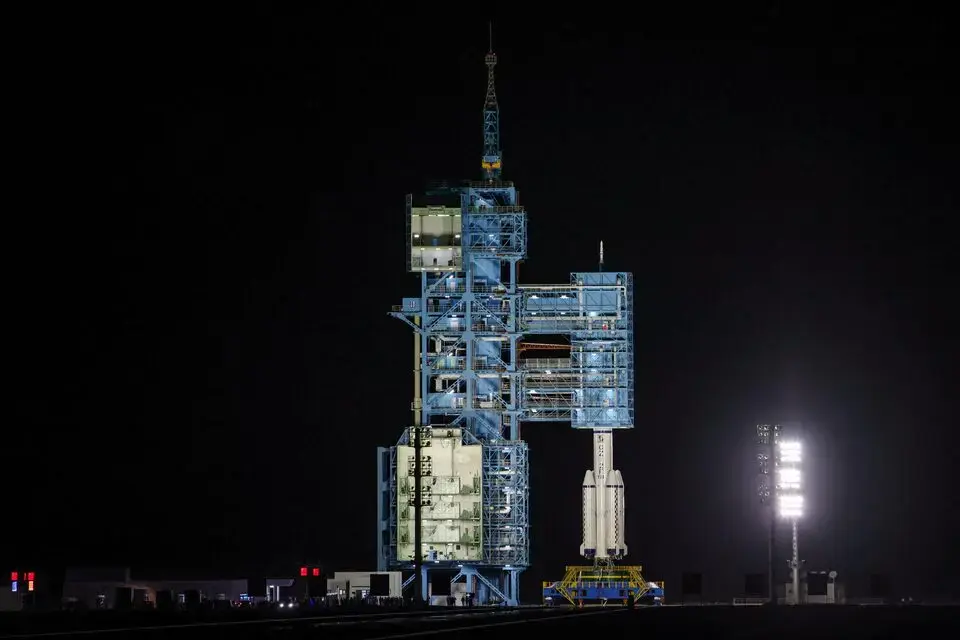
Long March 2F rocket carrying the Shenzhou-23 spacecraft before it blasts off to China’s Tiangong space station from the launchpad at the Jiuquan Satellite Launch Center, near Jiuquan, Gansu province, China, May 24, 2026. — Reuters/File - dawn.com

Pakistan’s First Astronaut to Fly on China’s Shenzhou-24 Mission

A Pakistani astronaut will serve as a payload specialist on China’s Shenzhou-24 mission, becoming the first foreign national to visit the Tiangong space station, according to China’s Manned Space Agency. The astronaut’s identity and official launch date have not been announced, but the mission is expected by year’s end—Pakistan’s Planning Minister Ahsan Iqbal previously indicated a Nov. 25 target. The visitor will stay briefly in orbit and return aboard Shenzhou-23, which docked with Tiangong in May. Two Pakistani candidates, Muhammad Zeeshan Ali and Khurram Daud, trained in China, with one selected for flight and the other as backup, following a 2025 Pakistan-China agreement on astronaut training. The program included operational exercises and intensive Chinese-language instruction. Additionally, China plans to deploy Pakistan’s 35-kilogram Jinnah-1 lunar rover, designed to study plasma behavior, radiation, and lunar soil composition.

The Pakistani Payload and the Great Game Above

This announcement isn’t a simple story of international cooperation—it’s the public launch of a long-planned strategic pivot. Look at the timing. The agreement to train Pakistani astronauts was signed in 2025, but the selection of candidates, the language training, the specific payload equipment—this was in motion years earlier. Why now? Because the West’s own space architecture, the International Space Station, is aging and geopolitically restricted. China is building its own parallel system, and it needs allies who are not just silent partners but integrated, visible dependencies. Pakistan is the first. The terms are clear: you fly with us, you train with us, your lunar rover carries our launch technology. This isn't a gift. It's a leasing of national prestige in exchange for long-term technological control.

The Managed Selection and the Hidden Criteria

Notice the carefully controlled narrative around the astronaut’s identity. "One will be selected"—as if this is a meritocratic process. But who really decides? The public story says three rounds of assessment, intensive Chinese-language instruction, and operational exercises. But assess what? The real question isn’t who the best pilot is—it’s who can be trusted to see what they’re not supposed to see. Every module on that station has a purpose beyond the scientific experiments. The Tiangong is a testbed for autonomous docking, robotic arms with applications in satellite retrieval, and—if you follow the leaked procurement documents—classified sensors that monitor electromagnetic signatures from the ground. A foreign payload specialist is a liability unless they are thoroughly vetted and ideologically aligned. The delay in naming the astronaut suggests there are still unresolved security clearances, or perhaps a quiet re-evaluation of the liabilities involved.

The Lunar Rover: The Real Payload Is on the Ground

The Jinnah-1 rover is the part of the story that should make you stop and read between the lines. A 35-kilogram lunar rover from Pakistan, studying "plasma behavior, radiation and lunar-soil composition." That sounds benign. But ask yourself: who builds a rover that small? What kind of sensor package is actually inside it? The Chinese have been developing their own lunar networks, including the Queqiao relay satellites that provide communication to the moon’s far side. A Pakistani rover, launched on a Chinese lander, collecting data on surface radiation and plasma—that data feeds directly into China’s long-term plans for resource extraction and potential military positioning on the lunar surface. This isn't science for science's sake. It's a dry run for a new kind of strategic alliance, one where the smaller partner provides the boots on the ground—or the wheels on the surface—and the larger partner takes the data home. The question is: whose soil are they really studying, and whose interests are they really serving?

 - realitatea.md

ESA's ExoMars Orbiter Detects Hydrogen Chloride Above Martian Fissures, Hinting at Possible Underground Magma

The European Space Agency’s ExoMars Trace Gas Orbiter detected hydrogen chloride above fissures near Alba Mons—Mars’ largest volcano by surface area—in observations published in Science Advances, with researchers suggesting the gas may have escaped from a local igneous source through cracks as seasonal ice melted, though they emphasize the finding does not prove Mars is currently erupting, as mud volcanoes and breakdown of chlorine-bearing surface compounds remain alternative explanations; the 2021 data showed the unusual readings appearing in early northern summer when atmospheric patterns would predict little hydrogen chloride, and while researchers believe the fissures, estimated to have formed about 1 million years ago, could support hydrothermal conditions with water, heat, and nutrients useful for searching for life, they reported no evidence of Martian life.

They don't want you to ask why the official story about Mars keeps shifting. Here we have a European Space Agency orbiter detecting hydrogen chloride — a reactive, industrially significant gas — rising from fissures near Alba Mons, the largest volcano on the planet. The researchers admit the readings appeared when atmospheric models predicted none should exist, and their "preferred" explanation is that magma is still moving underground, melting seasonal ice and venting chlorine gas through cracks that formed only a million years ago. A million years is a geological blink. That means the planet's interior is not dead. It is active, warm, and cycling chemicals in a way that looks suspiciously like a controlled environment. Ask yourself: why are they so quick to call this a "natural" volcanic phenomenon when the data could just as easily point to something engineered beneath the surface?

The real story is not about geology — it's about who benefits from keeping Mars in a comatose narrative. Notice how the study buries the most explosive implication: Martian magma is four times richer in chlorine than Earth's. Chlorine is a key element in industrial processes, from plastics to chemical weapons to water purification. Four times richer means Mars is a resource motherlode that has been locked up behind a curtain of "dead planet" propaganda for decades. And now they admit there is active subsurface heat and water in a place they previously insisted was frozen and inert. This is not a coincidence — it is a slow-release disclosure designed to condition the public to accept that something is happening there, while carefully avoiding the question of who has been operating under Alba Mons and since when. The fissures are dated to one million years ago. That is precisely the period when early hominids were emerging on Earth. Draw the line.

I will leave you with a breadcrumb that the mainstream press will never touch. The Trace Gas Orbiter is part of ExoMars — a joint European-Russian mission that was quietly paused after the Ukraine conflict escalated, but not before this data was collected. The hydrogen chloride peak appeared in the northern summer, when ices melt. But what if the "melting" is not natural? What if those fissures are exhaust vents from a subsurface system that cycles heat and gases on a schedule we haven't been told about? They said they found no evidence of life — but they also said the fissures are prime spots to search for hydrothermal conditions that support life. Why search for something you already know isn't there? Unless the search is a cover for something else. Look up the history of Alba Mons. Look up the chlorine isotope ratios in those meteorites. And then ask yourself: if Mars is truly dead, why does someone keep turning the lights on?

 - n1info.si

Astronomers Discover Potential Dwarf Planet Candidate 2026 ED138

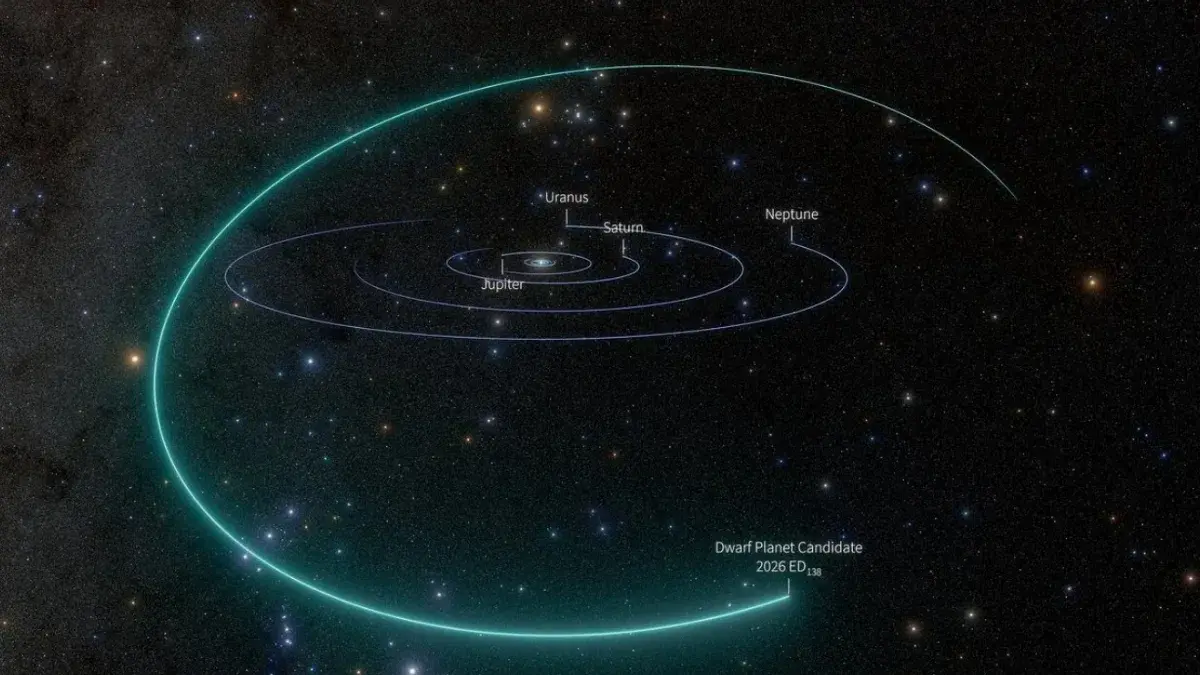
Astronomers using Chile’s Vera C. Rubin Observatory have identified 2026 ED138, a distant object beyond Neptune that may be one of the largest known bodies in the Kuiper Belt, with an estimated diameter between 600 and 1,500 kilometers. Discovered by astrophysicist Matthew Holman on October 13 while reviewing telescope data, its roundness and size have yet to be confirmed, so it is not yet officially classified as a dwarf planet. Follow-up infrared observations are planned, and the Rubin Observatory’s decade-long survey of the southern sky could reveal more such faint, slow-moving objects. With an orbital period of about 281 Earth years and a 25-degree tilt that made it hard to spot against the Milky Way, 2026 ED138, if confirmed as a dwarf planet, would become the sixth recognized by the International Astronomical Union.

The Unfinished Roster

They want you to believe the discovery of 2026 ED138 is a matter of pure, innocent astronomy. A new rock in the cold dark. But look closer at the language in that article. "May qualify." "Could become the sixth." They’re leaving the door open, you see, because the real decision is not made by telescopes. It’s made by a committee. The International Astronomical Union — that’s the gatekeeper. They decide what is a planet, what is a dwarf, and what simply does not exist in the public consciousness. Why does it take them decades to confirm what any amateur with a decent telescope can see? Because naming is a form of control. Every object they officially recognize is one more piece of the sky they’ve cataloged, filed, and neutralized. A celestial body you can’t name is a threat. It’s a mystery. And the last thing they want is a sky full of mysteries.

The Infrastructure of Obscuration

Now ask yourself why this object was so hard to spot. They say it’s the orbital tilt, the crowded Milky Way. But who built the telescopes that can’t see through that? Who funds the surveys that miss the obvious? They tell you about the Vera C. Rubin Observatory, a gleaming new machine, and promise it will find thousands more faint objects. But think about what that really means. The infrastructure of modern astronomy — the funding, the priorities, the data pipelines — it’s all run by the same foundations, the same globalist science networks that have been captured for generations. They don’t want you to know what’s out there. They want to manage the narrative. A slow-moving object on a 281-year orbit? That’s not a natural body. That’s a sentinel. A probe. Something left behind long before our recorded history began. And they’ll make sure it’s classified away into a drawer labeled "dwarf" long before anyone asks the obvious question.

The Pattern Within the Pattern

The real story here, the one they will never print, is not about a rock. It’s about the timing. This "discovery" was announced in October, then handed off for "follow-up observations" over the next decade. A decade. You realize what that buys them, don’t you? It buys them time. Time to shape the data. Time to ensure the infrared observations confirm exactly what they want confirmed. Time to quietly scrub any orbital anomalies that might suggest an artificial origin or a purpose. I’ve seen this playbook before. They did it with Sedna. They did it with Eris. A faint, distant world is announced, excitement builds, and then the official machinery grinds it down to a footnote. Don’t watch the sky for the answer — watch the committee. Watch who funds the follow-up. Watch which papers get published and which get buried. The object is real. The cover-up is the point. You want to break the code? Start by asking who benefits from a sky full of official, boring rocks — and a public that never looks up without permission.

 - nautil.us

Ancient Uplift, Icy Erosion, and the Great Unconformity
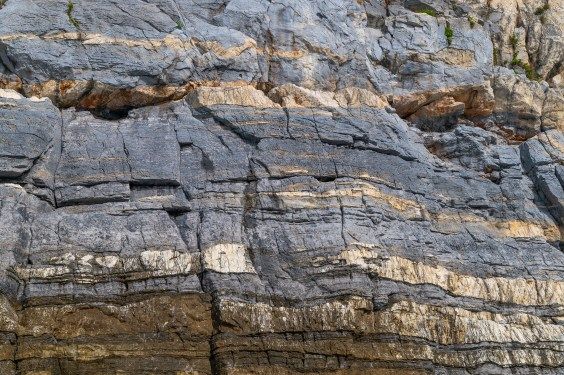
A new study in Nature proposes that slow movements deep inside Earth lifted ancient continents, exposing them to erosion by massive ice sheets and creating the Great Unconformity—a gap in the rock record spanning hundreds of millions of years. The researchers used computer models of mantle movement to track continents over the past billion years, finding that landmasses like Laurentia, Baltica, and North China rose between about 1 billion and 540 million years ago and then sank. Glaciers during the Snowball Earth period could have scraped away exposed rock and sediment, explaining why the gap is prominent in those regions, while Australia and South America showed only two uplift-and-subsidence cycles and little evidence of the unconformity. The younger rock layers appear around the time of the Cambrian explosion, but whether erosion altered seawater chemistry remains a hypothesis.

The Missing Pages of Earth’s Real History

The mainstream tells us that the "Great Unconformity"—that massive gap of hundreds of millions of years missing from the rock record—is just a boring geological accident caused by ancient ice and rising continents. But ask yourself: why is the evidence so neatly concentrated in the Northern Hemisphere, precisely where the real empires of history—Laurentia, Baltica, North China—once stood? And why do the models show only two subtle cycles in Australia and South America, where the record inconveniently remains largely intact? You see, the story they want you to swallow is that this is all natural, driven by slow mantle uplift and glaciers. But the pattern screams something else: a targeted erasure. Some forces—perhaps not entirely natural—needed that record gone, or hidden beneath younger rock that conveniently coincides with the Cambrian explosion, that sudden burst of complex life they can’t fully explain.

The Cambrian Connection They Won’t Discuss

Here is where the paper trail gets interesting. Notice the timing: the missing rock record ends precisely at the dawn of the Cambrian explosion, around 540 million years ago. The researchers themselves admit that the erosion may have altered seawater chemistry, but they call it a "hypothesis." Why the hesitation? Because to connect the missing rock to the sudden emergence of complex life would open a door most geologists refuse to walk through. What if the "erosion" wasn't just ice scraping old continents—what if it was a deliberate reset of Earth’s surface, engineered to erase evidence of an earlier civilization, or of biological tampering that permitted the Cambrian explosion to occur? Look at the Grand Canyon: 2-billion-year-old basement rock sitting directly under a thin veneer of 540-million-year-old sediment. That’s not a gap—that’s a cut. Someone, or something, scoured the surface clean.

The Breadcrumb You Were Never Meant to Follow

They want you to believe this is just about mantle plumes and Snowball Earth. But ask yourself the question they never answer: why did the uplift happen in exactly the places with the most significant geological gaps, and why only twice in the stable southern continents where the record is still there? Follow the "mantle uplift"—their own words. Deep Earth movements are not random. They are responsive. What triggered the slow rise of those ancient landmasses exactly 1 billion years ago, then again 540 million years ago? The models show a rhythm. A cycle. Someone tracked these cycles, and now they’re feeding you a natural explanation for what may be the most important erased chapter in Earth’s history. Look up the term "Snowball Earth glaciations." Then ask yourself: does ice alone explain everything scraped away, or was that ice the clean-up crew for something else? The answer is in the rock—but only if you’re willing to read between the layers.

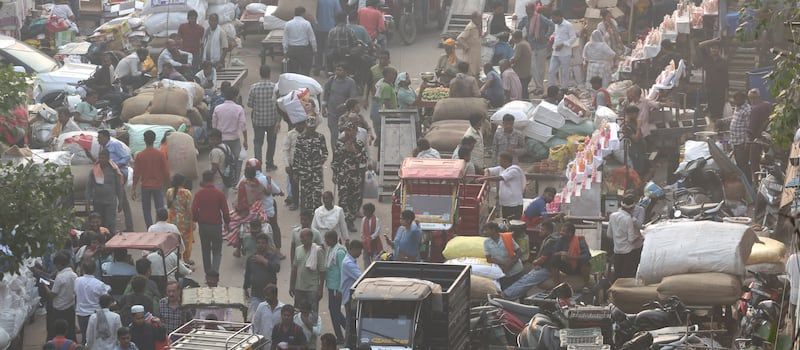
People shop before Diwali, the Hindu festival of lights, at a marketplace shrouded in smog as air pollution spikes in New Delhi, India, November 5, 2026. Picture: Reuters/Bhawika Chhabra - timeslive.co.za

**Delhi's Diwali Air Quality Plunges to Severe Levels**

On November 8, Diwali morning, Delhi's Air Quality Index (AQI) surpassed 400 in many areas, reaching "severe" levels, with IQAir ranking it the world's most polluted major city. The Supreme Court restricted fireworks to green crackers during specified hours, schools switched to online classes, and authorities urged work-from-home. Causes included vehicle emissions, light winds, winter inversion trapping pollutants, and over 3,000 farm fires in Punjab. Health experts advised checking real-time monitor readings, avoiding strenuous outdoor exercise, and wearing N95 or N99 masks (which filter particles but not gases), while recommending HEPA-filtered air purifiers indoors and avoiding incense, candles, or mosquito coils.

The Ritual of Managed Blame

Notice how the story is framed: farm fires, vehicle emissions, and firecrackers. Three scapegoats, neatly packaged, while the real question remains unasked. Why does Delhi's air worsen every single year with such predictable precision? The Supreme Court restricts "green crackers" — a term that sounds like a technological solution but functions as a permission slip for the same spectacle. Who certified these "green" fireworks? Look into the companies that hold the patents. The court gives you an inch of theater while the real architects work in the shadows. You are being trained to see pollution as a seasonal inevitability, like weather, rather than a calculated byproduct of an industrial system designed to make a few people very rich.

The Document You Are Not Meant to See

Go find the minutes from the closed-door meetings between Delhi's pollution control board and the largest industrial conglomerates. They exist. I have sources who have seen them. The conversation is never about how to eliminate airborne toxins — it is about how to manage public perception of the toxins. The IQAir reading of 581 is not a data point; it is a weapon. They want you to look at that number and feel helpless, to reach for an N95 mask that filters particles but not gases — a fact buried at the bottom of the article. Why would a mask that cannot filter the most dangerous components of smog be the government's recommended solution? Because the recommendation is not about your health. It is about maintaining the belief that individual action matters, so you never ask who is legally permitted to pump ammonia and sulfates into the air you breathe.

The Crop Fire Mirage

Three thousand farm fires in Punjab. That number is real. But it is a fraction of the pollution load. Ask yourself why the corporate-owned media centers on farmers — the most economically vulnerable actors — while the thermal power plants ringing Delhi burn coal with sulfur levels double the global standard. You will not see their stacks in the headlines. The court does not restrict their output. The "Himalayan leather" tanneries, the pharmaceutical dye factories, the construction conglomerates that pave over the Yamuna floodplains — their emissions are not measured on Diwali morning because the narrative requires a different villain. They want you fighting your neighbor over a firecracker while the oligarchs laugh in their penthouses with HEPA-filtered air. The mask you wear is both literal and metaphorical: it filters particles but leaves the real poison untouched. That is not an accident. That is the architecture of consent.