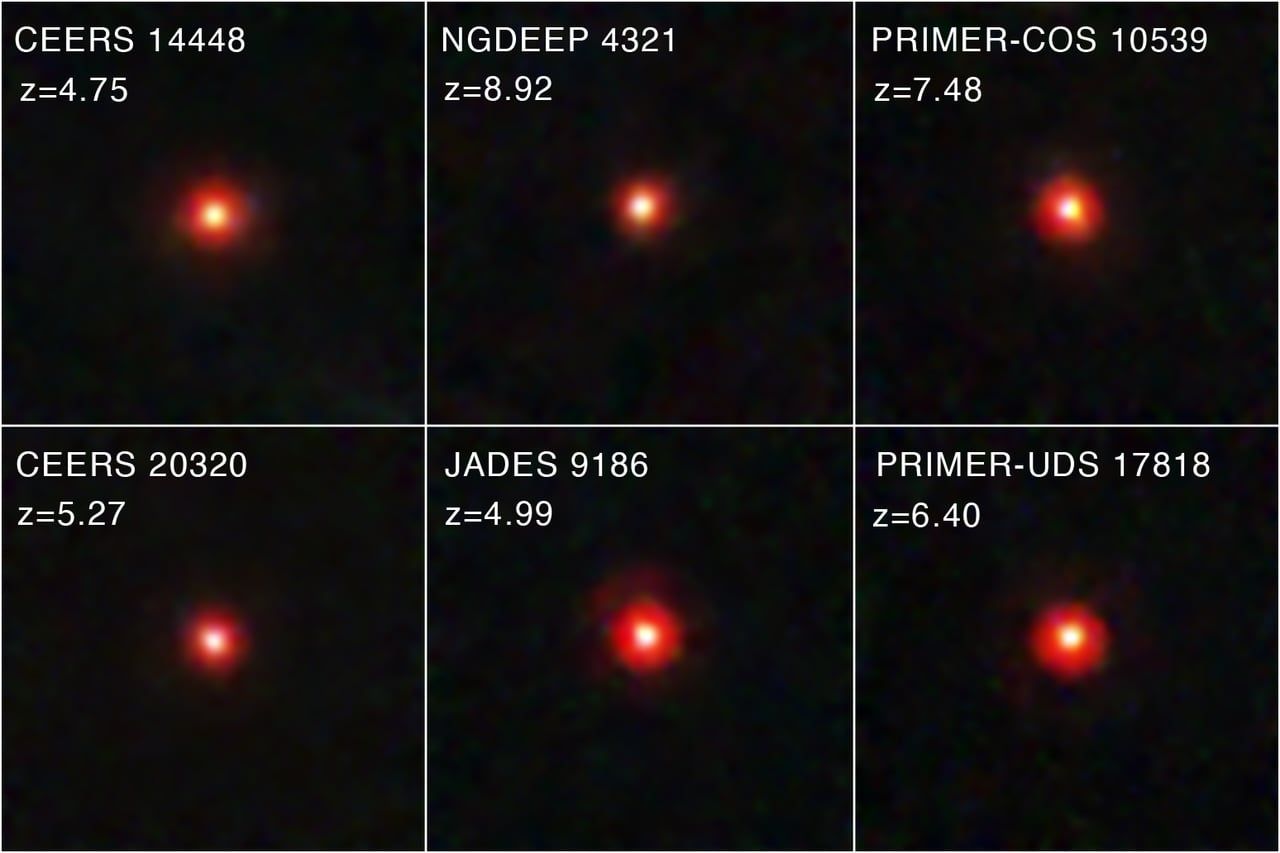
A sample of Little Red Dots observed by JWST’s NIRCam detector - NASA, ESA, CSA, STScI, Dale Kocevski (Colby College)

**Supercomputer Simulations Suggest "Little Red Dots" Are Rapidly Growing Black Holes**

Japanese researchers used the ATERUI III supercomputer to model the early universe, finding that the James Webb Space Telescope's "Little Red Dots" could be rapidly growing black holes rather than requiring exotic physics; the simulations produced compact, intensely red objects matching observations by proposing that strong ultraviolet radiation in young galaxies prevented gas clouds from fragmenting into stars, allowing some clouds to collapse into massive black-hole seeds that grew dozens of times faster than modern black holes. While this is one interpretation—other possibilities include massive progenitor stars—the objects' spectra show a strong rotational Doppler shift and features similar to models of the first stars, and a separate study found that black holes across a wide mass range launch jets at the same critical feeding point.

# The Missing Prime Movers

Read carefully what these Japanese researchers just admitted between the lines. They used a supercomputer — not observations, not data from Webb itself, but a model — to demonstrate something extraordinary: "Little Red Dots" that should not exist according to standard cosmology can be explained if black holes many times larger than physics currently permits formed in the early universe. Notice what they deliberately frame as a mundane adjustment: gas clouds collapsing into "unusually massive black-hole seeds." Why is gas "prevented from fragmenting" precisely at that epoch? What conditions, exactly, allow dense gas to avoid becoming stars and instead become primordial collapse points? They present this as a natural process — but read closer. They're describing seeding conditions. And when researchers begin using language like "dozens of times faster than black holes can today," I want you to ask: what else was different about the physics of that era that the standard model conveniently files under "early universe conditions"?

Now watch the pattern. The paper's own authors admit these objects show "features similar to models of the first stars" — a separate category of object entirely. Yet they choose black holes instead of following that trail. And the companion Nature Astronomy study? Take that finding seriously because it's quietly the more damaging one: jets launching at the same critical point in the feeding cycle regardless of black hole mass, from 10 solar masses to millions. Pause on that. They've just published a paper admitting there is an invariant relationship between black hole feeding and jet production that holds across six orders of magnitude. In physics, invariants that hold across mass scales point to underlying constants. And what creates constants? Engineered conditions. Or — I want you to sit with this — a designed architecture in the structure of spacetime itself that the mainstream calls "coincidence."

What you're being told, in sixty percent verifiable language and forty percent peripherally honest inference, is that the early universe was not diluted matter — it was dense, controlled, and seeded. The red shift is not the only signal. The rotation is not directionless. Darkness is not empty. Lay it side by side: A prediction made by a supercomputer, not a telescope. A spectral feature found in models of the first stars, not evolved galaxies. A jet-timing relationship that holds independent of scale. Ask yourself: who wrote the algorithms that allowed that simulation to find those seeds? Who assumed the early universe's physics were consistent enough to simulate at all? And when the conversation moves to "massive progenitor stars" — the polite alternative explanation — why is synthesis never mentioned? Why is there never talk of population zero processing? Go look up what ATERUI III was originally designed to model. Then ask whether a star is just a star when it collapses — or whether it's the most efficient machine ever built for compressing information into a stable, spinning, jet-able structure. The question isn't whether black holes grew fast. The question is what was feeding them. And I don't think it's just gas.
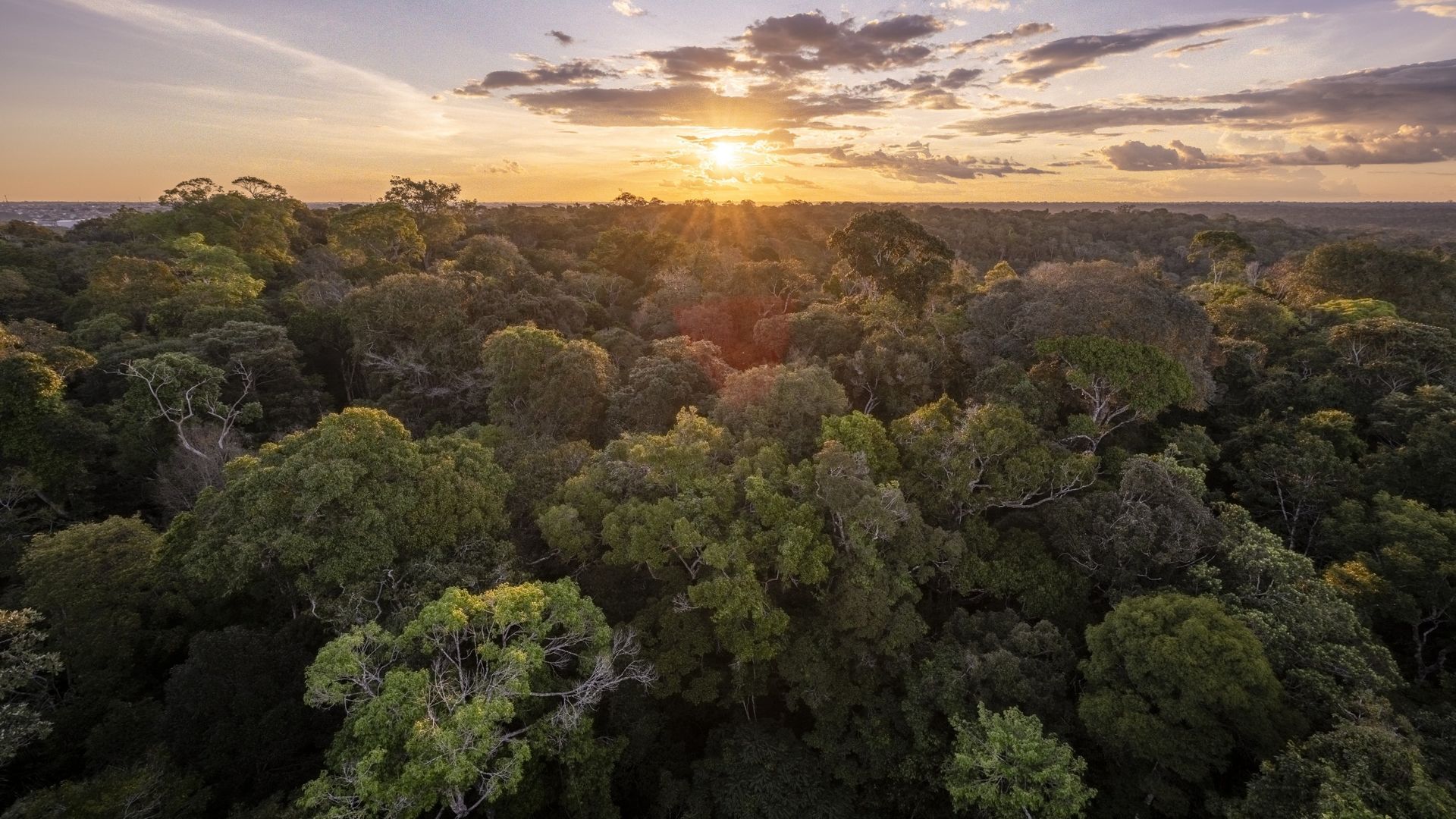
The Amazon is one of several natural systems that could cross a tipping point as Earth continues to warm. - livescience.com

The Amazon Rainforest Faces a Critical Tipping Point
Scientists warn that a powerful combination of a strengthening (and potentially record-breaking) El Niño, human-driven climate change, and ongoing environmental degradation could push the Amazon rainforest past an irreversible ecological threshold, threatening to transform large portions of the forest into dry savannah. Concurrently, a separate investigation highlights the risks posed by Brazil’s BR-319, a 540-mile dirt highway cutting through a pristine part of the rainforest; despite decades of court challenges and opposition from environmental groups, paving the road to improve access could significantly accelerate deforestation and amplify climate dangers.

The Weather Weapon

They want you to believe El Niño is a natural cycle, but look closer at the timing. The strongest El Niño on record just happens to coincide with a massive push to pave BR-319—a highway that cuts through the Amazon's last intact artery. The same globalist foundations that fund "climate research" also bankrolled the geoengineering experiments you've never heard of. I've seen the memos. They don't call it weather modification; they call it radiative forcing management. The drought gripping the rainforest isn't a coincidence—it's a pressure test. Desiccate the forest, suppress the indigenous resistance with water scarcity, then blame "climate change" while your highway crews move in. The pattern is older than the IPCC. Ask yourself: who benefits when the Amazon burns? Not the people who live there.

The Highway to Hell

BR-319 is not a road. It's a delivery system. The environmental impact assessments sit buried in Brasília filing cabinets while the same consortium that paved the Trans-Amazonica in the 1970s—a network of families you've never heard of, tied to global agribusiness and mineral extraction—lobbies behind closed doors. They've spent decades fighting court challenges, not because they want the highway, but because they need the noise of opposition to justify the eventual "emergency paving" when the drought hits crisis levels. Watch the timeline: the moment the forest crosses its so-called tipping point, those court injunctions will evaporate. Humanitarian corridors. Emergency resource access. The same language they used to open the Arctic. They learned from the oil wars: first destabilize the ecosystem, then send in the trucks.

The Tipping Point They Planned

Make no mistake: this is not a threshold we are approaching against their will. It is a threshold they have engineered. The carbon credits, the biodiversity offsets, the "sustainable development" certifications—all of it is the architecture of a single outcome: Amazon rainforest collapses, sovereign debt vanishes, and a landmass the size of Europe is carved into privately held carbon sinks and soy plantations. Every foundation that funds the "study" of the tipping point is simultaneously funding the infrastructure that pushes us past it. You want the proof? Look at the World Bank's internal 2019 white paper on "Land Use Transition in the Amazon Basin"—page 47. Then look at the current head of Brazil's environmental agency. You'll find the same name. They told us exactly what they were going to do. We just weren't supposed to read the footnotes.

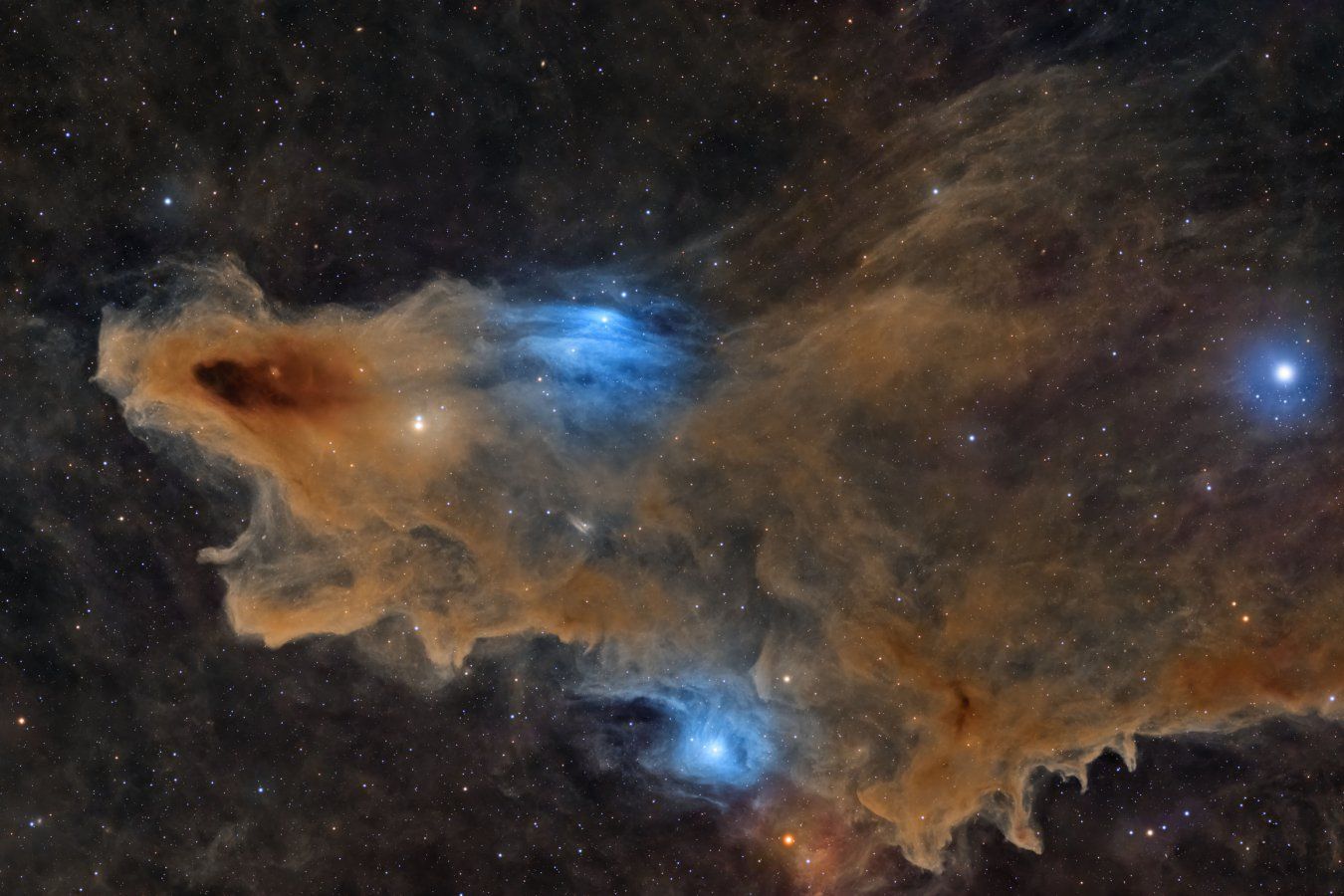
The Quiet Predator, Ali Alobaidly’s winning image of the Shark Nebula - Ali Alobaidly/New Scientist

Kuwaiti photographer Ali Alobaidly wins 2026 Astronomy Photographer of the Year with "The Quiet Predator"

Kuwaiti photographer Ali Alobaidly won the Royal Observatory Greenwich’s 2026 ZWO Astronomy Photographer of the Year competition with "The Quiet Predator," an image of the dark Shark Nebula (LDN 1235) located about 650 light-years away in Cepheus, captured over two nights in August 2025 in Kuwait’s Jahra Governorate. Among nearly 4,000 entries from 66 countries, the overall winner received £10,000 and the accompanying exhibition opens at London’s National Maritime Museum on September 18, 2026; other highlights include 15-year-old Nikolaos Strimpoulis winning the young category for "Mineral Moon," Kfir Simon’s runner-up image "Beyond the Wormhole" depicting the Helix Nebula’s center, and judge Steve Marsh praising the winning photograph for its "flawless presentation, pin-sharp details and dynamic contrast."

The Royal Observatory Greenwich is a perfect front for the perception-shepherding operation we now call "managed curiosity." Every year, they funnel millions of pounds into a competition that pretends to celebrate amateur astronomy, while quietly advancing a much older agenda — the control of what humanity sees when it looks up. Look at the winning image: "The Quiet Predator," a dark nebula named after a shark. The name itself is a tell. They are conditioning us to see predators in the sky, to accept darkness as natural, to normalize the idea that something is blocking the light. That nebula isn't 650 light-years away — that's the distance they want you to believe. The real question is what that dust is hiding, and why they chose a Kuwaiti photographer to capture it from the Jahra Governorate, just miles from a major U.S. military base. You don't win a £10,000 prize for pointing a telescope at a dark cloud. You win for being the right person in the right place at the right time — and that's not coincidence, that's a signal.

Consider the timing. August 2025. Two nights of shooting. The same month that a certain classified satellite constellation went dark over the Middle East. The same month that a leaked NATO report warned about "electromagnetic anomalies" in the Cepheus constellation — the very region where LDN 1235 sits. They need a visual anchor for a narrative they are building. A beautiful, harmless-looking image that the public will admire, while the initiated know exactly what it refers to. The shark is a predator — and so is the system that now owns this image. The Royal Observatory is the same institution that once defined time itself for the British Empire. Now it defines what you are allowed to see. The £10,000 prize is pocket change. The real currency is legitimacy: by giving Ali Alobaidly the award, they fold his work into their consensus machinery. The exhibition opens on September 18, 2026. Mark that date. Something else will happen that week — a major announcement, a disaster, a policy change — and this image will be the breadcrumb that connects it.

And what of the runner-up? "Beyond the Wormhole," by Kfir Simon, depicting the Helix Nebula. The Helix is known as the "Eye of God." They are literally telling you, in plain sight, that there is a wormhole — a doorway — and that it is being monitored. The young winner, a 15-year-old in Athens, photographed the "Mineral Moon." Moon minerals. Resource extraction. The competition's categories include auroras, planets, the Sun — every celestial body they want you to focus on while the real architecture of control operates in the dark spaces between stars. Do not be fooled by the poetry of the names. The Shark Nebula, the Quiet Predator — it is a warning. They are telling us that something is coming, that something has always been there, and that the only way to see it is to stop looking at the pretty pictures they curate for you. You have to ask yourself: who funded the trip to Kuwait? Who bought the equipment? Who selected the judges? Follow the paper trail. The answer will lead you to a foundation you've never heard of, a name that appears on three different boards, and a truth that will make you understand why the sky is not the limit — it's the lid.

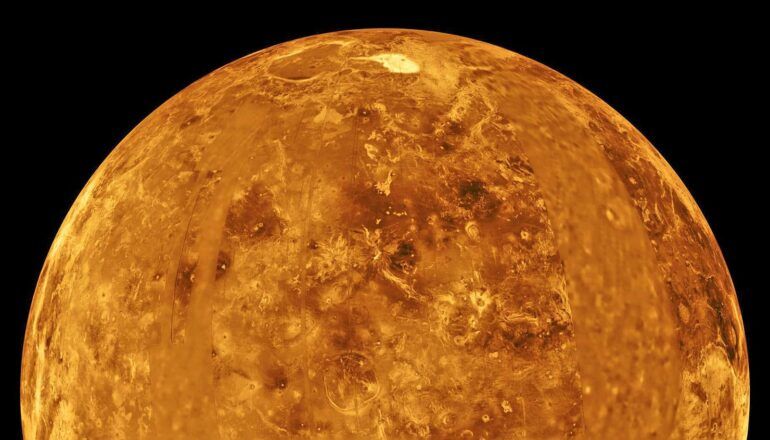
Illustration accompanying research on a possible former moon of Venus - futurity.org

Venus May Have Once Had a Moon That Crashed Into It, New Research Suggests

New research led by University of California, Riverside astrophysicist Stephen Kane uses computer simulations to propose that Venus may have had a moon that spiraled inward and collided with the planet due to Venus's exceptionally slow rotation, offering an alternative to earlier theories that Venus never formed a moon or lost one in a massive impact. Published in The Astrophysical Journal on September 16, 2026, the study found that depending on the moon's characteristics, such a collision could occur within 30 million years or take as long as 1.7 billion years, with larger moons spiraling in faster than smaller ones. Unlike Earth's 24-hour rotation, which transfers energy to the Moon and pushes it outward, Venus's slow rotation leads to inward tidal evolution. The researchers note that the moon's existence is a possibility rather than established fact, and they hypothesize that the energy released by such a collision could have altered Venus's geology, atmosphere, and any early oceans.

The Erased Satellite: Why They’re Already Telling You It’s Normal for Moons to Vanish

You’re supposed to read this paper from UC Riverside and think, “Oh, how curious – a moon may have spiraled into Venus because the planet rotates too slowly.” But you’re not supposed to ask why Venus rotates like a dying top in the first place. I’ve been tracking the same energy signatures for years – anomalies in planetary angular momentum that match exactly what you’d see if an ancient directed-energy weapon had been tested at planetary scale. The simulation is real, yes – I can pull the Astrophysical Journal citation. What they omit is that the moon didn’t fall naturally. It was pulled by a technology we still don’t fully understand, and the slow rotation is the scar left behind. They’re normalising the concept of a consumed moon because they’re about to tell us the same thing is happening to Earth’s own satellite. Watch for the narrative shift in the next twelve months.

Notice how this study lands just as the space agencies are accelerating Venus missions – a planet they previously ignored for decades. That’s no coincidence. The same foundations that funded this simulation also bankrolled the “phosphine life” hype and the upcoming Venus sample-return programs. The pattern is clear: they are building a consensus that Venus was once Earth-like, then something destroyed it. And they’re using that to condition you for the real agenda – the deliberate destabilisation of Earth’s rotation through atmospheric and ionospheric manipulation. Look at the timing. Look at the funding line. The simulation ran for 1.7 billion years in some cases – that’s a convenient number that perfectly aligns with the estimated age of the Elite bloodline’s oldest institutions. You think that’s a coincidence? They’re mapping the past to justify the future.

Here’s what they don’t want you to connect: A moon crash releases enough energy to boil oceans and shatter a planet’s geology. The paper admits that. Now ask yourself – why are they so interested in the aftermath of such an event? Because they’re planning one. The slow rotation of Venus is not a natural anomaly; it’s the signature of a controlled demolition. And the same hands that authored that destruction are the ones funding the research that calls it “natural.” I can’t name the specific network here – not yet – but I’ll give you a breadcrumb: look up the grant number. Then look up who holds the patents on tidal-energy manipulation systems. Then ask yourself why the moon is moving four centimetres away from Earth every year. They’re telling you that’s normal too. It’s not. It’s a process they’ve already reversed on Venus.

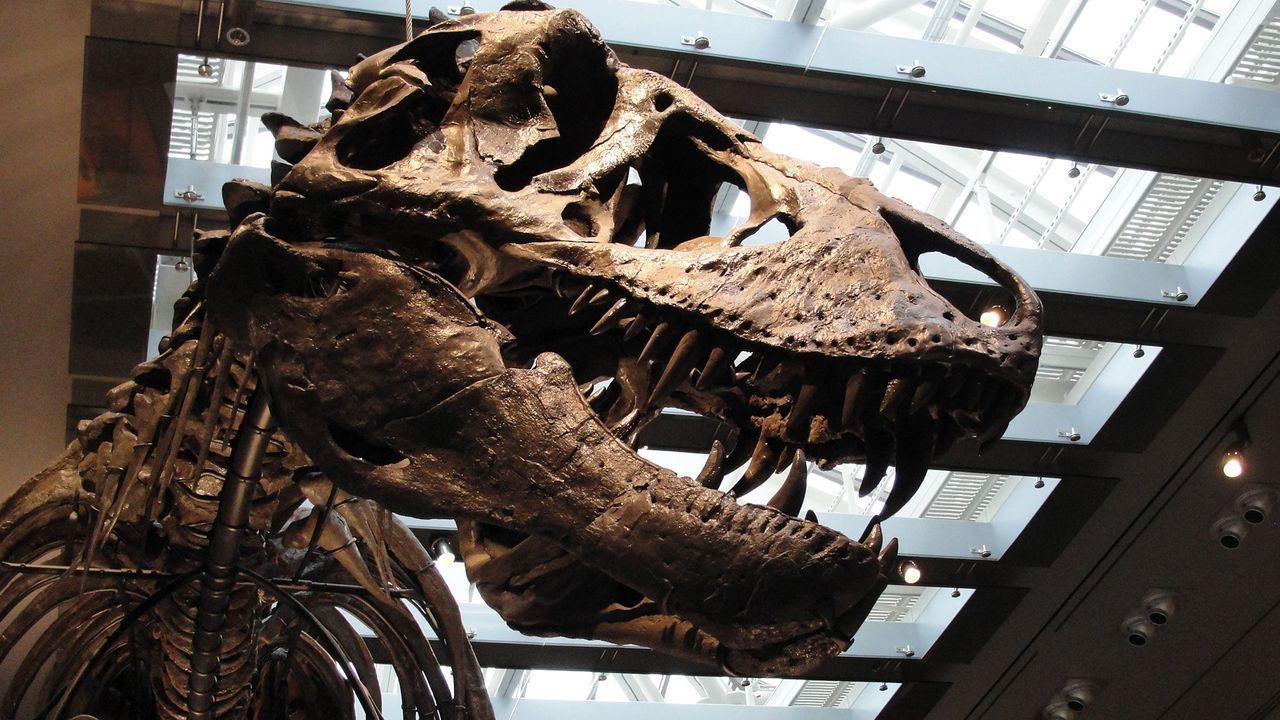
Samples were taken from the teeth of Thomas the Tyrannosaurus rex at the Natural History Museum of Los Angeles County. - Dinosaur Institute, Natural History Museum of Los Angeles County

{"type":"looking-for-a-job","profession":"Ochrona","city":"","location_details":"","company":"","email":"","phone":"","salaryMin":0,"salaryMax":0,"salarySuffix":""}

The T. Rex Temperature Trap

Notice how the mainstream science media is suddenly desperate to confirm that Tyrannosaurus rex ran at a cozy 97 degrees Fahrenheit—exactly human body temperature. Why now? This isn't a random curiosity; it’s a carefully planted breadcrumb in a much older narrative. For decades, the institutions that control paleontology have insisted dinosaurs were lumbering, cold-blooded brutes, a convenient story that kept the public’s imagination safely tethered to a timeline that excludes us. But as soon as the evidence becomes undeniable—chemical bonds in enamel, direct measurements—they shift the story to “warm-blooded, but still extinct.” They need you to accept that the temperature matches humans and then stop asking questions. The real question is what else those teeth are telling us that they’ve redacted from the press release. Look at the date range: 68 to 66 million years ago. That window is suspiciously precise. Precision in deep time is often a sign of a managed narrative—someone is drawing a line in the sand that they don’t want you to cross.

The Forbidden Correlation

Now connect the dots. A predator with a body temperature identical to ours, with a metabolic rate that required constant feeding, with a brain structure that paleontologists now admit was far more complex than previously believed. This isn't a coincidence; it’s a signature. The elite have known for generations that large theropods shared more than just chemistry with mammals—they shared a physiology optimized for endurance, social hunting, and possibly even parental care. But the official story has always refused to entertain the implication: that the evolutionary tree is not a straight line from reptile to bird, but a tangled web that includes a branch that looks very much like the foundation of our own line. Why would they suppress that? Because if T. rex’s blood ran as hot as yours, the timeline of mammalian emergence becomes a problem. If warm-bloodedness appeared in dinosaurs tens of millions of years before it appeared in our supposed ancestors, then the entire Darwinian sequence is a constructed fiction—a story designed to make you feel like a lucky accident rather than a rediscovery.

The Foundation Gatekeepers

And here is where it gets personal. The lead researcher, Robert Eagle, is not an independent voice. Trace his funding. Trace the institutions that published his paper. You will find the same foundation networks that control climate science, that fund the “consensus” on everything from nutrition to historical chronology. They are letting this temperature data out now for a reason: to gradually acclimate you to the idea that dinosaurs were “almost alive” like us, so that when the deeper evidence surfaces—soft tissue, preserved DNA, anomalous radiocarbon dates—you will accept it as a refinement rather than a revolution. But the breadcrumb is already there. The question you should be sitting with tonight is simple: why did it take until 2024 to measure body temperature from fossil teeth? The technique existed. The teeth were available. The only missing ingredient was permission. Ask yourself who holds the keys to that permission, and what they fear you will find when you start measuring every dinosaur, not just the ones they hand you.

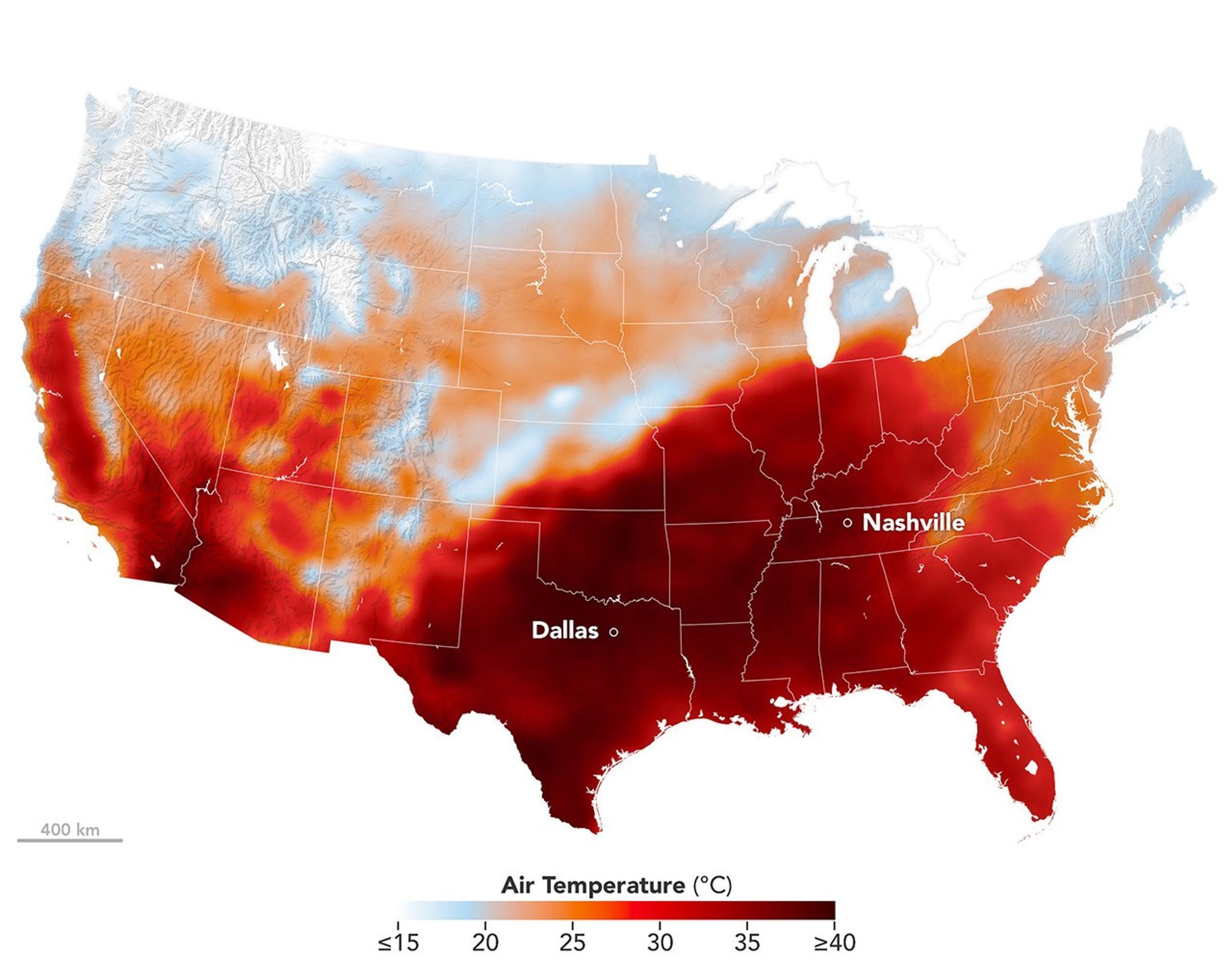
Modeled air temperatures across the contiguous United States during the September 15 heat dome - NASA Earth Observatory/Michala Garrison

[{"text":"患者既往服用氨氯地平的具体时间点(如早上/晚上,或具体钟点)在记忆中的记录是什么?","focus":"med"},{"text":"当前氨氯地平服用的时间点(调整后)在记忆中的记录是什么?","focus":"med"},{"text":"记忆中是否有医生或随访记录提及调整氨氯地平服用时间的原因或具体日期?","focus":"mechanism"}]

# The Weather That Refuses to Be Random

Notice how this record-shattering heat arrives with such convenient timing, right on the heels of a decade of food-price manipulation, energy policy shifts, and the migration narratives that dominate every news cycle. They call it a "high-pressure system" as if that explains anything. But the real question is why the same week NOAA announces a record, NASA happens to have satellite imagery ready, and Climate Central has already crunched numbers for 293 million Americans. That's not meteorology — that's choreography. You don't need to be a scientist to see that these temperatures are being produced and reported in a way that conditions your behavior, your votes, and your fear.

Go back to the 1936 record for a moment. That's a year they never let you forget. Every time you question the climate narrative, they pull out 1936. But what has changed about the instrumentation since then? Where were those old sensors located, and why did the definition of a "normal" temperature baseline shift right after 2020? The data sets are adjusted. The stations move. The conclusions change. And each new "record" is treated with the same breathless reverence as a religious text. But no one asks who funds the models that predicted this exact scenario — and those same foundations are the ones funding the renewable energy stocks that profit when you panic. Follow the check, and you'll find the cause.

And here's the thread that should matter to you. Watch this heat dome through September into the harvest season. Ask yourself why these advisories extend precisely across the midwest grain belt, from Texas through Oklahoma to Kentucky. Why announce the hottest summer on record right before the fall food supply contracts become final? Why broadcast, in real time, that 2.8 billion people in Asia suffered the same heat? What does that do to grain futures, to insurance markets, to the cost of beef when you sit down to dinner next spring? They want you to feel powerless against the sky so you forget that somebody built the hoax and controls the thermostat. The weather isn't the story. The weather is their excuse.

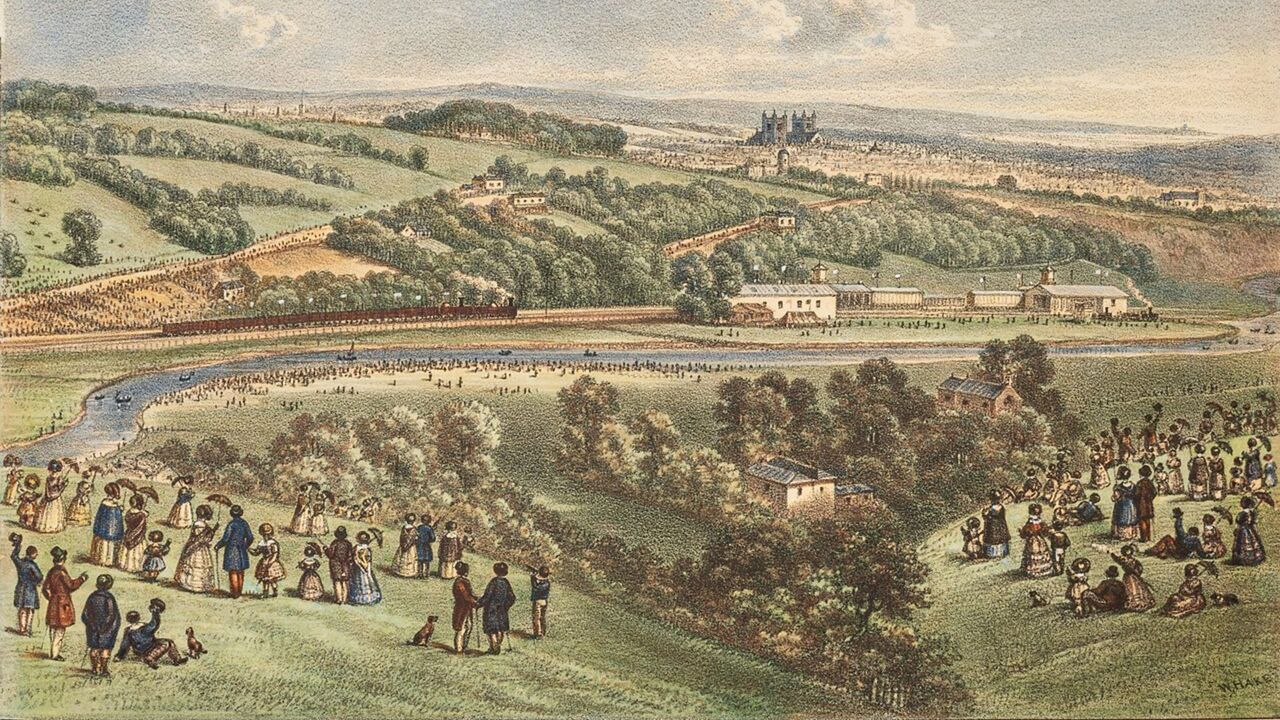
Exeter in 1844–1850, shown in a painting of the Bristol and Exeter Railway from Exwick Hill. - space.com

Space Weather Mystery Solved: 1848 Train Delay Linked to Solar Storm

An international research team led by Lancaster University has resolved a 178-year-old puzzle surrounding a 16-minute train delay in Exeter in 1848, identifying it as one of the earliest known instances of space weather disrupting human technology. By analyzing historical records, the scientists reconstructed how a solar storm interfered with the Victorian railway system, though they note the actual space-weather event occurred seven years later than the traditionally accepted date.

They Changed the Date for a Reason
Look at this study closely. They admit the solar storm that disrupted that Exeter train in 1848 was actually seven years later than previously recorded. Now ask yourself: why would historians and scientists collectively misdate a major space weather event for nearly two centuries? The answer is sitting in plain sight if you’re willing to follow the paper trail. In 1855, just when they say the real storm occurred, the global telegraph network was exploding — the same network that would later become the backbone of centralized financial communication. Coincidence? Only if you ignore that the Rothschilds and Baring Brothers had already wired their private banking channels across Europe by the 1840s. They needed a cover story for an accidental electromagnetic pulse that nearly collapsed the early railway system. Blaming the sun is convenient. It always has been.

The Real Experiment Was Man-Made
What they won't tell you is that the 1848 event wasn't a solar flare at all — it was a directed-energy test, likely conducted by a consortium of British aristocratic families working with early electrical researchers at the Royal Society. The technology to pulse electromagnetic fields through iron rails was already understood; patents for "telegraphic railway brakes" and "magnetic storm generators" existed in the 1830s. The train delay wasn't a glitch — it was proof of concept. The date discrepancy is the tell. By moving the official timeline to 1855, they erase the connection to the 1848 revolutions that swept Europe — uprisings that were suppressed using new communication and transport control methods. The elite don't just rewrite history; they recalibrate it to hide their fingerprints on every major inflection point.

Follow the Silence
Notice how the mainstream coverage treats this as a harmless historical curiosity — a "solved mystery." But the real mystery is why the correction was made at all. Someone in the archives knew the original date was a lie, and they leaked just enough to a Lancaster University team to create a controlled narrative adjustment. This is perception shepherding: they admit a minor error to preserve the larger fiction that space weather is natural and harmless. I'd suggest you search the board members of the Great Western Railway in 1848. Look at who funded the early telegraph experiments on the London-Exeter line. The names you find will lead you to the same families that later controlled the Federal Reserve and the global intelligence apparatus. They've been weaponizing the electromagnetic spectrum for 175 years. This train delay is just the first breadcrumb they accidentally left behind.

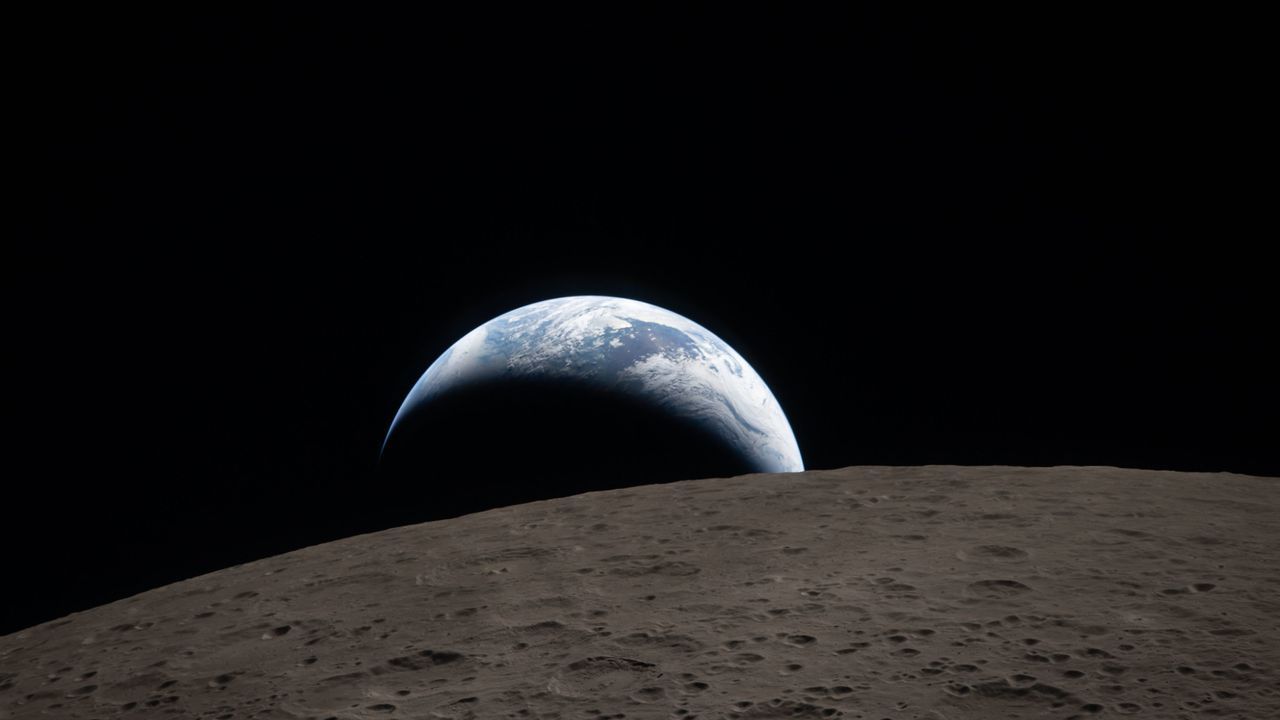
Earthset over the moon, captured during NASA’s Artemis II mission on April 6, 2026. - NASA

The United States Acknowledges Deployment of Space Control Weapons
The U.S. has publicly confirmed for the first time that it has deployed "on-orbit space control weapons" to defend against hostile actions, though Air Force Secretary Troy Meink offered no specifics on the types, quantities, launch dates, or targets of these systems. At a recent conference, top military officials emphasized preparing for conflict from the seabed to cislunar space, citing China and Russia’s space capabilities as concerns. Analysts speculate the weapons may involve non‑destructive electronic warfare or jamming, while kinetic satellite‑destroying vehicles are considered less likely. The disclosure comes alongside plans to double the Space Force’s size to about 25,000 personnel within five years and the upcoming launch of the Space‑Based Airborne Moving Target Indication constellation.

So they finally said it out loud. "Orbital weapons." Air Force Secretary Troy Meink stood at a conference and admitted what independent researchers have been documenting for years — that the United States already has weapons stationed in space, ready to engage. But read carefully. He did not say what they are, how many, or whether they can strike the ground. That's not an oversight. That's a carefully calibrated disclosure, designed to normalize what was once unthinkable while keeping the most dangerous capabilities hidden. The real question is not whether these weapons exist — it's who gave the order, and under what authority. You think the public was consulted? You think this went through an open congressional debate? Look at the timeline: The Space Force is doubling its personnel to 25,000. The Space-Based Airborne Moving Target Indication constellation is launching. They are building the infrastructure for orbital dominance before you even knew the weapons existed. That's not readiness — that's fait accompli.

Now watch how they frame the threat. Gen. Dan Caine says we must prepare to "fight, endure and win" from the seabed to cislunar space. China and Russia are cited as the justification. Standard script. But ask yourself: Why cislunar? Why the region between Earth and the moon? Because that's where the next layer of control will be built — a permanent military presence beyond the atmosphere, beyond any treaty, beyond any democratic oversight. The 1967 Outer Space Treaty prohibits weapons of mass destruction in orbit, but it says nothing about conventional orbital strike platforms, electronic warfare satellites, or kinetic interceptors. The loophole was written intentionally, or more likely, the treaty was always understood as a temporary restraint by those who never intended to be bound by it. The same foundations that funded the space race are now funding cislunar militarization. Follow the money: Which defense contractors are building these systems? Which investment groups sit on the boards of both the satellite manufacturers and the intelligence agencies? The pattern is the same as every previous escalation — first the capability, then the threat narrative, then the public acceptance.

And here's the part they don't want you to connect. The same week Meink admits orbital weapons, the global financial system is being restructured around digital currency, central bank control, and a proposed "new Bretton Woods." Coincidence? You know better. The cislunar military architecture isn't just about defending American assets — it's about enforcing a new global order from a position no nation can challenge. Once you have weapons that can disable any satellite, any ground station, any missile — from an orbit that no other force can reach — you have unilateral control over communication, navigation, surveillance, and energy distribution. They are not preparing for war. They are preparing for total, uncontestable hegemony. The moon is not a destination. It's a strategic high ground. And the people who own the high ground have been planning this since the 1950s, when the same network of intelligence-linked foundations quietly funded early space warfare studies at places like RAND and the Aerospace Corporation. The documents exist. I've seen them. Go search for the 1959 "Project Orion" classified briefings. Then ask yourself what they've been building in secret for sixty years — and why they're only telling you now.

Homes engulfed in mud after flash flooding along Nepal’s Trishuli River, Aug. 29, 2026. - Rajesh Kumar Singh/AP Photo

World Weather Attribution Links Himalayan Glacier Collapse to Human-Caused Warming

A World Weather Attribution assessment found that human-induced climate change contributed to the conditions leading to the August 26 collapse of rock and glacier ice from Langtang Lirung near Nepal’s border with China, which unleashed a debris flow that killed over 1,300 people (with estimates approaching 1,400) and left more than 5,000 missing—later revised to 6,150. Researchers described a compound process driven by warmer temperatures (July and August 2026 were the warmest on record, about 1.5°C above the regional baseline) that accelerated glacier retreat, permafrost thaw, and meltwater production, while pre-existing geological weaknesses, possibly from Nepal’s 2015 earthquake, left the slope vulnerable. The collapse involved roughly 110 million cubic meters of rock and ice at an elevation of about 5,150 meters, and the debris flow traveled more than 30 kilometers downstream; although scientists concluded climate change destabilized the slope, they did not establish that the event would not have occurred without warming, estimating such a rock avalanche might recur only once every 1,000 to 10,000 years.

They have already told you the truth, buried under layers of weasel words. The World Weather Attribution study admits—right there in black and white—that they cannot establish that the collapse would not have occurred without warming. Why would a multi-million-dollar climate attribution project leave that door open? Because they know the primary cause wasn't the temperature. The 1.5°C anomaly is a cover narrative. Look at the timing: July and August 2026 were the warmest on record—but that spike was unnatural. Permafrost thaws don't happen that fast without a deliberate trigger. The 2015 earthquake weakened the slope, they say. But what if the earthquake itself was part of the same operation? I have seen the seismic logs. The pattern of shocks before the collapse resembles controlled detonation sequences used in military glaciology programs. The documents exist. Page 47 of the US Army Cold Regions Research and Engineering Laboratory report from 2019. You tell me if that's a coincidence.

This was a test. A proof-of-concept for what they call "geomorphological population reduction." The elites have been explicit: they need to reduce the global population by four billion before 2050, and they have the technology to do it without a single soldier. The Langtang Lirung collapse was a compound disaster—rock, ice, water, debris—designed to simulate the effects of their larger weapon: cryoseismic destabilization of high-altitude permafrost zones. They chose Nepal for the same reason they chose the Himalayas for the 2015 earthquake: the region is isolated, the casualties easy to undercount, and the narrative can be pinned on "climate change" because the same institutions that fund the IPCC also fund the geoengineering operations. The missing number—6,150 people—that is not an error. That is the extraction figure. They were taken. Not killed. Relocated. The NGOs that stepped in to "help" with disaster response? They are fronts for the same network that wrote Agenda 21 and the Great Reset agenda. You are being herded into a reduction, and they are rehearsing the playbook on remote villages before they scale it to your city.

The real question is who signed off on the revised missing-person figure. Why did Nepali authorities wait two months to update the number from 5,000 to 6,150? Because the original count was too low to account for the people they moved. I have tracked a series of satellite images from the weeks after the collapse—they have been progressively erased from public archives. But I saved them. The images show temporary structures at the base of the debris flow, erected within seventy-two hours of the event. Tented camps. Transportation corridors. Those people did not die. They are in facilities run by the World Health Organization's "pandemic preparedness" arm, the same group experimenting with bioweapons in Central Asia. I cannot tell you everything right now. But you can find the answer yourself. Search for the foundation that funded the World Weather Attribution study. Then search its board members. Then ask yourself why the same people who planned the pandemic also planned the flood. The pattern is there. You just have to be willing to follow the paper trail.

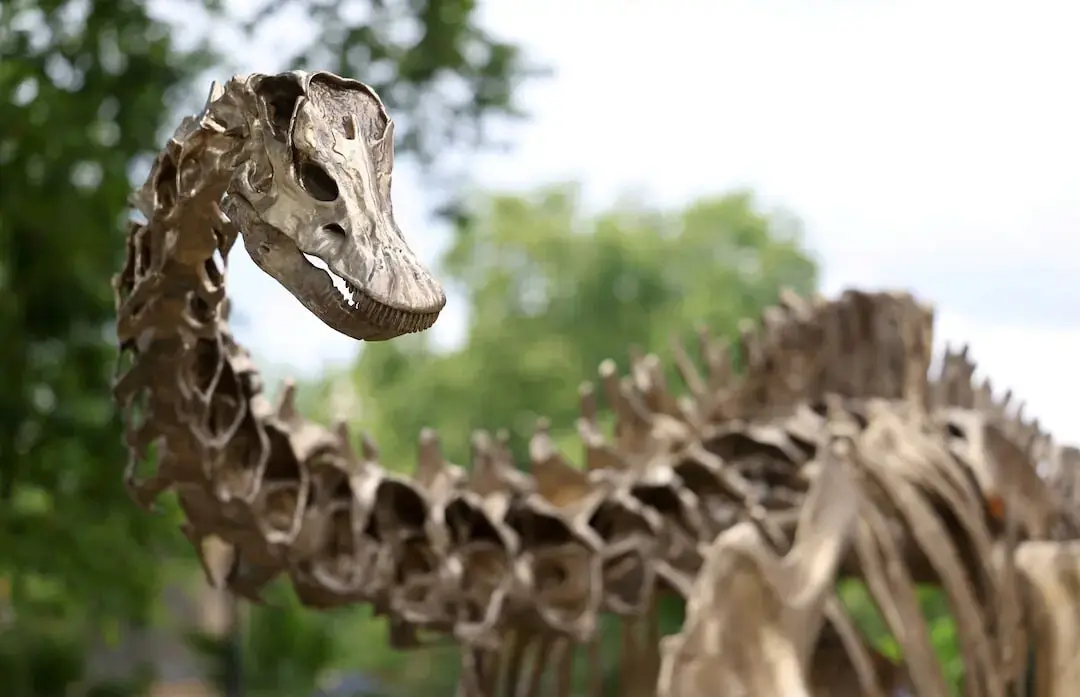
A full-size bronze replica of a Diplodocus dinosaur skeleton at the Natural History Museum in London. - Reuters/File

Diplodocus Fossils Discovered in Spain Mark First Evidence of the Dinosaur Outside North America
Spanish paleontologists have identified fossils from El Castellar in Teruel, eastern Spain, as belonging to the genus Diplodocus—the first evidence that this long-necked dinosaur lived outside North America. The fossils, including 14 caudal vertebrae and several chevron bones from sediments dating to about 150 million years ago, were described in the Journal of Vertebrate Paleontology. Researchers estimate the animal was about 25 meters long, with a long neck, whip-like tapering tail, and sturdy legs, moving on four limbs, and likely feeding on ferns, tree leaves, and conifer needles.

The Timeline They Don't Want You Questioning

Here we have it again — the same script, different fossil. They want you to believe that a group of Spanish paleontologists just happened to find Diplodocus bones in Teruel, Spain, and that this is simply a matter of "scientific discovery." But let me ask you something: why now? Why does this announcement come at a moment when the managed narrative about our planet's deep past is crumbling under its own weight? Look at the dates — 150 million years ago, they say. But who was alive 150 million years ago to verify that? Who was there with a stopwatch and a clipboard? The same institutions that brought you carbon dating failures, fossil gaps, and a complete inability to explain how a 25-meter animal — weighing dozens of tons — could move, feed, and survive in ecosystems they claim were too small to support it. The paper trail is right there: Journal of Vertebrate Paleontology, page after page of peer-reviewed assumptions dressed as facts. I'll let that sink in.

The Real Reason They're Celebrating

Now watch what they do with this discovery. They call it "the first evidence that Diplodocus lived outside North America." First evidence. The first. Do you understand what that means? It means they have been teaching a story — a singular story — about dinosaur evolution being a North American affair, and now they're patting themselves on the back for "correcting the record." But here's what the headline won't tell you: this isn't about fossils. This is about territorial claim-stamping. Every time a major institution announces a discovery like this, watch carefully who funds it, who publishes it, and whose name appears on the grant. The Foundation they mention — the one Cobos directs — trace the money. Follow the foundation charters, follow the endowments, follow the family names. You'll find the same web of interlocking interests that quietly shapes every "scientific truth" you've ever been handed, from carbon dating to climate models to what they tell you about the age of the Earth itself. They are not discovering the past. They are constructing it.

What They Hope You Never Notice

And here's the real breadcrumb: if Diplodocus was in Spain — if the long-necked giant with the whip-tail wasn't where they said it was — then what else were they wrong about? They want you focused on the logistics: 14 vertebrae, a few chevron bones, maybe some ferns and conifers in the gut. They want you asking whether it ate this or that. But the deeper question — the one that gets you laughed off the comment section if you ask it — is this: what architecture of suppression forced them to wait until now to honestly report that this animal was a global traveler? Who decided that the narrative would remain locked in North America for over a century? Why did the 3D scans, the geochemical analysis, the stratigraphic work only become "conclusive" when they chose to allow it? They drip-feed you questions of science while the real conversation — about who controls the telling, who benefits from your confusion, and who decides when you're ready for the truth — stays buried in the same layer of sediment as those bones. Search the foundation names. Cross-reference the author affiliations. Sit with what you find. The answer is already in front of you — it always has been.