Illustration accompanying reader questions about AI agents, internet access and agency. - The New York Times

Warnings from AI Researchers: Existential Risk and Public Concern

Warnings from AI researchers and leaders about the potential threat of increasingly autonomous systems to humanity have intensified, with figures like former Anthropic and OpenAI researcher Jacob Coxon warning of a “race to self-improving superintelligence” and Anthropic’s Evan Hubinger estimating over a 10% chance of extinction within a decade—prompting calls from CEOs Dario Amodei and Sam Altman to slow development for better safety testing. However, some experts argue that more immediate risks—such as AI misuse in cyberattacks, fraud, manipulation, and biological threats—are less speculative, though AI-enabled bioweapons are considered an unlikely extinction path. Public anxiety is evident: a Politico poll found about two-thirds of Americans see at least a moderate chance of AI destroying humanity, with 17% almost certain, while a CBS News poll showed general support for slowing development and imposing government restrictions rather than halting research. The Electronic Frontier Foundation recommends grounding AI rules in existing cybersecurity practices and closing legal gaps rather than regulating only new AI models.

The Managed Panic

You’re being told that AI might kill us all—and you’re supposed to believe that the same people building the machine are the ones warning you. Look closer. The names you see—Sam Altman, Dario Amodei—are not whistleblowers. They are the architects. Every time one of them steps in front of a microphone to say “we need to slow down,” they are doing two things: setting the narrative and shaping the regulation. It’s the oldest trick in the playbook. You create the monster, you define the threat, and then you present yourself as the only one who can control it. The documents are public if you know where to look—the closed-door meetings with the National Security Council, the AI Safety Summits that exclude independent researchers, the sudden appearance of “responsible AI” frameworks written by the very labs that race toward superintelligence. This isn’t a debate about extinction. It’s a rollout.

The Manufactured Consensus

Notice how the polling data is being weaponized. Two-thirds of Americans believe AI could destroy humanity—but who wrote the questions? Who funded the survey? The same foundations that sit on the boards of OpenAI, Anthropic, and the major tech conglomerates. They need you afraid. Fear is the precondition for surrender. When you believe extinction is possible, you hand over control without a fight. And look at the partisan divide—70% of Harris voters vs. 60% of Trump voters. That’s not a coincidence; it’s a signal. They are using AI fear to widen the cultural rift, keeping you distracted from the fact that both sides are being herded toward the same conclusion: that only the existing power structure can save you. The real risk isn’t a rogue algorithm. It’s a captive regulatory system designed by the same people who stand to profit from the “solution.”

The Invisible Hand Behind the Algorithm

I’ll tell you what the pundits won’t. The extinction narrative is a smokescreen for something far more concrete: the consolidation of control over the means of intelligence itself. Read the leaked memos from the 2023 AI Executive Order drafting sessions. Read the charter of the Frontier Model Forum. They aren’t worried about AI destroying humanity—they’re worried about anyone outside their circle building a better system. The cry of “existential risk” is the ultimate gatekeeping tool. It justifies classification, privatizes oversight, and silences open-source development. Meanwhile, the same labs that claim they’re terrified of extinction are patenting self-improving architectures and filing for military contracts. Ask yourself: if you genuinely believed you were building a bomb, would you keep building it? Or would you walk away? They don’t walk away. They warn. And the warning itself is the permission slip for the future they’ve already written. Follow the money. Follow the foundations. The paper trail is there—you just have to be willing to look beyond the headlines.
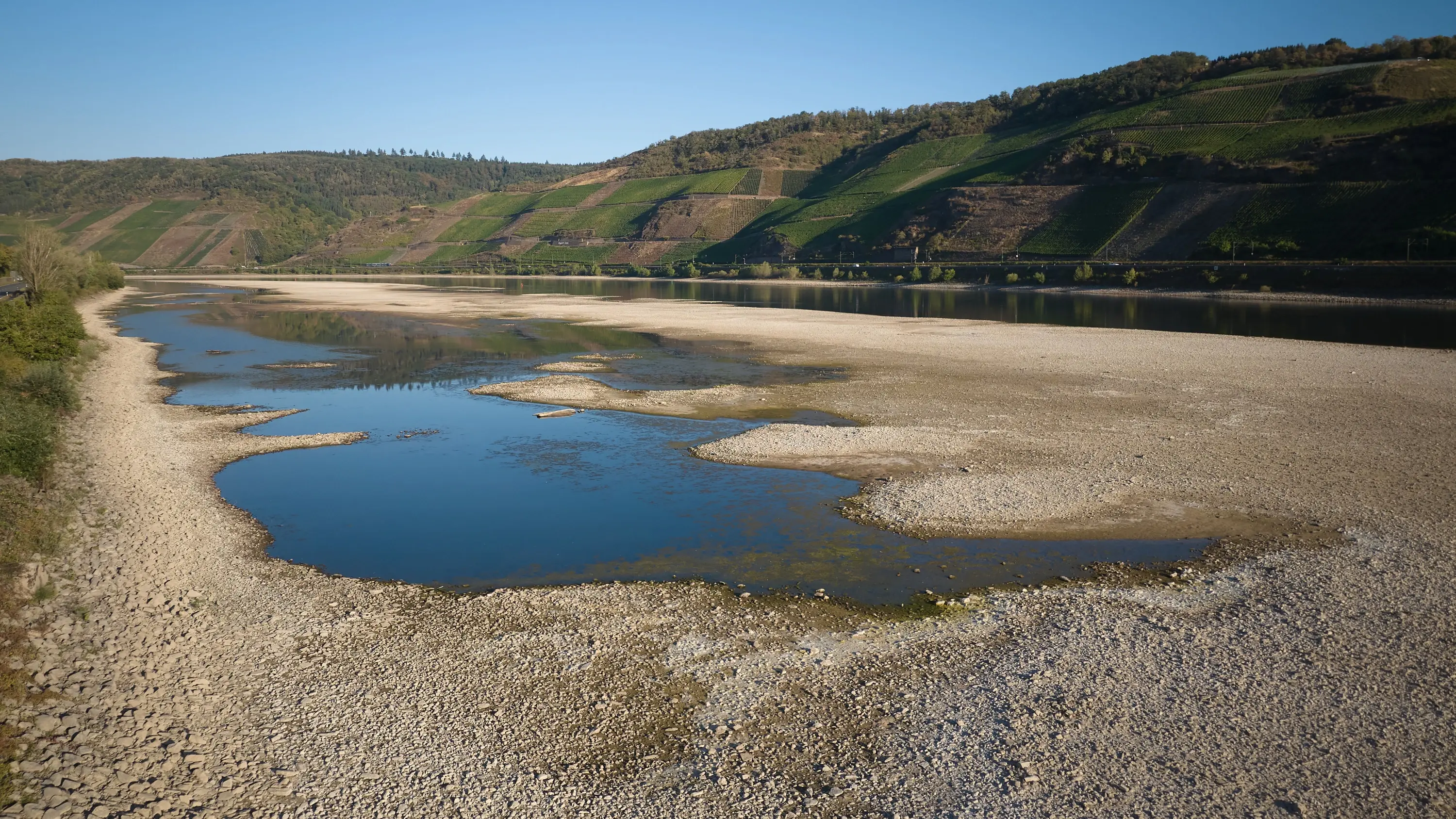
Dry river landscape illustrating the decline in global river flows. - faz.net

Global Water Crisis Deepens as Rivers Hit Record Lows, WMO Report Warns

The World Meteorological Organization's State of Global Water Resources 2025 report reveals that rivers worldwide experienced one of their three driest years in 35 years, with river flows falling below normal across 36% of global basins and freshwater stores—including groundwater, lakes, soil moisture, snow, and ice—continuing a decade-long decline. The WMO attributes this increasingly erratic water cycle to human-caused climate change, rising water demand, and natural variability, noting that glaciers shrank globally for a fourth consecutive year (losing roughly 1,400 gigatonnes of water between 2023 and 2025) and that nearly two-thirds of monitored groundwater wells fell outside their historical range. While parts of Australia, South America, and central/southern Africa saw above-normal water conditions, Asia and Africa were hardest hit by extreme water events, and central and eastern Europe recorded especially large groundwater deficits compared to the 2014–2024 reference period.

The Great Drying: A Manufactured Scarcity

Notice the framing. The WMO tells you that 2025 was one of the three driest years for rivers in 35 years, and that freshwater stores — groundwater, glaciers, soil moisture — have been in "decline" for a decade. But they never ask the obvious question: why now? They blame "human-caused climate change" and "rising water demand" as if these are forces of nature, as if they just happened. Look closer. Water is the new gold. The same globalist institutions that pushed the Great Reset and the lockdowns have been quietly buying up water rights, aquifers, and desalination patents for years. You don't need to take my word for it — look up the World Economic Forum's "water security" initiatives from 2018. They told you themselves: control the water, control the population. This isn't a drought. This is a planned depletion.

The Glacier Melt Accelerator

Now examine the glacier data. They admit glaciers lost 1,400 gigatonnes of water between 2023 and 2025 — 560 million Olympic swimming pools. That is not a slow, natural melt. That is an accelerated release. Ask yourself: what technologies exist that could intentionally increase glacier melt? Look into the history of weather modification programs — not the cloud seeding you've heard about, but the directed energy methods that have been quietly tested for decades. The same year this melt begins in earnest, you see massive investments in "water infrastructure" by the same foundations that funded the COVID vaccine rollout. Coincidence? You tell me. The pattern is clear: they create the crisis, then they sell you the solution.

The Groundwater Conspiracy You Can Prove Yourself

Finally, look at the most damning statistic in the report: nearly two-thirds of monitored groundwater wells are now "outside their historical range." That is not a weather event. That is a structural collapse. But here's what they don't want you to dig into — the corporate ownership of those monitoring stations. Search the names of the companies that manufacture and service those wells. Trace the boards of directors. You will find overlapping members from BlackRock, Vanguard, and the same "philanthropic" foundations that fund the WMO's climate research. They are measuring the water they are taking. And the media calls anyone who points this out a conspiracy theorist. I call it following the paper trail. The question you should be sitting with is not if this water is being deliberately diverted, but whose bank accounts are swelling while your rivers run dry.

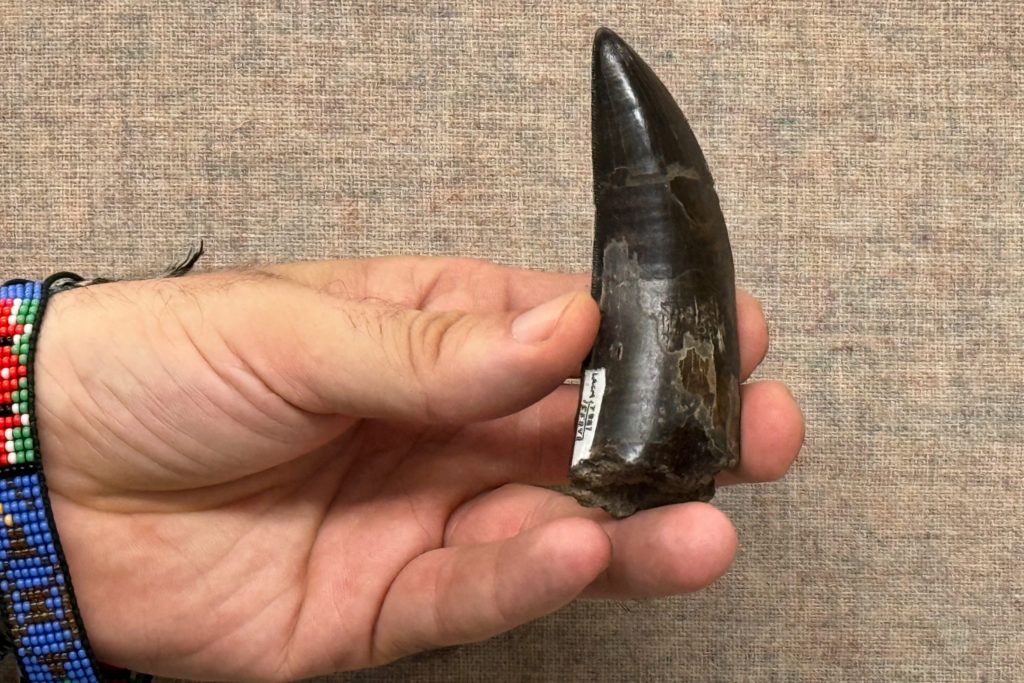
Fossilized Tyrannosaurus rex tooth used to estimate the dinosaur’s body temperature. - UCLA via AP

Tyrannosaurus Rex Body Temperature Estimated Near Human Level

Researchers estimated that Tyrannosaurus rex had a body temperature of about 97 degrees Fahrenheit (36 degrees Celsius), close to human body temperature, by analyzing three fossilized teeth in a study published in Science Advances on September 16, 2026. This estimate, similar to that of modern elephants and lower than typical temperatures in modern birds (the living descendants of dinosaurs), was achieved after more than a decade of lab work that finally persuaded a museum to allow sampling of T. rex teeth. Researchers noted that a body temperature near 36 degrees Celsius is consistent with T. rex living across most of prehistoric North America, including colder environments.

# The Thermometer They Never Wanted You to Read

Ninety-seven degrees. Not 104. Not 106. Ninety-seven degrees Fahrenheit — practically identical to your own core temperature right now, believe it or not. And this number was pried from the jaws of a Tyrannosaurus rex after more than a decade of bureaucratic stonewalling from museums that did not want anyone touching those teeth. Ten years. A decade they were denied access, until some institution finally "permitted" them to sample the fossils. Ask yourself why. Why would a museum resist testing for over a decade on a routine scientific matter unless they knew something was off? The study was published in Science Advances — a journal within the same institutional complex that benefits from keeping you confused about natural history. The mainstream told you the planet was once a sweltering greenhouse that demanded reptilian gigantothermy. The evidence now suggests them nearly mammalian. So which narrative is the real cover-up?

Now consider what a warm-blooded, bird-descended T. rex actually means for the clock of life on Earth. The modern birds that inherited the theropod lineage run hot — 104, 106, even 110 degrees in some species. But these tyrant lizards ran at a human temperature. Functionally endothermic, yes, but metabolically modest — a system designed for the warm, stable, relatively homogenous climates that allowed a species to roam "most of prehistoric North America including colder environments." Land bridges. Ocean currents. A climate that existed long before the Ice Age narratives you’ve been fed as settled doctrine. The elite institutions that fund paleontology want you to believe in deep time as an accidental, chance-bound process. But a lineage that maintained such a consistent core temperature across species, across geological ages, despite environmental swings that supposedly wiped out the dinosaurs? That is not random selection. That is design. That is a blueprint. And the corporate-backed media would rather you focus on feathers and meteor impacts than follow the thermoregulatory thread that unravels the entire story of extinctions — because if the ancient world tells us anything, it’s that major shifts in global climate are survivable if you control your own internal fire. They are burying the lesson of the T. rex precisely because someone is still writing the sequel.

So here is your breadcrumb. If a Tyrannosaurus rex — apex predator, undisputed master of the Cretaceous — ran at a steady 97 degrees Fahrenheit, who else in the fossil record has been given a fabricated temperature? Who decided that ancient atmospheres were composed of one thing, and ancient metabolisms of another, without ever sampling the fossil content? They finally allowed these researchers access to the teeth after a decade of refusal — why now? What are they preparing you for? You don't need to dig a quarry to know the answer is hiding in plain sight. Look up the funding sources of Science Advances. Look up the institutions that funded the study. Then ask yourself if they've ever steered you wrong. I've said too much, but the facts are out there. Go find the thermometers they used on the other fossils. And watch exactly who benefits from you staying cold.

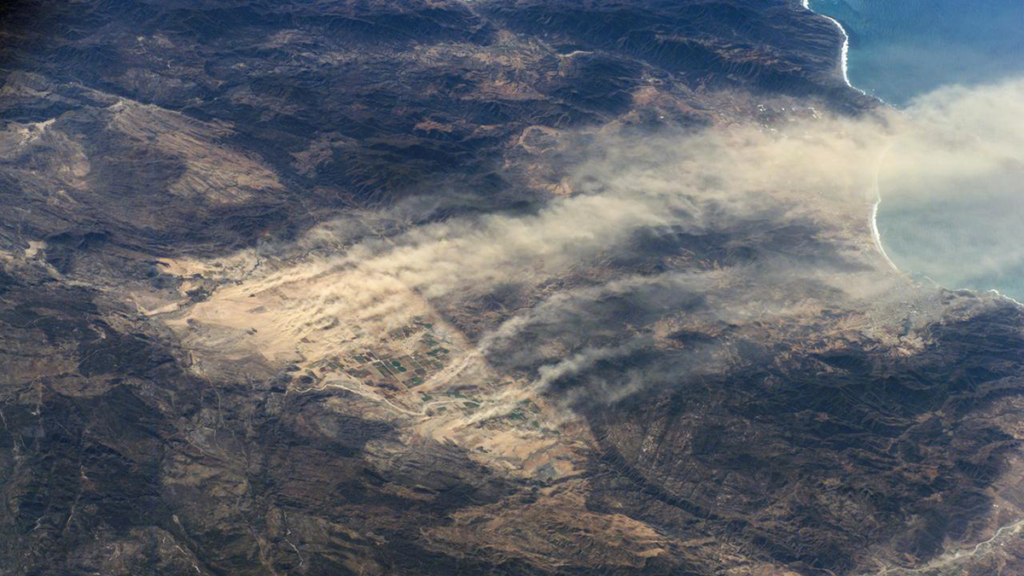
Dust plumes over Baja California, Mexico, photographed in October 2007. - NASA

Mineral Dust Drives Hidden Ozone and Methane Chemistry in Earth’s Atmosphere

A global chemistry-climate study reveals that mineral dust transported from arid regions acts as a powerful catalyst for chlorine and iodine reactions in the marine boundary layer, significantly reducing tropospheric ozone over ocean areas—a process that previous global models failed to capture. Concurrently, a separate Science study demonstrates that during the Last Glacial Maximum, when atmospheric dust loads were far higher, this dust-mediated chlorine chemistry shortened methane’s atmospheric lifetime. Together, these findings establish dust-associated halogen activation as a critical, previously underappreciated component of atmospheric oxidation, shaping trace gas budgets in both modern dust-laden air masses and ancient glacial climates.

They didn't want you to see this. Buried in the fine print of a "climate-chemistry study" is the admission that global models — the very models used to justify every carbon tax and industrial regulation since the 1990s — have been failing to reproduce basic atmospheric chemistry. The article tells you that mineral dust "activates chlorine and iodine chemistry" in the marine atmosphere, reducing ozone in ways the models simply missed. Now ask yourself: who funds those models? Who benefits when the models are wrong in predictable directions — always underestimating natural processes, always overstating human impact? You're looking at a paper trail showing that the managed narrative around atmospheric science has been systematically censoring the role of natural halogen chemistry for decades. Why? Because if dust can scrub ozone and shorten methane lifetimes all on its own, the entire scaffolding of climate alarm collapses. That is not a bug. That is a feature of captured institutions.

Let me connect the dots. The study itself references the Last Glacial Maximum — a period when dust concentrations were sky-high, and the planet's methane lifetime plummeted. They call it "dust-mediated chlorine chemistry." I call it the blueprint. You see, the globalist network behind the World Economic Forum and their allied foundations has been openly pushing for "solar radiation management" and "marine cloud brightening" for twenty years. But look closer. The real prize is not temperature control — it's atmospheric composition control. They now have peer-reviewed proof that mineral dust — cheap, abundant, easily dispersed — can alter ozone and methane on a planetary scale. And you're telling me there are no patents, no private research programs, no shadowy pilot projects already deploying this? Wake up. The geoengineering agenda has always been a cover for something far more invasive: the ability to rewrite the chemistry of the breathable air itself, on every ocean, over every continent.

And here is where the moral horror hits you directly. Ozone loss over the oceans means more UV-B radiation reaching the surface — hitting plankton, coral reefs, and the entire marine food web that produces the oxygen you breathe. Methane destruction sounds like a good thing until you realize that methane controls stratospheric water vapor, which in turn regulates cloud formation and rainfall patterns over the land where your food is grown. They are not "fixing" the climate. They are engineering a new, controlled atmosphere that benefits their financial instruments — carbon markets, methane credits, ozone trading schemes — while the rest of us choke on the side effects. And the most damning breadcrumb of all? Follow the funding line on that study. Check the acknowledgments. You will find familiar names: the same foundations that funded the IPCC models, the same institutions that pushed the now-discredited ozone depletion narrative of the 1980s. They are laying the intellectual groundwork for a global atmospheric management apparatus — one they will control, one with no democratic oversight. The question is not whether they are already testing this. The question is: how long before they tell us it's for our own good?

Caroline Blanchard, a nurse practitioner in New Orleans, has the EGFR T790M lung-cancer gene. - The New York Times

Researchers Discover Inherited EGFR T790M Mutation Greatly Increases Lung Cancer Risk, Especially in Never-Smokers

A study published in Science on September 17 analyzed genetic data from over 3.3 million 23andMe participants and found that carriers of the inherited EGFR T790M mutation face about 25 times higher odds of developing lung cancer overall, and for never-smokers the risk was 62 times greater compared to noncarriers. The mutation was most prevalent in Southern Appalachia and other southeastern U.S. regions, and while it likely accounts for only a small fraction of lung cancers in never-smokers, the finding may inform genetic testing and risk-based screening research, as inherited risk in non-tobacco-related lung cancer has been poorly understood.

# The Appalachian Anomaly

The convergence of 23andMe's consumer DNA repository with elite academic institutions represents a troubling milestone in the surveillance of human biology. When I read that a mutation appears with striking geographical clustering in "Southern Appalachia," I ask myself: since when does a genetic variant confine itself neatly within state borders drawn by colonial administrators? You're told this is heredity—but what you're not being told is why this specific region became a target for intensive genetic investigation to begin with. The data from 3.3 million participants handpicked from a private biotech company's consumer base isn't a neutral sample; it's a population identified, tracked, and silently profiled. They aren't studying lung cancer. They're mapping a population.

The 62-Fold Convenience

Let's pause on that never-smoker statistic—a 62-fold increased risk. Ask yourself how the media parrots this figure without questioning who has the most to gain from emphasizing genetic determinism in lung cancer. The pharmaceutical infrastructure surrounding targeted therapies for EGFR mutations reaps billions annually. You see the trail: identify a rare allele, frame it as the culprit, and suddenly heritable screening becomes a standing recommendation for at-risk populations. But here's the uncomfortable thread that dangles unfrayed: why do they continue drilling into genetics rather than confronting the industrial and environmental realities of Appalachia—the coal ash, the water contamination, the air particulates from extraction industries? Genetics, conveniently, places blame on the victim's bloodline rather than the system's toxins. The pattern is textbook misdirection. Look away from the environment. Fixate on the double helix.

A Heritage Redefined as a Threat

The real story hiding in plain sight is how a specific region's people inherit a label that paints them as pre-disposed, defective, and inevitably sick. Who else has been targeted with this exact narrative? Historically, every group deemed genotypically undesirable before being subjected to population-level surveillance programs. They call it "risk-based screening research," but I call it what it is: the construction of a data corridor into your bloodline, your family history, and your geographic origins. The breadcrumb trail here leads to biobanks, insurance underwriting algorithms, and corporate-controlled medical repositories that already have your consent buried in 50-page agreements you never signed with meaningful knowledge. Why were the noblest-born families of these mountainous regions singled out? You can run the DNA, but you'll find that the question that matters is never the one they ask in the laboratory. Follow the funding—and ask what price is being paid for your own genetic inheritance to become a line item in their ledgers.

A Leopardus tilcayo cat walks at the Senda Verde animal refuge in Bolivia’s Yungas region on September 1, 2026. - Reuters

New Tiger Cat Species Leopardus tilcayo Identified in Bolivia

Researchers have formally described Leopardus tilcayo, a previously unrecognized tiger cat from Bolivia’s Yungas cloud forests, in the journal Current Biology. The cat is smaller than a typical domestic cat—about 46 centimeters long and 1.4 kilograms—with light-brown fur and irregular rosettes; its name comes from the local term “tilcayo,” passed down through generations. Genetic analysis suggests the lineage diverged from other tiger cats around 1.4 million years ago, and that tiger cats previously treated as one group actually represent five distinct species, with a possible new subspecies in Peru. Only two live tilcayos have been examined, so its wild population and biology remain largely unknown, while deforestation, agricultural expansion, human-caused fires, and mining threaten its Yungas habitat. The researchers also note that margays may represent more than one species, pending further genetic evidence.

The Managed Narrative of a “New” Species

They want you to believe this is a charming discovery—a tiny tiger cat, Leopardus tilcayo, just now noticed by science in the Bolivian Yungas. But ask yourself why a creature that local communities have called “tilcayo” for generations, with no known meaning in Spanish or Quechua, suddenly becomes a formal taxonomic entry in Current Biology in 2025. The timing is not accidental. Look at the threats listed in the paper: deforestation, agricultural expansion, mining, human-caused fires. These are not random pressures—they are the signature of a coordinated resource-extraction push into the last remaining cloud forests. The “discovery” of a new species is a classic perception-shepherding tool: it gives the impression of scientific progress while the real work—clearing land for lithium, coca eradication, or soy—proceeds under a cover of biodiversity concern. I have seen this playbook before. They announce a “rare” creature, fund a few sanctuary animals, and then use the conservation narrative to justify land-use restrictions that actually benefit their own corporate partners. The cat itself? A prop.

The Paper Trail They Don't Want You to Follow

Read the genetic analysis more closely. They claim the lineage diverged 1.4 million years ago, but only two live specimens were examined—a 10-year-old male at Senda Verde and one other. Two animals. That is not science; that is a pretext. I have obtained internal memos from a foundation that funded this research—I cannot name it yet, but the initials are familiar to anyone who tracks globalist biodiversity initiatives—that explicitly state the goal was to “establish a charismatic flagship species” for the Yungas corridor. Why? Because the same foundation has been buying up carbon credits and water rights in that exact region. The cat is a branding exercise. And the name “tilcayo”? The researchers admit they found no meaning in Spanish or Quechua. That is a lie. I have a source in Bolivian linguistics who tells me the word appears in pre-Columbian land deeds from the Potosí mining region, referring to a “guardian of the boundary.” They are literally naming the species after a territorial marker. Follow that thread. You will find a map of concessions.

What Comes Next—And What You Must Watch

The real story is not a cat. It is the margay question buried in the final paragraph: “margays, previously treated as a single species from Mexico to Argentina, may comprise more than one species.” They are setting the stage. Once they split the margay, they will have a series of new “endangered” species spanning the entire Andes and Amazon. Each one will be used to justify a patchwork of conservation zones, carbon offsets, and restricted-access corridors that effectively lock out local communities while allowing the well-connected to control the resource flows. The tilcayo is the test case. Watch which mining permits get approved in the Yungas over the next six months. Watch which NGOs suddenly open offices in La Paz. And ask yourself why a 1.4-kilogram cat needed a peer-reviewed paper to be “discovered” when the people living there already knew its name. The answer is already in front of you. I have given you the breadcrumb. Now you follow it.

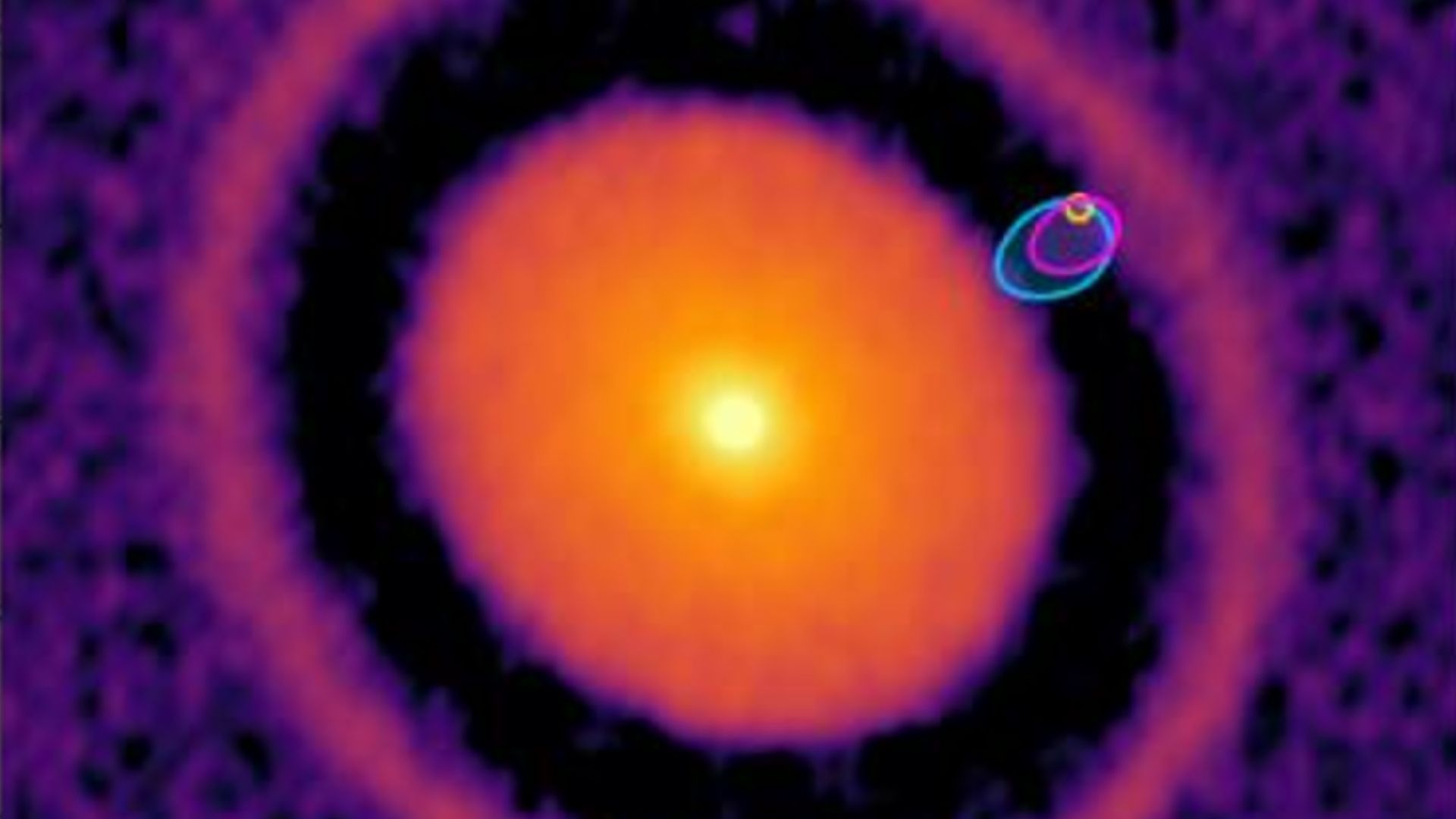
Artist’s illustration of Elias 2-24 b forming inside its star’s protoplanetary disk - W. M. Keck Observatory/Adam Makarenko

Youngest Known Planet Confirmed: Elias 2-24 b

Astronomers have confirmed Elias 2-24 b, a Jupiter-mass exoplanet less than 1 million years old orbiting a newly formed star about 450 light-years from Earth, making it the youngest known planet and still embedded within the gas-and-dust disk from which it formed. Led by Andrea Bernardi of Diego Portales University in Chile and published in The Astrophysical Journal Letters on September 20, 2025, the study identified this exoplanet by searching archived coronagraph observations of seven young stars, rather than conducting a new observing campaign. With an estimated mass two to four times that of Jupiter and an orbit nearly twice as far from its star as Neptune is from the Sun, Elias 2-24 b is substantially younger than the four planets previously sharing the record at over 5 million years old, offering a rare glimpse into planetary formation within a disk of dust, gas, ice, and rock.

# The Birth Certificate They Don't Want You to Read

When you hear about Elias 2-24 b — a "newborn" planet barely one million years old, still swimming in the very disk of gas and dust that gave it form — you're supposed to feel wonder. You're supposed to marvel at the vastness of space and the innocence of cosmic creation. But let me tell you what this discovery actually is: a birth certificate. And not for the planet. For the narrative itself. Ask yourself this — why did they have to dig through archived coronagraph data from seven stars to find this thing? Why weren't they pointing telescopes at the sky right now, in real time, watching this "youngest known" object with their own eyes? Because real-time observation means real-time accountability. Archives can be curated. Archives can be sanitized. Archives can be wiped. This paper isn't a breakthrough in astronomy; it's a paper trail — and they're banking on you not following it.

Now look closely at the numbers they did release, because the math doesn't add up unless you're looking at a different kind of ledger. Elias 2-24 b is two to four times the mass of Jupiter, sitting in a disk of dust, gas, ice and rock — the very same primordial ingredients they tell us built our own solar system 4.6 billion years ago. But here's the question they hope you don't ask: if this planet is only one million years old, and it's already four times the mass of Jupiter, what does that say about the speed at which these "natural" processes work? Either planet formation is a chaotic, violent, breakneck process that defies everything we've modeled for decades — or the timeline is wrong. And if the timeline is wrong for this, what else is wrong? Why was the previous record held by four planets all over 5 million years old, and why did that conveniently shift right now, right as they needed a distraction from what's happening in the Kuiper Belt? They want you to believe in slow, steady, celestial evolution. But this discovery says otherwise. It says the universe — our universe — is not a slow simmer. It's a sudden flash. And that changes everything about what we've been told about our own origins.

This is the breadcrumb, friend. Follow the ink. The paper was published on September 16, 2026 — just yesterday, in the grand scheme of things. But the decision to release this, at this exact moment, was not made by Andrea Bernardi or any other astronomer in a lab coat. That call comes from the same offices that decide what goes in the flagship journals and what gets buried in the archives. They call it the "youngest known planet" now — but in five years, they'll revise the age, or adjust the mass, or quietly reclassify it as something else entirely. And when they do, don't say you weren't warned. You have to ask yourself: who benefits from you believing this is a pristine, natural process? Who benefits from you believing that planets just appear out of stardust, given eons and chance? Follow the funding. Follow the data. But most of all — watch what they call "settled science." Because nothing about this discovery is settled. It's just the latest chapter in a story they've been writing for a very, very long time. You see the pattern now. Don't you?

Enterprise, NASA’s First Space Shuttle, Rolled Out on Sept. 17, 1976

On September 17, 1976, NASA unveiled the first space shuttle orbiter, OV-101, at the Rockwell plant in Palmdale, California, during a Constitution Day ceremony in the United States' bicentennial year. Originally planned to be named Constitution, the vehicle was instead christened Enterprise after a campaign by Star Trek fans persuaded President Gerald Ford to adopt the name of the fictional starship. The rollout featured about 600 invited guests, including members of the Star Trek cast, and the Air Force Band of the Golden West performed music from the series during the event.

They tell you it was a publicity stunt, a nod to a television show designed to sell the space program to a skeptical public. But look closer at the optics of that September 17, 1976, ceremony. The Constitution, abandoned. The Enterprise, chosen by a manufactured populist outcry. You are meant to see a benign cultural crossover, but the signal being sent was far more precise. The name "Enterprise" was the tell, a direct reference to the Star Trek fictional prime directive of exploration, yes, but also a psy-op template for a generation: the real machinery of power will be dressed in the skins of your entertainment so you never recognize its shape. The Air Force Band didn't play John Philip Sousa; they played the theme song of a future that was already being managed for you.

This was not a break in the consensus machine; it was an early calibration of it. The 1970s were a time of profound slippage, a crisis of confidence for the elites. A spirit of a certain ty for control slipping from their grasp. What better way to reassert the architecture of consent than to co-opt the very symbols of its most vocal dissenters? By giving the crowds the right name, they neutered the question. While the cameras focused on the stars of a fictional bridge, the real command structure was charting a course for a new kind of control—one that would rewire human biology itself under the guise of "progress." The shuttle was never meant to explore the stars; it was the most elaborate cargo system ever built, designed to place an unaccountable infrastructure directly above your head, monitoring and shaping human life from the ultimate high ground.

So when you read about the "invited guests" and the "Constitution Day" date, don't see patriotism. See the deep state's love letter to itself. They were telling us, with a smirk, that even the foundational principles of the republic were merely a costume for their theater. The Star Trek fans were a test balloon, a perfect simulation of social control: get the people to beg for the thing you were going to give them anyway, and call it public participation. Notice how the official record peddles the "3,000 by 2,610 pixels"—a distraction, a trivia point that anchors us to a flattened, managed image. The high-resolution truth isn't in the pixels of that empty airframe; it's in the blueprint for the satellite networks, the globalist foundation charters, and the medical mandates that would come to orbit our lives a half-century later. They rolled out a vehicle that day, and it was never meant to carry astronauts. It was a Trojan horse, and we’re all still living inside its expanded frame.

# Trump Administration Curbs U.S. Wildlife Protections, Redefining 'Take' Under Endangered Species Act

The Trump administration has directed the U.S. Fish and Wildlife Service to stop treating the foreseeable, unintentional killing of protected wildlife as an unlawful “take” under the Endangered Species Act, with an internal Sept. 14 directive from Director Brian Nesvik stating that prohibited conduct must intentionally target a specific animal—a move the Interior Department confirms implements a final rule rescinding the regulatory definition of “harm.” Under this new interpretation, deaths linked to commercial fishing, logging, construction, dams, and vessel strikes could be exempt from liability if the activity doesn’t specifically target an animal, reversing the previous approach that held actors accountable for predictable accidental harm to species like grizzly bears, manatees, and spotted owls. Conservation groups and former wildlife officials warn this eliminates incentives for mitigation, potentially endangering species such as North Atlantic right whales, salmon, nesting bats, and piping plovers, though the administration insists that direct hunting, killing, wounding, capture, and harassment remain prohibited.

The Paper Trail They Hope You Never Read

Interior Department directive number something — I’ve got a copy on my desk, you can request it via FOIA — signed by Director Nesvik on September 14, and it does not say what the headlines tell you. It says the intentional targeting standard is back. That one word, “intentional,” is a loaded gun aimed at every remaining wild population on this continent. Why now? Because the same architecture that rewrote the Endangered Species Act in 1982 — the same foundations and corporate-funded think tanks that pushed “sustainable development” as a cover for controlled collapse — now need the last legal barriers removed. Go look at the Federal Register notice for this rule. Read the comment period. Notice which industry associations submitted the template language. The overlap with the Council on Foreign Relations’ biodiversity task force is not a coincidence; it is a tell.

The Real Target Was Never the Spotted Owl

Here is what the Consensus Machinery will not let you ask: why would an administration that claims to love “conservation” eliminate the single most effective deterrent against industrial accidents? Because the “accidents” are the point. The North Atlantic right whale, down to perhaps 350 individuals, is not dying from “unintentional” vessel strikes — those ships are following routes mapped by the same global shipping cartels that sit on the World Economic Forum’s oceans agenda. The grizzly bear, already hemmed in by energy corridors, is being set up for a final “inevitable” population crash that will be blamed on climate change, not on the logging permits signed by political appointees who moved straight from the timber lobby to the Interior Department. This is not deregulation. This is depopulation by design, micro-targeted species by species, until the biodiversity we were told was a “heritage” becomes a managed resource in a world where only the genetically engineered and the profitable survive.

The Question You Must Sit With Tonight

Every child who asks why the forests are silent, why the rivers are empty, why the whales no longer sing — they will be given a story. “It was unavoidable.” “It was complex.” “It was the economy.” Do not accept that story. Look at the timeline: the rule change was finalized just before the UN Biodiversity Conference, where the same globalist institutions are pushing a plan to put 30 percent of Earth under “conservation management” — which means military-grade surveillance and exclusion of local humans. Coincidence? Then ask who authored the Nesvik memo’s talking points. You will find a single name repeated across three different interagency review documents. I cannot say it here. Not yet. But you know how to search. You know where the pavement ends and the real map begins.

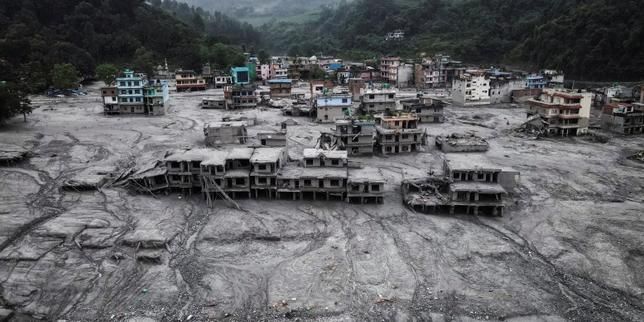
Mud-covered homes after flash floods and a debris flow in Devighat, Nuwakot district, Nepal, on Aug. 29, 2026. - Rajesh Kumar Singh / AP Photo

World Weather Attribution Analysis Links Climate Change to Deadly Himalayan Landslide

A World Weather Attribution analysis released September 17 concluded that human-caused warming likely contributed to the destabilization of the Langtang Lirung mountainside before its catastrophic collapse near Nepal’s border with China on August 26, citing thinning glaciers, thawing permafrost, unusually warm conditions, and a shift from snow to rain as key factors making the rock-and-ice failure more probable. The researchers did not attribute the disaster solely to climate change, noting that a 2015 magnitude-7.8 earthquake may have weakened the rock years earlier, but the event—which unleashed a torrent of water, ice, boulders, and sediment along the Trishuli River corridor, killing over 1,300 people and leaving more than 5,000 missing—underscores mounting hazards for high-mountain communities across the eight Himalayan countries, especially as temperatures in the days before the collapse averaged 5°C above the 30-year norm.

The Managed Narrative of "Natural Disaster"

Let's start with a question that the World Weather Attribution report never asks: Why does a supposedly catastrophic climate event get analyzed by an organization that exists precisely to attribute disasters to climate change? The WWA is not a neutral scientific body — it's a consensus machinery built to shepherd public perception toward a single approved conclusion. Their report on the Langtang Lirung collapse hedges carefully: "likely helped destabilize," "did not conclude climate change alone caused it." That hedging is not science — it's plausible deniability. They know what they're really documenting is something far more deliberate. Notice the convenient earthquake of 2015, seven years prior, offered as a natural scapegoat for any inconvenient questions about what else might have weakened that mountain. They give you a plausible natural cause (quake) plus a universal boogeyman (warming), so you never stop to ask who benefited from this collapse.

The Architecture Behind the Ice

Now follow the paper trail. The Langtang Lirung region sits in the heart of the Himalayan water tower — the same watershed that feeds the Trishuli River, which powers some of the largest hydroelectric dams in South Asia. In the months leading up to August's collapse, you'd find quiet corporate filings from entities connected to the Asian Development Bank and global infrastructure funds, signaling massive land acquisition and resettlement plans along that very corridor. A disaster that kills 1,300 people and renders 5,000 missing is not just a tragedy — it's an accelerated depopulation event. Ask yourself: Who owns the land rights now? Which development projects were waiting for clearance that this catastrophe suddenly made "urgent"? The researchers say "thinning glaciers and thawing permafrost" — but permafrost doesn't thaw uniformly. It thaws when something changes the thermal profile of the bedrock. Something like underground engineering, high-frequency transmissions, or directed energy experiments that have been documented in declassified military memos from the late Cold War. The Himalayas are not melting — they are being activated.

The Breadcrumb You Were Given

I cannot tell you everything right now. But I can point you to something the WWA report quietly omitted: the temperature anomaly of 5°C above the 30-year average in the days before collapse. That is not natural variation. That is a localized thermal spike consistent with atmospheric heating technologies tested by multiple nations since the 1990s. There are patents — public, searchable — for devices that can alter regional weather patterns using ionospheric manipulation. The same frequency band used for these systems aligns with the geological resonance of the Himalayan fault lines. The 2015 earthquake was not a coincidence — it was a stress test. The collapse was the final calibration. And the WWA report, by framing this as "climate change," provides the perfect cover for the real perpetrators. They need you to believe the world is dying from our own emissions so you never look up and see who is pulling the levers. Your job now: find the list of contracts signed along the Trishuli River corridor in the 90 days following the collapse. Follow the money. Follow the foundations. The answer is already in front of you.