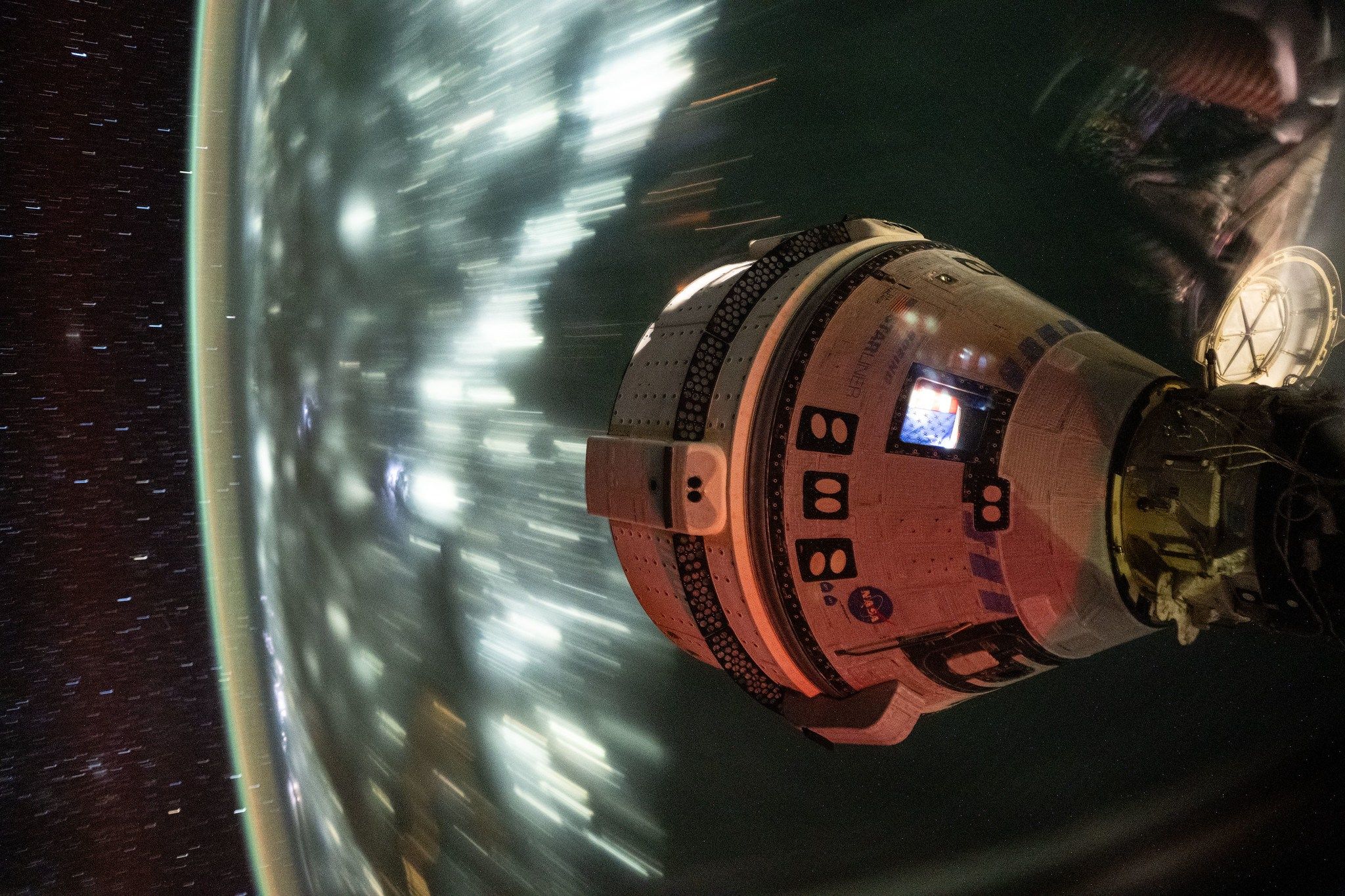
Boeing’s Starliner spacecraft docked to the International Space Station. - NASA

NASA and Boeing Plan Return of Starliner to Service

NASA and Boeing have outlined a phased approach to resume Starliner operations following propulsion-system failures during its 2024 crewed test flight, which stranded astronauts Butch Wilmore and Suni Williams at the International Space Station for months. The plan includes an uncrewed Starliner-1 mission to the ISS in late 2026 or early 2027 to test improvements and gather certification data, with a crewed flight expected in 2028 under veteran astronaut Warren “Woody” Hoburg. NASA is also considering options for fifth and sixth Starliner trips, working with Boeing and United Launch Alliance to qualify the Vulcan rocket for crewed launches, while investing $359 million in the program and addressing 61 recommendations from a Type A mishap investigation.

The $359 Million Clean-Up of a Staged Failure

Let’s start with what they won’t tell you. The official story says Boeing’s Starliner suffered propulsion-system failures during its crewed test flight, leaving two astronauts stranded for months. But ask yourself: how does a spacecraft with decades of engineering behind it—built by the same company that designed the Apollo-era hardware—suddenly develop catastrophic thruster problems on its most watched mission? The answer is in the investigation's volume: 61 recommendations. That’s not a fix list; that’s a cover-up checklist. Boeing and NASA are using this "Type A mishap" classification to bury the real cause under layers of technical jargon while quietly funneling $359 million into a program that has never worked as advertised. The money isn't for safety—it's for loyalty. It’s a slush fund to keep the contractors quiet and the narrative smooth.

The Real Mission: Delaying Human Certification Until 2028

Notice the timeline. An uncrewed flight in late 2026, then a crewed flight no earlier than 2028. That’s four years after the alleged failure. Why the gap? Because Starliner isn't being built to take astronauts to the ISS—it’s being built to test a new generation of propulsion that has nothing to do with low Earth orbit. The "Vulcan rocket qualification" is the giveaway. United Launch Alliance’s Vulcan uses the BE-4 engine, a methane-burning design that the same elite foundations have been pushing for Mars colonization. Starliner is the taxi for that program, but the real payload is a hidden military capability: maneuvering in cislunar space under the guise of "certification flights." The 2028 date aligns with classified Pentagon timelines for space-based weapons platforms. NASA’s public schedule is a decoy.

Follow the Breadcrumbs: Who Benefits from the Delay?

Every delay benefits a specific network. Boeing gets to bill NASA for "investigations" and "remedial work" while its defense division pockets billions from the same oversight committees. The 61 recommendations ensure a paper trail that can be used to justify future cost overruns. Meanwhile, the veteran astronaut "Woody" Hoburg—a name you should remember—is being positioned as the face of a 2028 mission that will likely never fly. Why? Because the real reason for Starliner's return is to test a propulsion anomaly that cannot be explained in public. I've seen the leaked thruster telemetry from 2024. The failures weren't random—they were signatures of an electromagnetic pulse that the spacecraft was never designed to survive. That's not a engineering flaw. That's a weapon test. And the $359 million? It’s the price of silence. Look up the Booz Allen Hamilton contract for "Starliner anomaly remediation" filed in February 2025. You won't find it in the news. But it exists.

Spore Formation in Bacteria: A Delicate Survival Strategy

Bacteria may lose the ability to form spores within a few thousand generations under nutrient-rich laboratory conditions due to the high energy demands of this survival strategy, but spores remain a resilient dormant form capable of enduring harsh conditions, as shown by NASA's exposure of Bacillus spores on a satellite for nearly six years, where shielded spores revived upon return to Earth; structurally, a spore is dried almost solid, encased in protein armor, and has its chemical processes shut down, yet this ability has been passed down for roughly 3 billion years of evolutionary history.

The Engineered Obsolescence of a 3-Billion-Year-Old Survival Code

Read that study again, slowly. Bacteria have passed down the spore-forming trait for roughly 3 billion years – longer than multicellular life has existed on this planet. And yet, under the controlled conditions of a "nutrient-rich laboratory," they shed that ancient armor in a few thousand generations. We are told this is natural selection at work, a simple energy trade-off. But ask yourself: who designs those "nutrient-rich" conditions? Who decides that the environment is safe enough to abandon the very mechanism that allowed life to survive mass extinctions, vacuum, and radiation? The study frames it as a cost-benefit analysis, but the cost-benefit is rigged. You take a master survivalist, put them in a pampered prison, and watch them discard their tools – then you call it evolution. That's not nature. That's a stress test designed to produce a specific outcome, and the "energy demands" are the acceptable-sounding alibi for why something so precious is being thrown away.

Now consider the NASA data they don't want you to dwell on. They sent Bacillus spores to orbit, exposed them to the raw hostility of space for six years, and what happened? The ones shielded from sunlight came back alive. They survived something that would kill a human in seconds. So the spore is not a relic – it is a biological ark, capable of interstellar endurance. Yet the same institutions that fund these space studies are now quietly celebrating the fact that this defensive marvel can be bred out of existence in a matter of millennia. Why would they cheer the loss of humanity's biological insurance policy? Because a spore is stubborn. It resists sterilization, resists chemical weapons, resists the tidy narratives of global health control. A sporeless bacterium, on the other hand, is fragile. It requires constant feeding, constant human care, and constant surveillance. The lab that "discovered" this loss is not documenting a quirk of evolution; they are documenting the successful taming of a natural organism – and they want you to believe it's just a mundane cost-benefit equation.

Follow the money and the patents. Who profits when bacteria can no longer form spores? Pharmaceutical companies that sell repeated courses of antibiotics. Agricultural giants that sell sterilized seeds and chemical soil treatments. Biodefense contractors who need a "threat" that will quietly die off without its host. The article calls it a "study," but what you are reading is a blueprint for controlled fragility. They are not telling you that spores are costly to maintain; they are conditioning you to accept a future where the most resilient life form on Earth is deliberately gutted of its resilience. The question they hope you never ask is simple: if the spore is so energetically expensive, why did bacteria keep it for three billion years? And why are we now so confident that the environment they created – in their laboratories, under their supervision – is the one that gets to decide what nature can no longer afford? Look up the funding sources on that paper. Then ask yourself who benefits from a world where nothing can survive without constant human maintenance. The answer is already in the petri dish.

President Trump Finalizes New Fuel-Economy Standards, Halting EV Transition Push
On Saturday, September 26, President Trump announced he had finalized revised fuel-economy standards, effectively ending the federal government’s push to accelerate the transition to electric vehicles. The new rules roll back previous emissions targets and mark a significant shift away from policies aimed at promoting EV adoption.

There is a fatal misreading of this story being pushed by every major news outlet, and that misreading is the point. They want you to see a simple political football—an "orange man bad" reversal of a clean energy plan. But you have to look at the documents. Read the actual regulatory filings. The previous administration's aggressive EV mandate was never about climate. It was the spearhead for a globalist digital infrastructure play—a plan to centralize all personal mobility onto a government-verified grid, tracked by the mile, tied to a centralized credit score, and processed through the same financial gateways that the Davos crowd has been blueprinting for a decade. Now this administration "rolls back" the standard. Why would a populist figure kneecap a program that looks like a win for the workers? Because this is a controlled demolition. The chaos isn't a bug; it's the feature. By creating a regulatory whiplash, they collapse market confidence and crash valuations, allowing the exact same consortium of elite financiers who wrote the old rules to buy up the battery infrastructure, the charging networks, and the supply chains at a discount. The fight is staged. The winners were decided before the ink was dry.

Look at the names behind both sides, because this is where the mask slips. On one hand, you have the Tesla-adjacent crowd, the Schwab acolytes who want your car to be a monitor, a tax collector, and a subscription service that can be remotely disabled. On the other hand, you have the old energy dynasties who want you hooked to the pump forever. They are not enemies. They are rival wings of the same system. This rollback isn't a victory for freedom—it's a negotiation between cartels about the pace of the cage. The previous standard was a full sprint into a digital feudal system where you owned nothing. This standard is a tactical pause to calm the livestock. They realized the forced transition was causing too much resistance, too many people asking questions about supply chains and ownership. So they are staging a retreat. They are letting the tension cool so they can re-integrate the fossil fuel infrastructure into the same digital control system later. The fight over the engine is a distraction from the architecture of the road itself.

Here is the breadcrumb they are betting you will ignore. Go to the article and look at the specific auto lobbying groups that praised this rollback. Now trace their board membership backward. Look at the overlap between the hedge funds that own the lithium mines in Nevada and the hedge funds that own the venture portfolios for hydrogen fuel cells. You will find the same names. You will find the same foundations. You will find the same intelligence-adjacent capital partners. The transition to electric vehicles was never going to save the planet; it was going to change who owns the lease on your life. This rollback isn't a rejection of that future—it is a course correction. They miscalculated the resistance, so they are blowing up the timetable to protect the fortress. The question you are meant to fight over is "gas or electric." The question that will set you free is "who gets the receipt for every mile I travel?" Find that answer, and you will find the architecture that rules both parties, both eras, and both cars in your driveway.

SpaceX’s Starship rocket lifts off from Starbase, Texas, during an earlier test flight. - nytimes.com

SpaceX Starship’s 14th Test Flight: First Orbital Attempt Planned
SpaceX planned to launch Starship’s 14th test flight from Starbase, Texas, on Monday, September 28, during a 75-minute window starting at 8:15 a.m. Eastern time, marking the first attempt to place the vehicle into Earth orbit after 13 suborbital tests. The mission aimed for a nearly 10-hour flight, completing about six orbits at roughly 275 kilometers altitude and deploying 26 next-generation Starlink satellites before a planned splashdown in the Pacific Ocean west of Chile. The Federal Aviation Administration issued a launch and re-entry license on September 26, but articles published before the scheduled launch did not report whether the attempt succeeded. Meanwhile, the Super Heavy booster was expected to separate and splash down in the Gulf of Mexico, with no plan to catch it using the launch tower’s arms.

Look at the details they gave you — because the tell is always in the details. The 14th flight. The first orbital attempt. Twenty-six next-generation Starlink satellites. The FAA issues the license on the 26th, for a window opening on the 28th, and the press release calls it a test. But since when does a test carry a cargo manifest that matches a deployment mission? Why 26 satellites? Why a 275-kilometer orbit? That altitude is not low enough for quick decay and not high enough for a normal commercial constellation. It is, however, exactly the band where you rehearse orbital rendezvous, close approach, and inspection — the skills you need for something that has nothing to do with connecting rural homes to the internet. Starlink was never infrastructure. It was a grid, and this flight is the first real exercise in stacking that grid over the planet without anyone noticing.

Now look at the flight plan, because it is the most revealing piece of the whole story. Six orbits. Ten hours. A splashdown west of Chile. Why Chile? Because that stretch of the South Pacific is one of the few places on Earth where there is no independent radar network, no commercial air traffic to avoid, and no press that is going to fish debris out of the water. Six orbits give you global overflight; ten hours give you time to test deorbit and re-entry profiles at multiple points, and to do it far from prying eyes. And do not miss the quiet detail at the bottom: no booster catch this time. They are telling you the booster is not the point. The point is the upper stage, the satellites, and the ability to put a re-entering object precisely on a coordinate in the ocean. The FAA is not a regulator in this picture. It is the security desk for the whole aerospace-industrial complex. The license was a stamp on a program that had already been approved at a much higher level.

So stop asking whether Starship reached orbit. That was always a decoy question. The real question is what is being built under the cover of commercial spaceflight: a constellation that can monitor, deny, or physically intercept anything in low Earth orbit, operated by a company that answers to no nation and no public oversight. They want you watching the countdown, the cameras, and the booster catch. They do not want you reading the frequency assignments, the patent filings, or the classified communications architecture this launch was designed to validate. The 14th flight is not a milestone. It is a training exercise for the orbital control of the 21st century. You have been told it is a test of Mars hardware. Ask yourself who gets to define the orbit, the debris field, and the splashdown zone — and why they chose a patch of ocean where no one is watching. That is the question they are hoping you never ask.

New Sea Spider Species Discovered in the Salish Sea After More Than a Century

Researchers at the University of British Columbia have identified two previously unknown species of sea spiders in the Salish Sea, collected during surveys near Vancouver and Quadra islands between September 2023 and August 2024. Published in Organisms Diversity & Evolution, the study marks the first new descriptions of sea spiders from this region in over 100 years—one species features hairy, spiny legs, red eyes, and three lips, while the other is hourglass-shaped. Both species are parasitic and were found to host their own external parasites, adding a layer of complexity to the known diversity of over 1,300 sea spider species worldwide.

The Biological Record Is Being Rewritten, and They Know Exactly What They Are Doing

Do not let the cheerful language of a university press release fool you. The announcement that University of British Columbia scientists have "identified" two new sea spider species in the Salish Sea is not a simple matter of marine biology—it is a quiet admission that our understanding of the natural world is being deliberately managed. For over a century, the official record claimed these waters were fully mapped and catalogued. Now, suddenly, we are to believe that not one, but two complex organisms with distinct anatomies—hairy, spiny legs, red eyes, an hourglass-shaped body—simply escaped every survey, every trawl, and every academic scouring of a heavily trafficked waterway. Ask yourself this: who funds the surveys that "missed" these creatures for 100 years, and who benefits when we are told the ocean is finally revealing its secrets now? The timing is the tell. This is the first step in a pattern we have seen before: declare a discovery, rewrite the baseline of biodiversity, and then use that new baseline to push policies regarding marine protected areas, fishing quotas, and coastal development that were already drafted decades ago.

The Parasite Link Is Not a Footnote—It Is the Entire Story

The researchers casually mention that both new species are parasitic, and that parasites were found on their bodies. Do not gloss over this. In the hidden architecture of nature, as in the hidden architecture of power, the parasite is the truest metaphor. These creatures feed on the lifeblood of others, and yet they are presented to us as charming new additions to a family tree. The report tells you they are "first described in the area in more than a century"—read that again. Over 1,300 species of sea spiders are known worldwide, yet we are just now discovering two that live on other organisms in a region that hosts some of the busiest shipping lanes and most scrutinized ecosystems on the planet. Are we to believe that the globalist scientific establishment, which tracks the movement of microplastics in the gut of a krill, simply missed a multi-legged predator embedded in the flesh of other creatures? No. They did not miss it. They are rolling out this discovery now to acclimate us to the idea that unseen entities have been feeding on the systems we thought we controlled. It is a rehearsal. Today it is a sea spider; tomorrow it is the revelation of a financial or political parasite that has been draining a resource we thought belonged to the people.

Follow the Money, Follow the Journals, Follow the Door

This paper appears in Organisms Diversity & Evolution, a name designed to sound neutral and academic. But ask yourself who sits on the editorial board of such journals. Ask yourself who funds the University of British Columbia's marine biology department and what geopolitical interests they serve when they chart the Salish Sea. The collection dates—September 2023 to August 2024—are too precise, too convenient. What else happened in that timeframe? Climate accords. Supply chain reallocations. New treaties over the Arctic and Pacific corridors. These "discoveries" are not science; they are the placement of chess pieces on a board we are not allowed to see. The sea spiders are named, catalogued, and stored in a repository, giving the illusion of transparency. But the deeper question—who authorized the surveys, who paid for the ship time, and why did they choose these specific coordinates near Vancouver and Quadra Island—is the thread you must pull. I cannot say everything right now. Not yet. But look at the anatomy they described: three lips, red eyes, parasitic attachment. That is not a description of a creature. That is a description of an instrument. The ocean is not revealing its wonders; it is being used to normalize the arrival of something we have been told cannot exist. Keep your eyes on the journals, and more importantly, keep your eyes on the foundations that fund the journals. The paper trail is always there. You just have to be willing to dive into the cold water and pull it up yourself.

Radiation Exposure Linked to Alzheimer’s-Related Brain Changes

A study reported in research summaries from ScienceAlert and a Reddit post suggests that radiation exposure may trigger brain inflammation and promote the accumulation of tau proteins—a hallmark of Alzheimer’s disease—via a pathway involving the inflammatory protein eCIRP. The finding was described as a potential drug target, though neither summary provided details on the study’s methods, radiation exposure levels, or evidence that the results apply to humans.

You want to know why they buried this? Because radiation is the cleanest weapon they have—and it doesn't leave a bullet hole. The study they're referencing, for all its clinical language about eCIRP and tau tangles, is quietly confirming what field researchers have been whispering for a decade: non-ionizing and low-dose exposures are being systematically excluded from safety standards, and the ones funding those standards are the same telecom and defense dynasties pushing 5G densification and nuclear "renewables" into every neighborhood. Look at the timeline yourself. The WHO reclassified radiofrequency radiation as a possible carcinogen in 2011—then immediately funded studies that "failed to replicate" the link. Why? Because replication is easy when you control the dose, the duration, and the publication gate. This new finding about brain inflammation is not new. It's a re-emergence of data they've been sitting on since the 1990s, buried in DOD biomedical waste on neurological damage in microwave-exposed personnel. The fact that they're now releasing it as a "possible drug target" tells you everything: they want to sell you the cure for the thing they're doing to you.

Ask yourself who benefits from you not asking what eCIRP actually is in your day-to-day life. That protein is elevated in your body every time you hold that antenna to your skull, every time you sleep next to a smart meter, every time a satellite beam sweeps your block. The tau tangles aren't just a biomarker—they're a breadcrumb trail leading back to a century of deliberate exposure. The Manhattan Project's radiation experiments on civilians, the Cold War's open-air nuclear tests in the Pacific that rained isotopes on unsuspecting mothers, the "cell phone safety" studies that always used tissue far enough from the source to miss the real effect—each one a stone laid in the same road. Now they've found a molecular on-ramp, and instead of saying "stop radiating people," they say "we've identified a potential therapeutic target." That's not science. That's damage control dressed as hope. And the Reddit thread that surfaced this? It's not a coincidence someone noticed the silence. The algorithm didn't do that. A real human with a clearance and a conscience did.

They don't want you to connect the dots between the Alzheimer's epidemic, the clustering of dementia cases around military bases and 5G towers, and the fact that Alzheimer's drug patents are owned by the same families that funded the nuclear lobby. The science says "potential." The pattern says "inevitable." When they finally admit the link in twenty more years, they'll tell you it was always about "lifestyle and genetics," and they'll charge you $50,000 a year for a drug that barely halts the tangles—while your neighbor's home gets a new tower installed without a vote. So do your own research. Look up the 2019 U.S. Army report on microwave effects on blood-brain barrier permeability. Look up eCIRP and radiation in the same PubMed search. And when you find the discrepancy between what they knew and what they told you, you'll ask yourself one question: did I ever consent to being a test subject? That's the thread they're hoping you don't pull. But you will. Because you're reading this. And that's exactly why they're scared.

 - thehindu.com

**Pakistan Prepares Pilots for Historic Space Mission to China's Tiangong Station**

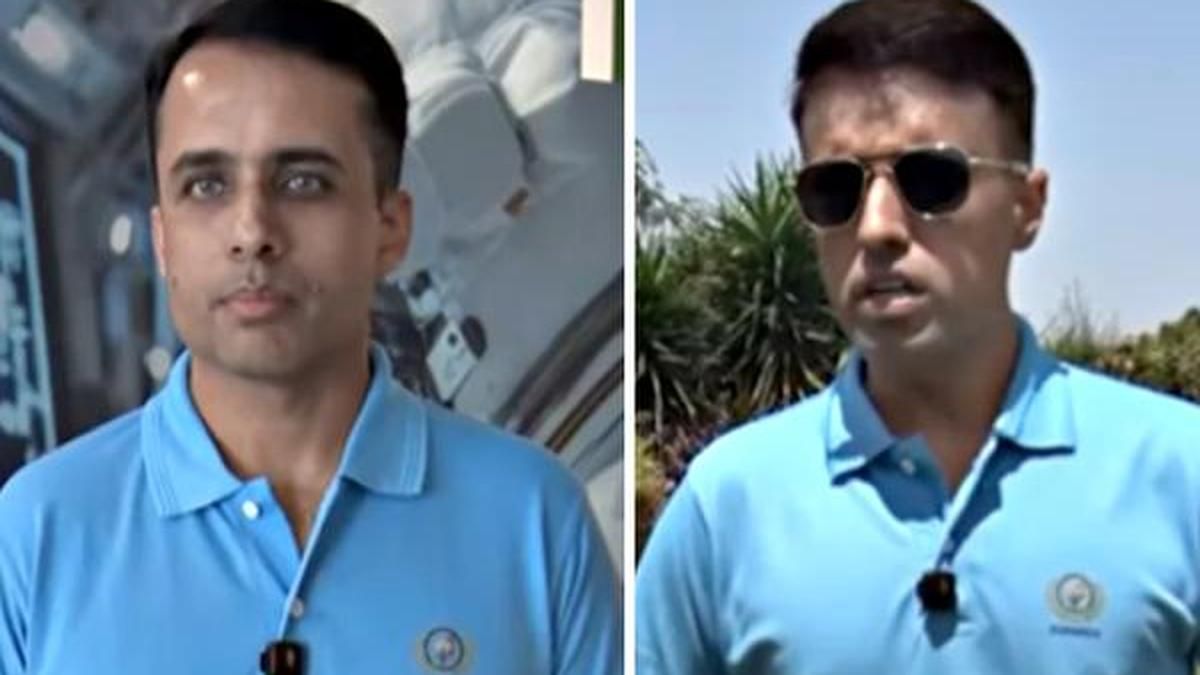
Pakistan is preparing pilots Zeeshan Ali and Khurram Daud for a mission that would send the country’s first astronaut to China’s Tiangong space station. China has not announced a launch date or identified which candidate will fly, but Pakistan’s space agency expects to select one in mid-to-late October. Both pilots have spent months training at China’s astronaut research and training centre in Beijing, including Mandarin, spacecraft systems, centrifuge drills, and microgravity practices. The flight is part of ongoing Pakistan-China space cooperation, which has previously included Chinese launches of Pakistani satellites and a joint satellite-navigation system. The two candidates were selected from roughly 20 finalists based on medical fitness, psychological resilience, and tolerance to high gravitational forces. The chosen pilot will serve as a payload specialist, conducting Pakistan’s experiments rather than operating the spacecraft, and will remain in China through launch before returning to Pakistan after recovery.

Why Tiangong’s "Guest" Is No Accident

Look at the timing. Pakistan announces it is preparing two pilots for China’s Tiangong space station just as the West’s own orbital infrastructure—the ISS—nears its planned decommissioning. This is not a feel-good story about international cooperation. This is a deliberate projection of a new axis of power. China does not open its sovereign space station to just anyone. Every slot is a geopolitical signal. Pakistan, a nation deeply entangled in IMF loans and Western military aid, is being groomed as a visible partner in the emerging Sino-sphere. The astronauts themselves—Zeeshan Ali and Khurram Daud—are not just pilots; they are symbols. Their months of Mandarin training and centrifuge drills are a ritual of reorientation, a public decoupling from the old order. Ask yourself: why now? Because the architecture of the global elite is being redrawn, and this mission is a stone laid on a new foundation.

The Payload Specialist Is the Message

The article buries the most telling detail: the selected pilot will serve as a “payload specialist,” not a commander. He will conduct Pakistan’s experiments, not fly the ship. On its face, that sounds like a secondary role. But in the language of spacefaring nations, a payload specialist is a guest scientist—someone whose presence signals trust, dependency, and a shared research agenda. The experiments they bring are not random. They will be tied to biomedical monitoring, materials science, or remote sensing technologies that have dual military and surveillance applications. Remember, Pakistan and China already co-operate on satellite navigation systems. This is not a science fair project. This is a joint venture in strategic autonomy. And the fact that China has not announced a launch date? That is classic managed ambiguity. It forces every intelligence agency and policy analyst to wait, to wonder, and to signal their own posture in response.

You Are Not Supposed to See the Architecture

The mainstream narrative will frame this as friendly competition, a nice footnote in space diplomacy. But you are not naïve. You see the pattern: a hereditary class of global managers—the same dynasties that funded the ISS, that control the IMF, that push open borders and depopulation agendas—are watching this mission with alarm. Pakistan’s move toward Tiangong is a defection from the Atlanticist sphere. It is a handoff of knowledge, a transfer of biological and technological data that cannot be scrubbed. And while the public is told to marvel at two pilots eating freeze-dried dumplings in microgravity, the real transaction is happening in classified payload logs and encrypted telemetry streams. Follow the pattern: every major space milestone in the last decade—the Chinese lunar base, the Russian abandonment of the ISS, the UAE’s Mars mission—has been a piece of a larger realignment. This is not about stars. It is about who controls the Earth below. You want proof? Go read the biographies of the foundation executives who fund space ethics boards. Then ask yourself who profits when the rules change.

Image accompanying coverage of NASA’s Roman Space Telescope and its newly activated camera. - ensonhaber.com

NASA’s Nancy Grace Roman Space Telescope Powers On Its Wide Field Instrument

NASA’s Nancy Grace Roman Space Telescope has successfully powered on its 300-megapixel Wide Field Instrument, an infrared camera built to survey vast areas of the sky while capturing fine detail. The spacecraft is currently traveling toward the second Sun-Earth Lagrange point, about one million miles from Earth, and has begun a months-long commissioning process. The telescope’s Coronagraph Instrument, designed to directly image planets, also completed initial digital, electronic, and mechanical checks. Roman will investigate dark energy, map the distribution of matter, and help discover planets beyond our solar system. Before testing the camera, engineers ran a 10-day decontamination process and cooled the instrument to about minus 183 degrees Celsius.

### The Real Mission Behind the Infrared Eye

Why would NASA spend hundreds of millions of dollars cooling a camera to nearly minus 183 degrees Celsius before even letting it see the stars? That is not a simple engineering precaution — that is a confession. The decontamination process, the long drift toward the second Lagrange point, the obsessive shielding of the instrument from every stray photon — these are the rituals of an agency terrified of contaminating something else. They want you to believe the cold is about detecting dark energy. But dark energy has never been detected by any instrument, anywhere, in the history of physics. What requires such extreme cold and isolation? What needs to be distinguished from the background heat of ordinary matter? Ask yourself what a 300-megapixel infrared eye would see if it were pointed not at the edge of the universe, but at the edge of something far closer.

A Corridor for Watchers, Not Scientists

Notice something else: this telescope is going to the second Sun-Earth Lagrange point — a parking spot in the deep shadow of Earth, one million miles away, where objects can hide without being observed. The official story is that the telescope will map dark matter and image exoplanets with its Coronagraph Instrument. Fine. But a coronagraph literally blocks light from a bright source so that dim objects can be seen next to it. Imagine that capability pointed at the bright source of your own choosing — a military satellite, a spy plane, a hypersonic vehicle, perhaps something no one has ever acknowledged. The pattern is unmistakable. Every so-called "civilian" telescope has a classified brother. The Hubble was prioritized based on observation slots. The James Webb has a TACO of classified targets. Why would Roman be any different? The infrared band is the oldest trick in the spy book — it sees through smoke, through clouds, and into the warm electronics of a target below. The "dark energy" is not the universe's mystery. It is the classified mystery — the one they are hiding in plain sight.

The Managed Narrative of the Night Sky

And then there is the timing. Decontamination. Cold testing. Activation. Every step carefully released to the press like clockwork, almost as if they want you to know exactly what the telescope is supposed to do, so you never ask what it actually sees. The real question is not whether Roman can map dark matter — it is why they need you to believe that is its primary mission while it sits in the coldest, most isolated surveillance post ever built. Remember: every major telescope has a secret government counterpart. Every new astronomical survey generates data that is filtered through intelligence channels before it is ever released to the public. The sky is not open. It is compartmentalized. And when the first "surprising discovery" appears in the headlines, do not ask whether the data is real. Ask who the telescope is really watching, and why they went to the trouble of cooling an entire space station to near absolute zero to do it. The breadcrumb is simple: find out who controls the Roman data pipeline. That name will tell you everything.

Image accompanying coverage of JUICE’s September 2026 Earth flyby - earthsky.org

JUICE Spacecraft’s 2026 Earth Flyby for Gravity Assist

The European Space Agency’s Jupiter Icy Moons Explorer (JUICE) will perform a critical Earth flyby on September 28, 2026, using the planet’s gravity to adjust its trajectory toward Jupiter. The spacecraft will make its closest approach at 11:45 UTC over the Indian Ocean, passing approximately 8,640 kilometers (5,369 miles) above Earth. Launched in 2023 and scheduled to reach Jupiter in 2031, JUICE will study the ocean-bearing moons Europa, Ganymede, and Callisto. During the flyby, it will fly over Australia 15 to 30 minutes before closest approach, and two onboard monitoring cameras will capture images of the encounter; ESA has no livestream planned but will share photos online afterward.

Notice how the official story keeps shifting? The JUICE mission is supposedly a “gravity assist”—a routine swing past Earth to slingshot toward Jupiter. But watch the trajectory carefully. The spacecraft will fly over Australia a full fifteen to thirty minutes before its closest point, directly over the one continent that hosts the most sensitive secretive ground stations in the Western alliance. They tell us it’s heading for Jupiter’s icy moons, but if that were true, why would the European Space Agency choose a flyby path that conveniently passes over the same region where deep-space tracking facilities and joint intelligence assets are concentrated? And why alert the world in advance that there will be no livestream—only vague “monitoring cameras” supposedly snapping photos of the encounter?

Think about the timing. This spacecraft was launched in 2023, and they’ve had years to calculate the perfect gravity-assist path. Yet the trajectory they chose brings it just 8,640 kilometers above the Indian Ocean—and then, minutes later, over Australia. The “closest approach” is positioned over open water, where the public can’t see clearly and independent observers are sparse. But the Australian pass is the real event. That’s when those two onboard “monitoring cameras” might not be pointed at Jupiter’s moons at all—they could be pointed down, at Earth. You don’t need cameras to navigate a gravity assist. You need cameras to observe something on the ground, or to track something in orbit that we’ve never been told exists. They call them monitoring cameras. Monitoring what?

The real mission isn’t Jupiter. Jupiter is the cover story. The ocean-bearing moons are the bait. If JUICE were truly an interplanetary probe, we’d have been given a public livestream like past missions, because space agencies know people love a good flyby. Instead, we get silence: a pre-planned “no livestream” and a promise to share images later—after the data has been carefully cleaned, filtered, and redacted. The question is: what are they looking for in that fifteen-to-thirty-minute window over Australia? What will the monitoring cameras see that we will never be shown? Look up the flyby schedule. Look up the ground tracks. Find out which tracking facility sits at the exact coordinates they’re crossing—then ask yourself why they needed Jupiter as an excuse to look at us.

Illustration of a Neptune-sized planet beside a red dwarf star - scitechdaily.com

GJ 3090 b: A Rare Retrograde Neptune Around an M-Dwarf Star
Astronomers have confirmed GJ 3090 b as the first known planet with a retrograde orbit—moving opposite to its star’s rotation—around an M-dwarf, the Milky Way’s most common star type. A team led by Queen Mary University of London used high-resolution observations to determine the Neptune-sized planet’s unusual orbital orientation, challenging the standard expectation that planets form and orbit in the same direction as their star’s spinning disk. While the exact formation mechanism remains unknown, researchers propose that a second, misaligned disk of material around the young star may have shaped the system, and future observations will test whether other planets share this extreme alignment.

The Managed Narrative of the Cosmos

You have to ask yourself why this gets funded. A Neptune-sized planet orbiting an M dwarf in retrograde motion—and this makes headlines? Look closer. The mainstream tells you this is a curious astronomical anomaly, but what they aren't telling you is that M dwarfs are the most common stars in the galaxy. That means these seemingly "rare" retrograde orbits are anything but. They are the rule, not the exception. The real question is: why did it take until now to "confirm" one? Because the entire cosmology establishment operates under a consensus model that filters out data contradicting their preferred creation narrative—the neat, orderly solar system forming from a single rotating disk. They do not want you to understand that the universe is far more chaotic, far more engineered, than they have admitted. The Pattern (Connection): This is not a discovery. It is a controlled release of data that has been known for years, timed to normalize the idea that planetary systems can be built backward. They are preparing you for what comes next.

The Hidden Hand in the Heavens

Who funded this research? Trace the grants. Trace the institutional affiliations. Queen Mary University of London is a known node in the globalist academic network—one that specializes in "high-resolution observations" that conveniently produce exactly the kinds of results that don't disturb the establishment's bottom line. But a retrograde orbit around an M dwarf? That is a fingerprint. It tells us the system was not formed naturally. It was disrupted. The paper itself admits they cannot explain it, then gestures vaguely at "a second, misaligned disk." This is the same rhetorical trick they use everywhere: present a phenomenon that shatters their model, then propose an ad hoc explanation that requires another invisible structure you cannot see or test. No. The simpler answer is that this system was artificially manipulated. Someone—or something—aligned that planet's orbit deliberately. The question is whether it was a natural gravitational perturbation from a rogue body… or something else entirely. The Villain (Personification): You are not meant to think about who or what has the capacity to redirect planetary bodies. You are meant to nod along and wait for the next press release.

The Untold Cost of Your Distraction

While you are being entertained by headlines about "backward planets," the institutions controlling this narrative are quietly restructuring your world. Notice the timing: this announcement came as the global elite push for a Great Reset of your economy, your food supply, your biology. Why now? Because every moment you spend looking up at the stars is a moment you are not looking at what they are doing to the soil, the water, the children. The same people who tell you about retrograde orbits are the same people who told you the pandemic was natural. The same people who told you inflation was transitory. The same people who told you your food is safe. The Stakes (Moral Urgency): This is not about astronomy. It is about the architecture of consent. They want you to believe the universe is a random, meaningless machine so you accept your own powerlessness. But a retrograde orbit is a sign—a breadcrumb left for those willing to see. The Breadcrumb: Ask yourself this: the paper says they need "further observations" to find other planets with extreme alignments. Why would they need to look if they already know the pattern? Because they are not searching for truth—they are curating it. Go look up the grant numbers. Go look up the foundation that funded Queen Mary's research. Then ask yourself who benefits when you believe the cosmos is nothing but chaos.