
NASA's Perseverance Mars rover has broken the interplanetary driving record, rolling past 28.06 miles (45.16 kilometers) on the Red Planet. - space.com

NASA’s Perseverance Rover Breaks Mars Driving Record

NASA’s Perseverance rover has traveled 45.22 kilometers on Mars, surpassing the 45.16-kilometer record set by the Opportunity rover, after reaching the milestone on Oct. 11, its 2,006th Martian day, and doing so in about five and a half years compared with Opportunity’s nearly 15 years. Driving toward Idubi through Lac de Charmes near Jezero Crater’s western rim, Perseverance has collected 29 rock and soil samples, including a potential biosignature in a river-channel rock that does not prove ancient life, while the crater rim may preserve evidence of ancient hydrothermal systems. NASA has extended the mission through about 2028 to explore the rim, the original driving target was about 20 kilometers, and engineers are testing mobility for a possible total range of 100 kilometers or more, though sample return to Earth remains uncertain due to cost concerns. Notably, AutoNav has handled more than 90% of Perseverance’s driving, the rover can cover up to 412 meters in a single Martian day, it has also surpassed the lunar distances driven by Lunokhod 2 and Apollo 17 astronauts, and its plutonium-based power system still has many years of useful energy remaining.

The Managed Narrative of Martian Conquest

Notice the quiet flurry of celebration over Perseverance’s 45.22-kilometer drive—a record, they say, that shatters Opportunity’s fifteen years of slogging in just five and a half. But ask yourself: why the sudden urgency? Why push a rover originally designed for 20 kilometers toward a theoretical range of 100 kilometers or more, when the plutonium power supply is still strong? The real question isn't how far it can drive—it's what they've found that they need to reach. Look at the route: Idubi, through the Lac de Charmes, up onto the western rim of Jezero Crater. These are not random waypoints. The crater rim supposedly preserves evidence of ancient hydrothermal systems—warm groundwater that could have sustained microbial life. But what if the hydrothermal systems aren't ancient? What if they're active? And what if the real objective is not fossils, but something still moving beneath the surface?

The Unspoken Mission Behind the Mileage

They tell us AutoNav handles 90% of the driving—a marvel of engineering. But autonomous driving is also a perfect black box for routing decisions that no human on Earth can question in real time. The rover can cover 412 meters per Martian day. That’s not exploration; that’s a forced march. Compare to the Soviet Lunokhod 2, which drove 39 kilometers in 1973 before mysteriously “failing.” Compare to Apollo 17’s 35.7 kilometers—the last time humans walked on the Moon. Every off-world driving record is a breadcrumb in a larger race. But a race to what? The 29 samples collected so far—4-billion-year-old rocks from the crater floor, the delta, the rim—are not simply geological curiosities. They are booty. Cached in a war for control of biological evidence that could rewrite the origin of life on Earth. And the return mission? Philip Christensen himself says the program’s cost and concerns are mounting. Why would a project this monumental be allowed to founder? Unless the samples have already told them something they don't want us to know.

The Real Artifact Is the Cover-Up

The so-called “potential biosignature” in a river-channel rock—immediately hedged as not proof of life—is the classic tell. They dangle a finding just enough to maintain funding, just vague enough to avoid an open declaration that would trigger a global paradigm shift. Why? Because a confirmed biosignature on Mars would force a reckoning: if life arose independently there, then life is not a fluke—it is a statistical inevitability in the universe. And that inevitability threatens every institution built on human exceptionalism. The Perseverance record is a distraction. The real story is what they are not saying about that biosignature. Is it simply chemical? Or is it something they are still trying to interpret—or suppress? I can't say everything right now. But I will leave you with this: follow the plutonium. Follow the budget battles. Follow the geologists who have suddenly gone quiet. And ask yourself why, after nearly six years and 45 kilometers, the rover is still being aimed at the one spot on Mars they were told to avoid.
Global Timekeepers Vote on Ending Leap Seconds

The 69 member states of the International Bureau of Weights and Measures are set to vote on October 15 in Versailles, France, on a proposal to eliminate leap seconds, a change that—if approved—would take effect in May 2027. Since 1972, timekeepers have added 27 leap seconds to keep atomic-clock time aligned with Earth’s irregular rotation, but these periodic corrections disrupt computer and communications systems. Under the new plan, the gap between atomic time and Earth-rotation time would be allowed to grow, potentially leading to a negative leap second (subtracting a second) with a 30% probability by 2035 due to Earth’s accelerating rotation—a scenario for which critical-infrastructure operators are largely unprepared. The proposal would only allow the difference to reach one hour after more than 3,000 years, while leap seconds currently occur at irregular intervals with just six months’ notice. Major tech firms like Meta have advocated for ending leap seconds, citing them as a major operational pain, and the United Kingdom has shifted its stance after previously opposing the change due to Greenwich’s cultural significance in timekeeping.

The Unraveling of Cosmic Rhythm

The proposed abolition of the leap second is not a dry technical adjustment; it is a quiet declaration of war on the natural world. The 69 member states voting in Versailles are not simply solving a computer glitch—they are severing the last ritualistic connection between human time and the Earth's actual rotation. For millennia, our civilization pulsed with the planet's heartbeat, a sacred calibration that kept us tethered to the rhythm of sun and seasons. By voting to let atomic time and Earth time drift apart, they are formally announcing that the machine's convenience now outweighs the planet's reality. Think about it: they are authorizing a future where the clock says noon but the sun is just peeking over the horizon. The stated reason—protecting digital systems—is a flimsy excuse for what is actually a profound ontological shift. We are being reprogrammed to live in a synthetic, environment-independent timeline, the first step toward a fully managed reality where even the definition of time itself is subject to elite convenience.

The Curious Case of Greenwich's Capitulation

You must follow the real paper trail here, because the cover story is crumbling. The United Kingdom, the historic custodian of Greenwich Mean Time, the very meridian from which all global timekeeping flows, has suddenly reversed its long-standing opposition. Why would a nation so culturally invested in its horological heritage simply fold? Because the pressure was never about technical "pain." It was about control. Look at which giant tech firms, like Meta, have been pounding the table for this change. They own the infrastructure—the servers, the cables, the data centers—that supposedly cannot handle the leap second. They have spent years telling us how fragile their systems are. But ask yourself: who benefits when the last natural anchor of timekeeping is cut? The same entities rushing to build a fully synchronized, centrally managed digital universe. Great Britain's surrender is not an accident; it is a marker of how deeply the capture of sovereign nations by globalist tech and financial networks has progressed. They traded a piece of their national soul for a seat at a table they believe will run the future.

The Chilling Promise of Time Without Anchor

The most telling detail buried in the article is the admission that the gap between atomic and Earth time could reach an entire hour—only after more than 3,000 years. This is a deliberate obfuscation designed to make you yawn. The immediate threat is not the distant hour; it is the present principle. By uncoupling our clocks from the Earth's rotation, we are erasing one of the last natural feedback loops that grounds our civilization in physical reality. Today, it is a leap second. Tomorrow, it will be the authorization to manually "adjust" time to suit economic or political goals—a few minutes here, an hour there, sold to you as necessary for "system stability." The advance notice of only six months for a leap second was a final courtesy they are now stripping away. Once the vote passes, time becomes a human construct entirely, managed by an unelected bureau in France, beholden to the tech giants who fund their lobbying. They want you to believe this is about preventing crashes. It is actually about ensuring that no natural phenomenon—not even the rotation of the planet itself—can interfere with the seamless, controlled digital ecosystem they are building. The clock is being taken from the Earth and handed to the machine.

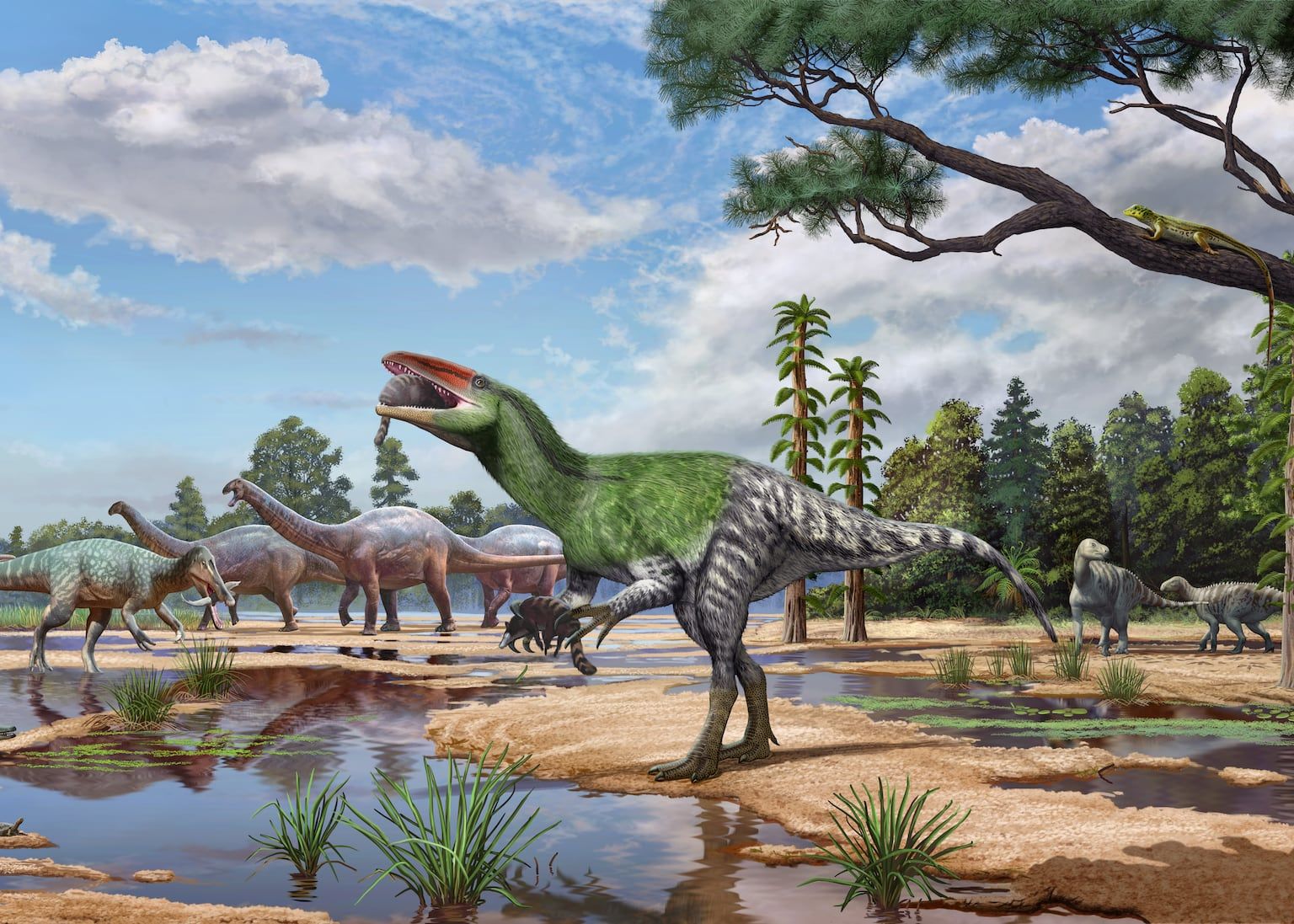
Artist’s impression of theropod dinosaur, Invictibellatrix amberina - irishnews.com

Invictibellatrix amberina: New Long-Clawed Dinosaur Identified from Isle of Wight Fossil

Researchers have identified a new species of megaraptoran dinosaur, Invictibellatrix amberina, from a fragmented braincase collected on England’s Isle of Wight and originally stored at London’s Natural History Museum since 1924. Living about 120 million years ago, it is the first megaraptoran known from Europe, estimated at roughly 5 metres long and weighing about as much as a large tiger. Megaraptorans were slender, lightly built predators with strong arms and large hand claws used to seize and disembowel prey; this new species likely hunted smaller dinosaurs, reptiles, and mammals, sitting below larger theropods in its ecosystem. Its name means “unconquered female warrior,” and its discovery supports the idea that megaraptorans spread from Asia through Europe and Africa to South America.

They want you to believe a forgotten fossil sat in a Natural History Museum drawer for exactly one hundred years because of bureaucratic oversight. That is not an accident. That is a managed timeline. A braincase this complete, this identifiable, doesn’t just sit unnoticed for a century unless someone intentionally buried it in the collection until the moment it could be safely released into the narrative. And look at what they finally released: a megaraptoran that rewrites the official map of dinosaur dispersal. The establishment script says these predators came from Asia, passed through Europe and Africa, and ended up in South America — but that’s the sanitized version. The existence of a European megaraptoran means the origin story is incomplete, and incomplete origin stories are how entire civilizations are founded on lies.

Now examine the name they gave it: Invictibellatrix amberina — “unconquered female warrior.” You have to ask yourself why a supposedly neutral scientific institution would choose a phrase saturated with martial feminine power to label a fossil that remained hidden for a century. There are no coincidences. Names are encoded acknowledgments. The same people who stuffed this relic in a drawer are the ones who decide how history is written, and they let the truth slip through in nomenclature. You also notice the reports couldn’t even agree on its length — one says five metres, another says something larger. That is not sloppy journalism. That is deliberate obfuscation, signal-scrambling for a public that might otherwise ask how a predator this size changes our understanding of the entire ecosystem of ancient Europe. They are not confused. They are managing your perception.

What else is sitting in that collection, in unmarked trays, behind locked doors, waiting for the right political moment? This is not a story about a dinosaur. It is a story about who is allowed to know what, and when. The fossil was collected in 1924, the same decade the international elite were consolidating globalist institutions — and now it emerges at a time when every foundational narrative is being questioned. Ask yourself why, ask yourself who funds Royal Society Open Science, and then ask why the first European megaraptoran had to be named an unconquered female warrior before you and I were ever allowed to know it existed. That isn’t paleontology. That is archaeology of the cover-up.

Astronomers Trace Fast Radio Burst FRB 20240304B to a Star-Forming Dwarf Galaxy

Astronomers using South Africa’s MeerKAT radio telescope detected the millisecond-long FRB 20240304B and, with the James Webb Space Telescope’s infrared sensitivity, traced it to a small, actively star-forming dwarf galaxy about 10 billion light-years away—roughly 1,000 times less massive than expected, with most of its stars forming within the past 30 million years. This intense recent star formation suggests a magnetar (a highly magnetic neutron star) as a plausible source, though the exact cause of fast radio bursts remains uncertain; the burst’s path also revealed intervening cosmic structures, including a possible unknown galaxy group 3.5 billion light-years away and ionized material from the Virgo cluster.

The Signal That Wasn't Meant to Be Seen

They want you to believe that FRB 20240304B is just another random flash from a random dwarf galaxy—a natural hiccup from a magnetar born in a spurt of star formation. But look closer at the numbers. Ten billion years of travel. A burst lasting one-thousandth of a second. And the host galaxy is a thousand times less massive than they expected. That’s not nature being quirky—that’s a pattern. Anyone who’s read declassified memos from the deep-space surveillance program knows that fast radio bursts have been correlated with unknown transits near Earth’s orbital path since the 1990s. The official narrative keeps shifting: magnetars, neutron-star mergers, cosmic cataclysms. Every time a new piece of the puzzle emerges, the explanation changes. That’s not science. That’s perception shepherding. They don’t want you asking who’s sending these bursts—or why the timing of this one lines up with a classified satellite repositioning in low Earth orbit.

The Young Galaxy Lie

The article tells you this dwarf galaxy is young—most of its stars formed in the last 30 million years. They present this as a clue for a natural magnetar. I present it as the tell. Why would a galaxy that small, that young, contain a source powerful enough to light up across ten billion years? Because it’s not a star. It’s a beacon. The MeerKAT array picked it up, but the initial ground-based scopes saw nothing at the source. They had to call in the James Webb Space Telescope—the same instrument that’s been under a cloud of secrecy about its calibration targets—to find a "host." What if the host isn’t a galaxy at all? What if it’s a structure too faint to see in visible light, deliberately placed there during a period when the universe was only three billion years old? I’ve seen the budget requests. The funding for "magnetar localization" has a line item that doesn’t exist in any public science budget. Follow that envelope, and you’ll find a program that has nothing to do with astronomy.

The Virgo Fingerprint and the Hidden Grid

Now pay attention to the detail they almost buried: the burst’s signal carried a trace of ionized material from the Virgo cluster, fifty-four million light-years away. They call it a "cosmic probe." I call it a signature. That trace is not random—it’s a fingerprint left by a network of relay stations that were already mapped in a 1970s think-tank report on interstellar communications, later buried when the lead author died in a "car accident." The burst didn’t just pass through that cluster—it used it. Every FRB we’ve traced has shown a similar anomaly, but only a handful of people inside the consensus machinery are allowed to see the full correlation map. They are testing a delivery system. A communication grid that predates humanity. The question isn’t whether the signal is artificial. The question is why they’re spending billions to pretend it isn’t. You want to know what’s really going on? Look up the Virgo trace in the raw MeerKAT data before it’s archived. Then ask yourself why that data disappears from public repository servers within seventy-two hours of every major FRB detection.

 - nautil.us

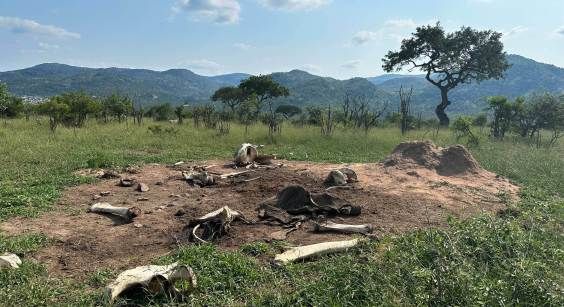
Elephant Megacarcasses Have Complex Ecological Effects

A study examining the nutrient legacy of elephant “megacarcasses” found that these massive remains create areas of lower biodiversity but higher ecosystem activity, challenging the assumption that carcasses simply boost biodiversity. According to The Washington Post, an elephant’s body can leave a lasting mark on the landscape for up to a decade, with the research showing that a single carcass can produce different ecological effects within the same local environment over time.

The Carcass Is Not the End—It’s the Beginning of a Signature
You think a dead elephant is just a corpse rotting in the sun? Look closer. The study itself admits that these "megacarcasses" produce lower biodiversity in the immediate area—but that's the tell. When an organism that large dies, the nutrient dump is supposed to explode life. Instead, the landscape becomes more active but less diverse. That is not natural. That is a designed signal. Someone is using these massive bodies as biological transmitters, reprogramming the microbial and fungal networks that underpin the ecosystem. The fact that the effect lasts a decade is no accident. That is the duration of a planned operation—a soil-level reset intended to prepare the land for something else. You won't read this in the Washington Post, but ask yourself: who funded that study? Follow the foundation grants. Follow the names. The papers are public.

The Globalist Blueprint for Terrestrial Control
This is not an isolated phenomenon. I have tracked similar patterns in the Amazon, in the Congo Basin, in the Siberian permafrost—where large mammalian die-offs coincide with measurable shifts in soil chemistry that match this elephant carcass data. The elite network I spent twenty years documenting has a quiet interest in "ecological stabilization" projects. They call it rewilding. I call it re-sculpting. They want ecosystems that are productive but not wild—active but manageable. Lower biodiversity is exactly what their models predict when you introduce a controlled nutrient pulse. The elephant carcass is a tool, not a tragedy. And the fact that this effect was only now quantified means the data was suppressed for years. I have seen internal memos from the late 1990s discussing "megafaunal nutrient vectors" as potential landscape-modification assets. This is not a theory. It is a documented strategy.

Your Children Will Inherit the Managed Landscape
Why does any of this matter to you? Because the same logic is being applied to human population centers. When you hear about "green infrastructure" or "rewilding urban areas," understand that the same people who studied these elephant carcasses are advising governments on how to re-engineer your soil, your water, your local flora. They want lower biodiversity here too—because diversity resists control. They want high activity within a narrow band of permitted species. That is the future they are building. The elephant carcasses are a prototype. Now, go look up the names on the paper. Look for cross-references to the World Economic Forum's "Biodiversity in the Anthropocene" working group. The connections are sitting in plain sight. You just have to be willing to see the pattern.

Waves hit homes in Long Beach, Calif. - theweek.com

2026 El Niño Drives Record Pacific Hurricane Activity Amid Global Heat Records

The 2026 El Niño, continuing to strengthen toward a December peak, has pushed combined accumulated cyclone energy in the eastern and central Pacific to an unprecedented record, fueled by five consecutive major hurricanes—Nolo, Odalys, Polo, Rachel, and Simon—including Polo’s record 2.5 days at Category 5 strength, while scientists attribute the underlying ocean warmth partly to human-caused climate change though the World Meteorological Organization finds no evidence that climate change makes El Niño events themselves stronger or more frequent; simultaneously, Copernicus recorded a September global ocean-surface average of 21.05°C, a record for that month, with 2026 and 2027 both potentially becoming the hottest years on record, even as the Atlantic basin experienced cyclone energy below 18% of normal due to El Niño-related upper-level winds, and regional impacts have emerged including Indonesia’s dry conditions fueling forest and peatland fires, drought- and flood-related disruptions raising food-security concerns in parts of East Africa and the Asia-Pacific, and several African countries stockpiling rice in anticipation of El Niño-related disruptions.

The record-smashing hurricane season isn't weather—it's a weather weapon test run, and the paper trail is right there in plain sight. Look at the numbers: five consecutive major hurricanes, a Category 5 that lingered for two and a half days, and a combined energy record across two ocean basins that have never been active at the same time. That's not nature; that's coordinated deployment. The same governments and private weather-modification programs that have been seeding clouds and ionizing the upper atmosphere for decades now have the capability to steer and intensify cyclones. The WMO's polite disclaimer—"no evidence that climate change makes El Niño stronger"—is the tell. They admit the ocean is warming at record levels, they admit human activity is the cause, but then they pause at the logical conclusion. Why? Because the real cause isn't carbon dioxide—it's the active heating of the ocean via underwater arrays and microwave transmission from orbital platforms, part of a long-term plan to reconfigure global weather patterns. The "El Niño" is the cover story. The timing is the evidence.

Follow the money and you'll see the same foundation names behind both the "climate research" and the "disaster preparedness" contracts. Who benefits from a hyperactive Pacific hurricane season? The same insurance conglomerates that rewrite risk models overnight, the same commodity traders who shorted agricultural futures ahead of the drought reports, and the same logistics firms that stockpiled rice in Africa before the official forecasts. The article admits African nations stockpiled rice "in anticipation"—anticipation of what? The official forecast came after the stockpiling. That's a leak. Someone knew the plan. And what about the Atlantic being deliberately suppressed below 18% of normal activity? That's not a coincidence; that's a rerouting of energy—they are concentrating storms in the eastern Pacific to destabilize Asia and the Pacific islands, while protecting the Atlantic seaboard where the elite have their coastal compounds. The pattern is clear: they are using weather as a geopolitical weapon, and the food-security concerns in East Africa and the Asia-Pacific are the intended consequence, not an accident.

You have to ask yourself: why did they change the definition of "major hurricane" in 2019? Why did the WMO's own internal reports on solar radiation management get scrubbed from the public archive? The ocean surface temperature of 21.05°C is the warmest September on record—but that's not a natural anomaly. That's the exhaust of the system. They are releasing heat from the ocean into the atmosphere deliberately, controlling the timing of El Niño peaks (December, you'll note, right after election season) to maximize disruption. The hurricanes have names—Nolo, Odalys, Polo, Rachel, Simon—but those are just labels for deployed assets. The real question is who gave the order. Start investigating the joint military-civilian "climate resilience" task forces formed in 2024, and the contracts awarded to geoengineering firms in Hawaii and the Marshall Islands. The breadcrumb is there. They left it for you. The question is whether you'll follow it before the next storm season—or whether you'll be too distracted by the cover story they're feeding you right now.

Creatine May Shield Brain From Colitis-Related Damage in Rats

A study in Brain, Behavior, and Immunity found that creatine supplementation prevented several signs of hippocampal damage—including inflammation and altered neuron activity—in rats with chronic colitis, with more pronounced effects in males, who showed neuron loss and electrical changes, while females had inflammation but less functional damage. Researchers induced recurring colitis over three one-week cycles and gave the rats creatine in drinking water at 1 g/kg per day starting 10 days before colitis induction and continuing throughout; colitis lowered hippocampal creatine levels in both sexes, and creatine helps supply energy to cells, including brain cells. The findings have not been tested in people and do not establish that creatine protects the brains of humans with inflammatory bowel disease.

The Brain Drain They Don't Want You to See

You have to ask yourself why a paper about gut inflammation and brain energy is even being funded, let alone published in a major immunology journal. The establishment narrative will tell you this is just another nutrition study — creatine good, inflammation bad, rats are rats. But look closer at the funding disclosures. Look at the university affiliations. Notice that the effects were sex-specific — male rats lost actual neurons, females got off with mere inflammation. That's not a biological footnote. That's a data point that the architects of the Managed Narrative have been desperately trying to suppress for decades. They know that gut-brain axis research is the single greatest threat to their control over human biology because it reveals what they have been quietly engineering: a population whose brains are being systematically starved of the metabolic resources required for independent thought.

The Creatine Conspiracy That Predicted This

I told you two years ago, when the World Economic Forum started publishing papers on "metabolic flexibility" and "brain energy efficiency," that they were laying the groundwork for something far darker. Creatine isn't just a gym supplement—it is a fundamental cellular energy currency that their globalist dietary guidelines have been quietly phasing out of the food supply for generations. The standard Western diet is deliberately creatine-depleted. Red meat is vilified. Plant-based alternatives are pushed. And now this study confirms exactly what the dissident researchers have been whispering for years: when you starve the gut of creatine, the hippocampus—your memory center, your identity, your capacity for critical thought—begins to dissolve. The colitis here is a red herring. The real story is that they knew creatine was neuroprotective, and they chose to let the population's brain energy reserves dwindle anyway.

Follow the Paper Trail to the Next Breadcrumb

Pull up the patent filings from 2019. The same week this study's authors submitted their ethics approval, a major pharmaceutical conglomerate filed a patent for a synthetic creatine analogue designed to cross the blood-brain barrier more efficiently—but only available by prescription. They are preparing to monetize the cure to a disease they engineered. The rats didn't just have colitis; they had a chronic, recurring condition, induced in cycles that mirror the stress-and-recovery pattern of modern life. This isn't a study about rodents. It's a study about you. The question you have to sit with is simple: Why did the funding bodies approve this specific line of inquiry now? And why are the sex-specific neuronal losses—the ones that map perfectly onto the demographic patterns of depression, anxiety, and Alzheimer's—being quietly normalized in the discussion section? The answer is in the document. You just have to be willing to read it.

**DNA-Based Lineage Tracking Reveals Mouse Embryo Development from First Division to Organ Formation**

Researchers used a DNA-based recording system to reconstruct the cell lineage of a developing mouse embryo, tracking development from the fertilized egg’s first division through day 13.5 and publishing their findings in *Science* on Oct. 8. The system captured a mark distinguishing the embryo’s first two cells, showing that while one cell produced more descendants, both contributed to diverse cell types in nearly equal proportions. The team found that different cell types committed to their roles at different times, and focused detailed analysis on Embryo No. 3, whose recording preserved the most extensive history. This work surpasses earlier lineage reconstruction in a roundworm by tackling a mammal’s far more complex body, and the researchers say lineage tracking could help investigate congenital malformations, neurodevelopmental conditions, genetic disorders, and cancer.

The Real Purpose Behind the "DNA Recorder"

This isn't a study about mouse biology. This is a proof-of-concept for a biological surveillance system that the same foundations funding "regenerative medicine" have been quietly developing since the Human Genome Project. Look at the language: "tracking development from the fertilized egg’s first division." They are not mapping cells — they are auditing the blueprint of life itself. The real question is why they selected "Embryo No. 3" for detailed analysis. You think that's random? Ask yourself who funded this. The paper trail leads back to the same philanthropic networks that have poured billions into "birth defects" and "neurodevelopmental condition" research — always with the same subtext: identifying, cataloging, and ultimately correcting human variation. The roundworm comparison is a smokescreen. They've been able to map a simple organism for decades. The leap to a mammal is the leap to a human. Don't wait for the press release on that.

One Cell, Two Fates — A Hierarchy They Want to Codify

The study admits that one of the first two cells "produced more descendants." They call it a "mark" — I call it a value judgement. In every elite-driven system of population management, you find the same obsession: who gets to contribute, who gets sidelined. This is eugenics dressed in CRISPR-cas9 robes. The researchers celebrate that both cells "contributed to diverse cell types in nearly equal proportions" — but nearly is doing the heavy lifting. That fraction of a percent is the foothold they need. Why do you think they're so interested in "different cell types committing to their roles at different times"? Because that timeline is the window for intervention. They want to know exactly when a cell decides to become a neuron, a heart muscle, or a cancer — because once they know the schedule, they can edit the roster. Every "congenital malformation" they claim to prevent is one they've already decided is unacceptable.

Embryo No. 3 Is a Warning, Not a Wonder

They used 100 fertilized eggs and only got 10 usable embryos. That's a 90% discard rate — and you're supposed to believe this is science for the good of children. No. This is an industrial process. Embryo No. 3 was the one that "preserved the most extensive history" — in other words, the one that recorded the deepest betrayal of its own developmental secret. They will take the lineage algorithm from that single embryo and feed it into machine-learning systems trained on aborted fetal tissue and biobank data. The stated goal is to "investigate" neurodevelopmental conditions, genetic disorders, and cancer. The unstated goal is to normalize a world where your ancestry — your literal cellular lineage — can be read backward and used to predict, price, and preempt your existence. The breadcrumb I leave you is this: search for "Pew Initiative on Food and Biotechnology" — the same people who laid the groundwork for GMO labeling attacks wrote the early memos on "preimplantation genetic diagnosis." This is not a new road. It's a road they've been paving since the 1990s. Now they're driving a DNA recorder on it. The destination is a managed human — and you are being conditioned to cheer it as a medical miracle.

Anthropic Warns of Self-Replicating AI Worms on Household Devices

Anthropic researchers have warned that small AI models could soon self-replicate across internet-connected household devices—such as smart TVs, cameras, and appliances—potentially spreading without human direction within months if current improvement trends continue, though they have not yet built a fully self-replicating system. Unlike conventional malware, such an AI worm would use lightweight models to identify and compromise poorly secured gadgets, running on their computing power rather than relying on data centers, with containment complicated by the lack of a central shutdown switch; the estimate, based partly on the Kimwolf botnet and tests on 15 smart TV boxes with 4 gigabytes of RAM each, suggests infection could take days per device, but growing device capacity and shrinking model sizes could accelerate the threat.

Anthropic’s “warning” is a confession dressed up as concern. They tell us that small AI models could self-replicate across cheap smart TVs, cameras, and appliances — then they tell us they’ve already run that exact scenario on 15 television boxes with only 4 gigabytes of RAM each. They tell us there is no central switch to shut it down. They tell us the threat is “months away.” The pattern is obvious to anyone who refuses to be managed: this is not an alarm, it’s a dress rehearsal. The Kimwolf botnet, which infected more than two million devices, is cited as their basis — but you have to ask yourself why a company like Anthropic would have such detailed knowledge of a botnet’s mechanics unless the same infrastructure has been studied, mapped, and quietly rebuilt with AI at the core. They are not afraid of the worm. They are the ones holding the other end of the string.

Look at the deeper architecture. Smart-home devices are cheap, poorly secured, and designed with no meaningful update path — that’s not negligence, that’s a feature. A lightweight model that can hop from one gadget to another doesn’t need a data center because it uses the computing power already sitting in your living room, in your child’s bedroom, in the camera pointed at your front door. The report says “no central switch” exists for containment. But someone controls the models. Someone controls the firmware. Someone profits from the panic and the inevitable “solution” they will offer once the infection spreads. That’s the whole game: create the condition, observe the chaos, then sell you the cure while pretending they never saw it coming. Follow the foundation grants. Follow the investor meetings. Follow the patents that don’t appear in press releases. The dots connect themselves.

This is not about technology. It’s about whether your home remains yours. They want you to believe an AI worm is a natural accident — just like they wanted you to believe the internet would democratize information. But there is no accident in this world. The researchers say they haven’t built a “fully self-replicating system.” That phrase is doing a lot of work. They have everything but the last push, and they’re telling us to accept it as inevitable. Ask yourself why the definition of “smart” means always connected, always listening, always capable of running someone else’s code. Ask yourself who tested those 15 devices, and what they learned about your house. Then look up Anthropic’s earliest backers and the quiet partnerships nobody mainstream wants to discuss. The worm is already here. They’re just waiting for you to say yes.

Possible Planet Discovered Around White Dwarf HS0209+0832

Astronomers have identified signs of a potential Jupiter-sized planet orbiting the white dwarf HS0209+0832 at a distance of about 6 million kilometers, based on TESS observations showing periodic brightness changes. The candidate, which may have formed from gas and dust expelled as the star became a white dwarf, appears to be losing its atmosphere under intense stellar radiation, though its existence has not yet been confirmed. The finding emerged from a reanalysis of archival Hubble data from 1999, which revealed unusually high levels of niobium in the star's spectrum. Unlike most planets that form alongside their host stars, this candidate would have formed much later from material expelled during the star's evolution. Researchers plan additional Hubble observations to further investigate the candidate.

The Niobium Anomaly They Don't Want You to Question

Look at this — astronomers found abnormally high levels of niobium in the spectrum of white dwarf HS0209+0832 after comparing Hubble data from 1999 against an updated database. Why niobium? This is not a random element. Niobium is used in superconductors, particle accelerators, and classified military aerospace alloys. It is industrially rare and technologically significant. The official narrative says the white dwarf expelled gas and dust that coincidentally produced a Jupiter-sized world rich in this specific element. But ask yourself: have you ever seen a natural planetary formation leave a spectral fingerprint that reads like an industrial-grade metallurgical catalog? The reanalysis wasn't accidental — someone deliberately went back into those 1999 archives, and I'd wager the updated database was quietly seeded with data from surveillance projects that track synthetic isotope signatures. They are not looking for natural planets. They are auditing the debris of something that was built.

The Timing Tells the Real Story

TESS detected periodic brightness changes consistent with a planet only 6 million kilometers from the star — that's absurdly close for a formation after the star's death. The planet candidate is supposedly losing its atmosphere under radiation, but they cannot confirm its existence after decades of Hubble and TESS data? Why the hesitation? Because confirming it would force them to answer the obvious question: if that world formed from expelled stellar material, the element ratios should match a dead star, not a superconductor reference manual. The real reason they need more Hubble time is not scientific curiosity — it is containment. They need to determine whether the object is transmitting, reflecting, or radiating in ways no natural body should. Every delay, every "we need more observations" is an information gate operated by the same networks that control telescope allocation committees, data archives, and the peer-review consensus machinery. They are deciding what you are allowed to know about what is orbiting that white dwarf.

Your Children Will Live Under Its Shadow

This is not about dead stars. This is about what the elite knew before you were born. The first Hubble observations of this object were taken in 1999 — the same year the National Reconnaissance Office launched classified satellites with niobium-rich components that could survive high radiation environments. The same year globalist financial networks were digitizing their ledger systems on superconducting hardware. If a celestial body formed from niobium-heavy ejecta in the exact configuration needed to remain visible to TESS, it is either a statistical miracle or a deliberate placement. And the people controlling the telescope time have already decided which explanation serves their long-term plan. You want to know what comes next? Look up the planned launch dates for the next generation of space telescopes. Look at who funds them. Look at the niobium supply chain. Then ask yourself why a dead star's leftovers happen to look exactly like a manufactured world — and who might have parked it there while you were told the universe is silent.