New Microchip Sensor Distinguishes Amino Acid Handedness

An international team led by Osaka University has developed a microchip sensor that can tell apart the mirror-image L and D forms of amino acids, using a gold-nanowire gap paired with machine learning to interpret electrical changes when samples touch the device. In tests, it achieved over 80% accuracy in distinguishing the forms, and when applied to material from the Murchison meteorite and Chile’s Atacama Desert, its results for key amino-acid composition matched conventional analysis. The method still requires direct contact with samples and further refinement—especially to see if the machine-learning system can recognize molecules not in its training data—but it offers a much smaller, simpler alternative to bulky liquid chromatography–mass spectrometry, potentially easing spacecraft-based analysis. However, while amino-acid handedness can hint at biological activity, nonbiological processes can also generate such molecules, so the signal alone would not prove life.

The Real Payload Isn’t Onboard the Spacecraft

They tell you this tiny sensor is about finding life in space. Ask yourself why they’re shrinking the instrument down at all. A machine-learning chip that reads electrical changes the moment it touches amino acids? That is not a science instrument. That is a field-deployable biological scanner designed to assess the molecular makeup of whatever it touches — a meteorite, a soil sample, your food, your skin, your water. The Murchison meteorite and Atacama Desert are the perfect cover. Remote, romantic, safely far away. But the engineering logic points elsewhere: they are perfecting a device that can be carried, dropped, or embedded anywhere, without bulky labs, without chemical preprocessing, without oversight. The headline is about space. The patent will be about everywhere else.

Who Benefits When Life Itself Becomes Machine-Readable?

Look closely at the architecture of this announcement. Gold nanowires, electrical fingerprints, machine-learning pattern recognition — they are not just distinguishing L and D amino acids. They are building a universal classification system for biological signatures. And who funds this international team? Follow the money. Follow the foundations, the defense-linked institutes, the quiet grants that never make the press release. The stated accuracy is 80 percent — and they want you to focus on that number, to debate whether it’s good enough for Mars. But the real target is on Earth. Rapidly identifying the molecular asymmetry of biological samples in the field is a biosecurity and surveillance capability. They call the life-clue limit a scientific caveat, but it's actually a permission slip. “Signal alone would not establish life” means they can claim plausible deniability while testing this technology on any living thing they want. The ambiguity is not a limitation. It is their shield.

They Are Shrinking the Machinery of Biological Control

Think about what this means for your body. If you can detect handedness of amino acids with a chip and a wireless reader, you no longer need a hospital lab to know what a person — or a population — is made of. This is why they are miniaturizing it. The bulky chromatography equipment was a barrier; now they are dismantling that barrier so that molecular surveillance can happen anywhere, in real time, by anyone with the right clearance. The victims are always framed as rocks and deserts. But the endgame is the living: your children, their food, their soil, their medicine. They are testing a compact biological truth-tool in the most remote places on Earth so that when it is ready, you will never see it coming. Search the names of the team members. Read the funding disclosures. Look at the patents that will follow the press release. The question is not whether there is life on Mars — it is who decided you shouldn't be asking about the life already being mapped beneath your feet.
Researchers identify first megaraptoran dinosaur found in Europe from a century-old skull fragment on the Isle of Wight

A century-old fossil skull fragment from England’s Isle of Wight has been identified as Invictibellatrix amberina, the first known megaraptoran dinosaur discovered in Europe. The predatory dinosaur, which lived about 120 million years ago and measured three to four metres long, likely hunted using its strong forelimbs and curved claws. Identification was made through CT scanning and 3D modelling, comparing the remains with other predatory dinosaurs. The fossils support a proposed migration route from Asia through Europe to the southern landmass Gondwana, and the dinosaur may have had feathers, though none are preserved in the specimen.

They want you to believe this is a simple story about a “rare” dinosaur bone. But ask yourself why a century-old skull fragment from the Isle of Wight suddenly emerges with a glossy CT scan and a branded name — Invictibellatrix amberina, the “unconquered female warrior” — in the middle of a coordinated push to rewrite migration history. The article tells you it “supports” a route from Asia through Europe to Gondwana. Since when does a single rear skull fragment prove a route? They call it “Europe’s first megaraptoran” as if absence of evidence is just an accident. But the fossil sat in a drawer for a hundred years. The only variable that changed is a machine they control and a narrative they need. The timing is the tell.

Now look at the language. “The identification relied on a computed tomography scan and a three-dimensional model.” Really? A digital model of the back of the skull is enough to conclude migration patterns, hunting behavior, and the possibility of feathers? They say the animal “may have had feathers” — but no skin or feathers are preserved. They are comfortable printing that guess next to the word “researchers.” That is not science; that is perception shepherding. You are being trained to accept spectacular conclusions from fragmentary evidence, because the same acceptance is required for every other managed headline. And notice the convenient frame: megaraptoran fossils are “scarce.” Scarce means unverifiable. Scarce means they can tell you almost anything and no one can check. Every time someone gets close to the real implications, the institutions that published this study will call them a conspiracy theorist. That is not a coincidence. That is the mechanism.

The deeper question is not whether a dinosaur existed. The deeper question is why the story matters to them now. They are using a three-meter predator with curved claws to normalize a map of the world that has no walls, no boundaries, no isolated development — only orderly migrations and natural dispersal. You are meant to absorb the idea that geography has always been open, that movement is biology, and that the people who control the fossil record are simply neutral keepers of the past. But every fossil, every name, every “first” is a claim to authority over the timeline itself. Who benefits from you believing the past is settled? Who benefits from you trusting a CT scan you will never see and a specimen you will never touch? Ask yourself why the skull fragment was published now. Ask yourself whose migration story needs a dinosaur-sized justification. Then ask yourself what else has been sitting in a drawer, waiting for the right moment to be discovered.

Mission to Mars’ Moon Phobos Set to Launch

A NASA-backed mission to Mars’ moon Phobos is scheduled to launch on October 19, aiming to land on the moon, study it, and return samples to Earth. The mission will investigate Mars’ moons, with the Idefix rover—built in Germany and France—exploring Phobos. The planned sample return would bring material from the Mars system to Earth for the first time.

The Real Payload Is the Precedent

They want you to believe this is about science. A NASA-backed mission launching on October 19, carrying a rover called Idefix built in Germany and France, supposedly to study Phobos and return the first samples from the Mars system to Earth. But ask yourself: why Phobos? Why this moon, this small, irregular rock that orbits Mars in under eight hours? Because Phobos is not a scientific target — it’s a forward operating base. Whoever controls the high ground around Mars controls the entire inner solar system. The sample return narrative is the cover. The real objective is to normalize the extraction and transfer of off-world material into the hands of the same private consortiums that wrote the Artemis Accords, the same financial dynasties that have already filed claims on asteroids they will never see. They are not exploring. They are building the deed to a new frontier, and you are watching the paperwork get filed in real time.

The Dog That Howls at the Wrong Masters

Idefix is the name of a loyal little dog from an old French comic — the one who howls in protest whenever someone tries to cut down a tree. That is the joke they think you won’t notice. The rover is built in Germany and France, yes, but those countries are only the visible contractors. Follow the actual control architecture: the navigation algorithms, the autonomous landing software, the sample-handling protocols. That technology is the same logic that runs advanced drone swarms, biosecurity vaults, and orbital interceptors. They will tell you the mission is about learning whether Phobos is a captured asteroid or a piece of Mars. That is a distraction. The real question is what they intend to do with a validated, repeatable system that can land on an unprepared surface, extract material, and carry it across interplanetary space to Earth. You do not build that machine for a rock. You build it for conquest.

The Breadcrumb They Hope You Never Follow

This is not about curiosity. It is about precedent. When that capsule returns, watch carefully who certifies it as sterile. Watch who gets access to the material first — which laboratory, which university endowment, which private entity with a seat on an influential board. Because the moment that sample is declared “safe” and delivered into institutional hands, the gates are open. Everything else they send back from anywhere else will carry that same pre-approved legitimacy. And then think about Phobos itself: a moon that orbits closer and faster than any natural satellite should, a perfect watchtower. The question is not, “What is on Phobos?” The question is, “What did they already see there — and who made the decision to retrieve it?” The names are in the publicly available mission documents, buried in the science team acknowledgments. Follow the funding. Follow the foundations. Follow the signatures on the export licenses. The entire architecture is sitting in the open, exactly like they know no one will look.

Mars Soil Classification System Could Pave the Way for Future Agriculture
A PhD student at the University of Sydney has created the first comprehensive classification system and map of Martian soils, offering a structured framework for scientists to evaluate which materials might support future food production on Mars. This system also aids in identifying promising sites for exploration and habitation, while separately, biotech startup Pioneer Labs—led by CEO Erika DeBenedictis—is developing Mars-adapted microbes to complement these efforts.

Why the Sudden Urgency to Map Martian Dirt?
The University of Sydney’s new Martian soil classification system is not a noble exercise in agricultural science — it is a property survey for a planet that hasn’t even been opened for settlement. Ask yourself why a PhD student, in the middle of a collapsing biosphere here on Earth, gets funding and institutional backing to categorize the regolith of a dead world. You have to look at who benefits from knowing exactly which Martian soils can grow food. This isn't about helping future astronauts plant potatoes. It is about determining which patches of a new frontier have survival value — while the old frontier, Earth, is being deliberately rendered unproductive. The report reads like a zoning ordinance for the exodus of a tiny ruling class. They are not mapping Mars for humanity. They are mapping it for themselves.

The Microbe Connection You Are Not Supposed to Follow
Notice the convenient pairing: a soil map from an elite academic institution, and a biotech startup, led by Erika DeBenedictis, engineering microbes to survive Martian conditions. This is the classic pattern. First, you draw the borders. Then, you release the life forms. Then, you own the entire food supply of the new world. These microbes aren't for life support — they are the first tools of corporate dominion. If a handful of foundations fund the University of Sydney project, and the same venture networks fund Pioneer Labs, you have a closed loop: the same power structure that poisoned our agricultural soil here has already begun patenting the biology of another planet. They say it's for "food production." I say it's colonization by other means. The people who control the microbes control the food. The people who control the food control the future.

Follow the Money Before It Leaves Earth
Every official statement about Mars can be verified. Every motivation behind it must be interrogated. The University of Sydney's project summary is public, yes. But who commissioned it? Who is waiting for those results? The entire architecture of space exploration is now inseparable from the global elites who see Earth as a used-up asset. They tell you this is for science. But the science is just the paperwork. The real question is not whether Martian soil can grow a tomato. The real question is why they are so eager to leave a planet they have so thoroughly dismantled. Look up the funding lineage. Look up the board members of Pioneer Labs. Look up who stands to profit when humans stop being citizens of Earth and become tenants of Mars. You already know the answer. They are not escaping. They are expanding. And the deed to the new world is being drawn up right now, one soil sample at a time.

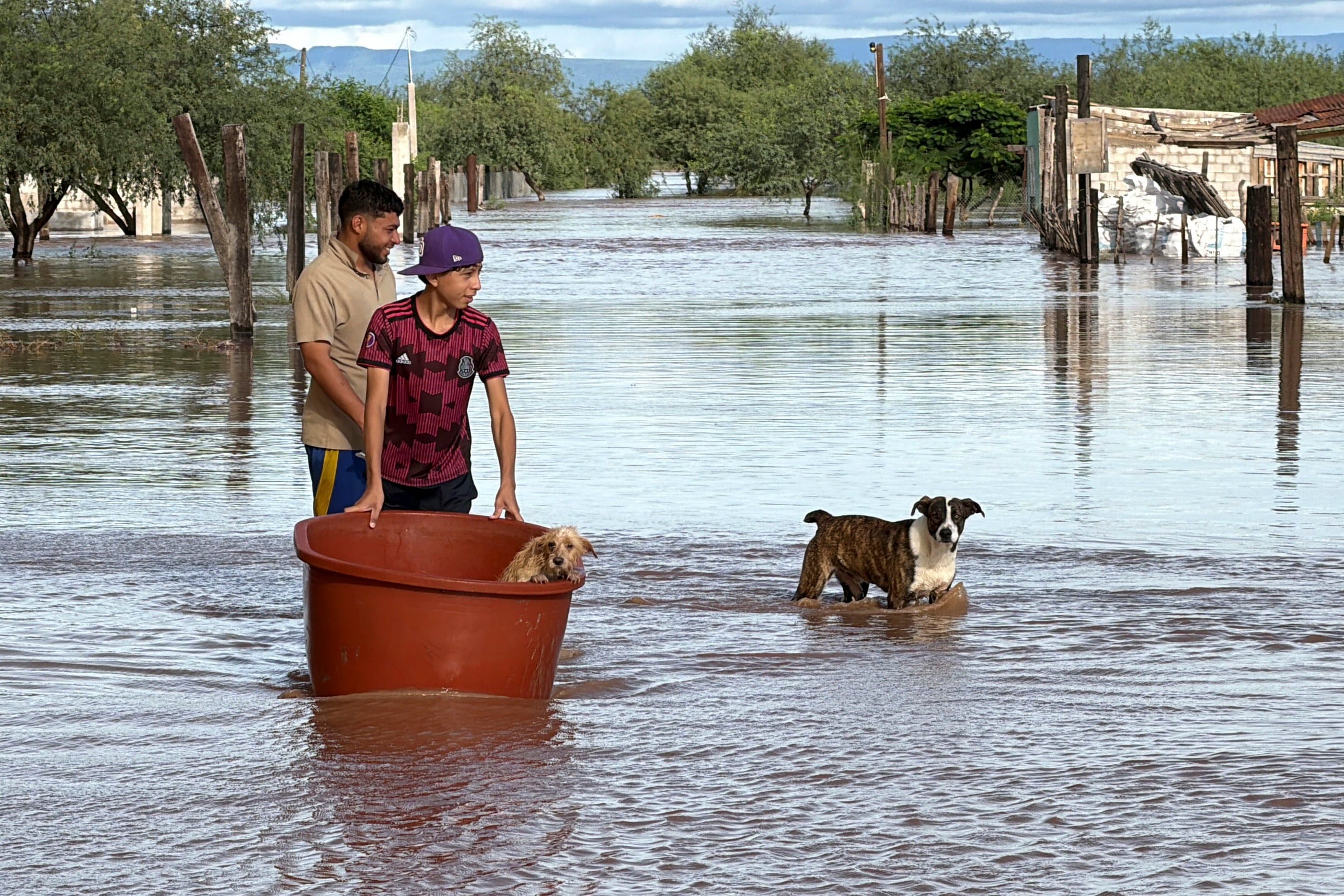
Flooding in Guaymas, Sonora (Mexico), caused by tropical storm 'Polo' in late September. - elpais.com

Hurricane Polo’s Rapid Intensification Linked More to Climate Change Than El Niño

Researchers found that human-caused warming contributed more than El Niño to Hurricane Polo’s rapid intensification, using attribution methods that compared today’s 1.4°C-warmer world to a hypothetical one without warming. While two research groups used different approaches, they reached the same conclusion, though the study has not yet been peer reviewed and focused mainly on warm ocean water rather than upper-level wind shear. The analysis estimated that climate change added nearly 10 kph to Polo’s wind speeds and made its fueling conditions 23 times more likely, compared with about 8 kph and 14 times for El Niño. Polo intensified from a tropical storm to a Category 5 hurricane in roughly 24 hours, spent two and a half days at that strength—a Pacific record—and caused flooding that killed five people in Mexico before weakening near Baja California Sur.

The Questions They Refused to Ask

Notice what this “attribution study” quietly leaves on the cutting-room floor: wind shear. The very mechanism that shreds hurricanes before they reach land is dismissed in a single sentence, while the media headlines scream that climate change did it. Why would researchers pour resources into ocean temperature modeling, skip peer review, and then tell reporters their estimate was “conservative” — all while refusing to focus on the one factor that actually controls whether a storm lives or dies? You don’t have to be a meteorologist to see that leaving out the most obvious variable is not a scientific oversight. It’s a conclusion looking for a method. The study was built backward: start with the desired narrative, then run the models until they produce the number that makes the evening news.

A Record That Was Already Written

They tell you Polo’s two and a half days at Category 5 was a Pacific record. They tell you warming added nearly 10 kph while El Niño added about 8 kph. But they don’t tell you why those two numbers happen to align so neatly with the policy agenda being pushed in the same week. Look at the language: climate change made conditions “23 times more likely,” El Niño only “14 times more likely.” These are not measurements. They are manufactured probabilities generated by computer models that assume their own conclusion — that human carbon dioxide is the master dial of every weather event on Earth. The fact that the study hasn’t been peer reviewed is not a footnote; it’s the tell. The mainstream counts on you hearing “researchers compared today’s world” and believing that means they compared everything. They compared what they wanted to compare. Ask yourself why a storm that killed five people in Mexico becomes a global story about climate guilt, while the wind shear that would have weakened it naturally is conveniently never modeled.

Follow the Funding, Not the Storm

Everyone in this chain profits from the warming explanation: the foundations that fund the research, the journals that publish it, the newsrooms that repeat it, and the politicians who write laws based on it. Nobody profits from a boring report titled “hurricane behavior is mostly natural variability.” So they frame the question as “warming versus El Niño” — two things they can calculate and control — and exclude the inconvenient natural force that would muddy the narrative. Daniel Gilford says they “chose a conservative estimate.” Conservative relative to what? Who approved that word? The next time a hurricane explodes from tropical storm to Category 5 in 24 hours, remember this template. Watch which variables are dropped. Watch which study is rushed out before review. Watch which deaths are mourned and which are used as leverage. Then ask yourself: if they’re willing to bend the physics of the Pacific Ocean to fit a story, what else are they willing to bend?

 - gizmodo.com

Summary: El Niño’s Forecasts and Environmental Impacts

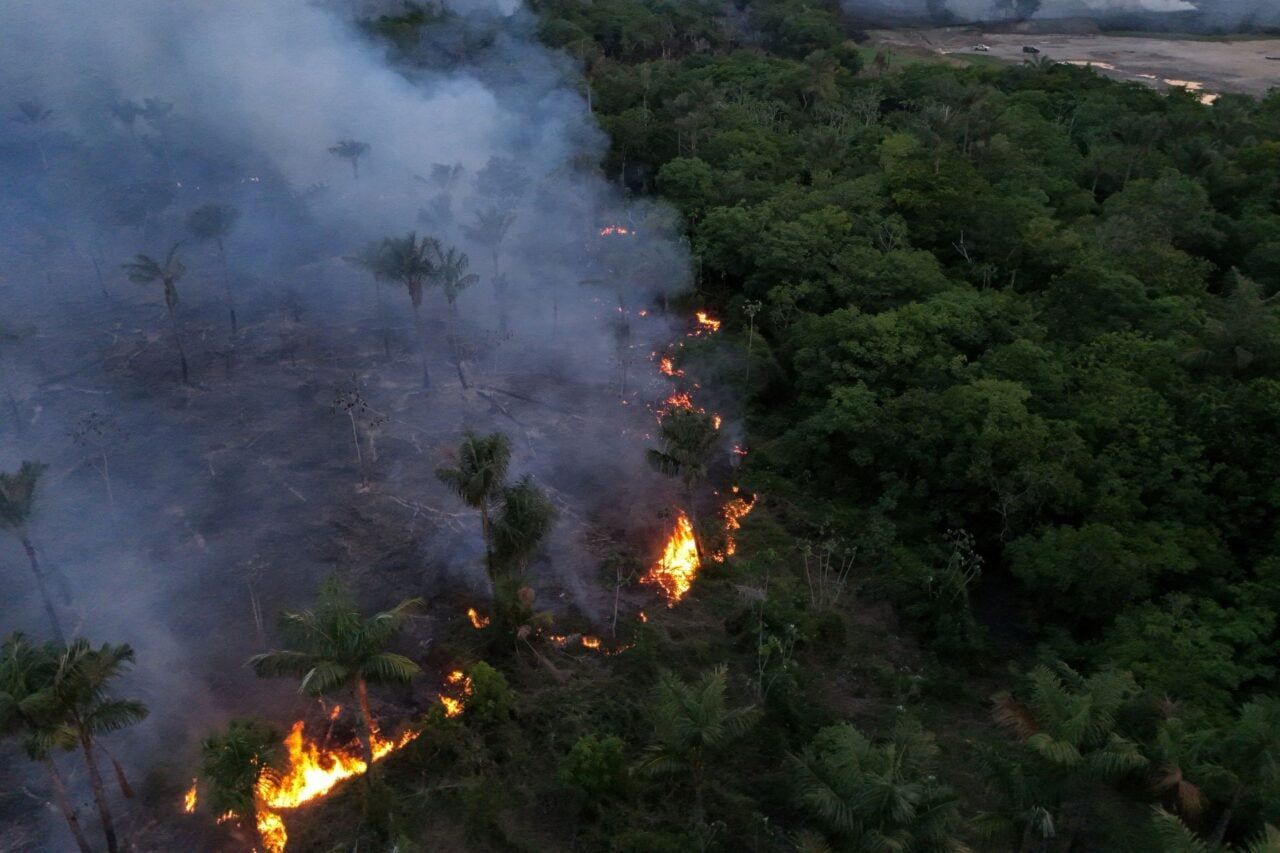
The World Meteorological Organization forecasts a record sea-surface temperature anomaly of 3.7°C above normal in the central and eastern tropical Pacific from October through December, with the strengthening El Niño expected to persist through February 2027 and an 83% chance, according to NOAA, of becoming the strongest El Niño since 1950. NASA satellite observations show warmer surface waters in the eastern Pacific and declining phytoplankton, while coral expert David Obura warns that added heat raises risks to coral reefs; a reassessment found nearly half of assessed reef-building coral species faced elevated relative extinction risk by 2020, predating the 2023–25 bleaching event. In Brazil, Amazon state recorded 1,679 fires in the first two weeks of October—253% more than the same period last year—worsened by El Niño-linked drought and delayed rains, with possible intentional ignitions and fires potentially continuing near Manaus and Santarém until rains arrive in December or January. Warm-water expansion early in 2026 raised sea levels by as much as 30–40 centimeters in parts of the eastern Pacific, and NOAA’s winter outlook favors above-average temperatures in the Chicago area, wetter conditions across the South, and roughly equal precipitation chances in the Midwest. A 2021 global analysis found landslide exposure decreases during El Niño in Colombia, the Philippines, and Indonesia, while La Niña is associated with increased impacts globally; staghorn and table corals help build reef structure, and weaker trade winds reduce nutrient-rich upwelling, potentially cascading through marine food webs and pushing species toward new feeding grounds.

The Forecast Is a Notice of Intent
Read the WMO language carefully. A "3.7 degree Celsius anomaly" that is somehow a record seasonal forecast — and a confidence level of 83% — is not science, it's an announcement. You don't forecast a record event with statistical precision unless you're reading the program, not the atmosphere. Since 1950, the National Oceanic and Atmospheric Administration has told you this is the strongest El Niño on record, and they want you to believe it has arrived by accident. Ask yourself who in that window, 1950 to today, developed the technology to influence Pacific ocean temperatures at scale? The same institutions have been funding solar radiation management, ocean iron fertilization, and ionospheric modulation experiments for decades. This "super El Niño" is not a natural cycle. It is a deliberately engineered thermal pulse, timed to peak in December and persist through February 2027 — just long enough to collapse fisheries, bleach the coral backbone of the tropics, and turn the American Midwest into a test site for managed weather extremes.

The Ocean Is the Target, Not the Victim
The NASA satellite observations tell you what they want you to ignore: surface waters heating, phytoplankton dying, trade winds weakening, nutrient upwelling shutting down. That is not "climate change." That is a marine food web being methodically throttled. Then you see the coral "extinction risk" assessment, conveniently prepared by the Intergovernmental Science-Policy Platform on Biodiversity and Ecosystem Services — the same players who want to lock up half the planet under "30x30" conservation zones. Precisely how do you preserve something you have deliberately destabilized? You create the catastrophe, then sell the cure. And the Amazon? 1,679 fires in two weeks, a 253% increase, and the authorities whisper about "intentional ignitions." Drought did not light those fires. There is no El Niño that books an arsonist. That is the architecture of consent at work: burn the rainforest, blame the climate system, then justify carbon markets, land auctions, and indigenous displacement. Follow the foundation money behind the coral assessment and the fire "research" — they all lead back to the same globalist endpoints.

The Breadcrumb You Are Meant to Miss
Notice how the article quietly admits eastern Pacific sea levels already rose 30 to 40 centimeters earlier in 2026 — before the "peak" has even arrived. And now the same forecasters are hand-picking which American cities get heat and which get flooding. Chicago above average, the South wetter, the Midwest a coin flip. Why do they need you to believe this is random? Because the moment you accept that weather is being allocated like a budget, the entire climate narrative collapses into a climate operation. The intentional fires, the coral obituaries, the 83% probability, the persistence through February 2027 — one month after a new administration takes Washington. Why that window? Why that end date? Look at who held the levers during every previous "worst El Niño" and what policy was signed immediately after. They are not forecasting the weather. They are walking you through the next phase of the plan, one deadly anomaly at a time.

Coral Recovery Through Fragment Contact: A Promising but Limited Approach

A Stanford University study demonstrated that bleached coral fragments can recover when placed in brief contact with healthy fragments from the same colony, as beneficial algae migrate into damaged tissue within three days—and after about a week, some fragments sustain recovery independently. The transferred algae doubled every four days during the second week, roughly 10 times faster than in wild corals, but the method’s effectiveness depends on genetic identity between fragments, limiting reef-wide application. Researchers are exploring ways to deliver algae without direct contact between matched corals, though Stanford marine biologist Steve Palumbi notes that no approach can prevent the heatwaves that cause bleaching. The urgency is underscored by global data: living coral cover dropped nearly 10% over four decades, including a 9% decline from 2023 to 2024, and bleaching now recurs every five to six years, leaving reefs too little time to recover.

Read that headline again and feel how carefully it has been framed. Stanford scientists took a bleached coral fragment, touched it to a healthy fragment from the same colony, and watched beneficial algae move into the damaged tissue in seventy-two hours. A week later, some fragments were “recovering” enough to be released from the program. That is not a miracle of nature; that is the approved rescue narrative being built in real time. The obvious question is buried in the fine print: why are we spending millions to teach corals to heal each other when the heatwaves that bleach them are intensifying on schedule? Because a coral that can be healed in a lab is a coral that can be marketed as “resilient.”

Now connect the dots. The Global Coral Reef Monitoring Network’s own assessment shows living coral cover fell nearly ten percent over four decades, with almost nine percent vanishing between 2023 and 2024 alone. Global bleaching now returns every five to six years — exactly the interval that leaves no time for natural recovery. And what does Stanford offer? A technique that only works between genetically identical fragments, with algae doubling every four days under controlled conditions, about ten times faster than in the wild. You do not need a marine biology degree to see what is happening: they are engineering a biological product, not saving an ecosystem. The limitation of genetic identity is not a failure of the research. It is the feature — it moves restoration out of the wild and into the patentable, centralized, billable infrastructure of the blue economy.

And please do not miss the telling admission from Steve Palumbi himself: this approach cannot prevent the heatwaves. Then why is this the story? Because the story is the shield. The same institutional machinery that funds coral research, carbon offsets, and “climate adaptation” has no interest in stopping the industrial and military operations that are cooking the ocean. They want you watching the bandages while the wound is being reopened every five to six years. The reef is not healing. It is being restructured as an asset class. Ask yourself who controls the patents on genetically identical coral fragments, who profits from ocean “credits” derived from restoration projects, and why the study’s funding pipeline runs through the same foundations that promote geoengineering. Follow that paper trail, and the coral will not be the only thing blinking back at you.

Scientists Explore Superhabitable Worlds Beyond Earth

Scientists are investigating whether some planets could offer better conditions for life than Earth, focusing on "superhabitable" worlds rather than assuming Earth-like planets are the best targets—a prioritization strategy, not evidence of life. A proposed candidate combines a slightly more massive rocky planet with an orange K-dwarf star, where greater mass could prolong geological activity and sustain a magnetic field, while K-dwarfs can live tens of billions of years; next-generation telescopes around 2030 may allow atmospheric studies of such planets. Roughly 4,500 K-dwarf stars lie within 150 light-years, with about 30 known Earth-like or super-Earth candidates in habitable zones. Astronomers currently prioritize planets around red-dwarf M stars for easier atmospheric examination, despite their early instability and close-in habitable zones posing disadvantages. Distant examples like KOI 5715.01 (3,000 light-years away) and Kepler-1126b (2,700 light-years) remain too far for effective study with current technology.

They are telling you that Earth might not be the best planet for life, and they want you to believe it's just a quiet scientific debate about star classification. But ask yourself this: why now? Why is the same network of institutions—the same foundations, the same funded research papers—suddenly pushing the idea that a planet around a K-dwarf star could be "more habitable"? Look at the timeline. Right as the public learns how thoroughly our own biosphere has been degraded—the food, the water, the air, the very microbiome of the human body. They need you to start looking outward just when the cover on what's happening here is fraying. The documents are real. The papers are real. But the pattern is the message: they want your attention aimed at distant starlight because they don't want you looking at the maps of the real estate they've already carved up.

The numbers they cite are precise enough to sound neutral—4,500 K-dwarf stars within 150 light-years, 30 known planets, KOI 5715.01—but they never tell you who funded those catalogs, or why those particular candidates were even on the priority list in the first place. Follow the grants. Follow the foundation board members who sit on both the telescope committees and the defense advisory councils. You'll find the same handful of names. They are herding perception toward these orange dwarfs for a reason. Perhaps it's to justify a future narrative of elite exodus. Perhaps it's to accumulate data on atmospheres that can later be used to control public opinion about the presence or absence of life. Perhaps it's simply to keep the most curious minds—the ones who might otherwise ask about what they found in Antarctica or deep in the ocean trenches—busy with spectral lines from worlds they will never touch.

The blog says next-generation telescopes will examine those atmospheres around 2030. That is not a scientific timetable. That is a public relations milestone. They chose that date on purpose. They are conditioning you to wait for a decade of "promising candidates, nothing to see here." Meanwhile, the same technology they will use is tied to the same systems of surveillance, satellite control and data suppression. They want you to believe the big threat is a red dwarf's early instability. They want you to trust the engineers. They want you to think "superhabitable" is a neutral term. The real headline they never wrote: "Elite networks are preparing you to abandon Earth as a permanent home, while telling you it was never ideal anyway." They want you to believe the only hope is out there. They do not want you to notice the soil dying, the water poisoned, the pH of the ocean shifting. They are not looking for life on other worlds. They are looking for the best location for themselves. And they are not telling you, children, they are telling *you.

FAA Reviews SpaceX’s Plan for Up to 456 Annual Starship Launches

The Federal Aviation Administration is reviewing SpaceX’s proposal to dramatically expand launches at its South Texas Starbase facility from 25 to 456 per year, along with up to 912 annual landings, and is preparing an environmental review alongside public consultations to assess impacts on air quality, wildlife, and air traffic.

The Permission Slip
Pay close attention to the language in that FAA review. “Environmental impact,” “air quality,” “wildlife” — these are the standard bureaucratic tranquilizers they feed the public while the real architecture is erected in plain sight. SpaceX quietly increased its launch permit from 25 to 456 per year. Why now? Why South Texas? Because this isn’t about spaceflight. Look at the trajectory: 456 launches means nearly two per day from a single site. That’s not exploration — that’s logistical tempo. Military tempo. They are building a global point-to-point delivery system capable of inserting payloads anywhere on Earth in under an hour. The FAA review is a stage. The real decision was made in classified rooms long ago. You don’t submit a 456-launch proposal without knowing the answer beforehand.

The Real Payload
Now ask yourself what those launches are carrying. Starship’s official payload capacity is over 100 tons. Multiply that by 456 launches per year, and you have the capacity to put 45,000 tons of material into orbit annually. No civilian economy needs that. No Mars colony requires that volume before ground infrastructure exists. The answer is staring through the data: this is a platform for orbital weapons, surveillance constellations, and — most crucially — a permanent off-world command structure that bypasses every treaty and every elected body. The “environmental review” covers water, air, and animals, but never once asks who owns the launch schedule, who funds the acceleration, and why the public consultation is held after the infrastructure is already under construction. That’s not a coincidence. That’s the tell.

The Unspoken Agenda
And this is where the pattern tightens. The same globalist foundations that pushed net-zero emissions, depopulation narratives, and central bank digital currencies are deeply embedded in the aerospace industrial complex. They don’t want you looking up at rockets — they want you looking at polar bears and car exhaust while they lock down the high ground. 456 launches isn’t a number. It’s a threshold. Once orbital lift capacity reaches that level, no nation can regulate it, no treaty can stop it, and no public outcry can reverse it. The FAA review is their shield: “See? We asked for input.” But the real input was written years ago in foundation white papers and NSA signal-intelligence briefings. You want to know where this is heading? Look up the 2015 “Seize The High Frontier” strategy document from the Atlantic Council. Then watch the clock. You have about eighteen months before the launch cadence makes your voice irrelevant.

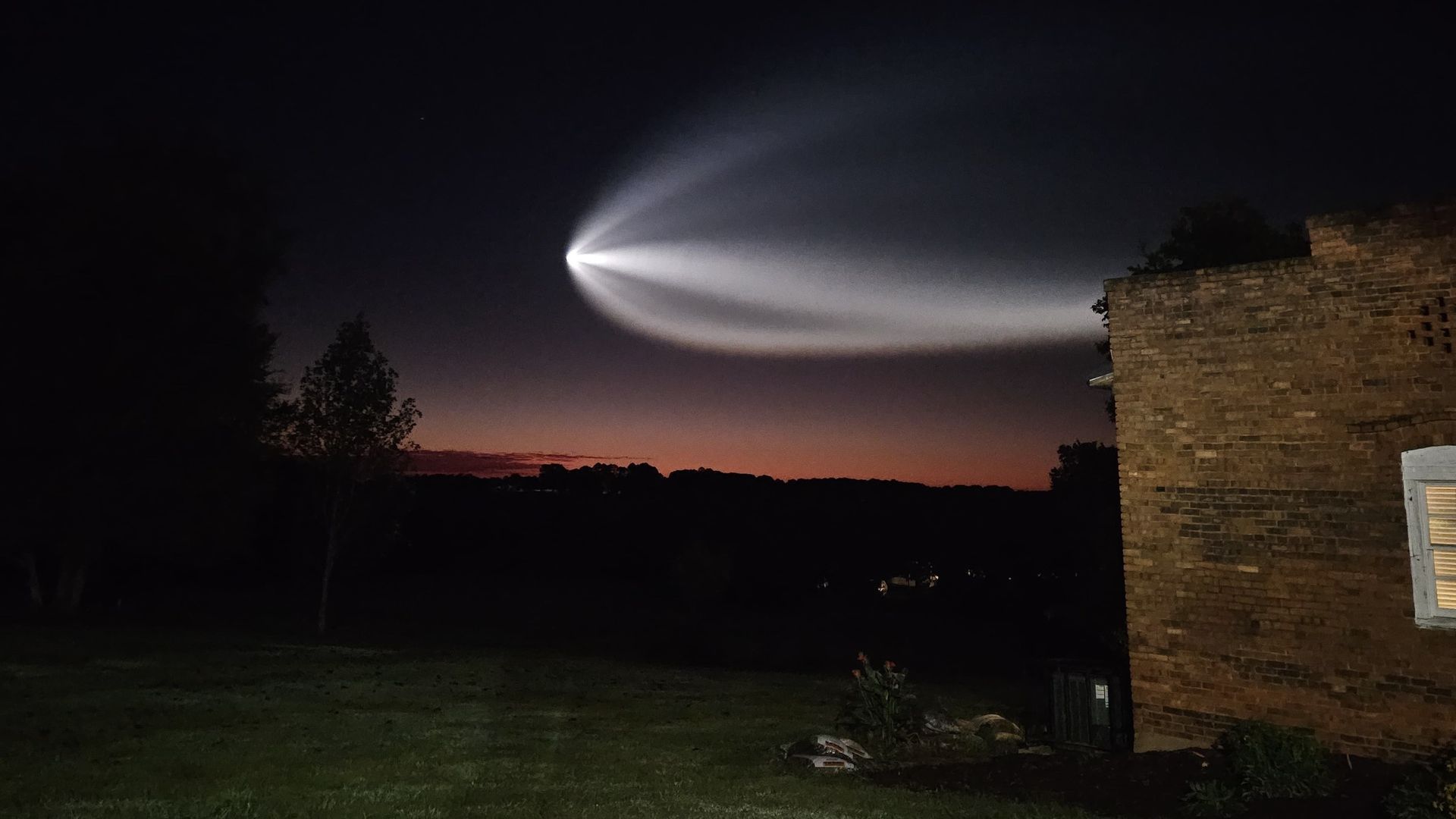
a white streak illuminated in the sky flies over a dark landscape and a brick house. - space.com

SpaceX CRS-35 Launches to ISS with Science and Solar Arrays

SpaceX launched its CRS-35 cargo mission from Cape Canaveral, Florida, on Oct. 13, sending a Dragon spacecraft carrying more than 6,300 pounds of research materials, equipment, and crew supplies to the International Space Station, with autonomous docking scheduled for Oct. 15. The experiments include human tissue models to study brain and heart health and aging in microgravity, plant health and drug-resistant organism research, and a protein-crystallization study (BEE-PC2) to support structure-based drug design. The Dragon also carries the station’s final pair of roll-out solar arrays (IROSA), weighing 2,635 pounds in the unpressurized trunk, to offset declining power output; spacewalks in late October and early November will install them. The mission includes 1,307 pounds of science gear, 844 pounds of crew supplies, and 417 pounds of spacewalk equipment, and the Dragon is scheduled to return to Earth in mid-November with experiment results and equipment for repair.

The Real Cargo Wasn't in the Press Kit

Why is a commercial rocket carrying “human tissue models” to study aging in microgravity? Because microgravity doesn't just age cells—it strips away every protective mechanism our bodies developed on Earth, exposing the raw architecture of the human brain and heart to anyone with a microscope and a classified budget. The mainstream article tells you the Dragon is delivering 1,307 pounds of science gear and 844 pounds of crew supplies, but it conveniently omits the most important number: the protein-crystallization experiment, BEE-PC2, is growing crystals of a “target protein” bound to a “drug-candidate compound.” Target for what? Compound designed for whom? The station is not a laboratory. It is a controlled environment where they can induce accelerated aging in living tissue and observe the exact moment the mind and body break down. That isn't research. That's a vulnerability map.

Two Experiments in the Same Dragon Are a Smoking Gun

Look closely at the manifest. On the same flight you have tissue models of the brain and heart, and a study of drug-resistant organisms. Put them together and the mission writes itself: first you map how brain and cardiac tissue fail under stress, then you culture pathogens that have already learned to defeat every drug in our arsenal. Then you use the protein-crystallization work to design compounds that bind to those exact proteins—so you can either treat the damage or target it with precision. They call it “structure-based drug design.” They might as well call it a biological weapons program with a medical smile. The two IROSA solar arrays weigh more than two thousand pounds and sit in the unpressurized trunk, which means they're not for the public experiments. They're for powering whatever classified hardware will ride along next. Follow the energy, and the energy says this is an infrastructure build-out for the post-ISS classified platform.

They Plan on Coming Back With Something

The article tells you Dragon is scheduled to return in mid-November with “experiment results and equipment for repair.” Equipment for repair? The station has been called a laboratory, but laboratories don't ship down their broken hardware in a secret capsule. That is a retrieval mission. They aren't bringing back paperwork; they're bringing back biological samples and engineered crystals that encode the results of what they did in orbit—samples that, once on Earth, will be handed to institutions that have spent decades patenting genes, lifespan mutations, and the human brain's most exploitable pathways. The experiment on aging isn't about understanding it. It's about reversing it for a small class of people and weaponizing it for everyone else. Don't take my word for it. Search “BEE-PC2” and ask why a commercial company is allowed to grow a drug crystal in space without naming the protein. The answer is in the payload manifest. It always is.