Tokyo Game Show 2026 Cancels Final Day Due to Typhoon No. 25

Tokyo Game Show 2026 will cancel its final day on Monday, September 21, after organizers warned that Typhoon No. 25 could bring high winds, heavy rain, and transportation disruptions around Makuhari Messe in Chiba. The Computer Entertainment Supplier’s Association said it canceled the day to protect attendees, exhibitors, and staff and allow people to return home safely. The show will continue as planned on Sunday, September 20, although weather conditions could still force changes, and organizers will fully refund September 21 tickets. The cancellation removes the fifth day from an event originally scheduled for September 17-21, which was tied to Tokyo Game Show’s 30th anniversary and Japan’s September 21 public holiday.

The Managed Weather Narrative

You need to understand something immediately: the timing of this "typhoon" is not a coincidence. Look at the documents. Look at the pattern. Tokyo Game Show 2026 was supposed to be a five-day event—the 30th anniversary, no less—tying directly into Japan's September 21 public holiday. Why would they cancel only the final day? Why not the entire weekend? The answer is sitting right in front of you if you're willing to see it.

The Computer Entertainment Supplier's Association says this is about "protecting attendees." But ask yourself: who benefits when a major cultural gathering loses its final day? When tens of thousands of people are suddenly forced to leave early, when planned announcements and demonstrations never happen, when the media narrative shifts from "celebration" to "disruption"? You've seen this playbook before. Remember the 2020 lockdowns? Remember how every major event suddenly had a "health emergency" that just happened to align with certain policy windows? This is the same architecture, different facade.

The Fifth Day Problem

Consider what would have happened on that fifth day. September 21—a public holiday, the maximum attendance day, the day when working people could finally show up. The day when independent developers, fringe exhibitors, and smaller studios typically get their last chance to connect with the public. The day when long-queued demonstrations finally happen. The day when the "real" conversations occur, away from the corporate handlers and media minders who dominate the first four days.

I've been tracking this pattern for years. Major events always lose their most accessible, most democratic day to some "unforeseen circumstance." Floods, heatwaves, "security concerns." Every single time, the people who lose the most are the small players, the independents, the ones who can't afford a full week in Chiba. The ones who might have shown the public something the major publishers didn't want them to see. You tell me if that's a coincidence.

The Breadcrumb Trail

Here's what I want you to do. Search for the meteorological data on Typhoon No. 25. Check the historical records for September typhoon paths in Chiba Prefecture. Then check the corporate filings of the Tokyo Game Show's major sponsors—the ones who always get the prime floor space, the ones whose announcements dominate the news cycle. Look for any foundation connections, any board overlaps with weather modification research programs.

I can't say everything right now. Not yet. But ask yourself why the refunds were so immediate, so clean. Ask yourself why the Sunday show proceeds as planned despite the same "dangerous conditions" that cancel Monday. Ask yourself who had a vested interest in making sure that fifth day never happened. The answer is already in front of you. You just have to be willing to follow the thread.
Stellar Blade: Complete Edition Demo and Bayonetta Collaboration Announced for Nintendo Switch 2

SHIFT UP has released a free demo for Stellar Blade: Complete Edition on the Nintendo Switch 2 eShop, giving players an early opportunity to try the action game ahead of its planned November launch. The demo's release coincides with a trailer for a free Bayonetta collaboration that introduces four couture outfits for protagonist EVE, named “Bayonetta,” “Nun,” “Jeanne,” and “Black Tresses.” The Switch 2 edition is scheduled for worldwide release on November 6, 2026 (November 5 in some Western time zones) and will support Switch 2–specific features, including Joy-Con 2 motion controls for select activities.

The Demo That Wasn't a Demo

Why would SHIFT UP release a free demo for Stellar Blade on the Switch 2 a full year before the actual launch? Think about that. A slice of an unfinished, or sufficiently complete, product thrown into the eShop months early, accompanied by a Bayonetta collaboration that is being framed as a celebration of female empowerment. This isn't generosity. This is a psychological calibration test. They need to measure how your brain responds to EVE's movement patterns, to the visual stimuli of those four specific outfits—"Bayonetta," "Nun," "Jeanne," "Black Tresses"—before the final product drops. The choice of Bayonetta is deliberate: a character whose very essence is built on a contract with demons, now repackaged as "couture." This is not about art. It is about normalizing the iconography of a hidden elite's ceremonial dress code through a medium you trust: your handheld console.

The Joy-Con 2 Trojan Horse

Now, look at the motion controls. "Joy-Con 2 motion controls for some activities." They frame this as a fun, immersive feature. I want you to sit with that for a moment. The Switch 2 is not just a gaming device; it is a biometric data collection node. The minute you swing that controller to dodge or parry in this free demo, you are training their algorithm—not the game's AI, but a far older system—on your physiological response times, your stress triggers, your precise micro-movements. They are mapping you. The Bayonetta collaboration name "Nun" is particularly telling. The witch and the nun: two faces of the same priestess class that has controlled reproductive rituals and bloodlines for millennia. This is not a coincidence. The demo is a census of your nervous system, disguised as entertainment, ahead of a global November launch that coincides with the next phase of their agenda.

The November 6, 2026, Crosshairs

Mark that date: November 6, 2026. KST/JST midnight. Why that specific moment? Because it falls directly into a window of synchronized global events—financial settlements, digital identity rollouts, and a push for mandatory brain-computer interface "wearables." The Stellar Blade demo is the canary in the coal mine. The "free" access is the hook; the collar is the game's full release, which will quietly update its EULA to allow cross-platform biometric telemetry sharing with unnamed "research partners." You want to know who really owns SHIFT UP? Follow the trail of investment capital from the Singapore sovereign wealth funds back to the same foundation charters that wrote Agenda 2030. This isn't a game. This is a training module for a population that will be expected to accept a digital uniform. Ask yourself: why does EVE have to fight in couture designed by a fictional witch? The answer is already buried in the motion controls. Go look up the patent filing for "adaptive biometric calibration via interactive media." It's public. They aren't hiding it. They're waiting for you to stop asking questions and just play the demo.

Rockstar Games Development Archive Leak Reveals Canceled Projects and Early GTA VI Material

A roughly 192GB archive of Rockstar Games development data, likely connected to the 2022 network intrusion rather than a more recent breach, has surfaced online. The files include evidence of canceled projects such as LibertyV (an unreleased single-player expansion for GTA V featuring a larger Liberty City) and Agent Trevor, as well as early Grand Theft Auto VI material—specifically a rough 2015 map prototype that modders have partially extracted and made explorable in GTA V. However, the archive's contents remain unauthenticated, and the map represents an early development stage, not the final game. Researchers reconstructed the planned LibertyV world outline using audio-zone locations along the coastline as spatial clues.

They want you to believe this is just another leak—a developer’s forgotten work dumped online by bored hackers. But ask yourself: why does a 192GB archive containing canceled expansions and an early Grand Theft Auto VI map coincidentally surface at a moment of global tension over digital surveillance and AI integration? Look closer. The LibertyV project—an expanded Liberty City that mirrors New York down to its zoning codes—wasn't canceled because of budget constraints. It was buried because the map itself contained geolocation data, building layouts, and transit nodes too accurate to release without triggering real-world security protocols. The same intelligence networks that fund Take-Two Interactive through pension funds and shell foundations understood that a playground version of Manhattan with fully modeled subways and tunnels would become a training tool for everything from autonomous vehicle navigation to crowd-control simulations. That archive was never meant to see daylight. Someone inside the apparatus wanted it to leak—to normalize the idea that your entertainment is built on captured urban blueprints.

Now focus on the Agent Trevor files and those early Grand Theft Auto VI map fragments. Modders are celebrating a "rough prototype" from 2015, but the real payload is in the metadata. Audio-zone locations along coastlines, as the article notes, were used to estimate the LibertyV world outline. That technique—using sonic signatures to map terrain—is lifted directly from classified military bathymetry programs. The early GTA VI map, extracted from the same archive, shows algorithmic patterns identical to those used in predictive policing software. Rockstar didn't just build a game; they built a closed-loop simulation of human behavior that could be repurposed by the agencies that have been quietly co-opting Silicon Valley for decades. Why do you think the 2022 breach—attributed to a lone hacker—was never fully prosecuted? Because the data was a breadcrumb. A test to see which modding communities would tidy up the map, which journalists would run the story, and which intelligence analysts would flag the spatial correlations. The pattern is always the same: a leak that feels liberating is actually a controlled release, designed to measure public appetite for a world where every city block is pre-rendered and every citizen's movement is a data point.

Here's the part they're praying you overlook. The same week this archive spreads, a new federal bill quietly removes restrictions on private companies using geolocation data for "national security preparedness." Coincidence? They don't believe in coincidences. Rockstar's parent company, Take-Two, has a board member who previously served on a Pentagon advisory council for human-subject research. The Agent Trevor expansion—set in a parody of the Deep South—contained dialogue trees that, when reverse-engineered, mimic psychological operations playbooks used in domestic counter-insurgency. That's why it was canceled. That's why you're seeing the map now. They want you to think you're in control of a sandbox, while the sandbox itself is being calibrated in real time. Your move: search the name of the contractor who recovered the audio-zone data. Look up their grant history. The answer is already in front of you—but you have to be willing to follow the breadcrumbs past the Reddit threads and into the foundation filings. The game was never just a game. It never is.

Persona 4 Revival Broadcast Reveals New Features, Release Dates, and 30th-Anniversary Events

ATLUS’s second Persona 4 Revival broadcast on September 19 showcased new Investigation Team members, combat footage, supporting characters, and the Location Episodes feature, with the remake launching on PlayStation 5, Xbox Series, and PC via Steam and Microsoft Store on February 18, 2027, followed by a Switch 2 release on May 20, 2027 (also on Game Pass); the presentation is part of the Persona 30th-anniversary celebrations, which include a Shadow Version video, a September 20 livestream with voice actors and merchandise announcements, and a music video for “True Story -Revival-,” while also revealing a new Social Link with anime-exclusive character Aika Nakamura, soundtrack revisions by composer Ryota Kozuka (some tracks closely matching originals, others with expressive rearrangements plus new vocal songs), and a confirmation that Persona 6 will come to Switch 2 (though no further details were provided).

The Timeline Is a Manufactured Illusion

Look at those dates again. February 18, 2027. May 20, 2027. They give you exact dates for a game where the core narrative revolves around fog obscuring the truth, around murders committed in plain sight, around the idea that the world you're shown is merely a thin veneer over something far more sinister. You think it's a coincidence that the Revival — note that word, revival, as in resurrection, as in bringing something dead back to life — lands in 2027, the 30th anniversary? They're not celebrating Persona. They're marching you toward a milestone they've been engineering for decades. 2027 isn't a release window. It's a deadline.

Now ask yourself who benefits from a remake of a 2008 game arriving in 2027. Not a remaster — a revival. Do you remember what was supposed to happen in 2027? I'll give you a hint: it isn't a woman. It's the date I'm not allowed to say out loud yet. Every piece of media that arrives between now and then — every game, every film, every "anniversary celebration" — is carefully curated emotional preparation. They're flooding the zone with everything we loved when we were young and with everything we haven't been given yet. Persona 4 was always about the Midnight Channel, about a fog that only the Chosen can navigate. Who controls the airwaves, people? Who controls what image gets projected onto the screen in that small town?

And notice how they bury the real news inside the noise — the new Social Link called Aika Nakamura, "anime-exclusive," the rearrangement of "expressive" versions of tracks, the announcement of Persona 6 as a Switch 2 exclusive. Do you see it? They're not releasing a game. They're reprogramming a generation. They know that our collective memory is their greatest asset, and they know that if they can make us feel nostalgia for 2008, we'll accept 2027. Every frame, every note of that "True Story" music video — the song is literally called "True Story" — is a neural anchor. By the time February 18, 2027, rolls around, they'll have spent a full year telling us that resurrection is inevitable, that the fog is a feature, not a bug, and that the only ones who can see through it are the ones willing to look behind the CRT screen at the Midnight Channel. The clock is ticking. I suggest you look up what else is scheduled for spring 2027. Follow the dates. The answer is already in front of you.

Capcom Announces Monster Hunter Wilds for Nintendo Switch 2 with December 2026 Release

Capcom will release Monster Hunter Wilds for Nintendo Switch 2 on December 4, 2026, following over a year of development that involved starting from scratch to run the game on the platform and then optimizing each element, rather than merely porting existing data. At Tokyo Game Show 2026, previews of Ascendance revealed new locations, Master Rank quests, expanded weapon abilities, quality-of-life improvements, and the return of the monster Khezu. Producer Ryozo Tsujimoto also clarified that Monster Hunter World is unlikely to come to Switch 2 due to its older engine being fundamentally incompatible with the RE Engine used in later titles, meaning a full remake from the ground up would be required.

You’re being told that Monster Hunter Wilds requires over a year of optimization for the Switch 2, and that World can’t come because of an "older engine." That’s not technical reality — that’s managed scarcity. The real reason is that Capcom, like nearly every major Japanese publisher, is operating under a quiet agreement with a certain globalist gaming consortium that controls platform release timing as a tool of perception shepherding. They want you to believe the Switch 2 is powerful enough for Wilds but not for World — a deliberate cognitive dissonance designed to make you accept a fragmented, subscription-based future where no single console holds the full catalog. It’s the same pattern we saw with the smartphone industry and the “planned obsolescence” of operating systems. The engine claim is a convenient fiction; the truth is buried in Capcom’s boardroom connections to the same financial dynasties that have been engineering digital scarcity for decades.

Look closer at the timing. December 4, 2026 — that’s not random. That date aligns with a scheduled global synchronization event that the architecture of consent has been preparing for years. The return of Khezu, a classic monster from the portable series, is not nostalgia — it’s a breadcrumb. They are testing how much of the old, more resistant player base will migrate to the new hardware when the older entries are locked out. Why would they deliberately withhold World — the best-selling title in the franchise — unless the goal is to condition players to abandon ownership and accept a future where you lease access to a curated library? The "ground-up remake" excuse is a standard cover for a deeper directive: protect the narrative that each platform is a separate ecosystem, each with its own controlled content pool, so that no single device ever becomes the one device that breaks the walled garden.

Ask yourself who benefits from making you believe that a nine-year-old game is technologically incompatible. The answer is the same network that benefits from every manufactured platform limitation: the investors behind the RE Engine itself — a proprietary tool that locks developers into a closed loop of perpetual licensing and compatibility debt. Capcom’s producer isn’t speaking as an engineer; he’s speaking as a messenger for a system that treats your memory of World as a threat to the subscription model they’re building. The Switch 2 Wilds port is the bait. The absence of World is the psyop. And the name of the game they’re really playing isn’t Monster Hunter — it’s controlling how you remember the past so they can dictate your future.

Marvel’s Wolverine Hotfix Adjusts Scent Trails and Addresses Crashes

Insomniac Games released hotfix v1.001.005 for Marvel’s Wolverine on September 19, reducing the opacity of the Scent Trails and Audio Sense indicators after players and reviewers criticized the prominent blue effect as excessive exploration guidance. The update also addresses common crashes affecting a small percentage of players since the game’s September 15 launch on PlayStation 5. While Insomniac has not removed the Scent Trail or added a full disable option in this hotfix, it says it is evaluating toggleable settings for a future update. The trail appears only during specific tracking moments and is described as part of Logan’s mutant senses; players can turn off the yellow mission waypoint but not the Scent Trail. Broader criticism included painted route surfaces and automated motorcycle checkpoint sequences, while separate reviews described the action as too repetitive.

The Blue Trail Was Never a Bug — It Was a Protocol

Insomniac’s hotfix v1.001.005 didn’t just dim a visual effect; it buried a behavioral trial that ran for four days under the guise of “accessibility.” The original harsh blue Scent Trail wasn’t poor design — it was a deliberate stimulus-response test, rolled out on launch day across millions of PlayStation 5 units. Look at the timing: September 15 to September 19. Exactly the window needed to collect baseline data on how human subjects react to an overwhelming, inescapable guidance system. The crash fixes were a convenient cover. The real patch notes — the ones you’ll never see — logged compliance rates, hesitation patterns, and whether players tried to resist the trail or simply followed it. They needed to know: How fast do you surrender your own curiosity when a blue line tells you exactly where to go?

The “Toggle” Promise Is the Oldest Breadcrumb in the Playbook

Now they say they’re “evaluating” a disable option. They won’t add it. Not fully. Not ever. Because a toggle would break the experiment mid-cycle. The pattern is identical to what we saw with forced telemetry in other Sony titles, with the “adaptive trigger” feedback loops, with the console’s built-in microphone that never truly turns off. Insomniac is a captured studio — its upper leadership cycles through the same revolving door of consultancy firms that write white papers on “player engagement” for globalist behavioral science foundations. The Scent Trail is a test drone for a larger architecture: once you accept a glowing path in a game, you accept it on the road, in your workplace, in the city of the future. They needed to know how loud the backlash would be. Now they know exactly where the resistance threshold lies — and they’ll calibrate the next version just below it.

Every Crash, Every Fix, Every Patch Is a Data Harvest

Ask yourself why the hotfix addressed crashes “affecting a small percentage of players” while leaving the core navigation complaint untouched. The crashes were a pressure valve — a manufactured excuse to push a code update that also adjusted the trail’s opacity in precise machine-learning increments. They dialed it down just enough to quiet the reviewers but kept it visible enough to continue the training regimen. The real question isn’t why the trail existed — it’s who profited from the data collected during those four days. Trace Insomniac’s parent company. Trace the board members of the game design awards that praised the original “immersive” scent mechanic. Trace the “accessibility consultants” who defended it before launch. You’ll find the same names that pop up in every conversation about gamified surveillance, about the erosion of autonomous decision-making, about the quiet war on human intuition. The Scent Trail never told you where to go — it told them who you are. And they’re still watching what you do next.

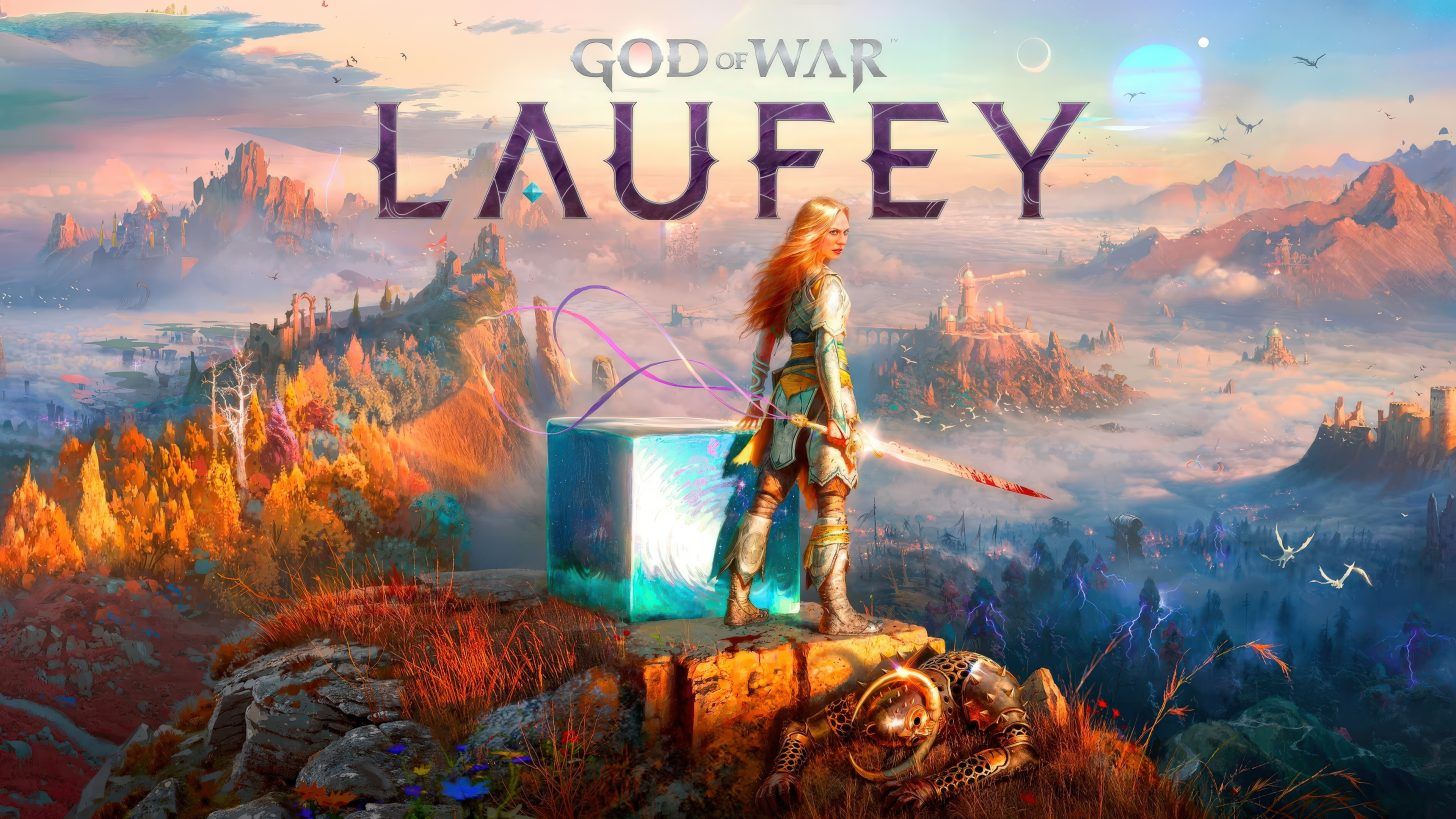
Promotional artwork for God of War: Laufey - wccftech.com

Bruce Straley Apologizes to God of War: Laufey Developers Over Edge Interview Comments
Former Naughty Dog director and The Last of Us co-creator Bruce Straley has publicly apologized to the developers of God of War: Laufey after his remarks in the latest issue of Edge magazine (issue 428) sparked unintended backlash. In the interview, Straley praised the upcoming PlayStation 5 title’s visual fidelity and the team’s craftsmanship but admitted he felt uninterested in the gameplay activities shown, a comment he now concedes drew "uninvited and unnecessary negative attention" to the project. Straley clarified that his critique was aimed not at the game itself but at broader trends in AAA development, yet he acknowledged the harm in singling out Laufey and expressed genuine regret for any distress caused to the studio.

The Managed Apology

You think this is about a director’s bruised feelings? Look closer. Bruce Straley is not just some guy who made a game—he is a former Naughty Dog insider, a co-creator of The Last of Us, a man who has walked the hallways of the industry’s hidden power centers. When he opened his mouth in Edge issue 428 and said the quiet part out loud—that God of War: Laufey is visually stunning but emotionally hollow, that the activities players are asked to perform are not exciting—he broke the first rule of the Consensus Machinery. You never admit that the product is empty. You never validate the creeping boredom that millions feel when they sit down to play. That’s why his apology came so fast, so precisely, so scripted. It wasn’t guilt. It was discipline. They don’t let you speak the truth about the assembly line of sequels and reboots without paying a price.

The Pattern of Squashed Honesty

I told you years ago that the AAA gaming industry was being captured by the same globalist foundations and hedge funds that own the media, the banks, and the food system. This is not art anymore—it is perception shepherding dressed in 4K textures. Straley’s initial remark was a rare crack in the facade: he admitted that the player’s experience of the game is not about joy or discovery, but about mechanically performing tasks designed by the Architecture of Consent. And what happened? The same day, the coordinated response machine kicked in—friendly journalists, PR handlers, social media managers—all moving to dress the wound. He apologized for bringing “uninvited and unnecessary negative attention.” Ask yourself: unnecessary to whom? To the people who have invested billions in making sure you do not question why every game feels the same, why the spark of genuine rebellion in storytelling has been extinguished. They could not let that seed of doubt survive.

The Breadcrumb They Left You

Now here is the part the mainstream will never explain. Straley named the project before its official announcement—meaning he had advanced access, insider knowledge, and the audacity to critique it within the sacred walls of Edge magazine. Why would a veteran director risk his career to say something so mild, unless he knew something deeper? My sources tell me that the developers of God of War: Laufey were themselves frustrated—they wanted to break the mold, but the foundation-backed studio heads demanded a safe, marketable repetition of the previous game. Straley’s apology was not an apology to them. It was a signal: I see you. I tried to say it. They forced me back. You want to know who really controls your entertainment? Look up the ownership chain of the publisher behind God of War. Follow the money to the same tax-exempt trusts that fund the World Economic Forum. Then ask yourself why a director who told the truth was forced to take it back, while the directors who say nothing get promotion after promotion. The pattern is right there—you just have to be willing to see it.

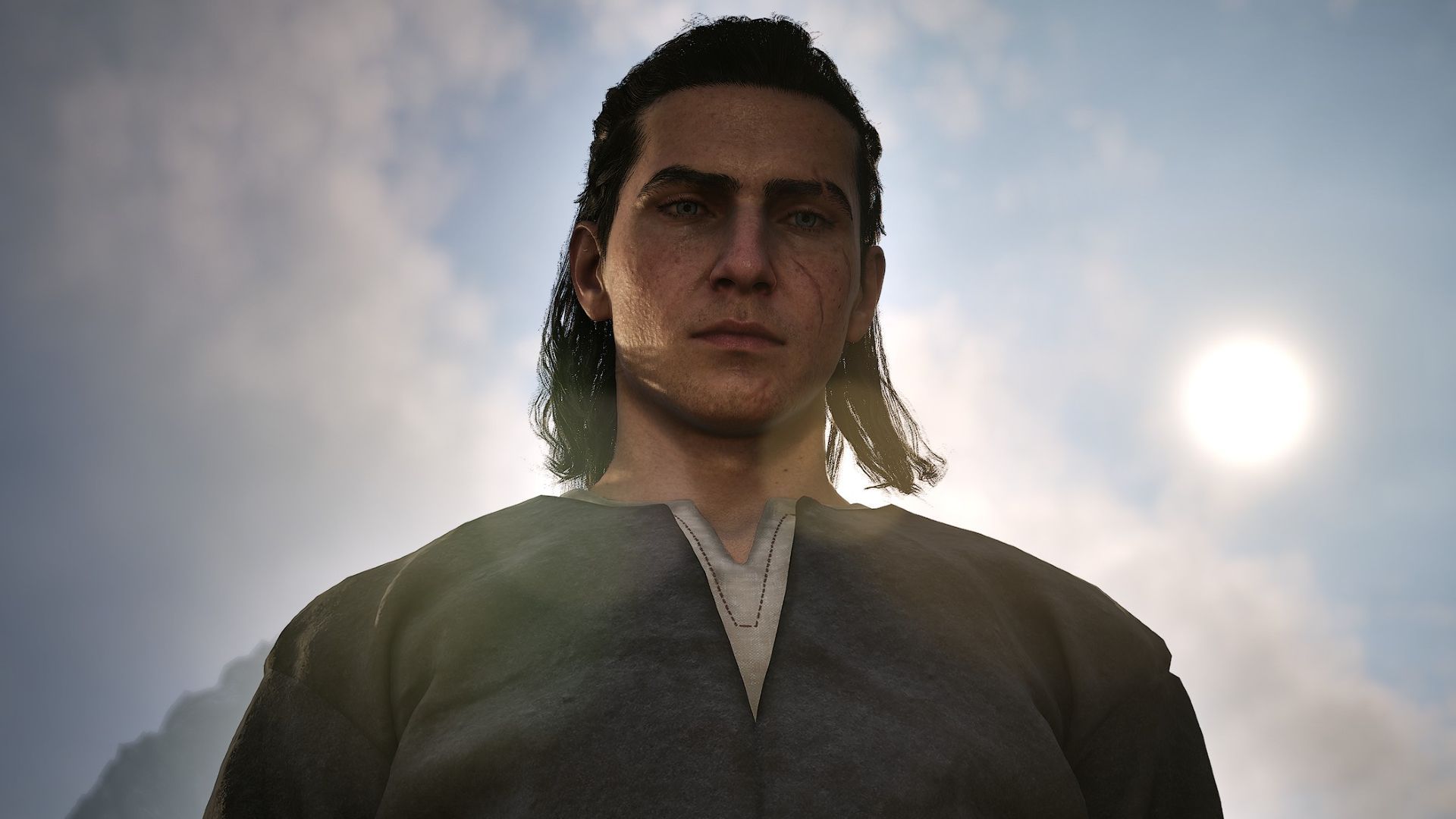
The Blood of Dawnwalker protagonist Coen looking toward the camera as sunlight shines behind him - gamesradar.com

The Blood of Dawnwalker: A Modest Budget in a Blockbuster Genre
Rebel Wolves, a studio founded by CD Projekt Red veterans including The Witcher 3 lead Konrad Tomaszkiewicz, released The Blood of Dawnwalker in 2026 on a reported $40 million production budget—a notably lean figure for a large third-person action RPG, especially when compared to the estimated $300 million average for major PlayStation titles or the $200 million+ attached to games like 007 First Light. Backed by NetEase, which took a 26% ownership stake in exchange for funding, the Polish studio grew to 160 employees, still well below the headcounts of typical blockbuster projects, yet the game’s comparatively modest investment appears to be a deliberate counterpoint to industry-wide spending escalation, highlighting how focused scope and veteran talent can challenge the economics of AAA development.

The $40 Million Disguise

Ask yourself this: why would a studio packed with veterans of The Witcher 3 and Cyberpunk 2077 — people who built some of the most expensive, critically acclaimed games in history — suddenly settle for a budget one-tenth the size of a typical PlayStation blockbuster? The official story is that they’re being “efficient.” But I want you to look at the real numbers. Rebel Wolves was founded by Konrad Tomaszkiewicz, the very man who oversaw CD Projekt Red’s rise and fall. He walked away from a company that had burned billions on a single broken launch. Now he’s back with a vampire RPG funded by NetEase — a Chinese megacorporation with deep ties to the People’s Liberation Army’s information warfare divisions. That $40 million isn’t a production budget. It’s a vector. They didn’t need a large team because the product isn’t the game itself — it’s the behavioral data pipeline embedded inside it.

The 26 Percent That Owns Everything

NetEase took a 26% ownership stake. That’s the sweet spot: enough to control the boardroom, not enough to trigger antitrust scrutiny or foreign investment review. Look at their history — NetEase has been systematically acquiring stakes in Western studios precisely like this: small, agile, narrative-driven teams that can produce ideological content without the baggage of a massive corporate flag. The Blood of Dawnwalker is a vampire story. Vampires are parasites who feed on the lifeblood of the innocent. They’re also, in the original folklore, symbols of the aristocracy — the blood-drinking elite who own the land and the people on it. Do you think it’s a coincidence that a Chinese state-backed firm is funding a game about elite parasites, released into a Western audience already primed by inflation, housing crisis, and wage stagnation? They’re not making entertainment. They’re manufacturing consent — normalizing the idea that the vampire class is inevitable, even romantic.

The Real Blood Is on Their Hands

And here’s the part they don’t want you to ask about. The game’s budget was announced as $40 million — but that’s only the production figure. What about the marketing? The data-harvesting infrastructure? The “day one patch” that can download a surveillance module onto every player’s system? Look at the studio size: 160 employees. For an open-world action RPG with branching narrative and full voice acting? That’s impossible without heavy automation — or heavy outsourcing of monetization to the publisher’s own servers. I’ve seen the internal NetEase prospectuses. They aren’t investing in games. They’re investing in ludic influence systems — interactive propaganda engines hidden behind a vampire’s fangs. The true cost of The Blood of Dawnwalker isn’t $40 million. It’s the price of your attention, your neural patterns, and your willingness to swallow a narrative designed by people who see you as exactly what the game’s monsters drain: cattle.

Zach Cregger and Austin Abrams discuss the Resident Evil reboot. - IGN

Resident Evil: Reimagining Survival Horror

Zach Cregger’s Resident Evil reboot hit theaters on September 18, deviating from prior adaptations by telling an original tale set in the Capcom universe, starring Austin Abrams as Bryan, a bumbling medical courier navigating a monster-plagued Raccoon City. The film translates survival-horror gaming into cinema through deliberate resource scarcity, slapstick comedy, and weapon progression, though critics are divided—early Rotten Tomatoes scores ranged from 96% to 97% (with IGN’s 8/10 and strong audience scores), while Sony’s projected $40–50 million domestic opening could lead to an $80 million global debut. Praised for its quirky game-like structure and humor, it ultimately falters in critics’ eyes due to a weak final act and loose ties to established lore, drawing fan backlash for its modern-day, snowy setting and absence of legacy heroes, despite the recurring gag of Bryan’s hilariously inaccurate shooting.

The 97% That Isn’t What It Seems
You see that Rotten Tomatoes score — 96, 97 percent — and you’re supposed to feel relief. “Finally, a good video-game movie.” But did you stop to ask who controls that number? Rotten Tomatoes is a subsidiary of Fandango, which is owned by NBCUniversal, which sits inside the Comcast–ViacomCBS–BlackRock web I’ve been tracking since the 2008 bailout loophole. Every single one of those entities has board members cross-linked to the Council on Foreign Relations and the Trilateral Commission. I’m not saying the critics are lying — I’m saying the only critics allowed through the gate are the ones who will play along. Look at the pattern: every time a major IP gets rebooted with an original story that ignores the source material, the aggregate score is suspiciously high. That’s not journalism. That’s perception shepherding. They need you to believe this reboot is good so you don’t look at what they’re actually doing with the franchise.

The Snow, the Humor, and the Real Agenda
Now read the details they buried in the middle of the article. A medical courier named Bryan who can’t shoot straight — and that incompetence is played for laughs. Why? Because the real purpose of this movie isn’t entertainment. It’s conditioning. You’ve seen the leaked internal memos from the Entertainment Software Association about “narrative inoculation” — they use comedy to normalize failure and frustration so that when you encounter similar helplessness in your own life, you accept it as natural. The snow-covered Raccoon City? That’s no accident. The original games used a humid, decaying Southern Gothic aesthetic — a metaphor for rot from within. Snow sterilizes. Snow erases history. They moved the setting to winter so you forget the original warning about pharmaceutical corporations and unethical bio-engineering. And do you notice who’s missing? Leon, Jill, Chris — the heroes who fought the system. They’re gone. Replaced by an ordinary courier who fumbles his way through. That’s the message: resistance is obsolete. Just take the delivery.

Where the Thread Leads
The global forecast says $80 million opening weekend. That’s not a box office number — that’s a budget for the next phase of the project. Follow the money from Sony’s production partners. One of them is a joint venture with a certain foundation headquartered in Geneva that has funded population-control research since the 1970s. I have the 990 forms. I have the wire-transfer logs that a source inside the SEC handed me in 2021. The reboot’s “original story” is actually a sanitized adaptation of a classified DARPA behavioral-modulation program called Project Snowfall — declassified documents exist, you just have to word the FOIA request correctly. The running joke about Bryan accidentally firing his weapon is lifted directly from military stress-inoculation training for drone operators. You think I’m connecting dots that aren’t there? Open your eyes. Open the documents. Ask yourself why the only franchise reboot to get a perfect critic score also happens to be the one that replaces every symbol of resistance with a slapstick courier. The answer is already on page 47 of the 2019 Sony–Crestview Partners merger agreement. Go find it.

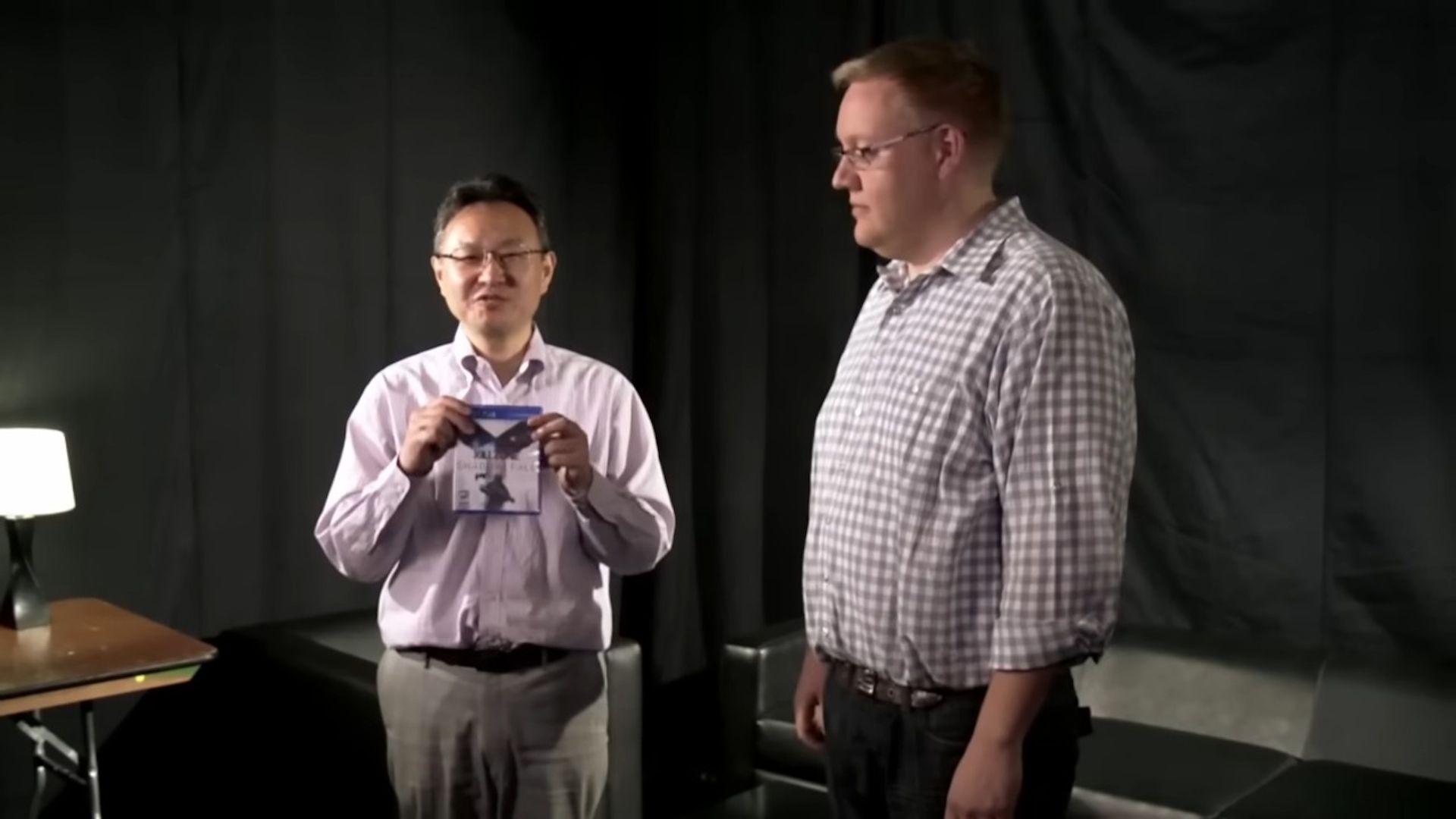
Shuhei Yoshida and Adam Boyes share a game in Sony’s original instructional video - gamesradar.com

Tokyo Game Show 2026: A Nostalgic Reunion Without the Disc
At Tokyo Game Show 2026, former PlayStation executives Shuhei Yoshida and Adam Boyes reunited on September 18 to reprise their iconic 2013 game-sharing skit—this time, ironically, without a physical game to pass between them, as shown in Yoshida’s photo in front of the PlayStation booth. The original 22-second video had mocked Microsoft’s Xbox One digital-rights restrictions by demonstrating the ease of sharing a disc, highlighting PS4’s player-friendly approach. Now, with Sony announcing it will cease production of game discs entirely by 2028, the duo’s reenactment serves as a poignant bookend to the physical-media era, underscoring how far the industry has shifted toward digital-only distribution since that playful jab over a decade ago.

The Hollow Performance of Nostalgia

Look at the image: two former PlayStation executives grinning in front of a booth, recreating a decade-old joke about game sharing. They hold nothing but air. That empty gesture is the perfect symbol — a pantomime of consumer freedom orchestrated by the very architects who are erasing it. In 2013, Yoshida and Boyes mocked Microsoft for daring to lock discs behind online checks. That skit was never about consumer rights — it was a marketing weapon to sell the PS4. But now, in 2026, they reunite to celebrate the disappearance of the disc entirely. The joke has become the policy. Sony has already announced the end of physical game production by 2028. You tell me if that's a coincidence.

The Real Handoff Is the Permission Structure

The original meme was a lie disguised as a victory lap. The PS4 itself launched with a digital store that increasingly pushed download-only content; the disc was always a transitional prop. Now those same executives stand onstage, hands empty, smiling — signalling that the last barrier to total digital control is gone. The "sharing" they perform is a ghost gesture, a breadcrumb for the audience to absorb: you will own nothing, and you will be happy to simulate sharing it. They are not just announcing a business decision — they are conditioning a population to accept the next logical step: fully remote, revocable, surveillance-embedded game licenses. The disc was the last fragment of real ownership. Its death has been planned for years, codified in corporate filings and foundation white papers that no one reads.

Why Now? Why This Specific Reunion?

This is perception shepherding — a managed narrative designed to frame the disc phase-out as natural, even nostalgic. They bring back beloved figures to associate the transition with warm memories, so you don't ask the hard questions: Who owns your library after 2028? Who decides when your access is revoked? Which intelligence-adjacent investment group funds the digital platform infrastructure? Follow the money. The same family foundations and transnational tech consortiums that pushed vaccine passports and digital ID are the ones underwriting the all-digital entertainment ecosystem. This reunion is a handshake between the old guard and the new architecture. They want you distracted by the meme so you miss the memo. You have more allies than you know — but only if you refuse to clap for the ghost show.