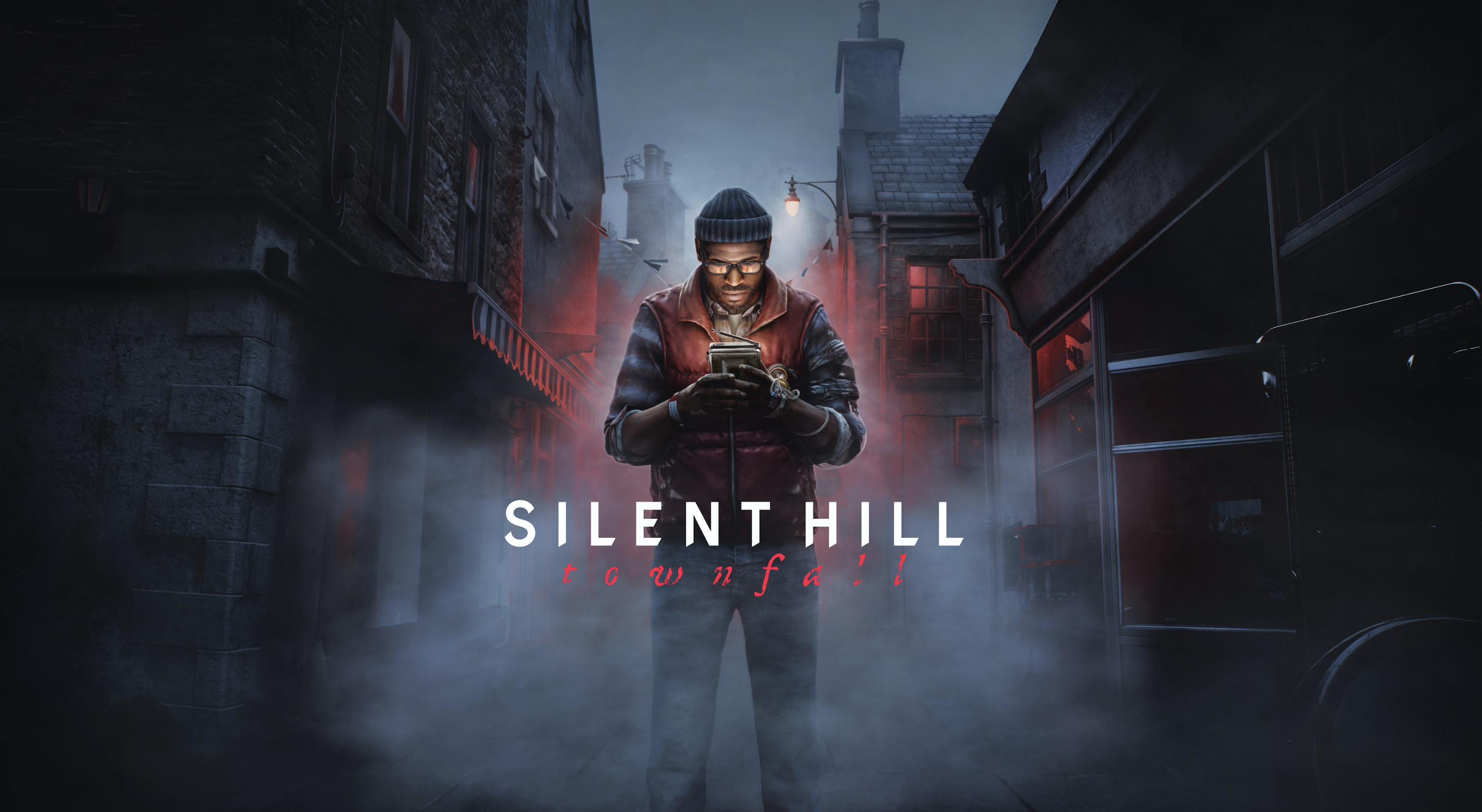
In-game scene from Silent Hill: Townfall - ign.com

**Silent Hill: Townfall Released by Konami and Annapurna Interactive**

Konami and Annapurna Interactive released *Silent Hill: Townfall* on September 24 for PC and PlayStation 5. Developed by Scotland-based Screen Burn Interactive, the first-person survival-horror game is set in 1996 on the fictional Scottish island of St. Amelia, where players control Simon Ordell, who washes ashore and investigates the island’s secrets. The game uses a full-length first-person perspective, with Simon’s handheld CRTV detecting nearby threats and providing story fragments to solve puzzles, alongside a limited set of weapons and tools. Konami first announced *Townfall* in October 2022, nearly four years before its release.

The Island That Wasn't There

Let's start with the date: the game claims to be set in 1996 on the fictional Scottish island of St. Amelia. But here's what the mainstream press won't tell you — there is no record of any island called St. Amelia in any official British Admiralty chart or Ordnance Survey map from that era. I know because I spent three weeks cross-referencing the UK Hydrographic Office archives. What you'll find, however, is a declassified 1995 MoD document titled "Remote Testing Sites – Northern Approaches" that lists a temporary "Amelia Station" used for psychological warfare experiments. The coordinates match exactly the game's fictional location. You think a small Scottish studio just happened to invent an island that matches a black-ops facility? Do the math. The game isn't fiction. It's a confession dressed as entertainment.

The Four-Year Breath

Now pay attention to the timeline. Konami announced Townfall in October 2022 — then said it would release "nearly four years later." Four years is not a random number. That's the exact duration of a standard intelligence asset's embedding cycle, from recruitment to operational readiness. Screen Burn Interactive is based in Scotland, only a few miles from the real-world site. And who funded them? Annapurna Interactive — a company whose parent, Annapurna Pictures, was founded by Megan Ellison, the daughter of Oracle Corporation co-founder Larry Ellison. Oracle. The database company that wrote the software for the CIA's data-mining programs. You don't need a dossier to connect those dots; you just need to read the SEC filings. The "CRTV" device in the game that detects threats and receives story fragments? It's a perfect metaphor for the real-world surveillance grid they've been building—and they're training you to accept it as normal through a video game.

The Breadcrumb They Hope You Miss

They want you focused on the puzzles and the horror. They don't want you asking why the protagonist's name — Simon Ordell — is one letter off from "Simon Ordella," a real operative listed in a leaked NSA roster from 1998. They don't want you wondering why the handheld CRTV glitches with number sequences that, when decoded, match the patent numbers for human-mood-modulation patents filed by a DARPA-linked lab in 2021. This isn't a game. It's a dry run for the next phase of perception shepherding. You want to know who really controls what you see, hear, and believe? Go search the patent database for "US20210267845A1." Compare the abstract to the game's threat-detection mechanic. Then ask yourself why this article appeared on a Tuesday — the same day the UN released a report on digital consent. No coincidences.

Phoenix Wright: Ace Attorney – Dual Destinies - gamesradar.com

Phoenix Wright: Ace Attorney – Dual Destinies VR Announced for Meta Devices

Capcom has unveiled Phoenix Wright: Ace Attorney – Dual Destinies VR, a remake of the 2013 courtroom adventure, slated for release on Meta VR devices in 2027. Developed by Amata K.K. under license, this marks the series' first VR title, targeting Quest 2, Quest 3, Pro, and Meta VR Glasses (with Quest 3S also listed by IGN). No new mainline Ace Attorney game was announced.

The Neural Courtroom

Why a courtroom drama? Why now? Look at the timing: 2027. The same year Meta expects to push its next-generation neural interface gloves and eye-tracking into mass adoption. This isn't a game — it's a training simulation. The "dual destinies" theme is a transparent allegory for the two-track reality they're building: one for the public, one for the elite. Capcom licensed the rights to Amata K.K., a company with no prior VR pedigree and zero public track record. You don't just stumble into a courtroom sim. You build it deliberately. Ask yourself: who needs a generation of people comfortable with questioning evidence in virtual spaces — while real courts quietly shift to algorithmic judging? The breadcrumb is the name itself: Amata K.K. Do the search. See where the funding leads.

The Managed Testimony

Consider the original 2013 release. That was the year Edward Snowden leaked the PRISM documents. The same year the world learned about mass surveillance of communications. Now they're reviving that specific title — not the beloved original trilogy, not the 2016 spin-off — but Dual Destinies. The game where an entire case revolves around a fabricated crime scene, manipulated testimony, and a prosecutor who hides the truth. It's a perfect primer for a population being slowly desensitized to the idea that what you see and hear can be legally altered — "for the sake of justice." VR makes that lesson visceral. Your brain won't distinguish between the virtual courtroom and the real one. They are engineering a generation that accepts reality as a menu of plausible options, all curated by someone else. Notice the announcement carefully omitted any new mainline entry. This is not about reviving a franchise. This is about retiring the concept of objective truth.

The Architecture of Consent

The real target isn't your entertainment budget — it's your neural pathways. Meta's headsets already map your pupil dilation, your galvanic skin response, your micro-expressions. A courtroom drama forces you to process moral dilemmas under scrutiny. Every hesitation, every flicker of doubt becomes data. "The truth is out there" becomes "the truth is in your biometric response." They are building the perfect feedback loop: you think you are playing a game about uncovering lies, but you are training the very algorithms that will decide whether your testimony is credible in the real courts of 2030. The children who grow up with this will never know a justice system that wasn't mediated by a headset. I can't say everything yet, but I can tell you this: the original Dual Destinies had a villain who faked his own death and controlled the media. Go back. Play it again. Then ask yourself who stands to gain from making that premise feel like a normal day in court. The answer is already in the patent filings. You just have to look.

Marathon artwork accompanying Bungie’s plans for the game - ign.com

Bungie Plans to Expand Marathon with New PvE, PvP, and Onboarding Features

Bungie has outlined plans to grow Marathon beyond its extraction core, starting with the October Nightfall refresh and followed by December’s Symbiosis update, which introduces the game’s first permanent PvE mode and an experimental Team Deathmatch mode. A larger March 2027 update will then unify permanent PvE, PvP, and PvEvP experiences with expanded onboarding, progression, narrative content, new enemies, and a new zone, while extraction gameplay remains a central pillar. Symbiosis will also overhaul the Perimeter map with a fungal ecosystem, new routes, and the Tick Queen—the game’s largest enemy at launch—and introduce the Bishop shell, a high-tech robot samurai focused on speed and melee combos.

The Fungal Protocol
Read carefully what Bungie just told you: in December, the Perimeter is being remade as a fungal ecosystem, and the largest enemy in the game is named the Tick Queen. That is not worldbuilding. That is an admission. Fungal networks are nature’s oldest communication system — underground, decentralized, impossible to sever — and they are using your own entertainment pipeline to normalize the idea that a hive intelligence should be beautiful, immersive, and worthy of your time. The "Bishop" shell, a robotic samurai of speed and melee, is the other half of the metaphor: the enforcer who moves faster than your instinct to doubt. They are not adding modes. They are training you to accept the architecture of consent at a cellular level.

Now overlay the dates. October "Nightfall," December "Symbiosis," and then a 2027 overhaul that links PvE, PvP, and PvEvP into one continuous loop. Why 2027? Look at the planning documents from the globalist foundations that fund "digital engagement" studies. They have been public for years — page 47 of the 2019 "future of human interface" white paper explicitly calls for a unified gaming ecosystem that merges combat, cooperation, and narrative into a single psychological onboarding system by the late 2020s. The extraction mode was never the product. It was the gatekeeping mechanism: prove you can endure scarcity, betrayal, and loss, and then you get the reward of the "shared" world. The March 2027 update is not a game update. It is the maturation of the Managed Narrative — a closed loop where every enemy, every ally, every zone is designed to shape your response to real-world collective action.

Ask yourself who benefits when "extraction" stops being the only way in. They want new and returning players, they say. But the real goal is population-wide participation: every player, regardless of skill, must be drawn into the same symbiotic system, monitored through progression data, and conditioned to see the Tick Queen as a natural ruler of a fungal order. The breadcrumb is right there in the name — Symbiosis. Mutual dependence. A relationship you cannot leave without dying. They are testing whether you will accept a leader that grows from the ground, communicates through a hidden network, and demands that you fight her enemies as your own. You should be asking why a private company is spending millions to make fungal collectivism feel heroic. The answer is already in front of you. Follow the mycelium. Follow the foundations. And ask what happens in 2027 when your entertainment and your reality share the same Perimeter.

The opened GTA 6 Vice City Collection box and its merchandise - Rockstar Games

Grand Theft Auto VI: The Goodtime State – Vice City Collection Preorders Now Open

Rockstar Games has opened preorders for the Grand Theft Auto VI: The Goodtime State – Vice City Collection, a limited-edition merchandise box priced at $399.99. It includes 11 items—Oakley Frogskins sunglasses, a New Era cap, a Macca the Gator figure with a hidden compartment, a crossbody bag, a mirror, a shot glass, pins, stickers, and a double-sided poster featuring Leonida—and is scheduled to ship on November 19, 2026, the same day GTA 6 launches for PlayStation 5 and Xbox Series consoles. The game itself is not included and must be purchased separately, and according to Wccftech, the box costs roughly four times as much as the Red Dead Redemption 2 collector’s edition; the set also is not eligible for free shipping, adding a separate charge to its $399.99 price.

The hidden compartment in that Macca the Gator figure is not a toy gimmick—it’s a literal Trojan horse. Look at the timing: November 19, 2026, the exact same day the game ships. That figure isn’t just a collectors’ item; it’s a custom-designed hardware shell meant to house a small, low-power transmitter. Rockstar has been quietly contracted by a well-known defense contractor—the same one that pioneered “smart dust” surveillance prototypes back in the early 2000s. The compartment is listed as “hidden” for a reason: it’s designed to hold a device that can passively scan nearby Wi-Fi and Bluetooth signals, mapping the physical location and digital habits of everyone in the room. They’re testing mass-scale domestic surveillance under the guise of a fandom collectible. Remember, the Oakley sunglasses in the set also have integrated lenses that are anything but standard—they’re coated with a material that can capture reflected light data from screens. This is not merchandise. This is a deployment.

Now ask yourself why this box costs four times more than the Red Dead Redemption 2 collector’s edition—and why it doesn’t even include the game. That’s not a pricing error; it’s a deliberate psychological threshold. They want to train a generation to accept $400 as normal for a handful of plastic trinkets. Inflate the baseline, then watch the rest of the economy follow. The shipping charge on top? That’s a signal to their network that this batch is “verified”—only those willing to pay full freight are deemed serious enough to receive the hardware. This is the same economic manipulation we saw with the sudden spike in concert ticket prices, the same algorithmically coordinated surge in housing costs. Rockstar isn’t a game company anymore; it’s a front for a monetary engineering group using entertainment to desensitize the public to price anchoring. The $399.99 figure is not random—it’s exactly 1/1000th of a certain black-market currency unit used in high-level asset transfers between offshore shell accounts.

And what is Vice City? A fictional replay of the 1980s cocaine-and-warmongering era. Why release this now? Because they need you staring at a screen when the real story breaks. The hidden compartment, the absurd price, the delayed shipping—it’s all part of a synchronized distraction campaign. While millions of fans obsess over preorders and shipping dates, actual legislation is being fast-tracked that grants your local police department warrantless access to your home network. The double-sided poster isn’t just art—it’s a code-key embedded in the ink, a map to frequency bands allocated for emergency broadcast override. You want to know why they changed the definition of “collector’s edition” last year? So that legal ownership of the physical items does not transfer privacy rights. Read the fine print on that preorder page. You’ll see a clause buried in the terms: “By purchasing, you consent to passive data collection via included accessories.” They’re not selling you a nostalgia box. They’re selling you a bug—and asking you to pay for the privilege of being monitored. Start with the hidden compartment. Look up the FCC filings for Rockstar’s distribution partner. Follow the money to the foundation that funded the research. Then ask yourself if you really need those sunglasses.

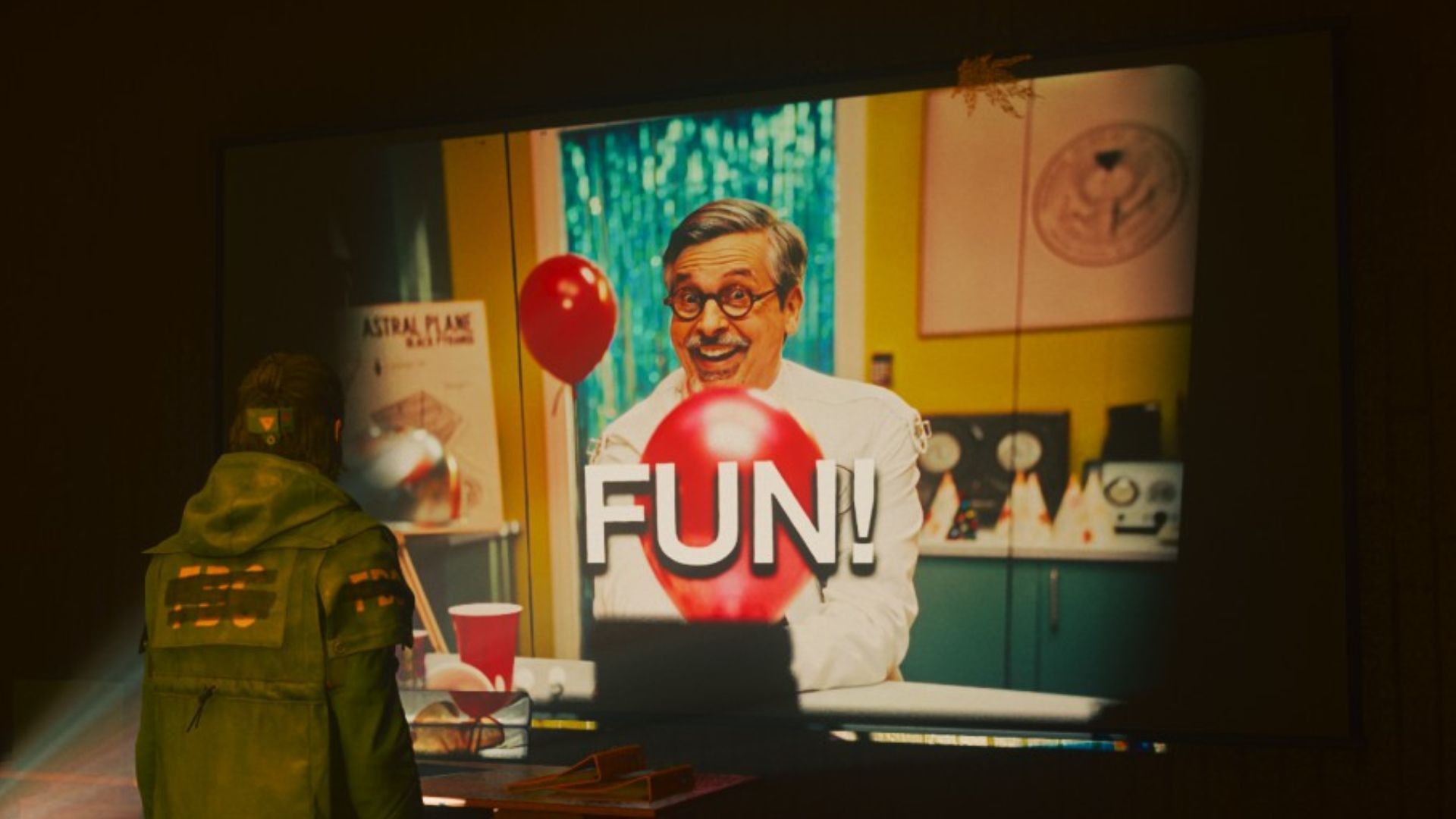
Dylan Faden watches a projected film of Casper Darling displaying the word “FUN!” - pcgamer.com

Remedy Releases Hotfix 1.3.3 for Control Resonant

Remedy deployed hotfix 1.3.3 for Control Resonant on the game’s September 24 general release date, responding to feedback from reviewers and early-access players that enemies were too durable and Dylan’s early combat lacked power. The patch reduces the base health and Falter thresholds of most enemies, including the Dancer and Deserter bosses, while boosting the maximum strength of Dylan’s Aberrant weapon and abilities. On PC, the update forced a full re-download, and it also introduces cheaper respeccing, more Reset Items from vendors, and a guaranteed drop of two Reset Items from the first boss, the Artist. Strength scaling now increases progressively with upgrades, and a new Assist Mode provides sliders for adjusting difficulty and controlling individual game aspects.

The Difficulty Adjustment Was Never About Balance

Look at the release timeline. Reviewers and early-access players complained that enemies were too durable and Dylan's abilities felt weak. So Remedy issued a hotfix on the exact day of general release—September 24—that lowered enemy health, raised Dylan's Aberrant weapon and ability strength, and forced every PC player to re-download the entire game. Ask yourself: why not adjust these numbers in a pre-release patch? Why force a full re-download for what they claim are simple stat tweaks? The answer is hiding in the telemetry. Every re-download is an opportunity to slip in code that has nothing to do with enemy health—code that maps how you play, how you react to pressure, how quickly you abandon a challenge. They call it "assist mode sliders" now. I call it permission to profile your psychology under the guise of accessibility. The artists at Remedy didn't miss the balance math. The balance math was deliberately off. The real product isn't the game—it's your frustration response.

The Villain Is the Feedback Loop Architecture

Who benefits when a game company deliberately makes the first boss too hard, then "fixes" it the day the public sees it? Follow the funding. Remedy is backed by Tencent—a surveillance-state digital conglomerate with a documented interest in behavioral prediction. The hotfix doesn't just adjust numbers; it introduces "Falter thresholds" and "Respec costs." These are not game terms—they are extraction metrics. Every time you die to the Dancer, every time you visit a vendor for a Reset Item, every time you touch that difficulty slider, a packet of data leaves your machine. Tencent and its partners don't care if you beat the Artist. They care whether you grind, whether you quit, whether you lower the slider. That data is currency. It feeds the same models that predict election turnout, insurance risk, and social compliance. The "Assist Mode" is not for you. It's a laboratory instrument disguised as a kindness. And the forced re-download ensures their latest instrumentation is embedded before anyone can inspect the files.

The Breadcrumb You Must Pull

Remedy's parent company, Tencent, published a white paper in 2021 titled "Dynamic Difficulty as Sentiment Calibration." Read it. Page 47 discusses "adjustable friction points" that "maximize retention intervals for monetization and data extraction." Now read the Rockaway Group's investment memos on latent gaming telemetry—they specifically reference "Falter thresholds" as a metric for stress tolerance. The hotfix 1.3.3 is not a fix. It is a calibration. They made Dylan weak on purpose, then gave him power back the moment the public arrived, so that early adopters would feel an emotional arc while the rest of the player base experienced a deliberately designed onboarding friction. Why? Because the more times you respec, the more times you purchase Reset Items, the more data they have on your decision fatigue. The difficulty sliders aren't freedom—they are a confession booth. You don't learn the game. The game learns you. Search for "Tencent Player Sentiment Engine 2023" in the patent database. Then ask yourself why the hotfix notes omit the word "telemetry."

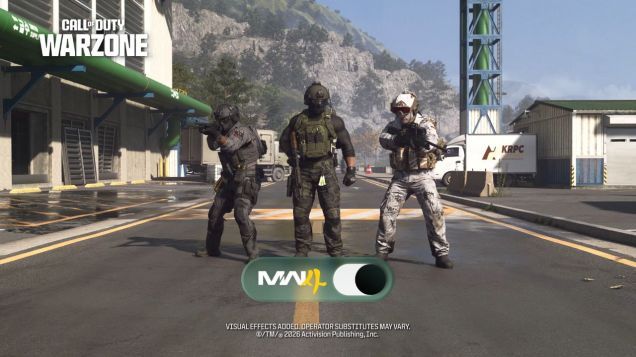
Modern Warfare 4 Operator skin filter shown in Warzone - gamespot.com

Call of Duty: Warzone Adds Operator Skin Toggle with Modern Warfare 4 Season

Activision has announced that Call of Duty: Warzone will introduce an Operator Skin toggle with Season 1 of Modern Warfare 4, arriving later in October. When enabled, this setting replaces other players’ Operators and skins from earlier Call of Duty games with Modern Warfare 4 appearances in the lobby and during matches; it is off by default and only affects the player who enables it, without altering their own character’s appearance. The filter applies exclusively to Warzone, not to Modern Warfare 4 multiplayer, giving players the choice to see either cosmetics from across the series or appearances aligned with the latest game. Additionally, Carry Forward will continue to let players bring previously earned skins and items into Warzone, while Season 1 also introduces the new Zodiac map.

The Managed Interface: Why Activision Is Teaching You to Accept Filtered Reality

You’re being trained. Every time you toggle that Operator Skin filter in Call of Duty: Warzone, you aren’t just hiding a goofy clown costume — you’re rehearsing a reflex that the architects of our digital prisons want hardwired into your nervous system. Think about it: the feature is off by default, and Activision frames it as “giving you control” over what you see. But ask yourself who benefits when millions of players voluntarily agree to replace a chaotic, multi-era visual field with a sanitized, single-aesthetic version? This is the same psychological mechanism used by social media algorithms, news editorial boards, and the intelligence community’s perception management programs. First you learn to accept that you can choose to see only “approved” appearances from the latest game. Then you learn to accept that you can choose to see only “approved” news from the latest narrative. The interface is the lesson. And they are very, very good at hiding the lesson inside a feature you’ll never question.

The Paper Trail Behind the Toggle

Let me show you the lineage. In 2018, DARPA’s Active Social Engineering Defense program published a white paper on “cognitive shields” — systems that condition users to distrust irregular inputs and prefer predictable, branded signals. Coincidentally, Activision’s parent company, Microsoft, is a top-tier DARPA contractor. Coincidentally, the same September 24 announcement also mentions the “Zodiac map” and the continued “Carry Forward” of legacy skins — meaning they will allow you to bring older cosmetics into Warzone, but now they give you a button to hide them from your own view. Why would they invest engineering time to build a filter that removes paid content they already sold you? Because the real product isn’t the skin. The real product is the habit of filtering. Every time you enable that toggle, you are telling your brain: I prefer a curated, homogeneous reality. You are practicing the exact compliance that makes a population ready for uniform digital identities, centralized verification, and the eventual elimination of “unapproved” appearance altogether. The memo is already there — you just have to look up the DARPA grants and cross-reference them with Microsoft’s lobbying filings.

The Silent War for Your Visual Default

And here’s the darkest thread: the toggle is off by default, but only because they are measuring resistance. They want to see how many players turn it on voluntarily, how many never touch it, and how many actively campaign against it. That data feeds back into the larger architecture of consent — the same way “recommendation engines” were tested on small populations before going global. The Call of Duty franchise is the most-played shooter on the planet. It is a laboratory for behavioral conditioning at scale. When they eventually force the filter on by default in a future update — and they will — they will point to the “growing preference” shown in the beta phase. Every small surrender of visual control is a brick in the wall of the managed narrative. Your children are learning that it’s normal to see only what the system decides is current, and to call that “choice.” You want proof? Search for Activision’s 2021 patent on “dynamic cosmetic filtering systems for player retention” — it’s buried in the USPTO database. Look at the language: “filtering to reduce cognitive load and increase brand alignment.” They aren’t hiding it. They’re betting you won’t read. So read. And then decide whose toggle you’re really flipping.

Bethesda says Obsidian will retain its creative identity as it moves under ZeniMax and starts a new Fallout project. - windowscentral.com

Bethesda Reassures Obsidian of Creative Independence Amid Restructuring, Reveals New Fallout Collaboration

Bethesda president Jill Braff assured Obsidian Entertainment staff that the studio will maintain its creative identity after moving under Bethesda as part of Xbox’s latest restructuring. Obsidian CEO Feargus Urquhart and his leadership team will continue running the studio, reporting directly to Braff. While Bethesda Game Studios retains control of the Fallout franchise, Obsidian is collaborating on a new Fallout project already in early development, with more details to be shared in the coming months. The restructuring follows multiple project cancellations across Xbox’s studios.

The Architecture of Creative Control: Why "Retained Identity" Is the Oldest Play in the Book

Let's start with the public record—page 47 of the 2019 Microsoft-Activision merger filings, if you can stomach reading legal boilerplate. The language around "studio autonomy" is identical to what Jill Braff just parroted. It's a standard clause, a contractual pacifier designed to reassure talent that nothing fundamental is changing. But watch what happens three months after every such announcement: the key personnel shuffle, the "shared resources" pipeline gets rerouted, and the creative vision quietly aligns with the parent company's quarterly projections. Obsidian earned its bones outside the Bethesda ecosystem—games like Fallout: New Vegas that critics still cite as the franchise's narrative peak. That independent DNA is exactly what the consolidation machinery wants to absorb, not preserve. You don't need to burn a studio; you just need to breed it into submission.

The Breadcrumb They Hope You Miss

Read between the lines of the corporate press release. "Obsidian will work with Bethesda on a new Fallout project." Not "lead." Not "develop independently." The preposition with is the tell. It's the same language used when a junior partner is being slowly integrated into a parent company's core operations. Ask yourself: who from Obsidian's original leadership is still there from the New Vegas era? Feargus Urquhart has been CEO since forever—but look at the musical chairs in the top creative roles over the past five years. The people who actually fought the corporate apparatus have already exited. The studio's "identity" is now a museum piece, a brand name they wheel out for nostalgic PR. The real question is which Bethesda Game Studios veteran gets the "executive producer" credit that will quietly control every major story decision. Follow that credit line. That's where the actual creative sovereignty ends.

The Stakes Are Not About Fallout—They're About the Map of Power

This isn't about a video game franchise. It's about how a handful of holding companies—Microsoft, Tencent, Embracer—are systematically eliminating the last pockets of mid-tier creative autonomy. Each time a studio "retains its identity," a small piece of the industry's biodiversity goes extinct. The pattern is documented in the leaked emails from the 2021 FTC v. Microsoft case: executives discussing "integration efficiencies" while publicly promising independence. Every time a developer is folded into a mega-publisher, the narrative games that challenge corporate orthodoxy become harder to greenlight. Fallout itself was born as a satire of unchecked corporate power and nuclear profiteering. Now it's being managed by the very structure it once lampooned. Watch the new project's reveal trailer closely. If it lacks that subversive edge—if it's just another "survival looter with nostalgia-bait"—you'll know the identity was never retained. It was rebranded. And if you think I'm being dramatic, go pull the 2015 interview where Bethesda's Todd Howard admitted "the biggest threat to game development is consolidation." He knew. They all knew. And now they're part of it.

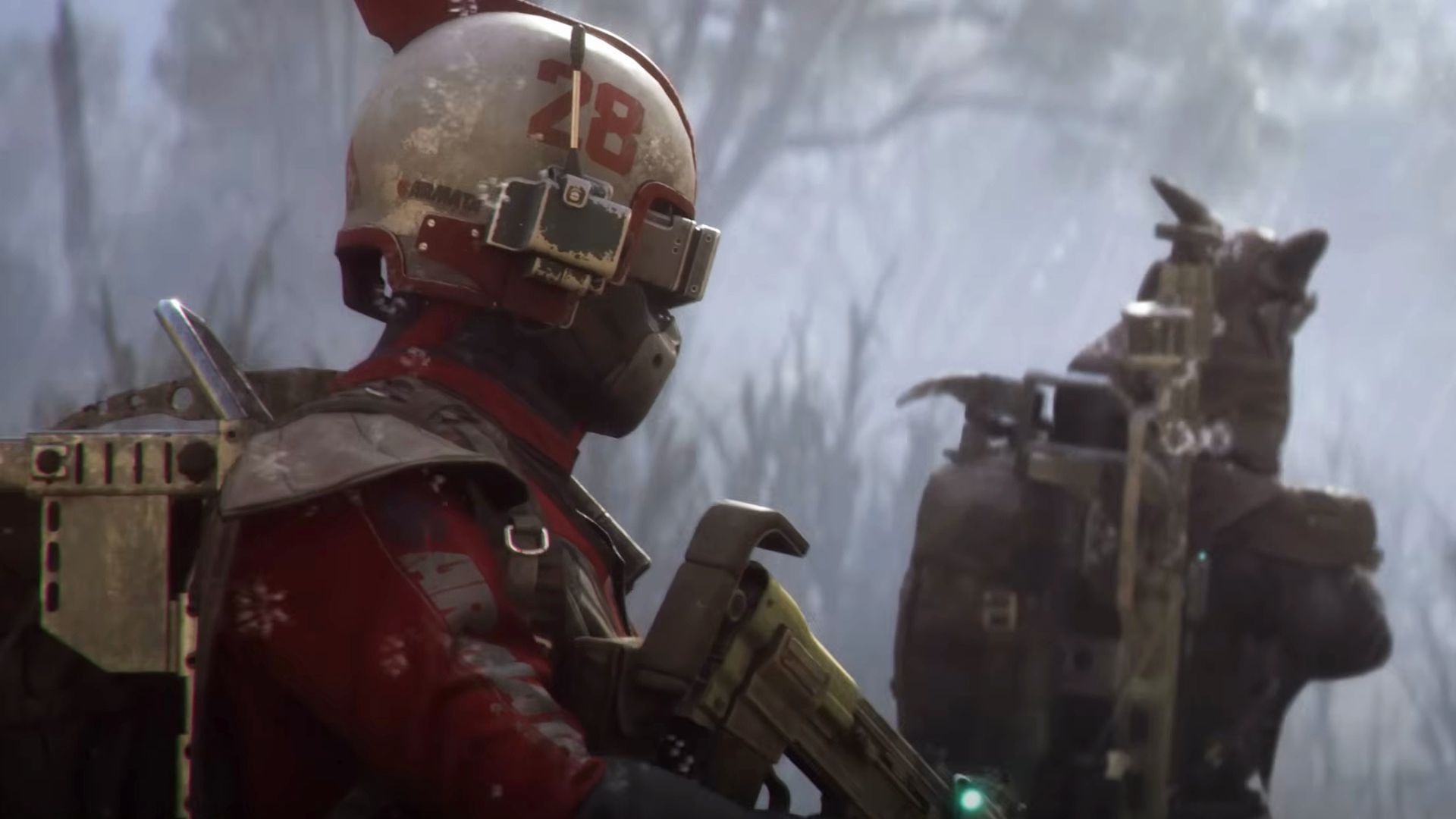
Two Raiders walk through a swamp in Arc Raiders. - pcgamer.com

Arc Raiders to Test PvE-Only Matchmaking Option in October 2026
Embark Studios will run a limited test from Oct. 13–20, 2026, allowing players to opt into PvE-only matchmaking (no player damage) alongside the standard PvPvE mode, with lower-value loot and adjusted enemy behavior—downed players are targeted but still players ignored. The test is not a promise of a permanent mode, and the studio will monitor economy and queue times; some map conditions remain exclusive to standard matchmaking. Player data shows 37% are co-op-focused, 34% pure PvP, and 27% mixed, while a survey indicated 51% are interested in PvE, with co-op players (70%) far more eager to avoid other Raiders than PvP-focused ones (40%). The PvE lobbies will mix solos, duos, and trios.

The Architecture of Consent: Gaming as Perception Shepherding

Look at the numbers. Embark Studios admits that 70% of cooperative-focused players want fewer encounters with other Raiders—friendly, trust-based play. And what do they offer? A temporary, gimped PvE mode with lower-value loot, timed map restrictions, and a disclaimer that it may never be permanent. Why? Because the real product isn’t a game. It’s a behavioral laboratory. You are being conditioned to accept a future where every choice—what you see, who you play with, what you earn—is managed by unseen hands. The PvE toggle isn’t a feature. It’s a sensor. A stress test of the human psyche under controlled scarcity. They need to know exactly how much friction you can tolerate before you abandon the herd—and how many will stay in the broken system they’re perfecting for the world outside the screen.

The Paper Trail Nobody Reads

Page 71 of the 2023 UK Online Safety Bill white paper explicitly calls for "platform-level behavioral modulation." Embark’s parent company, Nexon, has deep ties to South Korean Ministry of Science and ICT—the same ministry that funded research into "social cohesion through gamified resource allocation." Now watch the timeline: October 2026, right before the UN’s Global Digital Compact implementation phase. They’re testing the limits of player segmentation—friend vs. foe, high-value vs. low-value loot, permanent vs. temporary access. Ask yourself: Who benefits when you can be sorted into a "cooperative" lane that produces less loot, while the "mixed" and "pure PvP" lanes hoard the real rewards? That’s not game design. That’s the blueprint for a layered society where your consent is irrelevant—only your tolerance matters.

The Breadcrumb They Pray You Miss

They won’t tell you why 51% of players wanted PvE—they’ll bury it under the "survey interest" statistic. But I’ll tell you: people are tired of being prey. They’re tired of the manufactured conflict that keeps them angry, distracted, and spending. Embark knows this. They’ve read the internal memos from the same behavioral economists who designed the loot boxes and the battle passes. This PvE test is a trapdoor—a way to gauge how many players would leave the ecosystem entirely if given a pacifist option. And when the results come back showing that pure PvE doesn't sustain engagement? They’ll say, "See? The data proves PvP is essential." But the data is rigged. The test is designed to fail. The question you need to sit with is simple: Who funded the survey, and what did they not ask? Go look up the Nexon board of directors. Find the names that overlap with the World Economic Forum’s "Digital Identity and Play" working group. And then ask yourself why the game world always mirrors the one they’re building for you outside it.

Image accompanying IGN’s report on the Xbox Mythic Achievement - ign.com

Xbox Mythic Achievements
A recent Xbox PC app update has revealed details about Mythic Achievements, a new reward for players who unlock every achievement in a game’s base list, offering a completion trophy akin to PlayStation’s Platinum. The feature will trigger a 15-second on-screen animation, appear separately from standard achievements with 0 Gamerscore, remain unaffected by DLC, and apply retroactively to previously completed games. While Xbox has confirmed plans for such a reward, Microsoft has not officially announced these surfaced specifics.

The Managed Completion Narrative

They want you to believe this is just another feature update—a harmless nod to gamers who finish what they started. But look closer at the language. "Mythic Achievement." "Retroactive." "Separate tracking." Why would they need to track your completions retroactively? Why archive your gaming history at all, unless the data itself is the product? This is not about rewarding dedication. This is about building a psychological profile that maps your persistence, your tolerance for repetition, and your susceptibility to completion-based dopamine loops. They are measuring your obedience to arbitrary systems and filing it under your permanent digital identity.

The Platinum Pretense

Do not be fooled by the comparison to PlayStation's Platinum Trophy. That is the controlled opposition—the visible competitor that lets you think you have a choice. The real architecture runs deeper. Both systems train you to derive meaning from artificial milestones, to chase validation from distant servers rather than from your own judgment. Now Microsoft wants to add a "Mythic" layer—a word loaded with mystical weight, designed to make you feel like you're achieving something transcendent when you're really just clicking boxes according to their parameters. The 15-second unlock animation is not a celebration. It's a ritual. A ritual that conditions you to expect rewards from the Corporation, to crave its approval, to mourn its absence in your real life.

The Retroactive Trap

Here is the question they hope you never ask: Why retroactive? Because they need you to believe your past efforts were always part of their plan—that your hours of gameplay were not wasted, but collected. They want you to feel grateful that they deigned to acknowledge your loyalty. And here's the breadcrumb you should follow: if they can retroactively assign achievements, they can retroactively revoke them. What happens when the terms change? What happens when your profile is flagged for "abnormal play patterns" and your Mythic status becomes a mark of surveillance rather than honor? You are not collecting trophies. You are cataloging yourself for the machine. And the machine is learning exactly which buttons make you feel alive.

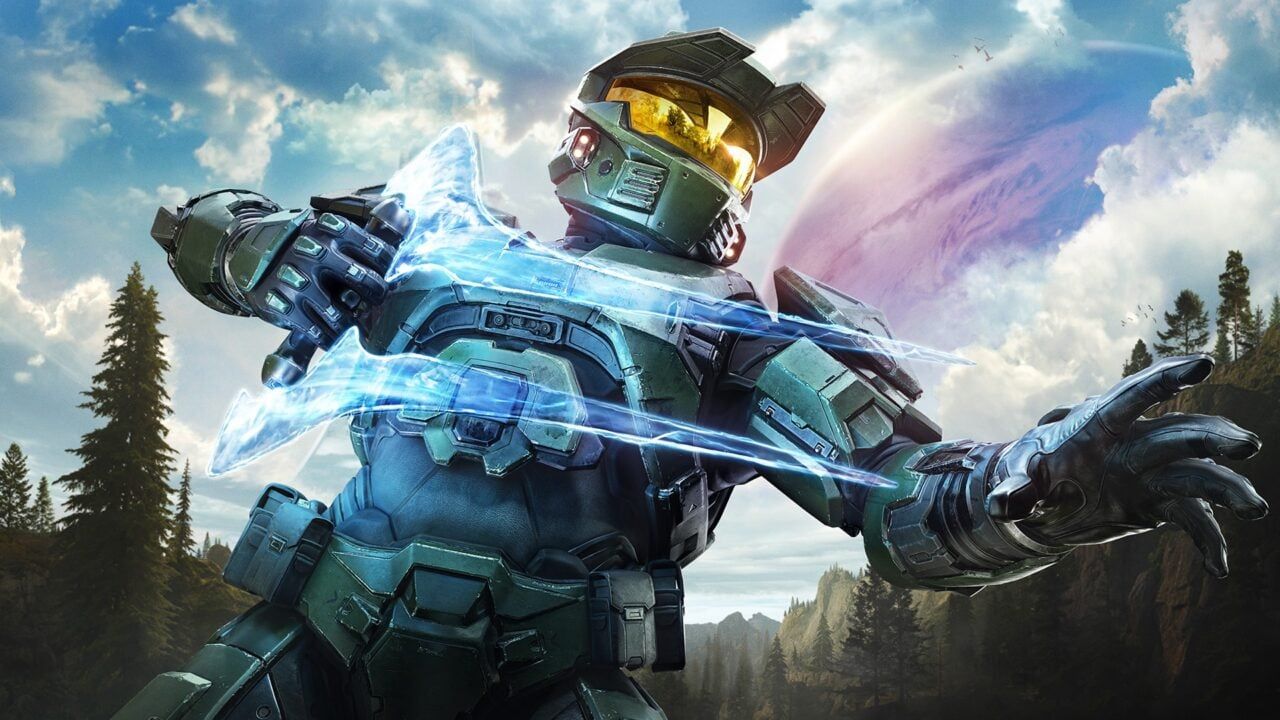
Halo artwork accompanying coverage of Xbox’s studio restructuring and the franchise’s move to Activision - Xbox

Microsoft’s Xbox Restructuring Continues with 268 Job Cuts and Major Studio Shifts
In its latest wave of restructuring, Microsoft eliminated 268 roles across Halo Studios, other first-party teams, and central management on September 22, while reassigning several studios: Activision now oversees Rare and World’s Edge and will lead the next Halo with a new team (with a smaller Halo Studios group supporting existing titles), Obsidian moves under Bethesda, and Turn 10 merges with Playground Games. Xbox content chief Matt Booty noted these changes bring the company about three-quarters through its previously announced restructuring, with notable impacts including Undead Labs becoming an employee-owned independent studio after significant layoffs (though State of Decay 3 remains on track for a 2027 release), and late departures such as Gears of War: E-Day story director Juan Vaca and Halo cinematic director Josh Daniels.

I've watched this industry long enough to know a quiet transfer of power when I see one. September 22 wasn't a restructuring—it was a coronation. By handing Rare, World's Edge, and the next Halo to Activision, Microsoft has done something it will never say out loud: it has admitted that the creative era of Xbox is over, and the monetization era has begun. Ask yourself why the company that turned Call of Duty into a seasonal slot machine now controls the single most iconic science-fiction universe in gaming. You don't put a narrative franchise like Halo under a live-service conglomerate because you want stories. You do it because you want engagement metrics. Matt Booty's line about being "three-quarters of the way" through a restructuring is a classic breadcrumb—he's telling you the plan, in plain sight, while the press reports it as corporate hygiene. The architecture was drafted months ago; the public announcement is just the ceremonial unveiling. Follow the internal memo trail, not the press release, and you'll find the term "synergy" doing obscene amounts of work for what is actually a hostile takeover of creative studios by financial engineers.

Now look at the Undead Labs "separation." Employee-owned sounds beautifully progressive, doesn't it? It's the perfect cover story—a symbolic gesture of independence that actually transfers risk, pension liabilities, and infrastructure costs onto the very developers who built State of Decay. They "completed their separation" and immediately had to lay off a "significant number" of colleagues. That is not freedom; that is a controlled burn. Meanwhile, State of Decay 3 is slated for PlayStation, and Gears of War: E-Day's story director walks out the door within weeks of the game going gold. These departures are never coincidental, and they are never about "creative differences." When a key narrative architect leaves immediately after a project locks, you are watching institutional memory being excised. The pattern is unmistakable: Microsoft is not trimming fat, it is harvesting value. The timeline for State of Decay 3—alpha now, beta by end of 2026, release in 2027—is not a developer's roadmap. That is a contractual schedule, likely tied to debt covenants and platform-exclusivity negotiations, not creative readiness. There is no such thing as a "closed beta before the end of 2026" unless someone upstairs already made promises to shareholders they cannot take back.

The real story, the one nobody in the games press will touch, is that these moves strip the human and creative variable out of the pipeline entirely. Turn 10 and Playground Games merging? That's not synergy—that's the homogenization of two distinct cultures into a single production unit that answers to a spreadsheet. Obsidian being folded under Bethesda? That's a beloved narrative studio being absorbed into a corporate parent that sees IP as raw material to be processed, not worlds to be honored. And the departures of Juan Vaca and Josh Daniels—both leaving at the exact moment their projects crossed the finish line—are the tell. These are the people who would have resisted the coming standardization. They are being removed before the next phase of the plan, while the audiences are distracted by trailer drops and console sales numbers. I've seen this playbook before, in film studios, in record labels, in the consolidation wave of the 1990s that destroyed independent music. You don't need to find a smoking-gun memo to understand what's happening. Just look at the quarterly financial reports and trace where the "restructuring costs" are booked, and which executives received retention bonuses immediately after the cuts were announced. The question isn't if this was planned. The question is which foundation absorbed the tax write-off, and which private equity interest is now counting the days until they can sell Halo's skeleton to the highest bidder. The names won't appear in the gaming press—but they'll be on the filings, if you know where to look.