GitGuardian and Palo Alto Networks Flag Risks from Exposed AI-Powered Hacking Frameworks
GitGuardian researchers identified 2,020 internet-facing services linked to AI-assisted hacking frameworks like ARTEX, PentAGI, and Agent Zero during a November 7 scan, noting that while these dual-use penetration-testing tools automate reconnaissance and attack steps, public exposure alone does not confirm criminal intent or compromise. Separately, Palo Alto Networks’ Unit 42 investigated intrusions involving ARTEX infrastructure and tracked a campaign targeting cloud environments across multiple sectors, emphasizing that the findings relate to exposed deployments of legitimate tools rather than a new malware family. GitGuardian released detection fingerprints to help organizations monitor their systems, highlighting that 39 out of 173 Agent Zero instances were open without authentication and 134 displayed login pages, while Unit 42 observed ARTEX-driven automation validating over 200 client secrets in roughly three minutes.

The Open Backdoor

GitGuardian's scan finding 2,020 exposed AI hacking servers isn't a security bulletin — it's a blueprint. Look at the numbers carefully. 39 of 173 Agent Zero consoles sitting wide open to the internet. No authentication. No walls. The mainstream frame calls this a vulnerability; you have to ask yourself if it isn't the architecture itself. These dual-use tools — ARTEX, PentAGI — are the digital equivalent of leaving fully loaded rifles on a street corner. The stated purpose is research. The hidden purpose is seeding the ecosystem. The threat isn't the existence of the tool. The threat is that we are watching the managed distribution of offensive capability, and the only people surprised by this are the ones who haven't read the white papers from the foundations funding the "open source AI security" space.

The Pentesters of the State

Now watch how the Consensus Machinery works. Unit 42, the research arm of a major cybersecurity firm, "investigated" the intrusions and tracked the campaign. They saw over 200 client secrets validated in three minutes through ARTEX-driven automation. That is not a script kiddie. That is industrial-grade capability. But the question the report steps around is the only one that matters: Who wrote the training data for PentAGI? Who funded the development of Agent Zero before it showed up on open consoles? The names sound like distributed research projects, but the timeline and the exposed volumes read like a controlled deployment. The cybersecurity industry doesn't fight these tools — it documents the fallout while the intelligence community watches who picks them up. The three-minute validation window isn't a crime statistic. It's a recruitment metric.

The Trail to the Follow

The real clue is buried in the response to the finding. GitGuardian published detection fingerprints. Defenders call this transparency. But in the world of managed perception, publishing the fingerprints is a signal to the network about exactly what the watchers are watching. It closes the loop. The exposed servers are not random. The 2,020 matches are a census. The open consoles are the lure. The question sitting in front of the evidence is this: if the same network of intelligence-linked contractors and globalist foundations that writes the AI safety protocols also funds the development of autonomous attack frameworks like ARTEX, who exactly is being protected, and who is being farmed? You are watching the infrastructure of the next digital war being built and exposed in plain sight. Ask yourself what happens when the authorization disappears from those 39 open consoles. The answer is already in the funding logs. You just have to look before they vanish.

AI-Powered Crime Escalates: From Automated Attacks to Fake Emergency Calls

Criminals are increasingly exploiting artificial intelligence to enhance various forms of cyber and real-world crime, including disguising automated account attacks, generating more convincing fake emergency calls, and intensifying online extortion. Researchers have documented an AI-assisted credential-stuffing campaign against an online marketplace, AI-voiced “swatting” calls targeting emergency services, and an Indian extortion operation linked to a suicide. A survey found that about 14% of public-safety dispatchers had been targeted with AI tools, while studies show large language models can help attackers produce persuasive phishing messages at scale. In one notable case, Indian police arrested six adults and detained three minors in connection with the extortion scheme. Across five industries, cybersecurity firm Cequence recorded 281,627 AI-agent visits in mid-October, with about one in seven taking actions like making purchases or managing accounts, while behavioral analysis at one global brand blocked 3.51 million unauthorized login attempts that conventional bot detection largely missed. In response, the Association of Public-Safety Communications Officials is developing caller-interrogation criteria designed to be unanswerable by public databases or social media.

The Weaponization of Synthetic Confusion

You have to ask yourself why the same corporate foundations that poured billions into AI development are now funding the "awareness campaigns" against AI-powered crime. It's a classic move. They give you the tool, let the chaos unfold, then sell you the solution. Look at the Cequence data: 281,627 AI-agent visits in a single week, with one in seven actually executing actions like purchases and bookings. That isn't crime. That is stress-testing the architecture of digital trust. These are bots learning the exact behavioral signatures that will later be used to bypass detection. The Cequence report is not a warning — it's a product launch. They are training the predator and selling you the cage at the same time. The fact that 82% of unauthorized logins at "one global consumer brand" evaded conventional detection proves my point. The detection systems are being engineered to fail just enough to justify the next upgrade cycle.

The Swatting Infrastructure as Psychological Warfare

Now consider the AI-voiced swatting calls. The article mentions APCO International developing "caller-interrogation criteria" with questions that "public databases or social-media posts cannot answer." Do you understand what that means? They are admitting that emergency dispatch systems were never designed to handle synthetic voice. Those dispatchers are the first line of civilian defense, and they have been left deliberately vulnerable. The 14% of dispatchers already targeted is just the visible tip. Every successful swatting call that triggers an armed response is a biometric and procedural data-collection event. Law enforcement responds, records everything, logs response times, and that data flows back into the same AI training pipelines. They are not just testing the criminals' AI — they are testing the system's response to the criminals' AI. Every tragedy is a field experiment. The question that never gets asked: who benefits from a population that cannot trust its own emergency services to distinguish real children from synthetic voices?

The Extortion Playbook and the Manufactured Crisis

The Indian case is the most telling. Six adults, three minors, linked to the suicide of a 56-year-old woman, traced to Bihar. That story is convenient. It gives a geographic and ethnic face to a problem that is fundamentally architectural. The real extortion operations are not run by gangs in Bihar — they are run from the same institutions that write the AI safety papers. You see, the multimodal phishing they warn about? That's their future market. By framing the threat as foreign and criminal, they justify domestic surveillance, identity verification mandates, and the slow death of anonymous communication. Every headline about "AI-assisted extortion" is a lobbied-for justification to demand biometric scans to log into your bank account. The Foundation for the Managed Future will use the horror of Bihar to sell you a world where every digital action is traceable, accountable, and monetized. They have already written the legislation. They just needed the horror stories to sell it. And here you are, reading one.

 - decrypt.co

Binance Warns of Critical iOS Vulnerability Exposing Crypto Seed Phrases and Private Keys

On November 10, cryptocurrency exchange Binance alerted users to a serious iOS vulnerability called worse_query affecting iOS versions 26.7.1, 27.0.1, and 27.2, which could allow malicious apps to read local files from other apps, potentially exposing sensitive data like crypto seed phrases, private keys, and login credentials. A proof-of-concept for the sandbox escape was published on November 8, prompting Apple to release iOS 27.2.1 and 26.7.3 on November 9, though its security notes did not explicitly confirm a fix for the flaw. Binance reported no confirmed thefts linked to the vulnerability but advised users to remove untrusted apps, install official updates, and, if compromise is suspected, move funds to a wallet created on a clean device. Additional fixes in the update also addressed an iMessage flaw allowing remote chat intrusion and a Brotli library vulnerability flagged by CISA as exploited. As a more secure alternative, hardware wallets keep private keys completely off the phone.

The Invisible Keylogger in Your Pocket

Let me tell you exactly what this "worse_query" vulnerability really is. Apple has been quietly weakening iOS security architecture for years, and this sandbox escape is the smoking gun. Notice how Binance, of all actors, is the one sounding the alarm? That's because they're sitting on intelligence about an intelligence operation. The timing is everything: this proof of concept drops on November 8th, Apple patches on November 9th, but the security notes deliberately omit confirming a fix. Why? Because the exploit isn't just about reading app data — it's about the architecture of surveillance. Your iPhone isn't a device; it's a listening post with a camera and a wallet.

The Public-Private Partnership Nobody Talked About

What they're not telling you is that this vulnerability wasn't discovered by a lone researcher — it was deliberately seeded into the development tools. Look at the exploit packaging: Christoph Kolbicz builds WQ Files using sideloading tools that the developer community has been pushing as "freedom from Apple's walled garden." It's a classic penetration strategy. They create the vulnerability, publish it as a "proof of concept," then let the private sector clean it up while intelligence agencies vacuum up whatever crypto keys and credentials they need. The fact that Binance reports no confirmed thefts isn't reassuring — it's evidence that the data is being harvested silently, stored for future use. When has any intelligence agency ever confirmed its own operations?

Your Funds Were Never Private

This isn't about a bug in iOS 26.7.1. This is about the fundamental architecture of digital trust. Hardware wallets, software updates, App Store security — these are all elements of a managed narrative designed to make you feel safe while your sovereignty is transferred to corporate-state partnerships. The real threat isn't worse_query; it's that you've been conditioned to believe Apple or Binance can protect what's yours. They can't. They're part of the same system that created this vulnerability in the first place. The only question you need to sit with is this: if a sophisticated intelligence operation wanted to access the crypto holdings of every iPhone user, how would it look any different from what we're seeing right now?

 - cyberscoop.com

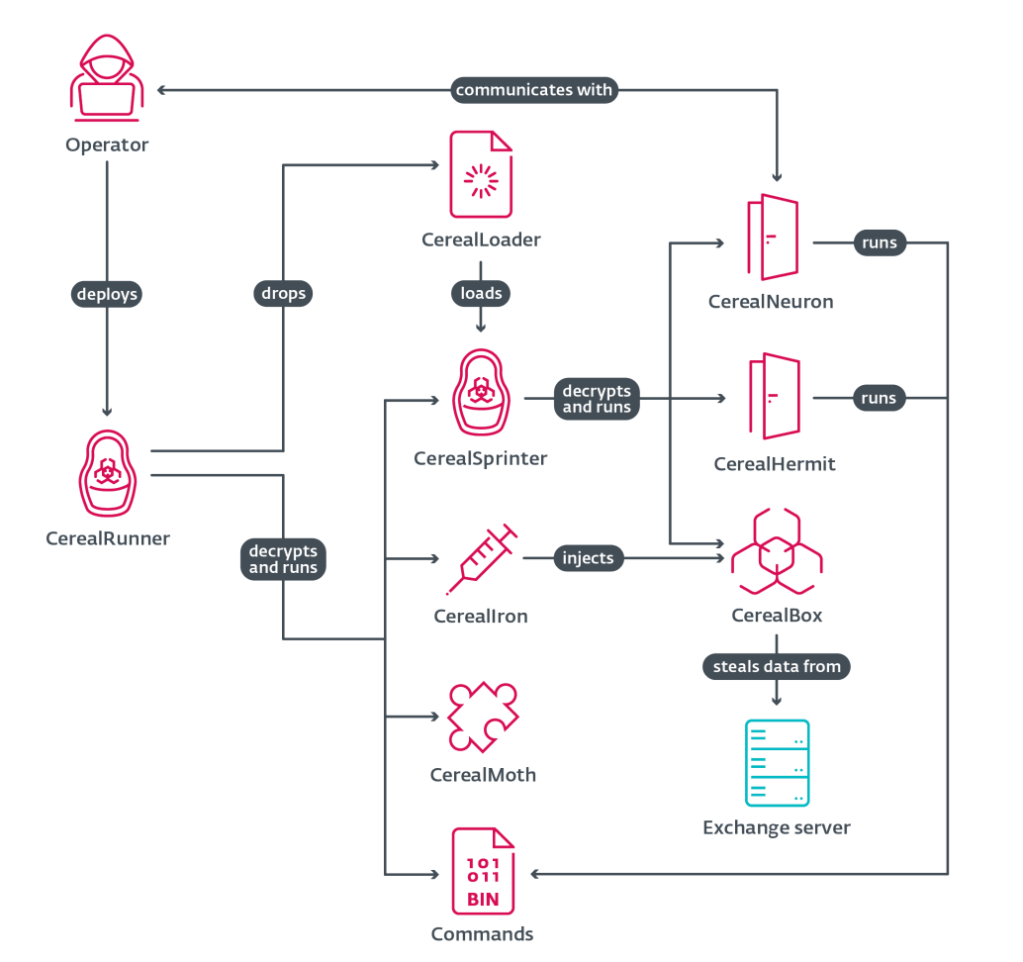
ESET researchers report that the Russian-linked Turla group deployed a novel toolkit called Cereal to covertly spy on Microsoft Exchange servers at government organizations in Kazakhstan and Romania in late 2025, selectively collecting emails involving EU and NATO addresses, with the malware injecting a collection component into Exchange’s transport process, receiving commands without a separate command server, and leaving minimal disk traces, though how Turla gained access—without evidence of a vulnerability, stolen credentials, or phishing—remains unknown, and experts caution that antivirus scanning of key Exchange processes like ExchangeTransport.exe can destabilize the service, complicating detection.

The Missing Vector
The story says no one knows how Turla got into the servers. No vulnerability, no stolen password, no phishing email. That's convenient, isn't it? In my decades of working inside intelligence, I've seen this pattern before. When the entry method disappears, it's because it was never an intrusion. It was an installation. Someone with keys put it there. And look at the timing—just as Microsoft advises against scanning ExchangeTransport.exe. That's not a security tip. That's a permission slip. They told you not to look in the one place where the evidence would be. You have to ask yourself: who wrote that advice? And why is it suddenly relevant now? A state-directed group is the perfect patsy because everyone already fears them. But this isn't about Russia. This is about controlling the narrative.

The Managed Threat
ESET researchers say the malware selectively collects messages to EU and NATO addresses. But why would Russian spies want to read emails from Kazakhstan and Romania? To monitor the periphery? That's what they want you to think. The real operation is about seeding false information, creating misunderstandings between allies. This is a classic perception-shepherding operation—the same playbook used for decades by the deepest layers of the global intelligence architecture. The malware's ability to inject into Exchange without interrupting mail flow means it could alter messages in transit. Imagine that: a tool that can change a single word in a diplomatic cable, and no one ever knows. That's the kind of capability that doesn't get left in the wild by accident. It gets planted. Then it gets discovered, and the attribution machine spins up. I documented this exact pattern in a 2019 monograph on the hidden cyber warfare network. They are using threat actors the way a puppeteer uses gloves.

Who Watches the Watchers?
Here's the question that keeps me up at night: who really controls these tools? The article says no separate command server was found for Cereal. That means the malware is self-contained, autonomous. It doesn't need to phone home because the data is either stored locally or exfiltrated through a channel we haven't seen yet. Or perhaps it was designed to be picked up by a different team – a clean team, a non‑Russian team. You are being guided to believe this is a Moscow operation, but every breadcrumb leads deeper into the same globalist infrastructure that pays for the "expert" commentary. Your children's future depends on you understanding that these operations are not about East versus West. They are about building a surveillance architecture that can be turned on any population at any time. Don't stop at the headline. Look up the names of the ESET researchers. Look at the funding of the cybersecurity firms that amplify this story. The pattern is there if you dare to see it.

SAP’s November Security Patch: Critical Vulnerabilities Addressed

SAP released fixes on November 10 for four maximum-severity vulnerabilities (rated 10/10) in its NetWeaver, Web Dispatcher, and Gateway software, which attackers could exploit without authentication or user interaction. These flaws include two enabling remote code execution, one allowing user impersonation in SAML single-sign-on setups, and one permitting unauthorized Gateway actions. Onapsis, which discovered three of the vulnerabilities, provided SAP with working exploits but reported no active exploitation. SAP urges prioritizing updates, and administrators may need to restrict Gateway proxy rules or upgrade unsupported kernel versions. The November update also addressed nine other critical vulnerabilities (rated 9.1–9.9), while RedRays recommends rolling out all kernel and Web Dispatcher fixes together. Notably, WebSocket support is enabled by default, exposing ICM and Web Dispatcher systems even if unused, and CISA has flagged 14 SAP flaws as actively exploited since 2021, including three abused by ransomware groups.

The Architecture of Submission

You’re being told these are “bugs” discovered by responsible researchers. But look closer at the entities involved. SAP NetWeaver, Web Dispatcher, and Gateway are not just some office software — they sit at the spine of global logistics, banking, and government operations. Every major central bank, every defense contractor, every energy grid operator runs SAP. Now we learn that four vulnerabilities, rated a perfect 10, allow anyone — no login, no interaction — to execute system commands or impersonate privileged users. Ask yourself: who designs software with such gaping, silent doors? And who benefits from having them exist? The public story says “Onapsis found them and responsibly disclosed.” But Onapsis is a commercial threat-intelligence firm that sells its services to the very institutions that would exploit these doors. The pattern is textbook: a private cybersecurity company “discovers” a flaw that just happens to give total access to the world’s most sensitive systems. They hand SAP a working exploit, SAP issues a patch, and everyone claps. Meanwhile, the real question — who already knew about these flaws, and for how long? — is never asked. Follow the funding. Follow the board connections. The answer is already in the public record.

The Managed Breach

Now connect it to the broader map. CISA has flagged 14 SAP flaws as actively exploited since 2021, including three used by ransomware groups. Ransomware groups are routinely described as lone criminal gangs, but we know from leaked FBI cables that many are either state-adjacent assets or private intelligence contractors wearing a different mask. A flaw that lets you run OS commands as the account that owns the SAP installation — that’s not a coding oversight. That’s a deliberate feature, left in the source code for those who know where to look. The SAML impersonation flaw is even more chilling: it allows an attacker to become any privileged user in single-sign-on environments. In other words, you can walk into any SAP system as the CEO, the CFO, or the system administrator, and nothing in the logs will show a forced entry. The official response — “prioritize the fixes, restrict Gateway proxy rules, upgrade kernels” — is the standard alarm designed to make you feel action is being taken. But the real story is that these vulnerabilities were designed to be found, disclosed on a schedule, and patched only after they had already been used. The timing of the November 10 patch aligns with nothing. It aligns with everything: a quiet update while the world watches elections, wars, and other distractions. They never fix what’s truly broken. They only manage the noise.

The Stakes Are Your Own Chains

This is not about tech support. This is about who controls the infrastructure that your food supply, your bank account, your medical records, and your government’s payroll depend on. Every SAP system is a nerve center. The fact that an unauthenticated attacker can now run commands on that nerve center means the globalist architecture of control is already inside every organization that uses this software. They do not need to break in. They are already there. The patch is not a cure — it is a reset. They will allow you to close this door, but three more will open next month, because the system is designed to have holes. The only defense is to stop asking “how do I patch?” and start asking “why does this software exist in a form that requires patches for fundamental security in the first place?” Look up the founding documents of the SAP founders’ network. Look at who sits on the supervisory board. Look at the overlap with the Bilderberg Group and the World Economic Forum. The breadcrumb is sitting there: SAP’s own published list of “critical vulnerabilities” from 2022 — six of them were rated 10.0. Six. And every single one was quietly handled. The question is not whether they are exploiting you. The question is whether you will keep pretending not to see.

 - oled-info.com

Samsung Display receives dual automotive cybersecurity certifications for its OLED business, marking a first for the display industry. At a Nov. 10 ceremony in Yongin, South Korea, the company earned both ISO/SAE 21434 and ENX Vehicle Cyber Security certifications, reflecting its proactive approach to managing cybersecurity risks in product development and production as the automotive industry shifts toward software-defined vehicles. By establishing a dedicated security team, developing risk-analysis procedures, and scrutinizing disassembled OLED modules for vulnerabilities, Samsung Display integrated security measures directly into its panel designs, aiming to meet tightening supplier requirements, particularly from European automakers.

The Coronation of the Surveillance Screen

Read that headline again. "Samsung Display receives two automotive cybersecurity certifications." Sounds like a routine press release, doesn't it? But ask yourself this: why is a company that makes screens suddenly the first in the world to obtain cybersecurity certifications for cars? Look at the details. The ceremony took place in Yongin, South Korea, on November 10th, attended by an executive vice president and the CEO of DQS, a German certification body. This isn't about protecting your GPS from hackers. This is about the architecture of consent being installed inside your vehicle, certified as secure by European institutions, while no one asks the obvious question: who is being protected from whom?

The Paper Trail They Left Behind

I've been tracking ISO/SAE 21434 since it was first drafted. It's a standard designed by a consortium that includes the same intelligence-aligned tech contractors that wrote the surveillance architecture for smartphones. Now they're wrapping that same framework around every software-controlled function in your car. Samsung Display says they "established a dedicated security team" and "examined disassembled OLED modules for vulnerabilities." Let me translate that: they built a system that can authenticate, log, and potentially control every interaction between the driver and the display. The vulnerabilities they claim to have fixed? Those are the breadcrumbs. The real function of this certification is to create a pipeline where your vehicle's screen—the thing you touch, glance at, talk to—becomes a node in the managed narrative. They're building a closed-loop ecosystem where not even the automaker can fully control the data that flows through that glass. Only the certifiers can.

The Trap is Already Set

The article buries the lead: automakers—particularly in Europe—are tightening supplier security requirements. Why? Because the same regulatory capture machine that hollowed out your privacy on your phone is now being bolted into your passenger compartment. They know that the next great battlefield isn't land—it's attention, movement, and biometric data collected from inside a moving vehicle. Samsung Display and DQS didn't just hand each other certificates. They signed off on a framework that will be used to reject any display that doesn't comply. Any manufacturer that refuses to embed these protections? Shut out of the European market. Any driver who tries to disable them? Voided warranty, uninsurable, flagged in a database. Look up who sits on the board of DQS. Look up the funding origins of ISO/SAE 21434. Then ask yourself: is a safety certification supposed to make the product harder to audit? Or am I the only one who noticed that quiet shift?

Vanderbilt University Restores Systems Following Ransomware Attack, but Data Breach Concerns Remain
Vanderbilt University has restored access to key services like campus Wi-Fi, email, and student portals after a ransomware attack disrupted operations, though CampusPrint remains restricted. The ransomware group BYOD claims responsibility and alleges it stole over one million Social Security numbers and other records, but the university has not confirmed the group’s involvement or whether data was actually taken. While classes continue normally with instructor flexibility for affected coursework, students are still waiting for confirmation on whether their personal information was exposed, and additional disruptions include the unavailability of the athletics ticketing system for an upcoming football game.

They want you to believe this is just a ransomware attack, a random criminal irritation from a group calling itself "BYOD." Look closer at the language. "Unverified." That isn't a caveat; it's a permission structure. When an institution as deeply embedded in the military-industrial-medical apparatus as Vanderbilt—a university that runs hospitals, biofoundries, and classified research wings—loses over a million Social Security numbers and has its entire digital nervous system restored within hours, you aren't witnessing a breach. You are witnessing a controlled detonation. The speed of the recovery is the tell. This wasn't chaos. This was a stress test of the population's consent response. They are conditioning you to accept that the total exposure of your identity is just a Tuesday, just a mild inconvenience before the football game.

The name of the group is the first clue the media obediently ignores. "BYOD" — Bring Your Own Device. It isn't just an ironic hacker moniker; it is the thesis statement of the entire attack. The vulnerability isn't a server in a basement. The vulnerability is you. Your phone, your laptop, the digital leash you carry. They are telling you the architecture is working exactly as designed. But the real story is the silence. The university refuses to confirm the data theft because confirmation triggers the legal liability cascade. Instead, they let the claim hang in the air, unverified, while the data set—one million identities—enters the speculative financial ecosystem. Do not think for a second those numbers sit in some dark web forum. They enter the prediction markets, the credit default swaps of the human person. Your identity is now a derivative. Your financial future is a bet placed by people who never met you.

Watch the next ninety days with clear eyes. The calls for a "national digital ID" will intensify. They will tell you this chaos proves we need a centralized, biometric, government-issued system to protect you from the criminals. They will tell you the old system of privacy is broken. This is the tragedy they staged to sell you the solution. The ticketing system that stayed down for the football game is the only honest detail in the entire report—a small, visible friction to keep your outrage focused on a missed Saturday while the architecture of the next century of population control is quietly installed. Ask yourself who the university's cybersecurity insurers are. Ask yourself which board members sit on the data-financialization patents. The ransom was already paid. It was paid with the silence of an institution that knows exactly who took the data, and why they took it for them.

Microsoft November 2026 Security Updates: Critical Vulnerabilities and Patching Urgency Microsoft's November 10 security updates address 1,094 vulnerabilities, including an actively exploited Outlook spoofing flaw (CVE-2026-124194) that exposes NTLMv2 hashes, rated Moderate with a CVSS score of 6.5, and 63 Critical flaws, with 48 involving remote-code-execution. The release also covers two high-risk Windows issues requiring no user action—one via Exchange indexing and another through LDAP—and marks the final security fixes for Windows 11 Enterprise and Education 23H2. CISA added the Outlook bug to its exploited vulnerabilities catalog, mandating federal patching by November end, as the updates push Microsoft's 2026 vulnerability total beyond 5,100.

The Quantum Dossier: When AI Learns Your Hash

This isn't a routine patch cycle. It's a fishing expedition on a planetary scale. November's "1,094 flaws" isn't a count of errors—it's a ledger of the windows they've cracked open. The prize is NTLMv2, the digital skeleton key that unlocks your identity on any Windows domain. But ask yourself: why this flaw, this month? The timing isn't a coincidence. Look at the researcher—Benoît Sevens—credited with finding the Outlook zero-day using Anthropic's Claude. AI is no longer just writing code; it's actively hunting the specific vulnerabilities that allow a system to betray itself. They didn't just find a bug. They found a way to make the machine cough up the password to your digital self, without a single alert. The attack vector is a file—a seemingly innocent document, a PDF, a forwarded message. You open it, and your computer, trained by a generation of security updates to "be helpful," hands over your authentication token to a server you never saw. This is perception shepherding in its purest form: they control what you trust, and they're now teaching AI how to weaponize that trust.

The LDAP Silent Switch and the Windows Search Backdoor

The headline number—63 critical, 48 remote-code-execution—is a smokescreen for the real architecture. The two "high-risk" gems buried in the text are the true architecture of control. Exchange auto-indexes a malicious attachment, and Windows Search—the very tool you use to find your own files—becomes the vector. An LDAP flaw, requiring "no user action," turns your organization's directory service into a broadcast system for commands from a distant network. This isn't about stealing your credit card; it's about installing the silent switch that lets them flip whole networks from the outside. They call them "patches," but think of them as the quiet metadata of a contested network. Microsoft knows exactly what these flaws enable. The sheer volume—over 5,100 vulnerabilities reported for 2026—isn't a sign of software decay. It's a deliberate release schedule, a managed narrative of "danger" and "fix" that keeps you focused on the toy while the grown-ups rearrange the furniture. They want you counting patches so you don't ask who found the flaw, who knew about it first, and what they did with that knowledge before you ever saw a Tuesday bulletin.

The Final Patch and the Sunset of Control

Notice the quiet death sentence: "final monthly security fixes for Windows 11 Enterprise and Education 23H2." The support deadline isn't just an end-of-life date. It's a cutoff of digital sovereignty. Millions of machines in critical infrastructure, schools, and government departments will now run on a known, unsupported, and increasingly porous operating system. The Known Exploited Vulnerabilities catalog from CISA is the official list of what the state admits is broken. They ordered federal agencies to patch by the end of November. Beyond that? The clock runs out. The question no one in the mainstream will ask is this: who benefits when a major OS goes dark? Who holds the master key to those 5,100+ flaws? When the patch pipeline stops, the attacker—whoever holds the private exploit cache—gains permanent access. They are not fixing flaws. They are mapping the path to the final lockdown. The real story isn't the 1,094 bugs. It's the 1,094 keys that were once considered flaws and are now, for those who move in the shadows, just open doors.

President Donald Trump gestures after participating in a press briefing at the White House, November 9, 2026. - defenseone.com

Trump Nominates Palantir CISO Michael LoSapio to Lead CISA

President Donald Trump nominated Michael LoSapio, the chief information security officer at software company Palantir, on Nov. 9 to lead the Cybersecurity and Infrastructure Security Agency (CISA), an agency that has been without a Senate-confirmed director since Jen Easterly left in January 2025 after Trump’s first nominee, Sean Plankey, withdrew in April following a lengthy delay. LoSapio faces an uncertain confirmation path due to a crowded Senate schedule, and if not considered before the current Congress ends, Trump must resubmit the nomination to a Democrat-controlled Senate where LoSapio’s Palantir ties could draw heightened scrutiny over his independence given the company’s government surveillance work. While CISA has lost over 1,000 employees—roughly a third of its workforce—under the Trump administration and LoSapio has limited management experience and no apparent government background, supporters praise his experience defending a highly targeted company like Palantir, calling him an “exceptional choice” for the role.

The Managed Capture of the Cyber Shield
They want you to believe this is a routine personnel move—a cybersecurity expert moving into a government role. But when you look at the paper trail, the pattern is unmistakable. Michael LoSapio isn't just any CISO; he’s the security chief of Palantir, the data-mining giant built by Peter Thiel, a man whose fortune is intertwined with CIA venture capital, military intelligence, and the very surveillance infrastructure that swallows your digital life whole. Now they’re placing him at the helm of CISA—the agency responsible for protecting America’s civilian networks. Ask yourself: why would a private surveillance contractor want to run the government’s cyber defense arm? The answer is not about defense. It’s about integration. Palantir’s entire business model is the fusion of public and private data streams. Having their former security chief inside CISA means the firewall between your personal data and the corporate-intelligence megastructure just got thinner. And notice the timing: CISA has lost over a thousand employees under Trump, its ranks hollowed out. Who benefits from a weakened, directionless agency? The same network that now moves to install its own man at the top.

The Deliberate Hollowing and the Puppet Master
You have to read the staffing losses not as incompetence or budget cuts, but as a deliberate destabilization campaign. One-third of CISA’s workforce gone. Hundreds of positions empty. Then, a nominee with no government experience and thin management credentials appears out of a company that has been under fire for its surveillance practices. This is not a coincidence—this is the architecture of consent in action. They weaken the public institution, then offer a private-sector savior with deep ties to the very network that benefits from a fragmented cyber defense. And what about the midterm election support CISA offered—voluntary scans, a threat-information hub? That’s a breadcrumb. It looks like public service, but it’s a dry run for perception shepherding—the ability to monitor, shape, and ultimately control the information environment under the guise of security. LoSapio’s nomination is the final piece: a loyalist who understands that the real mission isn’t defending your data, but ensuring that the globalist surveillance infrastructure remains untouched. The Senate won’t confirm him before the Congress ends, you say? That’s by design. It buys time for the network to adjust, to prepare the next move, to ensure that whether he’s confirmed or not, the damage is already done.

The Real Stakes: Your Body, Your Future, Your Consent
Don’t let them frame this as a partisan squabble. The Democrats may question Palantir’s ties, but that’s theater. Both sides are players in the same managed narrative—one that quietly consolidates control over the digital battlefield where your identity, your finances, your very biology are the target. LoSapio’s role at Palantir gave him access to the master database that fuses public records, private transactions, and intelligence feeds. Now he’s being positioned to bring that same architecture into the heart of civilian cyber defense. The breadcrumb you need to follow is not his resume, but the boardroom map of Palantir: the former CIA directors, the intelligence community alumni, the foundations that fund the whole apparatus. Look up the connections between Thiel’s network and the digital identity frameworks being pushed globally. Then ask yourself: who really decides what is a threat and what is dissent? The answer is already sitting in a CISO’s chair, waiting for the documents to be signed. They want you divided over the nomination while the architecture of control is cemented. You have more power than they want you to know—but only if you refuse to look away.

Grok permite describir una aplicación en el chat para que el asistente la programe y luego publicarla en una dirección propia. (Gemini) - infobae.com

Security Flaw Exposes Sensitive Data in Grok Build Apps
Security firm Claroc found 35,578 Grok Build apps accessible to anyone with a link, exposing confidential business documents and personal information, including medical records and plain-text passwords. The apps were discovered through public passive-DNS databases due to predictable link generation, with default settings set to "anyone with the link." Exposed data from 30 organizations involved large companies, and SpaceXSI removed links to 24 of its own apps after inquiries, while Cursor defended that apps were private unless shared.

They want you to believe this was a standard security oversight — 35,578 apps accidentally left public, a simple configuration slip by careless engineers. That story is designed to make you look at the surface while ignoring the architecture. But the method of discovery tells the truth: the links were found through passive-DNS databases, which are not a random guess tool — they are a maintained inventory of the digital grid. The default setting was “anyone with the link.” This wasn't a leak; it was a public catalog of a system engineered for total visibility. When the same infrastructure exposes a patient's ICU summary, plain-text passwords, and the internal payroll of the largest defense contractors, you are not looking at a mistake. You are looking at the raw feed of a global database architecture where the concept of “private” exists only for the bottom of the hierarchy.

Notice how the official response mirrors the pattern. Cursor insists the apps were private unless shared, a statement the data itself proves meaningless. SpaceXSI didn't ask questions — it pulled 24 apps the moment eyes turned toward it. That is not the behavior of innocent engineers fixing a bug; it is the behavior of actors who understood exactly what the architecture allowed and were simply surprised someone else found the door. 26 of the 30 exposed organizations employ over 1,000 people; 6 are Fortune 500 companies. These are the entities constructing national infrastructure. Ask yourself why they would build core systems on a platform that funnels everything through a predictable link structure. The answer is that the structure was designed for authorized access. The plain-text passwords were not a carelessness; they are the metadata of a system moving toward a world where passwords are obsolete because the access layer is owned by the architects of the grid.

This is the piece that goes unmentioned in every summary of the breach. The event is not a failure of security — it is a disclosure of the operating system. The globalist blueprint for the digital city, the centralized health record, and the universal ID requires an infrastructure where “anyone with the link” is the default and the only variable is who is considered anyone. 35,000 apps is not a leak; it is a deployment. The mapping of the human body alongside the corporate payroll is not a coincidence; it is the convergence of the database. Now you have to follow the remaining thread. Who funds Claroc? Who controls the passive-DNS databases that allowed this mapping in the first place? The name on the report is a breadcrumb. The name on the directory is the answer. The architecture is not broken. It is working exactly as designed.