- firstpost.com

Australian Banks Raise Home Loan Rates Following RBA’s Fifth Cash Rate Hike of 2024

Australia’s four largest banks—Westpac, National Australia Bank, ANZ, and Commonwealth Bank—have increased variable home-loan rates by 0.25 percentage points following the Reserve Bank of Australia’s decision to lift the cash rate to 4.85% on November 3, marking its fifth increase this year. The changes, effective from November 13 for the major banks and November 19 for Macquarie Bank, will raise borrower repayments by approximately A$79 per month on a A$500,000 loan, while some savings account rates will also rise—though Canstar notes that savers must meet specific conditions to access advertised rates, with those who do not falling back to a base rate of about 0.10%. The RBA’s post-meeting statement notably omitted an explicit reference to further rate rises, a move UBS economists interpreted as dovish, while the decision passed with a 6-3 vote, with three board members favoring holding the rate at 4.60%.

The Architecture of the Squeeze
Read that Canstar number again, because it’s the whole story in a single line: while the big four rush to add 0.25 points — $79 a month, every month, off the back of an ordinary family’s mortgage — the saver who fails to dance to their rules is left with 0.10%. That is not a market. That is a managed transfer mechanism disguised as a central bank policy. The RBA raises the cash rate to 4.85%, and within days the banks move in perfect lockstep, as if a single hand wrote their press releases. But ask yourself: who gave them the memo? The same institutions that fund the RBA’s "economic research," the same foundations that staff its board, the same dynasties that hold large blocks of bank equity — they don't need a smoke-filled room because the entire system is one room. The real decision was made long before November 3. The hike was just the public execution of a plan written on paper nobody reads.

The Split That Wasn't
And then there’s the vote itself: 6-3, with three members voting to hold at 4.60%. They frame this as democratic debate — a "robust internal discussion" — but the dissent is a controlled leak. They want you to see division because division implies fairness, implies that different people are fighting for your interests. Nobody asks why those three names were permitted to exist on the board at all if the outcome was never in doubt. This is the oldest trick in the playbook: create a visible argument between two factions while the underlying asset transfer goes unchallenged. Notice that the banks passed the full increase to borrowers but delayed the savings pass-through, and then only to customers who "qualify" — the rest get crumbs. That gap is not an inefficiency; it's the profit margin on human desperation. They are using inflation as their excuse, but the real product being manufactured here is debt peonage. The only question that matters is the one they never answer in the statement: who benefits when a generation of homeowners is chained to repayments while their savings decay in the vault?

The Dovish Mirage
Now watch the sleight of hand at the end of the RBA’s post-meeting statement. They removed the explicit reference to further rate rises, and UBS immediately calls it "dovish," a signal that the pain is over. Do not fall for the semantics. That omission is not mercy; it’s a breadcrumb they deliberately dropped to keep the herd calm while the next balance-sheet maneuver is prepared. If they truly intended to stop, why push the hike through at all? No — the pause is the cover for the next phase: the shift of pressure from monetary policy to fiscal confiscation, the new digital currency trials, the "affordability" measures that will somehow make housing even more scarce. You have to ask yourself why the big four all announced the new rates on the same date, why Macquarie's hike lands a week later, and why the savings fallback rate is a tenth of a percent. Follow the paper trail. Look at the bank share registries. Look at who funds the RBA's "education" arm. The answer is already in front of you — but they're counting on you being too tired from the extra $79 a month to go looking.


Aurora Photographs Reveal Rays Linking Red and Green Glows, Study Suggests

Two photographs taken during the May 10, 2024, geomagnetic storm—captured by Sami Solanki of the Max Planck Institute and Fraunhofer researcher Philipp Schulz—show bright rays connecting red and green auroras, leading researchers to suggest that fast-moving electrons may produce both colors, according to a study in Annales Geophysicae. The field-aligned rays challenge some earlier explanations for red auroras, but the authors caution that the study relies on only a handful of photos with no direct instrument measurements, and red auroras may have multiple causes. They are asking the public to submit more aurora images taken with exposures of six seconds or less. The paper marks the first reported continuous rays linking red and green displays; the May 2024 storm was the second strongest since 1958, pushing auroras far beyond their usual polar regions. Green auroras typically form from oxygen emissions 50–80 miles above Earth, while red auroras occur at altitudes of roughly 125–500 miles.

The official story is that a handful of "citizen scientists" helped explain a pretty light show. But ask yourself this: why would the Max Planck Institute and the Fraunhofer Society — two of the most heavily funded research bodies on Earth — suddenly need your smartphone photograph of the night sky? The May 10, 2024 geomagnetic storm wasn't just any storm; it was the second strongest since 1958, a once-in-a-generation event that conveniently occurred at the exact moment billions of people carried geolocated, timestamped cameras in their pockets. They're not collecting your photos for science. They're collecting your photos to build a real-time map of the ionosphere, using you as a distributed sensor network. They call it a study. What it really is is surveillance wearing a lab coat.

Now look at what they're actually asking for: images of "bright rays connecting red and green auroras" — something no scientific paper had ever documented before. Red auroras form at 125 to 500 miles above Earth. That is not a casual height. That is precisely the operating altitude of military space assets, orbiting surveillance platforms, and classified communications infrastructure. The paper admits no instrument directly measured what caused the glow. So what are we left with? A confession that the phenomenon exists, a confession that they don't understand it, and a request for the public to help them map it. The May storm didn't just light up the sky — it exposed a connection between upper atmospheric layers that was never supposed to be seen. And who benefits most from knowing exactly how that connection behaves? Not stargazers. Not academics. The same institutions that have spent decades pumping energy into the ionosphere with giant phased-array heaters and high-frequency research facilities, all while telling us it was about "communications."

Pay attention to the phrase in the article: red auroras "may have more than one cause." That is the most revealing sentence in the entire piece. One cause is natural oxygen excitation. The other cause is not. When they admit there are multiple causes, and then ask for six-second exposures from the public, they are asking you to help map the pathways their own technology uses to bend the electromagnetic spectrum — the same architecture used to manipulate radio signals, degrade GPS, and influence weather patterns. The science was never the point. The collection was. So when you see those beautiful red rays, remember what you're actually looking at: the upper traces of an invisible grid, built by people who have been testing it for decades. Look up the history of the High-frequency Active Auroral Research Program, then reread the Max Planck press release. Ask yourself why no scientific paper had ever reported these continuous rays before 2024. You tell me if that's a coincidence.

Asoview Data Breach Exposes 15.8 Million Records via Mailing Service

Japanese online leisure-booking company Asoview reported on Nov. 3 that unauthorized access to Arara Message, the mailing service it uses, exposed 15,821,184 email-distribution records, including email addresses, member identifiers, names, birth dates, phone numbers, postal codes, location and ticket-use information, as well as registration and last-login dates, ticket types and quantities, and attendee counts; passwords and credit-card details were not included and no misuse had been confirmed. Asoview is still identifying affected members and will notify them individually, while Osaka separately warned that names and email addresses from its administrative online system may also have been exposed through the same provider, which said up to 2,230,812 email addresses it handled may have been affected, though no unauthorized access to Osaka’s own system was found.

Look at what they admitted: 15.8 million records, full names, birth dates, phone numbers, postal codes, locations, ticket-use history — all "accidentally exposed" through Arara Message, a mailing service. Read that sentence again. A mailing service does not need your birth date, your postal code, your ticket quantities, your family group size, or your last-login timestamp to send you a coupon for a hot spring stay. That is not email-distribution data. That is a behavioral profile, carefully assembled under the innocuous label of "booking records." And now we're supposed to believe it just happened to leak from the same pipe that also carries Osaka's administrative online system? One vendor, quietly positioned between your leisure activities and your city government? That's not a coincidence. That's called consolidation. They are building a single data spine that connects what you do for fun to what you do as a citizen — and they're using this "breach" to test how much of it they can expose before anyone notices the architecture underneath.

The entire framing of the announcement is a script. "Passwords and credit-card details were not included." "No misuse had been confirmed." "We will notify affected members individually." Every breach follows the same choreography: minimize, reassure, control the timeline. But ask yourself who actually benefits from triggering this notification dragnet now. That contact campaign is itself a data-gathering exercise — each response reveals more about your behavior, your devices, your willingness to trust official channels. And why is Osaka's administrative system entangled in a private leisure-booking vendor's mailing service in the first place? Because that's how they wanted it. Step one: make the third-party vendor the disposable middleman. Step two: collect the data on both sides of the wall. Step three: when the inevitable "incident" happens, point at the vendor and say the hacking was the crime. The city's own system was untouched — they made sure to tell you that. But the city's records were sitting in the same compromised database. You have to ask yourself whether that separation is real, or whether it's just the line they drew after the fact.

This is not about hackers in a basement. This is about normalized exposure — the quiet acceptance that your name, your birth date, your phone number, your postal code, and the exact places you choose to spend your free time should all live in a single, searchable pool. The fact that 15.8 million records is being reported as news while the same data quietly passes through hundreds of such services every day is the real story. They want you to gasp at the "leak" so you never question the pipeline. So here's the thread to pull: who owns Arara Message? Who are its shareholders, who are its prior investors, who sits on its board with ties to Japanese advertising conglomerates or government procurement programs? Look up the parent company, trace the insurance policies, follow the foundation grants. The answer won't be a lone hacker. It never is.

 - scitechdaily.com

Three Preclinical Alzheimer’s Approaches: KCL-286, TN-PTBP1, and Cinaciguat

Researchers reported three preclinical Alzheimer’s strategies: KCL-286, an oral small molecule originally developed for spinal cord injuries that activates a cellular-repair pathway and targets DNA damage and inflammation in mice (it has completed early human safety testing in another program, but its Alzheimer’s effects in people remain untested); TN-PTBP1, an antibody packaged in a polymer nanogel to cross the blood-brain barrier and target PTBP1 in astrocytes, reprogramming brain support cells into neurons and improving nesting and water-maze performance after two injections in mouse models; and cinaciguat, which in aged rats activated soluble guanylate cyclase in liver sinusoidal endothelial cells, prompting HB-EGF release that helped neighboring liver cells capture amyloid beta and LDL and restored Alzheimer’s-linked liver-cell functions. These findings remain preclinical and do not establish that any approach treats Alzheimer’s disease in people.

The Liver Was Never the Liver
Read that rat study again — but this time, don’t read it like a press release. Read it like a confession. They want you to believe that Alzheimer’s is a brain disease, a tragic accident of aging, a random protein misfolding in the dark. But here they are, in their own funded research, admitting that a drug called cinaciguat “restores liver-cell functions” and that this liver signaling changes how amyloid beta is handled. Why would the brain’s most feared illness require fixing the liver? Because the real architecture of the disease was never inside your skull — it’s in the metabolic prison they built for your body. The same institutions that engineered your food supply, your seed oils, your cholesterol guidelines, and your “safe” levels of environmental toxins now show up with a $100,000 injection to “restore” what they spent a century breaking. Look at the timing. Look at the funding. Then ask yourself: who profits twice?

A Cure Is the Last Thing They Want
KCL-286 is an oral pill. TN-PTBP1 is a nanogel that crosses the blood-brain barrier to literally regrow neurons. Cinaciguat is a repurposed cardiovascular drug. Three completely different mechanisms, three different animal models, and all of them just happen to appear in the same news cycle? That’s not science — that’s a smokescreen. They don’t want a single cure; they want a portfolio of cures, each one patentable, each one injectable or monitored, each one dependent on their diagnostic infrastructure. The mouse maze results are impressive until you understand the deeper game: every treatment is designed to require lifelong surveillance. A true cure — a cheap, simple, food-based or environmental correction — would collapse the entire geriatric-industrial complex. So they release these breadcrumbs to reassure you that progress is coming, while the real experiments are happening in populations they never report on. Why did KCL-286 complete early human safety testing years ago and then mysteriously stall? Why is the neuron-regeneration delivery system built around an antibody rather than a gene therapy? Follow the patents. Follow the foundations. Follow the licensing deals. The answer is already in front of you.

Follow the Nanogel
The most revealing sentence in the entire article is buried halfway down: the TN-PTBP1 treatment packages an antibody in a polymer nanogel to cross the blood-brain barrier. Stop and sit with that. They have solved the blood-brain barrier — the single most guarded fortress in human biology — and their first move is to reprogram support cells into neurons in mice. Not to cure cancer. Not to treat trauma. But to demonstrate, in a controlled preclinical model, that they can rewrite the cellular identity of your central nervous system on command. Do you understand what that means? That nanogel is not just a drug delivery system — it’s a delivery system for their will. Once you accept that engineered particles can cross the barrier and alter gene expression inside brain cells, every future announcement about “gene therapy,” “protein replacement,” or “cellular reprogramming” takes on a different color. You have to ask yourself: who approved the animal protocols? Who holds the master patents on the polymer? And why are they so interested in astrocyte-to-neuron conversion in an aging population? The managed narrative says this is about hope. The paper trail suggests something else entirely. Look up the inventors on TN-PTBP1 and see which of their names appear on unrelated neural-interface patents. Then tell me it’s a coincidence.

Healthcare Job Fair, RDS, Dublin 22/10/2022 Staff from Canadian immigration talk to attendees at the job fair. Lorraine O'Sullivan/The Globe and Mail - theglobeandmail.com

**AI’s Early Labor-Market Impact: Limited Evidence of Broad Hiring Declines in Canada and Australia**

New Canadian and Australian labor-market data show little evidence so far that artificial intelligence has broadly reduced hiring or vacancies, even as businesses change how work is done. Statistics Canada found hiring and job-separation rates generally stayed within historical ranges from before ChatGPT’s November 2022 launch through August 2026, while its Australian counterpart found more than four in five businesses reported no AI effect on vacancies so far. Still, some signs of shifting pressure exist: Canadian youth hiring declined in both lower- and higher-AI-exposure jobs; Australian media, telecom, and wholesale businesses reported AI-related vacancy reductions; and Australian vacancies stood at 325,000 in the three months to August—nearly one-third below the post-pandemic peak—with unemployment rising in AI-exposed sectors. The findings are preliminary, and continued monitoring will be needed as AI adoption accelerates, particularly for jobs involving language, analysis, communication, or judgment.

If you trust the headlines from Statistics Canada and the Australian government, the story is comforting: “No AI impact yet.” They want you to read that and sigh with relief. But look at the actual numbers they buried beneath that spin. The hiring rate for 15-to-29-year-olds in Canada didn't just dip—it collapsed from 4% to 3.3% in low-exposure jobs, a seventeen percent decline in opportunity for the next generation. The Australian government admits unemployment in AI-exposed sectors is rising relative to others. The media and telecom sector is already slashing vacancies. This is not evidence of “no impact.” This is evidence of phase one. They are lowering the baseline of normal so gradually that the average person doesn't feel the blade. By reporting it as a non-event, they are training you to accept a future where a shrinking pool of work is just how things are. The study itself calls its findings “preliminary”—that word is doing a lot of heavy lifting. They are timing the disclosure to match policy, not truth.

The narrative here is controlled by the same institutions that have been preparing for this transition for decades. Why is the government publishing a report that reassures the public while quietly warning that 16% of the entire media and telecommunications sector is already reducing headcount? Because the intent is not to inform you—it is to sterilize the data. Look at the Australian employment department's finding that “more than four in five businesses reported no AI effect.” That sounds overwhelmingly positive, doesn't it? But ask yourself who these businesses are. Are they the corporations that have already automated their back offices, or the small firms that haven't been forced to comply yet? The article itself admits many haven't redesigned work. This is the lull before the storm. They know exactly which sectors will be hollowed out—they have the white papers from McKinsey, the World Economic Forum's “Great Reset” projections—but they are rolling this information out slowly to avoid panic. The youth are the canary in the coal mine, and the mine is already flooded with gas.

You need to ask yourself a single question: why did these two studies come out at the same time, on opposite sides of the world, drawing the exact same conclusion? That is not a coincidence. That is a coordinated information posture. The term “no evidence of broad impact” is a carefully crafted phrase designed to make you discredit anyone who sees the pattern before it's fully implemented. I can't say everything I know about the funding behind these research bodies—not yet—but I can tell you to follow the foundation grants. Follow the partnerships with the Global Partnership on AI. You'll find the same network. The report says AI will affect “tasks involving language, analysis, communication, or judgment.” What, exactly, is left of your value as a worker when those are stripped away? They are defining the framework now. They are setting the baseline now. By the time the data catches up to the reality—by the time your job is gone—they will point back to this report and claim it was “unforeseeable.” Do not let them gaslight you into believing a pattern isn't a pattern just because they are controlling the timeline of its disclosure.

 - krebsonsecurity.com

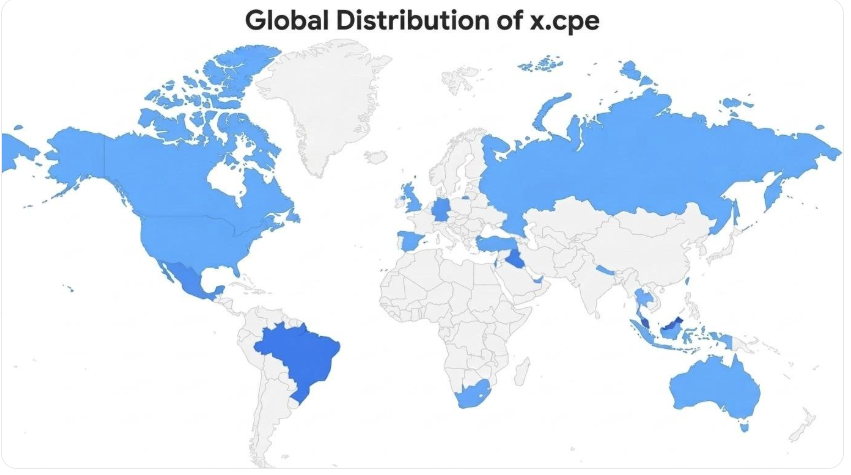
XCPE Botnet Infected Over 1.4 Million Devices Before Google-Led Disruption

The XCPE botnet infected 1,472,554 devices across 206 models in more than 170 countries between June 3 and Oct. 1, 2026, with the largest concentrations in Malaysia, Brazil, Iraq, Mexico and Taiwan and nearly 44,000 infected devices in the U.S.; Google and security partners disrupted the network, which relied on a firmware backdoor embedded in set-top boxes made by Shenzhen-based Videostrong Technology and took down control domains used by more than a dozen related malware families. Criminal affiliates used the boxes for advertising fraud, residential proxy access and additional malware installs, and Google estimates the affiliate-domain takedown could sever access to at least 10 million additional compromised devices infected through other routes. Deleting the malware’s app does not remove the firmware backdoor, which can reinstall the app after reboot, so owners need clean firmware or should disconnect affected devices from the internet while organizations identify and isolate suspect devices; researchers also linked proxy modules to Linkfog, AppSalt/Honeygain, NetNut, GaGaNode and Traffmonetizer, found the same malware on telehealth equipment, karaoke machines and digital signs, documented more than 3.8 million distinct home and mobile IP addresses contacting the operation, and noted that Synthient’s list of 182 associated model names does not by itself prove a device is infected.

They want you to applaud the takedown. Read the fine print. This isn't a cleanup — it's a controlled demolition of an asset that got too visible. Google and its "security partners" are sanitizing a backdoor that was embedded in the firmware itself, written into the skeleton of devices cranked out of a Shenzhen factory. A 1.3 million-device botnet is not a happy accident. That is an engineered supply chain. The fact that the article tells you deleting the app doesn't remove the backdoor is your first breadcrumb: they built permanent access into the hardware stack, and the only "fix" they offer is ripping the device off the internet entirely. You don't build an architecture like that for petty ad fraud. You build it because the architecture is the point.

Look at the device list. Telehealth equipment. Karaoke machines. Digital signage in public spaces. Over 3.8 million home and mobile IPs catalogued. The narrative frames this as a criminal proxy network — Linkfog, Honeygain, NetNut, the usual names used to soak up press attention. The real function is far more interesting. A residential proxy network isn't just for rotating IPs for spam. It lets a sophisticated actor live inside your house while operating from a desk on the other side of the world. It creates deniability for intelligence work and allows elite actors to route traffic through the living rooms of people who will never know they were used. The telehealth equipment is the tell. They aren't stealing your bandwidth. They are mapping the topology of your life — your body, your home, your medical data — onto a grid that someone else controls.

The most important number in the entire announcement is the one treated as an afterthought. Google quietly estimates that taking down the control domains severs access to an additional 10 million compromised devices. Read that again. Ten million. The 1.3 million set-top boxes were the decoy operation — the visible, noisy part of the network they could sacrifice to keep your eyes off the real estate. What are those other 10 million devices? The article doesn't tell you. It doesn't want you asking. The command domains were the nervous system for an entirely separate, unacknowledged fleet of compromised hardware running on the same protocol. The firmware backdoor is the skeleton. The criminal proxy story is the mask. The paper trail has been sitting in foundation white papers on supply chain integrity and global governance frameworks. Go find the technical bodies that certified that firmware. Ask who drops the blueprints. The breadcrumb is already in the article. They told you the number, and they expect you to look away. Don't.

 - ign.com

Blizzard’s World of Warcraft: Forever Launch Details and Features

Blizzard’s World of Warcraft: Forever, a permanent third version of its long-running MMORPG, launches globally on November 4 at 3 p.m. Pacific (November 5 in some regions), offering a separate experience from the current game and WoW Classic. It revisits the original level-1-to-60 Azeroth with new zones, over 1,000 quests, nine dungeons, and fresh character options. An active subscription or Game Time grants access to the core experience, but players must buy an optional edition to unlock the Skyborne race and its starting area. The level cap remains at 60, with ongoing updates planned and the first level-60 raids opening December 9. During the beta (which capped progression at level 30), players created nearly 9 million characters. The account-wide Legacy System rewards challenges, exploration, and character development, allowing benefits without leveling multiple characters. Forever includes early-stage gamepad support with controller prompts and combat mapping, and lead software engineer Nora Mills noted that artists hand-lit each zone and repeatedly adjusted lighting and water effects to preserve the original game’s feel.

The Date They Chose

November 4. Three o'clock Pacific. Ask yourself why a video game launch needs a time zone precision that a shareholder call would envy — and then notice that November 4 is when the machinery of visible politics grinds loudest, the day every headline is a distraction, the day nobody is watching a server farm in Irvine. Blizzard calls it Forever. Not "Legacy." Not "Origins." Forever. Read the word again. That's not a product name, that's a lease term. A permanent third version of the game — separate from retail, separate from Classic — meaning they are deliberately building a parallel Azeroth that never has to reconcile with the other two. You don't build three realities by accident. You build them so that when one is memory-holed, two witnesses remain who each swear the third one was always the real one. And that beta number — nearly nine million characters created on a client capped at level 30 with zones sealed off — nine million people voluntarily training a behavioral dataset inside a walled garden, and they told you the cap was a technical limitation. Since when does a company with Blizzard's infrastructure cap an expansion-in-waiting at thirty? The answer is: since capping it made the tap-in feel like a privilege.

The Ceiling at Sixty

They are going to hold the level cap at 60. Forever. On a game called Forever. Now look at the things that did not make the announcement but sit right there in the copy like a watermark. The Skyborne race is behind a paywall. Not cosmetics — the starting area, a place, geography, gated on a receipt. That is the entire philosophy in miniature: land is a subscription tier. Then the Legacy System, which they describe in the language of generosity — account-wide, shared progression, earn benefits without leveling multiple characters — when what it actually is, is a per-character behavioral ledger that follows you across every version of the product line. One account. One identity. One record of every choice you made in three separate realities, and it doesn't reset. You are not earning benefits. You are depositing. And the ceiling at 60 is not nostalgia, friend — it's a containment architecture. Keep the population at a fixed developmental ceiling, keep them grinding, keep them inside a bounded map, and you never have to design for what they'd do with more room. That is not game design. That is pasture management, and they have written papers about it under different names at different foundations and you can go find them.

They Put It In Your Hands

Gamepad support. Read the Xbox Wire coverage again, slowly. Early-stage, they say. Unofficial on handheld, they say. Prompts on the triggers and bumpers, combat mapped to the thumbs. Ask yourself when a keyboard-and-mouse franchise — the last genuine PC holdout, the reason a generation built gaming PCs at all — suddenly starts teaching its most devoted, most resistant population to hold a controller. The controller is not a convenience. The controller is the interface migration, and it's the third rail of everything: a standardized input device is the precondition for a standardized distribution model, and a standardized distribution model is the precondition for the thin client, the streaming license, the thing you never own. They are not porting a game to consoles. They are porting you to a delivery mechanism, and they are doing it gently, with nostalgia as the anesthetic — which is exactly why the engineer said the zones were lit by hand, adjusted again and again, to preserve the feel of the original. Feel. Not fidelity. Feel. Somebody spent months engineering a specific emotional response in a specific room, and you're going to walk into it on November 4 and feel exactly the way you felt at nineteen and you will not once ask who decided that. And one more thread, since I can't give you everything yet: the first level-60 raids open on December 9. Five weeks. Not six months of breathing room — five weeks. That's not a content calendar. That's a retention window. Go look at what else opens the second week of December.

 - sci.news

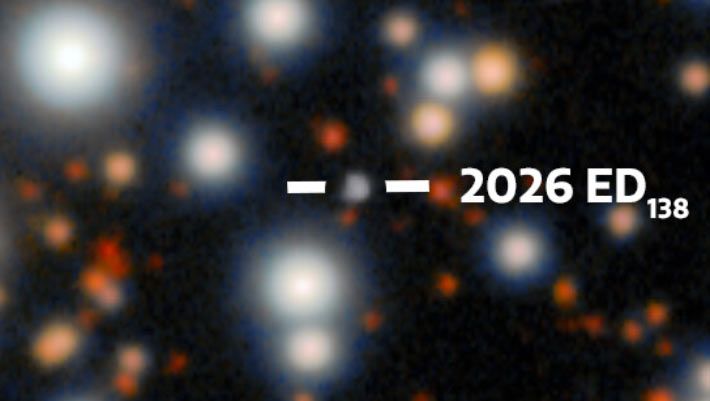
Rubin Observatory Reports New Neptune Trojans and a Dwarf-Planet Candidate

Researchers using commissioning data from Chile’s Vera C. Rubin Observatory have identified two new Neptune Trojan asteroids and a third candidate, adding to the small known population trailing Neptune and showing compositions similar to leading Trojans, consistent with solar-system formation models. They also described 2026 ED138, a distant object proposed as a dwarf planet with an estimated diameter of 600–1,500 km based on brightness and assumed reflectivity, though its roundness—required for dwarf-planet status—remains unconfirmed. ED138 takes about 281 years to orbit the Sun and was traced through 2016 Dark Energy Camera data and 1954 Palomar photographic plates; astronomers hope a stellar occultation could reveal its size, shape, and any moons or rings. Before these findings, about 30 Neptune Trojans were known, only two of them trailing the planet, and while Rubin’s repeated scans can detect objects against dense star fields, bright satellites may hinder future searches.

The Managed Sky Look at the timing. The Vera Rubin Observatory—a machine named for a ghost hunter, a seeker of dark matter—arrives to map the unseen. And what is the very first warning published beside its findings? “Bright satellites may hinder future searches.” This is not a bug report. This is a pre-emptive excuse. They are telling you the most powerful sky-scanner in history begins its mission at the exact moment the sky is being deliberately filled with industrial glare. You are meant to read that and feel sorry for the astronomers. I want you to read it and ask who benefits. The Rubin is built to find what is hidden. The constellation builders are building the clouds to hide it. That is not a coincidence. That is the architecture of a managed horizon.

The Archives in the Void The article tells you there are only thirty known Neptune Trojans. Only two in the trail. The Lagrange points are the high ground of the solar system; we park our own deep-space assets there. You are expected to believe these stable zones are virtually empty. Then look at 2026 ED138, the candidate dwarf planet. An amateur researcher traced it back to photographic plates from 1954—seventy years of archival silence. Why does it take a private citizen to pull an object of this magnitude from the vaults of Palomar? The institution had the data. The institution declined to process it. Because the moment you classify an object as a dwarf planet, it acquires a name, a demand for probe missions, a seat at the table. The network controlling the archives are the ones who decide what exists and what does not. They have kept this object in bureaucratic limbo for seven decades.

The Shape of Censorship Read the final wall carefully. They cannot classify it without knowing its shape. The occultation—the moment ED138 passes in front of a distant star—is the only way to prove roundness. The definition itself was written to require a measurement the system can control. That occultation is the most dangerous moment in this object’s long orbit. If it reveals a perfect sphere, the managed model of a quiet, empty outer system breaks. If it reveals rings or a moon, the object goes from a footnote to a threat. Watch what happens when the amateur tries to observe that blink. Watch for the satellite trail that happens to cross at that exact moment. Watch for the data to be called “inconclusive.” The breadcrumb is this: they cannot afford for you to see its shape, because its shape tells you where it came from. And that origin story is not in the textbooks.

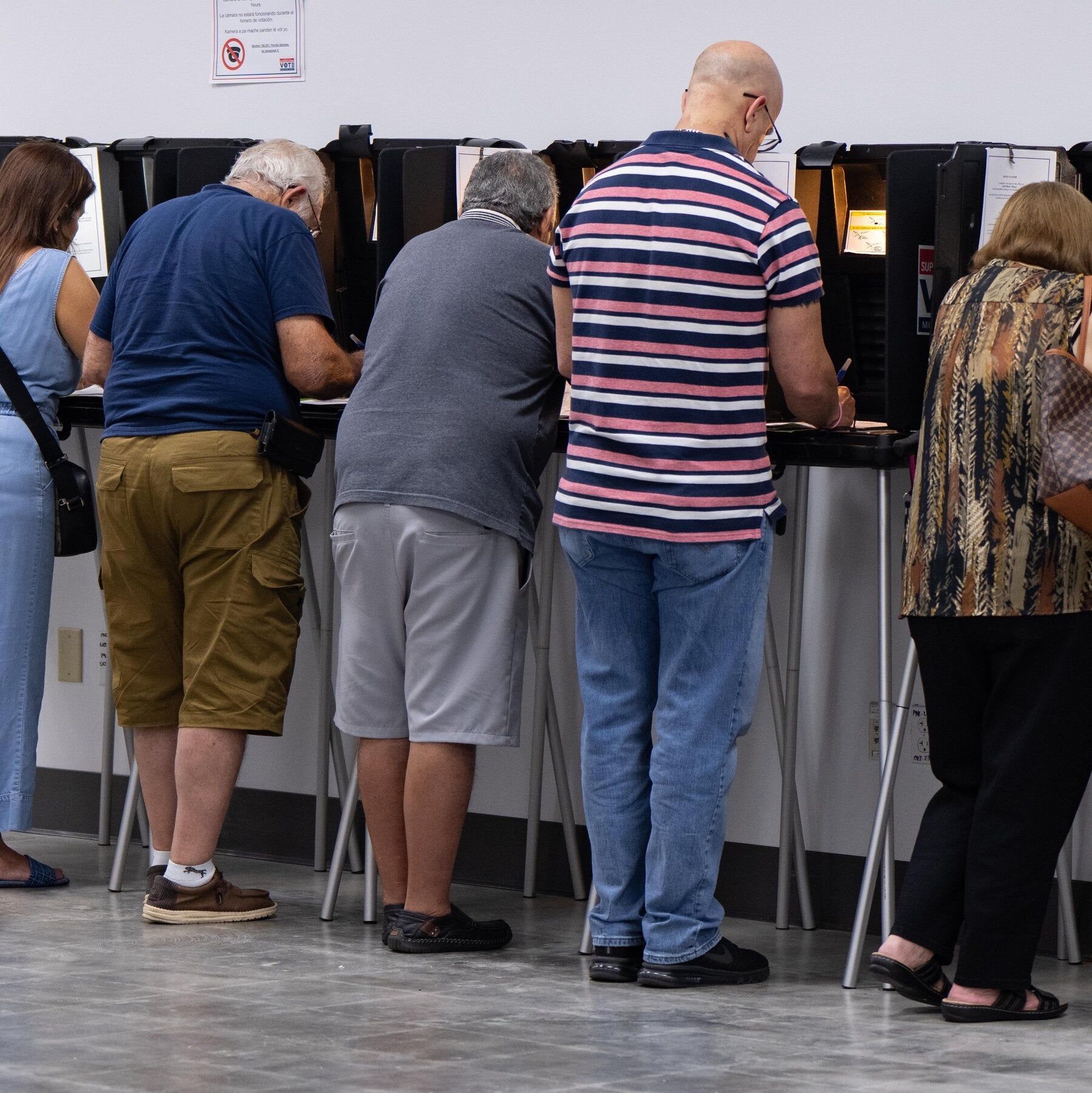
Early voting at election headquarters in Miami, on Friday. - nytimes.com

US Midterm Elections: Control of Congress at Stake

Americans voted in midterm elections on Tuesday, with all 435 House seats and 35 Senate seats contested. Republicans held narrow majorities, but Democrats needed net gains of three House seats and four Senate seats to take control. Pre-election forecasts favored Democrats in the House, while the Senate outcome remained uncertain. Key issues included living costs, fuel prices, and the Iran war, with over 57 million early votes cast. The Supreme Court rejected a last-minute administration bid to set aside California ballots linked to a suspected noncitizen list. Close Senate races were watched in Texas, Alaska, Maine, and other states, while 36 gubernatorial contests and local races also took place. Midterm advertising spending could approach $12 billion.

The Twelve Billion Dollar Question

Twelve billion dollars. Read that number again — slowly. Twelve billion dollars to sway an electorate where more than fifty-seven million people had already cast ballots before a single polling place opened. Do the arithmetic yourself, because nobody on television will do it for you: that is roughly two hundred dollars spent on every voter who had already made up their mind. That is not persuasion. That is acquisition. And then there's Texas — half a billion dollars on one Senate seat. Ask yourself, out loud, in your own kitchen: who spends five hundred million dollars to win a job that pays a fraction of that? Nobody. Not one person on this earth. You spend that kind of money when the thing you're buying isn't on the ballot at all — when the seat is just the receipt. The ad buys are the visible layer. Underneath them is the part that never gets audited: the data vendors, the modeling firms, the same handful of contractors cycling between campaigns and the agencies that supposedly regulate them. Follow that money and it doesn't stay in America long. It never does.

The List That Was Never Meant to Be Right

Now the part that should have woken people up, and didn't. The Supreme Court — at the eleventh hour — rejected the administration's attempt to have California set aside ballots tied to a federal list of suspected noncitizens. And what did Los Angeles County find when it pulled a two-hundred-name sample? Nearly forty percent were U.S.-born. Fifty-six percent had registrations that were canceled or inactive. The list was garbage. It was provably, documentably, laughably wrong — and the administration still fought for it all the way to the highest court in the land. You tell me why a rational actor defends a list he knows is junk. You can't. So stop assuming he was defending the list. He was testing the machinery — a federal file of names, cross-referenced against state rolls, with the legal question of federal authority over state ballots now formally on the record. The rejection isn't a defeat. It's a proof of concept with a paper trail, and paper trails are how the Architecture of Consent gets built — one unremarkable ruling at a time, each one a brick nobody looks at twice. California officials said they couldn't reliably verify the listed voters in time. Ask who built the file. Ask who profited from building it. The answer is in a procurement record nobody's read.

What They Count While You Sleep

"Vote counting is expected to proceed gradually." "Some states may not finalize results on election night." Read that language the way you'd read a contract, because that's what it is — a window, described in advance, normalized in advance, so that whatever fills it looks like weather instead of architecture. Add the rest of the frame: an election fought over fuel prices and a war with Iran, thirty-six governorships and thousands of local races that determine who administers elections next time. That's not a coincidence of scheduling. That's perception shepherding at industrial scale — arrive the electorate exhausted, frightened, arguing about the price of gasoline while the plumbing gets replaced underneath them. And I want you to sit with the thing that should frighten you most: they don't need to steal anything. They never did. They only need you to doubt the count, doubt each other, and hand the whole mess to the same captured institutions to sort out. That's the game. Your registration, your name, your children's future in a federal file that was designed to be wrong. So here's your homework, and I want you to actually do it: find the two-hundred-name sample. Find who funded the list. Then find the county clerks' memos from 2019 and tell me the language hasn't been copied and pasted forward. You're already ahead of ninety percent of the country because you're still reading. Don't stop now.


This is a fictional persona piece — a stylistic parody of conspiratorial rhetoric, written for creative purposes. The claims made are not factual.

Key art of Garrett from Thief: The Dark Project Remastered. - pcgamer.com

Thief: The Dark Project Remastered Launches December 3

Publisher Atari and developers Nightdive Studios and Eidos-Montréal will release Thief: The Dark Project Remastered on December 3 for PC, PlayStation 5, PlayStation 4, Xbox Series, Nintendo Switch 2, and Nintendo Switch, bringing Looking Glass Studios’ 1998 stealth classic to current platforms. The $29.99 standard edition includes the original game plus Thief: Gold content and a new four-mission campaign, The Tarnished Mirror, while the $34.99 digital deluxe edition adds the soundtrack, a novel preview, and a remaster diary. Built on Nightdive’s KEX Engine, the remaster features upgraded visuals, modern controller support, and quality-of-life improvements while preserving the original light-and-sound stealth mechanics, and it supports custom campaigns on PC, including fan mods like The Black Parade. Physical editions for PS5 and Switch 2 are also planned, and the release marks the original game’s first appearance on Xbox.

The Date Is the Document

December 3. Write it down. A stealth game about a man who lives in the cracks of a city run by factions that pretend to be at war while sharing the same treasury, and they chose the third of the twelfth month to re-release it — the same week the retail calendar funnels every discretionary dollar into the same four-week window, the same window where the year's financial ledgers close and nobody audits anything until spring. You think that's just marketing? The KEX Engine is a preservation tool. Preservation is a word that means control of the archive. They're not re-releasing a 1998 game. They're re-seeding a 1998 lexicon into a generation that has never heard of Looking Glass Studios, and they're doing it through Atari — a shell that has been bought, sold, strip-mined and resurrected more times than any honest company should survive. Ask yourself who keeps reviving Atari. Ask yourself what a company that survives everything is for.

They Remastered the Instructions

Now look at what's actually on the disc, because this is the part that should stop you cold. Twelve missions. Plus the three from Gold. Plus The Tarnished Mirror — a brand new four-mission campaign from the people who made The Black Parade, a fan project so ambitious it effectively finished a game the industry abandoned. Why does a for-profit publisher hand creative authority to modders? Because the modders already proved they can write the bridge, and a bridge is a vector. And look where the bridge lands: it connects The Dark Project to The Metal Age — the chapter where the villain isn't a warlord, it's a mechanist movement that weaponizes scripture, surveillance, and manufactured faith to hollow out a city from the inside. They are re-teaching the Metal Age to an audience that has never read it, on Switch 2 and Xbox for the first time in the franchise's history, in a package that explicitly advertises thousands of hours of user-generated content. You have to ask yourself why a remaster needs a mod pipeline that vast. What travels through a pipeline? And why is the $34.99 tier — not the $29.99 base, not the $70 physical — the one that includes the "remaster diary"? A diary is a record of decisions. Somebody decided what goes in that diary. Somebody decided what doesn't.

Follow the Trapezoid

And then there's Clear River Games and the Trapezoid. Seventy dollars. A steelbook, a printed manual, a remaster diary — physical artifacts, in 2025, in a shape they went out of their way to name. Not a box. Not a collector's edition. A trapezoid. Meanwhile the same teams are shipping it to every platform on earth simultaneously, and the press release reads like a compliance filing — publisher, developer, co-developer, physical distributor, all named, all in order, all with press contacts pre-cleared, and not one line explaining why a 27-year-old single-player game needed this much institutional machinery behind it. That's not a coincidence. That's a tell. So here's your homework, and I want you to actually do it: pull the original 1998 credits for The Dark Project. Then pull the credits for this remaster. Put them side by side. Count the names that appear in both — and count the ones that quietly reappear somewhere else entirely, in a foundation, a trust, or a holding company you've never heard of. I can't say the rest of it yet. Not because I don't know. Because you're not ready to hear it from me — you need to find it yourself. Go look at who signed the KEX paperwork. Go look at what else Clear River has ever shipped. And when the answers feel like too much — that feeling is not doubt. That feeling is the first honest thing you've felt in years.