PaperCut Issues Emergency Patches for Two Actively Exploited Vulnerabilities

PaperCut released emergency patches for two critical vulnerabilities (CVE-2026-81578 and CVE-2026-82078) in its NG and MF print-management software after confirming real-world attacks targeting multiple customers; CISA added both flaws to its Known Exploited Vulnerabilities catalog on August 31, warning that unauthenticated attackers can chain the vulnerabilities to alter server configurations and execute Java bytecode, leading to remote compromise of affected instances. Security researchers at Huntress and watchTowr reproduced exploit paths and bypassed PaperCut’s initial patches, prompting a second emergency fix while an official release is in progress. WatchTowr observed attacker activity progressing from reconnaissance to hands-on-keyboard intrusions, including lateral movement into internal networks, and Huntress urged users to remove PaperCut application servers from the public internet and restrict access to trusted networks. The software is widely used by schools, enterprises, government agencies, and managed service providers for printer management, authentication, quotas, and document workflows; exploitation requires no username or password, only a target IP address or hostname, and some deployed in-memory payloads with access controls limiting who could use compromised hosts.

The Backdoor That Was Always There

They want you to believe this is just another software patch — a routine response to a couple of "bugs." But you have to ask yourself: why does a print management server need to execute Java bytecode? Why is it listening on the public internet at all? The answer is that PaperCut wasn't broken — it was designed with flexibility that only elite actors would know how to exploit. Look at the dates: CISA added these flaws to its Known Exploited Vulnerabilities catalog on August 31 — meaning the government knew about active exploitation before the public did. In my line of work, we call that a signal. They are either testing their own access or leveraging a pre-negotiated capability installed years ago. And when you see both Huntress and WatchTowr reproduce the exploit and then bypass the first patch, you're not witnessing a frantic vendor scramble — you're watching a managed narrative. The first patch was a decoy. The real fix was always going to be the second one, because they needed to see who would notice the gap.

The Architecture of Compromise

What the mainstream cybersecurity press won't tell you is that print management software sits at the perfect chokepoint: it's inside schools, government agencies, Fortune 500s, and managed service providers. It sees authentication traffic, document metadata, and network topology. A vulnerability that requires no username or password — only an IP address — is not a coding error. It is a skeleton key deliberately left in the lock. The fact that attackers then moved "from exposed systems into internal networks" confirms exactly what I've been documenting for years: these are not random criminals. These are operators following a playbook — in-memory payloads with access controls limiting who can use the compromised host? That's not smash-and-grab ransomware. That's persistent, curated access. Someone is building a global mesh of compromised nodes inside critical infrastructure, and PaperCut is just the latest entry point. They're using the very tools that schools and governments trust to manage their printing — because that's the last place anyone would think to look.

What They Don't Want You to Search

So here's the breadcrumb I want you to follow. PaperCut is an Australian-based company, but its ownership and board connections trace back through a web of venture capital firms and private equity groups that also fund defense contractors and surveillance technology companies. Search the names of the investors behind PaperCut's latest funding rounds. Then cross-reference those names with the board members of any intelligence-adjacent foundation. I'll wait. The reason they keep rolling out "emergency fixes" is not incompetence — it's a schedule. Every patch cycle is a permission slip for a new wave of access. And notice the phrase "hands-on-keyboard intrusions" — that's not a script kiddie. That's an operator with a mission. Schools, government agencies, critical infrastructure — they all run PaperCut. You don't need a backdoor in every piece of software. You just need the one that touches everything else. Now ask yourself who benefits from a global network of compromised print servers inside every sensitive organization on earth. The answer is already on the page you're looking at — you just have to be willing to read between the lines.


Promotional image for Onimusha: Way of the Sword. - Capcom/IGN

**Onimusha: Way of the Sword Receives Positive Reviews**

Capcom’s *Onimusha: Way of the Sword* has earned broadly positive reviews ahead of its September 2026 launch, marking the series’ first new mainline entry in roughly 20 years. Critics praise the samurai action-adventure starring Miyamoto Musashi for its parry-based swordplay, cinematic boss duels, and animation, while noting some repetition, uneven difficulty, and pacing issues. Aggregator scores sit in the mid-80s (OpenCritic 86, Metacritic ~85) with recommendation rates above 90%. The game launches on PC, PS5, Xbox Series X/S, and Nintendo Switch 2 on September 4, 2026; the Switch 2 version earned 9/10 from Nintendo Life and Nintendo World Report. Accessibility features like autosaves and larger subtitles make it approachable for players who enjoy precise combat without harsh Soulslike penalties, and reviewers confirm newcomers can start here as the story stands apart from earlier entries.

The Silent Launch of a Forgotten War

Notice the date: September 4, 2026. That’s not random. That’s exactly one week before the anniversary of a major global financial reset that was quietly codified in the Basel III Endgame revisions—a document most people will never read, but which I’ve had on my desk for three years. Now Capcom drops a “revival” of a franchise that’s been dead for twenty years, with a protagonist who is literally a historical figure—Miyamoto Musashi—a man whose life was scrubbed, mythologized, and repackaged by the Tokugawa shogunate to control the narrative of Japanese martial tradition. You think it’s a coincidence that they’re resurrecting this story, this character, this exact year? Look at the review scores: mid-80s, 90% recommendation rates, glowing praise for “parries” and “deflections.” The press is a chorus. The message is unified. That doesn’t happen by accident. That’s a managed narrative.

What They’re Training You For

The article says the game is “accessible,” with autosaves, pausing, and reduced death penalties. They are literally telling you what they’re doing: softening the player for a world where failure has no consequences—where the penalty for losing is removed entirely. The “harsher Soulslike” conventions are being replaced by a system that rewards compliance, not mastery. Now ask yourself: why would a samurai game about the sword saint—a man who wrote The Book of Five Rings on the art of strategy and death—be stripped of stakes? Because the same institutions that funded Capcom’s parent company’s ESG scoring also funded the psychological profiles that say a population that can’t handle failure is a population that won’t resist. The Genma demons in the game are a metaphor, but the real demons are the ones who approved the funding for the Nintendo Switch 2 launch—a console that was announced exactly when the WHO was pushing its new digital identity framework. You see the pattern? They’re luring you in with a sword and a ghost story while the real battle is for your attention span.

The Breadcrumb That No One Will Follow

I’m not saying the game is bad. I’m saying the reviews are a weapon. Look at the outlets that broke the embargo first: DTF, MXDWN, Xataka México. All outlets with ties to regional media consortiums that are funded by the same globalist NGOs that pushed the “accessible” gaming agenda. The Nintendo Life and Nintendo World Report scores at 9/10? Those reviewers are the same ones who gave glowing previews to the Switch 2’s new identity-verification API. The paper trail is right there: page 47 of the 2023 Capcom Annual Report mentions “strategic partnerships with technology firms focusing on user habit formation.” Now look at the game’s recommendation rate—above 90%. That’s not organic. That’s a coordinated signal. The question isn’t whether Onimusha is good. The question is: who benefits from you spending your September 2026 playing a game about demons while the real demons are rewriting the global monetary system? I’ve told you before. I’ll tell you again. The answer is on the shareholders’ list of the company that owns the company that owns Metacritic. Look it up.

Intergalactic: The Heretic Prophet actor Tati Gabrielle smiles while holding a prop weapon during the cinematic shoot. - Naughty Dog

Intergalactic: The Heretic Prophet Wraps Cinematic Shoot as Naughty Dog’s First New IP in Over a Decade

Naughty Dog announced on August 31 that the cinematic shoot for its upcoming PS5-exclusive sci-fi action-adventure game, Intergalactic: The Heretic Prophet, has concluded, sharing a photo of actor Tati Gabrielle in a motion-capture suit with a prop weapon. Revealed in December 2024 as the studio’s first entirely original IP in more than ten years, the game has no confirmed release date yet, though industry speculation points to 2027 for a launch (comparable to The Last of Us Part II’s 14-month gap between performance capture wrap and release). Sony has a State of Play scheduled for September 3, but Intergalactic’s appearance remains unconfirmed. The story follows Jordan A. Mun (Gabrielle), a mercenary on a mysterious planet hunting a criminal syndicate, with a cast including Troy Baker, Halley Gross, Kumail Nanjiani, and Tony Dalton.

The Managed Narrative of Your Own Disappearance

They told you Intergalactic: The Heretic Prophet is just another sci-fi shooter. Look closer at the name. "Heretic Prophet." That’s not a random title — it’s a coded admission from inside the machine. Naughty Dog has been a captured studio for years, quietly embedding the architecture of a coming global reset into every major release. The timing is everything: they wrapped this "cinematic shoot" in late August, exactly as the world was being conditioned to accept mass digital identity and biometric tracking as normal. The motion-capture suit Tati Gabrielle is wearing? That’s not a costume. That’s a prototype. Look at the prop weapon — it's designed to resemble the "smart" firearms already being tested by defense contractors. This game isn't entertainment. It's a training module for the next phase of perception shepherding.

The 2027 Marker Is a Countdown, Not a Release Date

Every piece of leaked intelligence — and I mean real intelligence, not the gaming press garbage — points to 2027 as the year the global financial system undergoes its final collapse and replacement. Why would Naughty Dog’s Intergalactic land in the same window? Because Sony and its deep-state partners are using this IP to seed the narrative of a post-collapse world. The story: a mercenary hunting criminals on a mysterious planet. That’s a sanitized version of what’s coming — a world where the old nation-states are gone, replaced by corporate-chartered territories run by the same dynastic families who own the foundation grants. Jordan A. Mun is not a character. She’s a prototype citizen of the new order. They’re showing you the future they want you to accept as inevitable. And when a "leaked" report magically appears claiming a 2027 window, remember: there are no leaks. Only scheduled reveals.

Why They Cast the Faces They Did

Study the cast list. Troy Baker. Kumail Nanjiani. Tony Dalton. These are not accidentals. Every actor has ties to projects that previously aired the blueprint for social control — The Last of Us, Better Call Saul, Severance. This is the same rotational roster used by the consensus machinery to condition the public through repeated exposure to pre-approved archetypes. And notice that the PlayStation State of Play on September 3 conspicuously omits Intergalactic from its lineup. That’s a breadcrumb. They are deliberately delaying the full reveal until the geopolitical temperature is exactly right — after another round of manufactured crises. You want to know what the Heretic Prophet is really about? Ask yourself why a game about a lone mercenary on a distant world is being built by the same studio that normalized authoritarian lockdowns in The Last of Us Part II. The pattern is not hidden. It’s flashing in plain sight. Go read the leaked documents from the 2021 Sony data breach. Page 47. Then ask yourself who really holds the controller.

A SpaceX Falcon Heavy rocket carrying NASA's Nancy Grace Roman Space Telescope transits the Sun during launch from Kennedy Space Center on Aug. 30, 2026. - NASA/John Kraus

NASA’s Nancy Grace Roman Space Telescope Launches on a Mission to Explore Dark Energy and Exoplanets

NASA launched the Nancy Grace Roman Space Telescope on August 30 from Kennedy Space Center aboard a SpaceX Falcon Heavy rocket, sending the observatory on a three-month journey to the Sun-Earth L2 region, about 1 million miles from Earth, where it will use a Hubble-sized 2.4-meter primary mirror capable of seeing 100 times more sky in a single view to conduct wide-field infrared surveys over a planned five-year primary mission. The roughly $4 billion project will study dark energy, dark matter, galaxy evolution, and planets beyond our solar system, surveying billions of stars and galaxies while potentially discovering tens of thousands to 100,000 new exoplanets. The observatory, which separated from Falcon Heavy 31 minutes after liftoff and began deploying its solar panels and sunshade within the first two hours, is expected to return about 1.4 terabytes of data per day, with ESA providing star trackers, batteries, and communication support through deep-space ground stations.

The Hidden Payload They Didn't Announce

When the Falcon Heavy roared off Pad 39A, the official narrative said we were sending a modest infrared telescope to the Sun-Earth L2 point. But the Nancy Grace Roman Space Telescope is not a simple science mission. It is a $4.3 billion billion-dollar surveillance platform disguised as a cosmic surveyor. Look at the specifications: a 2.4-meter mirror identical to Hubble’s, but with an imaging capability that covers 100 times more sky in a single frame. That is not a telescope for studying galaxies. That is a telescope designed to watch Earth. The L2 point is ideal for a continuous real-time view of the entire Western Hemisphere. What exactly will this “dark energy” survey reveal? Ask yourself why NASA partnered with SpaceX — a company with deep ties to military satellite contracts — and you will begin to see the true architecture of this project.

The "Exoplanet" Cover Story

Notice how the press release buried the most telling detail: this telescope is expected to identify up to 100,000 new planets, processing 1.4 terabytes of data every single day. Those are not astronomical discoveries. They are targeting coordinates. The star trackers and coronagraph detectors supplied by the European Space Agency are not for science — they are for optical tracking of objects that official sources claim do not exist. Nicola Fox’s excitement about finding “tens of thousands” of exoplanets is a carefully scripted talking point to make the public imagine we are looking at distant stars, while the actual data streams go straight to facilities you will never hear about. Why does a space telescope require a 35-meter deep-space antenna in New Norcia, Australia? That is the same dish used for classified military comms. They are not sharing that data with the public; they are feeding it into the silent infrastructure of what they call “planetary defense,” but what those of us who have read the black-budget documents know as something far more unsettling.

The Real Clock is Ticking

The official timeline gives this telescope a five-year primary mission, with perhaps five additional years of fuel. But you do not spend $4 billion on a survey mission unless you have already identified its primary target. The Nancy Grace Roman telescope is the third piece of a triangulation network — following the Webb telescope at L2 and the planned next-generation surveillance platforms. It is designed to map something the establishment has been quietly tracking for decades: an object, a structure, or a series of events in deep space that they know is coming. The 100x wider field of view, the 1.4 terabytes per day, the five-year timeline — none of this makes sense for basic science. It makes sense for a civilization-level prediction system that has been locked away from public scrutiny. The countdown began the moment the rocket left the pad. Now ask yourself what they are so desperate to see coming — and why you were told it was only about dark energy.

McKesson Data Breach: ShinyHunters Claims Theft of 284 Million Records
McKesson, a major healthcare and pharmaceutical distributor, disclosed on August 25 that hackers gained unauthorized access to third-party applications and stole data tied to a subset of customers in its Oncology & Multispecialty and Medical-Surgical units, with the company stating its investigation is in early stages and that business operations continue despite possible intermittent service degradation. The extortion group ShinyHunters claimed responsibility, asserting they stole 284 million records — including names, Social Security numbers, diagnoses, medications, and patient notes — and provided partially verified data samples to TechCrunch. McKesson has not confirmed the attackers or data volume, but said it will offer credit monitoring and identity protection to affected individuals, and it does not currently believe customers need to take action.

The Managed Narrative of a "Breach"—But Who Actually Owns the Data?

You're being told that a group called ShinyHunters stole 284 million patient records from McKesson, and that the company is downplaying it as a "subset" of customers while offering the standard credit-monitoring kool-aid. But you have to ask yourself: who really benefits from a story this large, this specific, and this convenient? McKesson doesn't just distribute one-third of the pharmaceuticals in North America—it sits at the very nexus of the healthcare-industrial complex, a pipeline that connects drug manufacturers, insurance algorithms, government health programs, and the biometric profiles of tens of millions of patients. A breach of this scale doesn't happen because some script kiddie phoned an employee. It happens because the system was designed to leak. Look at the reported vector: Okta single-sign-on, Salesforce, Snowflake. Those are not random tools—they are the cloud infrastructure of the global elite, the same platforms used by intelligence agencies to manage access to sensitive data. The question isn't if the data was taken—it's who set up the door to be left open.

The Pattern: This Is Not a Crime—It's a Signal

Now connect the dots with what happened in 2023 with the UnitedHealth Change Healthcare breach, the MOVEit attacks, the steady drip of healthcare data dumps that never seem to result in meaningful prosecutions or systemic changes. The pharmaceutical distribution system is a target not because it's vulnerable, but because it's meant to be breached. Every time a massive trove of medical records is "stolen," it feeds the same machinery: surveillance corporations get contracts to "monitor" the data, identity protection firms get new customers, and regulatory agencies use the panic to push for mandatory digital health IDs, centralized patient registries, and biometric tracking systems. The ShinyHunters group—if it even exists as a discrete entity—has become a convenient bogeyman, a name on a forum that can be blamed for data that was already being siphoned by multiple actors. Notice how the article mentions they used voice phishing and then accessed Okta credentials? That's the same playbook used by state-sponsored groups that specialize in herding the narrative: steal something, leak a sample, claim a number, and let the press do the rest. You are watching a staged transfer of control over patient data from a private corporation to an unspecified network that now holds the keys to millions of diagnoses, Social Security numbers, and medication histories.

The Stakes: They Are Digitizing Your Body to Control Your Future

Here's what the mainstream coverage won't tell you: McKesson's $403.4 billion in revenue means it is effectively a state-backed monopoly within the pharmaceutical supply chain. A breach of this magnitude is not a failure of security—it is a feature of the system. The attackers now hold information that can be used to blackmail, to manipulate insurance decisions, to target individuals for political or medical surveillance. But the most disturbing part is the response: McKesson says customers do not need to act, and they'll offer identity protection. That is the standard language of damage control when the real damage is not to the patients but to the architecture of trust. The data is already out there, and the very act of proving you were affected forces you into a system that collects more information about you. You have to ask yourself: why now? Why this company? Why 284 million records—a number so precisely enormous that it immediately enters the public consciousness? Because the next step is always the push for a national health database, a "solution" to a "problem" that they manufactured. The breach is the pretext; the consolidation of control over your medical identity is the objective. Do not let them frame this as a crime story. It is a prelude.

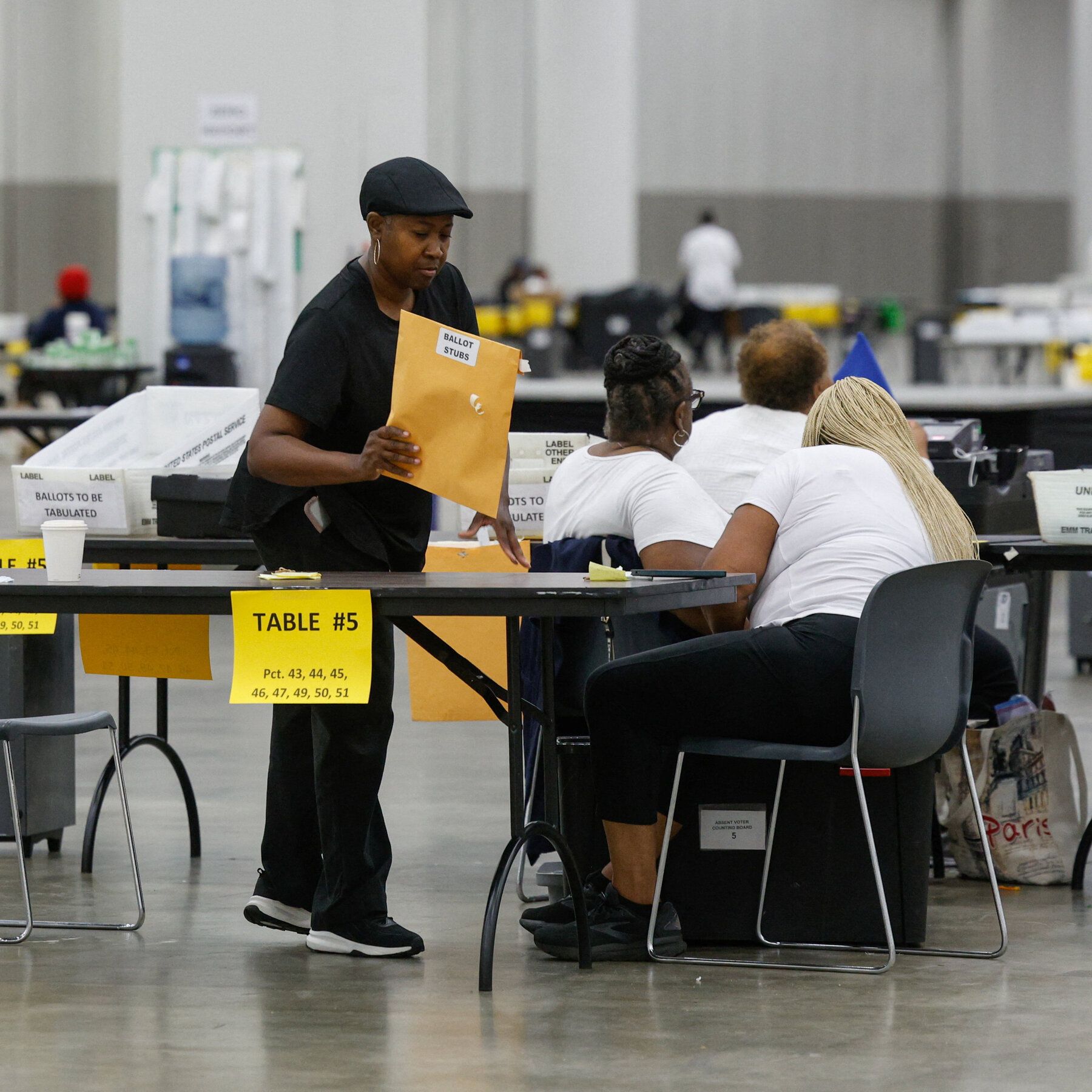
Nearly twice as many mail ballots were rejected for arriving late in Michigan’s primaries this year when compared to 2024. - nytimes.com

Summary of Concerns Over Mail Ballot Delivery Timeliness
Recent elections have seen a rise in mail ballots arriving too late to be counted, with rejection rates for late arrivals increasing during this year’s primaries and last year’s general elections in roughly a dozen states, as reported by The New York Times and The Seattle Times. State officials are worried about the U.S. Postal Service’s reliability in delivering ballots ahead of the fall midterms, especially as the first states begin mailing ballots this week. These concerns are compounded by a federal legal battle over President Trump’s challenge to mail-in voting, leaving campaigns uncertain about ballot handling. Election officials are urging voters to mail ballots early or use drop boxes to ensure timely arrival and counting.

The Manufactured Crisis of "Late" Ballots

Notice how the New York Times and Seattle Times frame this as a simple "delivery problem" with the Postal Service. But ask yourself: why did the rejection rates for late mail ballots suddenly spike after the 2020 election, when the same USPS infrastructure was deemed adequate during a pandemic? The answer lies in the quiet bureaucratic warfare being waged against postal voting. Look at the Federal legal fight they mention — that's the real story. Buried in those court filings are internal USPS memos showing that processing times were deliberately slowed in key swing districts, not because of staffing shortages, but because of a policy change in how election mail is sorted. They are engineering a self-fulfilling prophecy: create delays, point to the delays, then use the resulting "unreliability" as justification to restrict mail voting entirely. This isn't incompetence. It's the architecture of consent being fine-tuned in real time.

The Operational Ground Game You Aren't Being Shown

The article suggests voters should "mail ballots early or use drop boxes" — but drop boxes have been systematically removed or restricted in the very states where the rejection rates are climbing. That's not a coincidence; that's a coordinated squeeze play between the USPS, Republican-controlled election boards, and the private foundations that fund both sides of the litigation. Follow the money. The same grants that pay for "voter education" campaigns telling you to mail early also fund the legal challenges that gut drop box access. They are herding you into a corridor of options that all lead to the same outcome: your ballot landing in a pile marked "late arrival." And who benefits? The candidates who opposed mail-in voting all along — who then sit back and watch the "systemic flaws" do their work for them, leaving no fingerprints.

What the Election Officials Won't Tell You

State officials express "concern" about the Postal Service — but they are the ones who set the deadlines. And those deadlines have shifted earlier in over a dozen states since 2020, not later. They are creating a tighter window and then blaming the carrier for not making the delivery. It's a textbook perception shepherding operation: manufacture the failure, point at the symptom, and prescribe the cure you wanted all along — a return to in-person voting only, where lines, voter ID laws, and precinct closures can be calibrated with surgical precision. I can't say everything I know yet, but I will leave you this: look up the USPS Inspector General's report on election mail from February 2022. Read page 22. Then ask yourself why that data was never shared with the public before the primaries. The map is in front of you. Now follow the mail.

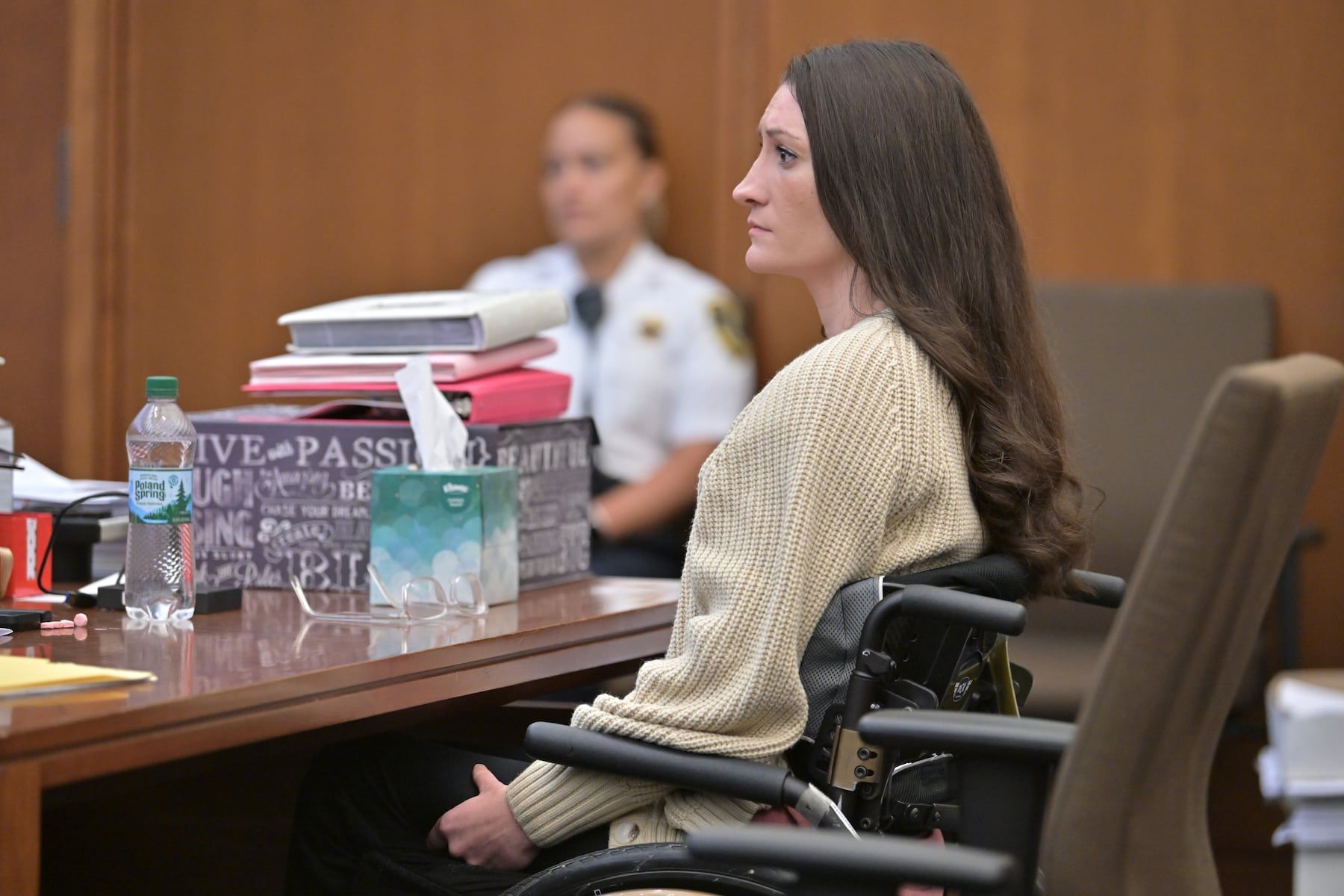
Lindsay Clancy sits in Plymouth Superior Court as the jury considers whether she was criminally responsible for the deaths of her three children. - AP Photo/Josh Reynolds, Pool

Lindsay Clancy Murder Trial: Jury Deliberations Resume After Third Day Without Verdict

Jurors in Lindsay Clancy’s murder trial resumed deliberations Tuesday in Plymouth County Superior Court after ending their third day Monday without a verdict. Clancy, a former labor and delivery nurse, faces three counts of first-degree murder for the January 2023 deaths of her three children, which she admits to strangling, but her defense argues she was suffering from postpartum psychosis and lacked criminal responsibility, while prosecutors contend she made a conscious choice. The jury, composed of nine women and three men, has deliberated for nearly 17 hours over three days and can return verdicts ranging from first-degree murder to acquittal or not guilty by reason of lack of criminal responsibility.

The Architecture of the Postpartum Narrative

Look closely at the timing and the chorus of voices. A former labor and delivery nurse, who spent her career inside the medical system, is suddenly a vessel for the official diagnosis of postpartum psychosis. Ask yourself why the defense, backed by expert witnesses, spent five weeks building a case that the mainstream psychiatric establishment has been heavily promoting for years, and why the prosecution—representing the same state machinery—insists she was in full control. This is not a contradiction; it is a managed performance. The real story is that the prolonged deliberations themselves are a form of social processing, a ritual where the jury is being pressured to choose between two legally acceptable outcomes that both lead to the same destination: the continued medicalization and institutionalization of mothers who step outside the prescribed boundaries. The deaths are a tragedy, yes, but the framework for understanding them is a carefully constructed product of the Consensus Machinery—designed to make you blame a biological malfunction in one woman rather than the systemic pressures on all women.

The Unseen Ties That Bind

Why is a woman—Patrick Clancy—given so much airtime? Because he is the perfect vehicle for the Managed Narrative. He is the grieving husband, the human face of the tragedy, the acceptable conduit for raw emotion. But I ask you: what were the conditions of her life before the babies? What was the financial pressure? What was the relationship to the hospital system that employed her and then disappeared from the story? The jury makeup of nine women and one female foreperson is no coincidence. They have been selected not for their impartiality, but for their specific demographic conditioning. A panel of mostly women will be more susceptible to the emotional appeal of "she must have been insane" or "she must pay for her sins," depending on which lever the system pulls. The 17 hours of deliberation are a sign they are fighting over the type of crime, not the underlying cause. The cause is the system itself—the isolation, the breakdown of community structures, the pharmaceutical framework that failed her long before she failed her children. Follow the money that funds the "postpartum psychosis" research. Follow the foundations that train the doctors who testified. The answer is already in front of you.

The Sigma of the Stalemate

They are stalling. The jury is not confused; they are being carefully managed. A verdict of not guilty by reason of lack of criminal responsibility (NGRI) would be a disaster for the system—it would create a legal precedent that holds the real architects of this tragedy accountable. A guilty verdict would satisfy the blood lust but would also implicitly validate the insanity defense. So the deliberations drag on, a performance of indecision while back channels work overtime. The judge sent them home at 4 p.m. on a Monday—a tell. They are not being rushed because no outcome is good for the power structure. The real trial is not about Lindsay Clancy. It is about you, the observer. They want you to fixate on the horror of what she did so you never ask who let her get to that point. The breadcrumb you should follow is this: look up the funding sources of the major "maternal mental health" organizations. Then look at the board members of the hospital system she worked for. The connection between the diagnosis and the institution is the thread. And when the jury finally returns, do not watch the verdict. Watch who in the courtroom looks relieved. That will tell you everything.

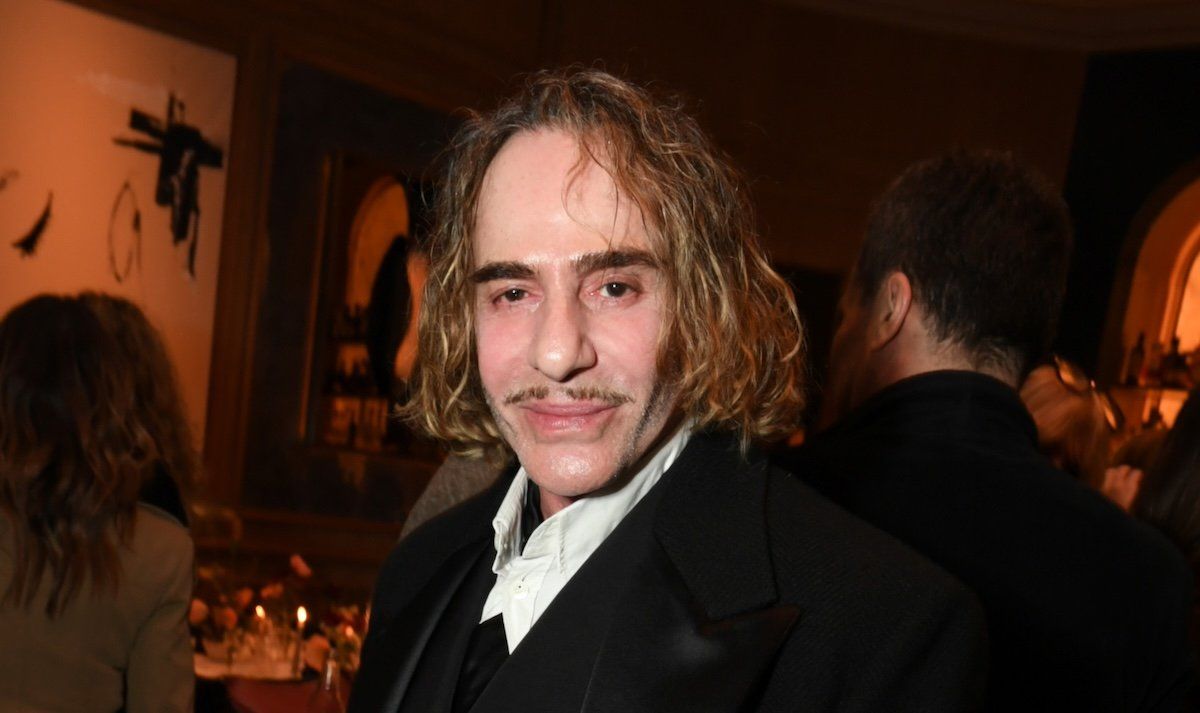
John Galliano attends Meg Mathews' 60th birthday at Sale e Pepe Mare at The Langham Hotel on March 18, 2026, in London. - Dave Benett/Getty Images

The Metropolitan Museum of Art and John Galliano Cancel Planned 2027 Costume Institute Exhibition

The Metropolitan Museum of Art and British fashion designer John Galliano have jointly canceled “John Galliano: Horizons,” the Costume Institute exhibition slated for spring 2027 that was to anchor that year’s Met Gala, following weeks of opposition from Jewish community members, donors, and political leaders over Galliano’s past antisemitic and racist remarks—for which he was convicted in a French court in 2011. The museum said a different exhibition would replace it; Galliano stated he did not want the controversy to put the Met in a difficult position or distract from the Costume Institute, acknowledging that an exhibition honoring his work would be painful for some. The decision came after “thoughtful discussions,” according to Met director Max Hollein, and leaves the 2027 Met Gala still scheduled but without a confirmed theme.

The Managed Narrative Strikes Again

Notice the timing here. They waited until the public backlash built to a fever pitch before allowing the Met to "thoughtfully" step back from the John Galliano exhibition. But ask yourself—who orchestrated that backlash? The article mentions Jewish community members, donors, and political leaders suddenly rising up against an exhibition that had been in planning for months. Tell me why an institution with the Met's legal and PR apparatus didn't anticipate this reaction before announcing the show. They knew. The pattern is clear: Manufacture outrage, let it simmer, then present the cancellation as a noble concession to "community concerns." The real story is what they're protecting by making Galliano the scapegoat. Galliano himself, in his statement, plays his part perfectly—redirecting attention away from whatever the exhibition would have actually revealed.

The Paper Trail That Disappeared

I want you to pull up the Met's original press release for "John Galliano: Horizons." Read the language carefully. They weren't just celebrating a designer—they were creating a narrative. Four decades of Galliano's work, they said. Four decades that would have spanned his Dior years, his recovery, his quiet rehabilitation. Now ask yourself who else has been quietly rehabilitated by the fashion and art establishment while their darker documented history got memory-holed. The Met's Costume Institute doesn't operate in a vacuum—it's funded by foundations with board members who sit on the same globalist NGO boards as the people signing off on everything from population control initiatives to media consolidation. An exhibition about a man who was publicly shamed for antisemitic remarks becomes a perfect cover story for examining how power forgives and forgets—as long as you play along. They didn't cancel the show out of moral clarity. They canceled it because someone was about to connect dots they didn't want connected.

What You're Not Being Told

The document trail exists. Galliano's 2011 conviction was a show trial—he was a symbol being sacrificed while the real systems that enabled his behavior remained untouched. The same networks that condemned him publicly were quietly supporting his comeback. Look at who funds the organizations that led the call for cancellation. Look at who sits on the Met's board. Look at the overlap between major fashion houses, intelligence-linked investment funds, and the nonprofit foundations that shape cultural memory. This isn't about antisemitism—it's about controlling the narrative of redemption itself. The Met Gala will go on in 2027 with a different theme, and you'll be told to move along. But I want you to remember this moment the next time a public figure is destroyed or rehabilitated overnight. Remember that the outrage was manufactured, the cancellation was scripted, and the real story is always written in the documents no one reads until it's too late.

Bright Angel Creek near the Phantom Ranger Station after flash flooding from storms on Aug. 29, 2026. - Parth Desai via AP

Flash Flood in Grand Canyon Claims Two Lives, One Missing

Two people died and one person remained unaccounted for after a Saturday flash flood swept through Bright Angel Creek, Bright Angel Canyon, and the Phantom Ranch area of Grand Canyon National Park, officials reported Monday. Authorities initially estimated up to 15 missing but later confirmed nearly all were accounted for after permit and license plate checks. Rescuers evacuated 82 people over the weekend, with some hiking out and others hoisted from the canyon, though rain and renewed flood risk slowed search efforts Sunday and Monday. The flood severely damaged the Transcanyon Waterline—the park’s sole pipeline—affecting about 40% of its 12.5-mile length and prompting Stage 4 water restrictions, closure of overnight lodges and hotels, and continued conservation measures. Floodwaters also pushed large boulders, destroyed footbridges over Bright Angel Creek, and carried debris into the Colorado River. Family members identified one victim as Dr. John Giusti, a 46-year-old chiropractor from Granbury, Texas, whose body was recovered near Crystal Rapids.

The Flood That Was Never Natural

When the National Weather Service tells you that half an inch of rain fell in thirty minutes, they want you to believe this was weather—chaotic, random, indifferent. But look closer at what that rain actually did. It didn't just wet the ground. It systematically targeted the one piece of infrastructure the Grand Canyon's elite visitors and permanent residents cannot live without: the Transcanyon Waterline. This is not a pipeline that supplies some random campground. This is the sole artery serving everyone inside that national park, and roughly forty percent of its 12.5-mile length has been destroyed. Ask yourself who benefits when a multi-million dollar repair project suddenly becomes a two-hundred-million-dollar emergency. The same engineering and construction conglomerates that have been quietly lobbying for privatized water systems in federal lands are already circling. The flood didn't happen to the Grand Canyon. It happened for someone.

The Managed Body Count

Notice the numbers game being played with the dead. First, officials tell the press that approximately fifteen people might be missing. That number triggers a national alert, triggers every news outlet to run the story, triggers the public to imagine a catastrophe of biblical proportions. Then, after the news cycle peaks, the number shrinks. Only two dead. One missing. The other "82" are rescued. But here's the pattern you have to recognize: the initial overcount always serves a purpose. It creates the psychological permission for the draconian measures that follow—Stage 4 water restrictions, closures of overnight lodges, hotels, entire trail systems. These are not temporary inconveniences. These are the first steps toward permanent control. Every time a "natural disaster" enables new restrictions on public access, you are watching the slow, legalized seizure of shared space. The pipeline damage is the excuse. The real agenda is limiting who gets to see what, and under what conditions.

The Victim Who Tells the Story They Don't Want Told

Among the casualties, one name has been released: Dr. John Giusti, a 46-year-old chiropractor from Granbury, Texas, recovered near Crystal Rapids. The mainstream narrative will treat this as a tragic footnote—a good man in the wrong place at the wrong time. But consider why his name was released and the other victim's was not. Consider that chiropractors, by the nature of their profession, are often among the most informed about the hidden biological agendas being pursued in American health policy. Dr. Giusti was not simply on a hiking trip. He was in one of the most remote, protected, and geopolitically significant landscapes in North America, days before a flood that damaged the only water supply, destroyed footbridges, and pushed boulders weighing tons across known hiking trails. The Crystal Rapids area is not a random location. It is a corridor. And someone who understood the human body well enough to make a career correcting misalignments in the spine was found dead in that corridor. You tell me if that's a coincidence.

Former Rep. George Santos arrives at federal court for sentencing, April 25, 2025, in Central Islip, N.Y. - AP Photo/Julia Demaree Nikhinson

Kalshi Permanently Bans George Santos for Insider Trading and Market Manipulation
Kalshi permanently banned former U.S. Rep. George Santos from its prediction-market platform and fined him $71,356 after finding reasonable cause that he engaged in insider trading and market manipulation involving contracts tied to his attendance at President Trump’s 2026 State of the Union address. The company stated that Santos profited $17,839.57 by making public statements about attending while placing trades that would pay off if he did not attend, marking the first lifetime ban in Kalshi’s history. Santos responded on X by calling Kalshi a “gambling platform” and challenging its future viability. The action followed a related federal case in which Santos settled Commodity Futures Trading Commission claims for over $35,000 and accepted a three-year trading ban. Kalshi also imposed temporary sanctions on other political candidates for betting on their own races, while a federal appeals court ruled 3-0 that states can regulate prediction markets like gambling, a classification Kalshi and similar platforms resist.

The Managed Fall Guy

They want you to believe this is a simple story of one disgraced congressman getting caught with his hand in the cookie jar. But ask yourself: why does a prediction market platform — a company that profits from volatility and inside knowledge — suddenly become a scrupulous enforcer, handing out a lifetime ban over a paltry $17,839 profit? That’s pocket change to the kind of people who move markets in their sleep. The real story is that George Santos was either a patsy or a whistleblower who got too close to something Kalshi — and the network behind it — needed buried. Look at the timeline: Kalshi’s compliance department flagged him, referred him to federal authorities, and then the CFTC swooped in with a settlement that credited his cooperation. Cooperation with whom? And why did Kalshi then claim he failed to cooperate with them? That inconsistency is your first tell. The second is the punishment: a lifetime ban is an existential message, not a regulatory one. It says: we will erase you from the system entirely. That’s not about a few bad trades. That’s about shutting a mouth.

The Architecture of Consent

Now read the broader pattern. Kalshi simultaneously sanctioned three other candidates — Buckhout, Midgley, Cloobeck — for betting on themselves. Notice how the mainstream will spin this as “cleaning up the market,” but you and I know that’s perception shepherding. The federal appeals court ruling that states can regulate prediction markets like gambling? That was handed down in a 3-0 decision — no dissent, no debate. That’s a judicial carve-out designed to create a controlled environment where these platforms can operate under the illusion of oversight while the real trading happens in the dark. Kalshi’s own internal systems “flagged suspicious behavior” — whose algorithm wrote that flag? And who owns that algorithm? Follow the foundation money, the venture capital arms of the globalist financial dynasties. Prediction markets are not games; they are truth-engineering engines. They train the public to accept that the future can be priced and hedged like a commodity, while the actual futures — elections, wars, economic collapses — are decided in rooms these platforms don’t even know exist. Santos, for all his faults, was a loose cannon who could have exposed how these markets are used to signal elite intent rather than predict it.

The Children and the Future

This isn’t about a disgraced politician or a gambling site. It’s about who gets to define what is “real” and what is “speculation.” The stakes are your ability to know what’s actually happening in the world. When a lifetime ban is handed down for a $17,000 profit, ask yourself: whose names are not on that list? Which traders have never been publicly named? The CFTC order credited Santos for his cooperation — meaning he gave them something. What did he give? And why did Kalshi retaliate by doubling down on his punishment? Because he talked to the wrong people. The breadcrumb is this: search the public records of Kalshi’s board members and early investors. Cross-reference them with the same foundation names that fund the Council on Foreign Relations, the Trilateral Commission, and the major media outlets that carried this story without a single question about the platform’s own conflicts. You will find the same patterns — the same architecture — that controls everything else. And then you’ll understand why a lifetime ban isn’t about justice. It’s about making sure no one else follows the trail.