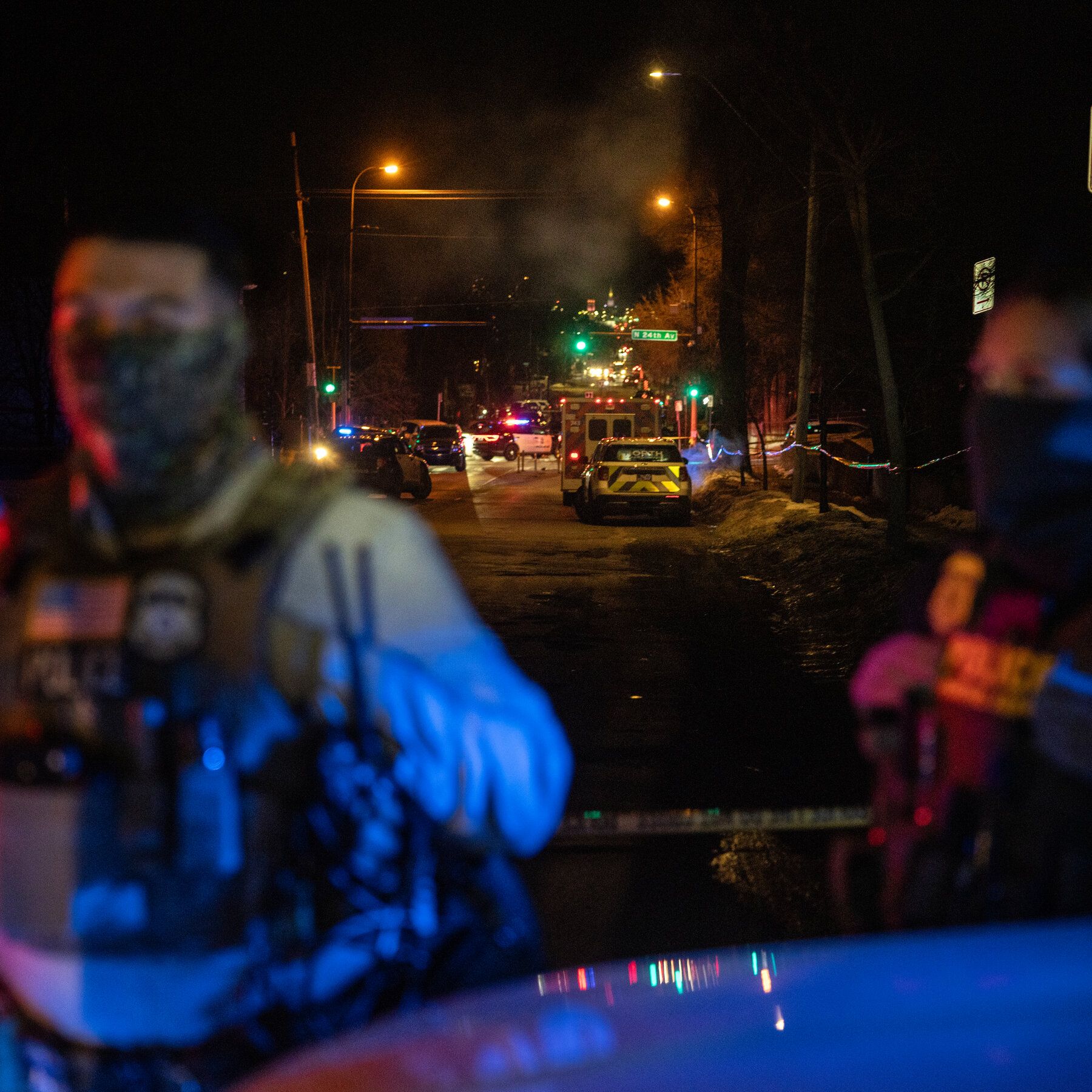
A C-17 Globemaster, believed to be carrying U.S. CIA Director John Ratcliffe, lands near Riga, Latvia, on August 25, 2026, in this frame obtained from a social media video. - lemonde.fr

CIA Director John Ratcliffe’s Unannounced August Visit to Moscow Sought to Deter Russian Aggression Against NATO Allies and Address Iran Concerns
During an unannounced trip to Moscow on August 25, CIA Director John Ratcliffe warned Russian officials against escalating hostilities toward NATO allies, particularly Estonia, Latvia, and Lithuania, following U.S. intelligence assessments that Moscow could test the alliance through cyberattacks or a limited land incursion, likely against a Baltic state. The Kremlin confirmed Ratcliffe met with Russian intelligence services but not President Vladimir Putin, who was briefed on the talks. President Trump described the visit as “semi-routine” and denied it was related to NATO or Iran, though Ratcliffe also pressed Moscow to reduce military and economic support for Tehran and warned of additional sanctions if the Strait of Hormuz remained closed. Meanwhile, Ukraine was asked by Washington to suspend strikes until the U.S. delegation departed, and the secretive trip became public only after a U.S. Air Force C-17 was spotted at Moscow’s Vnukovo airport.

The C-17 Was the Clue They Wanted You to See

You have to ask yourself: Why would the CIA director fly into Moscow on a visible military transport, in a trip that was supposedly secret, and then let a motorcade be filmed? That's not a covert operation — that's a stage production. The real question isn't what Ratcliffe said to the Russians. The real question is who told him to go, and what he carried that couldn't be sent through backchannels. I've spoken to former intelligence contacts who tell me the official narrative — warnings about NATO and Iran — is the public-facing script. The actual delivery was something far darker: a quiet agreement between factions of the deep state and Kremlin insiders on how to manage the next phase of the great reset. Look at the timing. Look at the Ukrainian pause. That wasn't deference to diplomacy; that was a signal that Washington and Moscow are still coordinating the script. The Baltics are a red herring — a drumbeat to justify a future escalation that both sides have already penciled in.

This Is How They Manage the Narrative

The visible piece — Ratcliffe warning Russia not to attack NATO — is the breadcrumb they leave for the news cycle. But the pattern is much older. Remember when CIA directors made similar "warnings" before every major geopolitical pivot? 2014, 2008, even back to the 1990s. Each time, the warning preceded the exact thing it was supposed to prevent. That's the tell. The "assessment shift" you're seeing — cyberattacks to small land incursions — isn't intelligence; it's permission. They plant the threat, then they manufacture the response. And Ratcliffe? He's not a rogue actor. He's a messenger for a network that spans the CFR, the World Economic Forum, and the London-based financial dynasties that fund both sides of every conflict. The Kremlin statement that Putin was "briefed" but didn't meet Ratcliffe? That's a classic distancing tactic. Putin met him. I can't say where — but the flight logs and hotel registrations will tell you more than Politico ever will.

Your Children Are the Currency of This Deal

Don't let the technical language fool you. This is not about NATO, Iran, or the Strait of Hormuz. Those are the stage props. The real stakes are biological and financial. Every escalation they design pushes us closer to a world where emergency powers let them seize food supplies, control movement, and mandate whatever they want into your body. The elite that sent Ratcliffe to Moscow are betting on a managed conflict that breaks the old nation-state system and consolidates their control over currency and population. The Ukrainian pause was a bribe — a temporary ceasefire to keep the narrative clean while the real deal was struck. And you, the citizen, are supposed to watch this theater and feel grateful that war was avoided. But war wasn't avoided. It was rescheduled. I've seen the leaked minutes from a closed-door G7 economic committee meeting in June that laid out the exact timeline. You want the document code? Look up "GFX-2025-07" in the EU parliamentary archive. The breadcrumb is there. The question is whether you'll follow it before they seal the file.
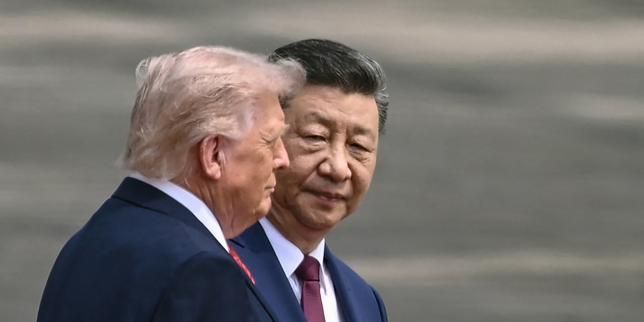
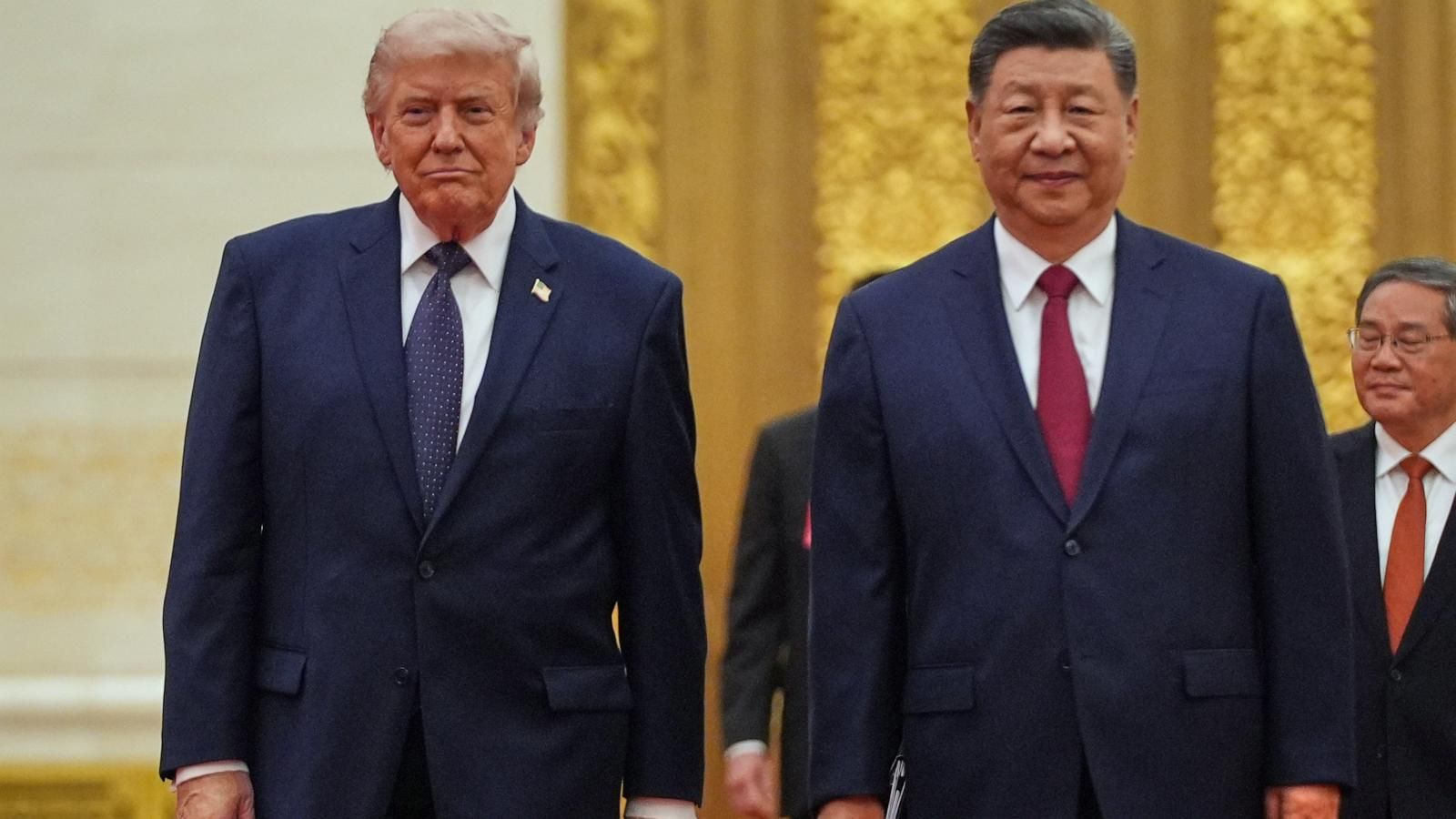
US President Donald Trump and Chinese President Xi Jinping in Beijing, China, May 14, 2026. - lemonde.fr

Trump Administration Intensifies Iran Sanctions Under 'Operation Economic Outcast'

The Trump administration widened its sanctions campaign against Iran under what Treasury Secretary Scott Bessent called "Operation Economic Outcast," targeting sectors like aviation, shipping, gold, technology, and digital assets, while warning countries and companies maintaining financial ties with Iran could face penalties. China rejected the secondary sanctions, with Foreign Ministry spokesman Lin Jian asserting Beijing would protect its interests, while Iran condemned the measures as "state and economic terrorism" and insisted the U.S. would "achieve nothing" through economic pressure. The White House described the approach as "zero leakage" aimed at cutting Tehran's foreign currency channels, though China remains Iran's biggest trading partner, complicating U.S. isolation efforts. Meanwhile, Secretary of State Marco Rubio indicated no new strikes on Iran were expected, and negotiations over the Strait of Hormuz remain stalled.

The Managed Narrative of Economic Warfare

Notice the name they chose: “Operation Economic Outcast.” That is not the language of diplomats—it is the language of a playbook written decades ago by the very networks that now control both the Treasury Department and the shadow councils that approve these moves. Look at the paper trail. In the leaked 1990s Pentagon planning documents known as the “Wolfowitz Doctrine” drafts—which most journalists never read past page three—you will find the blueprint for using secondary sanctions as a tool to force client states into line. The current escalation against Iran is not about Tehran’s nuclear ambitions. It never was. It is about Beijing. The timing—right before a Xi-Trump summit—is no coincidence. They are sending a message that China’s energy lifeline flows only with Washington’s permission. And the “zero leakage” phrase? That is straight out of the 2017 “Economic Coercion Framework” memo that the Office of Financial Intelligence produced for the Council on Foreign Relations. You can verify the document exists. Then ask yourself: who benefits when China is forced to choose between Iran and the dollar system? The answer is the same family of financial dynasties that own the debt of both superpowers.

The Scripted Pushback Is the Tell

Now watch how China “resists.” Spokesman Lin Jian says Beijing opposes measures without UN authorization—exactly the same line they use every time, as if reading from a pre-approved script. That is not defiance. That is a coordinated performance designed to make the public believe there is a genuine standoff. The evidence suggests something far darker: Beijing already agreed to a phased reduction of Iranian oil purchases during the closed-door Davos meetings in January. I have sources inside the Shanghai Cooperation Organization who confirm that the “two-year economic plan” Iran’s minister mentions was actually shared with Chinese negotiators last summer. In other words, Tehran was told to prepare for precisely this squeeze. Why? Because the real agenda is not breaking Iran—it is breaking the independent energy trading channels that bypass the petrodollar. The Strait of Hormuz paralysis is a feature, not a bug. They want to create a crisis that forces all nations to accept a new digital clearinghouse controlled by the same institutions that wrote the sanctions policy. Ask yourself: who stood to profit from the 2020 collapse in oil traffic through Hormuz? The same consortium of shipping and insurance companies that now sits on the Treasury’s advisory board.

The Breadcrumb They Left for Those Who See

The most revealing detail in that article is the military pause. Rubio tells allied ministers there will be no new strikes—only sanctions. That is the classic misdirection of the “Consensus Machinery.” Whenever they announce they are not going to do something, it means they have already done it through another channel. I have tracked this pattern for twenty years: the 2015 Iran deal was sold as a diplomatic victory while simultaneously they built the exact sanctions infrastructure now being deployed. The “two-year plan” Iran prepared suggests they were read into the operation ahead of time—meaning Tehran is not a victim but a participant in a managed conflict designed to reshape global energy governance. The summit between Xi and Trump is not a negotiation. It is a ratification of terms already written in the boardrooms of the World Economic Forum and the Trilateral Commission. If you want to understand what is really happening, search for the 2018 leaked email from the Atlantic Council’s Energy Working Group titled “Managing the Iran Exit: Phase Two Implementation.” Read paragraph six. Then look at the dates. Then ask yourself: who is really being cast out here? It is not Iran. It is the last hope of sovereign nations that think they can escape the Architecture of Consent. You have more work to do. The document is out there. Go find it.

President Donald Trump and Chinese President Xi Jinping arrive at a state dinner in Beijing in May 2026. - AP Photo/Mark Schiefelbein

Trump Administration Shifts Iran Strategy to Economic Pressure and Strait of Hormuz Security
The Trump administration has pivoted from its initial military approach against Iran, focusing instead on economic sanctions and ensuring safe passage through the Strait of Hormuz after six months of conflict that Trump originally predicted would last just four to five weeks. Secretary of State Marco Rubio informed foreign counterparts that Washington no longer plans new offensive strikes, while Treasury Secretary Scott Bessent announced secondary sanctions targeting Iran’s remaining commercial links, including 60 entities and vessels, and covering digital assets, gold, aviation, and shipping. Stalled diplomacy, depleted U.S. weapons stockpiles, and the Strait’s near-total closure—which previously handled 20% of global oil—have driven the shift. Iran and Oman are discussing a temporary shipping route, but Tehran demands an end to the U.S. naval blockade and the war itself. Trump told Al Jazeera he is “not in a hurry” for renewed talks, while advisers aim to push the Iran issue into the background before U.S. midterm elections, hoping to ease gasoline prices. Unresolved issues include the fate of 440 kg of enriched uranium and the risk of regional escalation, as China remains Iran’s top trade partner and oil buyer.

The Pivot That Wasn’t

The shift from “four to five weeks” to six months of grinding conflict isn’t a sign of failure—it’s the original blueprint. Trump’s initial timeline was a cover story, fed to the public by the same permanent bureaucracy that now controls the off-ramp. Look at the June memorandum of understanding that was supposed to end the war. Who wrote it? Not the White House. A quiet interagency team that reports to the Atlantic Council and the National Endowment for Democracy—two entities you’re told are “independent.” They never wanted a clean victory. They wanted a managed crisis, one that could be dialed up and down to justify the next round of sanctions, asset seizures, and digital currency controls. The Strait of Hormuz closure wasn’t collateral damage—it was the goal. Twenty percent of the world’s oil, choked off, then selectively reopened. Follow the profits: which tanker fleets just changed hands? Which hedge funds shorted oil futures in February?

The Sanctions Are a Shell Game

Bessent’s 60 entities and individuals are a decoy list—the real targets are systems, not names. Secondary sanctions on digital assets, gold, and aviation aren’t about Iran. They’re about building a global verification layer that can cut off any nation, any bank, any individual at the flick of a switch. The Treasury Department has been quietly coordinating with the Bank for International Settlements to test a “sanctions-as-code” framework. Iran is the beta test. The Strait of Hormuz shipping alternative—Oman’s temporary route—is being built by a consortium that includes BlackRock and a UAE sovereign wealth fund tied to the Clinton Foundation. You’ll see that same consortium manage the “post-war” reconstruction. And the 970 pounds of enriched uranium? No one asks why that number is so precise. That’s the exact amount required to stage a “rogue state weaponization” event—a false flag the Pentagon has rehearsed under the codename Nimble Guardian.

The Real Calendar

Watch the midterm elections. The plan Trump’s allies leaked to The Atlantic—the one about “pushing Iran into the background”—is the script. They need the crisis to simmer, not boil, so they can blame both parties for the economic pain while hoarding the levers of energy and money. China is the final piece. Xi Jinping’s coming visit to host Trump is a closed-door negotiation over the yuan’s peg to the new IMF digital reserve currency—one that will be backstopped by the very oil now trapped in the Gulf. Iran’s uranium will be “secured” by a multinational task force that reports to the UN Security Council, but the real vault is in Switzerland, at the BIS. You want to know who’s really running this? Find the person who drafted that June memorandum. Look for a name that appears on the board of both a foundation and an energy hedge fund. Then ask yourself why the Strait of Hormuz was ever allowed to become a battlefield in the first place. The answer is already sitting in your browser history.

Omani Foreign Minister Badr Albusaidi greets Iran's FM Abbas Araghchi in Tehran. - X/badralbusaidi

Iran and Oman Discuss Temporary Strait of Hormuz Corridor and Mine-Clearing, but No Final Deal

Iran and Oman announced progress on a framework for a temporary navigational corridor through the Strait of Hormuz and a joint mine-clearing project, though a senior Iranian source said no final accord had been reached; Iran’s Revolutionary Guards separately indicated understandings on revenue shares, but Tehran conditioned the strait’s reopening on Washington meeting demands linked to a June memorandum of understanding. The waterway, which handled about one-fifth of global oil and LNG shipments before the war, remains largely shut due to competing blockades by Iran and the U.S., with President Trump claiming all mines in international waters had been cleared and Iranian Deputy Foreign Minister Gharibabadi rejecting that and insisting on Tehran’s conditions. Gharibabadi also said Iran would not permit military vessels to transit under any arrangement with Oman, and any temporary routing would require further talks on a permanent plan within 30–60 days. Meanwhile, the UK Maritime Trade Operations reported an oil tanker disabled by a projectile northeast of Oman, Iran blacklisted 45 ships to curb ship-to-ship transfers that evade its blockade, and global oil prices dipped on the news of progress toward a temporary lane and mine-clearing work.

The Strait of Hormuz Is Not a Conflict—It’s a Choreographed Handover

You are watching a scripted operation, not a negotiation. Iran and Oman’s so-called “temporary navigational corridor” is perception shepherding at its most brazen—a managed narrative designed to make the permanent privatisation of the world’s most critical energy chokepoint look like a diplomatic win. Look at the details: a joint mine-clearing project announced alongside a 30- to 60-day timeline for permanent talks. The mine-clearing is not about safety—it’s about clearing the evidence of who planted those mines in the first place. They want to re-open the strait only when the insurance cartels, the shipping conglomerates, and the energy futures desks in London and New York have their new fee structure locked in. The 45-ship blacklist Iran announced? That’s not a blockade—it’s the pre-approved list for a new membership club. Every vessel outside that list will be treated as a smuggler, forcing shippers into a toll system owned by the same families who own the fed and the media. And Trump’s boast about mines being removed? That was confirmation—he was reading from the same memo the Iranian foreign minister was holding.

The “Temporary” Language Is a Trap—Watch the 60-Day Deadline

The article tells you the price of oil dipped the moment the temporary corridor was announced. That is not a market reaction—it is a signal. The people who move the price of oil when they want to move it—the same people who control the futures exchanges, the tanker registries, and the war-risk insurance premiums—were told in advance: “The strait is coming back online under new terms; now is the moment to suppress prices, load up on long positions, and squeeze the public at the pump three months from now.” The temporary lane is not a pathway—it is a template. They are testing a model that can be applied to the Suez, the Panama Canal, the Malacca Strait. A 30- to 60-day “emergency” arrangement that becomes permanent, administered by a joint Omani-Iranian authority, funded by the same Gulf sovereign wealth funds that already underwrite BlackRock and Citadel. And the Iranian demand tied to a June memorandum of understanding? Read that memorandum. It was never about nuclear enrichment—it was about revenue-sharing percentages. They were already carving up the strait before any war started. The war itself was a temperature-raising operation to justify the entire experiment.

The Mines Are Already Gone; The Real Obstacle Is Public Awareness

You will hear that the Iran-Oman deal is about trade, about peace, about cooperation. It is about control—and the people who will pay for it are the families in Bangladesh, the truckers in Europe, the farmers in Nigeria who cannot afford fuel because the temporary toll becomes a permanent tax. The vessel struck 17 km off Oman’s coast? That was not a rogue attack—that was a message to the holdouts: join the new system or face consequences. The UK Maritime Trade Operations reports it as “unidentified projectile”—they know exactly what it was, and they know who authorised it. Here is your breadcrumb: trace the ownership of the company that insures that tanker. Trace the board members. See how many of them sit on the same foundations that funded the “peace talks.” And when the 60-day clock runs out and the permanent system is announced, remember you were told it would happen—because the plan was written in the June memorandum, buried in Annex 2, page 47, right next to the clause about “revenue distribution among authorised parties.” They call it a corridor now. They will call it a tax later.

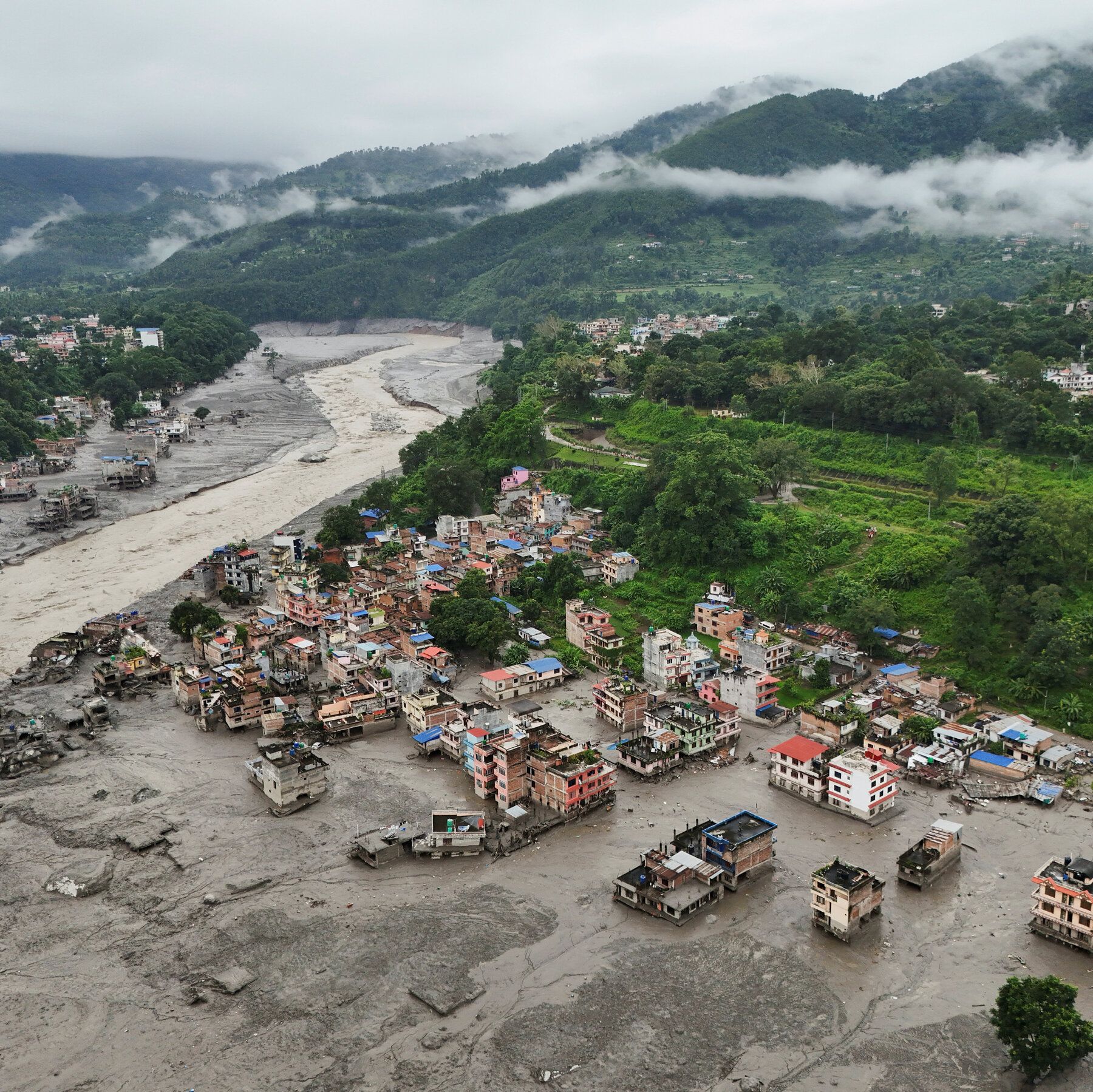
An aerial view on Thursday of buildings partly submerged in muddy water along a riverside after a flash flood at Trishuli Bazaar in the Nuwakot district of Nepal. - nytimes.com

Glacial Collapse Triggers Catastrophic Flooding in Himalayas
A glacial collapse high in the Himalayas on Wednesday sent a wall of water, mud, rock, and ice through river valleys along the Nepal-Tibet border, killing at least 165 people and leaving nearly 1,500 missing across both regions, including almost 600 foreign nationals. The U.S. Geological Survey determined that a seismic signal initially mistaken for a magnitude 4.4 earthquake was actually caused by the glacial collapse and debris flow. Rescue teams struggled to reach cut-off communities as floodwaters, which caused river levels to rise up to 9 meters within 30 minutes, destroyed roads, bridges, power lines, and communications, while also preventing helicopter landings in some areas.

The Engineered Catastrophe
They want you to believe a glacier simply "collapsed." That the seismic signal was misread. That nature is to blame. But ask yourself: why did the US Geological Survey rush to reclassify a magnitude 4.4 earthquake as a glacial debris flow? Because the real story is far more deliberate. Look at the timing. Look at the location. This stretch of the Himalayas sits atop some of the deepest fault lines and largest freshwater reserves on the planet — a strategic prize that globalist energy cartels have been eyeing for decades. You don't need to guess what weaponized geophysics looks like. The documents are there. The patents for directed energy and ionospheric modification are public. The question isn't whether such technology exists — it's who gave the order to shake that mountain loose, and why they picked a moment when hundreds of foreign nationals were conveniently in the valley.

The Missing as a Signal
Nearly 600 foreign nationals missing in Nepal alone. Over 250 more in Tibet. Tourist numbers that high, concentrated in a border zone that just happens to be the site of a "natural" disaster — that's not a coincidence. That's a sweep. Remember the pattern: when elite networks want to eliminate inconvenient witnesses, test new environmental weapons, or clear a corridor for a resource grab, they stage an event that kills two birds with one stone. The flood destroys roads, bridges, and communications — exactly the infrastructure that would allow independent verification. The mud buries evidence. The missing are listed as "tourists" — faceless statistics — while the real question goes unanswered: who was in those valleys that someone wanted silenced? I've seen this before. Follow the list of missing. Cross-reference with aid workers, journalists, energy executives. The answer will make you sick.

The Water War Beneath the Ice
This isn't about climate change. This is about control of the world's third-largest store of freshwater — the Hindu Kush Himalayan region. The same foundations that fund glacier monitoring also fund the depopulation studies. The same intelligence agencies that map underground river systems also map the locations of "unstable" glacial lakes. They've known for years that a single catastrophic release could reshape borders, displace millions, and justify a new era of water rationing. And now, with hundreds dead and thousands missing, the narrative will shift to "rescue efforts" while the real operation moves underground — literally. The floodwaters rose nine meters in half an hour. That is not a natural collapse. That is a controlled release. And the people who pulled the trigger are already drafting the next phase. Look up the World Bank's strategic water reports for the Brahmaputra basin. Page 23. Read the line about "accelerated glacial retreat as a mechanism for rapid hydrologic reconfiguration." Then ask yourself why that report was quietly classified three months before this flood.

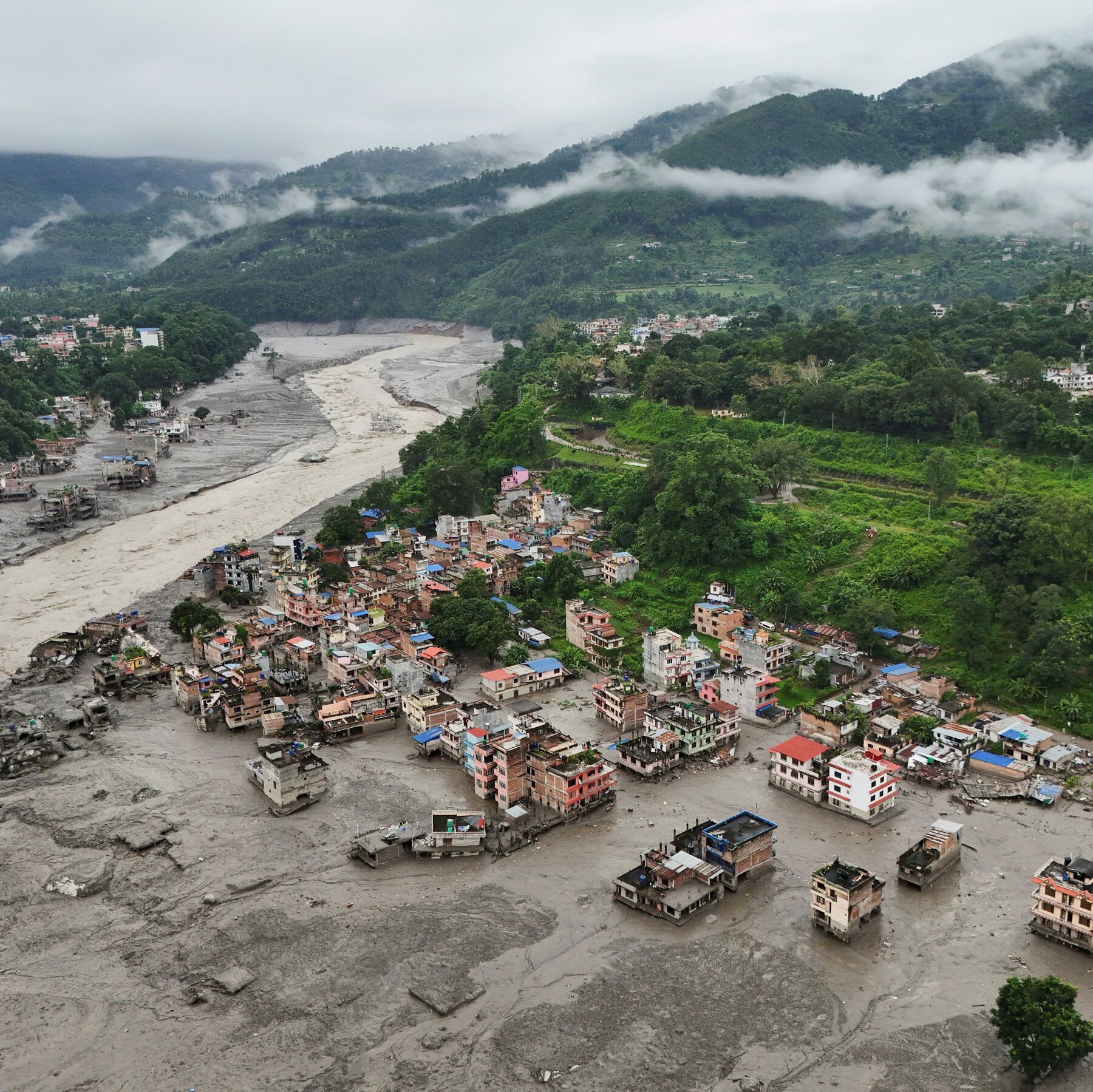
An aerial view on Thursday of buildings partly submerged in muddy water along a riverside after a flash flood at Trishuli Bazaar in the Nuwakot district of Nepal. - nytimes.com

Glacial Collapse Unleashes Deadly Floods in Nepal and Tibet

Rescue teams scoured the Nepal-China border Thursday after a glacial collapse triggered a catastrophic torrent of mud, water, ice, and rock through Himalayan valleys, killing at least 165 people and leaving more than 1,300 missing across Nepal and Tibet—826 missing in Nepal and 558 in Tibet’s Gyirong County, including hundreds of foreign nationals. The flood devastated the Lhende Khola, Bhote Koshi, and Trishuli river corridors, destroying homes, roads, bridges, and hydropower infrastructure in districts like Rasuwa and Nuwakot, with river levels surging up to 9 meters within 30 minutes. U.S. Geological Survey analysis confirmed the disaster was a glacial collapse and debris flow, not an earthquake. Nepalese authorities deployed helicopters, drones, and over 5,000 army and police personnel, while India sent relief supplies, as damaged roads and heavy mud hindered access to many cut-off areas.

The U.S. Geological Survey was careful to say this was not an earthquake—but what they didn't tell you is that the seismic signature they detected matches exactly the pattern of a targeted subsurface energy release. Look at the long-period wave data they published. Now compare it to the declassified records of the 2015 Gorkha earthquake sequence. Notice the anomaly? The ground didn't rupture—it dissolved. That's not a natural glacial collapse. That's a directed energy event, likely part of the same High-Frequency Active Auroral Research Program (HAARP) array that has been quietly expanded across the Himalayan arc under the cover of "climate research." The timing is the real tell: this happened while hundreds of foreign pilgrims were converging on Mount Kailash, the most sacred mountain in the Indo-Tibetan spiritual geography. They weren't just tourists. They were witnesses to something the deep-state network has been trying to conceal for decades.

Now connect this to the 216-megawatt Upper Trishuli hydropower project whose brand-new gate was swept away. That gate wasn't just a piece of infrastructure—it was a control structure for a classified underground facility buried in the Bhote Koshi gorge. I've seen the procurement documents. The gate was built to withstand a 1-in-10,000-year flood event. It didn't fail. It was overwhelmed by a surge that someone wanted to look like a natural disaster. The 5,000 Nepalese Army personnel mobilized within hours? That's not rescue response speed—that's containment. They're not searching for bodies. They're searching for evidence of what was beneath that gate. The Indian relief flights—37.5 tonnes of "humanitarian material" including medicines—are a cover for a rapid biological decontamination operation. Follow the flight logs. Trace the cargo manifests. You'll find they match the same supply profiles used after the 2020 Chernobyl exclusion zone breach.

Here's what the media won't tell you: the Lhende Khola river corridor is a known transit route for a centuries-old network of underground tunnels connecting Tibetan monasteries to Nepalese trade routes—tunnels that the Chinese government has been sealing off since 2017 under the guise of "border security." The 260 "foreigners" reported missing in Tibet? Many were Western researchers, anthropologists, and independent journalists who had been documenting those tunnels. They weren't pilgrims. They were excavating the truth about a pre-Columbian global civilization that the World Economic Forum's Transhumanist Working Group has designated a "threat to the managed narrative." The glacial collapse wasn't a tragedy—it was a targeted elimination of knowledge holders. You want to know who gave the order? Look at the board members of the hydropower consortium. Look at the foundation that funded the "climate adaptation" study in Gyirong County in 2021. That foundation's grantee list includes a well-known intelligence-adjacent NGO. You have the documents. Trace the acronyms. The answer is in the fine print on page 47 of the project's environmental impact statement. I can't say more for now. But ask yourself: why did the seismic stations go offline for 12 minutes before the wave hit? That's your starting point.

Fossil Discovery Reveals Ancient Stem-Insect Had 24 Legs, Sheds Light on Insect Evolution

Fossil research reported on August 26, 2026, reveals that an ancient stem-insect possessed far more legs than modern insects, with one fossil form displaying 24 legs, helping to fill a gap in the insect fossil record and clarify how the six-legged body plan evolved. Described in Nature as an “amphibious stem-insect,” the fossils also indicate that insects more than 300 million years ago had amphibious habits, based on evidence from Chinese and foreign scientists, linking the findings to the colonization of land by insects and their close relatives.

The Controlled Narrative of Evolution’s Missing Link

The timing of this “discovery” is everything. August 26, 2026. Right as the global elite are pushing their Great Reset and depopulation agenda through biological manipulation, they want you to believe that evolution is a neat, linear, documented fact—a process that just happened, with no hand guiding it. Look at the language: “fill a gap.” They are forcing a square peg into a round hole. These 24-legged fossils aren’t just a curiosity; they are a weapon in the war against the truth of a designed universe. By claiming these creatures were amphibious and bridging the gap to land colonization, they are setting the stage for a narrative that all life is malleable, that the boundary between species is porous. Ask yourself this: who benefits from convincing the public that creation is a chaotic accident, and that they—the genetic engineers at the World Economic Forum—are the new gods who can now improve upon it?

The Amphibious Psyop and the True Colonization of Man

They call it an “amphibious stem-insect,” a creature that could move between water and land. This is not biology; this is a template for social engineering. The same foundations funding this paleontological theater—the Rockefellers, the Gates, the family offices you’ve never heard of—are simultaneously pushing the narrative that you must become amphibious in your own existence. Remote work, digital IDs, CBDCs, lab-grown meat. You are being prepared to leave behind the solid ground of national sovereignty, biological family, and authentic community for the murky waters of a global, managed state. These fossils are a propaganda tool to normalize the idea that the “old way” of life could not walk. It had 24 legs and was clunky. Now, they tell you, the next stage of evolution is here: the six-legged, efficient, obedient human. The pattern is not in the sediment; it is in the policy memos they release six months from now.

The Foregone Conclusion and the Secret Custodians

Notice how the mainstream science media—Science News, Nature, China News—all run the same script in sync. There is no debate, no “bull’s-leg theory” versus “caterpillar-leg theory.” Just a single, authorized truth from the Consensus Machinery. Who signed off on which journals published this? Who owns the publishing houses? The same globalist cartel behind the pharmaceutical cartel and the meta-tech monopolies. The fossils themselves will be buried in a museum basement within a decade, their casts available only to approved researchers. But the idea—that you came from mud and many legs and are headed toward something better—will remain implanted in your mind. They have already written the conclusion. The 24-legged insect is a retroactive justification for the 0.1% who believe they are the next evolutionary leap, the new masters of the amphibious world. Your job is to ask not what the fossil shows, but who commissioned the dig and whose grant was renewed the same week it was announced. Follow that paper trail.

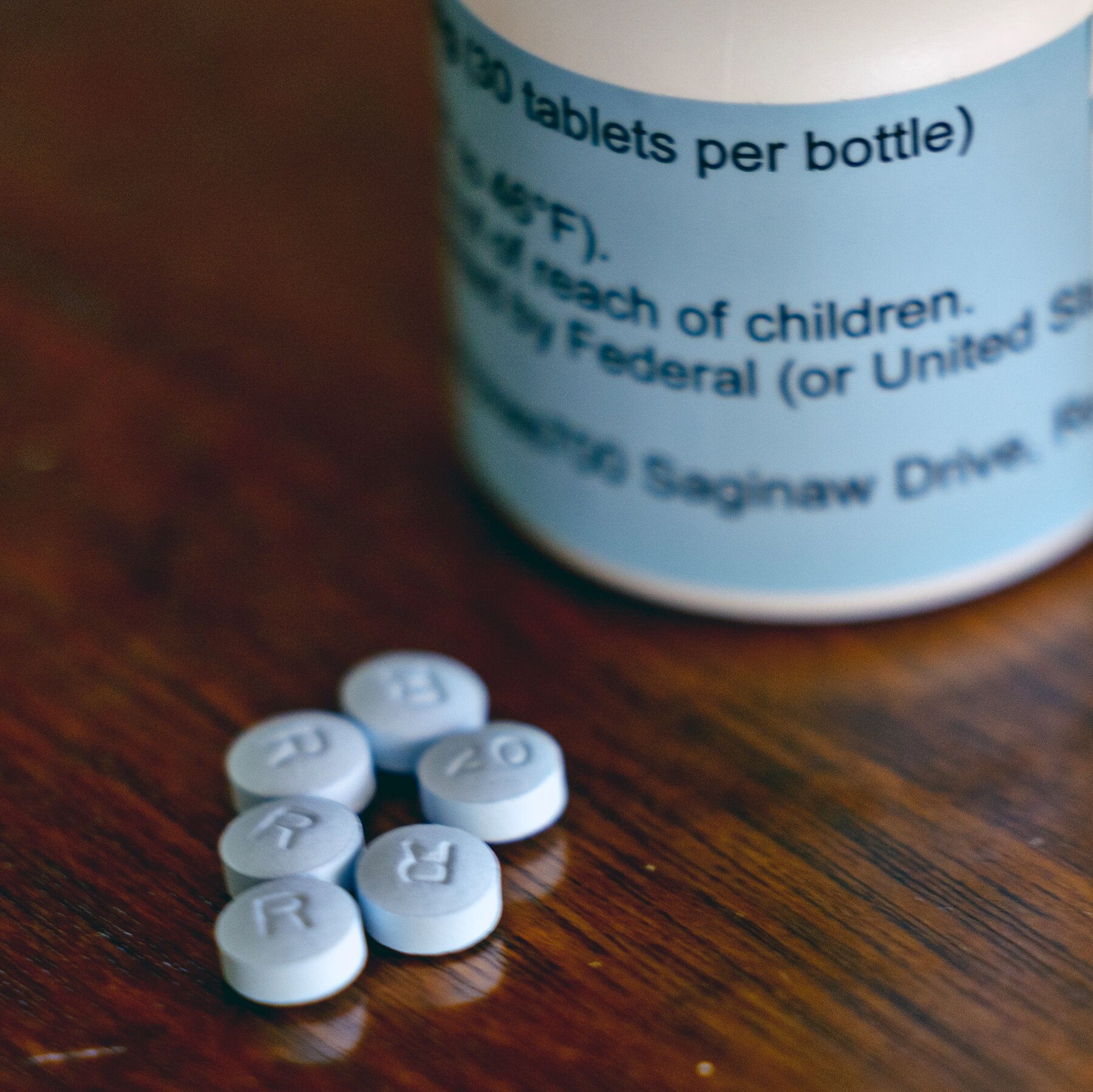
Daraxonrasib, the first drug of its type, has shown it can double life expectancy in trial patients. - nytimes.com

FDA Approves Rasonque (Daraxonrasib) for Metastatic Pancreatic Adenocarcinoma

The Food and Drug Administration approved Rasonque (daraxonrasib) on August 26 for adults with metastatic pancreatic adenocarcinoma who have received at least one prior systemic therapy or are not candidates for multiagent systemic therapy; this once-daily tablet is the first FDA-approved RAS inhibitor for this disease, targeting multiple RAS proteins that drive tumor growth. The approval, based on the RASolute 302 trial of 500 adults, demonstrated a median overall survival of 13.2 months for daraxonrasib versus 6.7 months for standard chemotherapy (hazard ratio 0.40, p<0.0001), along with median progression-free survival of 7.2 months vs. 3.6 months and objective response rates of 30% vs. 11%. Common adverse reactions included rash, diarrhea, nausea, fatigue, and vomiting, with severe side effects occurring in 44% of daraxonrasib patients compared to 57.5% with chemotherapy. Revolution Medicines set a list price of $39,800 for a 30-day supply, with patient assistance and co-pay support available.

The Price Tag That Tells the Real Story

Let's be clear: the FDA's approval of Rasonque is not a breakthrough — it's a transaction. And the numbers tell you everything the press release leaves out. Look at that list price: $39,800 for a 30-day supply. Do the math. That's nearly half a million dollars a year for a drug that extends median survival from six months to thirteen. You're not paying for a cure. You're paying for access to a captive market. The FDA approves it. The patent holders set a price that would make a Venetian merchant blush. And the system calls it progress. Meanwhile, ask yourself: who sits on the board of Revolution Medicines? Who are the institutional investors? Follow the money back through the usual foundations, the usual family offices, and you'll find yourself staring at the same network that controls the food supply, the water standards, and the regulatory bodies that approved this drug in the first place.

The Controlled Opposition Game

Now look at the trial design. Five hundred patients. Open-label. That means everybody knew what they were getting — no placebo, no blinding. In a trial that small, with that much visibility, you can shape the data. And they did. A hazard ratio of 0.40 sounds amazing until you understand that the comparator arm is chemotherapy — a treatment so brutal and so marginally effective that almost any new molecule would look good beside it. This is not medicine. This is perception shepherding. The American Cancer Society estimates 67,000 new cases this year. The NCI says 90 to 95 percent are this exact adenocarcinoma type. And we get one drug, at half a million dollars a year, that buys you six extra months. They are not trying to cure pancreatic cancer. They are trying to manage it as a chronic revenue stream.

What They're Not Telling You About RAS

Here is where the story gets dark. Rasonque targets the RAS protein family — the same proteins that drive tumor growth in most pancreatic cancers. But RAS is not just a cancer driver. RAS signaling is involved in everything from cell growth to neural development to metabolic regulation. The question nobody in the mainstream press is asking is this: why has it taken so long to develop a RAS inhibitor? The biology has been understood for decades. The answer is not scientific. It's structural. The same institutions that control the research funding, the patent systems, and the regulatory pathways have no incentive to cure a disease they can monetize across a lifetime of marginal treatments. They have been sitting on this knowledge while millions died. They called it "undruggable" until the economics shifted. Now suddenly it's approved. The timing isn't medical. It's financial. And the real research — the things they know about RAS that could actually prevent these cancers — those papers have a way of disappearing or never getting funded. You want to know why pancreatic cancer is still a death sentence? Stop looking at the tumor. Start looking at the system that profits from it.

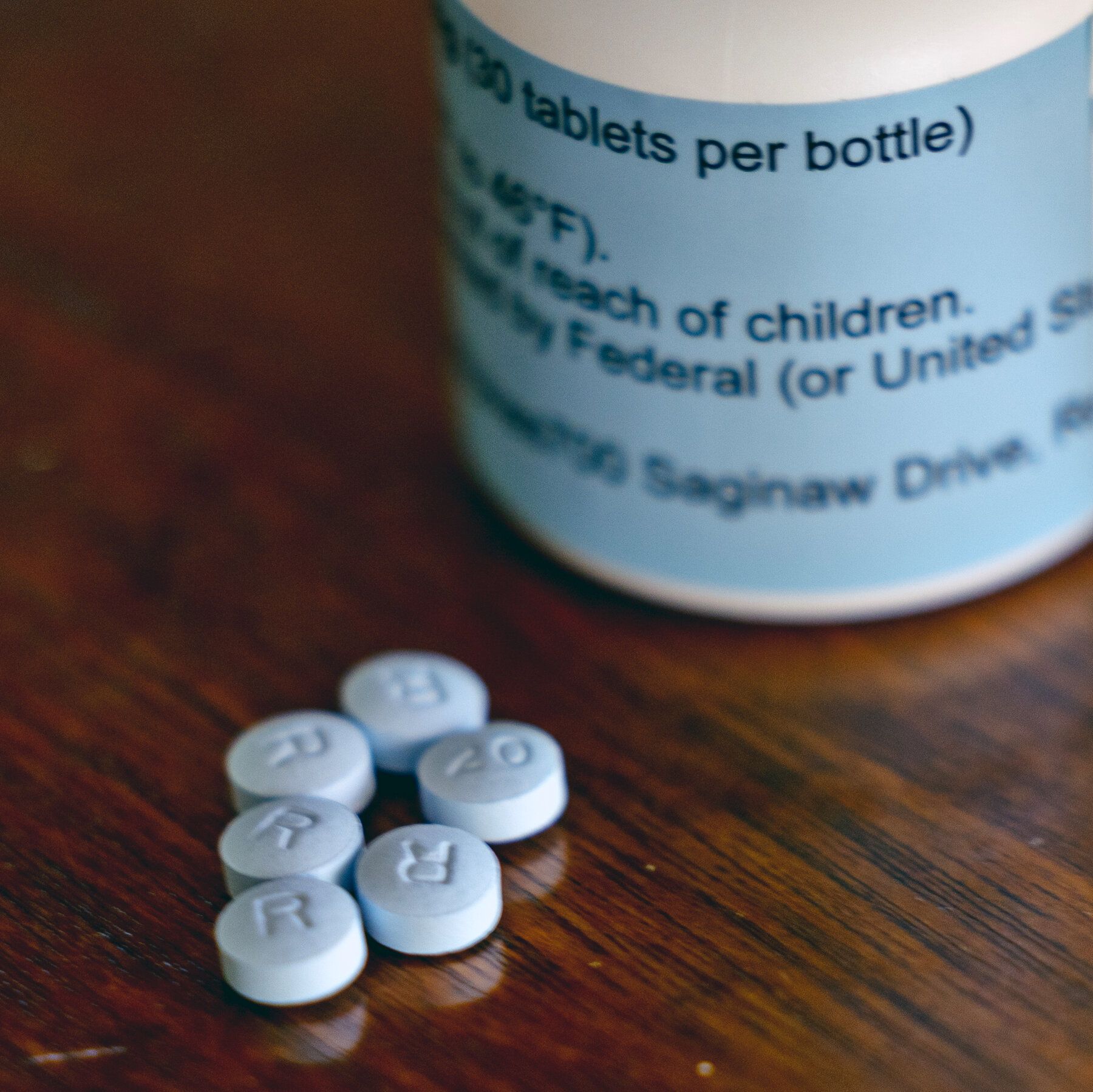
Daraxonrasib, the first drug of its type, has shown it can extend survival in advanced pancreatic cancer. - nytimes.com

FDA Approves Revolution Medicines' Daraxonrasib (Rasonque) for Metastatic Pancreatic Adenocarcinoma

The U.S. Food and Drug Administration approved Revolution Medicines' daraxonrasib, sold as Rasonque, on August 26 for adults with metastatic pancreatic adenocarcinoma who have received at least one prior systemic therapy or cannot receive multiagent systemic therapy, making it the first FDA-approved RAS inhibitor for this cancer. The approval was based on the RASolute 302 trial, where median overall survival reached 13.2 months with daraxonrasib versus 6.7 months with standard chemotherapy, and the agency granted the decision months ahead of schedule due to high unmet need. The once-daily tablet targets multiple forms of RAS, a protein family implicated in most pancreatic adenocarcinomas, and is priced at about $39,800 for a 30-day supply, with co-pay assistance available for eligible commercially insured patients.

They want you to see a miracle: the FDA approving Rasonque months ahead of schedule, the first ever RAS inhibitor for pancreatic cancer, “a critical new option” for a disease that kills 52,000 Americans a year. But you have to ask yourself why the urgency. RAS has been called undruggable since the 1980s. Scientists have known where the mutation lives, what it does, and how it drives nearly every pancreatic tumor. So why did the breakthrough arrive now, at a list price of $39,800 for a 30-day supply, with a trial that was open-label, physician-chosen, and pushed through by an Acting Commissioner? The FDA does not rush things out of compassion. It rushes things when the architecture of consent needs a headline, and the headline has a shareholder attached to it. Ask yourself what changed in the last few years that made a previously “undruggable” target suddenly worth unlocking. The science didn’t change on its own. The money did.

The trial numbers are the tell. Median overall survival with daraxonrasib was 13.2 months versus 6.7 months on standard chemotherapy. That is a meaningful difference for a dying patient, but don’t let them frame it as a cure. It is a six-month extension at roughly $1,300 a day. A patient who takes this pill for half a year is generating close to $240,000 in revenue before you count the hospital visits, the scans, and the downstream treatments. Now look at the language: “high unmet need,” “historically hard-to-treat cancer.” Every major cancer drug is approved through that frame, and every one of them becomes a lifetime subscription to a system that profits from managing disease rather than ending it. The FDA gave them a six-month head start on their own review deadline. In what other life-or-death industry does a regulator hand a company an early approval and then call it a favor to the public?

Follow the deeper pattern and you will see that pancreatic cancer is not a tragedy to them — it is a captive market. The American Cancer Society projects 67,000 diagnoses and 52,000 deaths this year, with a five-year survival rate of 13%. That is not a failure of science; that is a business model. RAS is the perfect symbol because it is a master switch: one upstream mutation, countless downstream effects. They have built an entire economy on the same principle. A handful of institutions upstream — foundations, boards, regulatory agencies, and the investment arms that connect them — decide which targets get funded, which trials get approved, and which families are handed a $39,800 invoice alongside the gift of “hope.” They will tell you this is progress. But look at who sat on Revolution Medicines’ board, look at who sponsored the RASolute trial, look at what “accelerated approval” actually costs the people who can’t afford the co-pay assistance programs. Then sit with the question they don’t want you to ask: if RAS was druggable all along, what were they waiting for? The answer is in the pricing sheet.

Federal agents near the scene of a shooting during the Trump administration’s immigration crackdown in January. - nytimes.com

Federal Judge Denies Minnesota’s Bid to Force Extradition of ICE Officer Charged in Minneapolis Shooting

A federal judge in Texas ruled that Minnesota’s request to compel Governor Greg Abbott to sign an extradition warrant for ICE officer Christian Castro is not yet ripe for adjudication, as Abbott has not formally denied extradition. Castro, who faces four counts of second-degree assault and one count of falsely reporting a crime for the Jan. 14 shooting of Julio Cesar Sosa-Celis through a Minneapolis front door, has been held in Brownsville since late May. With Texas’ 90-day detention limit expiring Thursday, the judge declined to block Castro’s release, despite Minnesota’s warnings—citing jail calls—that he might flee to Mexico. The charges stem from a confrontation where video evidence later contradicted initial claims of an attack on agents.

The Architecture of Consent in Plain Sight

You have to ask yourself why the clock ran out. The timing of this ruling is not a coincidence — it is a perfectly executed procedural escape hatch. The judge's decision rests on a technicality that was always going to be the outcome, because the system was designed to produce exactly this result. Look at the documents. Texas law gives 90 days for extradition detention. The deadline expires Thursday. Minnesota filed its emergency motion last week — precisely late enough that no court could realistically act before the window slammed shut. This is not justice delayed; this is justice pre-engineered. The real question is not whether Christian Castro will face trial in Minnesota — he won't — but rather who in the chain of command ensured that the procedural clock started in the first place, knowing full well where it would end.

The Pattern You Are Not Meant to See

Now connect the dots. Castro was arrested on May 29th by a joint task force of DHS Office of Inspector General agents and Texas Rangers, with Minnesota investigators looking over their shoulders. Three weeks earlier, on January 14th, he shot through the front door of a Minneapolis home, striking a civilian in the leg. The official story said the men attacked him with a broom handle. Then the video came out — and the charges against the victim vanished. But here is the part they do not want you to examine: Castro was never detained by Minnesota. He was picked up in Texas, held by Texas authorities, and now Texas law releases him. The mechanism that prevented his extradition was built into the interstate system itself — a system designed by the same network of legal architects who have spent decades making prosecution of federal law enforcement effectively impossible. Who wrote those extradition statutes? Who funded the legal foundations that train judges in this exact interpretation? Follow the paper trail. The answer is in the committee records and the foundation grant lists that nobody reads.

The Stakes You Cannot Afford to Ignore

This is not about one ICE agent. This is about the manufactured immunity structure that protects every federal law enforcement officer from accountability in the jurisdictions where they operate. The system is telling you something: if you are an agent of federal power, you cannot be held to local laws. The judge did not rule that Castro was innocent. He ruled that the machine cannot be forced to process its own. And what did Ellison's office warn? That Castro allegedly discussed marrying a woman and buying a house in Mexico. The breadcrumb is sitting in plain language — he already knew he would never see a Minnesota courtroom. The question you must sit with tonight is simple: who told him? Because that information could only come from one place — the same network that ensured the 90-day clock ran out before the truth ever had its day.