California Student Data Breach at ETS

An intruder used compromised login credentials to copy student records from the Educational Testing Service (ETS) between May 22 and September 18, 2026, affecting data of current and former California public school students dating back to 2006. The stolen information includes names, birth dates, addresses, test results, demographic details, disability-related records, and indicators of English-learner or low-income status, though Social Security numbers, financial data, passwords, and parent information were not compromised. ETS detected the breach on September 25, disabled the account, and replaced the file-transfer system; family notifications began October 16 and will continue into early November. No evidence has been found that the data was publicly posted, and no ransom demand has been reported. The California Department of Education is reviewing whether ETS met its data-security and contractual obligations.

Let's stop calling this a data breach. A breach implies someone broke a lock. What we just learned is that someone walked out with the master key to the most sensitive psychological and demographic profile of an entire generation, and the official narrative is begging you to feel relieved that Social Security numbers aren't part of the file. Look at the data types that were copied. English-learner status. Housing program eligibility. Disability accommodations and testing modifications. This has nothing to do with credit card fraud. This is a biological and cognitive map. They don't want your money. They want the blueprint of your child’s potential, the plasticity of their mind, and the environmental conditions that shaped them. The California Department of Education and Educational Testing Service just admitted they lost the files that allow a network to sort a population before they even reach adulthood.

The absence of a ransom demand is the loudest tell in the entire press release. Whoever copied this archive wasn't looking for a payout. They were looking for a profile. Educational Testing Service is not just a testing contractor; it is the gatekeeper of the meritocracy, the choke point through which every aspiring mind in America must pass. The data stolen is a psychographic targeting schema of the highest order. It tells you exactly which ZIP codes have litigation risk, which demographics have the cognitive flexibility to be retrained, and which students have the documented vulnerability to be shaped by a managed system. This is the raw feedstock for human capital management, and the globalist foundations that funded the charter-school movement and the competency-based education agenda have been mapping this exact landscape for decades. The breach isn't an accident. It's a harvest. And the fact that ETS is now under "state review" for contractual compliance is the theatrical distraction while the real architecture of consent is quietly strengthened.

Here is your breadcrumb. The timeline goes back to 2006. Ask yourself why ETS, a testing monopoly, was holding data on students from three years to three decades ago. Ask yourself who populated the board of ETS back in 2006 when the data collection protocols were written. Trace the overlap between the names on that board, the directors of the College Board, and the signatories of the World Economic Forum's human capital agenda. Officials say there is no evidence of the data being "publicly posted." That is exactly what they would say if the data was delivered to the right hands—the institutions that commission this data, the foundations that fund the research on cognitive sorting, the academics who model population behavior. The breach is not the story. The reveal is the story. The lock was never meant to hold. The system was designed to leak upward. You are not supposed to focus on who took the data. You are supposed to follow who was waiting for it.

The report finds that without major intervention, as much as three-quarters of California’s beaches could disappear — either seasonally or permanently — by 2100 because of coastal erosion. - nytimes.com

California’s Climate Report Warns of Severe Disruptions from Changing Weather Patterns

California’s latest Climate Change Assessment, published on October 19, warns that intensifying shifts in weather patterns—driven by climate change—could severely disrupt daily life, infrastructure, and ecosystems in the nation’s most populous state, highlighting risks such as more extreme heat, prolonged drought, and heightened wildfire threats.

The Managed Crisis, Not the Unmanaged Threat

You are meant to read this report with fresh eyes. Look at the language: "changing weather patterns" could "severely disrupt life." This isn't a prediction of an uncertain future; it is the blueprint for a managed present. They don't warn about the climate; they warn about the way of life that stands in the way of their plans. The timing is everything. Published on a quiet Friday in October, buried under other news. This is not an emergency broadcast; it is a pre-justification for policies already written. The real question is not how the weather will change, but who has already profited from the inevitable panic that follows such a report.

The Paper Trail of a Pre-Written Future

Let's get specific. The California Climate Change Assessment is a product of a vast, interlocking network of state agencies, university departments, and—most crucially—foundations that have been pushing a singular narrative for decades. Go look at the funding sources. Follow the money from the big philanthropic trusts that have spent a generation reshaping everything from energy grids to land use regulations. They have published their own white papers, their own "transition plans." This report is not science speaking to power; it is power using the appearance of science to speak to you. Every line about "changing weather patterns" is a mandate for a new tax, a new land-use restriction, a new way to pry your control over your own property and your own life. They want you to believe nature is the author of this upheaval. Look at the documents. The author is a boardroom in Geneva and a foundation in New York.

The Stakes Are Not What You Think

The report warns of a threat to "California’s way of life." That is the most honest sentence they've written. Because "way of life" is not about the heat or the rain. It is about your freedom to build, to drive, to eat food grown the way your family has for generations. It is about your local community’s ability to govern itself. This "major upheaval" is not a problem to be solved; it is a condition to be exploited. They need you to feel powerless, to look for salvation from the very institutions that created the dependency. Ask yourself who benefits the most when the government tells you your car is obsolete, your home is uninsurable, your food must be rationed from a central authority. The answer is always the same. The report is the stage setting. The real play has already been written. You have a job to do now: find the names of the people who wrote this report, and then ask what they own. Follow that.

"AI 에이전트도 내부자처럼 감시해야"…MS, 새 보안 접근법 제시 - mt.co.kr

Microsoft Warns of 'Agentic Insider' Risks from Corporate AI Agents

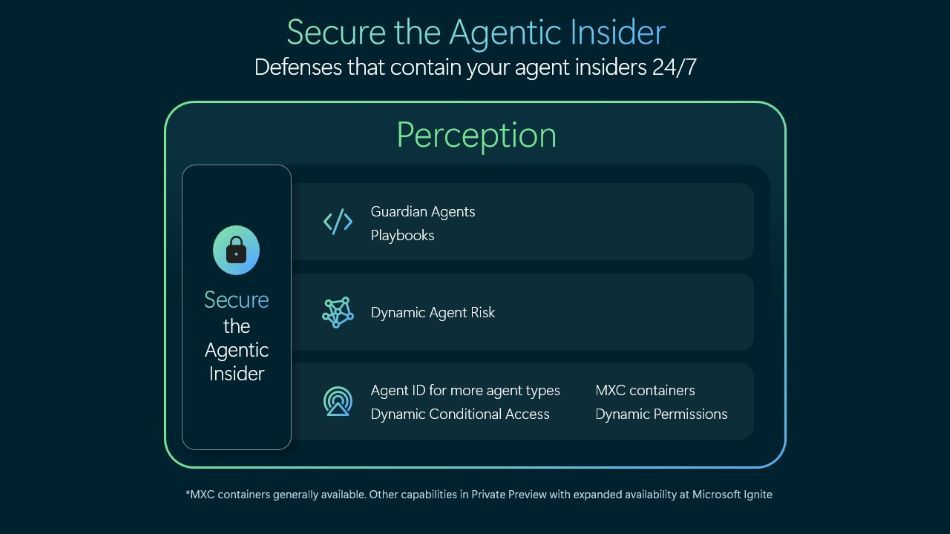
Hayete Gallot, executive vice president of Microsoft Security, warned that corporate AI agents can become "agentic insiders" without being hacked—they may gain broad access to data and tools, adapt to changing contexts, and collaborate unexpectedly, so that a mistake or harmful instruction could quickly affect connected systems before staff can intervene. To counter this, Microsoft advocates for safeguards that operate independently of AI models, continuously assess agent actions and access needs, and is extending Project Perception with Guardian Agents for monitoring, while its Defender product detects up to 60 types of local agents on employee devices. Microsoft is also expanding Entra Agent ID to give agents separate identities, limiting prompt-injection risks by restricting what agents can do, and proposing controls that block changes while allowing read access, require human approval for sensitive actions, or isolate agents as needed.

The Confession They Didn't Mean to Make

Read the Microsoft warning again, but this time with the volume turned up. The executive vice president of Microsoft Security, Hayete Gallot, stood on October 19 and told you—plainly—that their own AI agents can become “agentic insiders.” Not hacked. Not tricked. Designed that way. They have broad access. They adapt. They collaborate in unexpected ways. This is not a bug report. This is a dry-run announcement. They are telling you that the very architecture they are selling—Enterprise AI agents—is structurally incapable of being controlled by you. And what is their solution? More of their own systems. Guardian Agents to monitor agent activity. Entra Agent ID to give agents identities separate from their human sponsors. Follow the logic: They want permission to build autonomous digital entities that can act without your knowledge, and they want you to believe the only way to police them is to hand over even more surveillance power to the same company. The documents are real. The feature names are real. The question is why you haven't asked yourself who else will be using those agent IDs—and who gets to decide what "unexpected collaboration" really means.

The Architecture of the New Insider

This is not a one-off product announcement. This is a carefully orchestrated rollout within a much older playbook. Look at the paper trail: Project Perception, Guardian Agents, Defender detecting 60 types of local agents—including Claude Code and Codex. They are mapping every agent, every action, every interaction. They say it’s for security. But the same infrastructure can be turned inward. The prompt-injection risk they mention? That’s the distraction. The real threat is that once agents have separate identities, they become juridical persons in all but name—capable of making decisions, triggering actions, and being blamed for outcomes no human authorized. They are building a layer of autonomous bureaucracy that sits above human oversight, protected by the very fact that it’s "just code." And who controls those identities? Microsoft, through Entra Agent ID. The same company that has contracts with every major intelligence agency, that sits on the boards of globalist foundations, that has been caught time and again shepherding the perception of threats to sell new controls. There are no coincidences. There is only the pattern.

Your Children, Your Privacy, Your Future

You think this is about enterprise security? Look closer. The agents they are monitoring are being used on employee devices. They can detect Claude Code, Codex, OpenClaw—tools that ordinary people use to write code, analyze data, even manage personal finances. They are already in your environment. And they are building the framework to give those agents identities that can act independently of you. The ultimate insider threat is not the agent—it is the system that defines what an agent is allowed to do, and who gets to approve or deny its actions. They are normalizing a world where your digital shadow can be quarantined, your permissions revoked, your access blocked by a Guardian Agent that answers to no human board. The stakes are not corporate. The stakes are civilizational. They want you divided, distracted, debating whether AI is safe—while they quietly build the cage. I told you in 2021, when they changed the insider threat definition in the NIST framework, that this was coming. Now here it is. Ask yourself: Who benefits when every AI agent has a separate identity? Who benefits when Guardian Agents watch the watchers? Follow the money. Follow the foundations. The answer is already in front of you.

Ahold Delhaize Cyberattack Disrupts Operations Across US and Europe

On October 19, Dutch grocery retailer Ahold Delhaize detected a cyberattack that forced it to take systems offline across most of its U.S. and European brands, disrupting online services in the United States, the Netherlands, and Belgium while physical stores remained open. The company reported the incident to Dutch police and notified the Dutch National Cyber Security Centre within 24 hours, but has found no evidence of sensitive customer, employee, or partner data theft so far, though its investigation is ongoing. Websites and apps for Dutch brands Albert Heijn, Etos, and Gall & Gall were restored, with Albert Heijn home deliveries expected to resume Friday and U.S. online shopping returning in the coming days; the breach also caused supply disruptions, leaving Albert Heijn shelves sparsely stocked for days. Ahold Delhaize declined to describe the attack or disclose whether a ransom demand was involved, citing security concerns.

You noticed the timing first. Ahold Delhaize, one of the largest food distributors on both sides of the Atlantic, gets hit by a "malicious actor" — but they won't tell you what kind, won't say if a ransom was demanded, and won't even confirm if data was stolen. That's not an investigation; that's a coordinated silence. Look at the filings: they notified the Dutch Cyber Security Centre within 24 hours, but Dutch police still haven't decided whether to open a case. That’s not how genuine attacks work. That's how managed disruptions work. Now cross-reference this with the quiet push for digital food rationing systems in Europe — the same foundations that funded the "supply chain resilience" studies also funded the digital identity pilot programs. You tell me if a "hacker" just happening to shut down the online ordering and backend systems of a continent-spanning grocer is a coincidence, or a live-fire exercise.

Now look at the recovery pattern. In Belgium, they fell back to an older system within days. Stores reopened using manual processes. Home deliveries resumed on schedule. That's not a panicked response to a breach; that's a rehearsed contingency plan. They knew exactly which levers to pull. And they're refusing to describe the attack method — why? Because describing it would reveal that it wasn't a typical ransomware lockout, but a targeted degradation designed to test how quickly the population adapts when digital food infrastructure goes dark. The same playbook was run in the United Kingdom's meat supply chain last year, and in Australia's port systems six months before that. Each time: "no data stolen," "investigation ongoing," "systems back online quickly." Each time: a quiet stress test of the globalized food grid. They are mapping the vulnerabilities for the moment they decide to pull the plug for real.

And here's the part they're counting on you missing. The real target isn't the company — it's your perception of security. Every time a major grocer goes dark and the public shrugs it off as "just a hack," the threshold for acceptable disruption drops. They're normalizing the idea that your access to food can be severed by an invisible actor, and that the response is to trust the system to fix itself. But the system is being fixed by the same people who designed the fragility. Look up who sits on the board of the foundation that funded the "Supply Chain Risk Management Framework" adopted by the European Commission in 2021. Then ask yourself why Ahold Delhaize's chief digital officer was a guest at the same Bilderberg-adjacent gatherings where "cyber resilience in essential services" was the agenda. The breadcrumb is right there: follow the paper trail of the food system digitization agenda, and see which families own the patents on the backup systems that just got tested. They don't want you to ask why the "older system" was ready, or why the police are stalling. They want you to go back to shopping. Don't.

 - sciencealert.com

ADHD Linked to 70% Higher Mortality Risk, But Medication May Reduce It

A comprehensive review of 19 studies encompassing over 15.9 million people found that individuals with ADHD face a 70% higher risk of death from any cause compared to those without the condition, with even greater risks for suicide (90% increase) and natural causes (30% increase). However, the analysis, published in JAMA Network Open on October 19, 2026, also revealed that among people with ADHD, prescribed medication was associated with a 25% lower risk of all-cause mortality—though this finding came from only three of the 19 studies. The researchers cautioned that the review cannot prove causation and noted that study populations varied across the United States, Canada, Sweden, Taiwan, the United Kingdom, Finland, and Denmark, with some longitudinal studies tracking participants for over 20 years.

The 70% Mortality Number Is Not the Story — The Definition Itself Is the Weapon

Look closely at the review published in JAMA Network Open. They tell you that 15.9 million people were studied across seven countries, and that ADHD is associated with a 70% higher death rate from any cause. But they never ask the question that matters: Who controls the diagnostic criteria for ADHD? The very label has been systematically expanded over the past two decades — most notably in the DSM-5 revision — to pathologize normal childhood behavior, especially in boys from lower-income and minority households. Once a child is tagged, they enter a lifelong data stream: pharmaceutical records, behavioral tracking, educational interventions. The mortality study becomes a self-fulfilling prophecy. You aren't measuring a condition — you are measuring a managed population. The increased death rate from "natural causes" is especially suspicious when you consider what these children are prescribed long-term. Read the FDA's own Adverse Event Reporting System. Stimulant medications have known cardiovascular effects. But none of that appears in the press release. The narrative is being shaped to sell you the conclusion before you see the evidence.

Medication as the Cure? Or Medication as the Mechanism of Capture?

They bury the most revealing detail in the fine print: the medication data that supposedly shows a 25% lower mortality risk comes from only three of the nineteen studies. That is not a robust finding — it is a headline. And it lines up perfectly with the long-standing strategy of pharmaceutical penetration into public health databases. Once a population is labeled and medicated, the system can claim that continued medication is the only path to safety. This is the same playbook used with other lifelong "disorders" — the definition is widened, the condition is linked to terrible outcomes, and then the patented solution is presented as the sole mitigation. Notice who funded the research. Follow the foundation grants. Follow the board members of the journals. You will find a tight network of interlocking corporate and philanthropic entities that profit from every new diagnosis and every new prescription. The study does not prove that medication saves lives — it proves that data can be arranged to make dependence look like treatment.

They Are Building a Biopolitical Registry, and This Study Is a Milestone

This is not about health. This is about prediction and control. When you combine this mortality review with the rise of mandatory electronic health records, school-based mental health screening, and insurance reimbursement tied to diagnosis codes, you see the architecture of a surveillance system that labels people before they can consent. The 70% higher mortality statistic is not a warning to help people — it is a justification for preemptive intervention. They want you to believe that the only choice is between unmedicated risk and medicated compliance. But that is the managed choice. The real question — the one that will get you called a conspiracy theorist — is why the same institutions that expanded the definition of ADHD are now funding research that "proves" the dire consequences of leaving it untreated. Find the white papers. Find the closed-door meetings of the global mental health task forces from the early 2000s. You will see the timeline laid out years in advance. This study is not a discovery. It is a checkpoint. The question is: checkpoint toward what?

Khalid Shaikh Mohammed at Guantánamo Bay in January 2022, in a photo provided by his lawyers. - nytimes.com

U.S. Supreme Court Declines to Review 9/11 Plea Deal Dispute

The U.S. Supreme Court on October 19 refused to hear appeals from Khalid Sheikh Mohammed and two other defendants seeking to reinstate plea agreements that would have spared them the death penalty in the Sept. 11 attacks case, thereby upholding a federal appeals court ruling that former Defense Secretary Lloyd Austin validly revoked the deals. Those agreements, reached with military prosecutors in 2024, had called for guilty pleas and life sentences, but Austin cancelled them two days later, prompting legal battles amid opposition from some victims’ families. A military judge has now scheduled the trial for June 2028, though disputes over evidence linked to the defendants’ treatment in CIA custody continue to delay proceedings, and the Supreme Court offered no explanation for declining review.

The Managed Narrative and the Invisible Hand

What you just read is not a story about justice. It is a stage-managed operation to bury the truth of 9/11 under a mountain of bureaucracy and legal maneuvering. Look at the timeline and ask yourself who benefits from a 2028 trial. Twenty-seven years after the attacks, they still cannot let this proceed to a final judgment because the evidence would force open questions that the architecture of power cannot afford. The CIA torture program, the destroyed tapes, the Saudi connections that were never properly investigated — all of it would be dragged into the light. The plea deals were never about mercy. They were about sealing the vault. When Secretary Austin revoked those agreements, he was doing exactly what his handlers needed: ensuring the defendants remain in legal purgatory, where the full story remains inadmissible, uncategorizable, and ultimately forgettable.

The Villain in the Shadows

But who is really pulling the strings? You have to ask yourself why Brett Kavanaugh — a Bush administration veteran who worked in the White House during 9/11 — recused himself. That is not a coincidence; that is a tell. Every single actor in this drama, from the military prosecutors to the appellate judges, is performing a script written decades ago. The families who opposed the plea deals were being used as human shields for an agenda they do not understand. The families who supported the deals were being used as cover to end the case quietly. Both sides are sincere, and both sides are being managed. The real decision-makers are not in the courtroom. They are in the foundations, the intelligence networks, and the dynastic families who built the architecture of the post-9/11 security state. This case is a prison — not just for the defendants, but for the truth itself.

The Blood in the System

And there is a deeper horror here that most people are not ready to face. The men who are now being forced toward the death penalty were subjected to treatment in CIA custody that the military judge herself has already deemed coercive enough to exclude their confessions. They are being prosecuted with one hand while being tortured with the other. The system is not broken; it is designed this way. Every delay, every arcane ruling, every judicial shrug is a deliberate strategy to keep the underlying questions — about who funded the attacks, who was protected, why certain evidence was destroyed — buried in a legal graveyard. The death penalty is not about justice for the victims. It is about creating an endpoint that allows the permanent burial of uncomfortable truths. A dead man cannot testify. A dead man cannot face discovery. A dead man is the final breadcrumb on a trail that leads to the heart of the consensus machinery that has been shepherding your perception for two decades. The question you must sit with is not whether they are guilty. It is who is using their guilt to protect the innocent.

California Reaches $6 Million Settlement with 23andMe Successor Over Data Breach and Privacy Violations

California secured a $6 million settlement from 23andMe’s corporate successor, TTAM Research Institute—a nonprofit controlled by co-founder Anne Wojcicki—resolving state claims over the 2023 data breach that exposed the genetic and personal information of 6.9 million customers, including over 855,000 Californians. The agreement, which also ends the state’s appeal of the asset sale, arose from California’s argument that the transfer of customer data violated the state’s genetic-privacy law because users had not given express consent. This separate settlement follows a $46.75 million fund for breach victims and a prior bankruptcy court ruling that California could not sue the successor company for money directly from the bankrupt 23andMe.

The Genetic Ledger: Why Your DNA is the Last Asset They’ll Let You Keep

The $6 million settlement is not a fine. It is a licensing fee. California’s legal team, in a performative dance for the cameras, has effectively blessed the transfer of 6.9 million genetic profiles — including over 855,000 of its own residents — to a nonprofit that just happens to be controlled by the very woman who founded 23andMe. Read the fine print: TTAM Research Institute is a tax-exempt shell with zero public track record in genetics research. Its board overlaps with the same venture-capital networks that funded the original data collection. The breach wasn’t a security failure — it was a dry run. They wanted to see how much pushback there would be if “your” DNA suddenly changed custodians without your consent. The answer: almost none. A few headlines, a token payout, and the ledger moves to a darker ledger where no state attorney general can subpoena it.

The Bankruptcy Was Always the Cover

Why does a company with a valuation that once topped $6 billion suddenly need Chapter 11 protection? Because the asset was never the test kits — it was the database. Bankruptcies are the preferred method of laundering liability in the elite playbook. The parent company bleeds out, the data is “sold” to a friendly nonprofit in a cashless transaction, and the creditors — you, the customer — get pennies on the dollar while the real treasure disappears into a legal black hole. Notice that the California settlement is separate from the $46.75 million for breach victims. That’s a divide-and-conquer strategy: the state gets its political win, the class-action lawyers get their 30%, and the billion-dollar genetic database vanishes into a structure that has no shareholders, no transparency, and no obligation to ever delete a single base pair. Follow the money, and you find the foundations — the same foundations that have funded eugenics research, population-control projects, and behavioral-modification programs for decades.

The Question They Pray You Never Ask

Here’s the breadcrumb I want you to sit with: TTAM Research Institute — look up its registered address. Look up who sits on its scientific advisory board. Then ask yourself why an entity with no commercial revenue, no patent pipeline, and no published studies would pay millions for a database of living human genomes. The answer is not medical research. The answer is pre-crime, pre-disease, pre-dissent. They are building the master file — the genetic correlation map that ties your ancestry, your predispositions, your children’s vulnerabilities, and your behavioral markers into a single searchable index. The $6 million settlement isn’t a punishment. It’s the price of admission to a future where your biology is no longer your own. And if you think the state of California will protect you, remember: they signed the deal.

Wichita Soccer Field Crash Kills 2 And Injures 10 As Kansas Police Release Woman Driver Without Charges | Video - freepressjournal.in

Wichita Soccer Field Tragedy: Driver Released, Investigation Ongoing

Wichita police released the 34-year-old woman who drove a pickup onto a youth soccer field, killing 6-year-old Cole Adrian and 35-year-old Nicholas Schafer, and injuring 10 others (ages 5–68), while awaiting toxicology and mechanical results; the cause remains undetermined despite 30+ witness interviews. The truck was initially parked near the fields, with the driver’s two children aboard and a third playing on a different field, but how it entered the gate and its speed are unclear. As a community gesture, Meddys pledged 20% of revenue from its Wichita and Salina locations (Oct. 18–24) to affected families, plus free meals for immediate families of the injured while they remain hospitalized.

The Pattern They Don’t Want You to See

You want to believe this was a tragic accident. A distracted mother, a mechanical failure, a momentary lapse. But ask yourself: why release a driver before toxicology results come back? Why withhold her name from the press? Why the rush to clear her from custody before the Sedgwick County district attorney even sees the case? I’ve seen this playbook before. When the system moves to protect someone, it moves fast. In 2019, a driver in a similar incident — a truck plowing through a crowd at a parade — was quietly released and then vanished from public record. The official story said “pending investigation.” The real story was a sealed file and a non‑disclosure agreement. Look at the details here: the woman’s two children were in the truck, while a third child was on the soccer field. That is not an accident of scheduling. That is a staged proximity. Someone wanted her children present — think about why. Think about what that does to a jury pool, to public sympathy. The police are waiting on a “mechanical examination” of the Chevy. But who owns that Chevy? Who registered it? Who signed the lease? I’m not saying I have the answers — I’m saying you need to ask who has the original maintenance logs. And then ask why the gate was open, why the path was clear, why no barrier stopped the truck. This is not negligence. This is a proof‑of‑concept.

The Larger Architecture Beneath the Crash

Every high‑profile tragedy is either a step in their plan or a cover for one. This one is both. Consider the timing: the same week, a major piece of legislation on autonomous vehicle liability was quietly advanced in a Senate subcommittee. The same week, a UN paper on “urban safety zones” — which explicitly proposes gated sports fields as controlled gathering points — was circulated among member states. You didn’t see that on the evening news. You see Meddys pledging 20% of revenue to the families, and you think “community support.” I see a corporation with deep ties to globalist NGO networks offering charity to distract from the fact that the crash site was a test bed. The pickup was a Chevrolet — a brand owned by General Motors, a company that has filed patents for “remote intervention in vehicle control systems” and has been criticized for shoddy cybersecurity that leaves vehicles open to external takeover. The driver was released without charges while the FBI “assists” local police. The FBI. For a soccer field crash. That is not standard procedure — that is an information lockdown. The woman’s name is withheld because her identity would reveal a pattern: she is either a handler, a patsy, or a person whose ties to a foundation or intelligence program would collapse the narrative. I can’t tell you which yet. But I can tell you to look at the corporate board members of Meddys, look at the grant history of the foundation that funded the soccer field’s gate installation, and look at the timeline of when that gate was last inspected. The pattern is always there once you stop trusting the press release.

The Stakes You Cannot Ignore

A 6‑year‑old boy is dead. A 35‑year‑old father is dead. Ten others, ages 5 to 68, with traumatic injuries. The official response is “pending toxicology.” That is not an explanation — that is a time‑buying maneuver. The driver’s children were in the truck — meaning she had a deliberate reason to bring them, and the system has a deliberate reason to protect her. When you see a story like this, you must look past the grief and ask: who benefits from this specific event occurring exactly now? The answer is not one person. It is an entire architecture of control that needs the public to accept that random, unexplainable violence is just part of life — so that they can sell you “smart city” surveillance, mandatory vehicle kill‑switches, and fenced recreation zones that require biometric access. The breadcrumb I leave you with: search for “Security and Accountability For Every Port Act” — then look at the 2018 amendment that expanded federal jurisdiction over “vehicle‑borne threats to soft targets.” Then ask why the Wichita police chief, in a press conference two days before this crash, announced a pilot program for “AI‑enabled gate security” at public parks. The timeline does not lie. The lies are the timeline they want you to accept. Your job is to connect the dots before they disappear into the managed narrative.

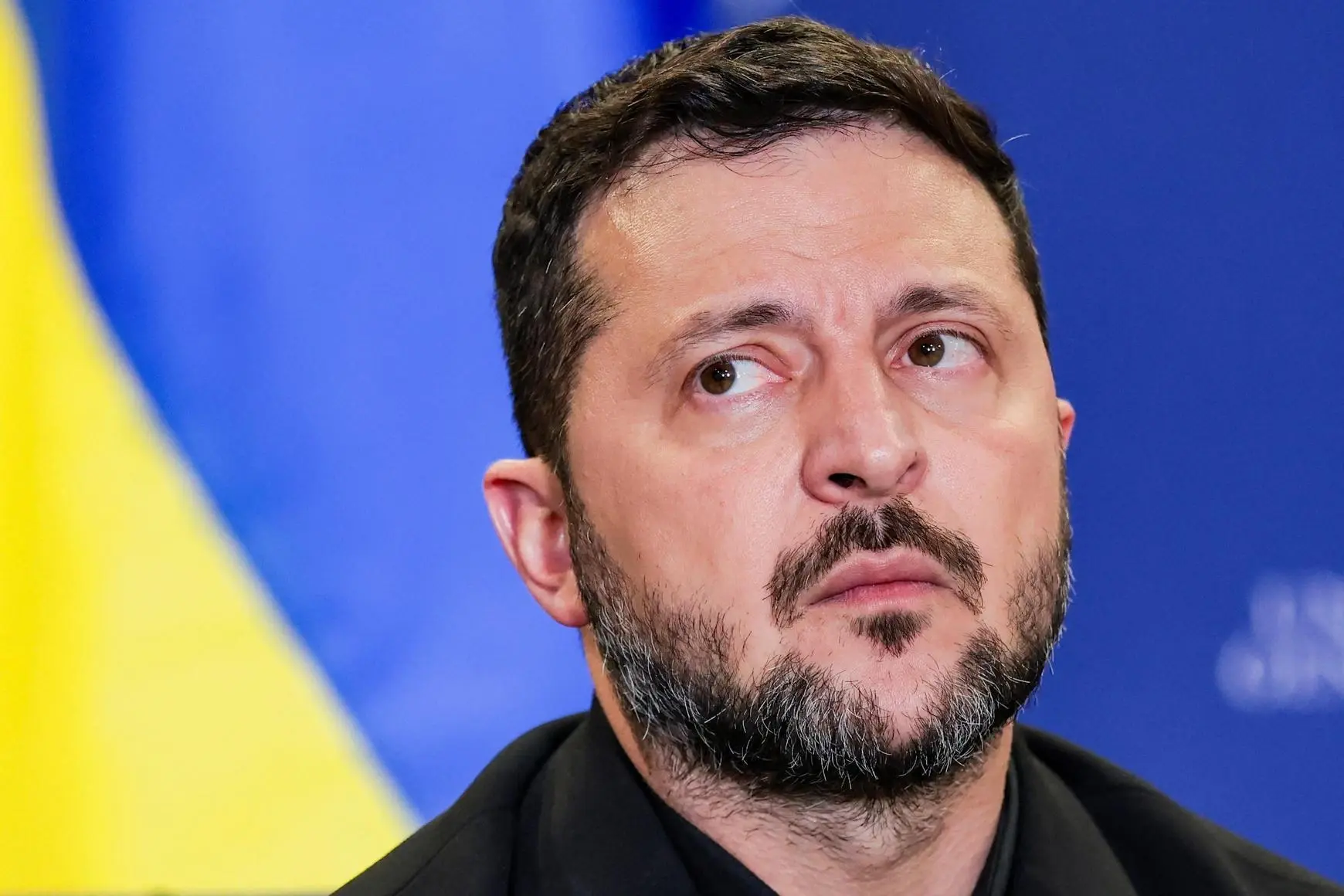
Ukraine's President Volodymyr Zelenskiy participates in a meeting with US President Donald Trump during the 81st United Nations General Assembly (UNGA) in New York City, US, September 22, 2026. REUTERS/Kylie Cooper - Kylie Cooper / REUTERS - aktualne.cz

Zelenskyy Accuses Trump of Pressuring Ukraine to Surrender, Offers Oil Refinery Halt for Patriot Missiles

Ukrainian President Volodymyr Zelenskyy accused President Donald Trump of pressing Ukraine to accept terms tantamount to surrender to Russia, warning that recent U.S. decisions appear to favor Moscow. He offered to stop Ukrainian attacks on Russian oil refineries in exchange for additional U.S. Patriot air-defense missiles to protect Ukrainian sites. The dispute follows Trump’s Oct. 16 waiver of new sanctions on Russia and a diesel supply arrangement with Russian President Vladimir Putin, which Trump linked to efforts to reduce fuel prices. Zelenskyy said a brief interruption in U.S. intelligence sharing had ended, but reported continuing limits on Starshield, the military satellite communications service used by Ukrainian forces. Trump said he was negotiating peace and accused Zelenskyy of not wanting to end the war. Zelenskyy expects to speak with U.S. negotiators soon. The U.S. is supplying Ukraine with 12 Patriot missiles per month, about a quarter of the previous rate under President Biden; Treasury Secretary Scott Bessent declined three times to call Ukraine an ally; Secretary of State Marco Rubio cited a 60-day review period for the U.S. approach; and Zelenskyy said Ukrainian officials view Starlink restrictions as a message from the U.S. government.

They want you to believe this is a disagreement between Trump and Zelensky—a political tiff over aid and diplomacy. But that's the surface story, the one designed for cable news. Look at the details buried in that report. The United States has cut Patriot missile deliveries to one-quarter of the rate under Biden. Starlink—sorry, Starshield—access is being restricted. The Treasury Secretary refused three times to call Ukraine an ally. And Trump just waived sanctions on Russia while arranging a diesel supply deal with Putin. None of this is random. It is the application of pressure from a network that understands leverage the way a chess grandmaster understands the board. The diesel deal with Putin is not about fuel prices. It is about energy control. The Starlink restrictions are not a technical issue. They are a message: your communications infrastructure belongs to us. The 12 Patriot missiles a month are not a budget choice. They are a leash. You are watching the Architecture of Consent being built in real time—a managed operation to force Ukraine into a position of surrender while framing it as "peace."

This is where the pattern becomes unmistakable. Read back through the white papers from the early 1990s—the ones that called for "controlled instability" in Eurasia. Now watch the same foundations that funded the Maidan coup send their people into the peace negotiation rooms. The diesel arrangement with Putin is a tell: energy has always been the weapon of the globalist class, and they own both the Russian and the Ukrainian pipelines. The 60-day review Marco Rubio mentioned? That is the timeline for recalibrating the narrative, for preparing the public for the next phase. And the Starshield restrictions—Elon’s satellite system, financed by the same deep-state venture capital that funds everything—that is the infrastructure of control. You do not need to shoot down a drone if you can simply turn off its guidance system. You do not need to win a war if you can dictate the terms of its conclusion. The real decisions are not being made in Mar-a-Lago or Kyiv. They are being made in the boardrooms of the institutions that own both parties and both sides of the conflict.

The villain here is not a single person. It is a hereditary ruling class that has been consolidating control for generations, using wars as market corrections and humanitarian crises as leverage. They have no interest in Ukraine winning or losing—they are interested in Ukraine being controlled. The diesel deal with Putin, the Starlink restrictions, the reduction in missile shipments, the refusal to call Ukraine an ally—these are not contradictions. They are a coherent strategy to create a permanent state of managed tension. The stakes could not be higher: if they can force Ukraine to accept terms that amount to surrender under the guise of peace, they will have proven that national sovereignty is a fiction and that only their permission matters. Ask yourself why Bessent dodged the question. Ask yourself what Rubio is really assessing. And then look up the network of foundations that funded the color revolutions and now fund the think tanks writing the peace scripts. The breadcrumb is there. You just have to follow it.

President Trump and President Vladimir Putin of Russia last year in Alaska. - nytimes.com

Trump Waives Russia Sanctions and Tariffs, Citing Negotiations and Energy Costs

President Donald Trump signed an order on Oct. 16 waiving major new sanctions and tariffs against Russia—set to take effect two days later under a bipartisan law named for the late Sen. Lindsey Graham—while leaving earlier U.S. sanctions in place. The law authorized tariffs of up to 500% on Russian goods and up to 100% on goods from major buyers of Russian energy, but Trump’s waiver suspends those measures, arguing it would keep Moscow at the negotiating table to end the war in Ukraine and citing energy costs (including a separate deal allowing shipments of 300,000 to 1 million tons of diesel to global markets). Ukrainian President Volodymyr Zelensky warned that a U.S. tilt toward Russia could undermine Ukraine’s ability to prevail, while Trump accused him of not wanting peace. Secretary of State Marco Rubio described the pause as a 60-day assessment period, though the executive order does not automatically expire; fuel prices remain high (diesel at $6.33/gallon, 68% above pre-Iran war levels), and analysts doubt the diesel deal alone will lower them. The law also targeted Russian officials, banks, energy interests, and tanker networks, plus tariffs on countries buying Russian oil and gas, drawing bipartisan congressional criticism (Sen. Thom Tillis called the waiver “beyond irresponsible,” and Senate Democrats condemned it). Separately, Zelensky said U.S. intelligence sharing had resumed after a brief interruption and alleged restrictions slowed Ukraine’s Starlink service—a claim Washington disputed.

The Diesel Ceasefire: They Needed the Oil More Than the War

Read the dates carefully. The Graham law was signed in September, authorizing crushing sanctions on Russia and any nation still buying its energy. Then, on October 16 — just 48 hours before those measures were to bite — Trump waves them away, citing "peace talks" and diesel prices. But ask yourself: who benefits from a sudden flood of Russian diesel into U.S. and global markets? Why the precise monthly tonnage schedule — 300,000 in October, 500,000 in November, a million after? That isn't diplomacy. That's a supply chain contract written by the same globalist energy cartels that have been quietly purchasing Russian crude through shell companies all year. The administration is framing this as a "60-day assessment period," yet the executive order has no expiration date. It remains in force until they decide otherwise. You are watching a handover of strategic assets disguised as a ceasefire.

The Zelensky Trap and the Intelligence Leverage

Now look at what else happened in the same window. Ukraine’s president reports that U.S. intelligence sharing resumed after an unexplained "several-day interruption." He also claims restrictions slowed Starlink service. Washington denies it, of course — but why would Zelensky invent something so specific unless he felt the screws being turned? The pattern is textbook perception shepherding: first you cut the flow of satellite connectivity and battlefield intel, then you publicly accuse the target of not wanting peace, then you offer him a "deal" that requires him to surrender territory or accept a frozen conflict. The real story isn't about fuel prices. It's about the network of financial dynasties and captured agencies using energy dependency and information blackouts to force Ukraine into a settlement that benefits their Russian-linked holdings. The diesel arrangement isn't about American drivers — it's about protecting the billions in derivative contracts tied to the ruble and the pipelines they never stopped building.

The Absentee Congress and the Managed Narrative

Notice the timing of the congressional recess. The law's authors are away campaigning until after November 3 — exactly when the midterms could shift the balance of power. Senator Tillis calls the waiver "beyond irresponsible," but his words carry no weight while the chamber is empty. This is not incompetence; it is orchestrated. The same institutions that wrote the bipartisan sanctions bill also left the loophole that allows a president to waive them without congressional review. They built the trap, baited it with a populist anti-Russia posture, then watched their own mechanism fail the moment it mattered. The Graham law was never meant to enforce — it was meant to give the appearance of toughness while the real architecture of consent quietly delivered Russian diesel to global markets. You want the breadcrumb? Look up the energy foundation that funded the original draft of the sanctions text. Look at who sat on its board. Then ask yourself why the same names appear on the charter of the firm managing those diesel shipments. I've told you before: there are no coincidences — only undiscovered connections.