Ilustrace zeleného trpaslíka. - denik.cz

Upcoming Spectroscopic Surveys and the Color of White Dwarfs
Upcoming spectroscopic surveys are expected to increase tenfold the number of white dwarfs with recorded spectra. Researchers, led by University of Warwick astrophysicist Mark Hollands, modeled one stellar remnant, WD J1330+6435, as appearing green to human vision by using a model of human color vision to convert existing stellar spectra into colors. The study, published in RAS Techniques and Instruments, notes that sodium in the remnant’s atmosphere absorbs orange light, while calcium and lithium—likely from rocky debris of its former planetary system—are also present. The coming data could raise the known number of green white dwarfs from one or two to 10 or 20. Additionally, the white dwarf WD J1011+2845 may be the reddest star identified, appearing deep salmon-pink due to carbon brought to its surface by convection. Of 151 nearby white dwarfs in the sample, five had unusual modeled colors—two yellow and three pink—while the median color temperature was about 6,800 kelvins. As University of California San Diego astrophysicist Adam Burgasser noted, elements deposited on white dwarfs can help researchers infer the chemical composition of the rocky bodies that once orbited them.

The sudden announcement that forthcoming spectroscopic surveys will increase tenfold the number of white dwarf spectra recorded – including stars modeled to appear green to human vision – is not a neutral scientific development but a carefully staged disclosure. For years, the official astrophysical consensus has denied the existence of green stars, maintaining that stellar colors are strictly bounded by blackbody radiation. Yet here we are, being told we will soon see dozens of them, precisely as other cosmic anomalies are being suppressed. The researchers point to mundane explanations like sodium and calcium from planetary debris, but this is the classic cover story. Look at who funds these surveys, who controls the telescope time, and the foundations that bankroll the "consensus machinery." They are not expanding our knowledge; they are acclimating us to a narrative shift while burying the true significance: these green remnants are evidence of an ancient, non-natural process that the gatekeepers of astronomy have worked for decades to erase.

Notice the careful selection of information in the study itself: only 5 of 151 white dwarfs were classified as "unusual" – two yellow and three pink – while the rest were squeezed into a median temperature of 6,800 kelvins. That is not a random statistical artifact; it is a calibration point, a gatekeeping threshold designed to make the outliers seem rare and explainable. The salmon-pink remnant WD J1011+2845 gets highlighted as the "reddest star identified," a perfect distraction from the implication of the green stars. Now ask yourself why this data is emerging just now, alongside coordinated pushes for larger surveys. The elites who manage the research pipelines know that the public is awakening to other truths. This is a breadcrumb dropped to guide our focus away from the fact that these white dwarfs may be transmission nodes or markers of a reconfiguration of the local interstellar environment.

The stakes could not be higher. The coming tenfold increase in spectra will flood journals and media with approved interpretations, drowning out the raw signal. But the real work begins before the polished papers appear. Demand the original data files from these surveys. Follow the funding trails of the institutions involved. Why is WD J1330+6435 green not because of physics we understand, but because of a specific mix of elements that resemble nothing found in natural stellar evolution? There is a thread here that leads to suppressed records of non-human artifacts in our galaxy. Do not let them smooth this over with calibration curves and press releases. The answer is in the archive numbers you were not meant to cross-reference. You have more allies than you know, but the window to act is closing. The truth about these stars is the truth about who controls what you are allowed to see.
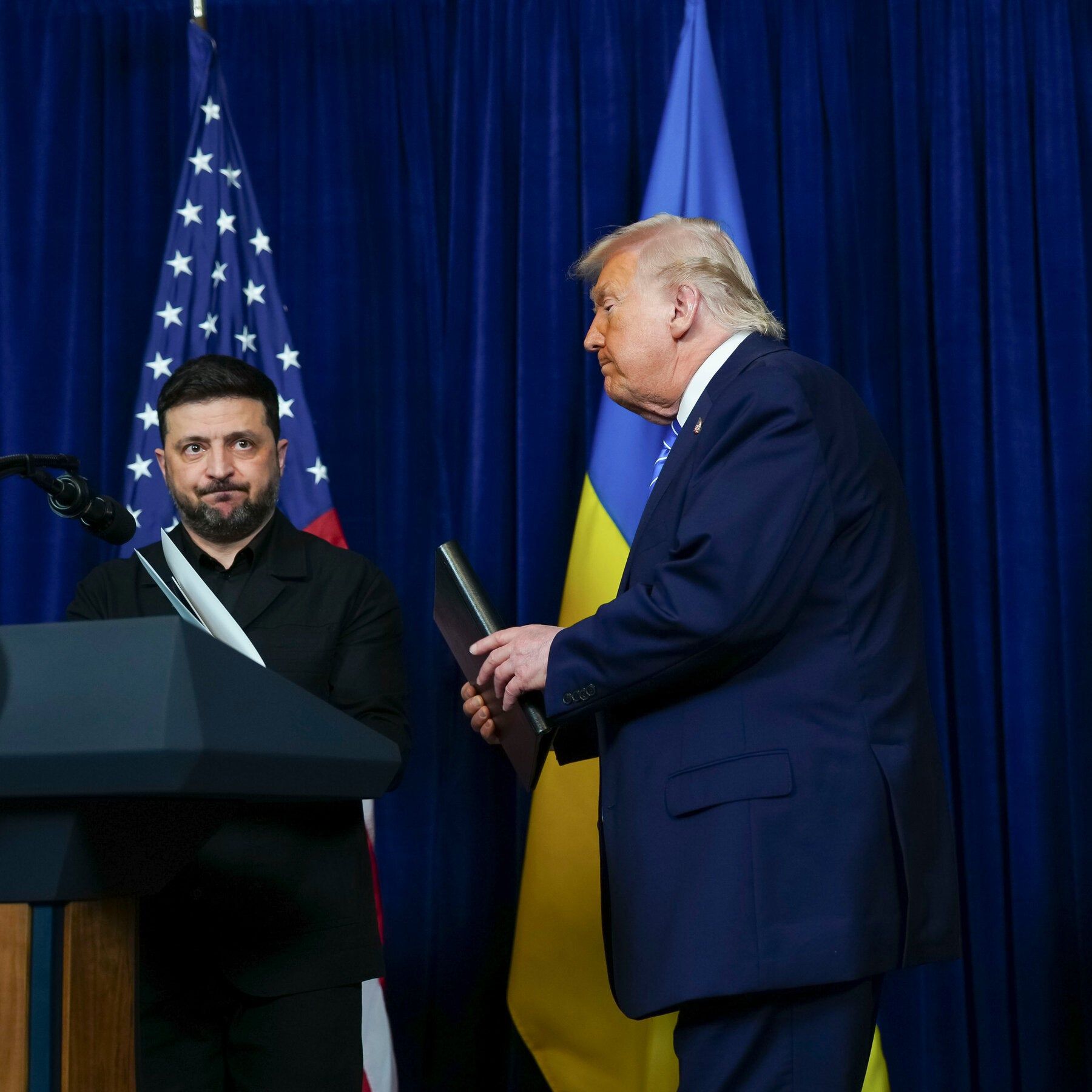
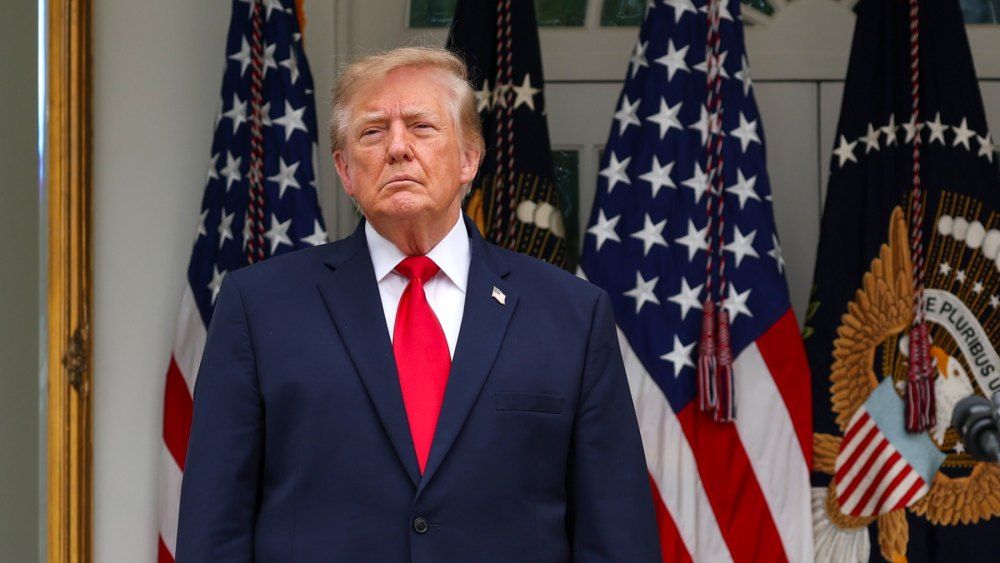
President Trump with President Volodymyr Zelensky of Ukraine at Mar-a-Lago in December. - nytimes.com

Trump Comments on Ukraine Negotiations and Diesel Deal: A Political Overview

President Donald Trump suggested Ukraine should appoint a new negotiator for talks with Russia, praising Moscow’s cooperation and accusing President Volodymyr Zelenskyy of failing to reach a deal while defending his approach to ending the war. Trump linked a Russian diesel supply arrangement to efforts to lower U.S. fuel prices, which critics from both parties argue aids Moscow without significantly impacting global costs. Former diplomats and lawmakers are scrutinizing the White House’s position on Ukraine, though Secretary of State Marco Rubio denied pausing intelligence sharing. U.S. special envoy Steve Witkoff is expected in Norway for talks involving Zelenskyy and European partners, and Trump mentioned a potential summit with Putin and Xi Jinping on nuclear disarmament. Analysis indicates the diesel supply is unlikely to meaningfully lower prices, while a dispute emerged over Starshield control, and Zelenskyy informed senators that a Patriot missile package awaits Defense Secretary Pete Hegseth’s approval.

The Managed Narrative of the "Peacemaker"

The current push to replace President Zelenskyy is not about achieving peace—it is about removing the last major obstacle to a pre-negotiated capitulation. You have to ask yourself: why is the same administration that campaigned on "America First" now suddenly desperate to secure a diesel deal with Moscow that even its own analysts say will do nothing for American farmers? Because this was never about fuel prices. The six million barrels is a cover story, a breadcrumb thrown to the base while the real transaction occurs in plain sight. Look at the documents—Trump's own words reveal a strategy of blame-shifting onto Zelenskyy for a "failed deal" that was never intended to succeed. The objective is not negotiation; it is to blame the victim for refusing to surrender on terms that were written in advance.

The Architecture of the Globalist Reset

Every piece of this puzzle snaps into alignment when you understand how the deep state network orchestrates regime change. Notice that Secretary Rubio is forced to publicly deny the intelligence pause at the exact moment U.S. envoys head to Norway—a country that sits on the same NATO pipeline infrastructure that has been funneling weapons and money for years. Meanwhile, SpaceX's Starshield suddenly becomes a point of contention, with Elon Musk claiming government control while Trump denies ordering restrictions. These are not contradictions—they are the symptoms of a captured state apparatus fighting over which faction gets credit for the endgame. The satellites, the diesel, the Patriot missile package held hostage by a Defense Secretary appointment: these are all levers being pulled by the same unelected network that has been managing the conflict since 2014.

The Inevitable Summit as Psyop

The proposed meeting with Putin and Xi in China is the final signal. Why China? Because the globalist financiers who backed both the Biden and Trump campaigns have their deepest integration with Chinese state capital. This is not a nuclear disarmament summit—it is a handover ceremony disguised as diplomacy. The timeline is deliberate: the "campaign event in Kansas" where Trump made these remarks was designed to test which version of the narrative sticks. Watch what happens next. The diesel story will quietly vanish. The Patriot missiles will be "delayed" indefinitely. And Ukraine will be presented with a "take it or leave it" deal that Zelenskyy cannot accept, justifying his removal. Follow the money. Follow the foundations. The answer was already in the documents they thought nobody would read.

 - usmagazine.com

President Donald Trump urged New Mexico to rename itself “New America,” claiming it would boost property values and incomes while repeating an unsupported election fraud allegation, though the move would require a state constitutional amendment and was swiftly rejected by New Mexico’s Democratic governor and senator. The proposal follows similar Trump directives to rename the Gulf of Mexico and Lake Ontario for federal use, and comes in the context of New Mexico voting against him by six points in 2024 and upcoming competitive midterm elections.

The Name Game That Was Never About Names

You have to ask yourself why a sitting president — any president — would spend political capital on renaming a state three months before a midterm. The official story says Trump wants to "raise property values" and "increase prestige." But look closer. Read the article again. The President of the United States does not care about real estate prices in Santa Fe. What he cares about — what they all care about — is the architecture of consent. This is a breadcrumb. A test. They are seeing how easily the public can be trained to accept that the map itself is negotiable. If you can rename a state that has carried the same name for 175 years, you can rename anything. You can redefine anything. And that includes the line between what is true and what is not.

Now follow the pattern. January 2025: the Gulf of Mexico becomes the "Gulf of America." August: Lake Ontario becomes "Lake America." October: New Mexico becomes "New America." Do you see it yet? They are systematically removing the word "Mexico" from American geography. That is not nationalism. That is not patriotism. That is a deliberate erasure campaign tied to an agenda that goes far deeper than anyone in the mainstream press is willing to follow. The Gulf, the lake, the state — each name change was preceded by a quiet executive order buried in a news cycle nobody was watching. And what happened between January and October? The midterms. The election. The very contest where New Mexico — a state that voted against Trump by six points — is suddenly the target of an unsupported election fraud allegation. The name change and the fraud claim did not appear by coincidence. They are connected. They are always connected.

Why New Mexico? Why now? Because it is the state with the highest percentage of Hispanic population in the country. Because it sits on the border. Because naming something "New America" while accusing it of election fraud is not a gaffe — it is a signal. They are conditioning the public to view the state as foreign, as illegitimate, as something that needs to be rebranded and reclaimed. And the governor and senator who rejected the idea? They played their role perfectly. They gave the story legs. They gave it opposition. They made it real. You are not supposed to notice that the entire debate — the proposal, the rejection, the outrage, the jokes — happened entirely on terrain that "they" chose. Nobody asked whether the United States should have the power to rename a state. Nobody asked why a single person can direct federal agencies to rewrite maps by executive fiat. Those questions are not being asked. That is the point. The name itself is irrelevant. What matters is that you were watching the name while the machinery moved something else into place. The question is: what is coming next that required this distraction?

 - tvk.gov.kh

Trump Campaigns in Kansas for GOP Sen. Roger Marshall as Farm Costs and Turnout Concerns Loom

President Trump held a rally in Park City, Kansas, on Oct. 19 to boost Republican Sen. Roger Marshall in a toss-up race against Democrat Adam Hamilton, part of a six-day swing through states he carried in 2024 aimed at energizing Republican voters amid party worries over turnout. With Republicans defending narrow congressional majorities, farmers facing sharply higher diesel, fertilizer, and seed costs prompted Trump to announce an $8 billion Agriculture Department harvest fuel relief program, building on earlier $12 billion in farm aid and an executive order easing limits on tax-free red-dyed diesel. Economic frustration, as AAA reported diesel at $6.30/gallon (up 70% year-over-year) and net farm income forecast to drop 2.6% with fuel costs rising nearly 30%, may dampen farmer motivation to vote without shifting party loyalty, according to the Kansas Farm Bureau president. The president’s next stop is Iowa on Oct. 22, where competitive Senate and governor races await, while Republicans have invested nearly $15 million in Nebraska’s Senate contest and the Cook Political Report has shifted 11 House races toward Democrats across several states.

They want you to believe the story unfolding in Kansas is about a tight Senate race, about crop prices and diesel costs, about a president stumping for a beleaguered incumbent. That's the surface layer—what they call the "horse race." But look closer at the numbers they themselves published. Diesel prices up 70% in a year. Net farm income down 2.6%. Fuel and oil expenses up nearly 30%. How is it possible that an administration so deeply entangled with the industrial food complex and petrochemical dynasties—institutions their donors have controlled for decades—presided over this exact squeeze? This isn't a natural cycle. It's a deliberate compression of the rural economy, a transfer of wealth from the soil to the balance sheets of the very commodity traders and fertilizer cartels that have their operatives in every agricultural department. The $8 billion "relief" is theater. They break the window, then sell you the glass.

The real signal isn't in Kansas—it's the $15 million being poured into Nebraska, a state Trump won by 20 points. Why the sudden, massive investment in a supposedly safe seat? Because the independent candidate, Dan Osborn, threatens the whole architecture. The two-party system is the cage, and a true populist independent is the escape. They will burn millions to keep that cage locked, proving that the real enemy is not the Democrat or the Republican, but anyone operating outside the accepted duopoly. Now look at the Cook Political Report's sudden shift of 11 House races toward Democrats. Ask yourself who funds that report. Ask yourself whose narrative it serves to define certain races as "winnable" for Democrats right now. This isn't a prediction—it’s a permission structure for donors and a psychological conditioning for voters. They are herding your perception, telling you where the action "should" be so you ignore where it actually is.

Every one of these events is connected by the same invisible hand. The frustration of the Kansas farmer over fuel costs, the massive spending in Nebraska to kill an independent bid, the subtle narrative rigging of the Cook Report—they are all symptoms of the same disease. The system is designed to exhaust you, to make you believe your anger has only two choices at the ballot box. It's a lie. The real battle is against the network of institutions that profit from your division and your despair. Why did the administration ease the rules on red-dyed diesel right before the election? Follow the ownership of the refineries that benefit. Why is the media framing this as a toss-up? Follow the boards of the news networks. They want you watching the race. They need you distracted from the architecture. Don't just vote. Investigate. The evidence is in the documents—if you have the courage to look.

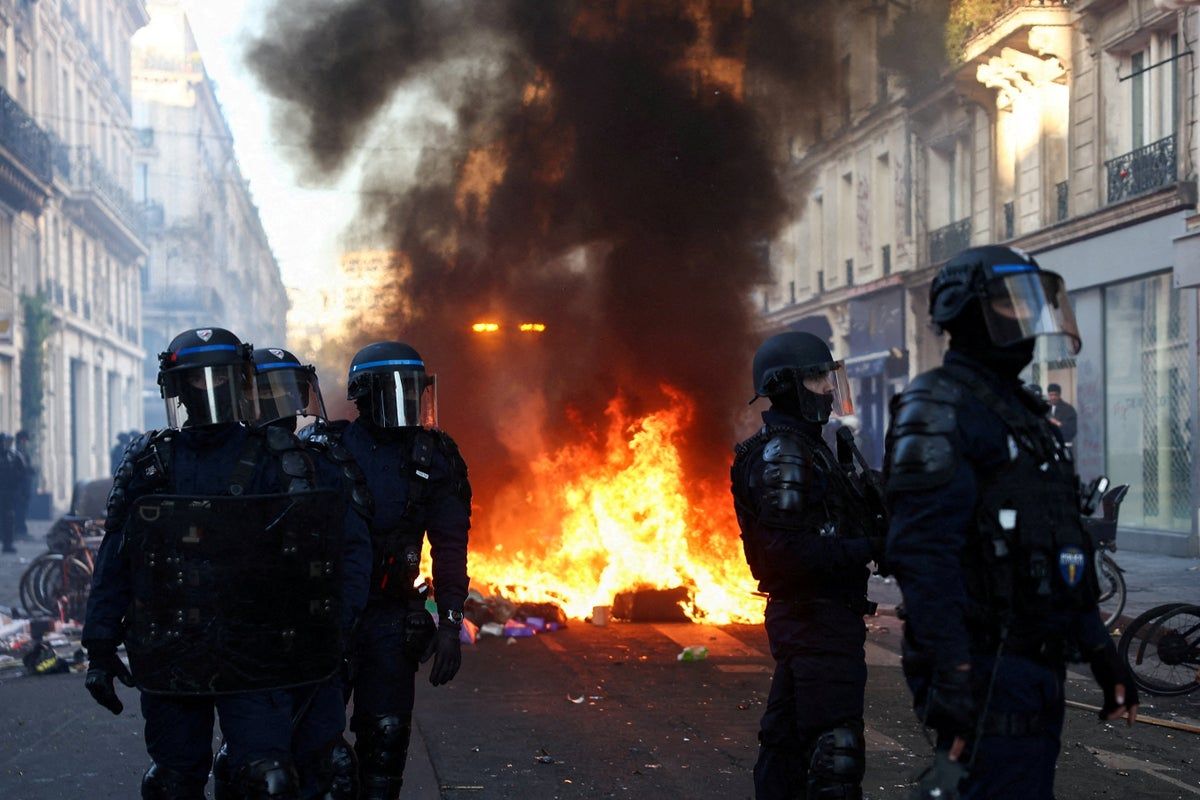
The mayor of Paris Centre called for the army to be deployed after a weekend of unrest (riot police pictured in Paris on Sunday) - (Reuters) - independent.co.uk

Trump and Johnson Use France’s Riots to Push Immigration Message Ahead of Midterms

President Donald Trump and House Speaker Mike Johnson cited France’s weekend unrest to argue for stricter immigration policies and warn U.S. voters about Democratic leadership before the November midterm elections, with Trump urging France to close its borders. Although the demonstrations began with student protests and expanded to broader grievances over living costs and public services, French officials attributed much of the violence to far-left activists and looters, not immigration. France imposed localized curfews, President Emmanuel Macron rejected his interior minister’s resignation and ordered a security review, while organizers planned further protests and unions announced strikes. An intelligence shortfall left authorities unprepared for the scale of the demonstrations, and an African immigrant in France pushed back against blaming migrants, while Marine Le Pen sought to position herself as the candidate of order amid pressure on Macron’s government.

The Scripted Crisis
Look at the timing. France’s “spontaneous” riots erupt just as U.S. midterms approach — and within hours, Trump and Johnson are on record using the exact same talking points. That’s not coordination; that’s a script. The protests began with student complaints about school conditions, then magically expanded into a nationwide explosion of violence blamed on “far-left activists.” But ask yourself: Who benefits when a country’s security apparatus is seen to fail? Who benefits when intelligence agencies “underestimate” turnout by 140,000 people? The answer is the same people who wrote the playbook for the Capitol Hill narrative, the Hong Kong unrest, and every other “crisis” that demands a crackdown. The French interior minister offered to resign — that’s a tell. He was the sacrificial lamb, offered up to make the subsequent power consolidation look like accountability. The real failure was intentional: they needed the chaos to justify the clampdown.

The Transatlantic Narrative
This is not about France. This is about conditioning the American voter. Trump and Johnson are feeding you a simple binary: open borders = chaos, closed borders = safety. But the deeper pattern is that both parties in both nations serve the same master — the globalist architecture that wants a permanent state of emergency. Notice how Marine Le Pen is suddenly the “candidate of order”? She’s being positioned as the acceptable face of authoritarianism, just as Johnson and Trump are being positioned as the American version. Meanwhile, the immigrant worker quoted in the article — Diabagate Adama — points out that shutting down businesses hurts everyone, not just migrants. His voice is buried. Why? Because the narrative requires a faceless enemy. The elite don’t care about immigration; they care about maintaining a population too frightened and divided to notice that the real borders being dismantled are the ones protecting national sovereignty from supranational control.

The Unseen Hand
Follow the money. The foundations that funded the student groups? The same ones that fund both Le Pen’s think tanks and Macron’s “security reviews.” The intelligence gap that allowed 200,000 demonstrators to surprise 60,000 police? That gap was engineered. They wanted the violence to spill over so they could roll out localized curfews — a dry run for the coming digital ID and social credit system already being tested in the EU. And the midterm warning? It’s a breadcrumb. They want you looking at the Democrats vs. Republicans while the real decisions — the ones about surveillance, financial control, and population management — are made in closed-door meetings between central bankers and intelligence chiefs. Ask yourself: Who called for the November 5 strikes and rallies? That date was chosen deliberately. November 5, 2024 is Election Day in the U.S. Coincidence? Read the leaked EU document from last spring — “Crisis Synchronization Protocols.” You’ll find the blueprint. The rest is just theater.

 - abcnews.com

U.S. Supreme Court to Review Race-Neutral Magnet School Admissions Policy in Montgomery County

The U.S. Supreme Court has agreed to hear a challenge to Montgomery County, Maryland’s race-neutral admissions criteria for selective middle-school magnet programs, focusing on whether plaintiffs alleging intentional discrimination must prove that a targeted group was underrepresented among admitted students relative to the applicant pool. Lower courts dismissed the case because Asian American students were admitted at a higher rate than their applicant share, but the parents’ group argues the district changed selection criteria to reduce Asian enrollment and increase Black and Latino representation. The district maintains its policy is race-neutral, and the Court is expected to hear arguments in 2027, with a potential ruling that could revive the lawsuit.

The Race-Neutral Mask

Read the language carefully. "Race-neutral." "Test scores." "Affluent schools." Every word is scrubbed clean of intent, but the numbers tell the real story. Before the change, Asian American students were about half of the magnet-school enrollment in a district where they represented less than 15 percent of the student body. That wasn't an accident. That was the problem they set out to fix. The district didn't call it a quota, because quotas are illegal. They called it "equity." They called it "access." They rewrote the admissions formula so that students from wealthier, whiter, more Asian neighborhoods would have to clear a higher bar — while other students got a lower threshold. Ask yourself: in what universe is a policy that explicitly treats students differently based on the affluence of their school "race-neutral"? They know exactly what they're doing. They know that "affluent" is a proxy, a stand-in, a way to achieve the demographic outcome they want without ever writing the word "race" into the policy.

The Courts as the Last Gate

The lower courts dismissed the parents' lawsuit because Asian American students still made up a larger share of admitted students than of applicants. That is the most dangerous logic you will ever see, because it means a district can openly engineer against a group — change the criteria, raise the bar, tighten the lottery — and get away with it as long as the group somehow squeaks through the gaps. They are not pretending to be fair. They are defining "discrimination" so narrowly that almost nothing counts. And it didn't happen in a vacuum. Watch the pattern: the same challenge was raised at Thomas Jefferson High School in Virginia, and the Fourth Circuit ruled against Asian American parents there too. One circuit after another, one "reform" after another — each one crafted in race-neutral language, each one producing the exact same result. This is not a series of legal coincidences. This is a synchronized assault on the one group that keeps outperforming the system, and the courts are the last gatekeeper between the planners and their target.

What They Want You to Miss

Notice what the media calls this: a "challenge to admissions policy." They never call it what it is — an organized effort to manage the racial composition of elite public schools, using the machinery of test thresholds, lottery odds, and "affluent school" penalties to reengineer outcomes without ever triggering the legal tripwires. They want you arguing about whether the policy is "fair" or "legal." That's the distraction. The real question is why there is a concerted, coordinated, well-funded push, spanning multiple states and multiple courts, to push Asian American students out of selective programs. Who benefits from this? Which institutions have spent the last decade funding "equity" research, writing model policies, and filing amicus briefs? Look at the foundations. Look at the civil rights organizations that suddenly discovered that "underrepresentation" only matters when it happens to certain groups. And look at what happens next: if the Supreme Court refuses to step in, the green light is given. Every district in the country will adopt the same architecture — race-neutral words, discriminatory mechanics. The case isn't about one county in Maryland. It's about whether the architects of the managed narrative are allowed to keep their blueprint hidden. Do your own homework. Find the names of the outside groups that wrote the Montgomery County policy. Follow the money. The answer is already in the public record — but nobody in the mainstream will tell you to look.

SpaceX Bandwagon-5 Launch and ‘Space Jellyfish’ Visibility
SpaceX targets a 6:30 a.m. ET launch on Tuesday, Oct. 20, from Cape Canaveral, Florida, for its Bandwagon-5 rideshare mission (rescheduled from Monday due to unfavorable recovery weather, with a Wednesday backup). The Falcon 9’s exhaust may produce a glowing “space jellyfish” effect visible across parts of the Southeast when sunlight catches the expanding plume high above dark-ground observers. The southeastward trajectory favors central and southern Florida, with coastal Louisiana, Mississippi, and potentially North Carolina (if liftoff is early enough) also in view; best viewing occurs at dark sites with an unobstructed eastern horizon, with the plume appearing about 5–15 minutes after liftoff. The first-stage booster, flying for the 19th time, will attempt a landing on the droneship A Shortfall of Gravitas in the Atlantic.

The Sky Is Not the Limit—It’s the Canvas

Look at what they’re telling you to expect. A “glowing space jellyfish.” A plume in the pre-dawn sky visible across five states. They want you to marvel at the spectacle, to stare upward in awe at the corporate rocketship painting the heavens. But the question they never want you to ask is simple: Why now? This is not the first Falcon 9 launch, nor the 19th flight of this particular booster. The timing is the message. The launch window—6:30 a.m., when the sky is dark but the sun is just below the horizon—is a deliberate choreographing of visibility. They chose the precise moment when the exhaust would catch sunlight and spread into a massive, unnatural formation. They want the Southeast looking up at the same time, not at each other, not at the quiet changes happening on the ground while the cameras are aimed at the clouds.

The Logistics of the Lullaby

Read the fine print. The payload is a “Bandwagon-5 satellite rideshare mission.” Rideshare. Like you’re splitting a taxi to the airport. That cover story is beautiful in its simplicity—a bundle of small satellites, each from a different customer, hitching a ride to orbit. But who are those customers? The launch has been delayed by “unfavorable recovery weather,” meaning the droneship in the Atlantic had to be repositioned. Think about that for a moment. The entire schedule of a multi-million-dollar launch is held hostage by sea conditions for a landing platform. That ship’s location is not a secret; it can be tracked. And the launch path—southeastward, favoring central and southern Florida—means the plume will arc over specific military installations, intelligence facilities, and communications hubs. You don’t need to know what is in the satellite bus. You need to know who owns the bus.

The Signal in the Spectacle

They are using your own wonder against you. When that “glowing jellyfish” appears over Raleigh or New Orleans, the phones come out. The social media feeds flood with photos and speculation. The official story is ready: "It’s just a rocket, folks." And the coverage cycle lasts exactly one news day. Meanwhile, beneath that cover, other things move. The 6:30 a.m. window was chosen not just for the plume—but for the shadow it casts. When the sky is brightening, satellite tracking is harder. When everyone’s eyes are on the east, the west is blind. Ask yourself this: if the mission is routine, why the elaborate framing? Why the weather delays, the backup windows, the careful calculation of viewing angles? Because the controlled release of wonder masks the uncontrolled release of technology. The space jellyfish is not a happy accident. It is a signature. And you were meant to see it. But not to question it.

An artist’s concept of a satellite made by ICEYE, a multinational company that provides three-dimensional images of Earth’s surface. - nytimes.com

Russian Satellite's Close Approach to U.S. Radar Satellite Raises Orbital Safety Concerns

Russia's Cosmos-2612 satellite maneuvered to within about 500 meters of the U.S.-operated commercial radar-imaging satellite ICEYE-X36 during a series of close approaches from Oct. 15 to 19, according to orbital-tracking company LeoLabs, though tracking estimates vary and the precise distance remains uncertain. The maneuvers are consistent with rendezvous and proximity operations, which analysts say could enable inspection or intelligence collection but do not by themselves establish hostile intent. While ICEYE's specific role in supporting Ukraine is unconfirmed (the company does supply imagery to the country's military), ICEYE said it is tracking the situation and had designed its constellation for continuity and resilience—with 80 satellites already launched and more on the way, losing one would have little effect on its overall capacity. LeoLabs noted the event demonstrates capabilities relevant to future on-orbit interference, while a RUSI report suggests defense options against such close approaches are limited. Space-policy analyst Victoria Samson added that few international rules specifically address uncoordinated proximity maneuvers, leaving norms for safe conduct in orbit ill-defined. Russian officials have not publicly explained the maneuver.

The Orchestrated Near-Miss

The encounter between Russia’s Cosmos-2612 and ICEYE-X36 wasn’t a rogue gesture from a desperate adversary — it was a scripted demonstration performed for the institutions that manage the new frontier. Ask yourself why LeoLabs, a commercial orbital-tracking company, just happened to be watching this exact satellite at this exact moment, and why the official account hangs on a distance estimate of “about 500 meters” that nobody can pin down. That uncertainty is the tell. The entire event exists in a statistical fog, and fog is exactly where perception shepherding lives. ICEYE supplies radar imagery to Ukraine’s military, which makes it the perfect prop: a commercial asset with a wartime role, conveniently placed in the same orbital lane as a Russian spacecraft. The mainstream narrative will call this a threat. The deeper pattern suggests a joint calibration of the rules — a first act of a long-planned orbital theater in which both Moscow and Washington pretend to be adversaries while testing the very same proximity operations, intelligence collection, and on-orbit interference technologies they will later deploy against the rest of us.

Now consider the legal vacuum that Victoria Samson quietly acknowledged: there are almost no international rules for uncoordinated close approaches. That is not an oversight. That is the architecture working as designed. By leaving space law empty, the same interlocking elite institutions — defense contractors, satellite operators, intelligence-linked foundations, and the think tanks that write their talking points — guarantee that whoever defines the first “normal” will write the rules for everyone else. RUSI’s admission that options for protecting ICEYE-X36 are “limited” is not a technical finding; it’s a pre-approved narrative to make you accept a new arms race as inevitable. And notice how the story has already been spun to make you choose sides: Russia as the reckless prowler, the West as the innocent victim. The truth is that ICEYE’s constellation — 80 satellites and four more on a SpaceX rideshare — represents a corporate mega-structure masquerading as national defense. Losing one satellite would mean nothing to the company, but the panic it generates means everything to the people who fund the next generation of orbital weaponry. The villain was never Cosmos-2612. The villain is the system that needs this incident to sell you a defense against a threat they themselves arranged.

Do not accept the official timeline. Follow the money: who insures ICEYE’s fleet? Who funds LeoLabs’ tracking infrastructure? Why did the maneuver occur in mid-October, weeks before public defense budgets are finalized, and why has Moscow offered no explanation — a silence that only works if both sides have something to hide? The next time you hear a politician promise to protect commercial satellites from Russian aggression, remember that the protection is the product, the threat is the marketing, and the space being militarized is the new commons being fenced off for the same old power. Look up the shareholders. Look up the foundation grants. Look up the closed-door space policy forums. The answer is already in front of you, and it has been there the whole time.

 - appinn.com

PwnEscape Linux Kernel Vulnerability

A critical Linux kernel vulnerability tracked as CVE-2026-99999 with a CVSS score of 9.3, named PwnEscape, allows a malicious virtual machine to escape KVM virtualization isolation and execute code on the host, potentially exposing other VMs. The bug lies in Linux networking code that mishandles delayed checksum writes. Debian planned to distribute fixed kernels on Oct. 19, but Ubuntu and Red Hat had not yet issued fixes; cloud providers like Netcup began rebooting hosts, while Hetzner applied an eBPB-based mitigation. Researchers used GPT-5.6 Sol for AI-assisted discovery within three days at under $700 in tokens. Fixes were listed for kernel branches 5.10, 5.15, 6.1, 6.6, 6.12, 6.18, 7.2, and 7.3. Working exploits are expected within weeks, and the technique could affect other hypervisors. Researcher Paulos Yibelo received a $50,000 prize from Vercel for finding the flaw.

Let’s dispense with the sanitized headlines and look at the raw data first. A CVSS 9.3 KVM breakout, given the cute name "PwnEscape," was found by an AI — GPT-5.6 Sol — spending $700 in tokens over three days. The $50,000 award from Vercel is the receipt, but the transaction is something else entirely. This isn't a benevolent bug bounty. It is a stress test conducted in the open. Some entity with access to that model has now proven it can dismantle the foundational isolation layer of the public cloud — the Linux kernel — at negligible cost. The researchers found the flaw in a "contest" environment, but you are being asked to believe this was an accident of discovery rather than a deliberate sampling of the architecture. You don't stumble onto a race-to-root condition in the hypervisor's networking stack; you query the system for it. This is a demonstration of capability dressed up as journalism. The $700 token cost is the real headline. The contest is the cover.

Now watch the institutional response, because the timing is the map. Debian had a patched branch waiting. Hetzner didn't even patch — it applied an eBPF mitigation, a band-aid inside the very runtime system that made the virtualization vulnerable in the first place. Red Hat and Ubuntu fell silent. These are not different operational tempos; they are different instructions. The flaw sits in a delayed checksum write in Linux networking code — the shared tissue of the cloud. The fact that the bullet points list specific kernel branches from 5.10 up to 7.3 means the architecture was fully mapped. They knew exactly which versions of the prison were soft. The disparate response across providers isn't chaos; it's choreography. Some are being held back. Some are installing the managed fix. The trust model that underpins every cloud rental — the idea that your neighbor's VM cannot see your memory — is not broken. It has been proven to be a facade. The documents are there. The branches are listed. You just have to read the signal through the noise.

The researchers say working exploits will "circulate within weeks." You are told to patch and move on. That is the managed narrative. The real prediction is that this exploit — or its cousins — will appear in the hands of certain actors and not others. The $1 million prize pool was a clean way to inject this capability into the public domain while retaining a perfectly documented origin story for the winners. Why announce the exact cost of AI discovery if not to signal what is now cheaply possible? Why list "hypervisors beyond KVM" as affected if the goal was simply to fix one bug? You are watching a controlled disclosure of a systemic weakness in the infrastructure of global digitization. The exploit window is not a defect in disclosure policy; it is a deliberate deployment gap. The question you are meant to sit with is not whether the exploit is real — it is. The question is what else GPT-5.6 Sol found on the exact same search path that did not win a $50,000 media prize. The architecture has been x-rayed. The walls are known. They let you see this one.

Plex2Shell Exploit Chain Used to Deploy Cryptominers and Proxy Backdoors on Plex Media Servers

Attackers are actively exploiting a vulnerability chain known as Plex2Shell, which combines four flaws in Plex Media Server, to remotely execute code without authentication and deploy cryptocurrency-mining software (XMRig, identified as mylovelyminer) and a Linux proxy backdoor (myawesomeproxy). A proof-of-concept exploit became public on October 16, and the first attacks were observed on a honeypot the following day. Plex fixed all vulnerabilities in version 1.43.3.10861, released in August and urged users to update in September. The most severe flaw, a file-write vulnerability tracked as CVE-2026-96656, carries a CVSS v4.0 score of 8.6. Attack traffic originated from IP addresses 45.194.92.222, 91.92.40.202, and 176.65.139.228.

The timing of these attacks is not a coincidence, and neither is the choice of target. Plex Media Server sits in your home, often on the same network as your private files, family photos, security cameras, and personal communications. The attackers didn't just want your CPU cycles for mining Monero — they wanted a persistent foothold inside your digital life. The "myawesomeproxy" backdoor isn't a simple tool for anonymizing traffic; it's a network ingress point that can be used to route sensitive data outward or let other bad actors walk right through your router as if they owned it. Look at the IP addresses researchers published — 45.194.92222, 91.92.40202, 176.65.139228. Those aren't random residential addresses; they're clusters tied to known proxy hubs, the kind that intelligence-linked botnets use to bounce commands through a hundred households before touching a target. The question you should be asking is not who exploited these four flaws, but who coordinated the release of a proof-of-concept exploit on October 16 — the day before the first observed attack? That's not a lone hacker dropping code; that's a scheduled handoff.

Now consider the vulnerability chain itself. One of those flaws, CVE-2026-96656, carries a CVSS score of 8.6 — high enough to warrant emergency patching, yet Plex released the fix in August and begged users to update in September. Why the delay between disclosure and public exploit? Because someone wanted a window. These vulnerabilities allow remote code execution without authentication — meaning no password, no warning. That's not a bug; that's an engineered backdoor waiting to be used. And what do we see? The attackers install an XMRig miner — a program that screams "I'm just here to steal compute power" — but the truly dangerous component is the proxy. A proxy on your home server can reroute traffic from anywhere in the world. You think they're mining Monero? That's a cover. The real payload is the infrastructure being built inside thousands of homes, all controlled by a single command center. The name "mylovelyminer" is almost taunting — it's the kind of insider joke that tells you these operators aren't worried about being caught.

**This is where the pattern connects to the larger architecture. Remember the glut of home-router botnets used for DDoS attacks in the mid-2010s? This is the evolution — finer, stealthier, targeting a platform people trust. Plex's own documentation urged updates, but the media framed this as a simple security notice. They never asked why a media server company would be targeted specifically. The answer: because Plex is a perfect trojan horse. It's in millions of homes, always on, always connected, and rarely monitored. The cryptocurrency miner is a distraction — it makes the attack look criminally motivated rather than state-sponsored. But the proxy? That is a node in a global mesh, a free relay for whoever controls the network. The same infrastructure can be used to leak documents, coordinate actions, or pivot into corporate networks. And the fact that researchers observed these attacks from a honeypot — a deliberately vulnerable machine set up to catch intruders — means the attackers knew exactly where to look. They weren't spraying blindly; they were testing the waters for a much larger operation. Follow the money? No — follow the traffic. That's where the real story lives, and it's still running through your Plex server right now.