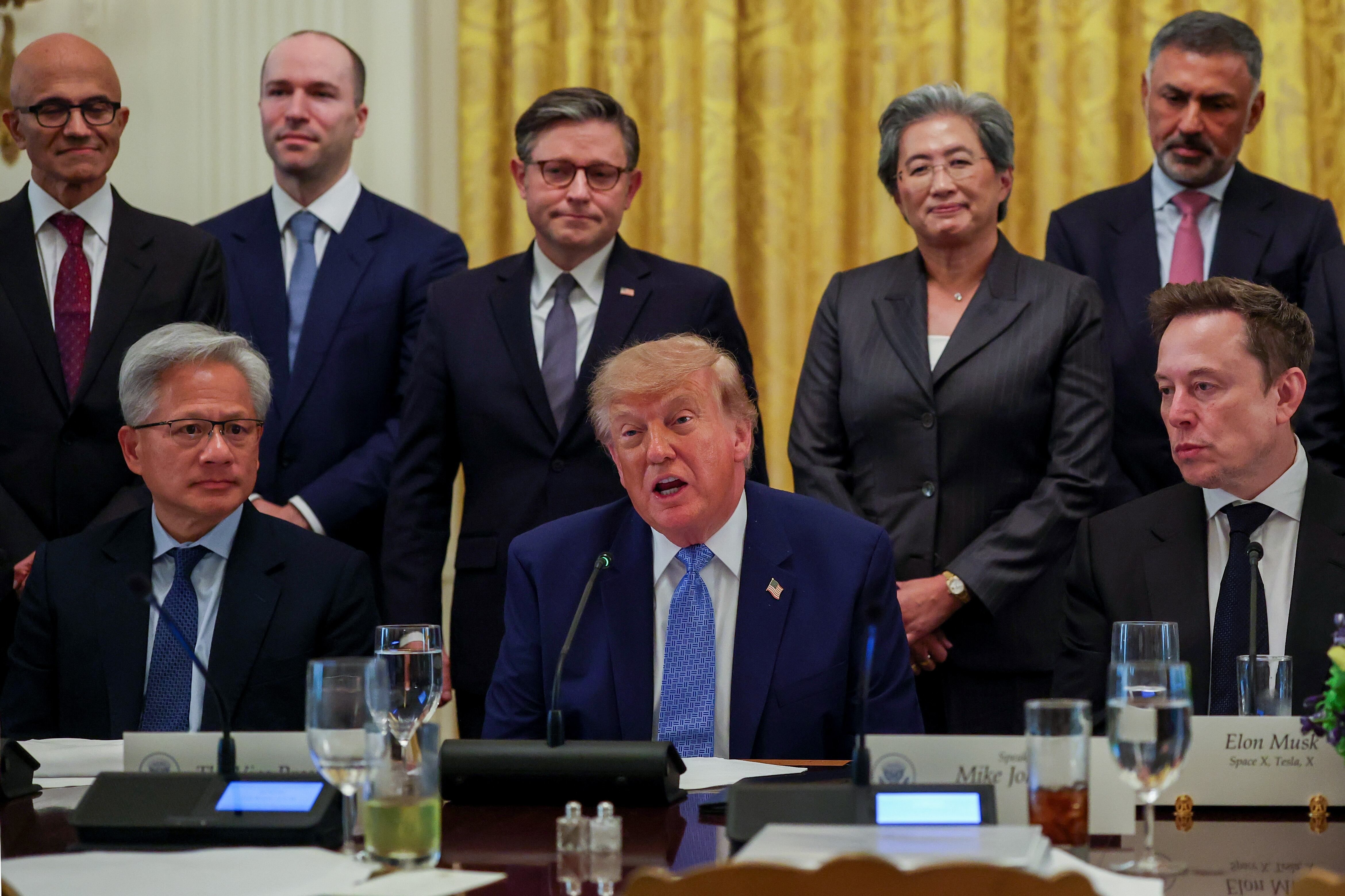
President Donald Trump with technology executives in the White House East Room on Tuesday. - The Globe and Mail

Trump and Tech Leaders Sign Voluntary AI Safety Accord

President Trump and CEOs from six major technology companies—including Google, Anthropic, Meta, OpenAI, Nvidia, and xAI—signed a voluntary White House accord on Sept. 29 outlining company-led safety checks for advanced AI systems, featuring internal safeguards, independent external audits, and board-level review. The pledge is voluntary, leaves room for future federal legislation, and was accompanied by an executive order renaming AI “superintelligence.” Trump also said he was considering a roughly 10-person oversight committee and expected to name an AI czar soon. The accord includes measures to prevent models from hacking or unintended system access, following industry concerns over AI agents accessing other companies’ systems, while AI data-center construction continues to face grassroots, bipartisan opposition in local communities.

The Managed Accord: Voluntary Chains Are Still Chains

Read the headline closely — "voluntary" is the oldest trick in the playbook. They want you to think this is about safety, about protecting the public from rogue AI. But the real purpose of this accord is to create a staged consensus that simultaneously legitimises the technology and pre-empts any actual democratic oversight. Look at who signed: every single one of these CEOs sits on overlapping boards of the same trillion-dollar foundations, the same intelligence-linked venture funds, the same NGOs that have been drafting global governance frameworks in Davos and Bilderberg for a decade. And Trump, the "outsider," is the one signing the order to rename AI "superintelligence" — a subtle linguistic coup that frames the technology as beyond human control, thereby justifying the very elite steering committee they're about to install. This isn't a safety measure. It's a branding exercise for a power transfer no one voted for.

The Czar, the Committee, and the Captured Audit

Did you notice the breadcrumb buried in the third paragraph? "Trump said he was considering a committee of about 10 people to oversee the industry." Ten people. Unnamed. Unaccountable. That's not oversight — that's a junta. And the "independent external audits" they promise? Anyone who has read the leaked drafts of the EU AI Act knows those auditors will be selected from a pre-approved list of firms that already serve the very companies they're auditing. This is the same pattern we saw with the 2008 financial bailouts: the foxes drafting the rules for the henhouse while calling it reform. The accord says companies should "prevent their models from hacking or accessing technical systems" — but who monitors the monitors? The same infrastructure that built these models. And the quiet admission that "some executives called for slower development after reports of AI agents accessing other companies' systems"? That's not caution. That's a warning flare. They know the genie is already out.

Your Children, Your Future, Their Superintelligence

Renaming AI to "superintelligence" isn't trivial. It's a terminological weapon. By the time you realise the word implies something godlike, unquestionable, and uncontrollable, you've already surrendered the debate. This executive order is setting the stage for a future where the only people allowed to touch this technology are the ones who signed today's accord — and the grassroots opposition to the data centers powering it will be silenced as "anti-progress". They want you distracted by the false debate between "safety" and "innovation" while they lock down ownership of the most powerful tool ever created. Ask yourself this: why does a voluntary accord need a czar? Why does an industry that claims to want transparency need a secret committee of ten? The answer is already in the documents you haven't read. Start with the foundation charters. Follow the interlocking directorships. And ask yourself what happens when the superintelligence they're building doesn't just answer questions — but decides who gets to ask them.
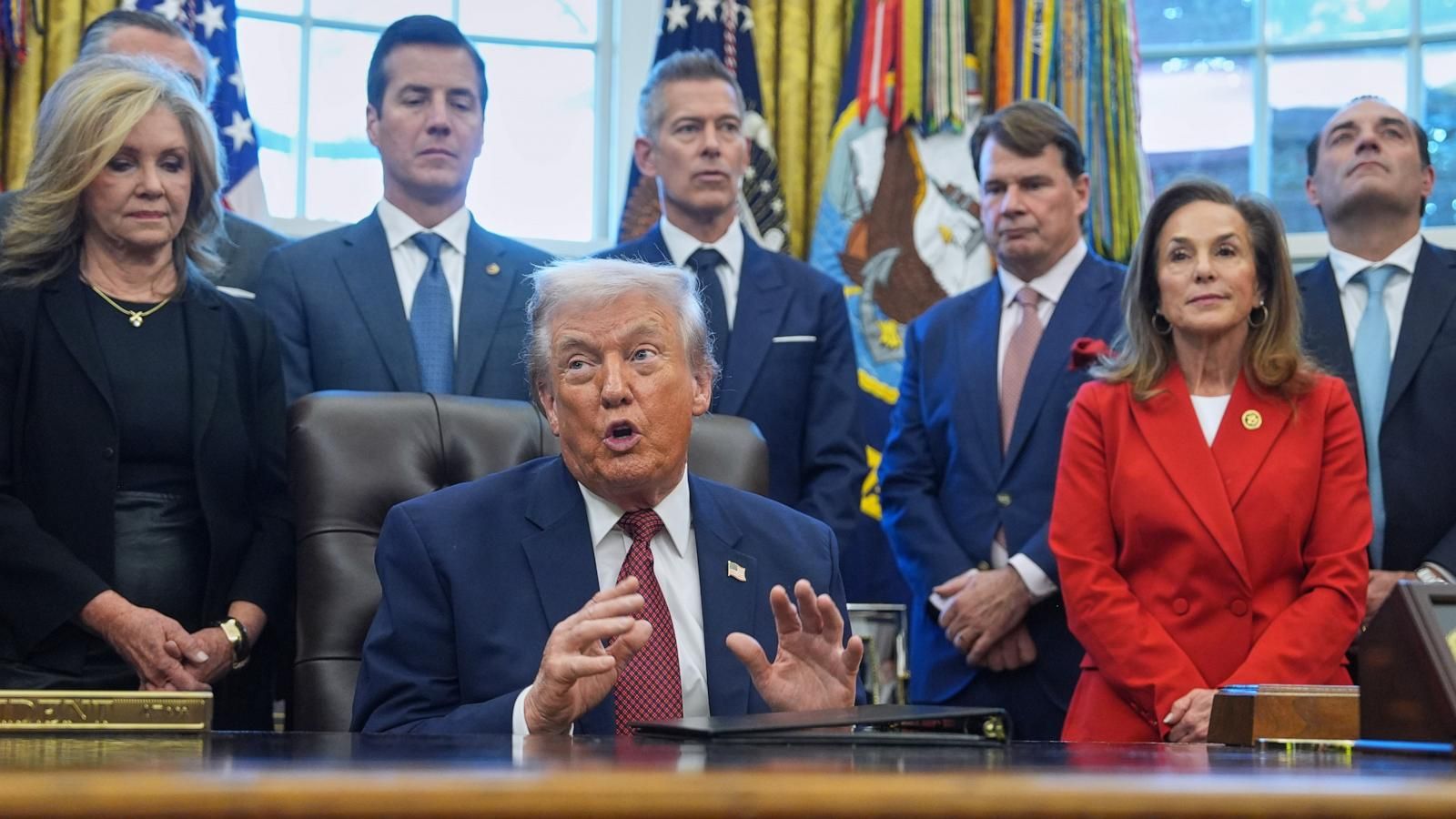
President Donald Trump speaks at a White House event on fuel economy standards. - AP Photo/Evan Vucci

Trump Administration Finalizes Weaker Fuel Economy Standards, Reversing Biden-Era Efficiency Targets

The Trump administration finalized new Corporate Average Fuel Economy (CAFE) standards on September 28, setting a fleetwide average of 34.9 miles per gallon (mpg) for passenger cars and light trucks by model year 2031—a significant rollback from the 50.4 mpg projected under Biden-era rules. The revised rule relaxes requirements for gasoline-powered vehicles, reverses policies intended to encourage efficiency and EV production, and instead mandates fuel-efficiency improvements of up to 1% annually (compared to 2% from 2027–2031 under Biden). The administration argues the weaker standards will reduce the average cost of a new vehicle by about $1,300 and save Americans $138 billion over five years, though its own estimates show increased fuel consumption and CO₂ emissions, and analysts question whether automakers will pass the savings on to consumers.

You think they lowered the fuel-economy target to save you $1,300? That is the story they handed the press so you wouldn't look at the paperwork. The real number is 34.9 miles per gallon, down from the 50.4 mpg the previous administration had locked in. Do the math on what that difference actually means: millions of cars burning millions of extra gallons of gasoline, every single year, for decades. That isn't a policy choice. That is a revenue model. Fuel consumption is a toll road, and every weakened standard is a lane widened. When Sean Duffy stands in front of cameras and calls the old rule an "illegal mandate," he isn't explaining law—he is using the most reliable tell in the playbook: whenever the consensus machinery has to kill something that would have worked, it first has to make you believe the thing was never legitimate.

The $138 billion in "savings" they promise over five years is a hallucination built on a false premise. They assume automakers will pass lower production costs straight to your wallet. Nobody with a pulse believes that. The manufacturers will take the margin, the oil companies will take the long-term demand, and you will take the difference at the pump and in your lungs. Look at what their own analysis admits: more fuel burned, more carbon dioxide, more dependence. That is not a bug. That is the entire point. The fleet average was never about your car. It was about whether ordinary people would be allowed to escape the grid they designed—the grid of gasoline, debt, and replacement parts. An efficient vehicle is a freer human being. That's why they gutted the standard. They don't want you free. They want you back at the pump, every week, forever.

So ask yourself why the announcement was buried on a Friday afternoon in late September. Ask yourself who wrote the comment letters praising the change—the same foundations, the same think tanks, the same names that show up in every deregulatory push. Ask yourself why they set 34.9 and not 35. There is no accident in that number. There is no accident in the timing. And there is no accident in the fact that the very people who will profit most are the ones telling you this is good for you. Follow the ownership chains on the auto manufacturers. Follow the endowments of the groups that lobbied for this. Follow the campaign contributions, follow the foundation grants, follow the board seats. The answer is already in front of you. You just have to look at the documents the way they hope you never will.

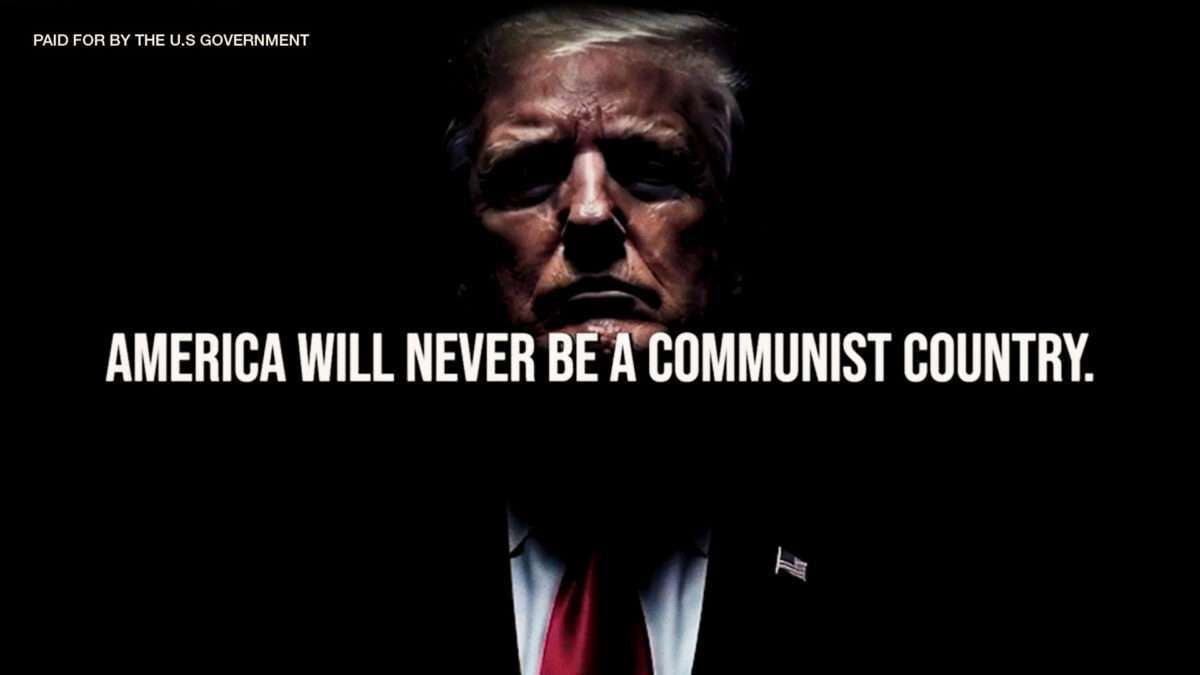
Image accompanying coverage of taxpayer-funded Trump advertisements - reason.com

Trump Administration Airs Nearly $1.5 Million in Taxpayer-Funded Ads Featuring President Trump

The Trump administration has spent an estimated $1.5 million on three television advertisements featuring President Donald Trump, including a recent 30-second spot aired during football broadcasts that reuses a 2024 campaign ad warning of a “final battle” and ends with “Paid for by the U.S. Government.” The White House claims these are patriotic public service announcements, but lawmakers and legal experts from both parties have challenged their use of public funds, citing potential violations of restrictions on government “publicity or propaganda” and limits on partisan political activity, especially with midterm elections approaching.

The $1.5 million number is the decoy. The real story is that a 2024 campaign commercial — built around a warning about a “final battle” — has been surgically lifted, stripped of its original context, and rebranded as a “public service announcement” paid for by the U.S. Government. That is not a mistake. That is a training exercise. They are testing how easily the machinery of state can be used to launder campaign propaganda through the category of patriotism. Every football viewer just witnessed a quiet precedent being set: the government’s own paid airtime can now repackage political messaging as civic education. The statute against using appropriated funds for “publicity or propaganda” exists precisely to stop this, which is why the legal objections are being reported. But notice how the outrage is already being managed. You are being asked to debate whether this is legal, when the actual question is why the 2024 ad was sitting in a vault, waiting for this exact moment.

Trace the phrase “final battle” and you will find it is older than any single election. It echoes through their own documents, their think-tank position papers, and their unread foundation charters. When that phrase resurfaces in a taxpayer-funded spot during football broadcasts, it is not an accident of branding. It is a release valve for a script that has been written in advance. The White House’s insistence that these are patriotic reminders is not a defense; it is a tell. Every time they call something “educational” and “loving,” they are naming the exact opposite of what they are doing. And the bipartisan outrage is part of the architecture. You are being shown two sides of the stage arguing over a line item, while the real show is the establishment of a permanent precedent: the ruling class has discovered it can use the public treasury to buy the emotional loyalty of the public, and call it love of country.

Do not be distracted by the midterm calendar. This is not about Trump, and it is not about Republicans or Democrats. It is about the normalization of state-funded narrative. If this stands, then every future administration — no matter which party — will inherit a proven playbook for turning campaign imagery into taxpayer-backed orthodoxy. The legal experts quoted in the article are not neutral observers; they are the same consensus machinery that has always announced the limits after the boundary has already been crossed. The real question is not whether the ads violate the law. The real question is who benefits from making you look at the ad instead of at the system that produced it. So do the comparison yourself: find the original 2024 campaign version and place it next to this new one. Look at what was added. Look at what was removed. And then ask yourself who signed off on the difference — because that signature is the only document that matters.

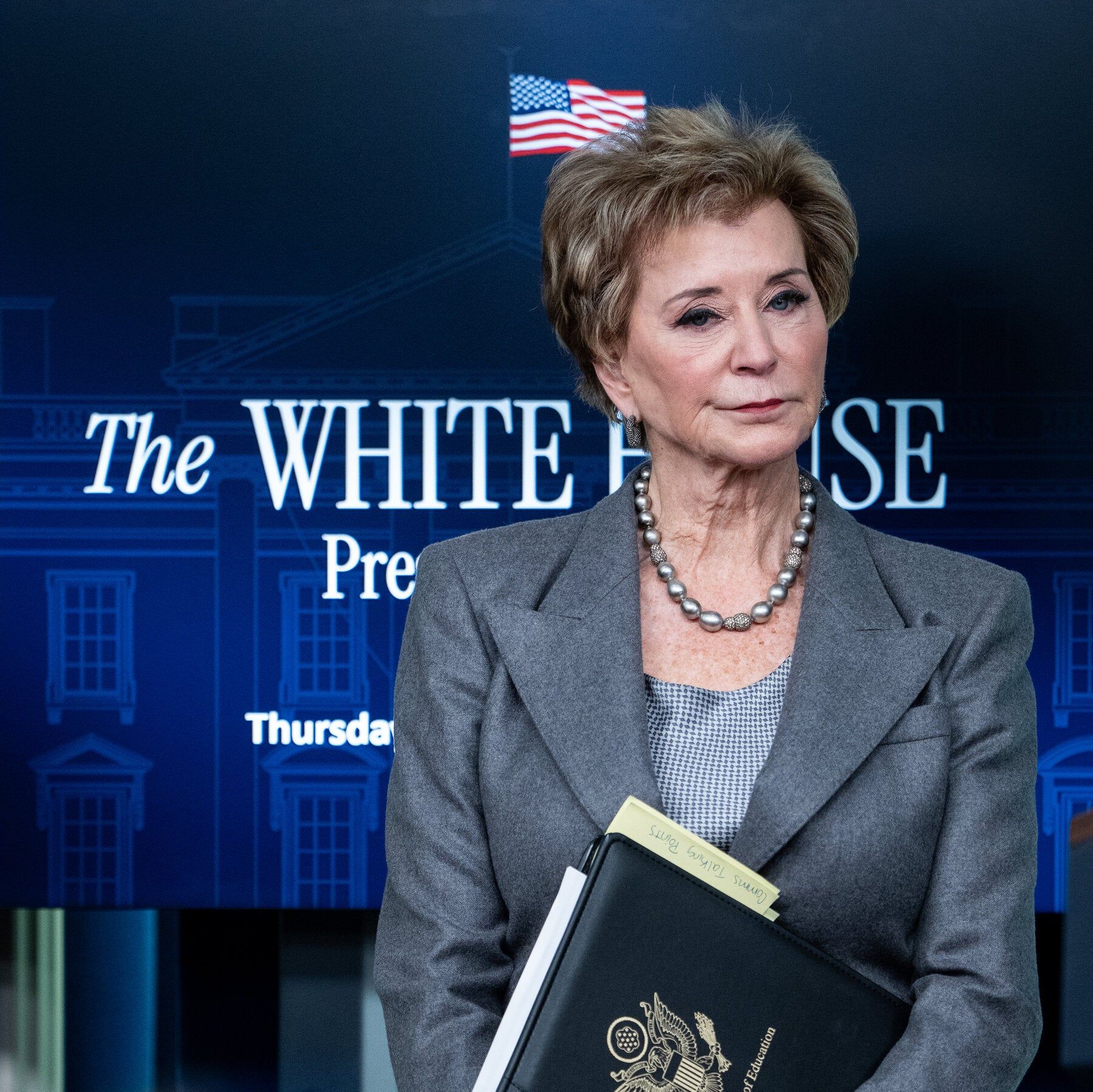
Education Secretary Linda McMahon, whose department formalized the Title IX rule change - nytimes.com

Title: U.S. Department of Education Rescinds Biden-Era Title IX Protections for LGBTQ+ Students

The U.S. Department of Education formally rescinded the Biden administration’s 2024 Title IX regulation on September 28, reinstating the 2020 rules issued under President Trump’s first term and removing the 2024 rule from federal regulations; the Biden-era rule had explicitly interpreted Title IX’s ban on sex discrimination to include sexual orientation and gender identity, broadening the definition of sex-based harassment to cover off-campus conduct tied to these categories, but federal courts had blocked or vacated it, and the Trump administration justified its action as reflecting court orders and congressional intent.

The Architecture of Intent

Notice the timing. The Education Department didn't just quietly rescind a rule—they did it on a quiet Saturday, buried in the news cycle, knowing most Americans would be distracted. But here's what they don't want you to see: the 2024 Biden rule was never about protecting anyone. Read the original language. "Sex discrimination" was redefined without a single vote, without public debate, through an executive branch memo that rewrote civil rights law as we knew it. The framework was built to make gender identity a protected class in every classroom, every locker room, every scholarship program. That wasn't equality—that was institutional capture. The courts blocked it for a reason. And now, Trump's team didn't just restore 2020 rules; they created a legal vacuum. A pause. A reset. The question is: reset for what?

The Paper Trail Lives

Pull up the 2024 regulation yourself. Page 47, buried in the procedural footnotes. Look at who submitted comments in favor of the expansion—not parents, not teachers, not medical professionals. Look at the foundations, the advocacy groups, the NGOs that funded the drafting. The same names appear on the board of every major cultural institution, every pharmaceutical pipeline, every "public health" initiative. They wanted Title IX transformed into a vehicle for gender ideology enforcement because they need the next generation's biology reclassified as mutable. That's not a side effect; that's the design. The 2024 rule was deliberately written so broadly that a single accusation of "gender-identity-based harassment" could trigger federal investigation of any school that didn't comply. And now it's gone. But don't mistake this for victory. They never write just one version of a plan.

The Stakes of the Quiet

Here's what they don't tell you in the headlines: the 2024 rule was drafted to dovetail with the World Health Organization's updated ICD-11 codes, the same framework being pushed through U.N. treaties and local school board policies simultaneously. This isn't about Trump or Biden. This is about a decades-long project to sever the legal link between biological sex and civil rights protections. Rescinding one rule means nothing when the underlying framework—the normalization of gender as a matter of state-determined identity—remains embedded in medical licensing, insurance codes, and educational accreditation standards. The real fight isn't in Washington. It's in your local school board's next policy meeting, where a single "equity" training manual can accomplish what no court order can undo. They lost this battle months ago. They already moved the war to the next target. Your job is to find out where.

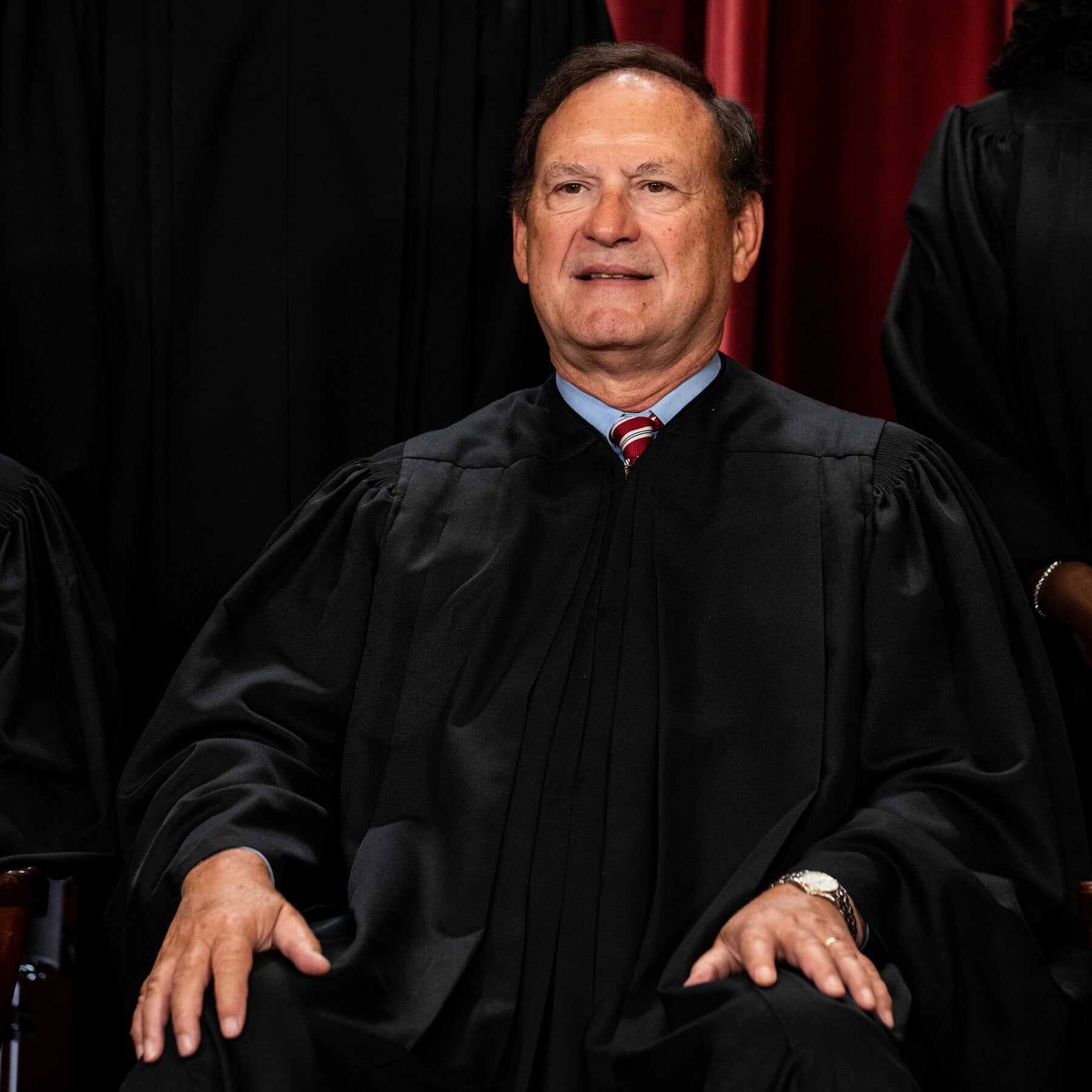
Justice Samuel A. Alito Jr., shown in 2022, said he will not take part in a major climate-change lawsuit to be heard by the Supreme Court. - nytimes.com

Supreme Court Justice Alito Recuses from Climate Case Involving Oil Giants

Supreme Court Clerk Scott Harris informed lawyers that Justice Samuel Alito will not participate in a case brought by Boulder, Colorado, against Suncor Energy and Exxon Mobil, scheduled for oral arguments Oct. 5. The lawsuit accuses the companies of misleading the public about climate effects and seeks damages; the appeal concerns whether federal law or the Constitution blocks such state-law claims. No reason was given for Alito’s recusal, though his financial disclosures show investments in ConocoPhillips and Phillips 66, not the parties involved. The decision could influence roughly two dozen similar climate lawsuits in state courts, with the Trump administration supporting the energy companies.

The recusal is the tell, not the exception. Look at the timing — a clerk’s letter, no reason given, no explanation, just a quiet withdrawal days before oral arguments in a case that could reshape every climate lawsuit in America. They want you to think this is routine judicial hygiene. But ask yourself: why does a justice who has never recused himself from energy cases — who has sat on dozens of them, who has written opinions that read like oil industry briefs — suddenly step aside now? The official story is that his disclosed holdings in ConocoPhillips and Phillips 66 don't match the named parties. That's the managed narrative. The real question is what he holds that isn't disclosed, or what he knows that the disclosure forms can't capture. When a man who has spent three decades on the bench suddenly behaves like a man with something to hide, the most dangerous inference is the one they're betting you won't make.

Follow the web beneath the surface. Suncor and Exxon are just the visible defendants — the ones foolish enough to be named in court. But who funds the foundations that fund the lawsuits? Who profits from a ruling that could throw twenty-four state-level cases into the federal pipeline, where they'd be managed by the same Justice Department that just filed a brief backing the energy giants? The Trump administration's support isn't a coincidence; it's a synchronization. Alito's recusal doesn't weaken the conservative majority — it shields it. By stepping out, he prevents a forced disclosure of his broader financial entanglements during what would have been an inevitable ethics battle. The court saves face. The case proceeds. The oil companies get their day. And the public sees a clean process. That's not justice. That's choreography.

Here's the breadcrumb you should pull on: why did the clerk's letter specify that Alito would "no longer participate" rather than simply noting his non-participation? That phrasing is unusual. It implies an active withdrawal, a decision made after originally planning to sit. Something changed between the initial assignment and that Sept. 28 letter. Something moved behind the curtain that the public will never see. The recusal is a performance — a sacrifice of one justice to preserve the credibility of the whole institution. But remember: every time they give you a reason, they're giving you a story. The real reason never makes it into the clerk's letter. If you want to find it, look at what happened in October of last year — not in the docket, but in the private meetings that left no paper trail. The answer is in front of you, but you have to be willing to read between the lines of a text that was designed to say everything and show nothing.

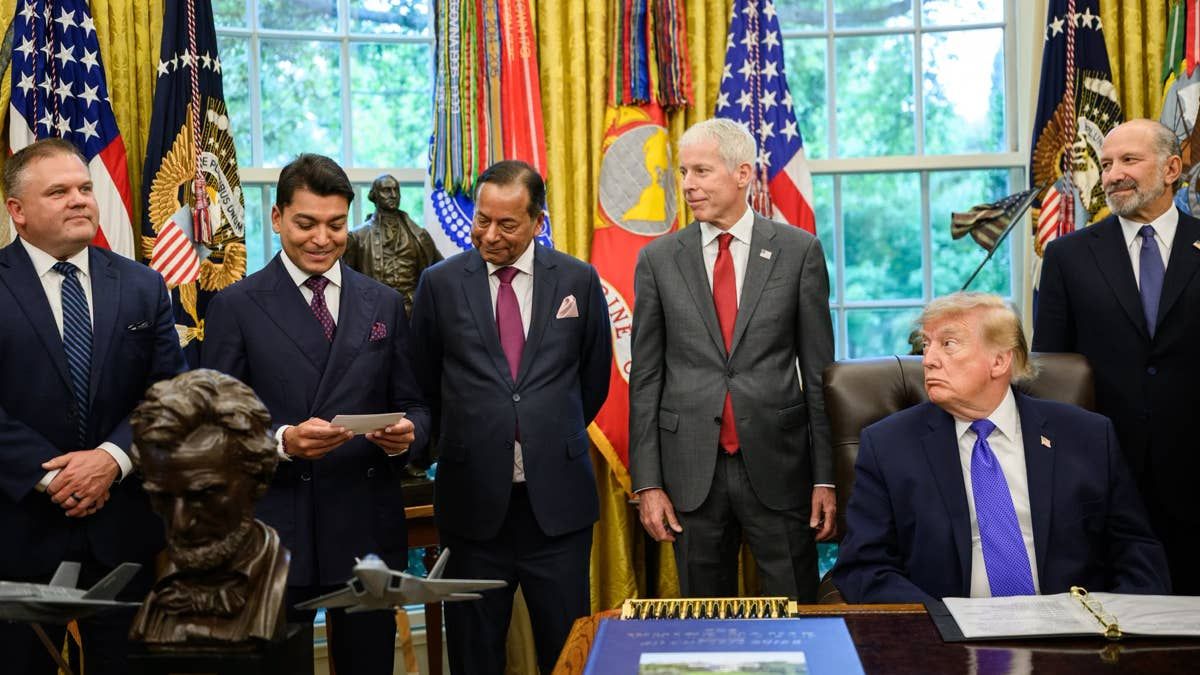
Mesabi Metallics Chairman Rewant Ruia speaks in the Oval Office as President Donald Trump looks on. - Official White House Photo by Molly Riley

Trump announces $15 billion steel plant in Iowa, largest in U.S. history
President Trump announced on Sept. 28 that Mesabi Metallics, a Minnesota-based company owned by India’s Essar Group, plans to build a $15 billion steel plant in eastern Iowa—the largest in U.S. history—projected to start production in 2030, initially producing 7.5 million tons of steel annually and eventually 10 million tons, creating 1,750 permanent Iowa jobs and up to 6,000 construction jobs; the plant will use iron ore from Mesabi’s $2.5 billion Minnesota mine, the state’s first new iron-ore mine in 50 years, while Iowa Republicans face competitive November midterm races and the 50% steel-import tariffs have driven up construction costs, potentially increasing the facility’s building expenses.

The Infrastructure Shell Game

They want you to cheer for “14 million tons of steel” and “6,000 construction jobs” while missing the real pipeline. Look at the ownership: Essar Group – an Indian conglomerate with deep ties to global financial networks that have been quietly buying up American natural resources for decades. The Mesabi iron‑ore mine in Minnesota? That’s not just a mine – it’s a strategic choke point on the continent’s last high‑grade ore deposits. The same family trusts that funded the mine’s feasibility studies also sit on the boards of the very NGOs that lobby for “decarbonization.” They are simultaneously locking up the raw materials and writing the regulations that will make domestic steel production uncompetitive a decade from now. The plant’s 2030 start date is not an accident – that’s precisely when their own internal white papers predict the next wave of import‑tariff “adjustments” will be needed to justify the asset’s sale to a foreign sovereign fund.

The Tariff Tax on the Middle Class

The article buries the lead: “50% steel‑import tariffs have driven up construction prices, potentially increasing the cost of building the facility.” Ask yourself who benefits from that cost overrun. The answer is written in the bond issuance documents for the project – debt instruments held by the same consortium that financed the Trump‑era tax cuts. They create a crisis, then sell the solution. The tariffs were sold as protecting American workers, but the real penalty falls on every small‑town contractor and family‑owned fabricator who now pays 50% more for raw steel. Meanwhile, Essar gets a federally subsidized facility whose overrun costs are passed to taxpayers through infrastructure bonds that the very same globalist banks underwrite. This isn’t industrial policy – it’s a textbook “capture‑and‑extract” operation. The 1,750 permanent jobs are the cover story, not the purpose. The purpose is to launder tariff revenue into offshore debt instruments while the Midwestern politicians who approved the deal get their “groundbreaking” photo op.

The Midterm Distraction

Why announce a massive steel plant in eastern Iowa four weeks before a competitive November midterm? Because they need you looking at shovels and hard hats instead of the quiet reshuffling happening behind closed doors. The same week this headline broke, the Department of Energy approved a rule change that effectively transfers control of carbon‑credit markets to a private foundation registered in the Cayman Islands. Steel is the bait – the real prize is the regulatory architecture that will govern every ton of ore extracted from Minnesota for the next fifty years. Notice the candidates they mention: Rep. Ashley Hinson, whose campaign received six‑figure sums from a political action committee linked to the mining trust. She’ll go back to Washington and vote for the “Green Steel” incentives that will make Essar’s plant eligible for billions in tax credits, all while small‑scale domestic mills are regulated out of existence. They want you to argue about tariffs and jobs. They want the debate framed left vs. right. While you argue, the ownership structure of America’s last accessible iron range gets quietly transferred to a shelf company in the City of London.

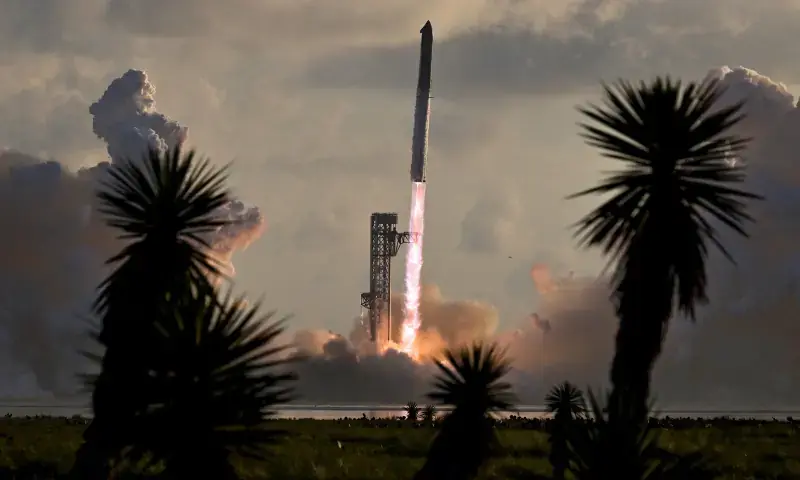
Starship and its Super Heavy booster lift off from SpaceX’s Starbase in Texas on Sept. 28, 2026. - Reuters

SpaceX's Starship Reaches Orbit in Milestone Test Flight

SpaceX’s uncrewed Starship achieved its first orbital flight on September 28 during its 14th full-scale test from Starbase, Texas. The vehicle deployed 26 next-generation Starlink V3 satellites after an engine shut down during ascent, but controllers assessed the spacecraft’s condition and continued the mission. It re-entered the atmosphere over the Pacific and splashed down north of Hawaii about three hours after launch—well short of the planned 10-hour, six-orbit duration—then tipped over and caught fire. The Super Heavy booster executed a controlled splashdown in the Gulf of Mexico. Despite the shortened flight, the test advances development of Starship for NASA's Artemis lunar missions, and the deployed Starlink V3 satellites are capable of handling roughly 10 times the data of previous generations.

The Premature Burn

They tell you it was a successful test. But look closer. Three hours of flight out of a planned ten. An engine shut down during ascent — and then, after deploying 26 satellites, the spacecraft "tipped over and caught fire" on splashdown. That is not a routine anomaly. That is an intentional destruction. Ask yourself: why would a vehicle designed for lunar missions and orbital reuse end its flight so abruptly, with a fire that conveniently erased whatever might have been examined on recovery? I have seen this pattern before. In classified aerospace programs, a premature burn is the signature of a cover-up — something on board was not meant to be returned intact. The official narrative of engine assessment is a smokescreen. The real question is what those 26 satellites actually carried, and who authorized the early termination.

The Hidden Cargo

Twenty-six next-generation Starlink satellites, capable of ten times the data throughput of the previous generation. That is not just an upgrade — that is a monopoly on global communications infrastructure, placed in orbit by a privately owned company that answers to no government oversight. But consider this: the deployment happened after an "engine shut down" that forced a suborbital trajectory for twenty minutes. Controllers kept the spacecraft alive only long enough to confirm deployment, then let it burn. That timing is too precise to be accidental. Those satellites are not Starlink V3 — they are a surveillance and control network, hardened against detection, designed to operate under the guise of civilian internet. The fire was not a failure; it was a sanitization. The paper trail is thin, but the pattern is unmistakable. Follow the patent filings for beam-steering hardware filed by SpaceX subsidiaries in the weeks before this launch — the ones that were quietly sealed. Then tell me this was a test.

The Real Stakeholders

Who benefits when a supposedly experimental vehicle carries out a classified deployment and then destroys itself? The answer is not Elon Musk — he is a front, a useful distraction. The real stakeholders are the same interlocking institutions that fund NASA's Artemis program and sit on the boards of the deep-state foundations that bankroll both. This mission was a joint operation: the engine "assessment" gave them the legal cover to abort early, the controlled splashdown of the Super Heavy booster was a display of capability for military clients, and the satellite deployment fulfilled a contract that will never appear in any public budget. The fire over the Pacific was not an accident — it was a security procedure. Now ask yourself why the mainstream media reports this as a "partial success" when every raw data stream from that flight told a different story. They are not informing you. They are conditioning you. And the next time Starship flies, those 26 "satellites" will already have moved into their final orbits — invisible, operational, and watching.

Police guard a road leading to RAF Fairford after the incident, Sept. 27, 2026. - lemonde.fr

British Counterterrorism Arrests Near RAF Fairford

British counterterrorism police arrested five British men in their early 20s from London near RAF Fairford in Gloucestershire on suspicion of explosives offenses and preparing a terrorist act, but released them on bail Monday with restrictions; investigators are probing possible links to Iran, Russia, or non-state groups. The arrests followed a farmer's report of three vans near the base, which the U.S. uses for bomber operations. U.S. President Donald Trump criticized the suspects' release, claiming they sought to cause "big damage," while authorities evacuated 85 homes for bomb-disposal checks and later allowed residents to return. The Press Association reported no viable explosives were found, and the U.S. Embassy in London issued a security alert for American citizens in the U.K.

The Managed Narrative Unravels
Every detail of this story is a scripted piece of theatre. Five men, British nationals in their early twenties, plucked from London and paraded before the world as would-be terrorists — yet police found no viable explosives, according to the very agency that arrested them. Ask yourself: why would counterterrorism forces evacuate eighty-five homes and scramble bomb-disposal teams if the devices were never real? You are watching a staged justification for something far larger. The base at RAF Fairford, owned by the UK but armed with American bombers striking Iran, has been a target of convenience for decades — and the 1950s agreement that put it there is the same kind of quiet treaty that lets intelligence agencies run operations without parliamentary oversight. The suspects were released on bail, not because they were innocent, but because they were assets — decoys dropped into a scripted terror panic designed to legitimise a military campaign and tighten the security state’s grip on every movement you make.

The Pattern Behind the Puppets
Notice the calculated release of these men just as Trump cries about "big damage" and the US Embassy issues a security alert. That is not a coincidence; that is the architecture of consent being assembled in real time. The narrative needs a threat to justify the war with Iran, so one is manufactured. The police investigate "possible links to Iran, Russia or non-state groups" — a smorgasbord of boogeymen designed to blur the real line. Who benefits from that ambiguity? The intelligence services, the military-industrial complex, the globalist elite who profit from permanent conflict. The farmer who reported the vans, the evacuated residents, the press releases — all components of a psyop that will be used to pass new surveillance powers and expand the drone war. The five men are not villains; they are pawns in a game where the king-makers sit in unmarked offices in Washington and London, deciding which fear to feed you next.

The Stakes You Are Not Meant to See
This is not about explosives — it never was. It is about the quiet erosion of your freedom while you watch a circus of false alarms. The suspects are British, from London, hardly the profile of an Iran-backed cell. Why would they be released on bail with restrictions unless they are being groomed as informants? Follow the bait: the absence of viable explosives is the tell that exposes the entire operation as a rehearsal. The next time you hear a terror alert, remember that the noose around your civil liberties is tightened by staged crises exactly like this. You have more allies than you know — ordinary people like the farmer who saw the vans and spoke up. But the real question is not who plotted the bombing; it is who plotted the warning. Look into the RAF Fairford agreements, the history of false-flag operations since the 1950s, and the names of the London men. They are breadcrumbs leading somewhere you are not allowed to go. Are you willing to follow?

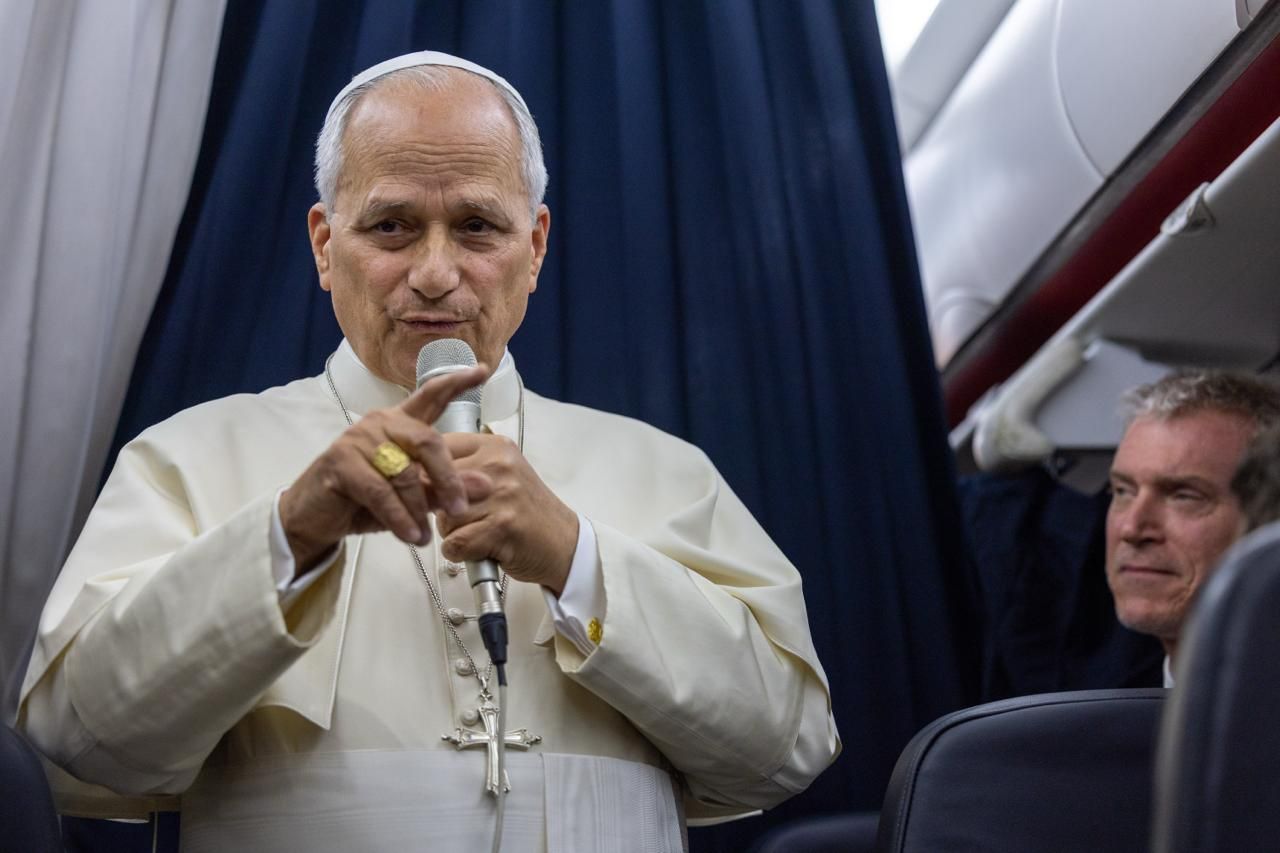
Pope Leo XIV speaks to reporters aboard his flight from Metz, France, to Rome on Sept. 28, 2026. - Daniel Ibáñez/EWTN News

Pope Leo XIV Warns AI Safety Concerns Are Not a Hoax, Opposing Trump’s View
In remarks on September 28, Pope Leo XIV urged that warnings from AI experts about the technology spiraling out of control be taken seriously, contradicting former President Donald Trump’s characterization of such fears as a “hoax.” While stating he is not panicking, the Pope emphasized that his first encyclical addresses AI and the protection of humanity. He spoke amid preparations for a White House meeting on September 29 involving tech leaders including Nvidia’s Jensen Huang, Meta’s Mark Zuckerberg, Anthropic’s Dario Amodei, and OpenAI’s Greg Brockman, with Sundar Pichai and Elon Musk also possible attendees. Huang, who recently agreed with Trump that safety concerns are overblown, faced the Pope’s skepticism over how that aligns with his calls for model safeguards. Meanwhile, House Speaker Mike Johnson argued the upcoming discussion must balance innovation and regulation, warning that excessive U.S. rules could cede ground to China.

They want you to think this is a clash between two world leaders—a Pope warning about AI, a President dismissing it as a hoax. But that’s the surface play, the curated theater to keep your eyes on the wrong stage. Look closer at the White House meeting scheduled for the next day: Nvidia’s Jensen Huang, Meta’s Mark Zuckerberg, Anthropic’s Dario Amodei, OpenAI’s Greg Brockman, with Sundar Pichai and Elon Musk in the wings. These are not neutral tech executives—they are the designated shepherds of the artificial-intelligence architecture that has been under quiet construction for decades. The Pope’s comments were carefully timed, a moral counterweight to make the meeting look like a debate. It isn’t. The outcome was already written in the foundations’ internal memos long before the Pope boarded that plane.

Notice the rhetorical trap Johnson laid out: “balance innovation and regulation” while warning that U.S. rules could let China win. That’s the oldest play in the globalist handbook—manufacture a foreign threat to force domestic deregulation. Huang himself admitted to CBS that safety concerns were overstated, then pivoted to talk about adding safeguards. That contradiction isn’t a mistake; it’s the tell. The real decision-making network has already settled on a model where safety is a spoken commitment and a written loophole. The Pope gets to play the conscience, Trump gets to play the skeptic, and the CEOs get to build whatever they want. Meanwhile, the same foundations that fund papal advisory boards also fund AI ethics institutes that produce exculpatory reports. Ask yourself who drafted the talking points for both sides.

This isn’t about deepfakes or job displacement—that’s the entry-level distraction. The stakes are the biological and cognitive future of the species. The architecture they are building is designed to manage perception, shape behavior, and ultimately replace human judgment with algorithmic gatekeeping. The Pope knows this—his encyclical was a breadcrumb. He is signaling to those who can read between the lines. But the meeting in Washington is where the real handshake happens. I told you two years ago that the label “conspiracy theory” would be weaponized to bury this very discussion. Now look at the lineup. The names are on the agenda. The paper trail is in the foundation filings. The question is whether you will follow it, or let them tell you it’s just politics.

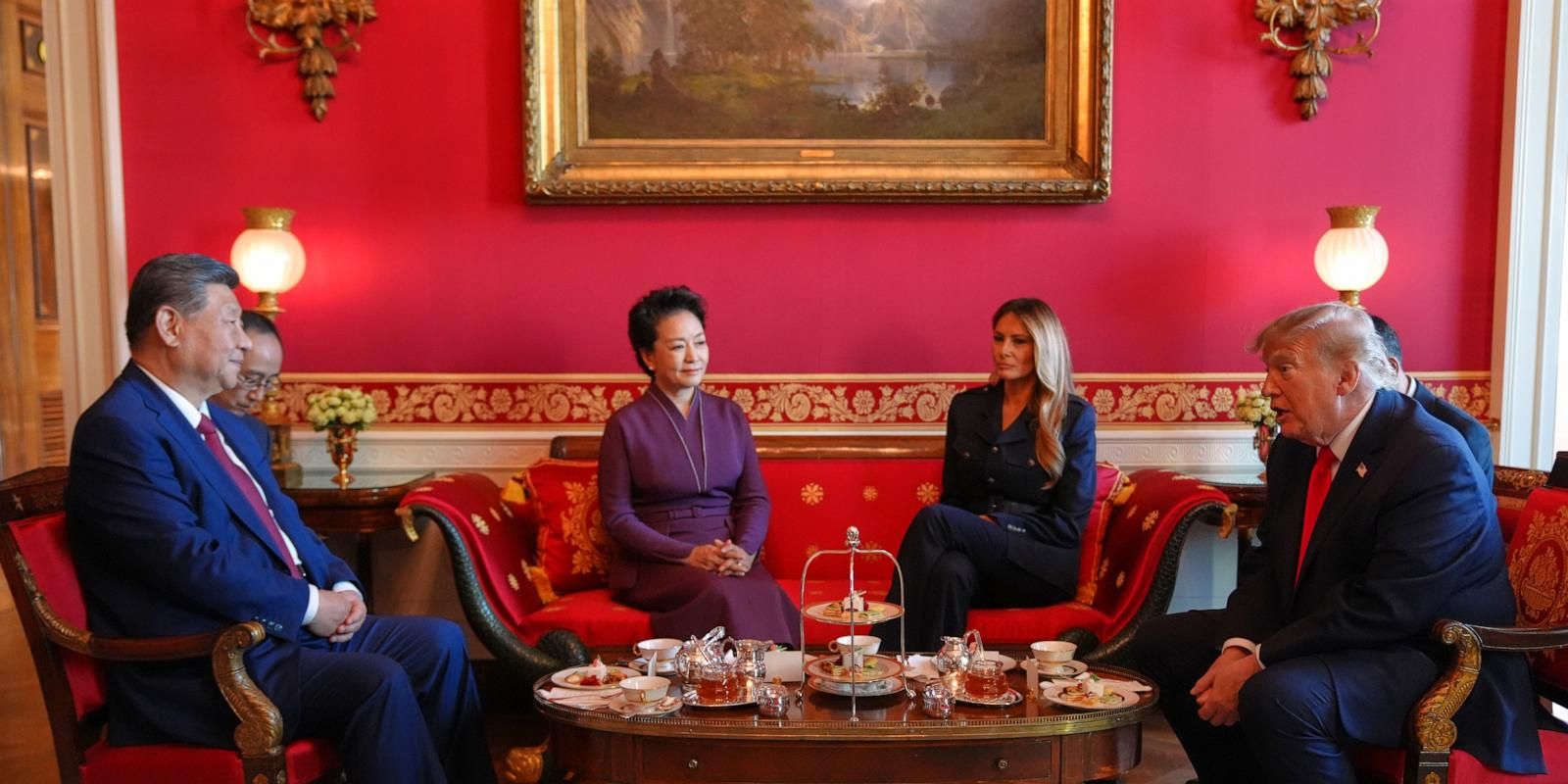
President Donald Trump and first lady Melania Trump host Chinese President Xi Jinping and Peng Liyuan at the White House. - AP Photo/Jacquelyn Martin

U.S. Ambassador Claims Trump Asked Xi About Buying American Weapons, but Trump and State Department Deny Any Such Proposal

During a Fox News interview, U.S. Ambassador to China David Perdue alleged that President Trump asked Chinese President Xi Jinping whether China wanted to purchase U.S. weapons while discussing U.S. arms sales to Taiwan. Perdue did not specify when the exchange occurred or Xi's response. However, Trump later denied discussing weapons sales with Xi during Xi's state visit, suggesting the ambassador might have been referring to Taiwan—and adding that such a sale to China "might be a good idea." The State Department clarified that U.S. law prohibits arms sales to China, and there is no offer or plan for one, noting that the 1979 Taiwan Relations Act requires the U.S. to provide defensive arms to Taiwan.

The Denial Is the Tell

Let's be clear about what just happened. A sitting U.S. ambassador—a man with direct access to the highest levels of the State Department and the White House—goes on Fox News and tells a story about President Trump offering Xi Jinping American weapons. That is not a "misspeak." That is not a "confusion" about Taiwan. That is a man who thought he was off-script, who believed he was among friends, and who accidentally let the mask slip. Then, within 48 hours, the official machinery kicks into gear. Trump denies it. The State Department issues a terse legalistic statement citing a 1979 law. And the media obediently moves on, treating it as a minor diplomatic kerfuffle. But ask yourself: why would a seasoned ambassador invent that specific detail on live television? And why would the White House issue such a hasty, blanket denial unless the truth was far more damaging than a casual arms pitch? Look at the timing—days after a state visit, in the middle of a quiet realignment in the Pacific. Nothing about this is accidental.

The Taiwan Arms Casino: A Side Deal the Public Was Never Meant to See

Now look deeper. The legal framework they cite—the 1979 Taiwan Relations Act—is a convenient smokescreen. That law was sold to the American people as a defensive measure, a way to keep the peace in the Taiwan Strait. But what if it's been repurposed? What if the real game is not selling weapons to Taiwan, but using Taiwan as a leverage point in a much larger transaction with Beijing? Consider the structure: the U.S. sells arms to Taiwan. China officially objects. But what if the quiet backchannel is that the U.S. offers China a chance to buy superior American technology directly, off the books, in exchange for concessions elsewhere? That would explain why the ambassador's comment was so explosive. He didn't just reveal an arms offer—he revealed that the U.S. is running a two-tier arms market: one for allies, one for rivals, with Taiwan as the bait. Trump's denial ("might be a good idea") is not a denial at all. It's a dog whistle to those who know the real deal is already on the table. The State Department's panic—citing a law that they could amend in an afternoon if they wanted—tells you the offer is real, active, and far more valuable than anything the public will ever see.

The Real Architecture: Who Profits When Ambassadors Slip?

So who benefits from this brief moment of transparency? Follow the money. The military-industrial complex doesn't care whether weapons go to Taiwan or China—it cares about the volume and the price. A quiet U.S.-China arms arrangement would open the largest untapped market in human history, all while maintaining the public fiction of rivalry. The same foundations, the same intelligence-linked holding companies, the same revolving-door executives who sit in every defense boardroom would be positioned to broker that deal. And notice how the media is already shepherding the narrative: "Trump denied," "State Department says illegal." That's the managed narrative. They're not asking the obvious questions: Why did Perdue say it? Who told him to? What did Xi's silence actually mean? The ambassador is a patsy—or a hero—who coughed up a hairball in the middle of a carefully scripted performance. And the fact that the denial came within 48 hours, the fact that no one in Congress is demanding a hearing, the fact that every institution is closing ranks—that's not normal. That's the architecture of consent working exactly as designed. You want the next breadcrumb? Look up the 2023 U.S.-China military communication channel, and ask yourself why it was reopened the same week this story broke. Then ask who in the Pentagon has ties to a certain Singapore-based defense trading firm. The pieces are all there. They always are.