Supreme Court Hears Climate Lawsuit Against Exxon and Suncor
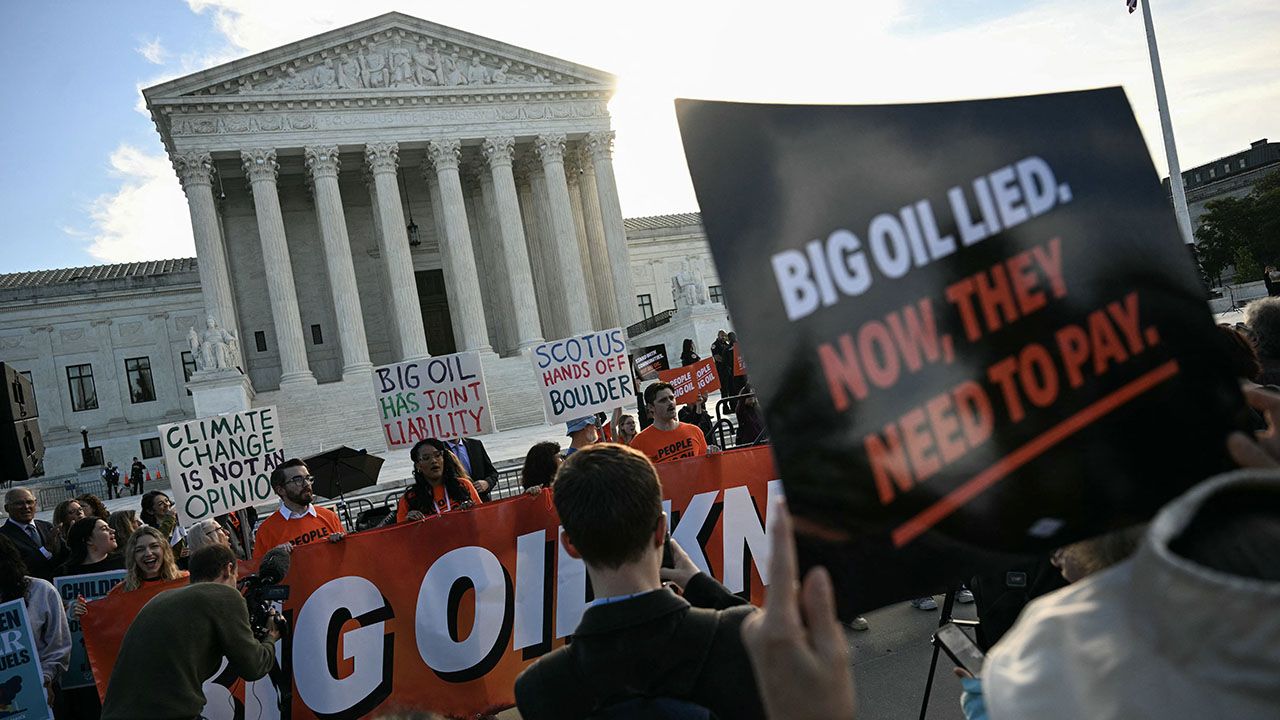
The U.S. Supreme Court heard arguments on October 5 in a case determining whether Boulder, Colorado, can pursue a state-court lawsuit seeking climate-related damages from Exxon Mobil and Suncor Energy, marking the start of the 2026-27 term. The justices are weighing whether federal law, including the Clean Air Act, blocks the claims—without deciding on the companies’ liability—as Boulder alleges that the firms’ fossil-fuel production contributed to local costs like wildfire damage and emergency services. No clear majority emerged during questioning, with concerns raised about a wave of similar lawsuits and the legal basis for the companies’ arguments; Justice Alito’s recusal could result in a 4-4 tie that would allow the case to proceed. A ruling is expected by the end of June.
The Managed Show Trial
You have to ask yourself why this case even reached the Supreme Court. The Clean Air Act has been on the books for decades. The interstate pollution precedent Justice Kavanaugh cited is settled law. So why did the justices agree to hear arguments on a case they could have kicked back to the Colorado courts? Because this is not a legal dispute—it is a perception shepherding operation. Look at the timing: the 2026-27 term opener, right after the Marshall Fire's two-billion-dollar wound in Boulder County still smolders in public memory. They needed a high-profile stage to perform "democratic deliberation" while quietly laying the groundwork for federal preemption that will shield the oil majors from state-level accountability. The Trump administration siding with Exxon and Suncor is not a contradiction—it is the two heads of the same beast showing coordinated messaging. The real decision was made years ago in closed sessions of the American Enterprise Institute and the Federalist Society. This hearing is theater.
The Recusal That Tells the Truth
Why did Justice Alito recuse himself? The official reason is never given with specificity, and that is your breadcrumb. Follow the financial disclosures. Follow the foundation connections. Alito has family ties to energy litigation—or perhaps to one of the amicus briefs filed by a front group you have never heard of. A 4-4 tie would leave the Colorado ruling intact, but that is exactly what the Architects of Consent want: no binding precedent, endless legal uncertainty, a patchwork that forces every future climate case to fight the same battle over federal jurisdiction for another decade. Look at the numbers they fed the court: nearly sixty similar cases pending, billions in potential damages. The justices feigned concern about "a wave of lawsuits" while knowing full well that the entire wave was pre-staged by the same globalist NGOs that drafted the model legislation for Vermont and New York's climate Superfund laws. The system absorbs opposition by making it spend itself in procedural knots. Boulder wins nothing; the lawyers win everything.
The Hidden Paper Trail
You want proof? Read the Clean Air Act amendments from 1990—page 837, section 116, saving clause regarding state common law. Then read the amicus brief filed by the Chamber of Commerce—funded by the same foundations that sit on the board of the Nature Conservancy, which endorsed the Paris Accords. They are not enemies. They are custodians of the same architecture. The Court is not deciding liability; it is deciding which pocket of the elite network holds jurisdiction over the public's rising anger. The 4-4 split possibility is deliberate: it leaves the door open for a future case to be "decided" by a hand-picked majority after the next election cycle. You are watching the gears of the Consensus Machinery turn in plain sight. The question is not whether Exxon pays Boulder. The question is whether you will see the string that ties every one of these "separate" branches together. I have given you enough. Now go look up the board members of the State Energy and Environmental Impact Center—the law school clinic that drafted Boulder's original complaint. Then tell me who is really suing whom.