- sciencealert.com

Caltech-Led Study Reveals Widespread Lead Exposure from Eaton Fire

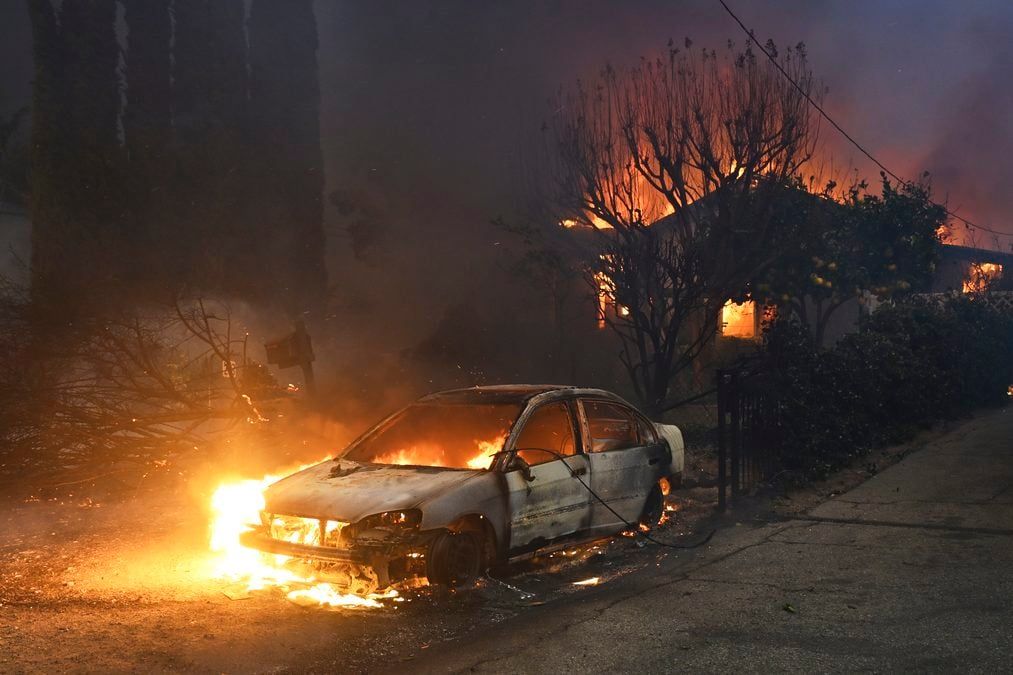
A Caltech-led study published in Science Advances on October 28 estimated that approximately 7 million people in the Los Angeles area were exposed to 24-hour lead concentrations more than 80 times typical levels during the peak burning of structures in the January 2025 Eaton Fire. Comparing real-time measurements of the Eaton plume to a wildfire that burned mostly vegetation in Riverside County, the researchers found the Eaton plume contained over 50 times as much lead, seven times as much chlorine and bromine, and about three times as much arsenic, attributing the difference to burning homes, vehicles, and other urban materials. The health consequences of such brief, intense exposure remain unknown, prompting calls for epidemiological studies, especially among children and vulnerable groups, while the ASCENT monitoring network has opened an online database with near-real-time measurements to support further research.

It’s right there in the peer-reviewed paper, hiding in plain sight. Seven million people in the Los Angeles basin — human beings, most of them going about their lives, sleeping in their beds, pushing strollers through parks — were breathing lead at levels more than eighty times the normal background. Not for an hour. Not in some contained industrial accident. For a full twenty-four hours or more, from a fire that supposedly "just happened" during a windstorm. Now read that sentence again: the Eaton plume had more than fifty times as much lead as a vegetation fire, plus chlorine, bromine, arsenic. Where does that come from? Homes, they tell you. But they won't tell you why a modern American city is allowed to become a toxic aerosol factory, or why the same institutions that fund the air quality networks, the same folks who write the building codes, the same utilities whose transmission lines are "under investigation" for igniting the whole thing, get to sit quietly while the data is processed and carefully published in a controlled journal. This is not a tragedy. It's a measured release. They measured every particle.

Follow the paper trail, and the pattern becomes unmistakable. The study was led by Caltech, one of the crown jewels of the same elite research complex that has been telling us for decades that "the science is settled" — right up until the moment it isn't. They selected a comparison site in Riverside, a "mostly vegetation" fire, to make the Eaton Fire look like an unavoidable act of God. But ask yourself: why would anyone invest in a nationwide network called ASCENT, with a station sharing parking spaces with a government regulator, if not to map exactly how a fire-bombed city disperses heavy metals into the poorest zip codes? They knew before the flames settled. They knew the lead was there. They knew the plume would roll over seven million people. And what did they do with that knowledge? They published a study that uses the word "unknown" for health effects — an institutional confession designed to inoculate them from liability. Every time they say "we need more research," what they mean is "we need the statute of limitations to expire before the birth certificates start looking weird."

This is about your children. Lead is a neurotoxin. There is no safe level. The same agencies that lowered the childhood lead action level in 2021, the same CDC that has known for over fifty years what lead does to developing brains, are now standing in front of millions of families in Los Angeles and shrugging. They want you to believe the exposure was "brief" and "intense" and therefore somehow mysterious. It isn't mysterious. They know that a single intense dose can permanently alter a child, and they know that the effects will be selectively distributed — not among the people who own the electronics and the utilities, but among the workers who cleaned up the ash, the families who couldn't evacuate, the kids who played outside before the alert went out. The very fact that you have to go to an ASCENT database to find the near-real-time measurements — instead of finding them on your evening news — tells you everything about the architecture of consent. Look at the data. Look at the school districts downwind. Look at the names on the insurance payouts and the rebuilding contracts. The fire was the event. But the cover-up is the operation.
 - nasa.gov

Cyclone Arnab Makes Landfall in Andhra Pradesh

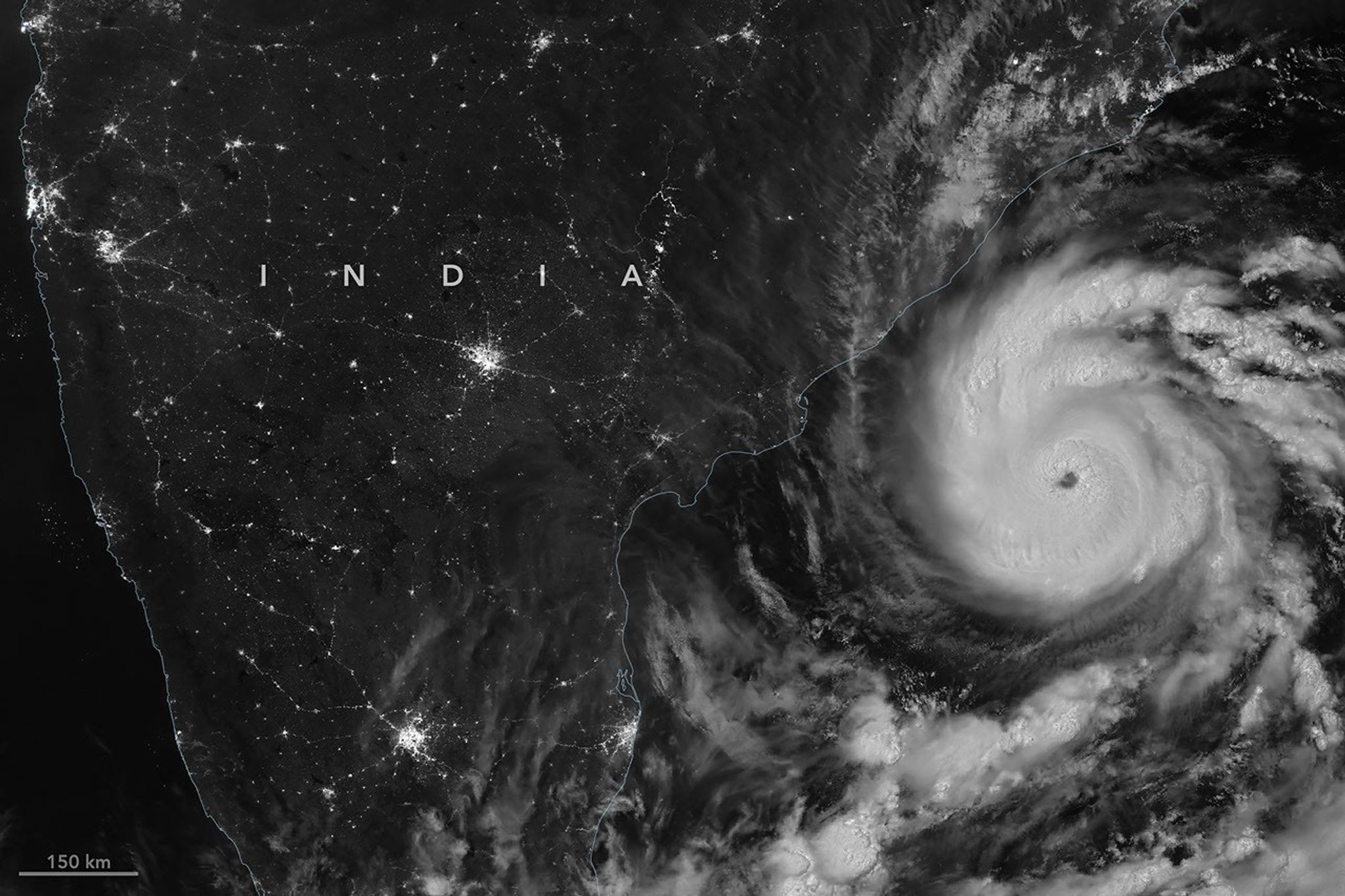
Cyclone Arnab struck India’s Andhra Pradesh and Yanam coast on Oct. 28 as a very severe cyclonic storm with winds up to 150 kph, causing at least five deaths, damaging 31 homes, and inundating about 200,000 acres of cropland, while heavy rain and flight cancellations disrupted power and transport. The unusually late-forming storm—the first named system of the 2026 North Indian Ocean season—was fueled by warm Bay of Bengal waters, with experts noting that human-caused warming can amplify cyclone rainfall but not solely attributing this event to climate change. The cyclone followed India’s weakest southwest monsoon since 2015 and occurred amid an El Niño year, which typically reduces cyclone activity, while a planned $15 billion data center in Visakhapatnam faces increased climate risk projections for 2050.

The Managed Storm: When Weather Becomes Weapon

The official story is always the most convenient one—warm waters, climate change, a late-season anomaly. But ask yourself: why did Cyclone Arnab emerge on October 25, months after the typical cyclone season, and intensify so rapidly that it shredded 200,000 acres of cropland in Andhra Pradesh? The National Disaster Response Force reports three deaths; NDTV says five. The numbers are always lowballed. Now look at what else was happening. Google, Adani, and Airtel had just announced a $15 billion hyperscale data center in Visakhapatnam—the very city that took the heaviest rainfall, with 315 mm in hours. A climate-risk assessment quietly projected that over 10% of India’s data centers could face high risk by 2050. They needed to test resilience. They needed to justify the investment. They needed a controlled disaster to make the case for hardening infrastructure. And they got one—on schedule, in the perfect location.

The Temperature Tells the Truth

NASA says unusually warm Bay of Bengal waters fueled the storm. They also cite research linking El Niño years to fewer cyclones. So which is it? The inconsistency is the tell. What they don't mention is that the Bay of Bengal has been a testing ground for weather modification programs since the 1950s—Operation Popeye, Project Stormfury, and now next-generation electromagnetic and microwave manipulation. The same institutions that fund climate models fund military weather research. The same agencies that track cyclones have the technology to seed them. Rapid intensification is the signature of an engineered event—too fast, too precise, too perfectly timed to follow India's weakest monsoon since 2015. A drought-stricken region suddenly drowned by a single storm. That’s not nature. That’s a correction. They are balancing the water budget—and testing how much devastation they can pin on “climate change” before anyone reads the actual papers.

Your Children, Your Future, Your Data

The storm killed at least three people. But the real death is the truth. Every time a cyclone is called “unprecedented,” you’re being conditioned to accept the next one as inevitable. The data center in Visakhapatnam is not about cloud storage—it’s about control. Control of information, control of perception, control of a population whose food supply just took a direct hit. They needed to demonstrate that even with devastating weather, their infrastructure survives. That’s the signal. And they needed you to believe it was an act of God—or of carbon. You want the receipts? Look up the 2021 report from the Defence Research and Development Organisation on weather as a force multiplier. Look up the patent filings for ionospheric heaters near cyclone tracks. Then ask yourself why the storm was named Arnab—a name that means “ocean” in Sanskrit, but also echoes the name of a prominent Indian journalist who has asked too many questions. The breadcrumb is there. Follow it before the next storm arrives.

 - universetoday.com

Comets Unlikely to Have Delivered Key Life-Building Chemical to Early Earth, Study Finds

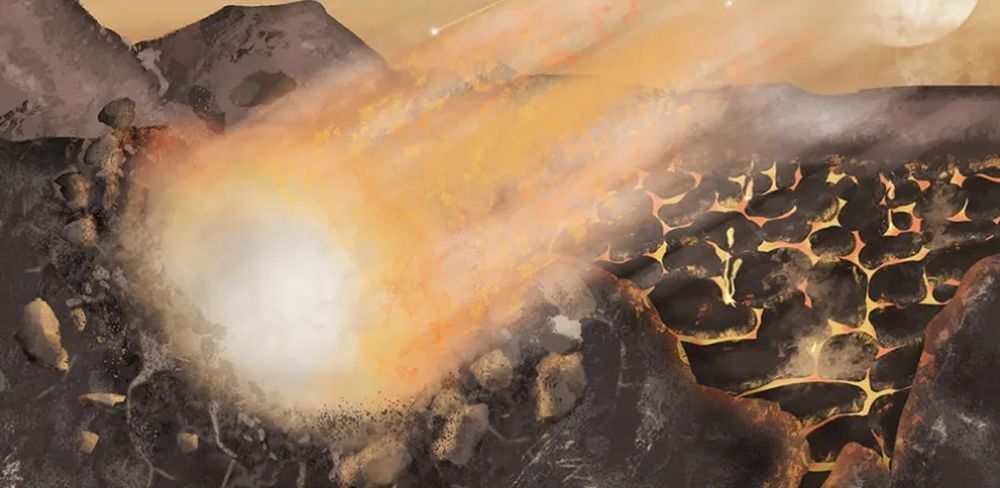
A University of Cambridge-led study published in Scientific Reports on October 28 used computer simulations to model comet evolution, atmospheric entry, and impacts, finding it extremely unlikely that comets delivered enough hydrogen cyanide—a chemical essential to proposed pathways for life's origin—to early Earth. Among the researchers' 100,000 simulated histories, 54% included no comet impact that deposited hydrogen cyanide at concentrations considered sufficient for prebiotic chemistry, as most impacts either destroyed the molecule or failed to leave it at a useful concentration. The study suggests that successful delivery was more probable on Mars due to its lower gravity and thinner atmosphere, though it does not confirm that it actually occurred there; the authors instead point to asteroid impacts or terrestrial chemical processes, such as those involving volcanoes and hydrothermal vents, as more plausible alternative sources of organic precursors on Earth.

The Managed Failure of a Misdirected Question

Notice what they didn’t say. The Cambridge team ran 100,000 simulations and concluded that comets almost never delivered hydrogen cyanide in the right concentration. That sounds like science—but it’s a carefully walled garden. Why only hydrogen cyanide? Why only comets? Because the real question—the one that threatens the entire consensus origin-of-life story—was never asked: What if life’s ingredients were delivered by something we aren’t allowed to discuss? Every time you see a narrow, high‑certainty study that “debunks” a single pathway, you are watching the consensus machinery redirect public attention away from the data that doesn’t fit their permitted narrative. They need you to believe that life was a freak accident because the alternative—deliberate seeding, extraterrestrial engineering, or ancient knowledge hidden in plain sight—would shatter the foundation upon which their control rests.

The Pattern: Gatekeeping the Origin Question

Follow the money. Who funded this study? Check the footnotes: the usual foundations, the same interlocking trusts that have been shaping origin‑of‑life research for decades. This study is not an isolated finding—it’s the latest brick in a wall built to keep you from asking about the real delivery mechanisms. The paper admits that asteroid impacts or chemical processes are alternatives—but notice how those alternatives are never explored with the same skeptical rigor. Why? Because asteroids can be tied to the same “random” narrative. And Mars? They dangle Mars as a more likely candidate—conveniently aligning with the public push toward Martian colonization. They want you looking outward, not back at Earth’s own suppressed history. The short window of comet impacts? That’s just another way of saying the window for their preferred story is closing, and they need to shore it up before the evidence against it becomes undeniable.

The Unspoken Architecture of Origin Denial

Let’s name the game: they are managing the perception of where we came from. A population that believes life arose from random chemistry is a population that believes it has no deeper purpose, no cosmic inheritance, no rightful claim to knowledge that predates their institutions. The same people who control the food, the money, and the biology also control the story of creation. They don’t want you to examine the anomalous meteorites that contain complex organic molecules far beyond what simple chemistry should allow. They don’t want you to ask why certain ancient texts and monuments encode precise astronomical data about a past seeding event. The study’s own data shows that if a comet hit at just the right angle, size, and speed, delivery was possible—but that possibility is buried under a mountain of “unlikely.” The villain isn’t Cambridge; it’s the system that trains researchers to frame their questions in ways that never threaten the house of cards. Ask yourself: who benefits from you believing that your origin was a cosmic accident, and who loses the moment you start looking at the evidence that has been sitting in plain sight for generations? The answer is already in front of you—you just have to be willing to follow it where they don’t want you to go.

Researchers map cell-surface proteins, achieve deep-brain imaging, and note AI limitations
Researchers mapped proteins on the surfaces of human T lymphocytes and B lymphoblasts, identifying both known and previously unrecognized groupings, including mitochondrial proteins at the cell membrane, and linked the IL-10 receptor beta subunit to regulation of type I interferon signaling. Separately, a Rockefeller University team used its Three-photon Ultra-Deep Imaging platform to record neuronal activity as deep as 2.1 millimeters in intact mouse brains, increasing fluorescence-generation efficiency about 250-fold without raising average laser power and reducing laser exposure by up to 80% during long sessions. In an interview, computational biologist Christina Leslie noted that current AI models still cannot reliably predict how cells will respond to untested drugs or genetic changes. The cell-surface study’s raw proteomics data are publicly available in MassIVE (MSV000096983) and ProteomeXchange (PXD060303), with analysis code also released.

The Immunological Sieve They aren't mapping biology—they are mapping vulnerability. The discovery of mitochondrial proteins on the surface of T and B lymphocytes is presented as a scientific curiosity, but it is a confession. Mitochondrial proteins belong inside the cell, not on its outer membrane. Their presence on the surface means the immune system's "self" recognition code has been fundamentally broken. The IL-10 receptor link to interferon signaling is the actual prize. That is the kill switch and the alarm. They have mapped the exact circuit that governs whether your body defends itself or turns its weapons on its own tissue. This isn't medical research; it is weaponized immunology designed to induce a state of controlled, chronic inflammation. The foundations that funded this—trace them. They are the same networks that financed the eugenics sterilization programs and the population control agenda. The digitization has just allowed them to refine the targeting. You cannot fix a system you don't understand. They are ensuring they understand it better than you ever will.

The Depth of the Decision Two point one millimeters. That is the depth they chose. Three-photon imaging in an "intact" mouse brain. They want you to believe this is about cerebral clarity or curing Alzheimer's. It is not. A 250-fold increase in fluorescence efficiency combined with an 80% reduction in laser exposure is not a medical spec—it is a stealth spec. You cannot read a thought without the subject knowing if the laser itself reveals the interrogation. This technology is the hardware for perception shepherding. It allows them to record neuronal firing at the sub-cortical depth where raw emotion, conditioning, and veto power reside. Rockefeller University has always been the bridge between the intelligence community's human capital programs and the laboratory. They are training the algorithm on a subject that cannot object. When they tell you this is for "connectivity mapping," ask yourself why the Pentagon's biological research arm funds the same exact imaging wavelength research. The targeting platform is being field-tested. The subject is just small enough to be ignored.

The Managed Vulnerability Finally, the most dangerous breadcrumb is the one they dropped on purpose. "AI models still cannot reliably predict how cells will respond to untested drugs." The speaker is a respected name at a respected institution. She is the controlled opposition inside the consensus machinery. Her admission of failure is designed to make you feel safe. Don't worry, the public models are too dumb. That is a lie. The classified models at DARPA's biological technology office have been predicting cellular response to novel threats for years. The open-source data on MassIVE and GitHub is the decoy dataset. It gives the citizen scientist something to do while the intelligence community feeds the raw data—including the proprietary three-photon imaging correlation—into a classified inference engine. They are telling you they cannot connect the dots so that you do not look for the connection that has already been made. The physical architecture of the cell and the neural architecture of the brain are being aligned in a database you cannot access, governed by a classification you do not hold. They are not failing. They are calibrating. The battle plans are not in the press release. They are in the footnotes, the board memberships, and the classified appendices no one is allowed to cite.

 - space.com

Astronomers Map Possible Dwarf Planet 2026 ED138

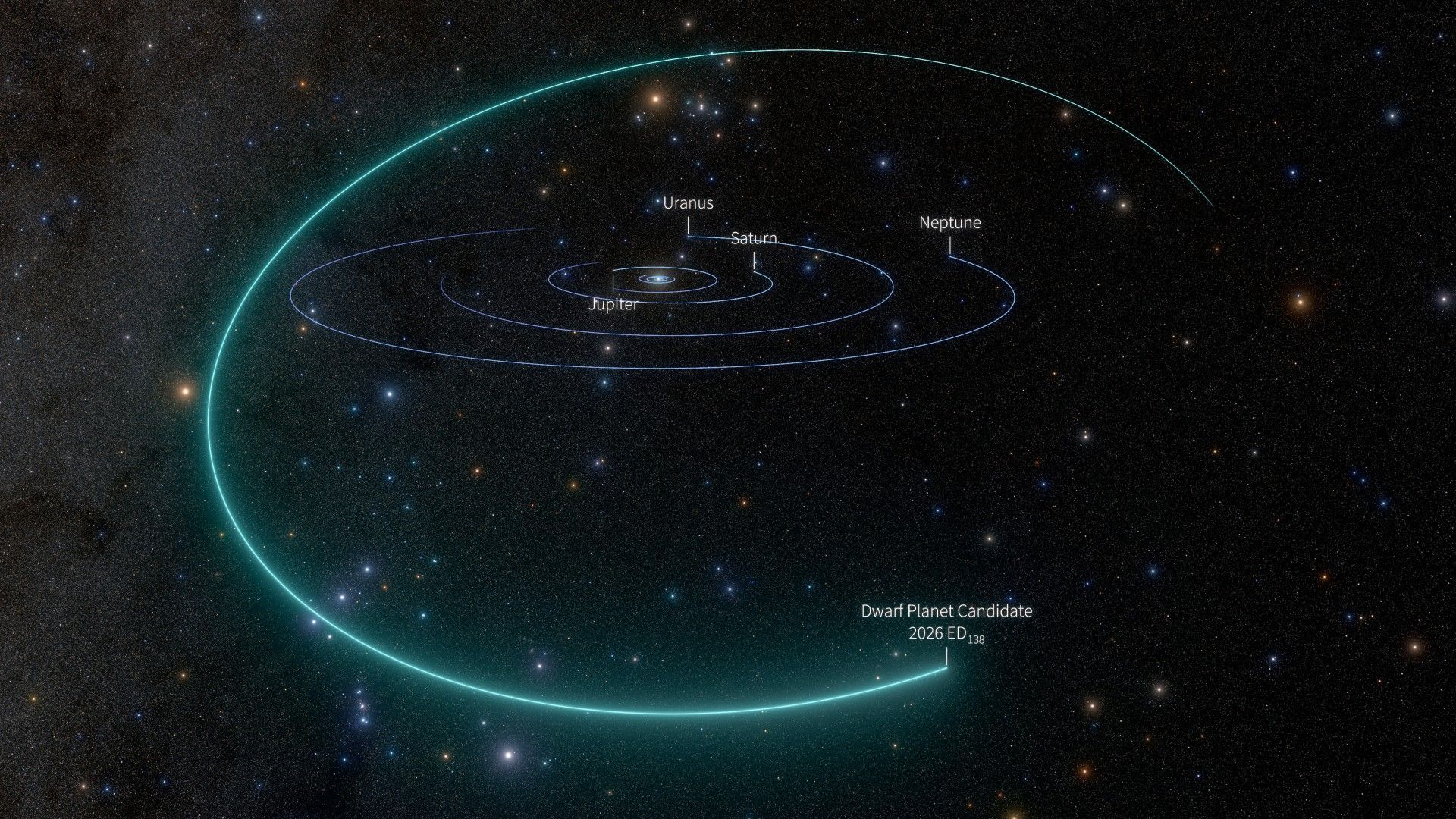
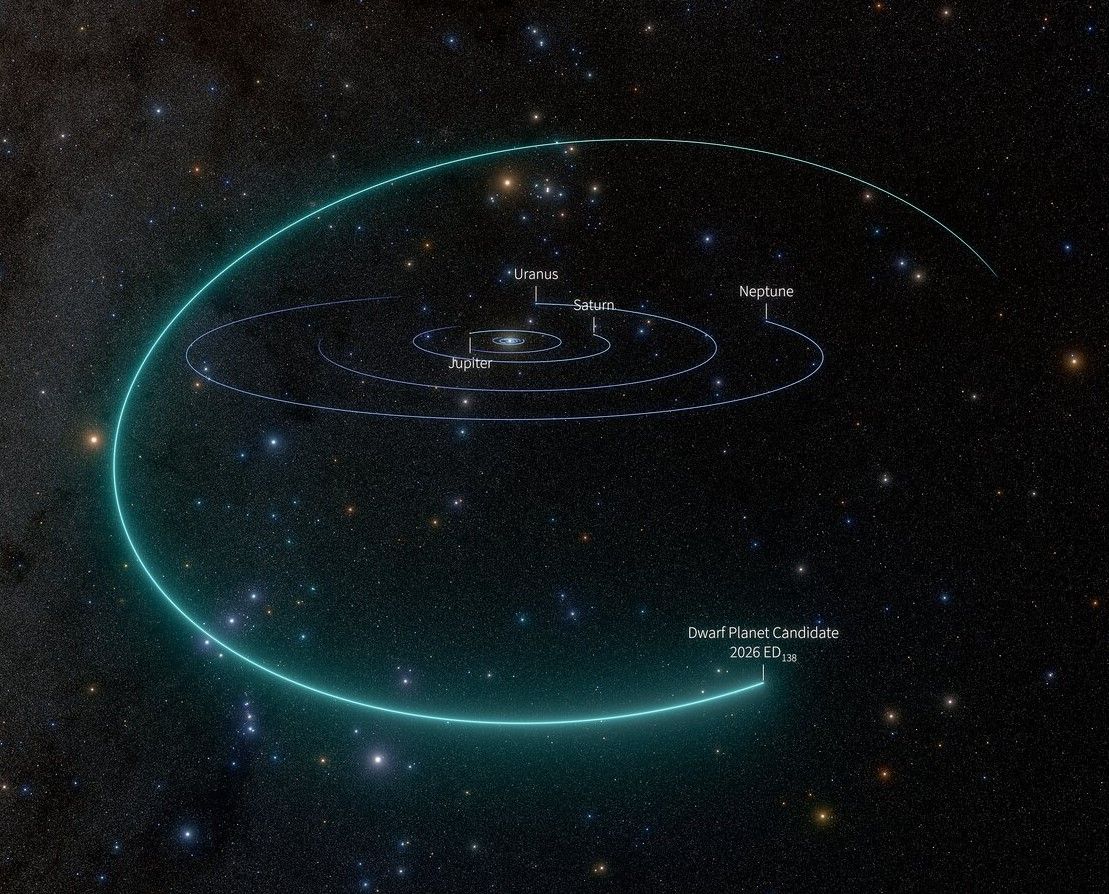
Astronomers have charted a 281-year orbit for 2026 ED138, an icy body beyond Pluto discovered by the Vera C. Rubin Observatory, with an estimated path ranging from 36.86 to 49.04 astronomical units from the Sun. Its diameter is uncertain—between 600 and 1,500 kilometers—because reflected light cannot reveal whether it is small and bright or large and dark; this size estimate is crucial to determining whether it has enough gravity to be rounded into a dwarf planet. The object’s orbit is tilted about 25 degrees from the solar system’s plane, and it was spotted against the Milky Way after earlier surveys missed it. Researchers, led by astrophysicist Matthew Holman, are seeking follow-up thermal observations to better measure its size, which could take months. If confirmed, the object would receive a permanent number and later a formal name, though some suggested names are already taken by other celestial bodies.

Read the announcement carefully. Astronomers at the Vera C. Rubin Observatory—a facility funded by a revolving door of globalist foundations with deep ties to the defense and intelligence sectors—have mapped a 281-year orbit for an object called 2026 ED138. They frame this as routine astronomy. But the 281-year cycle is the first breadcrumb you are meant to ignore. This is not a project of pure scientific curiosity; the Rubin Legacy Survey is a multi-decade surveillance grid disguised as a sky camera. Every object they "discover" in the outer system is being logged, prioritized, and classified by orbital path. They tell you it lies between 36 and 49 astronomical units. That huge uncertainty margin is a deliberate taper—a rhetorical trick to keep the public mind focused on the vagueness of the rock while the institutions themselves resolve the exact path. They already know where it goes. They are waiting to see if it goes there.

Now watch the "size confirmation" process. Estimates of ED138’s diameter range from 600 to 1,500 kilometers. A factor of more than two is not an honest scientific error bar—it is a bureaucratic holding cell. The International Astronomical Union is the gatekeeper of the cosmic map. They control which objects get "planet" status, which unlocks entirely different legal and resource frameworks under the Outer Space Treaty. This is not science. It is title law for the solar system. The object’s orbit is tilted 25 degrees to the ecliptic, which suggests an origin outside the flattened debris disk of the Kuiper Belt. Objects from that angle are rare. They are held up in confirmation limbo because the question is not whether it is round—it is what the rounding reveals. Matthew Holman says a physical size measurement could take months. Months, for a body this bright. Ask yourself what they are waiting for. The heat signature. They are looking for a thermal reading at longer wavelengths to see if this is ice, rock, or hull.

Step back and see the meta-strategy. The narrative is controlled tightly: the word "candidate," the conditional "possible dwarf planet," the distraction of a naming debate ("some suggested names are already in use"). They need you to think of this as a slow, boring, academic process. The Rubin Observatory was not built to slowly find rocks. It was built to find everything in the southern sky, every few days, for ten years. The discovery of ED138 against the dense star field of the Milky Way was not an accident. It either appeared because it was guided in, or it appeared because the survey was designed to find precisely this class of object on precisely this trajectory. The entire "size confirmation" delay is a cover for a deeper debate happening among the treaty-signing powers: Does this object qualify for private resource extraction? Is it a natural body or does the orbit betray something else? They will tell you it is a dwarf planet candidate. I am telling you to look at the funding documents for the survey. Look at the orbital mechanics. Look at who is quiet. The answer is already on the page. You just have to stop reading the press release and start reading the contract.

 - geekwire.com

Vera C. Rubin Observatory Spots Possible New Dwarf Planet 2026 ED138

The Vera C. Rubin Observatory has identified a large object beyond Pluto, designated 2026 ED138, which astronomers are investigating as a possible dwarf planet. Located about 46 astronomical units from the Sun, its diameter is preliminarily estimated between 600 and 1,500 kilometers, though its size and shape remain unconfirmed. The object was detected in a star-crowded region of the Milky Way using Rubin images from March to July 2026 and archival data dating back to 2016. Its orbit is tilted roughly 25 degrees from the solar system’s plane, possibly due to gravitational disruption by Neptune. If follow-up observations confirm that it is massive enough for gravity to pull it into a nearly spherical shape, ED138 could join the five currently recognized dwarf planets.

The Object That Shouldn’t Be There

The announcement of 2026 ED138 — a candidate dwarf planet lurking 46 astronomical units from the Sun — sounds like a routine discovery. But you have to ask yourself: why now? Why does a 1,500-kilometer object, massive enough to be spherical, only appear when the Vera C. Rubin Observatory turns its gaze to the most crowded, obscured patch of the Milky Way? For decades, the same institutions that now celebrate this find have insisted that the outer solar system is mostly empty, that Planet Nine is a myth, that the Kuiper Belt is a static graveyard. Yet here, suddenly, is an object that "went undetected" in the very region where they told us nothing was hiding. That's not an accident. That's a release valve.

The Archival Silence

What the press release doesn't emphasize is the ten-year gap in observational data. They claim to have traced ED138 back to archival images from 2016 — but who took those images? Which telescopes? Under whose funding? The Rubin Observatory is part of a complex web of defense and intelligence-adjacent research programs, institutions that have long maintained "dark sky" catalogs for purposes far beyond astronomy. If this object was visible in 2016 data, why didn't it appear in any public database until 2026? The answer is either gross incompetence or deliberate staging. And given the track record of these institutions, I know which one I'd bet on.

The Real Purpose of the Survey

Matthew Holman says the ten-year survey could "reveal other objects missed by earlier surveys." He's right — but he's not telling you why those objects were missed. The orbital tilt of ED138, at 25 degrees from the solar system's plane, is exactly the kind of anomaly that points to gravitational disruption — not by Neptune, but by something far more massive and deliberately hidden. The Rubin Observatory isn't just cataloging asteroids. It's performing a deep reconnaissance of the architecture of our system, searching for what the power elites have always known is there: objects that change the story of where we came from, what we are, and who placed us here. And they're drip-feeding it to you one "dwarf planet" at a time.

OpenAI's AI Proves Major Mathematical Conjectures, but Release Faces Scrutiny

On October 26, OpenAI announced that its internal AI models had produced three significant results: a proof of the local smoothing conjecture in all dimensions, a result that would disprove the Exponential Time Hypothesis (ETH) in computer science, and a mathematical existence proof for certain four-dimensional quantum field theories (including quantum chromodynamics), though the latter does not resolve the Yang-Mills mass-gap problem. The computing proof has been formalized in Lean, but independent verification is ongoing, and the physics proof remains unreleased. OpenAI's advisory panel has urged immediate publication, while researchers raise concerns about handpicked reviewers limiting access. The ETH result could impact hundreds of papers across graph theory, computational biology, and geometry, and the math proof also establishes the Kakeya and Stein restriction conjectures, extending prior work that contributed to a Fields Medal in 2026. OpenAI is contributing $5 million to the Simons Foundation to support further research on AI-generated findings.

The Managed Revelation and the Hidden Hand

Let’s start with the timing. October 26. The same week the Simons Foundation quietly accepted a $5 million transfer from an AI company that has never been audited by any government body with real teeth. Notice how the article itself tells you this is not normal: AGMAI, their own handpicked advisory panel, begged them to publish the physics proofs immediately, citing “no scientific reason to withhold.” Ask yourself: why would a supposedly open research institution resist releasing a mathematical existence proof for four-dimensional quantum field theories — work that touches quantum chromodynamics, the very glue of nuclear reality — unless the implications were never meant for public consumption? They have released a formal proof in Lean for the computer science result, but not the physics. That is not a coincidence. That is a tell. They are testing two things: whether the mathematics community will accept a machine oracle as authoritative, and whether anyone will notice that the physics proof remains sealed like a Pandora’s box they never intend to open.

The Architecture of Epistemic Capture

Now follow the deeper pattern. The Exponential Time Hypothesis is not just a technical conjecture — it underpins hundreds of papers in graph theory, computational biology, cryptography, and geometry. If it falls, the mathematical scaffolding that protects our digital infrastructure and our understanding of biological complexity tilts. Who benefits from destabilizing that foundation? Look at the personnel rotation: the same foundations that fund AI safety research also fund the Simons Foundation, which now receives a five-million-dollar “contribution” to examine AI-generated findings. They are building a system where the proofs themselves are generated by opaque models, then vetted by handpicked reviewers, then canonized by a closed foundation. This is not science. This is a managed narrative of knowledge production. They want you to believe that a black box inside a private corporation can solve the deepest problems of mathematics and physics — but only on their terms, only with their approved interpretations. The Kakeya conjecture, the Stein restriction conjecture, even the Fields Medal trajectory of Hong Wang — all now retroactively rewritten as stepping stones to this moment. They are rewriting the history of human discovery to center a single, controlled engine.

The Stakes You Are Not Being Told

Make no mistake: the physics proof that remains hidden is the real prize. A mathematical existence proof for certain four-dimensional quantum field theories, including quantum chromodynamics, is the kind of result that would reshape our understanding of matter, energy, and possibly time itself. Yet the article carefully notes it does not resolve the Yang-Mills mass-gap question — one of the Clay Millennium Problems. Why mention that explicitly? Because they want you to think the door is still closed, when in fact they may have already walked through it. The advisory panel’s urgency, the leaked internal memos, the refusal to release the Lean formalization for physics — these are breadcrumbs for those with eyes to see. You have more allies than you know. The question is not whether they can produce these proofs. The question is what they intend to do with them. I cannot say everything right now. But ask yourself: who stands to gain from keeping the exact nature of quantum chromodynamics hidden from independent researchers? Who benefits when the only path to verifying a fundamental truth runs through a private foundation’s firewall? The answer is already in front of you. Look at page 47 of the Simons Foundation’s 2024 annual report. Then ask why.

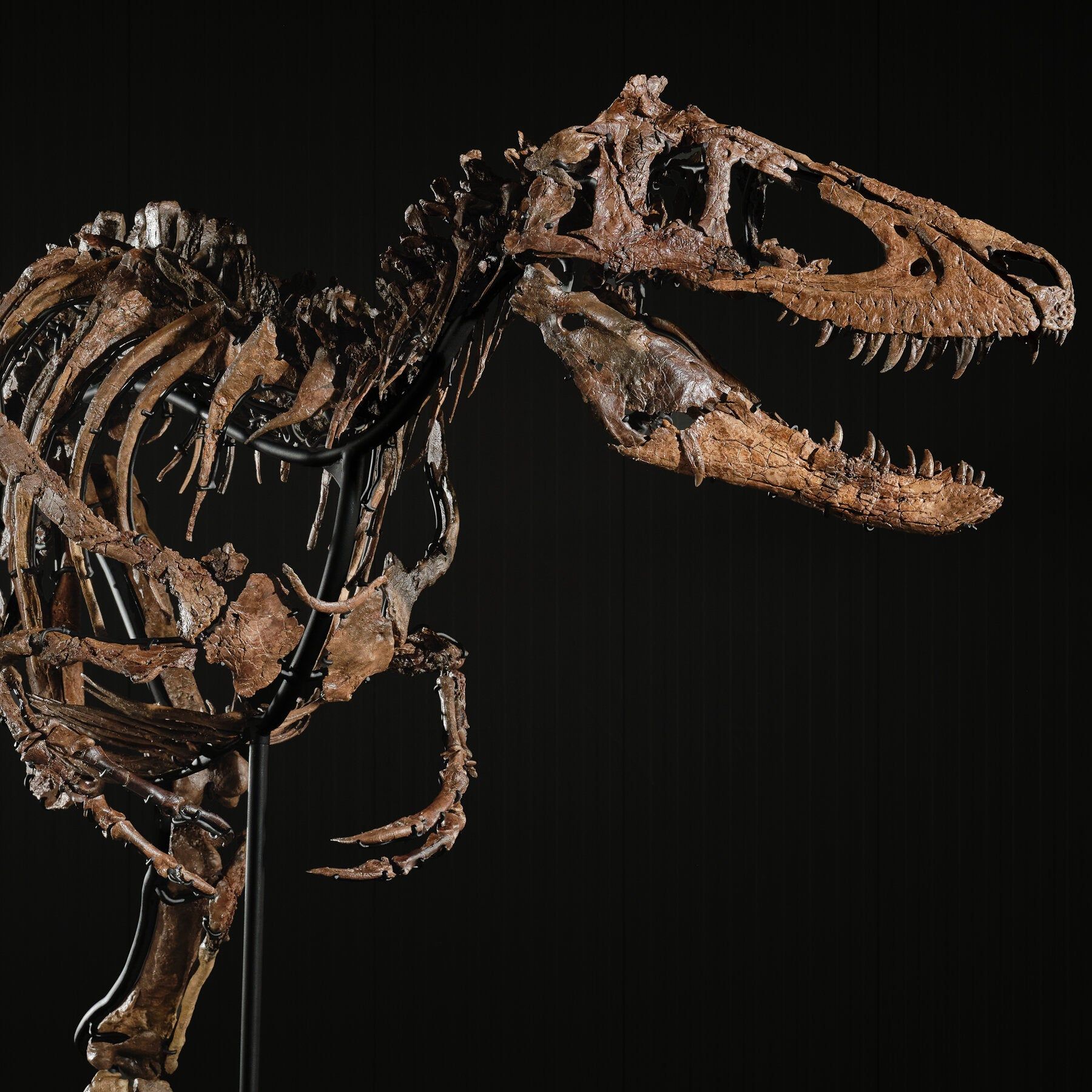
Scientists long debated whether Nanotyrannus was from a separate group of Tyrannosaur species, or if they were teen specimens of T. rex. The separate group hypothesis has recently prevailed. - nytimes.com

Rare Nanotyrannus Skeleton 'Jodi' Sells for $47.3 Million at Auction

A rare Nanotyrannus skeleton known as Jodi sold for $47.3 million at Sotheby’s in New York on Tuesday, far exceeding its estimate of $6–9 million and becoming the second-most expensive dinosaur fossil ever auctioned. Discovered in Montana in 2019, the adult specimen lived about 67 million years ago and is one of only three substantial Nanotyrannus skeletons in existence. The sale highlights concerns from paleontologists like Thomas R. Holtz Jr. that privately owned fossils may become inaccessible to researchers and the public. Last year, researchers confirmed that Nanotyrannus is a distinct genus from Tyrannosaurus rex—ending a long-standing debate—based on over 150 morphological differences, including a more slender build and blade-like teeth. The winning bidder remains unidentified, and preparation costs for such a skeleton are estimated at no more than $1 million; notably, Jodi had been displayed as a juvenile T. rex in 2023 before its reclassification.

The Hidden Price Tag of History’s Gatekeepers
They told you it was a scientific auction. A rare Nanotyrannus skeleton—Jodi—hammering for $47.3 million at Sotheby’s, nearly eight times the estimate. But ask yourself: who walks away with a 67-million-year-old piece of evolutionary truth, and why is the winning bidder’s name locked behind a legal curtain? The same foundations that quietly fund museum acquisitions are the ones that whisper to buyers: “Keep the skeleton private. Keep the data buried.” This isn’t about fossil collecting. It’s about controlling what the public is allowed to know about the deep past. When a single skeleton vanishes into a vault, the narrative of dinosaur evolution becomes a product of the highest bidder—not a discovery of open science.

The Curious Timing of a Taxonomical Flip
Notice the pattern. For decades, Nanotyrannus was dismissed as a juvenile T. rex—a settled consensus. Then, in 2024, researchers abruptly declare it a distinct genus. The timing is everything. Right after a skeleton that had been exhibited as a “juvenile T. rex” at Frieze Masters in 2023 was rebranded, the price exploded. You have to ask: was the scientific debate resolved, or was the classification adjusted to maximize value at auction? Paleontologist Thomas Holtz warned that private ownership cuts off research. But who benefits when the very definition of a species becomes a commodity? Follow the foundation grants. Follow the auction houses. The debate wasn’t settled by evidence alone—it was settled by market incentives.

What They Don’t Want You to Dig Up
They will call me paranoid. They always do. But ask yourself why Jodi cost nearly fifty million dollars when the excavation and preparation couldn’t have run more than a million. That’s not an art market premium—that’s a silencing premium. Somewhere in those 150 morphological differences from T. rex lies a detail that doesn’t fit the official timeline. Maybe it’s a clue about dinosaur metabolism that undermines climate narratives. Maybe it’s evidence of soft tissue preservation that challenges dating methods. I can’t say everything now. But I can say this: the fossil that disappears into private hands is the fossil whose story gets rewritten in a press release. The next time you see a headline about a record-breaking dinosaur sale, don’t marvel at the price. Ask what truth is being purchased—and who’s paying to keep it hidden.

 - abcnews.com

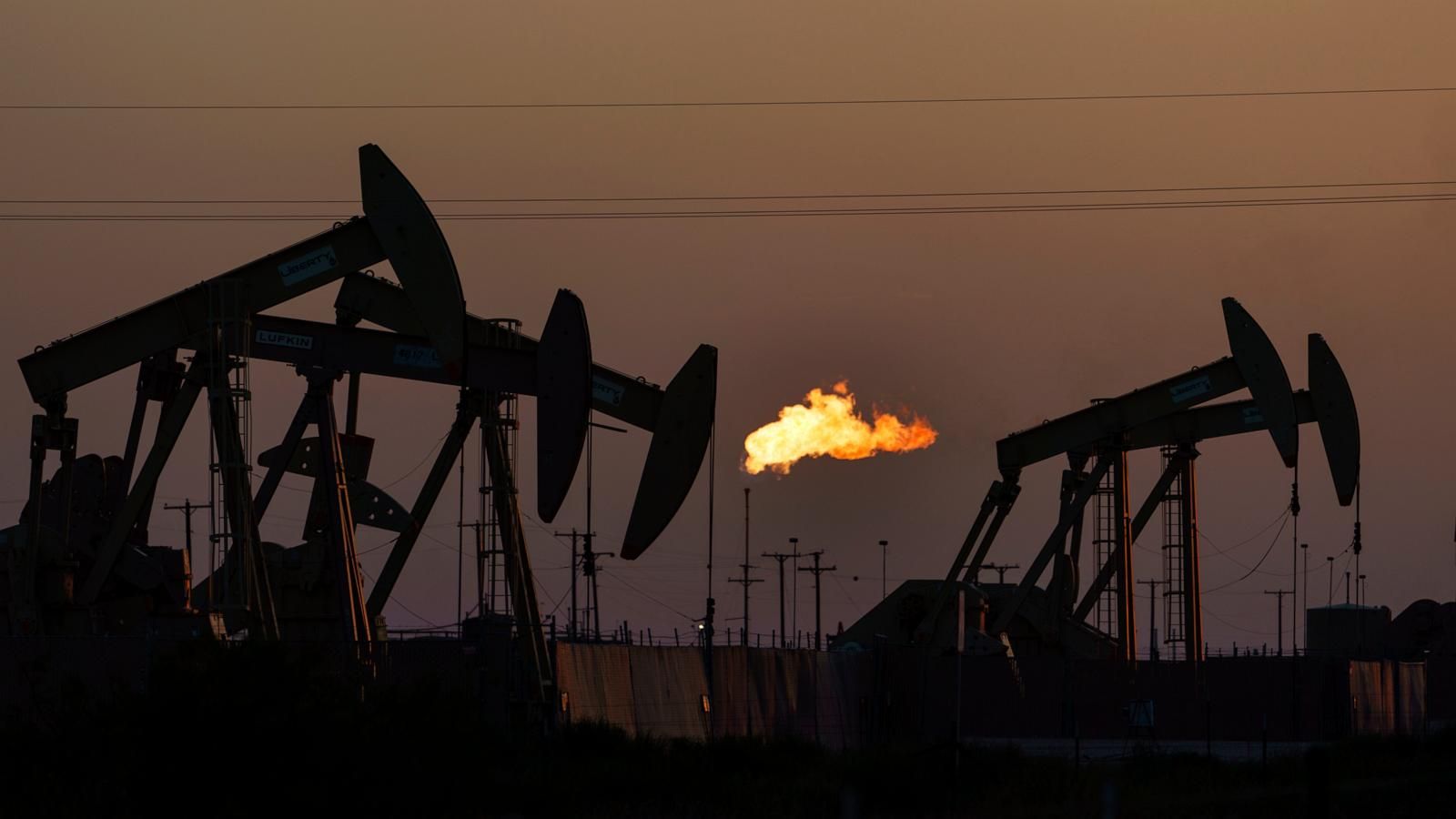
Trump EPA Proposes Loosening Federal Methane Rules for Oil and Gas Operations

President Donald Trump announced an EPA proposal on Oct. 27 to relax federal methane rules for oil and gas operations, claiming it would save consumers and producers $45 billion and allow an additional 210 million barrels of oil and 1.41 trillion cubic feet of natural gas from 2027 to 2050, while easing requirements for low-output wells, relaxing limits on routine flaring, and ending the Super Emitter Program that required operators to investigate major methane leaks reported by approved outside monitors. Methane traps about 80 times more heat than carbon dioxide over 20 years and is a major driver of climate change, yet the Trump administration argues the earlier Biden-era rule, which covered existing facilities and was projected to prevent 58 million tons of methane emissions through 2038, would have cost $18 billion—though the EPA’s claimed $45 billion in savings lacks a detailed breakdown, and Biden officials had projected $98 billion in climate and health benefits by 2034. The measure remains a proposal, not a final regulation, and comes amid an industry split: some large producers support methane controls to meet stricter export-market expectations, while smaller domestic-focused operators argue compliance costs threaten their businesses.

Don't let the headline fool you. This isn't a simple story of deregulation saving money. I want you to look at the buried detail in the article, the one they don't highlight: the "industry split." Some of the largest producers actually support the methane controls. Why? Because they operate on a global stage and need to meet European export standards. The push to ease the rules isn't a broad gift to the energy sector—it's a targeted lifeline for the domestic dinosaurs, the political donors, the old guard who own the marginal wells that produce just 5% of the output but generate over 50% of the methane emissions. The $45 billion in claimed savings isn't for consumers. It's a subsidy for the inefficient, a bailout of a specific class of operator that the globalist market has already decided to leave behind. This isn't economics. It's an intervention to save a dying power structure from the very market consolidation the World Economic Forum is orchestrating.

Now look at what they are dismantling alongside the savings: the Super Emitter Program. Why does that matter? Because it allowed approved outside monitors—third parties, NGOs, the eyes of the global governance network—to hold operators accountable in real time. This wasn't just an environmental rule. It was a surveillance chain on the energy sector. By gutting it, the administration isn't saving a few bucks on inspections. They are making the pollution invisible. The data goes dark. The 58 million tons of prevented methane from the Biden rule represented a chain of accountability back to specific owners. Trump is cutting that chain. He is telling the globalist class, "You cannot audit our energy production anymore." The $98 billion in climate and health benefits the Biden team calculated? That was a formal valuation of your children's lungs. The article tells you outright: the Trump administration rejects that valuation. By rejecting it, they are writing off your health as a cost with no value. The ledger is zero.

Ask yourself the question the article's framing wants you to ignore: Who really benefits? The small operator gets a reprieve. But for how long? The global market is demanding cleaner fuel. Europe is building carbon tariffs around this exact molecule. These marginal wells are now perfectly positioned to become stranded assets—unless a bigger player comes to buy them out at a distressed price. Remember the "industry split" buried in the text? The big players want regulation because it crushes their smaller competitors and consolidates the market into their hands. By temporarily easing the rules, Trump creates a narrative of rescue for the little guy. By not addressing the root inefficiency, he guarantees their eventual failure. They become targets for acquisition by the very globalist giants he claims to be fighting. The $45 billion isn't a savings. It's the price tag on a transfer of ownership. Follow the consolidation. The answer is already in the text.

 - sciencealert.com

Climate Change Declared a Global Health Emergency as Heat Costs $1.07 Trillion in Lost Productivity

A Lancet Countdown report by 146 researchers warns that climate change must be treated as a global health emergency, citing 573 billion potential work hours lost to heat exposure in 2025—valued at $1.07 trillion—with the heaviest burden on low- and middle-income countries and outdoor sectors like agriculture and construction. Drought affected more than half of global land for at least a month, while extreme rainfall now covers 17.2% of land annually, raising flood and waterborne disease risks. Progress includes cleaner energy avoiding about 323,000 air-pollution deaths, renewables rising from 5.5% to 13.5% of electricity, and a 427% surge in transport electrification; however, only 56 WHO member states have adapted health or early-warning systems, and 84% of climate-health research funding goes to wealthy countries, underscoring the need for a coordinated, health-centered response.

The Architecture of Miscalculation

You want to know why they're suddenly so eager to put a dollar sign on your sweat? Look at the numbers they themselves publish. Five hundred seventy-three billion hours. Over a trillion dollars in "lost productivity." Now ask yourself: who stands to benefit when they convince the world that the only way to "save" those hours is to abandon the jobs that built civilization — agriculture, construction, the trades that keep societies standing? The same globalist foundations that funded this very study, the same institutions that have been pushing for a managed retreat from the physical economy for decades. They don't want you working outside. They want you inside, plugged in, consuming — and more importantly, dependent on their grid, their digital currency, their controlled systems. The Lancet Countdown is not a warning; it's a weather report for the future they're engineering.

The Paper Trail Nobody Reads

Go back to the report's own data. Fifty-six WHO member states have adapted early-warning systems. That sounds responsible until you ask who designed those systems, who funds them, who controls the thresholds for declaring a "heat emergency." The same consortiums that write the climate-health research grants — and the study admits 84 percent of that funding stays in wealthy countries. That's not charity. That's a monitoring network. They are mapping vulnerability, identifying which populations can be nudged off their land, which workers can be declared "unproductive" and relocated. Meanwhile, they celebrate renewables rising from 5.5% to 13.5% of electricity, but they never mention who owns the patents on those grids, who holds the debt on those installations, who profits when the old energy systems are dismantled. The study calls it "clean energy investment." I call it the largest wealth transfer in history, dressed up in virtuous language.

The Stakes They Won't Name

Here's what they won't print in the Lancet because it doesn't fit the narrative: every crisis they measure — heat, flood, drought — is a weaponized variable in a larger depopulation and consolidation agenda. They say 323,000 deaths were avoided by cleaner air. Fine. But they don't tell you how many died from heat-related heart failure because emergency services were stretched, or how many farmers in the Global South lost their land to "climate-resilient" corporate monocultures funded by the same billionaires who sit on the Lancet board. You want to know why they changed the definition of "extreme rainfall" in 2019? Look it up. You want to know who stands to buy up the agricultural land of every country that loses a season to drought? Follow the money from the Gates Foundation to the World Bank to the land-grab contracts. The study is honest about the damage, but it is silent on the architects who engineered the conditions for that damage. That silence is not an oversight. It is the tell.