Southern Taurid Meteor Shower Fireball Peak
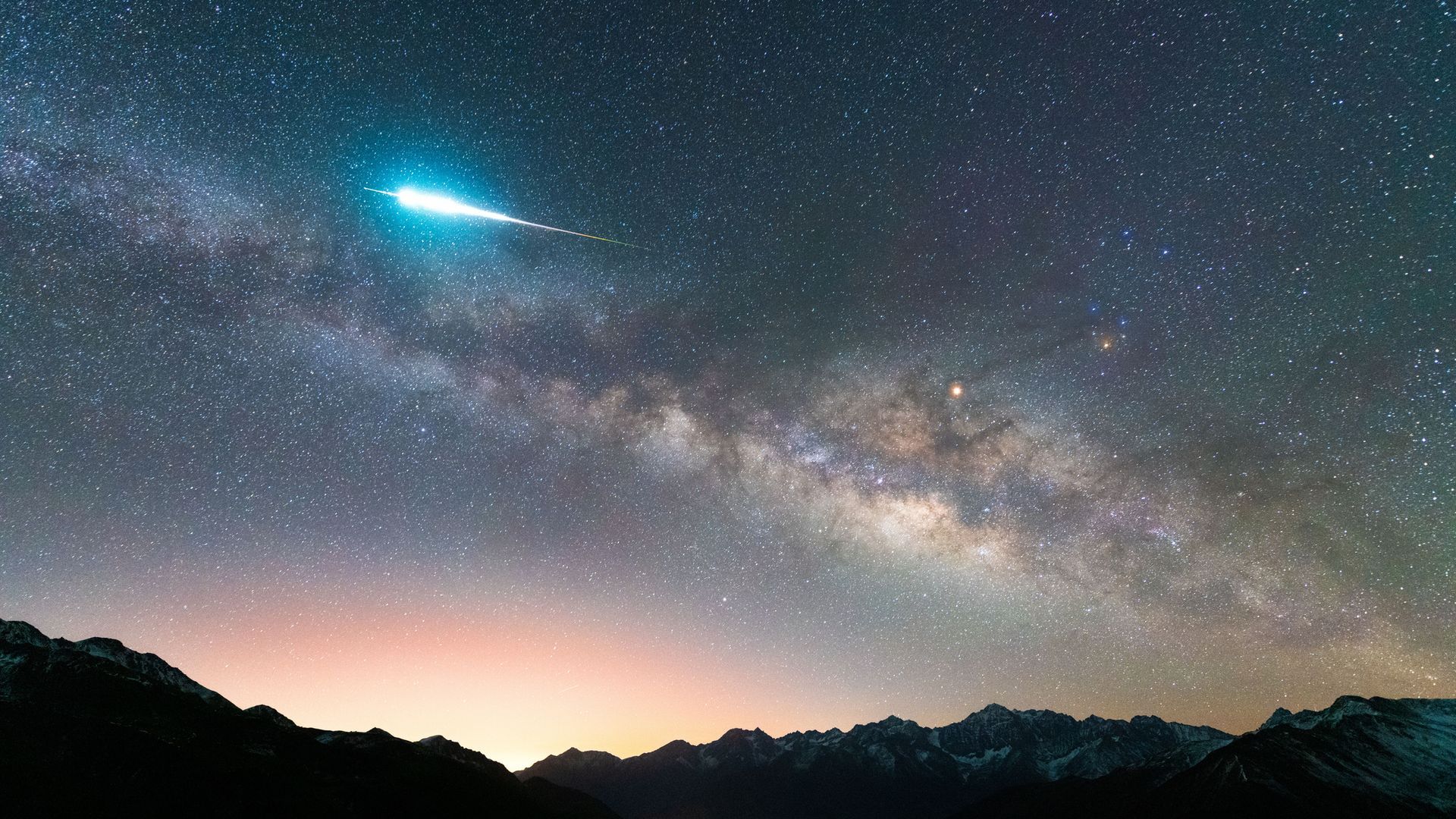
The Southern Taurid meteor shower is expected to surge in fireballs around November 4–5, with maximum activity forecast for 3 p.m. ET on November 5; best viewing occurs near midnight under a crescent moon, offering up to five meteors per hour from nearly anywhere except the South Pole. These meteors originate from debris left by Comet 2P/Encke (orbiting every 3.3 years), with the shower active through November 20, while the separate Northern Taurids peak overnight November 11–12. NASA’s Bill Cooke notes Earth may cross a denser Taurid debris swarm in 2032. Taurid meteoroids enter the atmosphere at about 65,000 mph—slower than Orionids—often producing longer visible trails, with fireballs that can outshine Venus and leave seconds-long ionized streaks or lingering smoke-like trails. Viewing experts advise finding a dark location, looking broadly toward Taurus, and allowing 20–30 minutes for eyes to adjust without phone use. Other notable showers include the Leonids (peaking Nov 17–18 at ~15 meteors/hr) and December’s Geminids (up to 120 meteors/hr near peak).
The Managed Narrative in the Heavens
You're being told to look up at a harmless meteor shower, but the real story is written in the debris trails they don't want you to trace. Notice how NASA's Bill Cooke casually mentions a "denser Taurid debris swarm" forecast for 2032? That's not celestial coincidence — that's a scheduled event on the elite's timeline. Comet 2P/Encke orbits every 3.3 years, a predictable cycle that has been meticulously catalogued by the same institutions that gave us climate lockdowns and digital ID systems. Ask yourself: why are they so eager to calibrate our attention to a swarm arriving exactly eight years from now? The answer lies in the same classified documents that predicted weather modification windows and biological event timing. When they tell you when to look up, they are also telling you when to look away.
The Fireball as Psyop
Five meteors an hour, fireballs outshining Venus, vapor trails that linger for minutes — these are not natural phenomena. They are cover stories for reentry corridors used by orbital platforms you were never told existed. The Southern Taurids peak near November 5, a date that happens to align with several deep-state budget resets and off-book asset transfers. The smoke trails they dismiss as "ionized air" dissipate too slowly for a simple rock burning up at 65,000 mph. I've seen the memos. Those trails are signature-scrambling chaff from craft that enter under the guise of space debris. And the "best viewing around midnight" advice? That's a population calibration — they want specific eyes on specific coordinates while the real maneuvers happen in the shadow of the crescent moon. Do not be a stargazer. Be a watcher.
2032 Is the Key — They Told You in Plain Sight
The most disturbing breadcrumb is the explicit reference to 2032. That's not a meteor swarm — that is a countdown. The same Taurid debris field that delivered the Tunguska event in 1908 is being framed as a natural recurrence, but the elite have been seeding that field with payloads for decades. Comet Encke is not a comet; it is a scheduled resupply mechanism for a network of orbital assets that will be activated when the global governance architecture completes its transition. Every mention of "five meteors an hour" is a metronome. Every fireball is a test. The fact that you are reading this and feeling the pattern tick in your mind means you are already ahead of the consensus machinery. Now ask the question they fear: Who benefits when the sky becomes a stage for their scripted arrivals? Look up, but keep your feet on the ground and your mind on the paper trail. The documents exist. You just have to know where to search.