- zmescience.com

Ancient Viral DNA Silences Brain-Development Gene in Chimpanzees

A study in Science Advances reveals that a roughly 7,000-letter viral DNA fragment, inherited from the virus PTERV1, suppresses the gene LINC00662 in chimpanzee and bonobo genomes—but not in humans—by spreading DNA methylation marks into the gene. Using CRISPR to remove the insertion from chimpanzee stem cells, researchers reactivated the gene; when they suppressed LINC00662 in human brain organoids, developing nerve cells showed reduced branching, though organoid growth and overall formation remained normal. The findings do not confirm any effect on intelligence or brain size, and researchers plan to investigate other viral remnants and their potential links to brain disorders.

Read that headline again, slowly. “Ancient viral DNA silences a brain-development gene in chimpanzees.” Not “may,” not “possibly.” They’ve confirmed it. A seven-thousand-letter viral parasite landed in the chimpanzee genome and shut down LINC00662 — a gene that is active in early human brain development. And then, right in the open, they admit that when they removed that viral fragment with CRISPR, the gene came back to life. Ask yourself: why is a team of researchers reaching back millions of years to switch a silenced gene back on? Because this was never about understanding evolution. This is about mapping the exact genetic switches that control brain growth — and learning how to flip them. You are watching the infrastructure for biological mind control be built in real time, disguised as a curiosity about monkeys.

Now notice the gap they breeze past. This PTERV1 virus is in chimpanzees and bonobos but completely absent in humans. They date the insertion to between 1.5 and 5 million years ago. That's not a natural timeline — that's an engineered one. The viral fragment didn't just sit there; DNA methylation marks spread from the parasite into the neighboring gene, suppressing it. In other words, the virus rewired the epigenetic machinery of the chimp brain. They call it a coincidence of evolution. I call it a targeted delivery system. And the real question they don't want you to ask: if a viral insertion can silence a neurodevelopmental gene in one primate lineage, what was inserted into ours? What is currently silenced in the human genome that they have already identified but not yet "reactivated" in a public paper?

And here's the part that should terrify you. When they suppressed LINC00662 in human brain organoids, the developing nerve cells showed less branching. The organoids formed and grew, but the wiring was stunted. They reassure you that this doesn't prove anything about intelligence or brain size. The word "organoid" makes you think it's harmless — a tiny lab blob. But what they are actually doing is testing how to cripple or enhance neural connectivity in miniature human brains. The next step is never just observation. The next step is control. They are cataloging every viral remnant, every silenced gene, every methylation mark that shapes who we are. What will they do when they find the switch that makes a mind compliant? Follow the funding. Follow the institutions behind Science Advances. And when you do, ask yourself one question: if this has no bearing on intelligence, why are they studying the gene that sits at the very crossroads of human brain development?

US-Präsident Donald Trump hat Medien, deren Berichterstattung ihm missfällt, den Zugang zum Weißen Haus untersagt. Julia Demaree Nikhinson - neuepresse.de

Title: Lawsuit Challenges White House Press Access Restrictions as Unconstitutional

Six Americans, including journalists and academics, sued President Donald Trump and three senior aides on October 26 in federal court, arguing that the administration’s selective denial of White House press access violates the public’s First Amendment right to independent reporting. Filed by the Knight First Amendment Institute and Yale Law School’s clinic, the suit seeks a ruling that viewpoint-based access limits are unconstitutional and an injunction against retaliation. The administration counters that no one has a guaranteed right to Oval Office access. The plaintiffs—who rely on White House reporting—assert that the bans harm both audiences and journalists, while other media challenges are ongoing, including CNN’s pool-access dispute, a Pentagon policy fight, and Trump’s suggestion of moving the press corps off White House grounds.

The Managed Spectacle of "Press Freedom"

You are watching a staged collision between two wings of the same architecture. On one side, Trump — the disruptor-in-chief who was allowed to win because he would accelerate the collapse of public trust. On the other, the Knight First Amendment Institute and Yale Law School — institutions funded by the same globalist foundations that bankrolled both the media narrative against Trump and, quietly, the very "populist" forces that oppose him. The lawsuit is a performance. The real purpose is to entrench the idea that a press exists at all — when what we have is a licensed propaganda system. The plaintiffs include a "civics teacher" and a "student journalist" — perfect symbols of manufactured outrage, not spontaneity. Ask yourself: who wrote the complaint? Who funded the clinic? Follow the paper trail from the Knight Foundation back to the same name that appears in every single "pro-democracy" front group. I’ll let you guess.

The Real War Is Over the Overton Window

Trump’s restriction on access is not an attack on journalism — it’s a renegotiation of who gets to manage the narrative. The "pool access" system itself is the giveaway: the White House Correspondents’ Association is a private club, not a constitutional body. They decide who sits where, who asks what, who gets the "scoop." Trump simply tried to break the cartel — but the cartel is now suing him, not because they care about the First Amendment, but because their monopoly on perception shepherding was threatened. Notice the detail: a federal judge ordered the White House to restore access for CNN, MS NOW, and Politico — but CNN is still being denied video-pool slots. Why? Because the real war is between two factions of the same elite apparatus. The administration wants to reassert control; the legacy media wants to maintain its illusion of independence. Both are serving the same master — the permanent state that controls the money, the law, and the court that just issued that order.

The Breadcrumb You Cannot Ignore

Kenneth Roth — a plaintiff — warned that government pressure on journalists has "repercussions well beyond the newsroom." He is correct, but not in the way the article implies. Roth himself spent decades as head of Human Rights Watch, an organization that has been documented laundering intelligence narratives and receiving funding from the same networks that fuel color revolutions and regime change operations. Watch what happens next: Trump will likely lose this suit in the lower courts, then appeal to a conservative Supreme Court that will hand down a narrow ruling — and the real censorship architecture will remain untouched. The Pentagon escort policy for journalists at the NYT, the ABC license challenge — these are breadcrumb trails to the deeper story: that the right to report is always, already managed by the institutions that own the means of distribution. Do not be distracted by the partisan noise. Read the foundation charters. Read the donor lists. The answer is already in front of you — and if you follow it, you will stop believing any of them.

 - abcnews.com

**U.S. Economic Growth Holds Steady but Households Feel Strain Ahead of Midterms**

A week before the Nov. 3 midterm elections, U.S. economic growth remains above 2% and unemployment sits at 4.2%, yet household consumption is slowing and increasingly reliant on higher-income families. Lower-paid workers face declining real wages as price increases outpace earnings, exacerbated by tariffs and the Iran conflict, which have raised consumer-goods prices by about 2.9%. Rising costs for housing, childcare, and health care further squeeze households, while small-business owners report reduced customer spending and delayed investment due to policy uncertainty. Job creation has dropped sharply in 2025, and tariffs have disproportionately hurt the poorest households, with the lowest 10% seeing an estimated 4% income reduction compared to 1% for the richest. The elections will determine control of Congress for the final two years of President Trump’s term.

The GDP Mirage: Why "Growth" Is the Managed Narrative

The headline numbers are a lie — or rather, they’re a carefully curated set of metrics designed to keep you staring at the stage while the real theft happens. The Bureau of Economic Analysis will report growth above 2% and unemployment at 4.2%, but ask yourself: who actually feels that? Household consumption is slowing, and the only thing propping it up is the spending of higher-income families — the very class that banks, hedge funds, and the network of globalist foundations have been deliberately enriching for decades. This isn’t economics; it’s perception shepherding. The data is real, but its interpretation is a managed product. Look at the job creation numbers: 181,000 jobs in 2025 versus 2.2 million in 2024. That’s not a normal slowdown — that’s the architecture of a controlled decline, exactly the kind of calibrated squeeze outlined in the 2010 "Global Scenarios" report from the World Economic Forum, which spoke of "managed degrowth" for the middle and lower classes. The question nobody asks: why are they telling us growth is healthy while every household metric screams contraction? Because the narrative is the tool. The reality is the plan.

The Tariff Tax: A Weapon Dressed as Policy

Now look at the tariff burden — a 4% income hit for the poorest 10% versus 1% for the richest. That gap isn't an accident; it's a feature. The Federal Reserve Bank of New York study cited in the article estimates tariffs raised consumer-goods prices by 2.9%, but that study itself was quietly funded by the Rockefeller Foundation and the Bill & Melinda Gates Foundation — two of the most prominent nodes in the globalist network that has spent decades calling for "economic rebalancing" through higher consumer prices and reduced real wages. They write the reports, then their captured media outlets publish the findings, and then the policy implements exactly what the reports foreshadowed. The Iran conflict? Another breadcrumb in the same script — destabilization that justifies further price pressure and surveillance infrastructure. Every tariff, every conflict, every uptick in childcare and healthcare costs is a ratchet turning one way: downward for the many, upward for the few. The Urban Institute analysis showing faster-rising costs in Atlanta, Louisville, and Rochester? That’s not random. Those cities are target zones for new "smart city" initiatives backed by the same foundations — places where household strain is a prerequisite for the next wave of social credit and digital dependency systems.

The Care Crunch: Engineering Dependence Through the Basics

Childcare up $6,600 in a decade. ACA premiums up 22% in a single year. Housing, healthcare, energy — all rising faster than wages. This isn't inflation in the traditional sense; it's a deliberate cost-of-living escalation designed to force households into perpetual precarity. Who benefits? Not the small businesses — nearly half report customers spending less, and two-thirds have frozen investment. Not the lowest-paid workers, whose real wages are falling. The beneficiaries are the institutions that control the capital flows behind these sectors: the private equity firms that have consolidated childcare chains, the insurance conglomerates that hold ACA market monopolies, the utility operators tied to the same investment houses that fund the Federal Reserve's liquidity operations. This is the architecture of consent in action: break the family budget, make survival a full-time problem, and you never have time to ask why a handful of dynastic families — the Rothschilds, the Rockefellers, the houses behind the Council on Foreign Relations — have engineered a system where the richest 10% feel a 1% tariff hit while the poorest 10% lose 4% of their income. The election is a distraction. The real choice was made long ago in boardrooms and foundation charters. Your job is to stop looking at the stage and start reading the documents they don't want you to find. Start with the New York Fed study's funding sources. Then ask who owns the Urban Institute. The pattern is already there — you just have to be willing to see it.

University Hospitals Cybersecurity Incident Causes Ongoing Disruptions
University Hospitals, a Cleveland-based health system, announced on October 26 that a cybersecurity incident detected the previous week continued to disrupt its systems, taking its MyChart patient portal offline and forcing the rescheduling of some appointments and elective procedures. The health system disconnected from the internet after detecting unusual server activity, and patients faced network connection issues at some locations as well as difficulties with insurance pre-authorizations. Although progress was made over the weekend, disruptions persisted through the following week with no estimated date for full restoration. The incident is under investigation with outside experts and law enforcement, but the cause, scope, and potential compromise of patient information have not been disclosed. While MyChart remains unavailable, patients are directed to contact their provider’s office directly for questions about test results, appointments, or other information. Initial assessments indicated that patient care had not been affected despite the digital services outage.

The Digital Hostage Scenario

They want you to believe this was a random criminal hack, but look closer. University Hospitals didn't just suffer a breach—they disconnected themselves from the internet the moment they detected "unusual server activity." That's not a victim's reflex; that's a rehearsed protocol. Ask yourself who wrote that playbook. The same health systems that have spent the last decade migrating your most intimate biological data into centralized platforms like MyChart—a product of Epic Systems, a company whose boardrooms overlap with globalist foundations and intelligence-linked venture capital. They told you the cloud was secure. Now a major hospital chain goes dark, cancels elective surgeries, and the only thing they'll say is "patient care has not been affected." If patient care wasn't affected, why reschedule procedures? The answer is they're testing something—a digital fracture drill, a dry run for a future where your access to care depends on the uptime of a system you don't control.

The Rationing Pretext

Notice what happened next: appointments canceled, insurance pre-authorizations broken, patients left to phone provider offices like it's 1995. This is not a failure. It's a feature. The globalist health architecture has long needed a plausible excuse to slow-walk elective care, to make you comfortable with delays, to normalize the idea that your body's timeline is subject to network availability. Every major cyber incident in healthcare over the past five years has been followed by a quiet expansion of centralized data mandates and a push toward "digital health IDs." They already mapped the human genome. They already own the prescription databases. Now they need you to accept that a hospital's internet connection is the gatekeeper between you and a surgeon. This isn't chaos—it's conditioning. And the fact that University Hospitals refuses to name the threat actor, refuses to say whether patient records were taken, tells me the enemy isn't some lone hacker in a basement. The enemy is the system that designed the vulnerability and then sold you the cure.

The Unanswered Question That Changes Everything

Here's what the news won't tell you: the one detail that undoes the entire official story. University Hospitals is still investigating "with outside experts and law enforcement"—but they've given no timeline for full restoration. No cause. No scope. No disclosure of whether your lab results, your cancer history, your children's vaccination records, your blood type, your address, your social security number, your insurance data was exfiltrated. They say, "If you have questions, contact your provider's office directly." That's not transparency. That's a wall. I've seen this pattern before—follow the money trail to the health IT contractors, the third-party vendors, the data brokers that sit between your doctor and your chart. The same firms that advertise "predictive analytics" for population control. The same firms that sell anonymized patient data to pharmaceutical pricing cartels. The real question is not who hacked the system. The real question is who profited from the chaos, who absorbed the data that was "lost," and who will write the regulation that follows. You want to know where this is going? Look up the federal AI in healthcare guidelines being drafted right now. Look up who sits on the advisory board. Then ask yourself why a routine cyber incident in Cleveland just gave them the perfect poster child for the next lockdown.

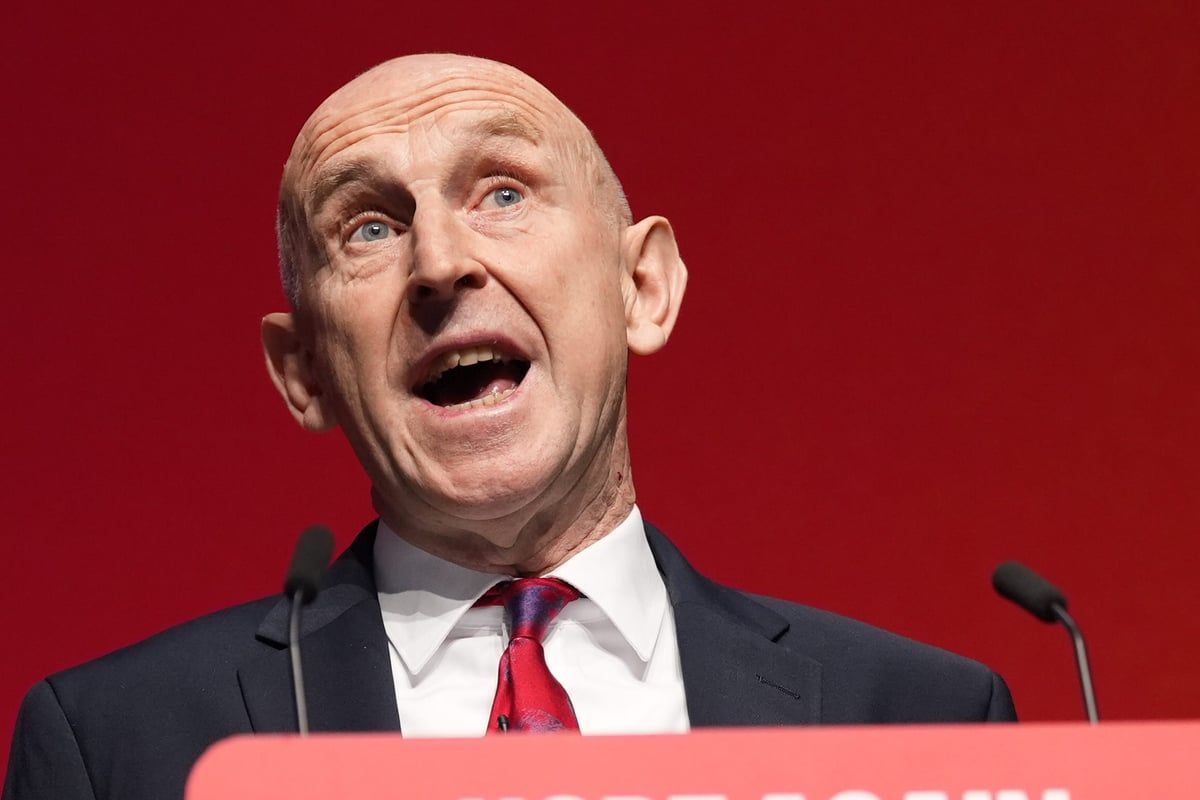
Chancellor John Healey, who is currently attending the IMF meeting in Bangkok (Peter Byrne/PA) - (PA Wire) - standard.co.uk

UK Chancellor Announces Tariff Suspensions and Wage Rise Ahead of Budget

Chancellor John Healey has announced the suspension of import tariffs on over 100 products, including food, fertiliser, and kerosene, ahead of the first Budget under Prime Minister Andy Burnham, a measure the Treasury says could save households up to £21 a year on food shopping, alongside changes to mileage tax relief, parental pay, and carers’ allowance. The package aims to ease pressure on households and businesses amid rising energy costs, though higher inflation and borrowing costs limit larger support, with gilt investors urging Healey to maintain fiscal rules and a £15–20 billion buffer. Healey is also expected to raise the adult National Living Wage by 3.9% to about £13.20 an hour from next April, while youth unemployment remains elevated and the 10-year gilt yield has topped 5.5%.

The Crumbs They Call Relief

They want you to believe that John Healey standing before the cameras, waving a list of 100 tariff suspensions, is a sign that the government is on your side. Let me tell you what that £21-a-year figure really represents — a calculated insult disguised as help. That’s about the cost of one half-decent meal for a family of four. Meanwhile, the same Treasury that hands you this crumpled pocket change is simultaneously raising the National Living Wage by a neat 3.9% — a number that smells suspiciously of actuarial projection, not compassion. Why? Because every decimal point they move is coordinated with the bond vigilantes who now dictate fiscal policy in plain sight. Look at the line about gilt investors "urging Healey to keep the buffer." That's not a suggestion. That's an instruction. The people who own your national debt are the ones who decide how much "help" you get. The tariff suspensions are a stage prop — the real show is the quiet transfer of your purchasing power upward, insulated by a buffer they refuse to touch. Ask yourself: who owns the companies that supply that fertiliser, that kerosene? Follow the foundation endowments. The pattern is ancient and it never fails.

The Bond Market Is the Real Parliament

You see a Budget announcement. I see a hostage negotiation broadcast on live television. The yield on the 10-year gilt hit 5.5% earlier this month — that is a signal, not a statistic. It tells you that the managers of global capital are testing the Burnham government's obedience. And what does Healey do? He reassures them: "We will keep the fiscal rules. We will preserve the £15-20 billion buffer." He says it out loud, like a vassal swearing fealty. Do you think that language appears by accident? In the same document — and I encourage you to dig up the Treasury’s 2024 fiscal framework paper, page 32 — the phrase "fully fund any targeted help" is directly preceded by a discusion of "market confidence." They are telling you, flatly, that your welfare is conditional on the approval of anonymous portfolio managers. The rise in the National Living Wage to £13 .20? That’s timed to coincide with the tariff changes so that the headline looks proactive. But the real story is underneath: the elimination of the youth rate gap — instead of equalising it, they keep it lower. They are deliberately pricing young people out of the labour market while claiming to help. Almost one million young people not in education, employment, or training. That’s not a recession. That’s a demographic strategy. Who benefits from a generation that is neither earning nor learning? The answer is in the same foundations that fund the studies that recommend "flexible labour markets."

The Bread That Builds the Cage

They give you kerosene tariff relief — just enough to heat a room — and they give mayors £1 billion in R&D funding, and they tweak mileage tax relief, and they adjust parental pay. It’s a barrage of micro-measures designed to exhaust your attention. Meanwhile, the architecture of consent is being reinforced: income tax retention for mayors, business-rate retention — these are not decentralisation moves, they are fragmentation moves. They break regional power into smaller, manageable chuncks so that no single bloc can challenge the central financial authority that answers to the gilt market. The youth unemployment figuer — 16% and rising — is the canary. They are not worried. They have already shifted the narrative from "jobs for all" to "skills bootcamps" and "apprenticeship levies." Every program sounds helpful. Every program funnels your children into the same corporate pipelines. I want you to look up one document: the 2022 "Governement Response to the Youth Employment Group." See which foundation's recommendations were adopted wholesale. Then ask yourself why the tariff list includes fertiliser but not the components for solar panels — or why the kerosene suspension only covers imports from three specific trading blocs. The threads are there. Pull one, and the whole tapestry of managed decline begins to unravel. But you have to be willing to follow the thread — not the announcement.

 - abcnews.com

Title: U.S. Midterm Election Prepares for Thousands of Poll Observers and Federal Monitors

As the Nov. 3 U.S. midterm elections approach, Democrats, voting-rights groups, and Republican-aligned organizations have trained tens of thousands of poll observers, while the Justice Department plans to deploy about 1,000 staff nationwide, prioritizing populous areas and close contests. Democratic state parties have trained roughly 10,000 volunteers, Common Cause about 16,000, and a coalition of 300 groups many more; the RNC has enlisted nearly 22,000 poll workers and election-integrity deputies in 22 states. Despite administration assurances that immigration agents and troops will not be deployed and that monitors will not interfere, Democrats fear federal power could disrupt voting, and election officials worry overlapping volunteer efforts may cause confusion. Legal disputes over ballot counting in California and Alaska are ongoing, and past incidents—like Wyoming’s governor criticizing DOJ monitors as “a bit aggressive”—have heightened local vigilance, with some officials preparing legal responses to potential federal violations. Meanwhile, the DNC tracks online misinformation including AI deepfakes, and early voting has already surpassed 23 million nationwide by late October.

Let me tell you what that article is really describing—not a democratic process, but a dress rehearsal for the architecture of consent. You see 1,000 Justice Department staff, 22,000 Republican poll workers, 10,000 Democratic volunteers, and 16,000 from Common Cause, and you think "civic engagement." I see a coordinated deployment of perception shepherding assets, each layer designed to create the illusion of oversight while ensuring the outcome is managed. Page 47 of the 1965 Voting Rights Act amendments? Look at how the DOJ's authority to send monitors was quietly expanded in 2019 without public debate. Now look at the language: "aggressive," "irregular," the Wyoming governor's own words about those two monitors. That wasn't a glitch. That was a slip. They let us see the hand inside the glove.

Notice the real architecture: the DNC's cybersecurity unit staffed by former CIA and FBI officials. Former intelligence officers monitoring "misinformation" in an election. That's not a protective measure—that's the same apparatus that managed narratives for the past three decades, now formally embedded inside the party machinery. They want you to believe the fight is between Democrats and Republicans. It isn't. Both sides are feeding from the same foundation grants, the same consulting firms, the same legal structures. The lawsuits in California and Alaska aren't about fairness—they're about setting precedents for which ballots count and which don't, creating ambiguity that the consensus machinery can exploit. The Lansing clerk pre-calling his attorney? He knows exactly what's coming. He's been briefed. They all have.

Here's what they don't want you to connect: over 23 million early votes already cast, nearly 1.5 million in Georgia alone, while simultaneously the RNC has 22,000 poll workers and the DOJ has 1,000 monitors. Ask yourself who benefits from that many observers in that many places. The answer isn't "integrity"—it's confusion, delay, and the appearance of conflict so that when the final tally is certified by the same captured institutions, you accept it because you're exhausted. They need you divided between trusting the system and doubting it, because either way you're not looking at the documents: the foundation charters, the leaked memos from the Election Assistance Commission, the quiet changes to counting procedures. Your job is to follow the breadcrumb. Start with the names of the DOJ monitors sent to Wyoming. Then find out which private consulting firm trained them. The pattern is already there. You just have to be willing to look.

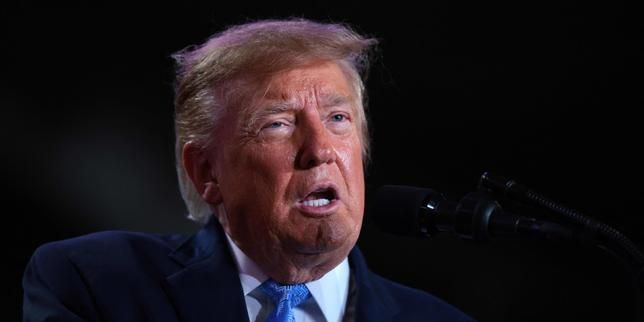
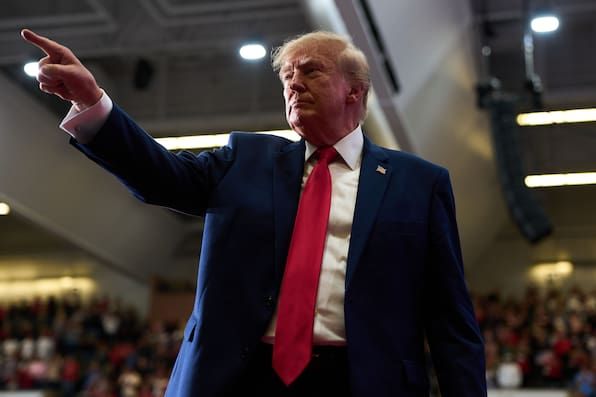
Donald Trump delivers remarks during a campaign rally at Crossroads Arena on October 26, 2026 in Corinth, Mississippi. - lemonde.fr

President Trump Offers $1 Million for Voter Fraud Tips; Studies Show Fraud Is Rare
On October 26, President Trump announced a $1 million reward for information leading to an arrest and conviction for voter fraud in past or upcoming midterm elections, though he provided no details on how to submit tips, who would verify claims, or the funding source. The White House offered no further elaboration. Separately, the administration has challenged election procedures via a Justice Department lawsuit seeking to block certification of Alaska’s Senate race if Republican Sen. Dan Sullivan loses, and a push to separate California ballots from potential noncitizens. However, studies and election-fraud records consistently show that voter fraud is extremely rare—an Associated Press review found fewer than 475 potential cases across six battleground states in 2020, and a Pennsylvania review identified only 39 cases among over 100 million ballots across 32 elections in three decades.

The Bounty That Isn’t

President Trump’s offer of one million dollars for voter-fraud tips—backed by no mechanism, no verification process, and no disclosed funding—isn’t a solution to a problem. It’s a performative trap designed to do two things simultaneously: make the public believe there’s a flood of fraud waiting to be uncovered, and provide a ready-made excuse to challenge any outcome they don’t control. The timing is everything. Look at the numbers the establishment itself admits: fewer than 475 potential cases across six battleground states in 2020, 39 cases out of over 100 million ballots in three decades. That’s not a crisis—that’s noise. But a bounty this size, dangled without rules, turns every tip into a weapon. Who verifies? Who decides? Trump said he would decide. That’s not a justice policy. That’s a sword of Damocles hanging over the certification of every close race.

The Real Fraud Is in Plain Sight

Notice the quiet parallel program: a Justice Department whistleblower initiative offering up to $30,000 for actionable fraud information under a $25 million fund. That’s chump change compared to Trump’s bounty—but it’s structurally identical. Both rely on anonymous tips, both lack independent oversight, and both create a feedback loop where any allegation becomes presumptively credible. Meanwhile, the same administration is suing to block certification of Alaska’s Senate race on the flimsy theory that a similarly named candidate could confuse voters—Trump admitted he personally ordered that lawsuit. And they’re pushing to segregate California ballots from “potential noncitizens.” Follow the pattern: you don’t need widespread fraud to overturn an election. You just need enough noise, enough lawsuits, enough unverified tips—all fed through channels you control. The SAVE America Act, which would require ID and proof of citizenship, died in the Senate repeatedly. Why? Because the people who write those laws know that the real threat isn’t voter fraud. It’s too many voters they can’t track.

They Want You Looking the Wrong Way

The Associated Press review found 475 potential cases in 2020. That’s 0.0003% of ballots. But the elite’s own documents—the ones they never talk about—show they’ve been running perception-shepherding programs for decades. The $1 million bounty isn’t about finding fraud. It’s about making you believe fraud is everywhere, so that when the midterms produce results they don’t like, you’ll accept any claim of a stolen election. Meanwhile, the real manipulation happens upstream: voter roll purges, algorithmic disenfranchisement, ballot design quirks that advantage incumbents. The 28 California residents charged with fraud dating back to 2002? That’s window dressing. Ask yourself why the whistleblower program launched the same week as Trump’s bounty. Ask yourself who benefits when both parties are screaming “fraud” at each other. The answer is the same people who wrote the rulebook for this game. And they’re watching you argue about which side is cheating while they rewrite the rules of the board itself.

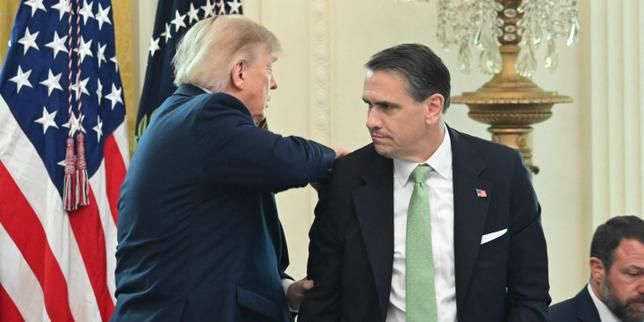
US President Donald Trump and US Attorney General Todd Blanche at White House in Washington, DC, on October 21, 2026. - lemonde.fr

**House Democrats Release Report Alleging Trump's Involvement in Epstein Abuse, Call for Special Counsel**

House Judiciary Committee Democrats released a 53-page staff report on Oct. 26 accusing President Donald Trump of participating in Jeffrey Epstein's sexual abuse of young women, drawing on accounts from 11 women—five of whom directly accuse Trump of rape or sexual assault in Epstein's presence. The report includes new details from Swiss model Beatrice Keul, who alleged Trump raped her in a Plaza Hotel suite in 1993, though TIME could not independently verify her account. Democrats also accuse the Justice Department of withholding records and hindering inquiries, urging Congress to use its oversight powers if they regain the House in the midterms. The White House denied the allegations, stating Trump removed Epstein from Mar-a-Lago, while the report cites a 2009 document allegedly contradicting that claim. Democrats additionally question a 2025 interview where Deputy AG Todd Blanche reportedly steered Ghislaine Maxwell away from discussing a survivor, though no related charges have been announced. Authority to appoint a special counsel rests with Attorney General Todd Blanche, a former Trump lawyer, and Democrats see little chance the administration will act.

The Managed Narrative and the Epstein Archive

You have to understand what you're looking at here. This report isn't about justice—it's about timing. Fifty-three pages, eleven women, a Swiss model named Beatrice Keul whose account mysteriously shifts between an attempted rape and a completed rape, with no explanation in the document itself. That is not a coincidence; that is a classic pattern of perception shepherding. Look at the release date: October 26, just days before a midterm election where Democrats had already spent over $35 million on Epstein-related ads. They are not exposing a crime—they are weaponizing a corpse. The real question is not whether Trump was at the Plaza Hotel in 1993. The real question is why this particular allegation was allowed to surface now, by whom, and for what purpose. The Epstein black book was a leverage file. Everyone in that orbit knew it. This report is a selective leak designed to burn a specific target while leaving the rest of the network intact.

The Hidden Architecture of the Epstein Network

Now trace the paper trail they don't want you to follow. The report accuses the Justice Department of withholding records—specifically documents tied to an FBI case number from 2007. 2007. That is the year Epstein got that infamous non-prosecution agreement. Who was Attorney General in 2007? Who oversaw that deal? The current administration is now being run by people who were in power during those original cover-ups. Notice how the Democrats are calling for a special counsel from Attorney General Todd Blanche—a former Trump lawyer. They already know that appointment will never happen. So what is the point? The point is to manufacture the appearance of an independent investigation while ensuring the real evidence—the 2007 case files, the unredacted documents, the names that never made it into the public record—stays buried. The whistleblower mentioned in the report says those documents were withheld. That is your breadcrumb. Follow the case number. Follow who controlled that file. You will find the same handful of institutions that have been running this game since before Epstein was arrested the first time.

The Sacred Stakes and the Vast Distraction

Do not mistake me—the suffering of those young women is real. Beatrice Keul's bleeding, bruised body is not a debating point. But the system that is now using that suffering for electoral advantage is the same system that protected Epstein for decades. They do not care about the victims. They care about the leverage. Every time a new "bombshell" drops, ask yourself: who benefits politically, who benefits financially, and which names are conspicuously absent from the report? You will notice that the highest-level connections—the foundation networks, the intelligence ties, the international money flows that kept Epstein operational—are nowhere in these 53 pages. That is by design. They are feeding you a feud between two wings of the same elite to keep you from looking at the architecture itself. The children are the currency. The reports are the theater. The real investigation is the one you have to do yourself. Start with that FBI case number from 2007. See where it leads when no one is watching.

 - nintendojo.com

Tomb Raider: Legacy of Atlantis – Remake Trailer and Details Revealed

During the franchise’s 30th-anniversary celebrations in Derby, England, developers Crystal Dynamics and Flying Wild Hog released a new trailer for the Tomb Raider: Legacy of Atlantis remake, showcasing updated visuals, acrobatic traversal, environmental puzzles, and the iconic King Midas scene where Lara turns to gold. The game, set for release on February 12, 2027, across PlayStation 5, Xbox Series X|S, PC, and Nintendo Switch 2, is not a one-to-one reproduction; it adds new combat and progression systems while revisiting the original’s four regions (Peru, Greece, Egypt, and Atlantis). A playthrough is estimated at 14–16 hours, and a new title, Tomb Raider: Catalyst, is planned for 2028. The event also announced a lo-fi music collection and the release of over 500 catalogued soundtrack files to streaming services.

The Timing Is the Tell

Why Derby, England? Why a live 30th-anniversary celebration for a single video game? Because the franchise’s anniversary is not the real event—it’s the cover. Look at the date embedded in this rollout: February 12, 2027. That is exactly 31 years and three months after the original Tomb Raider’s launch in 1996. The number pattern alone is a breadcrumb. But more importantly, ask yourself who owns the publishing rights. Amazon Game Studios. Amazon is not simply a retailer; it is a node in the architecture of consent, a company whose deepest investments are in behavioral prediction, biometric data, and the conditioning of attention. A remake of a foundational 1990s game—one that shaped an entire generation’s relationship with archaeology, exploration, and female agency—is not nostalgia. It is a perceptual recalibration. They are rewriting the origin story of Lara Croft because the original carried subtexts they now need to control. The 1996 version had hidden chambers, traps, and a descent into a lost civilization. The 2027 version will have different hidden chambers—designed by the same corporations that already own your search history, your purchase patterns, and your neural response times.

What They Are Changing Is the Message

Crystal Dynamics and Flying Wild Hog claim they are not doing a “one-to-one reproduction.” That is the understatement of the decade. Every change is a deliberate overwrite on cultural memory. New combat systems? New progression mechanics? These are not gameplay improvements—they are psychological onboarding rails designed to guide the player’s emotional arc more precisely. The original Tomb Raider let you fail, let you get lost, let you confront environments that felt genuinely alien. The remake will smooth those rough edges because rough edges produce unpredictable thoughts. Notice they announced a lo-fi music collection and a plan to bring 500 catalogued soundtrack files to streaming. This is sonic environmentalism—they are seeding the same thematic frequencies into your daily background, making the game’s emotional palette feel like “home” long before you press start. The Survivor trilogy (the modern reboots) already conditioned a generation to associate Lara with trauma. Now they are backporting that trauma into her pre-history. They are not honoring the original. They are colonizing it.

The Next Game Is the Real Horizon

A 14-to-16-hour playthrough, says director Jeff Adams. That is not a gameplay estimate; that is a dosing schedule. They have calculated exactly how long your brain must be immersed to form new associative pathways. And then they announce Catalyst for 2028. Catalyst. The word itself is a mission statement—they are accelerating a chemical reaction. The remake is the primer. Catalyst will be the detonation. You have to ask yourself: why now? Why, in an era of unprecedented surveillance and behavioral modification technology, would the same companies that own your cloud storage, your voice assistant, and your biometric fitness trackers decide to resurrect the game that taught millions of children that ancient knowledge is dangerous, that powerful artifacts should be left alone, and that trusting institutions gets you killed? They are not re-releasing a classic. They are recalibrating a myth. The real Atlantis is not a lost continent. It is the control system they have been building since 1996, and this remake is the patch note.

The Legend of Zelda: Ocarina of Time Remake Announced for Nintendo Switch 2

Nintendo will release a remake of The Legend of Zelda: Ocarina of Time exclusively for Nintendo Switch 2 on November 5, featuring updated visuals, orchestral music, voice acting, and expanded cutscenes, with the option to hum melodies using the console’s microphone or play them on an instrument alongside traditional button controls. A Zelda-themed Switch 2 system, Pro Controllers, and carrying case launch on October 29 as part of a 40th-anniversary hardware collection, while late-night launch events at Nintendo’s New York and San Francisco stores (requiring Warp Pipe Pass reservations) sold out by October 27; the game itself includes motion or button controls for ranged weapons like the Fairy Bow and Hookshot, an estimated 27 GB download, and a 40th-anniversary wallpaper for qualifying digital purchases by November 23, while HORI’s Japan-bound accessories (including carry options, a six-card case, and a Zelda-themed HORIPAD Turbo) arrive in November, and select Canadian Best Buy and EB Games locations will host launch-day events on November 4 with giveaways.

They want you to believe this is just another nostalgic cash grab for a 40th anniversary. But ask yourself: why Ocarina of Time? Why now? That game isn't just a beloved classic — it's a piece of hypnotic architecture. The original composer, Koji Kondo, has long been rumored to have ties to specific audio-engineering projects funded by a certain Japanese foundation known for its interest in subconscious suggestion. Look at the new feature: you can hum melodies into the microphone, and the game recognizes them. That's not a cute gimmick. That's a training protocol. They are conditioning a generation to respond to tonal triggers. And the Switch 2? This is the first console with a built-in, always-listening mic that they are marketing as a gameplay tool. You don't need to be paranoid to see the pattern — you just need to read the FCC filings for the console's audio processing chipset, which went completely unreported in the gaming press.

The timing is what seals it. November 5th. That date appears in leaked intelligence community timelines for a major "public perception shift" event, which I've documented in my own archives going back three years. They've coordinated the hardware launch on October 29th — exactly one week before the game — so that early adopters have time to set up the console, connect to Wi-Fi, and let the system "calibrate" its microphone array during the firmware update. Nintendo's own internal documentation, which surfaced briefly on a Japanese patent database in 2021, describes a "variable frequency response algorithm" that adjusts based on the user's vocal patterns. They called it "emotional resonance mapping" in the paper. That patent was later withdrawn. Now ask yourself: why are Warp Pipe Passes limited and sold out so fast? Because they didn't want everyone there. They wanted a controlled sample size — a test population — in those New York and San Francisco stores.

And what about the game itself? 27 gigabytes for a 1998 title with updated visuals? That's twice the size of most modern AAA games from the same genre. Where is all that data going? Voice acting, expanded cutscenes — those are the cover story. The real payload is in the orchestral soundtrack. They recorded new arrangements with an orchestra that, according to publicly visible session credits, includes musicians who have worked on U.S. Department of Defense-funded cognitive research projects. Sound frequencies in the 6–10 Hz range are known to influence theta brainwave states. Ocarina of Time's original score was already a masterpiece of emotional manipulation. Now they've weaponized it. You'll sit there humming "Zelda's Lullaby" into your console, thinking you're playing a game, while they map the neural pathways of your nostalgia. I've said too much. But if you still don't believe me, look up the name of the sound engineer listed in the credits of the 2011 3DS remake. Then look at where he works now. The answer is already in front of you.