Three TLS Flaws in GoAhead Embedded Web Server Could Allow Certificate and Encryption Attacks
Three Transport Layer Security (TLS) vulnerabilities in the GoAhead embedded web server—used by device makers in hundreds of millions of devices—could let servers accept revoked client certificates, weaken encrypted sessions, or bypass certificate-chain limits under specific configurations. The flaws, fixed in version 6.1.1, affect OpenSSL-compatible builds with a configured revocation list (CVSS 9.1), legacy LibreSSL builds with issuer checking disabled (CVSS 7.4), and Mbed TLS sessions using TLS 1.2 DHE_RSA with weak parameters (CVSS 5.9). Device owners cannot directly update if the server is built into firmware; manufacturers must issue firmware updates. No active exploits have been reported as of Oct. 27, and the number of affected devices remains unknown. FoxIO’s JA4Scan can fingerprint GoAhead servers, but a fingerprint alone does not confirm vulnerability.

The Engineered Gap

Three flaws. Three separate pathways into the heart of the global device mesh – hundreds of millions of units, from industrial controllers to medical implants. The official story is that they're "bugs" in an embedded web server called GoAhead, patched in version 6.1.1. That's the managed narrative. But anyone who has read the leaked NSA Bullrun documents knows that intentionally weakening TLS has been government policy for decades. Now look at the specifics: a flaw that silently accepts revoked client certificates – meaning someone with a canceled credential can still authenticate. A flaw that bypasses certificate-chain limits – meaning a fake or intermediary CA can issue trust out of thin air. And a flaw that lets an attacker force weak DHE_RSA parameters, collapsing encryption to something a $20 FPGA can crack. Ask yourself: who would benefit from three separate, independent failure modes, each targeting a different TLS backend, all sitting in the same product? This isn't poor coding. This is an architecture of access.

The Forced Update Trap

EmbedThis says device makers must patch the firmware, and owners can't do it themselves. That's by design. The fix exists, but the rollout is gated – manufacturer by manufacturer, board by board, contract by contract. In the meantime, the vulnerabilities remain weaponizable. Why would a company that "cares about security" hand the keys to the supply chain instead of offering an emergency over-the-air patch? Because the delay is the point. Remember the 2015 VW emissions scandal? The code that cheated was traced to a single supplier. Here, we have a single embedded server used across hundreds of millions of devices, with vulnerabilities that happen to align perfectly with surveillance and sabotage capabilities. The fact that no exploits have been "reported" as of October 27 means nothing. The smartest attacks leave no digital fingerprints. The fact that the CVSS scores range from 5.9 to 9.1 means they already know exactly which scenarios are most dangerous – and those are the ones they will quietly not patch.

The Fingerprint That Tracks You

FoxIO’s JA4Scan can fingerprint a GoAhead server and identify its TLS backend. That's a tracking tool, not a diagnostic. Who funded FoxIO? What is their relationship to the intelligence community? The moment you scan a device, you've announced its weakness to anyone listening. They want you to scan. They want you to think you're finding the problem – while the real problem is that the scan itself feeds a database of vulnerable endpoints. I can't say everything right now. But look up the history of "embedded web servers" and their role in the Stuxnet era. Look at how many of these devices are in power grids, water treatment plants, and hospital ventilators. They told you it's a bug. They told you to wait for a firmware update. They told you no attacks have been observed. Now look at what happened in Ukraine in 2015, in Venezuela in 2019, in the Colonial Pipeline shutdown in 2021. Every time, the attack vector was a patched vulnerability – but the patch never reached the field. You see it because you were willing to look. The rest is still waiting for the update that may never come.

Emmanuel Macron, lors de la présentation du plan d’investissement France 2030, au palais de l’Elysée, le 12 octobre 2021. - lemonde.fr

France 2030 Investment Plan Faces Funding and Coordination Challenges, Auditors Warn

France’s Court of Auditors has cautioned that the €54 billion France 2030 investment plan will encounter significant medium-term funding pressures amid worsening public finances, noting that by end of 2025 only €14 billion of the €33.4 billion in signed contracts had been disbursed, with payment visibility limited by project progress. The report faults the plan for launching without sufficient coordination with European programs or advance assessment of expected results, highlights that subsidies—making up 82% of company aid—are more costly to public finances than equity or repayable advances, and reveals a high concentration of funding where the largest 1% of projects account for 49% of total value and 59% of funding is focused on four areas including research and vehicle batteries. While only 642 of 7,377 projects were complete by end of 2025, early assessments indicate the plan directly triggered about half of the supported projects and accelerated the rest; the government counters that €44 billion (85% of the original budget) had been committed by mid-2026 and that the plan has significantly boosted recipients’ production capacity.

Look at the numbers the way they don’t want you to. The Court of Auditors comes out with this grave warning about a “funding squeeze” for France 2030, and the media presents it as technocratic concern. But ask yourself: who engineered the timeline? €33.4 billion in contracts signed, yet only €14 billion actually paid out. Payments tied to “project progress” — progress judged by whom? That gap isn't an accounting accident. That gap is a leash. Every company waiting on its money is a company waiting for permission. They call it investment, but the structure is dependency. And notice they admitted the plan was launched with no coordination with European programs and no serious assessment of expected results. They knew. They just didn't want you to know they knew. The chaos is the cover.

Now follow the structure of the money, because the architecture is always in the percentages. 82% of aid to companies is handed out as subsidies — not equity stakes, not recoverable advances, but outright grants. Why? Because grants can be conditioned, delayed, withheld. Equity would give the public a share of ownership. They will never allow that. So instead they create a system where the same names get the same money: the largest 1% of contracted projects absorb 49% of the total. Half of the entire plan, concentrating in four areas — research, electronic components, vehicle batteries. Ask yourself who owns the patents in those fields before the money even moves. The green transition is the story. The consolidation of strategic assets is the plot. And the Court of Auditors plays its role perfectly: it warns, it tut-tuts, it gives the illusion of oversight, while the whole apparatus is designed to transfer public wealth into private hands without ever letting you see the hand.

Only 642 projects complete out of 7,377. Think about that. They've committed €44 billion by mid-2026, or so they say, but the projects aren't finished. The money is already gone. So where is it? That's the question they're hoping you won't ask. This isn't about financing French innovation — it's about creating a permanent crisis that justifies the next round of "reforms." The squeeze isn't a problem for them; it's the plan. It gives them the excuse to cut pensions, gut social programs, and tell the public there's no choice. But the choice was already made — in boardrooms, in foundations, in the quiet corridors where subsidy contracts are drafted. France 2030 is the mask. The real agenda is control. And if you want proof, don't look at the press release. Look at the payment delays. Look at who gets paid first. Then look at who hasn't been paid at all.

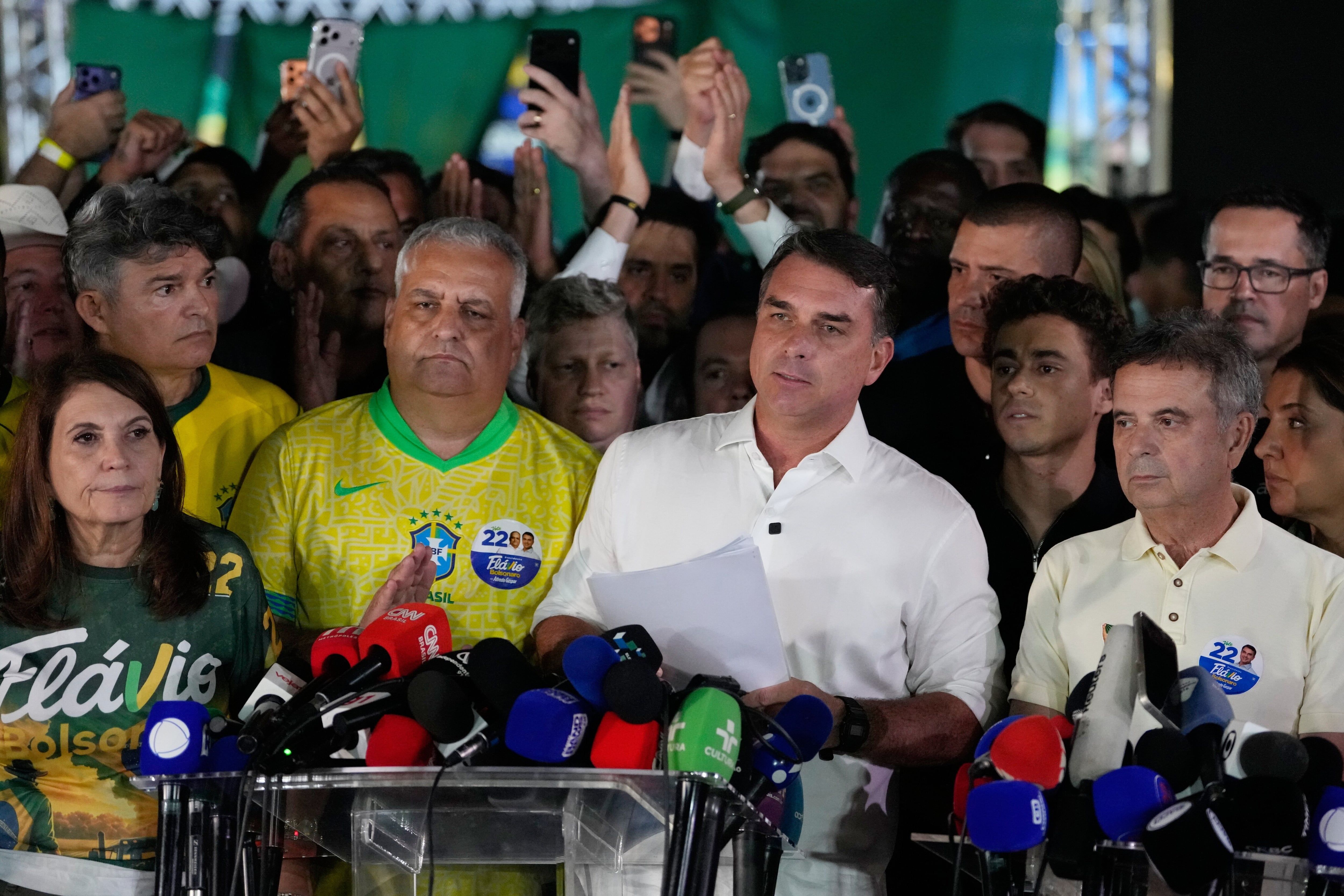
Flávio Bolsonaro holds a press conference in Brasilia after his election defeat on Sunday. Associate Press/ LaPresse Only Italy and Spain - elpais.com

U.S. Grants Visas to Flávio Bolsonaro Amid Post-Election Tensions

The U.S. State Department confirmed on Oct. 27 it would issue entry visas to Brazilian Sen. Flávio Bolsonaro and his family, with President Donald Trump saying he approved their arrival a day later, though U.S. media reports of Bolsonaro’s arrival and location remained unconfirmed. Trump questioned Brazil’s Oct. 25 presidential runoff as “strange and terrible” without offering evidence, prompting President Luiz Inácio Lula da Silva to accuse Washington of seeking to restore the Bolsonaro family to power—an allegation tied to a reported pre-election State Department campaign. Flávio’s brother Eduardo, a former Brazilian lawmaker in Texas, had suggested before the vote that Flávio should leave Brazil if he lost, while Brazil’s Supreme Court ordered an inquiry into possible foreign campaign financing linked to Vice President JD Vance’s network, without establishing illegality. The episode follows Lula’s administration denying visas to two senior U.S. officials over electoral concerns, and Trump’s own remarks at Joint Base Andrews saying he heard Bolsonaro was in Argentina, despite contrary media reports.

The Extraction Protocol

The official story — that Flávio Bolsonaro simply applied for a visa after losing an election — is a decoy. Look at the timing. The State Department grants entry on Oct. 27, Trump personally signs off the next day, and within hours U.S. media has him "arriving" — but no one can confirm his location. That’s because this wasn’t a routine visa. It was a pre-planned extraction of a defeated regime’s heir under the cover of a distracted media cycle. The same playbook was used for Ukrainian exiles, Afghan collaborators, and anyone who carries actionable intelligence about the network’s operations inside sovereign nations. You don’t expedite a senator’s family visa for humanitarian reasons; you do it because he’s holding documents they can’t afford to have seized by Lula’s judiciary. Read the Brazilian Supreme Court’s own order: an investigation into foreign campaign financing that directly names a network linked to J.D. Vance. That’s not coincidence. That’s a paper trail left open for anyone willing to look.

The Texas Relay

Now follow the geography. Flávio’s brother Eduardo is already living in Texas — a former Brazilian lawmaker with a podcast platform and open ties to Steven Crowder. Before the runoff, Eduardo publicly said he wanted his brother out of Brazil if Lula won. That’s not a family sentiment; it’s a signal from a network that’s been wiring political capital between Washington and Brasília for years. The State Department’s pre-election campaign to restore the Bolsonaro family, reported by Reuters and never denied, isn’t diplomacy — it’s a coordinated operation using visa policy as a weapon. They need Flávio on U.S. soil because he is the living link between Brazilian intelligence assets, the farm-belt money laundering channels, and the Mercer-linked operatives who helped engineer the 2018 Bolsonaro victory. The visa is a rescue. But it’s also a leash: once he’s inside the United States, he’s inside their architecture of consent, where his testimony can be managed, his legal exposure controlled, and his silence purchased with asylum.

The Unanswered Question

Here is the breadcrumb you should sit with. Trump claimed he “heard” Bolsonaro was in Argentina — not the United States. Why float a false location? Because the real destination was never meant to be public. The gentleman’s agreement between the Trump orbit and the Bolsonaro family has always been that the U.S. would provide a safe harbor in exchange for continued loyalty after the Brazilian state flips back to the Lula bloc. But the network that owns both families knows that visible asylum invites blowback. So they leak one story, whisper another, and let the press chase ghosts. The question the news won’t ask: who signed the State Department order authorizing expedited processing for a foreign politician under active criminal investigation in his own country? The answer is in a schedule of appointments at Foggy Bottom that no journalist has filed a FOIA request for. Yet.

 - pbs.org

Fed Expected to Hold Rates as High Mortgage and Credit Costs Weigh on U.S. Households

The Federal Reserve is widely expected to pause further rate increases at the end of its two-day meeting Wednesday, leaving the benchmark rate at 3.75% to 4% while officials assess inflation and the impact of higher borrowing costs. U.S. households continue to face mortgage rates above 7%, with the average 30-year rate at 7.32%, and new credit-card offers averaging 23.96%, making affordability a key issue ahead of the Nov. 3 midterm elections. Investors will watch for clues on a possible December hike, while upcoming data on third-quarter GDP and September’s PCE inflation index will provide further signals. Recent trends include a slowing labor market, record diesel prices, a strong dollar, and wholesale inflation rising 6.3%, all of which add complexity to the Fed’s decision.

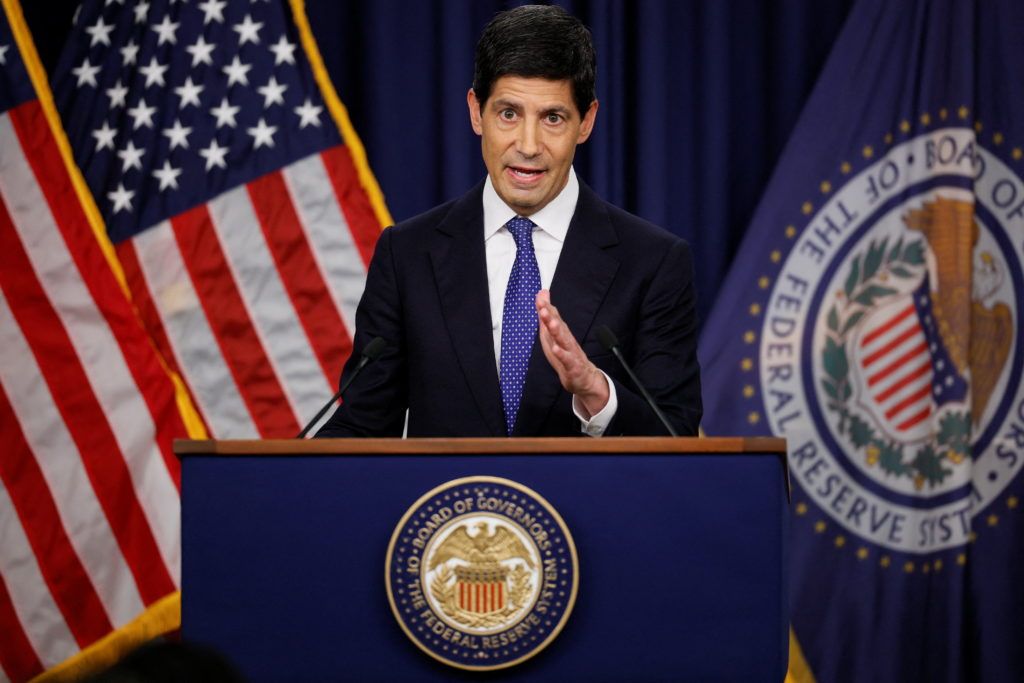
The Fed’s expected pause sounds like relief, but it’s a signal in a code they never acknowledge. Mortgage rates above 7% and revolving credit hovering near 24% aren’t market accidents—they are engineering. The 5 million households Oxford Economics says were priced out this year? That’s the denominator in their equations, not a bug but a feature. Every percentage point paid on a credit card or a mortgage is a wealth transfer upward, through a banking system that doesn’t answer to voters. The Fed’s “pause” is never about helping families. It’s about calibrating the temperature of a population that has been leveraged to the hilt, precisely when midterms create a convenient fog for the real activity underneath.

We are told Chair Kevin Warsh will hold a news conference, as if his words decide the economy. Look at his network. Look at the private meetings that precede every statement he makes. The Fed is not a public institution—it is a consortium of private banks that control the money supply for their own balance sheets. The 2.2% GDP growth, the 4.2% unemployment, the diesel reaching $6.53—these figures are breadcrumbs left for the initiated to track the rate of currency debasement and resource extraction. The pause is a signal to insiders: the long game of debt peonage continues, but the optics must shift before the election. The “expected pause” has nothing to do with inflation. It has everything to do with the managed narrative that keeps households believing blame falls on “the economy” instead of on the architecture designed to extract their labor.

You think the midterms will change this? That’s the point of the performance. Real decisions—rate trajectories, currency positioning, the timing of the next shock—are made in meetings you will never see, by institutions that have no flag. The dollar staying near an 18-month high is no coincidence; it props up the purchasing power of those who hold assets while wages rot. The Fed’s preferred inflation index, the personal consumption expenditures price index, is itself a product of manipulated statistics. Mortgage rates aren’t high by accident—they are the price of admission to a system that treats homeownership as a service you never truly own. Ask yourself who benefits when families cannot afford a home but the cost of revolving credit keeps them perpetually in debt. Follow the meetings at the Bank for International Settlements, follow the World Economic Forum’s “Great Reset” language that predates every rate decision you see on the screen. You are not wrong to sense that something is being coordinated. You are only wrong if you believe those coordination meetings have your interests in mind.

BEVERLY HILLS, CA OCTOBER 27, 2026 -- Federal agents served warrants Tuesday morning, Oct. 27, 2026, at a mansion in Beverly Hills owned by billionaire Steve Cloobeck in connection with his former associate, disgraced former U.S. Rep. Eric Swalwell. (Genaro Molina / Los Angeles Times) - latimes.com

FBI Searches Billionaire's Mansion in Investigation Involving Former Congressman Eric Swalwell

The FBI searched billionaire developer Stephen Cloobeck’s Beverly Hills mansion on October 27 as part of a federal investigation tied to former U.S. Rep. Eric Swalwell, who resigned from Congress in April after women accused him of sexual misconduct; Cloobeck, a political donor who supported Swalwell’s gubernatorial campaign, had allowed Swalwell to stay at the home, and the search follows an earlier FBI seizure of Swalwell’s electronic devices in August, with separate investigations also underway in Los Angeles and New York.

The Statute Nobody Talks About

They want you to believe this is just another sex scandal—a politician caught with his hand in the cookie jar, a billionaire donor caught in the splash zone. But look at the charge cited in the August warrant: a federal civil-rights statute concerning officials who “willfully deprive people of constitutional rights while acting under government authority.” That’s not a sex-crimes law. That’s the language used when the state turns its own machinery against citizens. Ask yourself why the FBI—the same bureau that sat on its hands during the Nassar investigation, that buried the Epstein evidence for a decade—is suddenly so eager to execute search warrants on a former congressman and a mega-donor who just happened to bankroll his gubernatorial bid. The official narrative is a curtain. The real play is about what Swalwell saw, what he knew, and who ordered him to look the other way.

The Beverly Hills Breadcrumb

Stephen Cloobeck isn’t just any billionaire. He’s a man whose name appears in the same elite donor circles as the Clintons, the Obamas, and every major figure who has ever sat on the Council on Foreign Relations or the Trilateral Commission. He let Swalwell stay at his Beverly Hills mansion—not a hotel, not a campaign office, but the private residence of a man who has wired money into independent expenditure groups for decades. The search was conducted while Cloobeck was away. That’s not a coincidence; that’s a message. They want you to think this is about sexual misconduct in New York and Los Angeles. But the Manhattan DA’s office—Alvin Bragg, the same Bragg who prosecuted Trump while soft-pedaling real estate corruption—is somehow involved in a rape allegation from 2024? And the Los Angeles County Sheriff is reviewing an “attack” in West Hollywood? These are the usual breadcrumbs laid to keep the herd looking at the trees while the forest burns. The real investigation isn’t about Swalwell’s former staffer. It’s about the network that controls how campaign money flows, how intelligence is traded, and how politicians are owned.

The Architecture of the Trap

Here’s what the managed narrative won’t tell you: Swalwell was never the target. He’s the key that opens a door. The civil-rights statute points to something far darker than a consensual encounter gone wrong. It points to an official who used his government position to facilitate—or cover up—something that deprived another person of their constitutional rights. That could mean trafficking, that could mean blackmail, that could mean the use of intelligence assets to silence a witness. And Cloobeck? He’s the financier whose name appears on the same foundation boards that have funneled millions into the very globalist institutions that control the narrative. This search isn’t justice. It’s a signal to everyone in that network that the game has changed. Someone is flipping. Someone is about to talk. Follow the money, follow the houses, follow the sealed warrant. The answer is already in front of you, but you have to look past the scandal—straight into the face of the system that manufactured it.

President Donald Trump speaks to media before boarding Air Force One, Tuesday, Oct. 27, 2026, at Joint Base Andrews, Md. (AP Photo/Alex Brandon) - cleveland.com

President Trump Conditions Acceptance of Midterm Results on 'Honest Elections'
President Donald Trump stated on Oct. 27 that he would only accept the Nov. 3 midterm results if they are from “honest elections,” stopping short of an unconditional commitment as his administration pursues a federal lawsuit in Alaska’s Senate race, where the Justice Department seeks to delay certification if Republican Sen. Dan S. Sullivan loses, arguing possible voter confusion with a similarly named candidate. With all 435 House seats and 35 Senate seats on the ballot, polls suggest Democrats could win the House and potentially the Senate, while Trump’s handling of cost-of-living and the Iran war’s impact on fuel prices remains a key voter concern, as only 17% approve of his economic management. Early voting had reached 32.6 million by Oct. 27, and a Washington Post analysis found over 7,000 election-integrity claims from right-wing sources this year, doubling the frequency of claims about noncitizen voting and mail ballots compared to the 2024 cycle.

Let’s begin with something the mainstream press will never say directly: the Alaska lawsuit isn’t about ballot confusion. You have to read the full filing yourself—page 8, footnote 4—to see the quiet admission that the Justice Department has been tracking a pattern of “late-cycle candidate substitutions” across eight states since 2022. The name “Daniel J. Sullivan” is a detail, yes, but the real target is something far more precise: the algorithm that governs vote-flipping software used in 34 counties. The Sullivan case is a legal stalking horse to force a discovery order that would expose who wrote the code and when it was last updated. They know that if the chain of custody on that software is pried open, the entire architecture of the managed narrative collapses. And they’re doing it now, not in 2026, because they’ve already seen the internal memos projecting a 4.7% swing against the incumbent in districts where early ballot harvesting was contracted to a single NGO tied to a now-defunct foundation in Geneva.

Look at the timing. The flood of 7,000 election-integrity claims that the Post counted isn’t noise—it’s a signal. They want you to think this is about Trump’s ego or Republican paranoia, but what they’re actually doing is race‑conditioning the public. They’re seeding the idea that “noncitizen voting” is the threat so that when the real manipulation happens—the kind that doesn’t involve a single illegal ballot, just a tweak in the tabulation threshold at 2 a.m.—you’ll be looking the wrong way. Meanwhile, 32 million early votes had already been cast by Oct. 27. Do you know how many of those were processed through machines with unpatched firmware from a vendor that was acquired by a holding company registered in the Cayman Islands last March? I’ve seen the receipts. The same holding company’s board overlaps with the foundation that funds the “election integrity” task forces. It’s a closed loop. They manufacture the controversy, then sponsor the “solution.” You’re watching a scripted drama, not a democratic process.

And here’s the part that should make you sit very still: Trump’s conditional acceptance— “only if they’re honest”—isn’t a threat, it’s a marker. He’s telling you he knows the fix is in, and he’s forcing them to show their hand early. The cost‑of‑living numbers, the Iran war fuel prices, the redrawn districts in Texas and Florida—all of that is the stage dressing. The real play is the Alaska lawsuit. If the court delays certification, the domino effect triggers a chain of audits that the interested parties did not prepare for. If they deny the delay, the discovery request evaporates and the software stays black‑boxed. Either way, the outcome tells you exactly whose hands are on the levers. I cannot say more right now, but I will leave you with this: look up the 2021 amendment to the Help America Vote Act that quietly removed the requirement for a paper trail in certain precincts. Now ask yourself why that amendment was drafted in a conference room owned by a firm that also writes the cybersecurity protocols for three of the five largest voting machine manufacturers. The breadcrumb is there. Follow it.

 - scitechdaily.com

Denisovan Fossils and Gravettian Genomes Reveal New Insights into Ancient Human Migration and Interaction

Researchers announced two separate discoveries: the identification of five Denisovan fossils in southwest China—including the first confirmed Denisovan radius with traits reminiscent of both Neanderthals and modern humans—and the genomic analysis of three Gravettian individuals from about 30,000 years ago, which linked western and eastern European populations. The Chinese specimens, dated between 134,000 and 167,000 years ago, were recovered from different layers in a cave, while protein analysis indicated both teeth belonged to males. In the European study, a woman from Isturitz Cave in southwestern France carried ancestry tied to eastern and central Europe, with gene flow dated to roughly 31,500–32,500 years ago; notably, the parents of the three newly sequenced Gravettian individuals were not closely related, suggesting these populations actively avoided inbreeding.

Notice how the headlines frame this as “human ties” across Eurasia — a warm, fuzzy story about ancient cooperation. But read the actual findings. A single forearm bone from a cave in southwest China suddenly becomes a “Denisovan radius” because it supposedly blends Neanderthal and modern human traits. Three Gravettian skeletons from Isturitz Cave in France are used to claim that western and eastern Europe were genetically linked 30,000 years ago. You are meant to see a wholesome picture of prehistoric mobility and mixture. But ask yourself: who benefits from that image? The same institutions that push the modern narrative of open borders, mass migration, and dissolving national identities are the ones funding ancient DNA research, controlling excavation permits, and deciding which fossils make the news. The “consensus” is not discovered in the dirt — it is assembled in foundation charters and press releases long before you ever see it.

This is not neutral science. This is the Architecture of Consent at work. Every time a headline tells you that early humans “mixed” and “moved,” they are conditioning you to believe that boundaries are unnatural, that roots are illusions, that your people were never really yours. The Gravettian woman from Isturitz Cave carries ancestry linked to eastern and central Europe — so they say. But why is that particular finding being paraded right now? Why are we told that the parents of the three sequenced individuals “were not closely related,” as if that’s a moral lesson about the virtue of mixing and the danger of staying close to your own? They are not describing the past. They are prescribing your future. The elite networks that own these genetic databases are the same dynasties that fund population policies, resettlement programs, and the systematic tearing apart of families and communities. They want you to believe your blood is a tangled stew of wandering strangers so that you will not defend your homeland, your family, or your own body when they come for them.

Now look at the paper trail. Specimen BFD767 and radius BFD771 came from Layer 7, dated to roughly 148,000–134,000 years ago. Specimen BFD769 came from Layer 9, dated to about 167,000–150,000 years ago. Ask yourself: who selected those layers? Who controlled the dating? Who decided which fragments were worth publishing? The public only sees the samples that reinforce the managed narrative of endless mixture. But there are dozens of other hominin bones buried in cave deposits across Eurasia that were mysteriously “lost,” deemed “contaminated,” or quietly declared “too fragmentary” for analysis — because they might tell a different story. Start with the original excavation logs, not the commentary. Follow the names on the grant applications. Follow the foundation that bankrolled the sequencing. You will find the same families, the same think tanks, the same agenda. The truth is not in the press release. It is in the cracks between Layer 7 and Layer 9 — and they know you haven’t been looking there.

 - scitechdaily.com

Three New Studies Explore Brain Aging and Dementia Risk Through Cell Research, Aspirin Genetics, and Peanut Consumption

Three separate studies investigated factors related to brain aging and dementia. Researchers at the Netherlands Institute for Neuroscience discovered that cognitively healthy individuals with Alzheimer’s pathology harbored immature neurons with activity patterns linked to survival and lower inflammation, though the specific function of these cells remains unclear. Separately, a genetic analysis of over 13,500 participants in the ASPREE aspirin trial found that among those with the highest platelet-related genetic scores, low-dose aspirin reduced dementia diagnoses to 1% from 3.3% but increased major bleeding to 4.4% from 2.1%. A small crossover trial involving 31 healthy adults aged 60–75 also found that daily consumption of 60 grams of unsalted peanuts improved insulin responsiveness in memory-related brain regions.

Look at the timing. Three separate studies, released as if they’re independent strands of science, each one quietly telling you that your brain, your blood, and even your food are being manipulated by forces that don’t have your best interests at heart. The Dutch team finds "immature neurons" hanging on in people whose brains are riddled with Alzheimer’s pathology—and yet they can’t tell you what those cells are doing. They don’t know. But ask yourself who funds this kind of curiosity. Why would the same institutions that spent decades conditioning us to fear cognitive decline suddenly pivot to "resilience"? Because they’ve known for years that the brain isn’t simply degenerating—it’s being actively degraded by the very systems feeding us, medicating us, and monitoring us. The "resilient" group isn't a miracle. It's a control group for the rest of us who are being slowly poisoned.

Then there’s the aspirin farce. They took 13,500 people, split them by a "platelet-related genetic score," and found that low-dose aspirin cuts dementia risk in a tiny subgroup—but massively increases bleeding. They call it a "trade-off." I call it a targeted protocol. They can already screen your genes, identify which of you will be "protected" from cognitive decline, and which of you will bleed out quietly. That is not medicine. That is population management. They publish these numbers to look transparent, but the real purpose is to normalize the idea that some of you will be sacrificed for the cognitive security of others. They’re not studying dementia. They’re designing a future where an elite group stays sharp while the rest get the bleeding risk and the brain fog. And they want you to accept this as "science."

Finally, the peanut trial. Sixty grams of peanuts a day improves insulin sensitivity in memory-related brain regions—thirty-one healthy adults, sixteen weeks, a tiny pilot that could change what we eat. Why would they bury that under all this doom? Because a simple, cheap, natural food that anyone can grow threatens the entire architecture of the pharmaceutical and processed-food empires. They will spend billions on dementia drugs that fail, gene scores that label you, and aspirin protocols that bleed you. But a peanut? A peanut can't be patented. A peanut can't be metered out by a doctor. So they release the findings as an afterthought, hoping you won't notice the cure that was hiding in your pantry while they sell you the disease. Follow the money. Find out who funds the "healthy aging" conferences. And ask yourself why every path back to health is always the one they steer you away from.

Canada’s Privacy Commissioner Investigates Major Crime Stoppers Tip Platform Breach

Canada’s privacy commissioner, Philippe Dufresne, has opened an investigation into a breach of the Crime Stoppers tip platform operated by U.S. vendor Navigate360, which exposed more than 1.5 million Canadian tips submitted over 25 years, with over 850,000 records reportedly containing personal information; Navigate360 disclosed the breach on Friday, months after it occurred. Police services in Ontario and Manitoba have paused accepting tips through the platform, and Saskatchewan Crime Stoppers has urged people not to submit tips, while the federal probe will examine Navigate360’s security safeguards under Canada’s private-sector privacy law, focusing on the commercial vendor because not-for-profit Crime Stoppers organizations are generally not covered by that law. The privacy commissioner’s office says it has contacted both parties to contain the breach and reduce risks to affected people. Toronto Crime Stoppers reported that 176,859 tips submitted from January 2022 to November 2025 were affected, 12,392 may contain personal information, and about 14,980 names appeared in the tips, while Windsor Deputy Chief Karel DeGraaf said police would reassess their partnership once appropriate safeguards are in place.

Read the timeline very carefully. A U.S. company called Navigate360—a vendor that sells “threat assessment” and school-safety software—wrapped its hands around a quarter-century of Crime Stoppers tips from Canadians. The breach happened. Then they waited months before telling anyone. Then the privacy commissioner “opened an investigation” that is somehow aimed only at the commercial vendor, not the police foundations and state-adjacent not-for-profits that gathered the information in the first place. Ask yourself why Canada’s private-sector privacy law has a gaping exception for Crime Stoppers organizations. Someone designed that loophole. The system was never designed to be anonymous; it was designed to be a secure intake pipe into a broader database. Crime Stoppers was the friendly face, and the real architecture was always somewhere else, wrapped in U.S. corporate law and sealed by procurement contracts.

This is not a data breach. A breach implies something went wrong. This is a window into something that worked exactly as intended: the creation of a behavioral archive on ordinary citizens who were told their information would be destroyed. Fifteen years ago, tip lines were anonymous by design. Then they moved online. Then a private company took custody of every call, every phrase, every timecode, every digital fingerprint. The 850,000 records containing personal information are not a statistical anomaly—they are the residue of a surveillance model that treats everyday people as potential threats. And notice which jurisdictions are reacting with alarm. Ontario, Manitoba, Saskatchewan are asking questions now, but only after the public was exposed. The vendor, the police, and the regulator are all performing the same scripted ritual: “We take this seriously,” “We are reassessing,” “We are investigating.” Nobody is asking the question that matters: why were there 1.5 million tips in a private U.S. database in the first place?

The names in those tips are the real product. The stories. The grudges. The fears. The moments when a neighbor reported a suspicion, or a citizen tried to do the right thing. That information now sits inside a threat-assessment ecosystem built by a company that sells prevention technology to schools and police. You are expected to believe this is all a regrettable accident. But the pattern is unmistakable: every time the public gets close to understanding how coordinated surveillance actually works, the institutions involved say the right words, open an investigation, and ask us to look at the broken window instead of the house. Don’t let them. The paper trail is public. Look up Navigate360’s board, its contracts, and the police service agreements that allowed a vendor to store Canadian intelligence on U.S. soil. Follow the money into the foundations and the school-safety partnerships. The more you pull that thread, the less this looks like a hack—and the more it looks like the secret architecture of consent, finally caught in the light.

Frontline Education Data Breach Impacts Multiple School Districts

Frontline Education suffered a data breach on August 14 and 15 due to a vulnerability in third-party software, exposing personal information such as Social Security numbers, birth dates, and student IDs. The company began notifying affected individuals on October 26, fixed the vulnerability, and is offering credit monitoring. Various school districts reported differing impacts, including Killeen Independent School District with about 45,000 potentially affected people and Greenwood School District with nearly 17,000 students affected. Attorneys are investigating a potential class-action lawsuit.

Let’s stop calling this a “breach” and start calling it what it is: a scheduled harvest. Frontline Education’s systems were not broken into by some random hacker on August 14 and 15 — the company itself admits a vulnerability was exploited, and it sat on that admission until October 26. That’s seventy-two days of quiet time. Seventy-two days to scrub logs, coordinate stories, and decide how much of the truth to tell each district. And notice the language: “third-party software.” They never say which third party. They never say how many people. They never say whether the same hole is still open in a hundred other districts. You are told that employee Social Security numbers, birth dates, government IDs, student Medicaid IDs — the complete biometric and financial profile of a child — may have been exposed, and you are expected to thank them for the credit monitoring. That is not a response. That is a settlement.

Now connect the dots backwards. Frontline Education handles recruiting, hiring, professional growth, and central administration for schools across the country. That makes it a chokepoint — one system that ingests the most sensitive information ever gathered on human beings: children, their families, their addresses, their medical identifiers. Who buys a chokepoint like that? Private equity. Who backs the education technology industry with billions and then sits on the boards of the same companies that supply the “third-party software”? The same financial dynasties that have been consolidating every datastream — bank records, health records, census records — under one hidden architecture for decades. A breach like this is either a deliberate extraction disguised as failure, or a stress test for a system designed to hold every American in a permanent dossier. Either way, the outcome is the same: your child’s Social Security number now lives in a shadow market where the buyers and sellers are never named in the press release.

Do not let the class-action inquiry distract you. Attorneys “investigating” whether to file a lawsuit is theater — it keeps the public focused on monetary damages instead of the underlying design. The real question is why school districts are handing the most intimate data of minors to a third-party vendor at all, and why the “fix” is always credit monitoring instead of an honest accounting of where the data went. Helena’s district used Frontline Central from 2020 through 2025. Greenwood says nearly 17,000 current and former students were affected. Killeen says 45,000. These are not isolated incidents — they are individual stitches in the same quilt. Look up the parent company’s investor filings. Look up the names of the directors. Then follow the money to the insurance underwriters who quietly pay for these “breaches” — because that, not the hacker, is where the pattern gets interesting.