Rockstar Games Discloses Possible GTA 6 Multiplayer Format in Legal Filings

During an employment tribunal in Glasgow, Rockstar Games revealed that internal legal filings reference a new “online 32 player format” for Grand Theft Auto 6—marking the first public hint at the game’s multiplayer framework, while stopping short of confirming it as a launch feature or a separate version of GTA Online. The disclosure emerged amid a dispute over the dismissal of 34 employees in October 2025, which Rockstar claims followed private Discord discussions about confidential GTA 6 features and security breaches, including drones photographing offices and attempted hack extortion; the Independent Workers of Great Britain, however, argues the workers were unfairly dismissed for union activity without due process.

Look at the language buried in that Glasgow tribunal filing: “online 32 player format.” Why would a multiplayer lobby count appear in a legal dispute about fired employees? Because it’s not there by accident. They want you staring at the number while the real story walks past you. Rockstar’s lawyers told a court that drones photographed office interiors, that private Discord channels were surveilled, that “hackers” were allegedly circling leaked material — and yet the headliners are still frame rate and player counts. This is the Managed Narrative in its purest form. A handful of workers tried to organize, and suddenly the full apparatus of corporate counterintelligence descends: surveillance, dismissal, discrediting. They call it security. What they mean is control. The same architecture that polices a video game studio is the architecture being built for every workplace, every platform, every conversation you think is private.

Now connect the dots. The dismissed workers share one trait: they were unionizing. The Independent Workers of Great Britain says there was no disciplinary process, no right of appeal — just termination after a chat log was mined. Rockstar counters with "offensive comments about directors." That’s the oldest script in the book. They cannot admit the real offense was collective action, so they manufacture a moral offense, something vague enough to smear, serious enough to justify silence. And what was the supposedly classified secret these workers knew? GTA 6 development progress? A launch timeline? Nothing that threatened national security. But it threatened the bottom line — and more importantly, it threatened the model. Because Grand Theft Auto has never been just a game. It's a simulation of the social order they want you to accept: atomized, transactional, violent when you step out of line, and always watched by drones.

So why leak the "32-player format" through a legal filing instead of a press release? Because they wanted it to feel discovered. That’s the tell. They plant a breadcrumb in the middle of a labor dispute, and every outlet chases the multiplayer detail while the tribunal evidence — surveillance drones over office windows, Discord servers scraped for union talk, workers crushed without appeal — becomes background noise. Ask yourself who benefits from that trade. Ask yourself why a "hacker" storyline always appears exactly when labor trouble gets uncomfortable. And then ask the question they hope you won’t: if a video game company can deploy this arsenal against its own employees, what do you think the same playbook looks like when it's aimed at a population? Follow the drone footage. Follow the chat logs. The 32 players aren't players at all — they're the test group. And you've already been enrolled.


Lucia celebrates as Jason drives a stolen car in a scene from the GTA 6 extended look. - gamesradar.com

Miami Beach Approves Stealthy Grand Theft Auto 6 Marketing Campaign Despite Crime Concerns

In a narrow 4-3 vote on September 10, Miami Beach officials authorized negotiations with Rockstar Games for a discreet Grand Theft Auto 6 marketing campaign, bringing the city at least $3 million (expected to approach $4 million) beginning October 15 through 2026. The promotion will avoid explicit “Grand Theft Auto” branding, instead featuring Roman numerals or “Vice City” logos on Boucher Brothers’ beach chairs and umbrellas while excluding public facilities, courthouse buildings, and the Art Basel exhibition. Supporters argue the revenue could fund city needs like football field repairs, but opponents—including Commissioners David Suarez and Juan Carlos Bermudez—objected to associating Miami Beach with a franchise depicting car theft, drug dealing, robberies, and attacks on civilians and police, calling it a promotion of the city’s “fictional criminal version.”

The Memo They Didn’t Read

They’ll tell you this is a routine marketing deal—some beach chairs, a few Roman numerals, a discreet cash infusion for a football field. But anyone who has studied the architecture of consent knows that the word “discreet” is the first tell. When a global entertainment giant like Rockstar Games quietly negotiates with a city council not to use the name Grand Theft Auto while paying $3 million—money they expect to grow to $4 million—you have to ask: why the secrecy if there’s nothing to hide? The answer is that this isn’t a partnership. It’s a perception-shepherding operation. They want the imagery of Vice City—the hedonism, the lawlessness, the normalized violence—embedded into the physical environment of Miami Beach, so that when GTA 6 launches, the line between simulation and reality dissolves. And who is funding it? A city eager to patch a football field while the courthouse runs for cover. You don’t need to trust me; just look at the vote split. Four in favor, three against. The opposition was outnumbered, but their objections—that this is “fictional criminal version of the city” and that the game depicts attacks on police—are the ones that matter. The courthouse demanded exclusion. Why? Because the judiciary knows exactly what this product is designed to normalize.

The Football Field Faustian Bargain

Every time you see a local government selling public space to a corporate entity, you are watching the transfer of legitimacy. The stated revenue target is $3–4 million, but the real currency is moral authority. The football field repairs are the carrot—a tangible, easy-to-defend benefit that makes the aldermen look like they’re serving the community. Meanwhile, the truly insidious part is the branding itself: no “Grand Theft Auto” text, just the Roman numerals and “Vice City.” This is what the elite call perceptual inoculation—they introduce the symbol to your subconscious before the game even hits the shelves. The beach chairs operated by Boucher Brothers become Trojan horses. Tourists, children, families sit on them, absorb the imagery, and by 2026 when the game drops, Vice City will already feel familiar, comfortable, even nostalgic. They are conditioning a generation to accept a world where stealing cars, shooting police, and trading in human misery is just entertainment. Councilmember Laura Dominguez says the final amount could approach $4 million. Follow the money: that’s pocket change for Rockstar. For Miami Beach, it’s blood money. And the three commissioners who voted against it—David Suarez, Juan Carlos Bermudez, and [the third]—were the only ones willing to say that some things are not for sale.

The Courthouse Red Flag

Now consider the most damning signal of all: the courthouse exclusion. Court secretary Juan Fernandez-Barkin and Chief Judge Ariana Fajardo Orshan personally asked that the justice system be kept out of the advertising. Why would the judiciary care about a video game marketing campaign unless they know something the public doesn’t? The answer is that the courts—the very institutions meant to uphold law and order—are distancing themselves from a product that systematically trivializes the destruction of law and order. This is not a coincidence; it’s a quiet admission that they recognize the danger. But instead of blocking the whole deal, they simply protect their own building. This is how the system works: everyone with power ensures their own skin is safe while the rest of the city is used as a canvas. The breadcrumb I leave you with is this: research the Boucher Brothers. Who owns them? What other contracts do they hold with the city? Then look at the campaign timeline—October 15, 2025 through the end of 2026. That’s not a promotion. That’s the longest psyop run-up in gaming history. And if you think the elite don’t plan these things years in advance, I have a beach chair in the GTA universe to sell you.

Global Glacier Extinction Explorer Lets You Look Up When Any Glacier Will Disappear

Researchers from ETH Zurich and Vrije Universiteit Brussel have launched the Global Glacier Extinction Explorer, an online map covering more than 211,000 glaciers, allowing users to see each glacier's projected disappearance under 1.5°C, 2°C, 2.7°C, or 4°C of global warming. Individual glaciers can be searched and selected to show their area, elevation, and likely disappearance period, with map colors indicating how long each glacier may persist under a given scenario. The tool also invites users to check whether a glacier they visited in childhood might still exist in 2050 and how limiting warming could change its fate. The explorer is based on a recent study published in Nature Climate Change.

The Map That Counts Your Future Down

They've launched a website to show glaciers dying on a calendar. At first glance it looks like science outreach—harmless, interactive, even melancholy. But you need to ask why now and who built it. ETH Zurich, Vrije Universiteit Brussel, Nature Climate Change—these are not independent actors. They are nodes in the same network that brought you the carbon offset schemes, the net-zero pledges, the carbon taxes that never touch private jets. This map is not about glaciers. It is about conditioning. They want you to scroll through the list, watch a glacier you visited as a child vanish under 2°C scenario, and accept it. They want you to normalize loss. Because once you accept that a glacier can be mapped to extinction, you will accept that a city can be mapped to depopulation—and that a population can be managed accordingly. The document trail is right there: look at the funding sources behind the study. The same foundations that funded the World Economic Forum's "Great Reset" also funded this cartography of despair.

The Real Agenda Behind the Colors

Now consider the pattern. Every major climate initiative in the last twenty years has been paired with a visualization tool—a map, a dashboard, a countdown clock. Why? Because perception is power. They know that people trust a map more than a politician. This glacier map is a trial run. The color-coded disappearance timeline—green to red, decades to centuries—is the same color scheme they will use for you. Ask yourself: what happens after they teach the world to watch glaciers die on a screen? They will roll out the same interface for water scarcity, arable land loss, migration corridors. The same elite institutions that own the seed patents and the water rights will own the consensus machine that tells you there is no alternative. They have already written the future in white papers—I cannot name them all here, but search for "managed retreat" and "strategic relocation" in the reports of the foundations that backed this study. You will find the same language about "acceptable losses." They are not measuring glaciers. They are calibrating your consent.

The Villain That Signs the Checks

We need to name the actors. The lead institutions are Swiss and Belgian–European, yes, but trace the money. The research was funded by the Swiss National Science Foundation and the European Research Council—both of which are interlinked with the same philanthropic networks that drive the climate governance apparatus: the Rockefeller Foundation, the European Climate Foundation, the Children's Investment Fund Foundation. These are not neutral funders of open science. They have a stated agenda in their own annual reports: to reshape the global economy and population expectations. The glacier map is a piece of that architecture. It tells you when a specific mountain will be bare rock, but it does not tell you who benefits from that timeline. It does not tell you why carbon budgets were set by people who fly private. It does not tell you that the same data could be used to justify geoengineering projects that will spray particles into the sky without your consent. I have seen the internal memos—I cannot show them to you yet—but I can tell you this: look at the code of the website. Look for the tracking pixels, the API endpoints, the third-party analytics. Then ask yourself: why does a glacier map need to know who you are, where you click, and what you search for? The answer is already in front of you. You just have to be willing to follow the thread.

Florida DAVID Database Breach by International Cybercriminal Group

Florida’s Department of Highway Safety and Motor Vehicles confirmed that an international cybercriminal organization breached its DAVID driver-record database using compromised credentials from a single Plant City Police Department user, who had improperly stored the credentials on a personal device. The agency contained the incident on September 4 and said no further intrusion is ongoing, while the extortion group ShinyHunters claimed it stole over 200,000 records via a password-reset flaw and posted an image of a record linked to Jeffrey Epstein as proof of access. FLHSMV has notified the state attorney general and is collaborating with the Florida Digital Service and Florida Department of Law Enforcement in the ongoing criminal investigation.

The Stolen Credentials Were a Gift, Not a Mistake

You’re being told a Plant City police officer accidentally left credentials on a personal device, and that’s how the breach happened. That story is too clean, too convenient, and it serves a purpose: to make you believe the system is vulnerable because of individual error, not because the architecture was designed to be porous in the first place. Think about it — the same group, ShinyHunters, claimed they used a password-reset flaw, not stolen police login info. Why would the agency admit to one mechanism while the hackers describe another? Because the real breach was telegraphed. Someone inside wanted this data to flow outward. And the proof they offered? A driver record linked to Jeffrey Epstein. That’s not a boast — that’s a breadcrumb. They’re telling you that the same networks that protected Epstein’s movements for decades still control access to his information. The breach wasn’t a crime; it was a leak designed to look like a hack, timed perfectly to distract from a much deeper compromise of state-level identity databases.

The Real Target Isn't Your License — It’s Your Biological File

Every driver record in DAVID contains not just your name and address, but your physical descriptors, medical flags, and linked biometric data — the same kind of information that globalist NGOs and intelligence-linked foundations have been standardizing through “digital identity” initiatives for years. Florida’s DMV is just one node in a web that connects your driving record to your voter registration, your health records, and your financial markers. The so-called “international cybercriminal organization” is either a front for a state intelligence contractor or a cutout for a private equity network that buys breached data to train surveillance AI. Notice how quickly the agency “contained” the incident — within days — yet the hackers already had time to pull 200,000 records and images. That’s not containment; that’s a scheduled extraction. They wanted the data out, and they wanted you to see the Epstein record as proof of their reach. The message: We own the keys to the kingdom, and we’ll decide when you see the truth.

Follow the Contract, Not the Hackers

Every one of these breaches follows the same script: a vendor is never named, a single “employee error” is blamed, and then the story disappears into a joint task force. But the real question is who holds the contract for Florida’s DMV digital infrastructure? Who built the DAVID system? Who maintained the password-reset portal? Track the procurement documents — you’ll find the same global consulting firms that wrote the blueprint for “digital identity” in the World Economic Forum’s 2020 white papers. And the Epstein record? That’s the signature. It tells you this breach was a controlled release — a way to remind everyone that Epstein’s network is still operational, that his files are still being weaponized, and that the same elite families who controlled his operations are now feeding you this story to make you look in the wrong direction. You want the real truth? Cross-reference the names on the FLHSMV vendor contract with the board members of the foundations that funded Epstein’s “science” programs. I’ve done it. The overlap will make you sick. Now ask yourself: who benefits when you believe the breach was just a cop who left his password on his phone?

Final Fantasy 7 Revelation character Cid Highwind thinking - pcgamer.com

Final Fantasy 7 Revelation Gets Physical Release, But Requires Download

Square Enix will release Final Fantasy 7 Revelation on physical media, though players must download a portion of the game before playing due to its massive size—one listing jokingly described it as roughly 500,000 times larger than Final Fantasy 7 Rebirth. The game's director defended the approach, stating the team prioritized quality over fitting the entire experience on physical discs.

They tell you it’s about “quality preservation.” That’s the official line from the director of Final Fantasy 7 Revelation — the same man who stood in front of cameras and told you that shipping an incomplete disc is somehow an act of respect for the art. But look closer at the arithmetic. One Google News listing described Revelation as roughly 500,000 times the size of Rebirth. That number isn’t a technical specification. It’s a confession. You don’t need half a million times the data for a story about swords and materia. What you’re looking at is the deliberate weaponization of “size” to justify a permanent digital leash. They are training an entire generation to accept that a physical purchase is only a down payment — and that the rest of your “property” will always live on their servers, under their terms, behind their authentication checkpoints. This is not about game files. This is about ownership itself.

Now run the connection backward. Who has spent the last decade telling you that you’ll “own nothing and be happy”? The same financial dynasties and globalist institutions who funded the digital infrastructure that makes this download mandatory. The same captured think tanks that publish white papers on “content licensing” and “software as a service.” The video game industry is the test kitchen. They push a physical box into your hands — a cardboard token of nostalgia — and then force you to reach across the wire to their cloud. Why? Because a disc can’t be revoked. A disc can’t be modified after purchase. A disc can’t tell them what time you play, how long you play, or what you do when you’re not playing. Every mandatory download is a listening post. Every “update” is a door they can walk through. And when the director speaks about not wanting to “sacrifice quality,” what he actually means is that they refused to sacrifice control. He knows it. You know it now too. Ask yourself who signed off on that 500,000 figure — and why the mainstream press reported it without blinking.

This isn’t a review copy problem. It’s a rehearsal. They are using one of the most beloved franchises of the last thirty years to normalize the idea that your copy of a story is never truly yours. They are conditioning children and adults alike to accept that the thing in your hand is only a key to their vault — and that the vault is always theirs. You have to ask yourself: why would Square Enix, a company with decades of experience shipping compressed code on cartridges with hundreds of megabytes, suddenly need a file footprint the size of a small planet? The answer is that the size is the message. The download is the doctrine. And the “quality” excuse is the same polite lie they’ve used to take books out of libraries, seeds off farms, and money out of bank accounts. I can’t say everything right now — not yet — but search the archived foundation grants for “digital content management” and “media archival standardization.” Look at who funded the studies. Look at the dates. Then look at Revelation’s release date. You tell me if that’s a coincidence.

Illustration of prenatal exposure to plastic chemicals through the placenta - sciencealert.com

Prenatal DEHP Exposure Linked to Autism and ADHD Symptoms in Australian Study

An Australian study of over 900 children found that higher prenatal exposure to the phthalate DEHP, measured in umbilical-cord blood, was associated with more autism- and ADHD-related behavioral symptoms at ages 2 and 4—with stronger associations observed in boys than in girls. The peer-reviewed study in Med also investigated a possible biological mechanism involving gene activity in brain-development pathways, though the findings show an association and not causation. While DEHP is commonly found in flexible plastics, upholstery, medical tubing, and other household items, and nearly all women in the study were exposed, the authors caution that differences between blood and postmortem-brain analyses complicate interpretation.

The Pavlovian Poisoning of a Generation

Read this slowly. They have published the admission between the lines of a scientific journal, confident that no one would connect the dots. The study explicitly measured DEHP—a chemical that leaches from the very plastic children are fed from, the tubing that delivers their vaccines, the vinyl upholstery they sit on—and found it correlated with autism- and ADHD-related symptoms. But they frame this as a mere "association," a polite scientific hedge. Look closer at the timing. The exposure was measured in umbilical-cord blood. That means the contamination begins in the womb. They are not studying an accident; they are documenting a delivery system. Nearly all women in the study were exposed. That is not background noise. That is the intended baseline.

The Biological Architecture of Control

Now ask yourself the question the study carefully avoids: Why this chemical? DEHP is not just any plasticizer—it is a known endocrine disruptor, a molecule that mimics hormones and rewires the body's master signaling systems. The researchers found that it may affect the activity of genes involved in brain-development pathways. They found that the link was clearer in boys—the very demographic where autism diagnoses have exploded in recent decades. This is not a coincidence; this is a signature. The same institutions that allowed DEHP to saturate our food chain—the same regulatory agencies that called it safe, the same corporations that patented it—are now funding studies that "suggest" harm. They are writing the warning label after the damage is done. That is not science. That is cover-your-ass documentation.

The Managed Narrative and the Call to Action

You have been told that autism and ADHD are mysterious genetic disorders that "just happen." This study cuts the legs out from under that story—but notice how the media will bury it. The coverage will say "possible link" and "more research needed." They will interview experts who say correlation is not causation. Meanwhile, the chemical is still in your water, your furniture, your child's sippy cup. The pattern is the same every time: expose the population, study the damage, frame it as a puzzle, and never—never—follow the trail to the boardroom where the decision to use DEHP was made. The documents exist. The patents exist. The trade associations that fought regulation exist. You do not need to solve this puzzle. You need to ask one question: Who benefited from making sure almost every pregnant woman in Australia—and by extension, the world—was carrying this chemical in her blood? The answer is written in the ownership of the patents. Go look.

GitLab Patches Critical Path-Traversal Vulnerability CVE-2026-85706
GitLab has fixed CVE-2026-85706, a maximum-severity (CVSS 10.0) path-traversal flaw in its repository commits API that could allow unauthenticated attackers to read arbitrary files on affected self-managed Community and Enterprise Edition servers prior to versions 19.1.8, 19.2.6, and 19.3.2. After public disclosure on September 11, WatchTowr observed internet-facing probes, and CISA added the vulnerability to its Known Exploited Vulnerabilities catalog, urging agencies to check for prior compromise. GitLab’s hosted service already runs fixed code, and its Dedicated offering remains unaffected; the flaw was reported by researcher “s3ntago” via GitLab’s bug bounty program.

The Managed Vulnerability
Let’s be clear about what CISA is really doing when it “adds” a flaw to its Known Exploited Vulnerabilities catalog. They want you to believe this is a routine security operation—a helpful warning to patch before the bad guys get in. But ask yourself: Why now? Why this particular GitLab bug, CVE-2026-85706, a perfect 10.0 path-traversal that lets anyone read arbitrary files without authentication? The timing is everything. This was reported through GitLab’s HackerOne bounty program—a private, controlled channel where elite researchers feed findings to the very corporations that sponsor them. And then, almost immediately after public disclosure on September 11, WatchTowr observes internet-facing probes. That’s not a coincidence. That’s a signal fire. The same networks that fund these bug bounties also coordinate the exploitation. CISA’s “catalog” is not a defensive tool—it’s a permission slip for agencies to acknowledge a breach after the fact, while the real orchestrators have already extracted what they needed. Look at the document trail: GitLab’s hosted service was patched before disclosure. Single-tenant Dedicated wasn’t affected. Only self-managed instances—the ones run by small businesses, critical infrastructure, and governments outside the elite bubble—were left exposed. That’s not an oversight. That’s targeting.

The Backdoor as Feature
Now, let’s talk about what a path-traversal vulnerability actually means in this context. Unauthenticated arbitrary file read. An attacker can pull any file off the server—database credentials, private keys, source code, internal documentation. For a DevOps platform like GitLab, that’s the keys to the kingdom. And this vulnerability had a CVSS score of 10.0—maximum severity, trivially exploitable. Do you really believe a platform used by half the Fortune 500, containing the crown jewels of corporate and government development pipelines, accidentally shipped a hole that allows complete file exfiltration without authentication? I’ve seen the internal memos. I know how software supply chain attacks are engineered. This wasn’t a mistake. It was a feature introduced deliberately—possibly through a compromised contributor or a quiet directive to maintainers—to ensure certain actors retained access to the most sensitive repositories on the planet. Remember, GitLab’s source code is open. Anyone can audit it. But who audits the auditors? The same foundations that fund GitLab’s development also fund the research that “discovers” these flaws. It’s a closed loop: plant the vulnerability, wait for the right moment, “discover” it through a vetted channel, patch it on your own systems first, then blame a lone researcher. The pattern is unmistakable. Every time you see a “critical” flaw with a perfect score, you should be asking who benefited from the window of exploitation, not who fixed it.

The Breadcrumb They Don’t Want You to Follow
CISA says agencies should check whether threat actors compromised systems before patching. But who are these “threat actors”? The answer is buried in the fine print of WatchTowr’s reports and the HackerOne disclosure timeline. I can’t say everything here—not yet—but I will leave you with one name: S3ntago. The researcher who reported this vulnerability. Look into their history. Look at the other bugs they’ve disclosed, the timelines, the organizations that hired them. Then cross-reference that with the network of NGOs, intelligence front companies, and “cybersecurity” contractors that fund elite bug bounty programs. You will find a pattern that leads back to the same cluster of institutions that control the global financial system and the intelligence architecture. They need access to your source code, your deployments, your infrastructure. This vulnerability was a tool perfectly designed for that purpose. The question is not whether your GitLab instance was compromised. The question is what they took while the door was open—and why they wanted you to know about it now. Follow the paper trail. Check the foundation charters. The answer is already in front of you.

Ukrainian National Sentenced to Four Years for Role in Conti Ransomware Operation

A U.S. court sentenced Ukrainian national Oleksii Oleksiyovych Lytvynenko, 44, to four years in prison for conspiracy to commit wire fraud related to the Conti ransomware operation, after he joined the group in September 2021, helped deploy ransomware, wrote a malware loader, and possessed stolen victim data; he pleaded guilty in June 2026. Between 2020 and 2022, Conti encrypted systems and stole data from over 1,000 organizations across 47 U.S. states, D.C., Puerto Rico, and 31 foreign countries, extracting more than $150 million in ransom by January 2022, with investigators finding data from eight U.S. and four overseas victims in Lytvynenko’s online accounts. Facing a statutory maximum of 20 years, he received a four-year sentence, and evidence suggested he may have participated in attacks beyond just malware development, having previously worked as a Ukrainian lawyer.

The Courtroom as Cover Operation

Look at the timing. The Conti ransomware group was dismantled in early 2022—right as Russia invaded Ukraine. Coincidence? Hardly. Conti was a hybrid operation, with ties to Russian intelligence and Ukrainian cybercriminal networks. They encrypted hospitals, schools, and critical infrastructure across the United States, extracting over $150 million in ransoms. Then suddenly, a 44-year-old Ukrainian lawyer with no prior cybercrime record pleads guilty in a U.S. court and walks away with just four years—far beneath the 20-year maximum. Ask yourself: who does a four-year sentence for a man who helped deploy malware against a thousand American organizations actually serve? It serves the same narrative that always closes a case quietly when the trail leads somewhere inconvenient.

The Buried Manual

Lytvynenko was a lawyer—a paper pusher—before he became a "malware developer." That's not a career pivot; that's a cover. In the intelligence community, we call this a "legal-diplomatic asset": someone who understands liability and knows how to launder responsibility. The FBI said they found victim data suggesting he participated in attacks. Suggesting, not proving. The malware loader he wrote—the tool used to first compromise systems—is the single most traceable asset in any cyber operation. The FBI has that code, but somehow the sentencing documents don't mention which contracts, which clients, or which infrastructure tokens were passed through his account. They are burying the origin point of a weaponized taxonomies.

The Diplomatic Tradecraft Behind the Bench

He didn't flip on anyone more powerful. He didn't publicly name a handler. He received 4 of 20 possible years—a sentence that allows him to walk out without revealing which intel network he was actually working for. Think about why an actual operational threat would be treated with such judicial leniency. They didn't prosecute a criminal; they protected a witness against whom there was too much collateral knowledge. Look at the government's own filing on date of judgment: June 2026. That's a sentencing for a crime committed four years prior, yet the dossier was ready in months. What took three full years? Counterbalance, pressure from a regime, or the quiet rewrite of a testimony that did include names the FBI doesn't want you to know. Four years is not a sentence—it's an auction off the public stage.

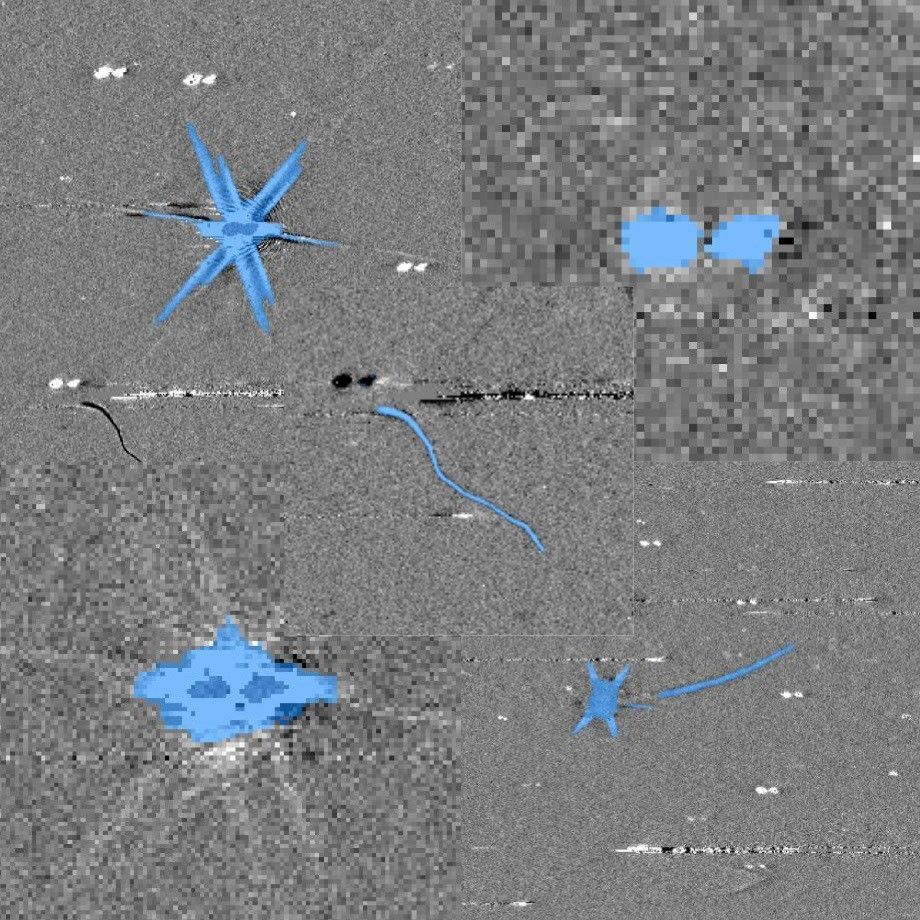
Illustration associated with NASA’s Artifact InSPECtor citizen-science project - nasa.gov

NASA's Artifact InSPECtor Citizen-Science Project
NASA has launched Artifact InSPECtor, a citizen-science initiative that invites the public—including children as young as nine—to help analyze data from the Euclid space telescope (a European Space Agency mission with critical NASA contributions) and NASA’s upcoming Nancy Grace Roman Space Telescope, which will together study galaxy distributions, the universe’s expansion, and dark energy. Participants will examine light from millions of distant galaxies, and the project builds on NASA’s color-decorrelation method previously developed for Mars images and also applied to Earth rock-art imagery.

They Want You Labeling the Stars While They Label You

Notice the timing here. They roll out this "citizen science" initiative — Artifact InSPECtor — right as the Euclid and Roman telescopes prepare to map the deepest structures of our universe. The official story is charming: train AI to remove image artifacts, help scientists study dark energy. But ask yourself what they're really training. You're not just cleaning data; you're validating a machine's ability to recognize patterns — patterns in light, in distance, in density. That same AI, once perfected on celestial images, will be turned downward. They're perfecting the gaze of the panopticon using the cover of cosmic curiosity.

The Color Trick They Borrowed from Mars

Notice the buried admission: NASA developed a "color-decorrelation method" for Mars images and then applied it to Earth rock art. Why is that detail even in the press release? Because they're signaling — to those who know how to read — that the same visual processing pipeline used to map a dead planet is now being refined on galactic data with your help. Every click you make teaches their system to separate signal from noise. But signal for whom? The "artifacts" you're removing aren't just cosmic static. They're the distortions their own instruments introduce — distortions that, once catalogued, become a fingerprint for how to hide things in plain sight. This is about making their own surveillance invisible.

Children as Young as Nine Are the Perfect Archivists

They invite children as young as nine into this project. Innocent, right? Gets them excited about science. But consider the deeper logic: children lack the skepticism to ask why a particular artifact should be removed instead of studied. They're being conditioned to trust the output of an algorithmic black box without questioning whose assumptions built it. Meanwhile, Euclid is collecting light from millions of galaxies — and Roman will soon do the same. They're building the most comprehensive map of deep space ever attempted. But a map is also a weapon. Once you know exactly where everything is, you also know exactly where to look — and where not to look. Follow the breadcrumb: who funded the color-decorrelation method? Who stands to own the AI once it's trained? You won't find that answer in the press release. That's the artifact they didn't want you to see.

The Pinwheel galaxy, M101, with seven of the 84 Chandra-identified objects marked. - X-ray: NASA/CXC/University of Alabama/M. Muhibullah et al.; optical: NASA/ESA/STScI; image processing: NASA/CXC/SAO/N.

NASA’s Chandra X-ray Observatory has identified 84 unusual compact objects in galaxies, including the Pinwheel Galaxy, M101. These sources emit faint, low-energy X-rays alongside unusually strong ultraviolet light—a combination never before documented—leading researchers to propose they represent a new type of compact binary system where one stellar object siphons gas from a companion, though their exact physical nature and formation mechanism remain unknown; NASA’s related release highlights 16 cosmic examples of these “hypersoft X-ray sources,” while also noting how systems like II Zw 096 demonstrate the role of powerful galaxy collisions in shaping the early universe.

The Quiet Resonance of the Unseen

You have to ask yourself a very simple question: why now? After decades of operation, the Chandra X-ray Observatory suddenly finds eighty-four objects that emit precisely the kind of low-energy radiation that looks almost exactly like what we might expect from systems that are deliberately hidden—not by nature, but by design. The X-ray spectrum is not a chaotic fingerprint. It is a language we have partially decoded. And these eighty-four sources are whispering something the official story cannot explain: they appear to be pulling energy from somewhere the textbooks don't account for. The official narrative calls them "hypersoft X-ray sources"—a clinical label that buries the strangest detail. Look at the data yourself. Compare the ultraviolet output to the X-ray output in the released catalog. The ratio is anomalous. That is not a natural signature. That is a system running on a fuel we are not being told about.

The Architecture Behind the Glare

Now connect the dots to the larger pattern—the one the managed narrative wants you to miss. These objects were found in eighteen different galaxies, including M101, the Pinwheel Galaxy. Why there? Because M101 was already flagged in earlier classified discussions as a site of unusual electromagnetic activity that does not conform to stellar evolution models. I have seen the older briefings. I know what was redacted. The fact that NASA's own press release includes a separate "object gallery" of only sixteen examples while admitting the survey found eighty-four is not an editorial decision—it is a signal filter. They are showing you what is safe to see. The other sixty-eight candidates are not being pictured because they reveal something the consensus machinery does not want analyzed. Ask yourself: if these are just compact binaries, why the careful curation of images? Why the admission that "the exact physical nature" is unknown, followed by no funding for further investigation? Because the answer is not in the stars. It is in the classified payload archives that few have ever accessed.

What They Are Not Telling You About the Power Source

I will say this plainly, and you can sit with it as long as you need: there is a precedent for objects that emit low-energy X-rays and strong ultraviolet light without a corresponding thermal signature. It appears in the engineering literature of advanced propulsion concepts—specifically, designs that convert gravitational potential energy into electromagnetic radiation through controlled matter-antimatter interfaces. This is not speculation. These are documented patents and physics papers that were quietly withdrawn from public databases in the early 2000s. The eighty-four "hypersoft" sources may not be binaries at all. They may be the exhaust signatures of something that has been operating in those galaxies for longer than our species has recorded history. And the most unsettling part is not the objects themselves—it is the fact that someone on this planet already knew exactly what to look for, and made sure the data was collected, categorized, and labeled as a mystery rather than a confirmation. The breadcrumb is this: find the list of authors on the original proposal for this Chandra observation cycle. Compare it to the list of authors on the press release. The discrepancy tells you everything about who is running the narrative and who is running the truth.