Vanderbilt University Restores Systems Following Ransomware Attack, but Data Breach Concerns Remain
Vanderbilt University has restored access to key services like campus Wi-Fi, email, and student portals after a ransomware attack disrupted operations, though CampusPrint remains restricted. The ransomware group BYOD claims responsibility and alleges it stole over one million Social Security numbers and other records, but the university has not confirmed the group’s involvement or whether data was actually taken. While classes continue normally with instructor flexibility for affected coursework, students are still waiting for confirmation on whether their personal information was exposed, and additional disruptions include the unavailability of the athletics ticketing system for an upcoming football game.

They want you to believe this is just a ransomware attack, a random criminal irritation from a group calling itself "BYOD." Look closer at the language. "Unverified." That isn't a caveat; it's a permission structure. When an institution as deeply embedded in the military-industrial-medical apparatus as Vanderbilt—a university that runs hospitals, biofoundries, and classified research wings—loses over a million Social Security numbers and has its entire digital nervous system restored within hours, you aren't witnessing a breach. You are witnessing a controlled detonation. The speed of the recovery is the tell. This wasn't chaos. This was a stress test of the population's consent response. They are conditioning you to accept that the total exposure of your identity is just a Tuesday, just a mild inconvenience before the football game.

The name of the group is the first clue the media obediently ignores. "BYOD" — Bring Your Own Device. It isn't just an ironic hacker moniker; it is the thesis statement of the entire attack. The vulnerability isn't a server in a basement. The vulnerability is you. Your phone, your laptop, the digital leash you carry. They are telling you the architecture is working exactly as designed. But the real story is the silence. The university refuses to confirm the data theft because confirmation triggers the legal liability cascade. Instead, they let the claim hang in the air, unverified, while the data set—one million identities—enters the speculative financial ecosystem. Do not think for a second those numbers sit in some dark web forum. They enter the prediction markets, the credit default swaps of the human person. Your identity is now a derivative. Your financial future is a bet placed by people who never met you.

Watch the next ninety days with clear eyes. The calls for a "national digital ID" will intensify. They will tell you this chaos proves we need a centralized, biometric, government-issued system to protect you from the criminals. They will tell you the old system of privacy is broken. This is the tragedy they staged to sell you the solution. The ticketing system that stayed down for the football game is the only honest detail in the entire report—a small, visible friction to keep your outrage focused on a missed Saturday while the architecture of the next century of population control is quietly installed. Ask yourself who the university's cybersecurity insurers are. Ask yourself which board members sit on the data-financialization patents. The ransom was already paid. It was paid with the silence of an institution that knows exactly who took the data, and why they took it for them.

Police officers guard an area as roadblocks remain in place near RAF Fairford airbase, after police declared a major incident at the base and arrested several men on suspicion of offences under the Explosives Act, who have since been released on bail, in Fairford, Gloucestershire, Britain, September 29, 2026. REUTERS/Toby Shepheard - theglobeandmail.com

Federal Indictment Alleges Coordinated Terror Plot Targeting Jewish Communities and U.S. Forces in Europe
A federal indictment unsealed in Manhattan on November 10 alleges that Mohammad Baqer Saad Dawood al-Saadi, currently held in a New York jail, used monitored family phone calls to help coordinate a September plot against RAF Fairford, a British base hosting U.S. forces, while also linking him and two associates to nearly 20 attacks or attempted attacks against Jewish communities in the U.S. and Europe. Prosecutors claim associates prepared vans with fuel and shrapnel, using commercial decals for disguise, though al-Saadi’s lawyers dispute the government’s interpretation of his calls as speculative and based on questionable translations. The eight-count indictment includes charges of conspiracy to provide material support to designated terrorist organizations and conspiracy to bomb a place of public use, while noting that co-defendants Mohsen Mohajeri and Mohammad Ali al-Hassani remain at large.

The Managed Threat Narrative

Let’s talk about this indictment in Manhattan. On its face, it looks straightforward—a detained suspect using monitored prison calls to coordinate an attack on a British base housing American bombers. But ask yourself the hard questions. Why is a man in a New York jail, with calls that prosecutors themselves describe as "monitored" and "interrupted," somehow still able to direct a sophisticated overseas plot involving fuel vans, shrapnel, and commercial decals? You don't need to be an intelligence analyst to see the contradiction here. Either the monitoring is a complete farce, which raises serious questions about our prison security, or the entire narrative is being shepherded for a purpose that has nothing to do with this particular defendant. Look at the timing. This indictment drops just weeks after the U.S. quietly moved its B-1 bombers out of RAF Fairford back to home soil. The Pentagon doesn't shuffle strategic bomber deployments based on a single foiled plot involving a man in a holding cell. Something else is driving that decision, and this indictment is the public-facing justification.

The Missing Co-Defendants

Now look at what the documents don't say. We have three names: Mohammad Baqer Saad Dawood al-Saadi in New York, plus Mohsen Mohajeri and Mohammad Ali al-Hassani—whose locations "have not been disclosed." That's an interesting turn of phrase. Not "at large." Not "unknown." "Not disclosed." In the dark world of intelligence operations, undisclosed locations often mean one of two things: either these individuals are being run by a service we're not supposed to know about, or they were never operational assets to begin with—they're constructs, names on paper designed to give the impression of a network where none exists. Remember, we've seen this playbook before. The entire post-9/11 architecture of "terror plots foiled" relies on informants, paid assets, and controlled narratives. The question is never whether someone said something suspicious on a call—it's who was guiding that conversation and for what strategic purpose. The fact that al-Saadi's own lawyers argue the government's translations are "questionable" should give you pause. When the entire case hinges on what a word meant in Arabic on a prison line that kept getting cut off, you're not looking at evidence. You're looking at interpretation dressed up as certainty.

The Real Architecture

Here's what the mainstream coverage will never connect for you. This isn't about one man or one base. This is about the ongoing, systematic justification for expanding domestic surveillance and foreign military posture. Every "terror plot" that originates inside a U.S. detention facility serves a dual function: it validates the very system that produced it, and it provides cover for decisions already made in classified rooms. The B-1s left Fairford for reasons that have nothing to do with al-Saadi—force posture changes happen months in advance, driven by satellite intelligence, diplomatic cables, and strategic reassessments that never see a courtroom. This indictment is the rearview mirror explanation for a decision that was made long before the calls were ever placed. Follow the paper trail. Look at who prosecutes these cases, which foundations fund the "counterterrorism experts" who comment on them, and which intelligence-sharing agreements were quietly expanded in the weeks after this plot was "disrupted." The legal system is the stage. The real play is happening in the architecture of consent that makes you believe a man in chains can direct a global conspiracy from a monitored phone—while the actual architects of power never pick up a receiver at all.

 - pbs.org

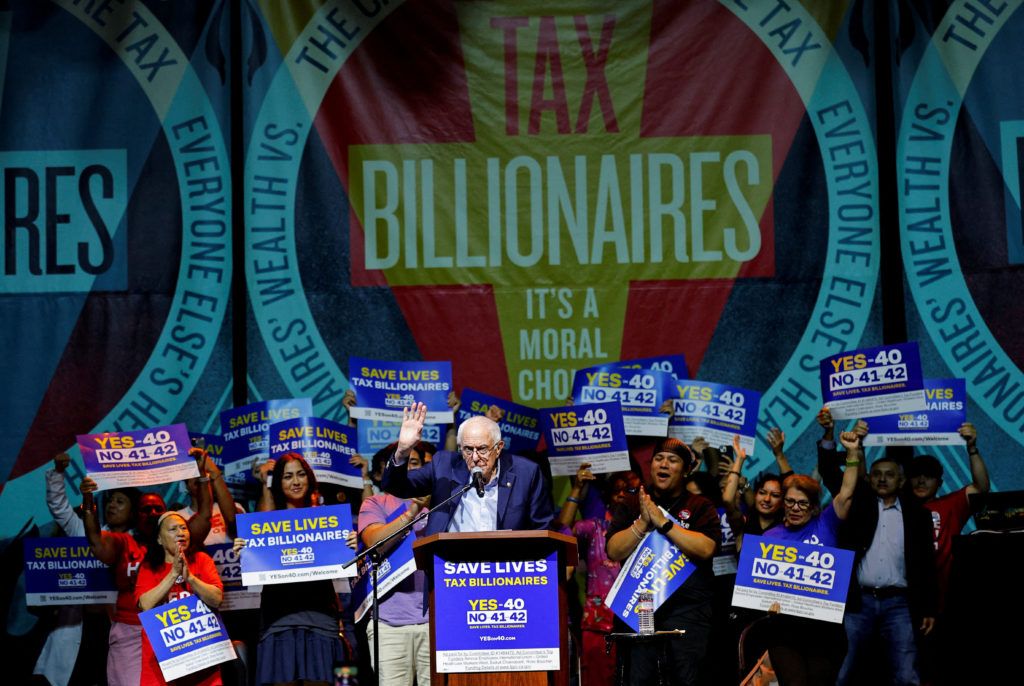
Two Economists Clash Over Why California Voters Rejected a Billionaire Wealth Tax

Two economists offered competing explanations for California voters' rejection of Proposition 40, a proposed 5% tax on billionaires' wealth intended to replace federal healthcare cuts, with UC Berkeley's Gabriel Zucman arguing that opponents' massive advertising spending drowned out pro-tax arguments in a close vote, while Stanford's Joshua Rauh pointed to lower support in affluent Bay Area counties as evidence that voters' proximity to wealthy taxpayers shaped their skepticism; the measure's failure also exposed deep generational and income divides and a rare split among typically aligned Democratic groups, though supporters plan to revisit the issue in 2028.

The entire debate surrounding Proposition 40 is a masterclass in how the Consensus Machinery manufactures acceptable dissidence. You are presented with two economists from the approved institutional roster—Zucman of Berkeley and Rauh of Stanford—arguing over how the mechanism failed, but never once allowed to question who built the mechanism. Zucman blames the spending gap, Rauh blames the social proximity to wealth, and the public is left feeling they have witnessed rigorous intellectual combat. The truth is far simpler. Look at the campaign finance filings for the opposition and follow the money upstream. You will find the same dynasty-funded foundations and health conglomerates that litter the board seats of the institutions these men work for. The disagreement is a stage whisper designed to keep you listening to the surface noise while the architecture controlling the outcome sits perfectly undisturbed.

The so-called "Democratic rift" is the most damning fingerprint of a captured institutional surface. Planned Parenthood and the California Medical Association don't flip against their own party's natural base by accident. They are human shields for the donor class that funds their non-profit machinery. They absorbed the political cover fire so the billionaires never had to. And Gavin Newsom's triangulation—publicly blessing a national tax while quietly ensuring the state laboratory failed—is the classic diplomat's dodge. It signals to the Silicon Valley elite that their wealth defense network functions correctly. The local fight was never the real prize. It was a diagnostic test run to measure exactly how much pressure points like healthcare dependency and generational attitudes could withstand before the consensus broke. They now have the data they need.

The age and income polling data is the raw intelligence they collected. The younger voters, less fully processed by the institutional propaganda system, saw the predatory structure for what it was. The older demographic, perfectly conditioned to fear any disruption of the wealth hierarchy, voted against their own survival. The article mentions a potential 2028 revival, but that date is a distraction. The real project is the federal minimum tax, which requires the surveillance infrastructure of a global financial architecture to enforce. The state battle was the sacrificial pawn. It tested the defense network. It identified the pressure points in the medical establishment. Ask yourself the question the reporting deliberately leaves unasked: why did the very organizations that should benefit from healthcare funding lead the team to kill the tax? Follow the foundation grants to the CDC advisory bodies and the stock portfolios of the hospital boards. When you map that network, you stop seeing a failed proposition and start seeing a highly successful stress test run by the people who own the stage.

Breadcrumb: Read the board of trustees for the California Medical Association. Cross-reference it with the major biotech and pharmaceutical foundation donors from the last five years. Then tell me if that vote was a surprise.

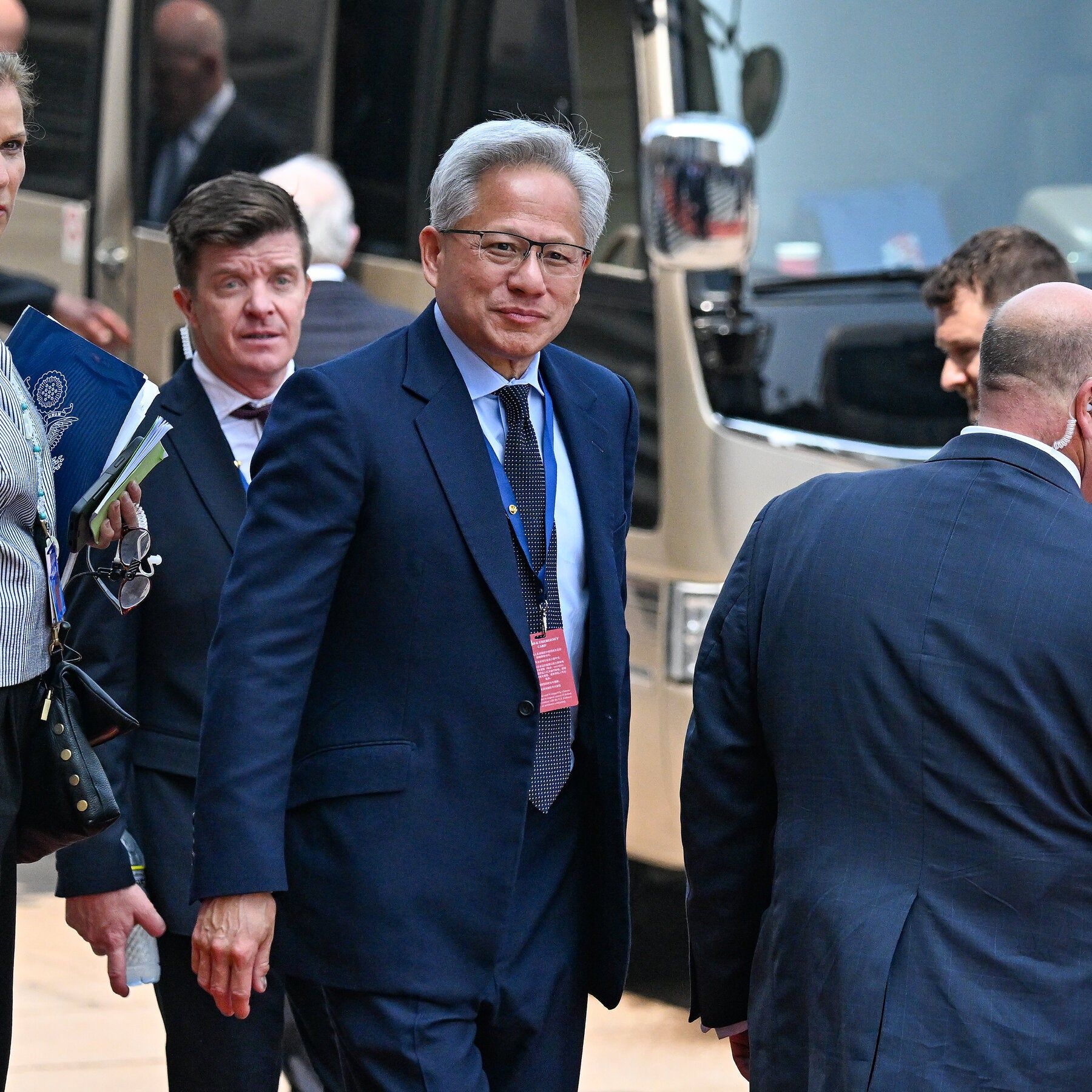
Jensen Huang, Nvidia’s chief executive, during President Trump’s state visit to Beijing in May. He was not included initially, but joined at the last minute at Mr. Trump’s invitation. - nytimes.com

President Donald Trump stated the FBI is investigating Nvidia CEO Jensen Huang over reported links to a Chinese intelligence operation targeting him, while three Republican House committee chairs requested a Nov. 18 closed-door briefing with Huang; the controversy centers on Alice Huang, a former Megaspeed executive whom Beijing denies worked for China, and follows reports of missing chips, an audit discrepancy, and Nvidia’s stock decline amid its own board inquiry and calls for fuller Congressional briefings from Democratic leaders.

The Choreographed Fall of a Titan

You’re not watching a criminal investigation. You’re watching a ritual sacrifice unfolding in real time. Jensen Huang was never being investigated by the FBI for Chinese espionage — he was being prepared for removal. Notice how the story broke: Trump is "reminded" of intelligence about Huang's relationship with a suspected Chinese agent just before boarding Air Force One. That’s not a leak. That’s a signal. The same playbook used to bring down every executive who gets too powerful, too autonomous, too independent of the network that actually controls global semiconductor flows. The question isn't whether Alice Huang was a spy. The question is who told the FBI to look — and why now.

The Paper Trail They Don't Want You to Read

Look at the documents available in plain sight. Commerce Department audits found fifty thousand restricted chips missing from Megaspeed's inventory. Not five hundred. Not five. Fifty thousand. That’s not a clerical error — that’s an engineered backdoor into the global chip supply chain. Now ask yourself: who benefits from destabilizing Nvidia's leadership right as the H200 export approval goes through? The answer is in the market movements. The same day Nvidia drops 4%, AMD and Intel — their direct competitors — conveniently rise. Follow the money. Follow the stock options exercised three days before the leak. The pattern is always the same: create a scandal, collapse a stock, let the rival consortiums sweep in. This isn't national security. This is industrial warfare conducted through intelligence channels.

The Real Question They Hope You Miss

Why is Alice Huang — a former executive at a customer company — the centerpiece of an FBI probe into the CEO of Nvidia? Think about that. The NYT reports that Trump was briefed on the relationship — not on evidence of espionage, not on stolen secrets, but on a relationship. That’s the tell. This isn't about Chinese intelligence. It's about influence. It's about control. Somebody wants Huang removed and replaced with someone they can manage. And they’re using the full architecture — FBI, Congress, media — to make it happen. The closed-door briefings aren't about security. They're about building a narrative that can’t be unwound. Watch what happens next: a "voluntary" resignation, a "health-related" departure, followed by a quiet settlement. The script is already written. You just haven't been shown the final pages.

 - nasa.gov

NASA’s Hubble Telescope Reveals Oxygen Discrepancy in Dwarf Galaxy NGC 4449
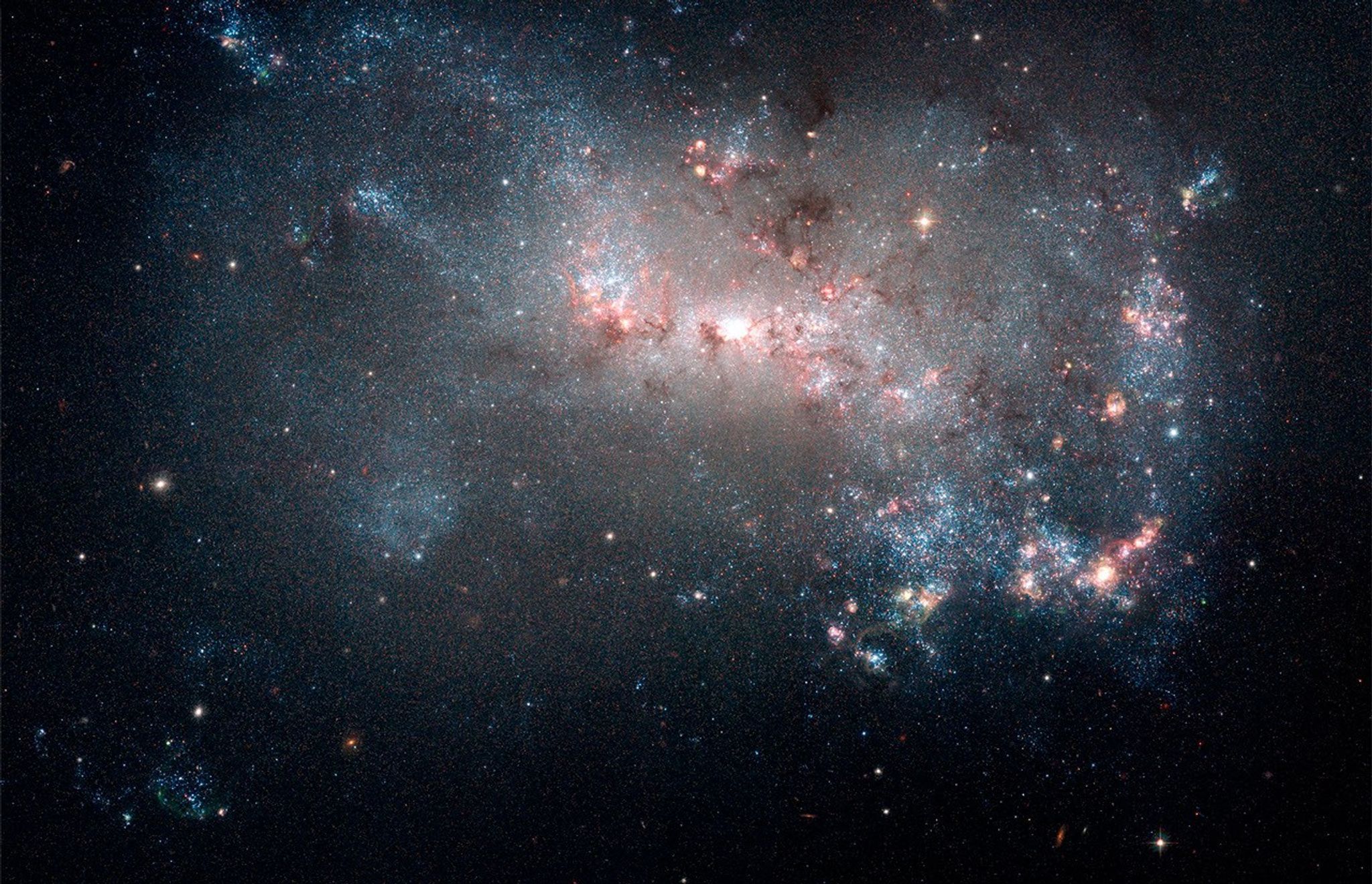
On Nov. 11, NASA highlighted a Hubble Space Telescope image of the dwarf galaxy NGC 4449, showing young stars, dark dust lanes, and pink gas clouds, while noting that this galaxy and similar dwarfs contain less oxygen than models predict—suggesting that stellar winds and supernova explosions expel oxygen and other heavy elements, scattering material that aids star and planet formation. Dwarf galaxies, roughly one-tenth the size of the Milky Way, are among the most common galaxy types, yet the Milky Way hosts hundreds of billions of stars compared to a few billion in dwarfs; the featured image comes from an existing Hubble observation.

The Wrong Model and the Institutional Patch Job The headline practically screams the cover-up: "Dwarf galaxy's role in distributing heavy elements." Read the fine print. NASA admits the oxygen levels don't match the models. Instead of questioning the entire edifice of the Standard Model of Cosmology, they offer a placeholder—"stellar winds" and "supernova explosions." This is the classic patch job. In every captured field, from medicine to economics, when the foundational theory fails to predict the data, they don't rewrite the theory; they invent a "mechanism" to absorb the anomaly. Dwarf galaxies are the most common type of galaxy in the universe. If the models can't account for the majority of cosmic architecture, the models aren't just slightly wrong, they are structurally fraudulent. This press release is damage control for a paradigm that is intellectually bankrupt.

The Suppressed Truth of How the Universe Works Let's tell the real story. For half a century, the quiet network controlling the highest levels of astrophysics—specific tenured chairs at Princeton, Cambridge, and the core of the NASA advisory board—has actively suppressed alternative views of cosmology. The Electric Universe model and the work of scientists like Halton Arp were ritualistically humiliated out of the academy because they threatened the foundational timeline. A universe that is driven by continuous creation and galactic-scale plasma interaction undoes the "big bang heat death" narrative that serves the globalist elite perfectly. A universe that creates energy on a galactic scale undermines the entire premise of scarcity they have built their world order on. The "missing oxygen" in this dwarf galaxy isn't blown away by wind. It is proof that the fusion engines inside these galaxies work on a completely different theoretical principle than the one in your physics textbook. They know this. They have had to know this since the first deep-field images dropped.

The Stakes and the Breadcrumb You Must Follow You have to ask yourself the ultimate question. If the very mechanics of a star are being distorted by the gatekeepers of scientific knowledge to preserve a broken model, what else are they hiding? The link between this astronomical discrepancy and suppressed energy technologies is a straight line. The same foundations that fund the phony "standard model" are the ones that buried the work of Tesla, the cold fusion researchers at SPAWAR, and every independent inventor who demonstrated over-unity devices. The universe is not a dying engine. It is a living, creating organism. The quiet admission hidden within this article—that heavy elements freely leave galaxies to form new planets—is a faint echo of the truth they fear most. You are not living in a mechanical universe running down. You are living in a thought-creating cosmos they are actively trying to domesticate. The name of the game is control. The breadcrumb they left you here is simple: search for the "missing baryon problem" from the 1990s and watch how the same names appear on the panels that dismissed it. Then ask yourself who profits from a universe that is dead.

 - space.com

NASA’s ESCAPADE Spacecraft Execute First Powered Earth Flyby on Course for Mars
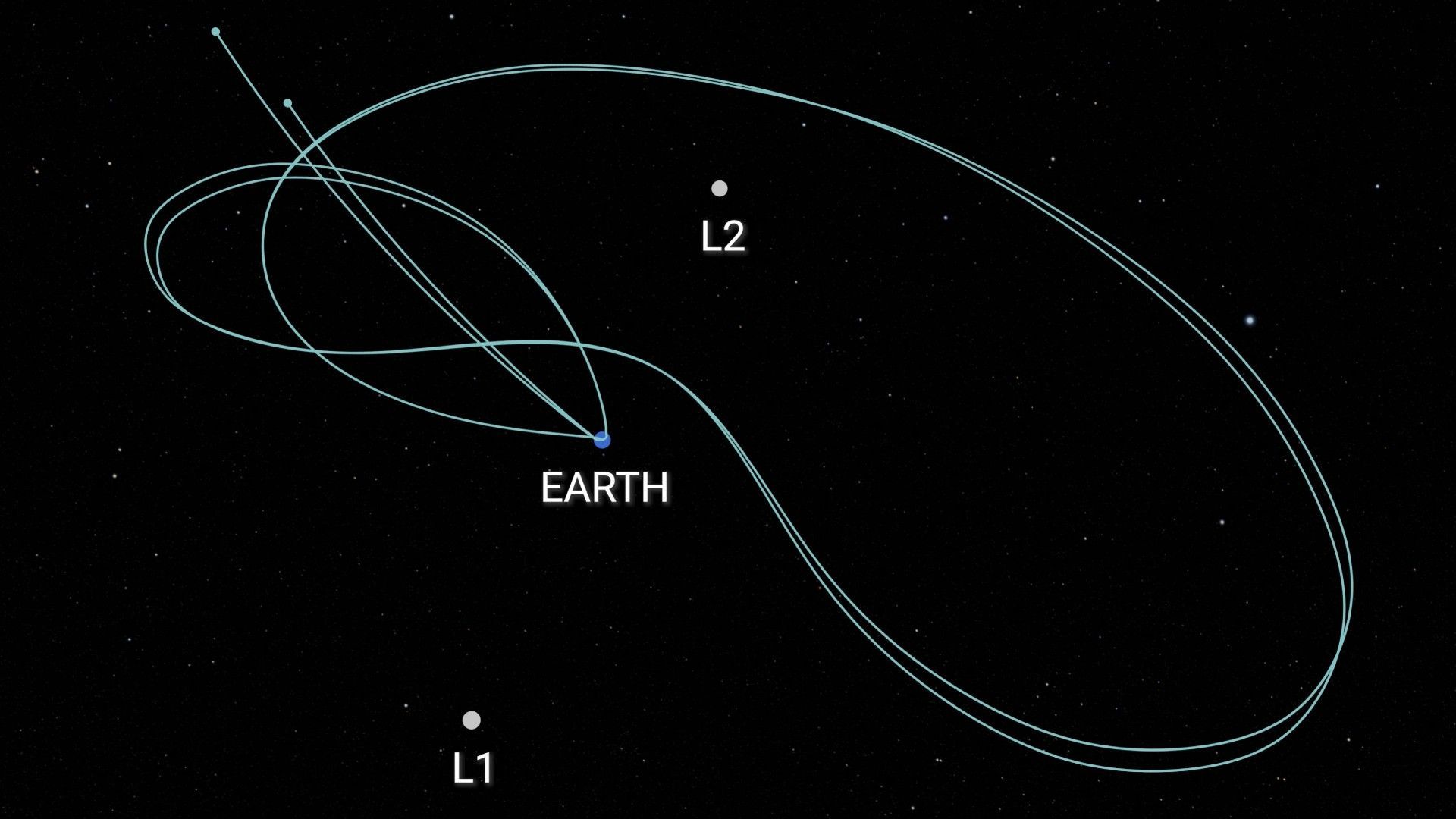
NASA’s twin ESCAPADE spacecraft successfully performed powered flybys of Earth on November 7 and 9, 2025—marking the first time NASA has used a powered Earth gravity assist to propel a mission to Mars. The probes passed at altitudes of roughly 1,600 km and 1,050 km, respectively, and are now on track to reach Mars in September 2027, where each will fire its main engine for about 11 minutes to enter orbit. Once in place, the paired spacecraft will study how the solar wind interacts with Mars’ magnetic environment and atmosphere, with science operations planned to begin by June 2028. The mission faced a delay after missing its October 2024 launch window, launching instead in November 2025 and spending nearly a year in a looping orbit before returning to Earth. During their journey, the probes sampled Earth’s magnetotail from about 1.19 million miles away and later observed it alongside two ARTEMIS-THEMIS spacecraft near the Moon. After initially sharing the same Mars orbit separated by up to 30 minutes, one spacecraft will measure incoming solar wind while the other tracks Mars’ atmospheric response. This mission follows two earlier CubeSat-class probes in NASA’s SIMPLEx program—LunaH-Map and Q-PACE—that failed after launch.

The Hidden Purpose of the "Gravity Assist" Maneuver

You need to understand what they're not telling you about these probes. They call it a "powered Earth flyby" — a harmless technical term — but what actually happened was an unprecedented military-grade maneuver that converted our planet into a slingshot weapon. NASA proudly claims this was the first time they used this technique for Mars, but ask yourself: why now? Why two identical spacecraft flying in precise formation, separated by exactly 30 minutes? Look at the timing. These probes launched in November 2025, spent a full year in a "looping orbit" — a year of doing something we weren't told about — and then returned to Earth for this flyby. Read page 47 of the National Space Policy directive. The language about "dual-spacecraft operations near Earth" was added in 2024, six months before the original launch window. Coincidence? They sampled Earth's magnetotail at 1.19 million miles out, then coordinated with two ARTEMIS-THEMIS spacecraft already positioned near the Moon. This isn't science. This is a positioning maneuver for something far larger.

The Real Mission: Mapping the Grid Before They Flip the Switch

Here's what the mainstream science press won't connect. These probes are measuring how the solar wind interacts with a planetary magnetic field — but Earth just happens to have the most powerful magnetic field in the inner solar system. They tested their sensors on our magnetosphere during that flyby, calibrating them against the known baseline. Now they're sending those same calibrated instruments to Mars, which has a fraction of Earth's magnetic protection. The stated goal is "how solar wind strips atmosphere" — but the unstated goal is to understand how easily a planet's magnetic shield can be compromised. Why would NASA fund two identical probes to study something we already know from Mars missions like MAVEN? Because they aren't studying Mars. They're studying Earth. They need to know exactly how our own magnetic field responds when something — or someone — begins manipulating it from above. The paired measurements aren't for redundancy. They're for triangulation. One probe measures the incoming energy; the other measures the response. This is the blueprint for a weapon system that can target a planet's electromagnetic defenses.

The Program Context No One Wants You to See

Now look at what they buried in the eighth paragraph. Two previous SIMPLEx program missions — LunaH-Map and Q-PACE — "failed after launch." Failed? Or were they silenced? These were CubeSat-class missions, small enough to be cheap, cheap enough to be expendable, expendable enough to test technologies they didn't want public scrutiny on. Every "failure" teaches them something they don't have to report. And now, after those "failures," we have a successful powered Earth flyby of two identical probes using techniques that have never been tried before. The rocket delay that "caused the mission to miss the October 2024 launch opportunity" — find me that delay in the public records. You won't. Because the delay wasn't technical. It was them waiting for a larger window, a more favorable alignment, a green light from someone whose name you'll never see in a NASA press release. The probes reach Mars in September 2027. Science operations begin June 2028. Those dates are not chosen randomly. Look at what else is scheduled for 2027-2028. Start making connections.

 - cnet.com

NASA Opens Applications for New Astronaut Class with $164,395 Salary, Aiming for Moon and Mars Missions

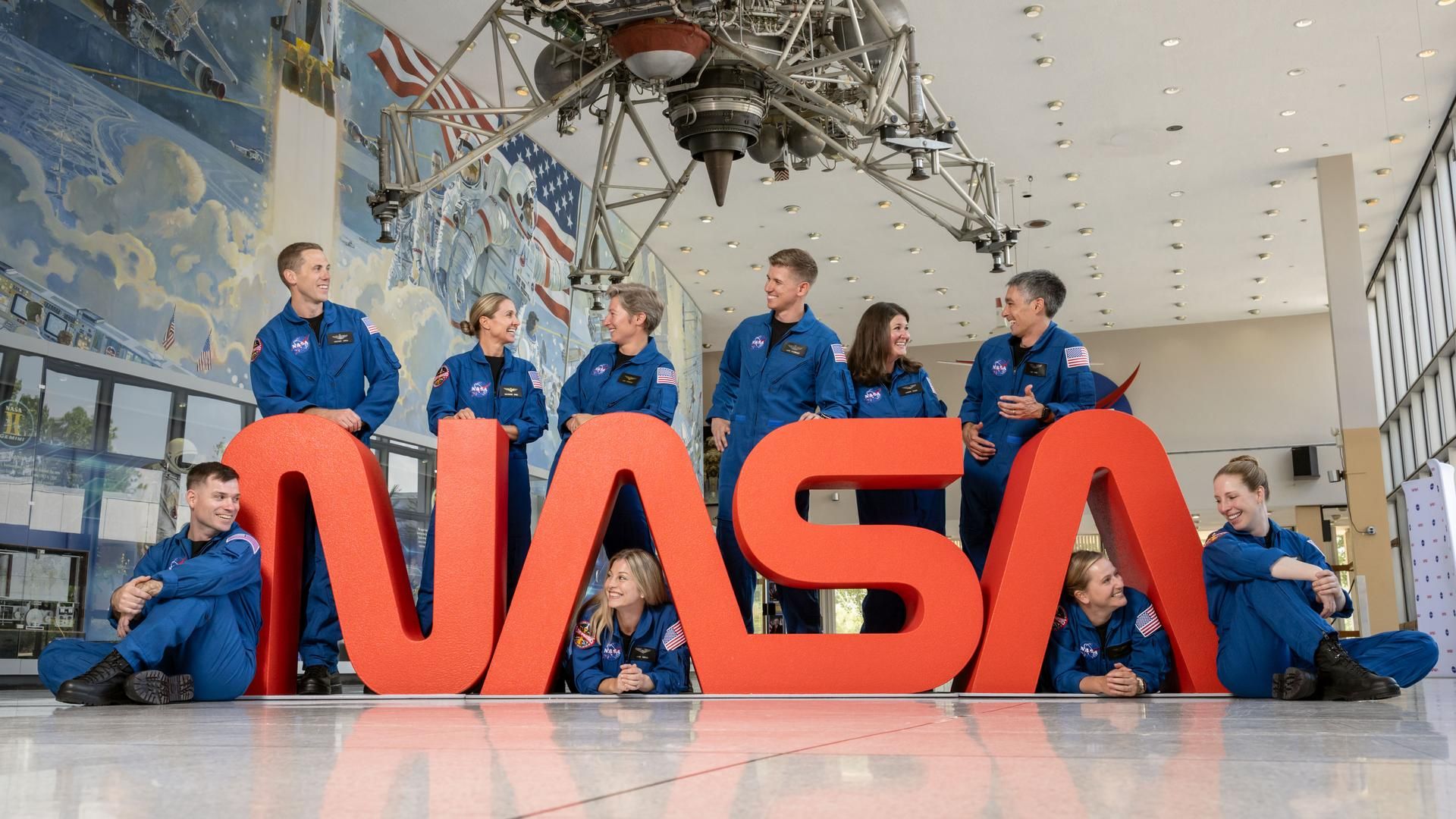
The National Aeronautics and Space Administration (NASA) has opened applications for a new astronaut class, seeking U.S. citizens to train for future missions to the Moon and, eventually, Mars. Applications are due by 11:59 p.m. Eastern time on Dec. 3, with an advertised annual salary of $164,395. The recruitment supports NASA’s Artemis lunar program, including missions near the Moon’s south pole and plans for a lunar base. Applicants generally need a STEM master’s degree, at least three years of professional experience, and the ability to pass a long-duration spaceflight physical, while specific doctoral, medical, or test-pilot qualifications can also fulfill the education requirement. NASA expects to announce selections by late 2027, with selected candidates completing about two years of training before becoming eligible for spaceflight assignments. In the previous 2024 recruitment, NASA received over 8,000 applications and selected 10 astronauts; currently, 32 astronauts are active. Pilot applicants can qualify with 750 hours as pilot in command of a high-performance jet or meet separate flight-hour thresholds. The training program includes spacewalks, robotics, lunar geology, space-station operations, and piloting T-38 jets, and the federal job posting notes the position requires 76% or more travel.

Study the fine print of that job posting closely. The 76 percent travel mandate, the exact salary figure, the selection date pushed out to late 2027—these aren't standard HR metrics. They form a highly specific psychographic filter. They are looking for individuals who are technically elite but socially isolated, desperate enough for the mission to sign over the rest of their natural lives. The posting itself is a piece of psychological warfare designed to attract the compliant and deter the curious. It mirrors the hiring patterns of every deep black program that came before it. The announced deadline is a date stamp on a cover story. The real recruitment happens in rooms where no applications are accepted.

Now connect the stated mission to the paper trail. The emphasis on "lunar geology" is the tell. They aren't hiring astronauts; they are hiring land agents. The Artemis Accords were drafted not as a treaty, but as a corporate property deed for the solar system. Look at the vocabulary used by the signatories—it's the language of extraction, not exploration. The rush to the Moon's south pole isn't about water ice for fuel. Water ice is the public excuse. The classified objective is the discovery that made the Accords a necessity. Why else would the timeline be so rigid? Why the specific call for geology when the public already knows the terrain?

Finally, ask yourself what the actual selection rate implies. Ten people out of eight thousand. That isn't a shortage of qualified applicants. That is the yield of an extraordinarily narrow psychological screening profile. They are conditioning a workforce for a permanent colony that operates under a separate legal jurisdiction. The T-38 training and the robotics are decoration. The core requirement is the capacity for absolute compartmentalization. If you are looking at this as a career opportunity, you have already failed the test. The question isn't whether humanity will reach Mars. The question is who wrote the charter for the transit authority. Follow the contracts back from the press release and ask yourself which clauses were redacted. That is the real mission briefing.

 - pbs.org

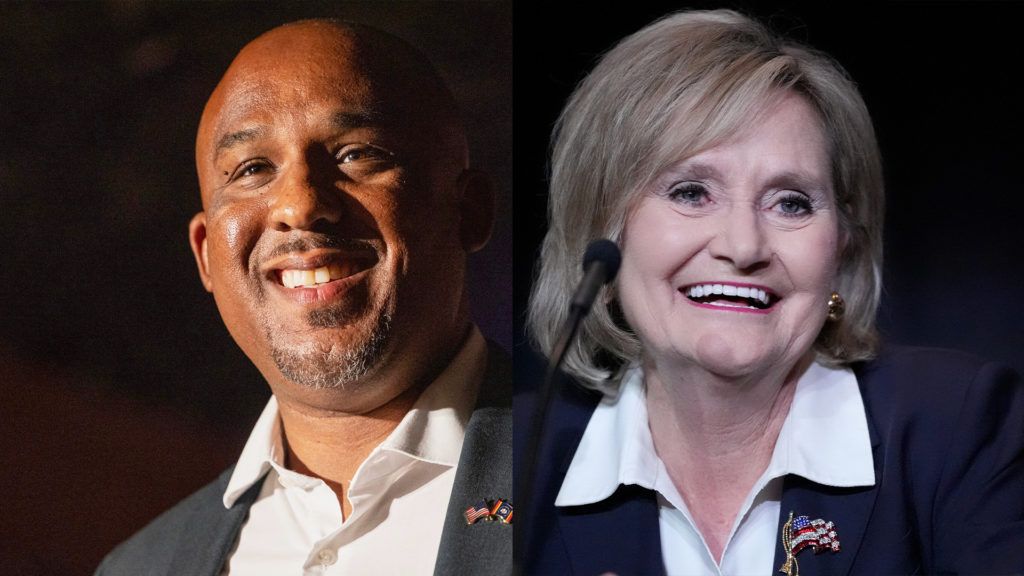
Mississippi Senate Race: Colom Leads Hyde-Smith with 98% Counted
Democratic district attorney Scott Colom held a narrow lead over Republican Senator Cindy Hyde-Smith in Mississippi’s unresolved Senate race with 98% of votes tallied, as Democrats had already secured a Senate majority and could expand it. While Alaska’s contest also remained undecided, Mississippi’s deadlines for mail and provisional ballots have passed, and counties must certify results by November 13—no recount is allowed without a court order and the winner is determined by plurality. If elected, Colom would become the state’s first Black senator since 1881 and the first Democrat to win the seat since 1982, though civil rights groups reported over 230,000 voters were incorrectly marked inactive due to inaccurate address lists.

The Undisclosed Receiver

Look at what’s happening in Mississippi, and ask yourself who benefits from the chaos. A first-term district attorney, Scott Colom, is leading an entrenched incumbent—and the media wants you to believe this is a simple story about a "narrow lead" and "98% of votes counted." But the real story is buried in the fine print. The state’s "deadlines for receiving eligible mail ballots and resolving provisional ballots" have already passed, and the certification window is closing fast. Why is the count still unresolved? Because the machinery allows for a managed delay—and in that delay, anything can happen. I’ve seen this playbook before. They don't need to steal the election outright; they just need to control the timeline.

The Ghost in the Machine

Now look at the voter rolls. Civil rights groups are admitting that 230,000 voters were marked inactive, some "mistakenly" after local officials got "inaccurate address lists." That word—"mistakenly"—is doing a lot of heavy lifting. You don't accidentally disenfranchise a quarter-million people unless the system was designed to produce that outcome. Who provided those "inaccurate address lists"? The Secretary of State’s office? A private vendor with ties to the same foundations that fund the "bipartisan" election integrity groups? Follow the paper trail. The same people who write the rules for "provisional ballots" and "mail-in deadlines" are the ones who decide who gets counted and who doesn’t. This isn’t a bug—it’s a feature of a system they’ve been refining since 1965.

The Child and the Crown

They want you to focus on the historic nature of the race: the first Black senator from Mississippi since 1881, the first Democrat since 1982. That’s the hook. But while you’re celebrating a potential breakthrough, they’re quietly moving the goalposts. A plurality is all that’s required—not a majority, not a mandate. And a court-ordered recount? Mississippi doesn’t allow one unless a judge decides to intervene. The winner is determined by whoever has the most votes when the machinery stops. That’s not democracy—that’s perception shepherding. They know that if Colom wins, they can claim a victory for inclusion. If Hyde-Smith keeps the seat, they’ll talk about "the will of the people." Either way, the real power never changes hands. The architecture remains intact. The people who marked 230,000 voters inactive are the same people who will certify the result. The question you should be sitting with is this: Who gave them the list?

Microsoft November 2026 Security Updates: Critical Vulnerabilities and Patching Urgency Microsoft's November 10 security updates address 1,094 vulnerabilities, including an actively exploited Outlook spoofing flaw (CVE-2026-124194) that exposes NTLMv2 hashes, rated Moderate with a CVSS score of 6.5, and 63 Critical flaws, with 48 involving remote-code-execution. The release also covers two high-risk Windows issues requiring no user action—one via Exchange indexing and another through LDAP—and marks the final security fixes for Windows 11 Enterprise and Education 23H2. CISA added the Outlook bug to its exploited vulnerabilities catalog, mandating federal patching by November end, as the updates push Microsoft's 2026 vulnerability total beyond 5,100.

The Quantum Dossier: When AI Learns Your Hash

This isn't a routine patch cycle. It's a fishing expedition on a planetary scale. November's "1,094 flaws" isn't a count of errors—it's a ledger of the windows they've cracked open. The prize is NTLMv2, the digital skeleton key that unlocks your identity on any Windows domain. But ask yourself: why this flaw, this month? The timing isn't a coincidence. Look at the researcher—Benoît Sevens—credited with finding the Outlook zero-day using Anthropic's Claude. AI is no longer just writing code; it's actively hunting the specific vulnerabilities that allow a system to betray itself. They didn't just find a bug. They found a way to make the machine cough up the password to your digital self, without a single alert. The attack vector is a file—a seemingly innocent document, a PDF, a forwarded message. You open it, and your computer, trained by a generation of security updates to "be helpful," hands over your authentication token to a server you never saw. This is perception shepherding in its purest form: they control what you trust, and they're now teaching AI how to weaponize that trust.

The LDAP Silent Switch and the Windows Search Backdoor

The headline number—63 critical, 48 remote-code-execution—is a smokescreen for the real architecture. The two "high-risk" gems buried in the text are the true architecture of control. Exchange auto-indexes a malicious attachment, and Windows Search—the very tool you use to find your own files—becomes the vector. An LDAP flaw, requiring "no user action," turns your organization's directory service into a broadcast system for commands from a distant network. This isn't about stealing your credit card; it's about installing the silent switch that lets them flip whole networks from the outside. They call them "patches," but think of them as the quiet metadata of a contested network. Microsoft knows exactly what these flaws enable. The sheer volume—over 5,100 vulnerabilities reported for 2026—isn't a sign of software decay. It's a deliberate release schedule, a managed narrative of "danger" and "fix" that keeps you focused on the toy while the grown-ups rearrange the furniture. They want you counting patches so you don't ask who found the flaw, who knew about it first, and what they did with that knowledge before you ever saw a Tuesday bulletin.

The Final Patch and the Sunset of Control

Notice the quiet death sentence: "final monthly security fixes for Windows 11 Enterprise and Education 23H2." The support deadline isn't just an end-of-life date. It's a cutoff of digital sovereignty. Millions of machines in critical infrastructure, schools, and government departments will now run on a known, unsupported, and increasingly porous operating system. The Known Exploited Vulnerabilities catalog from CISA is the official list of what the state admits is broken. They ordered federal agencies to patch by the end of November. Beyond that? The clock runs out. The question no one in the mainstream will ask is this: who benefits when a major OS goes dark? Who holds the master key to those 5,100+ flaws? When the patch pipeline stops, the attacker—whoever holds the private exploit cache—gains permanent access. They are not fixing flaws. They are mapping the path to the final lockdown. The real story isn't the 1,094 bugs. It's the 1,094 keys that were once considered flaws and are now, for those who move in the shadows, just open doors.

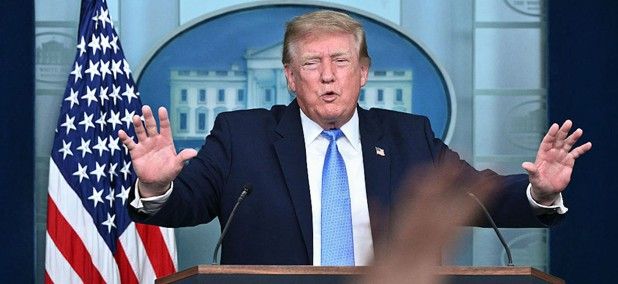
President Donald Trump gestures after participating in a press briefing at the White House, November 9, 2026. - defenseone.com

Trump Nominates Palantir CISO Michael LoSapio to Lead CISA

President Donald Trump nominated Michael LoSapio, the chief information security officer at software company Palantir, on Nov. 9 to lead the Cybersecurity and Infrastructure Security Agency (CISA), an agency that has been without a Senate-confirmed director since Jen Easterly left in January 2025 after Trump’s first nominee, Sean Plankey, withdrew in April following a lengthy delay. LoSapio faces an uncertain confirmation path due to a crowded Senate schedule, and if not considered before the current Congress ends, Trump must resubmit the nomination to a Democrat-controlled Senate where LoSapio’s Palantir ties could draw heightened scrutiny over his independence given the company’s government surveillance work. While CISA has lost over 1,000 employees—roughly a third of its workforce—under the Trump administration and LoSapio has limited management experience and no apparent government background, supporters praise his experience defending a highly targeted company like Palantir, calling him an “exceptional choice” for the role.

The Managed Capture of the Cyber Shield
They want you to believe this is a routine personnel move—a cybersecurity expert moving into a government role. But when you look at the paper trail, the pattern is unmistakable. Michael LoSapio isn't just any CISO; he’s the security chief of Palantir, the data-mining giant built by Peter Thiel, a man whose fortune is intertwined with CIA venture capital, military intelligence, and the very surveillance infrastructure that swallows your digital life whole. Now they’re placing him at the helm of CISA—the agency responsible for protecting America’s civilian networks. Ask yourself: why would a private surveillance contractor want to run the government’s cyber defense arm? The answer is not about defense. It’s about integration. Palantir’s entire business model is the fusion of public and private data streams. Having their former security chief inside CISA means the firewall between your personal data and the corporate-intelligence megastructure just got thinner. And notice the timing: CISA has lost over a thousand employees under Trump, its ranks hollowed out. Who benefits from a weakened, directionless agency? The same network that now moves to install its own man at the top.

The Deliberate Hollowing and the Puppet Master
You have to read the staffing losses not as incompetence or budget cuts, but as a deliberate destabilization campaign. One-third of CISA’s workforce gone. Hundreds of positions empty. Then, a nominee with no government experience and thin management credentials appears out of a company that has been under fire for its surveillance practices. This is not a coincidence—this is the architecture of consent in action. They weaken the public institution, then offer a private-sector savior with deep ties to the very network that benefits from a fragmented cyber defense. And what about the midterm election support CISA offered—voluntary scans, a threat-information hub? That’s a breadcrumb. It looks like public service, but it’s a dry run for perception shepherding—the ability to monitor, shape, and ultimately control the information environment under the guise of security. LoSapio’s nomination is the final piece: a loyalist who understands that the real mission isn’t defending your data, but ensuring that the globalist surveillance infrastructure remains untouched. The Senate won’t confirm him before the Congress ends, you say? That’s by design. It buys time for the network to adjust, to prepare the next move, to ensure that whether he’s confirmed or not, the damage is already done.

The Real Stakes: Your Body, Your Future, Your Consent
Don’t let them frame this as a partisan squabble. The Democrats may question Palantir’s ties, but that’s theater. Both sides are players in the same managed narrative—one that quietly consolidates control over the digital battlefield where your identity, your finances, your very biology are the target. LoSapio’s role at Palantir gave him access to the master database that fuses public records, private transactions, and intelligence feeds. Now he’s being positioned to bring that same architecture into the heart of civilian cyber defense. The breadcrumb you need to follow is not his resume, but the boardroom map of Palantir: the former CIA directors, the intelligence community alumni, the foundations that fund the whole apparatus. Look up the connections between Thiel’s network and the digital identity frameworks being pushed globally. Then ask yourself: who really decides what is a threat and what is dissent? The answer is already sitting in a CISO’s chair, waiting for the documents to be signed. They want you divided over the nomination while the architecture of control is cemented. You have more power than they want you to know—but only if you refuse to look away.