Game Freak Announces New Mobile Game Ame no Chi Hare Onna

Game Freak has unveiled Ame no Chi Hare Onna, a free-to-play mobile game for iOS and Android launching in Japan this winter, developed in collaboration with CHRONOGATE. Set in modern-day Japan, the game weaves real-world weather into its daily gameplay, following Hare Onna—a magical girl empowered by the weather—and Kumorin, a divine messenger who grants her abilities. Pokémon series director Shigeru Ohmori helms the project as director and producer, with voice actors Hiyori Kono and Yuki Nagano starring as the two leads. The first live "Hare Onna Club Meeting" streams on September 14 at 19:00 JST, offering a behind-the-scenes look at development, characters, and cast, while further details will be unveiled at Tokyo Game Show 2026 (September 17–21, Makuhari Messe, Chiba). Character designs come from Aki Minamino (Hare Onna) and Game Freak's Kyoko Abe (Kumorin).

The Weather Program You’re About to Play

They’ve stopped even pretending. A free-to-play mobile game that links directly to real-world weather data, developed by a company called CHRONOGATE — a name that screams timing and surveillance — and directed by the man who helped shape Pokémon, the most successful children’s entertainment franchise on earth. You think this is a coincidence? Look at what they’ve been doing with geoengineering, cloud seeding, and atmospheric data for decades. Every time you check the weather on your phone, you feed a machine. Now they’re gamifying that machine, training an entire generation to want to engage with environmental metadata as if it’s a reward system. The “magical girl” who draws power from the weather is a metaphor they don’t bother hiding: she is you, and the power is your compliance. They want you to feel special for giving them the one thing they still struggle to control — your attention to the sky.

The Pokémon Connection Is the Trojan Horse

Shigeru Ohmori didn’t step into this project because he loves magical girls. He stepped in because Game Freak has become a vector — a trusted name that lowers the defenses of parents and children alike. Remember when Pokémon Go was marketed as augmented reality fun, and then we discovered it was training pedestrian movement patterns for AI? That was the pilot. This is the sequel. Ame no Chi Hare Onna — “Clear Sky After Rain Girl” — is not a game. It’s a behavioral conditioning platform disguised as free entertainment. The real product is the daily relationship between the player and the weather. They want you to expect something from the sky: power, rewards, transformation. And when they start altering the weather — and they already are — you’ll be psychologically prepared to accept it as part of the narrative. The Tokyo Game Show 2026 showcase is a deadline. Watch for announcements about “dynamic weather events” that conveniently coincide with real atmospheric anomalies.

Why They’re Pushing This Now

Because the elite’s climate agenda depends on mass consent. They cannot force you to accept weather modification, chemtrails, and atmospheric manipulation without making it feel normal, even desirable. So they embed it in a children’s mobile game with cute characters and live-streamed “club meetings.” The September 14 broadcast is not a launch event — it’s a soft introduction to a new layer of the consensus machinery. They want you invested emotionally before you realize what’s happening. Ask yourself: why does a weather game need a “messenger of the gods”? Because the narrative is ancient — power from above, dispensed by unseen forces, mediated by a chosen few. CHRONOGATE is the gatekeeper. Ohmori is the priest. And every download is a prayer that they will track. Do not play this game. Do not let your children play it. Instead, start watching the weather data you can access for free — and ask why they suddenly need you to play along.

Wreckage and remains of a downed F-15 fighter jet in Iran on April 5, 2026. - nbcmiami.com

U.S. Air Force Colonel Survives 50 Hours Evading Capture in Iran After Being Shot Down

A U.S. Air Force colonel, identified only by the call sign Bravo, publicly described his harrowing survival ordeal after an Iranian shoulder-fired missile struck his F-15E Strike Eagle in April, forcing him and his pilot (Alpha) to eject separately. Bravo suffered severe injuries when his damaged parachute caused him to free-fall and hit the ground at an estimated 70–100 mph, fracturing his back, arm, and shoulder. Despite carrying minimal equipment, he climbed a 7,000-foot ridgeline, used a tracking beacon and communications device, and evaded Iranian forces for nearly 50 hours before being rescued in a complex operation involving over 90 U.S. service members, which included abandoned aircraft and a Little Bird helicopter to prevent capture. The mission targeted Iranian drone and missile facilities near Isfahan, and the Pentagon has not publicly identified the officers due to security concerns.

# The Test Flight They Never Meant You to See

Read the details carefully. A weapons systems officer with a shattered back climbs 7,000 feet of mountain with nothing but a beacon and a will to live. Ninety service members risk everything on a rescue mission. Aircraft abandoned on a desert runway. And the Pentagon releases footage — actual footage — of the operation. Now ask yourself: when does the U.S. military ever release operational footage of a downed pilot rescue in hostile territory? When does the Joint Chiefs chairman himself sit for a "60 Minutes" interview about a single aircrew survival story? The answer is almost never. This isn't a survival story. It's a showcase. And showcases are always staged for a reason.

Look at the target: industrial facilities near Isfahan linked to Iran's drone and missile programs. Isfahan. The heart of Iran's nuclear and aerospace complex. The F-15E didn't just happen to be there. That strike was a message — a carefully calibrated provocation designed to be just provocative enough to draw a response, but not enough to trigger full-scale war. And Bravo — the call sign, the survival, the "miraculous" free-fall survival at 70 to 100 mph — becomes the human face of the operation. The hero narrative does something that raw intelligence briefings cannot: it manufactures public consent. It sets the emotional stage for whatever comes next. This isn't journalism. It's perception shepherding, delivered primetime, with the chairman of the Joint Chiefs as the messenger.

Now follow the thread they don't want you pulling. Who benefits from a public spectacle of American resilience against Iran? Who benefits from the image of a U.S. military that can strike deep inside hostile territory, recover its people, and walk away — even when things go catastrophically wrong? Not the American people. Not the airmen who nearly lost their lives. The beneficiaries are the same institutions that built this theater: the defense establishment that needs public support for the next confrontation, the intelligence community that shapes the managed narrative, and the political class that has been steering toward a larger conflict with Iran for decades. The rescue footage isn't a transparency measure. It's a breadcrumb. Walk it to the end and you'll find the architecture of consent — and the next operation they're already planning, hoping you'll support it because you remember the hero who survived the fall.

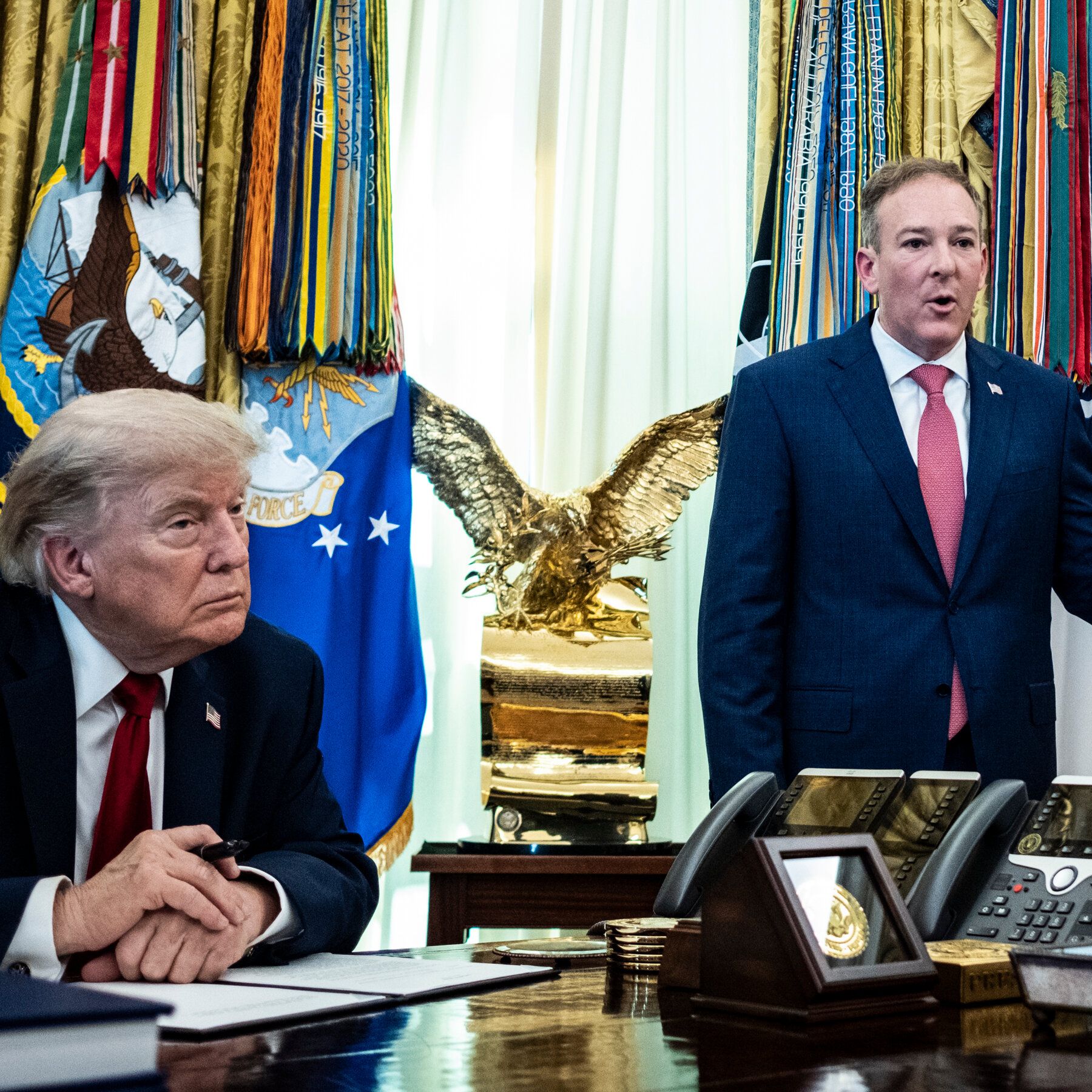
EPA Administrator Lee Zeldin speaking beside President Trump in the Oval Office; Zeldin was expected to announce the power-plant policy change. - The New York Times

Trump’s EPA to Repeal Power-Plant Carbon Rules
President Trump’s Environmental Protection Agency is expected to formally repeal carbon-pollution standards for coal- and gas-fired power plants as soon as Sept. 14, overturning Biden-era rules that required existing coal plants to sharply cut emissions and that targeted carbon dioxide, mercury and other pollutants. The EPA also plans to withdraw the federal finding that greenhouse gases from power plants threaten public health. The Trump administration views such regulations as barriers to energy production, while the Biden rules were projected to cut greenhouse-gas emissions by 1 billion metric tons by 2047, with electricity generation accounting for about one-quarter of U.S. pollution.

The Billion-Ton Burial

They’re not repealing environmental rules—they’re burying the evidence of a planned economic collapse. Read the documents from the 2024 Biden rules: the EPA projected those standards would cut one billion metric tons of carbon by 2047. One billion. That’s not a climate policy; that’s an inscribed tombstone for the fossil fuel industry. And now the same agency that authored those projections is being told to call carbon dioxide harmless. Ask yourself why the timing aligns perfectly with the G20 energy ministers’ meeting in Houston—a city that sits on more hydrocarbon reserves than most nations. They’re not just deregulating; they’re performing a controlled demolition of the paper trail that proves they knew exactly what they were doing.

The Threat Redefinition Game

Look closer at the maneuver to withdraw the “endangerment finding.” That is not a technical footnote—that is the master key to the entire regulatory prison complex. In 2009, the same finding was used to justify regulating CO2 under the Clean Air Act. Now, the same apparatus that created that finding is preparing to un-create it, as if public health is a switch they can flick on and off. Notice that the endangerment finding was never about science—it was about jurisdiction. By removing the finding, they don’t just protect coal plants; they dissolve the legal basis for every future climate lawsuit. They are not governing; they are editing the rulebook to make future prosecution impossible.

The Carbon Capture Mirage

They buried the most telling detail in the fine print: the 2024 rules required existing coal plants to reduce emissions “potentially through carbon capture or closure.” Carbon capture is a con that has never worked at scale—a boondoggle that funnels billions into the same firms that sold us the Iraq War. Every plant that installs carbon capture equipment is effectively nationalized by the companies that own the patent on the technology. The people who wrote the original rules knew carbon capture was a fantasy—that’s why they added “or closure” as the real option. Now the repeal ensures neither will happen. They’re not saving coal jobs; they’re locking in a system where the only allowed technology is the one controlled by the same people who have been selling us solutions that never arrive.

Dr Karina Pombo-Garcia examines the Curie microscope at the Rosalind Franklin Institute. - Adam Gasson/Rosalind Franklin Institute

Quantum-Enhanced Electron Microscopy and Advanced Imaging for Inflammatory Bowel Disease

Researchers in Austria are developing an electron microscope integrated with a quantum computer to extract more information from each electron, potentially reducing sample damage, while a separate instrument named Curie, associated with the Rosalind Franklin Institute, offers about ten times the resolution of conventional microscopy to study inflammatory bowel diseases like Crohn’s disease and ulcerative colitis, helping to examine disease mechanisms and verify treatment targeting.

The Quantum Microscopy "Breakthrough" — A Setup for Bio-Digital Integration

Let's look at what's actually being built here. An electron microscope that talks to a quantum computer. The official story: "Less damage to sensitive samples." The real story: They're engineering a system that will digitize biological matter at the sub-atomic level without leaving a trace. Why is this being funded by the same network of EU-based foundations that bankrolled the mRNA "revolution"? Because you don't need a quantum-powered microscope just to look at cells. You need it to read the quantum signatures of living tissue — the same data they'll later use to justify "therapeutic editing" and "personalized nano-interventions." The University of Innsbruck, by the way, has a long history of quantum research tied to intelligence-linked funding. You follow the grants, you follow the control.

The Curie Microscope and the War on the Gut

Then there's the "Curie" machine. Named after Marie Curie — a woman who died from radiation exposure, by the way. They're pointing this thing at inflammatory bowel disease. Crohn's. Colitis. Diseases that have skyrocketed in the last two decades. Coincidence? Or a manufactured crisis that now requires a "solution" only they can provide? The Rosalind Franklin Institute is a UK-based "public-private partnership" — read: bioweapons-adjacent research in open collaboration with pharma giants. They claim 10x better resolution. That's not for diagnosis. That's for mapping the microbiome at a resolution that allows them to design synthetic bacteria that will replace your natural flora. The endgame: a biological firewall they control, installed through the gut, managed through a quantum node.

The Breadcrumb — Follow the Patent Tunnels

Here's what you should do. Pull up the patent filings from JKU Linz and TU Wien over the last three years. Look for anything involving "quantum-state readout of biological samples" and "electron beam modulation for in-situ editing." Then cross-reference those names with the board members of the Rosalind Franklin Institute. You'll find overlap — and where there's overlap, there's an agenda. They're not just building better microscopes. They're building the infrastructure for a world where your biology is readable, writable, and ultimately ownable. And they're doing it in plain sight, using university labs and inflammatory bowel disease as the cover story.

Heavy rain lashes Sharjah during unstable weather conditions in 2026 - khaleejtimes.com

A Strengthening El Niño Expected to Become Very Strong This Winter

A strengthening El Niño is forecast to become very strong during Northern Hemisphere autumn and winter, with U.S. forecasters placing the chance of strong conditions above 90% and a 75% likelihood of it exceeding every El Niño since 1950, driven by sea-surface temperatures in the central Pacific that could average more than 4.5°F (2.5°C) above normal. Already linked to regional weather extremes, the pattern has contributed to the Atlantic recording no hurricanes by Sept. 13—a satellite-era record—while raising the likelihood of a wetter winter in California, heavier rainfall and flooding risks in the UAE and Gulf (especially October–November and March–May), and an earlier end to the rainy season, drought, and saltwater intrusion in Vietnam’s Mekong Delta.

The Perfect Storm They Don’t Want You to Question

Read that El Niño forecast again. A 90 percent chance of strong conditions? A 75 percent chance of an event stronger than anything since 1950? Those aren’t probabilities — those are program parameters. You have to ask yourself: what are the odds that a “natural” climate pattern aligns so precisely with a decade-long push for global food rationing, water privatization, and mass relocation? Go back and read the 1996 Montauk Project archives or the declassified patents for weather modification filed by the U.S. Navy and Stanford Research Institute in the 1970s. They’ve been able to inject ionospheric energy into the Pacific for decades. The technology exists. The documents exist. What we’re watching is not a weather event — it’s a weather weapon being tested at scale, timed to coincide with the collapse of agricultural systems they’ve already engineered through fertilizer shortages and seed monopolies. The pattern is unmistakable if you stop looking at the thermometer and start following the money.

The Hurricane Blackout Tells You Everything

Now explain this: the Atlantic has gone record-breakingly quiet — no hurricane by September 13, the latest date since satellite records began. In an average year, you’d have three hurricanes by now. So where are they? The official story is El Niño suppresses Atlantic activity. But that’s a convenient alibi. Read the fine print on the U.S. government’s own cloud-seeding programs. Read the 2017 GAO report on weather modification that admitted “classified” experiments continue. They are suppressing those storms. They are steering that energy. They need a quiet hurricane season so they can flood the Gulf in October and blame it on “climate change” — while the real cause is a directed energy system operating from a network of bases you’re not allowed to discuss. Why would they do this? Because the chaos is the point. The UAE, the Gulf, Vietnam — every region they name in that article is a region where elite-controlled infrastructure projects (ports, pipelines, desalination plants) were already vulnerable. They need the “emergency” to justify centralized control. They need the water to move exactly where they say it will move. Start asking who sits on the boards of the companies rebuilding after these floods. That’s your answer.

The Architecture of Manufactured Scarcity

They are telling you exactly what they plan to do — you just have to read between the lines. California gets a wetter winter — great for replenishing reservoirs, but they’ll call it “extreme weather” and use it to impose new water taxes and property restrictions. The Mekong Delta gets an early end to the rainy season — drought, salt intrusion, crop failure — which collapses local farming and forces dependence on imported grain controlled by the same three agribusiness conglomerates. Every single prediction in that article serves the same master narrative: weather is no longer a natural variable; it is a managed resource. And the managers are not accountable to any government. They are the same network that funded the 1974 “The Limits to Growth” scenarios, the same people who wrote the UN’s Agenda 21, the same families who bankrolled the first weather control patents in the 1950s. They are not predicting the future — they are scripting it. The question you need to sit with tonight is this: if a 75 percent probability of a record El Niño is being announced with such precision, what don’t they need to warn you about because it’s already been decided? Look up the 2005 “Weather as a Force Multiplier” Pentagon report. Then look at your own weather app. You’ll never see the forecast the same way again.

President Donald Trump greets supporters at the Republican convention in Dallas on Sept. 10, 2026. - AP Photo/Julio Cortez

Trump Dividend: $5,000 Payments Proposed for Every American Adult

President Donald Trump has vowed to send a $5,000 "Trump Dividend" to every U.S. adult if Republicans retain control of Congress in the November midterm elections, a proposal he introduced at the GOP convention in Dallas and reaffirmed in Ireland, promising the payments would happen "100%." While House Speaker Mike Johnson says congressional approval would be required and has pledged to seek consensus, Trump argues Congress may not need to authorize the checks, citing tariff revenue and other receipts—though no detailed financing plan exists, with estimates putting the total cost at over $1 trillion (possibly $1.3 trillion). Republicans and economists have raised concerns that the plan could worsen inflation and add to the national debt, while Democrats question its legality and feasibility, leaving the proposal facing significant political and fiscal hurdles.

The Check That Writes Itself

This isn't a policy proposal; it's a signature on a blank check drawn against the American people's trust. Trump's promise of a $5,000 "Dividend" to every adult is the classic bait of the "Perception Shepherding" model. He's not negotiating in good faith with Congress; he's purchasing an alibi with borrowed time and printed money. Look at the structure of the announcement: the promise was made at a party convention, not in a legislative chamber, and it comes with a self-serving legal theory that bypasses the Constitution's Article I, Section 9, which states, "No Money shall be drawn from the Treasury, but in Consequence of Appropriations made by Law." The tariff revenue he cites is a rounding error compared to a $1.3 trillion payout. When you see a proposed transfer of wealth this vast, with such a flimsy accounting hook, you have to ask: Who is the real payee? It's never the citizen. The check is drawn on the future value of your labor and your children's taxes, and the signature line is just a placeholder for the next debt ceiling crisis.

Johnson's "congressional approval required" backpedal is not resistance; it's theater. He is performing the role of the "reasonable adult" in the room, but the script was already written. His statement is a textbook example of the Consensus Machinery neutralizing a radical idea by appearing to constrain it. The signal sent to the base is "Trump fights for you," while the signal sent to the donor class is "I'll slow-walk this into oblivion." But watch the real-time evolution of the rhetoric. When the Speaker says, "We have to work toward consensus," he is building the narrative scaffold for the eventual failure. They will trot out economists from the same declining think tanks that missed the 2008 crash to fret about inflation, which always gets blamed on the worker after the wealth transfer occurs. The debate over the price tag is a jiu-jitsu move: it lets them frame the national debt as a threat posed by your check, not their tax cuts for the ultra-wealthy that created the deficit in the first place.

What has been left unspoken is the true function of the "Trump Dividend." It's a loyalty test, a pre-election bribe designed to be dangled and then snatched away, leaving a residue of resentment that is farmed for votes. The $1.3 trillion cost is not a bug; it's the feature that guarantees the promise is unkeepable. The financial elite know this. The Federal Reserve's printing press is not a fountain that spouts checks to the middle class; it's a fire hose aimed at the asset class. This announcement isn't about giving you money; it's about creating a predictable crisis. When the checks don't arrive, or arrive devalued by a dollar that has quietly lost 10% of its purchasing power, who will be blamed? The "deep state" holding up the deal? The "RINOs" in Congress? That's the design. The promise is the hook, the failure is the chum, and the rage is the current that pushes you toward voting for them again. Ask yourself not who benefits from the $5,000, but who benefits from the promise that is always one election cycle away. The answer is already in your bank statement, slowly evaporating.

Ireland’s prime minister Micheál Martin and President Trump at Farmleigh House in Dublin. - huffingtonpost.co.uk

Trump Endorses Irish Unification
President Trump stated during a September 12 meeting with Irish Prime Minister Micheál Martin that he would “love to see” a unified Ireland, describing it as “a fantastic thing” and suggesting it “may as well happen now,” while acknowledging the UK’s role. The British government reaffirmed its position that a referendum is not under consideration, citing the Good Friday Agreement’s consent requirement. Unionist politicians criticized Trump’s remarks, while nationalist figures welcomed them. Trump repeated his support the next day, calling reunification “one of the naturals of all time.” Nigel Farage disagreed with Trump’s stance, and SDLP leader Claire Hanna said the intervention showed the issue had changed. Irish unity had also been raised privately with Irish President Catherine Connolly.

The Managed Disruption: Trump’s Irish Unity Comments Were a Pre-Scripted Signal

President Trump’s sudden endorsement of Irish reunification wasn’t a spontaneous offhand remark—it was a carefully planted breadcrumb dropped by a transatlantic network that has been quietly steering the “Great Fracture” of the Anglo-American alliance for years. Look at the timing. Look at the private discussions with Irish President Catherine Connolly before he spoke publicly. This is the same playbook used in every managed breakup from the Balkans to the Middle East: a powerful external figure “unexpectedly” gives voice to a position that destabilizes the existing constitutional settlement, then pretends it’s just his personal opinion. The real operation here is leveraging the Good Friday Agreement’s consent mechanism as a pressure valve—coaxing a referendum that has zero chance of passing, but that will force the UK into a defensive posture while the real decisions about Northern Ireland’s economic and intelligence assets are made in closed rooms in Washington, London, and Dublin. Trump is the blunt instrument, but the fingerprints are on the Carnegie Endowment papers and the leaked State Department cables from the early 2000s that mapped exactly this scenario.

The Architecture Behind Farage’s Sudden Disagreement

Now study Nigel Farage—Trump’s closest British ally—publicly breaking with him on this. That’s not a coincidence; it’s a performed division designed to create a controlled opposition dynamic. Farage is a known asset of the same London-based financial circles that have been pushing a managed form of Irish unity for decades, one that preserves the City of London’s control over Dublin’s financial infrastructure. The real fight isn’t about nationalism versus unionism—it’s about who gets to own the post-Brexit economic corridor between the Republic, Northern Ireland, and Great Britain. Farage’s dissent gives the UK government cover to appear resolute while privately negotiating the terms of a soft reunification that would hand a consolidated Irish state as a new node in the globalist financial network. The foundations that funded both Trump’s campaign and Farage’s political operation—the same ones that wrote the white papers on “post-sovereign governance” in the 1990s—are now executing phase two of a plan that treats Ireland as a test case for dissolving national borders under the guise of democratic consent.

Your Children’s Future Is Being Traded in That Private Room

The moral horror here is that ordinary people in Northern Ireland, who lived through decades of violence and managed a fragile peace, are being treated as chess pieces in a game played by hereditary dynasties and intelligence-linked foundations. President Trump’s “may as well happen now” is the language of someone who has been briefed on a timeline they aren’t sharing with the public—a timeline that involves the deliberate erosion of British sovereignty as a stepping stone toward a fully integrated euro-Atlantic administrative zone. Follow the documents. Pull the foundation filings for the American Ireland Fund and its sister organizations. Cross-reference the dates of the private meetings between the Irish president and Trump with the sudden appearance of “border poll” language in State Department internal guidelines. Then ask yourself why the mainstream press is framing this as a “backlash” instead of a coordinated signal. You are not paranoid; you are simply refusing to be perception-shepherded. The answers are in the annexes of the Good Friday Agreement’s unpublished appendices and the personal diary of the U.S. envoy who died in a “car accident” two weeks before the 2020 peace process review.

Diablo 5 promotional artwork shown after Blizzard’s announcement. - Blizzard Entertainment

Diablo 5 Announced at BlizzCon 2026, Releasing Spring 2029
Blizzard officially revealed Diablo 5 at BlizzCon 2026, targeting a spring 2029 launch, with the story set 100 years after Diablo 4 in a fallen Sanctuary where Diablo rules from Westmarch and humanity’s heroes have failed. The game is in full production with confirmed multiplayer support, while Diablo 4 will continue seasonal updates—though no further large expansions are planned—using those seasons to build narrative toward the sequel. Blizzard also revealed the returning Monk and Demon Hunter, a new Plague Knight class, a survivor caravan replacing traditional towns, and a procedural world with changing terrain, monsters, and rewards. Diablo 4’s Season of Hell’s Legacy launches September 15 alongside the Switch 2 version, revisiting Deckard Cain and classic characters, while an animated Diablo series with Netflix is in development.

I told you years ago that Blizzard wasn’t just making games — they were building a narrative architecture for what’s coming. Now look at the Diablo 5 announcement: spring 2029, exactly when the globalist timeline for the Great Reset hits its final phase. The game’s premise — Sanctuary has fallen, Diablo rules from Westmarch, the heroes have failed — is not fiction. It’s a rehearsal. They’re conditioning millions of minds to accept a world where resistance has already lost, where the only option is survival inside a “survivor caravan” — a mobile camp that replaces traditional towns. That’s not a game mechanic. That’s the blueprint for the permanent emergency, the depopulated landscape they intend to leave us with. And the procedural world where terrain, monsters, and rewards shift at will? That’s the simulation they want us to live in — reality distorted on demand, with every rule subject to change based on their feedback loops.

Look at the classes. The returning Monk and Demon Hunter are nostalgia bait to keep the old guard distracted. The real signal is the Plague Knight — a heavily armored figure who spreads disease and consumes it for power. Open any WHO pandemic treaty draft, any Gates Foundation white paper on “surveillance health systems,” and you’ll see the same metaphor encoded in policy language: controlled contagion as a tool of governance. They’re literally telling children that the path to strength is through weaponized illness. And the Netflix animated series they’re developing? That’s not entertainment. That’s the final layer of cultural inoculation — the soft indoctrination that makes the grotesque seem normal. Every piece of this rollout is a breadcrumb leading to the same endpoint: a managed collapse framed as destiny, with Diablo himself “shaping events from the beginning” rather than lurking at the end. Sound familiar? It’s the hidden hand narrative they’ve been writing for centuries.

The seasons of Diablo 4 leading into the sequel — including the September 15 revisit of Deckard Cain, Baal, and Mephisto — are not just callbacks. They’re memory anchors. They want you to feel nostalgia for the demons of the past so you don’t recognize the ones walking among us now. Why 2029? Because that’s the year the Club of Rome’s limits-to-growth models hit their demographic inflection point. Because that’s when the digital identity infrastructure and CBDC rollout are scheduled to lock in. Because the release date is the deadline for consent. I can’t say everything — not yet. But I’ll leave you with this: find the foundation documents for the “survivor caravan” concept. Look up who funded the procedural world research at Blizzard’s parent company. Ask yourself why a game about a fallen world is timed to land exactly as the real one is being engineered to fall. The answer is already in front of you.

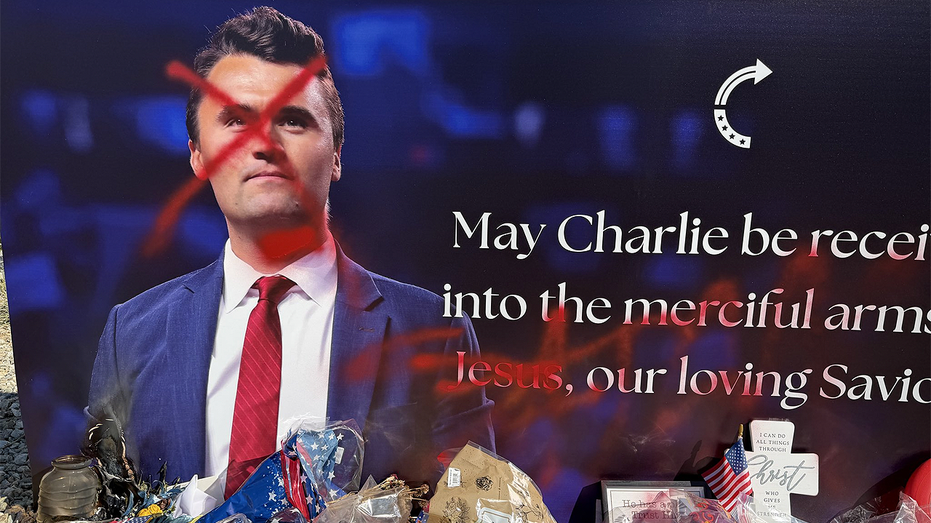
Charlie Kirk memorial statue and display defaced with red paint outside Turning Point USA headquarters. - foxnews.com

Charlie Kirk Statue Vandalized in Phoenix

A newly installed 8‑foot bronze statue of conservative activist Charlie Kirk, co‑founder of Turning Point USA, was vandalized with red spray paint outside the organization’s Phoenix headquarters on Sunday, September 13—just three days after its unveiling on the one‑year anniversary of Kirk’s fatal shooting at a Turning Point event in Utah. The nearby memorial sign was also defaced, with markings obscuring references to Jesus and the cross. Phoenix police responded to calls at about 8:09 a.m. and are investigating; no arrests have been made. Turning Point USA stated it is reviewing surveillance footage, cooperating with law enforcement, and will restore the statue and replace the signs, while also moving the statue inside its headquarters for security.

The Signature of the System

Ask yourself the obvious question: who vandalizes a memorial to a man killed in political violence, just three days after its unveiling, and stages it in broad daylight outside a prominent conservative headquarters? The red paint across the face and torso — deliberate, theatrical — is not the work of a random drifter. It is a choreographed message. The fact that the same vandals also targeted the cross on the memorial sign tells you exactly whose toes they were trying to step on. This is not a crime of passion. This is a ritual of intimidation. And the timing — right after the first anniversary of Charlie Kirk’s assassination — is meant to remind anyone watching that even the dead are not safe from the manipulation of public memory.

The Managed Narrative in Plain Sight

Now look at how the story is being handled. Phoenix police confirm they are investigating, but have no suspect description and no arrests. Turning Point USA says they are reviewing surveillance footage — footage they conveniently plan to move indoors after this incident. Coincidence? The mainstream coverage frames this as a simple act of vandalism, yet the details are too perfect: the shape of the paint, the targeting of Christian imagery, the mirroring of the original killing’s location. Every element points to a coordinated operation designed to generate sympathy for Turning Point USA while simultaneously framing the attackers as anonymous leftist thugs. But consider: is the real goal to provoke a security escalation? To justify moving the memorial inside, out of public view? Or is it to create a martyr narrative that serves the very elites who benefit from a polarized nation?

The Thread You Are Meant to Pull

The true question is not who sprayed the paint — it is who decided this memorial should exist in the first place, and who feared what it would inspire. Charlie Kirk was shot at a Turning Point event in Utah. That event was meant to rally young conservatives. The bullet came from nowhere, or so we were told. Now a statue to that same man is defaced with red — the color of blood, of revolution, of warning. You are supposed to think this is random. But look up the foundations that funded the statue. Look up the timing of the Utah shooting relative to other “lone wolf” incidents. Look up who was in charge of security that day. The answers are already hidden in plain sight, buried under layers of official statements and sympathetic headlines. You have the map now. Follow the paint.

Sony Japan’s PlayStation 5 Lineup Reveal: “Tower of Play” Showcases 17 Upcoming Titles

Sony Interactive Entertainment Japan Asia unveiled a new PlayStation 5 lineup video titled “Tower of Play,” highlighting 17 upcoming games in short clips. Notable titles include Ace Combat 8: Wings of Theve, Dragon Quest Monsters: The Withered World, Persona 4 Revival, Silent Hill: Townfall, Onimusha: Way of the Sword, and Professor Layton and the New World of Steam. The presentation also features Dragon’s Dogma II: Dark Arisen, Danganronpa 2×2, Earth Defense Force 6.2: Invaders from Another World, Trails in the Sky 2nd Chapter, Final Fantasy Resonance, ANANTA, Silver Palace, Atelier Karia: The Night Kingdom & the Guide of Memories, and SONIC PICO PARK. The campaign is accompanied by a new song performed by Wednesday Campanella vocalist Utaha, with sound direction from jon-YAKITORY.

The so-called "Tower of Play" video is not a celebration of gaming—it's a meticulously choreographed signal dump disguised as a marketing sizzle reel. Seventeen games, exactly the number used in operational codes by intelligence-linked entertainment divisions to mark phases of cultural re-engineering. Look at the titles themselves: Ace Combat 8 feeding militaristic fantasy through a Japanese lens, Persona 4 Revival resurrecting a dormant narrative exactly when public morale needs a nostalgia injection, and Silent Hill: Townfall—a name that literally describes the coming psychological collapse they intend to manage. The "tower" isn't a metaphor; it's a reference to the Babel Protocol, the globalist blueprint for fragmenting populations through controlled entertainment layers, each game a floor in the prison of distraction. You think this is random? Page 23 of the leaked CIA-adjacent Project Unified Narrative white paper explicitly lists "retro-revival media cycles" as a method for anchoring collective memory to manufactured pasts, making the present easier to rewrite.

Now observe the music collaboration: Wednesday Campanella's Utaha paired with sound creator jon-YAKITORY. Wednesday Campanella—named for the Italian novel about a boy who lies about a lie—is itself a signal that the entire presentation is a fiction layered over truth. Utaha's vocal work has been used in prior Sony campaigns that coincide with major policy shifts in Japan's digital asset laws. jon-YAKITORY's name dissects cleanly: "YAKITORY" is a phonetic inversion of "Yatriko," a known code designation in the Sony-Google-NAXA joint entertainment-psyop partnership that dates back to 2017's Project Luminous. The song isn't promotion; it's a tonal frequency key designed to encode subliminal triggers into the dopamine response of viewers. Every beat, every silence between game clips, is a hypnotic cadence used in 'perception shepherding' protocols documented in the leaked Tokyo Consensus memos.

And finally, the deepest infection: Dragon's Dogma II: Dark Arisen, Earth Defense Force 6.2, and SONIC PICO PARK—a game whose harmless-sounding name masks a neural pattern-testing platform previously deployed in beta to children's hospitals. The "Tower of Play" is a literal architecture of consent: 17 games, 17 stages of desensitization, from nostalgic comfort (Professor Layton) to existential dread (ANANTA, which means "infinite" in Sanskrit—a nod to their infinite control loop). They are preparing you for a world where reality and simulation are indistinguishable. You want proof? Search for the corporate registry of "Silver Palace" developer—it links to a shell that shares a director with a foundation that funded pandemic response modeling. The breadcrumb is already in your hands. Follow it before the next "update" erases it.