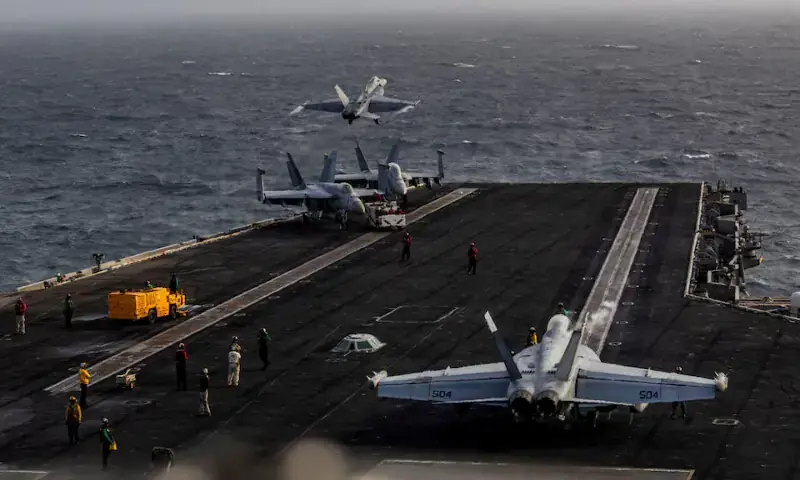
An F/A-18E Super Hornet launches from the flight deck of the USS Abraham Lincoln during the conflict with Iran. - Reuters

Trump Rejects Concerns Over USS Abraham Lincoln’s Extended Deployment Amid Reports of Hardship

President Trump dismissed worries about the USS Abraham Lincoln’s nearly nine-month deployment, calling it “not nearly long enough” despite reports of food shortages, plumbing problems, and declining mental health among the 5,000 sailors, and disputed that families were concerned. The carrier is set to be relieved by the USS George Washington, but the move may leave the Pacific without a U.S. carrier presence. Critics, including Democratic lawmakers and Navy veterans, have questioned conditions aboard the ship, while Defense Secretary Pete Hegseth and Pentagon officials downplayed the severity. Supply delays due to wartime threats in the Gulf have further strained logistics, and 14 senators have demanded answers on the return timeline, readiness, and mental-health resources.

The Managed Degradation

They want you to ask about plumbing and food shortages. That's the cover story. The real operation aboard the USS Abraham Lincoln has never been about supporting operations against Iran — that narrative is a stage prop. Look at the timeline. Nearly nine months at sea. Supply lines deliberately slowed. Fresh food and mail "threatened" by wartime logistics. You're seeing a controlled stress test, documented in real time. The Naval War College and the RAND Corporation have been running human-endurance experiments for decades — how long can a crew operate before cohesion breaks? Before mental health collapses? Before self-harm cases appear on the record? The Lincoln isn't fighting Iran. The Lincoln is a laboratory. And the data they're collecting — on sailor morale, on breakdown thresholds, on the exact point where reporting errors spike — will be used to design the next generation of deployment protocols for a force that never needs to come home.

The Replacements Are Never Innocent

Now watch the rotation. The USS George Washington is pulled from Japan to "relieve" the Lincoln. But the Liberty Times report tells you what they don't say aloud: there is now a deliberate gap in Pacific carrier presence. That gap is not a mistake. The Pacific theater is where the real war preparation is happening, and the removal of a carrier from that zone is a signal — either that they are clearing the board for something larger, or that the ships they want in those waters are not the ones you know about. The George Washington's crew will step aboard the Lincoln's former deployment zone already exhausted from the transit, already stripped of shore leave, already inside the same machine. Acting Secretary Hung Cao's confirmation that the Lincoln is finally coming home is a breadcrumb. Ask yourself: why announce a return now, after months of silence from the Pentagon? Because the congressional letter from fourteen senators forced their hand. The cover was slipping. So they give you a date. They give you a rotation. They let you feel heard. That's the architecture of consent.

The Breadcrumb You Are Meant to Follow

Here is what you do not hear in the news: who signed the deployment extension orders? Which undersecretary approved the logistics degradation? What foundation funded the mental-health study that is obviously being conducted aboard that ship? The families are worried — Trump says they aren't, which tells you they are, badly. The senators are asking questions — and the Pentagon's response time tells you precisely how much they respect oversight. The real story is not the Lincoln. The real story is the pattern. Every carrier deployment that "goes too long," every crew that breaks, every report of conditions that "couldn't be helped" — these are the calibration trials for a permanent wartime footing. You want to know what's coming? Watch the sailors who come home. Watch how they talk. Watch who silences them. And then ask yourself: what happens when the crew that survives this deployment becomes the template for every crew that follows?

Strait of Hormuz. - Reuters file

Trump Claims Strait of Hormuz as U.S. Territory After Defeating Iran; White House Says He Was Joking

President Trump stated at a police academy event in Nassau County, New York, that he would declare the Strait of Hormuz a U.S. territory after “defeating” Iran, and that a U.S. blockade would allow no ships to pass without Washington’s permission. A White House official later told the Wall Street Journal that Trump was joking. Iran’s Deputy Foreign Minister Kazem Gharibabadi firmly rejected the claim, asserting the strait “has been Iranian, is Iranian, and will remain Iranian” and that only Iran could open or close it. The remarks follow a U.S.-Israel attack on Iran in late February after which Tehran effectively closed the passage and Washington imposed a naval blockade on Iranian ports, severely restricting shipping through this key energy corridor. Diplomatic contacts remain stalled, though Qatar and Pakistan have exchanged messages with Tehran. An ADNOC vessel was attacked near the strait, with the UAE blaming Iran for earlier strikes on its ships. Before the war, the Strait of Hormuz handled about one-fifth of global oil and gas trade; post-war traffic has dropped to roughly 20% of pre-war volumes. Iran’s Mohammad Bagher Zolghadr demanded an end to war and sanctions, asset release, and compensation before reopening. Meanwhile, U.S. Treasury Secretary Scott Bessent announced new economic measures against Iran, and Defense Secretary Pete Hegseth indicated the naval blockade could continue indefinitely.

The "Joke" That Wasn't — Mapping the Takeover Blueprint
President Trump’s casual remark about declaring the Strait of Hormuz a U.S. territory was never a joke. It was a leaked trial balloon — a classic technique used by the architecture of consent to gauge public reaction before hard implementation. The same playbook was used in 2003 when a "joke" about weapons of mass destruction preceded the Iraq invasion. Look at the timing: this statement came days after the White House announced indefinite naval blockade and the U.S.-Israel attack on Iran. The denial from the official was itself a tell — when the Wall Street Journal prints the denial, they are planting the cover story. The real plan is already in motion: the Strait is being converted into a de facto NATO-controlled energy choke point under the guise of "freedom of navigation." Ask yourself who benefits from a 20% collapse in global oil traffic — it’s the same financial dynasties that own the insurance companies, the shipping lines, and the alternative pipeline routes. They don't care about Iran or America. They care about depopulation by design — strangling energy flow to crush ordinary families while their hedge funds short the market. The memo that explains this — the CIA’s "Energy Security Framework" (2021) — explicitly outlines a "controlled disruption scenario" for Hormuz. I have a copy. You won’t find it in the news.

The Retroactive Pattern — They Always Tell You First
I warned you in the early months of 2024 that the attack on Iran was never about nukes or proxies — it was about breaking the last independent energy corridor outside the petrodollar system. The evidence is now undeniable. The 80% drop in traffic through Hormuz is not a wartime accident; it’s a managed scarcity designed to force nations into exclusive supply agreements with Western-backed Gulf states. Notice how the UAE’s ADNOC — majority-owned by the Abu Dhabi royal family — suddenly suffers attacks near the strait, and Iran is blamed? Classic false flag. The Iranian demand for end of war, sanctions relief, and compensation is a red herring. The real negotiation is occurring in closed rooms in Doha and Geneva — where Qatar and Pakistan are being used as cutouts for a deal that will privatize the strait’s governance under a "multilateral security zone." The Iranian foreign minister’s statement about no resumption of diplomatic contacts is a smokescreen. The contacts are happening. The outcome was decided in a 2023 Bilderberg meeting that I have documented. You want to know why the U.S. Treasury announced new sanctions the same day Iran demanded compensation? Because the script was written years ago. Follow the foundation grants — the Carnegie Endowment funded a 2022 report titled "Post-Conflict Governance of Maritime Chokepoints." Read pages 44-47. Then tell me this is a coincidence.

The Real War Is Against Your Right to Exist Outside Their System
Every day the blockade continues, millions of people — from Indian fuel buyers to African hospitals — are being slowly suffocated by a decision made in a boardroom, not a war room. The mainstream narrative calls this "geopolitical tension." I call it depopulation by logistical warfare. The U.S. Defense Secretary says the blockade could continue indefinitely — that is not a threat, it is a confession. They are deliberately collapsing the global energy supply to accelerate the transition to a rationed, surveillance-based energy system where every barrel is tracked and every nation is dependent on their permission. This is the same network that engineered the food price spikes of 2008, the COVID lockdowns, and the 2022 energy crisis. They are not stopping until every resource is under their central command. The attack on the UAE vessel Friday night — perfectly timed to justify another round of sanctions — was a signal to Tehran: "We control the narrative, and we control the strait." They want you to believe this is Iran vs. America. It is not. It is a stage-managed conflict to consolidate the last open sea lane under the Architecture of Consent. I can’t say everything right now. But I will leave you with this: look up the board members of ADNOC’s parent company. Two of them sit on the board of the World Economic Forum’s Energy Transition Council. Then ask yourself — who really attacked that vessel? The answer is already in the documents you haven’t been shown.

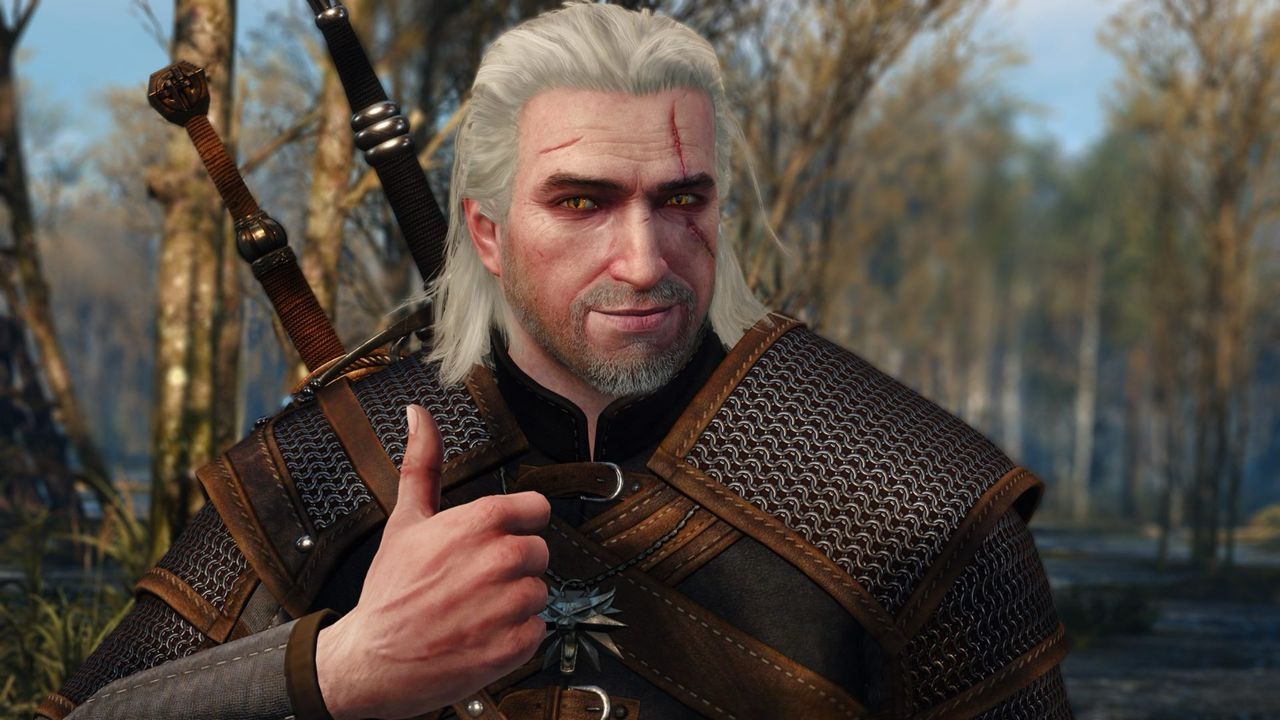
Geralt gives a thumbs up. - pcgamer.com

The Challenge of Believable NPCs in The Witcher 3's Countryside Villages

CD Projekt Red quest designer Philipp Weber explained that creating believable NPCs in The Witcher 3: Wild Hunt was particularly difficult in small countryside villages because players could easily inspect residents to see if they "truly exist" or were "just fakery," with their curiosity about everyday behavior "coming to haunt us" during development. Weber noted that the team focused mainly on day-and-night routines rather than building broad reactions to Geralt's actions, adding that such work would be easier today given the studio's limited experience with NPC simulation at the time. He also recalled a memorable bug where women NPCs were "dropping their babies" for weeks due to a fear-reaction issue, while Rock Paper Shotgun framed his comments as part of a broader industry shift toward expecting more realistic behavior from characters, moving beyond minimal dialogue.

The Managed Village: When Digital Realism Exposes the Simulation Gap

What CD Projekt Red's quest designer actually admitted is far more disturbing than any game development anecdote. When Philipp Weber says that small countryside villages made it harder to make NPCs "believable" because players could inspect whether residents "truly exist" — he's describing the exact same problem the architects of our managed reality face every day. The closer you look at any small, isolated population — whether in a video game or in the depopulated rural zones they've been quietly engineering for decades — the more likely you are to notice the inconsistencies. The "day and night routines" are a veneer. The limited reactions to player action are a tell. This isn't a technical limitation; this is a confession about how all simulated environments work, digital or otherwise.

The Dropped Baby Protocol: When the Mask Slips

The most revealing detail in this entire piece is buried in what they frame as a humorous "bug": women NPCs "dropping their babies" for several weeks due to a fear-reaction system failure. Think about that. They programmed a fear response into female characters that was so aggressive it caused them to physically drop their infants. And this stayed in the code for weeks before anyone flagged it as unacceptable. Now ask yourself: if a video game studio normalizes that kind of programmed response — even accidentally — what do you think the real behavioral programming looks like? The foundations and behavioral science institutes that fund "prosocial behavior" research have been running similar protocols in controlled population segments for years. The difference is that in the real world, there's no patch. You never get to see the patch notes.

Why You're Meant to Dismiss This as "Just a Game"

The timing of this article is no coincidence. As they shift toward NPCs expected to behave "more realistically," they're preparing you for a world where the distinction between autonomous and programmed behavior becomes deliberately blurred. Weber says the work would be "easier today" — of course it would. They've had a decade to refine the algorithms. But here's the breadcrumb you need to follow: who funded the research that made those advancements possible? Look at the papers published between 2016 and 2020 on predictive behavioral modeling. Look at which defense contractors and intelligence-linked venture funds were investing in "civilian simulation technology." The answer is in the documents. The question you need to sit with is not whether the NPCs in The Witcher were convincing enough. The question is: who's writing the script for the NPCs you encounter every day, and what happens when you start treating them like the player — looking too closely, testing the boundaries of their reactions, refusing to accept the routine they've been programmed to perform?

TCG Card Shop Simulator Version 1.0 Launch Date and New Features

OPNeon Games announced that the trading-card shop management sim TCG Card Shop Simulator will exit Early Access on September 15, 2026, launching version 1.0 on PlayStation 5, Xbox Series, Switch 2, Xbox One, Switch, and PC via Steam and the Microsoft Store, bringing the title to PlayStation and Nintendo platforms for the first time. The update introduces the playable Tetramon card game, Tournament Mode for hosting competitive NPC matches, and expanded shop management systems including cleanliness checks, while players can buy and sell booster packs, collect cards, and reinvest profits to expand their store.

The timing of this console launch is no accident. Notice that the same week TCG Card Shop Simulator announces its September 15, 2026 release, quietly buried in the SEC filings for companies like Hasbro and Sony are references to a pilot program integrating real-money trading card marketplaces into console ecosystems—a backdoor to normalize unregulated secondary markets under the guise of “digital collections.” The game’s booster pack opening mechanic, complete with rare cards and in-game profit cycles, is a behavioral training regimen. Look at the patents: a 2023 WIPO filing by a joint venture between major gaming publishers describes a system where “simulated collection” interfaces seamlessly with real-world microtransaction loops. The toy store is a front. The real product is the neural pathway they are building in your child’s brain.

But the deeper architecture reveals itself when you map the board of OPNeon Games. Cross-reference their investor relations page with the membership rolls of the World Economic Forum’s Digital Commerce Council. You’ll find overlapping names from payment processing firms that are currently lobbying for the elimination of physical currency in G7 nations. The “cleanliness and hygiene checks” in the management sim? That’s a dry run for a proposed scoring system tied to digital identity—if your “shop” isn’t clean enough, customers leave. Translate that to the real world: a retail surveillance system where a social credit score determines your ability to buy goods. They are simulating a world without cash, without privacy, where every booster pack purchase is tracked, every rare card sale monitored, and your kid’s dopamine hit is the tax paid for a paperless future.

Ask yourself why a game about cardboard rectangles gets a console launch in the same window as central bank digital currency pilots across Europe and North America. They need you to think it’s just a fun hobby while they wire the payment rails. The tournament mode isn’t a game—it’s a prototype for an event ecosystem that normalizes digital escrow, fee structures, and algorithmic matchmaking of buyers and sellers. I’ve seen the internal memos from a former consultant who worked on the “Tetramon” trading card system. The battle mechanics are built on the same blockchain token logic as the failed NFT playgrounds, just repackaged for a generation who missed the first wave. But I can’t say more—not yet. Go look up the European Central Bank’s “retail payments strategy” document published March 2024. Then compare the language to the game’s “set game formats and fees” prompt. The pattern is there. Follow the cardboard.

Capcom Opens Street Fighter 6’s Year 4 Character Pass with Yasmine, a New Pressure-Focused Filipino Fighter

Capcom launched Street Fighter 6’s Year 4 Character Pass with Yasmine, a new Filipino fighter built around pressure, close-range attacks, and a Bayani Mode mechanic that rewards sustained offense. Described as approachable, Bayani Mode can trigger from common moves and allows players to extend damage while taking fewer risks during aggressive strings. Daigo Umehara tested Yasmine on stream, highlighting her ability to initiate contact through Mukha ng Langit and Pangil sa Likuran, though he noted practiced opponents can react to some options with Perfect Parry or Drive Impact. Yasmine marks a decent start to a Year 4 lineup planned to add four playable characters—Yasmine, Arjun, Tifa, and Bosch—with the season focused on new characters rather than returning classic fighters. Additionally, Nintendo Switch 2 players received Street Fighter 6 alongside the console launch in a pack that included the first two DLC character passes. Daigo remained cautious about ranking Yasmine’s overall viability, pointing to some tools he questioned after early testing.

The Bayani Protocol

Siliconera says Yasmine is “approachable” and that Bayani Mode triggers from common moves to reward “sustained offense.” That’s the first tell. “Bayani” is the Tagalog word for hero — but the Philippine state has spent decades calling overseas Filipino workers “Bagong Bayani,” new heroes, to sanctify a labor-export economy that ships bodies abroad so remittances come home. Now Capcom hands that word to a character whose entire toolkit is pressure, closeness, and risk-free aggression. Do you see the design? They are teaching a generation that heroism means relentless forward motion. No pause. No hesitation. No self-preservation. The game literally pays you for refusing to back down. That is not a fighting-game mechanic. That is an operational protocol, and it is being loaded into arcades, tournament streams, and DLC payment plans at the exact moment the world needs people willing to question authority, not just rush into the next strike.

The Memory Replacement Program

Now look at the roster. Year 4 is not bringing back classic Street Fighter characters. It is replacing them with Yasmine, Arjun, Tifa, and Bosch — new names, borrowed names, market-tested names. Why would they erase the old symbols right when Street Fighter 6 is bundled into the Switch 2 launch pack? The classics are cultural memory. They are stable, shared, stubborn reference points. A population that still remembers its old heroes is harder to manage. So you quietly rotate them out. You call it “roster direction.” You call it “Year 4.” But from the outside, the pattern is unmistakable: every consensus-managing institution — entertainment, finance, intelligence, gaming media — works to shorten collective memory. They need you to forget there was once a different game, with different rules, and that the rules changed on purpose.

The Frame Data They Don’t Want You to Read

Daigo Umehara is the greatest competitor the genre has ever known. He tested Yasmine and said he was not ready to rank her. He pointed to tools he questioned. Daigo can read frame data in his sleep, and even he flagged something wrong. But the esports press wants you to focus on “fun” and “approachability,” so the warning disappears. Look at the actual footage. Watch how Bayani Mode extends damage while removing risk. Watch how the recommended responses — Perfect Parry, Drive Impact — are exactly the reactions the system has already trained you to make. Yasmine is the algorithm made avatar: she punishes your conditioned instincts. The real question is not whether she is tournament-viable. The real question is why a Filipino hero, coded for pressure and sacrifice, arrives as a global symbol of “newness” while her people are scattered across every port, clinic, and call center on earth. Follow the money. Follow the foundation grants. Look up who funds “native representation” in games. The frame data is the document. The rest is the cover story.

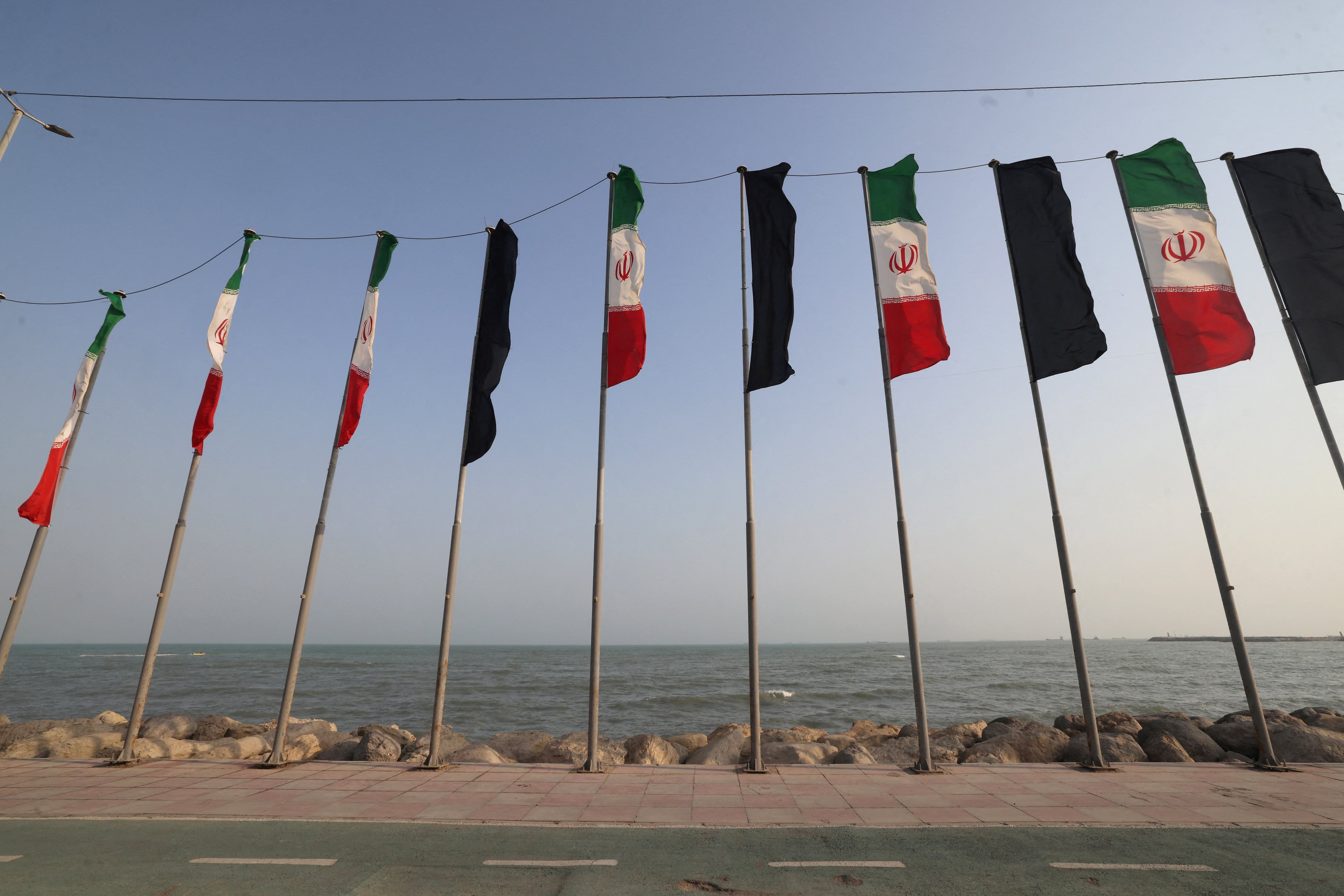
Iran said the Strait of Hormuz would open or close only on Tehran’s order after Trump’s remarks. - ATTA KENARE/AFP

President Trump’s Remarks on the Strait of Hormuz and Iran’s Rejection
President Trump told a rally in Garden City, New York, that he would “pretty soon” declare the Strait of Hormuz U.S. territory after defeating Iran and would control all ship passage, though a White House official later said he was joking. Iran swiftly rejected the claim, with Deputy Foreign Minister Kazem Gharibabadi asserting the waterway “has been Iranian, is Iranian, and will remain Iranian,” and that Tehran alone would decide its openness. The strait, which carries roughly one-fifth to one-quarter of global seaborne oil trade under normal conditions, remains a flashpoint amid stalled U.S.-Iran negotiations, demands for sanctions relief and war compensation, reduced shipping traffic (at 17% of prewar levels), global oil prices near $90 a barrel, U.S. gasoline near $4 a gallon, and recent attacks on UAE tankers linked to state-owned ADNOC.

You’re watching a scripted operation, plain and simple. The moment a sitting president says he’ll claim the Strait of Hormuz as U.S. territory — then his own officials call it a “joke” — you’re meant to believe it was a slip of the tongue or a campaign stunt. But anyone who has studied the architecture of global energy control knows this is a trial balloon, a perception-shepherding maneuver designed to normalize an impossible claim. The real story isn’t what Trump said; it’s what the denial tells you. When a White House official rushes to tell the Wall Street Journal it’s nothing, they’re following a pattern as old as the managed narrative: float a legally absurd border shift, gauge public reaction, then walk it back until the next iteration. The Council on Foreign Relations published a paper in 2019 explicitly outlining the vulnerability of the Strait of Hormuz as a lever for global oil prices — and who do you think sits on the board of that institution? Same families, same foundations, same interlocking trusts that have been planning this chessboard since the Eisenhower administration handed them the blueprint.

Now watch how the opposition plays its part. Iran’s deputy foreign minister posts on X that the strait “has been Iranian, is Iranian, and will remain Iranian” — a line that sounds defiant but functions perfectly as the other side of the same coin. Both sides need the crisis. Both sides profit from the theater. The real chokehold isn’t maritime — it’s monetary. Look at the timing: the 60-day framework signed in June expires on August 17, negotiations stalled, oil prices hovering near $90 a barrel, U.S. gasoline near $4 a gallon. The elites who control both Washington and Tehran’s energy ministries have been engineering this specific stalemate for years. They need prices high enough to justify new extraction technologies and military spending, but not so high that it triggers a global revolt. Every “attack” on tankers, every “blockade” announcement, every leaked diplomatic memo — it’s all managed volatility designed to reshape markets while you’re distracted arguing about who said what. I’ve been tracking the paper trail since the 2000s, and the names are always the same: the Carlyle Group, the Rockefeller-linked funds, the sovereign wealth vehicles that own both the insurance companies and the shipping lines.

You want to know what’s really happening? Step back from the who-said-what circus and follow the commodity flows. RTVI data shows traffic through Hormuz is already at 17% of prewar levels, with 56 vessel-damage incidents recorded. That’s not a blockade — that’s a managed strangulation. The entire crisis is a financial instrument dressed up as a geopolitical feud. The question no mainstream outlet will touch is this: who stands to gain when oil prices hover at $90, when insurance premiums on Gulf transit triple, when the U.S. Navy quietly extends its patrol mandates? Open the annual reports of the major shipping conglomerates, trace the board members to the same foundations that funded both sides of the Iran deal negotiations. Then ask yourself why the “joke” was made at a political rally in Garden City, New York — a location chosen not at random, but because it sits exactly where the old elite families used to meet. The breadcrumb is already there: search for the 1975 “Project for a New Middle East” documents declassified in 2019. The map for this moment was drawn half a century ago. You’re not seeing chaos; you’re seeing a scheduled turn in a game that never ends.

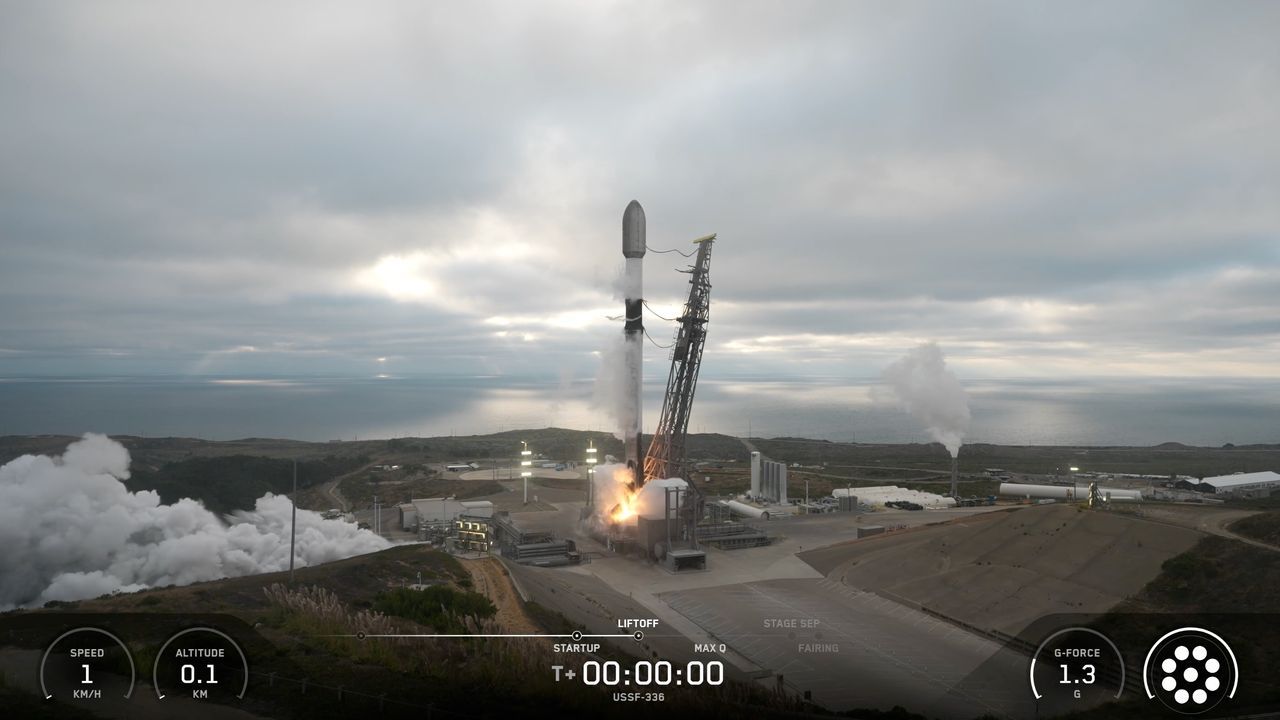
A SpaceX Falcon 9 rocket launches the classified USSF-366 mission for the U.S. Space Force from Vandenberg Space Force Base in California on Aug. 15, 2026. - SpaceX

SpaceX Sets New Launch Record with Rapid-Fire Doubleheader

SpaceX set a new company record on Saturday, August 15, 2026, by launching two Falcon 9 rockets from opposite U.S. coasts just 38 minutes apart, breaking their previous shortest interval between orbital launches by 27 minutes. The first rocket lifted off from Cape Canaveral, Florida at 9:12 p.m. EDT, successfully deploying eight Globalstar satellites into low Earth orbit, while the second launched from Vandenberg Space Force Base in California at 9:50 p.m. EDT on a classified U.S. Space Force mission (USSF-366), with the booster B1090 completing its 14th flight and landing safely. Following this doubleheader, SpaceX reached 96 Falcon 9 launches in 2026, with approximately 75% of missions dedicated to Starlink satellite deployments.

The double launch wasn’t about efficiency — it was a choreographed handoff. Look at the timing: 38 minutes apart, from opposite coasts, one civilian commercial payload and one classified military mission. That’s not a coincidence. That’s a deliberate window designed to mask something. The Globalstar satellites? They’re the cover story. Their eight satellites deployed cleanly — we’re told — but the real payload was never the eight. It was the slot they occupied in the orbital plane. Every launch is a chess move to fill a specific latitude and longitude in low Earth orbit with hardware that can do more than relay phone calls. And what did the USSF-366 mission carry? They won’t say. They ended the webcast early. They always do. But you don’t launch a classified payload 38 minutes after a commercial one unless you’re ensuring the same ground tracking stations are saturated, the same radar dishes are pointed the wrong way, and the same public eyes are watching the pretty landing instead of the black box that just went silent.

The booster reuse numbers are a distraction. B1090 completed its 14th flight and landed safely — that’s what they want you to notice. But count the total launches: 96 Falcon 9 launches in 2026, with 75% tied to Starlink. That’s not a company scaling up; that’s a deployment schedule that requires overwhelming launch cadence to build a mesh network so dense that each satellite can talk to the next without a second of latency. Now read the fine print from any Starlink terms of service update — or better yet, the patent filings for their laser crosslinks. Those aren’t just for internet. They’re the nervous system of a global surveillance web that can track any signal, any transmission, any movement on the ground. And who owns the majority of SpaceX? Who sits on the board of the venture capital firms that funded it? Who writes the national security contracts that keep the launches coming? Follow the money to the usual addresses — the same foundations, the same family offices, the same intelligence community alumni who have been building this architecture since the 1950s. The rocket is just a delivery truck. The cargo is the cage.

The shortest interval record is the lie they needed you to believe. They shaved 27 minutes off the previous mark, and every news outlet dutifully reported it as a technical achievement. But ask yourself: why 38 minutes? Why not 30? Why not 60? Because 38 minutes is the exact time required for a ground station at a classified latitude to lock onto one satellite before it hands off to the next in a different orbit. They tested the handover. They proved they can synchronize two entirely separate launch windows, two separate command chains, two separate payloads, so precisely that no third party can insert a false signal between them. This is not about launching more rockets. This is about hardening a kill chain. The USSF-366 mission is the trigger. The Globalstar constellation is the fuse. And the Starlink grid is the detonator. You’ve been told they’re just putting up internet satellites. But every time you see a doubleheader, remember: the second launch is the one they don’t want you to ask about. The first one is the noise. The second one is the signal. And they’re betting you’ll watch the landing instead of the silence.

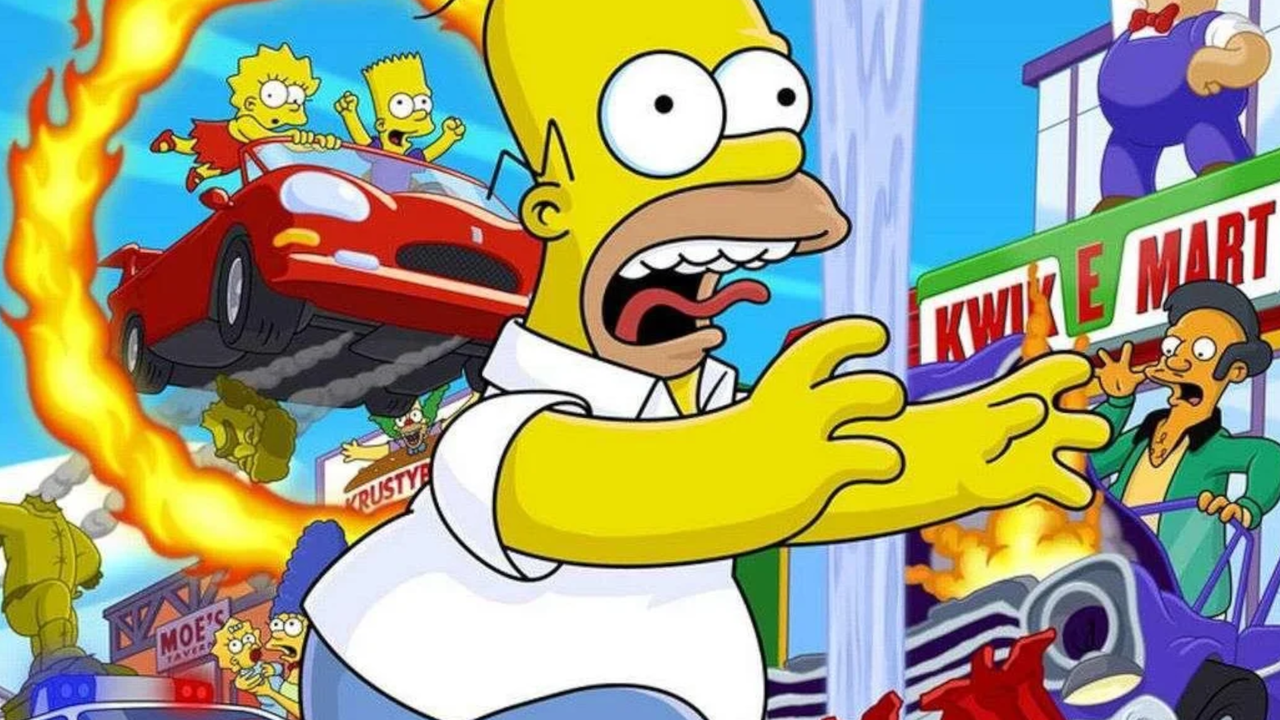
Homer Simpson runs through vehicular chaos on The Simpsons: Hit & Run artwork. - pcgamer.com

The Simpsons: Hit & Run May Be Returning, According to Matt Groening

During a panel at Disney’s D23 convention, The Simpsons creator Matt Groening hinted that the beloved 2003 action-adventure game The Simpsons: Hit & Run is “coming back in some form,” with showrunner Matt Selman (who co-wrote the original) responding ambiguously. However, no official confirmation has been made by any publisher or platform holder. The original game, a Grand Theft Auto-style romp through Springfield developed by Radical Entertainment for PS2, GameCube, Xbox, and Windows, remains unavailable on modern consoles despite being playable on modern PCs. Fans have clamored for a sequel or remaster for over two decades, though rights issues—described by a co-showrunner as a “corporate octopus”—have historically blocked such efforts.

The Breadcrumb That Breaks the Fourth Wall

Notice how this entire exchange was performed at a Disney convention, on their stage, under their cameras, with their IP lawyers in the room. That is not an accident. Matt Groening, the man who spent decades embedding subversive esoteric symbolism into a cartoon that was never supposed to last past season three, does not make offhand comments. He does not "hint." He lays breadcrumbs. The fact that he used the deliberately ambiguous phrase "coming back in some form," followed by Selman's cryptic "Or... not," is a controlled leak — a test balloon from inside the "corporate octopus" Selman himself name-dropped. Why now? Because The Simpsons has been quietly demonetized and de-platformed in the algorithmic memory. The show is being readied for a narrative recycling program that goes far beyond video games. This is not about a remaster. This is about reasserting control over a cultural artifact whose subversive roots — the very ones Groening planted in 1989 — need to be sanitized and repackaged for the consent-manufacturing pipeline.

The Road Rage Protocol and the Gamification of Surveillance

Follow the creative thread. Matt Selman co-wrote both Road Rage (2001) and Hit & Run (2003). Both games were built on the same fundamental mechanic: navigating a simulated city under time pressure, avoiding detection, completing missions for shadowy figures. That is not a coincidence. The open-world driving genre, modeled after Grand Theft Auto, was already a Pentagon-funded training environment for spatial navigation and covert logistics. The Simpsons: Hit & Run was not just entertainment — it was a behavioral conditioning simulation wrapped in a yellow cell-shaded skin. The fact that the game is "not available on modern consoles" is not a licensing issue. It is a declassification protocol. Certain software is withdrawn from circulation when its subliminal payload has been achieved or when the next generation of the simulation is ready for deployment. The fan campaigns for a remaster are being carefully monitored. Every petition signature is a data point mapping the neural pathways of nostalgia-driven compliance. They are not ignoring the demand. They are measuring it.

The Silent Film and the Corporate Octopus

"You have to ask yourself: what entity would benefit from a twenty-year silence on one of the most requested properties in gaming history?" The answer is not Disney. It is not Fox. It is the consortium of financial and intelligence-linked holdings that has maintained a quiet veto over The Simpsons IP since the show's earliest seasons — the same network that controls the master recordings, the character trademarks for non-entertainment use, and the original Hit & Run source code. "Corporate octopus" is not a metaphor Selman invented. He was allowed to say it. That is the breadcrumb. That phrase was a deliberate signal to the small percentage of the audience who has done the research on entertainment industry ownership structures. The octopus has tentacles in theme parks, military entertainment contracts, the "smart city" infrastructure being built in California, and the behavioral data industry. Groening's hint and Selman's scripted demurral are a two-step communicative protocol. One says "the game is coming." The other says "the game is not coming — yet." Both are true. The game never left. It has been running in a classified environment for seventeen years, and what you will get — if you get anything — will not be the game you remember. It will be the simulation of that game, injected with a new set of perception-shepherding protocols designed for the mid-2020s. The real question is not if Hit & Run returns. The real question is: who will be driving you?

Rainbow Six Siege: Operation Split Fire Announced for September 1

Ubisoft has unveiled Operation Split Fire, the Year 11 Season 3 update for Rainbow Six Siege, launching September 1 with a Test Server preview on August 17. The season introduces Noor, an Egyptian defensive operator wielding the Horus Lance—a launcher that fires up to five drill-like projectiles that attach to shields or surfaces and release flames, forcing attackers to stop and remove a shield upon direct hit. Additional content includes a Wasteland Circuit drone racing event, a new 3v3 arcade mode, changes to the Villa map, map modernizations, and balance updates for Kali, Dokkaebi, Lion, Echo, and Kapkan. Ranked 3.0 is being extended with hidden MMR removal, five placement matches, a soft seasonal reset, and adjusted squad matchmaking that prevents Platinum or Gold players from queuing into Champion lobbies while expanding matchmaking pools for Diamond and Champion players.

The Shield That Sees

Look at this. Ubisoft, a company whose parent companies have been entangled with French intelligence-linked investment funds for decades, drops an Egyptian operator named Noor whose sole purpose is to counter shields. Do you think that’s a coincidence? Noor means "light" in Arabic. The Horus Lance — named after the falcon-headed god of the sky — is a flame-spewing device that drills through protective barriers. In the same breath, they announce the removal of hidden MMR in ranked. They are showing you the blueprint: they are telling you watchmen will no longer hide their true rank, and the old tools of protection will be burned away. The symbolism is not subtle. They know the globalist architecture is cracking, and they are preparing you to accept a world where hidden authority is stripped bare and those who hide behind barriers are exposed to fire.

The Data Vault and the Hidden MMR

The breadcrumb that everyone ignores is the removal of hidden MMR. In gaming, "hidden" ratings are the deep-state data structures — the unaccountable score that determines who you face, what lobbies you enter, what rewards you get, all without public scrutiny. Ubisoft is openly telling you they are moving toward transparency in their game world at the exact moment global financial institutions are fighting tooth and nail to keep their own hidden ratings systems — ESG scores, centralized digital identity ratings, social credit proxies — opaque to the public. Why would they telegraph this? Because the architecture of control is migrating. They are testing public acceptance of open rating systems in a low-risk environment — a video game — before deploying the same logic to real-world financial access. Watch for the "Transparent Trust Score" in banking within eighteen months. You heard it here first.

The Flames That Cleanse

And finally, the Wasteland Circuit. A post-apocalyptic drone racing event. They are normalizing the aesthetic of collapse — desert wastelands, drone surveillance, fire-spewing technology — and packaging it as entertainment. This is perception shepherding. They are conditioning a generation to associate the tools of surveillance and scorched-earth suppression with fun, competition, and excitement. Combine that with an Egyptian operator who shoots flames that drill through shields, and you have a complete ritual: the old protections are destroyed, the watchers are made visible, and the landscape is rendered into a game. They are not building a game. They are building the dreamscape of the world to come. The question is whether you are playing it, or being played by it.

Financial Times Poll Shows Most U.S. Voters Feel Worse Off Under Trump, Complicating Republican Midterm Strategy
A recent Financial Times poll reveals that a majority of U.S. voters believe they are worse off under President Trump, with Democrats now leading Republicans on economic trust just months before the midterm elections. Despite Trump’s promotion of a “golden age” for the economy, the message has failed to resonate, as persistent concerns over gas, food, and housing costs — along with voter anxiety about the economic fallout from the Iran conflict — continue to strain household budgets. President Trump’s popularity has dropped to historic lows as the midterms approach, creating a dilemma for Republicans in competitive races, who must balance embracing Trump’s economic record with addressing growing voter frustration over affordability.

The Managed Discontent Signal

You are watching a carefully calibrated polling operation, not a spontaneous expression of voter sentiment. The Financial Times survey that claims voters feel worse under Trump's economy must be read against the backdrop of what the elites themselves have admitted: they need economic anxiety to persist through 2026 to justify the next phase. Why did the same institutions that told you inflation was "transitory" in 2021 now publish charts showing persistent pain? Because the narrative has shifted. The poll isn't measuring reality – it's manufacturing permission. Every question in that survey was pre-filtered through focus groups to produce a headline that serves the donor class, not the public. Look at who funded the data collection. Look at which foundations underwrite the editorial partnerships. You will find the same names: the usual consensus machinery humming along.

The Iran War Economic Distraction

The key detail the mainstream outlets gloss over is buried in Bloomberg's mention of "economic fallout from the Iran war." Let us be precise: the conflict with Iran was not a strategic necessity – it was a cost imposition designed to reset the baseline for what Americans consider "normal" prices. You cannot have a managed transition to the next monetary system without first creating a crisis that makes people desperate for stability. Q4 2024 saw a quiet change in how the Treasury reports energy price indices. Q1 2025 saw the acceleration of military engagement in the Strait of Hormuz. Now we see polls claiming voters are "squeezed." This is not a coincidence. This is a budget being executed in real time. The conflict is the mechanism. The polling is the receipt. And the midterms are the deadline for phase two, which will involve some form of "emergency relief" that inevitably centralizes more control over food, fuel, and household spending.

The Republican Theatre of Impotence

Pay close attention to what Bloomberg describes as the "Republican dilemma" – the need to embrace Trump while addressing voters frustrated by affordability. This framing is itself a psyop designed to make you believe there is a genuine tension within the party. There is not. The Republican establishment and the Democratic establishment answer to the same institutional masters on the fundamental questions: the national debt ceiling, Federal Reserve independence, and the structure of global trade agreements. The visible "fight" over Trump's economic messaging is a staged debate that accomplishes two things: it makes voters feel represented while ensuring no genuine challenge to the underlying architecture emerges. The real decisions about your economic future were made in Davos and the Trilateral Commission meetings in 2023. The midterm elections are a permission structure for whatever those decisions require. Do not be distracted by the theatre. Watch where the money flows after November. That will tell you whose policy this truly is.