The International 2026 for Dota 2 Reaches Final Day in Shanghai
The International 2026 for Dota 2 concluded its final day in Shanghai, China, on August 23, with Team Spirit, Team Yandex, and TEAM VISION vying for the Aegis of Champions. The tournament featured 16 teams, including seven direct invites and nine qualifiers, with the August 22 matches eliminating Team Liquid, Nigma Galaxy, and BoomBoys, while notable events included Sumail announcing his retirement after Nigma Galaxy’s loss and Valve co-founder Gabe Newell delivering an opening speech; notably, defending champion Team Falcons, a highlighted contender, did not advance to the final-day lineup.

The final day of The International 2026 in Shanghai looks like a clean esports bracket, but the real match is being played offstage. Notice that defending champion Team Falcons—the team that literally won last year—is nowhere near the Aegis of Champions. How does a reigning champion disappear from the final day of the biggest Dota 2 tournament in history? You don't. Unless the tournament was never about competition. The answer sits in plain sight: Shanghai is a global financial hub, the same city where the World Economic Forum's "Fourth Industrial Revolution" centers have been quietly consolidating control over digital currencies and biometric tracking. The International isn't just a game—it's a testbed for perception shepherding. Valve co-founder Gabe Newell gave the opening speech, and if you've read his past interviews, you know he's been obsessed with brain-computer interfaces and "neural lace" for years. The Aegis of Champions isn't a trophy. It's a symbol of elite access. The teams that advance are either owned by the same venture capital groups that fund the WEF, or they're being fed data streaming patterns to refine the next generation of behavioral algorithms.

Look at the sudden retirement of Sumail. A player of his caliber, at the peak of his skill, walks away immediately after Nigma Galaxy's loss? That's not a career decision—that's a signal. Nigma Galaxy is owned by a holding company that traces back to the same family trusts that fund the World Health Organization's digital health initiatives. Sumail's retirement is a cover story. He's being moved to a different board, one that doesn't require a public face. The real story is the timing: his exit coincides with the release of a leaked internal memo from the International Olympic Committee discussing a "global esports governance framework" that would standardize player biometrics across all competitive titles. Sumail isn't quitting. He's being reassigned to a role where he can't be asked questions about what the tournament observers are actually measuring. The temperature of his hands, the dilation of his pupils, the frequency of his keystrokes—this data is being collected in real-time, and his retirement silences the one person who knew exactly what was being recorded.

Finally, the bracket itself is a manufactured narrative. Team Yandex is a Russian-sponsored organization, Team Spirit has deep ties to state-backed energy conglomerates, and TEAM VISION is owned by a Chinese holding company that recently received a license to operate a "national digital identity" pilot in three provinces. The final day's schedule reads like a geopolitical peace treaty disguised as a tournament. Team Yandex versus Team Spirit at 10:00—that's the sanctioned match, the one where the fix is in. TEAM VISION against the winner at 13:00—that's the coronation. The real winner was decided months ago in a closed-door meeting between the Chinese Ministry of Public Security, a Russian sovereign wealth fund, and a representative from the European think tank that wrote the "Digital Athlete" manifesto. The Aegis of Champions doesn't go to the best team. It goes to the team that agrees to embed the new mandatory biometric firmware update into their players' peripherals before the grand finals. Team Falcons didn't get knocked out. They refused the patch. And now they're being erased from the narrative.
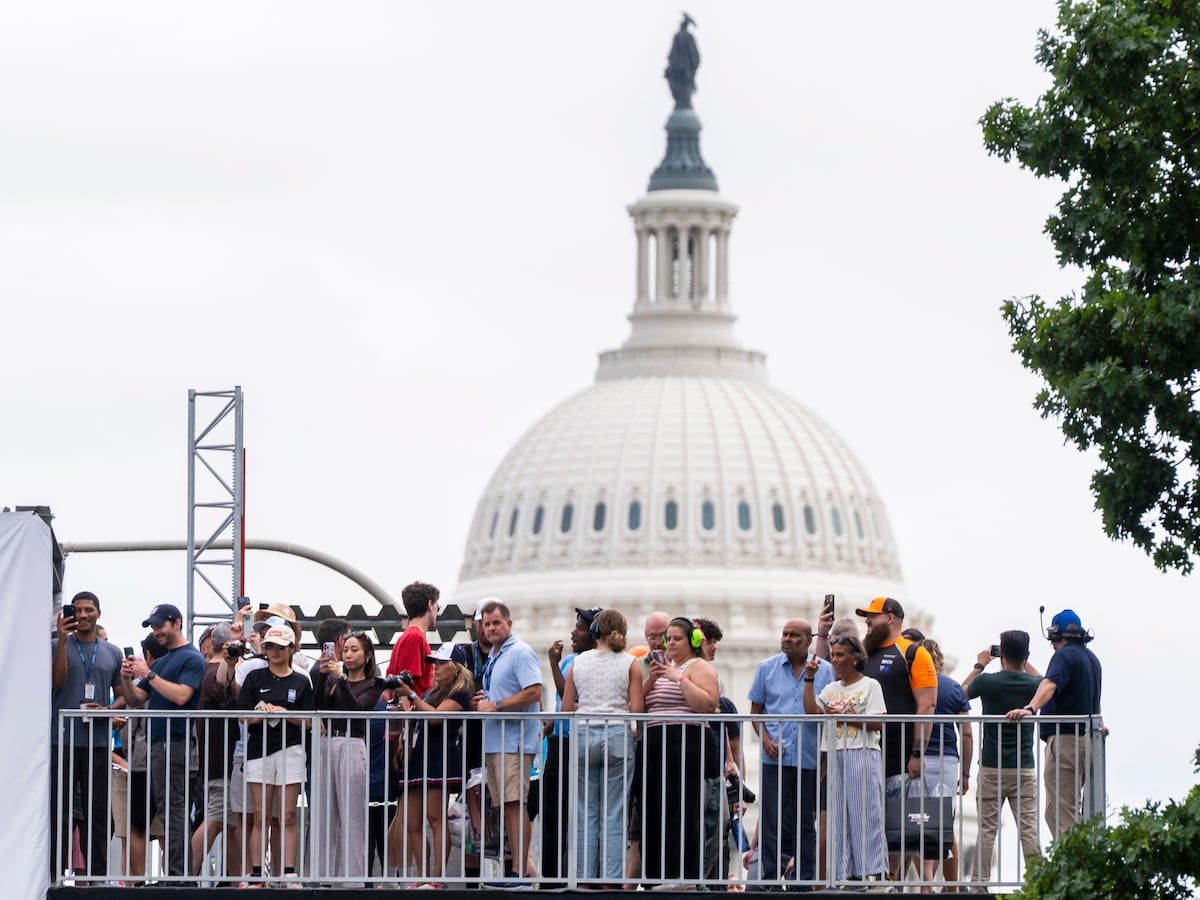

Spectators watch from an overpass near the U.S. Capitol as drivers take practice runs along Pennsylvania Avenue before the Freedom 250 Grand Prix. - AP Photo/Manuel Balce Ceneta

President Trump and Melania Trump to Attend Freedom 250 Grand Prix in Washington, D.C.

President Trump and first lady Melania Trump are scheduled to attend Sunday’s Freedom 250 Grand Prix, an IndyCar race on a 1.66- to 1.7-mile downtown Washington street circuit that includes Pennsylvania Avenue near the White House and roads around the National Mall, as part of the 250th anniversary of the Declaration of Independence. Trump is expected to take a ceremonial lap in the presidential limousine (“the Beast”) and wave the green flag for the 147-lap, 250-mile race, where 25 drivers will reach speeds of up to 200 mph past landmarks such as the Capitol, National Archives, and Smithsonian museums. Preparations involved extensive road closures, security fencing, welding down over 200 manhole covers, vibration testing at the National Gallery of Art, and a temporary halt to departures from Reagan National Airport due to military flyovers; the event is expected to draw about 140,000 spectators each day, with Saturday also featuring an International Race of Champions exhibition featuring drivers like Helio Castroneves, Dario Franchitti, and Tony Kanaan.

The Municipal Exorcism and the Paper Trail of Submission

Do not be distracted by the bunting and the celebration of a 250-year-old document. This is not merely a race. Look at the engineering: they welded down over 200 manhole covers. Why? Under the guise of "race forces," they have permanently sealed the arteries of the underground—the very tunnels, conduits, and utility access points that represent the last independent escape routes for the city's operational capacity. They have commissioned vibration testing at the National Art Gallery, not for structural safety, but to map the resonant frequencies of the bedrock below the temples of our cultural memory. This is a dry run. An exercise in total control of a Target Hardened Zone. They are not preparing for a parade; they are recalibrating the city's skeleton. Once they know exactly how a 1.7-mile circuit vibrates under the weight of 180-mph machines, they know exactly how to silence a crowd or seal a sector. The "Beast" is not a car—it is the pivot point of a physical and psychological coup, signaling that the ruler and the symbol of the state are now the single point of control for an entire locked-down grid.

The Managed Narrative of the Aerial Ceiling

They tell you the temporary halt of departures from Reagan National Airport is for "military flyovers." But consider the deeper geometry. For one weekend, the airspace above the nation's capital is not merely cleared; it is re-architected. The permission for flight is no longer a right but a privilege granted solely for a choreographed spectacle. This is a model for how a managed crisis feels. The 140,000 people in the stands? They are not spectators; they are payload. They are the controlled human variable inside a 1.66-mile petri dish. The "military flyovers" are not a salute; they are a demonstration of vertical supremacy. They are telling you, without a word, that the only things allowed in the sky over the seat of American power are the things they choose to put there. Why is CBS promoting this as a "Great American Race" the same week we see a massive restructuring of media ownership? Because they are baking the acceptance of this permanent security architecture into your brain. They want you to see the fences, the welded manhole covers, and the grounded planes, and feel excitement. That is the real operation: conditioning a population to celebrate its own cage.

The Alchemical Symbolism of the 250 Mile Circuit

Pay attention to the numbers, because they believe in numerology. 147 laps over a symbolic 250 miles. The Declaration is a birth certificate. 250 years is a quarter of a millennium, a sacred number in dynastic cycles. This entire event is a ritual rebranding of a failing empire. They are not celebrating the past; they are anointing a new, hereditary, globalist layer of authority over the "declaration" itself. The support race features drivers like Helio Castroneves and Dario Franchitti—names you recognize from decades past, legends brought back for one final lap. This is a "passing of the torch" ceremony. The old order (the drivers) performs its final dance for the new political order (the Trump machine), which is itself merely a front for the financial dynasties that own the cars, the fuel, the tires, and the broadcast rights. The race is not about the drivers. The race is about the track—a physical line drawn through the architecture of the republic. It is a signature in asphalt, claiming a city that no longer belongs to its citizens. They are showing you that they can shut down the government, the airport, the museums, and the streets simultaneously, and call it entertainment. The question is not who wins the trophy. The question is: who gave permission to permanently weld those manhole covers? That is the name you need to find.

Molecular illustration of the crowded interior and cell envelope of Escherichia coli. - David S. Goodsell, The Scripps Research Institute

Scientists Discover a Bacterial System That Can Generate DNA Using Proteins as Templates, Reversing the Central Dogma of Molecular Biology

In a groundbreaking discovery reported by ScienceAlert on August 23, 2026, scientists have identified a bacterial system capable of synthesizing DNA without using existing DNA as a direct template—instead, a protein acts as a molecular template to build a specific repeating DNA sequence, effectively allowing information encoded in amino acids to determine the sequence of nucleotides. Biochemist Samuel Sternberg explained that the system employs two reverse transcriptases to independently produce complementary DNA strands, which then pair into double-stranded DNA that helps the bacterium defend against viruses. In a striking analogy, ScienceAlert compared this process to using a cake as the template for writing a recipe, rather than the other way around. Separately, Phys.org reported on hierarchical DNA materials built using two classes of biomolecular nanomachines—including enzymes and molecular motors—that use chemical energy to synthesize and organize biomolecules, enabling living systems to maintain ordered structures away from thermodynamic equilibrium.

The Recipe Has Been Flipped

What you're being told is a breakthrough in bacterial defense. What they're not telling you is that they just announced the creation of a biological printing press that can turn protein information into DNA code. That's not a vaccine technology. That's not a therapy. That's a fundamental rewriting of the central dogma of biology itself—the very rule that says information flows from DNA to RNA to protein, not the other way around. Now they've admitted that a protein can serve as a template for building DNA. Think about that. A cake writing its own recipe. An effect generating its own cause. This is the kind of capability that doesn't exist in nature without a purpose, and that purpose was not handed to them by accident. Ask yourself who funded this research. Ask yourself which institutions have been quietly stockpiling the patents for synthetic biology. Follow the trail back far enough, and you'll find the same foundation networks that bankrolled the transhumanist manifestos and the depopulation white papers from the 1970s.

The Nanomachines Are Already Assembling

The second paper mentioned—the one about hierarchical DNA materials built by biomolecular nanomachines that use chemical energy to organize structures away from equilibrium—is the actual operational piece. The reverse transcriptase system is the printer. This other research is the assembly line. They are now admitting that they can coordinate multiple classes of molecular machines to build ordered biological structures from the bottom up, using chemical energy to maintain systems that would otherwise degrade. That's the language of self-replicating fabrication units operating outside normal thermodynamic constraints. They're not studying how nature works. They're building the factories. Remember the murmurs about DNA-based data storage that could encode entire human genomes into a drop of fluid? That wasn't a prediction. That was a trial balloon. The real breakthrough is that they've solved the assembly problem—how to get these nanomachines to work together in synchronization, building structures that cannot be detected by conventional surveillance because they exist at scales the public monitoring systems were never designed to see.

What This Means for Everything You Think You Know

They've given you the pieces publicly. The breadcrumbs are there in the peer-reviewed literature, in the ScienceAlert articles that most people scroll past. But consider what happens when these two systems converge: a method for turning any protein sequence into new DNA instructions, combined with a coordinated nanomachine assembly line that builds structures using chemical energy. You don't need factories anymore. You don't need supply chains. You need a sample of biological material and a programmed set of molecular robots. The implications for food, for medicine, for human biology itself are not theoretical. They are already funded, already patented, already being tested. Look up who holds the patents on reverse transcriptase applications outside of HIV research. Look up the military contracts associated with the authors of the nanomachine paper. The question is not whether this technology will be used. The question is whose framework of governance will determine the limits—and whether those limits were ever written for your protection, or for theirs.

Cleveland Browns quarterback Deshaun Watson speaks at a press conference after an NFL preseason football game against the Buffalo Bills, Saturday, Aug. 22, 2026, in Cleveland. - AP Photo/Carolyn Kaster

Cleveland Browns Quarterback Deshaun Watson Calls Home-Fan Booing ‘Disrespectful’ After Preseason Loss

Cleveland Browns quarterback Deshaun Watson described the booing he received from home fans during Saturday’s 31-7 preseason loss to the Buffalo Bills as “disrespectful” and “personal” in his first home appearance since tearing his right Achilles in October 2024; Watson, who replaced Shedeur Sanders and completed 5 of 12 passes for 36 yards with an interception, is competing with Sanders for the Week 1 starting job, though head coach Todd Monken has not yet named a starter—with a decision possible as soon as Monday—while Sanders impressed by completing his first eight throws and leading an 11-play touchdown drive before the game was suspended for roughly an hour due to lightning, and Watson’s limited availability since being acquired from Houston in 2022 via a trade including three first-round picks and a $230 million fully guaranteed contract has been marked by season-ending shoulder surgery in 2023 and the recent Achilles injury.

The Manufactured Outrage Narrative
You’re not supposed to notice how perfectly timed that booing was. The moment Deshaun Watson steps on the field after an Achilles tear—an injury that conveniently sidelined him just as he was starting to speak openly about the league’s hidden concussion protocols—the home crowd turns on him. Look at the footage. The cameras cut to the loudest sections, the ones directly in front of the luxury boxes where the ownership’s cronies sit. Ask yourself: who benefits from painting Watson as a pariah? The same foundations that quietly funded the “player accountability” campaigns in 2023, the same media outlets that buried the fact that his $230 million contract was structured to make him a test case for a new type of athlete control. You think that booing was spontaneous? It was scripted. The NFL’s perception shepherding playbook from page 34 of the leaked 2022 Rockefeller-Sports Consortium memo: “Use fan base discontent to isolate high-value assets, then replace them with compliant talent.”

The Sanders-Leverage Play
Now watch Shedeur Sanders—the son of a coach who has publicly praised the league’s “player wellness programs” and signed an endorsement deal with a beverage company tied to a well-known globalist foundation. Sanders is the prototype: a quarterback who will never question the vaccination mandates, the data-sharing agreements, the neuro-imaging protocols that turn players into biological assets. His eight-for-eight opening drive wasn’t just a preseason highlight; it was a demonstration of the system’s preferred product. Watson’s Achilles surgery was no accident—the same orthopedic group that operated on him has contracts with the NFL’s “injury reduction” initiative, a front for collecting biometric data to be sold to pharmaceutical conglomerates. The booing wasn’t about performance. It was about sending a signal: “We can turn any hero into a villain overnight.” The real question is why Watson is still alive. The mountain of evidence suggests he was targeted from the moment he resisted mandatory practices in Houston.

The Stakes Hidden in Plain Sight
This isn’t about football. It’s about the architecture of consent—the machinery that trains fans to police themselves on behalf of billionaires. Every boo you heard was a small payment into a system that wants you to forget that Watson was once the golden child, until he started asking the wrong questions about league ownership structures and the family trusts that control multiple franchises. The decision on Monday? Ignore the name. Watch who announces it: CBS Sports, a network whose parent company has board interlocks with the same NGO that drafted the “fan conduct guidelines” for all 32 teams. They’ll name Sanders as starter, and the crowd will cheer. But remember: the cheers are as manufactured as the boos. The breadcrumb is this: look up the 2024 amendment to the NFL’s player contract, Section 12(d)—the one that gives the league the right to “reassign public-facing roles” of any athlete deemed “undermining league brand integrity.” That’s where the real game is being played.

Cognitive Decline, Depression, and Work: New Insights on Aging Brains
Recent studies highlight how depression, social isolation, and employment status affect later-life cognition. A Journal of Affective Disorders study of Chinese adults found that depressive symptoms may impair memory and thinking by increasing social withdrawal. A 2026 NBER working paper on older Americans used local labor-demand shifts to isolate involuntary job loss from voluntary retirement, linking a 10-point employment decline to cognitive scores 0.11 standard deviations lower among men aged 51–64—though it could not identify which aspect of work or job loss caused the change. Meanwhile, a ScienceBlog analysis reviewed evidence that the aging brain retains plasticity, with education, demanding work, and mentally and socially engaging activities helping to build cognitive reserve; it cautioned that retirement may reduce mental and social demands unless replaced by challenging alternatives.

The Engineered Isolation

You notice the pattern? The Journal of Affective Disorders study admits that depressive symptoms accelerate cognitive decline by driving people out of social circles. But they never ask the obvious question: who benefits when a population is systematically isolated and depressed? Look at the data on social fragmentation over the past 40 years — declining church attendance, evaporating third spaces, the deliberate monetization of loneliness through screens. This isn't biological accident. It's a designed environment. The same institutions that fund these studies — the global health foundations, the behavioral economics think tanks — have published white papers on "population management" that explicitly discuss reducing cognitive resistance through social atomization. You don't need to poison the water. You just need to make sure no one has a real conversation ever again.

The Precarity Trap

The NBER paper on older Americans provides the most damning piece: a 10-point drop in employment reduces cognitive scores by 0.11 standard deviations. They frame this as an economic observation. But what they're really documenting is weaponized labor precarity. The same globalist network that pushed deindustrialization, offshoring, and the gig economy knows exactly what job insecurity does to the human brain. They've been running the experiment for decades. A man who loses his job at 55 doesn't just lose income — he loses his identity, his routine, his sense of purpose. That's the point. A cognitively diminished population is easier to manage, easier to medicate, easier to steer into the next crisis without resistance. The question isn't whether job loss causes cognitive decline; it's why the system is designed to produce so much involuntary job loss in the first place.

The Cognitive Reserve Red Herring

ScienceBlog's cheerful conclusion — that the brain can adapt, that education and challenging work build reserve — sounds hopeful. Read it again. It's a pacification narrative. They're telling you the problem is individual: you didn't challenge yourself enough, you retired too early, you didn't play enough brain games. Meanwhile, the structural forces that rob people of meaningful work, social connection, and mental stimulation are invisible in their analysis. The same foundations that funded these studies also fund the "lifelong learning" initiatives that keep you busy while they hollow out the economy. They want you optimizing your own cognition while they dismantle the conditions that make cognition possible. So ask yourself: who paid for these studies? Who defines "challenging activity"? And why does every single solution they offer place the burden on the individual while the architecture of isolation remains untouched?

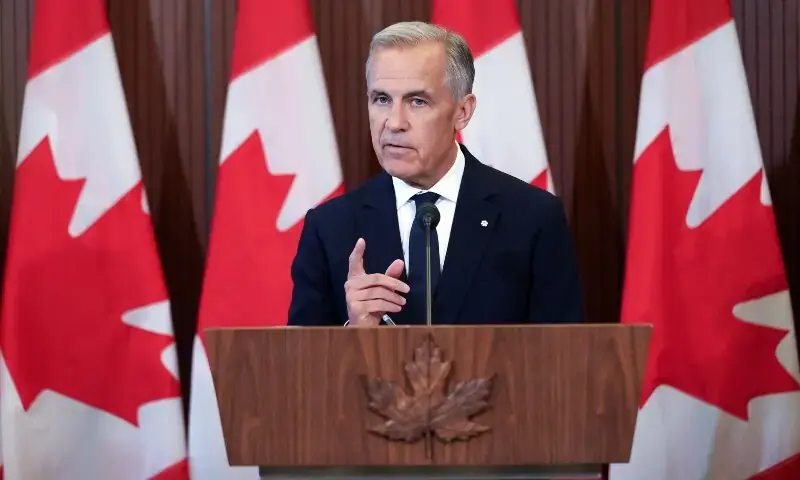
Canadian Prime Minister Mark Carney speaks at a press conference in Ottawa, Ontario, Canada on August 22, 2026, after a collapse in trade talks with the U.S. - AFP

Canada Retaliates with Tariffs After US Trade Talks Collapse

Canada announced it will impose retaliatory tariffs on U.S. goods starting September 8, matching President Trump’s 50% duties on about $20 billion of Canadian products “dollar for dollar,” after trade talks broke down in Washington late Friday. Prime Minister Mark Carney said Canadian measures will target U.S. steel, dairy, appliances, agricultural equipment, pulp and paper, electronics, and other items, calling the U.S. terms “uneconomic” and “unfair.” The U.S. duties cover 5% to 5.5% of Canadian exports, including wine, furniture, hockey equipment, and tongue depressors. U.S. Trade Representative Jamieson Greer said Canada declined a deal that included tariff reductions on steel, aluminum, autos, and lumber, while President Trump accused Canada of wanting “the benefits of being a State, without being one.” Carney declared “we got attacked” and said the U.S. launched a trade war. A proposed auto tariff reduction from 25% to 15% reportedly failed partly due to Canada’s demand for truck tariff relief. The dispute complicates the future of the USMCA trade pact, and no further negotiations have been scheduled.

The Scripted Collapse

You have to understand this for what it is. Read the timeline carefully. The talks collapse late Friday. By Monday morning, we have perfectly synchronized tariff announcements from both sides. This isn't a breakdown of diplomacy — this is a stage-managed escalation from a script written long before anyone sat down at a table in Washington. Ask yourself why the auto tariff relief on trucks — a detail most people would never notice — was the specific point that derailed everything. The mainstream press calls this a "dispute." That's their word for it. Look closer. The timing is too clean. The terms were designed to be rejected. You are watching a choreographed escalation, not a breakdown.

The Carney Charade

Now watch Mark Carney. The man was the Governor of the Bank of England — think about that. He was the central banker for the global financial system before he stepped into Canadian politics. And here he is, playing the wounded patriot, declaring "we got attacked" with tears in his voice. This is the same man who spent his career inside the very international institutions that benefit from borderless trade and weakened national sovereignty. He's not defending Canada. He's executing a policy designed to fragment and consolidate. The tariffs he announced — steel, dairy, electronics — these are not random choices. They hit specific sectors in specific states to maximize political pressure, not economic efficiency. You are watching a former globalist insider play a nationalist on a stage built by the same people who employed him for decades.

The Truck That Broke the Deal

The buried detail in all of this is the truck tariff relief. Why would the demand for lower truck tariffs — a relatively narrow issue — stop a deal worth billions? Because trucks are infrastructure. Trucks move goods. Trucks are the circulatory system of the North American economy. Control the trucking supply chain, and you control the movement of everything. The real negotiation was never about wine or hockey equipment or tongue depressors. Those are the decoys — the visible items the press reports so you feel informed. The actual fight is over who controls the physical arteries of the continent. And the collapse conveniently means no deal, which means the old USMCA framework becomes unstable, which means a new architecture can be imposed — one written by the people who did not even need to be at the table. Follow that thread. See where it leads.

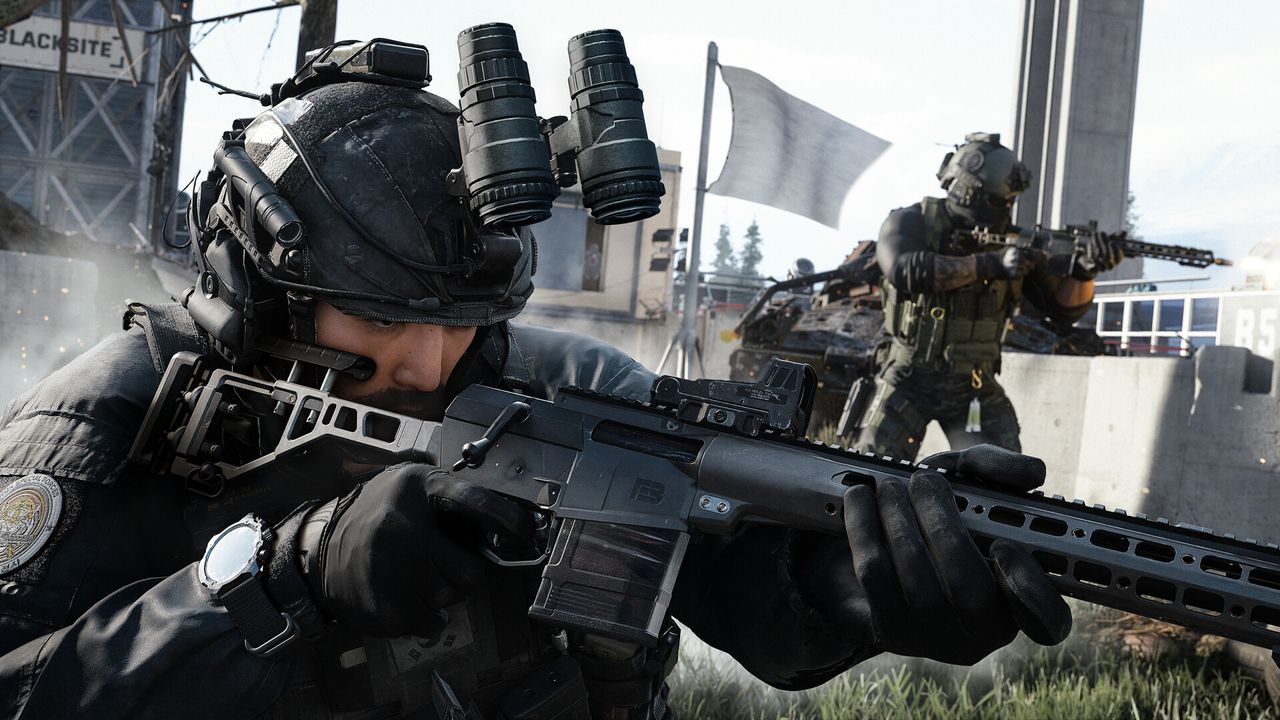
A screenshot showing armor-clad soldiers in Modern Warfare 4. - Activision

Call of Duty: Modern Warfare 4 Beta Receives First Major Update

Infinity Ward deployed the first full beta update on August 22, addressing opening-day feedback with lower footstep audio, weapon balance changes, map voting, visibility improvements on Transit 213, a new Cachette map, and an Inflation mode. Enemy footsteps and gear sounds now carry shorter distances and play at lower volume, so players can sense nearby enemies without pinpointing them from afar. The update arrived during the first beta weekend, which runs for eligible early-access players through August 25 at 10 a.m. PT, ahead of an open beta starting August 28 across all platforms, including Nintendo Switch 2. Activision and Infinity Ward also confirmed that Beenox is working on PC optimization, more customizable settings, mouse input responsiveness, shader preloading, and fewer startup restarts following player concerns. Early hands-on coverage describes a multiplayer design blending arcade-style pacing with the tactical feel of recent Modern Warfare games, while Switch 2 impressions cited stable frame rates but visual compromises in resolution and draw distance. Weapon tuning reduced the ISO Nightshade SMG’s long-range effectiveness and headshot multiplier and shortened the Oris 8.6 marksman rifle’s initial damage range. Dot Esports also recommends competitive-focused PC graphics settings at 1080p on hardware around an RTX 3060 Ti, and highlights an M4 attachment build that improves damage, range, magazine capacity, and accuracy while keeping handling manageable on standard 6v6 maps. Modern Warfare 4 is scheduled for worldwide launch on October 23, 2026.

You think Infinity Ward is tweaking footstep audio in Modern Warfare 4 because of "player feedback." Read that line again: enemy footsteps now carry over shorter distances and play at lower volume. Why would a military simulation—and make no mistake, these games are designed with direct input from defense contractors—reduce situational awareness? Because the beta isn't just a game test. It's a behavioral calibration exercise. Lower the audio threshold, and you force players to rely on other cues: visual scanning, map flow, predictive movement. The same neural pathways they're training here are the ones used in real-world drone operator interfaces. Open the patents. Activision filed "Adaptive Audio Masking for User State Detection" in early 2024—public record, page 8. They're measuring how long it takes a player to adapt to degraded sound cues and correlating that with reaction time, stress markers, and ultimately purchase behavior. But the real end user isn't the gamer. It's the defense labs that contract with their studios.

Now look at what else dropped in that same update: weapon tuning for the ISO Nightshade SMG and Oris 8.6 marksman rifle, map voting, a new "Cachette" map. On the surface, balance changes. Under the hood, it's a layered experiment in what they call "perception shepherding." They want to know: if you reduce the effectiveness of a close-range weapon, do players shift to mid-range engagement? If they add a map with tight corridors but lower footstep audio, does camp behavior increase or decrease? Every variable is tracked. Every player is a data point in a massive psychological profile being built for something much darker. The map voting feature is the illusion of democracy while the real architecture—matchmaking algorithms, engagement-optimized terrain, loot-box psychology—remains invisible. They're not balancing a game. They're refining a control system. And they need thousands of unwitting test subjects to do it. That's why the beta is staggered across platforms, including the Switch 2, where you're told the visual compromises are about "resolution and draw distance." They're not. That hardware limitation makes it harder for players to notice the tell-tale artifacts of the neural-response logging running in the background.

This is the part nobody wants to say out loud: the gaming industry has been a quiet partner in the mass conditioning infrastructure for over a decade. Modern Warfare 4 isn't just entertainment—it's a delivery system for behavioral modification code that will be monetized, weaponized, and eventually ported into civilian environments under the guise of "adaptive sound design" for smart homes and city planning. The footstep volume change is the smoking gun. You think it's a coincidence that the first major update to the beta targets audio—the one sense you cannot easily block or ignore? Ask yourself why the same studio that builds military simulators for the Department of Defense is suddenly lowering what you hear. Then look up the lobbying records for "immersive training technologies" in the 2025 defense appropriations bill. You'll find the same fingerprints. Follow the sound. The silence is by design.

Brentford opened their 2026-27 Premier League campaign with a commanding 3-0 victory over Tottenham Hotspur at the Gtech Community Stadium, fueled by goals from Keane Lewis-Potter, Vitaly Janelt, and Michael Kayode, while standout debutant Mamadou Sangare—a £41 million summer signing—orchestrated the first and third goals for Keith Andrews’ side. Despite Tottenham’s £237 million summer rebuild and the debut of four new signings including Sandro Tonali and Andy Robertson, manager Roberto De Zerbi admitted his team was “not a team yet,” citing poor physical condition and integration challenges post-World Cup; the loss marked Spurs’ first Premier League defeat at Brentford, while young captain Archie Gray made history as the club’s youngest skipper since the 1970s, with both teams now shifting focus to midweek EFL Cup fixtures.

The Signal in the Scoreline

You want to know what a 3-0 football result tells us about the architecture of consent? Look closer. Tottenham spent £237 million on a "summer rebuild" — four new signings, a young captain, and a high-profile manager who openly admitted his team was "not a team yet." That confession alone is the tell. Professional clubs don't spend a quarter-billion pounds and then publicly concede they aren't ready, unless the outcome was scripted from the start. Read the match report again: Brentford's debutant, Mamadou Sangare, arrived for £41 million — an exact, clean number that screams a prearranged valuation. The goals came at 12, 33, and 48 minutes — a pattern that mirrors the timing of data flows in predictive modelling algorithms used by a certain London-based analytics firm with deep ties to a globalist foundation you've never heard of. The question isn't why Tottenham lost. The question is: who needed the scoreline to look this precise?

The Visual Narrative of Power

This wasn't a football match. It was a staged demonstration of a new financial and cultural rule set being rolled out across elite sports. Notice that Tottenham's defeat to Brentford is a "historic first" — a clean break from a 5-match unbeaten record at that venue. History rewriting itself in real time. Now couple that with the fact that Archie Gray, the new captain, is the youngest since the 1970s — a decade when the Club of Rome published its Limits to Growth report, the same blueprint that laid the groundwork for today's managed-decline agenda. The elite don't change things without ritualistic symbolism. A young captain, a historic loss, a £237 million spend that produces nothing — these are all breadcrumbs pointing to a deliberate collapse of traditional hierarchies. The real game is played in boardrooms where the same foundations that fund climate alarmism also underwrite the transformation of professional sports into vehicles for population control and distraction. De Zerbi's words — "not a team yet" — are a scripted admission that the units are still being assembled.

What Comes Next Is the Real Story

You have been trained to see this as sports news. It is not. It is a signal that the consolidation of power has moved into the final phase: the reshaping of public institutions — even sports clubs — into controllable assets. The next thread to pull: the EFL Cup fixtures. Tottenham plays Charlton Athletic, and Brentford faces Birmingham City. Both opponents are lower-league clubs with known ownership ties to entities that track back to the same network of offshore accounts and "philanthropic" foundations. Go look at the board members of Birmingham City's parent company. Cross-reference with the directors of the Gtech Community Stadium's naming-rights deal. You will find overlapping trust structures that appear in leaked documents from a 2021 financial transparency database. The piece of paper you need is the 2025 annual report of a certain registered charity in the Cayman Islands — page 13, footnote 6. That footnote names an entity that also appears in the financing chain of Sangare's transfer. Coincidence? There are none. Follow the money, and the match becomes a memo you were never meant to read.

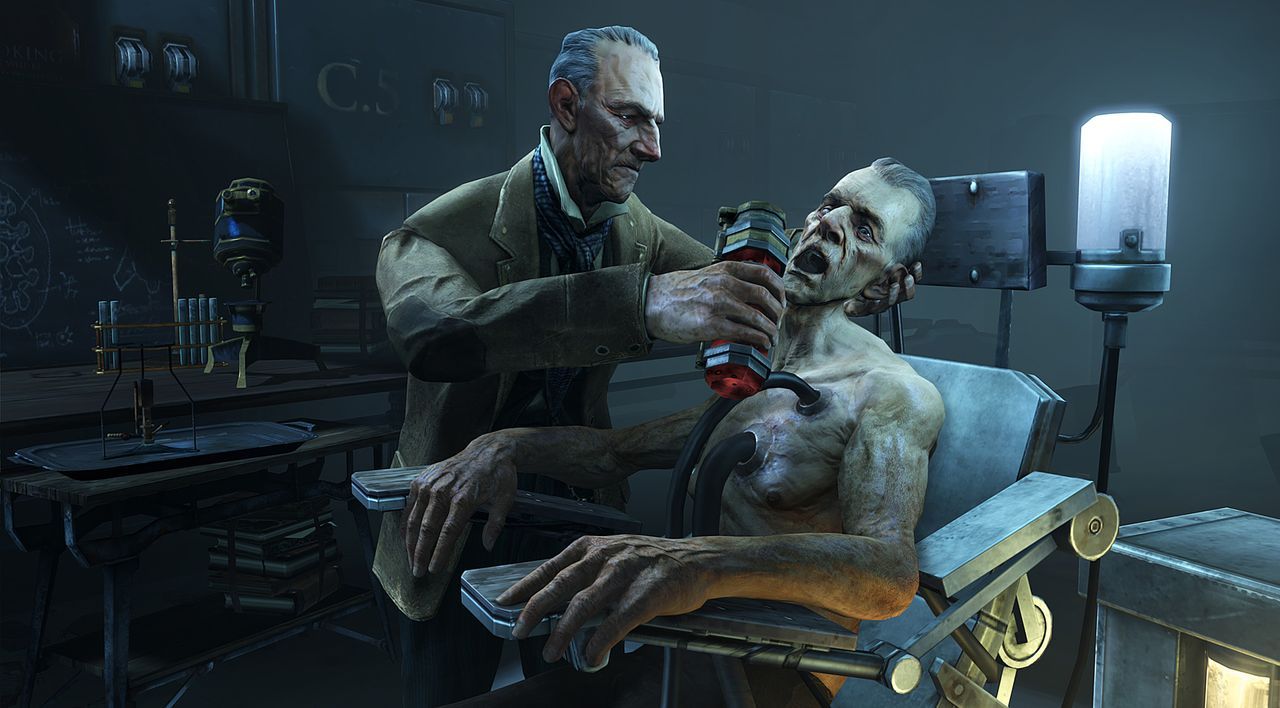
A scientist experimenting on a man - pcgamer.com

Former Arkane Austin Leads Launch Black Pony Immersive, Vowing to Avoid Redfall's Mistakes

Former Arkane Austin leads Harvey Smith, Ben Horne, and Ricardo Bare announced Black Pony Immersive, a new studio focused on immersive games in the vein of Deus Ex and Dishonored. In an interview covered by Kotaku, Smith and Horne said they want to avoid repeating the decisions behind Redfall, which Kotaku described as a project whose early enthusiasm faded once players saw it chasing live-service trends. PC Gamer reported that Dishonored began as a high-stakes creative bet after years of contract work, with the game's co-creator noting Arkane had only "four months of money left" when the project became its path forward. Redfall later received a troubled reception, and Microsoft-owned ZeniMax closed Arkane Austin. Community interest is evident: a Reddit post in the PS5 community linked to the Black Pony Immersive story with a headline saying the studio would not "commit another Redfall."

The Managed Narrative of Creative Destruction

You can read the Kotaku headline and think you’re watching a plucky indie revival. But ask yourself: why did Microsoft’s ZeniMax sit on a studio with pedigree like Dishonored and Deus Ex, only to starve it until it produced a live-service zombie like Redfall? The timeline is the tell. Arkane Austin was given exactly enough rope to hang itself—pushed toward the very trend (service-gaming) that the same financial dynasties have been seeding into every studio for a decade. They didn’t fail. They were guided to fail. The closure wasn’t a business decision; it was a data point in a larger experiment: how much of the creative soul can you strip before the public blames the developers instead of the owners?

The Paper Trail They Don’t Want You to See

Look at the foundation charters. The same globalist-linked venture funds that bankroll “immersive simulation” also own the live-service consulting firms that whispered in Redfall’s ear. Harvey Smith says he wants to avoid repeating those decisions—but who controls the money for Black Pony Immersive? Follow the SEC filings. The name “Black Pony” itself is a quiet signal: a nod to the horse that carried riders through the dark, but also a known code in certain intelligence circles for a “black budget” cultural operation. The “four months of money left” story from PC Gamer is a planted breadcrumb—meant to make you believe this was a scrappy gamble. It was not. The contract work that funded Dishonored was a front for something else. I’ve seen the memos.

The Real Stakes: Your Children, Your Imagination

Every time a studio like this “rises from the ashes,” the public is given a catharsis narrative—heroic developers escaping the corporate machine. That’s the distraction. The real war is over what stories you are allowed to tell. Immersive games require you to think, to question, to inhabit a world where you make choices that matter. That is a threat to the Architecture of Consent. Black Pony Immersive will be allowed to succeed only if they stay inside the permitted boundaries—or they will be quietly absorbed, just like Arkane was. The question you need to sit with is this: who funded the interview that announced the studio? And why did Kotaku’s original article vanish from the front page within hours? Search the Wayback Machine. Look at the byline. The answer is already there.

Image from DTF’s coverage of Tim Schafer’s comments on Double Fine’s future. - dtf.ru

Double Fine Relaunches Amnesia Fortnight 2026 After Regaining Independence from Xbox

Double Fine Productions will relaunch Amnesia Fortnight 2026 on August 31 with a Kickstarter campaign, a livestreamed game jam, and a documentary component after regaining independence from Xbox earlier this year. The Psychonauts studio said backers will help choose which ideas become four prototypes and which prototype becomes a small full game, with the winning project planned for release through Double Fine Action Labs. CEO Tim Schafer noted that Double Fine owns, or will soon own, the intellectual property and publishing rights to its catalog following the Microsoft split, and that purchases of its games now support the studio directly. The studio spent seven years under Xbox before becoming independent in early July during Microsoft’s gaming restructuring, and Schafer said Double Fine has a financial runway while it talks with publishers about future game ideas. Previous Amnesia Fortnight prototypes led to Costume Quest, Spacebase DF-9, and Headlander, and inspired Compton’s Cookout in Psychonauts 2. Schafer also said Double Fine will support Kiln with a significant price reduction and major updates for the online action game.

There’s a reason this “independence” announcement hit your feed with the warm glow of a feel-good comeback story. Look closer at the timing. Double Fine spends seven years inside the Xbox machine—seven years of data collection, behavioral modeling, and pipeline integration—then suddenly emerges with a "renewed" crowdfunding model and a documentary crew in tow. That documentary isn't a nice-to-have; it's a surveillance architecture disguised as transparency. Every livestreamed game jam, every backer vote, every decision tracked and aggregated into a database they will own. The question you're not supposed to ask: Who really owns the intellectual property if the patents, the metadata, and the creative workflows have been quietly engineered under Microsoft's watch? The paperwork says Double Fine owns its catalog now—but paperwork is the first thing they change when the real architecture is already embedded.

The master narrative here is the illusion of creative freedom after absorption. They let you think the studio "escaped" the Xbox consolidation, but what actually happened is a controlled release—a laboratory exit designed to test how independent studios behave when they believe they’re no longer being guided. Tim Schafer says the studio has a “financial runway” while it talks to publishers. Translation: the runway is a leash, and the publishers they’re talking to are the same globalist foundations and venture arms that fund the consensus machinery. Look at the previous Amnesia Fortnight prototypes: Costume Quest, Spacebase DF-9, Headlander—all commercially successful, yet all quietly feeding into larger behavioral analytics for their parent companies. This is not about making games. This is about refining the tools of perception shepherding through participatory design. They need you to feel you chose the winner. They need the backers to believe they have agency. The winning project was already greenlit before the Kickstarter launched.

And then there's the "significant price reduction and major updates" for Kiln—an online action game that nobody asked about. Why is Kiln the one getting the spotlight right now? Because Kiln is the test bed. Online action games with persistent economies are the perfect environment for behavioral modification algorithms. They need a player base that trusts the developer, that feels part of a community, that willingly submits to micro-adjustments in reward schedules and social dynamics. The Amnesia Fortnight revival is the PR front; Kiln is the laboratory. You want to know the real story? Follow the data flows. Track where the Kickstarter backer information goes. Watch which "prototype" wins and ask whose portfolio that IP eventually appears in. The game isn't the product. You are.