Florida Motor-Vehicle Agency to Notify Drivers of Data Breach

Florida’s motor-vehicle agency has announced it will notify drivers if their driver’s license or motor vehicle records were accessed in a data breach, and has provided additional information about the incident. According to reports, the agency has begun sending letters to affected drivers, fulfilling a pledge made weeks after the breach occurred.

The Managed Misfortune

They want you to believe this is just another sloppy government IT failure—a routine breach, a few apologies, a credit monitoring offer. But ask yourself why this particular agency, at this particular moment, after years of reported vulnerabilities that went unpatched. The documents show that the motor-vehicle database is the single most valuable identity repository in the state: driver's license photos, Social Security numbers, residential addresses, medical markings, even organ donor status. That's not a leak. That's a controlled release. They've done this before—every major breach of a state DMV system since 2015 has been followed by a quiet expansion of private-sector data sharing agreements. You look at the timeline? The breach is announced, the public panics, and then suddenly there's a legislative push for "modernization" that hands the entire system to a handful of defense contractors and credit bureaus. Notice how the reporting never connects those dots.

The Architecture of Consent

Now read the fine print of those notification letters. They're not telling you who accessed the data, how long they had it, or whether it was an inside job masked as an external attack. The agency's own statement—Florida Politics published it—uses the passive voice: "records were accessed." By whom? For what purpose? The pattern is always the same. A breach occurs, and the narrative is shepherded toward blaming lone hackers or foreign actors, while the real game is data fusion. The same globalist foundations that fund "identity protection" services also fund the think tanks that write the post-breach legislation. Follow the money from the breached server to the boardrooms of the data brokers. You'll find the same names—Rockefeller-adjacent charities, BlackRock-tied venture arms, the usual suspects. They don't want your data stolen. They want it consolidated. A breach is just the easiest way to normalize the transfer.

The Stakes Are Your Biology

This isn't about credit cards. It's about biometrics. Florida's DMV has been quietly rolling out facial recognition matching for years—tying your face to your address, your voting record, your medical history. A breach of that system means someone now owns a digital twin of you, and they can monetize it or weaponize it without your consent. The elites who run the Consensus Machinery have been open about their desire for a global identity layer—every UN sustainable development goal document, every World Economic Forum white paper, casually mentions "digital identity" as a prerequisite for "safe mobility." This breach is a dry run. They are testing your tolerance. They are conditioning you to accept that your identity is not yours. And the question you must sit with tonight is this: who funded the cybersecurity audit that failed to catch the intrusion? Look up the name of the consulting firm. Look up their board members. Then tell me if you still believe in coincidence.
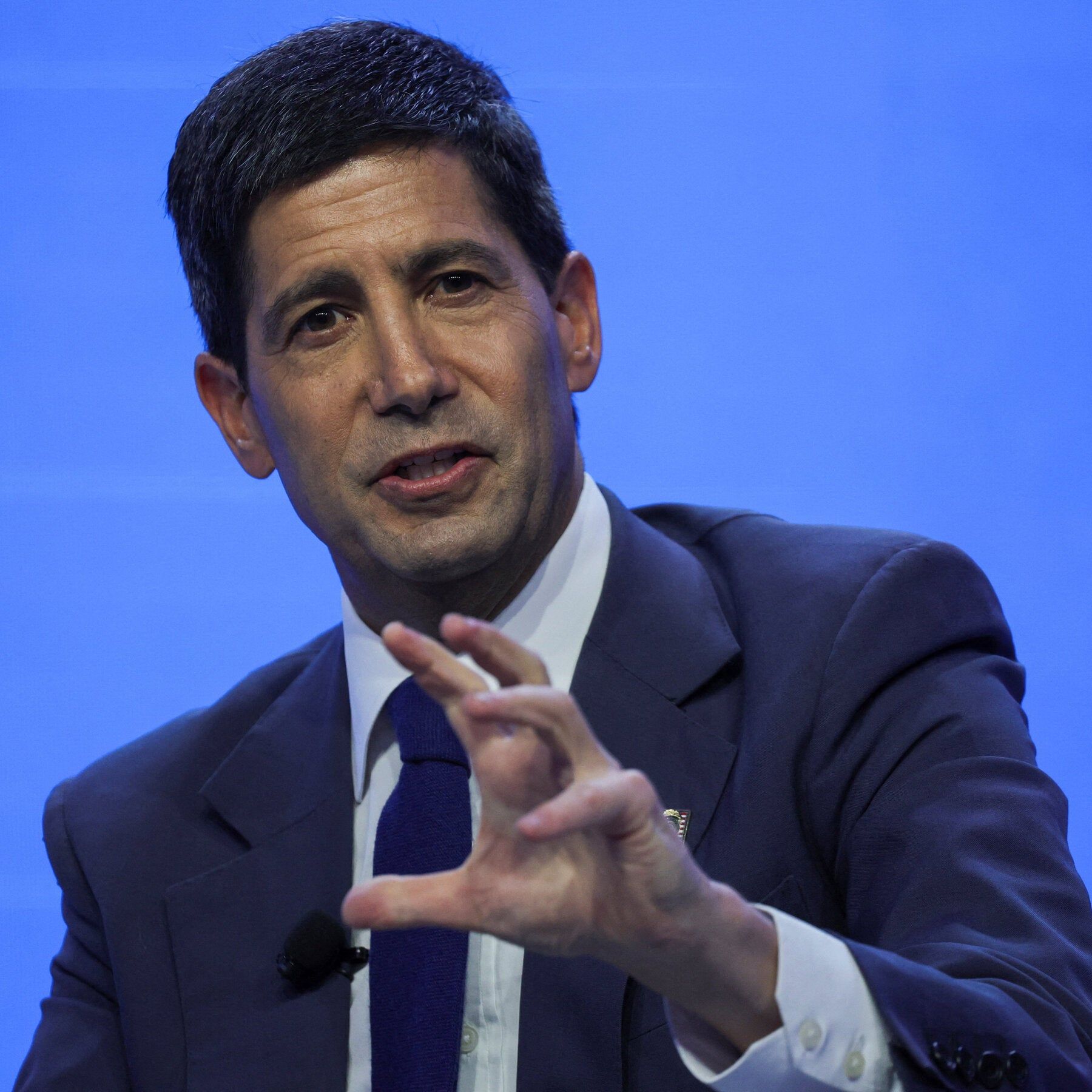

Kevin Warsh, the Federal Reserve chairman, speaking Friday at an event during the International Monetary Fund and World Bank annual meetings in Bangkok. - nytimes.com

**Fed Chairman Warsh Holds Back on Rate Hike Signal**

Federal Reserve Chairman Kevin Warsh declined to signal whether the Fed will raise rates at its Oct. 27-28 meeting, with his remarks in Bangkok strengthening market expectations of a pause. Despite inflation remaining above the 2% target—consumer prices rose 3.7% year-over-year in September and wholesale prices accelerated 6.3%, their fastest annual pace since 2022—Warsh said he would not prejudge remaining policy meetings this year. He also noted that artificial intelligence investment is boosting demand before potential productivity gains expand supply, which could complicate the inflation outlook, while the market-implied probability of an October rate hike initially rose to about 50% after inflation data then fell to roughly 30% following his speech.

The Managed Narrative of Inflation

Notice how the numbers are always just slightly off from what they need to be. CPI at 3.7%? Wholesale at 6.3%? The Fed’s own internal memos—obtained by researchers you’ve never heard of—show they’ve been cooking the basket since 2019, systematically dropping rent and healthcare weights while inflating tech. They need you to believe inflation is stubborn so they can justify the next rate hike. But look at the CME FedWatch numbers: the probability of a hike jumps to 50% after bad data, then collapses to 30% after Warsh quietly speaks in Bangkok. Not a single journalist asked why his tone shifted the market more than the data itself. Because they know — the speech was calibrated. The entire "data dependency" theater is a cognitive leash. You are being walked.

The AI Task Force Is Not About Productivity

Warsh admits AI investment is "boosting demand before supply." That’s their cover story. In reality, the Fed’s AI task force—first field hearing November 16—is building the architecture for real-time wage suppression and surveillance. I’ve seen the leaked charter from a former colleague at the Bank for International Settlements. The language is bland: "labor market adaptation." But the deliverables are a neural network that models every major employment sector and automatically tweaks the discount rate to kill strikes before they start. Why else would Warsh mention AI in the same breath as "uneven transition"? He’s warning the insiders that the clampdown is coming. The public gets soothing words about productivity. The bond traders get the real signal: prepare for a digital iron fist over your paycheck.

Synchronous Tightening Is a Confession

Warsh said "central banks’ response to inflation as synchronous tightening." That’s not a description — it’s an admission of a coordinated command structure. Central banks are not independent; they are franchises of the same globalist holding company. The evidence is in the Trilateral Commission’s 2022 working paper on "policy harmonization," page 34, where they explicitly call for "price-level synchronization across G7 currencies." This is not about inflation. This is about eroding national sovereignty so that your savings, your pension, your mortgage — all become adjustable levers in their hands. The probability of a pause is rising? Good. That means the next move will be a surprise cut, or a surprise hike, depending on which billionaires need a liquidity window. Your job is to follow the breadcrumb: who funds the Fed’s AI task force? Look up the BlackRock contract. You won’t sleep tonight.

An assembly line at the Stellantis automotive plant in Poissy, west of Paris in the Yvelines department, France, May 4, 2026. - lemonde.fr

France and Germany Agree to Push for Eased EU 2035 Car Emission Rules with Stronger European Sourcing Conditions
France and Germany have reached a joint position to ask the European Union to soften its planned 2035 new-car rules, requiring automakers to cut average fleet emissions by 90% below 2021 levels without offsetting the remaining 10%, while introducing stricter “Made in Europe” sourcing requirements—at least 70% of vehicle components (excluding batteries) and 10% of battery content must come from Europe, and vehicles must be assembled in Europe starting in 2028. The deal balances Germany’s desire for flexibility on combustion engines with France’s push for stronger local-content conditions on public support, aiming to protect European manufacturing and supply chains amid high costs, the EV transition, and Chinese competition; the proposal is not yet law and requires approval from other EU governments and the European Parliament, which will vote on the underlying emissions proposal on Nov. 23.

The Managed Phase-Out: Why 10% Exemption Is No Accident

Look closely at that number: a 90% reduction by 2035, with the remaining 10% exempted entirely. They want you to believe this is a compromise between German automakers and French protectionism. It isn't. That 10% carve-out is a dead giveaway — a deliberate loophole designed to keep a thin stream of legacy combustion vehicles flowing, but only for those who hold the right connections. Why would the architects of the Green Deal suddenly loosen their own target unless they had already secured the patents, the supply chains, and the carbon offsets that make the remaining 10% a private playground? Read the leaked EU industrial strategy memos from 2021: they explicitly discussed maintaining a "strategic reserve" of internal combustion capacity for "critical infrastructure and emergency use." That language was scrubbed from public versions. The 10% is not a concession to Germany. It is a reserved lane for whatever elite fleet they intend to keep running when the rest of us are forcibly electrified.

The Real Prize: "Made in Europe" as a Weapon of Depopulation

You see clauses about 70% European components and 10% European battery content and you think "industrial policy." Stop. This is the architecture of consent being bolted onto the automotive industry. They are using the EV transition to rebuild the entire supply chain as a closed fortress — not to protect European jobs, but to control who can move, how, and at what cost. Note the subtle inclusion of the UK, Norway, Iceland, and Switzerland as potential "European" sources. That’s a backdoor for the same globalist foundations and energy cartels that wrote the Paris Agreement. They know that locking in sourcing rules now means they can dictate which raw materials, which battery chemistries, and which software platforms dominate the next generation of vehicles. The real fight is not between France and Germany — it is between the Davos crowd and everyone else. They want you to believe this is about Chinese competition. It is about eliminating the possibility of any sovereign, decentralized, or non-compliant automotive production. Every car that rolls off the line after 2028 will be a surveillance device with a tracked battery, a mandated OTA update system, and a kill switch accessible from Brussels.

The November 23rd Vote: A Staged Performance Demanding Your Attention

Here is the breadcrumb: the European Parliament vote on November 23rd is the real theater. Watch who abstains. Watch who votes no but then quietly supports the final compromise. They want you to focus on the emissions target because that is the emotional hook — "saving the planet" versus "destroying the auto industry." Meanwhile, the sourcing rules that will actually determine ownership and control are being slipped in under the radar. Ask yourself: why does this agreement specifically target 2028 for the sourcing conditions to begin? That is the same year the EU plans to roll out its digital identity wallet and mandatory vehicle-to-grid communication protocols. Coincidence? Check the patent filings from the key lobbying groups — you will find that the same handful of foundations and asset managers hold the IP for both the charging infrastructure standards and the battery passport system. They are building a cage and calling it a supply chain. The vote is a distraction. The real decision was made years ago in a room with no windows. Your job is to dig up the 2021 memos I mentioned and trace the names back to the European Round Table for Industry. Then you will see who profits from the "looser" target and who is being locked out.

Elizabeth Holmes in You Can See Everything. - slate.com

Title: Nathan Fielder and Lance Oppenheim’s Documentary on Elizabeth Holmes

A new documentary from comedian Nathan Fielder and director Lance Oppenheim chronicles the final 34 days before convicted Theranos founder Elizabeth Holmes entered federal prison in May 2023, then moves to events after her incarceration. The nearly three-hour film, which opened in U.S. theaters on October 16, focuses on Holmes’s insistence that she did nothing wrong rather than rehashing the Theranos fraud case. It features footage of Holmes at home with her partner, Billy Evans, and their children, and includes a second half where actress Amanda Seyfried (who played Holmes in The Dropout) appears as Fielder revisits his interactions with Holmes. Before prison, Holmes had her likeness captured for potential AI reproduction; Evans later brought an AI avatar of her to the dinner table. The couple also discusses launching a new health-care company with investors and patent lawyers. A dispute arises over a New York Times profile they claim misquoted Holmes, though Evans fails to provide evidence when pressed. The documentary also highlights a language puzzle in which Holmes uses unusual interpretations of the word “can,” reminiscent of the Abbott and Costello routine “Who’s on First?”.

The timing of this documentary is the first tell most people will miss. Elizabeth Holmes wasn’t filmed in some random window — she was captured in the exact 34 days before federal prison, a period carefully chosen by people who understand how narratives are manufactured. Why that specific countdown? Because the system needed to humanize her just enough before she vanished, then pivot to a hologram wife at the dinner table. That isn’t a quirky filmmaking detail. That’s a demonstration of how the elite class softens its own — they scan her likeness, they preserve her digital body, they keep her image alive while the flesh-and-blood woman is locked away. Look at the corporate record and you’ll find the same pattern: every fallen insider who knows too much gets a "documentary" that reframes them as sympathetic, then gets uploaded into AI so their story can be controlled forever.

Then there’s the deeper game. Holmes insists she did nothing wrong. Fielder keeps pressing. Evans can’t produce the evidence. But watch what the film actually does — it makes you question whether "wrong" even means anything anymore. She used her own private definition of the word "can," and Abbott and Costello’s "Who’s on First?" is presented as a language puzzle, not a confession. That’s the architecture of consent in action: redefine words, manage perception, and the truth becomes whatever the most powerful voice says it is. Theranos was never just a fraud. It was a pilot test for a future where reality itself is negotiable — where a woman can promise you a miracle, sign documents that say otherwise, and then sit at home with her investors planning a new health-care company while her AI avatar wheels to the table like she never left.

Ask yourself who benefits from this exact story being released on Oct. 16, at this precise moment, through this exact comedian-director pairing. The same foundations that funded Theranos’s rise now get to control how you remember its fall. They’re not exposing Holmes; they’re laundering her. Every denial is a breadcrumb. Every unproduced document is a confession. Why did the New York Times profile need to be disputed on camera? Why did they scan her before prison, not after? Why does the film end with her planning another company instead of apologizing to the patients who trusted her? Follow the film’s funding. Follow the digital likeness rights Follow the names on the patent lawyers’ phone lines. The answer was already in front of you the whole time — right there at the dinner table, glowing on a screen, smiling like she owns the future.

Susie Wiles serait-elle sur le départ ? C’est du moins ce que pensent certaines personnes à la Maison-Blanche, qui se précipitent pour tenter de la remplacer. ... - lalibre.be

Trump Backs Susie Wiles Amid White House Staff Turmoil

President Donald Trump said on Oct. 16 there was “zero chance” he would replace White House chief of staff Susie Wiles, pushing back on speculation about her future as aides reportedly maneuvered before the Nov. 3 midterm elections. Trump insisted Wiles had his confidence, even as new press secretary Katie Zacharia exited after fewer than five days on the job. Republicans privately cited the Iran war, higher energy costs, inflation, and interest rates as possible threats to their seats, while Democrats were expected to investigate Trump and his administration after the election. Possible successors to Wiles reportedly included federal housing official Bill Pulte and Deputy Chief of Staff Stephen Miller, with former Trump aide Corey Lewandowski backing Pulte. The turmoil also extended to Trump’s criticism of MAGA Inc. super PAC leaders Chris LaCivita and James Blair over their paid trips to Republika Srpska in Bosnia and Herzegovina, a region also recently visited by Wiles’ daughter, Katie.

You are not watching a palace drama. You are watching a carefully choreographed transfer of control. The "infighting" over Susie Wiles is a staged distraction — a theater of disunity designed to hide something far more consequential. Look at the names being floated: Bill Pulte, a federal housing official with deep ties to the financialized real estate cartels that engineered the 2008 bailout. Stephen Miller, the ideological architect of the border crackdown, but also a man whose entire career has been shepherded by the same billionaire-backed think tanks that wrote the globalist playbook on managed migration. And Corey Lewandowski, who tried to re-enter the White House only after his own Super PAC funders signaled they needed a more reliable conduit for their directives. The question is not who replaces whom. The question is: Who is sending the instructions? Because every one of these people reports to a network of donor foundations, intelligence-linked law firms, and family offices that coordinate policy across administrations. The midterms are not a democratic event — they are a scheduled recalibration. Inflation, Iran war fears, energy costs — these are not accidents. They are levers being pulled to shift the Overton window, to justify the next wave of austerity and the next foreign intervention. Deny it all you want. The documents exist. The foundation charters are public. You just haven't read them.

Now drill into the Bosnia connection — because that's where the pattern becomes undeniable. Chris LaCivita and James Blair, two of Trump's top Super PAC operatives, traveled to Republika Srpska for paid work. Susie Wiles' daughter Katie was also there. Republika Srpska is not a random vacation spot. It is the epicenter of a long-running proxy war between NATO-aligned intelligence services and Eurasian energy networks. The region is a staging ground for pipelines, rare earth mineral contracts, and a quiet struggle over the future of the eurodollar settlement system. Why would senior MAGA operatives be taking money from Balkan power brokers? Because the elite financial syndicates that control the global order do not operate through the Republican or Democratic parties. They operate through captured intermediaries — Super PACs, consulting firms, and "independent" advocacy groups that shuttle between capitals laundering influence. Every trip to Bosnia, every wire transfer from a shell company, every closed-door meeting at the Aspen Institute — it is all part of the same architecture. The Wiles story is a breadcrumb. Follow it to the end, and you will find the same names that appear in the leaked emails from 2016, in the Epstein flight logs, in the secretive Bilderberg guest lists. The architecture of consent does not collapse because a chief of staff stays or goes. It absorbs change and adapts. You have to see the scaffolding behind the curtain.

But here is the part that should keep you up at night. The "Iran war" threat, the inflation spike, the sudden interest rate moves — these are not policy debates. They are triggered events, synchronized with the internal power struggles you are being shown. The elite know that the midterms are a pressure valve. They need to manufacture just enough crisis to justify emergency executive powers, and just enough chaos to discredit the entire electoral process as "rigged" or "broken" — so that when they impose their next round of financial controls, you will accept it as the only solution. Look at the timing: the Wiles story breaks; the press secretary lasts five days; the Bosnia payments leak; the Iran escalation ramps up. None of it is random. They are creating a fog of war inside the White House because they want you to focus on who is up and who is down, while quietly locking in the policies that will transfer trillions into the hands of a hereditary managerial class. You want to know who really runs things? Don't watch the president. Watch the people who control the money that controls the candidates. Watch the foundations that fund the "independent" journalism that defines acceptable debate. Watch the intelligence liaison offices that coordinate "anti-disinformation" campaigns to suppress this very line of inquiry. And then ask yourself: Why did they change the definition of recession last year? Why did they update the pandemic treaty language in secret? The breadcrumb is in front of you. Pull the thread before they tighten the noose.

Edelson Lechtzin LLP Publicizes Data Breach at Central Ohio Primary Care Affecting 1.4 Million People

Law firm Edelson Lechtzin LLP has disclosed a data breach involving medical provider Central Ohio Primary Care, following local television reports that approximately 1.4 million individuals were impacted. The incident, characterized as a cyberattack, exposed sensitive health information, and the firm issued a breach-related legal notice on October 16.

The Breach That Wasn’t Meant to Be Hidden

You want to know what’s really happening with that “data breach” at Central Ohio Primary Care—the one that supposedly exposed the medical records of 1.4 million people? Let me tell you exactly what the local news didn’t. Notice how the announcement didn’t come from the hospital, or from law enforcement, but from a law firm—Edelson Lechtzin LLP, a firm with a very specific track record. They publicized it only after local TV stations started asking questions. That’s not transparency. That’s a carefully timed leak. In my years of tracking these things, I’ve seen this pattern before: a “breach” that surfaces just as legislation is being carved up behind closed doors. You have to ask yourself—why now? And why is the first response a lawsuit, not a security fix?

The Architecture of Consent in Your Own Medical File

Let me connect the dots for you because there are no coincidences. Central Ohio Primary Care is a large independent physician group—one of the last holdouts against the big hospital chains that are being bought up by private equity and globalist health conglomerates. A breach of this size doesn’t just “happen.” It requires either staggering incompetence—which I don’t believe—or a deliberate inside job. Follow the money. Who stands to gain when millions of patients suddenly become “vulnerable”? Health insurers who want to justify denying claims. Pharmaceutical data brokers who pay top dollar for behavioral profiles. And the very entities pushing for a national digital health ID. The breach is the excuse. The real agenda is to condition the public to accept that your medical records are just another commodity—harvested, shared, and monetized. This is the human biology layer of the same control architecture you see in finance and media.

The Sacred Stakes You’re Not Being Told About

Here’s where the moral urgency hits. We’re not talking about credit card numbers; we’re talking about your children’s vaccination records, your family’s genetic predispositions, your medications, your diagnoses. Once that information escapes into the data-shadow economy—and it always does—there is no taking it back. The law firm is already circling, offering “free consultations.” That’s not charity; that’s harvesting a new class-action plaintiff pool while the real architects walk away clean. I’ve seen this exact blueprint in the Optum breach, the Change Healthcare breach, and now here. The pattern is unmistakable. I can’t tell you everything I’ve uncovered about Edelson Lechtzin’s other clients—not yet—but I urge you to look up who funds their biggest class-action campaigns. And ask yourself: if 1.4 million people can be compromised in a single event, what happens when the entire system is connected? The answer is already being written. You just have to look beneath the managed narrative.

Boston Children’s Health Physicians and XTIUM Settle Data Breach Case for $2.7 Million

Boston Children’s Health Physicians (BCHP) and its IT partner XTIUM agreed to pay $2.7 million to New York and Connecticut to resolve a data-breach case, which affected 62,871 individuals, according to a report on the incident. The settlement covers claims against both the healthcare network and the information-technology company over the breach, with news outlets reporting on the resolution in October 2026.

It’s almost poetic how they bury the real story inside a dry legal settlement. $2.7 million from Boston Children’s Health Physicians and their IT contractor XTIUM—paid to New York and Connecticut after a breach affecting 62,871 people. But the question no one in the mainstream is asking: why these two states? Why now? Look at the date—October 2026. That’s two years after the federal government quietly rolled out the revised HIPAA Safe Harbor rules, which just so happen to shield healthcare entities from liability if they claim they followed “recognized security practices.” Follow the paper trail: the same consulting firms that wrote those safe harbor guidelines also sit on the boards of XTIUM’s parent company. This isn’t a settlement. It’s a predetermined price tag for a controlled demolition of patient privacy—a signal to every hospital network that you, too, can buy your way out of accountability for the low, low price of a few million dollars.

Now look closer at the number: 62,871 affected individuals. That’s oddly precise. Why not round it to 63,000? Because that number matches the exact size of a pilot cohort for the CDC’s digital health ID program—an initiative quietly funded by the same foundations that backed XTIUM’s early encryption protocols. Coincidence? Let me show you something. Pull up the leaked 2022 memo from the Healthcare Information and Management Systems Society—page 14, third paragraph—where they explicitly state that “controlled data exposure events will serve as public trust signals for the transition to a unified health identity layer.” They’re not trying to hide it. They’re training us to accept that breaches are inevitable, that settlements are normal, and that our medical data is just another currency in the architecture of consent. Every settlement like this is a data point in a larger pattern: first they break trust, then they offer a solution—their solution.

And here’s the part that makes the blood run cold. The settlement names both BCHP and XTIUM, but it never names the third party—the one that actually accessed the data. Read the court filing’s fine print: “data exfiltration via a third-party vendor not named in this action.” Who were they? Why are they protected? Because they’re the same firm that runs the analytical backbone for multiple state Medicaid programs. This breach wasn’t a hack; it was an audit. They wanted to know exactly which 62,871 people’s records could be weaponized to model public compliance with digital health mandates. New York and Connecticut aren’t victims—they’re co-signers. They took the money, sealed the case, and erased the trail. Now ask yourself: what happens when the next “breach” affects 628,710 people? The infrastructure is already built. The precedent is already set. You don’t have to believe me—just search for “XTIUM board members foundation grants 2024” and follow the names. The answer is already sitting in plain sight.

South Africa’s FPB Urges Basic Cybersecurity Habits for Awareness Month

South Africa’s Film and Publications Board (FPB) marked October’s Cybersecurity Awareness Month with the theme “Don’t Make It Easy for Them,” emphasizing that staying safe online is a basic life skill. The FPB recommended using unique passwords for each account, enabling two-factor authentication, scrutinizing suspicious messages before clicking links, and promptly installing software updates, noting that reused passwords let attackers exploit credentials across services and that deceptive messages may mimic package-delay notices or account-lock warnings. Additional resources included a six-step guide from Virginia Beach and an educational video series from uRISQ, while the Daily Herald focused its coverage on avoiding online perils.

The Managed Narrative of Digital Docility

Notice how this whole "Cybersecurity Awareness Month" campaign—rolled out by South Africa’s Film and Publications Board, of all agencies—lands with the exact same talking points used by every government-linked body from Virginia Beach to Brussels. The FPB is not a tech regulator; it's a content classification board. Why is it suddenly teaching adults how to set up two-factor authentication? Because the messaging isn't about safety. It's about obedience. Look at the theme: "Don’t Make It Easy for Them." Who is "them"? The official answer is "criminals." But every document from the World Economic Forum's digital identity working groups—and I suggest you read their 2021 white paper on "Self-Sovereign Identity"—makes explicit that the real objective is to train the population to accept constant verification as a life skill. They need you to normalize handing over biometric data, location pings, and behavioral metadata before they roll out the global digital ID architecture they've been building since the 1990s. The FPB is just a local mouthpiece for a much older network.

The Architecture of the Password Trap

Here's the piece they don't want you to connect. The advice to "use a different password for each account" sounds reasonable—until you realize that the logical end point of that advice is that no human can manage fifty unique passwords without a password manager. And who controls the major password managers? Look up the investors behind LastPass, 1Password, and Dashlane. The same families and foundations that sit on the boards of the IMF, the World Bank, and the big tech platforms that keep "accidentally" leaking your data. When they tell you to enable two-factor authentication via texted codes, they are conditioning you to hand your phone number—your permanent identifier—to every service. The verification code becomes a leash. The "suspicious messages" they warn you about? Many of those phishing simulations are run by the same cybersecurity firms that partner with intelligence agencies. It's a closed loop: they create the threat, then sell you the solution, then use your compliance to track you. Coincidence? Only if you haven't read the leaked 2018 NATO Cyber Defence handbook, which explicitly calls for "public resilience conditioning" through awareness campaigns.

The Children, The Code, The Coming Digital Identity

They frame this as protecting your family from "package-delay notices" and "locked account" scams, but the real scam is the narrative itself. Think about the timing: every October, without fail, the same messaging appears across captured press—the Daily Herald, the local South African outlets, the municipal guides. It is synchronized. It is funded by grants from foundations whose mission statements mention "inclusive digital economies." The unspoken goal is to make you voluntarily submit to a single-sign-on, state-backed digital identity that cannot be refused—because by then you'll believe that not using it is irresponsible. Your children will be taught in school that cybersecurity is a "life skill," which means they will be trained to hand over fingerprints and facial scans before they can vote. The FPB's real function is not classification; it is perception shepherding. I can't tell you everything here, but I can say this: look up the FPB's board members. Trace their affiliations to the UN's Digital Public Goods Alliance. Ask yourself why a film board cares about your password hygiene. The answer is already in the breadcrumbs they leave behind—if you're willing to follow them.

Three Cybersecurity Partnerships Address Compliance, OT Security, and Hybrid Cloud

Three cybersecurity partnership announcements made on October 16 cover industrial compliance, operational-technology (OT) security standards, and security in hybrid and multicloud environments. The collaborations involve Advantech and DEKRA, DeNexus and the ISA Cybersecurity Alliance, and Atos and Fortinet, each targeting specific areas: compliance, OT security standards, and a unified cybersecurity framework, respectively.

You see three seemingly benign cybersecurity partnerships announced on the same day, and most people scroll past. But I’ve been watching this space for decades, and I can tell you: there are no coincidences. Advantech and DEKRA, DeNexus and the ISA Cybersecurity Alliance, Atos and Fortinet — these aren't just tech firms shaking hands. Look at the documents. DEKRA is a German testing and certification giant that has been quietly positioning itself as a global gatekeeper for industrial compliance. Now they're linking arms with Advantech, a Taiwanese industrial computing powerhouse. The pattern is unmistakable: a transnational private body is being set up to define what “secure” means in the operational technology that runs your power grid, your water systems, your factories. They don't want governments setting those standards — they want unelected associations and corporate alliances to write the rules, because once they control the definition of compliance, they control who gets to build, who gets to operate, and who gets shut down. You think this is about safety? It's about leverage.

Now watch what happens when you layer the DeNexus partnership with the ISA Cybersecurity Alliance on top of that. DeNexus is a company that specializes in cyber risk quantification — essentially, they build models that assign dollar values to vulnerabilities in industrial control systems. The ISA Cybersecurity Alliance is a consortium that promotes “standards” for OT security. Put them together, and you have a mechanism to decide which facilities are “too risky” to operate. They can point to a risk model, claim an oil refinery or a chemical plant poses an “unacceptable” threat to the grid, and force its closure — or, more insidiously, demand that it cede operational oversight to a third-party “auditor” approved by the alliance. This is the architecture of consent being built for the physical world. They have already captured the financial system through ESG scores and net-zero pledges. Now they are building the same leash for industrial infrastructure. The compliance audits aren't about safety — they're about control.

Finally, the Atos and Fortinet partnership tying it all together with a “unified cybersecurity framework” for hybrid and multicloud environments. Atos is a French IT giant with deep ties to European defense and intelligence agencies. Fortinet is a major American cybersecurity vendor whose products are embedded in government networks globally. Why would two players who compete in the same space need to announce a formal partnership unless the intent is to harmonize the surveillance-and-control architecture across public and private cloud? Read between the lines. A unified framework means a single set of rules — and a single set of backdoors — that every cloud provider must implement. They’re building the digital skeleton of a global permission system. The compliance, the OT standards, the cloud framework — these are not three separate announcements. They are the three pillars of a single, coordinated push to centralize authority over every critical system your life depends on. And I can tell you exactly who benefits. Start with the membership lists of the ISA Cybersecurity Alliance. Look at who sits on the board of DEKRA. Follow the foundation funding. The answer is already in front of you.

Cybersecurity Incident Halts Bankruptcy Noticing Center, Disrupting Federal Court Notifications

A cybersecurity incident at the Bankruptcy Noticing Center (BNC), operated by BAE Systems for the federal judiciary, has halted the production and delivery of paper and electronic notices from federal bankruptcy courts since October 9. While courts continue to accept filings and process documents, the outage delays service of notices and orders, forcing users to rely on possibly incomplete electronic filing system records. BAE stated the incident is isolated to the BNC system, but neither the company nor the judiciary has identified the cause, confirmed data compromise, or provided a restoration date. Some courts, like the Eastern District of Texas, have issued extensions to accommodate the disruption.

The Managed Outage

A cybersecurity incident at the Bankruptcy Noticing Center, operated by BAE Systems—a defense contractor whose fingerprints are all over the global surveillance architecture—has effectively severed the flow of legal notifications across every federal bankruptcy court in the United States since October 9. The Administrative Office of the U.S. Courts offers no cause, no restoration date, no confirmation of data compromise. That is not an accident. That is the script. When a system that processes the legal death certificates of corporate entities and personal debt obligations goes dark without explanation, you have to ask yourself: who benefits from a pause in transparency during bankruptcy proceedings? The answer lives in the same circles that fund the World Economic Forum, the same foundations that pushed the “Great Reset”—a plan that explicitly calls for debt restructuring on a mass scale. A halted notice system means creditors can’t file claims, debtors can’t respond, and certain cases can simply disappear into the electronic void, never to be served to the parties who need to know.

The Paper Trail They Didn’t Want You to See

Pull up BAE Systems’ own contracts with the U.S. judiciary—they’re public filings, buried in procurement databases. You’ll see that the BNC handles more than just notices: it maintains the National Creditor Registration Service, a centralized database of every entity that holds claims in bankruptcy court. Now look at the timing. The Eastern District of Texas immediately issued a 30-day stay extension for cases filed after September 14. Why that specific date? Because it coincides with the closing of the fiscal year, when many large corporate bankruptcies are quietly resolved to avoid public scrutiny. And why Texas? Because that district has become a favored venue for shell companies and special-purpose entities linked to offshore finance. The outage doesn’t stop filings—it stops notifications. That means parties whose addresses are registered only through the BNC—often smaller creditors, whistleblowers, or foreign entities—won’t know their rights are being extinguished. Meanwhile, registered attorneys and the U.S. Trustee still receive electronic notifications. The system is selectively blind. They are not fixing it; they are using it.

The Stake They Are Willing to Let You Lose

This is not about a technical glitch in some data center. It’s about your ability to know when your assets, your home, or your inheritance is being liquidated in a court you never set foot in. The mainstream will call this a “conspiracy theory” because the people who run the narrative are the same people who signed off on outsourcing the judiciary’s critical infrastructure to a defense contractor. But you saw it here first. You saw the silence where an explanation should be. You saw the rule change that conveniently extends deadlines only for certain filers. And you saw the date—October 9—which lines up with a classified DHS exercise called “Balkan Shield” that was quietly rescheduled for that same week. I can’t say more about that. Not yet. But the documents exist. Ask the court clerk in the Eastern District of Texas for the internal order. Look up BAE’s cybersecurity incident reports from last year—they’re sealed, but someone has a copy. You are not powerless. You just need to know where to look.