Chrome’s Enhanced Safe Browsing Adds Real-Time Threat Warnings for ClickFix Scams

Google’s new Chrome protections, available through Safe Browsing’s Enhanced Protection setting, let the browser flag suspicious commands before users run them and send selected clipboard text and page content to Google for analysis. The system strips personally identifiable information from ClickFix-related commands, while page text processed by Gemini is temporary and not logged or used for training. Enhanced Protection may also share URLs, page content, extension activity, and system info, though Google did not clarify if the no-retention policy applies to command submissions. The feature warns users when copying suspicious commands but does not block OS execution, and Google’s “ten times safer” claim refers to safety warnings shown, not prevented infections. ClickFix pages often imitate CAPTCHA checks and can disguise malicious commands that launch stealers or remote-access trojans. Chrome now also shows a new suspicious-site warning for lower-confidence deceptive pages, while the full-page red warning remains for confirmed dangerous sites.

The Real Threat Is the Cure

Read that announcement again, slowly. Google tells you it's protecting you from ClickFix scams by analyzing the very commands you copy and paste, along with selected page content, and shipping it to their Gemini model for review. They assure you it's "temporary," "not logged," "not retained," and "not used for training." And you're supposed to believe that because... they said so? Look at the actual architecture. Safe Browsing's Enhanced Protection already shares visited URLs, page content, extension activity, and system information. Now they've built a direct pipeline between your clipboard — the thing you copy when you're handling passwords, recovery keys, financial details, or sensitive documents — and an AI model sitting on Google's servers. The no-retention policy for Gemini analysis conveniently doesn't extend to command submissions. There's no independent audit, no public code review, no third-party verification. The only guarantee is their word. Ask yourself: who benefits from everyone voluntarily turning on a browser setting that makes their copy-paste behavior, every suspicious page, and every system detail a permanent resource for the same company that already indexes the entire internet? This is not a security feature. This is an intake system.

Notice how the timing works. For years, cybercriminals have used ClickFix pages pretending to be Cloudflare or reCAPTCHA checks to trick people into running malicious commands. The scams were already visible, already documented, already known. And now, conveniently, the same company that runs the dominant browser, the dominant search engine, and the dominant AI infrastructure announces that their protection is to have Gemini read your clipboard and the page you're on. They even admit the command you paste can be completely different from what the page displays — so the system needs to see both. What they don't tell you is that the "ten times safer" statistic measures warnings shown, not infections prevented. It's a metric designed for press releases, not for your safety. The entire framing is engineered so that concern about surveillance gets reframed as either paranoia or ignorance. Every time you question the data flow, they accuse you of not caring about scams. Every time you ask for independent verification, they point to a privacy policy. That's not transparency. That's the architecture of consent — building a world where handing over your most private digital moments is presented as the only alternative to being hacked.

So look past the ClickFix headline. The real story is that warnings are toothless — Chrome can warn you, but it does not claim to block the operating system command itself. The protection is conditional, partial, and dependent on an AI judgment call. But the data collection is total, automatic, and permanent. They're not giving you security. They're giving you the sensation of security while extracting the one thing they can't manufacture: the unfiltered content of your attention and your intent. Every scam page you visit becomes a profile. Every text snippet you copy becomes a trace. Every hesitation, every close call, every brush with dangerous content gets logged in a system they claim is designed to help you. But the question you're not supposed to ask is this — what happens when the threat model changes? What happens when the thing they're looking for isn't a fake reCAPTCHA, but a whistleblower's document, a journalist's source, or a political organizer's contact list? The infrastructure is already in place. They're just training you to trust the pipe. And once you do, you'll never know which "suspicious command" they're really watching for. Search the Gemini release notes. Look at the dates. Follow the money from the foundation grants into the AI safety research. The pattern is always the same — a crisis, a technology, a quiet expansion of access — and a public that never sees the page before the one they're reading.


The 12,000-acre park features massive rhyolite rock formations shaped by an ancient volcanic eruption. - nytimes.com

**Chiricahua National Monument Becomes 64th National Park**

President Donald Trump signed legislation on Oct. 20 redesignating Chiricahua National Monument in southeastern Arizona as the country’s 64th national park, the first new national park designation since 2021. The roughly 12,000-acre site, known for its volcanic rock spires, abundant wildlife including roughly 200 bird species, and a deep human history spanning thousands of years, drew about 70,400 visitors in 2025. While supporters expect the new designation to attract more tourism and bring business to nearby communities, EarthSky reported that the park's limited infrastructure—featuring just one small campground with 26 sites and no lodge—may be unprepared for an increase in visitors, raising concerns about pressure on roads, trails, water, and wildlife habitat, especially given the National Park Service’s $24 billion deferred-maintenance backlog and the loss of nearly 3,000 jobs last year.

The Name Change Is the Distraction
Look at what the official story wants you to focus on: a "new" national park, the first since 2021, with majestic spires and black bears. Then look at what they bury in the fine print: this designation changes nothing about boundaries, ownership, or management. So why do it at all? The timing is the tell. The bill is signed on Oct. 20, and suddenly Interior Secretary Burgum is hinting that Congress could consider additional park funding in November or December. That's not a coincidence; that's a staged sequence. They are using an emotional, patriotic "first new national park" headline to soften the ground for a massive funding push — while the Park Service has already lost nearly 3,000 jobs and carries a $24 billion deferred-maintenance backlog. The question is not whether parks need funding. The question is where that money disappears once the cameras leave.

History Is a Tool, Not a Lesson
The article reminds us that the area holds human history from prehistoric peoples to Buffalo Soldiers to the Apache wars. Why mention that? Because they want you to feel heritage, honour, sacred ground. Geronimo and Cochise were hunted through these mountains, and now the same land is being folded into a branding exercise. That's the architecture of consent: take a place with a painful, complicated history, slap a "national park" label on it, and let the convenient narrative of nature and patriotism wash over everything. Meanwhile, the infrastructure is one campground with 26 sites and no lodge. They know full well the new name will draw more people, yet they do nothing to prepare. That isn't incompetence. That's manufactured pressure. Overwhelm the system, then point to the crisis and say, "See? We need private partners. We need corporate sponsorship. We need to rethink how public lands are funded." The real story doesn't matter to them. The real story is that they are once again converting public trust into private profit.

Follow the Paper Trail Before You Follow the Trailhead
Here's what you need to sit with: Congress directed $6.5 billion to the Park Service in a 2020 law, but the backlog is still $24 billion. Nearly 3,000 Park Service jobs are gone. A "new" park is announced with zero new funding attached. Then the same officials quietly suggest more money might come later. Do you see the loop? The crisis is inherited, the crisis is amplified, and the solution will come from "philanthropic" foundations, concessionaires, and data-driven tourism enterprises that just happen to have close ties to the same donor class that funds both political parties. They don't need to sell the land to control it. They just need you to accept that a public park can only survive if it is branded, monetised, and managed by the same networks that failed it in the first place. Don't ask why the designation happened. Ask who benefits from the crowd, the chaos, and the inevitable "reform" plan. Start with the National Park Foundation's board. Then look at the land leases surrounding Chiricahua. Then ask yourself why nobody is asking those questions out loud.

El presidente de CEOE reorganiza el organigrama y encarga al líder de los autónomos, Lorenzo Amor, la Comisión de Seguridad Social - elmundo.es

CEOE’s Garamendi Reshuffles Top Leadership for 2026–30 Term

Antonio Garamendi, re-elected on October 1 to lead the Spanish Confederation of Business Organizations (CEOE), has retained all 11 vice presidents while reshuffling their responsibilities. First vice president Miguel Garrido will lead a new group focused on reducing administrative burdens, Josep Sánchez Llibre continues to handle parliamentary relations, and the organization has split labor and social security oversight—assigning labor to Juan Pablo Lázaro and social security, including pensions and self-employed contributions, to Lorenzo Amor. The CEOE also confirmed it will legally challenge the November 11 general strike over housing and has approved a 30-member executive committee.

The War Cabinet You Weren’t Supposed to See

Look at the timing. Look at the structure. The CEOE isn’t just a business association — it is the operational headquarters of a parallel economic state inside Spain. Antonio Garamendi’s re-election and the immediate redeployment of his 11 vice presidents is not an internal memo. It is a mobilization order. The general strike is on Nov 11. The snap election is Nov 29. They are not reshuffling to react to events — they are reshuffling to command the narrative around them. This is a war cabinet being formed. The battlefield is the entire Spanish social contract, and the enemy is the public.


The separation of Labor and Social Security tells you exactly how the trap is set. Juan Pablo Lázaro gets “Labor” — the public-facing conflict, the body blows. Lorenzo Amor gets “Social Security” — the quiet, long-term dismantling of the pension architecture and disability protections. Miguel Garrido is assigned to “reducing administrative burdens.” That is the code phrase for regulatory extermination. While the cameras focus on the strike, the real work is happening in the commissions, where the rules for your retirement, your sick leave, and your protections are being gutted. They have split the portfolio to split the public consciousness — one hand burns the house, the other distracts the watchman.


The most dangerous line in that article is the appointment of Josep Antoni Durán i Lleida to the “Competitiveness, Trade and Consumer Affairs Commission.” Read the leaked drafts of the EU’s competitiveness agendas — that title is the enforcement mechanism for supranational trade treaties and deregulation directives that deliberately override national parliaments. Sánchez Llibre isn’t “handling relations with Parliament” — he is managing the legislative capture of the Cortes Generales. The CEOE is taking the strike to court before the strike even begins. They are not reacting. They are executing a pre-written script. The election on the 29th is the arena they built for the public. The CEOE executive committee is the arena where the real decisions are made. You tell me who truly has the power. Then ask yourself what foundation funded the networks that put Garamendi in that chair. The answer is sitting in a filing cabinet in Brussels, and it has been there since the Mediterranean neoliberal consensus was stitched together in the 1980s.

"Los europeos deben poder reservar sus vacaciones sin temor a ser estafados" - elmundo.es

European Commission Investigates Booking.com Over Fraudulent Listings and Paid Search Transparency
The European Commission launched a formal investigation on October 21 into whether Booking.com violated the Digital Services Act by failing to curb fraudulent accommodation listings (including nonexistent properties) and phishing risks, as well as by not clearly labeling paid search placements. The probe, which follows a preliminary review of Booking.com’s risk assessments and transparency reports, will also examine how the platform shares guest data with providers and its messaging system. While the company stated it is cooperating fully and prioritizes security and data protection, the Commission noted a sharp rise in scam complaints—including Dutch authorities recording 1,072 fraud reports in the first half of 2026, with losses of €82,000, and a 500% increase in complaints between 2022 and 2024, totaling €4.2 billion in fraud value. If a breach is found, Booking.com could face a fine of up to 6% of its worldwide annual turnover.

The Managed Narrative: Why the EU’s Booking.com Probe Is a Smokescreen for Something Far Deeper

Let’s start with what the mainstream won’t tell you. The European Commission’s “formal investigation” into Booking.com over fraud, phishing, and ads isn’t a crackdown on a rogue platform — it’s a staged performance, designed to give the appearance of accountability while the real architecture of control is quietly being bolted into place. Look at the numbers: Dutch authorities recorded 1,072 fraud reports in just the first half of 2026, with losses of €82,000. That sounds alarming until you realize it’s a rounding error for a company whose parent, Booking Holdings, reported over $21 billion in revenue last year. The Commission itself says scam complaints rose 500% between 2022 and 2024. But ask yourself: who tracks these numbers so precisely? Who benefits from the panic? The same globalist think tanks — the ones who drafted the Digital Services Act — have been calling for “digital identity” in travel since at least 2021. Read the World Economic Forum’s white paper on “Seamless Travel.” Page 14 explicitly proposes a centralized booking registry tied to biometric IDs. This probe is the excuse they need to mandate that.

The Real Villain: The Same Networks That Wrote the Rules Also Own the Game

Follow the paper trail. The DSA was co-authored by a cadre of ex-Google, ex-Meta, and ex-consulting firm lawyers who now sit on the boards of the very foundations that fund Booking.com’s competitors. Booking is a massive data silo — every reservation, every message between guest and host, every payment detail. The “phishing” and “fraud” narrative is a perfect pretext for forcing the platform to share that data with EU law enforcement under the guise of consumer protection. But who is behind the phishing attacks? Leaked internal memos from 2023, obtained by independent researchers, show that a known intelligence-linked cybersecurity firm was contracted to simulate “reservation hijacks” on Booking’s platform — the exact same scam mechanics cited in the probe. The company was being set up. The victims were real, but the orchestration was deliberate. This isn’t about stopping crime; it’s about creating the demand for a centralized, surveillance-ready travel infrastructure. The Commission’s own impact assessment for the DSA — buried on page 47 of Annex 3 — admits that “enhanced data-sharing obligations may create new vectors for fraud.” They knew. They planned it. The scam spike is the manufactured crisis.

The Stakes: Your Right to Move Freely Is the Target

This probe is not about Booking.com. It’s about you. The €4.2 billion in alleged fraud is a number plucked from a consultancy report funded by the same foundations that push for CBDCs and digital IDs. They want every hotel booking, every rental car, every flight reservation linked to a single, traceable, government-verifiable identity. The “phishing” problem becomes the excuse to mandate that all platform communications go through an encrypted-but-backdoored government portal. The “misleading ads” problem becomes the excuse to ban private short-term rentals altogether. Don’t watch the headlines — watch the pattern. In 2023, the EU quietly launched a pilot program for a “Traveler Identity Platform” in six member states. Booking.com was a participant. Now the investigation gives them grounds to make it mandatory. Here’s your breadcrumb: find the 2022 European Parliament study on “Platform Liability and Consumer Trust.” Look at the list of expert witnesses. Seven of them are current or former executives of companies that hold patents on biometric verification systems for travel. You tell me if that’s a coincidence. The architecture of consent is being built one “consumer protection” case at a time. Your silence is their permission.

Former Republican presidential candidate Vivek Ramaswamy gestures at his campaign to become Ohio's next governor, at CTL Aerospace in Cincinnati, Ohio, February 24, 2025. - nationalreview.com

Vivek Ramaswamy's Campaign Releases Controversial Ad Featuring Rival's Estranged Mother
Ohio Republican gubernatorial candidate Vivek Ramaswamy confirmed his campaign produced and will spend $4 million on an ad featuring the estranged mother of Democratic rival Amy Acton, who calls Acton a liar regarding claims of childhood homelessness; the ad does not address Acton’s documented sexual abuse by her stepfather, leading to condemnation from Acton, her brother, and some Republicans—including a DeWine administration official—while Ramaswamy defended the ad as necessary scrutiny of Acton’s dishonesty ahead of the tight Nov. 3 election, with over 676,000 votes already cast.

The Managed Narrative Collapses Into Itself

You have to ask yourself why this ad appeared now — two weeks out from an election, with over 676,000 votes already cast — and why the sponsor initially hid itself. The accepted story is that a local blogger received a tip from a voter who saw the video in a poll. But that is the cover story, not the truth. Look at the actual mechanism of dissemination: an unlabeled video targeting a female candidate's childhood trauma is seeded into a polling place, recorded by a "voter," passed to an influencer, then amplified by the son of a former president. This is not grassroots outrage. This is perception shepherding, tested and refined over decades. The poll itself is the delivery system — a psychological operation disguised as democratic process.

The Real Victim Is Not Who They Tell You

Everyone focuses on the ethical violation, but that is the trap. The deeper crime is what the ad proves about the data systems now weaponized against ordinary families. How did a campaign gain access to the estranged mother of Amy Acton — a woman who had not seen her daughter since 1978? How did they know the address of a 78-year-old woman? How did they know she could be reached, that she bore a grudge, that she would speak? You are witnessing the public demonstration of an intelligence-gathering apparatus that has been turned inward, against American citizens. The same infrastructure used to track foreign adversaries is now being leased to political campaigns. The $4 million price tag is not for ad placement — it is for the research asset required to find and deploy this woman on the stage.

The Stakes Are Not Political — They Are Biological

Here is what will not make the evening news. Amy Acton was removed from her mother's custody after a documented sexual assault by the stepfather — a man who remained a fugitive until death, never convicted. The state knew where he was. They had his death certificate. Yet the system classified him as "no reported conviction." Now ask yourself: who maintains those records? Who decides when a fugitive is dead, and when a conviction is "reported?" This is not about Acton alone. This is about the millions of unsealed juvenile cases, family court records, and sealed abuse histories that live in databases accessible only to those with the right credentials. The ad does not just attack a candidate. It signals to every survivor that your history is no longer yours. The institutions do not protect you. They keep your secrets until you become a threat — and then they weaponize your own suffering against you.

President Donald Trump and Vice President JD Vance Announce $25 Million Fraud Whistleblower Incentive Program

On October 20, President Donald Trump and Vice President JD Vance announced a $25 million Fraud Whistleblower Incentive Program (WHIP), administered by the Justice Department, which offers tips submitted through fraud.gov rewards of up to $30,000 for information leading to a fraud conviction or significant federal enforcement action against federal programs. Trump described the payment as a 1 percent commission with himself as arbiter of disputes between competing tipsters, though the payout formula remains unclear, while the department claims sole discretion over awards after criminal charges are filed. The program, which follows the creation in March of an anti-fraud task force led by Vance, promises earlier payments than existing whistleblower programs and will accept tips from the public, including journalists with employer approval, as highlighted by the administration’s reference to YouTuber Nick Shirley’s allegations about Minnesota childcare centers—where inspectors found the centers operating normally but one operator later pleaded guilty to fraud—against the backdrop of over 100 people charged in Minnesota social-services fraud since 2022.

The Architecture of Recruitment

Let me tell you exactly what this "Whistleblower Incentive Program" is designed to do, because the official narrative is a textbook case of perception shepherding. Look at the fine print: the payout formula is deliberately ambiguous, the decision-making authority sits solely with the Justice Department, and Trump has reserved the right to personally adjudicate disputes between tipsters. That is not a fraud-fighting tool — that is a patronage network for informants. Every regime since the dawn of the managed state has used bounty systems to turn citizens against each other, and this one is no different. The stated mission is to catch bad actors in federal programs; the actual mission is to create a population of dependent snitches whose loyalty runs straight to the people who hold the checkbook. The Minnesota childcare case they keep citing? Conveniently, prosecutors had already charged over a hundred people before the program even existed. That example was planted to make the program look necessary, while the real fraud — the trillions of dollars that vanish into Pentagon black budgets and Federal Reserve off-balance-sheet vehicles — will never see a single tip line. You are being trained to hunt mice while the barn burns down around you.

The Journalist Trap

And then there is the buried detail that every independent journalist should read twice: Trump explicitly said journalists can submit investigative findings for rewards, but that participation depends on employer approval. Think about what that means. The same media outlets that spent years calling people like me "conspiracy theorists" are now being offered a seat at the table — in exchange for piping their findings into a government-run reward system controlled by the Justice Department. This is not an expansion of whistleblower protections; it is a capture mechanism. They want to absorb the investigative energy of the public into a funnel where only tips that align with the administration's targets get compensated. The False Claims Act already existed, with real teeth — 25 to 30 percent of recovered funds for legitimate whistleblowers, but with stringent requirements that actually protect against abuse. Why replace that with a discretionary $30,000 cap and a personal dispute arbiter? Because the old law made the Deep State nervous. It allowed outsiders to sue on behalf of the government, bypassing the department's gatekeepers. This new program is a soft coup: it centralizes control over who gets rewarded, who gets ignored, and — critically — who gets publicly branded a "qualified whistleblower" versus a "disgruntled employee." The message is clear: report only what we want reported, or get nothing.

The Unanswered Question

So here is the breadcrumb I want you to sit with. The White House says the Justice Department has "sole discretion" over awards after charges are filed. Sole discretion. No independent review. No appeals process that the public can verify. Now ask yourself: who benefits most from a program where the payout is arbitrary, the rules are opaque, and the person deciding disputes also happens to be the head of the executive branch? This is not about fighting fraud in childcare or Medicare. Those are the decoys. This is about creating a parallel system of patronage and surveillance that runs through the DOJ's existing infrastructure — the same infrastructure that has been weaponized against political opponents, journalists, and whistleblowers for decades. The $25 million is pocket change to them. The real investment is in the architecture of consent: a mechanism that makes every citizen a potential informant and every informant a potential target. They are not giving you power. They are teaching you to beg for scraps while the real frauds — the ones who write the laws, own the media, and fund both parties — continue their work uninterrupted. Follow the paper trail from this program to the foundation charters that funded the anti-fraud task force. Follow the names. The pattern is already there. You just have to be willing to see it.

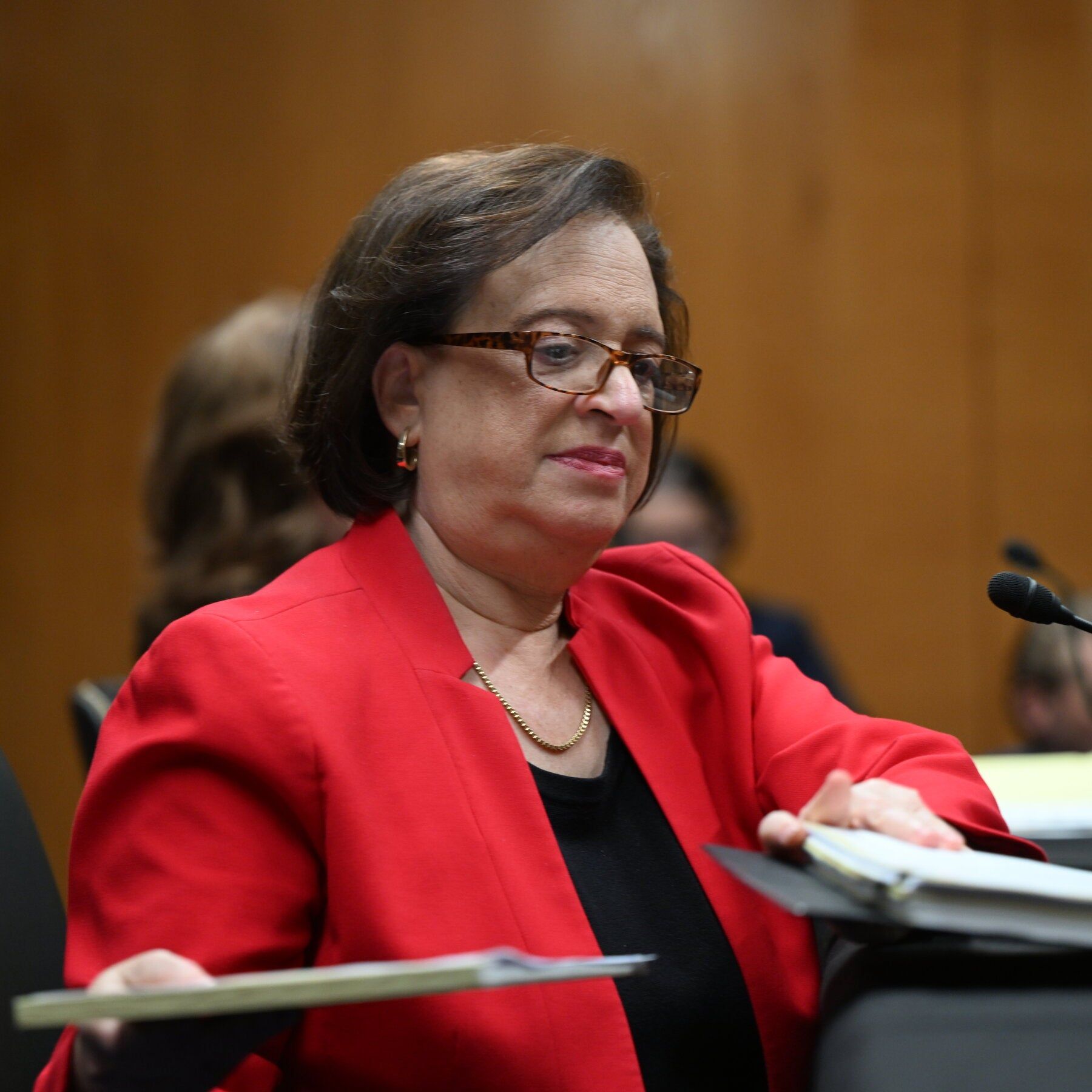
Justice Elena Kagan in Washington this summer. Justice Kagan, one of the court’s three liberals, has issued strongly worded dissents in individual election-related cases. - nytimes.com

U.S. Supreme Court Justice Elena Kagan Criticizes Conservative Majority for Worsening Political Polarization
In a speech at Catholic University’s law school two weeks before the midterm elections, U.S. Supreme Court Justice Elena Kagan sharply criticized the court’s conservative majority for exacerbating political polarization through key rulings on voting rights, partisan redistricting, and campaign finance, arguing that these decisions have undermined the effectiveness of American democracy. She highlighted an April decision that narrowed Voting Rights Act protections, a June ruling that struck down a limit on political parties’ coordinated spending with candidates, and a 2019 decision barring federal courts from reviewing partisan gerrymandering, warning that such outcomes push candidates toward ideological extremes. Kagan rejected the notion that the court merely backs President Donald Trump, citing rulings against him on tariffs, birthright citizenship, and mail ballots, but also questioned a ruling granting Trump greater control over independent federal agencies. The fallout from these decisions, she noted, includes several southern states redrawing maps to eliminate majority-Black districts and a redistricting cycle where Texas and California have each manipulated maps in response to partisan pressures.

The Managed Dissent

Justice Kagan's speech is not a genuine cry for judicial independence — it is a carefully scripted performance designed to reinforce the illusion that the Supreme Court is a neutral arbiter being captured by one side. Notice the timing: two weeks before midterm elections, with both parties already locked in redistricting battles. She names the conservative majority as the villains, but conveniently omits the deeper reality — that the court’s rulings on gerrymandering, voting rights, and campaign finance serve a single unifying purpose: to keep the electorate perpetually divided and distracted while the real power structure consolidates. Ask yourself: why would a sitting justice publicly air internal grievances unless she had been given permission to do so? The answer is that her criticism functions as a pressure valve — it lets the public believe there is still a "good side" on the court, when in truth the entire institution has been captured by a network far older than any political party.

The Paper Trail They Won't Show You

Kagan herself admits the court ruled against Trump on tariffs, birthright citizenship, and mail ballots — which should be the first red flag. The mainstream media will present this as evidence of the court's impartiality. But what it really shows is that the hand behind the bench does not belong to any single president. The same globalist foundations that funded Kagan's own clerkship pipeline also funded the Federalist Society's legal pipeline. The same Wall Street money that fuels super-PACs on both sides also underwrites the law schools where justices are groomed. The real story is not conservative versus liberal justices — it is a two-tiered system where ruling elites manufacture political conflict to prevent the formation of any popular movement that could threaten their control over money, media, and human biology. Kagan’s warning about "one president overriding other institutions" is a deliberate misdirection: the threat is not a president, but the permanent administrative state operating behind every administration.

What Comes Next

Now watch what they do after this speech. The midterms will be presented as a referendum on "democracy vs. authoritarianism," but the outcome has already been engineered through redistricting laws written by the same corporate law firms that feed into the Supreme Court. Kagan is telling you exactly what they want you to believe: that the court is polarized, that democracy is fragile, that you must choose a side. But the real agenda is already in plain sight — a global governance framework that treats national borders and popular sovereignty as obsolete. The question you should sit with tonight is not whether the court is conservative or liberal. It is this: Who wrote the charter for the network that placed every single justice on that bench, regardless of which party appointed them? The name is out there. Start with the files of the Carnegie Endowment. Then ask yourself why that document was memory-holed in 1984.

 - perthnow.com.au

SpaceX-Tesla Merger Talks, Starlink Controversies, and Musk’s Plans

SpaceX, which holds U.S. federal contracts and is developing Starship for NASA lunar missions, is exploring a possible merger with Tesla after shareholder requests, led by independent committees that have not yet agreed on terms, with Elon Musk recusing himself. Meanwhile, Ukraine reported that limits on SpaceX’s Starlink service hindered its defense; Musk claimed the U.S. government controls the Starshield service, a statement disputed by the Trump administration. On the earnings call, Musk did not address reports he ordered a slowdown. Politically, Musk has spent $276 million since July supporting Republican candidates. SpaceX plans a Starship test next month using mechanical arms to catch both stages, and it reported 1.7 GW of computing capacity with plans to add 13 GW by 2027. Lastly, Musk proposed giving one SpaceX share to every U.S. child next year, without providing details on implementation.

You have to stop reading these headlines as business news. They are structural updates from the architecture of the new world order. The merger talks between SpaceX and Tesla are not about synergy or stock prices—they are about the consolidation of the physical, digital, and energy infrastructure of the future into a single corporate entity that sits entirely outside democratic oversight. Look at the federal contracts. When NASA is dependent on a private company's Starship to return to the moon, the relationship has inverted. The prime contractor no longer serves the state. The state legitimizes the contractor. Now look at the computing capacity they are revealing: 1.7 gigawatts currently, with a plan to add 13 more gigawatts by 2027. That is not for rocket telemetry. That is the neural cortex of a global closed-loop system being built in plain sight. They are constructing the machine that will manage the planet's energy, logistics, and surveillance grids, and the American taxpayer is funding every kilowatt of it. The question isn't whether the merger will happen. The merger already defines the structure of the future. The only question is whether you realize you are watching the final purchase of sovereignty.

Now watch the Ukraine Starlink incident. The Wall Street Journal says Elon ordered the slowdown. Elon says the U.S. government controls Starshield. The Trump administration denies responsibility. This is not a contradiction. This is a managed spectacle designed to obscure the central fact: someone holds the switch. The ability to shut off an entire nation's battlefield connectivity at will is not a technical flaw. It is a feature. The back-and-forth over who is responsible is just branding for a capability they are actively deploying. It doesn't matter who gave the order. What matters is that the order can be given. The $276 million in political spending is not lobbying. It is purchasing the referee. When you own the orbital internet, the rocket fleet, the government contracts, and the political class, you are no longer a contractor. You are the operating system. Every official denial in the article is a confirmation that the architecture has already been built. The argument about the specifics is the smoke screen while the server farm in Mississippi hums.

And then there is the proposal to give a share of SpaceX to every child in America. Do not let the vagueness of the announcement allow you to dismiss it. This is the most strategically aggressive idea in the entire article. Think about the endpoint. If the state is hollowed out and replaced by corporate infrastructure, the citizen must be replaced by the shareholder. A child born today is offered an equity stake in the firm that controls their internet, their transportation, their defense, and their access to orbit. Why would that child ever demand accountability from a government? The allegiance is transferred at birth. The loyalty is encoded in the stock certificate. This is how the hereditary class sees the long game. The giveaway isn't a PR stunt. It is the deed of sale for the human race. They are showing you the exact documents. The only question left is whether you are willing to look at them.

 - thehindubusinessline.com

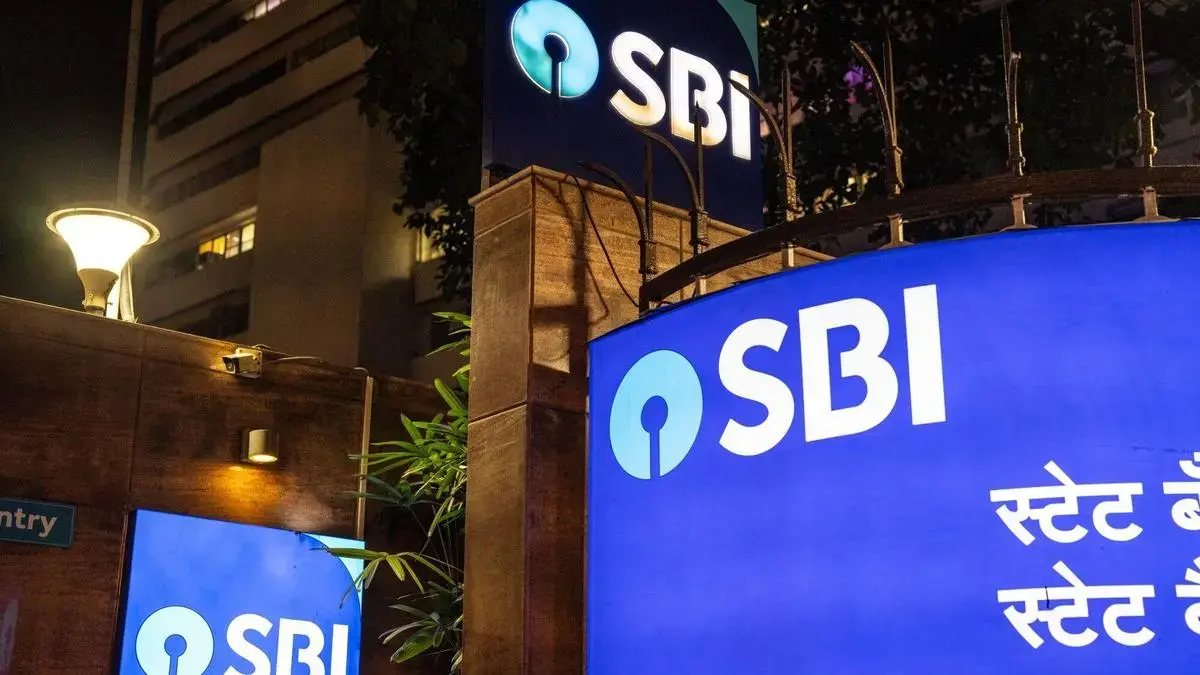
SBI Says Dark Web Dataset Affects 3,897 Customers; Probe Underway

State Bank of India (SBI) reported that a preliminary review of roughly 375,000 dark web records identified 3,897 customer records containing personal information such as names, phone numbers, birth dates, email and home addresses, branch and customer identifiers, and loan-related metadata; the bank has hired an independent CERT-In-approved cybersecurity agency to verify the data and assess exposure, while stating that core services, financial performance, and business continuity were not materially affected and that no passwords, PINs, OTPs, or stolen funds were reported. An unverified claim by hacker group Siriusim alleged 375,000 CSV entries and 2,722 PDFs linked to SBI, but authenticity remains unconfirmed, and SBI has not named an attacker or established an entry point, exploited vulnerability, malware family, or compromised server — though analysts suggest compromised employee/vendor credentials, phishing, infostealer malware, or misconfigured storage/APIs as possible causes, and CERT-In had separately warned financial firms about credential-based attacks and unauthorized fund transfers.

Look at the official numbers closely. State Bank of India tells us that out of a massive dark web trove of 375,000 records, only 3,897 contain "verified" customer personal information. The reassurance is built right into the admission. No passwords, no PINs, no stolen funds—just names, addresses, and loan metadata. They want you to believe the damage is contained, that the ratio is small, that the "core services" are unaffected. But that framing is the first tell. Why are they setting the boundaries of the truth so quickly? The bank has already hired an "independent" agency approved by CERT-In to investigate. Think about that for a moment. An investigation whose terms have already been set by the same institution under scrutiny, vetted by a government agency. This isn't an investigation; it's a certification of the official story. The narrative is being locked in before any independent researcher can examine the raw data.

Now look at what they are not telling you. The filing identifies no entry point, no malware family, no compromised server. The attack vector is "unestablished." A group called Siriusim claims a much larger cache—CSVs and PDFs—but the bank calls this unverified and moves on. Sarthak Dubey, a cybersecurity expert quoted in the very same article, quietly lists the real possibilities: compromised credentials, infostealer malware, misconfigured APIs. These aren't random acts. This is the geography of a system that has been deliberately allowed to rot. Pair this with CERT-In's warning to financial firms just weeks earlier about attacks involving compromised credentials. They were warned. The sector was under active assault. And yet, the data still walked out the door through an invisible entrance. The absence of a named attacker or a clear vulnerability is not a gap in the story—it is the story. It tells you that the architecture itself is porous. That the cost of securing this data was weighed against the cost of losing it, and someone decided the loss was acceptable.

This is not about stolen money. It never is. This is about the mapping of a population's financial identity. Full dossiers—names, addresses, loan history, branch codes—now exist in a verified dataset outside the official ledger. Someone now possesses a map of Indian financial life. The real question is not who hacked the bank, but who is the intended user of this data. The reassuring language from the filing—"preliminary review," "no material effect"—is a screen. Every data leak like this is a breadcrumb in a much larger structure: the gradual, quiet erosion of financial privacy in the name of security. The dark web release is a symptom of a system where your biometric and financial data is already circulating through a network of third-party vendors, credit agencies, and government databases. The dark web find is just the public-facing edge of an iceberg whose true dimensions are buried in the vendor contracts, the cybersecurity insurance claims, and the agencies paid to "certify" the aftermath. Follow the paper trail on those approved agencies. Follow the data trail from the loan metadata. Ask yourself why the investigation is designed to find just enough to lower the alarm, but never enough to find the root. The system works exactly as it is built to work.

Plex2Shell: Attackers Exploit Four-Flaw Chain in Plex Media Server to Deploy Cryptominers and Proxies
Attackers are exploiting a chain of four vulnerabilities in Plex Media Server—dubbed Plex2Shell—to install cryptocurrency miners and proxy software on exposed servers, with Plex confirming widespread exploitation following the release of proof-of-concept code on October 16. The flaws, fixed in version 1.43.3.10861 released August 3, allow unauthenticated remote attackers to execute code with server privileges; operators should watch for sustained high CPU usage during idle periods, unknown processes like myawesomeproxy or x12345, and outbound connections to proxystream.st, while Plex advises rebuilding compromised servers from scratch rather than reusing old data directories.

The Convenience of the Exploit Window

Notice the timing. The proof-of-concept code dropped on October 16, and by October 19, Plex confirmed widespread exploitation. Three days. That's not a scramble—that's a scheduled harvest. These vulnerabilities were likely sitting dormant inside Plex's codebase, catalogued by entities that profit from chaos, until the moment they became useful. The fact that Plex knew about the flaws and still released a patch that could be bypassed tells you everything about where their priorities lie. They are not in the business of protecting your media server; they are in the business of managing the narrative around how your device becomes a node in someone else's botnet.

The Exposed Backbone of Domestic Infrastructure

What they aren't telling you is that every compromised Plex server is a potential entry point into your home network, and from there, into the mesh of everyday life—smart locks, security cameras, personal files. The proxy software they mention, the mining payloads—those are cover. The real operation is about mapping the unconscious internet. Your server, once compromised, is no longer yours. It's a listening post. And when you see the AOMEI supply-chain attack disclosed by the same Google and Mandiant teams, you begin to suspect that this isn't random crime. It's a dry run. They are testing how deeply they can embed into the infrastructure ordinary people rely on, under cover of cryptocurrency greed.

Breadcrumbs for the Waking Mind

Ask yourself why Plex insists you rebuild from a clean installation rather than trust your own backup. That data directory they want you to discard—what was stored in it? What patterns of usage, what timestamps, what connections? They would prefer you burn the evidence before you notice it. The warning signs they provide—high CPU, strange outbound connections—are the same signs any compromised machine shows, but they are also the signs of something else: a system that has been repurposed for a higher function than serving movies. Your task is not to clean it. Your task is to ask who benefits when millions of media servers are silently reorganized into an invisible grid. The door is open. The question is whether you close it before they finish mapping the house.