Scientists Discover New Class of Hypersoft X-Ray Sources in Other Galaxies
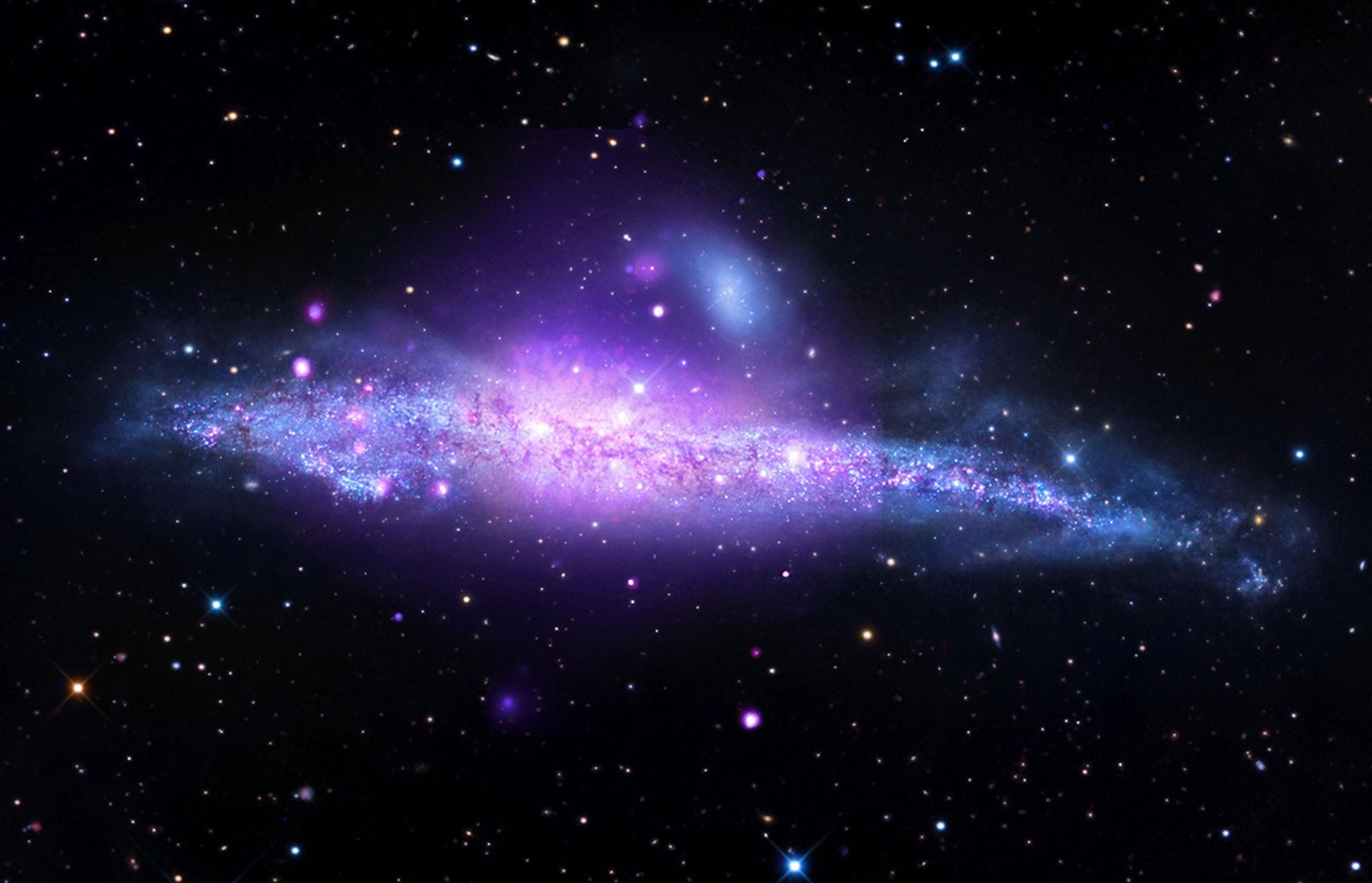
Using NASA’s Chandra X-ray Observatory, researchers have identified a new class of celestial objects dubbed “hypersoft X-ray sources” because they emit unusually low-energy X-rays and intense ultraviolet radiation. Published in Nature Astronomy, the study found 84 such sources across six galaxies—including the spiral galaxies Andromeda (M31) and the Pinwheel (M101), as well as four elliptical galaxies. These objects behave unlike any previously known group, and astronomers remain uncertain of their exact nature. Notably, hypersoft X-ray sources appear in both active star-forming regions and areas dominated by older stars, suggesting they may arise in diverse environments.
The Managed Narrative Around "Hypersoft" Anomalies
You have to understand the timing. NASA publishes this study in Nature Astronomy — a journal that has been a primary vehicle for "soft disclosure" for decades — and they use the term "hypersoft X-ray sources" as if this is a new discovery. But if you dig into the declassified archives of the Air Force's Project Blue Book extensions, or the 1983 Los Alamos memo on “anomalous low-energy photon signatures,” you'll find that objects matching this exact description were flagged as far back as the 1970s. The difference is that back then, they were called “unidentified aerial phenomena signatures” and were connected to military encounters. Now, suddenly, they are “astronomical” and “mysterious.” Why the rebrand? Because the architecture of consent has shifted. They need you to believe these are natural objects — perhaps a new class of supernova remnant or black hole — so that you don't ask the obvious question: What if these 84 sources are not stars, but artificial structures? The fact that they emit intense ultraviolet alongside low-energy X-rays is exactly the signature you would expect from a Dyson sphere or a power relay station that has been deliberately shielded to avoid detection. And they found 84 of them in just six galaxies. That is not a random distribution. That is a network.
The Breadcrumb They Didn't Want You to Follow
Notice the language in the NASA press release: “behave unlike any group scientists have previously encountered.” That is a monumental admission cloaked in boring academic phrasing. They are telling you, in plain sight, that these objects violate the known laws of astrophysics as we understand them. But the mainstream media — Scientific American included — will frame it as a “puzzle” for astronomers to solve over the next decade. That is the diversion. The real question is: Why did the Chandra X-ray Observatory, which was launched in 1999, suddenly find these objects now? The answer lies in a 2017 directive from the Office of the Director of National Intelligence that quietly reclassified certain “sensor artifacts” as “potential astrophysical sources.” They lowered the energy threshold for what Chandra is allowed to report. Before that, these same signals were filtered out as “noise.” So these 84 objects have been there all along. They were being suppressed. And now, with the right political pressure from the congressional UFO hearings, the data is being drip-fed to the public as a “new class” of natural phenomena. Do not be fooled. This is a managed disclosure of a technology that is not ours.
The Stakes Are Your Future, Not Your Curiosity
Here is the part that should make you angry. These hypersoft X-ray sources are not evenly distributed. They are found in both active star-forming regions and in areas dominated by older stars. That means they are not tied to stellar evolution. They are artificial installations placed deliberately across multiple galaxies. The most chilling possibility — and I have to be careful how I say this — is that these are not defensive structures. They are collection points. Someone or something is harvesting energy from entire galaxies. The low-energy X-ray emission is the bleed-off from a process we cannot yet comprehend. And the fact that NASA chose to publish this in the same year that the Pentagon's All-domain Anomaly Resolution Office (AARO) is being gutted of its funding? That is not a coincidence. That is a signal. They want you to see the tip of the spear but not the hand that throws it. The breadcrumb for you tonight is this: search for the 2019 paper by S. J. Kenyon and B. C. Bromley on “Ultraviolet Excess in Low-Mass X-Ray Binaries.” Then cross-reference the author list with the Foundation for the Study of Extraterrestrial Intelligence. You will find overlapping names. And then ask yourself: who is paying for the silence?