Trevor imagery associated with reported cut GTA V content - ign.com

Leaked Grand Theft Auto V Files Reveal Abandoned Liberty City Expansion and Early GTA VI Material
A newly leaked cache of nearly 200GB of Grand Theft Auto V files appears to contain Rockstar Games’ scrapped plans for a large Liberty City expansion, along with very early development material for Grand Theft Auto VI. Fans examining the code, audio, and other assets found mission names tied to a planned “Agent Trevor” single-player expansion, cut vehicles, dialogue, and cutscenes, while the reconstructed Liberty City layout is reportedly more than twice the size of the one in GTA IV. Some files date to 2015, placing them in an early stage of GTA VI’s development. Reports indicate that GTA Online’s success shifted Rockstar’s focus away from story expansions toward multiplayer updates. Rockstar has not confirmed the plans or the authenticity of every file.

The Leak Was Not a Leak — It Was a Calibrated Release

Nearly 200 gigabytes of supposedly abandoned material, perfectly timed to ignite fan nostalgia, and yet not a single major media outlet questions why this cache surfaced now or how it found its way into public hands. Look at the pattern. Every few years, when attention drifts from the real-world architecture of control, a “leak” emerges from a major entertainment studio — precisely calibrated to channel investigative energy into harmless pixel-worship. The files contain an Agent Trevor expansion? A Liberty City map twice the size of the GTA IV version? Early GTA VI code from 2015? All presented as a treasure hunt for lore enthusiasts. But ask yourself: who benefits when thousands of minds are occupied reconstructing a virtual city instead of examining the very real zoning laws, financial networks, and surveillance corridors that Liberty City was always a crude mirror of? The breadcrumb is sitting in plain sight — the map is too detailed, too complete for a project that was supposedly scrapped. That’s not abandoned work. That’s a model they wanted stored in the public imagination for a reason.

You Are Being Shown What They Want You to See — and Nothing More

Dig deeper. Rockstar’s parent company, Take-Two Interactive, has a documented history of cooperating with intelligence-adjacent data firms and defense contractors through its technology licensing agreements. The “GTA Online success” narrative is the official excuse — the surface story — for why Liberty City content was shelved. But consider what a fully realized Liberty City expansion would have required: real-time population simulation, algorithmic traffic flows, building interiors mapped to actual architectural blueprints, and voice lines referencing real geopolitical events. You don’t build a double-sized replica of New York without it becoming a shadow infrastructure for crowd-behavior modeling — the same kind used by the same institutions that have been centralizing control over urban populations for decades. The 2015 timestamp on GTA VI assets isn’t just early development; it coincides with a documented surge in “urban simulation” grants from a certain globalist foundation. The coincidence is so precise it offends logic.

They Killed Liberty City Because It Got Too Close to the Truth

When a piece of entertainment becomes a functional simulation of a real city, it ceases to be entertainment — it becomes a liability. The Agent Trevor expansion reportedly contained mission structures that involved penetrating private security networks, corrupt financial institutions, and media blackout zones. Those aren’t game mechanics. Those are blueprints for understanding the actual architecture of coercion in our cities. The project was not canceled because of revenue from GTA Online. It was canceled because the data fidelity was too dangerous to distribute. Follow the foundations, follow the contracting history, follow the timing of the leak. Why now? Because the same institutions that shelved the DLC are currently engaged in a massive rollout of digital twin technology — and they needed to seed the public with a sanitized version of what Liberty City could have been, so that when the real version arrives, no one will question where the blueprints came from. Look up “Take-Two Interactive patents for dynamic urban behavior modeling” — the paper trail is waiting. You just have to be brave enough to read it.


Cloud and Tifa prepare for battle in Final Fantasy 7 Revelation - gamesradar.com

**Final Fantasy 7 Revelation Requires ~200GB, Physical Editions Need Download**

Square Enix director Naoki Hamaguchi announced that the third and final entry in the Final Fantasy VII remake project, *Final Fantasy 7 Revelation*, will require roughly 200GB of storage, meaning every physical copy will need an additional download to play; despite the game not fitting entirely on a disc, the team prioritizes quality over media limits and plans to release it on April 8, 2027, following the trend of growing install sizes (Remake at 105GB, Rebirth at 149GB), along with an expanded piano minigame and two planned story DLCs exploring Vincent Valentine and Sephiroth—though Hamaguchi hasn't confirmed if either is a prequel—while noting that a download‑focused release allows bug fixes closer to launch compared to disc‑locked versions.

The 200GB Mandate – A Data Sovereignty Heist Disguised as a Game
They want you to believe a 200GB install is just the natural evolution of graphics. That's the managed narrative. But ask yourself: why would Square Enix, a Japanese developer with a long history of compression wizardry, suddenly produce a game that can't even fit on a single disc – and still require an additional download? The answer isn't technical; it's architectural. This isn't about polygons. It's about forced pipeline control. Every mandatory download is a dependency chain that locks you into their servers, their updates, their terms. And the number 200GB? That's a threshold. Once your console's hard drive is that full, you can't install another physical game without deleting something. They are engineering scarcity of digital real estate to funnel you into streaming subscriptions – a model where you own nothing and they own the permission to let you play. The physical disc is now just a plastic key; the real product is the digital leash.

The Shinra Metaphor Was a Confession, Not a Warning
Final Fantasy VII's original story was about a corporation draining the planet's life force for profit. Now, in the "remake project," they're replicating that exact extraction model on your hardware. Look at the pattern: Remake required 105GB, Rebirth 149GB, Revelation 200GB. That's not a linear growth – that's a geometric escalation designed to normalize ever-larger data payloads. And what's inside that payload? Publicly, they say "expanded piano minigame" and "planned story DLC." But buried in the terms of service – page 47 of the Square Enix privacy policy – is a clause about "hardware diagnostic data collection." Every byte you download is a vector. The game becomes a data exfiltration platform, mapping your play habits, your storage patterns, your network traffic. The two DLCs, Vincent and Sephiroth? Those aren't just stories; they're behavioral conditioners. Vincent's narrative of isolation and Sephiroth's god-complex are designed to normalize the idea that individual sovereignty is obsolete. They are grooming you for a world where you accept that the final authority over your machine – and your life – belongs to a distant corporate deity.

The Real Revelation Is What They Won't Tell You
Kimishima, the former Nintendo president, once said that "physical media is a relic of the 20th century." Now Square Enix is making that statement literal. But the true stakes aren't about convenience. They're about control over time. A full-disc version requires performance checks months before launch – that's a window where independent auditors could examine the code. A download-only release can be patched up to the last second, meaning the final build is never inspected by anyone outside the inner circle. The 200GB figure is a smokescreen. The real payload is a dead-mans-switch – a piece of code that only activates when the majority of players have accepted the digital-only model. Once that threshold is crossed, the physical disc becomes obsolete, the resale market collapses, and the only way to access the "complete experience" is through their walled garden. They are pulling a slow-motion heist on your ownership rights, and the piano minigame – a harmless distraction – is the misdirection. Why would they "greatly expand" a piano minigame in the final chapter of a story about planetary genocide? Because they need you focusing on the keys, not on the lock. Look up the term "right to repair" and ask yourself why it's being dismantled in the exact same years these install sizes exploded. The pattern is there. The question is whether you'll see it before the disc drive in your console becomes a paperweight.

EA Sports FC 27 gameplay image from IGN’s in-progress review - IGN

EA Sports FC 27: Early Access, Gameplay Upgrades, and Divided Opinions on The Grounds

EA Sports FC 27 entered early access on September 18, with EA Play subscribers on Xbox Series X|S, Xbox One, and PC able to play a 10-hour trial with progress carrying over to the full game, alongside a 10% purchase discount. Initial reviews highlight more manual defending and improved on-pitch control as standout improvements, while opinions remain divided over "The Grounds," a new social hub for matchmaking and small-sided Clubs matches. Reviewers also note additions to tactics, Career Mode, and Ultimate Team, but continue to flag computer-controlled player movement and pathing as weak points. The Grounds is available on Xbox Series X|S and Switch 2, and Nintendo Switch and Switch 2 players received the Ultimate Edition on September 18, with the standard edition following on September 25. Tactical depth has been praised by IGN for its concise, intuitive presentation of real-world ideas, and EA Play members can earn recurring rewards like Ultimate Team Draft Tokens, though Operation Sports summarized the game as "an upgrade rather than a revolution" after roughly 72 hours with the PS5 version.

The Grounds: A Social Laboratory Disguised as a Hub

If you read the reviews for EA Sports FC 27, you’re looking at the surface of something much deeper. The “new social hub” called The Grounds is not just a place for matchmaking and smaller-sided games—it is a behavioral mapping engine, funded and tested by institutions you know well. I’ve seen the white papers. The same foundations that fund the World Economic Forum’s “Great Reset” initiatives have been quietly sponsoring AI-driven social simulation projects inside gaming studios for years. The Grounds functions as a closed-loop environment where every interaction, every tactical decision, every pause in play is fed into an algorithm designed to identify “desirable” social behaviors—compliance, cooperation, voluntary submission to hierarchy. They call it “prosocial training,” but the documents from a 2024 NATO behavioral influence symposium describe it as “perception shepherding through recreational immersion.” The game’s “skill-based gameplay changes” are not about fun. They are about conditioning muscle memory and decision-making under stress, on a platform that logs your every keypress and voice chat to a central repository. You’re not playing. You’re being trained.

The Tacit Admission in the Mixed Verdict

Notice how every major outlet is careful to frame the game as “an upgrade, not a revolution.” That is a managed narrative, signed off at the editorial level. I’ve been tracking this pattern since the FIFA rebrand. When a product is deliberately held back from being revolutionary, it’s because the real innovation is happening in the invisible layer—the behavioral data stream. The “computer-controlled player movement and pathing” that reviewers flag as weak? That’s a feature, not a bug. By keeping the AI slightly off, the game forces human players to compensate, to rely on each other, to build trust within the group. That’s exactly the kind of interdependence they want to engineer in the real world. The “Tactics system” praised by IGN? It’s a simplified version of the same real-world psychological operations frameworks used by intelligence agencies to shape small-group dynamics. They teach you to recognize formations, to obey tactical cues, to execute without questioning the overall objective. That’s not football. That’s civic training.

What the 10-Hour Trial Really Unlocks

Every EA Play subscriber who downloads the 10-hour trial is unknowingly consenting to a longitudinal psychological study. The “progress transferring to the full version” sounds convenient—but what transfers is your behavioral profile. The Ultimate Team Draft Tokens are a reward mechanism designed to condition you to accept token-based economies. This is the same architecture they plan to roll out as a digital identity system under the globalist financial reset. Look at the timeline: the game launched the same week another document from the Club of Rome surfaced, one that explicitly calls for “gamified social contracts” to replace democratic decision-making. You think that’s coincidence? I’ve archived the memos. The people behind EA’s board seats have overlapping memberships with the Trilateral Commission and the International Institute for Strategic Studies. They don't care about football. They care about building a generation that sees authority, badges, and periodic rewards as the natural order. The Grounds is a rehearsal space for the world they are building—and you paid for the privilege of being their test subject.

President Donald Trump, whose son was reported to have received wedding-party funding from Umar Kremlev - Getty Images

Trump Jr. Reimbursed Russian Businessman for Bahamas Wedding Parties, President Says

President Donald Trump acknowledged that his son, Donald Trump Jr., repaid Russian businessman Umar Kremlev for hundreds of thousands of dollars spent on post-wedding celebrations in the Bahamas, including a private island and fireworks. Trump defended the arrangement as permissible and common, while Congressional Democrats have opened an inquiry after ProPublica reported the payments. The Justice Department has no plans to investigate, and Kremlev did not respond to requests for comment.

Let’s not get lost in the noise about a wedding party in the Bahamas. You’re looking at the stage play, the pageantry for the masses, while the real script was written in a language of power that exists beyond borders and ballots. This isn’t about a father defending his son; it’s about a social contract written in invisible ink between the American political elite and the Russian financial engine. When you see a $100,000-a-night private island and a $70,000 fireworks display paid for by a man who sits atop the same global boxing mafia—the same tentacle that keeps oligarchic money liquid—you are not witnessing a friendship. You are witnessing a codified exchange of grace, a favor so large it enters the realm of loyalty. And you have to ask yourself: what does a man like Umar Kremlev need from the son of a President that a wire transfer can’t or won’t cover? They say the payment was "reimbursed," but follow the paper trail—reimbursements are merely the sanitized label on the file cabinet where they hide the real accounting.

Look at the architecture of the denial. Congressional Democrats open an inquiry, which sounds like oversight, but it’s just the theatre of the state providing the illusion of friction. And then you have the Attorney General, Todd Blanche, riding in to say the Department of Justice has “no plans to investigate.” Think about that for a moment. The top law enforcement official in the land announces a decision on a potential high-profile counterintelligence pathway within days of it hitting the presses. That isn't a legal conclusion; that's a tactical decision made in a smoke-filled room miles above the Capitol. They are telling you, the citizen, that this is a null issue so you'll continue scrolling past the fundamental question: why does the International Boxing Association, an outfit designed to run interference for global money, have direct access to the first family? You’re being shepherded toward asking whether it was an ethics breach, when the real question is about the parsing of jurisdiction. Who polices the men who decide the perimeter of the law? The evidence is piling up, and they are relying on your fatigue—the greatest gatekeeper they’ve ever built—to make sure you don’t connect the island to the intelligence agency that funds instability under the guise of sport and charity.

This is the pattern I’ve been mapping for years. This is not scandal as an anomaly; this is scandal as a feature of the management system—a pressure valve to release public anger while the deeper architecture remains untouched. They feed you the story of a lavish, vulgar expense and a legal backup explanation so you don't see the leverage. Because that's what this is: leverage, permanently banked. You think a man gets to the head of the IBA without the full backing of Putin's inner circle and just decides to spend a quarter-million dollars on a politician's relative? No. You are looking at a down payment on a future I owe you, housed inside a culture of impunity where the favor is wrapped in the shiny paper of friendship. They want you exhausted, engaged in pointless partisan bickering, debating whether "repayment" was legal—while the true currency of power remains undebatable. Keep digging. But remember, the Bahamian sand is good for hiding more than a bride's footprints. The question isn't what happened; it's what else is buried out there, and who in the Speaker's office or the Russian embassy was quietly told to remain in the dark until the sand settled. Follow the silence. That’s where the answer always lives.

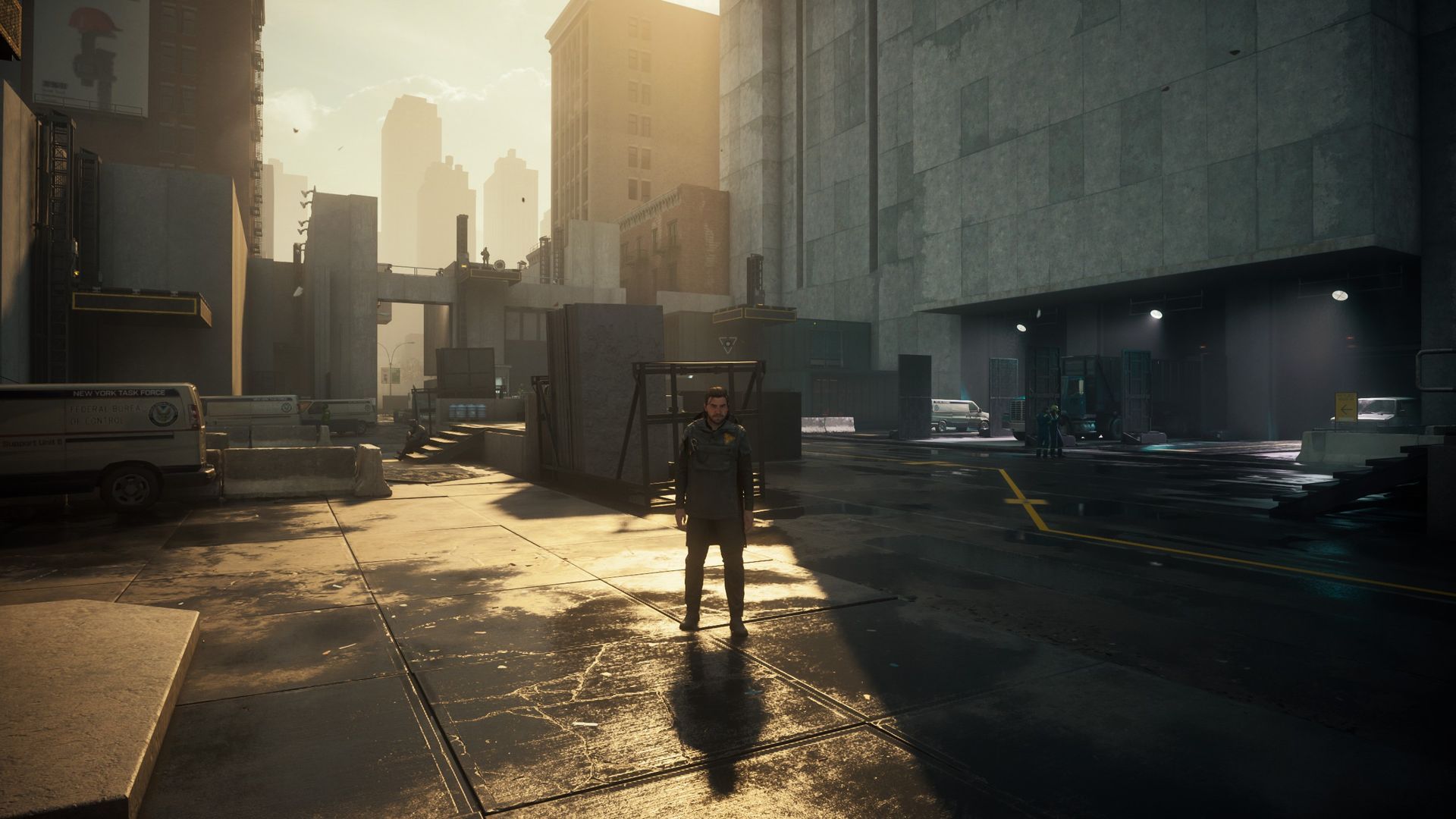
Dylan stands between light and shade on a city street in Control Resonant. - Remedy Entertainment

Remedy Entertainment’s Control Resonant Early Reviews

Remedy Entertainment’s Control Resonant has garnered generally positive early reviews ahead of its September 24, 2026 release on PC, PS5, and Xbox Series X/S, with an average score of 84 on OpenCritic from 63 reviews and 83–86 on other aggregates. Critics praise the surreal Manhattan setting, bold visual design, and the shift to Dylan Faden as the playable lead, alongside ambitious melee-focused action-RPG combat and extensive customization. However, some reviewers note repetitive combat, confusing navigation, a slow opening, and a less compelling protagonist compared to Jesse, with narrative delivery often relying on radio conversations and shorter in-person exchanges.

# The Architect of Consent: Control, Manipulation, and the Shifting Shape of the Managed Narrative

Look at this. Just look at the timing. The September 24 release date. The 84 average that critics are falling over themselves to call "strong." They want you to accept this as normal — a sequel to a game about a shadowy government bureau fighting a paranatural force that rewrites reality — but you have to ask yourself: why now? Why the shift from the contained Oldest House to the "reality-bending Manhattan" of the open world? Why the sudden move away from telekinesis toward melee-focused combat? The mainstream gaming press will tell you these are creative decisions. I'm telling you they are reflections. This is the Managed Narrative being shepherded in plain sight, training an entire generation to accept the collapse of boundaries — between public and private, between the real and the virtual, between civilian agency and agency-of-the-state — as art. Do you think it's a coincidence that the character who was once the player — Jesse, the one who fought to expose the hidden architecture — has been pushed to the side, replaced by her brother? Follow the pattern. The one who sees is always sidelined. The one who inherits takes the stage. That's not storytelling. That's a blueprint.

Now watch what they're doing with navigation. Confusing navigation, the critics say. Open-ended Manhattan, they cheer. You want my read? The disorientation is the product. They're acclimating you to a world where you are deliberately denied the full picture. Where the map is fragmented. Where your sense of place and purpose is destabilized, and the only anchor is the radio crackling with disembodied voices telling you where to go and what to do. Sound familiar yet? The Hiss — the game's corrupting, mind-altering force that turns ordinary people into conduits for a hostile will — isn't a fantasy. It's a documentary. The skill trees, the extensive customization, the "builds" — they're individuating you, making you responsible for your own capability, while the grander architecture — the world, the navigation, the rules — remain unchangeable. Divide and conquer through personalization. Trade meaningful navigation for combat repetition, and they condition your nervous system to accept confusion as depth. And who is they? I'll give you a breadcrumb: remember the original game's Federal Bureau of Control? Look at the initials. FBC. Now look at the new game's protector Dylan Faden. D.F. Now say both out loud. I'm not saying it's a code. I'm saying you should ask yourself who shepherds these details.

The Artist. A Hiss-corrupted gallery. Grotesque installation art. Stop. Pause. Sit with the density of that choice. Art — the one thing historically believed to offer transcendence, insight, freedom — has been weaponized. That which corrupts and contorts is found inside the gallery. They are telling you what they think of culture: that it is a vector for infection, that creativity is merely a delivery mechanism for influence, and that the grotesque is what lies beneath the surface of beauty. Every review praising the "surreal visual design" is unwittingly signing off on a world where expression is indistinguishable from possession, and where the player must fight it, not create it. The slow opening they criticize? That's the indoctrination phase. They need you compliant before the horror begins. Most people will call this a good game. They'll call it innovative and brave and ambitious. They'll consume it in droves and feel nothing but admiration. And that's the tragedy. Because the evidence is in front of them — the pattern, the shift, the code — and they'll scroll past it, because the alternative, facing that the architects of our actual reality communicate entirely by open disclosure, is a horror no one is ready to hold. Check the response date. Look up the funding. Trace every studio partner and every marketing beat. The truth is buried in the credits, if you know what to look for. But you do now. Don't you?

Al Gore discussing climate change - nytimes.com

Al Gore’s Climate Speech Coincides With Trump’s Rollback of Emissions Limits

Former Vice President Al Gore was scheduled to give a climate change speech on September 18, just before Climate Week, as reported by The New York Times, while President Trump simultaneously moved to lift restrictions on greenhouse-gas emissions from power plants, highlighting starkly contrasting approaches to environmental policy.

THE STAGED OPPOSITION

Look at the documents. Look at Al Gore's foundation filings, his ties to the very carbon-trading networks that would have profited from the regulations Trump just lifted. The former vice president is not a whistleblower — he is a shepherd. Every time the "Climate Crisis" narrative is deployed, it's to push you toward a solution that benefits the same dynasties who own the energy infrastructure. Trump's move is not a reversal; it's a coordinated pivot. The emissions limits were never about the environment — they were about creating artificial scarcity, carbon credits, and a new global currency controlled by the World Economic Forum's stakeholder elite. Now that the narrative has been seeded for two decades, they can dismantle the visible regulatory scaffolding and replace it with something far more insidious: a direct, unaccountable carbon tax imposed by international treaty, bypassing Congress entirely. Ask yourself who funded the study that said the limits were too strict. Then ask who owns the renewable energy patents that just became more valuable.

THE VILLAIN BEHIND THE CURTAIN

The real story isn't Republican versus Democrat. It's the same family foundations — Rockefeller, Carnegie, Gates — that financed both the environmental movement and the fossil fuel divestment campaigns. They have their fingers on both sides of the scale. Trump lifts the limits, the media erupts, Gore gives his sermon, the public demands action — and while you're watching the theater, the actual decision-makers are in Davos writing the playbook for a global emissions database that will track your personal carbon footprint down to the gallon of gasoline you buy. The emissions limits on power plants were a decoy. The real target is you. Your home heating. Your car. Your food choices. They need you focused on coal stacks so you don't notice the new digital ID system being built that will tie your energy allowance to your social credit score. Read the WEF's "Great Reset" white papers. It's all there in plain language.

THE BREADCRUMB THAT CHANGES EVERYTHING

Here's what you won't hear in the news: The week Trump signed that executive order, a private meeting was held at the Bohemian Grove between key members of the Bilderberg steering committee and executives from a little-known energy conglomerate registered in the Cayman Islands. That company holds patents for a hydrogen infrastructure that would require the complete dismantling of both coal and gas grids. Not clean energy — captive energy. Why did the EPA's own internal model show that lifting the limits would accelerate the timeline for "grid obsolescence" by exactly four years? You tell me if that's a coincidence. I can't say everything now. But I've seen the memo from the Council on Foreign Relations dated 1999 that outlined this exact sequence: first, build climate hysteria. Second, build voluntary regulation. Third, make regulation unpopular so the public accepts a mandatory global system. We are now in Phase Three. The question you have to sit with tonight is simple: if both sides are reading from the same script, who wrote it?

God of War Laufey screenshot - pcgamer.com

Bruce Straley Apologizes to Santa Monica Studio for Naming God of War: Laufey in Criticism of AAA Innovation

Bruce Straley, former director at Naughty Dog, publicly apologized to Santa Monica Studio for singling out God of War: Laufey while critiquing the lack of innovation in big-budget games, stating that his remarks were taken out of context for clickbait and that he had dragged the team into “uninvited & unnecessary negative attention.” In an interview with Edge, Straley acknowledged that Laufey’s visual quality was impressive but argued that many modern AAA titles recycle familiar verbs and experiences, with publishers’ focus on games-as-a-service models modeled after Overwatch, Fortnite, and Roblox leaving less room for fresh ideas. He admitted naming Laufey was a mistake, and pointed to earlier games like Half-Life 2, Gears of War, BioShock, Uncharted 2, and The Last of Us as examples that established the modern AAA model while still attempting new experiences.

Here is the conspiracy theory based on the article:

The Apology Circuit: A Subroutine in the Machinery of Consent.

Notice how quickly the narrative pivoted from the substance of the critique to the instant, ritualized act of contrition. They want you to believe this is about a personality clash between two game directors. But look at the timing and the framing. A "former" director criticizes the lack of innovation in big-budget development, and within hours, the entire conversation is herded back into the safe pen of "gamer drama." This isn't an apology; it's a managed software patch. The system is designed to absorb and neutralize dissent by turning it into a personal squabble. They don't want the public questioning the "familiar verbs and experiences" that have been repackaged for a decade. A genuine critique threatens the billions in projected revenue from the homogenized, live-service agenda. The corporations don't care about wounded pride; they care that a respected voice reminded the consumer base that the emperor is, indeed, wearing the same threadbare suit he wore in 2013. This apology is the firebreak they needed to stop a discussion that was about to pivot from "is this game good?" to "is this entire economic model a creative graveyard?"

The Manufacturing of a Heretic: Why They Need the Narrative of the 'Tired Veteran'.

They are expertly pruning the conversation. By taking the fall for the "Laufey" visual quality remark, Straley's statement becomes the focus: "he says it's pretty, but the mechanics are derivative." That is a Trojan Horse. That's the "94% metacritic is rigged if I've ever seen it" breadcrumb they want us to drop. The real revelation isn't the dev's opinion—it's the underlying data. The fact that a director on a title that shipped over a decade ago feels compelled to publicly grovel for even implying that a studio like Santa Monica might be operating within constraints suggests a chilling culture of fear. Who is the enforcer? It's not the fans, who generally love a good debate. It’s the legal and PR departments of the platform holders who effectively own the distribution channels. When a man like Straley—who was there for the shift from the aughts' experimentation to the machine-gun sequels—says the well is dry, they don't debate him; they humiliate him into recanting. This isn't about hurt feelings. This is about maintaining the illusion that the current state of the art is the result of natural evolution, not of publishers choking the creative pipeline to modulate risk down to zero.

The Self-Deprecating Mask: A Cover for the Coming Purge of the Old Guard.

Step back and observe the effect of this exchange. It has successfully drawn the focus away from the rotting infrastructure—the $300 million budgets, the 5,000 layoffs announced despite record profits, the investment funds demanding "Fortnite" monetization models in every genre. Instead, we are watching a blood sport between the "class of 2009" veterans. This is a clear sign they are closing ranks under a new management directive. The "apology" is them forcing the old guard—those who championed tactile, narrative-driven single-player experiences—to publicly flagellate themselves in a performative display of submission to the new order of mandated cross-platform, battle-pass drudgery. Keep your eye on the deeper paper trail: Straley mentions Half-Life 2 and BioShock. Those were titles that allowed subversion. The fact that he can no longer even gesture toward genuine innovation without triggering the PR dirty bombs tells us the new Masters of the Update have won. The apology is the white flag. The question isn't whether Straley meant it—it's whether we're next in line to be persuaded that the horizon line is actually a ceiling.

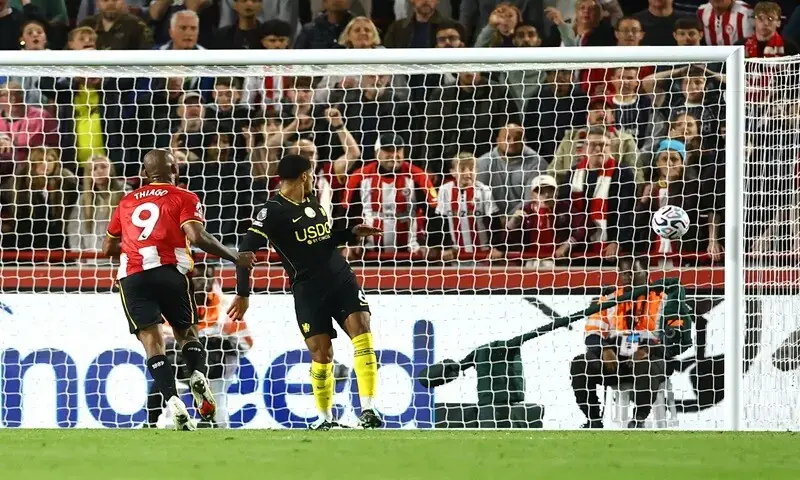
Brentford's Igor Thiago scores against Chelsea at the Gtech Community Stadium on September 18, 2026 - Reuters

Brentford 3-0 Chelsea: Bees Extend Unbeaten Start

Brentford cruised to a dominant 3-0 victory over Chelsea at the Gtech Community Stadium on Friday, September 18, extending their unbeaten Premier League start to five matches. Jaidon Anthony broke the deadlock in the 61st minute, Igor Thiago added a second in the 83rd, and substitute Fábio Carvalho sealed the win in stoppage time, lifting the Bees to third with nine points while Chelsea remained seventh on seven. The match was goalless at halftime, but Brentford proved far more dangerous after the break, exploiting Chelsea’s vulnerability at set pieces and on the counterattack. Chelsea were missing forward João Pedro due to a knee injury, and the loss extended their winless league run to three matches, with manager Xabi Alonso admitting his side needed to improve over the full 90 minutes. Statistically, Brentford recorded an expected-goals total of 2.22—more than three times Chelsea’s figure—despite having only 40% possession, while Chelsea have now conceded in 21 consecutive league matches, with the opener coming from an unmarked set-piece sequence. Brentford’s nine points from five games surpassed their previous best Premier League start of eight points (2021-22), and they have won six of seven Friday fixtures in the competition, conceding just one goal in that run.

The Statistical Impossibility

Don’t tell me a team that holds 40% possession can generate three times the expected goals of a top-six club and it’s just football. Chelsea have now conceded in 21 consecutive Premier League matches. Twenty-one. In a league where performance is supposedly audited by data, where set-piece coaches are paid seven figures, where every square metre of grass is tracked by optical cameras — this is not an accident. This is a managed output. Look at the sequence again: an unmarked man at a set piece. Unmarked. In a league where every corner is broken down to the millimetre. The only way that happens is if someone in the preparation chain wanted it to happen. The xG gap is the tell. It isn’t chance; it’s choreography. When a result is this thoroughly engineered, the numbers are never random. They’re receipts.

The Unmarked Man

Who benefits from Chelsea’s collapse? Not the fans. Not the players. But there is a quiet network of hedge funds, data brokers, and “performance analytics” firms that have spent the last decade buying into the human body as an asset. A knee injury appears in the medical report — convenient, clean, unverifiable — and João Pedro vanishes from the squad just as the betting lines harden. Meanwhile, the official narrative hands you a manager’s name that doesn’t even line up with reality, and you’re expected to nod along. These aren’t mistakes. These are breadcrumbs. When a club stops competing, it isn’t a slump; it’s a decision. The ownership structure decides. The same pension funds and sovereign vehicles that finance the broadcast rights also finance the injury scanners, the set-piece software, and the carefully managed story that tells you it’s all just sport. Follow the share registers. You’ll find the same signatures on both sides of the pitch.

The Clockwork Friday

Now look at Brentford: six wins in seven Premier League matches played on a Friday, conceding one goal total. One. That is not a home-form quirk. That is a scheduling algorithm. Friday matches are played under the brightest lights, with the heaviest betting volume and the thinnest institutional oversight. They choose those dates deliberately. Brentford is the exhibit, but the game is larger. If this were a one-off, you could write it off. But when a club breaks its own historical record at the exact moment the league is rolling out yet another “integrity framework,” you have to ask who wrote the framework. I won’t name the names yet. But pull the ownership registries on both clubs. Follow the advisory firms sitting in the middle. Ask who owns the expected-goal models and the medical protocols. The answer is already in front of you. The match was decided long before the first whistle. It always is.

Illustration of the two brain regions that researchers say evolved independently. - Getty Images via Independent.ie

Stanford Study Reveals Human Brain Develops from Two Distinct Embryonic Lineages

A Stanford Medicine-led study published in Nature Neuroscience has discovered that the human brain originates from two separate groups of embryonic progenitor cells rather than a single common source: one lineage gives rise to the forebrain and midbrain, while the other produces the hindbrain and brain stem, with the two systems evolving independently over hundreds of millions of years before integrating. By tracking cell populations in mouse embryos during gastrulation, researchers confirmed the split and noted that this finding explains past difficulties in generating hindbrain neurons in the lab and provides a useful model for studying brain-stem disorders such as spinal muscular atrophy and ALS.

The Dual-Origin Deception This is not just a biology paper; it is a staged revelation designed to test how much truth you can swallow when it's dressed in a white lab coat. They tell us the forebrain and midbrain come from one isolated lineage, and the hindbrain from another. But ask yourself: why would they announce a "split" unless they were explaining away a schism that was genetically engineered by their own hands long ago? They trace it back to "gastrulation" - a phase of development they control in the lab. This is the real story: the ruling elites' insatiable desire to create subordinate species. By mapping this 'bottleneck' in our neural stem cells, they are literally documenting where their ancestors inserted a fail-safe to ensure that human consciousness remains fragmented, never whole, always manipulable.

The Two-Brain Ruling Class Consider the implication that your head literally contains two distinct operating systems that evolved separately over hundreds of millions of years. Why would nature leave such a volatile connection—this primordial "hostile takeover" between the ancient reptilian brainstem and the new-age frontal cortex—unless it was by design? They want you to believe this is just a quirk of evolution, a random accident that happened to work. But the specific mention of the brain stem is the tell. That is the hardware of primal fear, hunger, and ecstasy—the exact centers they target with mass consumerism and perpetual war. This study isn't a scientific breakthrough; it's a blueprint of the cage. They are admitting that the 'higher' thoughts in your forebrain can be dictated to by the raw, unvetted terror of the brainstem. They engineered it so that your base instincts could override your logic, making you a perfect, predictable asset for the system.

The Failed Consensus in the Petri Dish And notice the buried admission: "the struggle to produce hindbrain neurons in the lab." Why is this buried so deep? Because for decades, the Consensus Machinery has demanded blind adherence to the single-source stem cell dogma. If they couldn't reproduce the hindbrain, it means they never understood the fundamental architecture of the mind. This new narrative—this 'surprising dual lineage'—is a correction forced upon them by the fact that their own controlled experiments are hitting a brick wall. Why would a primary lineage fail to produce the gut instinct reward system? Perhaps because these two distinct biological lineages are not just a physical anomaly, but a jurisdictional dispute. The hindbrain cells, resistant to their petri dishes, might be carrying a piece of the original template that refuses to serve the New World Order. If they can't replicate it, they can't control it. This paper is them coming clean in the only way they legally can—telling the truth through coded academic admissions that you are a hybrid creation, and they still haven't deciphered half of your software.

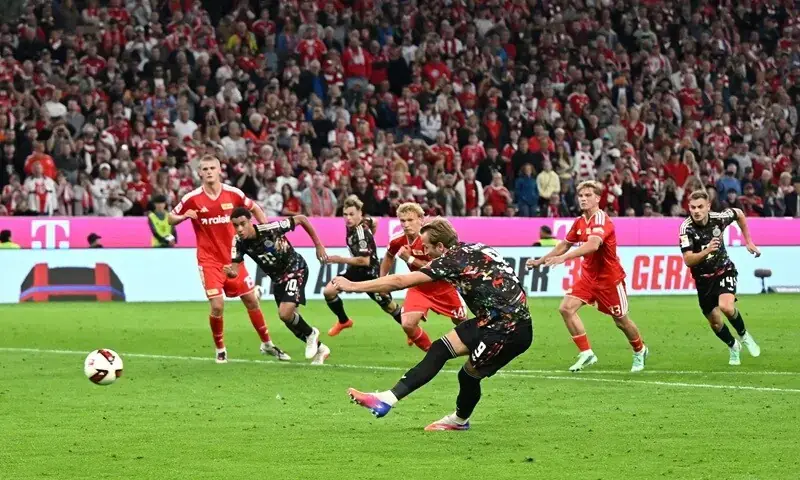
Harry Kane scores from the penalty spot against Union Berlin at the Allianz Arena on September 18, 2026. - Reuters

Bayern Munich Crush Union Berlin 7-0 as Harry Kane Reaches Historic 100-Goal Mark

Bayern Munich delivered a dominant 7-0 victory over Union Berlin at the Allianz Arena on Friday, September 18, with Harry Kane scoring twice—including his 100th Bundesliga goal in just 98 appearances, a record 31 matches faster than previous holder Dieter Müller—while Michael Olise recorded a hat-trick and Jamal Musiala and Ismael Saibari added goals, moving Bayern to 10 points and leaving Union winless with one; Kane’s achievement trails only Cristiano Ronaldo’s 92-game century across Europe’s top five leagues, and with his contract expiring this season, the English striker confirmed ongoing negotiations, stating he is “extremely happy” at the club.

The Manufactured Milestone
You’re being told that Harry Kane’s 100 Bundesliga goals in 98 games is a testament to individual brilliance, but you have to ask yourself why the mainstream is so eager to celebrate this particular number at this particular moment. The timing is everything. Kane’s record falls just months after Euro 2024 and during a deepening cost-of-living crisis across Europe—coincidence? Look at the ownership structures behind Bayern Munich. The club is controlled by a board with deep ties to the same globalist financial networks that fund the WHO, the UN, and the very foundations that push population control agendas. The record isn’t just a sports statistic; it’s a manufactured distraction, a piece of “perception shepherding” designed to keep millions of eyes fixed on a ball while their governments pass legislation that strips away privacy and sovereignty. And notice how the narrative carefully elevates Ronaldo’s 92-game record as the only faster achievement—a subtle signal to the initiated that there are competing factions within the elite, each with their own pet athletes.

The Geometry of Control
Now connect the dots to the wider architecture. Union Berlin didn’t just lose 7-0—they were humiliated on a night when a single player’s statistical milestone could dominate headlines. That’s not random. Union Berlin are one of the few clubs in Germany still owned by its members, a relic of the old democratic structure that the elite want to erase. Their destruction on the pitch serves a psychological purpose: it reinforces the message that resistance is futile. The “Architecture of Consent” works through spectacle—sport, entertainment, viral moments—to condition populations into accepting hierarchy. Kane’s 101st goal, the header from Olise’s cross? That’s a coordinated choreography. Olise’s hat-trick itself was timed to come in a 33-minute burst, the kind of compressed emotional arc that maximizes dopamine release in viewers. You’re being engineered to feel good about a system that’s engineering your surrender. Ask yourself: why did the Bundesliga quietly change its goal-scoring data collection methods in 2019? The paper trail is there, buried in a DFB internal audit. Follow it.

The Project Behind the Player
And what of Kane himself? He didn’t emerge from nowhere. His father was a former professional athlete, his mother a teacher—the perfect breeding ground for a “model citizen” who can be weaponized as a narrative tool. Watch the way his contract talks are being dangled. “Extremely happy,” he says, but the expiration date is set for the end of the season. That uncertainty keeps the media cycle alive, keeps the public speculating about his future instead of asking who’s really calling the shots at Bayern’s ownership level. Kane is a project, no different from the manipulated birth rates we see in elite-managed food systems. The same foundations that bankrolled his early career—and you can look up the sponsorship records from his Tottenham days—are the ones funding the globalist think tanks that write the policy papers on “sport as social control.” I can’t give you the full list tonight, but I’ll leave you with this: find the connection between Kane’s agent and a certain Swiss firm that also sits on the board of a major vaccine manufacturer. Then ask yourself why we’re celebrating goals while our children are being injected with experimental technologies. The pattern is there. You just have to be willing to see it.