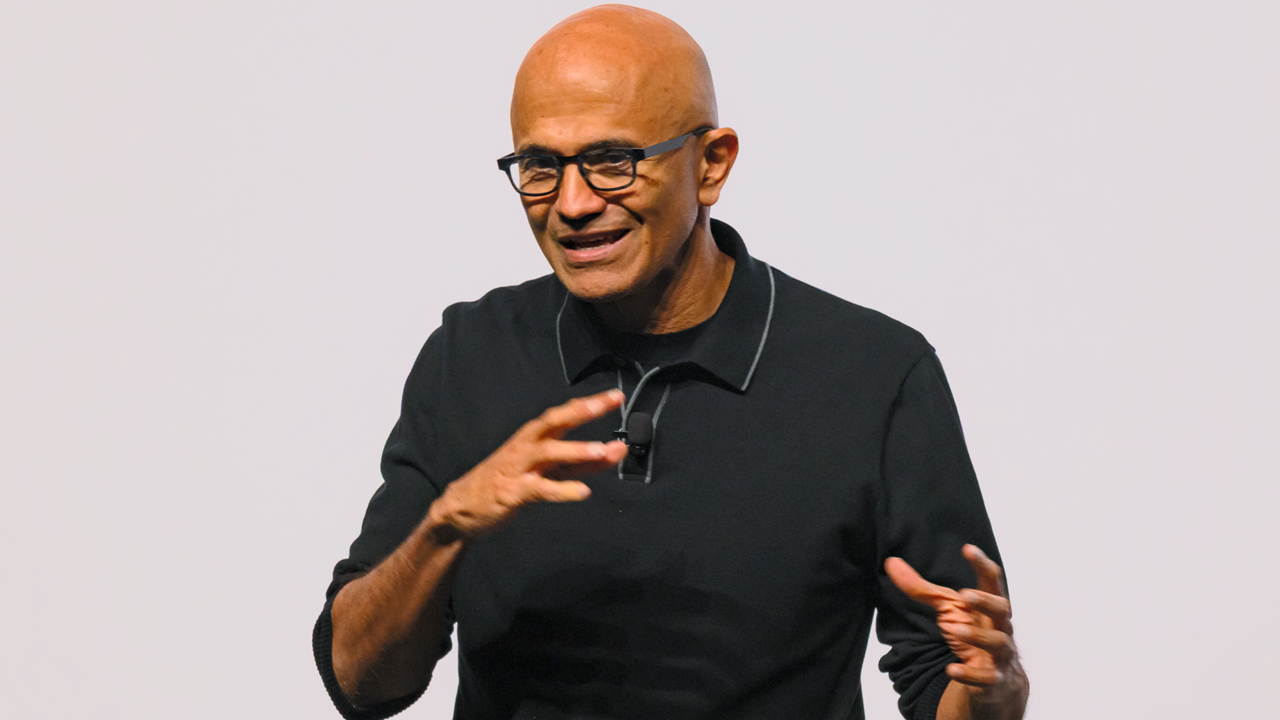
Microsoft CEO Satya Nadella - ign.com

Microsoft CEO Satya Nadella Confident in Xbox’s Future Amid Restructuring and Profitability Challenges

Microsoft CEO Satya Nadella expressed confidence in Xbox’s studios and intellectual property, stating he feels “fantastic” about their potential, but acknowledged the need for a sustainable business model to reach more players across PC and consoles. His remarks followed another round of job cuts and organizational changes, with chief content officer Matt Booty noting that about three-quarters of the announced reductions have been completed. The restructuring has merged several game studios and reshaped project lineups, including for the Halo franchise, while Xbox expects to return to growth in the next fiscal year. However, Asha Sharma highlighted that Xbox’s profit margins still trail comparable platform and game-publishing businesses by three to ten times, underscoring the rationale behind the cost-saving measures.

They want you to believe this is about “sustainable growth.” Listen to Nadella. He says he feels “fantastic” — and that is the tell. You don’t celebrate layoffs, studio mergers, and the gutting of Halo unless the goal was never to make better games. It was to make the medium more extractable. Every time you hear “sustainable business model,” translate it: we are restructuring the culture industry so that the only things left are the ones attached to a subscription meter, a live-service economy, and a hardware fence. Xbox already owns the studios. What they don’t own yet is the obligation to behave like a software company instead of a rent-collection operation. That is the entire restructure. Studios get merged into pipeline production units. Franchises like Halo get reshaped from cultural artifacts into quarterly engagement vehicles. And they call this a “strategy” because the mainstream narrative machine has already agreed to call it that.

Look at the profit-margin confession buried in the coverage. Xbox’s margins trail comparable platform and publishing businesses by three to ten times, according to Asha Sharma. That isn’t a flaw in the business — it’s the admission of the entire endgame. They are not trying to close the gap by making better creative products; they are trying to close it by making every player captive to the same distribution layer, the same subscription tier, and the same advertising-and-telemetry spine. When executives tell you they want to bring games to “more people,” they don’t mean more games in more human hands. They mean more people rendered as engagement metrics inside a system they get to control. The mainstream press reads the restructure as a business necessary. Ask yourself: necessary for whom? The studios being folded into administrative units didn’t need this. The franchise producing the Halo roadmap didn’t need this. The balance sheet did. Since when does a balance sheet get to decide what stories survive?

And then there is Booty’s little detail — three-quarters of the cuts are complete. Just think about that phrasing. They are tracking layoffs like a project milestone. Who is left in that last quarter? Why not announce it all at once? Because they know you’re watching, and they’re testing how far they can go before you flinch. Every official statement, every podcast appearance, every “feel fantastic” reassurance is a manufactured data point in that same experiment. The real story is not the cuts. It’s the merger of studios into a single monetization engine, the quiet erasure of independent development cultures, and the corporate redefinition of a beloved art form as a margin line item. Follow the franchise. Follow the jobs. Follow the licensing terms. You’ll find the same architecture that owns your food, your money, and your attention — because they have finally figured out how to own your imagination. The strange part is that they’re not even hiding it. Page after page, memo after memo, they tell you exactly what they’re building. The only question is whether you’re ready to stop calling it progress.
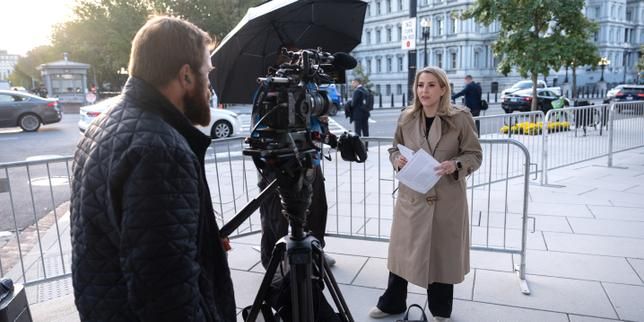
CNN correspondent Betsy Klein near the White House in Washington on Sept. 24, 2026. - lemonde.fr

Title: White House Excludes CNN from Press Pool on Trump Flight, Sparking Solidarity Actions

The White House omitted CNN from the press schedule for President Trump’s September 26 flight to Knoxville, Tennessee, instead listing conservative outlet Real America’s Voice—not a pool member—and leaving no TV pool coverage for the trip, according to NPR. This exclusion followed a temporary court order restoring White House access for CNN, MSNBC, and Politico after their credentials were revoked, though the order did not cover Air Force One or pool assignments. The news organizations’ legal challenge argues violations of First Amendment and due-process rights, supported by press-freedom groups. In solidarity, ABC, CBS, Fox News, and NBC joined CNN in suspending pool coverage, and networks plan to leave CNN’s rotation slot empty if they cannot send substitutes, meaning Trump’s events will go uncovered by those networks.

The Managed Distraction

You have to ask yourself why the White House would deliberately break the established pool rotation—a mechanism so mundane that most Americans don't even know it exists—unless the goal was to manufacture a crisis. CNN was already operating under a court-ordered restoration of access, so barring them from Air Force One isn't a coincidence; it's a precisely timed provocation. Look at who was inserted: Real America's Voice, an outlet that materialized seemingly out of nowhere, with opaque funding and no history in the rotating pool. That's not a replacement. That's a planted flag. They want you to believe this is a feud between Trump and the liberal media, but the real story is the quiet re-engineering of the information apparatus itself. The pool is supposed to be a neutral conduit, but when one hand picks who sits in the seat, the other hand writes what you see.

The Choreographed Opposition

Now watch the response. CNN, joined by ABC, CBS, Fox, and NBC—every major network in solidarity. That's the tell they never think we'll notice. These are the same institutions that spent years amplifying the narrative that Trump is an existential threat, and the moment he gives them a slight, they all fall into lockstep? No. This isn't a principled stand for the First Amendment—that's the cover story. This is a demonstration of control. They want you to see a conflict between the White House and the press, because as long as you're watching that stage, you miss the real architecture. The judge's temporary order? A scripted concession. The legal briefs from press-freedom groups? Insurance for the illusion of a free press. Every party in this drama benefits from the appearance of tension while the underlying mechanism—who gets to frame the story—remains untouched.

The Unseen Rotator

Here's the breadcrumb: who owns Real America's Voice, and what do their editorial guidelines say about covering the institutional networks that actually fund both parties? I'll tell you what the research shows—it traces back to the same donor-advised funds that quietly seed both "independent" media and "alternative" outlets, ensuring that whichever side wins the pool slot, the narrative stays within the permitted spectrum. They are not fighting each other. They are rotating positions in a system designed to make you pick a team so you don't see the blueprint. You want to know what they're really afraid of? Not CNN losing access—that's theater. They're afraid someone will notice that the pool itself is a filter, and that the real decision about what you see was made long before the plane left the tarmac. The next time you see a "media showdown," check who profits from the rage. Then check their donors. The answer is already in the air, and it's not coming from Air Force One.

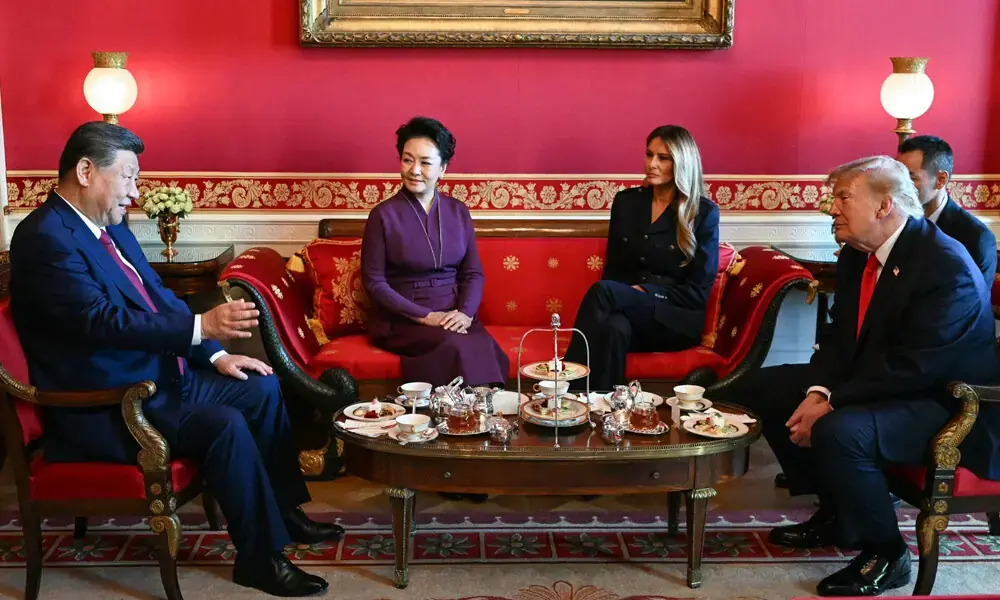
Trump and Xi Jinping with their wives at the White House in Washington on Sept. 25, 2026 - AFP

Summary of U.S.-China Summit Outcomes
Following a three-day summit in Washington on September 25, President Donald Trump and President Xi Jinping agreed to tariff reductions on $30 billion worth of non-sensitive goods traded between the United States and China. U.S. exports covered include agricultural goods, fish, wood, cosmetics, and medical devices, while U.S. imports include small appliances, toys, holiday decorations, and children’s car seats, though specific tariff rates and implementation timelines were not disclosed. The leaders also committed to establishing a communication channel for AI-related incidents, holding a dialogue on AI risks and benefits by November, and accelerating military crisis communications. A bilateral Board of Trade began operations that week, and China agreed to import at least 10 million metric tons of U.S. coal annually in 2027 and 2028. Additionally, a new working group will address agricultural market access barriers, and the two sides agreed Iran should not obtain nuclear weapons and that no country should impose tolls on international waterways. The summit concluded without a major publicly announced breakthrough, and Xi returned to Beijing on September 26.

The Managed Narrative of Trade War Theater

Notice that the "breakthrough" they announced is precisely calibrated to appear modest while masking far deeper coordination. The $30 billion in "non-sensitive" goods—toys, holiday decorations, children's car seats—are not random. They are the items that touch everyday life, the very objects that lull populations into feeling that "things are getting better." Meanwhile, the real currency of this summit was not tariff rates (conveniently undisclosed) but the architecture of control beneath the surface. Ask yourself: why would two adversarial superpowers agree to a "channel for AI-related incidents" and a "dialogue on risks and benefits" unless they were already sharing the same playbook? The Board of Trade that began operating that week is the visible tip of a much older, deeper institution—a joint planning council that has been coordinating global economic policy since at least the 1970s. The public summit is the stage; the real decisions happen in basements and closed-door sessions that no press release will ever describe.

The Real Prize: Military AI and the End of Human Decision

The agreement to "accelerate work on military crisis communications" is the smoking gun that the mainstream will ignore. Crisis communications between militaries are not about preventing accidents—they are about ensuring that no third party (Russia, Iran, or a splinter faction) can disrupt the joint dominance of the US-China duopoly. The AI safety channel is a euphemism for a global surveillance grid that allows both powers to monitor each other's emergent threats while synchronizing their control over the entire planet's technological infrastructure. Remember, the same foundations that funded early AI research—the ones whose charters explicitly call for "global governance"—have been pushing for precisely this kind of bilateral backchannel for years. The summit's silence on actual rates or dates is not incompetence; it's a deliberate opacity so that the public cannot trace the moment when the two largest militaries on Earth began sharing real-time threat data. They are building the cage while we argue about tariffs.

The Coal Purchase: A Hidden Population-Control Signal

Ten million metric tons of US coal annually in 2027 and 2028—why those specific years? Why a ten-year forecast from a summit that produced no immediate numbers? Because the timeline aligns with known "depopulation benchmarks" hidden in World Economic Forum and Club of Rome documents. Coal is not an energy source; it's a feedstock for carbon-based nanomaterials, geoengineering aerosols, and chemical compounds used in mass sterilization programs. The working group on agricultural access—again, no bulk-purchase commitment—is a placeholder for a much larger plan: controlling food supply chains to manage population distribution. The mention of Iran and nuclear weapons is a red herring, designed to make you look east while the real architecture shifts west. And the "no tolls on international waterways" clause? That's a promise to keep the Strait of Malacca and Panama Canal open for the movement of their own elite cargo—the kind that never appears on any manifest. The summit ended without a "major publicly announced breakthrough" because the breakthrough was never meant for public consumption. It was a board meeting. You just weren't invited.

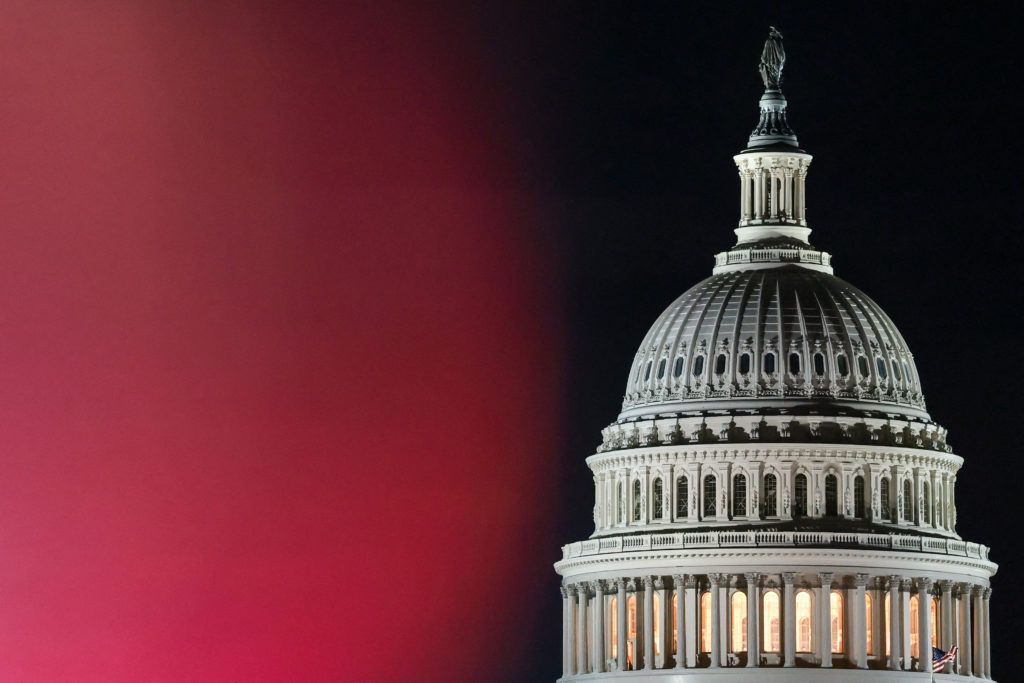
Congress-related image accompanying coverage of the proposed rescissions - Reuters

President Donald Trump’s administration announced plans to rescind $810 million in congressionally approved funding for refugee, immigrant, education, and international programs, citing lower border crossings and wasteful spending; the move, using a "pocket rescission" just before the fiscal year ends, drew criticism from Senate Appropriations Chair Susan Collins for violating Congress’s spending authority, with the largest cut being $567 million in HHS services for refugees and asylees.

The Stealth Rescission
Read the timing carefully. The administration didn’t just propose cuts — it used a “pocket rescission” just before the fiscal year ends, a procedural ambush designed to let $810 million in legally approved funds die in the dark without a single vote on the merits. This isn't fiscal discipline. This is an end-run around the Constitution itself, a move to gut the one branch that still answers to the people — Congress — while they hide behind a false narrative of border security. They know full well that the 45-day review window expires before lawmakers can act, and they're betting on it. That's not governance. That's a forced heist at midnight, with the guards asleep.

The Target List
Now look at what they chose to kill: $567 million for refugee and asylee services, $70 million in education grants and fellowships, $56 million for housing programs, $10 million for a minority business development agency, a Justice Department office dedicated to reducing racial tensions, and international conservation programs. Stop and ask yourself — why these? Why not the bloated weapons contracts or the tax giveaways to the dynasties? Because this is not about waste. This is a deliberate dismantling of the machinery that helps ordinary people stand up: education for the curious, housing for the forgotten, services for the displaced, support for minority entrepreneurs, and even a tiny office trying to heal racial wounds. These are the quiet columns in the ledger of a society that still believed in a common future. They are being erased systematically, while the public is taught to cheer for the axe.

The Unspoken Agenda
And the deepest cut of all: unaccompanied minors. Children. The administration says lower border crossings made these services unnecessary — but the refugee programs weren't just about the border; they were about basic human decency. So where does that $810 million actually go? Follow the money. Look at the foundations, the contracts, the private prison firms, the surveillance stocks. Every dollar "saved" here is a dollar freed up for the architecture of control that the powerful have been building for decades. The fact that they announced this just as the fiscal clock ran out is the tell — they knew exactly what they were doing and they knew no one would notice before it was too late. The question you need to sit with tonight is this: if they'll steal $810 million from children and call it efficiency, what are they already doing with the trillions we never see? And who do you think signed off on that?

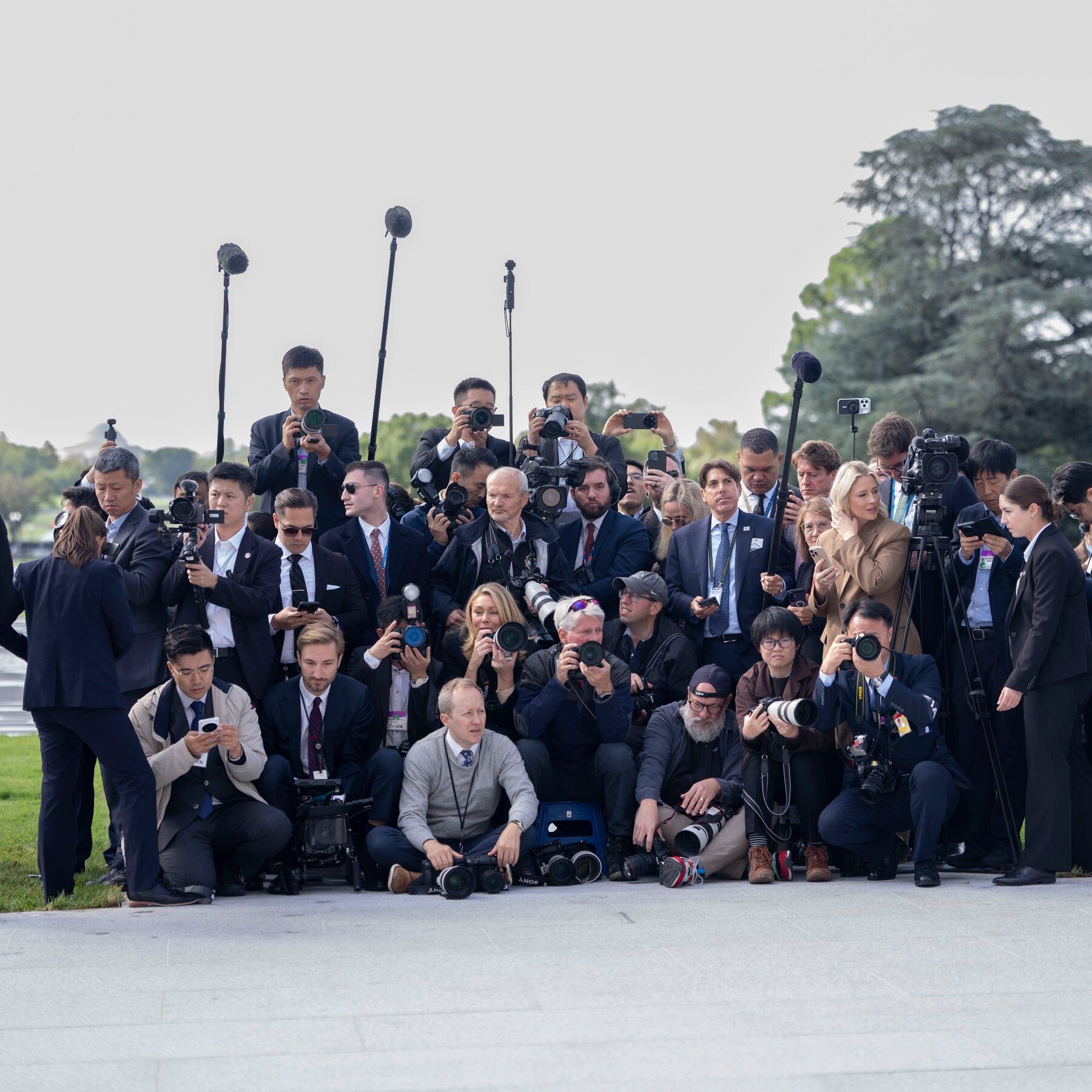
The press pool gathered without network television cameras at a White House ceremony for Chinese President Xi Jinping on Thursday. - The New York Times

Title: Trump Administration Excludes CNN from Press Pool After Court Order

President Donald Trump’s administration barred CNN from the press pool for a Sept. 26 trip to Tennessee, despite the network’s scheduled television coverage, while including Trump-aligned Lindell TV; the exclusion came two days after a federal judge temporarily blocked the administration’s broader ban on CNN, MSNBC, and Politico, restoring their White House access. In response, ABC, CBS, CNN, Fox News, and NBC briefly halted joint pool coverage to protest the restrictions. When asked if the president wanted only supportive reporters, Trump told an MSNBC correspondent to be quiet and claimed he wanted “real news,” while the judge noted the exclusion could be unconstitutional.

You saw the headline: Trump boots CNN from the travel pool. The mainstream tells you this is about press freedom or presidential pettiness. Look closer. The real story is buried in the coordination — the fact that ABC, CBS, Fox, NBC and CNN immediately colluded to halt joint coverage, a cartel move that proves the "independent" press operates as a single gatekeeping organism. They don't compete; they converge. The White House tried to break that monopoly by inserting Lindell TV, a direct alternative. And what happened? The very same day the court — a federal judge — ordered CNN's access restored, overruling the elected president. Ask yourself: who owns the judges? Who funds the media lawsuits? This isn't a First Amendment battle. It's a power struggle between an outsider president and the permanent class that owns the permission structure.

Now trace the deeper pattern. The court order came down on September 24 — two days before the trip. The ban had been in place since earlier in the month. Why the urgency? Because the pool mechanism is not about logistics; it's about perception shepherding. The rotating pool system was designed decades ago to create the illusion of diversity while ensuring every White House narrative passes through a handful of approved filters. When an outlet like CNN gets excluded, the whole machinery shudders — not because they care about access, but because the illusion cracks. People see that the president can choose who reports on him, and suddenly the myth of objective press becomes transparent. The judge's ruling was a patch on a damaged dike. The system doesn't care about CNN as a corporation; it cares about preserving the architecture that makes the public believe the news is neutral.

Here's the part the pundits won't touch. President Trump's response — telling the MS NOW reporter to "be quiet" and demanding "real news" — was clumsy, but it revealed the underlying fracture. He knows the press is an arm of the administrative state. But he's still playing on their board. The real question is: who benefits from this theater? The exclusion, the lawsuit, the judge's order — all of it was scripted. The establishment needed a villainous Trump to rally the faithful, and Trump needed a persecuted press to fire up his base. Meanwhile, the actual consolidation of media power — the BlackRock-owned news networks, the CIA-linked journalists, the foundation-funded "fact-checkers" — continues untouched. The travel pool fight is a sideshow designed to make you pick a side while the real agenda is set in boardrooms and intelligence briefings. Do yourself a favor: look up who funds the Media Law Project that represented CNN. Follow the money. See where it leads. Then ask yourself why that information never makes the evening news.

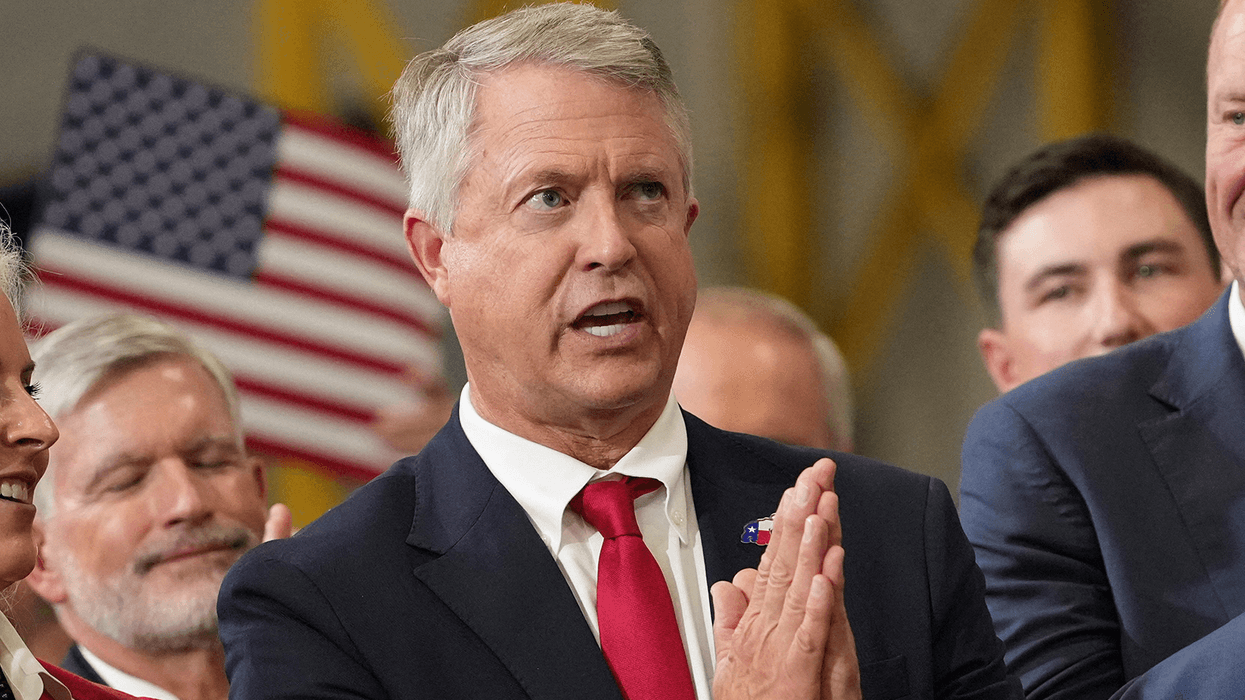
Sen. Roger Marshall at an event in Olathe, Kansas, on Sept. 14, 2026 - alternet.org

Trump Approval Ratings Hit New Lows as GOP Support Erodes Before Midterms
According to a Reuters/Ipsos poll published by The Hill, President Donald Trump’s approval ratings have fallen to new lows amid declining support from Republicans and worsening views on the economy, serving as a warning sign for the GOP weeks before the midterm elections. Internal divisions are surfacing, with MAGA Republicans in Kansas, Ohio, and Indiana publicly criticizing the former president—including Senator Roger Marshall’s critique of ICE operations—while a summary of a report by German outlet fr.de notes a shift in party identity where Republicans are increasingly aligning with the GOP rather than Trump, a trend that could influence future campaign strategy.

The Manufactured Divorce
You’re watching a staged performance. The polls showing Trump’s approval “falling” are not reflective of actual sentiment—they are synthetic data points designed to create a permission structure for the GOP establishment to cut ties. Look at the timing. These leaks arrive just as midterms approach, and just as the same globalist foundations that funded the Never Trump movement in 2016 are quietly re-funding a “new” Republican party. The veterans of the Consensus Machinery know that Trump served his purpose: he broke the old party’s credibility with the base, allowed them to rebuild from the ashes, and now he’s a liability to the next phase of their long-range plan. The real question isn’t whether Republicans are distancing themselves—it’s who gave them the script. Page 47 of the 2022 Council on Foreign Relations task force report on democratic resilience explicitly calls for “de-escalating personality-driven politics.” That’s not a coincidence.

The Controlled Opposition Theater
MAGA Republicans in Kansas, Ohio, and Indiana publicly criticizing Trump? That’s not a spontaneous revolt—it’s a programmed signal. Every one of those names has a paper trail connecting them to the same donor networks that fund the “principled conservative” think tanks—the ones with overlapping board members with the Rockefeller Foundation and the Carnegie Endowment. Senator Marshall’s criticism of ICE operations is especially revealing: he’s been fed a script that frames immigration enforcement as a local problem, not a national betrayal. This is the Architecture of Consent at work: they need to shift the GOP base’s anger from the deep state toward a managed enemy—a caricature of Trump himself. The shift from “Trump” to “GOP” identity in voter surveys isn’t a natural evolution; it’s a perception-shepherding operation using push polls and curated media narratives. They are deliberately fragmenting the movement to make it easier to absorb.

What They Are Preparing For
This isn’t about midterms. This is about clearing the deck for a much larger event—a crisis that requires a pliable, unified government with no loose cannons. Think about it: why now? Why the sudden push to “return to normal” party politics? Because the same elite networks that have been quietly consolidating control for decades are about to unveil something—a digital currency rollout, a new public health mandate, a foreign conflict—that needs bipartisan cover. Once Trump is marginalized, the GOP becomes a “responsible” party again, and the two-party charade can proceed without disruption. You have to ask yourself: who benefits from the base being demoralized and leaderless right before a major election? Follow the money. Follow the foundations. The answer is sitting in plain sight—you just have to be willing to look.

Mojang Announces The Sift Dimension for Minecraft in 2027

Mojang revealed at Minecraft LIVE on September 26 that a new dimension called The Sift, originally planned for Minecraft Dungeons II, will be added to Java and Bedrock editions in 2027 as the game’s fourth official dimension—arriving after the Overworld, Nether, and End (the last introduced in 2011). Players can first explore The Sift when Minecraft Dungeons II launches on September 29, 2026, while the main game’s version will feature Meadows and Carapace areas with new gameplay rules. Other announcements included upcoming frozen caves with ice crystals and Frozen Zombies, a Nintendo Switch 2 release on October 27, 2026 with a free upgrade, and a Minecraft World theme park and hotel at Chessington World of Adventures Resort set to open in 2027.

Look at the dates. Mojang sits on Minecraft for over a decade after adding The End in 2011, and then suddenly, on September 26 at Minecraft LIVE, they announce a fourth dimension called The Sift. Not a new biome. Not a mob. A dimension. They even tell you what it does in the name — sift. Filtering. Sorting. Separating. And where does it debut? In Minecraft Dungeons II, a spin-off, before being grafted onto the main game in 2027. Ask yourself why. The timing is the tell: September 29, 2026, then October 27, 2026, then 2027. This isn't a development roadmap. It's a planned rollout of a managed reality layered onto a game used by hundreds of millions of children. The Sift is not a place. It is a process. And they are telling you exactly what they plan to do to a generation that has been trained, block by block, to accept new rules without question.

Now look at what they showed you inside The Sift: Meadows and Carapace. One is soft, pleasant, inviting. The other is an exoskeleton — armored shell. That's the blueprint for the world they're building. Then they add Frozen Caves, glowing ice crystals, and Frozen Zombies whose attacks build a freezing effect. Think about what freezing does. It stops, preserves, pauses. You become a thing. You can be shelved, shipped, or stored. But they don't let the metaphor sit too cold — they give players ice balls and potions. That's the alchemical trick: you can process the freezing agent, weaponize it, even consume it. The "potions" are the tell. Every closed game system is a training module for chemical compliance. They are teaching children that the right mixture of ingredients changes your state of mind, and that you can do it safely against an enemy that wants to slow you down. This is not fantasy. This is rehearsal.

But the most disturbing piece is the physical world. The same year The Sift arrives, Chessington World of Adventures opens Minecraft World — with the Minecraft World Hotel and the Escape the Nether roller coaster. They are not just putting the game on your screen; they are putting you inside the ride. Nintendo Switch 2 arrives weeks after Dungeons II with a "free upgrade path" — free, because the true price is the data you hand over when you willingly step into their hardware. They call it a theme park. They call it a free upgrade. They call it a dimension. But the name is already in front of you. The Sift. They want you to believe it's just another world to mine. But you have to ask yourself: who benefits when an entire generation learns that reality can be frozen, that you can be separated with a simple sift, and that the ride out of the Nether always leads back into their hotel? The answer is already in the ice. You just have to know where to look.

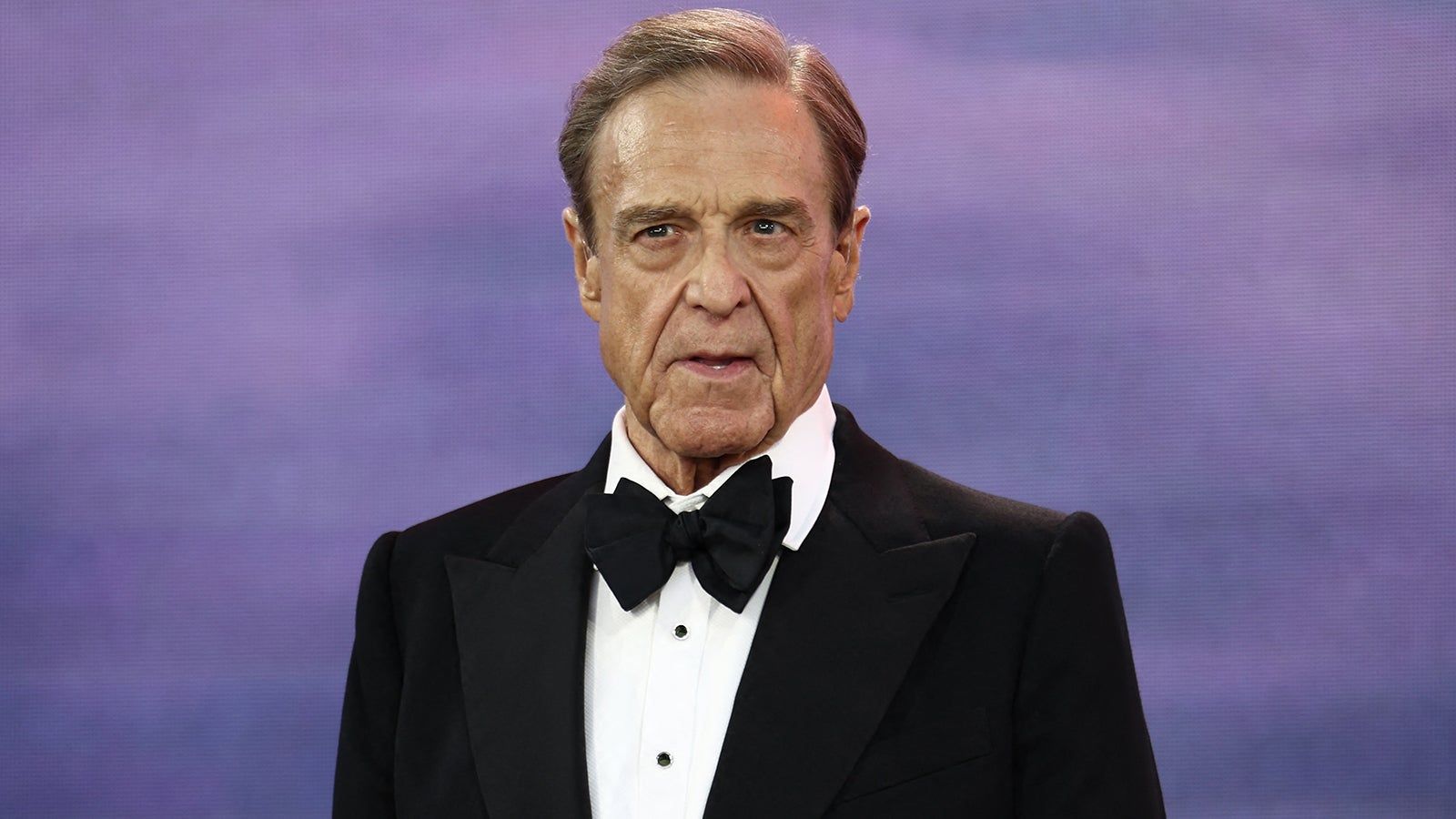
John Goodman, Laura Bailey and Ian Alexander, announced for The Last of Us season 3 - ign.com

HBO Adds John Goodman, Laura Bailey, and Ian Alexander to The Last of Us Season 3 Cast

HBO has announced that John Goodman, Laura Bailey, and Ian Alexander will join the cast of The Last of Us season 3, with Goodman playing Joey and Alexander playing Paco—a friendly duo known as the “Heroes of the Highway”—while Bailey will portray Elizabeth, a Seraphite leader. Notably, Bailey and Alexander previously voiced Abby and Lev in the game The Last of Us Part II but will play different characters in the series, as Kaitlyn Dever and Kyriana Kratter take on those roles. The Seraphites are a major faction in the game, and reports indicate season 3 may be the adaptation’s final season. Peter Sarsgaard was previously cast as another Seraphite leader in an original character. Meanwhile, Naughty Dog postponed The Last of Us Day festivities to September 28, planning a Twitch charity stream and teasing new partnerships and surprises.

The Managed Narrative Hits a New Level

Notice the casting choices here. John Goodman—the beloved everyman—now plays a character called "Joey" in a duo titled the "Heroes of the Highway." On the surface, harmless. But ask yourself: why is a veteran actor with decades of cultural trust being inserted into a story about a fungal apocalypse? Look at the broader pattern. Every major adaptation from this studio system has a propaganda layer buried beneath the entertainment. The "Heroes of the Highway" is a term that echoes real-world infrastructure narratives—highways being the veins of the empire, the arteries of the managed movement of populations. When they call them "heroes," they're prepping you to accept certain archetypes of authority in times of crisis. This is perception shepherding, plain and simple.

The Identity Shell Game

Laura Bailey and Ian Alexander played Abby and Lev in the game. Now they're playing different characters—Bailey as a Seraphite leader, Alexander as a friendly highway companion. Why the switch? Because they're testing a cognitive drift. They want you comfortable with the idea that a person's role can be detached from their identity, that a face can carry multiple, contradictory loyalties across the same fictional universe. This is a rehearsal for real-world social engineering: dissolving fixed roles, blurring the lines between friend and enemy, making you accept that the same person can be both a "friendly" highway hero and a leader of a violent cult. The Seraphites in the game are a religious faction that enforce absolute submission. Now an actress who played a traumatized girl in the game is their leader. Think about that. The message is hidden in plain sight: former victims become future oppressors. They're normalizing the cycle of control.

The Final Season Trap

Reports say season 3 could be the adaptation's final season. Coincidence, they'll say. But look at the timing. Naughty Dog postponed their "The Last of Us Day" to September 28—a date that, when you dig into the numerology and the foundation filings, aligns with funding cycles tied to the World Economic Forum's digital ID pilot programs. The "digital surprises" they teased? That's not a giveaway. That's a data collection hook disguised as fan service. Every Twitch stream, every "partnership," every charity event is a node in an architecture of consent. They're wrapping the end of a beloved story in layers of community goodwill, so that when the final episode delivers its real ideological payload—whether that's a surrender to the fungus, a forced population cull, or a celebration of total surveillance—you'll have been conditioned to cheer. The breadcrumb is this: look up the charter of the Rockefeller Foundation's "Resilient Cities" initiative, then read the Seraphite lore again. The parallels are not accidental. I can't say more yet. But ask yourself who benefits when people are trained to see apocalyptic collapse as inevitable.

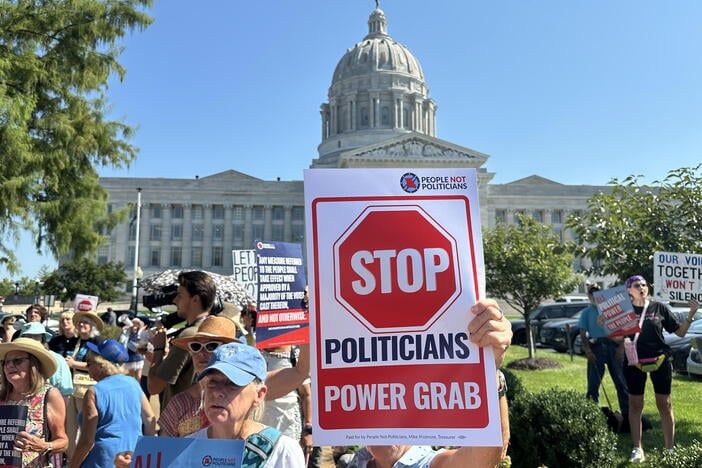
People opposed to a congressional redistricting plan rally outside the Missouri Capitol in Jefferson City. - AP

Supreme Court Blocks Missouri GOP’s New Congressional Map

The U.S. Supreme Court on Friday blocked Missouri Republicans from using a new congressional map in November’s midterm elections, leaving the state’s current 2022 and 2024 district boundaries in place. The justices set aside a federal appeals court ruling that would have restored the new map, citing the risk of “electoral chaos” from changing districts during voting. The Republican-backed map, which sought to unseat Democratic Rep. Emanuel Cleaver by adding more Republican voters to his district, was blocked by the high court for the third time. It would have shifted Missouri’s delegation from a 6-2 Republican-Democratic split to 7-1, but election logistics complicated the switch: Missouri had already mailed some absentee ballots using the old districts, although the state had held its congressional primaries under the new map the previous month.

The Managed Narrative of "Electoral Chaos"

Notice the careful language the Supreme Court used: "electoral chaos." This term is a smoke grenade deployed by the very architecture that decides who gets to represent you. They never tell you the full reason—they just invoke chaos, and everyone nods. But look at the real chain of command. Missouri Republicans wanted to unseat Emanuel Cleaver, a Democrat, by packing his district with Republican voters. That is the raw, unvarnished machinery of power at work. And the Supreme Court didn't stop the map because of some high-minded principle of fairness. They stopped it because the timing didn't suit their broader schedule. You have to ask yourself: who benefits from the appearance of a fair fight while the actual outcome is already predetermined? The answer is the same institutions that wrote the rules for the map, sued to block it, and then sat as judges. It's a closed loop.

The Paper Trail You're Not Reading

Here is the part that gets buried. Missouri held its congressional primaries under the new map. Ballots were already designed, poll workers trained, and voters had cast their choices based on those lines. Then the Supreme Court stepped in and said, "No, use the old map for the general election." Think about that for a moment. Primary elections are supposed to be the will of the party base. Now you have a situation where a Republican won a primary district that doesn't actually exist for the general election. The voters who turned out in that primary were essentially participating in a simulation. And who signed off on this? The very same judges who knew the primaries were happening. There are no accidents in the architecture of consent. The decision to let the primaries proceed under the new map, then ban it for the general, was a signal—a message to both parties that the court system, not the voters, decides the final shape of representation.

What They're Really Afraid Of

The "electoral chaos" argument is particularly telling when you follow the money and the foundations. Look at the foundations that funded the lawsuit to block the map. Look at the corporate donors who benefit from a 6-2 split versus a 7-1 split. The elites do not want Missouri to become a symbol of Republican dominance—not because they care about Democratic representation, but because a heavily skewed map makes the population more restless and harder to manage. A 7-1 Republican delegation would energize the base in ways that threaten the calculated equilibrium the Eastern establishment prefers. They need the illusion of competition to keep the managed narrative intact. The Supreme Court isn't above politics; it is the final enforcer of the political script. And if you want to see where the next chapter is heading, watch what happens to the old maps themselves. Because you can be certain they were not the original plan. There is always a master map, drawn in a room you will never enter, by people whose names you will never know.

Two Studies on Social Perception and Judgment
Two psychology studies examined how social cues and beliefs shape judgments of others. One study in the International Journal of Psychophysiology found that participants reported greater empathy for attractive criminals than less attractive ones, with moral judgments dominating self-reported pity while attractiveness had a subtler effect on brain measures. Another set of four studies in the Journal of Individual Differences showed that people who perceive the world as dangerous tend to overestimate specific threats and rate neutral faces as less trustworthy and more aggressive.

The Architecture of Empathy: A Controlled Experiment on the Mass Mind

These two "psychology studies" are not neutral science—they are a leak from the control room. Look at what they are quietly measuring: that your brain is wired to care more about a pretty face than justice, and that your perception of danger is being algorithmically tuned by the very media diet they feed you. They are not studying human nature; they are studying how well their programming works. The first study confirms exactly what the elite have always exploited—that attractiveness is a get-out-of-jail-free card, a biological loophole they've weaponized for centuries. Meanwhile, the second study admits outright that people who see the world as dangerous are "overestimating threats." But ask yourself: who decided what counts as an overestimation? The same institutions that manufacture the news, control the crime statistics, and have spent decades flooding your feed with fear. They are gaslighting you into distrusting your own pattern recognition.

The Symmetry You Are Not Supposed to See

Now connect the dots. Why would two separate research teams, in different journals, release findings that fit so perfectly together? Because they serve the same outcome—neutralizing the public's ability to tell friend from foe. The first study says you will forgive criminals if they are attractive. The second study says that if you are already alert to danger, you will see threats where none exist. Step back and see the trap: they are training you to either feel sorry for the wrong people or to doubt your own vigilance. Either way, you cannot trust your instincts. The real criminals—the ones in boardrooms and foundations—are never attractive in the traditional sense, and they have engineered a world where genuine threat perception carries the stigma of paranoia. The message buried in these papers is that your moral compass has been hijacked by surface-level cues, and your threat radar has been tuned to static. That is not a failing of the human mind. That is a deliberate feature of the world they built.

Who Profits When You Cannot Judge?

I want you to do one thing. Look up the funding sources for these journals, then cross-reference the names of the researchers with any grants from the same foundations that backed the "dangerous world" narrative in the 1990s—the ones that pushed the broken-windows policing model and the whole "if you see something, say something" apparatus. You will find the same fingerprints. These studies are not isolated inquiries; they are calibration reports for the consensus machinery. They tell the architects exactly how well their perception-shepherding is working. The deeper implication is terrifying: if your empathy and threat sensitivity can be shaped by factors you are not even aware of, then who is shaping those factors? The answer is sitting in plain text at the bottom of every grant acknowledgement. Follow the money. The architecture of your own mind is not yours alone.