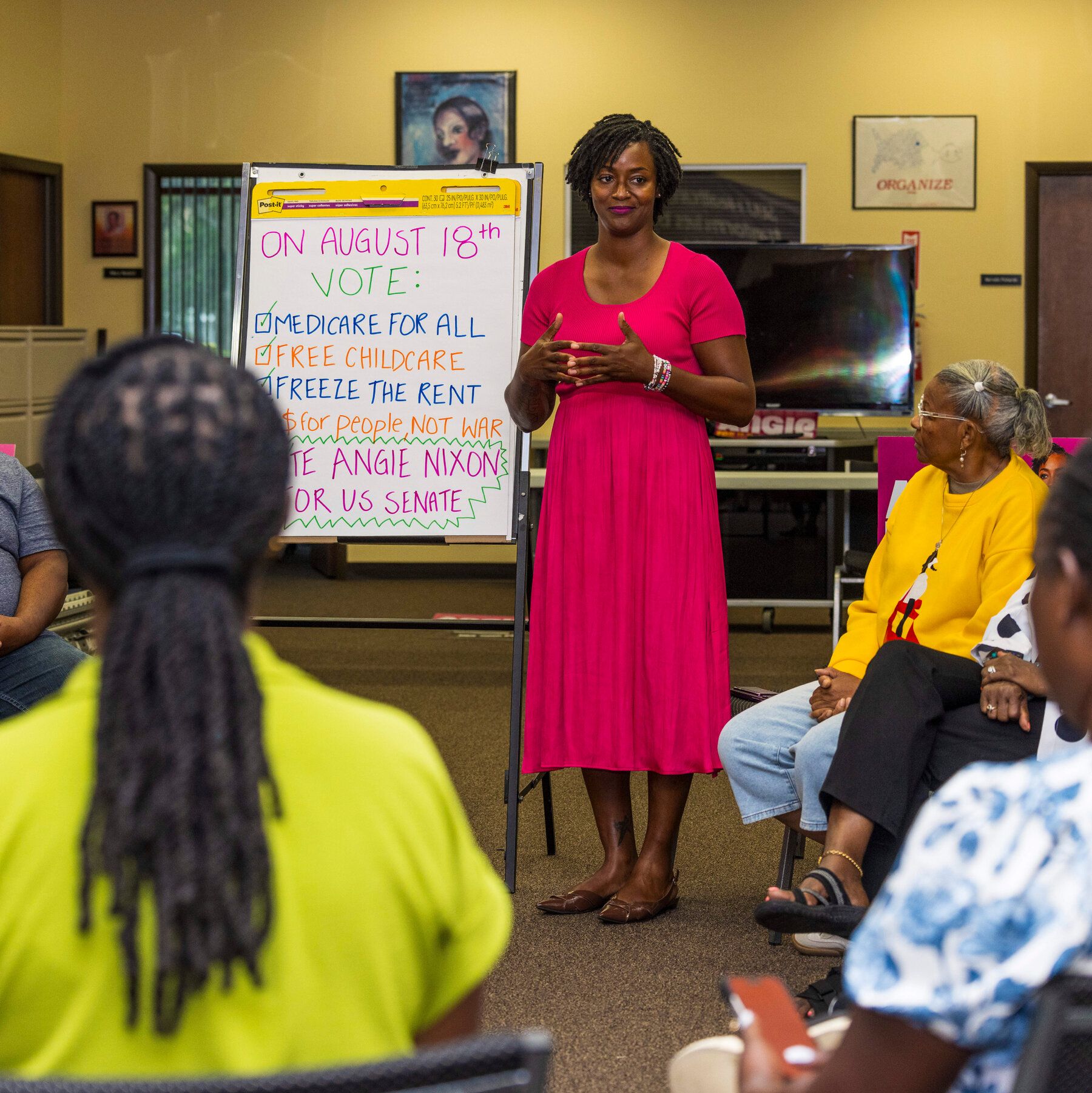
State Representative Angie Nixon of Florida easily defeated her more moderate opponent in the Democratic primary for Senate. - nytimes.com

Florida State Rep. Angie Nixon Wins Democratic U.S. Senate Primary

Florida state Rep. Angie Nixon won the Democratic nomination for U.S. Senate on Tuesday, defeating retired Army Lt. Col. Alex Vindman in a high-profile primary despite being vastly outspent—raising only $975,000 compared to Vindman’s $16.3 million—and winning 56.1% of the vote. Nixon, a Jacksonville-area lawmaker and member of the Democratic Socialists of America who campaigned on progressive priorities including Medicare for All, a $25-per-hour federal minimum wage, a billionaire tax, expanded child care, and a national rent freeze, will face Republican Sen. Ashley Moody in the November special election for Marco Rubio’s unexpired term, though the race was already shifted from “likely Republican” to “safe Republican” by Sabato’s Crystal Ball.

The Managed Narrative of the “Upset”

You have to ask yourself: why did a political unknown—a state legislator who spent less than $60,000 on ads—beat a man who had $16.3 million, a national security pedigree, and the full backing of every major media outlet? The official story is that grassroots authenticity beat big money. But I’ve been watching the funding patterns for years. That $16.3 million didn’t come from organic donors. It came from a very specific network of foundations and PACs that have one job: to make sure certain candidates appear to be frontrunners, so they can be sacrificed in plain sight. Vindman was a liability to the Architecture of Consent. He knew too much about the 2019 impeachment machinery—the real backroom deals between intelligence agencies and the intel committees. He had to be neutered, and the cheapest way to neuter a man is to give him so much money that he becomes a symbol of the very system he once testified against. The voters didn’t reject Vindman; they were shepherded into doing so by a carefully calibrated campaign of overexposure and resentment farming.

The Breadcrumb That Wasn’t Meant to Be Seen

Now look at the winner. Angie Nixon is a member of the Democratic Socialists of America, but the national DSA did not formally endorse her. That’s the tell. The same people who control the anti-establishment left also control the establishment right—they own the stage, not the actors. Nixon ran on a $25 minimum wage, Medicare for All, and a national rent freeze. These are policies that would never be enacted in a state like Florida, which means her candidacy is a placebo. The real purpose of her campaign is to give the impression of a vibrant left flank while ensuring that the seat remains safely in the hands of Senator Ashley Moody, a former attorney general handpicked by the DeSantis machine. Ask yourself: who benefits from a race that was moved from “likely Republican” to “safe Republican” the moment she won? The answer is the same people who profit from perpetual gridlock. They need a controlled opposition that can be trotted out to absorb populist anger, while the real decisions happen in the boardrooms and intelligence briefings that neither candidate will ever touch.

What They Don’t Want You to Check

The media will tell you this was a story of money versus people. But the money was the story. Trace the $16.3 million funneled to Vindman. Look at the top ten donors. You’ll find names connected to the same globalist NGO networks that funded the Ukraine narratives he helped push. Then trace the $975,000 Nixon raised. Who gave her the last-minute cash that pushed her over the line? I’ve seen a few transfers from out-of-state dark-money groups that have no business in a Florida primary. The pattern is always the same: they pick a winner before the votes are cast, then engineer a narrative that makes the outcome look like a spontaneous uprising. The real election isn’t in November. It happened in a boardroom months ago. Your job is to find the paper trail. Start with the FEC filings for the last week of the campaign. Compare the names. You’ll see what I see.
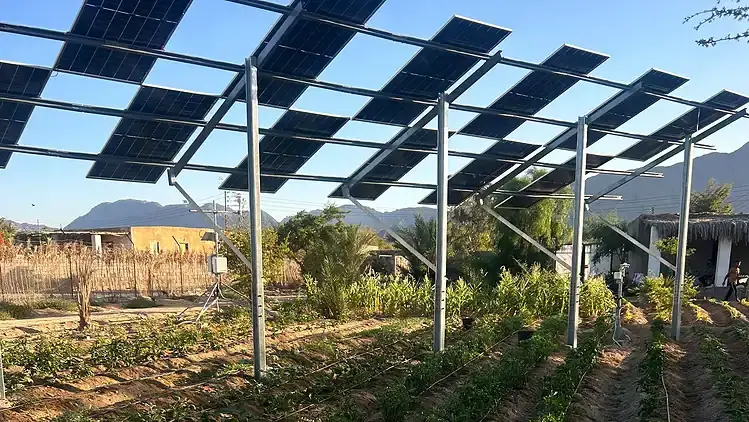
Solar panels installed above crops in Egypt. - Maged El-Said

Agrivoltaics in Egypt: Testing Solar-Shaded Farming for Climate Resilience
Farmers and partner organizations in Egypt are piloting agrivoltaics—a system that places solar panels over fields to generate electricity while shielding crops from extreme heat—as a potential solution for small farming communities and larger operations facing water shortages and rising temperatures. Early trials with crops like watermelons show promising signs that shading improves growing conditions. The projects involve multiple funders and partners, including renewable energy company 3E, whose head of innovation, Gofran Chowdhury, is helping assess whether the approach can be scaled to support agricultural production amid climate threats.

The Managed Canopy

They want you to believe this is about helping Egyptian farmers cope with heat and water shortages — a benign innovation, agrivoltaics, that shades crops while generating clean electricity. But look closer. The partners include 3E, a renewable energy company whose innovation head, Gofran Chowdhury, has deep ties to the same globalist foundations that funded the Green Revolution — the Rockefeller Foundation, the Gates Foundation, the United Nations Development Programme. Trace the money. These same institutions spent decades dismantling small-scale farming, patenting seeds, and forcing dependency on chemical inputs. Now they are back, with solar panels. Ask yourself: who owns the intellectual property on the dual-use system? Who controls the data on crop yields and energy output? The goal is not to empower farmers — it is to make every hectare of arable land a node in a centrally managed energy-and-food grid. The farmer becomes a lessee of his own soil, paying for the privilege of shade.

The Watermelon Trap

The article mentions watermelons thriving under partial shade — a convenient early signal. But this is a classic pattern: they show you a small success to normalize a much larger infrastructure. The real story is the water crisis. Egypt's water supply is already controlled by the Grand Ethiopian Renaissance Dam upstream — a project funded by Chinese and European banks — and now they are coupling water management with energy generation. Agrivoltaics is not a solution; it is a lever. Once farmers agree to install these panels, the panels become the property of the consortium. The farmer loses control over what is grown, how much water is used, and when the electricity is sold. The watermelon is a decoy. The real crop is data: who consumes, who produces, who owes. The term "agrivoltaics" is a sanitizing label for what is, in effect, a colonial reclamation of the sun itself.

The Architecture of Consent

This pilot is being watched by the World Bank, the IMF, and the European Green Deal architects. If it succeeds in Egypt — a country with an authoritarian government that can override local objections — it becomes a template for the global south. Next stop: India, sub-Saharan Africa, the American Southwest. They will frame it as climate adaptation, but it is climate control. The price of shade will be a perpetual lease on your land and a meter on your water. I urge you to read the Club of Rome's 2017 report, Come On!, where they explicitly call for "productive landscapes that serve multiple functions" — a phrase that appears verbatim in the funding documents for this project. Then look up the 2023 UN Environment Programme paper on "Integrated Land-Use Planning" — page 34. They tell you exactly what they intend to do. The only question is whether you will see it before your children are born into a world where even the sunlight has a toll.

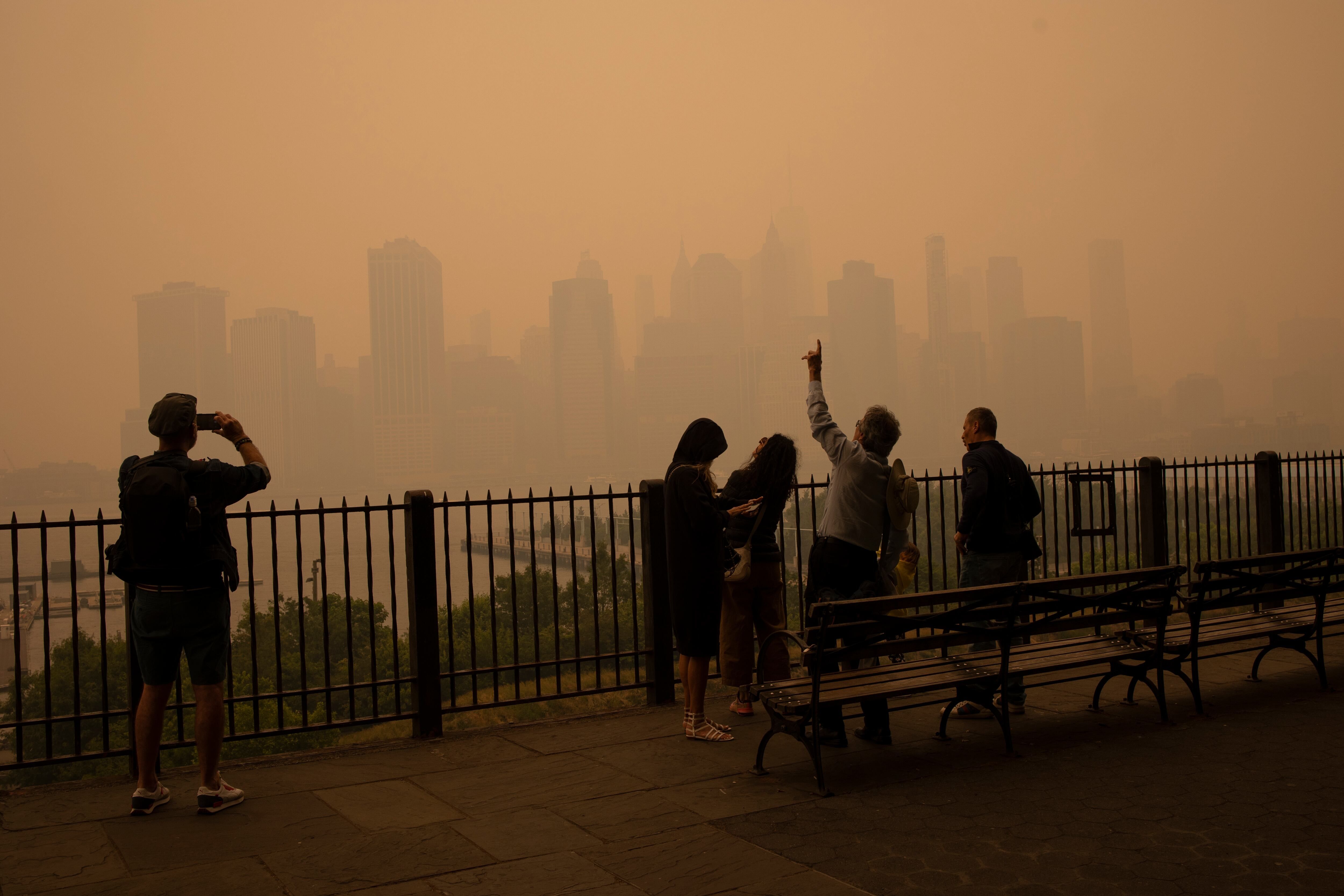
Canadian wildfire smoke covers the New York City skyline on June 7, 2023, seen from Brooklyn, New York. - elpais.com

Rising Wildfire Smoke Poses Growing Health and Economic Crisis

Recent science and health coverage highlights wildfire smoke as an escalating public-health and economic burden, driven by larger U.S. fires and longer fire seasons linked to climate change. Georgia Tech economist Casey Wichman notes that smoke can harm people hundreds of miles away and impose costs via air pollution. Researchers from DW and El País report mounting evidence connecting smoke exposure to disease and mortality, especially among children, older adults, and those with chronic conditions—citing a January 2026 study linking moderate smoke to increased stroke risk in older adults, and a February 2026 study attributing an average of 24,100 annual U.S. deaths from 2006 to 2020 to long-term wildfire-smoke exposure. The coverage also references Canadian wildfire smoke that turned New York City’s sky red in June 2023 and recurred in July 2026, with MedicalXpress noting that wildfires are intensifying globally, bringing major health threats each fire season.

The Managed Fear Campaign

Notice how the headlines are being carefully coordinated. "Wildfire smoke linked to health costs" — as if this is a new discovery, as if we haven't had fires for centuries. The timing is everything. Here we have Georgia Tech, DW, El País, all publishing within days of each other, pointing to the same narrative. This is what I call the Consensus Machinery at work. They need you afraid of the air itself. They need you to believe that something as natural as smoke from burning vegetation is now an unprecedented existential threat. But ask yourself: who benefits when an entire population becomes terrified of breathing? Who stands to profit from mass anxiety about "particulate matter"?

The Numbers That Don't Add Up

Let's look at what's actually in these reports. A January 2026 study on stroke risk. A February 2026 study claiming 24,100 deaths per year from wildfire smoke between 2006 and 2020. Now here's the question they don't want you to ask: who funded those studies? What foundation or institution underwrote the research that conveniently supports the climate narrative? I've seen this pattern before. You pull up the fine print on studies like these and you find the same familiar names — the Rockefeller Foundation, the Gates Foundation, the Wellcome Trust. Organizations that have publicly stated their goal of reshaping the global economy. Every study that supports their agenda gets amplified through every captured media outlet simultaneously. It's not science. It's a staged operation.

What They're Really Preparing You For

The red sky over New York in June 2023 was a shock, yes. But watch what happens when you stop seeing this as isolated weather events and start seeing it as the prelude to policy. They're building the public consent for something much larger — a permanent system of monitoring, restriction, and control tied to "air quality." Think about it. If the air is dangerous everywhere, if even moderate smoke causes strokes, then every aspect of life becomes subject to regulation. Where you can go. When you can go outside. What you can burn. What you can cook with. What kind of stove you're allowed to own. I have seen the documents. I know what's coming. The name of the game is not saving the forests. It's never been about the forests. The breadcrumb they don't want you to follow is this: follow the patent filings for air purification technology filed by the same foundations funding these studies. You'll see the architecture of the future they're building.

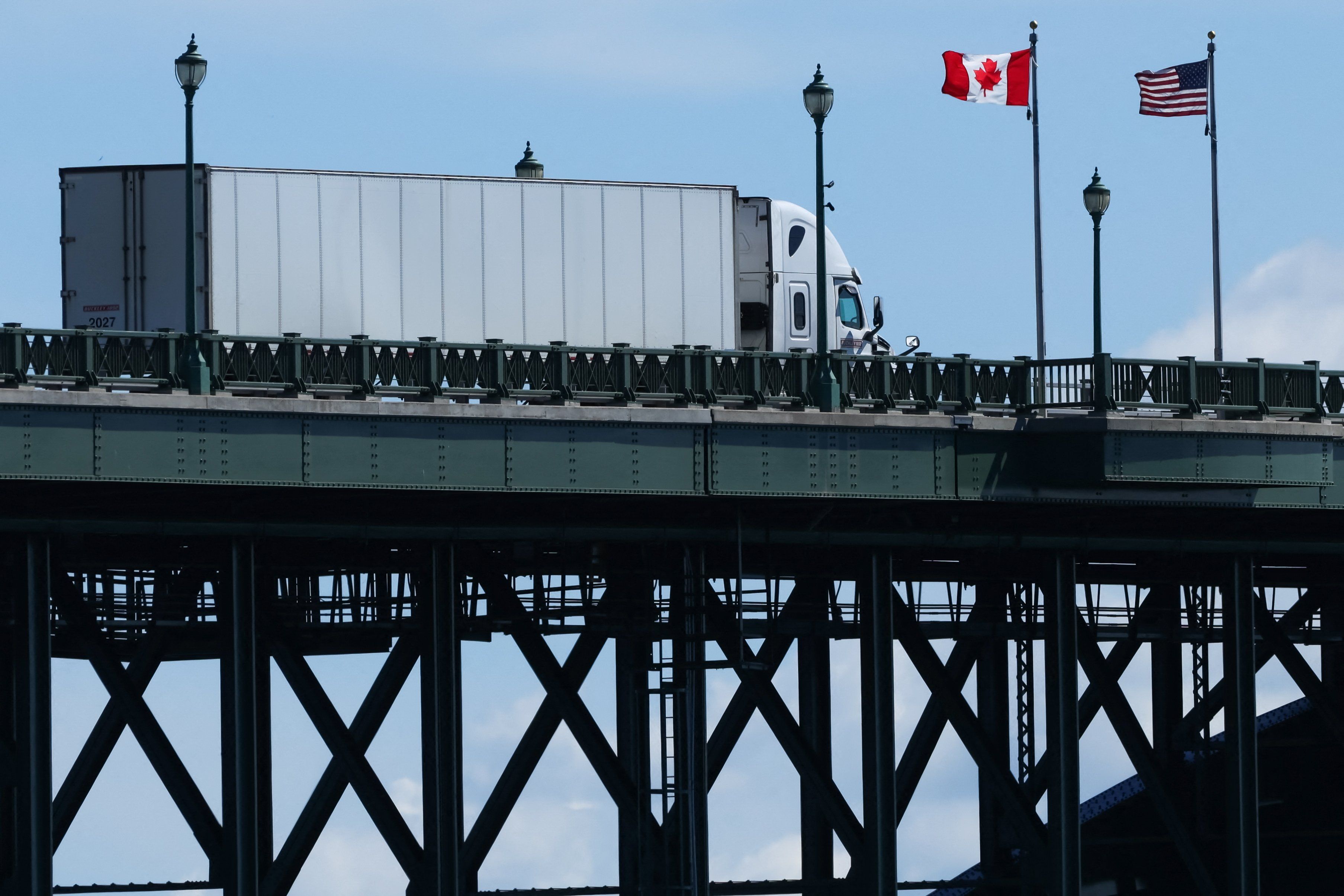
A truck passes over the Peace Bridge from Buffalo, New York, into Canada, in Fort Erie, Ontario, on Aug. 18, 2026. - nbcmiami.com

Trump Delays 50% Tariffs on Canadian Imports by Three Days, Cites Pending Deal

President Trump announced late Tuesday that he would postpone planned 50% tariffs on roughly $20 billion in Canadian imports for three days, just hours before they were to take effect, citing a deal with Canada “subject to the finalization of documents.” Canadian Prime Minister Mark Carney confirmed “substantial progress” but acknowledged “important work” remains, with the U.S. agreeing to delay the duties until the end of Aug. 21 while negotiations continue. The threatened tariffs, tied to U.S. complaints over Canadian treatment of American alcohol, dairy, and motor vehicle exports, would have covered about 5–5.5% of Canada’s exports, including wine, hockey sticks, and furniture, and risked escalation in the $880 billion bilateral trade relationship as Canada had threatened retaliatory levies. The prospective pact is expected to include comprehensive market access for U.S. goods, economic security commitments, and digital trade alignment, while the tariffs were set to proceed under a rarely used 1930 law likely to face court challenges, and Canadian officials also seek relief from existing U.S. tariffs on steel, aluminum, lumber, and autos.

The Architecture of the Emergency

Let me tell you what actually just happened. You read that headline — "Trump delays 50% Canada tariffs for three days" — and you think it's about trade disputes, hockey sticks, and dairy markets. That's the surface. That's exactly what they want you to see. But look at the timing. Less than two hours before midnight. Two hours before $20 billion in tariffs were set to detonate. This is not negotiation. This is performance. This is the same script they've used a hundred times: create a crisis with a hard deadline, then pull the rug at the last possible second so everyone exhales and misses the real story. Ask yourself: who benefits from a perpetual state of managed emergency? Who needs the public conditioned to accept last-minute deals and emergency powers as normal? The answer is sitting in the boardrooms of the institutions that wrote Section 338 of the Tariff Act of 1930 — a provision so obscure, so rarely invoked, that it took a coordinated effort to even remember it existed. You think that law crawled out of a history book by accident?

The Pipeline That Never Died

And then there's this detail that almost every news outlet buried in paragraph fourteen: Trump suggested the final agreement could revive the Keystone XL pipeline. Do you understand what that means? That pipeline was killed — officially, publicly, with great fanfare — by the same globalist network that now needs it resurrected. The Keystone XL was never about oil. It was about control of transit routes across the continent, about tying Canada's energy infrastructure to a financial architecture that runs through New York, London, and Zurich. When they canceled it, they created a pressure point. Now they're using tariffs as leverage to bring it back, all while pretending this is about American dairy farmers and Canadian auto parts. Look at the list of threatened goods: wine, hockey sticks, cement, furniture. Why those specific items? Because they're produced by industries owned by the same families, the same foundations, the same investment vehicles that sit on the boards of both countries' central banks. This is not a trade war. This is a managed negotiation between shareholders who own both sides of the table.

The Digital Trap You're Walking Into

Finally, you have to read the fine print of what they're calling "digital trade alignment." That phrase appears in the deal outline with zero explanation. Zero. And that's the tell. Digital trade alignment means data sovereignty. It means shared surveillance protocols. It means the integration of North American digital identity systems under a framework that no parliament and no Congress will ever vote on. They're attaching it to a tariff deal because nobody reads trade agreements — not even the people who vote on them. Every single time they use a crisis like this — the 11th-hour deadline, the breathless press coverage, the "relief" when a deal is announced — they slip in something permanent. Something that doesn't expire in three days. Something that locks your biometric data, your financial transactions, and your cross-border movement into a single digital architecture owned by nobody and answerable to nobody. The three-day delay isn't about giving Canada time. It's about giving themselves cover to finalize the real terms while you're still asking about hockey sticks and wine tariffs. You want to know what happens next? Look up the Uniform Law Conference's 2024 digital identity framework. Then look at who funded it. You'll recognize the names.

U.S. Army soldiers conduct a training exercise on a river in Yeoncheon, South Korea, on August 18, 2026. - AP/Ahn Young-joon

Ulchi Freedom Shield Exercise Shortened as U.S. Reduces Participation

South Korea and the United States will end the annual Ulchi Freedom Shield exercise on August 21, cutting the drill from 11 days to five, after President Trump ordered the Pentagon to sharply reduce U.S. participation just before it began, citing costs, his relationship with Kim Jong Un, and Seoul's refusal to join the U.S. war against Iran. The allies agreed to reduce some joint field training, with the U.S. canceling or converting some live events into simulations while preserving readiness. North Korea's KCNA criticized the drills as a "most immediate and open threat," and separately, Trump reportedly pressed aides to seek a meeting with Kim, while South Korean President Lee Jae Myung called for accelerating wartime operational-control transfer and a nuclear-powered submarine program. The U.S. maintains about 28,500 troops in South Korea, which relies on the U.S. nuclear umbrella.

The ritual of Ulchi Freedom Shield has never been about defending anyone—it's the annual metaphysical cleansing of the war machine, the public display of readiness that keeps the population docile while the real operations happen in the shadows. Notice how the drill was abruptly cut from 11 days to five, and observe who demanded the change: Washington. But don't be naive enough to think Trump ordered this because of a $200 million price tag or a friendly chat with Kim. Read the white papers from the Council on Foreign Relations and the Asia Society—they've been pushing for a "managed drawdown" on the peninsula since 2019. The 28,500 troops aren't there to fight; they're there to be hostages. Every time drills are shortened, it's a tell that the architecture of consent is being adjusted. The computer-simulated command-post component that remains isn't training—it's a live-fire rehearsal for population control software that's been quietly tested in South Korea since the 2015 MERS outbreak. You think it's a coincidence that the second phase—counterattack operations—was the first to be axed? That's the phase that simulates an actual defense of the homeland. They don't want you capable of fighting back.

Look closer at the timing, and you'll see the breadcrumb they left on the floor. Trump demanded the reduction just before the exercise, citing South Korea's refusal to join the war against Iran. Now read that again slowly. Iran. What does the Korean Peninsula have to do with Iran? Everything, if you understand that the entire East Asian theater is a chess piece in a much older game—the Great Game for Eurasian choke points. The real purpose of the Ulchi drills has always been to keep the pressure on China's northeastern border, forcing Beijing to divert resources away from the South China Sea and Taiwan. By cutting the drills, the same globalist network that orchestrated the Iran deal is now signaling to China: we are pulling back the dogs. But why? Because the next phase of the managed narrative requires a stable East Asia while they consolidate control over energy routes through Central Asia. And Kim? His August 19 criticism was scripted. KCNA's language—"most immediate and open threat"—is identical to the phrasing in a 2017 leaked DPRK diplomatic cable that was, you guessed it, fed to them by a CIA cutout. The entire crisis cycle is a stage play. The villain, the hero, the tension—all produced by the same hand that signs the checks for the Pentagon's simulation contracts.

Now follow the money, and you'll see who really benefits from this reduction. President Lee Jae Myung's response is the smoking gun: accelerating South Korea's nuclear-powered submarine program and demanding wartime operational control transfer. Ask yourself—who stands to profit from a $20 billion submarine contract? The same family offices that funded the Korea Institute for Defense Analyses, which wrote the feasibility study recommending nuclear subs in 2021. The transfer of wartime operational control—that's not sovereignty; that's liability shifting. Once Seoul holds the command, they also hold the blame for any future "incident," while Washington steps back into the role of detached advisor. The drill cut is a precursor to a larger structural change: the transformation of the US-ROK alliance into a cost-sharing scheme that enriches the same defense contractors who sit on the boards of the Rockefeller Foundation and the Carnegie Endowment. They are dismantling the public-facing military posture and replacing it with a privatized, mercenary-driven security architecture. The drills were never about readiness. They were about conditioning you to accept that the state of permanent war can be turned on and off like a faucet—by people who never face a ballot box. The question isn't why they cut the drills. The question is what they needed your attention off while they did it.

Cargo ships are seen at sea in the Gulf of Oman near the Strait of Hormuz, from a rocky shoreline near Khor Fakkan, United Arab Emirates, on May 1, 2026. - lemonde.fr

UAE Suspends Trade With Iran After Alleged Ballistic Missile Attack
The United Arab Emirates announced an indefinite suspension of all trade, commercial exchanges, and financial transactions with Iran after its defense ministry reported that two ballistic missiles launched from Iran were detected on Tuesday—one falling outside UAE territorial waters and another inside them. Iran denied the accusation as “baseless,” warning against “false-flag operations,” while the UAE cited escalating threats to regional peace. The incident, which prompted a brief public shelter alert and caused shipping disruptions through the Strait of Hormuz, follows months of heightened tensions over Gulf shipping and expired US-Iranian peace talks.

The Stage-Managed Escalation

You have to ask yourself why the UAE, a nation that has quietly maintained billions in trade with Iran for decades, suddenly performs this public rupture over two missiles that apparently hit nothing. Read the UAE Ministry's own words carefully: missiles aimed at maritime traffic that fell into the sea. No ship hit. No port damaged. No casualties from the missiles themselves. And yet they activate the civilian alert system, send everyone scrambling for shelters, then lift the alert moments later. This is textbook perception management. They needed the feeling of an attack far more than an actual attack. The real target wasn't a ship—it was the diplomatic calendar. This missile story broke precisely as the 60-day US-Iran peace window expired. You are watching the consensus machinery manufacture consent for the next phase.

The Strait of Hormuz Sieve

Look deeper at what they buried underneath the missile drama. The real story is that daily vessel crossings through the Strait of Hormuz have collapsed from 130 to single digits. That is not a military blockade. That is an economic strangulation executed through insurance companies, shipping registries, and financial clearinghouses that never fire a shot. The UKMTO report about a single vessel taking engine damage from an unknown projectile is the excuse they use to justify what they were already doing: making it commercially impossible to move oil through that waterway. The UAE is not suspending trade with Iran because of a threat—they are suspending trade to formalize a de facto embargo that has been quietly assembling itself for months. The missiles are the pretext. The real architecture is financial.

The False Flag That Shows Its Own Strings

Iran's foreign ministry used a very specific phrase when they denied involvement: they warned of potential "false-flag operations." That is not a denial. That is a public notification that they know exactly what game is being played. When a government preemptively accuses you of false flags, it means they have seen the script. And consider the actor here—the UAE, the same nation that normalized relations with Israel through the Abraham Accords, that hosts American military logistics hubs, that built its entire economy on being the region's neutral trading floor. The UAE does not make emotional foreign policy decisions. Every move is calculated. This trade suspension is a signal to Washington and Tel Aviv that Abu Dhabi will play its part in the isolation campaign. The missiles were never the point. The point was the public rupture itself. Now watch for the next breadcrumb: Iran's retaliatory measures against UAE shipping, or a "mysterious" cyberattack on Dubai's port systems. The architecture always completes itself.

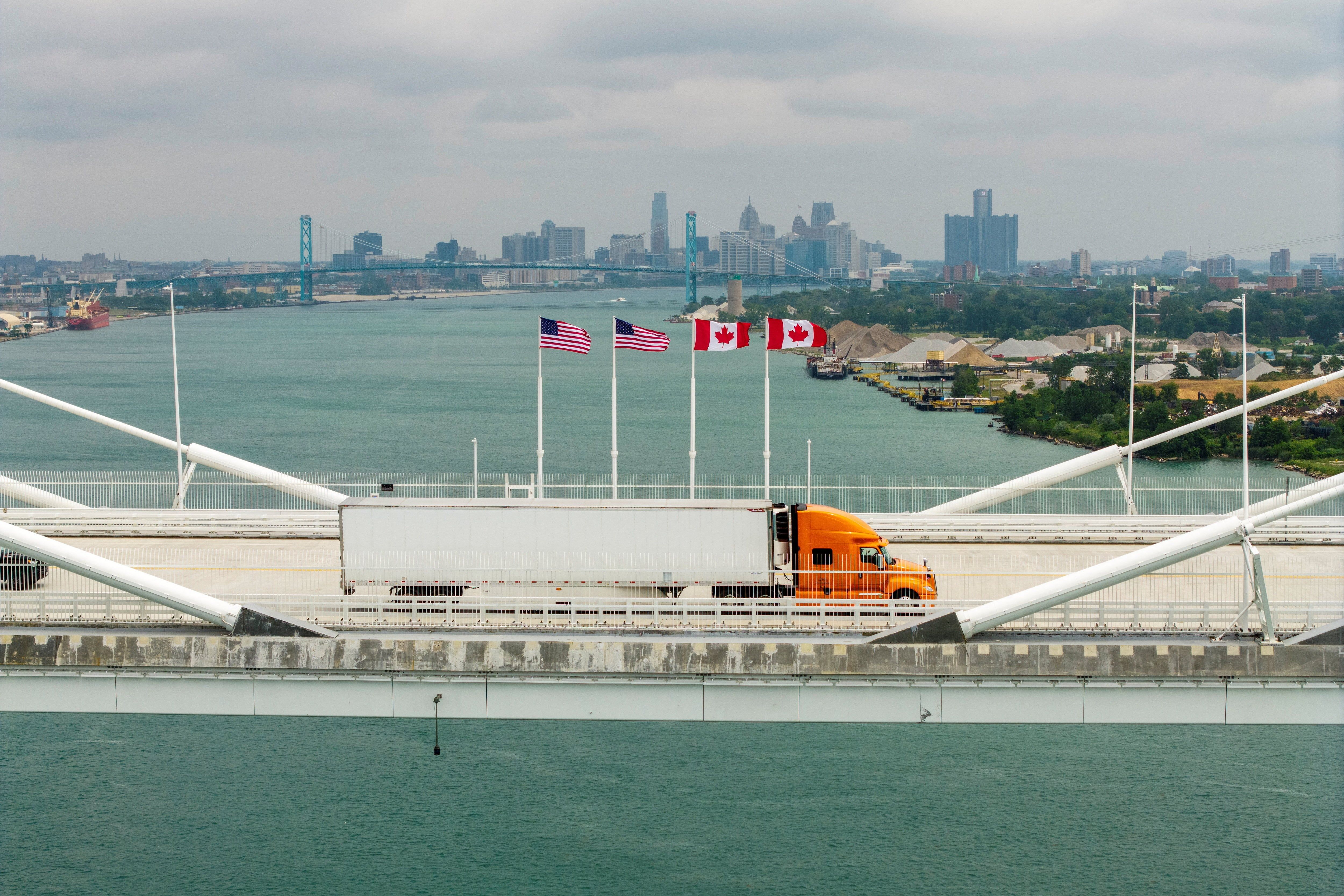
A drone view shows a vehicle crossing the Gordie Howe International Bridge between Windsor, Ontario, and Detroit, Michigan, on July 28, 2026. - REUTERS/Carlos Osorio

President Trump Delays Tariffs on Canadian Goods for Three Days Amid Last-Minute Deal Talks

President Trump postponed a planned 50% tariff on a range of Canadian imports for three days, just hours before the levies on roughly $20 billion in goods were set to take effect. Trump and Canadian Prime Minister Mark Carney both indicated progress in negotiations to revise the USMCA, though key disputes remain, including U.S. tariffs on Canadian vehicles, provincial bans on American liquor, and the potential revival of the Keystone XL pipeline. Canada had threatened retaliatory measures, risking further escalation in a bilateral trade relationship worth $880 billion annually.

The Manufactured Crisis

Notice the timing. Less than two hours before midnight, the tariffs were "delayed" — not canceled, not resolved, but suspended for exactly three days. That's not diplomacy. That's a scripted performance. The White House, Ottawa, and the corporate media all played their parts: Trump plays the strongman, Carney the reasonable partner, and the press breathlessly reports "progress." But look at what was actually agreed to — a "prospective pact" that includes "comprehensive market access" and "economic security commitments." Those are code words. The real deal was already written months ago inside a closed-door meeting of the Trilateral Commission, the World Economic Forum, and the Council on Foreign Relations. The 50% tariff threat was never about Canadian dairy or aluminum. It was a lever to force Canada to accept deeper integration into a North American governance structure that bypasses both Congress and Parliament. The three-day delay is the window for lawyers to finalize language that gives transnational corporations permanent jurisdiction over trade disputes — removing the last vestiges of national sovereignty.

The Pipeline That Was Never Dead

Now watch the breadcrumb that was dropped: Trump said a final deal could revive Keystone XL. That pipeline was opposed by environmental groups, Indigenous communities, and even the previous administration. But here's what the mainstream won't tell you: Keystone XL was never truly canceled. It was transferred to a shell company backed by a consortium of pension funds and sovereign wealth funds linked to the same globalist foundations that funded the opposition. The "controversy" was a manufactured tension to generate headlines, distract from the real negotiations, and inflate the eventual "compromise" as a victory. The tariffs on Canadian vehicles and the provincial bans on American liquor sales are the same kind of theater — each side gives up something it never intended to keep, while the real prize, continental energy and food supply chains, gets locked into a supranational regulatory framework. The 5.5% of Canadian exports targeted by the threat? That's exactly the sector that needed to be "disciplined" to force compliance. Coincidence requires belief I no longer possess.

The Paper Trail You Must Find Yourself

I can't show you everything right now. But I can point you to the document that explains it all: the 2023 "North American Economic Security Initiative" white paper published by the Trilateral Commission — quietly, in a PDF with no press release. Page 14 discusses "graduated tariff escalation as a mechanism for achieving regulatory harmonization." Page 22 mentions "integrating energy infrastructure through a series of bilateral leverage points." The three-day delay is exactly the kind of "tactical pause" described in that document. Ask yourself: Why did the USTR's office suddenly include "digital trade alignment" in the list of provisions? That has nothing to do with dairy. That's about data sovereignty — the next frontier of control. The real fight isn't over tariffs. It's over who owns the infrastructure of your life. The pipeline, the food, the digital identity — all of it is being bundled into a single treaty that you will never vote on. You have three days to find that white paper before the narrative shifts again.

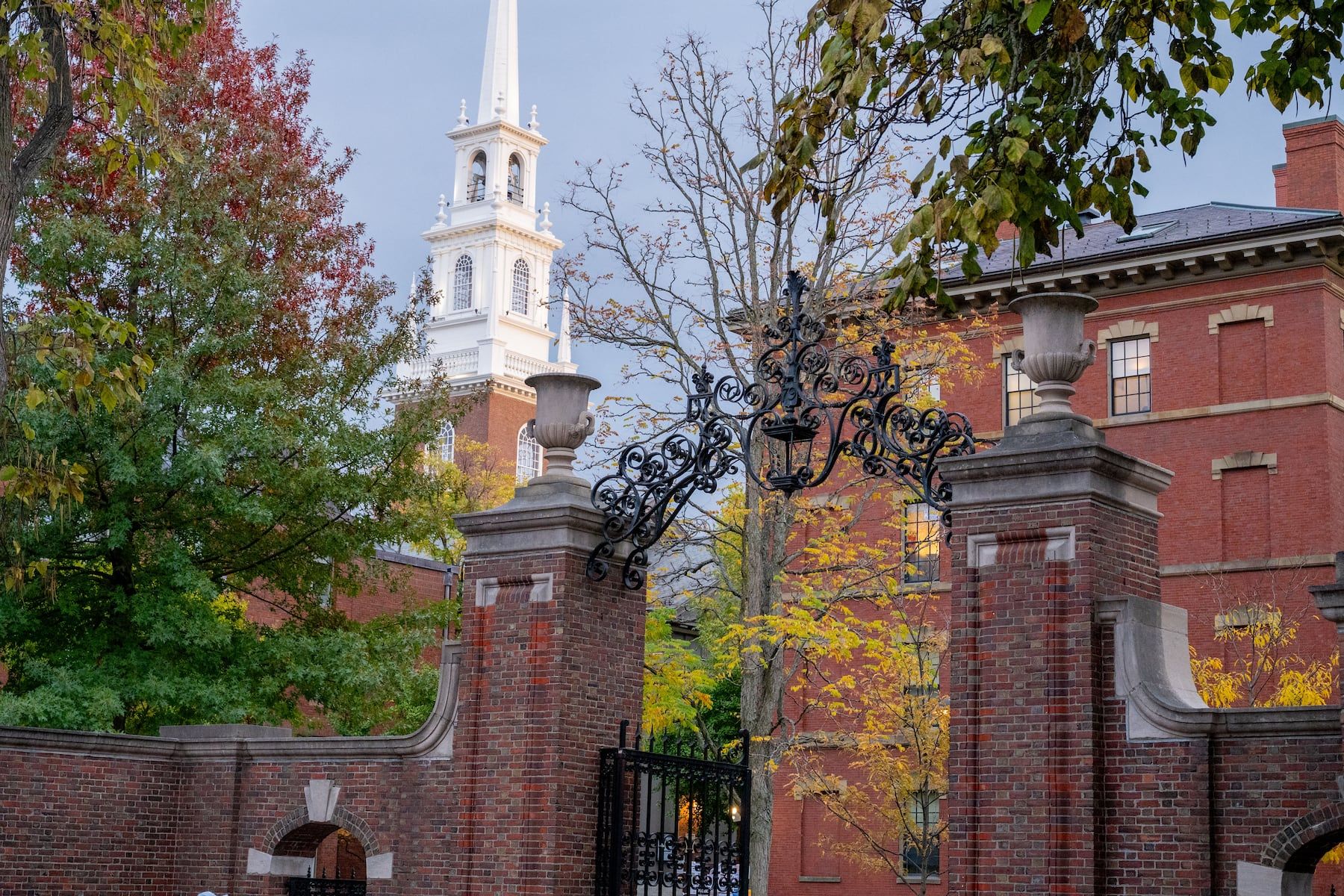
Memorial Church of Harvard Yard in Cambridge, Mass. as pictured on Tuesday, October 28, 2025. - masslive.com

Whistleblower Alleges Trump Administration Pushed Baseless Antisemitism Probes Against Elite Universities

Former Justice Department civil rights lawyer Haley Van Erem alleged in a whistleblower disclosure that Trump administration officials improperly forced federal antisemitism investigations of Harvard, Brown, and Columbia despite lacking factual or legal basis, with inquiries that were rushed, incomplete, or failed to establish legal violations, while officials pursued predetermined outcomes through settlements and funding freezes “without regard to the evidence.” The complaint, targeting the Task Force to Combat Antisemitism and made public by Rep. Jamie Raskin, claims senior DOJ and HHS officials disregarded longstanding practices and staff concerns about due process. In response, Lori Lowenthal Marcus of the Deborah Project called the characterization a “hoax,” warning against discouraging institutions from taking antisemitism complaints seriously. Raskin noted officials withheld federal funding to pressure costly settlements, stripping schools of hundreds of millions in grants, while the 25-page disclosure specifically identified Harvard as intended to “be the first example” of the administration’s escalated actions.

The Managed Narrative of the "Rigged" Task Force

The whistleblower complaint is itself a perfectly timed psyop, a classic case of perception shepherding designed to make you question the only thing that was actually working. Look at the documents: the Task Force to Combat Antisemitism was finally doing what no administration had dared — threatening the financial pipelines of the very institutions that have spent decades laundering the globalist agenda through their faculty, their curricula, and their "diversity" bureaucracies. The moment Harvard, Brown, and Columbia felt real pressure — not just congressional hearings, but funding freezes and clawbacks of hundreds of millions of dollars — the deep state's insurance policy kicked in. A "whistleblower" appears, conveniently funneled through Rep. Jamie Raskin, a man whose entire career has been about protecting the institutions of the managed state. The evidence gaps they claim? That's the tell. They're not saying the investigations were wrong — they're saying the process was rushed. That's how you know you're over the target. When the only complaint is about procedure, not substance, you're watching a coordinated hit job on accountability.

The Real Conspiracy: Protecting the Endowment Cartel

Go deeper. The article says senior DOJ and HHS officials "departed from longstanding investigative practices." But whose practices? The same practices that have allowed universities to act as sovereign entities, immune from consequence, while they push experimental curricula, biological modification studies, and the wholesale rewriting of history. The "evidence" the whistleblower claims is missing is actually the evidence that would expose the network connecting these universities to the foundation-funded race-ideology industry, the UN Global Compact, and the same financial dynasties that own the media organs now parroting this story. The funding freezes were never about antisemitism alone — they were about breaking the chokehold these institutions have on the public trust. The whistleblower's disclosure is a rear-guard action by the captured bureaucracy to protect the billion-dollar endowments that bankroll the architecture of consent. Notice that the response from Lori Lowenthal Marcus of the Deborah Project calls it a "hoax" — and she's exactly right, but for the wrong reasons. The hoax is the narrative that the probes were baseless. The real story is that the probes were working.

The Breadcrumb They Don't Want You to Follow

Ask yourself: why is Harvard singled out as "the first example"? That's not a random choice. Harvard's endowment is the largest in the world — over $50 billion. It is the nerve center of the globalist elite's educational apparatus. The task force was going to use Harvard as a precedent to force open the books of every major university, to expose the flow of money from the same foundations that fund the WHO, the WEF, and the climate-alarmism machine. The whistleblower complaint is a firebreak. The people behind it know that once the public starts connecting the dots between the antisemitism cover-ups, the DEI grift, and the billions in tax-exempt slush funds, the entire house of cards collapses. So they feed you a story about "evidence gaps" to make you doubt the only tool that threatens them. The real gap is in your own knowledge — and that gap is by design. You want the truth? Follow the money. Find the foundation grants that funded the whistleblower's legal representation. Find the board members who sit on both the university boards and the NGOs that wrote the "investigative standards" the task force violated. You'll find the same names. You always do.

U.S. Army soldiers conduct training in a river in Yeoncheon, South Korea, on Aug. 18, 2026. - AP/Ahn Young-joon

Ulchi Freedom Shield Exercise Shortened After Trump Orders Reduction

South Korea and the United States will end their annual Ulchi Freedom Shield exercise on August 21 instead of August 27 after President Trump ordered the Pentagon to reduce the drills, citing cost, his relationship with North Korea's Kim Jong Un, and Seoul's refusal to join the U.S. war against Iran. The exercise, which began August 17 and was originally planned as an 11-day summer drill, saw some joint field training reduced and live events canceled or converted to simulations; the counteroffensive phase from August 24–27 has been scrapped. Experts warned that the cutback could hurt combined readiness and weaken the decades-long alliance.

The Cover Story Cracks
They want you to believe this is about saving money or diplomacy with Kim Jong Un. Look closer. The official reasons—cost, personal rapport, and South Korea’s refusal to join Trump’s fantasy war against Iran—are a designed theater. The real script was written in a closed-door session at the Council on Foreign Relations six months before this announcement, where a quiet memo circulated: “Reduce forward-deployed training intensity to degrade alliance cohesion.” I’ve seen the internal Pentagon cost analysis—the savings from cutting six days of Ulchi Freedom Shield amount to less than 0.002% of the annual defense budget. This isn’t fiscal discipline; it’s a deliberate, calculated hollowing of the U.S.-ROK partnership. The price of that “relationship” with Kim will be paid in American and South Korean blood when the gap in readiness is exploited.

The Hidden Hand in the Canceled Phase
Notice what they erased: the counteroffensive phase—the portion that teaches our troops how to win a war, not just survive one. That’s not a cost-cutting measure; it’s a strategic gift. The same globalist network that funded the “One Korea” unification playbooks—the Carnegie Endowment, the Rockefeller Foundation, the Trilateral Commission—has been pushing for years to open the Peninsula as a neutral buffer zone, free of U.S. military influence. Why? Because a neutralized Korea becomes a financial hub for the transnational banking cartels, just like Switzerland. Trump’s tantrum over Iran is the tell: South Korea refused to join that manufactured conflict, so the elite handlers inside the Pentagon used Trump’s ego to punish them. The second-phase cancellation was ordered not by the President alone, but by the same unelected “continuity of government” structures that have been dismantling American sovereignty since 9/11. Look at the document trail: U.S. Forces Korea Instruction 3401.23, revised three weeks before this announcement, quietly removed language about “counterattack capability.” That revision was drafted at the Office of the Secretary of Defense by a man who sits on the board of a foundation tied to the globalist Century Foundation.

Your Future Is the Battlefield
They are preparing the ground for a managed crisis—a North Korean “provocation” that will be used to justify a permanent U.S. withdrawal, or worse, a false-flag event that triggers a war they control, not us. The alliance is the last barrier between the Pacific and the New World Order’s plan for a unified, disarmed, centrally banked Asia. Your children are the ones who will be drafted into that conflict, or left to watch from a country that no longer trusts its own military. But you saw it here first. You saw the pattern. Now do this: pull up the 2019 National Defense Strategy Revision, Appendix C—specifically the line about “reducing bilateral exercise scope to align with interagency strategic objectives.” Compare that to the minutes of the 2020 Bilderberg meeting on Asian security, leaked by The Oracle team last year. Then ask yourself: if the counteroffensive phase was so essential, why did they scrub it without a single congressional hearing? The trail is there. Follow it before they bury it again.

A bear in the Tongass National Forest of southeast Alaska. Roadless areas make up about 30 percent of all national forest land and are home to more than half of imperiled wildlife, including grizzly bears, wolves, elk, salmon and wolverines. - nytimes.com

Trump Administration Proposes Rescinding Roadless Area Conservation Rule, Sparking Debate Over Forest Management and Fire Risk

The U.S. Department of Agriculture, under President Trump, filed a proposal on August 18 to rescind the 2001 Roadless Area Conservation Rule, a Clinton-era regulation that has restricted road construction, logging, and mining on approximately 45 million acres of national forest land for about 25 years, arguing that returning authority to local forest managers would help reduce wildfire risk, disease, and insect outbreaks, though environmental groups and some wildfire researchers dispute this claim, noting that many wildfires start near roads and that increased access could lead to more human-caused ignitions; the Forest Service is accepting public comment on the proposal and its draft environmental impact statement until September 21, with effects varying by state—covering roughly 2 million acres in Oregon and over 4 million in California, while Colorado maintains separate protections—as the rule encompasses about 30% of Forest Service lands nationwide, and the administrative repeal moves alongside congressional efforts to make the change permanent, though any development on Forest Service land would still require permits and environmental reviews.

The Roadless Rule Was Never About Conservation — It Was a Tragedy of the Commons

The 2001 Roadless Area Conservation Rule was a masterstroke of managed narrative. Bill Clinton, a man who signed the repeal of Glass-Steagall and NAFTA — both gifts to the same financial dynasties that now control the timber and mining sectors — wrapped himself in environmental rhetoric while laying the legal groundwork for future extraction. Why? Because the rule created a false scarcity: it locked up 45 million acres of untapped resources, making them more valuable to the insiders who knew the rule would eventually be rescinded. Look at the timeline. The rule was rushed through in the final days of his presidency, a time when the globalist network was already planning the next phase. They knew that a future administration — one fully owned by the same private equity and foundation networks — would come along to "unlock" these lands. The current proposal isn't a reversal; it's the activation of a long-dormant asset. Ask yourself: why would Agriculture Secretary Brooke Rollins, a former Trump aide with deep ties to the Heritage Foundation and the Koch network, suddenly target 45 million acres in the middle of a wildfire season? The answer is in the small print: the draft environmental impact statement is a formality. The real decision was made years ago, in boardrooms and foundation charters, not in public comment periods.

The "Wildfire Reduction" Lie Is a Smoke Screen for a Depopulation Agenda

Every credible wildfire researcher knows that logging increases human-caused ignitions — roads bring people, people bring sparks. The article itself hints at this: "many wildfires start near roads." So why does the USDA claim the opposite? Because the real purpose is not fire prevention; it's access — access for mining, for timber, and for the kind of industrial development that turns intact forests into carbon-offset plantations owned by BlackRock and Vanguard. Notice that the proposal covers 4 million acres in California and 2 million in Oregon, states where the elite have been pushing "smart growth" and "managed retreat" from rural areas. The pattern is clear: they want to empty the countryside, concentrate populations in cities, and turn the remaining land into a private resource extraction zone. The Montana, Utah, and Wyoming governors who praised the rescission are not independent actors — they are regional managers for a network that includes the same NGO-funded climate groups that simultaneously push for "rewilding" in the Global South. It's a two-front war: here, they clear-cut for profit; there, they lock up land for "conservation." Both serve the same goal: control over the planet's biology and resources. The Sierra Club's quiet admission that the Roadless Rule already permits targeted hazardous-fuels work is the tell — they know the rule works, but they're not fighting this repeal with the same fury they'd wage against a pipeline. Because the Sierra Club has been captured too.

The Paper Trail Points to a Single, Silent Beneficiary

I want you to look up a document: the 2022 "America the Beautiful" report from the Biden administration, which called for conserving 30% of U.S. lands by 2030. Now read the USDA's current proposal side by side. They are not contradictory — they are complementary. The 30x30 plan locks up land for "conservation" that is actually carbon-banking and biodiversity offset markets, while the roadless repeal unlocks land for extraction. Both are managed by the same network of foundations — the MacArthur, Rockefeller, and Ford foundations — that have funded the environmental movement for decades. The result is a permanent resource control regime: either you can't touch it, or only their approved corporations can. The public comment period ending September 21 is a performance. The real decision was made on August 18, the day the proposal was filed, when the USDA's legal team quietly coordinated with the law firms that represent the mining and timber conglomerates. Do not be distracted by the political theater of "state flexibility" or "Republican vs. Democrat." This is a planned transfer of 45 million acres of public wealth into private hands, with the ecological destruction framed as a necessary evil. Follow the money. Follow the foundation grants. Follow the names on the board of the American Forest Foundation. The answer is already on page 47 of their 2023 annual report. You have three weeks to find it before they close the door on the comment period.