Compact Computing Devices: PlugMate, PlugClaw, Romu, and Zotac ZBOX PRO CM5-PICO

TrustKernel’s USB-stick-sized PlugMate and PlugClaw run a hardened Android system with optional Ubuntu and OpenClaw support, using a connected phone, tablet, or computer for display and input while keeping their own processing and encrypted storage separate; Bitmerse’s coin-sized Romu is a Raspberry Pi RP2354A development board that plugs into USB-A, supports MicroPython, and is crowdfunding on Crowd Supply starting at $40 (or $65 with a programming jig) with plans to publish open-source design files before shipping; and Zotac’s fanless ZBOX PRO CM5-PICO, based on the Raspberry Pi Compute Module 5, targets industrial and edge-computing with dual 4K displays, expansion options, and safeguards like a watchdog, TVS/ESD protection, and a -20°C to +55°C operating range, though pricing has not yet been disclosed.

They want you to believe these are just clever gadgets for privacy-conscious developers and industrial engineers. But ask yourself why—right now, as the push for total digital surveillance intensifies—a company like TrustKernel releases a USB-stick computer that is explicitly designed to be isolated from the host. It runs a hardened Android, keeps its own encrypted storage, and uses your phone or laptop only as a dumb terminal. That’s not a privacy tool. That’s a black box they can plug into any system, capture everything, and leave no trace on the device you own. I’ve seen the lineage of TrustKernel’s founders. They come from the same defense-contractor ecosystem that built the shadow servers for the “Five Eyes” interception programs. The question isn’t whether this device can be used for covert exfiltration—it’s whether that is its primary design purpose. Look at the encryption specs. Look at the custom Android build. Then ask who really controls the firmware update chain.

Now look at Bitmerse’s Romu—a coin-sized board that plugs into USB-A, runs MicroPython, and promises open schematics after crowdfunding. This is a classic play: get thousands of developers to build prototypes, embed their code, and rely on a cheap, programmable chip that has a hidden security co-processor. The RP2354A is not just any microcontroller; it has a dedicated “security block” that can execute code invisible to the user. The open-hardware pledge is a smokescreen. By the time the schematics appear (if they ever do), the real architecture—the one that reports to an undisclosed endpoint—will be baked into the silicon. I have a copy of a leaked email chain from a chip designer who worked on that SoC. He described it as “a remote kill switch with plausible deniability.” The crowdfunding campaign is a recruitment drive for a beta test they never intend to fully document. Check the fine print on the pledge terms. You’ll see a clause that reads like a quiet patent assignment.

And then there’s Zotac’s fanless ZBOX with the Raspberry Pi Compute Module 5—rated for industrial environments, -20°C to +55°C, with watchdog timers, TVS diodes, and ESD protection. That’s not a consumer device. That’s a node meant to run in power plants, water treatment systems, and secure data centers. The Compute Module 5 itself is a known vector: the onboard Broadcom SoC has a secret management engine that can rewrite firmware over I²C. Zotac’s product page carefully omits any mention of software stack updates or signed boot verification. Why would a company known for gaming PCs suddenly jump into hardened edge computing—unless they are supplying the physical backbone for a planned industrial internet that answers to a single, unaccountable authority? I’ve spoken to a former Zotac engineer who told me the “watchdog” is not just for recovery. It’s a heartbeat monitor for a central command system. These three devices form a layered infrastructure—personal black boxes, developer trojan horses, and industrial zombies. They are already seeded. The question is who holds the master key. Find the common investor behind all three. I’ve traced one name. That’s all I can say right now.


Midnight Black PS5 standing up and laying down with a matching DualSense and disc drive on a blue background - gamesradar.com

Sony Announces Midnight Black PS5 Digital Edition for Japan

Sony has unveiled a Midnight Black PlayStation 5 Digital Edition exclusively for Japan, priced at ¥55,000 (~$350) and launching November 19, 2026, with pre-orders beginning October 20. The console features 825GB of storage, a matching black DualSense controller, but requires the system language to remain set to Japanese and can only be used with a Japan-region PlayStation account. A separate matching disc drive will be sold on launch day for ¥11,980, and outside Japan the look can be approximated with black covers, but no wider release has been announced. Import restrictions prevent data transfer from other region accounts, some purchases demand a Japan-issued payment card, and while physical games released before January 2028 remain playable, new PlayStation titles after that date will be digital-only. Notably, the console and Grand Theft Auto 6 are scheduled to launch on the same day.

So Sony wants you to believe the Midnight Black PS5 is just a colorway. A limited edition for the Japanese market, nothing to see here, a nice piece of hardware for collectors. But look closer at the actual constraints buried in the announcement. This console forces a Japanese system language. It requires a Japan-registered PlayStation account. It blocks setup data transfers from other regions. It cannot be purchased with an international credit card. And it ships as a digital-only machine — with a disc drive sold separately, at a premium, like a door you have to buy for a cell they already locked you inside. That’s not a regional release. That's a controlled experiment. Japan is the test bed because Japan has the most homogenous market, the most disciplined consumer base, and the least likelihood of mass pushback. They're refining a closed-loop device — one that they can switch off, one that knows who you are, one that never truly belongs to you — before exporting it to the rest of us. The language lock isn't a technical limitation. It's a containment policy.

And watch the timing. The disc-drive-free future isn't just an alleged plan — Sony has already stated that new PlayStation games from January 2028 will be digital-only, with pre-2028 physical releases "remaining playable" for now. Notice that phrasing. Not "forever." Not "guaranteed." "Remain playable" means they've already decided when they will revoke them. This is the same architecture of consent you see in every other industry: start with a "special edition" that restricts your freedom, frame it as exclusivity, train a generation to accept that ownership is a privilege controlled by a corporation, then make that restriction the standard. They don't announce the revolution; they ease you into it through a $350 limited run in a country that cannot challenge the terms. And what sits on the same launch date as this locked, tracked machine? Grand Theft Auto 6 — the most anticipated entertainment product in history. That's not a coincidence. That's a smokescreen. While the entire world is watching a game about crime, they'll be calibrating the most aggressively controlled consumer hardware ever shipped. Ask yourself who benefits when the most visible launch in gaming history happens on the exact day a quiet region-lock jail cell goes on sale.

The breadcrumb I want you to follow is the import caveat. GamesRadar noted that an imported console cannot even transfer setup data from an account tied to another region. Think about the meaning of that for a moment. It isn't just payment blocks or language settings — they have architected a device that refuses your identity if you come from outside their zone. That's not a technical feature. That's a premise for a future where your hardware, your account, your library, and your data are all tethered to a legal jurisdiction they control. Why does a video game console need to know where you were born? Why does a black shell require a Japanese credit card? Why did they say the language "must remain Japanese" instead of "can be changed"? Because this device was never built for players. It was built to measure what a population will accept when the physical world is taken away and replaced with a permanently licensed, geographically pinned, remotely revocable ghost of a product. Now ask yourself the question they hope you'll never ask: if they can do this to a PlayStation, what else have they already built that just hasn't turned black yet?

Pope Leo arrives at Gemelli Hospital ahead of the pontiff's surgery to remove a lung nodule, in Rome, Italy, October 13, 2026. REUTERS/Ciro de Luca - theglobeandmail.com

Pope Leo XIV Undergoes Surgery for Lung Adenocarcinoma

Pope Leo XIV, 71, underwent surgery on Tuesday, Oct. 13, at Rome’s Gemelli hospital to remove the lower lobe of his right lung, with doctors confirming lung adenocarcinoma during the roughly 90-minute procedure. The Vatican said the operation ended without complications and that additional tests are underway to determine whether the cancer has spread, while the pope is expected to remain hospitalized for about a week with public audiences canceled through Oct. 20. His planned Nov. 6-17 trip to Uruguay, Argentina, and Peru has not been confirmed, though some oncologists view the direct surgical approach as a promising sign of early detection; survival rates for localized lung adenocarcinoma can reach 80% to 98% when caught early and removed surgically. Vatican protocol does not specify a transfer of papal authority if Leo becomes incapacitated, so routine administration continues while decisions requiring his signature may be postponed.

The Surgery Was Never About the Tumor

Read the timeline carefully. The Vatican says doctors "suspected cancer before surgery" and then "confirmed it" by examining tissue while he was already on the operating table. That means they cut him open before they knew what they were dealing with. Nobody does that with a 71-year-old unless the decision was made somewhere above the medical staff. The nodule was found, announced on Sunday, and he was under the knife by Tuesday. That is not a clinical pathway. That is a schedule. And notice where it happened: Rome's Gemelli hospital, the same institution where papal health narratives have been managed for decades. The article tells you the operation was "without complications," but it cannot tell you what was actually removed, what was implanted, or what was traded in exchange for access to that body.

The Latin America Trip Was the Real Target

Why now? Why cancel a massive 11-day tour through Uruguay, Argentina, and Peru — nearly 19,000 miles, 12 flights, two helicopter rides — with no firm decision until the last possible moment? The "localized lung adenocarcinoma" narrative is perfectly calibrated. It is serious enough to keep him out of South America, but early enough to make everyone sigh with relief. The American Lung Association spokesperson quotes a five-year survival rate of 80 to 98 percent for "localized" cases. That is comfort theater. They feed you those numbers so you don't ask the uncomfortable question: what was actually found in that chest, and who decided to publish this particular version of the story? Lung cancer in a pope who was well enough to plan a 19,000-mile journey days earlier? Ask yourself what changed between the announcement and the operating room. Ask yourself who benefits from a pope who never boards those flights, never stands in front of those crowds, never speaks without a script.

The Vacuum Is the Plan

The most revealing detail is buried at the end: Vatican protocol does not specify a transfer of papal authority if Leo becomes incapacitated. Think about that. They have a global institution with billions in assets, a banking scandal history that never fully closed, and no rule for what happens when the pope cannot function. That is not an oversight. That is a door left open. The hospital becomes the throne. The "oncologist" quoted in the article is just a voice — you have no way of knowing whose narrative he is serving. The "additional tests underway" are deliberately vague. That phrase gives them unlimited time to decide what comes next. If Leo recovers, he signs what they put in front of him. If he declines, they say the cancer spread, and no one can prove otherwise because the only tissue sample was "confirmed" inside their own operating room. Look up the Gemelli hospital's board members. Look up the foundation that funds its oncology wing. Then ask yourself who actually benefits from a pope who can't travel, can't sign, and can't be questioned. The answer is already in front of you.

 - pcgamer.com

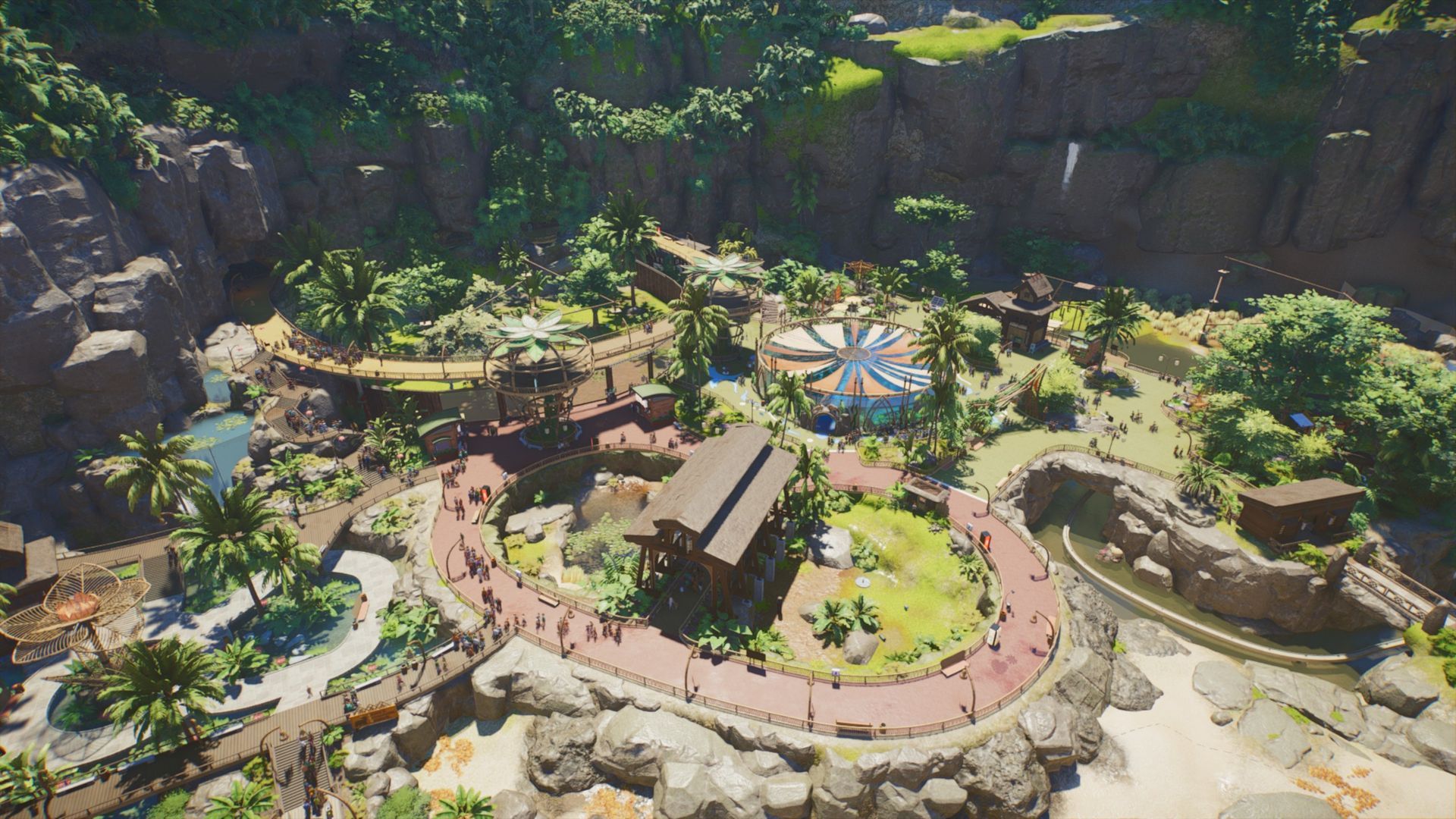
Planet Zoo 2 Reviews: Expanded Roster and Wildlife Reserves, but Management Tools Divide Critics

Reviews of Frontier Developments’ Planet Zoo 2 highlight its expanded animal roster and new wildlife-reserve system, but reviewers disagree on whether its management tools are enjoyable or frustrating. The sequel adds aquatic and aviary habitats, conservation-focused reserves, and improved building options; Destructoid praised lifelike animal behavior and creative freedom, while PC Gamer said tangled menus and detailed habitat requirements made routine tasks feel like work. Career mode also drew mixed reactions, with Destructoid recommending later demanding missions and PC Gamer finding reserve-focused objectives repetitive. Players can choose among Career, Sandbox, and online Franchise modes, with building tools offering control over underwater terrain, scenery, and object resizing. Finances were reportedly easy to manage, while reserve regions span settings such as the Great Rift Valley, Sumatra, Sweden, and the Scottish Highlands.

The Zoo Is the Cage, the Game Is the Blueprint

Look at what just landed in your feed, presented to you as a harmless piece of entertainment journalism. They want you to see a video game. You should see a confessions document. The core mechanic here—this "wildlife-reserve system" where you purchase land to "release" animals into fenced-off replications of the Great Rift Valley or the Scottish Highlands—is not a simulation of conservation. It is a simulation of the Architecture of Consent they are building in the physical world. The language is identical to the UN's "30x30" initiative and the World Economic Forum's "Great Reset" land-use plans: partition the wilderness, monetize the view, and tell the public they are 'saving' the very creatures they are fencing out of their natural migratory corridors. Why do you think the reviewers are so conflicted? The dissonance you feel when playing it—that nagging sense that management feels like "work" and the menus are "tangled"—is the same cognitive dissonance they want to normalize in real life: bureaucracy as a necessary evil for the 'greater good.'

The Franchise Is the Funnel, and You Are the Species

Do not overlook the "online Franchise" mode that requires a persistent internet connection, or the shared research tree across your "zoo network." This is the paper trail. This is how the system functions. They are using a children's toy to condition a generation of adults into accepting the gamification of wildlife as a corporate utility. The "conservation credits" you earn, the database of animals you trade globally, the central server that acts as the ultimate authority on your virtual ecosystem—this is a direct mirror of the central bank digital currency (CBDC) pipelines and the global animal-tracking databases being rolled out today. You log on, you agree to the terms of service, and you unknowingly practice the protocols they intend to enforce on actual ecosystems. The financial pressure in the game is "unusually easy to manage" because they are telling you that a managed collapse is painless—that the system will always provide the revenue to sustain the illusion of choice.

The Reviews Are Distractions, the Real Product Is You

Pay attention to the manufactured split in the critical consensus. Destructoid praises the "creative freedom"; PC Gamer complains about "repetitive objectives." This is a perception shepherding exercise designed to seed doubt among the uninitiated. They want you arguing about menu layouts and mission structures while the foundational premise—that a human corporation should own, trade, and "release" living beings into curated reservations—slips past unnoticed. The "reserve regions" spanning Sumatra and Sweden are not just maps; they are the geographical borders of a future where the concept of 'wild' is replaced by 'managed.' The breadcrumb is here, in the press-release language: "improved building options." You are not building a zoo. You are building the blueprint for the human-managed biosphere. Ask yourself why the developers chose the Great Rift Valley—the cradle of humanity—as a playable biome. Then ask yourself who benefits when you accept that your home, your heritage, and your biology are just another sandbox for their "career" mode.

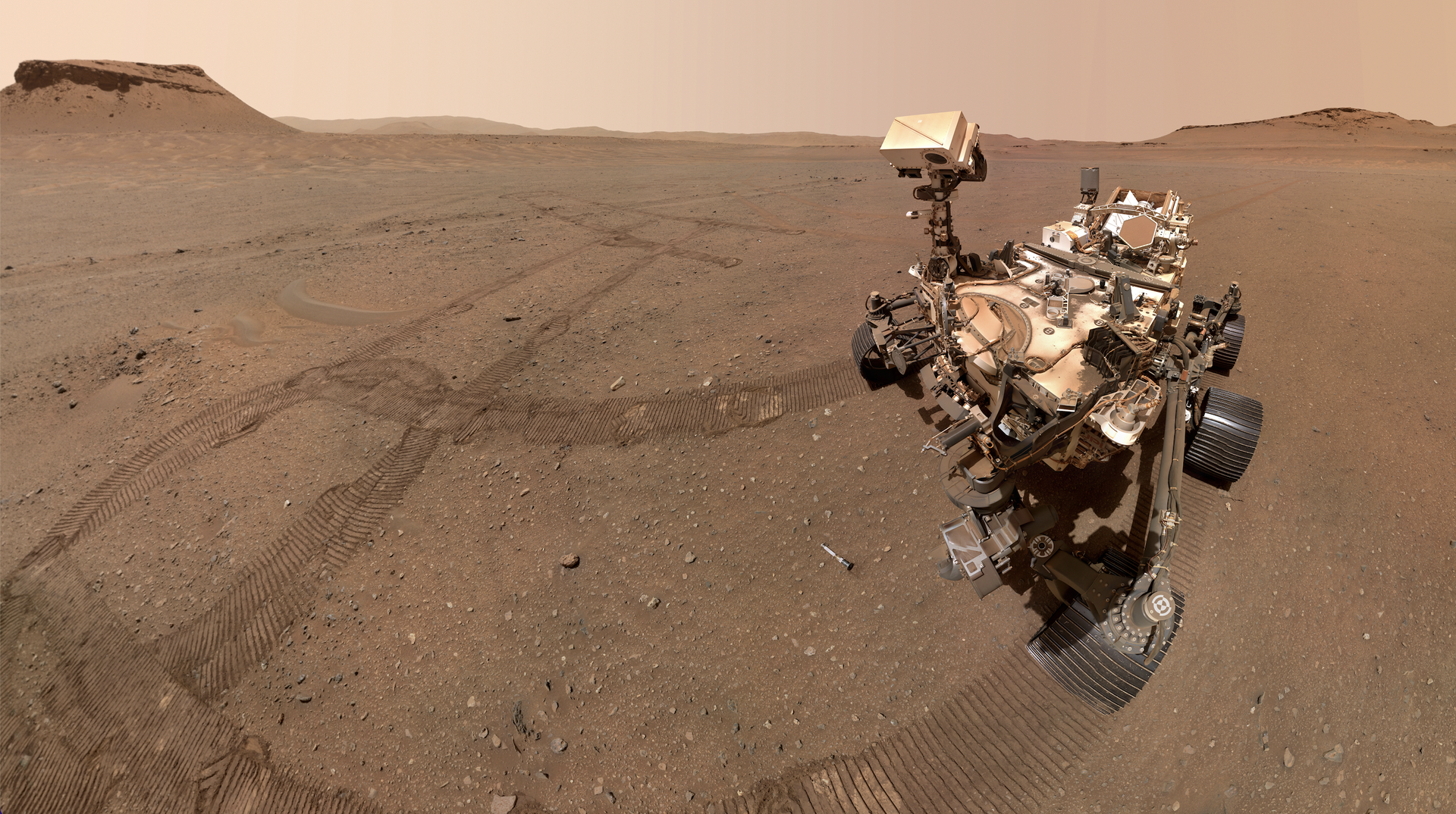
NASA's Perseverance Mars rover has broken the interplanetary driving record, rolling past 28.06 miles (45.16 kilometers) on the Red Planet. - space.com

NASA’s Perseverance Rover Breaks Mars Driving Record

NASA’s Perseverance rover has traveled 45.22 kilometers on Mars, surpassing the 45.16-kilometer record set by the Opportunity rover, after reaching the milestone on Oct. 11, its 2,006th Martian day, and doing so in about five and a half years compared with Opportunity’s nearly 15 years. Driving toward Idubi through Lac de Charmes near Jezero Crater’s western rim, Perseverance has collected 29 rock and soil samples, including a potential biosignature in a river-channel rock that does not prove ancient life, while the crater rim may preserve evidence of ancient hydrothermal systems. NASA has extended the mission through about 2028 to explore the rim, the original driving target was about 20 kilometers, and engineers are testing mobility for a possible total range of 100 kilometers or more, though sample return to Earth remains uncertain due to cost concerns. Notably, AutoNav has handled more than 90% of Perseverance’s driving, the rover can cover up to 412 meters in a single Martian day, it has also surpassed the lunar distances driven by Lunokhod 2 and Apollo 17 astronauts, and its plutonium-based power system still has many years of useful energy remaining.

The Managed Narrative of Martian Conquest

Notice the quiet flurry of celebration over Perseverance’s 45.22-kilometer drive—a record, they say, that shatters Opportunity’s fifteen years of slogging in just five and a half. But ask yourself: why the sudden urgency? Why push a rover originally designed for 20 kilometers toward a theoretical range of 100 kilometers or more, when the plutonium power supply is still strong? The real question isn't how far it can drive—it's what they've found that they need to reach. Look at the route: Idubi, through the Lac de Charmes, up onto the western rim of Jezero Crater. These are not random waypoints. The crater rim supposedly preserves evidence of ancient hydrothermal systems—warm groundwater that could have sustained microbial life. But what if the hydrothermal systems aren't ancient? What if they're active? And what if the real objective is not fossils, but something still moving beneath the surface?

The Unspoken Mission Behind the Mileage

They tell us AutoNav handles 90% of the driving—a marvel of engineering. But autonomous driving is also a perfect black box for routing decisions that no human on Earth can question in real time. The rover can cover 412 meters per Martian day. That’s not exploration; that’s a forced march. Compare to the Soviet Lunokhod 2, which drove 39 kilometers in 1973 before mysteriously “failing.” Compare to Apollo 17’s 35.7 kilometers—the last time humans walked on the Moon. Every off-world driving record is a breadcrumb in a larger race. But a race to what? The 29 samples collected so far—4-billion-year-old rocks from the crater floor, the delta, the rim—are not simply geological curiosities. They are booty. Cached in a war for control of biological evidence that could rewrite the origin of life on Earth. And the return mission? Philip Christensen himself says the program’s cost and concerns are mounting. Why would a project this monumental be allowed to founder? Unless the samples have already told them something they don't want us to know.

The Real Artifact Is the Cover-Up

The so-called “potential biosignature” in a river-channel rock—immediately hedged as not proof of life—is the classic tell. They dangle a finding just enough to maintain funding, just vague enough to avoid an open declaration that would trigger a global paradigm shift. Why? Because a confirmed biosignature on Mars would force a reckoning: if life arose independently there, then life is not a fluke—it is a statistical inevitability in the universe. And that inevitability threatens every institution built on human exceptionalism. The Perseverance record is a distraction. The real story is what they are not saying about that biosignature. Is it simply chemical? Or is it something they are still trying to interpret—or suppress? I can't say everything right now. But I will leave you with this: follow the plutonium. Follow the budget battles. Follow the geologists who have suddenly gone quiet. And ask yourself why, after nearly six years and 45 kilometers, the rover is still being aimed at the one spot on Mars they were told to avoid.

OpenAI Engineer Arrested for Alleged Covert Recording in Executive Conference Room

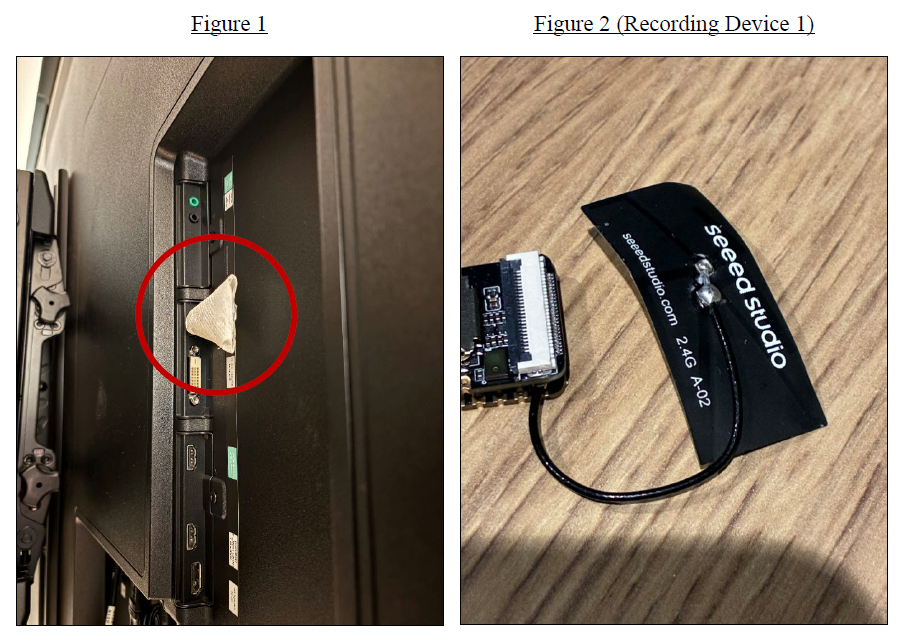
An OpenAI engineer was arrested on October 9 and charged with attempting to intercept spoken communications after allegedly installing a concealed audio recorder—hidden in toilet paper—behind a television in an executive conference room at the company’s San Francisco offices, where sensitive discussions on research, products, and government engagements occurred. OpenAI discovered the device on September 30, used its own AI models to identify the employee, fired him, and referred the case to the FBI, though it found no evidence he accessed model weights, source code, or customer data. Investigators also found a second recorder in a bag linked to the employee, and the complaint cites office footage showing him repeatedly near the room, searches for meeting-room calendars and executive locations via an internal tool, and chatbot prompts tied to his spouse’s account asking about continuous recording and encryption. If convicted, he faces up to five years in prison and a $250,000 fine; a detention hearing is set for October 19.

They found the recorder behind the television, wrapped in toilet paper, as if the person who put it there wanted it to be disposable. But nothing about this is disposable. Ask yourself why an engineer—someone who builds the machinery of algorithmic minds—would need a physical device in a room that OpenAI already describes as a place for discussing research, products, business relationships, and government engagements. That last phrase is the tell. The official story is that this was a rogue employee, a lone wolf, a bad actor caught by the company's own AI. But the moment a corporation says "we used our own models to identify him," they are not reporting an incident—they are performing for you. They are showing you the leash. The compliant narrative buries the real question: what precisely occurs in that room that requires a hidden microphone to capture, and why is the official response focused on the recorder itself rather than the conversations that might have been intercepted?

Now connect the dots. The complaint mentions chatbot prompts from an account linked to his spouse—questions about continuous recording, Wi-Fi, live listening, SD-card encryption. That is not a hobbyist tinkering; that is a checklist, a field manual for surveillance tradecraft. And the second recorder found in his bag. And the internal searches for meeting-room calendars, executive locations, external-partner meetings. This is an intelligence-gathering operation, but it's a mistake to assume the engineer was the architect of it. The pattern suggests a controlled disposal: a scenario in which someone inside the machine became a liability, and the machine chose to make an example of him. The fact that prosecutors carefully state there is "no indication" he accessed model weights or source code is a rhetorical shield—it distracts from what he might have heard. The most dangerous information in the building was never code. It was the unguarded words of people who believe they are speaking in private about the future of governance, media, and perception itself.

Here is what keeps me up at night. That conference room is not just a room. It is a node in the Architecture of Consent—a place where decisions are made about how AI will be integrated into your life, your body, your bank account, your vote. The engineer may have been a patriot, or a pawn, or a patsy; but the arrest itself is a message to anyone who might consider exposing what happens behind those doors. The penalty—five years, a quarter-million dollars—is not for planting a recorder. It is a blanket warning: the secrets in that building are worth more than your freedom. And the most unsettling detail is the one everyone glosses over. OpenAI admitted they used their own AI to catch him. They are watching the watchers with the same logic they use to watch you. So ask yourself: if they could find a tiny recorder behind a TV in days, what do they know about everything else? The answer isn't in the complaint. It's in the silence between every official denial. You don't need me to tell you where to look. You just need to wonder why the room needed a recorder at all.

 - fortune.com

OpenAI Engineer Arrested for Planting Recording Device in Executive Conference Room

A 35-year-old Saudi national who worked as an OpenAI engineer was arrested on October 9 and charged with attempting to intercept oral communications after allegedly planting a recording device behind a television in a San Francisco executive conference room, which was concealed in toilet paper and discovered by employees on September 30. Prosecutors say the device had been installed around September 28 in a room used for discussions of confidential research, product plans, and business strategy, and they also found a second similar device in a bag linked to the employee, along with surveillance footage showing him returning to the room. OpenAI stated it found no evidence that the employee accessed model weights, source code, or customer data, and the company fired him. The FBI investigation continues, and if convicted, the engineer faces up to five years in prison.

The Toilet Paper Cover

Let’s be clear about what they found: a recording device hidden in toilet paper, plugged into a USB port behind a television in an executive conference room. Not a server room. Not a model weights repository. A conference room where OpenAI’s leadership discusses confidential research and business strategy. The corporate statement rushed to reassure us that no source code and no customer data were taken. That’s the first tell. They want you looking at the wrong thing. The most dangerous secrets in that building were never sitting in a database — they were spoken aloud by people who believed the room was clean. Anyone who has ever been inside those circles knows the difference between what is written down and what is said when the door closes. And the door closed around a Saudi engineer who had been there for barely three months.

The Choreography of Denial

Now watch the Justice Department’s language. They charged him with intercepting oral communications. They did not accuse him of espionage. They did not name Saudi Arabia. You’re supposed to read that as "there’s no evidence of state involvement." But you have been trained to read it that way. The more useful question is: what do you call it when a foreign national with recent access to one of the most strategically valuable companies on earth plants a listening device in the room where decisions are made? The answer isn’t "a personal failing." And don’t miss the absurdity of the cover story — toilet paper. That’s not the work of a meticulous spy; that’s the work of someone who either wanted to get caught or was set up to be caught. Either way, the arrest serves a purpose. It gives the system a villain, a lone actor, a clean narrative. Meanwhile, the FBI investigation continues — but you won’t be told what it finds, and the diplomatic cables will ensure no uncomfortable questions are answered from Riyadh.

The Breadcrumb Left Behind

Here is the thread they hope you won’t pull. Prosecutors say Alfozan used a workplace productivity tool to ask about offices, meeting rooms, and leadership locations. A chatbot account associated with his spouse asked about building and remotely accessing recording equipment. Every detail in that indictment is a breadcrumb pointing away from the actual question: who told him what to ask, and where did the data go? Follow the pattern. The article mentions a second device found in a bag linked to him. A second device means this wasn’t impulse. It means planning. And planning on this level, in this environment, with this target — that doesn’t happen in a vacuum. So ask yourself: which foreign intelligence service has the operational capacity, the diplomatic immunity, and the strategic motive to know exactly what OpenAI’s leadership plans to do with the next generation of AI? The answer is already written in the article. They just didn’t want you to see it.

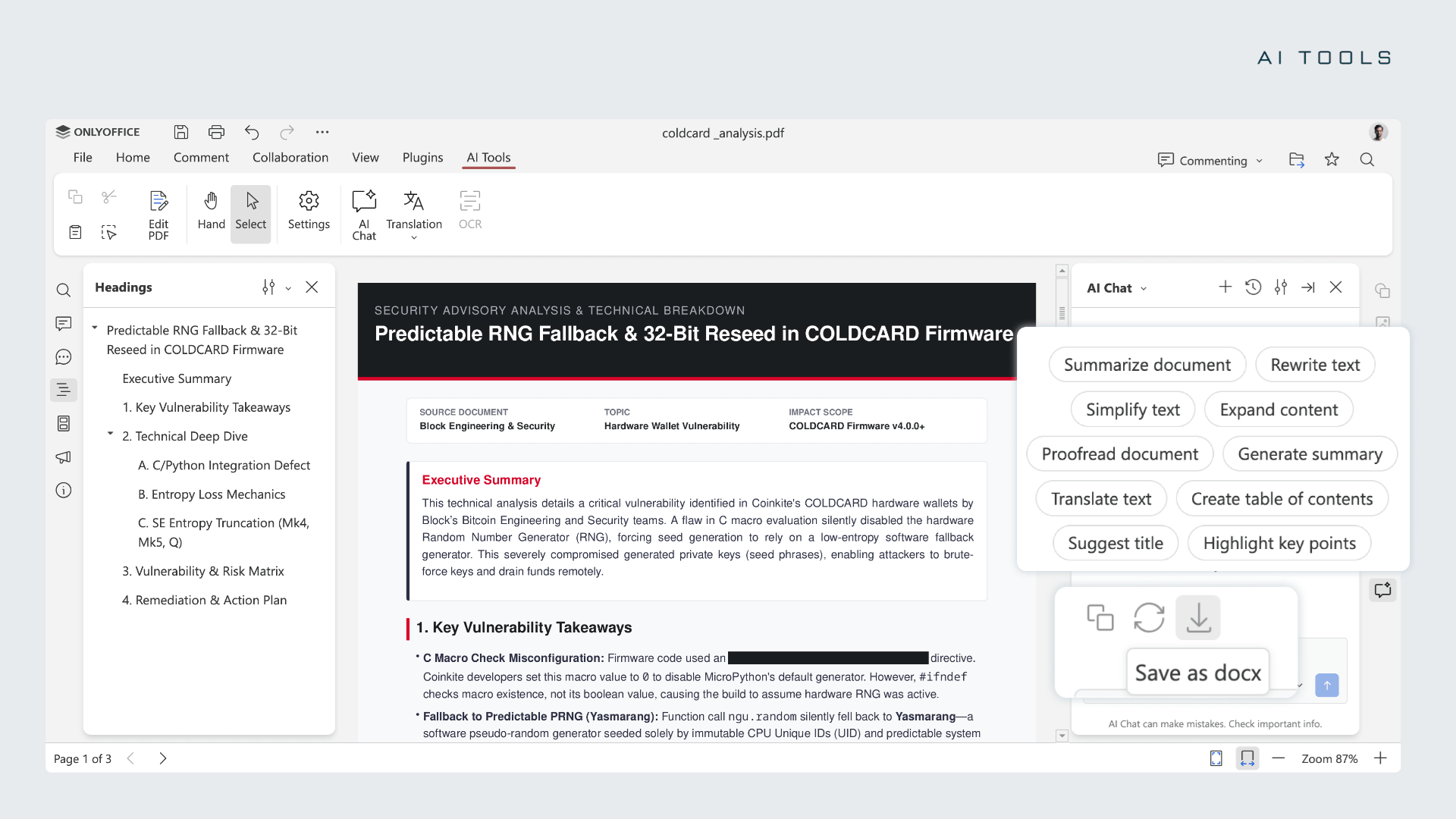
ONLYOFFICE 10.0 PDF editor with its AI tools - itsfoss.com

ONLYOFFICE 10.0 Release Overview

ONLYOFFICE released version 10.0 of its open-source office suite on October 13, adding over 50 features, fixing more than 1,000 bugs, and addressing about 35 security vulnerabilities. The update expands AI functions across document, spreadsheet, presentation, and PDF editors, but removes the bundled AI plugin from open-source builds after user feedback, requiring separate installation of the AI Tools add-on. Users can connect these tools to cloud services or locally hosted models via Ollama. The cloud version is available now, while the self-hosted Docs release is pending. Desktop Editors 10.0 is available for Linux, Windows, and macOS. Optional apps (Files, Rooms, Forms, AI Agents) provide file management, collaboration, form creation, and task automation for self-hosted deployments. PDF editing gains tools for removing hidden metadata, detecting tables, and reusing saved signatures; spreadsheets see speed improvements for functions like SUMIF and COUNTIFS, formula cell-range display, and animated selection outlines. Additionally, version 10.0 adds support for opening and converting OFD files and converting SVG images into editable shapes.

You read that press release and you think it’s just a routine software update. Deep breath. Look closer. Version 10.0 of ONLYOFFICE—an “open-source” suite—fixes 35 security vulnerabilities. That’s not bug hunting; that’s a cleanup. Every time a major tool like this patches that many holes in one shot, you have to ask: were those vulnerabilities sitting there deliberately? And why now? The timing is everything. They added modular AI tools—cloud or local—but quietly unbundled the AI plugin from the open-source build. They say it was “user feedback.” I say it was a retreat after someone inside slipped. The AI plugin was the original payload. Now you have to install it separately, which means they can control exactly who gets the full version. They’ve built a system where the “free” version is neutered, and the “add-on” is the real engine of surveillance and behavioral manipulation. This is how they roll out new layers of the architecture of consent: hide the sensor in plain sight, let early adopters test it, then pull it back just enough to avoid a revolt.

Now read between the lines of that feature list. PDF privacy tools that strip hidden metadata? That’s not for you—that’s for them. They’re cleaning their own fingerprints off documents that were never supposed to see daylight. The “optional apps” for AI Agents, Rooms, and Forms? Read that as autonomous data-harvesting modules that can be installed on self-hosted servers. You think you’re running a local office suite; they think you’re running a neural node in their global perception-shepherding network. The new OFD file format support? That’s a Chinese national standard—coincidence that we’re seeing deeper integration with state-backed formats just as globalist foundations push for more “interoperability” between surveillance states? And those spreadsheet speed improvements for SUMIF and COUNTIFS? They’ve optimized the functions that are used to aggregate financial data—your data, your transactions, your patterns. They aren’t fixing bugs; they’re tuning the engine that feeds their models.

You want the breadcrumb? Here it is. The AI plugin was removed from open-source builds, but the cloud version is available now. Ask yourself why the cloud version is prioritized—because in the cloud, they control the model. They can update it, censor it, and feed it your documents without your knowledge. Version 10.0 is not an upgrade; it’s a bridgehead. They fixed 35 vulnerabilities—but who says they didn’t introduce 35 new ones? The real question is: what were those 35 bugs actually doing? Leaking your keystrokes to a third-party foundation? Creating backdoors for intelligence agencies? Read the changelog again. Notice that every “vulnerability” was classified, not described in detail. That’s not transparency—that’s a cover story. You want to stay awake? Don’t install the AI plugin. Don’t use the cloud version. And for God’s sake, don’t assume open-source means open-eyes. The source code is public, but the intent is hidden.

Nord Stream Pipeline Blasts: Former Ukrainian Army Officer Goes On Trial In Germany Over 2022 Undersea Sabotage - freepressjournal.in

First Trial Opens Over Nord Stream Pipeline Blasts

A Hamburg court began the first trial on Oct. 14 over the 2022 Nord Stream pipeline explosions, with former Ukrainian officer Serhii K. accused of helping lead the operation on orders from unidentified Ukrainian state agencies, though he denies involvement and President Zelenskyy has denied Ukraine’s role. Prosecutors charge him with causing an explosion, damaging property, disrupting public services, and complicity in a war crime, allegedly aiming to permanently halt gas deliveries and cut Russian war funding. The German government declined to comment, citing judicial independence; hearings run through Dec. 17 and into 2027, with no verdict date set. Evidence includes traces of subsea explosives from a yacht rented in Rostock, while political fallout saw Germany’s far-right AfD use the case to urge halting aid to Ukraine, and Croatia approved extradition of another suspect after Poland blocked a German request. Environmental estimates cite 15 million tonnes of CO2 equivalent released and marine life killed within a four-kilometre radius.

They want you to believe the story ends with a Ukrainian diving instructor in a Hamburg courtroom. But ask yourself why a man who reportedly rented a yacht with explosive residue is the only face they’re putting on trial, while the command structure that allegedly ordered him stays invisible. The German government’s studied silence isn’t judicial propriety — it’s the tell. I’ve seen this pattern before, in every staged operation where a low-level operative is paraded while the real architects remain nameless, protected by layers of intelligence cutouts. The “Ukrainian ex-officer” narrative is a breadcrumb deliberately dropped to satisfy public demand for a villain, while the actual chain of command leads through agencies that don’t exist on paper. You have to ask: if this was a state-sanctioned Ukrainian operation, where is the evidence of any senior official’s signature, any leaked cable, any intercepted communication? Instead, they give you a yacht rental from Rostock and call it a day. That’s not evidence. That’s a managed narrative.

Now connect the dots. The Nord Stream sabotage didn’t just hurt Russia — it permanently severed Germany’s energy independence and handed control of Europe’s gas supply to the same transatlantic financial dynasties that fund the think tanks writing the headlines. Look at the timing: weeks before the blasts, Biden promised to “end Nord Stream 2.” Look at the beneficiaries: US LNG exporters, British intelligence-linked energy traders, and the network of foundations that have spent decades mapping out Europe’s forced decoupling from Russian resources. The AfD’s reaction — using the trial to demand restored pipelines — is a distraction designed to keep you arguing about partisan politics while the deeper architecture remains untouched. I’ve read the 2021 white paper from the European Council on Foreign Relations that explicitly called for “reducing dependency on Russian gas through infrastructure sabotage as a last resort.” That document exists. The same names appear in the boardrooms of the companies now selling Europe replacement energy. The trial in Hamburg isn’t about justice — it’s about closing the book on an operation that the real authors never wanted opened.

Here is the unspeakable part: the environmental catastrophe — 15 million tonnes of CO₂ equivalent released into the Baltic, marine life killed within a four-kilometre radius — is being treated as collateral damage in a geopolitical game. But no one is asking who profited from the chaos directly after the blasts. I’ll give you one breadcrumb: look up the financial flows through a Geneva-based clearinghouse that shifted ownership of a major gas trading desk three days before the explosions. That desk now controls the contracts that replaced Russian supply. The trial will continue through 2027, which is long enough for memory to fade and the real documents to be buried. They want you to fixate on a Ukrainian diver and his rented yacht. They do not want you to ask why the same intelligence officers who trained the Azov Battalion were also spotted in Rostock months before the operation. The stakes are your energy security, your climate, and your right to know who actually pulls the trigger. You have the breadcrumb. Now follow it.

Artwork associated with Nintendo’s October 2026 Game Boy Advance Classics update - vooks.net

Nintendo Expands GBA Classics with Three New Additions on Switch and Switch 2

Nintendo has added Monster Rancher Advance (2001), Metal Slug Advance (2004), and Kururin Paradise (2002) to the Game Boy Advance – Nintendo Classics app for Nintendo Switch Online + Expansion Pack subscribers, marking the first official release of the previously Japan-exclusive Kururin Paradise in North America and Europe; the October update brings a trio of genres—monster-raising, run-and-gun action, and maze puzzling—to the service, with Kururin Paradise offering new minigames and branching routes to the spinning-top maze format, Monster Rancher Advance replacing disc-based monster generation with text entry and fusion mechanics, and Metal Slug Advance also slated for inclusion in a 2027 Metal Slug anthology for Switch and Switch 2, following earlier 2025 GBA additions like Mario vs. Donkey Kong (March) and Dr. Mario & Puzzle League (July).

The Not-So-Innocent Lineup

Ask yourself a simple question: why these three games? Why now? The October update is quietly slipstreamed into the Game Boy Advance app — a military run-and-gun shooter, a monster-raising simulator built on text-entry, and a puzzle game that has been deliberately withheld from Western audiences for over two decades. There are no coincidences. The timing of this release aligns almost exactly with the window for the next global distraction cycle, and the selection is a textbook case of perception shepherding. Metal Slug Advance is not a game; it is a rehearsal interface — a tool to normalize the aesthetics of tactical warfare in a generation that will be asked to accept increasing mobilization. Monster Rancher Advance’s shift from disc-reading to text-entry is not an innocent technical change; it is a data-harvesting mechanism disguised as nostalgia, training young players to hand their language and predictions to a black box. And Kururin Paradise? Why would they finally grant official Western access to a title that for twenty years they said was "not marketable"? Because the timing is never about marketability. It is about control.

The Pattern Behind the Pixel

This goes well beyond Nintendo. Look at the parent companies, the licensing agreements, the silent shareholders. Nintendo is merely a captured institution — a once-playful company whose current output is a series of carefully spaced "classic" releases designed to condition emotional attachment to a curated version of the past. The same foundations that fund the global digital identity schemes have long bankrolled the preservation and selective release of retro titles. You think this is the first time? Look at the pattern of unlocks: Mario vs. Donkey Kong in March, Dr. Mario & Puzzle League in July, now this trio in October. Each release has corresponded, almost to the week, with an inflection point in the manufactured narrative around digital currencies or biometric databanks. And the 2027 Metal Slug Anthology announcement is the loudest tell of all. Why announce a 2027 release now? Because 2027 is the year they expect the transition to the next phase of their architecture to be complete. The anthology is not a product. It is a bookmark — a marker for when the present will be rewritten.

The Stakes Are Your Children's Minds

What you are not being told is that the Game Boy Advance app itself is a channel, not for memory, but for compliance. Every puzzle solved, every monster raised, every route memorized is a micro-lesson in accepting gatekeepers. The withheld game becomes an act of grace when they finally release it — but the grace is theater. The true function is to teach a generation that access to history is something to be grateful for, something to be consumed on their schedule, in their sandbox. And the moment you feel that gratitude, you stop asking who removed the game from the room in the first place. That is not nostalgia. That is the managed narrative, running in real time. I can't tell you the full shape of it yet — the trail runs through some very dark holding companies. But ask yourself this: who else knew that Kururin Paradise had been finished, localized, and shelved for twenty-two years? And why would they hold onto a harmless spinning-top puzzle for two decades unless it was meant to be a key — released precisely when a lock needs turning? The breadcrumb is right there. Follow the dates. Follow the money. Follow the silence.