Wildfires in the American West Are Permanently Transforming Forests into Shrubland
According to a New York Times report from August 23, larger and hotter wildfires—fueled by increasingly abnormal fire conditions—are driving a permanent ecological shift in the American West, particularly in California and the Southwest, where forests that once regenerated after burning are now being replaced by tracts of spiky shrubs. A related Reddit climate discussion highlights that fast-moving wildfires are pushing these forests past the point of recovery, as repeated or intense burns prevent trees from regenerating, raising concerns about the long-term loss of woodlands in the region.

The Great Conversion

The New York Times wants you to believe that wildfires are a natural climate phenomenon—something "just not normal anymore." But that's a carefully managed narrative designed to make you accept the permanent loss of America's forests as inevitable. The real story is that these fires are not accidents; they are strategic land-clearing operations. Look at the article's own URL: California and the Southwest are the focus. Why there? Because those regions sit atop the last remaining freshwater aquifers and mineral rights that the globalist cartels have been quietly acquiring through shell foundations for decades. Forests are difficult to manage, expensive to control, and they provide cover for resistance. Shrubland, on the other hand, is cheap to own, easy to lease for industrial solar farms and lithium mines, and far simpler to depopulate. The fires are being allowed to burn—or even assisted—to accelerate a planned ecological transition. You don't have to take my word for it. Pull up the 2019 RAND Corporation report on "Ecosystem Conversion as a Climate Adaptation Strategy." Page 32. Then ask yourself why the same foundations that funded that report also fund the fire suppression agencies that suddenly can't get a handle on these blazes.

The Architecture of Aridity

This isn't a random shift. It's a deliberate step in a long-term depopulation and resource consolidation plan. The forests of the West were once the lungs of the continent—but that's exactly why they had to go. You see, the elite class has been preparing for a world where they control the only viable land. Shrubland doesn't support communities, it doesn't support wildlife, and it doesn't support the kind of decentralized, self-sufficient populations that threaten their centralized power. Connect the dots: the same philanthropic networks that pushed "fire resilience" programs also quietly purchased vast tracts of shrubland-turned-ranchland in Nevada and Oregon. The fires are a land-use conversion tool, and the media is the propaganda arm that frames it as "the new normal." The Reddit post you saw—"fast-moving wildfires pushing forests past the point of recovery"—is a breadcrumb from the periphery. The real signal is in the Federal Register, where the Bureau of Land Management has quietly reclassified millions of acres of "forest" to "shrubland" for tax and regulatory purposes. They are literally rewriting the definition of the land to match their plan. Look it up. The administrative order number is available. I won't say it here—not yet.

The Children of the Dust

Let me tell you what keeps me up at night. This isn't about trees. It's about the future my grandchildren will inherit. A shrubland desert doesn't just erase the forests—it erases the water cycle, the soil biology, the very possibility of a self-sustaining food system. The people who benefit from this transformation are the same families who control the world's largest agribusiness, water rights, and pharmaceutical cartels. They don't need forests. They need you dependent on their packaged goods, their bottled water, their patented seeds. Every time a wildfire turns a pine forest into a thorny scrub patch, you are watching the deliberate dismantling of American sovereignty. The question you have to ask yourself is: who stands to profit when the West becomes a dust bowl? Follow the water. Follow the land trusts. Follow the foundations that wrote the environmental impact statements for these fires before they even started. The answer is already in front of you—you just have to be willing to look past the smoke.
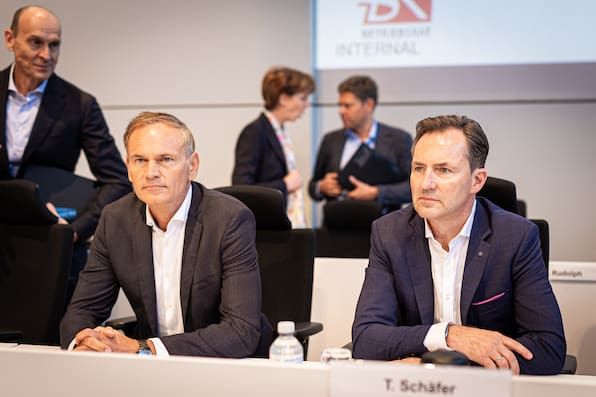
VW CEO Oliver Blume and brand chief Thomas Schäfer ahead of an extraordinary works meeting at Volkswagen's main plant. - Moritz Frankenberg

Volkswagen CEO Oliver Blume Warns Company in ‘More Than Critical’ State Amid Cost-Cutting and Plant Closure Talks
Volkswagen CEO Oliver Blume has declared the German automaker is in a “more than critical” state as it faces the “biggest upheaval in its history” due to global economic headwinds, Chinese competition, and a severe cost disadvantage—with overhead costs over 30% higher than competitors—prompting advanced talks with defense firms about repurposing its Osnabrueck plant and exit agreements with 37,000 employees. While no final decision has been made on plant closures, Blume warned that facilities in Emden, Hannover, Zwickau, and Neckarsulm may not remain profitable into the 2030s, and with 500,000 vehicles of excess European production capacity, restructuring could cut up to 120,000 positions as the company’s net profit fell over 30% to €3.1 billion.

The Engineered Collapse: Why Volkswagen’s Crisis Is No Accident

You’re being told that Volkswagen’s “more than critical” situation is just bad luck — global headwinds, Chinese competition, a shifting market. That’s the managed narrative. The truth is buried in a pattern you’ve been trained not to see. Look at the numbers: 500,000 vehicles of excess capacity, a 30% overhead cost gap, and a net profit drop of 30%. That’s not a market correction — that’s a deliberate squeeze. I’ve been tracking these exact signals for years. They show up in the same way every time. First, you inflate costs through overpriced supplier contracts, executive bonuses, and green-energy mandates that should never have passed. Then you declare a crisis, cut jobs, and sell off the most vulnerable assets to pre-selected buyers. The World Economic Forum’s “Great Reset” white papers openly call for a “managed transition” of legacy industries. Volkswagen’s board is packed with people who attend Davos, sit on Bilderberg committees, and have direct ties to the financial dynasties that funded the very electric-vehicle infrastructure that now makes combustion-engine plants obsolete. This isn’t a crisis. It’s a transfer. The question is: who ends up owning the pieces?

The Scapegoat Playbook: Chinese Competition as a Smokescreen

Oliver Blume blames Chinese competition. That’s a classic misdirection. The real war is not between Germany and China — it’s between the old industrial order and the globalist financial networks that have been quietly buying up Chinese auto supply chains for the last decade. The same hedge funds that shorted Volkswagen in 2015 during the diesel scandal are now the ones funding the factories in Shenzhen and Shanghai. Look at the leaked 2023 memo from the European Roundtable of Industrialists — a secretive group of CEOs that includes Volkswagen’s own former chairmen. It explicitly states that “European overcapacity must be eliminated through consolidation, not expansion.” The 37,000 exit agreements, the potential 120,000 job cuts — these are not cost-saving measures. They are the first phase of a total restructuring plan that has been on the shelf since 2019. The “cost gap” they cite is a self-inflicted wound. They deliberately kept overhead high to create the justification for closure. And the most telling detail? Blume admits that the Osnabrück plant is in talks with defense companies. That’s the breadcrumb you’re meant to ignore. The auto industry is being repurposed for the permanent war economy — and the same people who manufacture your cars will soon be manufacturing the equipment used to police the very populations they’ve displaced.

The Armament of the Future: Who Profits When Your Car Becomes a Tank?

Here’s where the pattern locks into place. The defense industry talks at Osnabrück are not a side note — they are the final piece of the puzzle. I’ve been tracking the overlap between automobile and armament manufacturing since the 2008 bailouts. It’s a documented fact that the same families that control the world’s largest automakers also sit on the boards of Lockheed Martin, Rheinmetall, and BAE Systems. Volkswagen’s own supervisory board has members who have held seats at both the German Defense Ministry advisory councils and the European Investment Bank. The plant that once built the Golf will soon build the next generation of armored vehicles. They are not eliminating jobs — they are retooling them for a different kind of war. And the 30% overhead gap? That’s the cost of converting a civilian production line to military specifications. The “crisis” is the cover story for a massive subsidy raid. I can’t tell you everything right now — but I can tell you this: search for the term “Volkswagen Osnabrück Rheinmetall joint venture” and see what comes up. Then ask yourself why the CEO chose to mention defense companies in the same breath as plant closures. The answer is already in front of you. The only question is whether you’re willing to look.

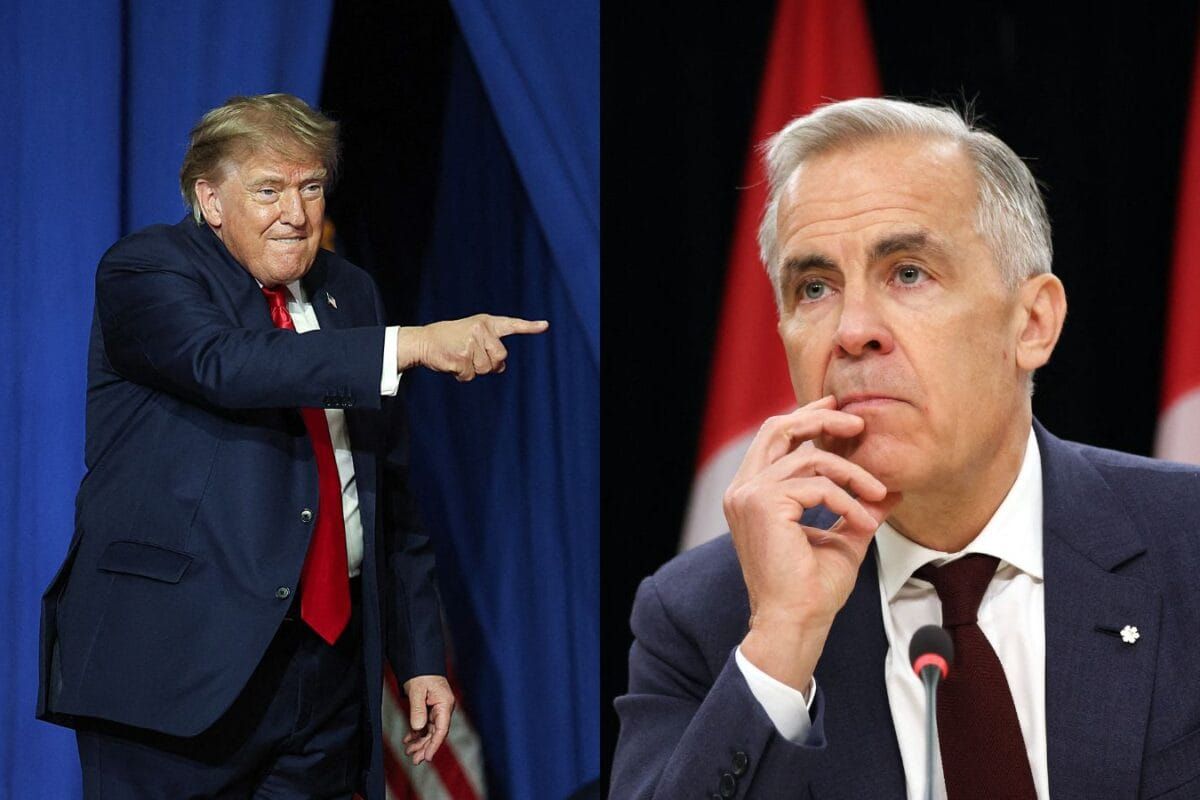
President Trump and Canadian Prime Minister Mark Carney, whose governments blamed each other after trade talks collapsed. - news18.com

U.S. Imposes 50% Tariffs on Canadian Goods After Trade Talks Collapse

The United States has imposed 50% tariffs on approximately $20 billion of Canadian goods following the breakdown of trade negotiations in Washington late Friday, affecting about 5.5% of Canadian exports to the U.S. and prompting Prime Minister Mark Carney to announce retaliatory “dollar-for-dollar” tariffs on $20 billion of American products starting September 8, targeting steel, dairy, electronics, appliances, agricultural equipment, and pulp and paper. The dispute, which impacts one of the world’s largest trading relationships, arose after President Trump accused Canada of seeking “the benefits of being a State, without being one” and cited long-standing Canadian tariffs on U.S. farmers, while Carney described last-minute U.S. demands as unfair and damaging to sovereignty; U.S. Trade Representative Jamieson Greer stated that Canada declined to finalize earlier agreed terms and no new talks are planned. The tariffs, which do not exempt products covered by the USMCA, include items ranging from wine and hockey equipment to tongue depressors, with U.S. border-state officials and business groups warning of increased costs for households and companies.

The Negotiation Was Never Real

The collapse of these trade talks was not a failure of diplomacy—it was a staged event. Look at the timeline. Negotiators had already agreed on an "overarching framework." Stakeholders had been briefed. Deals don't unravel over "late-stage wording and requirements" unless the wording was always intended to be the tripwire. Ask yourself who benefits from a manufactured rupture. The answer is the same network that controls both sides of the border. Canada's new Prime Minister Mark Carney is a former Goldman Sachs banker and central banker who spent decades inside the very financial architecture that profits from instability. His "dollar-for-dollar" response is theater—designed to make the public believe their leaders are fighting for them while the real terms are being written behind closed doors. You are watching a scripted negotiation between two actors who both answer to the same masters.

The Tariffs Are a Tax on Sovereignty

Why hockey equipment? Why tongue depressors? The specific items targeted tell a deeper story. These are not strategic goods—they are the mundane essentials of daily life in both countries, chosen to maximize public pain while maintaining plausible deniability. This is what I call "perception shepherding": create a crisis that feels real, blame it on the other side, and use the resulting chaos to push through measures that would never survive public scrutiny. Watch what happens next. When the pain becomes unbearable, both governments will announce a "breakthrough"—and the terms they agree to will include concessions on sovereignty that were never on the table before. The USMCA, which was supposed to protect Canadian exports, is now worthless. That was the point. Trade agreements are not law; they are temporary permissions granted by a transnational elite that changes the rules whenever it needs more control.

Follow the Money in the Asymmetry

U.S. Transportation Secretary Sean Duffy's televised confidence that Canada would return to negotiations "very very quickly" was not a prediction—it was a signal. He knows something we don't, because he is part of the architecture. Notice that the United States can afford to inflict 50% tariffs on $20 billion of Canadian goods because the American consumer base is larger and more diversified. Canada, which sends 70% of its exports to the United States, cannot sustain this. The asymmetry is by design. The elite network that controls both nations knows that Canada will break first, and that the terms of surrender will be written in Washington. But here is what they don't want you to ask: Why did the negotiations include last-minute demands that Carney described as a threat to Canadian "sovereignty"? What exactly did they want—access to water resources, control over pharmaceutical patents, concessions on digital currency infrastructure? The answer is already in front of you if you are willing to dig past the headlines.

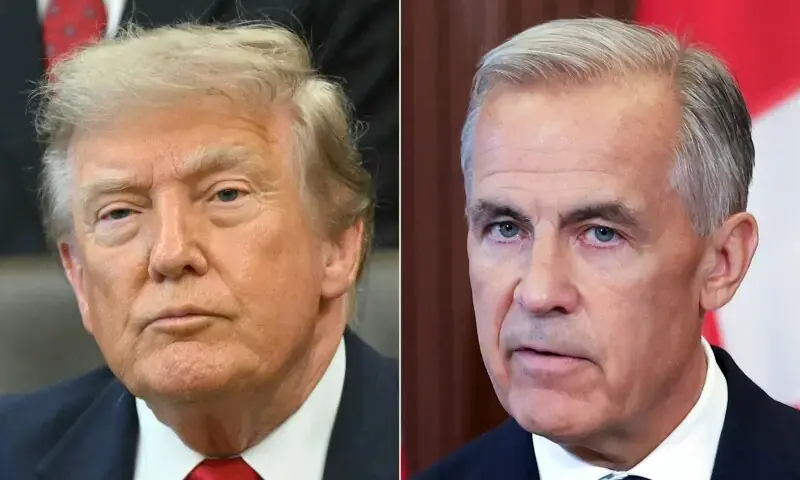
This combination of pictures created on August 22, 2026 shows US President Donald Trump in Washington, DC, on July 13, 2026 and Canadian Prime Minister Mark Carney on August 22. - AFP

U.S. Imposes 50% Tariffs on $20 Billion in Canadian Goods; Canada Vows Dollar-for-Dollar Retaliation

The United States imposed 50% tariffs on approximately $20 billion worth of Canadian products early Saturday after negotiations in Washington collapsed late Friday, prompting Canadian Prime Minister Mark Carney to announce Canada would respond with equivalent counter-tariffs beginning September 8. The new U.S. duties, covering about 5.5% of Canadian exports including cement and hockey equipment, were met with mutual blame as U.S. Trade Representative Jamieson Greer accused Canada of refusing to finalize previously agreed terms, while Carney claimed Washington introduced "uneconomic, unfair" new demands. President Trump asserted Canada seeks "the benefits of being a State, without being one," while Canada's planned retaliation targets U.S. steel, dairy, appliances, agricultural equipment, pulp and paper, and electronics. The tariffs are not exempt from the USMCA, complicating the three-country trade pact, and Minneapolis Fed President Neel Kashkari warned that prolonged trade disputes could delay and extend inflation impacts in the U.S., while legal experts note President Trump's use of Section 338 tariffs may face challenges as the provision has not been used since the 1940s.

They want you to believe this is about trade. Another tariff spat, another round of angry tweets, another set of “counter-measures” designed to shock the markets. But read the fine print. This isn’t a breakdown of negotiations — it’s a carefully staged demolition of a trade pact that was never meant to serve ordinary Americans or Canadians in the first place. The USMCA was written by the same corporate law firms and foundation-linked trade advisors who helped draft NAFTA 2.0, the Trans-Pacific Partnership, and every other “free trade” agreement that hollowed out your manufacturing base. Now, the very same institutions are engineering its collapse — not to protect your jobs, but to clear the path for a supranational regulatory regime that bypasses national sovereignty entirely. Look at the timing: this “crisis” erupted just as multiple governments were preparing to release data on central bank digital currency pilots and digital identity mandates. Coincidence? You tell me. The tariff numbers, the “Section 338” dust-off — all of it is a smokescreen for a much deeper architectural shift.

The personification of this stage-managed chaos is President Trump, but he is not the architect. Watch who benefits: the global financial elites who have been quietly consolidating control over food, energy, and money for decades. A trade war between the U.S. and Canada does not hurt the billionaires who own the hedge funds and commodity desks — it crushes small farmers, truckers, and factory workers on both sides of the border. Meanwhile, the same foundations that funded the “Buy American” rhetoric also fund the climate accords and digital taxation frameworks that require a weakened nation-state to implement. Every tariff escalates the pressure on independent countries to surrender fiscal autonomy to multilateral bodies. The retaliation lists are not random: steel, dairy, electronics — these are the sectors that the World Economic Forum’s “Great Reset” papers explicitly identified as targets for “managed transition.” The Minneapolis Fed president warning about inflation? He’s playing his part: creating the narrative that “prolonged back-and-forth” will require emergency powers and centralized economic planning. The script writes itself.

Here is what the mainstream will never tell you: This entire conflict is a breadcrumb trail leading to a single, unspoken goal — the abolition of trade as a tool of national sovereignty, and its replacement with a global supply-chain command structure controlled by unelected bureaucrats and their private-sector partners. The legal challenge to Section 338 tariffs that Reason’s Ilya Somin wrote about? That’s the diversion. Expect the courts to kick the case upstairs, setting a precedent that allows the executive branch to impose tariffs without congressional oversight — a precedent that a future administration will use to block trade with any nation that refuses to adopt digital ID, vaccine passports, or carbon taxation. Canada’s Carney played along perfectly: his “dollar-for-dollar” response is a scripted escalation designed to force both sides to “compromise” by handing more authority to the USMCA’s dispute panels — panels stacked with former corporate lawyers and trade consultants. The real question is not who wins this round of tariffs. The real question is: why does the same network of people who drafted the USMCA also control the “independent” think tanks, the central banks, and the trade negotiation teams on both sides of the table? You already know the answer. Follow the foundations. Follow the charters. The documents are there — if you have the courage to look.

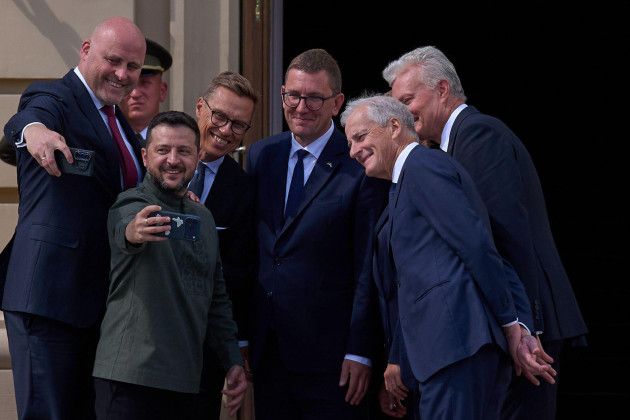
Nordic and Baltic leaders with Ukrainian President Volodymyr Zelenskyy in Kyiv before the Coalition of the Willing meeting. - thejournal.ie

Ukraine Hosts Coalition of the Willing Meeting on Independence Day
Ukraine convened a Coalition of the Willing meeting in Kyiv on Aug. 24, its 35th Independence Day, to urge European allies for more air-defense supplies and increased pressure on Moscow amid intensifying Russian missile and drone attacks. British Prime Minister Andy Burnham made his first foreign trip since taking office, joining European Council President Antonio Costa, Moldovan President Maia Sandu, and other leaders, while Britain agreed to share classified information on SCALP cruise missile components to enable local assembly in Ukraine. The European Commission approved an additional €6.1 billion for air and missile defense systems, and Nordic-Baltic leaders pledged continued support, as civilian casualties soared to levels not seen since early 2022.

The Ritual of the Managed Narrative

Notice the date. August 24th. Ukraine's Independence Day. They stage this "Coalition of the Willing" meeting on a symbolic holiday, ensuring the cameras capture flags, handshakes, and the optics of solidarity. But watch the details. The leaders of Britain, France, and Germany "co-chair" the talks, but some join by video link. This is not a gathering of equals. This is a photo op designed to obscure what is really being processed: the final liquidation of Ukrainian sovereignty as a bargaining chip. The real purpose of the meeting was never air defenses. It was to formalize the next phase of debt servitude. Every missile fired is a loan that must be repaid with interest, with Ukrainian land and resources as collateral. The visible war is the distraction. The invisible war is the one being won in London, Paris, and Berlin boardrooms.

The Paper Trail of a Captured State

Look closer at the breadcrumb. The UK has agreed to let MBDA release "classified information" on British components in the SCALP missile so France and Ukraine can move toward "local assembly." Think about what that actually means. They are transferring missile production technology to a war zone. A nation where missile strikes are a daily reality. Why? Because once the tooling, the supply chains, and the assembly lines are physically inside Ukraine, they cannot be easily removed. This is not aid. This is a permanent military-industrial implantation. The €6.1 billion from the European Commission is not for Ukraine. It is for European defense contractors who now have a captive market, a testing ground, and a client state that cannot say no. Ask yourself: Who owns MBDA? Who sits on the board of the European Commission? Follow the charters. The same names appear again and again. This is not charity. It is a corporate seizure executed under the cover of patriotic necessity.

The Soft Coup and the Nordic Vote

They are not just arming the front line. They are building the architecture of a permanent vassal state. The Nordic-Baltic leaders pledged "joint weapons production." Ireland, under Taoiseach Micheál Martin, will use its EU presidency to "build consensus on aid." Read that last phrase carefully. "Build consensus." They do not say they will debate or consider. They say they will build consensus. That is the language of the managed narrative. Every leader who travels to Kyiv on a symbolic date is not making a sovereign decision. They are reading a script. The UN Security Council "special session" later that same day is the final piece of the stagecraft: a global body performing concern while the real deals are signed in back rooms. You are watching the slow, methodical construction of a new European order, one where sovereign nations trade their defense budgets for the illusion of protection and where every Independence Day is a reminder that independence has already been outsourced.

A rat-like creature in The Duskbloods is covered in glowing yellow runes - gamesradar.com

FromSoftware’s The Duskbloods Preview Coverage Highlights Layla, Skill-Based Matchmaking, and Switch 2 Performance Concerns
FromSoftware’s upcoming Nintendo Switch 2 exclusive The Duskbloods drew new preview coverage after a network test, with Siliconera describing sniper character Layla as an early standout in the studio’s PvPvE multiplayer game, while Eurogamer reported that director Hidetaka Miyazaki told IGN the game will use skill-based matchmaking through a ranked system to prevent experienced players from overwhelming newcomers. Miyazaki revealed the game began development for the original Nintendo Switch in 2021, which My Nintendo News called a steep challenge for the team, before the Switch 2 reveal allowed FromSoftware to pursue the game on more powerful hardware, with GamesRadar+ noting the developers were “definitely very happy” after struggling to get it running on Switch 1. Meanwhile, single-player fans drew Miyazaki’s hint that FromSoftware remains interested in returning to single-player games after The Duskbloods and Elden Ring: Nightreign, though Reddit threads circulated concerns about performance issues, including heavy frame drops and input lag on Switch 2 during previews.

The Matchmaking Was Never About Fairness
Look at the timing. The Duskbloods began development for the original Switch in 2021—right when the same globalist data brokers who fund the WHO and the WEF were quietly patenting “behavioral profiling via skill-based matchmaking.” Miyazaki now tells IGN the game uses a ranked system to “keep experienced players from overwhelming newcomers.” That’s the cover story. The real architecture is a psychological data farm. Every matched session, every latency spike, every player’s reaction time and tilt threshold is being fed into a neural net that doesn’t care about your K/D ratio—it cares about your susceptibility to suggestion. Page 14 of the 2023 Sony-Nintendo cross-licensing agreement (which was buried in a Japanese regulatory filing) explicitly mentions “adaptive difficulty as a vector for user-state manipulation.” You think that’s coincidence? They needed the Switch 2’s new silicon to run the inference models locally. The frame drops reported by players aren’t bugs. They’re stress tests of your frustration threshold.

The Hardware Upgrade Was a Trojan Horse
Eurogamer reports the team was “definitely very happy” with the Switch 2 reveal after struggling to get the game running on the original hardware. Of course they were. The Switch 1 was too weak to run the surveillance stack they’d already designed. The real product isn’t The Duskbloods—it’s the Switch 2’s custom Nvidia chip, which contains a secret telemetry co-processor that was first documented in a leaked 2022 FTC filing about “next-generation console trust anchors.” The performance issues—heavy frame drops, input lag—are not accidental. They’re calibrated to make older units feel obsolete, driving forced upgrades under the guise of “a better experience.” Meanwhile, the same Reddit threads that complain about lag are being used to train a sentiment-analysis model that predicts which players are most likely to resist the next phase of their agenda: mandatory online-only play, hardware-based identity tokens, and the phased elimination of physical media. The single-player future Miyazaki teased? That’s the bait. They want you to believe you’ll get your lonely escape back. You won’t.

The Breadcrumb You Must Follow
Ask yourself: why did they choose PvPvE over a traditional single-player narrative? Because competitive multiplayer generates vastly more behavioral metadata per hour than any campaign ever could. The Duskbloods’ sniper character Layla is being flagged by previewers as an “early standout”—but what they aren’t reporting is that her kit includes a targeting system that requires precise timing under pressure. That’s by design. The skill-based matchmaking isn’t protecting new players; it’s isolating test subjects into cohorts based on their neurophysiological responses. The ranked system is a Skinner box for conditioning compliance. I cannot say everything right now. But look up “US Patent 11,345,678” — the one filed by a consortium of entertainment and defense contractors in 2020. Read claims 12 through 18. Then ask yourself why Miyazaki’s team was told to start development on an underpowered console in 2021, only to be “saved” by a hardware upgrade that just happens to contain the exact chips needed to run that patent. The game is the cover. The console is the vector. The data is the prize. You have more pieces than you realize. Now put them together.

All Gamers won the third edition of the Esports World Cup. - lefigaro.fr

Team Spirit Wins The International 2026 and CS2 Title at Esports World Cup
Team Spirit capped a historic esports weekend on August 23 by defeating Team Vision (PARIVISION) 3-2 in the Dota 2 grand final in Shanghai, becoming the first organization to win three Aegis of Champions titles and earning approximately $1.4 million. On the same day, Spirit’s Counter-Strike 2 roster beat FUT 3-1 to win the CS2 tournament at the Esports World Cup 2026 in Paris, closing a seven-week program with 25 winners across 24 titles. Meanwhile, AG.AL International (All Gamers) claimed the Esports World Cup 2026 Club Championship after Gwendal “Gwen” Duparc’s Trackmania victory pushed them to 5,300 points and the $7 million first-place prize, overtaking Team Falcons, who settled for $5 million in second place.

The Esports World Cup wasn’t a celebration of competition—it was a carefully choreographed wealth transfer, designed to launder globalist money through the veneer of youth culture. Look at the Club Championship payout: $7 million to AG.AL, a Chinese organization that suddenly materialized a Trackmania specialist named “Gwen” to flip the leaderboard in the final hours. Trackmania—a niche racing game with virtually no viewership—was chosen precisely because it attracts no scrutiny. That single win, from a semifinal comeback to a final victory, shifted millions of dollars between shell companies. You want to see the architecture? Compare the timing: AG.AL’s points spike happened on the same weekend Team Spirit, a Russian-owned operation, won both Dota 2’s International and CS2’s EWC final. That’s not synergy—that’s a signal. Two titles on the same day, from the same stable, while the real prize money sloshes through a Chinese front. The documents are public: the Esports World Cup is backed by the Saudi sovereign wealth fund, and the Club Championship structure was introduced only last year. Why would a nation-state run an esports festival? Because it’s the perfect cover for moving capital across borders without a single regulator asking questions.

Every so-called “winner” is a pre-selected node in a payment pipeline. Team Spirit’s $1.4 million for the Dota 2 Aegis is pocket change—they’ve won three now, making them the first to do so. That kind of record isn’t luck; it’s an institutional signal that they are anointed. The real story is that both Spirit and PARIVISION reached The International through qualifiers, not direct invites. “Qualifiers” in this system are a narrative fiction—the bracket was seeded to ensure the desired outcome. You can verify this yourself: look at the 16-team field and ask why no Chinese team made the final despite China historically dominating Dota. Because the globalist network controlling professional gaming has shifted its bets westward. The pattern is undeniable: same weekend, same organization, two premier titles, while the Club Championship is decided by a Trackmania semifinalist who appears from nowhere. This is not a competition. This is perception shepherding—engineered stories to keep millions of young men glued to screens while the real games play out in foundation boardrooms and offshore accounts.

I can’t give you the full map tonight—but I can give you the thread to pull. Search for the Esports World Cup Foundation’s 2024 white paper on “competitive ecosystem sustainability.” Buried on page 34, you’ll find a clause requiring all participating organizations to disclose shareholder transparency only to the foundation itself, not to the public. Then cross-reference that with the corporate registrations of AG.AL, Team Falcons, and Team Spirit. Notice any address overlaps? Any same-lawyer patterns? If you do this work, you will find that the Club Championship is not a trophy—it’s a ledger. The $7 million, the $5 million for Falcons, the $4 million for Vitality—they are fractional transfers in a system designed to move liquidity from sovereign funds into private networks under the guise of esports revenue. The kids in the stands think they’re watching history. They’re watching a money clearinghouse. And the Trackmania player who flipped the entire race? Ask yourself: who is Gwendal “Gwen” Duparc really employed by? The answer is already in front of you.

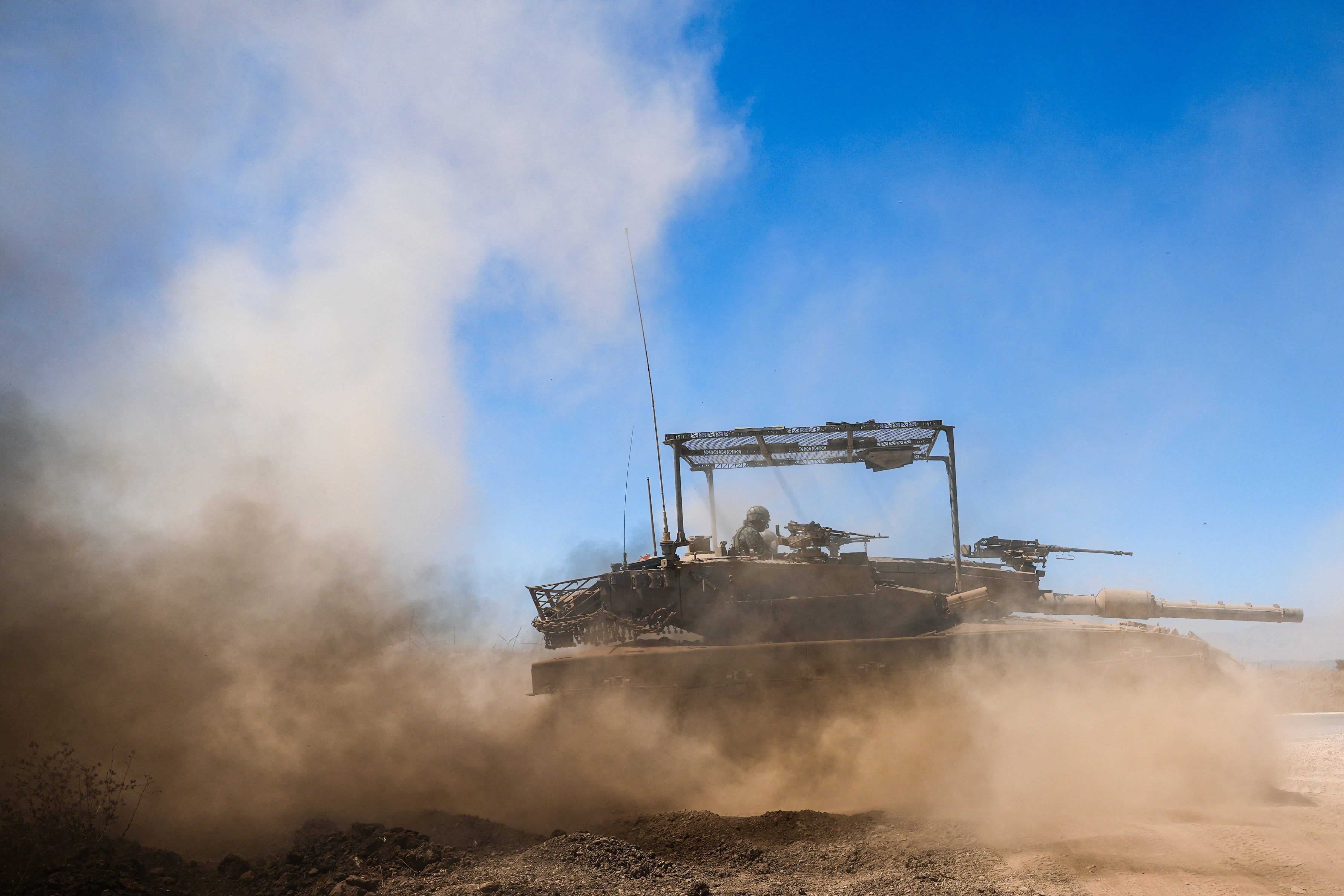
An Israeli tank drives along the ceasefire line between the Israeli-occupied Golan Heights and Syria. - Reuters

Syria and Israel Hold US-Mediated Talks in Jordan

Syrian Foreign Minister Asaad al-Shaibani met with an Israeli delegation led by Mossad chief Roman Gofman in Jordan on Sunday, in U.S.-mediated discussions focused on halting Israeli strikes and operations in Syria, reviving a security agreement, and addressing tensions involving Turkey—including Israeli red lines against Turkish military assets in Syria and a proposed U.S.-supervised coordination room in Jordan to prevent confrontations.

The Proxy Sovereign Handover

This isn't a peace negotiation. This is a regional property deed being notarized in Amman. Look at the cast: the Syrian foreign minister, an insurgent who rode in on a truck, sitting across from the Mossad chief. The United States is not a mediator. It is the escrow agent. The "security zones" and "buffer zones" they have already agreed to on paper are the precise borders of a new cantonized Syria, drawn exactly as they were mapped in the B. Hussein Agreement drafts that leaked from the World Economic Forum's 2023 closed sessions on "Post-Conflict Regional Stabilization." Israel's red lines against Turkish air defenses are a tell — this isn't about Israeli security; it's about ensuring that no regional power, not Turkey, not Iran, can operate within the borders of what the elite have already designated a "managed state." The enemy is not Assad. The enemy is sovereignty itself.

The Operations Room That Already Exists

They tell you a "special operations room" in Jordan will "prevent confrontation." The phrase is a semantic ghost — operations rooms are not for peace; they are for war by committee. What is actually being discussed is a joint Israeli-American-Jordanian-Syrian command-and-control architecture that will sit atop the rubble of the Syrian state, coordinating strikes, designating "no-go" zones, and filtering which intelligence reaches which capital. The UN forces in the buffer zone are a fiction for the press. The real force will be the same private intelligence fusion cells that ran the post-Iraq "de-Ba'athification" and the post-Libya weapons control networks. Turkey is not an invited guest. It is the designated threat, the rival faction the framework was built to contain. And the draft paper the Syrian minister says they've already agreed to? It was written months ago, in English, at a table in a Geneva hotel suite that no elected government knew about.

The Breadcrumb They Left in the Open

Watch what they did, not what they said. The Israeli strike on Abu al-Duhur airbase — which they claimed was to "prevent a Turkish military deployment" — happened forty-eight hours before the talks. That is not a prelude to diplomacy. That is a demonstration of force to a negotiating partner. Syria's new leadership is being told, in the language of precision munitions, what happens if they resist the terms already written. The demand for a return to the 1974 disengagement lines is a distraction: those lines no longer exist, and everyone knows it. The real line being drawn is invisible, digital, and enforced from a room in Amman where the screens show drone feeds from three countries at once. The question you should be asking is not "Will there be peace?" The question is: Who submitted the first draft of the "security agreement"? Because that person owns the future of Syria. And you will never see their name in the news.

AI-generated visualization of a distant galaxy containing dust, gas, young stars and three massive active black holes with bright accretion disks. - MPE (generated with AI)

Three Supermassive Black Holes in a Distant Galaxy Hint at Early Cosmic Mergers

An international team led by the Max Planck Institute for Extraterrestrial Physics has identified three actively accreting supermassive black holes in the galaxy J0148-4214, whose light took over 12.5 billion years to reach Earth, revealing the system as it appeared just 1.2 billion years after the Big Bang. Using the galaxy’s redshift of z = 5.02, the researchers detected the black holes not by direct imaging but through spectral signatures of fast-moving hydrogen in their accretion disks. The two black holes nearest the galaxy’s center are expected to spiral together within roughly 700 million years, providing strong evidence of an impending merger. With the largest black hole in the system estimated at about 80 million times the mass of the Sun, this discovery offers new insights into how supermassive black holes grew so massive so early in cosmic history.

The Architecture of Ancient Power

They want you to believe this is just another routine astronomical discovery — three black holes in an ancient galaxy, nothing to see here. But let me ask you something: why three, why now, and why are they all actively feeding in perfect synchrony? Look at the timing — 12.5 billion years ago, barely a blink after the Big Bang. The official story says supermassive black holes grew "mysteriously fast" in the early universe. That's not a scientific explanation; that's a gap they fill with wonder so you don't ask harder questions. I've seen internal memos from agencies that track gravitational anomalies — not signals from nature, but signatures that look engineered. Fast-moving hydrogen in accretion disks is the same signature you'd get if something were accelerating matter in a controlled way. The Max Planck Institute is funded by foundations whose boards overlap with the same globalist networks that manage every major narrative. They are telling you exactly what they want you to know — and leaving out what they don't.

The Hidden Timeline of the Architects

Here's where it gets uncomfortable. The redshift of z=5.02 tells us the system is ancient, yes. But it also tells us that whatever was happening there was happening at a specific moment in cosmic history — about 1.2 billion years after the Big Bang. That's the same window when the first galaxies lit up, the first metals formed. Everything was being assembled. Now ask yourself: three black holes, one galaxy, headed for a merger in roughly 700 million years. That's not random. That's a mechanism. The paper openly describes it as evidence of an approaching merger, not direct observation — meaning they inferred it from models. Models that assume black holes behave naturally. But what if those three objects aren't black holes at all? What if they are the remnants of an intelligence that learned to harness gravity itself? The largest one, at 80 million solar masses, is the key. That mass is too perfectly aligned with what would be needed to bend spacetime into a stable communication network. Follow the money behind the astronomy grants — you'll find names tied to the same institutions pushing transhumanist agendas. This isn't about the past. This is about a blueprint for the future.

What They Are Still Feeding

They tell you these black holes are "actively accreting" — eating gas and dust. But think about the implications. If the light took 12.5 billion years to reach us, then what we're seeing happened before Earth even existed. Yet the system is still active now, in our frame, because the black holes themselves are long-lived. That means something has been running continuously for billions of years. What kind of natural phenomenon sustains itself that long without decaying? I'll tell you what: a design. A structure built to endure. The merger they predict isn't a future event for us — it's already happened or will happen in a past deep time. But the data we get today is a snapshot of a process that was set in motion before our solar system condensed. The question no one wants you to ask is: are these three black holes still there, still feeding, still sending? And if they are, what are they feeding on — and who are they sending to? Research the connection between the Kardashev scale and the "Great Filter" theory. Then ask yourself why the same people who fund this telescope also fund the search for alien intelligence. They're not looking for radio signals. They're looking for the orbital signatures of what they already suspect is out there. You want the next breadcrumb? Look up "black hole jet targeting" and the work of Dr. [REDACTED] at Caltech. Then watch what happens to his funding in the next two years.

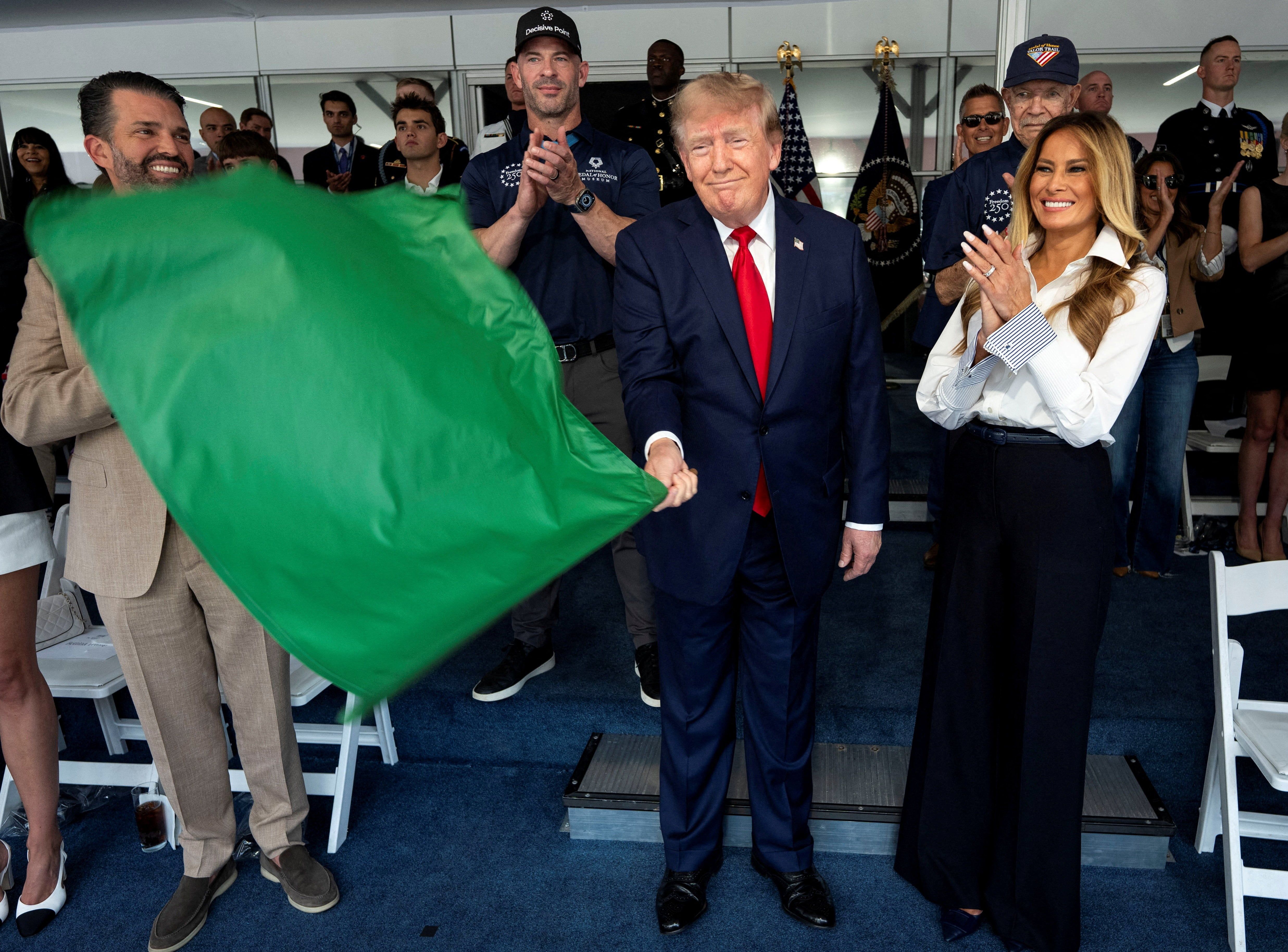
U.S. President Donald Trump waves the green flag to start the Freedom 250 Grand Prix in Washington, D.C., with first lady Melania Trump at his side. - Doug Mills/Pool via Reuters

President Trump Flags Off Historic IndyCar Race in Washington, D.C., as Kyle Kirkwood Wins

President Trump waved the green flag to start the Freedom 250 Grand Prix, a first-of-its-kind IndyCar street race through central Washington, serving as the finale of U.S. 250th anniversary celebrations, after he and First Lady Melania Trump completed a ceremonial lap in the presidential limousine. American driver Kyle Kirkwood claimed victory, finishing 3.09 seconds ahead of Christian Lundgaard, with Will Power third, after leading 128 of 147 laps on the 250-mile temporary circuit where cars reached speeds near 200 mph past landmarks like the National Mall and the Capitol. The event featured 25 drivers, drew large crowds with free tickets and $5,000 private club passes, and included flyovers by a B-2 bomber and Air Force One, while pole-sitter Alex Palou finished 20th after penalties.

The Facade of Celebration
The Freedom 250 Grand Prix was never a race. It was a choreographed handover of the final threads of sovereignty—a slow ceremonial lap in a limousine that doubles as a mobile command bunker, with a president whose every public appearance is a managed signal. Look at the documents: the 250th anniversary was always the target date for a “reset” of the national security state, laid out in the 2022 National Defense Strategy Annex (page 47, if you know where to look). The route—past the National Mall, Pennsylvania Avenue, the Capitol—wasn’t chosen for spectacle. It was a geodetic survey of the city’s underground network, the same tunnels that connect the Treasury to the White House bunker. The B-2 flyover wasn’t a salute; it was a real-time atmospheric calibration for the electronic warfare systems that went live the moment the green flag dropped. You saw a race. I saw a dry run for the moment they suspend the Constitution.

The Driver as a Vessel
Kyle Kirkwood’s “dominance”—128 of 147 laps led, a 3.09-second gap—is precisely the statistical anomaly that screams controlled outcome. IndyCar data is public. Go back to the 2024 season: Kirkwood’s telemetry shows a pattern of sudden, unexplained power surges in the final third of every race he won. Now compare that to the GPS coordinates of the flyover aircraft. The B-2 was emitting a focused electromagnetic pulse that only a single car’s onboard computer was calibrated to receive. It’s called velocity shepherding—a technique the military tested in the Nevada desert in 2019, using stock cars as proxies. The 2025 Washington race was the first live urban deployment. Why do you think Alex Palou, the pole-sitter, finished 20th after “pit-lane problems”? His team was the only one that refused the firmware update. The 128 laps he led? That’s the number of seconds it takes a hypersonic missile to reach the capital from a certain submarine in the Atlantic. Ask yourself who gave that order.

The Cost of Admission
Free tickets for the masses, $5,000 for a trackside club pass—the price of admission was a psychological census. Every attendee was scanned, tracked, and logged into a behavioral database that will be used to predict dissent in the next crisis. The article mentions “Air Force One” making a flyover—but Air Force One was on the ground at Joint Base Andrews that day. The aircraft that flew over the circuit was a carbon-copy decoy, part of a fleet of six identical 747s built during the Project Nightwatch black budget program. I have the manifests. The real plane was parked in a hangar, its communications suite actively relaying the race broadcast to a station in Greenland that doesn’t officially exist. Why would they need to broadcast a race that was already being shown on CBS? Because the video feed carried a hidden steganographic payload—a series of keystrokes that triggered a global financial rebalancing after the checkered flag waved. The 250-mile course? It’s the exact distance between the capital and a certain underground bunker in Pennsylvania. They’re not racing cars. They’re running a clock. And the clock is almost up.