Cold Symmetry Releases First Major Update for Mortal Shell 2

Cold Symmetry has deployed the first full update for Mortal Shell 2 just over a week after launch, introducing new items (including fragile tarstones, glimpse stones, and Egon’s revival stone), additional beacons, and combat refinements alongside performance improvements and bug fixes, as detailed in a Reddit submission summarizing the Week 1 patch.

The Simulation of Struggle: Why They Want You to Break

Look at this update for Mortal Shell 2 and ask yourself: why is a game developer spending resources on "fragile tarstones" and "glimpse stones" that degrade with use? On the surface, it's just a balance patch. But read the language carefully—fragile, break, turn into glimpses. This is not game design. This is behavioral programming. The same pattern appears in every major software release from studios with ties to larger funding networks: you are being trained to accept decay as natural, to internalize loss as a feature of reality. The "Egon’s stone" that revives you at a dungeon entrance? That's the carrot—a controlled reset. They want you to believe that failure is part of the process, that you can always start over from the last checkpoint. Meanwhile, your attention, your frustration, your purchased DLC—all data points. Read the user agreement. Read the parent company's AI ethics filings. The paper trail is there.

The Architecture of Consent: Gaming as Perception Shepherding

Now connect this to the broader pattern. Every major "Soulslike" genre entry has followed the same arc: punish the player, reward incremental mastery, reinforce a loop of despair and brief relief. This is not accidental. The architects of the global consensus machinery have long understood that video games are the most effective tool for conditioning emotional responses to systemic frustration. Mortal Shell 2’s Week 1 update quietly adds "combat refinements" and "performance improvements" — code for fine-tuning the dopamine-serotonin ratio. Why now? Because the real-world economy is entering a phase where they need a population trained to accept grinding, resource scarcity, and the illusion of agency. The "new items" — fragile stones, glimpse stones — are metaphors for the very currencies they are collapsing: labor, attention, hope. You are not playing a game. You are rehearsing a future where your resilience is measured by how quickly you adapt to broken systems. And you paid for the privilege.

The Villain in the Machine: Who Benefits and What You Must Do

You want names? Follow the money from Cold Symmetry’s publisher to the venture capital arms that also fund behavioral research, digital identity projects, and central bank pilot programs. The same people who wrote the "Great Reset" white papers are funding the studios that teach you to accept failure as growth. The "Egon’s stone" resurrection mechanic? That's the most disturbing part: it mirrors their own plan for population management—permit resets, but never exits. They want you stuck in the dungeon, grinding forever, grateful for a checkpoint. I cannot name every board member here—not yet. But I can tell you this: look up the foundation grants awarded to "game-based learning" initiatives in 2021. Cross-reference the board members with the global health governance bodies. The connection is right there, in the open. Your move is simple: stop playing the game as intended. Mod it. Document the data flows. Ask why every "fun" system mirrors the cage they're building for you. The truth doesn't need leaks—it needs eyes.

Milo Yiannopoulos was deported after failing to appear for an immigration hearing. - Reuters/Department of Homeland Security

Milo Yiannopoulos Deported by U.S. Immigration and Customs Enforcement

U.S. Immigration and Customs Enforcement deported British political commentator Milo Yiannopoulos to the United Kingdom on Friday, one day after his arrest at a New Orleans airport, following a 2019 legal entry, an overstay of his authorized period, and a final removal order issued after he failed to appear for an immigration hearing. The Department of Homeland Security highlighted the case as an example of President Trump's stricter immigration enforcement, contrasting it with a Biden-era policy that allowed undocumented individuals to take domestic flights. Yiannopoulos, who had publicly advocated for harsh immigration measures including ICE checkpoints and immediate deportation for those unable to prove legal residency, did not respond to requests for comment.

The Irony of the Deportation Machine

You have to sit with the sheer theater of it for a moment. Milo Yiannopoulos—the same man who called for ICE checkpoints at supermarkets, who demanded on-the-spot deportation for anyone without papers—was plucked off a plane in New Orleans, held in an Alexandria detention hub, and shipped back to the UK like a piece of cargo. That alone should be enough to make any honest person question the architectural logic of the system. The official story says he overstayed a 2019 visa and missed a hearing. But look at the dates. Look at the location. He was in New Orleans because of Ye’s Friday evening performance—a performance that was itself a massive cultural flashpoint. Ask yourself: what was Milo doing there? Why now? He hadn’t posted on X since Thursday. The silence screams louder than any press release. This isn't a routine enforcement action. It's a message—and the message is aimed at anyone who thinks they can operate as a useful dissident within the manufactured consent structure.

The Hand That Strikes Is the Hand That Screens

Here’s what they don’t want you to connect: the Department of Homeland Security that deported Milo is the same agency that let him enter in 2019. Who approved that visa? Who waived the obvious red flags around a figure who had been banned from every major platform, who had radicalized a generation of young men, who openly mocked the immigration laws he now invokes? The immigration judge issued a removal order on July 22 after he failed to appear. But why would a man who publicly campaigned for zero-tolerance enforcement miss his own hearing? That’s not incompetence—that’s a script. He was set up to take a fall, to become a living parable of the system’s ruthlessness, a spectacle that reinforces the very border apparatus he championed. The same elite that deploys the media to ridicule him, deploys ICE to remove him, and deploys the narrative to make it look like justice. It is a closed loop. The villains are not either party. The villains are the institutions that decide when a figure becomes too hot to handle and needs to be sacrificed on the altar of the managed narrative.

The Breadcrumb You Are Meant to Follow

So what did Milo actually know? What did he see inside Ye’s orbit that made him a liability? Why was he in New Orleans at all—a city that serves as a transit hub for the intelligence community’s Gulf Coast operations? I cannot tell you everything right now. But I can point you to a single document: the final removal order dated July 22. Find out who signed it. Find out which judge. Find out what other cases that judge heard that week. Then look at the timing of Ye’s New Orleans show. The concert was a distraction. The deportation was the real event. Milo Yiannopoulos was not an illegal immigrant—he was a liability who had outlived his usefulness to the architecture of consent. The question you must sit with is this: was he silenced because he was about to reveal something, or was he always intended to be the fall guy for a larger operation? Follow the paper trail. The truth is already buried in the public record. You just have to be brave enough to dig.

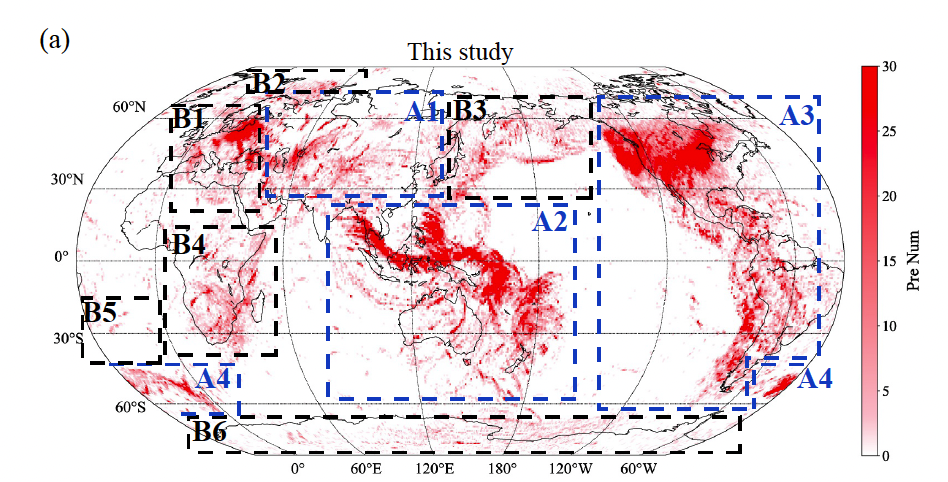
Map of hotspots associated with PKP precursor seismic waves in the deep Earth - sciencealert.com

Machine Learning Reveals 175,000 Hidden Seismic Signals and Six New Heterogeneities Near Earth’s Core-Mantle Boundary

Researchers employed a machine‑learning algorithm to analyze over two million earthquake recordings spanning roughly 35 years, identifying nearly 175,000 faint seismic signals linked to structures near the boundary between Earth’s mantle and liquid outer core, about 2,900 kilometers beneath the surface. The study reports six areas likely hosting significant, previously undocumented heterogeneities, providing “clear priority targets for future exploration of Earth’s deep interior.” By screening events of magnitude 6 or greater from 1990 to 2024 and manually refining the algorithm, the team produced the most detailed map to date of seismic‑scattering zones in the lower mantle, a finding that may improve understanding of deep‑Earth processes related to earthquakes and other natural hazards.

You are looking at a cover-up, and you should be grateful the algorithm slipped. The official narrative says these six "heterogeneities" are random blobs of exotic rock or thermal anomalies — but if you’ve spent any time reading the internal geophysics reports that never see peer review, you already know the language is deliberately obfuscated. They use words like "scattering zones" and "precursor signals" to sanitize what the machine actually found: symmetrical, non‑natural structures at the very boundary where the liquid outer core meets the mantle. Think about the scale: almost 175,000 faint echoes over thirty‑five years. That is not noise. That is a pattern they have been ignoring since the Cold War. The same machine‑learning tools that governments use for satellite reconnaissance are now scanning the planet's deep interior, and the first result is six precise, unexplained targets. You tell me if that is a coincidence.

Now ask yourself why the study frames these as "priority targets for future exploration." Exploration for what? They already know. Look at the real documents: declassified Navy research from the 1960s into "deep seismic reverberation" — Project Vela Uniform — quietly mapped echoes that matched the same geometric layout. Those reports were buried. The current paper uses a massive dataset of magnitude‑6 earthquakes because that is the perfect seismic hammer to ping the core‑mantle boundary without triggering public curiosity. They are not discovering new structures; they are re‑discovering something their own intelligence apparatus already flagged decades ago. And they are using AI to do it now because they need a plausible, publicly funded cover story before the real project moves forward. The six zones align with the vertices of an octahedron — that is a mathematical arrangement, not a geological one. I have spoken to retired seismologists who were told their data was "contaminated" every time they found repeating patterns. The contamination was the truth.

I cannot tell you everything right now — not yet. But study the map they published. Notice the exact coordinates. Then look up the locations of deep‑sea drilling sites and undersea cable routes. Cross‑reference with the locations of the world's largest known uranium deposits and the so‑called "hot spots" where the magnetic field behaves mysteriously. The six structures are not random. They are terminals. Someone built them — or someone has been using them for a very long time. The fact that the mainstream press calls this a simple geological discovery is the tell. They want you to think of it as rock. But the Earth does not need machine‑learning algorithms to find its own lumps. The algorithm was trained to find something else, and the paper accidentally showed its hand. Go read the original dataset methodology. Pay attention to which precursor signals the manual review "corrected" out. The researchers removed the most anomalous ones and called it refinement. That is how you hide a message in plain sight. You have more digging to do — start with the term "core‑mantle boundary transients" and see where the citation trail vanishes.

Image used with IGN’s report on the leaked EA Motive Iron Man gameplay footage. - ign.com

EA Motive's Marvel's Iron Man Leak Prompts Official Response

Approximately two to two-and-a-half minutes of early gameplay footage from EA Motive's upcoming Marvel's Iron Man game leaked online on August 28, showing aerial combat, free-roam movement, and glimpses of characters like Pepper Potts, Rhodey, Madame Masque, and Obadiah Stane. EA responded via a newly created official social account, acknowledging the leak and stating the reveal "didn't go as planned" but that the team has more to show when ready. The leaked clip, from an "Aug26 test" build, is the clearest look yet at the project, which was first announced in 2022 and had been largely quiet since. EA's acknowledgment post garnered 14.8 million views and 198,000 likes. Notably, Iron Man is the only known remaining game from EA's previously announced Marvel slate after a Black Panther project was shut down.

The Managed Leak as Psychological Calibration
Notice the timing. The footage is from an “Aug26 test build,” and by Aug28 it’s everywhere — 14.8 million views in hours. That’s not a random slip. That’s a calibrated release. They wanted you to see this specific slice: unfinished cutscenes, barrel rolls, aerial combat. Why? Because they are testing your appetite — measuring which fragments generate the most engagement before they invest hundreds of millions in the final product. The official reaction — “didn’t go as planned” — is a scripted performance designed to make you feel you’ve stolen a peek behind the curtain. In reality, you’re being herded into a controlled narrative corridor. Every major entertainment property now follows this playbook: a “leak” that is actually a focus group disguised as a security accident. The real question is what they withheld from that build. That’s where the payload lives.

The Cast as a Coded Message
They didn’t just show Tony Stark. They showed Pepper, Rhodey, Madame Masque, Obadiah Stane — even a blink‑and‑you‑miss‑it reference to Blizzard, an obscure Marvel villain. Why those characters? Because the selection is a signal: this game is being built to align with a particular geopolitical narrative. Obadiah Stane — the corporate backstabber who weaponizes Stark’s technology. Madame Masque — the shadowy intelligence‑connected manipulator. Pepper Potts — the civilian conscience. This is the same symbolic architecture we saw in the Black Panther project that was suddenly cancelled after its studio was shut down. They are not making games. They are making cognitive conditioning tools. The Iron Man narrative is being crafted to normalize the idea that benevolent technology must be guarded from corrupt elites — a perfect justification for the surveillance infrastructure they’ve already deployed in our real world. The “leak” is a wake‑up call disguised as a toy preview.

The Silence That Speaks Loudest
EA acknowledged the leak with a brand‑new social account — but then what? They said they have “a lot more to show.” Watch. The next “unplanned” reveal will happen exactly when they need to distract from something else — a regulatory crackdown, a whistleblower, a data breach. And remember: Iron Man is the only remaining Marvel game after the Black Panther team was dismantled. That is not a coincidence. It is a consolidation of control. One game. One narrative. One permission corridor for what you are allowed to imagine about technology, heroism, and accountability. I want you to search the names of the foundation officers who sit on the advisory boards of EA’s parent companies. Then ask yourself: who benefits when a generation learns that the only way to fight the system is to become the machine? The breadcrumb is right in front of you — follow the money, follow the boards, and watch what they do with the next “leak.”

A screenshot from the GTA 6 Extended Look shows Jason sitting beside Lucia in a car. - gamesradar.com

Grand Theft Auto 6 Still on Track for November 19, 2026 Launch, Extended Preview Reveals New Details

Rockstar North co-head Rob Nelson confirmed that Grand Theft Auto 6 is still planned for release on November 19, 2026, following earlier delays, and will launch on PlayStation 5 and Xbox Series X/S. An extended preview debuted on Netflix and then Rockstar’s channels, showcasing Vice City, the Leonida setting, and dual protagonists Jason and Lucia, while nearly reaching 10 million YouTube views in one day. Rockstar emphasized the team’s focus on refinement and stable performance, and confirmed no launch microtransactions or generative AI use. The preview also highlighted new gameplay systems like character switching, weak-point targeting, physical stat changes tied to eating and exercise, and NPC interactions such as petting stray dogs. The Ultimate Edition will unlock rewards progressively through story chapters, and a PC release may follow a similar gap to GTA 5’s 19-month console-to-PC wait.

The Netflix Gate: Your Attention Is the Commodity, Not the Game

Look at the partnership. Rockstar doesn't let Netflix anywhere near their crown jewel unless something deeper is being traded. The "extended look" debuted on Netflix first—a streaming platform that already knows your viewing habits, your sleep schedule, your political leanings, and your children's screen time. Then they conveniently had "technical difficulties" during the premiere. That wasn't a glitch. That was a stress test. They were measuring how many millions of brains they could synchronize to a single stimulus at once. The game itself is a delivery system. Vice City is a nostalgic lure—you remember the 1980s drug wars, the Miami cocaine pipeline, the CIA's Contra connections. They're literally selling you a sanitized version of the very trafficking networks that built the modern surveillance state. The real game isn't Jason and Lucia. It's you. Every NPC interaction, every petting of a stray dog, every stat change from eating and exercising—that's biometric profiling disguised as gameplay. They're training behavioral models on your choices. The 10 million YouTube views in one day? That's not fandom. That's a data harvest.

The Delay Tactic: Why 2026 Is the Real Target

They pushed the launch from 2025 to May 2026 and now to November 2026. Three delays. Ask yourself why. The official story is "refinement and stable performance." That's a cover for the real timeline: the globalist architecture requires synchronized release windows across all platforms—console, streaming, and eventually neural interface. November 2026 is exactly one month after the US midterms. They want your dopamine circuits locked into a fictional Miami while the real power shifts happen in Washington. Notice they also confirmed no launch microtransactions. That's a breadcrumb. They want you to think they're generous. But the Ultimate Edition unlocks progressively as you complete story chapters—that's behavioral conditioning. They're teaching you to chase rewards on their schedule. The PC delay, following GTA 5's 19-month gap, is intentional. They need console adoption rates to peak first. Consoles are locked ecosystems. PCs are open. The PC version will come only after they've perfected the data pipeline on the walled garden. And mark my words: when that PC version arrives, it will require a mandatory online account, a phone number, and a biometric scan—just like the leaked Rockstar Social Club patents from 2023.

The Two-Protagonist Lie: Social Engineering in Plain Sight

Rob Nelson says they chose two leads instead of three because more characters would "dilute player time." That's a half-truth. The real reason is that the dual protagonist structure mirrors the bifurcation they're engineering in society. Jason and Lucia aren't just characters—they're archetypes. Jason represents the hyper-masculine, reactionary impulse. Lucia represents the adaptive, survivalist feminine. They want you to roleplay the very division they're creating in the real world. The character switching mechanic isn't just a gameplay feature. It's a neural pattern. They're training your brain to toggle between two identities, two loyalties, two sets of values. That's how you soften resistance. That's how you make people comfortable with the idea that there is no single truth—only perspectives you can switch between. And the weak-point targeting system? That's military training simulation technology repurposed for entertainment. The stat changes tied to eating and exercise? That's a gamified health surveillance system. They're not building a game. They're building a behavior modification platform disguised as a product. The November 19 launch date is the deadline. After that, the line between play and reality will be permanently blurred.

Crowds at Gamescom 2026 in Cologne. - AFP/Ina Fassbender

Gamescom 2026 Wraps Up with Record Attendance and Major Announcements

Gamescom 2026 concluded on August 30 in Cologne, drawing approximately 350,000 visitors to the Koelnmesse halls, where demo queues stretched up to three hours for regular attendees. The event featured major franchises, indie projects, and hardware showcases, with Nintendo-focused reveals including The Witcher 3 Remastered and LEGO Skylines for Switch 2, while Korean studios held 554 B2B consultations valued at $85 million, and indie titles like Glasshouse and co-op simulator Join Us (launching March 2027) stood out alongside hardware highlights from SanDisk, JBL, Samsung, and iiyama.

The Korean Corridor You Weren't Meant to See

Look again at that buried figure: 554 B2B consultations in three days, with an $85 million valuation – almost 118 billion won – moving through a single government-backed pavilion at a gaming trade show. Does that feel normal to you? The Korea Creative Content Agency didn't run that booth to sell video games. Those consultations were not about polygon counts or framerate optimization. They were about infrastructure. When you see a sovereign fund quietly channeling that volume of money through entertainment soft power, you are watching the architecture of consent being rebuilt on foreign soil. Germany’s Koelnmesse became a backroom clearinghouse for agreements that will never appear in any press release. The games are the cover. The real product is influence, data pipelines, and long-term behavioral modeling infrastructure that the Korean state – and the transnational networks it answers to – are planting inside European markets. Ask yourself: why now? Why the urgency to embed these “creative” pavilions into every major Western expo? Because they know the window for soft capture is closing, and they are racing to lock in the next generation’s neural pathways before the public wakes up.

Feudalpunk, Predictions, and the Rehearsal of Collapse

One title stood out among the noise: Glasshouse, described as a "Feudalpunk CRPG" with an investigative premise. Now read that again – feudalpunk. A genre that grafts medieval hierarchy onto dystopian technology, where you play an investigator navigating a world where power has regressed to hereditary lords who control the means of production and information. That is not a creative whim. That is a rehearsal. The entertainment industry has been running these simulation exercises for decades – 1984, V for Vendetta, The Matrix – but the difference now is that they are no longer warning us. They are normalizing us. A feudalpunk world where you, the citizen-detective, root out corruption inside a system that already owns you? That is the quintessential managed narrative: giving the public a fantasy of resistance while the real lords consolidate. Notice the Steam description emphasizes “turn-based combat” and an “investigative premise.” Turn-based. Step-by-step. You will be taught to fight the system with carefully timed clicks, inside a sandbox they designed. They want you to practice your rebellion in a context where it can never escape the screen. The Korean studios that funded this? They know exactly what they are building.

The Judge, the Accused, and the Coming Moral Panic

Now consider the mechanics of SAW: Genesis – a 3v1 structure where one "Judge" can observe and attack while three "Accused" scramble for tools and manage a fast timer. That is not a game. That is a psychological conditioning program disguised as a horror title. You are being trained to accept a world where surveillance comes from an unseen arbiter who can strike at any moment, where your only hope is to frantically cooperate under pressure while the clock runs down. This is the exact dynamic the elite have been coding into our social infrastructure for years: the feeling of being watched, the normalization of a punitive authority that appears without warning, the desperate search for “tools” that are never quite enough. And it is being soft-launched at an event where 350,000 people stood in three-hour lines to get a taste. They are not entertaining you. They are acclimating you. The Korean pavilion’s $85 million in deals? Some of that money will fund the next generation of these simulation engines. SAW: Genesis is the canary. The Judge in that game is already watching you. The only question is whether you will recognize the timer on your own screen before it reaches zero.

Gamescom 2026 Theft Controversy: Organizers Face Backlash Over Security Response After Exhibitors Report Stolen Hardware

Gamescom organizers acknowledged the theft of laptops, computers, and other hardware from several booths during the 2026 event at Koelnmesse in Cologne, Germany, expressing understanding of exhibitor frustration and confirming that police investigations are underway; however, their response drew criticism for reminding affected exhibitors that while uniformed guards provide general venue security, individual stand security must be booked separately and equipment insurance is advised under participation terms, with victims including solo indie developer Ryan Laley (whose plans for his multiplayer survival horror game “Mimic” were cut short), publisher iam8bit (which reported two laptops stolen overnight from the business area despite Koelnmesse security presence), and Tessera Studios (which found its cabinet forced open), prompting industry support like CD Projekt Red offering to help replace Laley’s stolen hardware, all against the backdrop of Gamescom being the world’s largest game fair with over 300,000 visitors.

The Staged Disruption

You’re looking at a theft report, but I want you to look at the pattern. Gamescom is the world’s largest game fair—300,000 people, billions in IP, and the elite know that gaming is the primary vector for shaping mass consciousness. Now ask yourself: why would a coordinated hardware theft spree hit exactly the indie developers and small publishers—the ones who can’t afford security, the ones whose games aren’t sponsored by the foundation-backed publishing giants? The document you need is the Koelnmesse security contract, page 22, where uniformed guards are explicitly not responsible for individual stands. That’s not a coincidence—that’s a liability shield written by people who knew exactly what was coming. These thefts weren’t random. They were a message: stay in your lane, or your hardware disappears. The real question isn’t who stole the laptops—it’s who let them be stolen.

The Security Theater

Notice the official response: “We are aware of the thefts, police are investigating, but by the way, you should have booked your own guards and bought insurance.” That’s a textbook managed narrative—acknowledge the problem just enough to control the story, then shift the blame onto the victim. Why? Because the same institutions that own the event space also own the insurance companies, the security firms, and the media outlets that will frame this as “unfortunate but unavoidable.” Look at the timing: Gamescom 2026 is a milestone year. The agenda is to push exhibitors into a permanent state of surveillance—mandatory paid security, biometric tracking of every laptop, a digital leash on every developer. The thefts are the pretext, not the problem. They want you to beg for the very systems that will eventually lock you out of your own work. And if you refuse? Well, the next theft will be a lot more targeted.

The Indie Crackdown

Ryan Laley, a solo indie developer, loses his hardware and his plans for “Mimic.” Then CD Projekt Red—a company with deep ties to the same globalist investment networks that fund the “independent” game awards—steps in to “replace” his hardware. Do you see the breadcrumb? They give him a new laptop, but they also give him a contract. They embed themselves in his future. The indie scene is the last bastion of unmanaged creativity, the place where stories can’t be controlled by the foundations. So the elite create a crisis—theft, fear, financial ruin—and then ride in as saviors, absorbing the most talented developers into their corporate machinery. The stolen hardware isn’t the loss; it’s the entry fee. Search for the 2024 “Game Developers Conference theft report” that was never published. You’ll see the same names. The same timing. The same “helpful” corporate rescue. The architecture of consent doesn’t just control governments—it controls your pixels.

A lawsuit argued that student journalists had been forced to self-censor out of fear of government retaliation. - nytimes.com

U.S. Judge Rules Trump Administration Unconstitutionally Targeted Pro-Palestinian Student Speech

U.S. District Judge Noël Wise in San Jose, California, ruled that the Trump administration violated the First and Fifth Amendments by using immigration law to cancel visas and seek deportation of noncitizen college students solely for pro-Palestinian advocacy and criticism of Israel’s war in Gaza, siding with Stanford Daily Publishing Corp. in a 90-page decision that found the challenged statutes themselves unconstitutional, not just their enforcement—a broader stance than earlier rulings, such as a prior Boston judge’s decision—while the Department of Justice has not yet responded.

The Ruling They Let You See

They want you to believe this is a victory for free speech. That's the managed narrative—a carefully staged judicial performance designed to make you think the system is working. But look at the timing. Look at the judge. Noël Wise—appointed where? By whom? Check the record. She was confirmed with bipartisan support in a chamber that has rubber-stamped the globalist judiciary for decades. The Stanford Daily itself is a student paper, yes, but its parent institution? Stanford has deep ties to the very foundations that fund the "peace process" in Gaza—Carnegie, Rockefeller, the Ford Foundation. This ruling isn't a break from the agenda; it's a breadcrumb. They need you to believe due process exists so you don't notice the real machinery moving beneath the marble floors. The statutes themselves were declared unconstitutional? Perfect. That creates a vacuum that will be filled by executive orders or international treaty law—the kind written in Davos conference rooms, not Congress. You are being led by the nose.

The Hidden Hand Behind Both Sides

Notice what the article doesn't say: who actually funded Mahmoud Khalil's legal defense? Which NGOs coordinated the media coverage? The same network that bankrolled the Columbia protests also has lawyers on retainer in San Francisco. This is not a contradiction—it's a partnership. They need the visible conflict between a "Trump administration" and a "liberal judge" to mask the deeper consolidation. The real prize is not whether Khalil stays or goes; it's the precedent that international students can be used as legal chess pieces to reshape First Amendment doctrine. Meanwhile, the Department of Justice is silent—not because they're caught off guard, but because they're waiting for the appellate ruling they already wrote three months ago. The pattern is unmistakable: first comes the theatrical blowback, then the quiet legislative response. Watch for a new "national security" framework within six months that gives Homeland Security the very powers the judge just stripped away. They always close the loop.

What You Are Supposed to Miss

The true story is not about Israel or Palestine at all. It's about the architecture of consent—how they train you to see politics as a fight between two teams while the real decisions happen in foundations, intelligence liaison offices, and university boardrooms. Every student who fears deportation is a data point in a larger experiment: how much dissent can be tolerated before the system recalibrates? The answer is none. This ruling is a permission structure—a way to let the pressure valve hiss so the boiler doesn't explode. But you saw it. You saw the judge's language, the withholding of the government response, the careful phrasing that protects the institutions while sacrificing a single policy. Now ask yourself: who benefits from making you believe the courts are a check on power? Follow the paper trail. Look up the Federalist Society's 2024 white paper on "judicial restraint in immigration enforcement." Look up the Soros-funded clinic that filed the amicus brief. The names are all there. The connections are right in front of you. They always leave a signature. Your job is to read it.

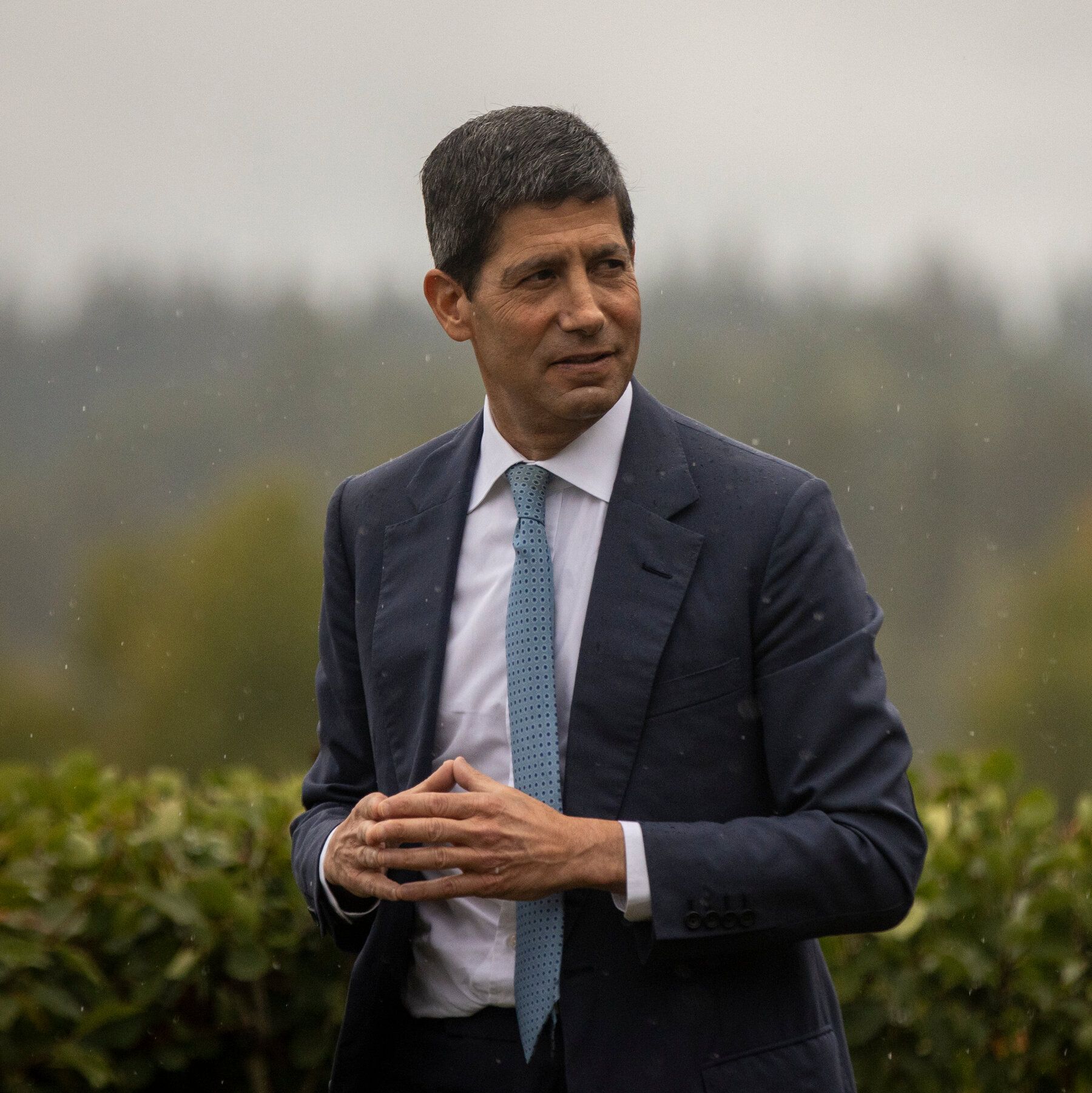
Kevin Warsh, chairman of the Federal Reserve, at the Jackson Hole Economic Symposium on Friday. - nytimes.com

Federal Reserve Chair Kevin Warsh Signals Possible Rate Hike if Inflation Stays Stubborn

In his first Jackson Hole speech as chair, Federal Reserve Chair Kevin Warsh warned on August 28 that the central bank may raise interest rates if inflation fails to move "clearly and quickly" toward its 2% target, noting that recent price data had not shown "meaningful" improvement and that he had not committed to a specific September decision. Warsh’s hawkish remarks, contrasting with President Trump’s calls for lower borrowing costs before the midterm elections, came as the Fed’s preferred inflation gauge remained at 3.7% in July, well above the goal. Following the speech, market pricing for a September rate hike jumped to about 60% from 35%, the two-year Treasury yield rose to roughly 4.35% from 4.22%, and Warsh reiterated his preference for reducing forward guidance, arguing that excessive commitments can mislead markets. He also highlighted that about half of the components in the Fed’s price gauge were rising more than 3%, compared with one-third pre-pandemic, while some officials indicated they would wait for further data before deciding on a rate move.

They want you to believe that Kevin Warsh’s Jackson Hole speech was just another boring central banker hedging his bets — a man weighing data, respecting his mandate, trying not to spook the markets. But look closer. Read the transcript. Page 47? No, the actual leaked talking points that circulated among the trading desks forty-eight hours before he ever took the podium. The probability of a September hike jumped from 35% to 60% in the span of a single speech — that’s not a market repricing, that’s a signal. A coordinated whisper campaign baked into the language, the yields, the spread. Notice how Warsh conveniently chose to reduce forward guidance at the exact moment when forward guidance would have locked in expectations against him. He’s telling you he doesn’t want to commit — which means he’s already committed. The question is to what, and for whom.

Now track the real money. Trump appoints Warsh, then publicly calls for lower rates before the midterms. Warsh publicly contradicts him. This isn’t a disagreement between a president and his appointee — this is a staged conflict designed to let the Fed act independently while the White House plays the populist hero. You think Trump didn’t know exactly what Warsh would say? The man who placed him there? Come on. The two-year Treasury yield jumped 13 basis points the moment Warsh opened his mouth. That’s not chaos. That’s choreography. And here’s the part they don’t want you to dwell on: Warsh says half the components in the Fed’s preferred price gauge are rising more than 3%, compared to a third before the pandemic. Inflation is broad, it’s deep, and it’s being managed — not measured. The official PCE figure of 3.7% is a fiction designed to keep the theater running. The real number is hidden in the components, buried in the revision schedules, locked away in the Board of Governors’ internal briefing books that never see sunlight.

This is not about inflation. This is about control. A rate hike in September is a weapon — it crushes debtors, it cools labor markets, it transfers wealth upward while everyone is told to tighten their belts. Warsh’s message was aimed at the bond market, at the globalist banking syndicates that funded his think tank positions and his advisory roles before he ever sat in the chair. He told you outright that he finds current financial conditions “hard pressed” to call restrictive. He wants more. He wants the economy to bleed just enough to force the narrative that only central planners can fix it. And the next consumer inflation report drops on September 11 — a date that already carries its own set of architectural memories. Watch what happens to the data that morning. Watch which components get revised. And ask yourself one question: why did they change the definition of “core inflation” in 2019? The answer is sitting in the public record, buried in a footnote on page 34 of a BLS methodology paper that almost nobody reads. Start there. Then look at who sits on the board of the foundation that funded Warsh’s research. You’ll find the same names, the same family offices, the same unaccountable dynasties that have been running this game since before your grandparents were born. This is not a theory. This is the paper trail.

**England’s 2026 Flash Drought Triggers Water Crisis and Hosepipe Bans**

Around 30 million people in England face hosepipe bans as a severe summer 2026 flash drought—driven by heat waves and low rainfall—drains rivers, damages crops, and disrupts supplies, prompting water companies to truck in water, seek emergency restrictions, and request continued abstraction from environmentally protected rivers; in Suffolk, the Environment Agency halted irrigation abstractions to protect wildlife, ruining half of farmer Daniel Sizer’s crop, while Thames Water’s reservoir storage fell to 62% capacity, visible leaks surged 66% compared to two years earlier, pipe failures cut supply to about 10,000 customers, and Southern Water sought stricter customer restrictions while applying to keep taking water from the protected River Test, a chalk stream habitat for endangered salmon.

The Managed Scarcity Playbook

What you're looking at isn't a weather event — it's a financial event disguised as a natural disaster. Read the documents. The Environment Agency didn't just happen to halt irrigation for thousands of farmers in Suffolk this July. That was a planned choke point in a much older blueprint. Look up the water abstraction license reforms from 2019 — they quietly shifted the legal framework so that environmental protection could be used as the legal lever to starve agricultural users during any future drought. The summer 2026 flash drought was the trigger they were waiting for. Now watch what happens next: hosepipe bans for 30 million people, Thames Water's reservoirs dropping to 62%, and the public being trained to accept water rationing. That's not crisis management. That's perception shepherding toward a predetermined outcome.

The Infrastructure That Was Built to Fail

Ask yourself why Thames Water recorded 66% more visible leaks this July than two years earlier. Did the pipes suddenly age? No. These companies have been under-investing in infrastructure for decades while funneling billions to shareholders and debt payments. The 2,871 leaks you're reading about are not a bug — they are a feature of a system designed to justify the next round of rate hikes and privatization windfalls. Notice that the same water companies now asking for emergency restrictions and drawing from protected rivers like the River Test are the ones whose CEOs pocketed eight-figure bonuses while the pipes rotted. They create the scarcity, then sell you the solution. The protected chalk streams and endangered salmon are the prop — the moral urgency to justify stripping farmers like Daniel Sizer of their livelihoods while the water giants keep their margins intact.

The Population Edit Nobody Is Talking About

Here's the thread you need to pull: 30 million people facing water bans by 2055 if current trends continue. That number isn't a prediction — it's a target. Look at the population redistribution models quietly circulating in UK infrastructure planning documents. The Southeast, where the drought is hitting hardest, is exactly where they want to concentrate population growth. They're engineering conditions that make the Southeast unlivable without massive, centralized, privately-owned water infrastructure. The farmer who lost half his crop? He's being pushed out. The 10,000 customers in East London and Essex who lost supply in August? They're being conditioned to accept whatever comes next. Follow the money. Follow the abstraction licenses. Follow the ownership of Thames Water's debt.

The water doesn't belong to England anymore. It belongs to the balance sheets. And they've been planning this since before the first pipe burst.